
Greta Uehling, tell us a little bit about yourself. How did you get into writing?
As a young person, I was more drawn to paint brushes than pens. In college, however, I was lucky to have superb mentors who encouraged me find my own voice. I began to experience writing as a form of creativity that was both enjoyable and empowering.
I first became interested in eastern Europe through language and literature courses I took as an undergraduate. I was captivated by universal themes like love, loss, loyalty, and betrayal as seen through eastern European lenses. Those courses inspired me to participate in an exchange program in Ukraine, where I lived with a family and attended classes at the local university.
My experience in Ukraine opened my eyes to myriad themes that are relevant today including the differing interpretations of national history, the importance of a national language, and the damaging effects of human rights violations.
Since then, I have traveled and lived in eastern Europe and Central Asia extensively. I have gathered material in Uzbekistan, Kazakhstan, Tajikistan, and Russia, Moldova and other countries.
Throughout my work, I have benefited enormously from the warmth, care, and support that people extended. That, too, kept me writing. In fact, Everyday War would not have been possible without Ukrainians’ willingness to speak with me about the difficult topic of war. For me, the publication of this book with Cornell University Press is accompanied by gratitude toward the many people who shared their thoughts and lives with me. It is a privilege – and a responsibility – to bring their stories to readers.
What inspired you to write your book?
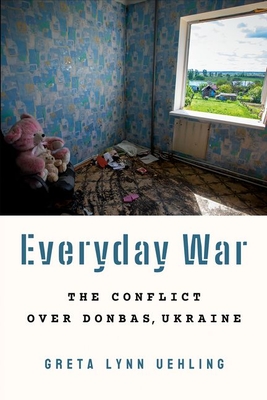
I was inspired to write Everyday War by my experiences living and working in Ukraine. Interviews with people all across that country between 2015 and 2017 revealed civilians were engaging with the war in very conscious and creative ways. What struck me the most in that first phase of the war was that one of people’s greatest concerns was how friend and family relationships were being adversely affected by the war.
My research showed that in addition to the humanitarian crisis brought about by Russian aggression against Ukraine, there is a relational crisis characterized by families and friendships acquiring their own fault lines. This is important because as I describe in the book, personal relationships are usually treated as backdrops or tangents for the “real” action. The book illustrates that when kinship becomes “tactical,” to use my term from the book, it matters.
What theme or message do you hope readers will take away from your book?
Many readers will have heard about Ukrainian resilience in the face of Russian aggression. Everyday War: The Conflict over Donbas Ukraine unpacks the significance of this resilience as well as its limitations. The stories I tell in the book demonstrate, among other things, how the time-honored distinction between combatants and non-combatants is being eroded. What readers may be less likely to hear in the news is the tremendous cost of this resilience. I explain this in the book through personal stories that vividly dramatize the normalization of violence.
In short, I hope readers will take away a greater appreciation the significance of civilians during war.
What drew you into this particular genre?
I grew up in a very diverse neighborhood in Madison, Wisconsin near the University of Wisconsin where my father worked. Students from all over the world sat next to me at school, became my friends, and invited me to their homes. I think that experience primed me for later travel and fieldwork because I began to feel increasingly at home away from home.
Travel experiences became the basis of a career as a cultural anthropologist when I discovered I could have a profession centered in listening to peoples’ stories and learning about the world experientially. Perhaps a helpful way to think about what cultural anthropologists do is that they practice the art of stepping inside other peoples’ worlds to experience them from within.
What social media site has been the most helpful in developing your readership?
Well, I am still in the early days of promoting the book and my preference is subject to change. Recently, I’ve been most effective on Twitter. If readers want to find me there, the correct handle is @uehlingumiched1. My tweets on book-related events and also humanitarian and human rights news have garnered positive responses. In the future, I hope to reach a larger audience on Instagram. If readers are interested in following me there, they can find me at greta.uehling.
What advice would you give to aspiring or just starting authors out there?
Aspiring writers will likely already have learned that it is a good practice to write every day. I agree and there are so many ways to make writing a habit, from journaling to sharing “morning pages,” and participating in writers’ groups. Advice aspiring writers may not have heard is to think about writing as a physical activity in addition to a cerebral one. My best strategy for easing the mental gridlock that can set in with long hours at a computer is to walk, run, or cycle. Fresh ideas then come easily, providing solutions to writing problems that are harder to resolve behind a desk. A related strategy is to try pen and paper. Our brains are connected to our hands and there is abundant scientific evidence that shows the benefits of writing by hand. Far from slow or primitive, writing by hand can unlock thinking.
What does the future hold in store for you? Any new books/projects on the horizon?
Yes, and thank you for asking. I’m working on a book manuscript about what it means to be indigenous in Ukraine. Like my current book, Everyday War, my forthcoming book will have significance beyond Ukraine. A major theme in this work is the importance of political recognition for indigenous rights, and how humanitarian “politics of pity” aren’t enough to truly advance indigenous interests. I’ve been especially inspired by the writing of indigenous scholars in Canada during this project. I’m looking forward to the future publication of the manuscript because I have greatly enjoyed connecting with the readers of Everyday War. I can’t wait to share my next book with readers when its ready!
About the Author
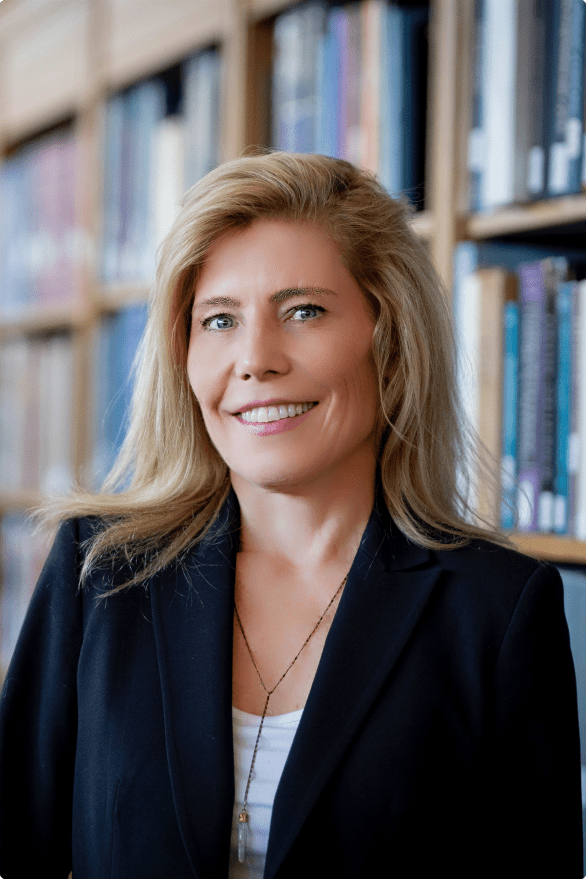
Greta Uehling began her career by working directly with refugees, helping them find work in the United States. Her experiences in refugee resettlement motivated her to pursue a PhD in cultural anthropology, and have informed her career ever since.
After earning her PhD, she became a consultant with the UN refugee agency (UNHCR) in Geneva, Switzerland, working in the Evaluation and Policy Analysis Unit. Her work on irregular migration there led to another migration-related position as a Family Reunification Coordinator for minors smuggled across United States borders from Latin America and China, in Washington, DC.
Named after the globe-trotting Swedish actress Greta Garbo, she has traveled and worked in many regions. Her interviewees have often remarked about the rapport they feel during conversations. Her colleagues in anthropology note how this rapport, and Uehling’s writing, centers previously unheard voices.
With her current project, Uehling sought to tell the story of internal displacement in Ukraine in a way that is multivocal. She uses the language of lived experience to take readers on a journey through Ukraine that deepens understanding and solidarity.
Uehling dedicated Everyday War to her students because they inspire her to write with their many and insightful questions.
