

7 Tips Every Writer Needs to Know About Writing Characters by Ana Obradović

The goal of every writer is to craft original characters that readers will remember. In a book, a movie, or a short story –  having interesting characters is the key to keeping readers interested. You know we all love a good writer, but let’s be honest – people have always cared the most about characters. Let’s talk about seven tips for making characters that stand out. From giving them detailed backgrounds to showing their growth and relationships. These ideas will help you make your characters feel real. We’ll also discuss the importance of giving characters both strengths and weaknesses and accepting their imperfections. By using these methods, you can make characters that feel like real people and keep readers hooked! 

1. Show, don’t tell

Show, don’t tell is one of the main principles in character writing. Instead of just saying they’re brave or kind, demonstrate it through their actions. Let their courage shine through daring deeds, like running into a burning building. Show their kindness through helping others or comforting friends. This not only makes your characters more relatable but also brings them to life.

Advertisements

2. Develop Deep Backstories

Adding layers of depth and realism to your writing is something you can easily achieve by fixing your character’s backstory! By delving into their past, you reveal the driving forces and life experiences that influence their choices and behaviors. It’s more than just listing significant events; it’s about grasping their hopes, fears, and motivations. Using tools like character profiles or character planners can assist you in this process. They are built to enable you to fully explore your ocs and their backgrounds. Keep in mind that not every aspect of the background will be included in your story. But it will ensure your characters act in a coherent and believable manner.

Example: Severus Snape‘s background in Harry Potter is a great example of how a character can grow.  Snape didn’t have a happy childhood, he found comfort in his friendship with Lily Evans. Even though he joined the bad guys as a Dbut eath Eater, Snape cared so much about Lily that he switched sides when Voldemort went after her. Working as a spy for Dumbledore, Snape acted tough but he was actually trying to do the right thing and make sacrifices – character complexity at its best. His journey from a troubled kid to a hero with a sad ending makes for one of the pivotal moments in the overall story.

3. Give Each Character a Unique Voice:

 To make each character stand out, focus on how they talk and think differently. Consider their vocabulary and tone to show their personality and experiences. For instance, a character with an academic background may speak formally with complex sentences, whereas a street-smart character may use slang and brief phrases. Don’t forget to explore their inner thoughts and reactions to the world. By keeping these distinct voices consistent, readers can easily recognize each character and see them come alive with unique personalities.

4. Create Flawed Characters

Giving your characters bad habits and flaws might sound tough. Like you would want to add a bad trait to your kid on purpose. But here’s what – they’ll still have flaws. Instead of creating perfect characters, give them flaws, fears, and vulnerabilities to make them more relatable and engaging. These imperfections provide opportunities for growth, conflict, and dynamic storytelling, ultimately leading to their development. And this leads us to the next tip. Creating a character profile can help you. Put your thoughts on paper or phones and see how it gets easier to strike the balance of a relatable character.

5. Ensure Characters Evolve and Grow

Throughout the story, characters should change in meaningful ways that show how their experiences and challenges have affected them. This transformation keeps the story interesting and exciting. For example, a shy character could start by avoiding conflict, but as they face different obstacles, they might become more confident and stand up for themselves for a change. A character who is initially selfish could learn about compassion and sacrifice through their own mistakes. On the other hand, a character who starts off as idealistic might become more cynical after seeing unfairness, which could change their perspective. These changes make the characters more believable and keep readers interested in their journey, wondering how they will grow and develop.

Example: Tony Stark (Iron Man)
Initial Character: Arrogant, wealthy industrialist focused on profit.
Catalyst: Captured by terrorists, sees the harm caused by his weapons.
Becoming Iron Man: Builds the Iron Man suit, and vows to fight for justice.
Personal Growth: Faces PTSD, moral dilemmas, and learns
Redemption: Sacrifices himself in “Avengers: Endgame” to save the whole universe.

This is a great example of character evolution –  from a self-centered billionaire to a selfless hero, which is what makes him an iconic character.

Advertisements

6. Balance Strengths and Weaknesses

Great characters always have a mix of good and bad traits. This mix makes them more interesting and easier to believe in. For instance, a character might be super smart and great at solving tough problems but struggle with talking to people and feel lonely a lot. Another character could be really strong and brave, always ready to take action, but they might also act without thinking and make bad choices. A caring and understanding character might be really good at helping others and understanding their feelings, but they might also take things too personally and get upset easily. Your flaws and mistakes are what make you relatable – why would it be different for your character?  Of course, they have room to grow and change as the story goes on. This mix makes sure that no character is perfect, which leads to interesting conflicts and stories that are all about the characters.

Example: Sherlock Holmes (Arthur Conan Doyle)
Sherlock Holmes is a super popular character known for his amazing detective skills. However, he also has a big list of flaws to “compensate” for being a genius. Despite having sharp observational skills, he can be socially awkward, dismissive of others, struggles with forming emotional connections, comes off as arrogant, and insensitive, often taking risks, turns to substance abuse, and the list goes on. Holmes is a super smart guy, but he’s not perfect. That’s what makes him so interesting! He’s really good at solving mysteries, but he also has some flaws that make him more human and therefore relatable. 


7. Keep Your Characters Consistent

It’s super important to keep your characters’ behavior consistent. Think about how people always act in ways that make sense based on who they are. If a character is all about paying attention to details, it wouldn’t make sense for them to suddenly start being careless without a good reason. You can use tools like character profiles to help you stay on track and make sure your characters stay true to who they are. Popular websites like CharacterHub or Toyhouse are great for storing all of your character information. This helps your readers trust you and keeps your story strong and interesting.

Conclusion

If you follow these seven important tips when you write, your characters will start feeling like real people that your readers will love. Characters are the most important part of a good story – their adventures, challenges, friendships, and changes. Make sure to give them detailed backgrounds, and unique voices, and show their growth and development. Also, when creating and managing your characters, use character storage websites so you can remember all the important details and make your story more consistent.. By doing all this, you’ll create a story that feels real – your readers will really appreciate it!

Guest Article: The Rabbit is Out by Julie Rogers

Untitled design (1).png

The Rabbit is Out

 So—some of the traditional lore around Lewis Carroll’s March Hare and the whole March Madness thing got me stewing.

Can writing (or reading, for that matter) exist as a purely magical experience or in a purely magical space?

I’d like to think so, even for those text-book yawners or codified how-tos on industrial intelligence, for example.

It’s just too damn hard otherwise.

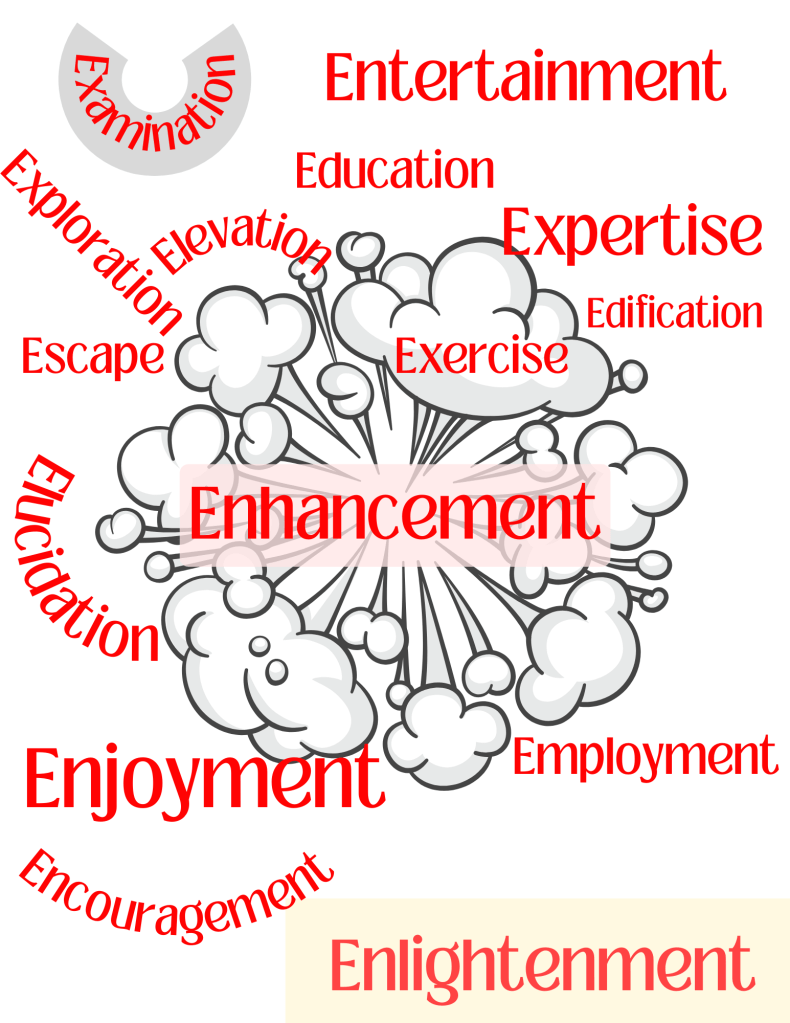
But before we go down that rabbit hole, what exactly compels any of us to learn to read or write at all?
The list, of course, grew longer than I anticipated, even after condensing all the reasons we read into an E-list:

Likely there are more, but those are a few of the big ones. And while the lifeblood of traditional publishing continues to require someone(s) to successfully predict which books we’ll read (and for which reasons), I like to think about reading trends another way.

Maybe I’m old school. I look at all those E’s and to me, it still comes back around to this: writing and reading must ultimately touch our hearts in some way. So, we can cite reading trends until the cows come home, but the stories that stay with us (as a reader or a writer) talk to our hearts. Heart-stuff, the way you feel after digesting what you just read.

  • Did it help you in any way?
  • Did it raise questions?
  • Did you feel joy?
  • Did you find peace?
  • Did you make a new or stronger connection with something important to you?

I can spew out statistics as quickly as the next guy. Here they are:

1. Kindle hit its stride with electronic books in 2010.
2. YA dystopian fare rebounded in 2014. (Hunger Games, anyone?)
3. Audiobooks surged (again) in 2016. (Age Spoiler: I read audiobooks as early as 1994, on cassette.)
4. Tik Tok became the next go-to book resource in 2022. (Move over, Amazon?)

There’s the rub, though. Even if the rabbit is out about tomorrow’s reading trends, this still doesn’t tell me how to reach inside someone’s heart. Or how to reach inside my own.

Part of reaching the heart begins with recognizing that the heart is more than just a blood mover, more than just a pump. It’s a seine that strains through measured amounts of logic and emotional undercurrents clickety-clack every freaking minute of the day. Sometimes it pitches the sieve aside while we dream. The old ticker is always factoring and fidgeting, and occasionally it puts up defenses (I just can’t take on one more thing!) and tries to declare the kitchen closed.

We get stuck when writing because we don’t have confidence about what our heart really wants to say in the first place. If we don’t feel like reading a particular book, it’s because . . . our heart’s not in it at the moment.

When writing and reading move beyond skill sets, innate creativity, or art appreciation though—they’re going toward the level of the heart.

And at that level, there is magic.

Why, sometimes I’ve believed as many as six impossible things before breakfast.

The reason I think of writing as coming from a magical place is because it is an act of creating something from nothing.

Both the processes of writing and reading are entertaining ideas not yet manifest.

Until they are.

Pulling the rabbit out of the hat.

An activity that produces something living and viable outside of ourselves—that is creative magic. At times, we may even have to act as if in order to set the stage for what is, the reality we desire.
 
The part we can’t seem to get around: the magus inside also likes to imagine how life would be if anything could be done differently. As the magic in us stares down the daily mundane and those pesky, limiting laws of cause and effect, the heart is also innately considering how we might manipulate those realities for more desirable results . . .  if we could.

What if we could?

What if?


Your heart holds the paradigm shift from just writing to real writing and just reading to real reading.

But before you try to pull a rabbit out of a hat, you need time to set the stage. And, no worries. Your heart already has the ability to see things not only as what they are, but also as what they can be.

Yep, there’s a rabbit down there. I see it.

Sign up to receive Julie’s quarterly newsletter here.

Advertisements

About the Author

Julie is a multi-genre author. Her articles and stories are featured in self-help, inspirational, trade, and fiction publications including Writer’s DigestCoping With CancerComplete Woman, and Daily Meditation.

She is the 1999 Writer’s Digest Writing Competition Grand Prize Winner for her horror short story, “House Call.”

Her seventh novel,  Falling Stars, is an eleven-time award winner, including the 2023 International Firebird Awards First Place in Urban Fantasy, the 2023 Pinnacle Book Awards Best Book in Fantasy, and the 2023 Outstanding Creator Awards First Place in Medical Fiction.

Other awards include Fade In magazine’s 2005 Screenplay Semi-Finalist for the thriller, Grave Jumper, and the 1998 Writer’s Digest Writing Competition First for her stage play comedy, Garage Sale.Julie works as a remote freelance ghostwriter and editor for julierogersbooks.com and authorsassistant.com in Eureka Springs, Arkansas, the setting of her seventh book, Falling Stars. She lives there with her husband, Jim, a primary care physician, their furry children Madison, Kate, Sukie, and mollusks Dewey, Decimal, and System. She has one son, Seth, who works as a video game level designer in Austin.

Guest Article: Jumpstart Your Writing Side Hustle: Turning a Hobby into a Business by Virginia Cooper

Photo Credit: Ketut Subiyanto via Pexels

Jumpstart Your Writing Side Hustle: Turning a Hobby into a Business

Are you looking to turn your passion and hobby into a profitable business? Many of the world’s most successful entrepreneurs have started this way – from kitchen-table businesses to tech giants. If you have an idea, the right approach, and plenty of dedication, you can make it happen. Here are some tips from Author Anthony Avina’s Blog for turning your hobby into a business.

Part-Time Business

A great way to start is by turning your writing hobby into a side hustle. This will help you test out the waters without having to invest too much time or money. You can keep your day job while working on your side hustle in your spare time until it becomes profitable enough to transition into full-time work. This also allows you to gauge interest in your product/service and adjust accordingly before committing fully.

Create an LLC

Once you decide to become serious about your business venture, registering as an LLC is important for protecting yourself and other stakeholders involved in the business. With the help of a formation service, you can register your small business quickly and easily online with just five simple steps. 

Registering quickly is important since it will allow you access to key resources such as venture capital funds, banking credit lines, and even free marketing support services offered by banks and chambers of commerce.

Establish a Business Plan

Developing an effective business plan is key for any successful venture regardless of size or industry. Your plan should include research about competitors in the market, production plans, financial forecasts, strategy for marketing and promotion, goals, staffing plans, etc. 

Writing up this plan will give potential investors an idea of what they are investing in and will also help provide guidance throughout the life cycle of the project. It’s also recommended that entrepreneurs update their plans regularly so they remain relevant over time despite changing market conditions or external factors influencing their businesses negatively or positively.

Come Up with a Marketing Plan

Having an effective marketing strategy is essential for any company looking to increase sales and gain more customers. A well-thought-out marketing plan should include research about target audiences, advertising campaigns, website design considerations, and more. Utilizing all available channels effectively can help maximize exposure leading up to launch day and beyond.

Build Your Online Presence

In today’s online marketplace, a well-designed website that accurately represents your brand is crucial for successful marketing. Providing customers with user-friendly ecommerce platforms can build trust quickly and lead to increased sales. Offering a superior web presence can give you an edge over competitors who don’t prioritize these aspects.

It’s important to use SEO strategies to get the most exposure online, so look into how to use keywords strategically. You’ll also want to rely on PDFs over other file types for online posts because they are the most SEO friendly. You can try this page to convert your other digital files into PDFs for free. Just drop in the file and let the tool work its magic!

Locate Funding

To secure funding for their project, startups can explore various options such as angel investors, crowdfunding sites, and grants from government programs. Careful research must be done to ensure that the best possible investment resources are obtained, which will help the project run successfully without running out of funds halfway through. This is crucial for completing the project successfully.

Use a Unified eCommerce Platform for Your Store

Unified ecommerce platforms can help to facilitate a smoother online purchasing process for customers, resulting in an increased likelihood of sales taking place. This is due to the better user experience, which can translate to higher profits over time through increased customer loyalty. Providing better service than the competition can help entrepreneurs gain an edge and incorporate features that can further improve the overall user experience.

Get Your Writing Business Started

Starting a business requires dedication and commitment to make your entrepreneurial dreams come true. It entails considering several factors, such as funding the operation, setting up an LLC structure, and facilitating online purchases via an ecommerce platform. By following these essential tips, you can increase your chances of success in the long run.

Are you looking for more great writing-related content? Then check out Author Anthony Avina’s Blog!

You can learn more about writer Virginia Cooper using this link!

http://learnaliving.co/

STRESS: AN EXCERPT FROM THE UPCOMING BOOK “THE JOY OF LIVING: HOW TO SLAY STRESS AND BE HAPPY” BY AUTHOR BARRY SHORE

I am so proud to share with you all this amazing excerpt and article from author Barry Shore, from his upcoming book THE JOY OF LIVING: HOW TO SLAY STRESS AND BE HAPPY. I will be reviewing this book tomorrow, but in anticipating for the May 11th release date I wanted to share this excerpt. May is Mental Health Awareness Month, and for anyone who knows me, you know that mental health awareness is a cause near and dear to my heart. Please take the time to read this book and share this post, and look for my review of Barry’s book tomorrow. Now, enjoy this exclusive excerpt. 


Advertisements

An Excerpt From

“The JOY of LIVING: How to Slay Stress and Be Happy”

By Barry Shore the “Ambassador of Joy”

______________________________________________________________________

The Problem: STRESS…Kills!

Not directly. More like death by a thousand sighs.

It’s insidious. Invidious, invasive, and, if continuous and not stopped, will ruin Your physical, mental, and spiritual being.

Stress is a common occurrence. While You can’t remove every stressor from Your life, it’s possible to manage and reduce stress and maintain your health. This is important because chronic stress can cause mental fatigue, irritability, sleeplessness, obesity, skin ailments, heart issues, anxiety, depression, and gastrointestinal problems.

Yes, that list of symptoms observed across the population tells You that You’re not alone in this battle.

But even when You know the physical and mental effects of stress, You may be unaware of the different stages of stress, known as general adaptation syndrome (GAS). When You understand the different stages of stress and how the body responds in these stages, it’s easier to identify signs of chronic stress in Yourself.

I’m writing this in the year 2020. The world is beset with panic, disease, and economic and societal ruin.

Right now, the most searched word in the world after Covid (and its related causes/cures) is STRESS. It’s affecting everyone.

STRESS is an acronym that I use to describe how to deal with the effects of untoward circumstances. Essentially there are three factors that cause STRESS.

These are and have always been:

• Money

• Work

• Home

Yes, these are universal and constant. Even in the best of times.

There are however two divergent ways to deal with STRESS, both revealed in my insights.

STRESS can stand for: Stomach-Turning Reality…Enabling Self-Sabotage.

There is little need to go into depth regarding each of the three stressors above. It is self-evident that money issues can and do cause tremendous pressures. The same for work. And, certainly, for home/family. Often in times of recession and disaster, these factors are intertwined and exacerbate one another. They truly cause a stomach-turning reality.

STRESS can also mean: Stomach-Turning Reality…Enabling Self-Success.

Same exact situation/s dealt with in a different way/s. Your response to the stomach-turning reality makes all the difference. Struggling is the continual and real test of life. And it’s something we all face every single day.

How You deal with the reality of these issues determines how Your physical and mental wellbeing will be affected. Certainly, You can’t be cavalier. Yet You can utilize practices, tips, and tools to enable You to direct Your mind and guide Your body to avoid falling prey to a pity party which can lead to the use/abuse of medications, alcohol, or to other aberrant behavior.

Mind is the master. Once You grasp this fundamental fact and leverage this powerful tool, You can and will achieve success under all circumstances and vicissitudes.

How do You maintain inner strength during stressful periods?

Consider a submarine. As the ship goes down, the pressure (strength) inside needs to increase to counterbalance the pressure outside. Likewise, when we are in stressful situations, we must make sure our internal strength is adequate to offset the external forces pushing against us.

Anger also produces stress. Have You ever known people whose lives seemed to have a thin veneer of civility and calm, yet once the surface was scratched, anger bubbled up like a volcano? Stress and anger go hand-in-glove.

We also know that there are two types of stress: vertical and horizontal. The vertical is healthy because it pulls You up. Think of a flower on a stem. Without turgor pressure, the stem droops. Without the fluids pushing through the cells, the flower dies. We can grow limp as well. A useful example of the sort of pressure that pulls us up is the sense of awe or reverence of God.

Horizontal stresses pull us apart and create damage. Designing our lives to meet others’ demands and standards is horizontal. All the current talk about self-image leads to horizontal stress. I do not mean that we should have no concept of self-worth. But we want to have a clear definition of self-worth that comes from knowing we were brought into this world for a purpose. That knowledge is a settled knowledge and doesn’t change just because of what others think or say.

In our competitive society there is another prevailing stress—the fear of losing. The specter of losing by our choosing stresses us. When we make one decision, we give up other options. These are the “Y” points. Marriage and career are two of the biggest examples. One of the pitfalls of our current day is buyer’s remorse. “If I choose the left fork and it grows dull, I opt out and choose another road.” This is a mistake. The stress of always looking around for the better option steals the joy of commitment.

The true test of life is never in what happens to us.

It is always in how we choose to respond to situations.

As we’ll learn later in the 11 Strategies, the six most important words You can learn and internalize are:

Choice, not chance, determines Your destiny.

Repeat this. Often. Think about it. Internalize and utilize.

Choice, not chance, determines Your destiny.

“The JOY of Living: How to Slay Stress and Be Happy” by Barry Shore is available on Amazon and Apple Books. For more information, check out Barry’s website and follow him @barryeshore on Facebook, or Instagram.

Advertisements

About the Book

“The Joy of Living: How to Slay Stress and Be Happy” is your passport to being healthier, wealthier, and happier in a time of unease and misgiving. 

Part journal, part memoir, part activity book, it’s a timely guide to slay stress, beat burnout, and cope with life, post-pandemic. Author Barry Shore reveals 11 strategies that you can use to slay stress and be happy….no matter the circumstance. Imagine standing up in the morning fully healthy and in the hospital, that evening completely paralyzed; and not from a car accident or a spinal injury, but from a rare disease. You’ll join the journey as Barry moves from paralysis to now swimming 2 miles per day, 6 days a week. All with a SMILE.

  • RELEASE DATE: May 11, 2021
  • GENRE: Healthy Living, Emotions and Mental Health, Journal/Workbook, Memoir, Motivational Self-Help, Nonfiction, Self-Improvement.
  • PUBLISHER: Joy of Living Institute Publishing
  • ISBN: 978-1-930376-15-1 
  • PURCHASING INFO: Available for Pre-order on Amazon or on Apple Books or by visiting https://www.barryshore.com/book 

About the Author

Known as the “Ambassador of JOY,” Barry Shore is a mental health activist, philanthropist, multi-patent holding entrepreneur, speaker, author, podcaster, and former quadriplegic. After a rare disease paralyzed Shore from the neck down, he created the JOY of LIVING Institute™ (a platform that teaches people to live in joy, no matter the situation), Keep Smiling (a movement that has reached multiple celebrities and distributed millions of “Keep Smiling” cards worldwide), and Changebowl (a philanthropic platform featured in Oprah Magazine.) Barry’s podcast, The JOY of LIVING, is heard globally by hundreds of thousands and has over two million downloads. 

Barry’s latest book, “The JOY of Living: How to Slay Stress and Be Happy” is available on Amazon and Apple Books. For more information, check out Barry’s website and follow him @barryeshore on Facebook, or Instagram.