Guest Article: The Rabbit is Out by Julie Rogers

Untitled design (1).png

The Rabbit is Out

 So—some of the traditional lore around Lewis Carroll’s March Hare and the whole March Madness thing got me stewing.

Can writing (or reading, for that matter) exist as a purely magical experience or in a purely magical space?

I’d like to think so, even for those text-book yawners or codified how-tos on industrial intelligence, for example.

It’s just too damn hard otherwise.

But before we go down that rabbit hole, what exactly compels any of us to learn to read or write at all?
The list, of course, grew longer than I anticipated, even after condensing all the reasons we read into an E-list:
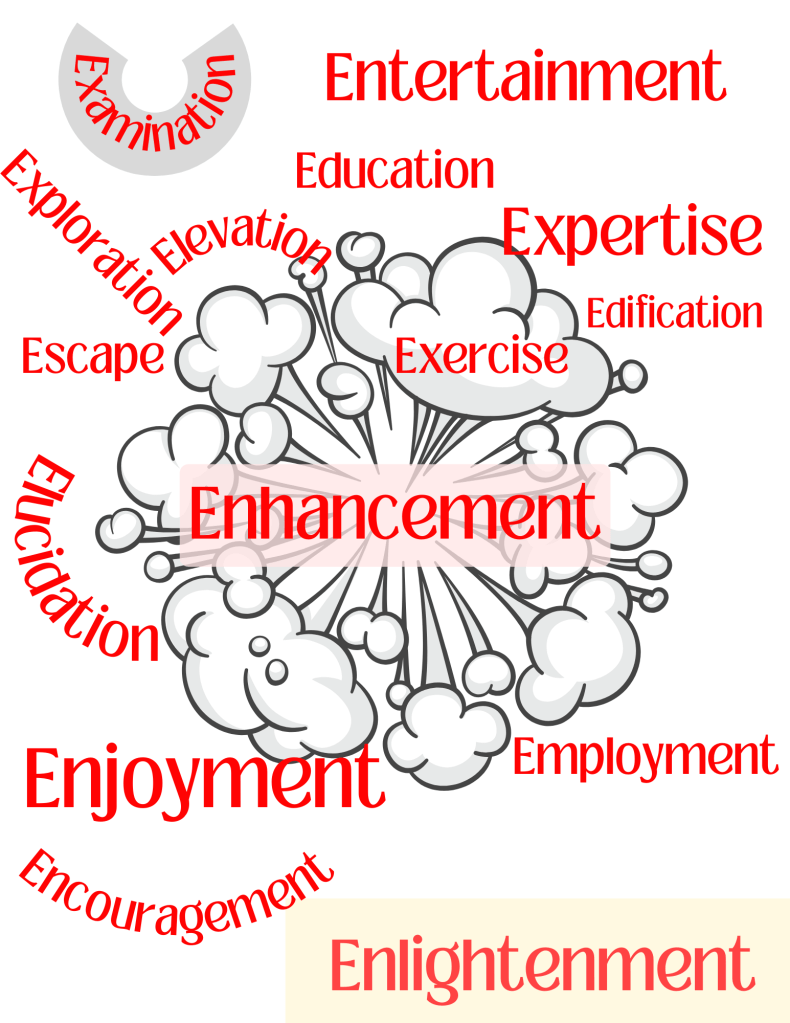
Likely there are more, but those are a few of the big ones. And while the lifeblood of traditional publishing continues to require someone(s) to successfully predict which books we’ll read (and for which reasons), I like to think about reading trends another way.

Maybe I’m old school. I look at all those E’s and to me, it still comes back around to this: writing and reading must ultimately touch our hearts in some way. So, we can cite reading trends until the cows come home, but the stories that stay with us (as a reader or a writer) talk to our hearts. Heart-stuff, the way you feel after digesting what you just read.

  • Did it help you in any way?
  • Did it raise questions?
  • Did you feel joy?
  • Did you find peace?
  • Did you make a new or stronger connection with something important to you?

I can spew out statistics as quickly as the next guy. Here they are:

1. Kindle hit its stride with electronic books in 2010.
2. YA dystopian fare rebounded in 2014. (Hunger Games, anyone?)
3. Audiobooks surged (again) in 2016. (Age Spoiler: I read audiobooks as early as 1994, on cassette.)
4. Tik Tok became the next go-to book resource in 2022. (Move over, Amazon?)

There’s the rub, though. Even if the rabbit is out about tomorrow’s reading trends, this still doesn’t tell me how to reach inside someone’s heart. Or how to reach inside my own.

Part of reaching the heart begins with recognizing that the heart is more than just a blood mover, more than just a pump. It’s a seine that strains through measured amounts of logic and emotional undercurrents clickety-clack every freaking minute of the day. Sometimes it pitches the sieve aside while we dream. The old ticker is always factoring and fidgeting, and occasionally it puts up defenses (I just can’t take on one more thing!) and tries to declare the kitchen closed.

We get stuck when writing because we don’t have confidence about what our heart really wants to say in the first place. If we don’t feel like reading a particular book, it’s because . . . our heart’s not in it at the moment.

When writing and reading move beyond skill sets, innate creativity, or art appreciation though—they’re going toward the level of the heart.

And at that level, there is magic.

Why, sometimes I’ve believed as many as six impossible things before breakfast.

The reason I think of writing as coming from a magical place is because it is an act of creating something from nothing.

Both the processes of writing and reading are entertaining ideas not yet manifest.

Until they are.

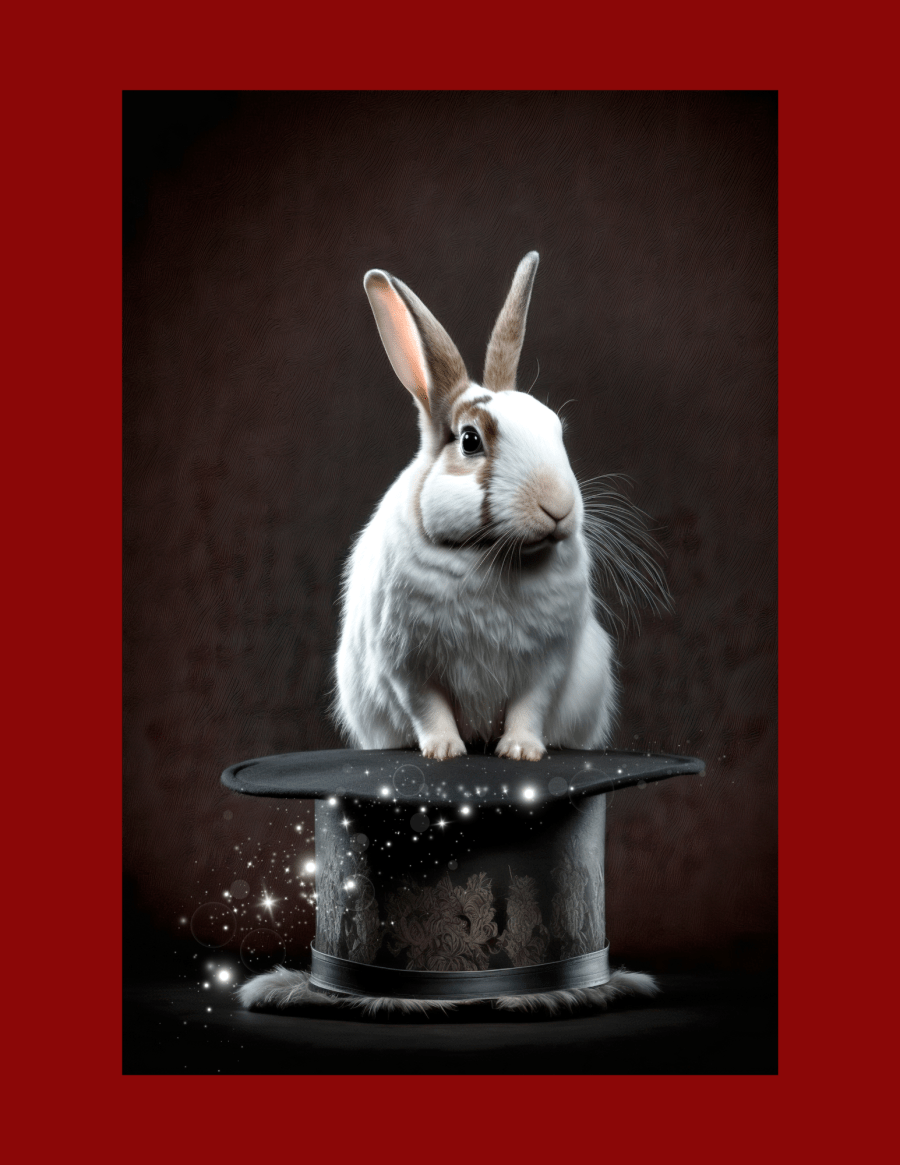
Pulling the rabbit out of the hat.

An activity that produces something living and viable outside of ourselves—that is creative magic. At times, we may even have to act as if in order to set the stage for what is, the reality we desire.
 
The part we can’t seem to get around: the magus inside also likes to imagine how life would be if anything could be done differently. As the magic in us stares down the daily mundane and those pesky, limiting laws of cause and effect, the heart is also innately considering how we might manipulate those realities for more desirable results . . .  if we could.

What if we could?

What if?


Your heart holds the paradigm shift from just writing to real writing and just reading to real reading.

But before you try to pull a rabbit out of a hat, you need time to set the stage. And, no worries. Your heart already has the ability to see things not only as what they are, but also as what they can be.

Yep, there’s a rabbit down there. I see it.

Sign up to receive Julie’s quarterly newsletter here.

Advertisements

About the Author

Julie is a multi-genre author. Her articles and stories are featured in self-help, inspirational, trade, and fiction publications including Writer’s DigestCoping With CancerComplete Woman, and Daily Meditation.

She is the 1999 Writer’s Digest Writing Competition Grand Prize Winner for her horror short story, “House Call.”

Her seventh novel,  Falling Stars, is an eleven-time award winner, including the 2023 International Firebird Awards First Place in Urban Fantasy, the 2023 Pinnacle Book Awards Best Book in Fantasy, and the 2023 Outstanding Creator Awards First Place in Medical Fiction.

Other awards include Fade In magazine’s 2005 Screenplay Semi-Finalist for the thriller, Grave Jumper, and the 1998 Writer’s Digest Writing Competition First for her stage play comedy, Garage Sale.Julie works as a remote freelance ghostwriter and editor for julierogersbooks.com and authorsassistant.com in Eureka Springs, Arkansas, the setting of her seventh book, Falling Stars. She lives there with her husband, Jim, a primary care physician, their furry children Madison, Kate, Sukie, and mollusks Dewey, Decimal, and System. She has one son, Seth, who works as a video game level designer in Austin.

Tips for Writing Your First Sci-Fi Novel by Marcie Sullivan


Photo via Pexels

Tips for Writing Your First Sci-Fi Novel

Embarking on the journey of writing your first science fiction novel is an exciting endeavor that blends imagination with storytelling. This genre, known for its boundless potential and exploration of the unknown, offers a unique canvas for writers. The key to success lies in understanding the nuances of the genre and mastering the craft of writing. Here’s a guide to set you on the right path.

Secure Your Creative Endeavors

In the process of crafting your first science fiction novel, prioritizing the security of your manuscript is essential. Your novel represents a unique blend of creativity and dedication, and it’s imperative to shield these intellectual efforts from potential compromise. Utilizing effective security measures, like password protection, is a practical approach to safeguard your documents. This strategy not only fortifies your work against unauthorized access but also provides the tranquility needed to concentrate on your creative endeavors. By learning how to password protect a PDF, you can ensure that your novel remains your exclusive creation. Remember, this novel is more than just a story; it also embodies valuable intellectual property that merits vigilant protection.

Anchor Your Novel in a Core Idea

A compelling science fiction novel is often anchored in a strong, clear core idea. This idea serves as the foundation of your story, guiding the narrative and giving it purpose. Whether it’s an exploration of an advanced technology, a unique take on time travel, or a vision of a dystopian future, your core concept should be intriguing and thought-provoking. It should captivate readers’ imaginations and set the stage for the narrative journey they are about to embark on.

Create Relatable Characters

Characters are the heart of any story, and in science fiction, they become the bridge between the reader and the fantastical elements of your world. Crafting well-rounded, relatable characters is essential. These characters, human or otherwise, should possess depth, flaws, and motivations that resonate with readers. They are the lenses through which your audience will experience the wonders and challenges of the sci-fi world you’ve created.

Weave an Immersive Setting

The setting in a science fiction novel is not just a backdrop; it’s a character in its own right. Your setting should be richly detailed and fully realized, immersing readers in a world that is both fantastic and believable. Whether it’s a distant planet, a futuristic city, or an altered version of our own world, your setting should captivate the reader’s imagination. It should be so vividly described that readers can effortlessly visualize and lose themselves in it.

Maintain Logical Consistency

While science fiction is a genre that thrives on imaginative and sometimes outlandish concepts, maintaining internal consistency is crucial. Establish logical rules for the science or technology in your story and adhere to them. This consistency anchors your story in a semblance of reality, making the unbelievable, believable. It encourages readers to suspend their disbelief and fully engage with your narrative.

Fuel Your Story with Tension

High stakes and constant tension keep readers turning pages. Introduce challenges and obstacles that your characters must navigate. These trials not only drive the plot but also facilitate character development, revealing their strengths, weaknesses, and true nature. The tension can stem from external threats, internal conflicts, or the very elements that make your world unique. It’s this tension that transforms a story from a simple narrative into a compelling journey.

Engage with Beta Readers

Feedback is a vital element in refining your novel. LinkedIn suggests sharing your work with beta readers, writing groups, and even friends and family for fresh perspectives and invaluable insights. These early readers can highlight strengths, pinpoint weaknesses, and suggest improvements. Their feedback provides a glimpse into how your novel might be received by a broader audience, allowing you to make necessary adjustments before the final publication.

Writing your first science fiction novel is a journey filled with challenges and rewards. Every great journey begins with a single step, and yours starts here. Let your imagination guide you, and may your novel not only reach the stars but also touch the hearts and minds of your readers.

Anthony Avina is an author, a journalist, and a blogger who seeks to use his creativity to entertain as well as inspire. He looks forward to hearing from you!

Guest Post: Breast Cancer Patient and Awareness Advocate by Lisa Braxton (Blog Tour for Author’s “Dancing Between the Raindrops”

I had an appointment for a breast MRI and biopsy on my husband’s birthday, May 1, 2019. We spent that day at the imaging center. It was a cold, drizzly, gunmetal-gray day out. The rain was just spitting. I spent hours in the imaging machine, holding onto the panic button they give you, earplugs in my ears. I was praying the whole time with my eyes pressed shut: Please, please, please, God. Let me not have breast cancer.

The test was grueling. I was in the MRI machine for hours. They’d numbed my breasts; I could hear the biopsy machine making that whirring, drilling sound, and I was thinking, I cannot wait to get out of this thing. When they rolled me out, my back was killing me—you’re in there for so long with your arms stretched out in front of you. The surgeon who did the biopsy said, “I don’t like to let people wait around with false hope. Lisa, I want you to know that the area I saw had jagged edges around it. It looks like it’s cancer.”

Advertisements

I could not believe it. I’ve been such a health nut my entire life, and I never thought it would happen to me. I work out a lot—tennis, the gym, ice skating. When she told me it looked like breast cancer, I felt like I was floating over myself and the doctor in the exam room, watching the conversation. All I could think about was dying. I wondered how much time I had.

Fast forward to now. After a lumpectomy and being prescribed a pill I take every day to rid my body of the hormone that fed my cancer, I’ve been cancer free for five years. In that time, without intending to, I’ve become a breast cancer awareness advocate. I appeared in a local television commercial celebrating the milestone anniversary of Dana Farber Cancer Institute. I walked in the Making Strides Against Breast Cancer fundraiser sponsored by the American Cancer Society, wrote a column for a local magazine about my breast cancer journey, and participated in a photographic exhibit of cancer survivors focused on sharing stories of faith and survivorship to encourage the demystification of cancer. 

One event I reflect upon the most is a “fireside chat” in which another survivor and I spoke to high school and college students who are doing internships at Dana Farber. I spoke about self-care, how I met the challenges of the disease and the importance of empathy on the part of health care providers. The future health care professionals were engaging, had many questions and indicated that they benefited in their learning process by hearing from us.

Now each May 1st I focus on celebrating my husband’s birthday with him and he celebrates me for attending to my breast heath and advocating for awareness.

Summer 2023

Book Summary

Dancing Between the Raindrops: A Daughter’s Reflections on Love and Loss, is a powerful meditation on grief, a deeply personal mosaic of a daughter’s remembrances of beautiful, challenging and heartbreaking moments of life with her family. It speaks to anyone who has lost a loved one and is trying to navigate the world without them while coming to terms with complicated emotions.

Lisa Braxton’s parents died within two years of each other—her mother from ovarian cancer, her father from prostate cancer. While caring for her mother she was stunned to find out that she, herself, had a life-threatening illness—breast cancer.

In this intimate, lyrical memoir-in-essays, Lisa Braxton takes us to the core of her loss and extends a lifeline of comfort to anyone who needs to be reminded that in their grief they are not alone.

Publisher: Sea Crow Press

Print length: 158 pages

Purchase a copy of Dancing Between the Raindrops on

Amazon:  https://www.amazon.com/Dancing-Between-Raindrops-Daughters-Reflections/dp/1961864088/

Barnes & Noble: https://www.barnesandnoble.com/w/dancing-between-the-raindrops-lisa-braxton/1144935014?ean=9781961864085

You can also add this to your GoodReads reading list:

https://www.goodreads.com/book/show/208947069-dancing-between-the-raindrops?from_search=true&from_srp=true&qid=WYkO4vLd07&rank=2

Advertisements

About the Author

Lisa Braxton is the author of the novel, The Talking Drum, winner of a 2021 Independent Publisher (IPPY) Book Awards Gold Medal, overall winner of Shelf Unbound book review magazine’s 2020 Independently Published Book Award, and winner of a 2020 Outstanding Literary Award from the National Association of Black Journalists and a Finalist for the International Book Awards. She is also an Emmy-nominated former television journalist, an essayist, and short story writer. 

She is on the executive board of the Writers Room of Boston and a writing instructor at Grub Street Boston, and currently serves as President of the Greater Boston Section of the National Council of Negro Women and is a member of the Psi Omega Chapter of Alpha Kappa Alpha Sorority, Inc. 

You can follow the author at:

Website: https://lisabraxton.com/

Facebook: https://www.facebook.com/lisa.a.braxton/

Twitter: @Lisaannbraxton  OR @LisaReidbraxton

Instagram: @lisabraxton6186

Linked In: https://www.linkedin.com/in/lisabraxton/

Take a Food Journey Around the World!

Blog Tour Calendar

April 29th @ The Muffin

Join us at WOW as we celebrate the launch of Lisa Braxton’s memoir Dancing Between the Raindrops. Read an interview with the author and enter for a chance to win a copy of the book.

https://muffin.wow-womenonwriting.com

May 1st @ Beverley Baird

Lisa Braxton, author of the memoir Dancing Between the Raindrops, shares the experience of being an adult orphan.

https://beverleyabaird.wordpress.com

May 3rd @ A Storybook World

Start the month with a touching memoir. Read more about Lisa Braxton’s Dancing Between the Raindrops.

https://www.astorybookworld.com

May 3rd @ Beverley Baird

Bev reviews Dancing Between the Raindrops, a memoir by Lisa Braxton.

https://beverleyabaird.wordpress.com

May 5th @ Choices

How important is it to be part of a writing group? Dancing Between the Raindrops author Lisa Braxton gives her opinion on writing groups.

http://madelinesharples.com

May 6th @ Anthony Avina

Stop by for a surprise guest post with Lisa Braxton, author of the memoir Dancing Between the Raindrops.

http://www.authoranthonyavinablog.com

May 8th @ The Shaggy Shepherd

How to answer the question “Do You Have Kids?” with guest post Lisa Braxton, author of the memoir Dancing Between the Raindrops.

https://theshaggyshepherd.wordpress.com

May 9th @ Boys’ Mom Reads!

Find out how a Boys’ Mom feels about the memoir Dancing Between the Raindrops with today’s review.

https://karensiddall.wordpress.com

May 13th @ Word Magic

Stop by for a guest post about growing up in the family business by Lisa Braxton, author of the memoir Dancing Between the Raindrops.

https://fionaingramauthor.blogspot.com

May 14th @ What Is That Book About

Looking for a new book for your TBR pile? Stop by for a spotlight on Lisa Braxton’s memoir Dancing Between the Raindrops.

www.whatisthatbookabout.com

May 15th @ From the TBR Pile

Dancing Between the Raindrops author Lisa Braxton will be visiting with a guest post today.

https://fromthetbrpile.blogspot.com

May 16th @ Fancy That!

Lisa Braxton, author of Dancing Between the Raindrops, is at Fancy That today writing about grieving the death of elderly parents.

https://fancythatblog.com

May 23rd at Words by Webb

Read a review of Lisa Braxton’s Dancing Between the Raindrops today.

https://www.jodiwebbwriter.com/blog

May 24th @ World of My Imagination

Enjoy Nicole’s review of Dancing Between the Raindrops, a memoir by Lisa Braxton.

Guest Post: A New Dawn for Your Imagination: Pathways to Creative Renewal by Marcie Sullivan

Image: Freepik

A New Dawn for Your Imagination: Pathways to Creative Renewal

In a rapidly evolving landscape, your creativity is one of your most valuable assets. It’s the wellspring of innovation and personal fulfillment, yet it often lies dormant, stifled by routine and responsibilities. The journey to reinvigorate your creative essence demands deliberate action and a shift in mindset. This guide from Author Anthony Avina unveils practical strategies to breathe life into your creative pursuits and transform your everyday experiences.

Move to Create

Dive into physical activity as a gateway to unlock your mind’s creative power. The link between physical exertion and cognitive agility is well-documented, suggesting that a simple change in your physical state can catalyze creative thought. From a vigorous morning jog that clears the mental fog to the rhythmic motions of a dance class sparking unexpected solutions, movement is a profound enabler of creative leaps. Let your body lead, and your mind will follow, often to places of unexpected inspiration and innovation.

Celebrate Your Wins

Acknowledgment of your successes, irrespective of scale, is pivotal in nurturing a creative mindset. This practice of celebrating victories, be it mastering a new skill or completing a project, cultivates an atmosphere of positivity and self-belief. It reinforces the understanding that creativity is not a destination but a journey with milestones worth recognizing. Such recognition not only enhances motivation but also bolsters confidence, creating a virtuous cycle that feeds into your creative endeavors.

Earning a Degree

Earning a degree can significantly reinvigorate your creativity. The flexibility and self-directed nature of online education make it feasible to explore your creative potential. As one example, earning a bachelor of computer science allows you to immerse yourself in the realms of IT, programming, and computer science theory. Engaging in this transformative journey opens doors to innovative opportunities where technology and creativity intersect.

Embrace Collaboration

Creativity thrives in the exchange of ideas and collaborative endeavors. Engaging with others, sharing perspectives, and brainstorming solutions not only broadens your understanding but often leads to breakthroughs unattainable in isolation. This collective creative process fosters a sense of belonging and contributes to a culture of innovation. By valuing diverse viewpoints and harnessing the synergy of collaboration, you set the stage for remarkable discoveries and creative achievements.

Find Fulfillment in Your Job

Unlock the door to a more fulfilling career by exploring opportunities that align with your passions, values, and skills, leading to personal growth and job satisfaction. Finding a job that feeds your creative soul demands crafting a resume that showcases your unique talents and aspirations. Tailoring your resume for each role, particularly by adjusting the skills section’s keywords to match employer needs, is essential. A stellar resume should highlight your most relevant experiences in your professional history and education, making you a standout candidate. Online guides will teach you how to write a resume.

Seek Feedback

The pursuit of creative excellence is a journey marked by continuous learning and iteration. Soliciting feedback from peers and mentors offers invaluable insights that can refine your ideas and elevate your work. Constructive criticism, while sometimes challenging to receive, is a cornerstone of growth, pushing you to question, adapt, and improve. Embrace this process with an open heart and mind, as it is instrumental in transcending creative boundaries and achieving excellence.

Cultivate Journaling

Journaling is a powerful tool for creative exploration, offering a private space to record thoughts, ideas, and reflections. This practice enhances self-awareness and provides clarity, serving as a repository of inspiration that can be revisited and expanded upon. Whether capturing fleeting thoughts, sketching, or detailing project progress, journaling is a conduit for self-expression and a catalyst for creative growth.

Practice Mindfulness

Mindfulness meditation and breathing exercises are potent practices for enhancing creativity. They foster a state of present-moment awareness, reducing stress and clearing the mental clutter that often obstructs creative thought. By cultivating mindfulness, you open a gateway to deeper concentration, emotional balance, and a heightened sense of clarity, setting the foundation for creative insights to emerge.

Reinvigorating your creativity is an active, ongoing process that intertwines the physical, mental, and emotional aspects of your being. Through intentional practices like physical activity, celebrating achievements, career exploration, and collaboration, you unlock new dimensions of creative potential. Embrace this journey with an open mind and a resilient spirit, and watch as your creative endeavors flourish, enriching both your personal and professional life.

Guest Article: Jumpstart Your Writing Side Hustle: Turning a Hobby into a Business by Virginia Cooper

Photo Credit: Ketut Subiyanto via Pexels

Jumpstart Your Writing Side Hustle: Turning a Hobby into a Business

Are you looking to turn your passion and hobby into a profitable business? Many of the world’s most successful entrepreneurs have started this way – from kitchen-table businesses to tech giants. If you have an idea, the right approach, and plenty of dedication, you can make it happen. Here are some tips from Author Anthony Avina’s Blog for turning your hobby into a business.

Part-Time Business

A great way to start is by turning your writing hobby into a side hustle. This will help you test out the waters without having to invest too much time or money. You can keep your day job while working on your side hustle in your spare time until it becomes profitable enough to transition into full-time work. This also allows you to gauge interest in your product/service and adjust accordingly before committing fully.

Create an LLC

Once you decide to become serious about your business venture, registering as an LLC is important for protecting yourself and other stakeholders involved in the business. With the help of a formation service, you can register your small business quickly and easily online with just five simple steps. 

Registering quickly is important since it will allow you access to key resources such as venture capital funds, banking credit lines, and even free marketing support services offered by banks and chambers of commerce.

Establish a Business Plan

Developing an effective business plan is key for any successful venture regardless of size or industry. Your plan should include research about competitors in the market, production plans, financial forecasts, strategy for marketing and promotion, goals, staffing plans, etc. 

Writing up this plan will give potential investors an idea of what they are investing in and will also help provide guidance throughout the life cycle of the project. It’s also recommended that entrepreneurs update their plans regularly so they remain relevant over time despite changing market conditions or external factors influencing their businesses negatively or positively.

Come Up with a Marketing Plan

Having an effective marketing strategy is essential for any company looking to increase sales and gain more customers. A well-thought-out marketing plan should include research about target audiences, advertising campaigns, website design considerations, and more. Utilizing all available channels effectively can help maximize exposure leading up to launch day and beyond.

Build Your Online Presence

In today’s online marketplace, a well-designed website that accurately represents your brand is crucial for successful marketing. Providing customers with user-friendly ecommerce platforms can build trust quickly and lead to increased sales. Offering a superior web presence can give you an edge over competitors who don’t prioritize these aspects.

It’s important to use SEO strategies to get the most exposure online, so look into how to use keywords strategically. You’ll also want to rely on PDFs over other file types for online posts because they are the most SEO friendly. You can try this page to convert your other digital files into PDFs for free. Just drop in the file and let the tool work its magic!

Locate Funding

To secure funding for their project, startups can explore various options such as angel investors, crowdfunding sites, and grants from government programs. Careful research must be done to ensure that the best possible investment resources are obtained, which will help the project run successfully without running out of funds halfway through. This is crucial for completing the project successfully.

Use a Unified eCommerce Platform for Your Store

Unified ecommerce platforms can help to facilitate a smoother online purchasing process for customers, resulting in an increased likelihood of sales taking place. This is due to the better user experience, which can translate to higher profits over time through increased customer loyalty. Providing better service than the competition can help entrepreneurs gain an edge and incorporate features that can further improve the overall user experience.

Get Your Writing Business Started

Starting a business requires dedication and commitment to make your entrepreneurial dreams come true. It entails considering several factors, such as funding the operation, setting up an LLC structure, and facilitating online purchases via an ecommerce platform. By following these essential tips, you can increase your chances of success in the long run.

Are you looking for more great writing-related content? Then check out Author Anthony Avina’s Blog!

You can learn more about writer Virginia Cooper using this link!

http://learnaliving.co/

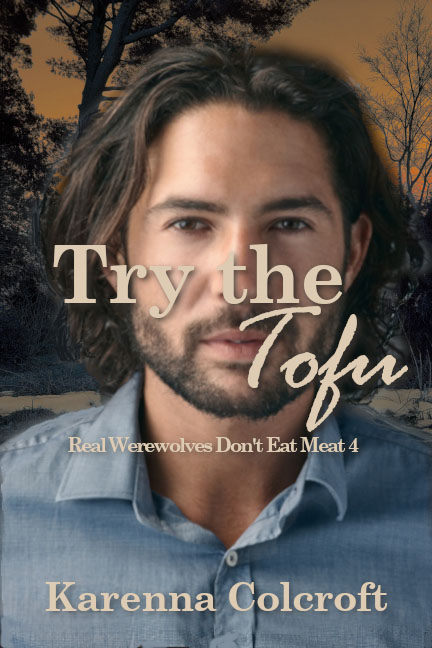
Blog Tour: Try the Tofu (Real Werewolves Don’t Eat Meat Book 4) by Karenna Colcroft Guest Post + Promotional Post

My Co-Writers

Some writers have human co-writers with whom they work on books, or at least are friends with other humans who help them with the writing process. I do have human writing friends.

I also have cats. Two of them. Both of whom watch me judgmentally every time I sit down to write anything. Or look at social media. Or watch TV. Actually, they watch me judgmentally anytime I do anything other than feeding them…

In the photo you can see them judging me for wanting to take their picture. The tortoiseshell is Shinobi; the tuxedo cat is Moony. Shinobi is as old as my writing career; we got her as a kitten in May 2009, while my first book was published in March of that year. We’ve had Moony since March 2014. (NOTE to blog host: Insert attached photo here and delete this sentence, please.)

Like many pet owners, I talk to my cats. Including about plot points in my books. They aren’t usually very helpful in figuring things out, though. Their ideas simply aren’t useful.

Writing can be a very solitary profession. One sits at their computer day after day hoping coherent words come out of their fingers and onto the screen. As a writer, I wrangled with plots, with the characters—who can be even more stubborn and judgmental than my cats sometimes—and with the realization that once I finish writing, I have to edit the dang thing. While I do have friends, and know other writers, and have friends who are writers, most of the time I’m on my own doing this.

Except for the cats. While they do occasionally wander off to chase each other, grab a snack, or, in Moony’s case, chirp at the birds congregating outside my window, they’re always here. They aren’t big fans of the fact that I write about werewolves, though they give me disdainful looks when I suggest werecats instead, but nonetheless they stick by me, as long as I remember to feed them.

I wonder if Kyle Slidell, the vegan werewolf in my Real Werewolves Don’t Eat Meat series, would want a pet cat? Then again, his mate Tobias probably wouldn’t let him have one…

As with all of my books, my revising and re-editing of the just-released updated version of Try the Tofu (Real Werewolves Don’t Eat Meat 4) was accomplished with the help and encouragement of Moony and Shinobi. I hope their fur didn’t get stuck in the pages.

Try the Tofu - Karenna Colcroft

Karenna Colcroft has a new MM paranormal romance out, Real Werewolves Don’t Eat Meat book 4: Try the Tofu. And there’s a giveaway.

As Alpha Tobias Rogan and his mate Kyle Slidell prepare to travel to the regional Alpha gathering, Tobias receives a threatening phone call. If he brings his mate to the gathering, Kyle will not return to Boston. But stubborn Kyle, believing the threat is actually against Tobias, refuses to stay home.

Tobias’s foreboding is proven correct when a visiting stranger challenges Zane Wolfskin, Arkhon of the Northeast Region, to a fight for rank–and wins. Tobias and his allies learn that the challenge was part of a larger plan to destroy their region, something Tobias will not allow. To prevent disaster, Tobias must challenge the new Arkhon himself. But can he survive the attempt?

Warnings: reference to past sexual abuse and trauma, PTSD, violence

About the Series:

Kyle Slidell didn’t move to Boston expecting to be changed into a werewolf. But that’s what happened. He can’t control whether he shifts at the full moon, but he can damn sure continue being vegan–even in wolf form.

Tobias Rogan, Alpha of Boston North Pack, never expected to fall in love with anyone, let alone a man. A male Alpha is not supposed to have a male partner. But when he meets Kyle, he’s immediately attracted. And after Kyle is changed, Tobias realizes the truth: Kyle is not only his partner, but his mate.

The werewolf world isn’t a simple place, and Kyle and Tobias are thrown into the middle of conflict within and among the packs of the United States–a conflict that extends all the way to the top of the werewolf hierarchy. Can they and their love survive what they face?

Get It On Amazon


Giveaway

Karenna is giving away a $10 Amazon gift card with this tour:

a Rafflecopter giveawayhttps://widget-prime.rafflecopter.com/launch.js

Direct Link: http://www.rafflecopter.com/rafl/display/b60e8d47290/?


Excerpt

I entered our room and closed the door. Kyle flopped down on the bed again. “Sleep.”

“Food,” I said. “Plus our bags will be here any second, so you wouldn’t be able to get much sleep.” I sat on the bed beside him. “What you said earlier.”

“Yeah.” He sat up and took my hand. “I love you. Things have been rough as hell on both of us the past few months, and sometimes it’s hard not to think that they’ve been rough because of us. But we didn’t make bad things happen, and I wouldn’t have gotten through everything if it hadn’t been for you. I don’t want to lose you.”

“I love you too.” My heart melted. No matter how much I wanted to shut him out, I didn’t know whether I would ever actually be able to do it. We had been through hell, no question, with all the times I’d almost lost him, not to mention my own brush with death. But we’d faced it together. He’d brought back a part of me I hadn’t even realized existed, let alone missed, until he made me aware of how long I’d lived without it.

That didn’t mean I was ready to let go of the idea that we might be better off apart. A lot would depend on what happened over the next several days. I couldn’t stand the prospect of him being in danger, and if things went as badly as they had the last time we’d come to Zane’s, I would have some serious decisions to make.

“Tobias, don’t,” he said softly. “Please don’t think about the bad things. We’re here together in our honeymoon suite.” He chuckled. “Zane put us here for a reason, you know. I don’t know if you’ve talked to him about us or if he just figured something out the way he seems to do, but he had an ulterior motive for giving us this room.”

“Yeah, he probably did.” I had to smile at that. Zane was not only tolerant of one of his alphas having a male mate, he wholeheartedly supported the idea. In September, he’d treated Kyle and me the same as any other mated pair, and that meant more than I could express. Just as some werewolves were stuck in the past when it came to the idea of a woman being in charge, some were mired in prejudice and hatred of those who were “different.” Pretty ironic considering that werewolves were different by definition.

But for Zane, Kyle and I weren’t different. He wouldn’t accept any hatred toward us from any other attendees of the gathering, and if he suspected Kyle and I were having problems, it wouldn’t be surprising for him to try to fix them.

“There’s going to be a lot going on.” Kyle moved closer against me. “I know you’ll be busy with all the meetings and things, and I know you have a lot on your mind. But please, Tobias, while we’re here, let’s try to spend some time on us. I want things to be good again.”

“Yeah, me too.”

I put my arm around him and held him tightly. My mate. My lover. The man who had changed my life for the better, bringing me so many good things I’d been missing without even realizing it. I loved him, even if things weren’t great between us right then. He was right to have insisted on coming with me. We could spend time together and try to make things better.

Back in Boston, I had to attend to the pack’s needs. Here, even though I would have to sit in meetings that dealt with anything from changes in protocol to sorting out which pack had the right to hunt deer near the Kancamagus Highway in New Hampshire, I didn’t have to be in charge, and that meant I might have time to actually talk to Kyle. And to listen.

We both turned at the same time and our mouths were together before we had time to think. His tongue touched my lips, and I opened to let him in. The kiss was both tender and rough and sent heat and arousal through to my core.


Author Bio

Karenna Colcroft

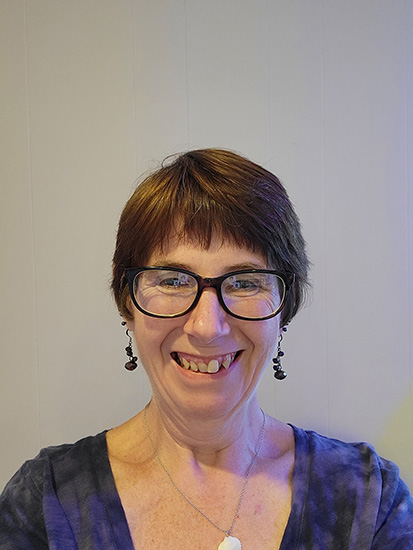
Karenna Colcroft lives just north of Boston, Massachusetts, and has been in love with the city since childhood, though she has yet to encounter any werewolves, vampires, or other paranormal beings in her travels. At least none that she knows of. Though since in her non-writing life, under another name, she offers services as a channel and energy healing practitioner, it could be said that she herself is a paranormal being. The jury’s still out on that.

Karenna is a polyamorous, nonbinary human who splits time between the home she shares with her husband and the one she shares with her committed partner. She also has two adult children and a bonus son, three grandchildren, and two and a half cats. (Half in terms of time the cat lives with her, not in terms of the cat itself…)

Find out more about Karenna online at http://www.karennacolcroft.com or https://www.facebook.com/KarennaColcroft. You can also sign up to receive a free short story, and be added to Karenna’s mailing list, at https://karennacolcroft.com/get-your-free-short-story/.

Author Website: https://karennacolcroft.com

Author Facebook (Personal): https://www.facebook.com/kimramseywinkler/

Author Facebook (Author Page): https://www.facebook.com/KarennaColcroft

Author QueeRomance Ink: https://www.queeromanceink.com/mbm-book-author/karenna-colcroft/

Author Amazon: https://www.amazon.com/stores/Karenna-Colcroft/author/B0031HAOUK

Other Worlds Ink logo

Guest Post: Inspiration behind Dead End Deal by Allen Wyler

I am so thrilled to host author Allen Wyler as he discusses the inspiration behind his award-nominated novel, Dead End Deal!


My 2013 Thriller Award nominee, Dead End Deal, has recently been republished by Stairway Press and is available on Amazon in either paperback or Kindle format. 

This fast-paced thriller was originally published by Astor+Blue (New York), but when they were sold to a London publishing house, I didn’t sign a contract with them for a variety of reasons. And so, without a publisher, the book simply stopped being sold and promoted. Then a year ago I pitched the idea of republishing it to Stairway Press, my present publisher. They jumped on it. 

Got the idea for the story when I was a guest lecturer in Seoul and was writing stand-alone medical thrillers instead of my present cybercrime series. Here’s a thumbnail synopsis of Dead End Deal:

When top-gun neurosurgeon John Ritter is framed for the murder of patients in a Seoul Korea hospital he becomes the focus of an intense police manhunt in addition to being the target of an international hit man. Without a passport or friends, he must find a way to escape Korea and stay alive long enough to return safely to the United States to clear his name and eliminate the bounty on his life. 

This book remains one of my favorite works. I hope that readers will download a free sample from Amazon and give the opening chapters a test read: 

Amazon.com: Dead End Deal: 9781949267778: Wyler, Allen: Books

A person wearing safety glasses

Description automatically generated

Brief Bio:

A person wearing glasses and a black turtleneck

Description automatically generated

Allen’s thrillers have twice been nominated for the prestigious Thriller Award. He has served on the Board of Directors of the International Thriller Writers and is also an active member of the North American Crime Writers and Mystery Writers of America. He lives in Seattle.

Go to: https://allenwyler.com/ for more details.

Guest Post: From Sidelined to Spotlight: Tips for Artists to Get Discovered by Virginia Cooper

Hey guys! Today I am happy to share this amazing guest post/article from writer Virginia Cooper, who is here to share some tips on how artists in all fields can get their work discovered. I hope you will all enjoy this and be sure to follow the author’s website to learn more.


From Sidelined to Spotlight: Tips for Artists to Get Discovered

Being a creative individual – whether it’s through writing, fashion design, art, or craft-making – can be a challenging and rewarding career path. However, getting your work discovered can be a daunting task for many creatives who are just starting out. Courtesy of Author Anthony Avina’s Blog, here are some creative ways for artists, makers, and fashion designers to get discovered.

Powerful Online Presence

One of the most effective ways for writers and creatives to get discovered is by building a strong online presence. Social media platforms can be incredibly helpful in getting your work in front of a wider audience. Posting high-quality photos of your work, creating engaging content, and using appropriate hashtags can help increase your chances of being discovered by potential customers and collaborators. Additionally, having a personal website or online portfolio that showcases your work in a professional manner can help you establish credibility and make a lasting impression on potential clients or collaborators.

Doing Business 

Attending industry events such as trade shows, conferences, and exhibitions can be instrumental in getting your work viewed by industry professionals and potential buyers. These events offer opportunities to make new connections, learn about current trends, and gain exposure for your brand. Come prepared with business cards and a clear pitch about your work to make a lasting impression.

You might also want to consider setting up your own limited liability company (LLC) for the legal protections and tax benefits that come with it. If you aren’t sure how to start an LLC in California, try enlisting the help of an online formation service that’s already well-acquainted with local state business regulations.

Enter Competitions

Submitting your work to competitions and juried shows can be a great way to gain recognition and exposure for your work. Winning or placing in a competition can be a powerful tool for gaining credibility and attracting potential buyers or collaborators. Research the various competitions and shows that align with your artistic or design aesthetic, and be sure to submit your best work.

Work Together With Other Artists

Collaborating with other artists, makers, and fashion designers can help increase your exposure and generate new ideas and inspiration. Seek out like-minded individuals who share similar values and aesthetics, and explore opportunities for collaboration. Collaborating on a project or event can also help generate buzz and create excitement around your work.

Speaking of collaboration, if you set up your business and you’re looking for investors, it might be a good idea to take a moment and check your credit report first. After all, the last thing you want is an unwelcome surprise just as your business is starting to grow and catch some attention.

Traditional Marketing

While digital marketing strategies can provide great results, using traditional methods should not be underestimated. Creating and dispersing flyers or postcards can be a successful approach to promoting your work locally. To target the right audience, consider placing your flyers in establishments that cater to the same demographic.

Local Events and Pop-Ups

Participating in local events or pop-up shops can be a great way to gain exposure for your work. Research events in your area that align with your brand or aesthetic, and consider reserving a table or booth to showcase your work. Pop-ups are also becoming increasingly popular and can offer a low-risk way to test the waters and gain valuable feedback from potential customers.

Workshops and Courses

Participating in workshops or courses that align with your creative interests can help you learn new techniques and expand your network. Seek out opportunities to learn from experts in your field, and use these events as an opportunity to network and make new connections. By attending creative events, you can spark your creativity and find new inspiration for your work.

In conclusion, there are many creative ways for writers, artists, makers, and fashion designers to get discovered. Building a strong online presence, attending industry events, trying old-school marketing methods, and showcasing your work at local events or pop-up shops can all be effective strategies for gaining exposure and getting your work in front of potential customers and collaborators. Remember to stay true to your artistic vision and values, and don’t be afraid to put yourself out there.

If you’d like to learn more about an acclaimed author, visit Author Anthony Avina’s Blog. Questions? Don’t hesitate to reach out!

Image via Pexels

You can learn more about writer Virginia Cooper using this link!

http://learnaliving.co/

Writing Journey Over Six Books (and 25 Years) by Jeannine Hall Gailey

Preamble

I started writing poetry when I was a kid. My mother let me borrow her college poetry textbook (circa 1969), and so I learned about T.S. Eliot, e.e. cummings, poetic forms, metaphors, and such things way before we would get around to them in school. I won a couple of poetry recitation contests in 5th and 6th grade, and the prizes were the collected works of Emily Dickinson and Carl Sandburg (I still have both). I think the first book of poetry I bought myself was the collected Edna St. Vincent Millay, when I was about 11.  

My first degree was in Pre-Med Biology. I meant to become a doctor—but I took creative writing classes on the side. When I graduated, my immunologist told me there was no way my health would allow me to complete medical school, as grueling as it was in the early nineties. So I decided to set my sights elsewhere. Soon I started my MA in English, where I was introduced to formalism, deconstruction, and other -isms (and made some good friends). When I graduated, looking to be able to support myself, I took a job as a technical writer. I was still writing poetry, but not seriously trying to publish, until a health crisis struck and I had to quit my tech job. My husband suggested pursuing my earlier dream of being a writer. 

Advertisements

Starting my Journey as a Poet

I tried out some local writer’s conferences (on scholarship) and seriously researching the literary magazine scene, volunteering for a few local literary magazines, and sending out work. I put together enough published poems for a chapbook, and got it published—my first little collection of poems, called Female Comic Book Superheroes.  I applied to a few low-residency MFA programs, and started one, taking a semester off in the middle for (once again) health issues. During that off semester, I sent out my first book manuscript and had it accepted, which was Becoming the Villainess, published by a (then-brand-new) press called Steel Toe Books in Kentucky.  The chapbook and book were considered “speculative” poetry at that time, not very common—poems about video game characters and superheroines were not common in the mainstream literary magazines, certainly not represented in the prizes. So I was a little out there. But it had a very positive response from young people, which I was very happy to see. If you can’t read and enjoy a few poems about comic book story arcs or mythological women turned to dragons when you’re young, then when can you?

Journey from First Book to Sixth

I felt very lucky with that first book—I had some modest success for a very new small publisher and a very small new poet. I was still able to travel more easily back then—making 20-hour car trips between Western Kentucky, Akron, and upstate New York. 

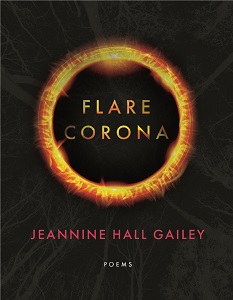
Now that I’m on my sixth book, Flare, Corona, with a great publisher, BOA Editions, I’m a little older, with a little more in terms of health challenges (MS among them), and I’m not physically able to do what I used to. However, with the pandemic, I learned some new skillsets—photography and gardening among them—and I read a lot. During the first months of the pandemic, I tried writing a few personal essays – and got them published in Salon. This book is the most vulnerable and more autobiographical than all my previous books. My previous books: Becoming the Villainess, She Returns to the Floating World, and Unexplained Fevers, I frequently wrote in persona—characters from mythology, fairy tales, anime, and traditional folk tales. In Field Guide to the End of the World, I created a fictional character navigating a fictional apocalyptic landscape (though it didn’t feel fictional in 2020!), so at least there was a little differentiation between the main speaker and myself. In Flare, Corona the speaker is essentially me, describing some incredibly difficult experiences. I had to figure out a way to write these poems in a way that was direct but felt comfortable. I found myself writing a kind of “mutant sonnet” as well as prose poems—forms that helped me hold difficult subject matter in place, so to speak. Some themes from previous books return—a supervillain perspective on coronavirus, apocalypse poems, writing about growing up in Oak Ridge and its radioactive contamination—and those poems allowed me to, for instance, address what I refer to in the book as “the plague years” in a way that felt real and not cliché. 

I’ve learned over the 20 or so years of publishing poetry books that one of the best things about the poetry world is making friends with the people in it—my publishers were, to the person, excellent human beings, and I consider many of them real friends and I truly grieved when I lost one of the them to cancer. I am very lucky to now have a bigger press—BOA Editions, who published some of my poetry heroes, like Dorianne Laux and Lucille Clifton—take my latest book, and I really am enjoying working with them as the book comes out into the world. Kindness to people becomes really important, and supporting other poets and writers as we go through our literary life is something I cannot recommend enough. I’ve been doing poetry book reviews for 20 years, and even if there is little monetary reward in it, I’m happy to have done it. Meeting friends I’ve made at a conference or a reading twenty years ago remains a great pleasure, even if I can’t travel as much as I used to. Community is important as a structure to support you and a structure to support other writers. 

My work itself continues to evolve—as I play around with form, and language, and persona. My next book must be impacted by the last few years, but I don’t want it to be purely about that, and may also involve some of the ideas that appeared in Flare, Corona—the desire or will to survive despite difficult conditions. There will probably be dragons in it.

Advertisements

About the Author

Jeannine Hall Gailey is a poet with multiple sclerosis who served as the 2nd Poet Laureate of Redmond, Washington. She’s the author of six books of poetry: Becoming the Villainess, She Returns to the Floating World, Unexplained Fevers, The Robot Scientist’s Daughter, Field Guide to the End of the World, winner of the Moon City Press Book Prize and the Elgin Award, and the newest, Flare, Corona from BOA Editions.  She has a B.S. in Biology and M.A. in English from the University of Cincinnati and an MFA from Pacific University. Her work appeared in The American Poetry Review, Ploughshares, and Poetry. Her web site is www.webbish6.com.