
Meet Me In London by Georgia Toffolo Review

I received a free copy of this book in exchange for a fair and honest review. All opinions are my own.

A hustle and bustle businessman hoping to convince his powerful parents that he isn’t alone asks a local bartender and working designer to pretend to be his girlfriend during the holidays, and soon sparks begin to fly in author Georgia Toffolo’s “Meet Me In London”, the first in the Meet Me series.

Advertisements

The Synopsis

What do you do when your fake engagement starts to feel too real?

Aspiring clothes designer Victoria Scott spends her days working in a bar in Chelsea and her evenings designing vintage clothes, dreaming of one day opening her own boutique. But these aspirations are under threat from the new department store opening at the end of her road. She needs a Christmas miracle, but one is not forthcoming.

Oliver Russell’s Christmas is not looking very festive right now. His family’s new London department store opening is behind schedule, and on top of that his interfering, if well-meaning, mother is pressing him to bring his girlfriend home for a visit. A girlfriend who does not exist. He needs a diversion. Something to keep his mother from interfering while he focuses on the business.

When Oliver meets Victoria, he offers a proposition: pretend to be his girlfriend at the opening of his store and he will provide an opportunity for Victoria to showcase her designs. But what starts as a business arrangement soon becomes something more tempting, as the fake relationship starts to feel very real. But when secrets in Victoria’s past are exposed, will Oliver walk away, or will they both follow their hearts and find what neither knew they were looking for?

The Review

The author did such a great job of finding that perfect balance between slow-burn romance and in-depth character development. The theme of the class difference between the working class trying to keep their businesses afloat in the face of a massive launch of a megastore in the same neighborhood paired well with the wealthy businessman desperate to find a way to maintain his business and help out the local community all at once.

Yet it was the characters themselves that brought the romance aspect of this holiday read to life. The haunting past that Victoria is desperate to steer clear of and the struggle of Oliver to reconcile the man his family expects him to be with the man he wants to be is so fascinating to read, and the way this plays into their growing feelings for one another makes this such a heartwarming holiday romance.

Advertisements

The Verdict

A heartwarming, engaging, and truly thoughtful read, author Georgia Toffolo’s “Meet Me in London” is the perfect first installment in this brilliant romance series. The harmonious way the holiday setting and the character growth came together in this story and the twists and turns this relationship takes the characters into, especially when neither was looking for a romance, to begin with, was so entertaining to read and readers will be eager for more entries in this series. If you haven’t yet, be sure to grab your copy today!

Rating: 10/10

About the Author

Georgia Toffolo is a broadcaster and TV personality. She has been a firm favourite with the public right from the start of her TV debut, Made in Chelsea, all the way to winning over the hearts of I’m a Celebrity Get Me Out of Here in 2018.

Georgia turned her eye to fashion and has curated two sell out collections with fashion retailer Shein. An ambassador for many British brands, both large and small, Georgia has also collaborated with Dyson, Baileys, Emma Bridgewater, Great British Racing, Foreo and Malibu amongst many more.

Most recently, Georgia has dived into the world of fiction by publishing her debut novel Meet Me in London with publishing house Mills and Boon. This is the first of an original series of four books following a group of lifelong friends and bringing personal anecdotes to life with humour and charm.

Buy Links: 

BookShop.org

Harlequin 

Barnes & Noble

Amazon

Books-A-Million

Powell’s 

Social Links:

Author Website

Facebook: @ToffTalks

Twitter: @ToffTalks

TikTok: @georgiatoffolo

Instagram: @georgiatoffolo

Goodreads

Advertisements

Here is an Excerpt from “MEET ME IN LONDON”

1

OLIVER RUSSELL COULD wrangle a wayward balance sheet back into the black, take failing stores apart and breathe new life into them, make difficult calls on staffing and personnel issues, make his shareholders happy and very, very rich. But he had never managed to curb his mother’s meddling in his private life.

Some things were just impossible.

Earth to Oliver. This is your mother asking about your Christmas Day plans. Will I need to set an extra place at the dinner table? Hint, hint. Your mother xx

Sitting on a stool at the bar in the upmarket wine bar The Landing, Oliver groaned as he interpreted the “hint” as yet another badly veiled attempt to discover his relationship status. Great one, Mum. Way to put pressure on a guy.

Could this week get any worse? He threw his mobile phone onto the sticky, beer-stained counter, gripped the tumbler in front of him and took a sip of a much needed fifteen-year-old Scotch. As the honey-colored syrup oozed down his throat and hit his stomach with a warming buzz he silently counted all the ways things had gone wrong in such a short space of time.

First mistake: allowing his mother to believe he was finally settling down when in reality his love life could only be described as…nonexistent. And now having to think up all the ways he could appease his parents over the holidays without going quietly insane.

Whereas other families had jolly traditions of games and church on Christmas Day, his parents’ idea of fun was to corner him in the living room, pin him down with laser stares and interrogate him for signs of commitment, a potential wife and progeny. A grandchild, or preferably many grandchildren, to spoil and give meaning to their later years, someone to carry on the family name and also an heir to entrust the business to. As an only child Oliver was expected to do so, as his father had done before him.

Trouble was, after his last romantic failure, settling down was not on Oliver’s bucket list. At least, not for a very long time.

Second mistake: in the spirit of keeping the family business afloat he’d agreed to clean up the mess his cousin was making of the new build. Ollie should have let him fall on his sword, but that would have meant his parents suffering too and there was no way he was going to allow that. So, here he was in a rowdy bar in Chelsea at ridiculous o’clock at night—or was it early morning?—having only just finished work, with the prospect of another seventeen-hour day tomorrow and the next day, and the next…

He took another sip of whiskey but almost choked as someone bumped into his hip, jolted his arm and sloshed the Scotch, rich but burning, down his throat.

“Hey, gorgeous.” A woman old enough to be his mother—and even though deep down he loved his mum, Lord knew he didn’t need two of them—appeared at his shoulder and beamed at him. Her eyes were wine-glazed and the lipstick smudged over her mouth almost up to her nostrils made her look like a startled fish. “I’ve got mistletoe, you know what that means, right?”

“That it’s time I left?” Scraping his stool back he stood, steadying the woman as she swayed, and then handed her into the waiting arms of her friends who were all dressed as…well, he wasn’t entirely sure, but there were glitter wings and feathery haloes involved, so he imagined they were supposed to be Christmas angels. In November?

As if knowing all about his work stress and family dilemmas even the music in the bar seemed to mock him. Too loud and too cheery and all about being home and in love at Christmas. He shuddered. No thanks.

Which brought him to his third mistake: choosing the bar from hell to drown his sorrows in. It wasn’t even December and yet here they all were screeching Christmas carols at the top of their tone-deaf voices. Christmas was everywhere. In the glittery tinsel that hung in loopy garlands across the ceiling and the fake tree in the corner. The soundtrack to the evening. The clothes people were wearing. Christmas was hurtling fast towards him and he was running out of time. He had so much to do to fix his first mistake before the doors of the new Russell & Co. department store opened, way behind schedule, but in time for the busiest, and therefore most lucrative time of the year.

He just needed some kind of miracle to make it happen.

On the counter his phone vibrated. He picked up and grimaced at another text, knowing what was bound to be coming but also knowing if he ignored her it would only get worse: Oliver? It’s a simple question. Blink once for yes. Twice for no. Are we finally going to meet your new girlfriend? Your mother xx.

Uh-oh. She was dropping the veiled interest and taking a more direct approach. This was serious.

He flicked a text back:

When your message flashes onto my screen it identifies you as my mother. There is also a little photo of you smiling at me at the top of your texts. You don’t need to tell me who you are.

He added two kisses, because, well, she was his mother: Ollie xx.

A pause while he watched three gray dots dance on his screen and then:

Not a single blink. How do I interpret that? We just want to see you happy. Your mother xxx

By happy, she meant married. As if you couldn’t be otherwise. Although he knew just as many people who were married and miserable as married and happy.

How was he even meant to send a blink by text anyway? He rolled his eyes instead. Nothing confirmed as yet.

Before he could say “Bah Humbug” her reply flashed on his screen:

When will you know? Your mother xx

Oliver: I don’t know.

If he told her the delightful Clarissa had moved on to a more malleable boyfriend his mum would be trying to arrange dates for him.

As if on cue another text arrived:

Is there something you’re not telling us? Is it over? So soon? Again? Oh, Oliver.

He could feel the disappointment coming through the airwaves as her next text quickly followed:

Perhaps I should invite the Henleys over on Christmas Day. I heard Arabella’s back from her Indian ashram trip and SINGLE. And stop rolling your eyes at me. Your mother xx

He couldn’t help but laugh at that, despite his growing frustration. He tried to stay noncommittal. Apparently, according to his ex, noncommittal was a strength of his:

Do NOT set any more dates up for me. Nothing’s confirmed re Xmas. I’ll let you know when I know.

Mum: At the new store opening then?

Just a matter of weeks away. She clearly wasn’t giving up. She never gave up. She wouldn’t give up until she was holding his first child. Or maybe his second—his second set of triplets.

That was the problem; she wasn’t giving up. He just needed to appease her. Or ignore her. So, he chose the latter.

Realizing he hadn’t finished his drink and grateful that the bar staff were now shuffling the off-tune singers outside, he sat back down and resumed his contemplation of the whiskey in front of him. At some point the staff would shuffle him out too, but for now he craved this brief peace and quiet, save for his mother’s infuriating but well-meaning texts and a muted conversation between the servers coming from a little room off to the side of the bar.

He could hear Paul, the guy who’d served him earlier say, “Hey, Vicki, are you OK to close up tonight? I promised Amanda I’d get home early. It’s our anniversary.”

“Of course.” A soft voice filtered through. “You helped me out by taking the early shift so I could teach my class, so I’m more than happy to hang around here for the stragglers. Sara said she’d stay on and help me clear up.”

Stragglers? Was that what he was now? Ollie looked around the bar at the three other solo drinkers—all male, all staring hopelessly into glasses of alcohol. He laughed to himself. Yeah, damned right he fitted that description; moving slowly. He didn’t want to hurry because the sooner he went home, the sooner tomorrow would arrive bringing with it all his problems.

“So how did class go today?” he heard Paul ask the owner of the soft voice. “Any more visits from the local cops?”

Police? Interesting. Ollie leaned forward to hear the mystery woman’s answer.

“Oh, that was all just a misunderstanding. Her brother gave her the iPad, Jasmine didn’t know it was stolen.” A pause. “Um. By her brother.” A rumble of soft laughter that sounded so free and bright had Ollie straining to see who the voice belonged to. It wasn’t the other woman who worked here because she was now collecting glasses from empty tables and her accent was Cockney through and through. This Vicki woman was from somewhere else. Southwest maybe, a tiny hint of something he recognized from holidays down in Cornwall. Laughter threaded through her intonation. “We sorted it out. The police dropped the charges against her.”

“So, one of the kids you’re teaching is harboring stolen goods. Great. You really need to stay away from trouble like that, Vicki.” Paul came back into the bar and started to wipe down the counter with a dishcloth.

The woman followed. “If I stayed away there’d be even more trouble for her, I’m sure. She’s so talented. You should see her designs, they’re stunning. Really fresh ideas. She could go a long way with the right guidance. I’m pulling out all the stops.”

“You’re too good to those kids.” Paul frowned. “Instead of focusing on your own career you’re spending all your energy on a bunch of no-hope teenagers who probably have never even heard the word gratitude.”

The Vicki woman turned and put her hands on her hips, giving Ollie full view of her face. Wow.

She was wearing a dress that looked like it had come straight out of the nineteen fifties; all slash neck and cinched waist in a fabric of cream and scarlet flowers. Her glossy, dark hair was loosely tied into a ponytail that was pulled forward over one shoulder. She had bright red lipstick on full lips—not smudged in the slightest, and the most intense dark eyes he’d ever seen.

In stark contrast her skin was pale; he wasn’t sure whether it was makeup or natural and he didn’t care. Oliver Russell had known a lot of beautiful women in his time, but she was next level. Quite simply, she was the most beautiful woman he’d ever seen.

That gorgeous red mouth curled into a smile, but a little frown appeared over her eyes. “Paul, honestly, they’re struggling in so many ways. They have so much hope and potential and no one else seems to care. If I don’t help them, then who will?”

“I’m just saying, be careful, that’s all. Your heart’s too soft, Vicki, you’re going to get hurt.”

“It’s a fashion design class for underprivileged kids, Paul. Not target practice in the ’hood. Trouble is, we’re fast running out of opportunities for them to showcase their work. All the design schools have organized shows already and we’re lagging behind. I’m going to have to be creative with my thinking.” Her eyes wandered over the bar and settled on Oliver, just for a moment.

Instinctively, he smiled. She gave him the faintest of smiles back and didn’t look away immediately. A look of surprise flickered behind her eyes. Even from here he could see the flush of her cheeks as their gazes met and, as if someone had flicked a switch, a rush of heat hit him too. Interest. The flicker of awareness. Brief. So brief he checked himself; maybe he’d imagined it?

Excerpted from Meet Me in London by Georgia Toffolo. Copyright © 2021 by Georgia Toffolo. First published in 2020 by Mills & Boon. This edition published in 2021 by arrangement with Harlequin Books S.A. 

Nanny Dearest by Flora Collins Review

I received a free copy of this book in exchange for a fair and honest review. All opinions are my own.

A young woman dealing with the loss of her father runs into her childhood nanny, and hoping to reconnect with a lost parental figure, begins to build a friendship with the woman. Yet not all is as it seems, and soon the tale of the nanny takes this woman down some dark and twisting roads in author Flora Collins’s novel, “Nanny Dearest”.

The Synopsis

Compulsively readable domestic suspense, perfect for fans of THE TURN OF THE KEY and THE PERFECT NANNY, about a woman who takes comfort in reconnecting with her childhood nanny after her father’s death, until she starts to uncover dark secrets the nanny has been holding for twenty years.

Set in New York city and upstate New York, NANNY DEAREST is the story of twenty-five year-old Sue Keller, a young woman reeling from the recent death of her father, a particularly painful loss given that Sue’s mother died of cancer when she was only three. At just this moment of vulnerability comes Anneliese Whitaker, Sue’s former nanny from her childhood days in upstate New York.

Sue, craving connection and mothering, is only too eager to welcome Annie back into her life; but as they become inseparable once again, Sue begins to uncover the truth about Annie’s unsettling time in the Keller house all those years ago, particularly the manner of her departure – or dismissal. At the same time, she begins to grow increasingly alarmed for the safety of the two new charges currently in Annie’s care.

Told in alternating points of views, switching between Annie in the mid-90s and Sue in the present day, this is a taut novel of suspense with a shocking ending.

Advertisements

The Review

What a shocking and engaging story! The author did such a great job of taking the time to build up these characters and their history together. The alternating chapters between the past as Annie settled into life as a nanny, to Suzy’s present-day struggles to find a connection to the parents she lost too soon, did an amazing job of peeling back the layers of this dark and haunting domestic drama, as secrets are revealed and relationships are changed forever.

What stood out to me was just how strongly the author covered parenthood, loss, and the grieving process. In particular, the focus on motherhood and the impact that things like loss can have on a mother’s relationship with their children and vice-versa was so fascinating to watch unfold. The exploration of loss really covered most of the main characters in this thriller and showed how that kind of pain could impact people in so many different ways, from internal struggles to chaotic and scary external experiences that impact everyone around them. 

The Verdict

A brilliant, thought-provoking, and highly entertaining thriller, author Flora Collins’s “Nanny Dearest” is a must-read novel of 2021. The haunting way the author explores the importance of relationships and bonds formed in childhood and the lengths some people will go to in order to regain something lost so long ago was eloquently written into the fabric of this narrative, and the shocking final pages will keep readers hanging on the author’s every word. If you haven’t yet, be sure to grab your copy today!

Rating: 10/10

Advertisements

About the Author

Flora Collins was born and raised in New York City and has never left, except for a four-year stint at Vassar College. When she’s not writing, she can be found watching reality shows that were canceled after one season or attempting to eat soft-serve ice cream in bed (sometimes simultaneously). Nanny Dearest is her first novel, and draws upon personal experiences from her own family history.

BUY LINKS:

Bookshop.org: https://bookshop.org/books/nanny-dearest/9780778311614 

IndieBound: https://www.indiebound.org/book/9780778311614 

Barnes & Noble: https://www.barnesandnoble.com/w/nanny-dearest-flora-collins/1138522927 

Amazon: https://www.amazon.com/Nanny-Dearest-Novel-Flora-Collins/dp/0778311619

Books a Million: https://www.booksamillion.com/p/9780778311614?AID=10747236&PID=7310909&cjevent=3aaff079426711ec81b7ebac0a82b839

SOCIAL LINKS:

Twitter: https://twitter.com/flococo16?lang=en

Instagram: @floracollins_author

Goodreads: https://www.goodreads.com/en/book/show/56472992-nanny-dearest

Here is an Excerpt from “Nanny Dearest”

“I WOULD RECOGNIZE THOSE bangs anywhere,” she says, clutching her large faux-leather bag, pink nails pinching the synthetic hide. I can see the laugh lines beneath her glasses’ rims. I swallow, my tongue darting between my back molars, bracing myself. 

“They stuck, I guess.” I laugh lightly, a meek trickle that escapes from my lips before I can stop it. She smiles again, this time with teeth, and I see how her front two overlap, barely discernible. But she’s standing so close that it’s hard not to notice.

“You live around here now?” She stopped me in front of a church and behind us the congregation trickles out, chatting among themselves. A child wails for lunch. The sun beats down hard and yellow, speckling the sidewalk. I raise my hand like a visor, even though I feel the weight of my oversized sunglasses, heavy on the bridge of my nose.

“Yep. Moved down to Alphabet City after college,” I answer. She nods, pushing a wisp of red hair behind her ear. 

She is letting the sun in, the pupils of her green eyes shrinking with the effort.

“You don’t remember me, do you?” It’s a statement, not a question, one that she says confidently, as if it’s a sign of character that she is easily forgettable, that fading into my brain’s recesses is some kind of compliment.

The church group disperses and I step away to let a family by.

“I’m sorry. I don’t.” And then, even though she is secure in her stance, amused perhaps by my social transgression, I fumble for some excuse. “Forgive me. I-I’m not good with faces.”

She laughs, then—a long, exhilarating sound, like a wind chime. “I don’t blame you. I think you were about three feet tall the last time you saw me.” She reaches out a hand, dainty and freckled. “I’m Anneliese. Anneliese Whittaker. I was your nanny.” Her hand remains in the air for a moment, outstretched, like the bare limb of a winter tree, before I take it.

“Sue. Sue Keller.” But of course she knows who I am. She says she was my nanny.

“I used to babysit you when you lived upstate.” I flinch, unintentionally. She knew my mother. “How’s your dad? He always wanted to move back up there later in life.”

I bite the inside of my cheek, savoring the tenderized spot there, made bloody by my anxious jaw. “He passed last year. Car accident.”

Anneliese puts a hand to her mouth, her eyes widening behind the glasses. “Oh honey, I’m so sorry. You must miss him a lot, don’t you? He was your whole world back when I knew you.”

I offer her a smile. “Yes, well, aren’t most little girls that way with their fathers?”

The child is still screaming for lunch. His mother is speaking to another woman, the three of them the only people left in front of the church.

“Yes, well, I guess that’s true. You and your dad had a special bond, though.” She gazes at me then, her face full of compassion, those green eyes penetrative.

And we’re silent, for a beat too long. So I find myself shuffling, moving around her. “I actually have to meet a friend.” I check my wrist though I’m not wearing a watch. “But it was funny running into you.” I give her what I hope is an apologetic smile, backing away from her, toward the curb.

She stops me, one of those tiny hands on my wrist, almost tugging at my sleeve like a child. “Wait. I’d love to see you again.” She digs around in her purse. I catch sight of a book, earbuds, some capped pens, a grimy-looking ChapStick. She takes out a receipt, uncaps a pen, and leans the paper against the church’s stone masonry, scrawling her number. The figures are dainty, like her hands.

“I’m sorry to keep you waiting. Tell your friend a crazy lady stopped and demanded you spend time with her.” She laughs again, that wind chime chortle, and I pocket the receipt.

“Nice to see you again!” I call, making the traffic light just in time. When I cross the street and turn, she’s gone, consumed by the hordes, no sign of that red hair glinting in the sunlight.

“And you stopped? I would’ve kept on walking. No time for nutso people like that,” Beth says through the phone as I pace my studio, absentmindedly throwing trash away, smoothing out the creases in my bedspread, my phone nestled between my shoulder and ear. I set it down and put her on speaker. I have the urge, suddenly, to rearrange the furniture in this miniscule apartment. To move the bed to the other side of the room, away from the window, from the noise of the street.

“She knew my name, Beth. She called out ‘Sue.’ I wasn’t going to ignore that.” Outside, a siren wails and I pull down the shade.

“That’s why you always wear headphones. So you have an excuse not to deal with those kinds of people.” Beth smacks her gum, the noise ricocheting through the tinny speaker.

“So you really don’t remember if I had a nanny called Anneliese?” I crumple up the wax paper from my bagel, letting it drift to the floor. The old family photo albums from that period are in storage, buried deep inside the disorganized cardboard boxes I hired movers to collect when I cleaned out Dad’s apartment.

“Dude, we met when we were five. I don’t think I knew my own mom’s name back then. I certainly wouldn’t remember who your babysitter was.” I close my eyes and massage my temples, my usual insomnia-inflicted headache edging toward a dull throb. I don’t remember a long-term nanny. I never had any babysitters growing up, just my dad.

I hear Beth say something to her girlfriend, a bark, and I walk away from the phone for a minute with a twinge of annoyance that she’s not giving me her undivided attention.

I think of Anneliese’s face, those teeth, the green eyes. The hair. And.

And.

I am running in a field with her, in the yard behind the house upstate. The garden is giant. Huge sunflowers, hedges high enough to block the sun. Beneath me, the grass is lush, dewy, tickling my bare feet. And the sky is white, hot and blazing. And she is behind me, shrieking, her freckled arm outstretched, a paintbrush in her hand tinged blue.

And I feel its slick bristles on my back and I fall, stumble. But I am laughing. And she is, too, her orange hair like a halo, eclipsing the sun.

I open my eyes.

“Anyway, I’m having some people over next weekend. I know you hate parties these days but you’re so cooped up all the time in that apartment. I swear it’ll be fun…” Beth squawks on, her voice shrill through the speaker.

“I remember her.”

Beth pauses mid-ramble. “What?”

“I remember her. Anneliese. The woman who stopped me today. She’s not nuts. I remember her.”

There’s a heavy silence on the other end. “Are you sure? You just said you didn’t.” Beth’s voice has lowered an octave, as if she’s whispering. Which I know is for my benefit, so her girlfriend won’t hear.

I tighten my hand into a fist. “I’m serious. She was my nanny. We used to play this game with paint.”

Beth sighs. “Still weird to me. You’re not thinking about calling her or anything like that, right?” But I’m already reaching into the garbage bag I use as a hamper, sifting through it for the sweats I wore earlier today. I take out the receipt, smoothing it out against my knee. It’s for shampoo, coconut Herbal Essences, and I can smell it on her, as if it’s 1996 and I am on the floor of my blue-carpeted bedroom and she is swinging her princess hair to and fro as we play Candy Land, the smell even more enticing than how I imagined Queen Frostine’s scent.

Tears prick my eyelids.

“I want to see her.” It comes out sounding infantile, testy even. And I hear Beth breathing, willing herself not to lash out.

“Okay. Okay, Suzy. Just meet in public and bring some pepper spray. Remember, she stopped you in the street. She really could be anyone, even if she did babysit you a thousand years ago.” I hear her put another piece of gum in her mouth, the wrapper like static.

“I know. She’s just a nice middle-aged woman. And maybe she has some cool things to say about my parents.” I know that will get Beth off my back. Any mention of my parents gets anyone off my back.

I hear her breath as she blows a bubble, the snap of the gum sticking to her lip. “I’m just trying to be a good friend. Don’t fault me for it.” Her voice has lowered again. “I’ve said this before and I’ll say it again: you’ve been spending way too much time alone. It’s not like you and I can tell it’s getting to you. It would get to me.” But my finger is already hovering over the End Call button, eager to get Beth off the line.

“I appreciate it. But for real, now I have work to do. I’ll text you.” She spends one more minute reminding me to come to her party next weekend and I promise I will, even though we both know I won’t, and I hang up first, still fingering that crumpled receipt, studying the perfectly shaped eights in the handwritten phone number, each the same height, the same size.

Outside, a dog barks. And I bark back, loud and sharp, laughing at myself, my apartment easing into darkness as the sun sets.

Excerpted from Nanny Dearest by Flora Collins, Copyright © 2021 by Flora Collins. Published by MIRA Books.

Harlequin Series Winter Tour Special Posts: Opening His Holiday Heart by Renee Ryan

Hello everyone! Throughout the next month, I am honored to be sharing some special posts sharing an upcoming holiday or winter-themed reads from Harlequin Books as part of the Harlequin Series Winter Tour 2021. Each of these posts will have this intro, followed by a prepared post featuring info on the latest book on this tour and where you can find it. I hope you will check out this amazing tour and support the authors and Harlequin Books, who I have thoroughly enjoyed working with these last couple of years and can’t wait to continue reading their amazing catalog of authors. Enjoy this next selection.

Advertisements

OPENING HIS HOLIDAY HEART by Renee Ryan (on-sale Nov.30, Love Inspired): With a little boy’s help, can he let go of painful memories? Casey Evans wants no part in the holidays, which is a major problem for Mayor Sutton Wentworth. Sutton has her heart set on their town winning a national Christmas contest, and Casey’s refusal to decorate his coffee shop could ruin everything. Thankfully, her precious son has worked his charms on Casey. But can one little boy—and his mother—change the mind of the local grinch?

About Renee Ryan: Renee Ryan grew up in a Florida beach town outside Jacksonville, FL.  Armed with a degree in Economics and Religion from Florida State University, she explored various career opportunities, including stints at a Florida theme park and a modeling agency. She currently lives in Savannah, Georgia with her husband and a large, fluffy cat many have mistaken for a small bear.  Renee can be contacted through her website at www.reneeryan.com

Amazon: https://www.amazon.ca/Opening-His-Holiday-Heart-Inspirational-ebook/dp/B095M3R8XQ/ref=sr_1_1?keywords=OPENING+HIS+HOLIDAY+HEART+by+Renee+Ryan&qid=1637073717&sr=8-1 

Barnes & Noble: https://www.barnesandnoble.com/w/opening-his-holiday-heart-renee-ryan/1139540765?ean=9781335758958 

Harlequin.com: https://www.harlequin.com/shop/books/9781335758958_opening-his-holiday-heart.html

Backstage Benefits by LaQuette Featured Post

Hello everyone! Throughout the next month, I am honored to be sharing some special posts sharing an upcoming holiday or winter-themed reads from Harlequin Books as part of the Harlequin Series Winter Tour 2021. Each of these posts will have this intro, followed by a prepared post featuring info on the latest book on this tour and where you can find it. I hope you will check out this amazing tour and support the authors and Harlequin Books, who I have thoroughly enjoyed working with these last couple of years and can’t wait to continue reading their amazing catalog of authors. Enjoy this next selection.

Advertisements

BACKSTAGE BENEFITS by LaQuette (on-sale Nov.30, Harlequin Desire): When show business leads to secret pleasures, how can they resist in this Devereaux Inc. novel by LaQuette.Their daytime partnership sets the night on fire. Who said they can’t have it all? Lyric Smith didn’t become the nation’s most successful lifestyle guru by losing focus. Yet Josiah Manning, daytime television’s hottest—and sexiest—young Black producer makes her do just that. Publicly, Josiah wants Lyric to star in a new talk show. Privately, he’s headlining her sexiest fantasies. But when their explosive chemistry leads to complications instead of contracts, will Lyric find the ultimate partner to help her crush her rivals…or exit stage left alone?

About LaQuette:An activist for DEIA in the romance industry, LaQuette writes bold stories featuring multicultural characters. Her writing style brings intellect to the drama. She crafts emotionally epic tales that are deeply pigmented by reality’s paintbrush. This Brooklyn native’s novels are a unique mix of savvy, sarcastic, brazen, & unapologetically sexy characters who are confident in their right to appear on the page. Find her at LaQuette.com & at LaQuette@LaQuette.com.

Amazon:https://www.amazon.com/Backstage-Benefits-Devereaux-Inc-2/dp/133573533X/ref=tmm_mmp_swatch_0?_encoding=UTF8&qid=1637071199&sr=8-1 

Barnes & Noble: https://www.barnesandnoble.com/w/backstage-benefits-laquette/1139481805?ean=9781335735331
Harlequin.com: https://www.harlequin.com/shop/books/9781335735331_backstage-benefits.html 

Her Christmas Dilemma by Brenda Minton Featured Post

Hello everyone! Throughout the next month, I am honored to be sharing some special posts sharing an upcoming holiday or winter-themed reads from Harlequin Books as part of the Harlequin Series Winter Tour 2021. Each of these posts will have this intro, followed by a prepared post featuring info on the latest book on this tour and where you can find it. I hope you will check out this amazing tour and support the authors and Harlequin Books, who I have thoroughly enjoyed working with these last couple of years and can’t wait to continue reading their amazing catalog of authors. Enjoy this next selection.

Advertisements

HER CHRISTMAS DILEMMA by Brenda Minton (on-sale Nov.30, Love Inspired): Searching for a safe haven and a new beginning. Returning home for the holidays after an unexpected pregnancy, Clara Fisher needs a fresh start. And working as a housekeeper for Tucker Church and his teenage niece is the first step. Clara still has hard choices to make, but Tucker might be just the person to help her forget her fears. Could the path to her new future also lead to love?

About BRENDA MINTON: Brenda Minton lives in the Ozarks. She’s a wife, mom to three, foster mom to five and grandma to a princess.  Life is chaotic but she enjoys every minute of it with her family and a few too many dogs. When not writing she’s drinking coffee on the patio, wrangling kids or escaping for an evening out  with her husband.  Visit her online at http://www.brendaminton.net

Amazon: https://www.amazon.ca/Her-Christmas-Dilemma-Uplifting-Inspirational-ebook/dp/B095M2YFQ6/ref=sr_1_1?keywords=HER+CHRISTMAS+DILEMMA+by+Brenda+Minton&qid=1637073679&sr=8-1 

Barnes & Noble: https://www.barnesandnoble.com/w/her-christmas-dilemma-brenda-minton/1139540763?ean=9781335758934 

Harlequin.com:  https://www.harlequin.com/shop/books/9781335409577_her-christmas-dilemma.html 

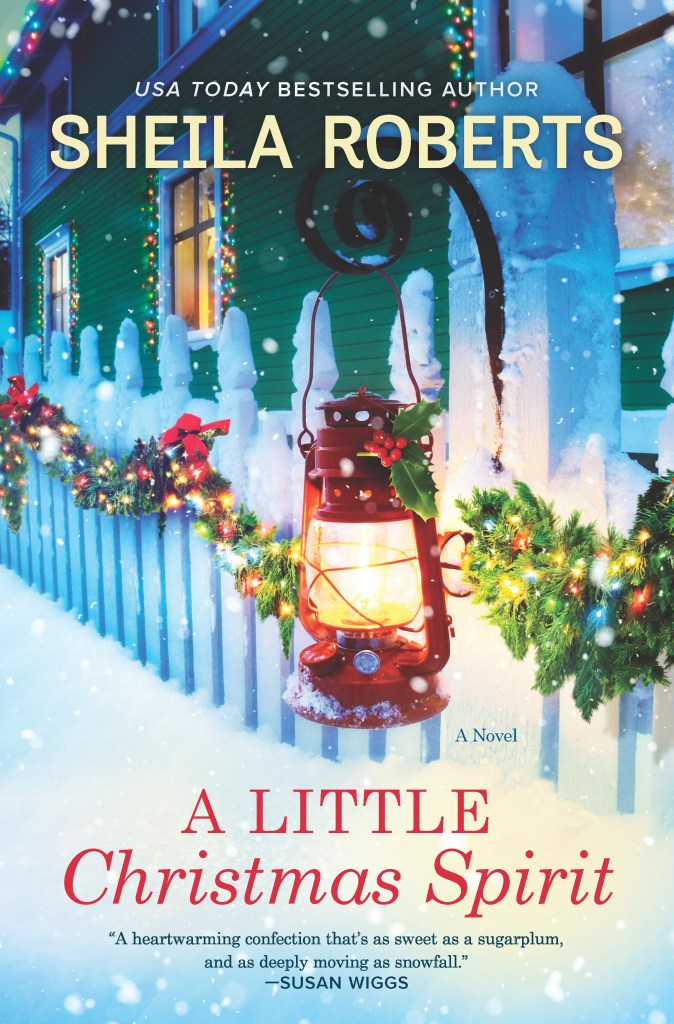
A Little Christmas Spirit by Sheila Roberts Review

I received a free copy of this book in exchange for a fair and honest review. All opinions are my own. 

A young single mother hoping to make the holidays great for her son in a new home must find a way to warm the cold heart of the widowed neighbor next door as a helping hand from the beyond gives them both a subtle nudge toward one another in author Sheila Robert’s novel, “A Little Christmas Spirit”.

Advertisements

The Synopsis

The best Christmas gifts—family, friendship, and second chances—are all waiting to be unwrapped in this sparkling new novel from USA Today bestselling author Sheila Roberts.

Single mom Lexie Bell hopes to make this first Christmas in their new home special for her six-year-old son, Brock. Festive lights and homemade fudge, check. Friendly neighbors? Uh, no. The reclusive widower next door is more grinchy than nice. But maybe he just needs a reminder of what matters most. At least sharing some holiday cheer with him will distract her from her own lack of romance…

Stanley Mann lost his Christmas spirit when he lost his wife and he sees no point in looking for it. Until she shows up in his dreams and informs him it’s time to ditch his Scroogey attitude. Stanley digs in his heels but she’s determined to haunt him until he wakes up and rediscovers the joys of the season. He can start by being a little more neighborly to the single mom next door. In spite of his protests he’s soon making snowmen and decorating Christmas trees. How will it all end?

Merrily, of course. A certain Christmas ghost is going to make sure of that!

The Review

This was an emotional and heartwarming read. The author found the perfect chord to balance out the romance elements of some characters with the themes of loss and opening ourselves up to new possibilities in the face of loss. The setting of the novel was so realistic and did a great job of reflecting the emotional shifts in the characters themselves. 

The character growth and pacing of the narrative were crafted so eloquently here. The way the author delved into the backstory and history of Stanley and his late wife and the subtle yet crucial integration of the haunting of the older “scrooge-like” character by meaningful ghosts of his past was a refreshing way of integrating this classic Dickens style holiday trope while also honing in on the personal relationships and bonds these characters form with one another.

Advertisements

The Verdict

Balanced, heartfelt, and engaging, author Sheila Robert’s “A Little Christmas Spirit” is a must-read holiday novel of 2021. The perfect winter and holiday read, the personal character development and emotional notes the narrative hits with loss and how to overcome that loss is so captivating to read, and so if you haven’t yet, be sure to grab your copy of this wonderful story today!

Rating: 10/10

About the Author

Sheila Roberts lives on a lake in Washington State, where most of her novels are set. Her books have been published in several languages. On Strike for Christmas, was made into a movie for the Lifetime Movie Network and her novel, The Nine Lives of Christmas, was made into a movie for Hallmark.

Buy Links: 

BookShop.org

Harlequin 

Barnes & Noble

Amazon

Books-A-Million

Powell’s 

Social Links:

Author Website

Facebook: @funwithsheila

Twitter: @_Sheila_Roberts

Instagram: @sheilarobertswriter

Goodreads

Advertisements

Here is an Excerpt from “A Little Christmas Spirit”

1

It was the sixth call in two days, all from the same person. Wouldn’t you think, if a man didn’t answer his phone the first five times, that the pest would get the message and quit bugging him?

But no, and now Stanley Mann was irritated enough to pick up and say a gruff “Hello.” Translation: Why are you bugging me?

“It’s about time you answered,” said his sister-in-law, Amy. “I was beginning to wonder if you were okay.”

Of course, he wasn’t okay. He hadn’t been okay since Carol had died.

“I’m fine. Thanks for checking.”

The words didn’t come out with any sense of warmth or appreciation for her concern to encourage conversation, but Amy soldiered on. “Stan, we all want you to come down for Thanksgiving. You haven’t seen the family in ages.”

Not since the memorial service, and he hadn’t really missed them. He liked his brother-in-law well enough, but his wife’s younger sister was a ding-dong, her daughters were drama queens and their husbands were idiots. The younger generation were all into their selfies and their jobs and their crazy vacations where they swam with sharks. Who in their right mind swam with sharks? He had better things to do than subject himself to spending an entire day with them.

He did have enough manners left to thank Amy for the invite before turning her down.

“You really should come,” she persisted.

No, he shouldn’t.

“Don’t you want to see the new great-niece?”

No, he didn’t. “I’ve got plans.”

“What? To hole up in the house with a turkey frozen dinner?”

“No.” Not turkey. He hated turkey. It made him sleepy.

“You know Carol would want you to be with us.”

He’d been with them pretty much every Thanksgiving of his married life. He’d paid his dues.

“You don’t have any family of your own.”

Thanks for rubbing it in. He’d lost his brother ten years earlier to a heart attack, and both his parents were gone now as well. He and Carol had never had any kids of their own.

But he was fine. He was perfectly happy in his own company.

“I’m good, Amy. Don’t worry about me.”

“I can’t help it. You know, Carol was always afraid that if something happened to her you’d become a hermit.”

Hermits were scruffy old buzzards with bad teeth and long beards who hated people. Stanley didn’t hate people. He just didn’t need to be around them all the time. There was a difference. And he wasn’t scruffy. He brushed his teeth. And he shaved…every once in a while.

“Amy, I’m fine. Don’t worry. Happy Thanksgiving, and tell Jimmy he can have my share of the turkey,” Stanley said, then ended the call before she could grill him further regarding those plans he’d said he had.

They were perfectly good plans. He was going to pick up a frozen pizza and watch something on TV. That sure beat driving all the way from Fairwood, Washington, to Gresham, Oregon, to be alternately bored and irritated by his in-laws. If Amy really wanted to do something good for him, she could leave him alone.

At first everyone had. He was a man in mourning. Then came COVID-19, and he was a senior self-quarantining. Now, however, it appeared he was supposed to be ready to party on. Well, he wasn’t.

Two days before Thanksgiving he made the one-mile journey to the grocery store, figuring he’d dodge the crowd. He’d figured wrong, and the store was packed with people finishing up the shopping for their holiday meal. The turkey supply in the meat freezer was running dangerously low, and half a dozen women and a lone man crowded around it like miners at the river’s edge, searching for gold, each trying to snag the best bird from the selection that remained. A woman rolled past him with a mini-mountain of food in her cart, a wailing toddler in the seat and two kids dragging along behind her, one of them pointing to the chips aisle and whining.

“I said no,” she snapped. “We don’t need chips.”

Nope. That woman needed a stiff drink.

Stanley grabbed his pizza and some pumpkin ice cream and got in the checkout line.

Two men around his age stood in front of him, talking. “They’re out of black olives,” said the first one. “I got green instead.”

The second man shook his head. “Your wife ain’t gonna like that. Everyone knows you got to have black olives at Thanksgiving.”

“I can’t help it if there’s none left on the shelves. Anyway, the only one who eats ’em is her brother, and the loser can suck it up and do without.”

Yep, family togetherness. Stanley wasn’t going to miss that.

He’d miss being with Carol, though. He missed her every day. Her absence was an ache that never left him, and resentment kept it ever fresh.

They’d reached what was often referred to as the Golden Circle, that time in life when you had enough money to travel and enjoy yourself, when your health was still good and you could carry your own luggage. They’d enjoyed traveling and had planned on doing so much more together—taking a world cruise, renting a beach house in California for a summer, even going deep-sea fishing in Mexico. Their golden years were going to be great.

Those golden years turned to brass the day she died. She didn’t even die of cancer or a stroke or something he could have accepted. She was killed in a car accident. A drunk driver in a truck had done her in and walked away with nothing more than some bruises from his airbag. It wasn’t right, and it wasn’t fair. And Stanley didn’t really have anything to be thankful about. He didn’t like Thanksgiving.

There would be worse to follow. After Thanksgiving it would be Merry Christmas!, Happy Hanukkah!, Happy Kwanzaa!, you name it. All that happy would finally get tied up in a big Happy New Year! bow. As if buying a new calendar magically made everything better. Well, it didn’t.

Stanley spent his Thanksgiving Day in lonely splendor, watching football on TV and eating his pizza. It’s not delivery. It’s DiGiorno. Worked for him. He ate two-thirds of it before deciding he should pace himself. Got to save room for dessert. Pumpkin ice cream—just as good as the traditional pie and whipped cream, and it didn’t come with any irritating in-laws. Ice cream was the food of the gods. After his pizza, he pulled out a large bowl, filled it and dug in.

When they got older, Carol had turned into the ice cream police, limiting his consumption. She’d pat his belly and say, “Now, Manly Stanley, too much of that and you’ll end up looking like a big, fat snowman. Plus you’ll clog your arteries, and that’s not good. I don’t want to risk losing you.”

Ironic. He’d wound up losing her instead.

Between all the ice cream and the beer he’d been consuming with no one to police him, he was starting to look a little like Frosty the Snowman. (Before he melted.) But who cared? He got himself a second bowl of ice cream.

He topped it off with a couple of beers and a movie along with some store-bought cookies. There you go. Happy Thanksgiving.

For a while, anyway. Until everything got together in his stomach and began to misbehave. He shouldn’t have eaten so much. Especially the pizza. He really couldn’t do spicy now that he was older. Telling everyone down there that all would soon be well, he took a couple of antacids.

No one down there was listening, and all that food had its own Turkey Day football game still going in his gut when he went to bed. He tossed and turned and groaned until, finally, he fell into an uneasy sleep.

“Pepperoni and sausage?” scolded a voice in his ear. “You know better than to eat that spicy food, Stanley.”

“I know, I know,” he muttered. “You’re right, Carol.”

Carol! Stanley rolled over and saw his wife standing by the side of his bed. She was wearing the black nightie he always loved to see her in. And then out of. Her eyes were as blue as ever. How he’d missed that sweet face!

But what was she doing here?

He blinked. “Is it really you?” He thought he’d never see her again in this lifetime, but there she was. His heart turned over.

“Yes, it’s really me,” she said.

She looked radiant and so kissable, but that quickly changed. Suddenly, her body language wasn’t very lovey-dovey. She frowned and put her hands on her hips, a sure sign she was about to let him have it.

“What were you thinking?” she demanded.

He didn’t have to ask what she was referring to. He knew.

“It’s Thanksgiving. I was celebrating,” he said.

She frowned. “All by yourself.”

“I happen to like my own company. You know that.”

“There’s liking your own company, and there’s hiding.”

“I am not hiding,” he insisted.

“Yes, you are. I gave you time to mourn, time to adjust, but enough is enough. Life is short, Stanley. It’s like living off your savings. Each day you take another withdrawal, and pretty soon there’s nothing left. You have to spend those days wisely. You’re wasting yours, dribbling away the last of your savings.”

“That’s fine with me,” he insisted. “I hate my life.”

He hated waking up to find her side of the bed empty and ached for her smile. Without her the house felt deserted. He felt deserted.

“You still like ice cream, don’t you?” she argued.

Except for when he paired it with pizza.

“Stanley, you need to get out there and…live.”

“What do you think I’m doing?” he grumped.

“Going through the motions, hanging in limbo.”

What else could she expect? “It’s not the same without you,” he protested.

“Of course it’s not. But you’re still here, and you’re here for a reason. Don’t make what happened to me a double waste. Somebody snatched my life from me, and I wasn’t done with it. I want you to go on living for the both of us.”

“How can I do that? This isn’t a life, not without you sharing it.”

“It’s a different kind of life, that’s all.”

It was a subpar, meager existence. “I miss you, Carol. I miss you sitting across from me at the breakfast table. I miss us doing things together and sitting together at night, watching TV. I miss…your touch.” He finished on a sob.

“I know.” She sat down on the bed next to him, and he couldn’t help noticing how the blankets didn’t shift under her. “But you have to start filling those empty places, Stanley.”

“I don’t want to,” he cried. “I don’t want to.”

He was still muttering “I don’t want to” when he woke up.

Alone. For a moment there, her presence had felt so real.

“She wasn’t there at all, you dope,” he muttered.

Except why was there a faint scent of peppermint in the bedroom? It made him think of the chocolate Christmas cookies she used to make with the mint-candy frosting and sprinkles on them. After a few big sniffs, he couldn’t detect so much as a whiff of peppermint and shook his head in disgust. Indigestion and memory. That was all she was.

Excerpted from A Little Christmas Spirit by Sheila Roberts. Copyright © 2021 by Roberts Ink LLC. Published by arrangement with Harlequin Books S.A.

The Matzah Ball by Jean Meltzer Review

I received a free copy of this book in exchange for a fair and honest review. All opinions are my own. 

A young Jewish woman working in secret as a Christmas romance writer must delve back into her Jewish roots to sell a book about Hanukkah while contending with a childhood rival, while discovering things may not be as contentious as she once thought in author Jean Meltzer’s “The Matzah Ball”.

Advertisements

The Synopsis

Oy! to the world

Rachel Rubenstein-Goldblatt is a nice Jewish girl with a shameful secret: she loves Christmas. For a decade she’s hidden her career as a Christmas romance novelist from her family. Her talent has made her a bestseller even as her chronic illness has always kept the kind of love she writes about out of reach.

But when her diversity-conscious publisher insists she write a Hanukkah romance, her well of inspiration suddenly runs dry. Hanukkah’s not magical. It’s not merry. It’s not Christmas. Desperate not to lose her contract, Rachel’s determined to find her muse at the Matzah Ball, a Jewish music celebration on the last night of Hanukkah, even if it means working with her summer camp archenemy—Jacob Greenberg.

Though Rachel and Jacob haven’t seen each other since they were kids, their grudge still glows brighter than a menorah. But as they spend more time together, Rachel finds herself drawn to Hanukkah—and Jacob—in a way she never expected. Maybe this holiday of lights will be the spark she needed to set her heart ablaze.

The Review

I absolutely loved this book! It was so engaging right from the beginning. The author did a brilliant job of crafting a narrative that was exciting and allowed readers to find themselves within the throng of characters the author crafted. Of course, the big hook and amazing twist on this holiday read was the focus on Hanukkah and the Jewish community, which often gets overlooked during this time of year. The tight-knit community within the Jewish people and the emphasis on culture within the narrative were so refreshing and heartwarming to read. 

The characters were the show stealers of this read to be sure. What was so interesting, and something I always enjoy is when a writer crafts a narrative that features such a diverse cast of characters that we could find someone in the narrative to identify with for one reason or another. As someone with several chronic diseases, seeing protagonist Rachel’s struggle with chronic fatigue syndrome and the struggle with how she is perceived by others is a struggle I am all too familiar with, and it was great to see that representation in the book. The chemistry and heated moments, both good and bad, between Rachel and Jacob, were truly memorable and allowed the story to feel very cinematic in its approach.

Advertisements

The Verdict

A heartfelt, emotional, and entertaining twist on the holiday romance genre, author Jean Meltzer’s “The Matzah Ball” is a must-read novel this winter. The perfect holiday read the author created a book filled with vivid imagery, captivating characters, and memorable representation that will make all readers feel welcome. If you haven’t yet, be sure to grab your copy today!

Rating: 10/10

About the Author

Author Jean Meltzer studied dramatic writing at NYU Tisch, and served as creative director at Tapestry International, garnering numerous awards for her work in television, including a daytime Emmy. Like her protagonist, Jean is also a chronically-ill and disabled Jewish woman. She is an outspoken advocate for ME/CFS (Chronic Fatigue Syndrome), has attended visibility actions in Washington DC, meeting with members of Senate and Congress to raise funds for ME/CFS. She inspires 9,000 followers on WW Connect to live their best life, come out of the chronic illness closet, and embrace the hashtag #chronicallyfabulous. Also, while she was raised in what would be considered a secular home, she grew up kosher and attended Hebrew School. She spent five years in Rabbinical School.

https://twitter.com/HarlequinBooks?s=20

Buy Links: 

BookShop.org

Harlequin 

Barnes & Noble

Amazon

Books-A-Million

Powell’s 

Social Links:

Author Website

Facebook: @JeanMeltzerAuthor

Instagram: @JeanMeltzer

Goodreads

Advertisements

Here is an Excerpt from “The Matzah Ball”

1

She just needed one more.

Rachel Rubenstein-Goldblatt stared at the collection of miniature Christmas figurines spread across her desk. She owned 236 of the smiling porcelain Santas from the world-famous Holiday Dreams Collection. When her best friend, Mickey, arrived, she would complete that collection with the addition of the coveted Margaritaville Santa.

Oh, the Margaritaville Santa. How she had dreamed of the day when that tiny porcelain Santa, in a Hawaiian shirt and wear-ing Ray-Ban sunglasses, would sit atop her prized collection.

Rachel had scoured eBay for the tiny limited-edition figurine, set up price alerts and left frantic (somewhat drunken) posts at three in the morning on collector blogs. Now, after six years, five months and seven days of hunting, the Margaritaville Santa would finally be hers.

The anxiety was killing her.

Rachel glanced out the window of her apartment. It was snowing outside. Gentle flakes fell down onto Broadway and made New York City feel magical. She was wondering when Mickey would actually get here when there was a knock at the door.

“Finally!” Rachel said. Excitement bubbled up inside her as she raced to the front door, throwing it open. And then, disappointment. Her mother stood in the threshold.

“I was in the neighborhood,” she said, a perfectly innocent smile spread across her two round cheeks.

Her mother was always in the neighborhood.

It was one of the downsides of living on the Upper West Side while her mother, a top New York fertility specialist, worked out of Columbia Hospital just ten blocks away.

Rachel had to think quickly. She loved her mother, and was even willing to entertain her completely intrusive and unannounced visits, but the door to her home office was still open.

“Mickey’s about to stop by,” Rachel warned.

“I won’t be but a minute,” her mother said, lifting up a plastic bag from Ruby’s Smoked Fish Shop as a peace offering. “I brought you some dinner.”

Dr. Rubenstein pushed her way inside, letting her fingers graze the mezuzah on Rachel’s doorpost before entering. Making her way straight to the refrigerator, she began unloading “dinner.”

There was a large vat of chopped liver, two loaves of pum-pernickel bread, three different types of rugalach. Dr. Ruben-stein believed in feeding the people you love, and the love she had for her daughter was likely to end in heart disease.

“How are you feeling?” her mother inquired.

“Fine,” Rachel said, using the opportunity to close her office door.

Dr. Rubenstein looked up from the refrigerator. Her eyes rolled from Rachel’s hair, matted and clumped, down to her wrinkled pink pajamas.

She frowned. “You look pale.”

“I am pale,” Rachel reminded her.

“Rachel,” her mother said pointedly, “you need to take your myalgic encephalomyelitis seriously.”

Rachel rolled her eyes. Outside, the gentle snow was gathering into a full-blown storm.

Dr. Rubenstein was probably one of the few people who called Rachel’s disease by its medical term, the name research scientists and experts preferred, describing the complex mul-tisystem disease that affected her neurological, immune, autonomic and metabolic systems. Most everyone else in the world knew it by the simple and distasteful moniker chronic fatigue syndrome.

Which was, quite possibly, the most trivializing name for a disease in the entire world. The equivalent of calling Alzheimer’s “Senior Moment Syndrome.”

It did not begin to remotely describe the crushing fatigue, migraines, brain fog or weirdo pains that Rachel lived with daily. It certainly did not describe the 25 percent of patients who found themselves bed-bound or homebound—existing on feeding tubes, unable to leave dark rooms for years—or the 75 percent of patients who could no longer work full-time.

For now, however, Rachel was one of the lucky ones. She had managed to graduate college with a degree in creative writing and, over the last decade, build a career working from home.

“Ema,” Rachel said, growing frustrated. “My body, my choice.”

“But—”

“Change the topic.”

Dr. Rubenstein pressed her lips together and swallowed the words on her tongue. It was not an easy feat for the woman. “And how’s work?”

“Good.” Rachel shrugged, returning to the couch. “Noth-ing that interesting to report.”

“And the freelance work you’re doing—” her mother craned her neck to peep around her apartment “—it’s keeping you busy?”

“Busy enough.”

Dr. Rubenstein raised one eyebrow in her daughter’s di-rection.

Rachel knew what her mother was really asking. How can you afford a two-bedroom apartment on the Upper West Side simply by doing freelance editorial work? But Dr. Rubenstein had learned an important halachic lesson from her husband, Rabbi Aaron Goldblatt, early on in their marriage; you don’t ask questions you don’t really want the answers to.

For all Rachel knew, her mother believed her to be a web-cam girl. Or a high-class prostitute. Or the mistress of some dashingly handsome Arabian prince. All of which, Rachel was certain, would be preferable to what she actually did for a living.

“Ema,” Rachel said, steering the conversation away from her career. “What is it you’re really here for?”

“Why do you always think I have an ulterior motive, Rachel?”

“Because I know you.”

“All right!” Dr. Rubenstein threw her hands up into the air. “You caught me. I do have an ulterior motive.”

Baruch Hashem.”

“Now, it’s nothing bad, I promise,” her mother said, taking a seat on her couch. “I simply wanted to see if you were available for Shabbat dinner this Friday?”

There it was. The real reason for her mother’s visit. Shab-bat at Rabbi Goldblatt’s house was not just a weekly religious occurrence, it was a chance for Dr. Rubenstein to kidnap her daughter for twenty-five hours straight and force her to meet single Jewish men.

Over the years, there had been all sorts of horrible setups. There was the luxury auto dealer who used his sleeve as a napkin during dinner. The rabbinical student who spent an entire Saturday afternoon debating aloud with only her father over what to do when an unkosher meatball falls into a pot of kosher meatballs.

And then, there was her favorite blind date setup of them all. Dovi, the Israeli mountain climber, who had traveled the world in his perfectly healthy and functioning body, before telling Rachel that he didn’t think chronic fatigue syndrome was a real disease.

Chas v’chalilah.

Rachel had no intention of spending another Friday night, and Saturday afternoon, entertaining her mother’s idea of a dreamboat. Especially not when that dreamboat had the word Titanic embroidered across the bottom of their knitted kippah.

“No,” Rachel said.

“Rachel!” her mother pleaded. “Just hear me out.”

“I’m too busy, Ema.”

“But you haven’t been home in ages!”

“You live in Long Island,” Rachel shot back. “I see you and Daddy all the time.”

Her mother could not argue with this factoid.

“Jacob Greenberg will be coming,” her mother finally said. Rachel nearly choked on her tongue. “What?”

“You remember Jacob Greenberg?”

The question sounded so innocent on the surface. Jacob Greenberg. How could Rachel forget the name? The duo had spent one summer together at Camp Ahava in the Berkshires before the seventh grade.

“Jacob Greenberg?” Rachel spit back. “The psychopath who spent an entire summer pulling my hair and pushing me into the lake?”

“I recall you two getting along quite well at one point.”

“He set me up in front of everyone, Mom. He turned my first kiss into a giant Camp Ahava prank!”

“He was twelve!” Dr. Rubenstein was on her feet now. “Twelve, Rachel. You can’t hold a grown man accountable for something he did as a child. For heaven’s sake… The boy hadn’t even had his bar mitzvah.”

Rachel could feel the red rising in her cheeks. A wellspring of complicated emotions rose up inside her. Hate and love. Confusion and excitement. Just hearing his name again after all these years brought Rachel smack-dab back to her ado-lescence. And sitting there beside all those terrible memories of him humiliating her were the good ones. Rachel couldn’t help herself. She drifted back to that summer.

The way it felt to hold his hand in secret. The realiza-tion that there was more to their relationship than just dumb pranks and dead bugs left in siddurs. Jacob had gotten Rachel to open up. She had trusted him. Showed him a side of herself reserved for a select few. Aside from Mickey, she had never been so honest with anybody in her entire life.

Dr. Rubenstein dismissed her daughter’s concerns with a small wave of the hand. “It was eighteen years ago. Don’t you think you’re being a tad ridiculous?”

“Me?” Rachel scoffed. “You’re the one who’s hosting my summer camp archenemy for Shabbat.”

“He’s in town from Paris for some big event he’s throwing. What would you have me do—not invite him?”

“While you’re at it, don’t forget to invite Dana Shoshan-ski. She made me cry every day in third grade. In fact, let me get you a list of all the people who made fun of me for being Rachel Rubenstein-Goldblatt growing up. I want to make sure you don’t miss anybody.”

Her mother did not blink. “I’m sorry it was hard for you…being our daughter.”

Just like that, her mother had twisted all those feelings back around on her.

Rachel bit back her words, looking up to the ceiling. She loved her parents more than anything in the world. They had been there for her at every stage of her life, doting and won-derful. Still, the Rubenstein-Goldblatt name came with pres-sures. They were pressures that, even as an adult, still managed to follow her.

A knock at the door drew their attention away.

“Let me get that for you,” Dr. Rubenstein said sweetly, ris-ing from the couch.

“Ho, ho, ho-oooooooh… .” Mickey said, standing at the door, his smile fading into panic. He was holding a medium-sized red gift bag in the air. He glanced at Rachel, who sig-naled the immediate danger by running one finger across her throat. Quickly Mickey hid the bag behind his back.

“Dr. Rubenstein!” he said, his eyes wide. “I didn’t expect to see you here.”

“Not to worry, Mickey,” Dr. Rubenstein said, adjusting her scarf. “I was just getting ready to leave.” She turned back to her daughter one last time. “Just think about coming to din-ner, okay? Daddy and I won’t be around forever, and there may come a time in your life when you miss spending Shab-bat at your parents’ house.”

Mickey waited for the door to shut firmly behind him and the elevator at the end of the hall to ding before turning to his best friend. “Whoa,” he said. “That woman is a pro when it comes to Jewish guilt.”

“Tell me about it,” Rachel said, collapsing on the couch.“So what did our fine rebbetzin want this evening?” Mickey asked, taking his boots and jacket off at the front door.

“You’ll never believe it if I tell you.”

To everyone that knew them, it seemed that Mickey and Rachel had been bashert, soul mates, since time immemorial, having met at Camp Ahava when they were eight years old.

Since Rachel couldn’t be sure what drew the pair together, she assumed it had something to do with how other people at their camp had treated them. Mikael, the adopted son of a powerhouse lesbian couple from Manhattan, was Black. And Rachel, as everyone who met her cared to remind her, was the daughter of Rabbi Aaron Goldblatt. The Rabbi Aaron Goldblatt.

Whether they liked it or not, when Mickey and Rachel walked into a room, people noticed them. People watched them. This shared experience formed the basis of their com-radery and, later, extended far beyond Jewish summer camp.

“She wanted to set me up with Jacob Greenberg,” Rachel said.

Mickey finished pulling off his boots. “Jacob Greenberg? From Camp Ahava?”

“The one and only.”

“Wow,” Mickey said, coming over to sit beside Rachel. “That’s a name I haven’t heard in forever. Didn’t he give you mono?”

Rachel squeezed her eyes shut. She did not want to think about that first kiss with Jacob Greenberg. “Can we seriously not talk about this right now? I’ve waited seven long years for this moment, Mickey…and just like some of the other most important moments of my life, Jacob Greenberg is ruining it.”

“You’re right,” Mickey said, laying the red bag on the coffee table between them. “And I have just the thing to take your mind off He Who Shall Not Be Named.”

This was it. The moment she had waited for. With eager fingers, Rachel reached into the bag, pulled out the tiny fig-urine and gently removed the plastic bubble wrapping that protected it.

It was even better than she had imagined.

Excerpted from The Matzah Ball by Jean Meltzer, Copyright © 2021 by Jean Meltzer. Published by arrangement with Harlequin Books S.A.

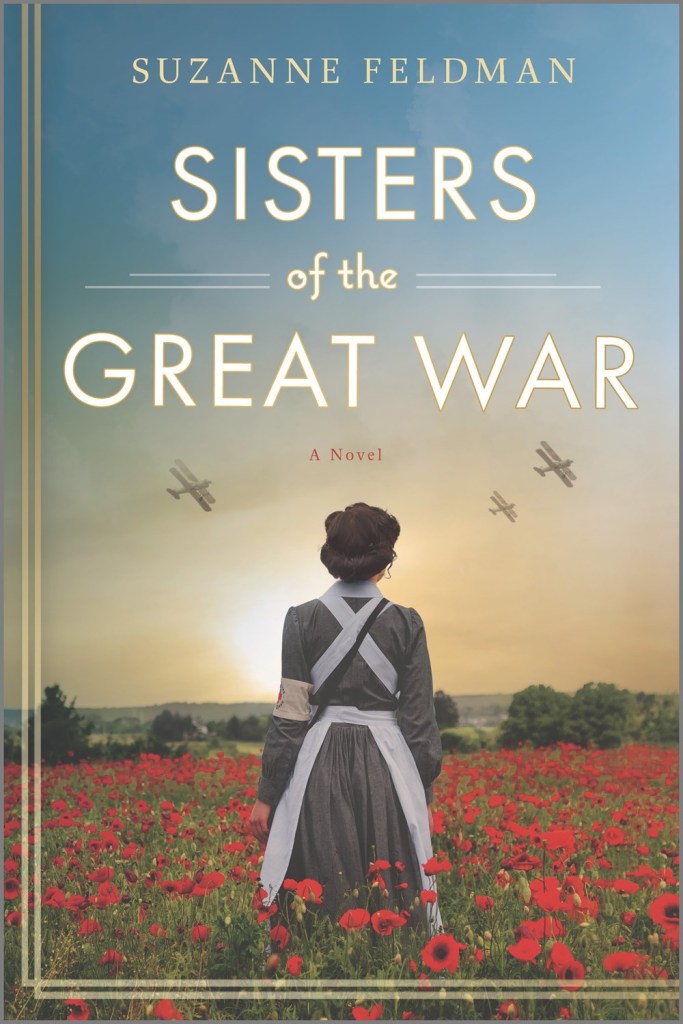
Sisters of the Great War by Suzanne Feldman Review

I received a free copy of this book in exchange for a fair and honest review. All opinions are my own. 

Two sisters seeking to shed the restrictions their father and society has placed upon them look to not only discover their identities, but their role in the midst of the Great War in author Suzanne Feldman’s “Sisters of the Great War”.

The Synopsis

Two sisters. The Great War looming. A chance to shape their future.

Sisters Ruth and Elise Duncan could never have anticipated volunteering for the war effort. But in 1914, the two women decide to make the harrowing journey from Baltimore to Ypres, Belgium in order to escape the suffocating restrictions placed on them by their father and carve a path for their own future.

Smart and practical Ruth is training as a nurse but dreams of becoming a doctor. In a time when women are restricted to assisting men in the field, she knows it will take great determination to prove herself, and sets out to find the one person who always believed in her: a handsome army doctor from England. For quiet Elise, joining the all female Ambulance Corps means a chance to explore her identity, and come to terms with the growing attraction she feels towards women. Especially the charming young ambulance driver who has captured her heart.

In the twilight of the Old World and the dawn of the new, both young women come of age in the face bombs, bullets and the deadly futility of trench warfare. Together they must challenge the rules society has placed on them in order to save lives: both the soldiers and the people they love.

Advertisements

The Review

This was so beautifully crafted and vividly descriptive that readers will feel instantly transported into the narrative. The stark contrast between the restrictive household the protagonists started out into the visceral hellscape of the front lines of WWI and the interlaced story of deeply personal growth with strong themes throughout really made this story shine brightly. The horrors of war the sisters endured showed a much different aspect of the Great War than most projects tackle, highlighting the physical and mental effects the battles had on nurses and physicians in the field. 

The psychology and personal development of both Ruth and Elise were so engaging and brilliantly written. The themes of feminist struggles and the deep hardship of the LGBTQ community who had to remain hidden in the face of overwhelming battles like those faced in WWI really highlighted the intimate relationships they both formed with friends and loves alike, and their bond with one another as well. 

The Verdict

A gripping, thought-provoking, and entertaining women’s fiction and historical fiction read, author Suzanne Feldman’s “Sisters of the Great War” is a must-read this fall. The growth and perseverance the sisters held onto in the face of great adversity, and the way their historical storyline and struggles can resonate with so many readers today made this a thoroughly enjoyable read and is not to be missed. Be sure to grab your copy today!

Rating: 10/10

Advertisements

About the Author

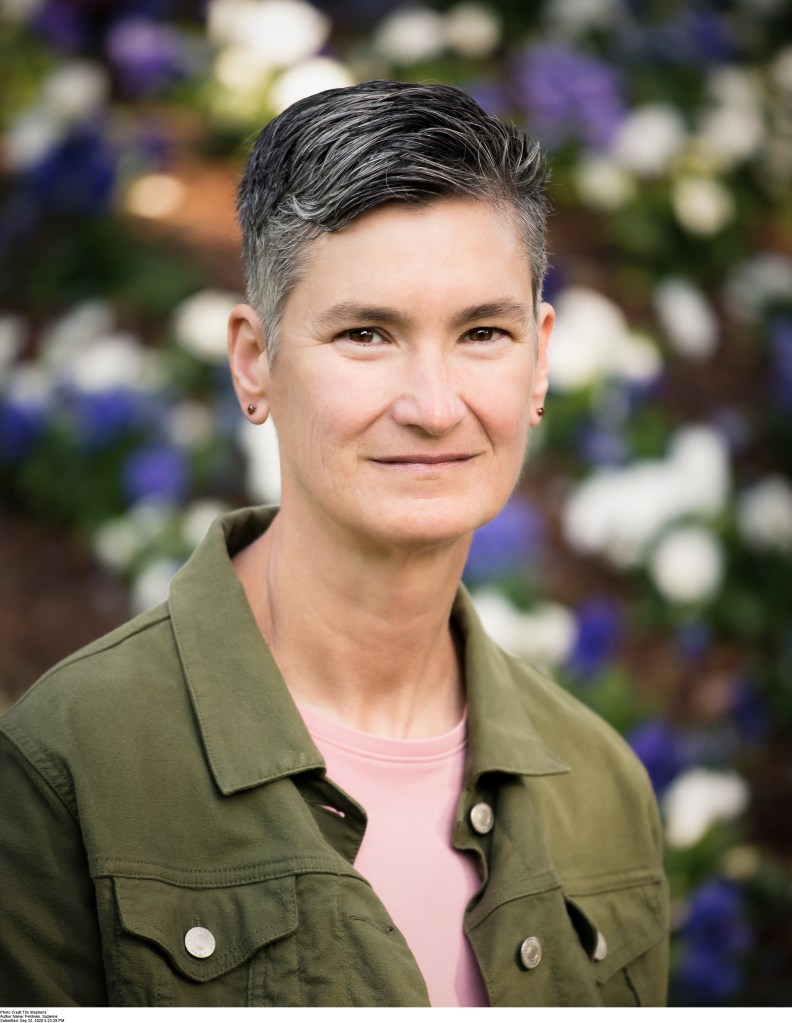
Suzanne Feldman, a recipient of the Missouri Review Editors’ Prize and a finalist for the Bakeless Prize in fiction, holds an MA in fiction from Johns Hopkins University and a BFA in art from the Maryland Institute College of Art. Her short fiction has appeared in Narrative, The Missouri Review, Gargoyle, and other literary journals. She lives in Frederick, Maryland.

Buy Links: 

BookShop.org

Harlequin 

Barnes & Noble

Amazon

Books-A-Million

Powell’s 

Social Links:

Author Website

Twitter: @suzanne21702

Facebook: @SuzanneFeldman

Instagram: @suzannefeldmanauthor

Goodreads

Q&A with Suzanne Feldman

Q: Your books have won quite a few awards. Do you ever feel pressure when you write a new book to make it an award winning book?

A: I do love awards and who doesn’t? (I’m striving for a Pulitzer!) But awards are sort of a wonderful perk for what I already love doing, which is making something big from a little spark of an idea. I think it’s a stretch to think to yourself, ‘I’m going to write something for THIS award.’ because what if the book doesn’t win anything? I’m much happier just writing and editing until I think it’s ready to go out into the world–then we’ll see how it does.

Q: What inspired this book?

A: Sisters of the Great War was a four-year project that started one morning as I walked into my classroom at some pre-dawn hour. I’d been thinking about my next project after ‘Absalom’s Daughters’ and I knew I wanted to write a war story–but there were already so many books about WW2. So I thought, what about WW1? Could I write something epic yet intimate about that period? I wrote on a post-it: ‘WW1; epic yet intimate,’ and put it in my pocket. After school that day, I found the post-it and by some miracle, I still knew what I’d meant.  

I started doing research and realized pretty quickly that the reason WW1 literature peaked with All Quiet on the Western Front was because it was a trench war, and over the space of four years, the trenches barely moved so there were very few ‘victories.’ The war itself was awful beyond description. Troops went out and were mowed down by new weapons, like the machine gun, tanks, and poisonous gas. It’s hard to write a glorious book about a barbaric war that had no real point, so I decided to explore the lives of the forgotten women–the nurses and ambulance drivers who were in the thick of the action, but not really mentioned in the movies and books about the period. 

Q: Where is your favorite place to write?

A: I have a room where I write, my ‘office.’ I have all my favorite art, my most-loved books, and a bed for my dog. I love being able to close the door and just get into the groove of writing, but I have been known to write in coffee shops and libraries. When I was teaching, when I would get an idea, I would write on a post-it and put it in my pocket, so, yes, technically I have written at work as well.

Q: Do you have a writing routine?

A: My writing routine involves getting really wired on coffee in the morning and then taking a long walk with my dog, sometimes by the river and sometimes in the mountains. I get my ideas for the day in order, and the dog gets tired. Then I spend about four hours working on writing projects–sometimes novels, sometimes short stories, and drinking a lot more coffee. By then the dog has woken up, and we go out for another walk. I like to treat writing as a job. It’s not too exciting, but it works for me.

Q: Are you a plotter or pantser when it comes to writing?

A: I’m a pantser and proud of it! I love not really knowing what’s going to happen, and I love the discovery of plot points and personalities that might not show up in an outline. My favorite part is when a character does something on the page that I never thought of, and I get to go with that. What’s funny is that as a teacher (before I retired) I needed a plan for everything!

Q: What is a fun fact about you?

A: I was a high school art teacher for almost 30 years, and I am also a visual artist. I do a lot of abstract painting, which you can see on my Instagram account, Suzanne Feldman Author. I’ve taught every art class you can imagine, from darkroom photography to ceramics. I had a wonderful time teaching, and I loved nearly all of my students.

Here is an Exclusive Excerpt from “Sisters of the Great War”

1

Baltimore, Maryland

August 1914

Ruth Duncan fanned herself with the newspaper in the summer heat as Grandpa Gerald put up a British flag outside the house. If he’d had a uniform—of any kind—he would have worn it. People on the sidewalk paused and pointed, but Grandpa, still a proper English gent even after almost twenty years in the U.S., smoothed his white beard and straightened his waistcoat, ignoring the onlookers.

“That’s done,” he said.

Ruth’s own interest in the war was limited to what she read in the paper from across the dining table. Grandpa would snap the paper open before he ate breakfast. She could see the headlines and the back side of the last page, but not much more. Grandpa would grunt his appreciation of whatever was in-side, snort at what displeased him, and sometimes laugh. On the 12th of August, the headline in the Baltimore Sun read; France And Great Britain Declare War On Austria-Hungary, and Grandpa wasn’t laughing.

Cook brought in the morning mail and put it on the table next to Grandpa. She was a round, grey-haired woman who left a puff of flour behind her wherever she went.

“Letter from England, sir,” Cook said, leaving the envelope and a dusting of flour on the dark mahogany. She smiled at Ruth and left for the kitchen.

Grandpa tore the letter open.

Ruth waited while he read. It was from Richard and Diane Doweling, his friends in London who still wrote to him after all these years. They’d sent their son, John, to Harvard in Massachusetts for his medical degree. Ruth had never met John Doweling, but she was jealous of him, his opportunities, his apparent successes. The Dowelings sent letters whenever John won some award or other. No doubt this was more of the same. Ruth drummed her fingers on the table and eyed the dining room clock. In ten minutes, she would need to catch the trolley that would take her up to the Loyola College of Nursing, where she would be taught more of the things she had already learned from her father. The nuns at Loyola were dedicated nurses, and they knew what they were doing. Some were out-standing teachers, but others were simply mired in the medicine of the last century. Ruth was frustrated and bored, but Father paid her tuition, and what Father wanted, Father got. 

Ruth tugged at her school uniform—a white apron over a long white dress, which would never see a spot of blood. “What do they say, Grandpa?”

He was frowning. “John is enlisting. They’ve rushed his graduation at Harvard so he can go home and join the Royal Army Medical Corps.”

“How can they rush graduation?” Ruth asked. “That seems silly. What if he misses a class in, say, diseases of the liver?”

Grandpa folded the letter and looked up. “I don’t think he’ll be treating diseases of the liver on the battlefield. Anyway, he’s coming to Baltimore before he ships out.”

“Here?” said Ruth in surprise. “But why?”

“For one thing,” said Grandpa, “I haven’t seen him since he was three years old. For another, you two have a common interest.”

“You mean medicine?” Ruth asked. “Oh, Grandpa. What could I possibly talk about with him? I’m not even a nurse yet, and he’s—he’s a doctor.” She spread her hands. “Should we discuss how to wrap a bandage?”

“As long as you discuss something.” He pushed the letter across the table to her and got up. “You’ll be showing him around town.”

“Me?” said Ruth. “Why me?”

“Because your sister—” Grandpa nodded at Elise, just clumping down the stairs in her nightgown and bathrobe “—has dirty fingernails.” He started up the stairs. “Good morning, my dear,” he said. “Do you know what time it is?” “Uh huh,” Elise mumbled as she slumped into her seat at the table.

As Grandpa continued up the stairs Ruth called after him. “But when is he coming?”

“His train arrives Saturday at noon,” Grandpa shouted back. “Find something nice to wear. You too, Elise.”

Elise rubbed her eyes. “What’s going on?”

Ruth pushed the letter at her and got up to go. “Read it,” she said. “You’ll see.”

Ruth made her way down Thirty-Third Street with her heavy bookbag slung over one shoulder, heading for the trolley stop, four blocks away, on Charles. Summer classes were almost over, and as usual, the August air in Baltimore was impenetrably hot and almost unbreathable. It irritated Ruth to think that she would arrive at Loyola sweaty under her arms, her hair frizzed around her nurse’s cap from the humidity. The nuns liked neatness, modest decorum. Not perspiring young women who wished they were somewhere else.

Elise, Ruth thought, as she waited for a break in the noisy traffic on Charles Street, could’ve driven her in the motor-car, but no, she’d slept late. Her younger sister could do pretty much anything, it seemed, except behave like a girl. Elise, who had been able to take apart Grandpa’s pocket watch and put it back together when she was six years old, was a use-ful mystery to both Father and Grandpa. She could fix the car—cheaper than the expensive mechanics. , For some rea-son, Elise wasn’t obliged to submit to the same expectations as Ruth—she could keep her nails short and dirty. Ruth wondered, as she had since she was a girl, if it was her younger sister’s looks. She was a mirror image of their mother, who had died in childbirth with Elise. Did that make her special in Father’s eyes?

An iceman drove a sweating horse past her. The horse raised its tail, grunted, and dropped a pile of manure, rank in the heat, right in front of her, as though to auger the rest of her day. The iceman twisted in the cart to tip his hat. “Sorry Sister!”

Ruth let her breath out through her teeth. Maybe the truth of the matter was that she was the ‘sorry sister.’ It was at this exact corner that her dreams of becoming a doctor, to follow in her father’s footsteps, had been shot down. When she was ten, and the governess said she’d done well on her writing and math, she was allowed to start going along on Father’s house calls and help in his office downstairs. Father had let her do simple things at first; mix plaster while he positioned a broken ankle, give medicine to children with the grippe, but she watched everything he did and listened carefully. By the time she was twelve, she could give him a diagnosis, and she remembered her first one vividly, identifying a man’s abdominal pain as appendicitis.

“You did a good job,” Father had said to her, as he’d reined old Bess around this very corner. “You’ll make an excellent nurse one day.”

Ruth remembered laughing because she’d thought he was joking. Her father’s praise was like gold. “A nurse?” she’d said. “One day I’ll be a doctor, just like you!”

“Yes, a nurse,” he’d said firmly, without a hint of a smile. It was the tone he used for patients who wouldn’t take their medicine.

“But I want to be a doctor.”

“I’m sorry,” he said. He hadn’t sounded sorry at all. “Girls don’t become doctors. They become nurses and wives. Tomorrow, if there’s time, we’ll visit a nursing college. When you’re eighteen, that’s where you’ll go.”

“But—”

He’d shaken his head sharply, cutting her off. “It isn’t done, and I don’t want to hear another word about it.”

A decade later, Ruth could still feel the shock in her heart. It had never occurred to her that she couldn’t be a doctor because she was a girl. And now, John Doweling was coming to town to cement her future as a doctor’s wife. That was what everyone had in mind. She knew it. Maybe John didn’t know yet, but he was the only one.

Ruth frowned and lifted her skirts with one hand, balancing the bookbag with the other, and stepped around the manure as the trolley came clanging up Charles.

Excerpted from Sisters of the Great War by Suzanne Feldman, Copyright © 2021 by Suzanne Feldman. Published by arrangement with Harlequin Books S.A.

The Clover Girls by Viola Shipman Review

I received a free copy of this book in exchange for a fair and honest review. All opinions are my own.

Three friends from their youths must reunite when their fourth friend dying of cancer summons them to the summer camp they spent their youth in, and must find the dreams they left behind as they face the challenges of their own lives in author Viola Shipman’s “The Clover Girls”. 

Advertisements

The Synopsis 

As comforting and familiar as a favorite sweater, Viola Shipman’s novels never fail to deliver a heartfelt story of friendship and familty, encapsulating summer memories in every page. Fans of Dorthea Benton Frank and Nancy Thayer will love this new story about three childhood friends approaching middle age, determined to rediscover the dreams that made them special as campers in 1985.

Elizabeth, Veronica, Rachel and Emily met at Camp Birchwood as girls in 1985, where they called themselves The Clover Girls (after their cabin name). The years following that magical summer pulled them in very different directions and, now approaching middle age, the women are facing new challenges: the inevitable physical changes that come with aging, feeling invisible to society, disinterested husbands, surley teens, and losing their sense of self.

Then, Elizabeth, Veronica and Rachel each receive a letter from Emily – she has cancer and, knowing it’s terminal, reaches out to the girls who were her best friends once upon a time and implores them to reunite at Camp Birchwood to scatter her ashes. When the three meet at the property for the first time in what feels like a lifetime, another letter from Emily awaits, explaining that she has purchased the abandoned camp, and now it belongs to them – at Emily’s urging, they must spend a week together remembering the dreams they’d put aside, and find a way to become the women they always swore they’d grow up to be. Through flashbacks to their youthful summer, we see the four friends then and now, rebuilding their lives, flipping a middle finger to society’s disdain for aging women, and with a renewed purpose to find themselves again.

The Review

Such an incredible and emotional story, author Viola Shipman has crafted a truly beautiful and heartbreaking story of lost friendship, loss, and regaining that which has been lost in our lives. The multiple POV of these characters really brings a sense of wholeness and driven narratives to their story. 

So often in life friends drift away, becoming busy with their growing lives and diverging paths that take them away from one another. Yet less often is the events that bring us back together again. This narrative does a fantastic job of exploring the uncharted path towards unification with the people who made us feel like ourselves again.

The setting and imagery of the narrative felt alive and become a character all on their own. I love the flashbacks and letters from the early days of the Clover Girls that really captured the essence of the 80’s style era that part of the narrative took place in, and the pacing really helped with the friend’s journey to not only find themselves but to find the friendship that brought them so much happiness and joy.

The Verdict

A mesmerizing, emotionally driven, and engaging read, author Viola Shipman’s The Clover Girls is the perfect summer read for those who love women’s fiction and tales of friendship and the bonds we share with others. The author takes the readers on such an emotional journey and showcases how the painful reality of loss can sometimes bring and heal those who have been lost to each other back together again. If you haven’t yet, be sure to grab your copy today!

Advertisements

About the Author

Viola Shipman is the pen name for Wade Rouse, a popular, award-winning memoirist. Rouse chose his grandmother’s name, Viola Shipman, to honor the woman whose heirlooms and family stories inspire his writing. Rouse is the author of The Summer Cottage, as well as The Charm Bracelet and The Hope Chest which have been translated into more than a dozen languages and become international bestsellers. He lives in Saugatuck, Michigan and Palm Springs, California, and has written for PeopleCoastal LivingGood Housekeeping, and Taste of Home, along with other publications, and is a contributor to All Things Considered.

SOCIAL:

Author Website: https://www.violashipman.com/

TWITTER: @viola_shipman

FB: @authorviolashipman

Insta: @viola_shipman

Goodreads: https://www.goodreads.com/author/show/14056193.Viola_Shipman

BUY LINKS:

Harlequin 

Indiebound

Amazon

Barnes & Noble 

Books-A-Million

Target

Walmart

Google

Kobo

Advertisements

An Excerpt From The Clover Girls

SUMMER 2021

VERONICA

Grocery List

Milk (Oat, coconut, soy)

Fizzy water (cherry, lime, watermelon, mixed berry)

Chips (lentil, quinoa, kale, beet)

Cereal (Kashi, steel-cut oats, NO GMOs! VERY IMPORTANT!)

Whatever happened to one kind of milk from a cow, one kind of water from a faucet and one kind of chip from a potato?

My teenage children are seated on opposite ends of the massive, modern, original Milo Baughman circular sofa that David and I ordered for our new midcentury house in Los Angeles. Ashley and Tyler are juggling drinks while pecking at their cells, and it takes every fiber of my soul not to come unglued. This is the most expensive piece of furniture I have ever purchased in my life. More expensive even than my first two years of college tuition plus my first car, a red Reliant K-car that would stall at stoplights.

I still don’t know what the K stood for, I think. Krappy?

That was a time, long ago, when that type of negative thought would never have entered my mind, when the K would have stood only for Konfident, Kool or Kick-Ass. But that was a different world, another time, another life and place.

Another me.

Another V.

I steady my pen at the top of a pad of paper emblazoned with the logo of my husband’s architectural firm, David Berzini & Associates.

Los Angeles is the latest stop for us. My family has hopscotched the world more than a military brat as David’s architectural career has exploded. He is now one of the world’s preeminent architects. David studied under and worked with some of the most famous midcentury modern architects—Albert Frey, William Krisel, Donald Wexler—and has now taken over their mantles, especially as the appreciation for and popularity of midcentury modern architecture has grown. Now he is working on a stunning new public library in LA that will be his legacy.

I glance up from my pad. A selection of magazines—Architectural Digest, Vogue, W—are artfully strewn across a brutalist coffee table. The beautiful models stare back at me.

That was my legacy.

“Mom, can I get something to eat?” 

This is now my legacy.

I glance at my children. Everything old has come back en vogue. Ashley is wearing the same sort of high-waisted jeans that I once wore and modeled in the ’80s, and Tyler’s hair—razored high by a barber and slicked back into a big black pompadour—looks a lot like a style I sported for a Robert Palmer video when every woman wanted to look like a Nagel woman.

Yes, everything has made a comeback.

Except me.

I look at my list.

And carbs.

My kids, like my husband, have never met a Pop-Tart, a box of Cap’n Crunch, a Jeno’s Pizza Roll or a Ding Dong. My entire family resembles long-limbed ponies, ready to race. I grew up when the foundation of a food pyramid was a Twinkie.

I again put pen to paper, and in my own secret code I write the letter L above the first letter of my husband’s name. If someone happened to glance at the paper, they would simply think I had been doodling. But I know what “LD” means, and it will remind me once I get to the store.

Little Debbies.

You know, I actually hide these around our new home, which isn’t easy since the entire space is so sleek and minimal, and hiding space is at a premium. It took a lot of effort, but I, too, used to be as sleek and minimal as this house, as angular and arresting as its architecture. Anything out of place in our butterfly-roofed home located in the Bird Streets high above Sunset Strip—where the streets are named after orioles and nightingales, and Hollywood stars reside—is conspicuous. 

Even now, on yet another perfect day in LA, where the sunshine makes everything look lazily beautiful and dipped in glitter, I can see a layer of dust on the terrazzo floors. Although a maid comes twice a week, the dust, smog and ash from nonstop fires in LA—carried by hot, dry Santa Ana winds—coat everything. And David notices everything.

Swiffers, I write on the pad, before outlining “LD” with my pen.

David hates that I have gained weight. He is embarrassed I have gained weight.

Or is just my imagination? Am I the one who is embarrassed by who I’ve become?

David never says anything to me, but he attends more and more galas alone, saying I need to watch the kids even though they no longer need a babysitter and that it’s better for their stability if one parent is with them. But I know the truth.

What did he expect would happen to my body after two children and endless moves? What did he expect would happen after losing my career, identity and self-esteem? It’s so ironic, because I’m not angry at him or my life. I’m just…

“Why don’t you just put all of that in the notes on your phone?”

“Or just ask the refrigerator to remember?”

“Yeah, Mom,” my kids say at the same time.

I look over at them. They have my beauty and David’s drive. Ash and Ty lift their eyes from their phones just long enough to roll their eyes at me, in that way that teens do, the way teens always have, in that there-couldn’t-be-a-more-lame-uncool-human-in-the-world-than-you-Mom way. And it’s always followed by “the sigh.”

“I like to do it this way,” I say. 

“NO ONE writes anything anymore,” Ashley says.

“NO ONE, Mom!” Tyler echoes.

“Cursive is dead, Mom,” Ashley says. “Get with the times.”

I stare at my children. They are often the sweetest kids in the world, but every so often their evil twins emerge, the ones with forked tongues and acerbic words.

Did they get that from me? Or their father? Or is it just the way kids are today?

The sun shifts, and the reflection of water from the pool dances on the white walls, making it look as if we are living in an aquarium. I glance down the long hallway where the pool is reflecting, the place David has allowed me to have my only “clutter”: a corridor of old photos, a room of heirlooms.

My life flashes before me: our family in front of the Rockefeller Center Christmas tree in New York at the holidays, eating colorful French macarons at a café in Paris, lying out on Barcelona’s beaches, and fishing with my parents at their summer cottage on Lake Michigan. And then, in the ultimate juxtaposition, there is an old photo of me, teenage me, in a bikini at Lake Birchwood hanging directly next to an old Sports Illustrated cover of me. In it, I am posing by the ocean where I met David. I am crouched on the beach like a tiger ready to pounce. That was my signature pose, you know, the one I invented that all the other models stole, the Tiger Pose.

I was one of the one-name girls back then: Madonna, Iman, Cher, V. All I needed was a single letter to identify myself. Now V has Vanished. I have one name.

“Mom!”

“Lunch. Please!”

My eyes wander back to our pool. I would be mortified to wear a bikini today. I am not what most people would deem overweight. But I have a paunch, my thighs are jellied and my chin is starting to have a best friend. It was that photo in all of the gossip magazines a year or so ago that did it to me. Paparazzi shot me downing an ice cream cone while putting gas in my car. I had shuttled the kids around all day in 110-degree heat, and I was wearing a billowy caftan. I looked bigger than my SUV. And the headlines:

Voluminous!

V has Vanished Inside This Woman!

If you saw me in person, you’d likely say I’m a narcissist or being way too hard on myself, but it’s as hard to hide fifteen pounds in LA as it is to hide an extra throw pillow in this house. I get Botox and fillers and do all the things I can to maintain my looks, but I am terrified to go to the gym here. I am mortified to look for a dress in a city where a size two is considered obese. The gossip rags are just waiting for me to move.

My eyes wander back to the photos.

I no longer have an identity.

I no longer have friends.

“Earth to Mom? Can you make me some lunch?” Tyler looks at me. “Then I need to go to Justin’s.”

“And you have to drive me to Lily’s at four, remember?”

I shudder. A two-mile drive in LA takes two hours.

“Mom?”

Ashley looks at me.

There is a way that your children and husband look at you—or rather don’t look at you at a certain point in your life—not to mention kids in the street, young women shopping, men in restaurants, David’s colleagues, happy families in the grocery. 

They look through you. Like you’re a window.

It’s as if women over forty were never young, smart, fashionable, cool…were never like them, never had hopes, dreams and acres of life ahead of them.

What is with American society today?

Why, when women reach a “certain age,” do we become ghosts? Strike that. That’s not an accurate analogy: that would imply that we actually invoke a mood, a scare, a feeling of some sort. That we have a personality. I could once hold up a bag of potato chips, eat one, lick my fingers and sell a million bags of junk food for a company. Now I’m not even memorable enough to be a ghost. This model has become a prop. A piece of furniture. Not like the stylish one my kids are stretched out on, but the reliable, sturdy, ever-present, department store kind, devoid of any depth or substance, one without feeling, attractiveness or sexuality. I am just here. Like the air. Necessary to survive, but something no one sees or notices.

I used to be noticed. I used to be seen. Desired. Admired. Wanted.

I was the ringleader of friends, the one who called the shots. Now, I am Uber driver, Shipt delivery, human Roomba and in-home Grubhub, products I once would have sold rather than used.

I take a deep breath and note a few more grocery items on my antiquated written list and stand to make my kids lunch.

They are teen health nuts, already obsessed with every bite they consume. Does it have GMOs? What is the protein-to-carb differential?

Did I do this to them? I don’t think so.

Even as a model, I ate pizza, but that’s back in the day when a curve was sexy and a bikini needed to be filled out. I pull out some spicy tuna sushi rolls I picked up at Gelson’s and arrange them on a platter. I wash and chop some berries and place them in a bowl. I watch my kids fill their plates. Ashley is a cheerleader and wannabe actress, and Tyler is a skateboarding, creative techy applying to UCLA to study film and directing. Ashley wants to go to Northwestern to major in drama. They will both be going to specialty camps later this summer, Ashley for cheerleading and acting, Tyler for filmmaking and to boost his SAT scores. My eyes drift back to my photo wall, and I smile. They will not, however, spend their days simply having fun, singing camp songs, engaging in color wars, shooting archery, splashing in a cold lake, roasting marshmallows and making friends. A kid’s life today, especially here in LA, is a competition, and the competition starts early.

There is a rustling noise outside, and Ashley tosses her plate onto the sofa and rushes to the door. In LA, even the postal workers are hot, literally and figuratively, and our mailman looks like Zac Efron. She returns a few seconds later, fanning herself dramatically with the mail.

“You’re going to be a great actress,” I say with a laugh. Ashley starts to toss the mail onto the counter, but I stop her. “Leave the mail in the organizer for your dad.”

Yes, even the mail has its own home in our home.

“Hey, you got a letter,” she says.

“Who writes letters anymore?” Tyler asks.

“Old people,” Ashley says. The two laugh.

I take a seat at the original Saarinen tulip table and study the envelope. There is no return address. I feel the envelope. It’s bulky. I open it and begin to read a handwritten letter: 

Dear V:

How are you? I’m sorry it’s been a while since we’ve talked. You’ve been busy, I’ve been busy. Remember when we were just a bunk away? We could lean our heads over the side and share our darkest secrets. Those were the good ol’ days, weren’t they? When we were innocent. When we were as tight as the clover that grew together in the patch that wound to the lake.

How long has it been since you talked to Rach and Liz? Over 30 years? I guess that first four-leaf clover I found wasn’t so lucky after all, was it? Oh, you and Rach have had such success, but are you happy, V? Deep down? Achingly happy? I don’t believe in my heart that you are. I don’t think Rach and Liz are either. How do I know? Friend’s intuition.

I used to hate myself for telling everyone what happened our last summer together. It was like dominoes falling after that, one secret after the next revealed, the facade of our friendship ripped apart, just like tearing the fourth leaf off that clover I still have pressed in my scrapbook. But I hate secrets. They only tear us apart. Keep us from becoming who we need to become. The dark keeps things from growing. The light is what creates the clover.

Out the cabin door went all of our luck, and then—leaf by leaf—our faith in each other, followed by any hope we might have had in our friendship and, finally, any love that remained was replaced by hatred, then a dull ache, and then nothing at all. That’s the worst thing, isn’t it, V? To feel nothing at all?

Much of my life has been filled with regret, and that’s just an awful way to live. I’m trying to make amends for that before it’s too late. I’m trying to be the friend I should have been. I was once the glue that held us all together. Then I was scissors that tore us all apart. Aren’t friends supposed to be there for one another, no matter what? You weren’t just beautiful, V, you were confident, so funny and full of life. More than anything, you radiated light, like the lake at sunset. And that’s how I will always remember you.

I’ve sent similar letters to Rach and Liz. I stayed in touch with Liz…and Rach…well, you know Rach. For some reason, you all forgave me, but not each other. I guess because I was just an innocent bystander to all the hurt. My only remaining hope is that you will all forgive one another at some point, because you changed my life and you changed each other’s lives. And I know that you all need one another now more than ever. We found each other for a reason. We need to find each other again.

Let me get to the point, dear V. Just picture me leaning my head over the bunk and telling you my deepest secret.

By the time you receive this, I’ll be dead…

My hand begins to shake, which releases the contents still remaining in the envelope. A pressed four-leaf clover and a few old Polaroid pictures scatter onto the tabletop. Without warning, I groan.

“Are you okay, Mom?” Tyler asks without looking back.

“Who’s that from?” Ashley asks, still staring at her phone.

“A friend,” I manage to mumble.

“Cool,” Ashley says. “You need friends. You don’t have any except for that one girl from camp.” She stops. “Emily, right?”

The photos lying on the marble tabletop are of the four of us at camp, laughing, singing, holding hands. We are so, so young, and I wonder what happened to the girls we used to be. I stare at a photo of Em and me lying under a camp blanket in the same bunk. That’s when I realize the photo is sitting on top of something. I move the picture and smile. 

A friendship pin stares at me, E-V-E-R shining in a sea of green beads.

I look up, and water is reflecting through the clerestory windows of our home, and suddenly every one of those little openings is like a scrapbook to my life, and I can see it flash—at camp and after—in front of me in bursts of light.

Why did I betray my friends?

Why did I give up my identity so easily?

Why am I richer than I ever dreamed and yet feel so empty and lost?

Oh, Em.

I blink, my eyes blur, and that’s when I realize it’s not the pool reflecting in the windows, it’s my own tears. I’m crying. And I cannot stop.

Suddenly, I stand, throw open the patio doors and jump into the pool, screaming as I sink. I look up, and my children are yelling.

“Mom! Are you okay?”

I wave at them, and their bodies relax.

“I’m fine,” I lie when I come to the surface. “I’m sorry. I didn’t mean to scare you.”

They look at each other and shrug, before heading back inside.

At least, I think, they finally see me.

I take a deep breath and go down once more. Underwater, I can hear my heart drum loudly in my ears. It’s drumming in such perfect rhythm that I know immediately the tune my soul is playing. I can hear it as if it were just yesterday.

Boom, didi, boom, boom… Booooom.

Excerpted from The Clover Girls by Viola Shipman, Copyright © 2021 by Viola Shipman. Published by Graydon House Books.