I received a free copy of this book in exchange for a fair and honest review. All opinions are my own.
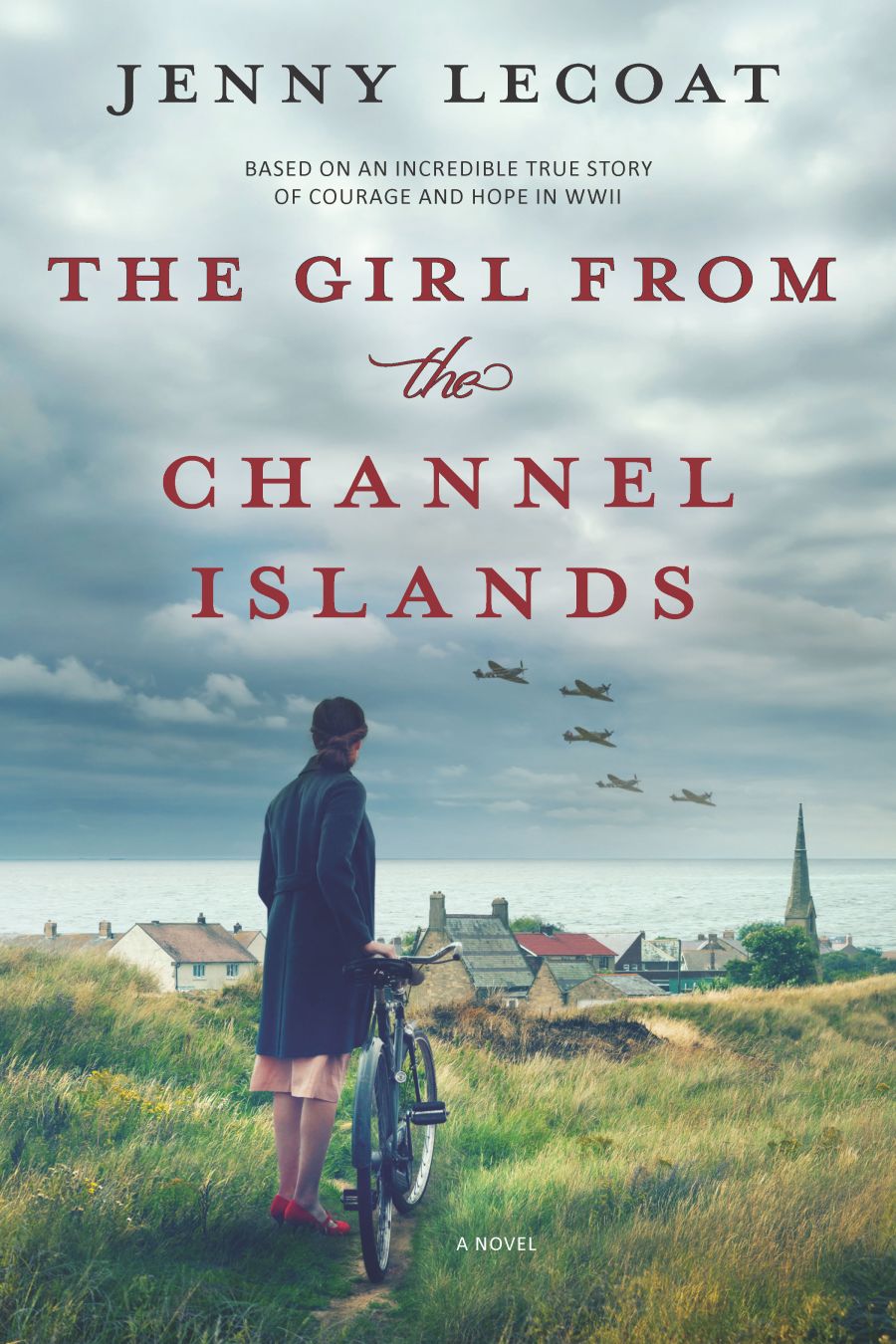
A young Jewish woman who has been forced to flee German Occupation once before finds herself trapped on the only island in Great Britain to become occupied by German forces and must find a means of surviving in author Jenny Lecoat’s “The Girl from the Channel Islands”.
Advertisements
The Synopsis
An extraordinary story of human triumph against impossible odds
The year is 1940, and the world is torn apart by war. In June of that year, Hitler’s army captures the Channel Islands–the only part of Great Britain to be occupied by German forces. Abandoned by Mr. Churchill, forgotten by the Allies, and cut off from all help, the Islands’ situation is increasingly desperate.
Hedy Bercu is a young Jewish girl who fled Vienna for the island of Jersey two years earlier during the Anschluss, only to find herself trapped by the Nazis once more–this time with no escape. Her only hope is to make herself invaluable to the Germans by working as a translator, hiding in plain sight wIth the help of her friends and community–and a sympathetic German officer. But as the war intensifies, rations dwindle, neighbors turn on neighbors, and Hedy’s life is in greater danger every day. It will take a definitive, daring act to save her from certain deportation to the concentration camps.
A sweeping tale of bravery and love under impossible circumstances, Hedy’s remarkable story reminds us that it’s often up to ordinary people to be quiet heroes in the face of injustice.
The Review
What a complex and tense story. Anytime a historical fiction novel explores WWII, readers know that heartbreak and emotional turmoil are sure to follow suit. It was a tumultuous and deadly time, especially for those of Jewish descent. What makes this story stand out immediately is the background that showcases this is based on true events. The haunting nature of the occupation and the impact it has on the island’s residents is gripping for the reader, drawing them in slowly but surely.
It is the strong character growth of this narrative that makes the novel stand out. From protagonist Heady and her struggle to hide within a German-occupied land to highlighting German soldiers who didn’t believe in the “cause” or Hitler’s Vision of the future, but instead were forced to participate in the army and worked to help protect innocents from the crimes of their nation, this novel really helped develop complex and emotional characters that viewed the war from multiple angles and highlighted how many people suffered during this time.
The Verdict
A memorable, heartbreaking, and engaging read, author Jenny Lecoat’s “The Girl from the Channel Islands” is a must-read historical fiction novel. The war was devastating, as were the millions of lives lost to a madman and his ruthless, savage cause. The author perfectly captures the raw emotions and cruel reality of the war and those impacted by it. A truly heartfelt journey, be sure to grab your copy of this fantastic read today!
Rating: 10/10
Advertisements
About the Author
Jenny Lecoat was born in Jersey, Channel Islands, where her parents were raised under German Occupation and were involved in resistance activity. Lecoat moved to England at 18, where, after earning a drama degree, she spent a decade on the alternative comedy circuit as a feminist stand-up. She also wrote for newspapers and women’s magazines (Cosmopolitan, Observer), worked as a TV and radio presenter, before focusing on screenwriting from sitcom to sketch shows. A love of history and factual stories and a return to her island roots brought about her feature film Another Mother’s Son (2017). She is married to television writer Gary Lawson and now lives in East Sussex. The Girl from the Channel Islands is her first novel.
I received a free copy of this book in exchange for a fair and honest review. All opinions are my own.
A young woman caught in a complex love affair with a member of British Royalty leaves for America to support her beloved sister in a grueling custody battle, never knowing the person she asked to stay behind with her beloved would become one of history’s most remembered figures for twentieth century royals in author Bryn Turnbull’s “The Woman Before Wallis”.
Advertisements
The Synopsis
For fans of The Paris Wife and The Crown, this stunning novel tells the true story of the American divorcée who captured Prince Edward’s heart before he abdicated his throne for Wallis Simpson.
In the summer of 1926, when Thelma Morgan marries Viscount Duke Furness after a whirlwind romance, she’s immersed in a gilded world of extraordinary wealth and privilege. For Thelma, the daughter of an American diplomat, her new life as a member of the British aristocracy is like a fairy tale—even more so when her husband introduces her to Edward, Prince of Wales.
In a twist of fate, her marriage to Duke leads her to fall headlong into a love affair with Edward. But happiness is fleeting, and their love is threatened when Thelma’s sister, Gloria Morgan Vanderbilt, becomes embroiled in a scandal with far-reaching implications. As Thelma sails to New York to support Gloria, she leaves Edward in the hands of her trusted friend Wallis, never imagining the consequences that will follow.
Bryn Turnbull takes readers from the raucous glamour of the Paris Ritz and the French Riviera to the quiet, private corners of St. James’s Palace in this sweeping story of love, loyalty and betrayal.
The Review
This was a fantastic and unique historical fiction drama. The author brilliantly delves into the dynamics of this complex love affair and the inherent problems that arise within the Royal Family and high society as a whole in the early twentieth century.
What stood out obviously was the fact that this novel focused not on the infamous Edward and Wallis of Windsor, but on the equally infamous Thelma and Gloria of the Vanderbilt family. Getting two distinct timelines to explore, (Thelma’s love life and the later custody battle for “Little Gloria”), was an inspired and creative choice of topic for this novel, and allowed readers to delve more distinctly into not only these two infamous sisters but the dynamics between each other and those surrounding them.
The novel also does an excellent job of capturing the importance placed upon high society and perception back in those days. From the scandals created for both sisters as they each underwent some loss of a marriage, to love affairs with royalty, this novel captures the era and the atmosphere of that time perfectly.
The Verdict
A remarkable, entertaining, and engaging historical fiction novel, author Bryn Turnbull’s “The Woman Before Wallis” is a must-read story. The slow build between both timelines explored by the author accompanied by the infamous history behind this narrative and fantastic character development make this a truly special read that is not to be missed. Be sure to grab your copy today!
Rating: 10/10
Advertisements
About the Author
Bryn Turnbull is a writer of historical fiction with a penchant for fountain pens and antique furniture. Equipped with a Master of Letters in Creative Writing from the University of St. Andrews, a Master of Professional Communication from Ryerson University, and a Bachelor’s degree in English Literature from McGill University, Bryn focuses on finding the stories of women found within the cracks of the historical record. When she’s not writing, Bryn can be found exploring new coffee shops, spending time with her family in cottage country, or traveling. She lives in Toronto, and can generally be found with a book in hand.
I received a free copy of this book in exchange for a fair and honest review. All opinions are my own.
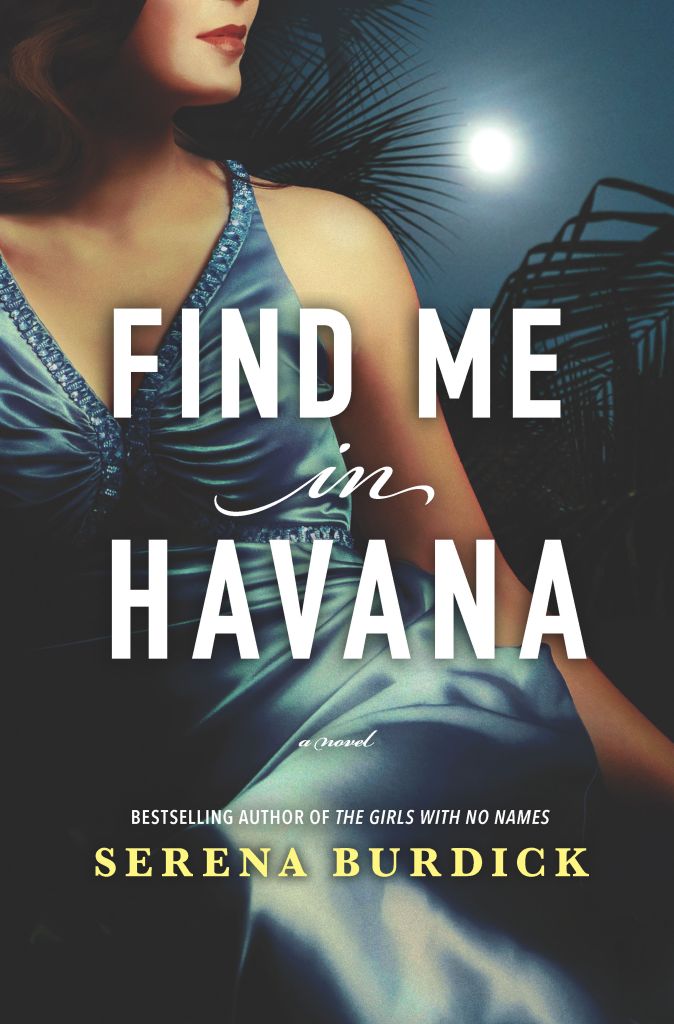
A young woman must navigate the shocking and mysterious death of her mother, who spent her adult life as a famous actress and singer, in author Serena Burdick’s historical fiction drama, “Find Me In Havana”.
Advertisements
The Synopsis
Cuba, 1936: When Estelita Rodriguez sings in a hazy Havana nightclub for the very first time, she is nine years old. From then on, that spotlight of adoration—from Havana to New York’s Copacabana and then Hollywood—becomes the one true accomplishment no one can take from her. Not the 1933 Cuban Revolution that drove her family into poverty. Not the revolving door of husbands and the fickle world of film. Not even the tragic devastation of Castro’s revolution that rained down on her loved ones.
A new historical novel from Serena Burdick, the author of THE GIRLS WITH NO NAMES, based on the true story of Estelita Rodriguez, a Cuban-born Hollywood actress and singer, as her daughter Nina traces her mother’s life from Cuba to Hollywood to understand her mysterious death, think NEXT YEAR IN HAVANA meets THE SEVEN HUSBANDS OF EVELYN HUGO.
Thirty years later, her young adult daughter, Nina Rodriguez, is blindsided by her mother’s mysterious, untimely death. Seeking answers no one else wants to hear, the grieving Nina navigates the troubling, opulent memories of their life together and discovers how much Estelita sacrificed to live the American dream on her own terms.
Based on true events and exclusive interviews with the real Nina Rodriguez, Find Me in Havana weaves two unforgettable voices into one extraordinary journey that explores the unbreakable bond between mother and child, and the ever-changing landscape of self-discovery.
The Review
A beautiful story of two women connected by family and fate, the novel expertly crafts a narrative of how the daughter of a renowned actress and singer must come to terms with the childhood she had and the life she’s led thus far after her mother’s passing. The shift in perspective between both Nina and her mother Estelita was an inspired choice, as readers are able to get a better sense of where each of them was coming from, and the tragic circumstances they each found themselves in.
The backdrop of Cuba and the nation’s violent history of revolution and war did a great job of highlighting not only the nation’s history but the vast culture that the people of Cuba had as well. However the core of this story is undoubtedly the relationship between a mother and her daughter, and the daughters need to understand her mother’s life and how to let go of the past in order to move on with her own life. The novel is marred by tragic events to be sure, but the emotional journey is well worth the known outcome and makes this a truly intimate historical fiction read.
The Verdict
A mesmerizing, emotional, and heartfelt read of the relationship between a mother and her daughter, author Serena Burdick’s “Find Me In Havana” is a must-read historical fiction novel. The real-life people within this novel come to life in a memorable way, and the honest look into the lives of these two women will be something so many of us can connect with. If you haven’t yet, grab your copies today!
Advertisements
About the Author
Serena Burdick graduated from The American Academy of Dramatic Arts in California before moving to New York City to pursue a degree in English Literature at Brooklyn College. Author of the International Bestseller THE GIRLS WITH NO NAMES and GIRL IN THE AFTERNOON, she lives in Western Massachusetts with her husband and two sons.
In August, Big Sur crackles with drought. Grass dries to a crisp and turns gold as ember. Rattlers lay in wait. Fat insects purr, and banana slugs languish. The air is ripe with eucalyptus, their slender, green leaves blanketing the canyon paths. Poison oak claws the hillside. This is not the season of lemons trees or emerald hills or crisp sunshine. Summer on the coast is a season of bone-chilling fog.
Overlooking the Pacific, I stand on Nepenthe’s stone patio, the restaurant’s windows spilling light around me as I watch the gray mass of fog crawl and heave up the cliff. You would have liked it here, Mom, but we never drove up the coast together. We never had the chance. I close my eyes as the fog settles over me, damp and soft as a whisper. Below, the surf thunders against the rocks, and I feel the sway of the sea in my legs and picture myself stepping over the low stone wall and lifting my arms into the air. The ocean will catch me, release me, hollow out my body and wash it up on the shore like an empty shell.
I need a shell. Hard skin. A barrier against the world of missing you.
How is there no you left? No Mom. No Wife. No Movie Actress. No Singer. There are photographs, and moving pictures where you swing your hips and make funny faces, but I cannot touch or smell or feel or speak to this two-dimensional version.
I want an explanation.
Memories root and twist inside me, blossom, grow thorns, beautiful and gnarled, but the truth remains hidden, and I am left with the image of the bathroom floor and the weight of you in my arms.
I do not want this to be our last memory.
Opening my eyes, I take a deep breath, let the cool wetness lie over my tongue. Next to me, a fire crackles in the open hearth warming one side of my leg. I think how outdoor fires do this, warm only one side of you while the other side freezes. I wear a short skirt without pantyhose, white tennis shoes and a tight, knit sweater. The guests have all gone, the movie stars and bohemian artists, the former donning glitter and fur, the latter beads and loose-folding fabric, each hoping to authenticate themselves in originality. Each failing.
“Nina?” I jump at the sound of my manager’s voice. He stands in the open patio doorway of the restaurant polishing a wineglass. “Your ride is here.”
He looks at me kindly, unconcerned. He doesn’t know anything about me. I feel the warmth of the fire on my backside and think how cold it will be in the hollowed-out redwood tree where I sleep.
“I’ll just wipe down the tables,” I say, stalling. I don’t want to face my ride any more than I want to face the cold night on the forest floor with the insects.
My manager is a slender, vigorous man who looks as if he’s been breathing ocean air since birth. “It’s late,” he smiles. “You go on home now. I’ll take care of the tables.”
Walking away from the restaurant, the stone path slick with moisture, I dig my doll from the bottom of my bag and tuck her under one arm. She has a cloth body and a plastic head with blue eyes that open and close when you tilt her. Her plastic head is dotted with dark holes where her carefully arranged hair used to be. On her stomach is a scar—held together with a safety pin—from the time I cut her open and pulled out the stuffing.
Bret waits in his mint-green Volvo with the engine running. He is smoking a joint and doesn’t open the door for me. I slide into the passenger seat and he leans over and gives me a sloppy kiss, his hand pressed to the back of my head as if this is something romantic. His tongue tastes of stale smoke and alcohol. “Hey, baby,” he breathes into my face and passes me the joint. I take it, inhale and try to stifle a cough as Bret maneuvers the car onto the dark road.
We met five months ago when I first arrived in Big Sur. My friend Delia and I had eaten a handful of mushrooms and were dancing around a bonfire at a beach party when Bret slipped into the wavy, illuminated light of my vision. His embroidered shirt rippled over his chest and I thought he was something supernatural. The next morning when I woke up beside him on the beach, he’d turned solid. He was nothing more than a thin-chested man with a tangled beard and skinny legs sticking out from his cutoff jean shorts.
Bret hooks the car around a sharp bend, and the wheels kick up gravel that makes a sound like thunder under our feet.
“You’re going too fast,” I say, pressing my hand flat against the passenger window.
He grins and steps on the gas, a man who likes to challenge a woman. This is familiar to me. I watched men challenge you your whole life, each one of your four husbands, in their own way, pushing you to the edge. Despite your effort to understand them, to please them, it was, in the end, your unwillingness to be controlled or possessed that got you killed.
The car takes another corner, and the cliff drops to my right at a precarious angle where sumac and sagebrush cling to the edge. People love Highway 1 for its beauty. They think it cuts a benevolent path along the ocean cliff for our pleasure. What I see is a snake luring us with its curvaceous body, a thing of nature waiting for us to step on it so it can strike and fling us off.
I squish my doll’s head in, making her face look like something in a distorting mirror. “I don’t want to do this anymore,” I say, watching the doll’s features slowly inflate and pop back into place.
Bret’s profile remains neutral, his eyes on the road as he reaches over and strokes my thigh. “Don’t be like that, baby. This is good.”
I’ve tried to break up with him before. I don’t know why he won’t let me go, or how he can feel anything for me when I feel nothing inside. After your death, they sedated me because I was angry and didn’t behave properly. Now, I do what I can to sedate myself.
“I mean it. I’m done.” I shove his hand away, and this makes him angry.
He puts both hands on the wheel, grips it with white knuckles, his eyes forward, his jaw clenched. “What the fuck, Nina?” he says.
The headlights strike the road. Yellow lines blink past like winking eyes.
His anger scares me. “I’m sorry,” I say. I’m not good at this. Charming men. Giving them what they want. Doing what I watched you do, for the good ones and the bad. You appeased the good men, hoping they’d stay with you; placated the bad ones, hoping they wouldn’t hurt you. With each husband you tried a little harder, stayed a little longer, so certain you’d get it right.
If Bret is any indication, I won’t get it right, either. Looking at him, his hard profile reflected in the dashboard lights, his scruffy beard and long hair curling at the base of his neck, he reminds me of the rebel soldiers in Cuba.
This is not a memory I want. “Bret, I really can’t do this. Please, pull over. I need to get out.”
“You don’t know what you need.”
The arrogance in his voice disgusts me, the anger I’d been tamping down with drugs is now rising in my throat. For all his meditating and chanting and seeking enlightenment, Bret is a prick. I am twenty years old, you are dead, and there’s no one to tell me what to do anymore. You are not here to laugh it away, or tell me to chin-up, to silence me or put me in a mental institution or stick me in a boarding school. “Fuck you, Bret!” I shout. “Pull over. I want to get out.”
“Fuck me?” He speeds up, swerves the car near the shoulder of the road, gravel and dirt hitting my window and ricocheting off the glass like buckshot.
I suck in my breath and grip the door handle. “Don’t do that!”
“Do what? This?” He swerves again, and all I see, for a moment, is empty, black space.
What I should do is calm him down, convince him I’m sorry and that I won’t break up with him. Stop the car, and we’ll talk about it, I should say, but a part of me wants him to do something drastic. To pull the trigger for me.
We are crossing Bixby Bridge. The fog has receded, and I can see all the way down to the dark strip of beach where the waves crash and foam like a giant frothing at the mouth. I know, in that split second right before Bret takes us over the edge, that he’s going to do it. It’s not the plunge into water I’d imagined on the patio at Nepenthe. I am not sailing peacefully off the cliff with my arms out but trapped in a metal box that jerks to the right so abruptly my head smacks the window. I expect free fall, silence, stillness, but the air is sharp and compact and splintered with glass.
And then you are in my arms, your face flushed, your dark hair limp on your wet forehead, vomit ringing the corners of your mouth. “Help me,” I plead, even though you are the one dying. “Don’t go,” I cry. “I need you,” but I have already hit bottom, and the world has gone quiet.
I received a free copy of this book in exchange for a fair and honest review. All opinions are my own.
A young girl must find a way to save her mother from a nefarious Madame in the town of Tombstone in author Vali Benson’s “Blood and Silver”.
Advertisements
The Synopsis
What is a twelve year old girl to do when she finds herself in the silver boom town of Tombstone, Arizona, in 1880, and her only home is a brothel and her only parent is a drug-addicted mother? If she is Carissa Beaumont, she outsmarts the evil madam and figures a way out.
After tricking the madam, Miss Lucille, into summoning a doctor for her mother, Lisette, she discovers that Miss Lucille has been drugging her. She and the kind doctor make a plan to try to save Lisette by dosing her down on the drug.
Doctor Henderson tells Carissa that the only source for the drug is a Chinese immigrant named China Mary, who lives in Hoptown, at the other end of Tombstone. Carissa has no choice but to go to the powerful woman for help. Many say that China Mary is the one who really controls Tombstone.
China Mary admires Carissa’s brave spirit, and uses her influence to get her a job at the new Grand Hotel, which will free Carissa from her many duties at Miss Lucille’s. She will work along with Mary’s twelve year old niece, Mai-Lin. The two girls become fast friends.
Then, disaster strikes, and the two girls must work together to stay alive.
With a host of colorful characters and meticulous attention to period detail, Blood and Silver is a story of the best and worst of human nature, the passion for survival and the beauty of true friendship.
The Review
This was a fast-paced, intricate character study and intense YA historical read. The author does a great job of focusing on character development within the narrative, and the historical nature of the novel was very well researched and integrated naturally into the book as well.
The story takes off immediately from the very first pages, with a murder leading to Carissa’s discovery of her mother’s condition and the lengths Miss Lucille will go to secure her business. The young woman risks it all to save those closest to her, and historical fiction and YA fans will love the intricate way the setting plays into the character’s arc and the narrative overall.
Advertisements
The Verdict
A must-read novel, author Vali Benson’s “Blood and Silver” is a truly one-of-a-kind read. The historical fiction YA adventure is filled with a gritty Western theme and does a great job of giving a voice to people who are usually relegated to background characters in the typical Western novel, making this a wonderful read. Be sure to grab your copy today!
Rating: 10/10
Advertisements
About the Author
Vali grew up in the Midwest. She now lives in Tucson with her husband, two sons and grandchildren.
After graduating from the University of Illinois, Vali started and sold two successful businesses before she decided to pursue her real passion of writing. She published several articles in a variety of periodicals, including History Magazine before she decided to try her hand at fiction.
In April of 2020, Vali published her first novel, “Blood and Silver”. That same month, she was also made a member of the Western Writers of America.
I received a free copy of this book in exchange for a fair and honest review. All opinions are my own.
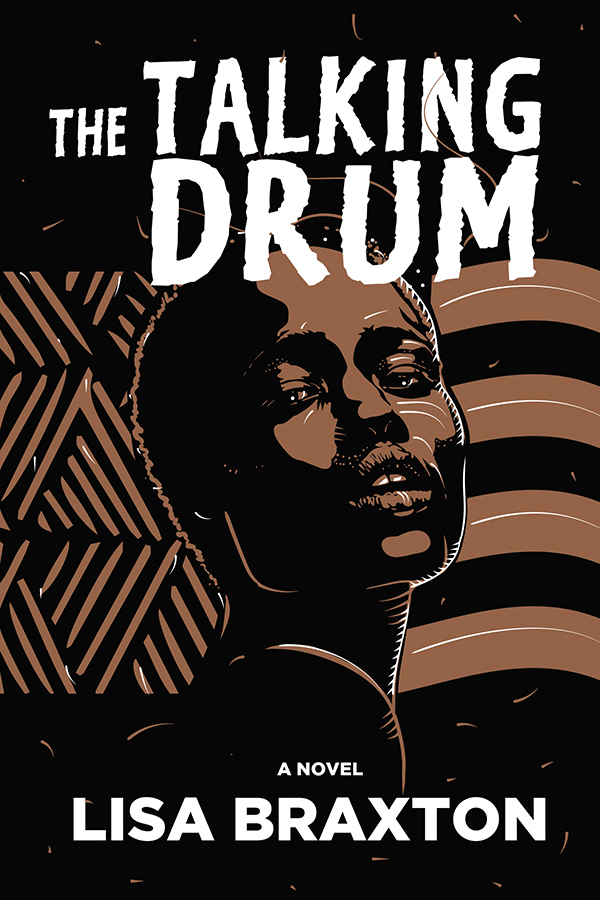
Race relations, immigration, and the role government plays in our daily lives take center stage in author Lisa Braxton’s historical fiction novel “The Talking Drum”.
Advertisements
The Synopsis
Displacement/gentrification has been happening for generations, yet few novels have been written with the themes of gentrification, which makes this book unusual.
It is 1971. The fictional city of Bellport, Massachusetts, is in decline with an urban redevelopment project on the horizon expected to transform this dying factory town into a thriving economic center. This planned transformation has a profound effect on the residents who live in Bellport as their own personal transformations take place.
Sydney Stallworth steps away from her fellowship and law studies at an elite university to support husband Malachi’s dream of opening a business in the heart of the black community of his hometown, Bellport.
For Omar Bassari, an immigrant from Senegal, Bellport is where he will establish his drumming career and the launching pad from which he will spread African culture across the world, while trying to hold onto his marriage.
Della Tolliver has built a fragile sanctuary in Bellport for herself, boyfriend Kwamé Rodriguez, and daughter Jasmine, a troubled child prone to nightmares and outbursts.
Tensions rise as the demolition date moves closer, plans for gentrification are laid out, and the pace of suspicious fires picks up. The residents find themselves at odds with a political system manipulating their lives and question the future of their relationships.
The Talking Drum explores intra-racial, class, and cross-cultural tensions, along with the meaning of community and belonging.
The novel delves into the profound impact gentrification has on people in many neighborhoods, and the way in which being uprooted affects the fabric of their families, friendships, and emotional well-being. The Talking Drum not only explores the immigrant experience, but how the immigrant/African American neighborhood interface leads to friction and tension, a theme also not explored much in current literature involving immigrants.
The book is a springboard to an important discussion on race and class differences, the treatment of immigrants, as well as the government’s relationship to society.
The Review
There has never been a more relevant or prominent moment for a novel of this magnitude than now. Such a rich and powerful narrative takes center stage in this book, creating a tense and emotional atmosphere that many today can identify with.
The characters are true standouts, as the author expertly creates relatable and memorable characters that do an amazing job of embodying the theme of immigration, race relations, and government roles as a whole. While a historical fiction and fiction setting, the message, and heart of the story shines brightly through and conveys the hardships that have come with trying to find common ground, find equality, and integrate it into everyone’s daily lives.
Especially when readers are taken into an often overlooked subject like the tension that can arise in communities such as African American/Black neighborhoods amongst its citizens and immigrants settling into the area, and the need to find common ground and come together as a whole community in the face of great upheaval and tragedy.
The Verdict
A well-read, highly engaging and richly drawn-out narrative, author Lisa Braxton’s “The Talking Drum” explores so much, from history and the culture of a group of people and the importance of remembering that culture, to the struggles for immigrants to make a new life for themselves and the hardships that come with intra-racial relationships as well. It’s a novel that speaks volumes in its message and theme and deserves to be read during these tumultuous times. Be sure to grab your copy today!
Rating: 10/10
Advertisements
About the Author
Lisa Braxton is an Emmy-nominated former television journalist, an essayist, short story writer, and novelist. She is a fellow of the Kimbilio Fiction Writers Program and was a finalist in the William Faulkner-William Wisdom Creative Writing Competition. She earned her MFA in creative writing from Southern New Hampshire University, her M.S. in journalism from Northwestern University, and her B.A. in Mass Media from Hampton University. Her stories have been published in anthologies and literary journals. She lives in the Boston, Massachusetts area. www.lisabraxton.com