I received a free copy of this book in exchange for a fair and honest review. All opinions are my own.
Advertisements
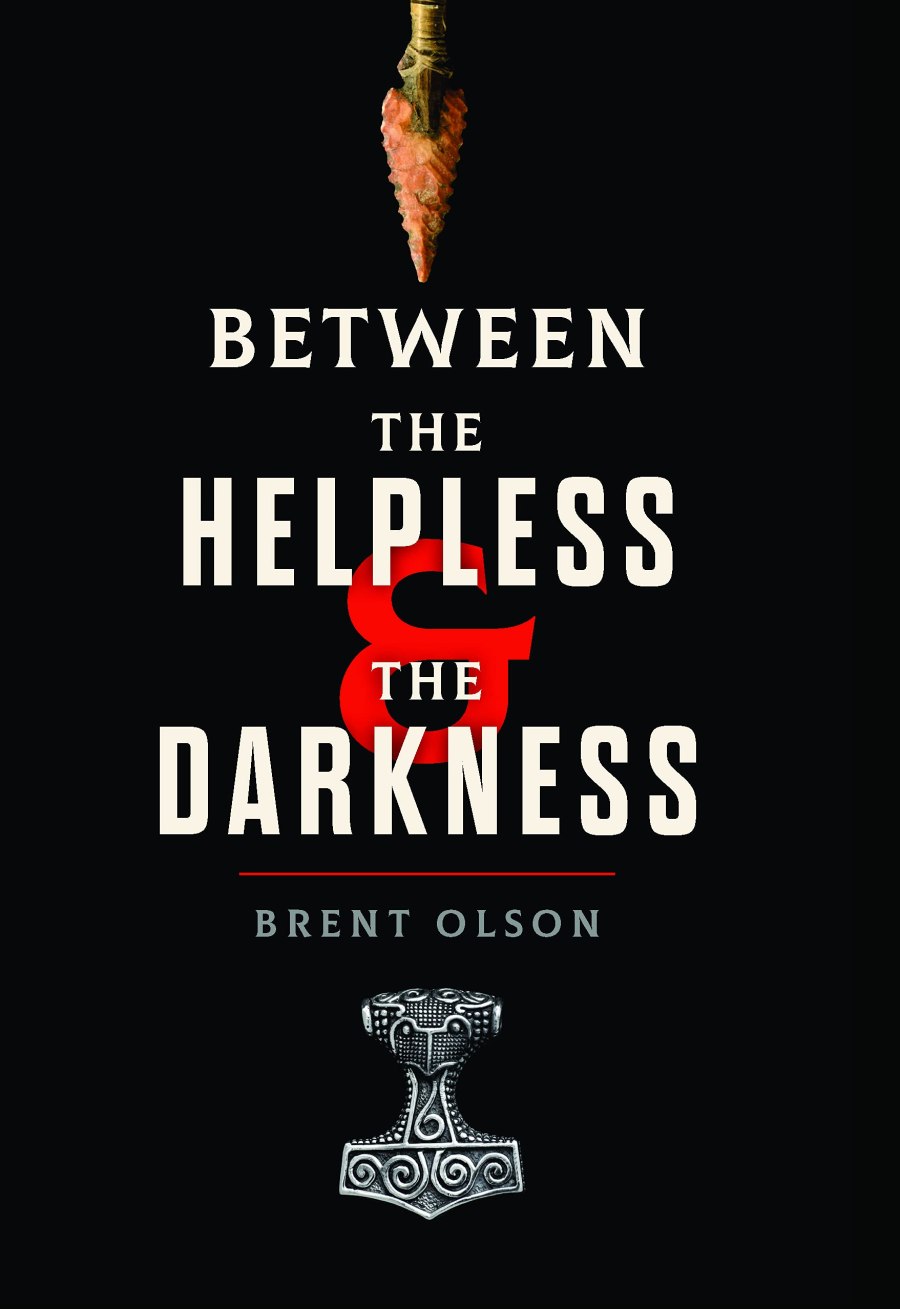
In this alternative history story, a Viking King and his band of broken warriors head to new lands in search of something more than a kingdom in author Brent Olson’s “Between the Helpless and the Darkness”.
The Synopsis
HARALD SIGURDSSON, King Harald Hardrada of Norway, King of the Vikings, was born to rule. He embraced that birthright, dominating his world with the strength in his arm and the power of his will. In an instant, one brutal mistake and a shattering wound took all he valued from him.But what if . . .Harald Sigurdsson fled his disgrace with a band of equally broken warriors still holding tight to his leadership. They ventured West, to Iceland, Greenland, into the darkness, to a land known only through legends and lies. A land with no need of a king, no room fora ruler. A land where a king could hope to become something more.This enthralling, thought-provoking story begins a thousand years ago on a battlefield outside York, England, and then moves across the North Atlantic to Iceland and beyond. Brent Olson’s biggest, boldest, and best book yet is a stunning work of alternative history. By moving the path of one arrow one inch, Olson has achieved an entire new script for the world.
The Review
This was a vibrant and captivating historical fiction novel. The exploration of Norse culture and the history of King Harald was fascinating to read, as the novel explored a time and alternate history that shows what the man behind the legend would have done had he survived his final battle. The atmosphere and pacing of the novel were captivating, as the story showcased this unique culture both in victory and defeat.
The character development of this book was incredible. The complexity of Harald as a character, both the legendary warrior others viewed him as and the flawed man beneath the legend, made this an in-depth and memorable story. The concept of Norse warriors and people arriving in what would later be North America and encountering the continent’s indigenous people was thought-provoking and kept the reader engaged in this book’s more creative and personal storytelling.
The Verdict
Adrenaline fueled, thoughtful, and entertaining, author Brent Olsons “Between the Helpless and the Darkness” is a must-read historical fiction and alternate history read. The wealth of world-building and imagery in the writing and the twists and turns in the epic story made this a great novel. If you haven’t yet, be sure to grab your copy today!
Rating: 10/10
Advertisements
About the Author
Brent Olson has lived 64 of his 66 years on a small farm
in Big Stone County, on the edge of the prairie in western
Minnesota.
But in his life as a working journalist he’s filed articles
from 20 countries on six continents. This has led him
to want to change the world he lives in, through his
work as a county commissioner, and create new worlds
in his two recent novels, “Angr”
and “Between the Helpless and the Darkness.”
In this time of news and information tailored so everyone
can hear only what they want to hear, he presents
information that will leave everyone just a little unsettled.
Working with a warm heart and a cold eye, he dissects
what works from what doesn’t in our individual lives, our
institutions, and our country.
He has served on dozens of boards and committees—as
varied as the Big Stone County Pork Producers, and the
Minnesota United Methodist Board of Ordained Ministry.
In his time as a short order cook at his very own Inadvertent
Café he has learned to make fluffy scrambled eggs,
and the best omelets on Main Street in Clinton, Minnesota
(Population 453).
Olson is a Big Stone County Commissioner and a 2012
I received a free copy of this book in exchange for a fair and honest review. All opinions are my own.
A Western silver heiress gets embroiled in a dark murder mystery in author Cecelia Tichi’s “Death in a Gilded Frame”.
Advertisements
The Synopsis
Newport Summer 1899—yachts, balls, and famed artists eager to paint portraits of Society’s “Queens.”
Western silver heiress Val Mackle DeVere (Mrs. Roderick W.) agrees to “sit” for a portrait for her beloved Roddy, only to stumble on a scene of bloody, grisly homicide at an art gallery.
Like a figure from Pompeii, the dead Newport gallery manager screams in silence, his hands like claws clutching at a gilt frame pulled down over his head and shoulders while blood darkens his cream-colored suit.
Impulsive, Val reaches for the murder weapon and will find herself suspected, shamed, and shunned as she seeks the killer while learning yet again a lesson taught by Cornelius Vanderbilt IV: “No city on earth is as hostile to outsiders as Newport.”
The Review
This was a fun and engaging historical fiction meets mystery drama. The author found the perfect balance in the story between examining “high society” within communities such as Newport and honing in on the narrative’s mystery and thriller aspects. The creative way the author infused drink recipes into the narrative for readers to enjoy through one of the main characters was also inspired, as it allowed the reader to really become invested in the story.
The heart of the narrative rests in the solid historical accuracy of how society and the world viewed women and their role in that era, with the solid and engaging character growth of the protagonist and those around her. The setting and imagery in the author’s writing highlighted this time period well, and the way the protagonist has to battle her way through both suspicion and social shame to regain her status and catch a killer in the process will have readers enthralled with this novel.
The Verdict
With iconic storytelling, rich character development, and entertaining world-building at its finest, author Cecelia Tichi’s “Death in a Gilded Frame” is a must-read historical fiction novel that you don’t want to miss. The twists, turns, and shocking revelations are just a tiny part of the glamour and appeal readers will find in this historical piece, and the dynamic way the author brings readers into this era will leave readers wanting more. If you haven’t yet, be sure to grab your copy today!
Rating: 10/10
Advertisements
About the Author
A fresh start for every new book, and author Tichi’s zest for America’s Gilded Age and its boldface names draws this seasoned writer to a crime fiction series while uncorking the country’s cocktail cultures on the printed page. Tichi digs deep into the Vanderbilt University research library to mine the late 1800-1900s history and customs of Society’s “Four Hundred,” its drinks, and the ways high-stakes crimes in its midst make for a gripping “Gilded” mystery series that rings true to the tumultuous era. The decades of America’s industrial titans and “Queens” of Society have loomed large in Tichi’s books for several years, and the titles track her recent projects:
Civic Passions: Seven Who Launched Progressive America (and What They Teach Us)
Jack London: A Writer’s Fight for a Better America
What Would Mrs. Astor Do? A Complete Guide to the Manners and Mores of the Gilded Age
Gilded Age Cocktails: History, Lore, and Recipes from the Golden Age
Jazz Age Cocktails: History, Lore, and Recipes from the Roaring Twenties.
A Gilded Death (crime fiction)
Murder, Murder, Murder in Gilded Central Park (crime fiction)
A Fatal Gilded High Note (crime fiction)
A Deadly Gilded Free Fall (crime fiction)
A Gilded Drowning Pool (crime fiction)
Death in a Gilded Frame (crime fiction)
She enjoys membership and posting in Facebook’s The Gilded Age Society. You can read more about Cecelia by visiting her Wikipedia page at: https://bit.ly/Tichiwiki or her website: https://cecebooks.com.
I received a free copy of this book in exchange for a fair and honest review. All opinions are my own.
An enslaved man on the island of Barbados after leading a revolt against the slavers finds himself being hunted by the militia, and the ghosts of his past in author Mack Little’s upcoming novel, “Shelter in a Hostile World”.
Advertisements
The Synopsis
Badu Obosi has not had an easy life. As an enslaved Igbo man on the island of Barbados, he’s done his best to keep his wife, an Irish indentured servant, and his children safe. When things turn, he has no choice but to lead the revolt against the slavers.
Now, hunted by the militia, he must make his run toward freedom. But the enraged slavers are not the only thing that hunts him. The ghosts of his past, and the transgressions that led him to this life, are hot on his heels as well.
Will Badu have the strength to face his past? Can he let go of those chains and find true freedom?
The Review
This was an incredibly rich and captivating blend of historical fiction meeting culture dynamics and more. The short yet powerful read delivers an engaging multitude of themes that deal with everything from slavery and violence and the horrors of the colonialism age to the more intimate themes of facing our pasts and finding our future where we least expect it.
The heart of this story rests in the emotional character development of Badu and the balance his story brought to the overall narrative. The heartbreaking losses he suffers and the sins of his own past show the complexity of his character and the way this elevated the horrors and violence of the slave trade during this era and the need for freedom that the people fighting against this system felt was emotional and impactful to read.
The Verdict
Thoughtful, insightful, and engaging, author Mack Little’s “Shelter in a Hostile World” is a must-read upcoming historical fiction drama that readers won’t be able to put down. The unique setting, the dynamic setting, and the heartfelt tension the author builds throughout the narrative help to solidify the imagery used in the author’s writing and made the emotional impact of the character’s final moments that much more meaningful. Be sure to be on the lookout for this book soon.
Rating: 10/10
Advertisements
About the Author
Mack Little grew up in the Deep South and has accumulated a vibrant experience that she often emulates in her storytelling. Her studies in International Politics and service in the Army have given her impressive perspectives which add layers of intrigue and twists to her storytelling.
After leaving the Army, Mack worked as a medical librarian and an adjunct professor at Texas Woman’s University. Mack has authored and co-authored several articles for professional journals such as the Journal of the Medical Library Association, Medical Research Services Quarterly, and the Journal of Electronic Resources. She has presented at the Medical Library Association Conference, the Texas Gulf Coast Healthy Communities Partnership, and the Special Libraries Association Conference. She co-authored the book, Disaster Planning: a How-to-do-it manual, published by Neal-Schuman Publishers in 2005. Mack performs occasionally in Community Theater.
I received a free copy of this book in exchange for a fair and honest review. All opinions are my own.
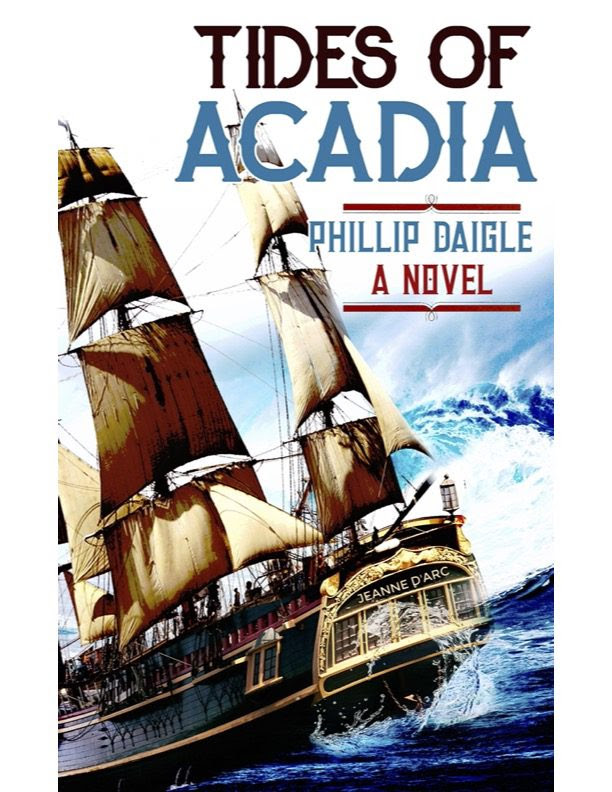
Three people living in early 17th century North America find their lives intertwined by the strings of fate as tensions between France and Britain rise, and the fate of a growing nation and continent hangs in the balance in author Phillip Daigle’s “Tides of Acadia”, the first book in the author’s historical fiction series.
Advertisements
The Synopsis
In the early 17th century, the wild, untamed lands of Acadia, now Eastern Canada, were a contested territory between the French and the English and the indigenous people who inhabited the region. Amidst this turbulent time, three individuals stand out: Charles La Tour, Francoise Jacquelin, and Menou Daulnay. Their stories intertwine in a complex web of loyalty, love, and betrayal in the historical drama Tides of Acadia.
The story begins with Charles La Tour, a resourceful French adventurer, and seaborne trader, who navigates the treacherous waters of politics and alliances to establish a fur-trade fortress in Acadia. As a clever strategist and skilled negotiator, he gains the respect of both European settlers and the indigenous leaders, even as tensions escalate between the French and the English.
Enter Francoise Jacquelin, a strong-willed, intelligent, and fiercely independent woman who defies societal expectations to make her mark as a Parisian actress. Francoise’s journey leads her to a powerful connection with Charles La Tour. Together, they must overcome personal and political obstacles to build a life and secure a future.
As the rivalry between the French and the British intensifies, Menou Daulnay, an ambitious and ruthless French naval officer, emerges as a powerful adversary. His need to claim Acadia for himself puts him at odds with La Tour and drives a wedge between the allies, leading to a bitter struggle for power and control. Through guile, treachery, and manipulation, Daulnay threatens to unravel the fragile balance that La Tour and Francoise have built, forcing them to make difficult choices that will shape the course of history.
Tides of Acadia brings to life the rich tapestry of culture, politics, and personal drama that defined this pivotal era in North American history. The central characters, Charles La Tour, Francoise Jacquelin, and Menou Daulnay, are portrayed with depth and complexity, offering a nuanced exploration of their motivations, desires, and sacrifices in the name of love, loyalty, and ambition. Sweeping scope and rich detail make this vibrant historical drama an unforgettable journey through the heart of Acadia and the lives of the extraordinary people who fought for its future.
The Review
This was a fascinating and engaging historical fiction read. The detail and historically accurate dialogue the author was able to capture in this book was remarkable and really helped put the reader into the setting of this novel with ease. So much of historical fiction surrounding the North American continent typically focuses on the American Revolution or the Civil War, and so getting to explore the Northern part of the continent in the 17th century was such a unique treat and really made me feel immersed into the world.
Yet the heart of this novel rested in the rich character dynamics of the story. The relationships between Charles and Francoise and the rivalry between Charles and Menou were so heated as the story progressed, and perfectly showcased the tensions and dangers of the brewing conflict the Europeans brought to the continent. Yet the story expertly showcased the influence the Europeans had on the continent and the Indigenous people there as well, as their conflict ignored the dangers and harm they caused to the land and the people they drove out of their homes. Charles and his struggle to help the Indigenous people and the settlers who made the land their home, as well as the balance of action, romance, and politics the story covered made this a truly gripping historical fiction novel.
The Verdict
Richly developed, engaging, and harrowing, author Phillip Daigle’s “Tides of Acadia” is a wonderful and must-read historical fiction novel and a great first entry into the Origins of Acadia Series. The twists and shocking turns that some of the characters experience as time goes on, and the powerful imagery that helps bring this rarely explored piece of history to life made this a compelling novel that readers won’t be able to put down. If you haven’t yet, be sure to grab your copy today!
Rating: 10/10
Advertisements
About the Author
Phillip Daigle is an American author from the state of Maine. He is best known for his profound exploration of the region’s history and culture in his captivating books, “Tides of Acadia” and “The Acadian: Olivier.” His work reflects a deep connection with his roots and an ability to engage readers with stories that resonate with authenticity and emotional depth.
Born and raised in the rugged beauty of Maine, Daigle’s childhood was steeped in his homeland’s rich history and timeless folklore. His favorite story was Longfellow’s “Evangeline,” a narrative that deeply moved him and influenced his literary journey. This poignant tale of Acadian lovers separated on their wedding day during the Great Expulsion (1755-1764) sowed the seeds of his fascination with Acadia. This region once encompassed parts of Maine and Canada’s Maritime Provinces.
Daigle’s first book, “Tides of Acadia,” is a meticulously researched and beautifully narrated journey into the past, delving into this region’s historical, cultural, and natural landscapes. The book received critical acclaim for its compelling storytelling and insightful perspectives, positioning Daigle as a leading historical and regional literature voice.
His second book, “The Acadian: Olivier,” further explores the Acadian legacy through the life of the eponymous Olivier. It’s a testament to Daigle’s narrative prowess, weaving together personal and historical narratives to paint a vivid picture of life in Acadia.
Phillip Daigle’s work goes beyond the realm of traditional historical literature. He infuses his storytelling with a profound understanding of human nature and a palpable love for his homeland. His works serve as a bridge between the past and the present, illuminating the enduring spirit of the Acadian people and their enduring connection to the land they call home. As such, Daigle’s books have become essential reading for those looking to understand the depths of Acadia’s cultural heritage.
With an unwavering commitment to bringing the past to life through his evocative writing, Phillip Daigle stands as a pivotal figure in contemporary American literature. His books not only tell the story of Acadia but also of a writer deeply connected to his roots, crafting narratives that resonate with readers far and wide. His contributions to literature continue to inspire a new generation of readers and writers who find beauty and meaning in the stories of our past.
I received a free copy of this book in exchange for a fair and honest review. All opinions are my own.
A young Asian American family must learn to survive and endure in the wake of the prejudices found in the United States after the attack on Pearl Harbor in 1940s America in author Shirley Miller Kamada’s “No Quiet Water”.
Advertisements
The Synopsis
After the U.S. declares war on Japan in 1941, all persons of Japanese descent in the Western U.S. come under suspicion. Curfews are imposed, bank accounts frozen, and FBI agents search homes randomly.
Despite the fact that two generations of the Miyota family are American citizens, Fumio and his parents and sister Kimiko must pack meager belongings and are transported under military escort to the California desert to be held at Camp Manzanar, leaving their good friends and neighbors the Whitlocks to care for their farm and their dog, Flyer.
The family suffer unimaginable insults, witness prejudice and violent protests, are forced to live in squalor, and are provided only poor-quality, unfamiliar food which makes them ill. Later, they are transferred to Idaho’s Camp Minidoka, where Fumio learns what it means to endure and where he discovers a strange new world of possibility and belonging.
Lyrical, visual, and rendered with strict attention to historical accuracy, No Quiet Water, shines a poignant light on current issues of racism and radical perspectives.
The Review
This was such a unique and special read. The author does an incredible job of crafting a narrative for readers that feels accessible on a large scale to a multitude of readers while also diving deeply into the heart of the narrative and the themes that they explore, which feel personal and painfully intimate to the characters involved. The themes took on a serious tone as the author delved into some serious subject matter, including themes of racism and mistrust in the wake of tragedies, and the way fear and doubt warp people’s perception of others, something that is happening even now in our own modern times, which made this story feel tragically more relatable than ever before.
The heart of this narrative was the rich character development and the multi-POVs that the story takes on. The heartbreaking and enduring story of Fumio and his family create that emotional relatability between the reader and the narrative that a historical fiction of this magnitude has while also creating a unique perspective through the eyes of the family dog who is forced to be left behind on the family farm in the care of neighbors gave this story the YA and middle-grade genre twist that will make the narrative accessible to a broader audience.
The Verdict
Captivating, emotionally driven, and memorable, author Shirley Miller Kamada’s “No Quiet Water” is a must-read historical fiction Japanese and United States historical fiction read. The heart and passion for which the author wrote, as well as the important themes that touched upon some of our society’s most vital issues that need to be addressed, showcased how we need to learn from our past and the power that resides within us all as we discover who we are in moments of great tragedy and crisis. If you haven’t yet, be sure to grab your copy today!
Rating: 10/10
Advertisements
About the Author
Shirley Miller Kamada grew up on a farm in northeastern Colorado. She has been an educator in Oregon, Idaho, and Washington, a bookstore-espresso café owner in Centralia, Washington, and director of a learning center in Olympia, Washington. When not writing, she enjoys casting a fly rod, particularly from the dock at her home on Moses Lake in Central Washington, which she shares with her husband and two spoiled pups.
I received a free copy of this book in exchange for a fair and honest review. All opinions are my own.
A young woman works to keep her family together as she grows into a stronger role within her family and she begins to be courted by British nobility in author David Bowles’s “Children of the Revolution”, the third book in the Westward Sagas series.
Advertisements
The Synopsis
Children of the Revolution is the story of the progeny of patriot Adam Mitchell, who fought during the American Revolution at the Battle of Guilford Courthouse on March 15, 1781. This pivotal battle culminated in his cornfields, which adjoined the one-acre site of the first Guilford County, North Carolina courthouse.
The hundred-year odyssey of the Westward Sagas is not about war, but about how it affected the Mitchell family. Children of the Revolution: Book 3 in the Westward Sagas Series takes up where Adam’s Daughters: Book 2 left off-in Tennessee shortly after statehood. The series continues with the next generation of the Mitchell Family. Peggy, the protagonist in Adam’s Daughters, takes on a stronger role as she matures into a confident woman courted by British nobility. Children of the Revolution uncovers the untold reason North Carolina never ratified the U.S. Constitution. Adventure, intrigue, romance and tragedy are woven into the story of the first generation of Americans.
The Review
This was an engaging and emotional addition to this captivating historical fiction series. The author did an incredible job of showcasing the realities of war and the psychological effects that these battles had on the survivors and the innocent people caught in the crossfire as a decisive battle that would eventually turn the tide of the war effort left deep scars on the land and those who worked it. The imagery really did an incredible job of breathing life into this rich setting as it not only showcased the hardships of life on the frontier, but early life in pre-American lands ravaged by war.
The heart of this narrative came in the author’s ability to bring a dash of emotion and heart to the character’s evolution along with the historical elements that made this story feel alive and vibrant on the page. The exploration of this family saga and the evolution of Peggy’s story in particular were fascinating to behold, and the strength of her character and her choices made the impact of those choices feel that much more prevalent.
The Verdict
Captivating, engaging, and thoughtful in its approach, author David Bowles’s “Children of the Revolution” is a fantastic continuation of the Westward Sagas and the story of the Mitchell family. The history and culture of the era kept the story flowing smoothly, and the rich character development will keep readers invested in this growing historical fiction series. If you haven’t yet, be sure to grab your copy today!
Rating: 10/10
Advertisements
About the Author
David Bowles is the fifth generation of his family to be born in Austin, Texas. Both parents are from pioneer settlers. His great grandmother Elnora Van Cleve was the first child born in Austin on April 14, 1841. His stories are based on many years of historical and genealogical research. He and Becka his yellow lab travel extensively telling the stories of the Westward Sagas. A prolific writer Bowles has written hundreds of stories about history and the true-life characters he has met. The fifth book in the Westward Sagas will be released in the Spring of 2023.
I received a free copy of this book in exchange for a fair and honest review. All opinions are my own.
Two boys grieving the loss of their parents nine years earlier venture into their own futures amidst the 1962 Cuban Missile Crisis in author David b. Seaburn’s “Give Me Shelter”.
Advertisements
The Synopsis
The dual challenges of the 1962 Cuban missile crisis that threatens the world and the unexplained loss of parents that threatens a family are the driving forces behind the lives of two boys and their grandfather.
Willie, Denny and their grandfather, Pop, have lived together for nine years, ever since the boys’ parents died in an accident that remains a mystery to the boys. Denny reluctantly leaves for college, while Willie enters sixth grade, fearful of the menacing missile crisis and curious about his parents’ fate.
Willie’s best friends are Lucy and Preston. Lucy wonders about the ‘man in the suit’ who seems to be everywhere she goes. Her mom, Trish, grapples with unemployment. Preston is burdened by the trauma his father is experiencing due to his military service. Denny meets his first-ever girlfriend at college, Lucy, who has one leg that’s shorter than the other. Good neighbor, Robert, is building a bomb shelter in the back yard. Muriel, his mother is a shoot-from-the-hip older adult with dementia.
Over time, the connections between them create the shelter they need for their common journey. Seaburn again tells a story of human vulnerability, endurance, secrets, truth, loss, humor, resilience and love.
The Review
The author has done an incredible job once again finding just the right balance between the genre of the novel and the emotional weight of the character’s journey. The historical fiction aspect of this novel showcasing the tense atmosphere of the missile crisis was brought to life perfectly on the page, showcasing the heart-pounding fear and paranoia that so many were forced to live in on a daily basis for so long. The intimate look into these characters’ lives and how their past and present circumstances are impacted by this crisis was amazing to get lost in.
The emotional character development and vivid imagery the author used to bring these settings to life made the story soar. The realism that the author utilizes in their writing style and narrative not only adds relatability to the story but kept readers invested in these character’s lives as they dealt with everything from loss and grief to caring for a parent in their elderly years and living in a state of fear and trying to find the hope to combat that fear.
The Verdict
Heartfelt, captivating, and engaging, author David B. Seaburn’s “Give Me Shelter” is a must-read historical fiction meets drama novel. The imagery almost reminded me of the nostalgia and style of Blast From the Past with a more mysterious and intriguing tone to the narrative, and the realism of the characters and their individual plights will help readers feel more invested as the story winds down. If you haven’t yet, be sure to grab your copy today!
Rating: 10/10
Advertisements
About the Author
David B. Seaburn’s first novel, Darkness is as Light, was published in 2005. He followed with Pumpkin Hill (2007), Charlie No Face (2011), a Finalist for the National Indie Excellence Award in General Fiction, Chimney Bluffs (2012), More More Time (2015), and Parrot Talk (2017), which placed second in the 2017 TAZ Awards for Fiction and was short-listed for the 2018 Somerset Award. Gavin Goode (2019) was an American Book Fest Finalist for Best Book in General Fiction and Semi-finalist in Literary, Contemporary and Satire Fiction for the Somerset Award. His latest novel is Broken Pieces of God (2021).Seaburn and his wife live in western New York. They have two married daughters and four fabulous grandchildren.
I received a free copy of this book in exchange for a fair and honest review. All opinions are my own.
A young woman who survived a deadly battle must navigate life in the years following the formation of a new nation and raise her siblings as her own children as they deal with an untamed land in author David Bowles’s “Adam’s Daughters”, the second book in the Westward Sagas series.
Advertisements
The Synopsis
The Westward Sagas tell the story of the Mitchell family’s 100-year odyssey west from Pennsylvania to Texas. In Adam’s Daughters: Book 2, Peggy Mitchell, a survivor of the Battle of Guilford Courthouse, grows up in Jonesborough, Tennessee during the tumultuous first twenty years of the nation’s existence. Though haunted by memories of war, she matures into strong, independent young woman who is courted by Andrew Jackson and who has a freed slave as her best friend. Her younger brothers and sisters become her surrogate children and students. Together the children of Adam and Elizabeth take on renegade Indians, highwaymen, and the hardships of an untamed land.
The Review
This was yet another engaging and thoughtful historical fiction read in this expansive historical fiction series. The striking balance between the history of the story’s setting and the events happening around the cast of characters with the emotional core of this family’s struggles and journey overall made this a captivating read. The heavy tone the narrative strikes reflects the heaviness of the era, with every day a fight for survival and many people having to fight ignorance and mistrust of one another to avoid violence and conflict.
The standouts of this novel to me were the strength the author portrayed in protagonist Peggy with the rich amount of history and culture the narrative featured. As a longtime fan of history, I found it unique that the author would hone in on such a specific era of the nation’s first founding years, in the aftermath of the war and families pushing to find their place in this new country. The way in which Peggy stepped up into the role of both sister and mother to her siblings and found herself pushing against many of their young society’s ideas of what is acceptable or not, from her friendship with a freed slave who had become more like family to the misclassification of Native Americans as all being “savages”, showcased her strength and will of character, and a worthy heir to continue the Mitchell family in her grandmother’s and parents absence.
The Verdict
Thought-provoking, entertaining, and rich with history, author David Bowles’s “Adam’s Daughters” is a must-read historical fiction read from the post-American Revolution days and a great second entry into this historical fiction series. The detail of the landscape of this fledgling nation and the hardships of traveling and living off the land highlighted the strong nature of these characters and kept the reader invested until the book’s final pages. If you haven’t yet, be sure to grab your copy today!
Rating: 10/10
Advertisements
About the Author
David Bowles, a native of Austin, Texas, lives in San Antonio with his best friend and constant companion Lulubelle, a yellow Lab. He grew up listening to stories of his ancestors told by family members in the generation before him. The stories fascinated David so much that he grew up to become a tale-spinner, spinning tales through the written word in The Westward Sagas and through the spoken word speaking to groups of both adults and children. David started writing stories of his family to ensure that his children and grandchildren had accurate records of the family history. However, while the original versions, written in narrative textbook style, did maintain the records, they didn t maintain the interest of the readers. So he used his imagination and creativity to fill in the gaps of what might have happened when the details weren t available. He created dialogue and scenes to add true life drama to the story of the Mitchell Family from colonial days to the settlement of the West. He hopes these stories fascinate his readers as much as the stories of his ancestors have always fascinated him.
I received a free copy of this book in exchange for a fair and honest review. All opinions are my own.
The lives and struggles of three different women through different eras of history are revealed in author Kurt Hansen’s historical fiction novel, “Daughters of Teutobod”.
Advertisements
The Synopsis
Daughters of Teutobod is a story of love triumphing over hate, of persistence in the face of domination, and of the strength of women in the face of adversity.
Gudrun is the stolen wife of Teutobod, the leader of the Teutons in Gaul in 102 BCE. Her story culminates in a historic battle with the Roman army.
Susanna is a German American farm wife in Pennsylvania whose husband, Karl, has strong affinity for the Nazi party in Germany. Susanna’s story revolves around raising her three daughters and one son as World War II unfolds.
Finally, Gretel is the infant child of Susanna, now seventy-nine years old and a professor of women’s studies, a US senator and Nobel laureate for her World Women’s Initiative. She is heading to France to represent the United States at the seventy-fifth anniversary of the liberation of southern France, at the commemoration site where her older brother, who was killed in action nearby, is buried. The site is very near the location where the Romans defeated the Teutons.
The Review
As a history buff and advocate for feminism and equality in life, I loved this narrative. The balance of emotional storytelling and captivating and engaging character development was so great to see unfold in this story, and the vivid imagery the author deployed in this novel expertly brought the reader into these various periods of time.
Yet to me, what stood out the most was how immersive and adrenaline-fueled the narrative itself was as well as the settings of these different eras of time. The author did an incredible job of bringing these chaotic, violent, and brutal periods of history to life in a natural way, and yet honed in on the personal and quiet yet profound strength of the women that each era focused on. From the fight against enslavement against the Roman warriors to the staunch battle brewing within a German-American family at the height of WWII and how these two eras come weaving together in the more modern-day made this story shine so brightly.
The Verdict
Thoughtful, entertaining, and mesmerizing, author Kurt Hansen’s “Daughters of Teutobod” is a must-read historical fiction novel of 2022. The twists and turns these characters and their arcs take meld perfectly with the striking imagery the author’s writing utilizes and the strength and impactful journey of these women made this one story I didn’t want to put down. If you haven’t yet, be sure to grab your copy today!
Rating: 10/10
Advertisements
About the Author
Kurt Hansen is from Racine, Wisconsin, and has lived in Kansas, Texas, and Iowa. He has experience in mental health and family systems as well as in parish ministry and administration. He holds degrees in psychology, social work and divinity. Kurt now lives in Dubuque, Iowa with his wife of 44 years, Dr. Susan Hansen, a professor emerita of international business. Kurt is the author of Gathered (2019). Daughters of Teutobod is his second novel.
Enjoy this Excerpt from Kurt Hansen’s “Daughters of Teutobod”
Chapter One
The smoke of the grist fires rose incessantly, grey black against the cloudy blue sky as the day meandered toward its middle hours. It was the season of harvest, and those konas who were able were out among the plantings, gleaning grain or digging turnips, carrots, or beets out of the black, loamy soil. Some ground grain into flour and some baked bread, while others tended the fires and the fleshpots. Still others were about the business of tanning hides, mostly of deer, raccoons, rabbits, or fox, occasionally from a bear. The smells of death intermingled with the breathing life and beating heart of the sveit.
Gudrun liked this time of day best. She grabbed another handful of golden wheatstalks, slicing off the grain heads with a strong whisking motion and dropping the grain into her tightly woven flaxen gathering bag. She paused for a moment, wiping the sweat from her brow with the back of her hand. The sun was bright today, making the air steamy. Gudrun looked out across the hills, down the valley, past the wooded glades where she could see dozens of other kǫngulls like her own, and she knew there were even more beyond the reach of her eyes. Most of the kǫngulls contained about 100 persons, but some had more. As she fixed her gaze closer, to the kǫngull where she lived, she could see the jungen, chasing one another, some wielding sticks or branches, others seeking to escape the assaults of their aggressors. The jungmädchen were variously helping their mothers with cooking or cleaning vegetables or sewing hides; the kinder simply hid in corners or clung to their mothers’ legs.
Several hours passed, and now the sun was receding, thankfully, because its blazing, yellow glare kept breaking through the billowing clouds all day, intensifying the laborers’ fatigue. Gudrun emptied her grain bag into the large, woven basket at the edge of the planting. The basket was filled to the brim, and as she plunged both hands into the basket, letting the harvested grain sift between her fingers, a smile of satisfaction softened her face. Filling up her basket all the way to the top was for her, a measure of the goodness of the day. She hoisted the heavy basket, glad for the leather strap she had fashioned to carry it. Before she designed the strap, two women were needed to carry the woven baskets—one on either side—especially when full. But Gudrun decided to cut a long strip from the edge of a tanned deer hide and, with a sharp bone needle she affixed the strap to her basket, allowing her to shoulder the entire weight by herself.
When she first showed her invention, one of the men—Torolf—chastised her for taking the piece of deer hide. He pushed her to the ground and threatened worse, but Teutobod intervened, bashing Torolf on the head with his club and sending him reeling. Teutobod, Gudrun’s mann, was the undisputed leader of their sveit, and he had been their leader long before he took her for his wife, ever since the sveit’s earliest days in Jutland. He ordered that all the grain baskets be fashioned with straps for carrying, and Gudrun won the admiration of all the konas (and even some men). Torolf avoided her from then on.
As evening approached, it was time to prepare for the return of the männer. Most hunting excursions were a one-day affair, bringing in meat for perhaps a few days at best. But as the harvest season proceeded, the männer would leave for days at a time, seeking to increase supplies for the long winter to come. This foray had lasted nearly a week, but Gudrun was told by Teutobod to expect their return before seven suns had passed, and she shared this information with the some of the other konas. By now all the kongulls were preparing for the männer coming home.
As the sun began to set, the konas started pulling out skins from their bærs, unfolding them and laying them on the ground about the fire pits. The flesh pots were stirred and stoked, and a hearty stew was prepared with deer meats, mushrooms, yellow beans, potatoes, turnips and carrots, seasoned with salt and fennel and black peppercorns. Flasks of beer that had been cooling in the stream all day were brought to each firepit and hung on a stake which had been plunged in the ground for that purpose. Various dinner ware made from carved bone or fashioned out of wood or clay were laid out. All was in readiness.
An aura of anticipation and anxiety tumbled around the kǫngull, shortening tempers as the waiting lengthened. Finally, about an hour after the sun had fully set, the sound of the ram’s horn distantly blasted out its announcement: Die männer komme! The jungen were hustled away to the kinderbærs. One never knew the mood that might accompany the hunters when they returned, and things could and often did get ugly. The konas sat or knelt respectfully beside the firepits, twitching, nervously swatting insects away from the food, inhaling excitement and breathing out fear.
Soon the rustling of leaves and the snap of twigs underfoot grew louder and closer until the shadows brought forth the whole troop of men, bustling in to the kǫngull, carrying or dragging the meat they had procured, pounding their chests, howling, pulling on their scraggly hair or beards, banging the ground with clubs or spears and smelling of the hunt and of the forest. Similar sounds of triumph and dominion could be heard resonating throughout all the kǫngulls below as the männer clamored in across the entire sveit.
Here in Gudrun’s kǫngull, the konas kept their gaze to the ground, their eyes fixed on the fire, and as the hunters’ swagger slowly abated, one by one the konas silently lifted their plates above their heads, each looking up to her mann as they all found their respective places. Once the providers were all reclining on skins beside the firepits, the konas stood and began to prepare plates of food for them. The men ate loudly, hungrily, slurping the stew from the lips of the bowls and using hunks of bread to grasp chunks of meat and vegetables.
The food having been consumed, skinflasks of beer soon followed, and before long the sated belches and grunts of the eaters gave way to boisterous banter, the proud providers reliving the thrill of killing a stag or the bravery of facing a bear. The konas scraped up the leftovers to take to the huts for themselves and the children, after which the cleanup tasks commenced. The women worked in groups of three or four, tending two large boiling pots to soak the dinnerware until all remnants of the food floated up to the top and were skimmed off. A little more soaking, then all the dinnerware was stacked and stored for the next use. Gudrun, along with two other konas, took the job of drying the cleaned dishes, swinging a dish in each hand to move the air. They playfully swung the wet plates or cups at one another, spritzing each other in the process and giggling like little meyas.
This being the end of a prolonged hunting venture, the children were tucked in early in the kinderhäusen, and the konas prepared to receive their husbands. For those unlucky enough to have brutish men, their wifely duties were not at all pleasant. Others were more fortunate. Gudrun was happy to be among the latter, hoping only that the beer ran out before Teutobod’s love lust. She retreated to the bær she shared with her husband, glad for the privacy his role as leader provided. This entire kǫngull was comprised of the sveit’s leadership and their skuldaliðs, and as such it claimed luxuries not generally known throughout the sveit by underlings. The leaders camped furthest upstream, and therefore got the cleanest water for drinking, cooking, and bathing. The leaders claimed individual space for themselves and their vifs, while others down below had to share living space with two or three other skuldaliðs.
Gudrun removed her garments and lay nude on the soft deerskins in her bær to prepare herself for her husband. Covering herself with another skin, she began to move her hands over her thighs and abdomen, softly, back and forth, her rough-skinned fingertips adapting to their more delicate uses. She moved a hand upward, swirling around her breasts and throat, teasing each nipple at the edges, holding back from contacting the most delicate flesh.
Her stroking and probing continued, a bit more urgently as she felt her breath rise and grow more heated. The muscles in her abdomen began to pulse, and as her hands found the sensitive spot between her legs, she felt the moisture beginning to flow inside her. When she was young Gudrun had learned from the older konas how to help her husband in this way, to ease his entrance and hasten his joy. Along the way, over the years, she also learned to enjoy herself more in the process. As the instinctive rocking motion in her pelvis began, she eased her manipulations, not wanting to be prematurely excited. Breathlessly, she looked toward the bær’s entrance, hoping Teutobod would hurry.