I received a free copy of this book in exchange for a fair and honest review. All opinions are my own.
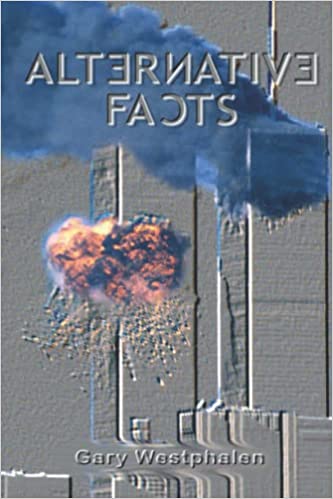
In a stunning and thought-provoking twist, author Gary Westphalen challenges readers to explore a historical fiction world set in our near modern times as one of the most disturbing and heartbreaking attacks on American Soil, 9/11, is examined in a new lens in the novel “Alternative Facts”.
Advertisements
The Synopsis
The 9/11 attack on the United States was horrific. Even as it claimed thousands of lives in a single morning, it also changed all of our lives forever. But what really happened on that morning? The U.S. government would have you believe that the 9/11 Commission report is the definitive examination of the catastrophic events. But this report raises many more questions than it answers, and the government has not been forthcoming in further explanations.
There was a conspiracy at work that morning. The 9/11 Commission says a couple of dozen radical Muslims conceived, planned and executed the plan with miraculous precision. It says they hijacked four airliners and managed to fly three of them with absolute pinpoint precision into the World Trade Center towers and the Pentagon. It says the heat from fires fueled by nothing more than paper and office furniture was enough to cause the collapse of both WTC towers, along with another building on the property that hadn’t even been struck by an airplane. It says they defied aerodynamic possibilities to fly an airliner into the Pentagon at a speed that would have torn the plane apart long before it made it to the building.
In Alternative Facts author Gary Westphalen posits another possibility. It was indeed a conspiracy, but it extends way beyond a cabal of eager jihadis. This conspiracy extends to the highest levels of the U.S. government and would have failed miserably without the guiding hand of dark forces in powerful positions.
This work of Historical Fiction contains so many actual facts along with fantastical but highly probable scenarios that it’s impossible to know where the facts end and the fiction takes over. By the time you turn the last page, you’ll be wondering to yourself whether Alternative Facts tells a truer story than the 9/11 Commission report.
The Review
I was 11 years old when the attacks on the World Trade Center and the Pentagon occurred. I remember it vividly, watching in horror as the towers fell. I ran to my parent’s room and told them what had happened, and a quiet hush fell through our home. No one wanted to send their kids off to school. Life seemed to crawl to a snail’s pace all around us as the enormity of this event hit us hard. Every corner of our nation felt the pain and fear that this event brought on.
Yet while the immediate aftermath instilled a need for unity and patriotism like never before, in the years since the attacks, many questions have always popped into my mind, and author Gary Westphalen has done an excellent job of bringing this to life in his novel. The amount of research and actual history that went into this novel was spectacular to see, and the thoughtful approach to detail went into every aspect of this novel, from the construction of the towers and the initial attack in 93’ to the devastating events of that fateful day.
The way that the author still managed to craft a fictional narrative with rich and emotionally-driven characters made this story flow smoothly, and gave readers more to relate to while also being respectful of real-life individuals by changing names or creating entirely new ones to fuel this narrative. The pacing and atmosphere that the author managed to develop made this story just come alive on the page, and managed to capture both the somber nature of the reality this narrative was based upon and the mystery that was the conspiracy the author laid out.
The Verdict
Captivating, shocking, and thought-provoking, author Gary Westphalen’s “Alternative Facts” is a must-read novel of 2022. The mystery and historical fiction are read to capture the heart of the suspense thriller genre while also giving voice to those affected by this real-world tragedy. While nothing, both the official story and the possible “truth” behind that day, can ever bring back those we lost, the heart of this narrative does a great job of keeping us always looking for truth, justice, and the means of bringing those who hide in the shadows into the light. If you haven’t yet, be sure to grab your copy today!
Rating: 10/10
Advertisements
About the Author
Gary has spent a lifetime as a documentary film maker and journalist. His pursuit of telling the story of the human condition has taken him to dozens of countries all over the world. He has interviewed Presidents and Kings, the homeless and destitute, and everything in-between. His work has been seen on nearly every major television and cable network. It’s almost a guarantee that you have seen the results of his story-telling. He has now turned to a life filled with narrating audiobooks for other authors, and writing his own books as well. Learn much more at garywestphalen.com , @GaryWestphalen on Twitter and facebook.com/gary.westphalen.
I received a free copy of this book in exchange for a fair and honest review. All opinions are my own.
A fighter pilot during WW2 struggles to return to duty after the loss of his best friend, while also dealing with a mark on his record stating he lacks moral fibre after his failure to return to duty during a raid in Berlin and fledgling feelings for the woman his best friend had been engaged to in author Helena P. Schrader’s “Moral Fibre: A Bomber Pilot’s Story”.
Advertisements
The Synopsis
Riding the icy, moonlit sky—
They took the war to Hitler.
Their chances of survival were less than fifty percent.
Their average age was 21.
This is the story of just one bomber pilot, his crew, and the woman he loved.
It is intended as a tribute to them all.
Flying Officer Kit Moran has earned his pilot’s wings, but the greatest challenges still lie ahead: crewing up and returning to operations. Things aren’t made easier by the fact that while still a flight engineer, he was posted LMF (Lacking in Moral Fibre) for refusing to fly after a raid on Berlin that killed his best friend and skipper. Nor does it help that he is in love with his dead friend’s fiancé, but she is not yet ready to become romantically involved again.
The Review
This was such a powerful and thought-provoking WWII historical fiction read. The author perfectly captures the chaos and struggles of men and women during WW2 who fought against Hitler’s regime in the skies and on the ground. The attention to detail the author utilized in the narrative and the heavy emphasis on setting and tone really brought the history aspect of the novel to life perfectly.
Yet it was the character development and themes that really spoke to me in this read. The way the author wove these themes of racism, grief, PTSD, and “good versus evil” was fantastic to see, as they mirrored the historical context of the war so seamlessly. Kit’s development in particular was so moving, as the psychological and societal impact of his experiences during the war and his background overall played a role in the development of this rich and captivating read.
The Verdict
Heartfelt, engaging, and thought-provoking, author Helena P. Schrader’s “Moral Fibre” is a must-read historical fiction novel! The complex themes the author explores, the rich character development, and the incredible historical detail of both the war and in particular the world of aviation during a time of war were so brilliantly portrayed here, and the emotional bond the reader makes with the protagonist and the cast of characters will have readers hanging off of the authors ever word. If you haven’t yet, be sure to grab your copy today!
Rating: 10/10
Advertisements
About the Author
Helena P. Schrader is an established aviation author and expert on the Second World War. She earned a PhD in History (cum Laude) from the University of Hamburg with a ground-breaking dissertation on a leading member of the German Resistance to Hitler. Her non-fiction publications include Sisters in Arms: The Women who Flew in WWII, The Blockade Breakers: The Berlin Airlift, and Codename Valkyrie: General Friederich Olbricht and the Plot against Hitler. In addition, Helena has published eighteen historical novels and won numerous literary awards. Her novel on the Battle of Britain, Where Eagles Never Flew won the Hemingway Award for 20th Century Wartime Fiction and a Maincrest Media Award for Historical Fiction. RAF Battle of Britain ace Wing Commander Bob Doe called it “the best book” he had ever seen about the battle. Traitors for the Sake of Humanity is a finalist for the Foreword INDIES awards. Grounded Eagles and Moral Fibre have both garnered excellent reviews from acclaimed review sites such as Kirkus, Blue Ink, Foreword Clarion, Feathered Quill, and Chantileer Books.
Join us as we celebrate the launch of Moral Fibre by Helena P. Schrader. Read more about this fascinating historical fiction novel and learn more about the author. You can also enter to win a copy of the book too!
I received a free copy of this book in exchange for a fair and honest review. All opinions are my own.
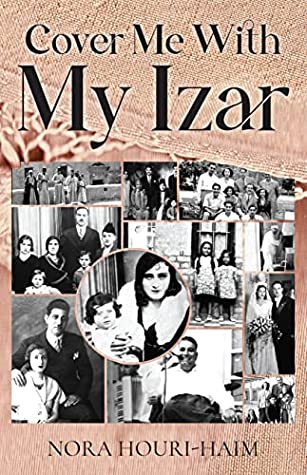
Author Nora Houri-Haim takes readers on a journey exploring the history, culture, and modern story of Iraqi Jews through a multi-generational fictional novel in the book “Cover Me With My Izar”.
Advertisements
The Synopsis
Through a series of stories that span several generations, ‘Cover Me with My Izar’, brings to vivid life the modern history of Iraqi Jews.
The stories are fascinating, humorous, filled with humanity, always captivating, and brimming with heart. Each story is told from the viewpoint of a different character across the generations.
From the tales of the vibrant Jewish community in Baghdad, through the terrors of the Farhud Pogrom to the mass immigration into Israel, a rich story of struggle and learning to adapt unfolds.
From the miracle that was visited upon the barren Latifa, to the disaster Ezra, the sword collector, brought on his own head; from Yvette, who decided to go and earn an education for herself against all odds, to the story of Itzik and Nava, children of the third generation born in Israel who wanted to be integrated into its newly forming society. These are just a handful of the rich tapestry of stories woven together to form the fabric of this book. A fabric as unforgettable and rich as that from which the traditional Izar gown, worn by the Jewish women of Iraq, is made.
The Review
This was such a well-written and personal story. The author expertly found the balance between personal storytelling about family experiences and intimate looks into the culture and history surrounding the Jewish people of the Middle East over the last century. The way this story fell into an almost compilation of short stories that fell under a general story banner that connected to one another through the generations was such an inspired use of storytelling devices. The imagery and atmosphere were so vivid that the stories the author was bringing to life felt very real, allowing readers to feel quite connected to the narrative.
The blend of character development and culture really became the heart of this narrative. The exploration of several characters and their point of view over the course of an entire family’s history over the course of a century was an inspired creative choice and played well into the narrative choice to explore the Middle Eastern Jewish experience. It was original and allowed readers to fully feel immersed into an aspect and point of view of life that is rarely explored.
The Verdict
Brilliantly written, captivating, and engaging, author Nora Houri-Haim’s “Cover Me With My Izar” is a must-read family and multi-generational fiction novel of 2022. The unique setting and history the author explores in this narrative were so amazing to behold, and the rich cultural explorations were truly entertaining and emotionally driven, keeping readers invested throughout the narrative. If you haven’t yet, be sure to grab your copy today!
Rating: 10/10
Advertisements
About the Author
Nora Houri-Haim was born in 1953 in the “new, old” city of Tel Aviv, to parents who’d made aliyah from Iraq. She spent her childhood surrounded by her huge extended family and grew up on the knees of her aunts and uncles, listening to stories from the “old country.” These stories were in sharp contrast to the reality around Nora. In the fledgling state of Israel, anything foreign, and especially anything connected to the Arab world, was frowned upon. This dissonance defined Nora’s childhood and inspired her writing as an adult. She finished her schooling in Tel Aviv, and then served in the Israeli military as an educational adviser. After completing her BA, Nora got married, had four kids and spent eight years teaching 6-8th graders. Nora completed her MA, with honors in Literature and Creative Writing from Ben Gurion University in the Negev. While there, she began writing her first novel, Cover Me with my Izar”. The novel was nominated by her publisher for the Sapir Prize for debut novels and was praised by the National Library during the year it was published.
I received a free copy of this book in exchange for a fair and honest review. All opinions are my own.
Set in an alternate historical world, the crew of the latest Apollo mission to the moon in 1979 finds themselves in a battle for the United State’s claim to their portion of the moon as soviet strike teams assault their base, and tensions run high in the height of the Cold War in author Alan Smale’s “Hot Moon”, the first book in the Apollo Rising series.
Advertisements
The Synopsis
Imagine for a second what would have happened if the Soviets had gotten a cosmonaut to the moon first, if Neil Armstrong and Apollo 11 had been in a humiliating second place. Everything would have unfolded differently.
America would never have let the Soviets win the space race. That would have been unthinkable during the Cold War, political suicide for any president. We’d have gritted our teeth and doubled down, poured billions into the Apollo program.
HOT MOON is set in 1979 in this alternate world. The US and the Soviets both have permanent moon bases, orbiting space stations, and manned spy satellites supported by frequent rocket launches. Reagan is President and the Cold War is hotter than ever.
The crew of Apollo 32, commanded by Vivian Carter, career astronaut, docks at NASA’s Columbia space station on their way to their main mission: exploring the volcanic Marius Hills region of the Moon. Vivian is caught in the crossfire as four Soviet Soyuz craft appear without warning to assault the orbiting station.
The fight for the Moon has begun!
The Review
This was such an intricate and detailed sci-fi meets historical fiction read. The world-building and tension the author brings to life by utilizing the backdrop of the Cold War was an inspired choice, especially given how integral the space race was to the Cold War. I loved how the author was able to use their background and expertise to delve into the heavier aspects of the sci-fi genre, while also incorporating much of the Cold War era tech and political leanings that would have made up the majority of this book’s cast of characters. The technical aspects of the narrative were felt immediately, with the main character breaking down the technical details of their space suit and how an AK-47 could fire in space. Even the opening of the book has diagrams, blueprints, and maps that relate to the tech that would have been available at that time.
It was the cast of characters that really made this story shine. The author did an amazing job of capturing the POV of both sides of the Cold War through these characters, allowing readers to see events from both the U.S. and Soviet Union sides of the war as the action unfolds. The strength and courage of the protagonist Vivian Carter was inspiring to read about and added a human depth to the sci-fi heavy narrative.
The Verdict
Intriguing, adrenaline-fueled, and engaging, author Alan Smale’s “Hot Moon” is the perfect sci-fi meets political thriller and historical fiction read and the best start to the Apollo Rising series! The imagery and atmosphere that the author built really gave a great cinematic quality to the author’s writing and allowed for the political intrigue and suspense to build quietly as readers delved deeper and deeper into this entertaining world the author built. If you haven’t yet, be sure to grab your copy today!
Rating: 10/10
Advertisements
About the Author
Alan Smale is a professional astronomer, but his writing tastes have always veered more towards alternate and twisted history, fantasy, and horror. His novella of Romans in ancient America, “A Clash of Eagles” in Panverse Two, won the Sidewise Award for Alternate History, and the first book in a trilogy set in the same universe, CLASH OF EAGLES, appeared in 2015 from Del Rey in the US and Titan Books in the UK and Europe. The series continues with EAGLE IN EXILE (March 2016) and will conclude with EAGLE AND EMPIRE (2017). Alan has sold 40 short stories magazines including Asimov’s, Realms of Fantasy, Abyss & Apex, Paradox, and Scape, and original anthologies Panverse One and Two, Apollo’s Daughters, Book of Dead Things, and Writers of the Future #13.
Alan grew up in England, and has degrees in Physics and Astrophysics from Oxford University. He serves as director of an astrophysical archive, and performs research on black hole binaries at NASA’s Goddard Space Flight Center. Alan also sings bass with well-known vocal band The Chromatics, and is co-creator of their educational AstroCappella project.
I received a free copy of this book in exchange for a fair and honest review. All opinions are my own.
A family who was forced to join the growing military power of Nazi Germany at the height of the war relocates to the United States in the war’s aftermath, and hostility in the anti-German wave that hits the US leads to a shocking series of events between two women in author Kelly Rimmer’s “The German Wife: A Novel”.
Advertisements
The Synopsis
The enmity between two women from opposing sides of the war culminates in a shocking event as anti-German sentiment sweeps America, when the aristocratic wife of a German scientist must face the social isolation, hostility and violence leveled against her and her family when they’re forced to relocate to Alabama in the aftermath of WWII. For fans of Beatriz Wiliams, Pam Jenoff, and Kristin Harmel.
Berlin, Germany, 1930—When the Nazis rise to power, Sofie von Meyer Rhodes and her academic husband benefit from the military ambitions of Germany’s newly elected chancellor when Jürgen is offered a high-level position in their burgeoning rocket program. Although they fiercely oppose Hitler’s radical views, and joining his ranks is unthinkable, it soon becomes clear that if Jürgen does not accept the job, their income will be taken away. Then their children. And then their lives.
Huntsville, Alabama, 1950—Twenty years later, Jürgen is one of many German scientists pardoned and granted a position in America’s space program. For Sofie, this is a chance to leave the horrors of her past behind. But when rumors about the Rhodes family’s affiliation with the Nazi party spread among her new American neighbors, idle gossip turns to bitter rage, and the act of violence that results tears apart a family and leaves the community wondering—is it an act of vengeance or justice?
The Review
This was such an emotional and captivating read. The amount of research and creativity that went into this narrative was so evident from the story’s first chapter. The vivid imagery and atmosphere the author crafted really brought these settings to life, both in terms of physical location and the social atmosphere during and after the war.
What stood out to me was the heartbreaking character development that went into this narrative. The haunting reality of war and in particular WWII as the life or death stakes of Hitler’s regime made people forced into jobs and careers within the Nazi party that they hadn’t really wanted. The way the author explored natural prejudices and the building tensions of a community in the wake of that war too was so important to understanding our own modern divides and how social tensions can contribute to conflict.
The Verdict
Heartfelt, poignant, and engaging, author Kelly Rimmer’s “The German Wife” is a must-read historical fiction read. The emotional storyline and shocking series of twists and turns the narrative takes were so captivating, and the brilliant way the author wrote really brought this history and the characters to life in a powerful and grounded way. If you haven’t yet, be sure to grab your copy today!
Rating: 10/10
Advertisements
About the Author
Kelly Rimmer is the worldwide, New York Times and USA Today bestselling author of Before I Let You Go, The Things We Cannot Say, and Truths I Never Told You. She lives in rural Australia with her husband, two children and fantastically naughty dogs, Sully and Basil. Her novels have been translated into more than twenty languages. Please visit her at https://www.kellyrimmer.com/
Here is an Excerpt from author Kelly Rimmer’s “The German Wife”
1
Sofie
Huntsville, Alabama 1950
“WAKE UP, GISELA,” I MURMURED, GENTLY SHAKing my daughter awake. “It’s time to see Papa.”
After the better part of a day on a stuffy, hot bus, I was so tired my eyes were burning, my skin gritty with dried sweat from head to toe. I had one sleeping child on my lap and the other leaning into me as she sprawled across the seat. After three long weeks of boats and trains and buses, my long journey from Berlin to Alabama was finally at an end.
My youngest daughter had always been smaller than her peers, her body round and soft, with a head of auburn hair like mine, and my husband’s bright blue eyes. Over the last few months, a sudden growth spurt transformed her. She was now taller than me. The childhood softness had stretched right out of her, leaving her rail thin and lanky.
Gisela stirred, then slowly pushed herself to a sitting position. Her eyes scanned along the aisle of the bus as if she were reorienting herself. Finally, cautiously, she turned to look out the window.
“Mama. It really doesn’t look like much…”
We were driving down a wide main street lined with small stores and restaurants. So far, Huntsville looked about as I’d expected it would—neat, tidy…segregated.
Minnie’s Salon. Whites Only.
Seamstress for Colored.
Ada’s Café. The Best Pancakes in Town. Whites ONLY!
When I decided to make the journey to join my husband in America, segregation was one of a million worries I consciously put off for later. Now, faced with the stark reality of it, I dreaded the discussions I’d be having with my children once we had enough rest for productive conversation. They needed to understand exactly why those signs sent ice through my veins.
“Papa did tell us that this is a small town, remember?” I said gently. “There are only fifteen thousand people in Huntsville and it will be very different from Berlin, but we can build a good life here. And most importantly, we’ll be together again.”
“Not all of us,” Gisela muttered.
“No, not all of us,” I conceded quietly. Loss was like a shadow to me. Every now and again, I’d get distracted and I’d forget it was there. Then I’d turn around and feel the shock of it all over again. It was the same for my children, especially for Gisela. Every year of her life had been impacted by the horrors of war, or by grief and change.
I couldn’t dwell on that—not now. I was about to see my husband for the first time in almost five years and I was every bit as anxious as I was excited. I had second-guessed my decision to join him in the United States a million or more times since I shepherded the children onto that first bus in Berlin, bound for the port in Hamburg where we boarded the cross-Atlantic steamship.
I looked down at my son. Felix woke when I shook his sister, but was still sitting on my lap, pale and silent. He had a head of sandy curls and his father’s curious mind. Until now, they’d never been on the same continent.
The first thing I noticed was that Jürgen looked different. It was almost summer and warm out, but he was wearing a light blue suit with a white shirt and a dark blue bow tie. Back home, he never wore a suit that color and he never would have opted for a bow tie. And instead of his customary silver-framed glasses, he was wearing a pair with thick black plastic frames. They were modern and suited him. Of course he had new glasses—five years had passed. Why was I so bothered by those frames?
I couldn’t blame him if he reinvented himself, but what if this new version of Jürgen didn’t love me, or was someone I couldn’t continue to love?
He took a step forward as we shuffled off the bus but didn’t even manage a second before Gisela ran to him and threw her arms around his neck.
“Treasure,” he said, voice thick with emotion. “You’ve grown up so much.”
There was a faint but noticeable American twang in his German words, which was as jarring as the new glasses.
Jürgen’s gaze settled on Felix, who was holding my hand with a grip so tight my fingers throbbed. I felt anxious for both children but I was scared for Felix. We’d moved halfway across the world to a country I feared would be wary of us at best, maybe even hostile toward us. For Gisela and me, a reunion with Jürgen was enough reason to take that risk. But Felix was nervous around strangers at the best of times, and he knew his father only through anecdotes and photographs.
“Felix,” Jürgen said, keeping one arm around Gisela as he started to walk toward us. I could see that he was trying to remain composed, but his eyes shone. “Son…”
Felix gave a whimper of alarm and hid behind my legs.
“Give him time,” I said quietly, reaching behind myself to touch Felix’s hair. “He’s tired and this is a lot to take in.”
“He looks just like—” Jürgen’s voice broke. I knew the struggle well. It hurt to name our grief, but it was important to do so anyway. Our son Georg should have been twenty years old, living out the best days of his life. Instead, he was another casualty of a war that the world would never make sense of. But I came to realize that Georg would always be a part of our family, and every time I found the strength to speak his name, he was brought to life, at least in my memories.
“I know,” I said. “Felix looks just like Georg.” It was fitting that I’d chosen Georg for Felix’s middle name, a nod to the brother he’d never know.
Jürgen raised his gaze to mine and I saw the depth of my grief reflected in his. No one would ever understand my loss like he did.
I realized that our years apart meant unfathomable changes in the world and in each of us, but my connection with Jürgen would never change. It already survived the impossible. At this thought, I rushed to close the distance between us.
Gisela was gently shuffled to the side and Jürgen’s arms were finally around me again. I thought I’d be dignified and cautious when we reunited, but the minute we touched, my eyes filled with tears as relief and joy washed over me in cascading waves.
I was on the wrong side of the world in a country I did not trust, but I was also back in Jürgen’s arms, and I was instantly at home.
“My God,” Jürgen whispered roughly, his body trembling against mine. “You are a sight for sore eyes, Sofie von Meyer Rhodes.”
“Promise me you’ll never let me go again.”
Jürgen was a scientist—endlessly literal, at least under normal circumstances. Once upon a time, he’d have pointed out all the reasons why such a promise could not be made in good faith—but now his arms contracted around me and he whispered into my hair, “It would kill me to do so, Sofie. If there’s one thing I want for the rest of my life, it’s to spend every day of it with you.”
“Many of our neighbors are Germans—most have just arrived in Huntsville in the last few weeks or months, so you will all be settling in together. There’s a party for us tomorrow at the base where I work, so you’ll meet most of them then,” Jürgen told me as he drove us through the town in his sleek black 1949 Ford. He glanced at the children in the rearview mirror, his expression one of wonder, as if he couldn’t believe his eyes. “You’ll like it here, I promise.”
We’d be living in a leafy, quiet suburb called Maple Hill, on a small block the Americans nicknamed “Sauerkraut Hill” because it was now home to a cluster of German families. I translated the street signs for the children and they chuckled at the unfamiliar style. Our new street, Beetle Avenue, amused Gisela the most.
“Is there an insect plague we should worry about?” she chuckled.
“I really hope so,” Felix whispered, so quietly I had to strain to hear him. “I like beetles.”
As Jürgen pulled the car into the driveway, I couldn’t help but compare the simple house to the palatial homes I’d grown up in. This was a single-story dwelling, with a small porch leading to the front door, one window on either side. The house was clad in horizontal paneling, its white paint peeling. There were garden beds in front of the house, but they were overgrown with weeds. There was no lawn to speak of, only patchy grass in places, and the concrete path from the road to the porch was cracked and uneven.
I felt Jürgen’s eyes on my face as I stared out through the windshield, taking it all in.
“It needs a little work,” he conceded, suddenly uncertain. “It’s been so busy since I moved here, I haven’t had time to make it nice for you the way I hoped.”
“It’s perfect,” I said. I could easily picture the house with a fresh coat of paint, gardens bursting to life, Gisela and Felix running around, happy and safe and free as they made friends with the neighborhood children.
Just then, a woman emerged from the house to the left of ours, wearing a dress not unlike mine, her long hair in a thick braid, just like mine.
“Welcome, neighbors!” she called in German, beaming.
“This is Claudia Schmidt,” Jürgen said quietly as he reached to open his car door. “She’s married to Klaus, a chemical engineer. Klaus has been at Fort Bliss with me for a few years, but Claudia arrived from Frankfurt a few days ago.”
Sudden, sickening anxiety washed over me.
“Did you know him—”
“No,” Jürgen interrupted me, reading my distress. “He worked in a plant at Frankfurt and our paths never crossed. We will talk later, I promise,” he said, dropping his voice as he nodded toward the children. I reluctantly nodded, as my heart continued to race.
There was so much Jürgen and I needed to discuss, including just how he came to be a free man in America. Phone calls from Europe to America were not available to the general public, so Jürgen and I planned the move via letters—a slow-motion, careful conversation that took almost two years to finalize. We assumed everything we wrote down would be read by a government official, so I hadn’t asked and he hadn’t offered an explanation about how this unlikely arrangement in America came to be.
I couldn’t get answers yet, not with the children in earshot, so it would have to be enough reassurance for me to know our neighbors were probably not privy to the worst aspects of our past.
Jürgen left the car and walked over to greet Claudia, and I climbed out my side. As I walked around the car to follow him, I noticed a man walking along the opposite side of the street, watching us. He was tall and broad, and dressed in a nondescript, light brown uniform that was at least a size or two too small. I offered him a wave, assuming him to be a German neighbor, but he scoffed and shook his head in disgust and looked away.
I’d been prepared for some hostility, but the man’s reaction stung more than I’d expected it to. I took a breath, calming myself. One unfriendly pedestrian was not going to ruin my first day in our new home—my first day reunited with Jürgen—so I forced a bright smile and rounded the car to meet Claudia.
“I’m Sofie.”
She nodded enthusiastically. “Since we arrived last week, you are all I’ve heard about from your husband! He has been so excited for you to come.”
“I sure have.” Jürgen grinned.
“Are you and the children coming to the party tomorrow?” Claudia asked.
“We are,” I said, and she beamed again. I liked her immediately. It was a relief to think I might have a friend to help me navigate our new life.
“Us too,” Claudia said, but then her face fell a little and she pressed her palms against her abdomen, as if soothing a tender stomach. “I am so nervous. I know two English words—hello and soda.”
“That’s a start,” I offered, laughing softly.
“I’ve only met a few of the other wives, but they’re all in the same boat. How on earth is this party going to work? Will we have to stay by our husbands’ sides so they can translate for us?”
“I speak English,” I told her. I was fluent as a child, taking lessons with British nannies, then honing my skills on business trips with my parents. Into my adulthood, I grew rusty from lack of speaking it, but the influx of American soldiers in Berlin after the war gave me endless opportunities for practice. Claudia’s expression lifted again and now she clapped her hands in front of her chest.
“You can help us learn.”
“Do you have children? I want Gisela and Felix to learn as quickly as they can. Perhaps we could do some lessons all together.”
“Three,” she told me. “They are inside watching television.”
“You have a television?” I said, eyebrows lifting.
“We have a television too,” Jürgen told us. “I bought it as a housewarming gift for you all.” Gisela gasped, and he laughed and extended his hand to her. I wasn’t surprised when she immediately tugged him toward the front door. She’d long dreamed of owning a television set, but such a luxury was out of reach for us in Berlin.
I waved goodbye to Claudia and followed my family, but I was distracted, thinking about the look of disgust in the eyes of that passing man.
I received a free copy of this book in exchange for a fair and honest review. All opinions are my own.
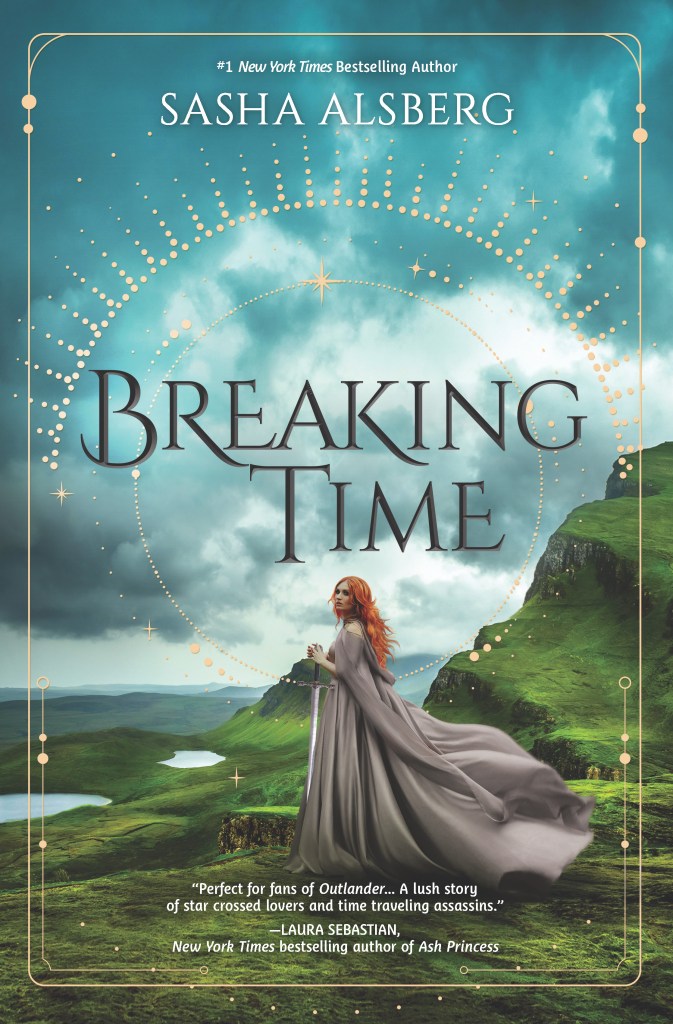
A young woman finds her world turned upside down when a handsome stranger enters her life from another time, and together they discover fate’s plans for them when a rogue threat targets her for a power she never knew she had in author Sasha Alsberg’s “Breaking Time”.
Advertisements
The Synopsis
Romance, Celtic mythology, and adventure swirl together in this time travel fantasy by #1 New York Times bestselling author, booktuber, and popular Outlander social media influencer Sasha Alsberg.
Fate brought them together. Time will tear them apart.
When a mysterious Scotsman suddenly appears in the middle of the road, Klara thinks the biggest problem is whether she hit him with her car. But, as impossible as it sounds, Callum has stepped out of another time, and his arrival marks the beginning of a deadly adventure.
Klara soon learns she is the last Pillar of Time—an anchor point in the timeline of the world. After being unable to protect the previous Pillar, Callum believes he’s fated to protect her. But now a dark force is hunting the Pillars—and Klara and Callum are the only two standing in the way. They’ll have to learn to trust each other and work together…but they’ll need to protect their hearts from one another if they’re going to survive
The Review
This was such a powerful and entertaining new read! The author did such an incredible job of world-building in this narrative. Each scene felt vibrant and alive on the page, thanks to the author’s incredible handle on imagery in her writing and the atmosphere she builds as the narrative progresses. The striking balance the author struck between the rich mythology of the world she created and the intimate and emotional character growth was superb. As a huge fan of mythology in general, I was immediately drawn into this narrative, but what was really fun was being introduced to new mythological figures and stories, and the intricacies of Celtic mythology definitely drew me into the story so much that I’ll be researching the mythos myself, really adding to the author’s ability to draw readers in.
Yet it was the rich character development that really drew me in further and further into the story. The multiple POVs were great to have, as they added depth to both Callum’s and Klara’s stories. Their backstories and the eras from which they hail and the instant chemistry and discoveries they make about themselves along the way were truly inviting to behold on the page. Even the antagonist, who emerges from the shadows and strikes into the heart of these two protagonists, was chilling and haunting to behold and did a great job of becoming the hero’s foil in the narrative.
The Verdict
Captivating, engaging, and brilliantly written, author Sasha Alsberg’s “Breaking Time” is a must-read YA Historical Fantasy meets Time Travel story and one of my top picks for best reads of 2022. The author does a great job of traversing the influences of other series such as Outlander and The Mortal Instruments, and yet feels so original and authentic on its own at the same time, bringing magic back into the Historical Fantasy meets Highland genre. With a twist ending that left this reader eager to read more, you guys won’t want to miss out on this spectacular story. Be sure to pick up your copy today!
Rating: 10/10
Advertisements
About the Author
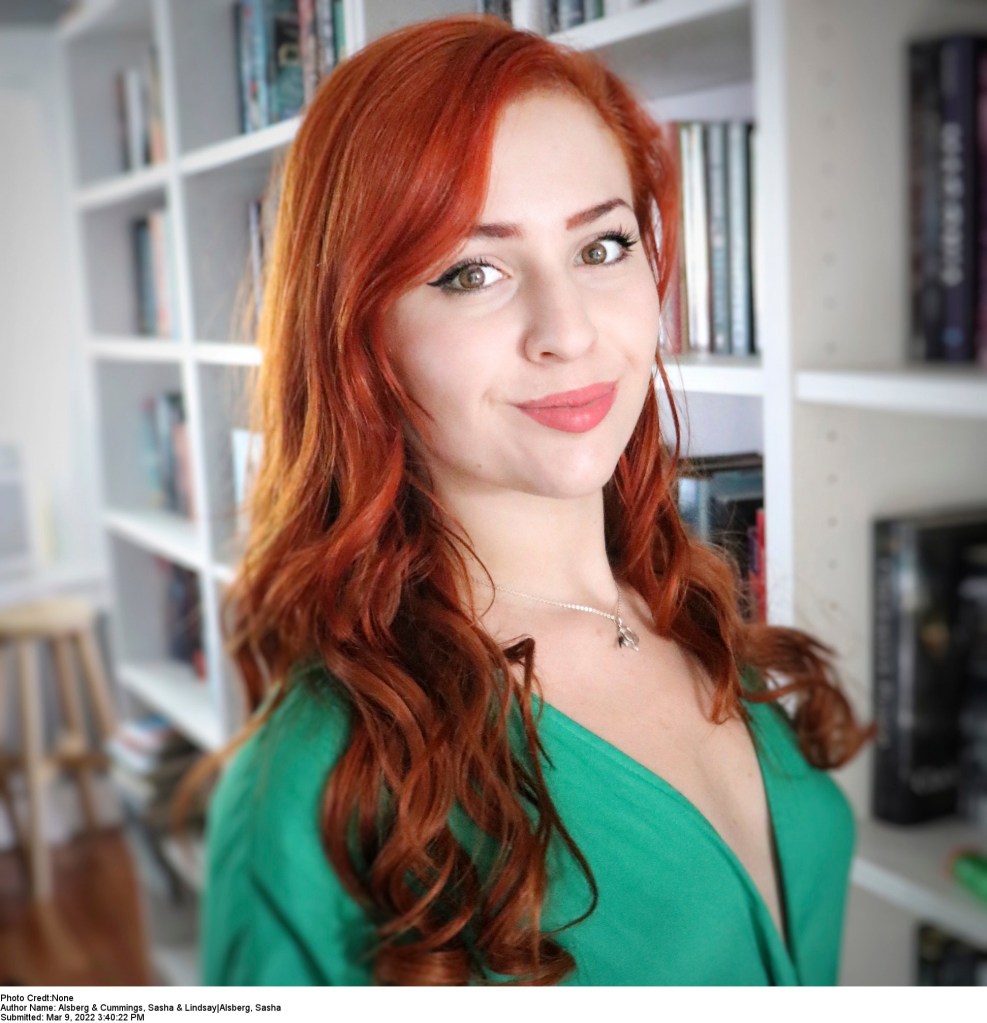
Sasha Alsberg is the #1 New York Times bestselling coauthor of Zenith, the first book in The Androma Saga. When Sasha is not writing or obsessing over Scotland, she is galavanting across social media with her two dogs, Fraser & Fiona. Sasha lives in London, England.
“Thomas!” Callum yelled as he left the pub. The wall of crisp night air dizzied him, causing him to stumble over cobblestones that seemed to shift beneath his feet. Drunken laughter muff led as the door slammed shut behind him.
“Where the hell are ye?” he shouted. His voice echoed through the deserted streets.
No answer came.
Lanterns flickered along the main road, setting the heavy fog aglow. In a wee town like Rosemere, the slightest whispers could be heard a mile away. They carried farther than that, Callum knew; the windows around him were shuttered, but candles burned low just inside. How many prying eyes watched from behind the slats? How many would speak of his friend, the disgraced fighter, in hushed voices at tomorrow’s market, over bread bought with the coin they’d won betting on him mere weeks earlier?
Callum clenched his fists. The whole pub had shouted and jeered while Thomas got pummeled that night. Sounds still rang in Callum’s ears: the thud of fist and flesh, the sickening crunch of bone. It was the third time this month that Thomas had lost—only the third time, in two years of fighting.
Brice would be angry.
Master, keeper, devil, father. Brice MacDonald was all of these things to Callum and Thomas. Whatever Brice’s wrath tonight, Callum could not let Thomas face it alone. Not when Thomas had looked after Callum for so long, raised him up from a nipper as well as a real older brother would.
But he would not abandon Thomas like his mother had abandoned him.
The thought sobered Callum. He called again, lowering his voice to a taunt.
“Thomas! You owe me three shillings!” Thomas could usually be drawn out with a jab.
Callum paused, straining his ears for a response but was met with unease instead. An owl watched from its perch atop the baker’s roof, golden eyes unblinking against the dark night sky. The shining orbs fixed on him.
He tore his gaze from the bird and walked on, moving away from the firelight and into shadow.
Even more worrisome than Brice was the fact that Thomas had given Callum his most treasured item earlier that night: his notebook, small sheaths of vellum bound in leather. When he first began carrying it around, Thomas claimed to have stolen it from the apothecary when he went in for a poultice.
He had kept it on him, always, and had never let Callum lay eyes on what was inside. Yet he had pressed it into Callum’s hand, just before the match tonight. He said something to Callum when he did, but his words were inaudible within the roar of the pub. Then after, he disappeared from the pub without even a goodbye.
Now Callum was wandering the streets, alone.
It was unlike Thomas to behave so strangely, to lose so badly. The Thomas he knew—boyish and rowdy, tough as leather but never mean—had fallen away with the autumn leaves these past months. Instead of spending evenings at The Black Hart Inn, weaving stories he’d learned as a child of selkies and sailors for red-cheeked barmaids until the sun rose, Thomas began to disappear for days, weeks at a time—stretches too long for Callum to explain to Brice. He took a beating or two for it, too. When Thomas returned, he was sullen, sometimes violent, and consumed by a strangeness Callum had no words to describe. His eyes stared but did not see, as distant as stars burning in his skull. If he spoke at all, he told tales of the demons that terrified them as children: like the Sluagh, spirits of the dead who wandered in flocks, flying around the sky like soaring reapers and stealing souls, flesh hanging off them like blackened rags. Or the bean-nighe, banshees, messengers from the Otherworld and omens of death, who lingered in lonely streams, washing the clothes of doomed men. Normally Callum heard of such dark creatures within the stories of heroes, but Thomas’s stories didn’t end in life…but death. He fixated on that fact, as if it were coming for him.
I saw her, he’d said of the bean-nighe. I refuse to die.
It worried Callum, but just as his worry morphed into confrontation, Thomas would come back to himself. This was enough to comfort Callum as he watched Thomas return to tales of ancient heroes and kings. Maybe he accepted his relief too soon since the nights of those stories were fewer these days, and more often Thomas’s speech would turn dark again. He would speak of strange visions, of men who leaped from one world to the next.
They’re coming, Cal, you’ll see. It’s as simple as stepping through a veil.
Who’s coming, Thomas? What veil? Callum asked, and Thomas would laugh.
It was no tale that Callum knew. He’d warned Thomas not to tell it. He didn’t like the wary looks it earned him. It was one thing to be a bard who told these stories for a living, but it was another thing to speak like a madman of evil spirits and fairies as if they were tangible things away from the lyrics of a song or the pages of a book.
Callum reached the end of the main road—the turn for Kelpie’s Close. If you wanted trouble, you found it in Kelpie’s. The narrow backstreet edged Rosemere like a blade pressed against the town’s throat.
A chill clung to his skin. Here, there were no lanterns to light the way, his only guide sparse slivers of moonlight. The wind picked up suddenly, lifting his hair and reaching under his woolen cloak. He tried to shake off visions of the Sluagh hovering above him, raking their cold fingers down his neck.
“It’s as dark as the Earl of Hell’s waistcoat,” he mumbled.
Callum reached for the dirk tucked under his arm and found the carved handle concealed under layers of wool, feeling a sting of guilt. It was Thomas’s knife. Callum had slipped it away from him before the match, worried about what his friend might do in the crowded pub if he got enough drink in him. He tapped it, drawing enough strength to plunge into the darkness.
“Scunner!” he cursed, meaning it. “Where are you?”
A cry pierced the quiet.
Callum’s heart pounded as he followed the sound farther down the alley. He pulled the dirk from under his arm, certain now that he’d need to use it.
“Thomas?”
Unease, cold and metallic, crept up his spine. The alley appeared empty—strange, for this time of night—but the silence was thick, alive with a feeling Callum couldn’t name. He pushed on, deeper into the gloom. “Thomas?”
Another strangled cry, ahead.
Callum broke into a run.
A single lantern flickered a short distance away, casting a wan glow over a lone figure slumped against the wall. A sweep of red hair, bright even in the dim alley.
“Thomas, ye bastard, do ye ken what—”
The insult lodged in his throat. Thomas lay on the ground, his legs splayed at sickening angles. Blood seeped through his shirt, blooming like ink on paper. Callum rushed to his friend and knelt beside him. He dropped the dirk and pressed his hands against the deep slice that marred his friend’s torso. A knife wound.
“Dinnae fash, Thomas, dinnae fash,” Callum repeated, voice tight and panicked. He glanced up, searching for friend or foe, and found no one. “We’ll be back to the pub before Anderson kens we havna paid our tab.”
Thomas stared up at him with glassy blue eyes. With each shuddering breath, more blood spilled through Callum’s fingers. He ripped the cloth stock from his neck and pressed the fabric onto the wound. It did little to stem the flow of blood. Within a few heartbeats, the cloth was soaked through, red and dripping.
If he pressed any harder, would it be doing more harm than good? Should he call for help, though it might draw the attacker? Callum hadn’t a clue. He wished suddenly, ferociously, that he’d had a proper mother, one whose wisdom he could call upon to calmly guide his hands. However, Thomas was the only family he had.
His only family was dying.
Thomas opened his mouth, but instead of words, a wet cough came out, splattering red across his pale face.
“Dinnae move, Thomas,” Callum shushed him. His uncertainty gave way to desperation, burst from his throat. “Help! Help us!”
His words dissolved into the night air, leaving behind only a tightness at the center of his chest. If he hadn’t taken Thomas’s dirk, he would have been able to defend himself, he wouldn’t be dying in Callum’s arms—
Thomas gasped, but it seemed as if no air reached his lungs.
Lowering his head, Callum gripped Thomas’s hands, though his own were shaking. “I will find the man who did this, I swear—”
Then the world flipped sideways. A blow had hit Callum like a runaway carriage, throwing him against the alley wall opposite Thomas.
Pain exploded along his ribs. Grasping the mossy wall for purchase, he struggled to his feet and wiped blood from his eyes, scouring the darkness for his attacker—and found no one.
“Show your face,” he growled.
A cruel whisper cut through the quiet. “Are you certain?”
The man emerged from the shadows as if he had been one with them. He wore a dark black cloak, in stark contrast to his unkempt, pale hair. Deep set in his face, a pair of amber eyes seemed to emit their own light. Callum’s gaze was drawn to a glinting shape in the man’s hand.
A dagger, dripping with blood.
Thomas’s blood.
Callum’s heart pounded like a war drum in his ears.
The man sighed. “Move along. Unless you’d like to meet the same fate as your compani—”
Callum lunged forward, cutting off the man’s speech with a guttural cry, striking with the speed of a viper.
The man ducked. He whirled around as Callum charged again. He overreached with the arc of his knife, and Callum used the moment to surge upward with a punch. His fist took the assailant in the chin—
And the force knocked Callum back.
He stared. A blow like that would have laid out the toughest fighter, yet the man stood and smiled, rubbing his chin with a gloved hand.
“I’m going to have fun with you,” the stranger whispered. “I like a man with a bit of fight in him. It’s more fun to play with your prey, don’t you think?”
Callum didn’t see the blow coming, only felt the pain searing across his temple as he was thrown to the ground again.
He lifted his head, vision blurring. He blinked it clear, took in his friend’s ashen face. The sight flooded Callum with rage.
Whoever said to never fight with anger fueling your fists was a fool. Thomas’s best fights had been powered by emotion. Callum wasn’t fighting for money now. Or for Brice. He was fighting for Thomas. Because Thomas was—
“Stay down, little man,” the attacker’s voice hissed.
Callum dragged himself to his feet. His body, corded with muscle from a lifetime of training, screamed for him to stop. Instead he stood, swaying.
“I dinnae believe I’m going to Heaven,” Callum said, raising his fists once more, drawing strength from the familiar ache that radiated through his arms. “But I cannae wait to bring you to Hell with me.”
Lunging forward again, Callum poured everything he had into a single strike. He swung, landing the punch more out of luck than skill, half blinded by blood and dirt.
The man merely flinched, then caught Callum easily by the throat. A grin curled over his face.
How could that be possible?
“My, my, you are a feisty one,” he hissed.
The man lashed out, and pain flared along Callum’s torso. He released Callum and stepped back, red-tinged silver shining in his fist.
Callum touched his side, and his fingers came away wet with blood. He watched as crimson spread across his shirt. He tried to take a step, only to crumple to the ground beside Thomas, whose head rested limp against his chest.
Callum had never feared death, but now as he looked into its eyes, terror seized him.
“Many thanks for the entertainment,” the man said.
To Callum’s horror, he bent low, holding a vial to the spreading pool of Thomas’s blood. He was gathering it.
“If you’ll excuse me, there’s one last Pillar I must find.”
Pillar?
The unearthly amber eyes melted into darkness as his opponent backed away and turned, disappearing into the shadows once more. Softly hissed words echoed in the alley. Àiteachan dìomhair, fosgailte dhomh, Àiteachan dìomhair, fosgailte dhomh…
The words the man spoke were Gaelic, but Callum’s fading mind couldn’t make out their meaning. A dark, mist-like substance rose from the ground and curled around the man’s feet, nearly indistinguishable from the dim of night. Like a sudden fog had rolled in.
Callum sputtered a curse, lacking the strength to spit. He tried to lift himself, but with each breath, pain flared in his side like a web of fire.
“I’m sorry, Thomas,” he croaked. Tears fell freely down his face, mingling with blood and sweat. He pressed his forehead against his friend’s. Grief washed over him at the still-warm press of his skin.
Thomas was gone, and Callum would soon follow.
A shiver raked his body. His eyes drifted shut.
Take me already, he pleaded to the darkness.
And the darkness answered.
No, not the darkness—Thomas’s voice, a memory now, though it was solid as stone.
“Get up, scunner.”
The warmth of the words turned electric, spreading through Callum’s body like wildfire. His eyes shot open and he gasped, breathing in a shock of cold air still sharp with the smell of blood. His fingers found the dirk he’d dropped earlier.
Grief and agony and pain and rage lifted Callum onto his feet, thrumming in him as he charged after Thomas’s murderer, knife raised and eager for flesh. He grabbed blindly, finally grasping a handful of fabric—the man’s cloak. Turning, the man’s eyes widened, making two white rings of surprise in the dark. Callum’s hand grabbed the man’s neck and aimed his dirk at the pale slash of his throat.
Suddenly, they froze. Callum could not move. His hand remained around the man’s neck, the tip of the dirk pressed against his vein. Light flowed around them. It’s not time for sunrise, he thought. Dimly, he noticed markings along the man’s collarbone. Knots carved into his skin.
The man cried out—not in pain, but in anger—but then, the cry was stifled by a rush of silence, so thick Callum thought he might drown in it. His stomach turned violently as the ground seemed to drop out from under him, forcing him to squeeze his eyes shut. He was falling, flying, falling.
I must be dead in the alley. The man must have killed me. This must be death.
A bright glow burned against his lids. He closed his eyes tighter and welcomed whatever might follow, only hoping he’d find Thomas there. A wall of light had formed above, descending as if the sun were pulling him through the sky. His body rose into its searing embrace.
He waited for the long drop to the ground, but it never came.
Callum kept soaring.
Not just through the street.
Not to death’s embrace.
But somewhere else.
Leaping to another world, like the man in Thomas’s story, Callum thought.
I received a free copy of this book in exchange for a fair and honest review. All opinions are my own.
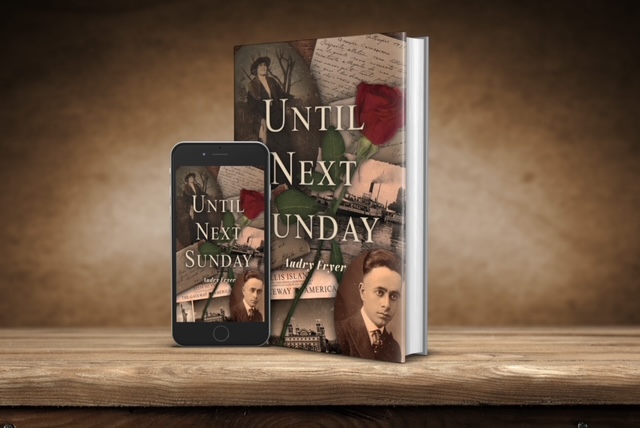
Two Italian immigrants in 20th century America fight to reunite and find comfort in their letters to one another in the interim in author Audry Fryer’s “Until Next Sunday”.
Advertisements
The Synopsis
Until Next Sunday is a sweet Historical Romance inspired by a true story. It is based on actual Italian love letters which were discovered a century after they were written (some of which are contained in this book.)
Rosina leaves Italy to build a better life, but the reality in America is nothing like the dream.
She is far from the Italian countryside and the beautiful olive groves where she grew up. Here the work is endless, and the winters are cold and desolate. She never expects to find love in such a place.
Then she met him.
Gianni, the shoemaker’s apprentice, is gentle, handsome, and everything she never knew she needed in her life.
But when Rosina falls ill and is quarantined, their future is at stake. All she can do is cling to the beautiful letters Gianni writes. Each week she tries to survive the long, lonely days until next Sunday for his brief visit.
Will fate bring Rosina and Gianni together once more? Or are they destined to remain star-crossed forever?
It is a portrait of the times, and a true immigrant experience. Feel the force with which these two lives find love, against all odds.
The Review
This was such a powerful love story. The world-building and setting the author is able to bring to life through incredible writing that evokes a great sense of imagery made the story feel so vibrant and captivating to read. The powerful themes of love and the “American Dream” during a time when many people from Italy were immigrating to the United States were both captivating and brought a sense of community to the narrative as well.
It was the cast of characters that really sold this narrative. The emotional connection between Gianni and Rosina was so impactful, and the way this fictional narrative was fit around the love letters of real-world individuals made the connection readers had to this story that much more powerful. The way this aspect of the narrative was able to be more prominent in the novel was great to see, as the history portion of the historical fiction romance read was brilliant for a history buff like me, but with romance being such a focal point in this novel, as well as family, it was great to see the history lift up and add a spotlight to the romance more so than anything else.
The Verdict
Heartfelt, captivating, and entertaining, author Audry Fryer’s “Until Next Sunday” is a must-read and mesmerizing historical fiction romance novel! The emotional depths of the romance between these two main characters were amazing to read, and the natural way the history of the era played to the themes of love and the story many immigrants had during this point of history was inspiring to read. If you haven’t yet, be sure to grab your copy today!
Rating: 10/10
Advertisements
I’m excited to announce the WOW! Women on Writing book blog tour with author and Audry Fryer and her book Until Next Sunday.
This book is written with so much heart – you can’t help but fall in love with the characters from this historical romance!
Here’s a bit about the book:
After bravely leaving the life she knew to come to America,
illness threatens Rosina’s happily ever after.
When separated, will letters keep their love alive?
Rosina leaves Italy to build a better life, but the reality in America is nothing like the dream. She is far from the Italian countryside and the beautiful olive groves where she grew up. Here the work is endless, and the winters are cold and desolate. She never expects to find love in such a place.
Then she met him. Gianni, the shoemaker’s apprentice, is gentle, handsome, and everything she never knew she needed in her life.
But when Rosina falls ill and is quarantined, their future is at stake. All she can do is cling to the beautiful letters Gianni writes. Each week she tries to survive the long, lonely days until next Sunday for his brief visit.
Will fate bring Rosina and Gianni together once more? Or are they destined to remain star-crossed forever?
Until Next Sunday is a sweet Historical Romance inspired by a true story. It is based on actual Italian love letters which were discovered a century after they were written (some of which are contained in this book.) It is a portrait of the times, and a true immigrant experience. Feel the force with which these two lives find love, against all odds.
Audry Fryer is an author and professional freelance writer from Pennsylvania. Formerly a teacher, Audry wrote her first novel while her toddler son and twin babies napped. As her children have grown into teenagers, she has expanded her writing career. Audry lives with her family and two pugs in a quiet corner of Southeastern PA. To learn more about Audry, please visit her website at www.audryfryer.com
Join us as we celebrate the launch of Until Next Sunday by Audry Fryer. We interview the author about her book and also give away a copy to one lucky reader.
Today’s guest post at Create Write Now comes from Audry Fryer as she pens an article titled: “The Importance of a Talented Editor”. Hear from Audry on this important topic and find out more about her latest work: Until Next Sunday.
Audry Fryer pens today’s travel inspired guest post on Rebecca J. Whitman’s blog. Find out more about Fryer’s book Until Next Sunday and the region of Italy featured in the book.
Today’s book spotlight at What is that Book About is none other than Audry Fryer’s latest Until Next Sunday. Readers will want to add this gem to their TBR pile right away!
Beverley A. Baird welcomes Audry Fryer to her blog today. Stop by and learn more about Fryer’s latest book Until Next Sunday and find out the inside story about “How 100 Love Letters Became a Novel”
Behavioral Psychotherapist, Linda Appleman Shapiro, reviews and shares her thoughts after reading Until Next Sunday by Audry Fryer. Don’t miss Shapiro’s insight on this beautiful historical romance.
A StoryBook World welcomes Audry Fryer and Until Next Sunday to the spotlight today! Stop by and find out more about the historical romance everyone is talking about!
Rebecca J. Whitman reviews Audry Fryer’s Until Next Sunday and shares her thoughts with readers on her blog; don’t miss a chance to learn more about this historical romance that is delighting readers young and old!
Readers at Fiona Ingram’s blog will hear from Audry Fryer today as she writes about the difference between historical romance and historical fiction. Is there a difference? Find out today and learn more about Fryer’s latest work Until Next Sunday.
Readers at Mindy McGinnis’ blog will hear from Audry Fryer today as she writes about how to create a book club kit for your readers. Sop by and learn more about Fryer’s latest work Until Next Sunday.
Readers at Anthony Avina’s blog will hear from Audry Fryer today as she writes about Roses and what they symbolize in books. Stop by today and learn more about Fryer’s latest work Until Next Sunday.
May 30th @ Bring on Lemons with High School Student, Carmen Otto
Teenager Carmen Otto offers her 5 star review of Audry Fryer’s Until Next Sunday. Otto can’t wait for her school library to add this gem to their collection! Read more from Carmen about this historical romance today!
Chelsie Stanford of Reading is My Remedy offers her review of Audry Fryer’s Until Next Sunday – find out what Chelsie has to say about this historical romance and it’s talented author!
Judy from the Knotty Needle offers her review of Audry Fryer’s Until Next Sunday for readers of her blog. This is a delightful historical romance and readers will want to hear what Judy has to say!
Author Anthony Avina reviews fellow author Audry Fryer’s latest historical romance, Until Next Sunday. Find out from one author to another what Anthony thinks of this book!
Linda of Boots Shoes & Fashion interviews Audry Fryer about her latest historical fiction, Until Next Sunday; don’t miss this insightful interview! https://bootsshoesandfashion.com/
June 5th @ Choices with Madeline Sharples
Madeline Sharples welcomes a guest author to her blog – today, readers will hear from Audry Fryer about Until Next Sunday as well as learning what Audry has to say about Top Strong Female Characters in Literature.
WOW! Blog Tour Manager Nicole Pyles shares her review of Until Next Sunday by Audry Fryer. Nicole’s review wraps up the book blog tour for this historical romance – find out what Nicole has to say about this beautiful story!
I received a free copy of this book in exchange for a fair and honest review. All opinions are my own.
Two people born to hate one another find themselves drawn together through harrowing odds in author Madeline Martin’s “The Highlander’s Stolen Bride”, the third book in the Highland Alliance series.
Advertisements
The Synopsis
A dramatic enemies-to-lovers romance from New York Times bestselling author Madeline Martin!
Kidnapping Elspeth MacMillan on her way to an arranged marriage is the only way for new laird Calum Campbell to avoid more bloodshed and bargain peace for his people. Calum expects her fury but doesn’t expect the feisty lass to break through his defenses into his heart. With war waging between their families, will they ever be able to yield to love?
The Review
As a history buff and romantic, I absolutely loved this book. The examination of Scotland’s ancient history and the emphasis on clans and how the rivalries and conflicts arose between these houses was very Shakespearean in nature, and the author captured that perfectly in this novel. The author’s unique writing style allowed a great sense of imagery that brought the lush and vibrant lands of Scotland and the harsh landscape of the lands the Campbell clan found themselves banned to live in the reader’s minds.
The character development was superb in this book. The heated passion between the two protagonists was felt throughout the entire book, first in the hatred Elspeth felt for Calum and the mistrust that permeated their meeting, and then in the love and passion, they felt as they spent more and more time together. The exploration of how family rivalries and assumptions based on a person’s family can bring more harm than good to any situation was perfectly laid out in this novel, and the balance of action and romance was incredible.
The Verdict
Heartfelt, entertaining, and captivating, author Madeline Martin’s “The Highlander’s Stolen Bride” is a must-read novel of 2022 and the perfect compact romance for fans of adult romance novels. The fast pace and intensity of the narrative will leave readers breathless, and the historical setting will leave readers invested in the growing series the author has created. If you haven’t yet, be sure to grab your copy today!
Rating: 10/10
Advertisements
About the Author
Madeline Martin is a New York Times and International Bestselling author of historical fiction and historical romance. She lives in sunny Florida with her two daughters (known collectively as the minions), one incredibly spoiled cat and a man so wonderful he’s been dubbed Mr. Awesome. She is a die-hard history lover who will happily lose herself in research any day. When she’s not writing, researching or ‘moming’, you can find her spending time with her family at Disney or sneaking a couple spoonfuls of Nutella while laughing over cat videos. She also loves to travel, attributing her fascination with history to having spent most of her childhood as an Army brat in Germany.
1) Tell us a little bit about yourself. How did you get into writing?
My fiction career began with an in-class book report written in Mrs. Baer’s eighth-grade English class when, due to a conflict of priorities, I failed to read the book, necessitating an exercise of the imagination. Not only was I not found out, but I snagged a B, better than the C that I received on my last report when I actually read the book. Thus began my life-long apprenticeship as a teller of tales and, some would snidely suggest, as a lawyer as well, but they would be cynics, a race Oscar Wilde warned us knew the price of everything and the value of nothing.
I am the author of the legal-suspense novel, In Deepest Consequences (Medallion Press), loosely drawn on two murder cases from earlier in my career, and the coming-of-age novel Revenants, The Odyssey Home (Moonshine Cove Publishing). I am a recipient of the Mighty River Short Story Contest and the Hackney Literary Award. My short fiction has appeared in Big Muddy, Adelaide Magazine, and Lascaux Review. I will admit to being an attorney in Irvine, California, where my practice focuses upon white-collar crime and tax litigation with my clients providing me endless story fodder. I graduated summa cum laude from Ohio University in Athens, Ohio, (where Walter Tevis, author of Queen’s Gambit, was my first fiction professor) and in the upper ten percent of my class from Lewis & Clark Law School in Portland, Oregon, where I was a member of the Environmental Law Review and received the American Jurisprudence Award in Conflict of Laws. I can be found at www.scottkauffman.net.
Advertisements
2) What inspired you to write your book?
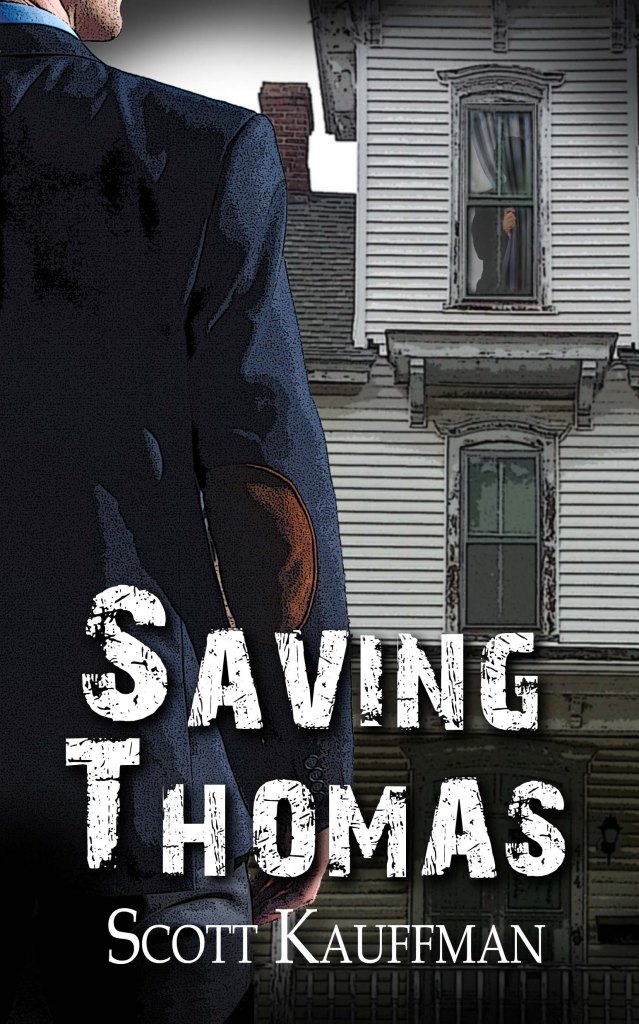
As I said above, my first novel In Deepest Consequences was loosely based upon two murder cases from earlier in my career. Revenants, The Odyssey Home, was drawn from the death of my late-wife’s uncle in Viet Nam, who is the only member of an MIA recovery team known to have died in combat. My inspiration for Saving Thomas was seeded in a general revulsion arising during some or another election campaign at those politicians who may have served but then try to get elected by trafficking in the dead who never came home. So I started to ask myself a series of what if questions. Such as what if someone had served and suffered but was honor bound never to reveal he had served and suffered and because of it suffered all the more? Which lead to more what if questions. The end result of all these what ifs the book you read and reviewed.
3) What theme or message do you hope readers will take away from your book?
Saving Thomas explores the age-old themes harking back to the Old Testament and Homer of betrayal, redemption, and ultimate forgiveness. All of us have been betrayed in our lives by those we love. All of us in turn have betrayed those we love. But if we are to come to terms with our betrayals, both those suffered and inflicted, we must move beyond a shattered trust to commence anew. Hope will reveal itself when we reaffirm those bonds of commitment, and it is in our finding a way forward where forgiveness will be found.
4) What drew you into this particular genre?
I don’t consider myself a genre writer. When a story with legs comes to me, I write it not caring where Barnes & Noble will shelve it. Having said that, I think it was Nietzsche who said melodrama is right versus wrong whereas tragedy is right versus right with no good outcome. I am drawn to tragedies.
Advertisements
5) If you could sit down with any character in your book, what would you ask them and why?
My villain, Erec Renard. This guy has to have at least a dozen stories to keep a writer employed.
6) What social media site has been the most helpful in developing your readership?
Twitter and Instagram.
7) What advice would you give to aspiring or just starting authors out there?
Learn from other writers. Revise, revise, revise, then revise some more. Master the rules of Greek rhetoric passed on down to the Romans, lost in the Dark Ages, resurrected during the Renaissance, and rediscovered in England just about the time Shakespeare was penning his plays and King James’s scribes were translating the Bible into English and give their works so much power, mimicking the power of Bach and Handel through repetition and point/counter point. Power you can hear in Lincoln’s Gettysburg Address and Martin Luther King’s IHave a Dream. Perhaps most importantly, remember that being published is someone else’s call. It’s impossible to know what to write to please those someones and may not be where your writing comes from. But someone’s first book changed you. Know there are others waiting for yours.
8) What does the future hold in store for you? Are any new books/projects on the horizon?
Next up, Finding Forest: A death-row attorney walks the murderous streets of East Oakland by night searching for the family of the executed client he betrayed twenty-four years before.
Scott is an attorney in Irvine, California, where his practice focuses upon white-collar crime with his clients providing him endless story fodder. His short story “Cat Dance” was short-listed for the 2018 Adelaide Literary Award. He is the author of the coming-of-age novel Revenants, The Odyssey Home (Moonshine Cove Publishing) and the legal-suspense novel, In Deepest Consequences (Medallion Press) and is the recipient of the Mighty River Short Story Contest and the Hackney Literary Award. His short fiction has appeared in Big Muddy, Adelaide Magazine, and Lascaux Review.








.jpg)
.jpg)