The critically acclaimed historical fantasy series continues by Rockhill Publishing’s own, James L. Hill
Released by Rockhill Publishing
The book is available worldwide in digital and print format
New dragons come to power in Europe and now threaten the balance of power in the world. The world of dragons is one of total destruction. They take over an area and cause wars until the world is in ruins. The dragons can’t be killed but can be drained of power causing them to turn into ruby-like stones. Only a dragon can consume another dragon, increasing its power.
Apollonia becomes a sorceress and can retain her power for years out of water with the help of her sisters. She raises a champion in France to battle the dragons’ growing threat of England’s Vargrerot and Russia’s Deyhezas. After destroying a Castle in the Alps and capturing its dragon in the Ruby Cradle, Napoli, the Dragon Killer, confronts the English at the Battle of Hastings. Apollonia returns to the sea and spawns two more mermaids. Afterwards she returns to the world of men to continue the hundred year war and is burned at the stake as Joan of Arc.
Zabella knows she must prepare men to fight and destroy the dragons before the world is at war once more. She knows dragons can be killed.
James L Hill, a.k.a. J L Hill, is a native New Yorker from the South Bronx, Fort Apache, of the turbulent 60’s. He earned a degree in computer programming, his other love. A multi-genre author, his experiences seasoned his novels and the worlds he imagined. James started RockHill Publishing LLC to publish his own work and give others access to the literary world.
To request additional review copies or an interview with James Hill, please contact Mickey Mikkelson at Creative Edge Publicity: mickey.creativeedge@gmail.com
Tell us a little bit about yourself. How did you get into writing?
We came from very different backgrounds and crossed paths in a writers group near Pensacola, Florida.
Pat: I started out in the New York theater world both as an actress and director. Later, in New England, I ran summer stock and a murder-mystery dinner theater, writing and producing original scripts. But at some point, I found myself more curious about the people behind the characters, the emotions they carried, and what made them tick.
That curiosity steered me toward a career in clinical psychology. Whether in a therapy room or a theater, I’ve always been drawn to the emotional core of people’s stories, their struggles, their turning points, and the strength it takes to grow and heal. That same thread runs through my writing. I’m fascinated by resilience and transformation—those moments when something shifts, when someone finds light in the dark. That’s what guided All the Broken Angels, the novel I co-authored with Steve Hardiman. It’s about characters shaped by the weight of the past and the choices they make to move forward, with resilience, hope, and a fierce sense of survival.
Steve: I discovered my love for writing while drafting research papers in grad school. Those were non-fiction, and I imagined my first book being the same. But the passion required to do a topic justice wasn’t there. Later in life, I moved back near Pensacola, Florida, to take care of my aging parents. In need of a distraction and some social interaction, I joined the Panhandle Writers Group and discovered my love for the creative opportunities in fiction—but still had not found an idea that excited me.
On a whim, I decided to write an extended review for a fellow group-member’s memoir. The theme of addiction drove the narrative for a large chunk of that book. As a clinical psychologist, Pat appreciated how I captured the insidious nature this disease played in the author’s self-deception and unraveling of his life. She figured that if I, a non-addict “normie,” could tease out the essence of how addiction tricks the mind into doing the brain’s bidding, maybe I could help her write a synopsis of the novel she was working on. We found our writing styles highly compatible. Our orbits grew tighter and before you know it, we joined forces —and didn’t finish that synopsis until we’d written the whole damned book!
Advertisements
2) What inspired you to write your novel?
Pat: All the Broken Angels is a deeply personal story. It’s semi-autobiographical in many ways. Cate’s journey echoes aspects of my own, and the characters were inspired by people in my life, including my family and the neighborhood where I grew up. The story is steeped in the emotional landscape of my community, all of which made me who I am today. In addition, as a psychologist, my work with Vietnam veterans profoundly influenced this story. I appreciate their willingness to open up to me and share their experiences.
Co-authoring the book with Steve Hardiman added depth and dimension to the process. He inspired the creation of a supporting character in the story. His poetic style and thoughtful research further enriched the world we built together, helping us bring authenticity and nuance to the characters and setting. We wanted to craft a story that feels lived-in—one that honors the past, speaks to the present, puts the reader in the moment, and sticks with them long after the final page.
Steve: Shucks, Pat. Thanks. I certainly aimed for all of those things, and you and your unfinished novel came along at just the right time. Not only had my mother passed between when Pat and I met and later decided to collaborate, but my wife Angela and I had closed a business that was losing money, which had spillover effects of it’s own. This perfect storm left me on the verge of a breakdown. I desperately needed something to soothe my weary spirit. Very early in our partnership, I vividly remember venting to Pat about my personal situation. Somewhere in the middle of commiserating, I muttered, “I just want to create something beautiful.” I’m quite proud of the result and that we were honored with several awards for our efforts. The catharsis of writing it also helped my wife and I get through a difficult time.
Circumstances aside, that “create something beautiful” sentiment drives me like no other passion. Exquisite beauty goes all the way down: you find it in our novel as a whole, the three parts, sixty-one chapters, all the scenes, many a poignant paragraph, and even in the tiniest of details of word choice and turns of phrase. My love for crafting prose through character development, dialog, action sequences, and teasing out pathos and humor wherever they are hiding became my healing. Because our styles were sympatico, Pat and I had fewer creative differences than I’d expected. And the struggles we did have made the story stronger and helped us find our voice that fused the best of our individual strengths.
3) What theme or message do you hope readers will take away from your book?
Pat: At its core, All the Broken Angels is about quiet resilience, the kind that builds slowly through struggle, forgiveness, connection, and self-discovery. It’s a story of transformation, not in sweeping gestures, but in the small choices we make to move forward. We wanted to offer a sense of hope, even when characters are navigating uncertainty and loss.
Because the story unfolds through Cate’s voice, a young woman caught between past wounds and present challenges, it resonates deeply with younger readers. Her emotional journey reflects the universal themes of seeking belonging, finding identity, and learning to trust both oneself and others.
As a psychologist who has worked with Vietnam veterans, I also felt it was important to honor those stories and recognize the sacrifices made by their families. While the book acknowledges trauma, it doesn’t dwell there. Instead, it explores how people carry their history with grace, grit, and sometimes humor.
Ultimately, I hope readers of all ages walk away feeling that healing is possible, connection matters, and that understanding the past can empower us to shape a stronger, more compassionate future.
Steve: Wow, Pat, you’re a tough act to follow on this question. Because the novel is semiautobiographical, and about half of the first draft was penned when I arrived on the scene, it became my job to honor the emerging themes, then work with Pat to rewrite and shape the story into something even better than either of us had originally conceived for. I believe I speak for both of us that the final version exceeded our expectations. We’re humbled every time another glowing review is posted by a reader. Often, their words mention the very themes we baked into the story. The lesson for me is if a story is strong, its themes shine through more brightly.
4) What drew you into this particular genre?
All the Broken Angels fits comfortably within both women’s fiction and historical fiction, and we’ve been fortunate to receive awards in both categories.
In women’s fiction, there’s a powerful form often referred to as psychological or emotional arc-driven storytelling. Here, the focus isn’t on external plot twists but rather on a woman’s internal journey. It explores how a character grows emotionally, mentally, and relationally over time. That transformation might be sparked by grief, a major life shift, or a moment of reckoning. But at its core, the story is about personal evolution and forging ahead.
Pat: This framework perfectly fits our protagonist Cate. She’s partly me and partly her own person. The book is rooted in the 1960s and ’70s, a turbulent time marked by the Vietnam War, the rise of the women’s movement, civil rights, peace marches, and gay liberation. Since I grew up during that era, and I saw how deeply divided our country was. Many of the rights we fought for then are still being contested today, so there’s a sense of déjà vu that makes the history come alive on the page in surprisingly familiar ways.
Steve: I grew up in that era as well, which turned out to be a big bonus. I brought my own experiences to further flesh out the tableau we were creating for the novel. I knew the music, the culture, what life was like for a kid, and many everyday details that bring the past within the reader’s grasp.
We set a very high bar for ourselves: A time traveler from sixty years ago could read All the Broken Angels and have no idea it hadn’t been written back then; nothing would seem off. A lot of meticulous research went into the history and how people spoke. One of my pet peeves is period prose that uses modern lingo. So we took the “historical” genre quite literally. This meant occasionally trading a slightly more clever way of saying something for era-appropriate language, and even determining the actual weather for a specific date. Crafting a novel that is truly authentic in those respects was a self-imposed challenge that became a deep source of satisfaction for me.
Both of us: As historical fiction authors, our mission is to keep history alive. There’s a real risk that the stories and the hard-earned wisdom of a generation will fade. We want readers of all generations to feel the heartbeat of this history. When we forget where we’ve been, we lose part of ourselves. None of us simply appeared, we arrived through our complicated connection to the past. Through Cate’s journey, shaped by both her family and the time she lived in, we’re offering not just a glimpse of a tumultuous era, but a trip back in time toward an emotional truth that still resonates today.
5) If you could sit down with any character in your book, what would you ask them and why?
Pat: I’d sit down with Cate, not the girl from the beginning, but the woman she became by the end of the book, after everything she’d been through. I’d ask: “You carried anger and mistrust for years, especially toward someone you saw as an enemy. Yet when it mattered most, you chose forgiveness and opened yourself to a painful truth. What shifted inside you? What made you let go and trust someone you never thought you could?”
Steve: While I found our protagonist endlessly intriguing, I’ll pick another who grows into one of the most complex characters: Walter, “the freckle-faced, tow-haired bully from school.” I was bullied as a kid and always avoided those memories. But Walter could offer me some insights from the other side of that power dynamic. So I’d take seat with the older Walter and ask him about his experience of that time in life and his long struggle away from those behaviors. Did he feel that he paid a price for his actions? How did leaving behind that part of himself inform who he became?
I would also thank him. In writing Walter’s character, I discovered how fascinating a bully can be. There’s another world hiding behind all that belligerence, and bullying was his suit of armor. His arc and how it intertwines with Cate’s is one of the most fascinating in the story. And Walter could easily take the lead role in another novel.
6) What social media site has been the most helpful in developing your readership?
The best sites that have worked for me are Instagram, Facebook, and LinkedIn. And, of course, my website.
7) What advice would you give to aspiring or just starting authors out there?
Pat: Surround yourself with a creative community. Writing can feel like a solitary endeavor, just you and the blank page—but it doesn’t have to be. Seek out local writing groups or join a critique circle to get a feel for sharing your work and connecting with other writers.
Beyond that, take classes or attend workshops, in person or online. You’ll meet fellow creatives who understand the ups and downs of the process and will cheer you on even when the words arent’ flowing. I truly can’t imagine my writing life without my trusted circle. They’ve been my sounding board, support system, and inspiration every step of the way.
Steve: Pat’s spot-on about educating yourself and joining a creative community, especially other writers. Naturally, reading stimulates my creativity, as well. But I also find inspiration in other artforms, especially films and television. Body language, lighting, subtleties in dialog; many of these can be adapted for use in fiction writing if you can find a simple way to describe them. For example, I rewatched Toy Story while working on the novel and found inspiration to “punch-up” a few details in chapter one, which helped bring the scene to life even more.
The most specific advice I can offer is about what I learned about writing humor. All the Broken Angels isn’t a humor novel, per se, but there are many funny moments that make the prose more engaging and the characters more endearing.
As I fumbled my way along the humor learning curve, I discovered that a brute-force approach to “just be funnier,” is the hard way, and it blocked my thinking. When I learned to see humor less as a skill and more of a lens through which to view the world, the funny began to flow. I remember helping another novelist “punch-up” his crime thriller that already had some humor as part of the mix. In a pivotal scene, the protagonist, a detective, thinks she has cornered a serial killer in the basement of a house. Gun drawn and heart pounding at the top of the stairs, she flips on the light switch, only to see a brief flash below followed by a soft pop as the sole downstairs bulb burns out. Staring into the inky blackness while contemplating her next move, she mutters a curse and muses that “of all the homicidal maniacs, lucky me gets the loser who never switched to LEDs.” Momentarily normalizing the killer’s horrific hobby in order to shame their wasteful energy choices is a perspective shift as simple as it is absurd. And the brief pause when the protagonist stops to reassess provided the perfect opening to inject a single line of dark humor. Once the protagonist makes her move, the action resumes and comedy is set aside. Humor must meet the moment and the character; no gratuitous laughs allowed.
Finally, I have to thank Pat. Because she was a playwright, the scenes and chapters she had already drafted when I came aboard were well constructed with a strong beginning, middle, and end. We adopted this approach for the rest of the book, and it even spilled into the construction of key paragraphs. She was a source of inspiration I took for granted. As we leaned into these techniques together, they added power to our writing.
8) What does the future hold in store for you? Any new books/projects on the horizon?
Pat: As a playwright, imagine everything I write eventually being in a theater in front of an audience. Readers often say how the writing style of the novel puts them “in the room” with the characters. So, Steve and I are exploring ways to take All the Broken Angels from page to stage, possibly as a full-length play or a series of one-acts. As Steve mentioned in his answer to the previous question, the scenes and chapters, as written, lend themselves to theatrical interpretation, and we’d love the challenge of translating narrative into performance.
I’m working on a new novel set in New York City between the mid-1970s and early 1980s. It follows a woman trying to make it as an actress while teaching theater to inner-city youth. As the women’s movement gains momentum, she’s searching for her voice, just like those around her: Vietnam veterans seeking respect and recognition, young people navigating identity, and the LGBTQ+ community finding visibility while the AIDS crisis begins.
Though All the Broken Angels was semiautobiographical, this new story draws even more closely from my life in New York’s theater world. It blends women’s and historical fiction, exploring belonging, resilience, and how the arts can inspire transformation in uncertain times.
Steve: I still love writing and will explore a stage adaptation of All the Broken Angels with Pat. I’m also focusing on photography and plan to create some instructional or explanatory videos about writing, photography, and music. A couple of projects are just beginning to take shape. After recently moving to Arizona, I’ve been helping my wife Angela get her home-school curricula company off the ground. I’m also spending more time with my fifteen-year-old grandson Landon and recently took him to his first concert: Alice Cooper—he’s still rockin’! Landon has no idea how often “first concerts” will come up in conversation over a lifetime. As his grandpa, I’m over the moon that he’ll always have a great story to tell. 🤘
Advertisements
About the Authors
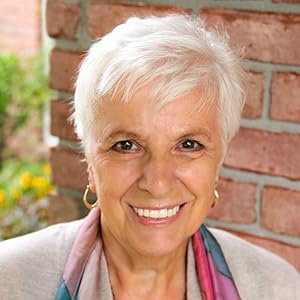
Pat Black-Gould
Pat Black-Gould is an award-winning author, speaker, and clinical psychologist. Her novel All the Broken Angels, co-written with Steve Hardiman, is a family saga set during the Vietnam War era. As a psychologist, Pat specialized in working with Vietnam Veterans, and the novel pays tribute to those who served and their families. Her children’s book The Crystal Beads, Lalka’s Journey, tells the story of a hidden child of the Holocaust.
Pat’s short stories have appeared in literary anthologies and online journals. Pat’s writing explores themes of compassion, inclusion, and diversity, and she conducts presentations nationally on these topics. WSRE PBS TV featured her on the program Conversations with Jeff Weeks. As a speaker, Pat also conducts workshops on marketing and the craft of writing. In the theater world, Pat was a theater director and producer of a New England summer stock company and a murder mystery dinner theater.
I received a free copy of this book in exchange for a fair and honest review. All opinions are my own.
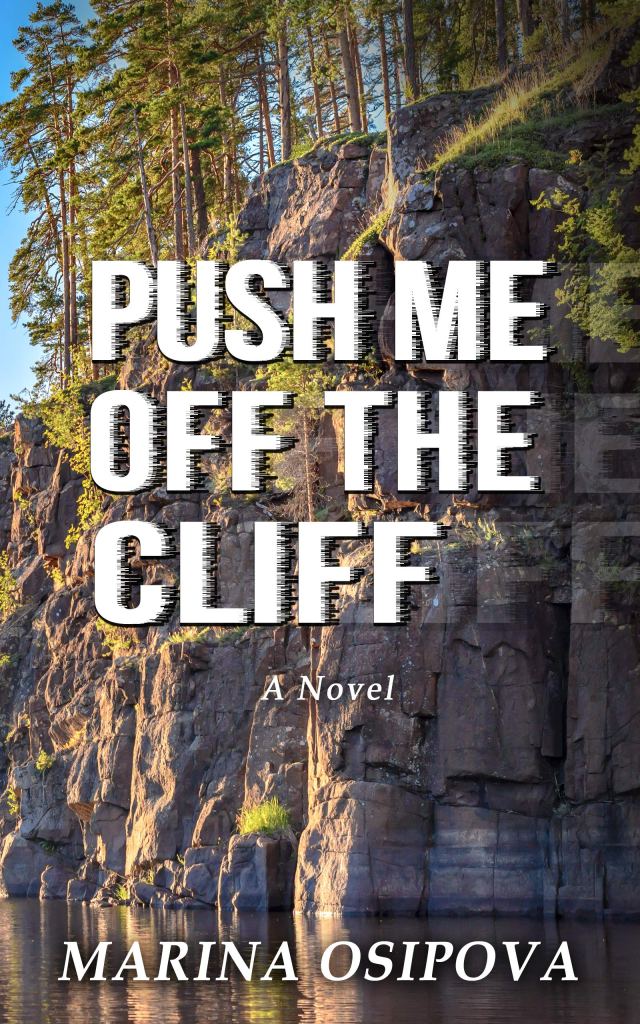
A soviet woman searches for an Armenian man as both face the events haunting them from their past to find solace once more in author Marina Osipova’s “Push Me Off the Cliff.”
Advertisements
The Synopsis
March of 1948. Three years have passed since the Great Patriotic War ended in victory, disposing into the streets of the destroyed and hungry cities and villages brave decorated soldiers: thousands of them having been burned, maimed, or disfigured beyond recognition.
On a crowded commuter train, Maria hears an invalid singing, which painfully connects her to her time at the front and to the love that failed to happen to her. Why, then, since that day, does the voice from the past echo so insistently in her present life? The torture of uncertainty—was it really Armen?—intensifies after the next encounter and leaves her with an unsettling compulsion to do . . . what? Help him? Or, rather, rescue herself from her lonely and unassuming existence her heart subtly rejects? She must decide whether she is willing to let go of the life she knows for feelings she had never thought she could experience.
But, first, she has to find him.
As the genocide of 1915 within the Ottoman Empire destroyed the lives of Armen’s parents and about one-and-a-half-million ethnic Armenians, his future is shattered by this other war and betrayal. Incapacitated and totally alone, it seems the most merciful thing for him would be to end his miserable existence by leaping off a cliff. Otherwise, he must find the courage to continue living in the condition the war left him and find his place in the bitter every-day reality full of difficulties prone to men like him.
Maria and Armen. Each carries private wounds. In the face of despair, will fate offer them a chance to heal their souls and hearts?
The Review
Wow, what an incredible novel. I am always amazed by the level of research and detail the author pours into the historical fiction novels that she writes, and this one was no different. The honesty with which the author crafts these strong character-driven narratives was inviting to readers who wanted to delve deeply into this historical fiction read. The visceral imagery in the author’s writing style captured the notes of horror that war brings, as well as the notes of hope underlying those horrific moments.
The central theme of how war and genocide impact the human mind and spirit was on full display in this narrative. The protagonists in this story were both heavily emotional and compelling in their own right, and not only their connection to one another but their emotional experiences, especially Armen and his life with his mother growing up and the impact the Armenian Genocide had on him, not only kept readers invested in this story but educated over the details of these moments in time as well.
The Verdict
Heartfelt, compelling, and enthralling, author Marina Osipova’s “Push Me Off The Cliff” is a must-read historical fiction. The twists and turns in the narrative, the emotional connection readers felt with these characters, and the shared experiences and mutual respect that the two protagonists share elevate their journeys, making this a remarkable character-driven narrative to get lost in. If you haven’t yet, be sure to grab your copy today!
Rating: 10/10
Advertisements
About the Author
Marina Osipova was born in East Germany into a military family and grew up in Russia, where she graduated from the Moscow State Institute of History and Archives. When she was five, she decided she wanted to speak German and, years later, she earned a diploma as a German language translator from the Moscow State Institute of Foreign Languages. In Russia, she worked first in a scientific-technical institute as a translator, then in a Government Ministry in the office of international relations, later for some Austrian firms. For many years, she lived in New York, working in a law firm, and then in Austria for several years. In the spring of 2022, after spending ten months in Russia, some unfortunate world events brought her back to the United States.
A long-standing member of the Historical Novel Society, she is dedicated to writing historical fiction, especially related to WWII. Her books garnered numerous literary awards, including a 1st Place WINNER of the 2021 Hemingway Book Awards novel competition for 20th Century Wartime Fiction (a division of the Chanticleer International Book Awards). At some point or another, all her books hit the Amazon Top 100 lists in Historical Russian Fiction and Historical German Fiction and How Dare the Birds Sing even #1 or #2 in War Fiction in Canada, the UK, and Australia.
Her readers praise her books for “emotional realism,” for “taking on a subject that few authors have touched,” for “writing with heart and compassion while not holding back from hard cold realities of war,” for “giving an authentic and in-depth look at a culture that tends to baffle westerners.”
To learn more about Marina Osipova and her captivating books, visit her website at marina-osipova.com.
I received a free copy of this book in exchange for a fair and honest review. All opinions are my own.
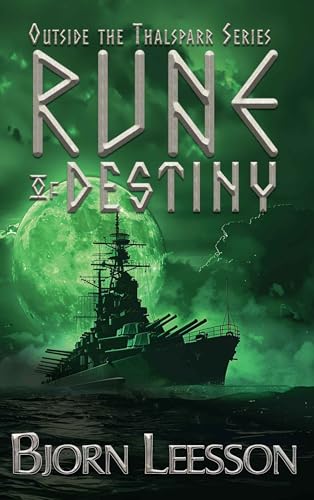
A battle being waged across time and space, as well as in the lands of the living and the dead, will determine the fate of both the light and the dark in author Bjorn Leesson’s “Rune of Destiny”, the third book in the Outside the Thalsparr series.
Advertisements
The Synopsis
The Dokkrsdottir is not your ordinary Norse woman of the Viking age. One of the great warriors of her time, she soon learns that the hardest battles are not always those fought with a sword and shield. Through countless trials and tests, she is led by visions and omens on numerous adventures with the help of steadfast friends and family to discover her mysterious supernatural destiny, one more extraordinary than anyone could ever have imagined.
Rune of Destiny Summary:
The final chapter of the main story of the Dokkrsdottir’s destiny that finds the continuation of the living world in the hands of Myrgjol, her descendants, and the choices they all must make.
With battles of the “greatest warrrior” transpiring on both sides of the veil, it is a series of desperate and grueling battles to the very end before she can enjoy her reward with the knowledge that the living world will continue in the loving embrace of the Light and not in ruin by the Dark.
The Review
The scale and engaging setting stood out in this story. The author did an incredible job of bringing both the physical and spiritual worlds to life on the page, showcasing the imagery in the author’s writing as they shifted between the jumps in periods and showcased Dokkrsdottir’s life on the other side of the veil. The balance of threats that the protagonists faced was excellent as well, as the human threats perfectly paralleled the different forces of darkness that pursued them, especially the Thule Society and their hunt for gateways around the world.
While the series has become known for some great action, this novel added more depth to the spiritual nature of the narrative os well. The world knows the protagonist in this story as a proud and strong warrior. Still, the novel takes the time to reveal those vulnerable moments that the protagonist experiences, from being reunited with lost loved ones to making peace with being separated from others she loves in her family, and much more. The mythos and culture of Viking history were well represented here. The protagonist’s connection to her family, loved ones, and people allowed the reader to connect to the story on a much grander scale.
The Verdict
Memorable, entertaining, and thrilling, author Bjorn Leesson’s “Rune of Destiny” is a must-read supernatural thriller meets historical fiction novel. The twists and turns in the story, the cosmic journey the characters find themselves on, and the heartfelt connection readers will share with the protagonist will keep them enthralled as they await the next entry in this series. If you haven’t yet, be sure to grab your copy today!
Rating: 10/10
Advertisements
About the Author
Bjorn Leesson has always been fascinated with many topics to include history, the supernatural, and writing. These interests combined led to the Outside the Thalsparr series, with the first book in the series, “Runes of the Dokkrsdottir.” Bjorn was not formally trained as a writer and has worked in the industrial manufacturing field his entire life. Writing his stories and hoping others enjoy them is a passion and not a career.
I received a free copy of this book in exchange for a fair and honest review. All opinions are my own.
A woman must learn her family’s lineage and history in the fight against ancient dragons as war threatens to bring them back into the world in author Jame L. Hill’s “The Ruby Cradle,” the second book in the Gemstones series.
Advertisements
The Synopsis
It is the turn of the nineteenth century. The industrial age has begun. Steam powered ships has taken over the oceans. Factories are going up across Europe and America. There is a resurgence of activity in the castles in the mountains and when the Crimean War breaks out Zabella is sent to her grandmother, Rehema to learn about the dragons.
Rehema mentally transcends the girl to the First Split (1000 A.D.), the wars her mother, Apollonia, fought to destroy the dragons as they had spread across Asia, Africa, and Europe. It began as they built castles and started controlling men with gold. The dragons led the Romans, Egyptians, and Chinese empires over the centuries. The dragons turn Molytans into Ogres as their generals that lead huge armies and protect them when their powers wane at night.
New dragons come to power in Europe and now threaten the balance of power in the world. The world of dragons is one of total destruction. They take over an area and cause wars until the world is in ruins. The dragons can’t be killed but can be drained of power causing them to turn into ruby-like stones. Only a dragon can consume another dragon, increasing its power.
Apollonia becomes a sorceress and can retain her power for years out of water with the help of her sisters. She raises a champion in France to battle the dragons’ growing threat of England’s Vargrerot and Russia’s Deyhezas. After destroying a Castle in the Alps and capturing its dragon in the Ruby Cradle, Napoli, the Dragon Killer, confronts the English at the Battle of Hastings. Apollonia returns to the sea and spawns two more mermaids. Afterwards she returns to the world of men to continue the hundred year war and is burned at the stake as Joan of Arc.
Zabella knows she must prepare men to fight and destroy the dragons before the world is at war once more. She knows dragons can be killed.
The Review
This wildly expansive and compelling world was so perfectly expanded upon from the author’s first book in the series. The author did an incredible job of world-building, crafting a book that felt both fantastical and steeped in history at the same time. The grand mythology of the dragons and their long history of influencing and bringing out the worst in humanity was fascinating to read, and the visceral nature of their bloodlust was haunting to discover.
Yet the true heart of the story was in the character development and world-building, as well as the strong themes that the novel touched upon. The way the story shifted focus between the present-day story of the Crimean War and the growing global conflicts that the now escaped dragons are taking advantage of, to the past where Apollonia must stop the constant dragon conflicts tearing apart everything from the Roman Empire and so much more was powerful to see come to life on teh page. The way the author touched on mankind’s perpetual war with itself and the death it brings was well utilized in this narrative.
The Verdict
Memorable, entertaining, and thrilling, author James L. Hill’s “The Ruby Cradle” is a must-read historical fiction meets fantasy novel. The twists and turns in the story, the rich history and character developments across the centuries, and the thoughtful and natural incorporation of powerful themes made this story feel elevated and engaging all at once. If you haven’t yet, be sure to grab your copy today!
Rating: 10/10
Advertisements
About the Author
James L Hill, a.k.a. J L Hill, is a multi-genre author, currently working on a three-part historical fantasy Gemstone Series, The Emerald Lady is in publication. The Ruby Cradle and the third book, The Diamond Warrior, are due soon. The four-part adult urban crime series, The Killer Series, is finished. Killer With A Heart, Killer With Three Heads, Killer With Black Blood, and Killer With Ice Eyes have all received great reviews. The last two novels were runners-up in the Killer Nashville’s contests of 2022. Then there’s the psychological dystopian science fiction thriller, Pegasus: A Journey To New Eden for your reading pleasure.
I received a free copy of this book in exchange for a fair and honest review. All opinions are my own.
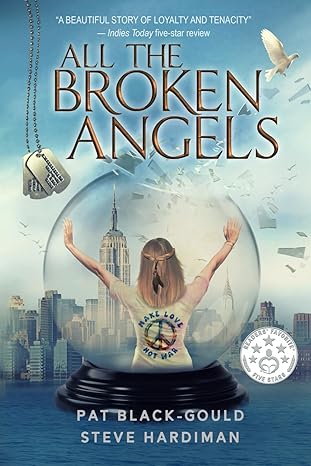
Two cousins are torn apart by the Vietnam War and the tragedies that follow in authors Pat Black-Gould and Steve Hardiman’s “All the Broken Angels.”
Advertisements
The Synopsis
Two cousins. Two paths. One unforgettable era. This award-winning historical fiction novel follows the transformative journey of Cate and Albie. Cousins and best friends, they are raised in 1960s New Jersey under the watchful eyes of their family and strict Catholic school nuns. Their bond seems unbreakable. Then the Vietnam War erupts, tearing them apart.
Albie, driven by faith and patriotism, enlists in the military and is stationed at a base along the South China Sea nicknamed Paradise.
Cate protests the war, challenges her upbringing, and seeks purpose by immersing herself in the bohemian counterculture of New York’s Greenwich Village while enduring life in a low-rent tenement in the gritty Hell’s Kitchen district.
Tragedy strikes, and her world unravels. With the support of her family and an eclectic group of friends—artists, activists, and veterans—Cate embarks on a journey of resilience and personal transformation. Travel back to a pivotal era when men marched off to war and women burned their bras. This compelling novel explores the:
Emotional toll of the Vietnam War
Rise of feminism and LGBTQ+ movements
Conflict between faith, patriotism, rebellion, and personal freedom
Strength in kinship, friends, found family, and community
All the Broken Angels is a profound exploration of love, loss, and the indomitable spirit of a generation that resonates far beyond the final page.
The Review
What a thought-provoking and compelling read. The authors wrote in a way that felt very transportive, allowing the reader to feel transported back in time to an era of war, the fight for peace, and the evolution of a society as a whole. The authors found a perfect balance between character development and historical context, allowing the era to come to life on the page without sacrificing the originality and heart behind each character’s evolution throughout the narrative.
Balance was the key to this book. The authors were able to present each side of this conflict, from the soldiers and veterans impacted physically and mentally from the war, to the protestors and activists who seek to end the war and fight against injustice, while touching upon some important themes. The culture and family dynamics that were explored through these characters were especially unique, as readers were able to not only get a glimpse into how this conflict impacted a family torn apart by differing values, but also connected by a shared belief and a love for one another.
The Verdict
Thoughtful, engaging, and heartfelt, authors Pat Black-Gould and Steve Hardiman’s “All the Broken Angels” is a must-read historical fiction meets drama narrative. The complex themes of social justice, equality, gay pride, veteran rights, and so much more were so subtly yet passionately written about, and the relatability of the character and the depth of detail about the era will resonate with so many readers that they will return to this book again and again. If you haven’t yet, be sure to grab your copy today!
Rating: 10/10
Advertisements
About the Authors
Pat Black-Gould, PhD, is an award-winning author, speaker, and clinical psychologist whose work bridges storytelling and the human psyche. Previously, Pat worked as a director, producer, and playwright in New York and New England.
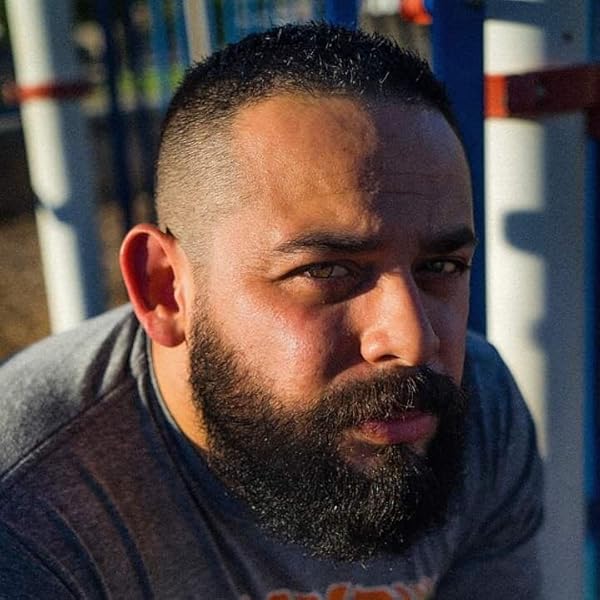
Steve Hardiman has worked as an IT and communications consultant, and talk-radio host and producer. His writing includes ghost-written nonfiction articles selected as cover stories in multiple industrial trade publications and scripts for over seventy instructional videos.
Recently retired, he and his wife Angela are raising their grandson. In his spare time, he writes, travels, and is an avid photographer. All the Broken Angels is his first work of published fiction.
I received a free copy of this book in exchange for a fair and honest review. All opinions are my own.
A series of disappearances in early 20th-century London leads an investigator into a dark mystery in author Timothy Hernandez’s “The Ageless.”
Advertisements
The Synopsis
From the Personal Archives of Richard Matthews – London, 1905
What follows are the recovered journal entries of Richard Matthews—a private investigator by trade—and his involvement in the infamous case of London’s vanishing children. These documents, long thought lost, shed new light on one of the city’s most perplexing mysteries, and the man Commissioner Edward Richard Henry trusted to solve.
The official records confirm 12 disappearances—9 of which were children. With no signs of forced entry and no helpful clues, the lead inspector assumes foreign spies are the culprit, eager to get their hands on naval shipping secrets.
But these journal entries suggest a darker tale.
Whether these pages contain the ramblings of a man lost to his vices, or a truth too terrible for history to acknowledge, I leave to the reader’s judgment. The journal, along with its accompanying letters, offers a window into one of London’s most enigmatic cases—a mystery that has come to be known as “The Ageless.”
What follows is his story, presented in its entirety for the first time.
Reader, be warned: some doors, once opened, cannot be easily closed.
The 64K Society
The Review
This was such an engaging and captivating read. The author found an outstanding balance between late 19th-century and early 20th-century London investigations with Gothic, dark fantasy-driven horror. The narrative was delivered at a quick pace, yet still managed to create a haunting, dark atmosphere that captured the cold, cobblestone-laden streets of London in the 19th century.
What stood out as the heart of this story was the natural development of mythology and fantastic character development. The protagonist, Richard Matthews, is a figure haunted by the past, and yet determined to stop a great injustice from being unleashed on London once more. The first-person narrative allowed the reader to experience the setbacks, frustration, and determination that Richard exuded on the pages, while also sensing the mystery behind the words Richard wasn’t saying throughout the investigation.
The Verdict
Memorable, entertaining, and thrilling, author Timothy Hernandez’s “The Ageless” is a must-read thriller that blends dark fantasy and horror. The Gaslamp fantasy element of the narrative, the haunting atmosphere of the setting, and the shocking twists and turns that upend a classic children’s story, as well as the origins of this mystery, make this a compelling novel to get lost in. If you haven’t yet, be sure to grab your copy today!
Rating: 10/10
Advertisements
About the Author
Drawing from his experience working for several fortune 500 companies, coupled with his passion for visual storytelling and digital cinematography, Timothy Hernandez brings a filmmaker’s eye to the complexities of corporate culture and personal transformation. After building a successful career in regional and training management, a recent disability shifted his perspective, inspiring him to craft a powerful narrative about adaptation and resilience—weaving together his deep understanding of storytelling techniques with raw, honest insights about how unexpected life changes reshape our journey.
I received a free copy of this book in exchange for a fair and honest review. All opinions are my own.
As two women face oppression from an invading army during WWII, a daughter years later attempts to uncover her mother’s heroism, only to discover a shocking truth in author Marina Osipova’s “Too Many Wolves in the Local Woods.”
Advertisements
The Synopsis
Two unlikely women with a shared history, two different turns of fate.
The end of the 1930s. The specter of twisted paranoia of Stalin’s unrelenting dictatorship continues to tighten over the Soviet Union. NKVD, the country’s secret police, coerces University graduate Ursula Kriegshammer, a Soviet Volga German with special skills, into serving this regime.
Natasha Ivanova, a worker at a metal plant in Vitebsk, a city at the western border of the Soviet Union, still can’t recover from the betrayal of the man she loves.
When in 1941 the German Army invaded Byelorussia, both women seem to be helping the cause to fight the ruthless occupiers. But when their paths cross, tragedy strikes, and one must carry the burden of guilt. Will she ever find peace with herself and the way out of the trap fate prepared for her?
Years later, the daughter of one of them launches on a quest to uncover the heroic nature of her mother’s role in WWII, only to discover a heart-shattering revelation of her own parentage.
The Review
The attention to detail in this book was incredible. The visceral imagery in the author’s writing style captured the haunting, cold, and chilling nature of not only WWII, but the Stalin-era Soviet Union as well. The balance the author found in character development and history was excellent, and the way the author captured the humanity behind these characters and explored how the way of life under Stalin’s rule impacted how they evolved and grew over time was fantastic.
The duality of Ursula, one of the protagonists, as she struggles with her ties to Germany and Russia, especially regarding her duties, was compelling to get lost in as a reader. The slow build-up that turns into a sudden and thrilling WWII era plot and the honest depictions of the Nazi occupation and Stalinist Russia was truly haunting. The complex romance and family drama the author infuses into this narrative will elevate the story tenfold and leave readers invested in an emotional wellspring that will endure long past the book’s end.
The Verdict
Author Marina Osipova’s “Too Many Wolves in the Local Woods” is a must-read historical fiction thriller that is visceral, thrilling, and engaging. The natural infusion of romance and drama into this WWII story and the chilling and introspective look into how patriotism can be used against people to the point of corrupting their principles and turning people against one another kept readers engaged throughout this entire novel. If you haven’t yet, be sure to grab your copy today!
Rating: 10/10
Advertisements
About the Author
Marina Osipova was born in East Germany into a military family and grew up in Russia, where she graduated from the Moscow State Institute of History and Archives. When she was five, she decided she wanted to speak German and, years later, she earned a diploma as a German language translator from the Moscow State Institute of Foreign Languages. In Russia, she worked first in a scientific-technical institute as a translator, then in a Government Ministry in the office of international relations, later for some Austrian firms. For many years, she lived in New York, working in a law firm, and then in Austria for several years. In the spring of 2022, after spending ten months in Russia, some unfortunate world events brought her back to the United States.
A long-standing member of the Historical Novel Society, she is dedicated to writing historical fiction, especially related to WWII. Her books garnered numerous literary awards, including a 1st Place WINNER of the 2021 Hemingway Book Awards novel competition for 20th Century Wartime Fiction (a division of the Chanticleer International Book Awards). At some point or another, all her books hit the Amazon Top 100 lists in Historical Russian Fiction and Historical German Fiction and How Dare the Birds Sing even #1 or #2 in War Fiction in Canada, the UK, and Australia.
Her readers praise her books for “emotional realism,” for “taking on a subject that few authors have touched,” for “writing with heart and compassion while not holding back from hard cold realities of war,” for “giving an authentic and in-depth look at a culture that tends to baffle westerners.”
To learn more about Marina Osipova and her captivating books, visit her website at marina-osipova.com
I received a free copy of this book in exchange for a fair and honest review. All opinions are my own.
Imprisoned and betrayed, a woman must reclaim her destiny amidst a power struggle between warring kings of both land and sea in author E.M. Etheridge’s “She Tames the Kings.”
Advertisements
The Synopsis
Chained in the deepest bowels of Captain Keres’ ship, Estella Bohem has lost everything-her freedom, her father’s safety, and the trust she placed in Dane. With her heart shattered by his betrayal, she has only one chance to reclaim her destiny.
To break the Pirate Lords’ Bonds and free the witches of Salvus Island, Estella must steal back her family’s grimoire and shatter its seal before the ruthless Pirate King Moritie and his cunning witch, Ines Laurent, bind her-and the sea beast she commands-to their will.
But survival on the high seas demands treacherous alliances. As war brews and the Land Kings set their sights on Moritie’s stronghold, Estella must outmaneuver the most cutthroat players in a deadly game of power, deception, and magic.
With time running out, one question remains: Can she tame the Kings-before they tame her?
The Review
What a compelling and twisted yet entertaining dark fantasy read. The author did an incredible job of expanding upon the mythology and world-building in the first book of this duology. The relationships that the author explored through engaging character development, from the bond between witches and their gods or goddesses, to the way witches were bound to pirates and kings, all played critical roles in the decisions and story developments that were brought to life on the page. Even the protagonist’s relationship to the beast she is forced to command is such a unique and powerful narrative to explore in this book, and speaks to much higher themes in the novel.
The character development’s themes and emotional depth make this a steady and thrilling sequel. The book uses magic, monsters, pirates, gods, and high octane action in a beautiful fusion with themes of power, control, the fight for freedom, vengeance, and self-reliance so expertly through the protagonist herself and the witch’s struggles. Set in a period already rife with untold horrors due to slavery and violence, the juxtaposition of Estella’s journey allowed her to find a way to tackle that even bigger problem later on in the book in a surprising way.
The Verdict
Entertaining, compelling, and mesmerizing, author E.M. Etheridge’s “She Tames the Kings” is a must-read dark fantasy novel. The twists and turns in this story, the rich storytelling and world-building, and the epic final chapter will give readers a sense of fulfillment and wonder while also leaving them eager to read more by this incredible author. If you haven’t yet, be sure to grab your copy today!
Rating: 10/10
Advertisements
About the Author
I’d always known I was going to publish books, and after years of writing my first book, I decided I wanted to publish traditionally. While still queering agents for that book, I came up with a whole new concept and decided to try my hand at publishing independently so I could gain experience in both industries. I’ve worked as a teacher, interned as an editor, and now I am ready to make books my livelihood through publishing and through freelance editing.