Too Many Wolves in the Local Woods by Marina Osipova Review

I received a free copy of this book in exchange for a fair and honest review. All opinions are my own.

As two women face oppression from an invading army during WWII, a daughter years later attempts to uncover her mother’s heroism, only to discover a shocking truth in author Marina Osipova’s “Too Many Wolves in the Local Woods.”

Advertisements

The Synopsis

Two unlikely women with a shared history, two different turns of fate.

The end of the 1930s. The specter of twisted paranoia of Stalin’s unrelenting dictatorship continues to tighten over the Soviet Union. NKVD, the country’s secret police, coerces University graduate Ursula Kriegshammer, a Soviet Volga German with special skills, into serving this regime.

Natasha Ivanova, a worker at a metal plant in Vitebsk, a city at the western border of the Soviet Union, still can’t recover from the betrayal of the man she loves.

When in 1941 the German Army invaded Byelorussia, both women seem to be helping the cause to fight the ruthless occupiers. But when their paths cross, tragedy strikes, and one must carry the burden of guilt. Will she ever find peace with herself and the way out of the trap fate prepared for her?

Years later, the daughter of one of them launches on a quest to uncover the heroic nature of her mother’s role in WWII, only to discover a heart-shattering revelation of her own parentage.

The Review

The attention to detail in this book was incredible. The visceral imagery in the author’s writing style captured the haunting, cold, and chilling nature of not only WWII, but the Stalin-era Soviet Union as well. The balance the author found in character development and history was excellent, and the way the author captured the humanity behind these characters and explored how the way of life under Stalin’s rule impacted how they evolved and grew over time was fantastic. 

The duality of Ursula, one of the protagonists, as she struggles with her ties to Germany and Russia, especially regarding her duties, was compelling to get lost in as a reader. The slow build-up that turns into a sudden and thrilling WWII era plot and the honest depictions of the Nazi occupation and Stalinist Russia was truly haunting. The complex romance and family drama the author infuses into this narrative will elevate the story tenfold and leave readers invested in an emotional wellspring that will endure long past the book’s end.

The Verdict

Author Marina Osipova’s “Too Many Wolves in the Local Woods” is a must-read historical fiction thriller that is visceral, thrilling, and engaging. The natural infusion of romance and drama into this WWII story and the chilling and introspective look into how patriotism can be used against people to the point of corrupting their principles and turning people against one another kept readers engaged throughout this entire novel. If you haven’t yet, be sure to grab your copy today!

Rating: 10/10

Advertisements

About the Author

Marina Osipova was born in East Germany into a military family and grew up in Russia, where she graduated from the Moscow State Institute of History and Archives. When she was five, she decided she wanted to speak German and, years later, she earned a diploma as a German language translator from the Moscow State Institute of Foreign Languages. In Russia, she worked first in a scientific-technical institute as a translator, then in a Government Ministry in the office of international relations, later for some Austrian firms. For many years, she lived in New York, working in a law firm, and then in Austria for several years. In the spring of 2022, after spending ten months in Russia, some unfortunate world events brought her back to the United States.

A long-standing member of the Historical Novel Society, she is dedicated to writing historical fiction, especially related to WWII. Her books garnered numerous literary awards, including a 1st Place WINNER of the 2021 Hemingway Book Awards novel competition for 20th Century Wartime Fiction (a division of the Chanticleer International Book Awards). At some point or another, all her books hit the Amazon Top 100 lists in Historical Russian Fiction and Historical German Fiction and How Dare the Birds Sing even #1 or #2 in War Fiction in Canada, the UK, and Australia.

Her readers praise her books for “emotional realism,” for “taking on a subject that few authors have touched,” for “writing with heart and compassion while not holding back from hard cold realities of war,” for “giving an authentic and in-depth look at a culture that tends to baffle westerners.”

To learn more about Marina Osipova and her captivating books, visit her website at marina-osipova.com

You can find her also on

Facebook: https://www.facebook.com/marina.osipova.14/

Goodreads: https://www.goodreads.com/author/show/4701687.Marina_Osipova

Twitter: https://twitter.com/marosikok

Linkedin: https://www.linkedin.com/in/marina-osipova-65b81418/

How Schools Make Race: Teaching Latinx Racialization in America by Laura C. Chavez-Moreno Review

I received a free copy of this book in exchange for a fair and honest review. All opinions are my own. 

Author Laura C. Chavez-Moreno shares with readers how race and racism take shape in schools in the book “How Schools Make Race: Teaching Latinx Racialization in America.”

Advertisements

The Synopsis

An investigation into how schooling can enhance and hinder critical-racial consciousness through the making of the Latinx racialized group

In How Schools Make Race, Laura C. Chávez-Moreno uncovers the process through which schools implicitly and explicitly shape their students’ concept of race and the often unintentional consequences of this on educational equity. Chávez-Moreno sheds light on how the complex interactions among educational practices, policies, pedagogy, language, and societal ideas interplay to form, reinforce, and blur the boundaries of racialized groups, a dynamic which creates contradictions in classrooms and communities committed to antiracism.

In this provocative book, Chávez-Moreno urges readers to rethink race, to reconceptualize Latinx as a racialized group, and to pay attention to how schools construct Latinidad (a concept about Latinx experience and identity) in relation to Blackness, Indigeneity, Asianness, and Whiteness. The work explores, as an example, how Spanish-English bilingual education programs engage in race-making work. It also illuminates how schools can offer ambitious teachings to raise their students’ critical consciousness about race and racialization.

Ultimately, Chávez-Moreno’s groundbreaking work makes clear that understanding how our schools teach about racialized groups is crucial to understanding how our society thinks about race and offers solutions to racial inequities. The book invites educators and scholars to embrace ambitious teaching about the ambivalence of race so that teachers and students are prepared to interrogate racist ideas and act toward just outcomes.

The Review

It is no secret that we live in a very tumultuous time. So many injustices are co-occurring, both abroad and in the United States. Without getting political, it is impossible not to recognize the moral failing in recent events in Los Angeles, and as a U.S. Citizen who is of both Caucasian and Hispanic descent, it has never been more clear that educating future generations on Latin culture and creating a better understanding of not only the cultures but the roles social justice plays in our society is essential, and that is the role this book plays for educators and students alike.

Immediately, what stands out is the accessibility of the material in this book. The author showcases a depth of research and expertise that speaks to the importance and relevance of this material, speaking on race, education, and language skills that need to be vital tools in educating future generations. The author introduces concepts and terminology that can benefit educators, from racialization to Latinidad and so much more, allowing the reader to better understand how to navigate bilingual education and how it is meshed together with social and racial justice.

The Verdict

Insightful, engaging, and vital to today’s cultural and social injustices, author Laura Chavez-Moreno’s “How Schools Make Race” is a must-read nonfiction education book on philosophy, morality, and multicultural studies. The insights, detail, and passion with which the author wrote this book and the depth it explores showcase the importance and struggle of this subject matter and why future generations need to better understand the integral nature of multicultural education. If you haven’t yet, be sure to grab your copy today!

Rating: 10/10

Advertisements

About the Author

Laura Chávez-Moreno is an award-winning researcher, qualitative social scientist, and assistant professor in the Departments of Chicana/o & Central American Studies and Education at the University of California, Los Angeles. She received her PhD in Curriculum and Instruction from the University of Wisconsin-Madison School of Education. Dr. Chávez-Moreno’s research has been published in top-tier journals, and she has been recognized with multiple awards, including from the American Educational Research Association and the National Academy of Education/Spencer Foundation. Dr. Chávez-Moreno has taught in all levels of schooling, including elementary, secondary, tertiary, and older-adult education. She was a high school teacher of Spanish in the School District of Philadelphia for five years, wrote district curriculum, and served on boards of community organizations. She grew up in Douglas, Arizona, and Agua Prieta, Sonora, México.

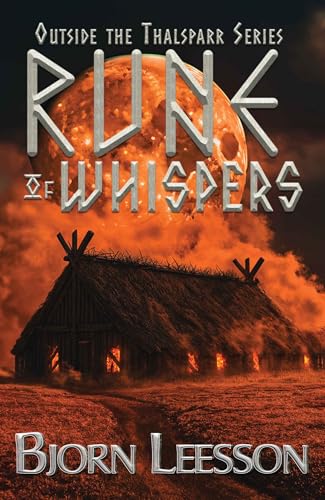
Rune of Whispers (Outside the Thalsparr Series Book Five) by Bjorn Leesson Review

I received a free copy of this book in exchange for a fair and honest review. All opinions are my own. 

A seasoned warrior must traverse the game of Saxon politics in author Bjorn Leesson’s “Rune of Whispers”, the fifth book in the Outside the Thalsparr series.

Advertisements

The Synopsis

Myrgjol the Dokkrsdottir’s path may be fraught with physical dangers and battle, but some wars are fought with whispered words and deceitful lies. While in Saxon lands, she must learn to maneuver the battlefield as well as her position on the board in the game of Saxon politics. Will she be successful?

And though she is blind to all the pieces in The Game, a Saxon gamemaster plays on her behalf as well as his own against many others, and the enormity of the risk spirals out of control for everyone.

The Review

This was a welcome addition to the historical fiction and dark fantasy series! The author found a way to keep the series fresh and showcased the depth of the world this series inhabits, giving readers a fresh new perspective by exploring the politics of Saxon life and Myrgjol’s impact on that world. The way the action takes a backseat to the atmosphere and the tension politics played at that time made the overall narrative feel elevated for readers. 

The mystery and intrigue this turn of events took in the story was evenly matched by the rich historical context and fantasy mythos the series has brought to life so vividly. The more emotional context of the protagonist’s story felt fully realized in this narrative, and the evolution of her allies and how life in Saxon lands evolved among some of the Norse settlers at that time was an intriguing subplot that readers will instantly get lost in.

The Verdict

As a longtime fan of Game of Thrones, Vikings, and The Last Kingdom, author Bjorn Leesson’s “Rune of Whispers” is a must-read historical fiction and fantasy novel and an excellent entry into the Outside the Thalsparr Series.  The suspense and drama that this novel plays into, as well as the more intimate and emotional character development, will give longtime fans of this series a new perspective on which to invest. If you haven’t yet, be sure to grab your copy today.

Rating: 10/10

Advertisements

About the Author

Bjorn Leesson has always been fascinated with many topics to include history, the supernatural, and writing. These interests combined led to the Outside the Thalsparr series, with the first book in the series, “Runes of the Dokkrsdottir.” Bjorn was not formally trained as a writer and has worked in the industrial manufacturing field his entire life. Writing his stories and hoping others enjoy them is a passion and not a career.

Black as Hell, Strong as Death, and Sweet as Love: A Coffee Travel Guide by Steven P. Unger (Photos by Ruth St. Steven) Review

I received a free copy of this book in exchange for a fair and honest review. All opinions are my own. 

Author Steven P. Unger shares the long and storied history of coffee, as well as the travel experiences of consuming coffee on multiple continents in the book “Black as Hell, Strong as Death, and Sweet as Love: A Coffee Travel Guide.”

Advertisements

The Synopsis

BLACK AS HELL, STRONG AS DEATH, SWEET AS LOVE: A Coffee Travel Guide, is the first and only book to trace coffee consumption from its origins in prehistory to becoming the world’s second-most-valuable commodity after oil—and to pair this history with replicable, affordable Coffee Experiences that provide a unique approach and added value to the readers’ destinations, no matter how many times they’ve been there before. This book is a multi-genre travel book with unique historical insights that immerse the reader in the culture of a country or city through the lens of the destination’s deep relationship with coffee. No other travel book has ever provided the kind of total immersion into a country or city—through histories, travel directions, one-of-a-kind photos, and recipes—that BLACK AS HELL, STRONG AS DEATH, SWEET AS LOVE: A Coffee Travel Guide, delivers in every chapter.

The timing is right for BLACK AS HELL, STRONG AS DEATH, SWEET AS LOVE: A Coffee Travel Guide, a history of coffee and a travel guide to Coffee Experiences on almost every continent. Plus, there are recipes.

Among the Coffee Experience destinations are places that almost no one goes to, like Ethiopia’s South Omo, and places masses of tourists go to, like Paris. Other Coffee Experiences are closer to home for Americans, as simple as sharing a colada at a ventanilla in Miami’s Little Havana; or taking the Canal streetcar to the end of the line, where Morning Call in New Orleans’ Spanish moss-shrouded City Park offers chicory coffee, beignets, crawfish bread, gumbo, alligator sausage, and jambalaya just a short walk away from the last remaining section of Bayou Metairie.

These Coffee Experiences result from three years of related travel, five years of research, and decades of travel and travel writing. These are the Best of the Best, the Coffee Experiences that surpassed all our expectations.

Linking the Coffee Experiences to history provides a unique approach to a city or country’s particular relationship to coffee. Coffee Experiences may be in the middle of, or adjacent to heavily touristed areas, but for the most part, they are places barely mentioned in guidebooks.

The Coffee Trail is full of curious twists and turns, spanning millennia and the rise and fall of great civilizations. Surviving bans from religions and regimes, coffee consumption has changed its style constantly to adapt to new customs, new physiologies, and new technologies with the driving mandates of better taste and more effective delivery systems for the physically and psychologically stimulating effects of caffeine.

All along the Coffee Trail, from Africa to Europe and the New World, each culture and country has added its own unique stamp to the passport of Coffee Experiences. This book is a journey through those countries and cultures with stopovers that are sometimes a reenactment, and sometimes a re-imagination of a unique time and place in the human history of coffee consumption.

Flea and Tick

The Review

This was such a fascinating read. Like much of the population, I am a coffee drinker, but I didn’t always know that there could be a powerful history behind the cultivation of coffee beans throughout the world. The sheer volume of detail and insight the author provides is fascinating. The author explores different cultures and continents not only in terms of how the coffee bean has grown and evolved there but also how the consumption of coffee has evolved and grown over time. 

The balance of the beauty that photographer Ruth St. Steven captured with the imagery of the author’s writing style and the sense of adventure that this book brought made it such an engaging read. The book not only featured an eclectic collection of history and stories related to coffee, but each location the author explored came with recommendations for orders, recipes, and where to get coffee while there. 

AudiobooksNow

The Verdict

Equal parts reference book, guide, history, and adventure book, author Steven P. Unger’s “Black as Hell, Strong as Death, and Sweet as Love” is a must-read. The honesty, depth of knowledge, and thorough exploration of this subject, the locations where these products can be found, and the passion for coffee will instantly draw readers in. If you haven’t yet, be sure to grab your copy today.

Rating: 10/10

Advertisements

About the Author

cover girl

Steven P. Unger has traveled extensively in North, South, and Central America; Western Europe; the Middle East; Africa; Istanbul; and Romania. He has been published in numerous travel and bicycling magazines. His book, In the Footsteps of Dracula: A Personal Journey and Travel Guide, 3rd Ed., traces the voyages and eventual flight of Bram Stoker’s Count Dracula from Transylvania to London and back in text and photographs, and pairs this journey with the life and times of Dracula’s real-life counterpart, Prince Vlad Dracula, or Vlad the Impaler.

Mr. Unger was an exchange student at a historically black college, Tuskegee Institute in Alabama, and later a member of the Bear Tribe, a California commune that tried sharecropping, goat herding, and living in teepees—and failed spectacularly at everything. These adventures and many more are described in his novel Dancing in the Streets.

He also wrote the accompanying text and Preface for Before the Paparazzi: Fifty Years of Extraordinary Photographs, which includes over 250 pictures taken by Arty Pomerantz, staff photographer and assignment editor for the New York Post from the 1960s through the early 1990s.

Appearances by the author for Before the Paparazzi, 50 Years of Extraordinary Photographs included a video of his co-author’s life and work. In October 2014 at the City University of New York Graduate School of Journalism, the author’s presentation was followed by a roundtable on contemporary photojournalism with members of the New York Press Club and the New York Press Photographers’ Association. This presentation was given at the New York City Fire Museum and the Bronx Documentary Center, and was one of four lectures for the 2015-2016 California State University, Sacramento, Friends of the Library Author Lecture Series.

He lives with Ruthie St. Steven and their terrier mix Bailey in Elk Grove, California.

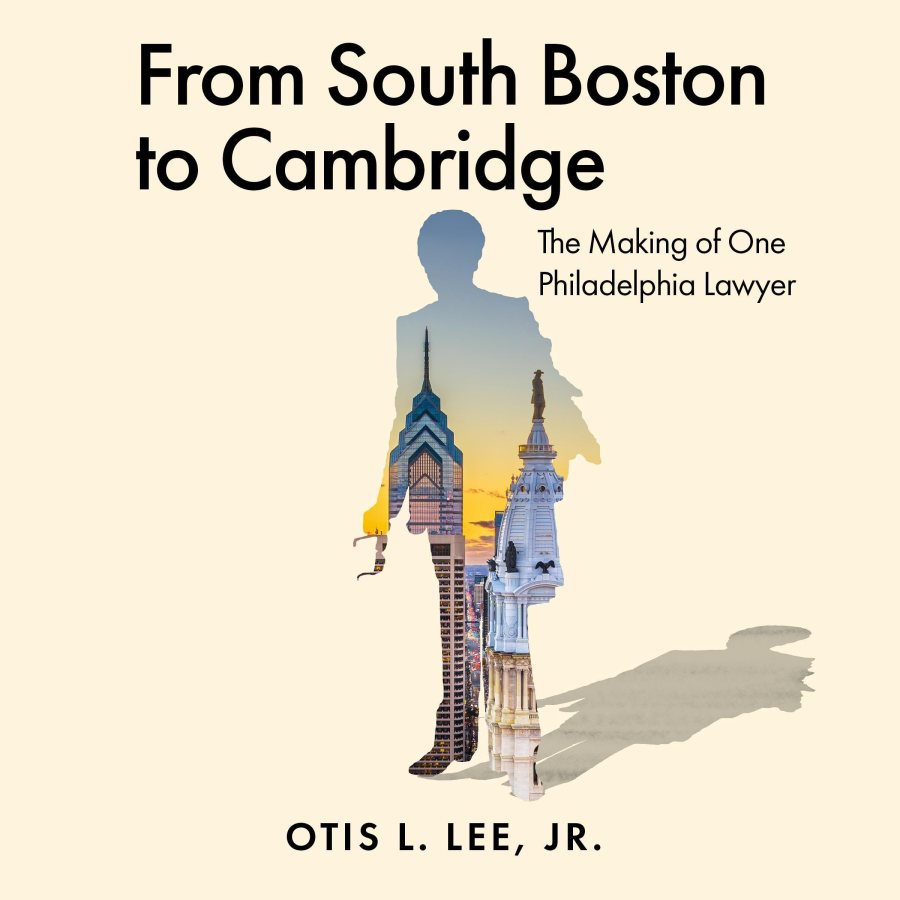
From South Boston to Cambridge by Otis L Lee Jr Review

I received a free copy of this book in exchange for a fair and honest review. All opinions are my own. 

Author Otis L. Lee Jr. shares the life experiences that defined his career and his life in the book From South Boston to Cambridge.

Advertisements

The Synopsis

Version 1.0.0

Travel on a journey of evolution from naiveté as a child in the Jim Crow South, to self-actualization at “the Door of No Return,” on Goree Island, in Senegal, West Africa. Experience some of the travails of the lawyer as solo practitioner, the last of the Lone Rangers, a dying breed. This memoir, written in the nature of a novel, also includes a descriptive genealogical narrative of the Lee Family, one of Charlottesville, Virginia’s notable Black families. The solo practice of law in the big city, as well as in smaller towns, offers numerous learning and teachable moments. Maturing as a lawyer requires time, patience, perseverance and a sound strategy but in the solo practitioner’s case it also entails a unique occupational journey: From the apprentice lawyer to the journeymen lawyer the ritual of passage is the same regardless of race. Here, as in the military in a time of war, race is blurred by the need to learn and the will to survive and grow. Professional success requires relationships with strange bed fellows where many essential lessons are learned. The competence of the black professional is never assumed; it must be proven even to members of his own race. A curious paradox with roots buried deep in the American story. The politics of race starkly impacted the recent history of a major American city, Philadelphia-in the killing of a police officer, the incineration of a neighborhood and the election of that city’s first black mayor. Contrary to what many people may perceive, middle class black families have much in common with middle class white families. They encounter many of the same head winds except the resistance of color in American culture. As a consequence black middle class youth confront deeper issues affecting their journey toward the goal of attaining self-actualization; personal doubts, race acceptance and appreciation, skin color and complexion, obtaining a competitive education, not just an integrated education for the two are not the same; economic gamesmanship to master an unfriendly and demanding economic system, “equal opportunity” test challenging for all races but for the American of African descent all of this occurs in an unaccommodating culture, no less demanding especially the skill of converting income into wealth. From South Boston To Cambridge: The Making Of One Philadelphia Lawyer touches upon all of these themes in a tapestry of stories woven together around the life of one central character but by no means the only colorful character.

The Review

This was the author’s most personal and engaging read yet. The memoir perfectly balances the author’s life experiences with the cultural experiences of both the eras he lived through and the community he established along the way. The level of detail and precision with which the author recounted these experiences was amazing, showcasing the heightened focus and attention to detail that comes naturally as a former attorney. 

The numerous challenges the author faced throughout his life and career, and how he conquered those challenges, were inspiring. The emotional depth of the author’s experiences was also felt, as when a colleague at a Philadelphia law firm was held in contempt. The expertise he witnessed at his colleague’s treatment disillusioned the author with the recognition of true justice when his life and the lives of other people of color were not valued as much as others. The impact those experiences and realizations have on the author’s life plays out perfectly on the page.

The Verdict

Remarkable, astounding, and engaging, author Otis L Lee Jr’s “From South Boston to Cambridge” is a must-read nonfiction book and memoir. The honesty and relatability with which the author writes, as well as the plethora of experiences that helped define the author’s journey, will stay with readers as they delve further and further into the book. If you haven’t yet, be sure to grab your copy today.

Rating: 10/10

Advertisements

About the Author

Otis L. Lee, Jr., a remarkable African-American individual, defied the barriers imposed by segregation and Jim Crow laws to achieve remarkable personal and professional accomplishments. Mr. Lee made significant contributions as a co-author in a 1980 project by the Howard University School of Business, which involved revising and editing the U.S. Department of Commerce manual titled “Local Economic Development Corporation, Legal and Financial Guidelines.”

He was a member of both the Pennsylvania and Virginia Bar Associations. He also contributed his expertise to several universities in the Midwest and along the East Coast. Otis’s distinguished professional journey included significant roles, such as serving as a Trust New Business Solicitor at the Harris Trust and Savings Bank in Chicago, Illinois, as well as consulting the Mid-Atlantic Region Advanced Underwriting for the New York Life Insurance Company. Furthermore, Lee was the Associate Director of the Center For Small Business and served as a Panel Executive for the Panel on Product Liability for the US Chamber of Commerce in Washington, D.C.

A retired attorney, he has now transitioned into an author who uses his powerful insights and experiences to inspire others. Through his writings, captivating video shorts, and engaging speaking engagements, Otis Lee, Jr. enlightens audiences with his unique perspective on resilience and triumph over adversity.

Lee’s 2013 debut memoir, “From South Boston to Cambridge: the Making of One Philadelphia Lawyer”, intricately weaves together a captivating narrative that chronicles his relentless pursuit of success, overcoming one obstacle after another. Within its pages, readers traverse alongside Lee, sharing in his profound emotions and experiences.

Published in 2019’s “The Last Train From Djibouti”, the story begins from an unassuming, yet metaphorical, location: a train voyage originating in Charlottesville, Virginia, bound for New York City’s Penn Station. For Otis, this journey recalls another train’s journey from distant times in a location many miles from home. Drawing inspiration from the accounts of Dr. Michelle Palmer Lee and her mentor, Dr. Harriett F. Karuhije, “The Last Train From Djibouti” brings us alongside these two women on a transformative odyssey, each embarking independently to the Motherland, spurred by a resolute desire to connect with Africa and self discovery. By artfully expositing passages from Michelle’s journal and Harriett’s recounting, Otis portrays a microcosm of the African-American struggle to unearth roots within a culture that underwent upheaval, crossed oceans and emerged anew.

Coming in 2024, Otis Lee’s latest title “Black Spartacus, I Was Born in the Forest: A Traveler’s Guide to Quilombo, Maroon Societies in Brazil” embodies the struggle for liberty by Africans who were transported to the Americas aboard slave ships, hailing from regions like Congo, Angola, and other parts of Central Africa.

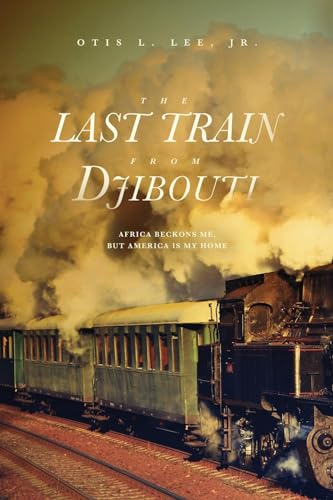
The Last Train from Djibouti by Otis L. Lee Jr Review

I received a free copy of this book in exchange for a fair and honest review. All opinions are my own. 

In author Otis L. Lee’s “The Last Train from Djibouti,” two women struggle with identity as they travel to Africa.

Advertisements

The Synopsis

The Last Train from Djibouti is an odyssey you will not forget.” —Larry Bechtel, author of The Tinsmith’s Apprentice and sculptor

Otis Lee begins this story in the most innocuous of locations: a train from Charlottesville, Virginia, to Penn Station in New York City. But for Otis this journey brings to mind another train, from long ago and far away—representative of a past to which there can be no return. Based on the true experiences of Dr. Michelle Palmer Lee and her mentor, Dr. Harriett F.  Karuhije, The Last Train From Djibouti follows two women on a life-changing adventure as they travel separately to the Motherland, determined to find Africa and themselves. What they find is nothing like what they expected. As these two women grapple with questions of identity and character, what emerges is a larger picture of what it means to undertake an “unrequited return.” Weaving entries from Michelle’s journal and Harriett’s observations together with his own research and experience, Otis depicts a microcosm of the African-American struggle to find roots in a culture that has been upended, shipped overseas, and become something new.

The Review

This was a thoughtful and engaging story. The author does a remarkable job of capturing the heart and drive of this narrative, speaking to the struggles of so many with the history and experiences their ancestors held when pulled away from their families at the height of the slave trade, and the need for identity when connecting to one’s roots. The presentation of this story and the author’s writing style are powerful and heartfelt, showing both detail and a deep understanding of the history of both America and Africa. 

It was great to see the author not only in the role of narrator throughout this narrative, but also in the depths of emotions. This is based on a true story that unfolds through the characters Michelle and Harriett. The struggles they both face when their expectations of their experiences are mired by their disillusionment when confronted with life’s realities make this a complex and engaging read. Yet the hopeful tone of the community they both found there and the realization of their experiences growing up in a more Western culture redefining what home truly is, made this a remarkable story to get lost in.

The Verdict

Memorable, thoughtful, and engaging, author Otis L. Lee Jr.’s “The Last Train from Djibouti” is a must-read. The amount of history balances out the rich character development and heartfelt delivery of the experiences shared in this narrative by the authors, keeping this a book readers won’t want to put down. If you haven’t yet, be sure to grab your copy today!

Rating: 10/10

Advertisements

About the Author

Otis L. Lee, Jr., a remarkable African-American individual, defied the barriers imposed by segregation and Jim Crow laws to achieve remarkable personal and professional accomplishments. Mr. Lee made significant contributions as a co-author in a 1980 project by the Howard University School of Business, which involved revising and editing the U.S. Department of Commerce manual titled “Local Economic Development Corporation, Legal and Financial Guidelines.”

He was a member of both the Pennsylvania and Virginia Bar Associations. He also contributed his expertise to several universities in the Midwest and along the East Coast. Otis’s distinguished professional journey included significant roles, such as serving as a Trust New Business Solicitor at the Harris Trust and Savings Bank in Chicago, Illinois, as well as consulting the Mid-Atlantic Region Advanced Underwriting for the New York Life Insurance Company. Furthermore, Lee was the Associate Director of the Center For Small Business and served as a Panel Executive for the Panel on Product Liability for the US Chamber of Commerce in Washington, D.C.

A retired attorney, he has now transitioned into an author who uses his powerful insights and experiences to inspire others. Through his writings, captivating video shorts, and engaging speaking engagements, Otis Lee, Jr. enlightens audiences with his unique perspective on resilience and triumph over adversity.

Lee’s 2013 debut memoir, “From South Boston to Cambridge: the Making of One Philadelphia Lawyer”, intricately weaves together a captivating narrative that chronicles his relentless pursuit of success, overcoming one obstacle after another. Within its pages, readers traverse alongside Lee, sharing in his profound emotions and experiences.

Published in 2019’s “The Last Train From Djibouti”, the story begins from an unassuming, yet metaphorical, location: a train voyage originating in Charlottesville, Virginia, bound for New York City’s Penn Station. For Otis, this journey recalls another train’s journey from distant times in a location many miles from home. Drawing inspiration from the accounts of Dr. Michelle Palmer Lee and her mentor, Dr. Harriett F. Karuhije, “The Last Train From Djibouti” brings us alongside these two women on a transformative odyssey, each embarking independently to the Motherland, spurred by a resolute desire to connect with Africa and self discovery. By artfully expositing passages from Michelle’s journal and Harriett’s recounting, Otis portrays a microcosm of the African-American struggle to unearth roots within a culture that underwent upheaval, crossed oceans and emerged anew.

Coming in 2024, Otis Lee’s latest title “Black Spartacus, I Was Born in the Forest: A Traveler’s Guide to Quilombo, Maroon Societies in Brazil” embodies the struggle for liberty by Africans who were transported to the Americas aboard slave ships, hailing from regions like Congo, Angola, and other parts of Central Africa.

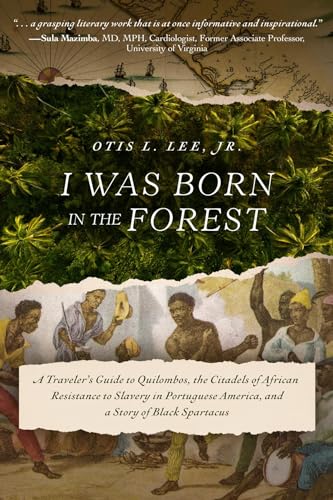
I Was Born in the Forest by Otis L. Lee Jr Review 

I received a free copy of this book in exchange for a fair and honest review. All opinions are my own. 

Author Otis L Lee Jr shares the story of the town of Palmares, a settlement established in the mountains of Brazil for Africans who escaped enslavement in the 17th century to form their own Afrocentric community and hold onto their freedom in the book “I Was Born in the Forest.”

Advertisements

The Synopsis

I Was Born in the Forest encapsulates the freedom struggle of Africans brought to the Americas in the bowels of slave ships from Congo, Angola, and other parts of Central Africa. In the seventeenth century, many defied the odds by escaping and establishing Afrocentric communities in the mountains in Brazil. Palmares, the most notable among them, existed from 1605 to 1694.

Palmares was the forerunner of Black towns in America, and its mesmerizing leader, Zumbi, belongs among the pantheon of heroic African-descended leaders such as Martin Luther King Jr., Francois Dominique Toussaint Louverture, and many others. He and his people rose from nothing in a hostile, foreign land to create an enduring Black republic in colonial Brazil.

Palmares and Zumbi have become transcendent icons of hope, perseverance, and the tenacity of African-descended people and all colonialized peoples who strive for and refuse to accept anything but unfettered freedom. Through a mix of travelogue and history, their story comes alive.

The Review

This was such an insightful and engaging read. The author was able to both entertain and educate readers on a subject that is so very rarely discussed, honing in on the African communities established in other countries such as Brazil during a time when so many were taken and enslaved in what would become the United States. The level of detail the author provides gives such a clear picture of the impact slavery had on everyone, especially in South American countries like Brazil, including elements such as the impact religion had on both those brought in as slave labor and the slavers themselves. 

What stood out to me was something the author touched upon early on in the book, which was the assertion that African slave labor brought into the Americas was all docile and compliant to their captors, when in reality, that was not the case. The fight and actions of the community of Palmares, especially their final leader Zumbi, were not only inspiring to an entire community of people, but the author also explored in depth how these actions created myths and legends that would help inspire future battles for freedom and independence. 

The Verdict

Powerful, educational, and insightful, author Otis L Lee Jr’s “I Was Born in the Forest” was a must-read nonfiction history book. The reality is this information isn’t the kind of education taught widely in schools, especially in our modern world, where education regarding this subject matter is being heavily censored, and the wealth of information and guidance this bit of history can provide the rest of the world is more important than ever before. If you haven’t yet, be sure to grab your copy today.

Rating: 10/10

Advertisements

About the Author

Otis L. Lee, Jr., a remarkable African-American individual, defied the barriers imposed by segregation and Jim Crow laws to achieve remarkable personal and professional accomplishments. Mr. Lee made significant contributions as a co-author in a 1980 project by the Howard University School of Business, which involved revising and editing the U.S. Department of Commerce manual titled “Local Economic Development Corporation, Legal and Financial Guidelines.”

He was a member of both the Pennsylvania and Virginia Bar Associations. He also contributed his expertise to several universities in the Midwest and along the East Coast. Otis’s distinguished professional journey included significant roles, such as serving as a Trust New Business Solicitor at the Harris Trust and Savings Bank in Chicago, Illinois, as well as consulting the Mid-Atlantic Region Advanced Underwriting for the New York Life Insurance Company. Furthermore, Lee was the Associate Director of the Center For Small Business and served as a Panel Executive for the Panel on Product Liability for the US Chamber of Commerce in Washington, D.C.

A retired attorney, he has now transitioned into an author who uses his powerful insights and experiences to inspire others. Through his writings, captivating video shorts, and engaging speaking engagements, Otis Lee, Jr. enlightens audiences with his unique perspective on resilience and triumph over adversity.

Lee’s 2013 debut memoir, “From South Boston to Cambridge: the Making of One Philadelphia Lawyer”, intricately weaves together a captivating narrative that chronicles his relentless pursuit of success, overcoming one obstacle after another. Within its pages, readers traverse alongside Lee, sharing in his profound emotions and experiences.

Published in 2019’s “The Last Train From Djibouti”, the story begins from an unassuming, yet metaphorical, location: a train voyage originating in Charlottesville, Virginia, bound for New York City’s Penn Station. For Otis, this journey recalls another train’s journey from distant times in a location many miles from home. Drawing inspiration from the accounts of Dr. Michelle Palmer Lee and her mentor, Dr. Harriett F. Karuhije, “The Last Train From Djibouti” brings us alongside these two women on a transformative odyssey, each embarking independently to the Motherland, spurred by a resolute desire to connect with Africa and self discovery. By artfully expositing passages from Michelle’s journal and Harriett’s recounting, Otis portrays a microcosm of the African-American struggle to unearth roots within a culture that underwent upheaval, crossed oceans and emerged anew.

Coming in 2024, Otis Lee’s latest title “Black Spartacus, I Was Born in the Forest: A Traveler’s Guide to Quilombo, Maroon Societies in Brazil” embodies the struggle for liberty by Africans who were transported to the Americas aboard slave ships, hailing from regions like Congo, Angola, and other parts of Central Africa.

https://otislee.com/

The Drau River Flows to Siberia: The Victims of Victory by Marina Osipova Review

I received a free copy of this book in exchange for a fair and honest review. All opinions are my own. 

Two people affected by the horrors of WWII must return to a post-Soviet Union Russia and see if they can find peace from the past in author Marina Osipova’s “The Drau River Flows To Siberia: The Victims of Victory”.

The Synopsis

February 4–11, 1945. Yalta, a resort town on the Crimean Peninsula, Soviet Union. The Big Three are posing for a camera. Franklin D. Roosevelt, Winston Churchill, and Joseph Stalin. All smiling. Stalin, his head is half a turn away from the other two. A shrewd smirk is hiding behind his walrus mustache. He seems to be pleased. Why wouldn’t he be? The Big Three signed the agreement that will shape the fate of Europe and . . .

In 1941, Anna is sixteen, almost an adult yet still a child, craving independence and keen to become an operetta actress. Her rosy aspirations are disrupted by the war. When Krasnodar is taken by the Wehrmacht, she is one of the populace who are ordered to repair roads for the occupants’ trucks and cars and, in fall, to toil in the fields for the sake of sending the harvest to the enemy’s land. A dire event coerces her to go to Germany where she is auctioned as a slave worker.

Born in Berlin into an émigré Cossack family, young Zakhary is more interested in books and archeology than in the war that is raging through Europe, even less in the cause of his parents and their friends, which is to overthrow the Bolshevik regime in the Soviet Union and revert to Imperial Russia. He just doesn’t want to be a part of it. That is, until he finds himself among the Cossacks fighting alongside the Germans against the Allies.

In Italy, he meets Marishka, a young woman of Cossack heritage who fled the Soviet Union with other anti-Soviet Cossacks and departing German troops under the push of the Red Army. They fall in love and marry. And then, on June 1, 1945, Lienz happened.

After the war, a ghastly fate propels each of them to the merciless land where skies are leaden gray, frosts plunge below -60°C in winter, and the woods are impenetrable and so vast, there is no escape from there.

Anna and Zakhary carry with them their personal wounds, at the same time haunted by unbearable guilt, which they can’t undo or fix. In 1955, fate brings them together on an isolated peninsula of the Ob River, connected to one another in inextricably entangled ways they do not yet realize. More than a decade later, can they bury the cruel past and build a future for themselves in the country without Stalin but sealed behind the Iron Curtain?

This is their story, relived in one day.

The Review

This was such a compelling and heartfelt read. The author did an incredible job of drawing attention to a crucial yet rarely discussed part of WWII history: the impact of the war on the former Soviet Union and its citizens. The amount of detail the author can pour into this narrative and the emotional impact these characters and their journey have on the reader will leave a lasting impression on them.

The haunting realities the author painted with the imagery in their writing brought the horrors of war and the challenges many faced during this time. The savage nature of humanity during this time and how people were forced to endure and embrace resilience in the face of unimaginable horrors is a central theme of this story and the heart of these characters overall. The exploration of history as a whole was also remarkable, from the role and development of the Russian Gulag to the role that the Russian Cossacks played in the war and so much more. 

The Verdict

Author Marina Osipova’s “The Drau River Flows to Siberia: The Victims of Victory” is a must-read novel, a genuinely harrowing, emotional, yet vital piece of historical fiction. The heartbreaking connection the two protagonists share and the honest style of writing that the author deploys will stay with readers long after the book ends. If you haven’t yet, be sure to grab your copy today!

Rating: 10/10

About the Author

Marina Osipova was born in East Germany into a military family and grew up in Russia, where she graduated from the Moscow State Institute of History and Archives. When she was five, she decided she wanted to speak German and, years later, she earned a diploma as a German language translator from the Moscow State Institute of Foreign Languages. In Russia, she worked first in a scientific-technical institute as a translator, then in a Government Ministry in the office of international relations, later for some Austrian firms. For many years, she lived in New York, working in a law firm, and then in Austria for several years. In the spring of 2022, after spending ten months in Russia, some unfortunate world events brought her back to the United States.

A long-standing member of the Historical Novel Society, she is dedicated to writing historical fiction, especially related to WWII. Her books garnered numerous literary awards, including a 1st Place WINNER of the 2021 Hemingway Book Awards novel competition for 20th Century Wartime Fiction (a division of the Chanticleer International Book Awards). At some point or another, all her books hit the Amazon Top 100 lists in Historical Russian Fiction and Historical German Fiction and How Dare the Birds Sing even #1 or #2 in War Fiction in Canada, the UK, and Australia.

Her readers praise her books for “emotional realism,” for “taking on a subject that few authors have touched,” for “writing with heart and compassion while not holding back from hard cold realities of war,” for “giving an authentic and in-depth look at a culture that tends to baffle westerners.”

To learn more about Marina Osipova and her captivating books, visit her website at marina-osipova.com.

You can find her also on 

Facebook: https://www.facebook.com/marina.osipova.14/

Goodreads: https://www.goodreads.com/author/show/4701687.Marina_Osipova

Twitter: https://twitter.com/marosikok

Linkedin: https://www.linkedin.com/in/marina-osipova-65b81418/

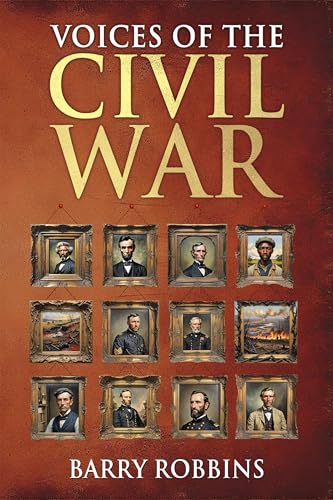
Voices of the Civil War (Voices of History Book One) by Barry Robbins

I received a free copy of this book in exchange for a fair and honest review. All opinions are my own. 

Author Barry Robbins shares a unique look into the history of the U.S. Civil War through narrative storytelling in the book “Voices of the Civil War”, the first book in the author’s Voices of History series.

Advertisements

The Synopsis

“Voices of the Civil War” offers a revolutionary approach to experiencing America’s defining conflict. This groundbreaking work brings the Civil War to life through meticulously crafted first-person narratives, imagining the thoughts and words of those who lived through this tumultuous era.

From the highest halls of power to the bloodiest battlefields, readers witness the war unfold through the eyes of presidents and generals, soldiers and civilians. Each chapter presents a unique voice, offering intimate perspectives on key moments and decisions that shaped the course of history. Feel the agonizing weight of command, the terror of battle, the hope of emancipation, and the anguish of a nation torn apart. “Voices of the Civil War” goes beyond mere facts and dates, plunging readers into the raw emotions and moral complexities of America’s bloodiest conflict.

This isn’t just a retelling of history—it’s an immersive journey into a nation at war with itself. Prepare to experience the Civil War in a whole new way, through voices that bring the past vividly to life.

Halloween Spooky 20% Off Sale!

The Review

What an engaging and thoughtful approach to one of the United States’ most brutal and morally vital wars. The heartbreak and divide this book explores in the Civil War (before, during, and after the battles fought) lets the readers experience the tumultuous time in American history like never before. The imagery in the author’s writing style and the atmospheric nature of the writing draws the reader in, immersing the reader into the lives of those living through these harsh realities in a way that feels real and relatable all at once.

The story’s history, setting, and narrative became the heart of this story. The transformative nature of the stories being told and the morality around the central conflicts of this war became about allowing the reader to think critically about the war while also feeling the emotional stories being told. The first-person narrative each chapter brought and the variety of different people each chapter captured, from everyday Americans on both sides of the war to historical figures and more, gave a well-rounded conversation starter for readers to engage in surrounding the Civil War.

The Verdict

Remarkable, passionately written, and thoughtful in its approach, author Barry Robbins’s “Voices of the Civil War” is a must-read history meets historical fiction book. The blend of first-person storytelling to get into the mindset of Americans during this war and the use of speculation amongst scholars allowed the reader to get both an entertaining yet educational look at this era and, more than anything, feel the emotional and mental weight of what this war cost and what people were fighting for. If you haven’t yet, be sure to grab your copy today!

Rating: 10/10

Advertisements

About the Author

Barry Robbins is a celebrated author, having penned five notable satirical works that earned him three gold medal awards, and the first book in his ‘icons’ series. With a 26-year tenure as an accountant for an international firm under his belt, he took a bold leap, relocating to Finland’s tranquil shores. There, amidst its enchanting landscapes and in the company of his Finnish wife and two beautiful daughters, he found a renewed passion for storytelling and mastered the subtle intricacies of expatriate life (including, notably, the fine art of taking out the trash). Now, from his home in Florida, Barry crafts tales that are both engaging and thought-provoking, adding to his diverse literary canvas.