I received a free copy of this book in exchange for a fair and honest review. All opinions are my own.
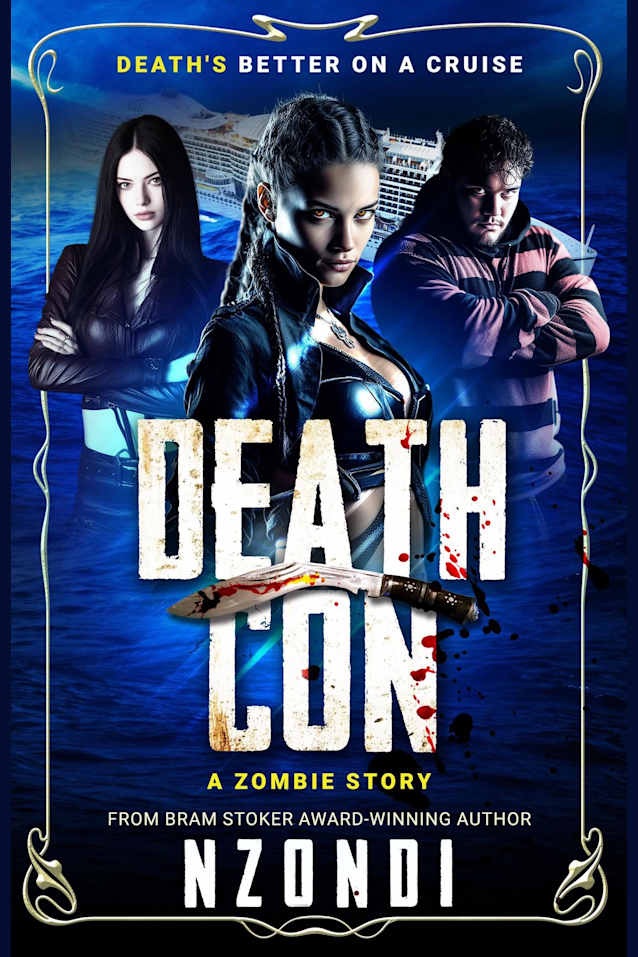
A young woman must stop an extinction event and contend with her darker half in author Nzondi’s “Deathcon: A Zombie Story.”
The Synopsis
Love survived death—now it has to survive the apocalypse.
On the second anniversary of her boyfriend’s death, Cozy Coleman, a rising star in a world where necromancy is mainstream, boards DeathCon, a horror-themed convention cruise where she and her two best friends—the Scream Teens—are hired as headline necro-tainment.
When a brutal she-wolf attack kills Cozy, she awakens reanimated, caught between life and something far darker. Her resurrection reveals an extinction-level virus beneath the Pacific—one that could turn the Hawaiian Islands into ground zero for an undead apocalypse.
As the ship locks down, a covert military unit arrives to contain the outbreak, led by a hardened operative Cozy recognizes instantly: the boyfriend she’s been mourning isn’t dead, but deep undercover. Furious at the lie yet still madly in love, Cozy is forced to fight alongside him as the ship descends into chaos.
With ravenous creatures overrunning DeathCon and time running out, Cozy must confront what she’s becoming—and decide whether love, trust, and her dangerous power are enough to stop the end of everything.
The Review
This was such a compelling and unique twist on the zombie apocalypse narrative. The balance of action and horror was thrilling to read and the compelling world building was astounding. The idea of necromancy being a source of influence and stardom was amazing and the infusion of culture was great to read.
The heart of this narrative was the rich character dynamics and the compelling mythos of the story. The way the author brought chilling horror and monsters to a more modern setting, and included things like the modern revitalization of cruises and social media influencers impact on our culture was fascinating. The emotional core of Cozy as a protagonist was in her loss and subsequent shock in finding her lost love alive again, and how their connection rises and falls back and forth as the story progresses.
The Verdict
Thrilling, compelling and entertaining, author Nzondi’s “Deathcon” is a must read occult horror story that readers will instantly be hooked by. The twists and turns of the novel and the dynamic character growth give readers a brilliant new world that is easy to get lost in. If you haven’t yet, please grab your copy today!
Rating: 10/10
About the Author
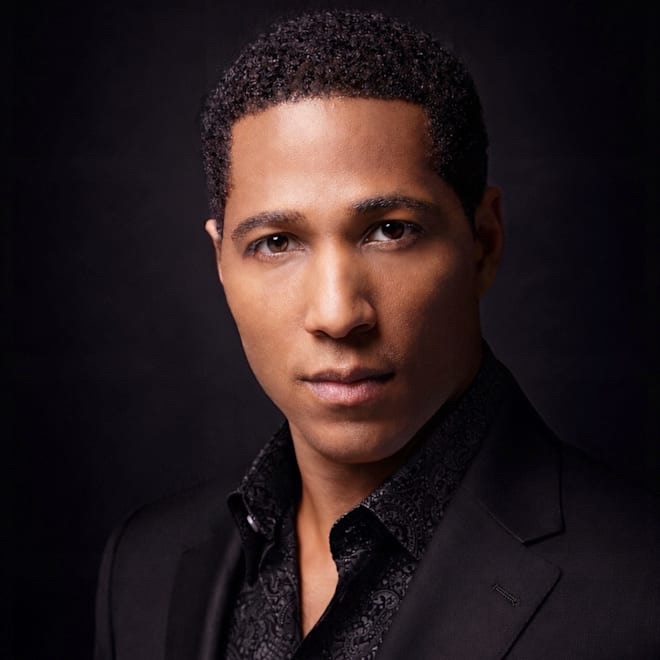
Nzondi (also known as Ace Antonio-Hall) is an award-winning American author whose work blends psychological horror with emotionally driven science fiction. He holds a BFA from Long Island University and is a former Director of Education for New York City schools and Sylvan Learning Center.
His debut novel, Confessions of Sylva Slasher, was published by Montag Press in 2013. In 2019, his science fiction–horror novel Oware Mosaic won the Bram Stoker Award® for Superior Achievement in a Young Adult Novel, making Nzondi the first African American author to win the award in a novel category.
Nzondi currently resides in Los Angeles, where he continues to write speculative fiction exploring trauma, identity, and survival.
I received a free copy of this book in exchange for a fair and honest review. All opinions are my own.
Explore the origins of the zombie apocalypse in author Jason Kristopher’s “The Walker Chronicles”, the fourth book and prequel to The Dying of the Light series.
Advertisements
The Synopsis
The zombie apocalypse didn’t begin on Z-Day—it’s been raging in secret for 150 years. From an 1872 military unit’s first walker encounter to Nazi experiments in concentration camps, from Cold War cover-ups to the final days before collapse, these classified stories reveal the conspiracy that doomed humanity. While the world slept, Unit 73 and AEGIS fought a shadow war against the walking dead. Some secrets should stay buried—but like the dead themselves, truth always rises.
The Walker Chronicles expands the universe of The Dying of the Light trilogy, uncovering the untold history of humanity’s fight against the walking dead. While David Blake’s journey in END, INTERVAL, and BEGINNING shows the apocalypse and its aftermath, these essential stories reveal the covert battles that raged for decades before Z-Day changed everything. Each tale deepens the conspiracy, heightens the horror, and illuminates the sacrifices made to keep humanity alive.
The Review
This was a fun and exhilarating addition to this incredible zombie horror series. The author does an amazing job of continuing to bring rich character dynamics to this universe while also implementing a historical fiction element to the mix. The action and horror of this zombie virus is perfectly brought to life through strong imagery in the author’s writing, and the short story aspect of the book’s formatting allowed the reader to fully experience the world in which this virus thrived.
The heart of this narrative was in the historical fiction aspect of the genre and the world building that took place. Each story in this collection helms from a different era of history, and one that was truly chilling was the 1940s, exploring Joseph Mengele and the way his real-life atrocities during WWII could have been implemented into the zombie virus world. The way these events played into the main series and how the virus eventually overcame the world, as well as the formation of the organization that has fought this virus for so long, was powerful and engaging.
The Verdict
Memorable, entertaining, and visceral, author Jason Kristopher’s “The Walker Chronicles” is a must-read historical fiction meets action horror novel and a great addition to the “Dying of the Light” series. The haunting imagery and fast pacing of each story, and the compelling characters that the author both introduces and expands upon, will keep readers enthralled through the book’s end. If you haven’t yet, be sure to grab your copy today!
Rating: 10/10
Advertisements
About the Author
Jason Kristopher is the award-winning author terrifying readers with zombies in THE DYING OF THE LIGHT, thrilling them with 1940s noir in LOCO MOCO, and harrowing them with boy-meets-gryphon-meets-robot adventure in WHEN IRON WAKES. With the love of his life and the dog that rescued him by his side, he plots his next traumatizing stories from Florida beaches.
1) Tell us a little bit about yourself. How did you get into writing?
I was born in the South Bronx. It was the late fifties/ early sixties. It was gang territory and everyone had to travel with their gang. My friends and I were into the Marvel comics, picking out our favorite superheroes to emulate. We drew out the figures, and I tried to write the next story to come. I guess I started writing fan fiction before it became fan fiction. I always had several stories running in my head and daily battles to fight.
2) What inspired you to write your book?
The Moth and Other Tantalizing Tales is a collection of short stories that encompasses about three decades of work. One day I was going through my file cabinet and decided I should publish some of these. I thought it would make a nice Christmas gift for my readers. It covers the different genres I have worked in and these stories are some of my best.
3) What theme or message do you hope readers will take away from your book?
That is hard to say because there are different themes and messages in each story. For example, Cold Storage is a precautionary tale about science and medicine not always working out for the better. While Antibody leaves the reader questioning ‘is the government’s use of science and medicine right if it serves the greater good’. The title story examines our idea of beauty and if people can change their behavior.
4) What drew you into this particular genre?
There are multiple genres in the book. I like to write in all of them. Usually, the story will dictate what genre it falls into.
5) If you could sit down with any character in your book, what would you ask them and why?
I would talk to Harry from The Moth and ask him why he didn’t just run. He let himself get pulled back into a world of crime right after getting out of jail. Was he really in love with Rachael? Was he trying to be Calliope’s hero? Or was he that afraid of what Blackie would do to him?
Advertisements
6) What social media site has been the most helpful in developing your readership?
I’m on Facebook the most. So, I guess they would be the most helpful. I post links to podcasts, interviews, plus any reviews I get there.
7) What advice would you give to aspiring or just starting authors out there?
Keep writing. So many write one book then sit back and wait for it to sell. After you write your first book start working on the next one. I usually have a couple of books in the works. Selling books is completely different from writing books. They are two different jobs, don’t get bogged down in the one and forget the other.
8) What does the future hold in store for you? Any new books/projects on the horizon?
I have to finish The Gemstone Series. I published The Ruby Cradle, the second book, June 2025. Now, I am working on The Diamond Warrior. I have a horror story in the works, The House of Sun and Shadows, it will be my first full length novel in that genre. And I have more short stories to publish. I think I’ll be busy in 2026.
Advertisements
About the Author
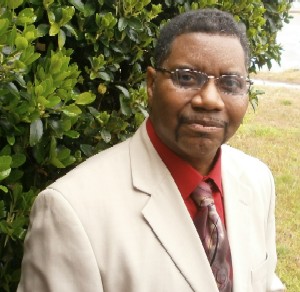
James L Hill, a.k.a. J L Hill, is a native New Yorker from the South Bronx, Fort Apache, of the turbulent 60’s.
He earned a degree in computer programming, his other love. A multi-genre author, his experiences seasoned his novels and the worlds he imagined.
James started RockHill Publishing LLC to publish his own work and give others access to the literary world.
The four-part adult urban crime series, The Killer Series, is complete. Killer With A Heart, Killer With Three Heads,Killer With Black Blood have all received five-star reviews.Killer With Ice Eyes, the final chapter of the boys from the Bronx, is available now.
He is currently working on a three-part historical fantasy Gemstone Series; The Emerald Lady is in publication to rave reviews. The Ruby Cradle and the third book, The Diamond Warrior, is coming soon.
I received a free copy of this book in exchange for a fair and honest review. All opinions are my own.
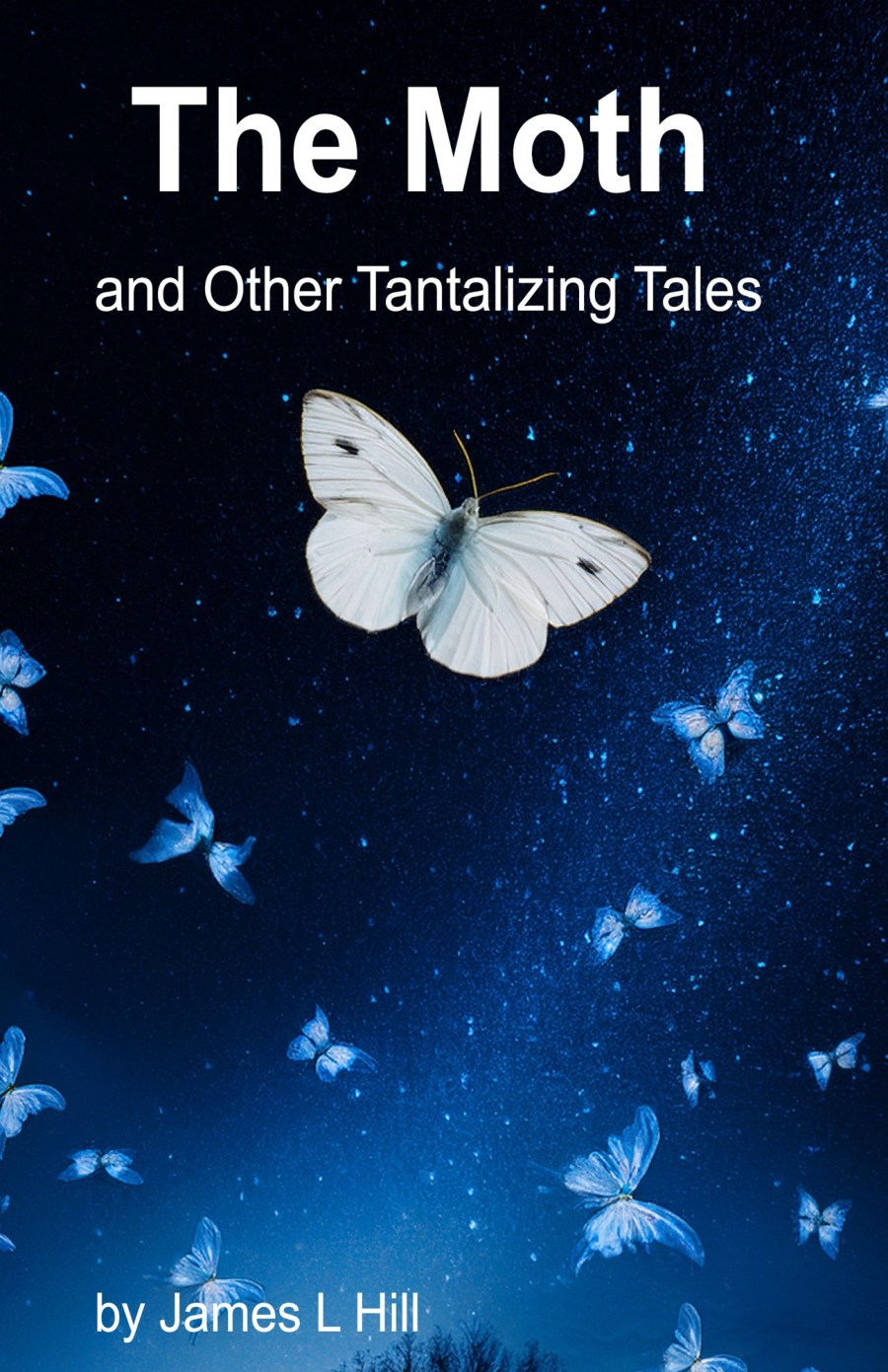
Author James L. Hill shares a powerful collection of short stories in the book “The Moth and Other Tantalizing Tales.”
Advertisements
The Synopsis
From the dark distant past to the far-flung fantastic future comes crimes of passion and hopeful heroes.
The world has fallen back into a more deadly Covid-19 pandemic. A journalist, Baron Beard, risks everything to uncover government secrets exposed by an internet troll known only as Veritas.
Harry, a brilliant but naïve computer hacker, finds himself drawn deeper into the underworld like a moth to a flame. Of course, there’s a woman holding the torch.
Dr. Energy has plans to save the world but only if he can avoid destroying it first. He’s 99% sure he can. Well, maybe 85%. But he still likes his odds.
You will be intrigued as you turn the pages and the plot twists in these eight amazing stories of mysteries, thrillers, and dystopian science fiction.
The Review
What a compelling and gripping collection of short stories. The pacing and world-building the author poured into the collection were astounding, with each story giving readers a chance to connect with the characters and feel the emotional weight of its consequences. The powerful imagery in these stories helped bring the grandiose, sci-fi elements to the narratives, while the character development grounded the characters, making for a truly balanced reading experience.
Yet at the heart of each story was a strong, thematic narrative that really stood out. The stories explored everything from man’s attempts to rewrite nature and the role of science versus religion, to a slave’s desperate escape to freedom and the cost that comes to those who enslave others, and so much more. The blend of science fiction, fantasy, and horror that the author introduces throughout the collection helps cement these characters and adds emotional depth, allowing the reader to invest in them so quickly.
The Verdict
Captivating, enthralling, and thrilling, author James L. Hill’s “The Moth and Other Tantalizing Tales” is a must-read short story collection. The twists and turns in each story, the heartfelt and compelling emotional beats each one hits, and the thought-provoking themes these stories encompass will stay with readers long after the collection ends, leaving them eager to explore more from this amazing author. If you haven’t yet, be sure to grab your copy today!
Rating: 10/10
Advertisements
About the Author
James L Hill, a.k.a. J L Hill, is a native New Yorker from the South Bronx, Fort Apache, of the turbulent 60’s. He earned a degree in computer programming, his other love. A multi-genre author, his experiences seasoned his novels and the worlds he imagined. James started RockHill Publishing LLC to publish his own work and give others access to the literary world.
I received a free copy of this book in exchange for a fair and honest review. All opinions are my own.
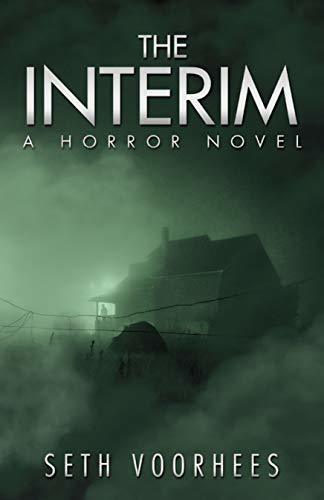
A group of youths must rally together to stop an unstoppable evil in author Seth Voorhees’s “The Interim.”
Advertisements
The Synopsis
In Cooper, South Dakota, the so-called “interim” lasts from October 20 at 10:05 p.m. until November 1 at 5:42 a.m. To Cooper’s residents, this chosen span of time makes sense as 10:05 was the time of the monster’s capture and 5:42 was the time of his death. Now, they are haunted by said creature, but only over the span of the interim.
The rest of the year in Cooper is utopia, but it’s paramount that its citizens remain isolated in their homes during the interim in accordance with rules over a hundred years old. All that is about to change. On a hot day in July of 1999, five children—Randy Larkins, Ty Thomas, Vin Dellowinsk, Darlene Ren, and Betty Clammin—form a bound.
Living in Cooper, their struggles are something more than those of the average adolescent. Due to social engineering, they’ve lived their lives in line with the threat of a terrible beast. With the interim looming, they band together. The children have had enough of the old ways. It’s time for the young to stand up and face the curse and defeat the monster that haunts their town.
THE REVIEW
Instantly, I was drawn to the rich characters and haunting world-building. In the wake of Stranger Things’ incredible finale and the need to fill the void it left behind, this story does an excellent job of capturing the dynamics that bring these young people together to face an overwhelming and terrifying force. The atmospheric nature of the evil these kids face, Leopold, and the way this small town became a character in its own right made the story feel vibrant and alive on the page, even in its deadliest and most haunting moments.
The relationships between the core cast of characters and the rich mythos the author builds for this small rural town, and Leopold was the true heart of the novel. The way these characters came together after facing a life on the fringes and found not only a bond but also a will to face unimaginable horror and stop a centuries-long horror that preyed upon their town was both enthralling and heartfelt, allowing readers to bond with these characters throughout the novel. The use of history and experimentation also gave the reader a chance to see how these kids’ minds worked and how far they would go to protect the town, its people, and each other.
The Verdict
Haunting, compelling, and entertaining, author Seth Vorhees’s “The Interim” is a must-read horror novel. The vibe and atmosphere of the novel, a Stephen King’s IT meets Stranger Things meets 30 Days of Night, will send chills down the reader’s spine, and each twist and turn of the story will have the reader on the edge of their seat, waiting for the next shoe to drop. If you haven’t yet, be sure to grab your copy today!
Rating: 10/10
Advertisements
About the Author
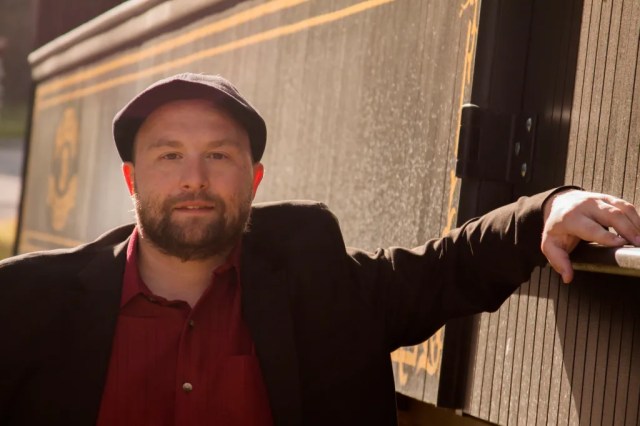
Seth Voorhees is a Black Hills Author. Living in the Black Hills of South Dakota. He enjoys drawing from his experiences as a social worker, particularly in adolescent development and mental health, to shape his characters and their journeys through human morality and challenges. He identifies himself as a dark fiction author because his writing spans over several genres. He resides in Rapid City with his partner and stepdaughter. He earned a Bachelor of Science degree with an emphasis in sociology and psychology from Black Hills State University.
I received a free copy of this book in exchange for a fair and honest review. All opinions are my own.
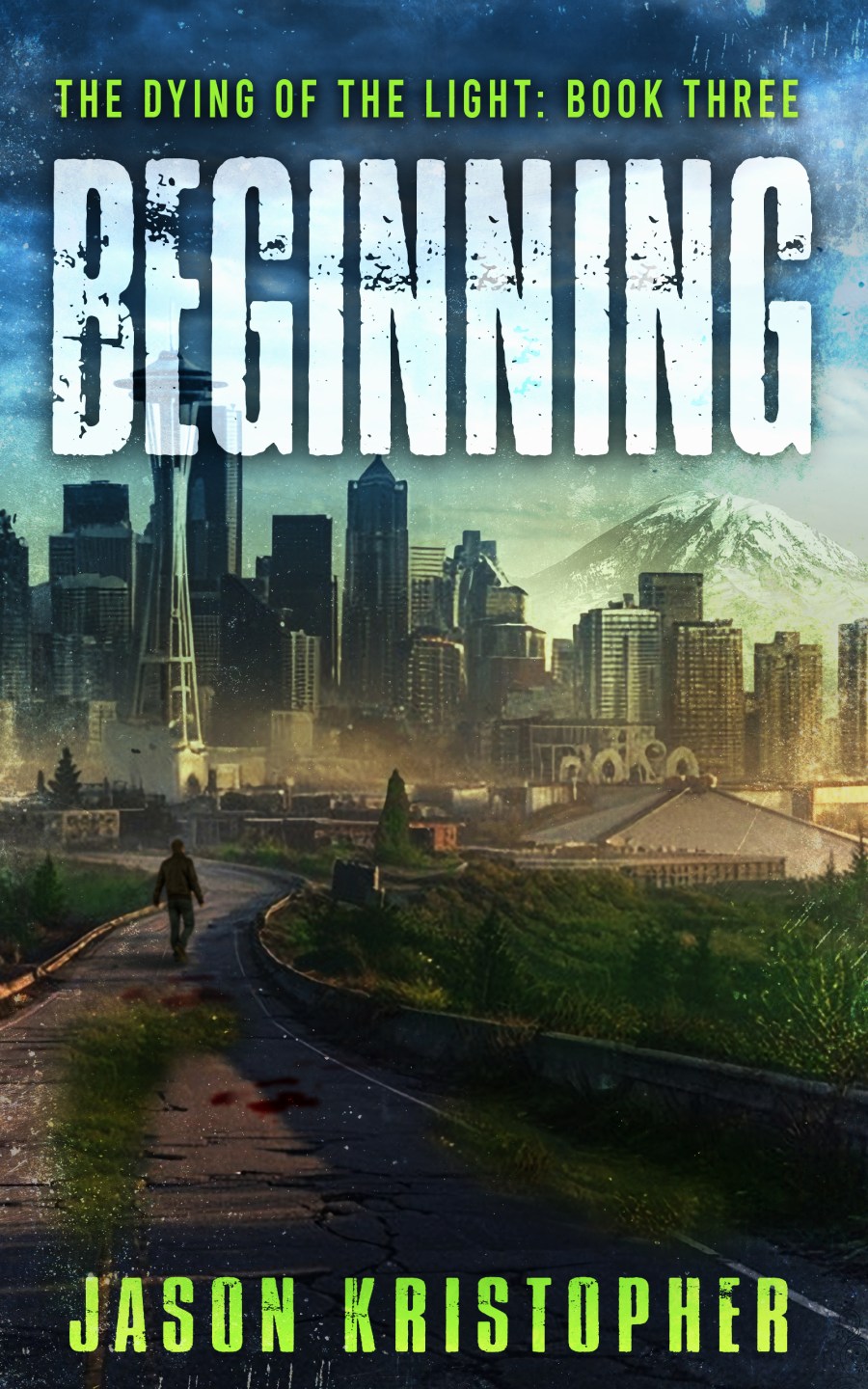
Humanity’s survivors attempt to reclaim the surface world but find new threats emerging in author Jason Kristopher’s “Beginning”, the third novel in the Dying of the Light series.
Advertisements
The Synopsis
The triumphant finale of the series called “the best since World War Z!”
He awoke and, for the first time in almost twenty-five years, remembered who he was.
Twenty years after Z-Day, humanity’s remnants prepare to reclaim the surface from underground bunkers. But as survivors venture upward, they discover a chilling truth: the world above has changed in ways no one anticipated.
When a new threat emerges that could trigger a second Z-Day, Eden Blake and the remaining heroes of AEGIS must make their final stand. In this race against extinction, the greatest enemy comes from within.
Heart-pounding action meets moral complexity in this explosive conclusion that fans of The Walking Dead and World War Z won’t be able to put down.
The Review
This was a compelling and gripping novel. The author did a fabulous job of creating a narrative that both allowed new readers into a harrowing world and paid off major storylines and character developments begun throughout the first two books of the series. The wealth of world-building and multiple POVs from various characters showcasing how humanity has divided and evolved in the years since Z-Day was both entertaining and thrilling, allowing readers to visualize the world the author created.
The heart of this narrative was the characters and their growth. From the first chapter, readers are on the edge of their seats as blasts from the past are revealed before the curtain is pulled back, taking them to a new time period to explore. The powerful imagery in the author’s writing style makes both the zombie and human threats the book reveals feel visceral, and the action more tense. The reader will instantly connect emotionally with the characters as they grow throughout the narrative.
The Verdict
Harrowing, enthralling, and compelling, author Jason Kristophers’ “Beginning” is a must-read zombie action and adventure thriller and a grand entry in the Dying of the Light series. The twists and turns in the narrative, the shocking revelations, and the emotional endings to many character arcs will stay with readers and leave them wanting more ways to dive into the vast world the author has developed. If you haven’t yet, be sure to grab your copy today!
Rating: 10/10
Advertisements
About the Author
Jason Kristopher is the award-winning author terrifying readers with zombies in THE DYING OF THE LIGHT, thrilling them with 1940s noir in LOCO MOCO, and harrowing them with boy-meets-gryphon-meets-robot adventure in WHEN IRON WAKES. With the love of his life and the dog that rescued him by his side, he plots his next traumatizing stories from Florida beaches.
1) Tell us a little bit about yourself. How did you get into writing?
I’ve loved stories for as long as I can remember. I grew up as a theatre and music kid – the sort who memorised Shakespeare before he could understand a fraction of the themes at play – and performing off-Broadway at thirteen probably quietly set my course. Writing fiction became the place where all my interests and obsessions converged. Even when I swapped the theatre performances for swordplay (I fenced at international level for several years), drifted through a series of martial arts, and later studied film and comparative mythology, I always returned home to the page.
I was sixteen when I began writing my first novel that would eventually see both completion and publication – oftentimes during maths lectures, which explains where I found the time – and I’ve never really stopped. These days I divide my time between several disparate fields – engineering in the family business, a new venture in agriculture and wine-making, and occasionally teaching writing workshops at university – but a love of storytelling remains the constant. It’s why I founded Endangered Poet Productions: a small, fiercely independent studio devoted to narrative art in all its forms. That’s the centre of gravity I always return to.
Advertisements
2) What inspired you to write your book?
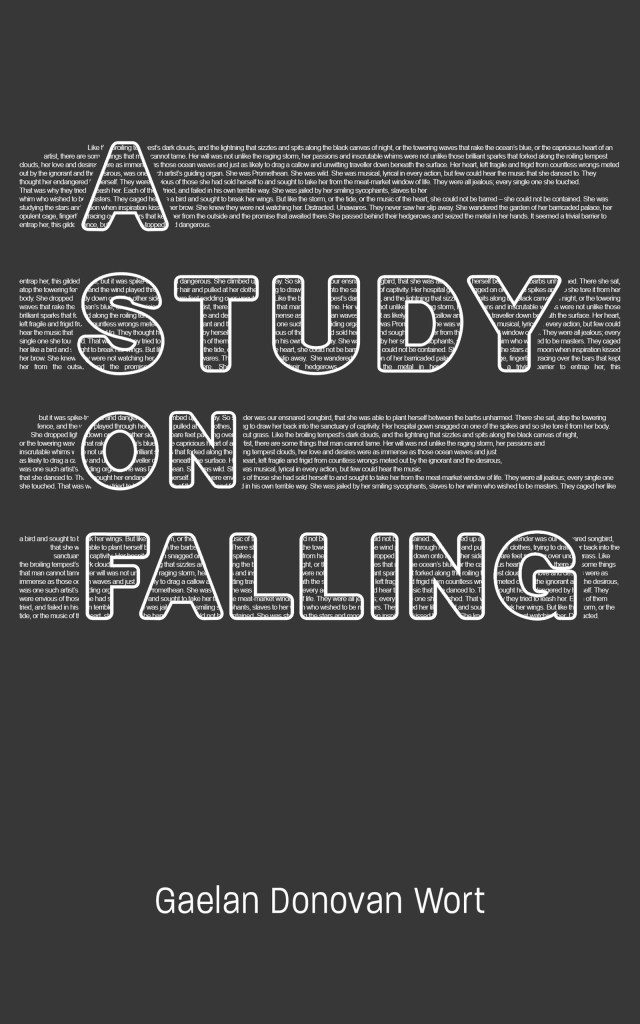
I began writing A Study on Falling while working on my honours thesis, drawing on narratology and comparative mythology, with a focus on the persistence of myth in contemporary storytelling. What struck me then is how little our myth-making impulse has changed, even in the increasingly secular culture of the modern West. We continue to shape our lives through narrative; allegory is how human beings construct meaning – it’s literally baked into the architecture of our brains. And we still reach instinctively for allegory whenever rote rationality inevitably fails to account for our fears, our griefs, or our sense of purpose.
That idea was the seed of the book. I wanted to explore the reciprocal relationship between fiction and the people who create and consume it: how stories shape us, and how we, in turn, inscribe ourselves into the stories that enter the cultural bloodstream. Filtering Henry Levi’s personal drama through the surreal metatext of The Shambling Lords felt like the most vivid way to show that exchange happening in real time; the author influencing the fiction, the fiction transforming the author – for good or ill.
My natural genre inclination leans toward the gothic, so some darkness inevitably crept in, but at its core the book is about something far simpler than the overt conflicts that unfold throughout: the human need to believe in something. To have a story to cling to, a myth to vest oneself in. The act of thought is a story told in the present tense; memory is a story told in the past; hope, fear, and anxiety are stories projected into the future. We build meaning through narrative. That gradual realisation was more than academic and it became the emotional engine that compelled the book into existence.
3) What theme or message do you hope readers will take away from your book?
The book is deliberately semi-open-ended, so I’m hesitant to prescribe a singular, overt lesson. If there’s something I hope readers come away with, it’s the idea that even when so much of life lies beyond our control, we’re never entirely powerless. We may not be able to choose the maze that we stray into, but we can choose how honestly we confront it.
One of the quiet touchstones for me was the Greek myth of Ariadne’s thread – the idea that there is always some guiding line back out of the darkness, if you’re willing to acknowledge the shape of the maze and depths of your descent first. Denial, fantasy, and self-deception only deepen the corridors. Clarity, however painful, creates orientation. The act of paying attention becomes an ethical choice.
At heart, the story suggests that meaning isn’t found by mastering the world, but by mastering the self. You can’t control the weather, the past, or the minds of others – but you can decide how you respond, what truths you refuse to look away from, and how you author the next page in the proverbial novel of your life. As meaning is constructed through allegory, it is through the stories that surround us that we learn how to refine our own in turn. That, to me, is where agency still lives.
4) What drew you into this particular genre?
I’ve never been bound to any single genre. While I have a natural affinity for gothic horror, I’m also drawn to exploring other modes and the spaces where genres overlap. In this case, part of the appeal was precisely that I was blending distinct traditions rather than settling into one.
What interested me most was the friction between the two narrative layers. A Study on Falling functions as literary fiction and psychological drama, while The Shambling Lords is dark fantasy and cosmic horror. Allowing those disparate genres to coexist and inform one another became a meaningful part of the book’s structure.
In that sense, writing the novel was also an exploration of genre itself: how different narrative forms shape our expectations, and how testing those boundaries can reveal new ways of telling a story.
Advertisements
5) If you could sit down with any character in your book, what would you ask them and why?
I’d choose to sit down with Henry Levi – a bit like holding up a mirror to a part of myself I haven’t visited in a while. But I wouldn’t ask him about the events of the book – he’s already told that story in his own way.
What I’d want to know is what came after. Whether things truly worked out for him once the narrative wrapped up; whether he managed to stay out of the maze, keep the light burning, and live honestly with what he discovered about himself. Not in any grand, redemptive sense, but in the ordinary, everyday way that actually matters.
I’d also ask him for an update on what he’s writing next. Admittedly, even I’ve been curious. An advance reader copy wouldn’t hurt either…
6) What social media site has been the most helpful in developing your readership?
Social media has never been my natural habitat, and I’ve learned not to pretend otherwise. I’m an analogue person at heart, far more comfortable with books, margins, and long-form work than with feeds and algorithms.
That said, as a studio we’ve come to recognise its importance, and we’re in the process of rebuilding our online presence more thoughtfully. You may start seeing more of me there – though I suspect I’ll always approach it a little more reluctantly than most.
7) What advice would you give to aspiring or just starting authors out there?
Read constantly and write more broadly than you think you should. Experiment, push yourself, try styles and voices far outside your comfort zone. Practical habits matter too. My personal work tradition: putting together a playlist that aligns with a project’s setting or emotional register. It helps to shut out distraction and keep you anchored in the work.
More broadly, I’d say learn to kill your darlings early, but also learn when not to. Listen to critique, but don’t let anyone talk you out of the plot, voice, or character that feels essential to you. A unique style is hard-won, so don’t compromise it lightly.
8) What does the future hold in store for you? Any new books/projects on the horizon?
My primary focus at the moment is the ongoing development of The Hollow Waltz – a long-form horror series conceived as a kind of “greatest hits” of the genre. Each entry stands alone, but together they form a subtle, shared mythology spanning different eras, cultures, and horror subgenres, from gothic and folkloric horror to cosmic, liminal and institutional dread. I have two exciting releases scheduled for February 2026, with another pair of brand-new titles already deep in development and nearing readiness for global distribution soon afterwards.
After that, I’m planning a brief shift away from horror to revisit Riftbreakers, a teenage and YA science-fiction comedy series I’m in the process of rebooting and re-releasing. It’s a project rooted in direct experience, aimed at that most elusive reader demographic of all: teenage boys. As a former one myself – and as someone with close friends who seem to have never really grown up – I’d sensed this gap for a while. More recently, through opportunities to mentor, teach, and simply listen, I’ve been able to ask teenage guys plainly why they aren’t reading. The answer is rarely hostility toward books themselves so much as it’s bewilderment. Much of what’s on offer feels either inaccessible, academically distant, or simply not written for them.
I understand that disconnect. I grew up on the classics, but I can see why works like The Odyssey or the Poetic Edda feel impenetrable as entry points for most young guys, just as I can see how much contemporary teen/YA fiction, centred on distinctly female interiority, just doesn’t appeal. Riftbreakers is my attempt to meet those readers where they are – with stories that are high-octane and unhinged – while still carrying the same foundational concerns about identity, responsibility, and higher meaning that have always shaped myth and literature.
Alongside the books, Endangered Poet Productions is also preparing to move further into interactive media later in the year. There are a few long-term projects in development that I shouldn’t divulge yet, but once our renewed online presence is up and running, we’ll be sharing previews and early material. Looking a little further ahead, we’re also exploring some unusual crossovers, like a fusion of literature and wine – because good stories and good shiraz are a match made in heaven.
All in all, it’s an unusually full creative season – and a very exciting one.
Advertisements
About the Author
Gaelan Donovan Wort penned his first novel, The Nature of Predation, at the age of seventeen, driven by a restless passion for storytelling that has since deepened into a lifelong craft. Since that early beginning, he has followed the shadows that gather between myth and memory, reverie and ruin – threads that continue to weave throughout his stories. His fiction drifts between genres – gothic horror, mythic tragedy, psychological thriller, speculative drama, and satirical science fiction – but is always drawn to the liminal, the haunted, and the human. Whether eerie or elegiac, his stories linger where the rational frays – and the unknowable begins.
I listen to music when I write. This column for example is being created with the help of—or perhaps in spite of—a piece of music that seems to be an unfortunate blend of God Save the King and The Moldavan National Anthem. But creating my new supernatural thriller, The Great Dick: And The Dysfunctional Demon, a thriller that’s able to laugh at itself, (one reader called it “Horrifying and Delightful!”) required an even more horrifying type of music. Music like:
Dust by Fleetwood Mac
Fleetwood Mac? Aren’t they much too pop for horror? Actually Dust was from an early incarnation of Fleetwood Mac, with no hits and lots of drug problems, not the later version of the group with lots of hits and even more drug problems. The lyrics to Dust come from a 1909 poem by Rupert Brook, who was no bundle of sunshine.
“When your swift hair is quiet in death And through the lips corruption Thrust to still the labor of my breath”
Midnight Mile by the Rolling Stones.
This haunting tune about a mad day on the road “with a head full of snow,” gets me picturing Keith Richards as the guitar playing, coked-up, walking dead. Perhaps not a huge stretch.
I Put a Spell on You by Screaming Jay Hawkins. Writing about obsession?
Here’s Screaming Jay screaming that he doesn’t care if you don’t want him. It doesn’t matter to him at all. He’s still yours. A non-returnable gift that threatens to keep on giving. She’s Not There by the Zombies
This one doesn’t make my list for the name of the group, but for the mood the music evokes. And the lyrics do have a touch of the sinister. In this British song, a mysterious woman is causing untold suffering, Like the singer, we can only wonder about how much she lied, with no way of telling “how many people cried.” I know what you’re thinking. But the song was released in 1965, considerably before Maggie Thatcher ever became Prime Minister. No Bravery by James Blunt
I thought this guy wrote love songs, but this one features shallow graves, burning houses, the odor of death, and dying families. I listen to this, then write horror to cheer up.
Tie a Yellow Ribbon by Tony Orlando. Not a horror classic, just a horrible song. I can’t listen to it without dreaming of tying a yellow ribbon as tightly as possible around Tony Orlando’s neck. And I understand the reasoning of a homicidal demon.
Last and in so many ways least, Black Sabbath by Black Sabbath
Apparently, Satan, with eyes of fire, is coming after the singer. That might explain the vocal. I think this one is from the Black Sabbath album Blue Skies, Sunny Days and Lollypops, or it may be from Kittens, Puppies and Other Easy Meals. To quote a key phrase, “Please, God help me.”
Take a listen. The singing sounds like a weasel caught in a meat grinder. The question this little ditty raises is more theological than musical. Namely: why would a loving God allow something like this to exist? And to somehow be a hit? When I first heard it on my car radio, I thought my transmission was disintegrating, but it was only humanity’s musical taste.
Check out Barry Maher’s dark humor supernatural thriller, The Great Dick: And the Dysfunctional Demon, onAmazon. Contact him and/or sign up for his newsletter at www.barrymaher.com.
I received a free copy of this book in exchange for a fair and honest review. All opinions are my own.
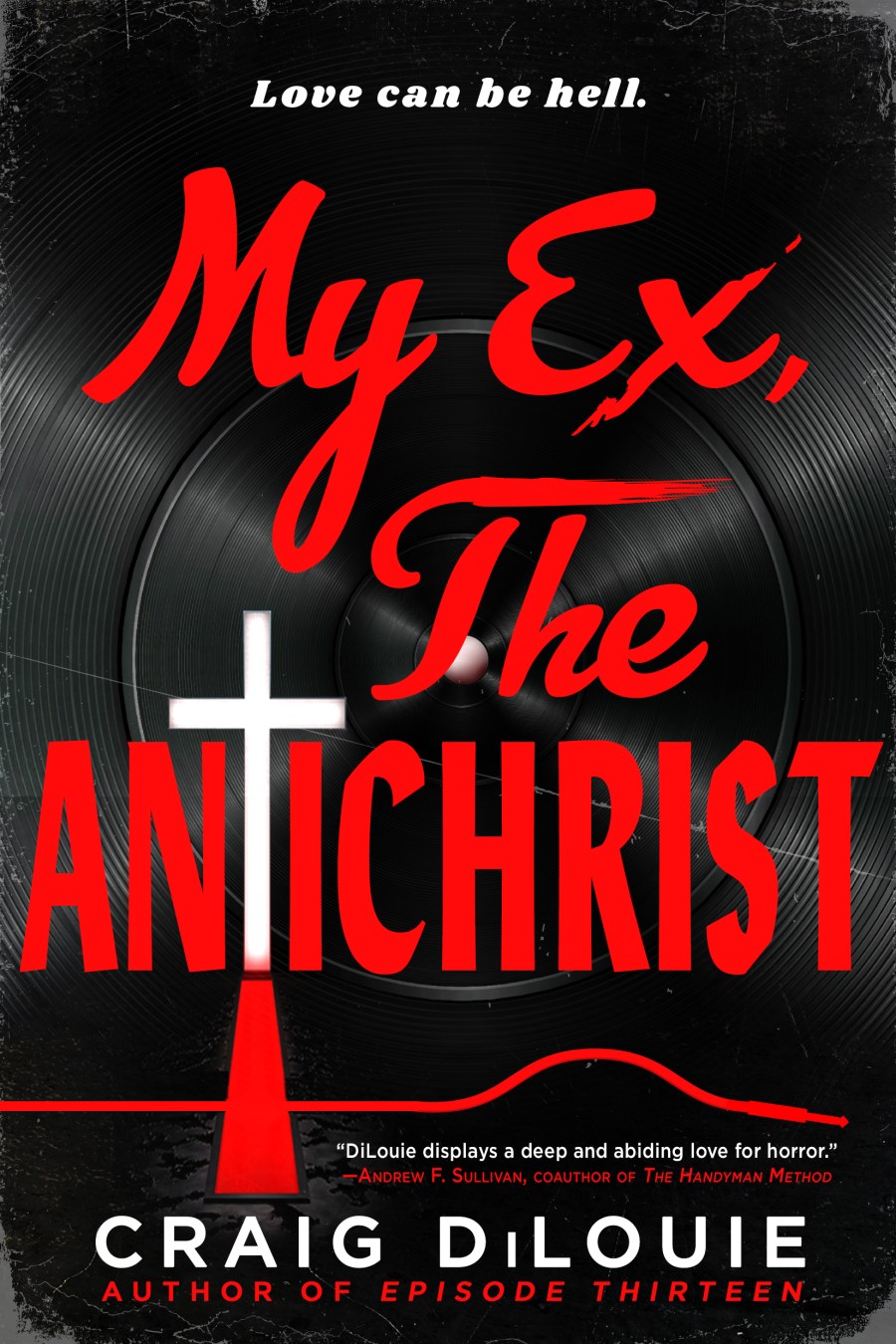
A notable rock band tells a shocking story of stardom, murder, and the apocalypse in author Craig DiLouie’s “My Ex, The Antichrist.”
Advertisements
The Synopsis
From rising star of horror Craig DiLouie comes a twisted tale of love, heartbreak, and the apocalypse. We all have bad exes. Lily Lawlor’s just happens to be the Antichrist.
“DiLouie brings his sharp mix of heart and horror to the end of the world with this clever story about rock and roll, relationships, and destiny.” ― Peter Clines, New York Times bestselling author
1998: Lily Lawlor and Drake Morgan form a punk band. Drake inspires faith in some. Fear in others. Lily is a believer.
2010: At the height of her stardom, Lily walks into a police station and confesses to a murder.
Now: The band has refused to talk to the press about their riotous past, Lily’s confession, or anything else. It’s been over a decade, but Lily has finally agreed to an interview. And the band is following her lead.
What follows is a story of prophecy, death, and apocalypse. A story about love found and love lost. A story about the antichrist. Maybe it’s all true. Maybe none if it is.
Either way, this is their story. And they’re sticking to it.
The Review
Immediately, I was struck by both the literal and metaphorical relationship between religion and rock music that the author tapped into. The battle between these two concepts has been a longstanding tension that generations have fought over, and the author tapped into that tension easily through the characters, especially the protagonist Lily. The detail and compelling story the author developed played well into this theme and gave readers a solid foundation for the rest of the book to come to life.
What really became the heart of the story was the characters, both as the driving force of the narrative and as the unique POVs of several characters that moved the story forward. The way the story is set up to be told, as if reading interview transcripts, was so profoundly fascinating and gave the reader so much more insight into who these characters were, to hear the story from their own perspectives. This was especially true of Lily, whose characterization of Drake as both the guitarist and the figure he became not only spoke to the apocalyptic genre that the story took on with the supernatural twist, but became a solid storytelling device that spoke to the impact toxic relationships can have overall on a person’s life and how destructive it can be to themselves and those around them.
The Verdict
Haunting, compelling, and entertaining, author Craig DiLouie’s “My Ex, The Antichrist” is a must-read supernatural occult horror thriller. The originality and creativity of the author’s writing style, the enthralling nature of the story and its characters, and the depth of emotion retelling this story had on their character arcs made this one book readers will find impossible to put down. If you haven’t yet, be sure to grab your copy today!
Rating: 10/10
Advertisements
About the Author
Craig DiLouie is an author of popular thriller, apocalyptic/horror, and sci-fi/fantasy fiction.
In hundreds of reviews, Craig’s novels have been praised for their strong characters, action, and gritty realism. Each book promises an exciting experience with people you’ll care about in a world that feels real.
These works have been nominated for major literary awards such as the Bram Stoker Award and Audie Award, translated into multiple languages, and optioned for film. He is a member of the HWA, International Thriller Writers, and IFWA.
At www.CraigDiLouie.com, you can find all of Craig’s major works, interviews, and hundreds of interesting blog posts. Be sure to sign up for Craig’s mailing list so you can stay tuned on new releases.