I received a free copy of this book in exchange for a fair and honest review. All opinions are my own.
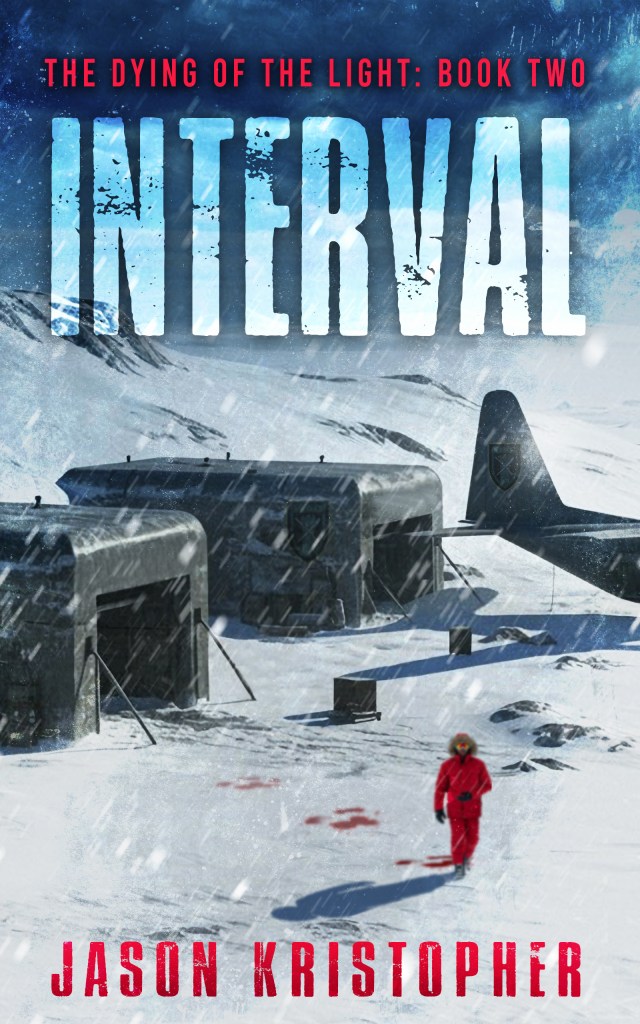
Humanity’s survivors must find a way of surviving not only endless undead walkers but the threat of starvation in author Jason Kristopher’s “Interval”, the second book in The Dying of the Light series.
Advertisements
The Synopsis
Return to the award-winning zombie series called “the best since World War Z!”
Becoming a zombie was much more painful than he had expected.
In a world devoured by chaos, survival hangs by a thread. Amidst the relentless onslaught of the undead, hope flickers dim. But beyond the horrors of the walkers lies an even graver threat. Massive bunkers crumble under unyielding assault, plunging into darkness.
Across icy wastelands, stranded scientists fight starvation’s cold grip. Can David Blake and the remnants of AEGIS rescue the salvation-bearing scientist from the frigid grip of Antarctica, or will humanity succumb to the merciless jaws of extinction?
Fans of The Walking Dead and Maberry’s The Dead of Night will love this action-packed, globe-trotting sequel. Don’t wait – grab your copy now!
The Review
This is a fantastic follow-up to the first book in this series, END, and capitalizes on the brutality and horror of the first book’s events by delving into the freezing depths of the Antarctic and the lengths humanity must go to survive. The balance the author finds in utilizing military protocol and language with the personal storytelling of the characters and their lives was as astounding as it was in book one, and the way the author explored how different militaries around the world responded to their own bases in the Arctic and how things advanced as the years wore on was so engaging from a reader’s perspective.
The world-building and action are so visceral and alive on the page, and the imagery is so compelling. The exploration of the effects the virus, aka the prion, has on the dead, mainly the reasons some become “runners” rather than “walkers,” is so enthralling. The way the author writes allows the pacing to feel punctuated and engaged in a fast-paced action thriller, keeping the reader invested throughout the entire novel.
The Verdict
Memorable, action-packed, and thrilling, author Jason Kristopher’s “Interval” is a must-read action horror thriller and a grand entry in the Dying of the Light series. The story is entertaining, the characters are relatable, intense, and emotionally driven, and the heartfelt, open-ended ending allows the reader to become fully immersed in this world and eager for the next entry in the series. If you haven’t yet, be sure to grab your copy today!
Rating: 10/10
Advertisements
About the Author
Jason Kristopher is the award-winning author terrifying readers with zombies in THE DYING OF THE LIGHT, thrilling them with 1940s noir in LOCO MOCO, and harrowing them with boy-meets-gryphon-meets-robot adventure in WHEN IRON WAKES. With the love of his life and the dog that rescued him by his side, he plots his next traumatizing stories from Florida beaches.
Please enjoy this special guest post from author Sherri L. Dodd
Advertisements
When I began writing the Murder, Tea, and Crystals Trilogy, I wanted the story to be authentic, and realized that I would need to reach beyond my own insufficient knowledge of modern-day paganism. Luckily, I had met a couple of witches at my local crystal shop and had recently hosted a Halloween party where the tarot reader informed me that she, too, was a witch. Three to share, and the latter gave me a taste of the lifestyle. Not wanting to go alone, I invited her to attend a Samhain event with me. Her response was, “Oh no. I don’t go to those things because everyone is always trying to out-witch each other.”
So, I found with today’s witchcraft movement. Like the Christian denomination, to be a witch is a very general term. When you say someone is Christian, you know they believe in one God, and Jesus as the son of God sacrificed himself for mankind. Voila—neatly wrapped in a nutshell. But fine-tuning leads to disputes, such as Catholics believe that Mary was a virgin, 7th Day Adventists hold Saturday as the Sabbath, and the Christian Scientist enforces healing through prayer, alone. Look at the holy wars which have shown everyone thinks it’s their way or the highway. If you think that is chaotic, try putting Neo-Paganism into a tidy catchall box.
First, there are many core belief systems—Celtic, Greek, Norse, and Roman Pantheons, to name a few. A witch can worship anyone from Hekate to Brigid to Saturn to your favorite Marvel character; he, that carries a big thick hammer. Further, sometimes you worship more than just one God or Goddess. You can worship two, three, or ten. Occasionally the many different deities are from the same source—in Hindu’s case, Brahman. That means, one witch may worship Kali, yet, the witch worshiping Ganesh is tapping into the same Hindu divine power. Finally, the priests of the Salem Trials probably roll in their tombs knowing that some Christians consider themselves witches through their ability to heal or manifest. This, I know, because my mother has shared that when she was a teen, my devout Baptist grandmother proclaimed herself “a witch for Christ.”
To me, this is all quite fascinating. I have studied different religions and philosophies since my early twenties, so witchcraft falls aptly into the subject. BUT, for some reason—feminist witches blame the oppressive patriarchy—witchcraft remains taboo. Even today, if you put a book entitled Green Witchcraft II on your coffee table or a copy of Modern Witchcraft on your nightstand, your housecleaner may start rumors that you worship the devil or are a nutcase who believes in magick. Either way, I have found that to be a misrepresentation of the today’s modern witchcraft.
Another challenge when writing about witchcraft is the reverence factor. While I respectfully pursue this venture, I believe, as with all measures of spirituality, I can only graze another person’s truth when writing about core belief systems. No matter what is written, some will agree, and some will want to write their congressman about the spread of false information. Luckily, being a redhead since long before it was cute, I have learned to ignore what others think of me or what I write, and this includes my thorough study of witchcraft. I laugh off the derision. Actually, now, I cackle.
Book Summary
At the age of eight, Arista Kelly was frantically swept up by her parents and whisked off to an isolated town in the California redwoods. Two days later, her parents were gone.
Now at the age of twenty-three, she has settled quite nicely into an eclectic lifestyle, much like her great aunt, and guardian since childhood, Bethie. She enjoys the use of herbs and crystals to help her commune with the energy and nature around her and finds pleasure in the company of her beloved pet, Royal. Usually quite satisfied with her mundane life high in the Santa Cruz Mountains, life becomes unsettling when a new recurring vision of an ominous tattoo as well as increased activity from the ghostly presence within her own cottage invade her once-harmonious existence.
But life in this mountain sanctuary takes an even darker turn when the body of Arista’s former classmate is found in the nearby river. As other young young women fall prey to a suspected serial killer, Arista realizes that the terror is coming to her.
The Review
This was such a compelling, gripping murder-mystery-meets-witchy-supernatural-horror YA thriller. The natural fusion of genres was so well done in this novel, and the visceral imagery between the gorgeous Santa Cruz mountains and the chilling murders that drive this narrative forward, all come together to create a stunning blend of romance/fantasy meets YA supernatural occult horror read that is intense and inviting all at once.
The heart of the narrative is really the character dynamics. Arista is a compelling protagonist, taking the reader on a personal journey of growth as she goes from a studious, harmonious witch connected to the natural world around her to a strong, powerful young woman who is thrust into a shocking mystery and uncovers new abilities and secrets she never thought possible. The small-town setting becomes a character in itself, adding depth to the unfolding mystery and significantly elevating the tension and atmosphere with each chapter.
The Verdict
Thrilling, compelling, and entertaining, author Sherri L. Dodd’s “Murder Under Redwood Moon” is a must-read novel. The twists and turns this story takes, the slew of suspects that keep the reader engaged as the plot unravels, and the monster at the end of the book are all revealed. The compelling character dynamics will keep readers on the edge of their seats and eager for the next entry in the series. If you haven’t yet, be sure to grab your copy today!
Rating: 10/10
Advertisements
About the Author
Sherri was raised in southeast Texas. Walking barefoot most days and catching crawdads as they swam the creek beds, she had a love for all things free and natural. Her childhood ran rampant with talk of ghosts, demons, and backcountry folklore. This inspired her first short story for sale about a poisonous flower that shot toxins onto children as they smelled it. Her classmate bought it for all the change in his pocket. It was not long after that her mother packed the two of them up and headed to the central coast of California. She has ping-ponged throughout the area ever since.
Her first real step into writing was the non-fiction fitness book, Mom Looks Great – The Fitness Program for Moms published in 2005, and maintaining its accompanying blog. Now, transmuting the grief of her father’s passing, she has branched into Fiction, specifically the genre of Paranormal Thriller with generous dashes of Magick Realism! Her Murder, Tea & Crystals Trilogy released book one – Murder Under Redwood Moon – in March 2024. Book two – Moonset on Desert Sands – released in March 2025, and the final book in the series – Hummingbird Moonrise – became #1 New Release in Occult Supernatural on Amazon in October 2025!
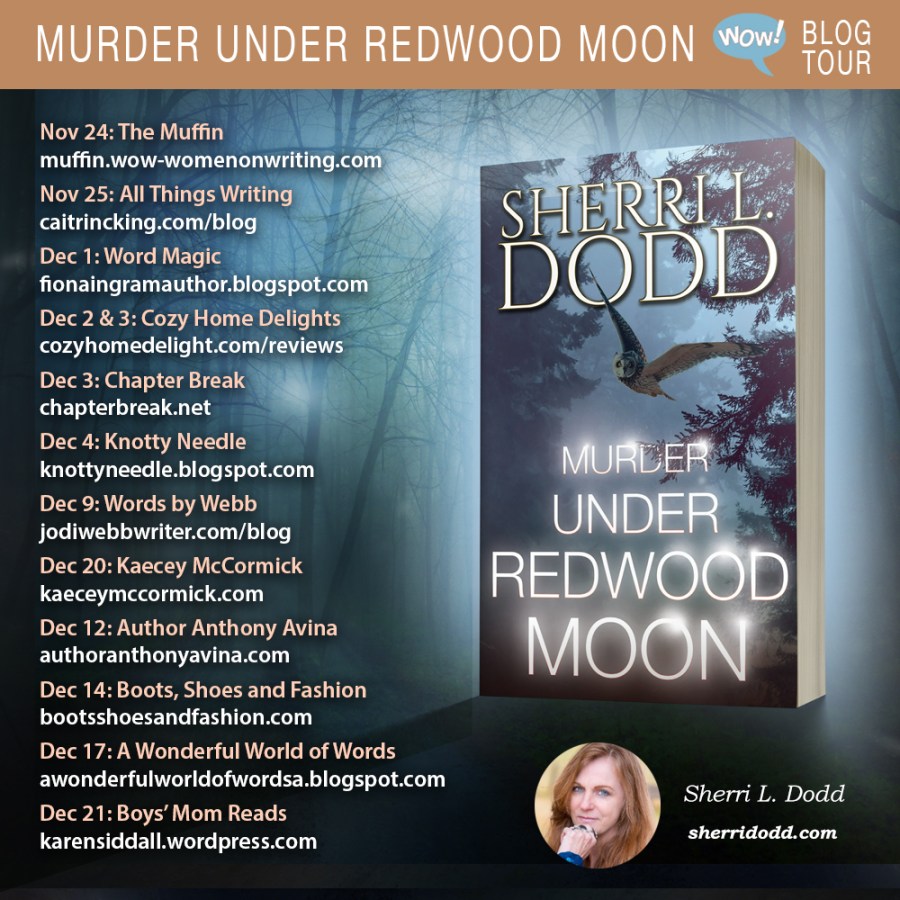
Join us as we celebrate the launch of the the first book in Sherri Dodd’s Murder, Tea & Crystals trilogy: Murder Under the Redwood Moon. Read an interview with the author and enter to win the whole trilogy. Two winners!
I received a free copy of this book in exchange for a fair and honest review. All opinions are my own.
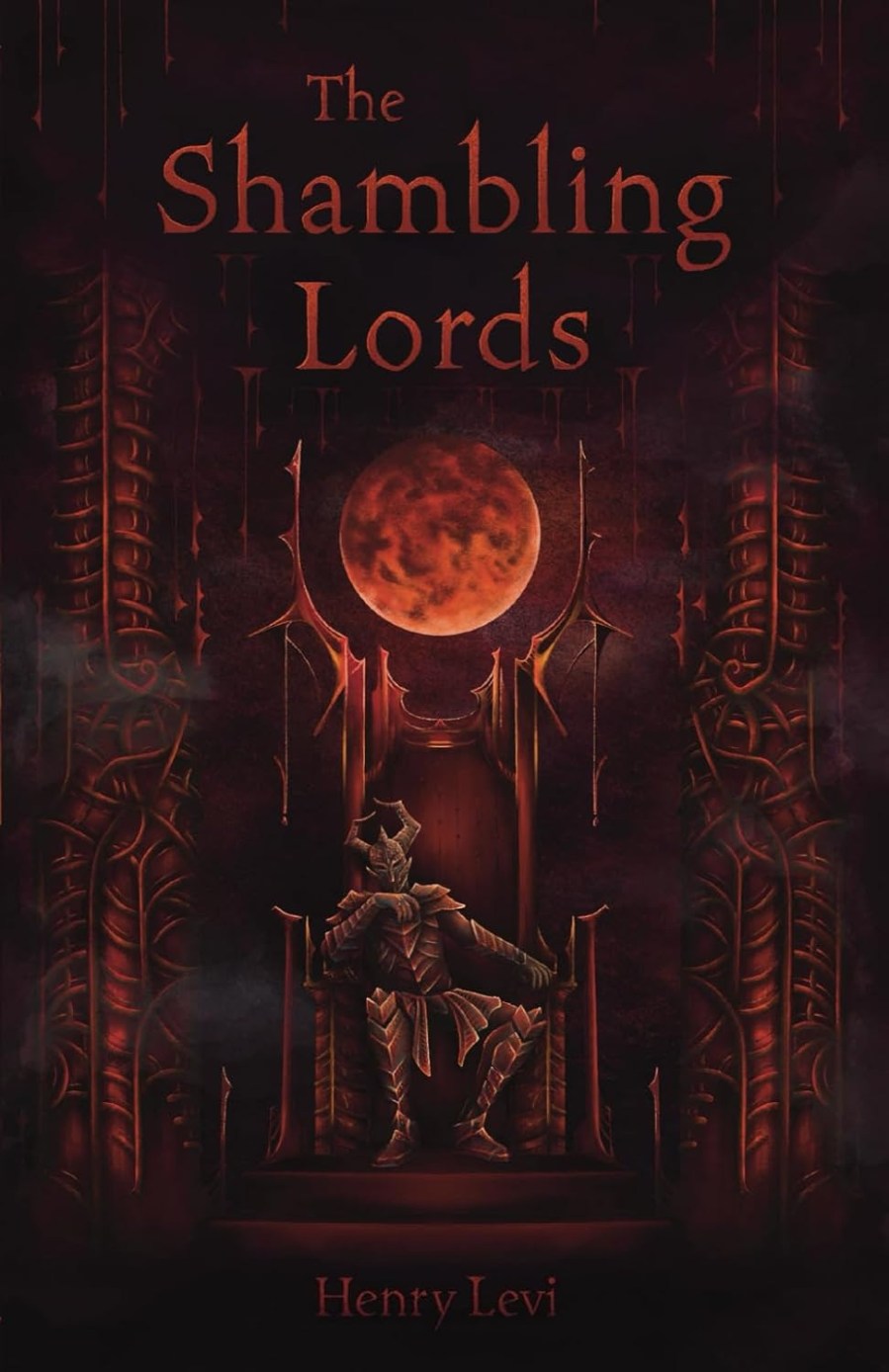
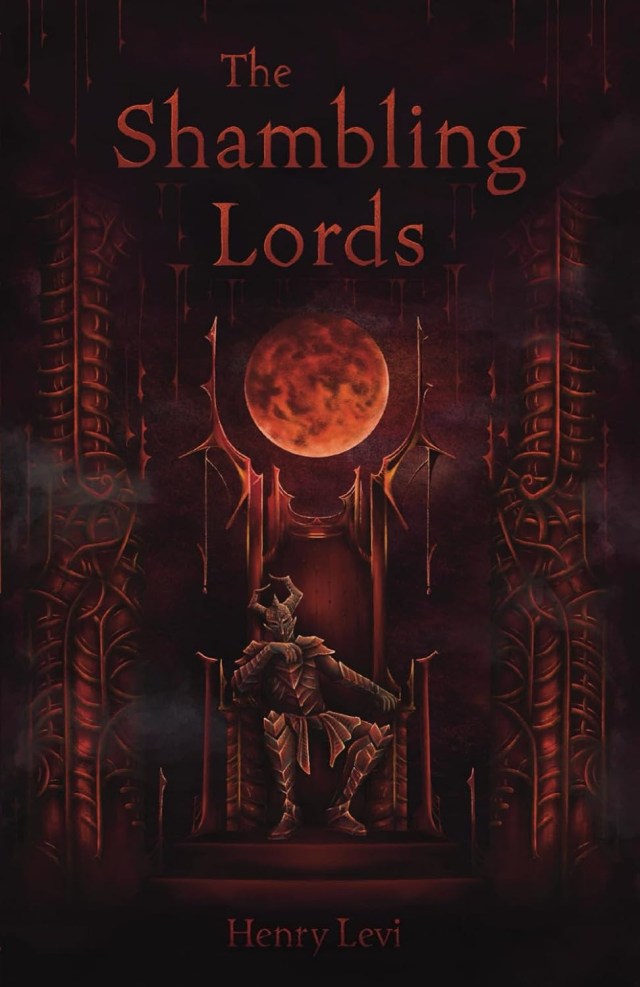
A king becomes desperate to save a kingdom caught in a blood plague that has warped everyone and everything in author Henry Levi’s “The Shambling Lords.”
Advertisements
The Synopsis
Transience has come to the undying lands of Amelbaran.
A plague of blood cripples the once-immutable kingdom of Kelcarosa, replacing beauty with decay.
The advent of this calamity, like nothing the immortal kingdom has ever known before, distorts even the incontrovertible Nobles of the Scarlet Court, stealing away the righteous instincts of these great custodians, warping their sensibilities and making shambling monsters, debauched and dangerous, of those who had once been hailed as heroes.
Only the New King seems to remember the grandeur that once was theirs, and in reverence to all that was, he seeks to undo all that is.
This is the King’s requiem; the legend of the end of that which had been undying, the corruption of that which had been consecrated, the fall of that which had stood most high.
The Review
This gritty, dark-toned fantasy novel was the perfect blend of horror and dark fantasy, bringing a rich new world and kingdom to life in vivid detail. The visceral imagery and haunting atmosphere that the author exudes in the story, as this plague decimates the land and begins to creep into the once majestic city, is thoughtfully written into the narrative, effortlessly conjuring up a feeling of unease and despair that the characters are hit with, as well as a physical sensation of grime and grit in this chilling world.
Yet it was the fast pacing and impactful themes the story seemed to embody that made this narrative feel so engrossing. The King, an antihero in this story, is steadfast in his view of his people’s failure and the kingdom he once loved so deeply, and, through hardship and struggle, fights to make his mission succeed, no matter the cost. The story reflects the loss of what was once good in a person’s life, and sometimes the inevitable realization that it cannot be recovered. Instead, all we can do is move on from that loss and start anew, a fitting theme the King embodies as he sees the plague of mortality plaguing his immortal kingdom and the need to start over.
The Verdict
Viscerally written, compelling, and thoroughly enthralling, author Henry Levi’s “The Shambling Lords” is a must-read dark fantasy and horror novella. The haunting, atmospheric tale of betrayal, loss, and rebirth takes readers on an emotional rollercoaster, and the depth of the world-building the author uses to convey this theme is remarkable. If you haven’t yet, be sure to grab your copy today!
Rating: 10/10
Advertisements
About the Author
Best known within the pages of other tales, acclaimed writer Henry Levi first made his name with the razor-edged prose of a bestselling crime thriller trilogy, though he has since outgrown the confines of any single genre.
In A Study on Falling, Levi emerged as the sharp-tongued voice behind the Alistair Black series, a sudden success that vaulted the then-unknown author into global stardom — only to be followed by a spectacular unraveling, marked by public feuds, private bitterness, and a much-publicized retreat from the literary stage.
Now, after a tumultuous hiatus steeped in further scandal, Levi returns: unapologetically eclectic and unfashionably sincere, having finally beaten back the jaded nihilism and acrimonious apathy that had once defined him.
Returned to writing on his own terms, Levi’s recent works are darker, stranger, and far more personal. The extent of his acclaim depends, as always, on who you ask. Whatever else may be said, he is writing again.
1) Tell us a little bit about yourself. How did you get into writing?
I’m Quico Vicens-Picatto, an illustrator and writer with more than a decade of experience in the tabletop gaming industry, where I’ve created character designs, full-color illustrations, and book covers. Writing is something I’ve always wanted to do, but for many years I only did it privately—crafting stories and adventures to play with my friends. A little over two years ago, I began publishing my own Call of Cthulhu scenarios, and now I’ve released my first novel, which feels like the natural next step in my creative journey.
Advertisements
2) What inspired you to write your book?
I was inspired by the cosmic horror of Lovecraft and other authors in the genre, blending that influence with the great questions of space exploration and philosophy—what it means to exist, to confront the unknown, and to realize our insignificance in the vastness of the universe.
3) What theme or message do you hope readers will take away from your book?
The central theme of the book is the human mind’s incapacity to truly comprehend what lies even within our own solar system. I wanted to explore that limit of understanding—the moment when reason collapses before the unknown. To express this idea, I created an original kind of threat, something that feels alien not just in form but in concept, avoiding the usual tropes of the genre in order to evoke genuine strangeness and unease.
4) What drew you into this particular genre?
I got into cosmic horror after reading Lovecraft, which, given my natural curiosity, instantly captivated me. I love imagining other worlds that embody the idea of natural hostility, but from perspectives far removed from the usual ones. To me, it’s a game of imagination—one that challenges and expands the mind by forcing it to confront what it can’t fully grasp.
5) If you could sit down with any character in your book, what would you ask them and why?
I would sit down with Isabel and ask her about the occult secrets she has uncovered throughout her career as a priestess of a dark deity.
Advertisements
6) What social media site has been the most helpful in developing your readership?
I’d say Instagram.
7) What advice would you give to aspiring or just starting authors out there?
To begin with, what I did was stop wasting time trying to get someone from a publishing house to believe in my work, and instead, I self-published. Time is far too valuable to waste on publishers who, most of the time, are simply going to ignore you.
8) What does the future hold in store for you? Any new books/projects on the horizon?
Yes, I’m deep into the manuscript of my second novel, tentatively titled Ghatanothoa, the Forgotten One. Set in the 1990s, it follows two young police detectives who stumble upon a case that slowly drags them into the hidden depths of the Cthulhu Mythos—an investigation that will blur the line between reality and madness, and force them to confront something far older than humanity itself.
Advertisements
About the Author
Quico Vicens-Picatto is a writer and illustrator who has spent much of his life creating worlds where horror, fantasy, science fiction and the inexplicable intertwine in an eternal flow as irrational as human existence itself. His work, both literary and visual, is born from the drive to always go one step further: beyond what is established, comfortable, or safe.
With more than 10 titles turned into best sellers for the acclaimed Call of Cthulhu role-playing game—such as At the Gates of Carcosa, The Abyss in Their Eyes and Ghatanothoa, the Forgotten One—he has established himself as an independent voice within cosmic horror role-playing, seeking to transcend the safe spaces in which cosmic horror usually moves, delving into the realms of philosophy and combining them with the great themes of the genre.
Influenced by Lovecraft, DeMaio, Spare, Moebius, Faber-Kaiser, Bakunin, Moore, Jodorowsky, Campbell, and fiercely iconoclastic, Vicens-Picatto writes for those who seek questions rather than answers. He does not believe in pure genres, unmovable rules, or doing things “the way they should be done.” He believes in vertigo, in mystery, and in the need to challenge reality itself when it seems to go no further than the prevailing and decaying social conventions of our time.
I received a free copy of this book in exchange for a fair and honest review. All opinions are my own.
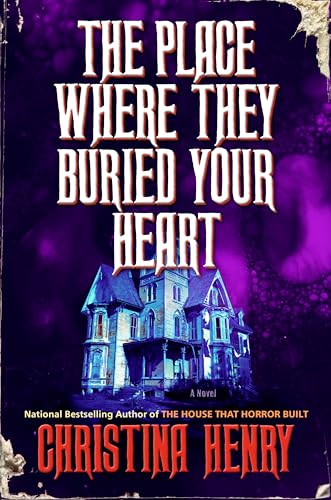
A woman must confront the evil that rocked her childhood and still haunts her street in author Christina Henry’s “The Place Where They Buried Your Heart.”
Advertisements
The Synopsis
A woman must confront the evil that has been terrorizing her street since she was a child in this gripping haunted house novel from the national bestselling author of The House That Horror Built and Good Girls Don’t Die.
On an otherwise ordinary street in Chicago, there is a house. An abandoned house where, once upon a time, terrible things happened. The children who live on this block are told by their parents to stay away from that house. But of course, children don’t listen. Children think it’s fun to be scared, to dare each other to go inside.
Jessie Campanelli did what many older sisters do and dared her little brother Paul. But unlike all the other kids who went inside that abandoned house, Paul didn’t return. His two friends, Jake and Richie, said that the house ate Paul. Of course adults didn’t believe that. Adults never believe what kids say. They thought someone kidnapped Paul, or otherwise hurt him. They thought Paul had disappeared in a way that was ordinary, explainable.
The disappearance of her little brother broke Jessie’s family apart in ways that would never be repaired. Jessie grew up, had a child of her own, kept living on the same street where the house that ate her brother sat, crouched and waiting. And darkness seemed to spread out from that house, a darkness that was alive—alive and hungry.
The Review
One of the most chilling and engaging horror reads of 2025, author Christina Henry crafted a narrative that felt both horrifying and thrilling. The cosmic horror tone the story took on as the threat the house represented grew ever stronger, and the haunting imagery of the story itself, especially the grizzly deaths the house brought to life on the page, made it so enthralling and easy to get lost in.
The heart of this narrative lay in its dynamic character development. Much in the vein of Stephen King’s It, Stranger Things, and even a bit of The Haunting of Hill House, the iconic setting of the haunted house and the rich way the city of Chicago, especially this neighborhood, comes to life on the page blended that unsettling atmosphere with otherworldly vibes. Yet it was the relatability of the characters, especially the protagonist, Jessie, from her angsty teen years, that carried those horrific days through to the headstrong and resilient young woman who became a single mother and the only hope against an unstoppable evil.
The Verdict
Haunting, thrilling, and entertaining, author Christina Henry’s “The Place Where They Buried Your Heart” is a must-read horror novel of 2025. One of the best reads of the year, this story oozes with dread and creates such powerful imagery that the scenes of this book will stay with readers much in the same way Pennywise has for many horror fans around the world, and leaves readers on the edge of their seats the entire novel. If you haven’t yet, be sure to grab your copy today!
Rating: 10/10
Advertisements
About the Author
Christina Henry is a horror and dark fantasy author whose works include GOOD GIRLS DON’T DIE, HORSEMAN, NEAR THE BONE, THE GHOST TREE, LOOKING GLASS, THE GIRL IN RED, THE MERMAID, LOST BOY, RED QUEEN, ALICE, and the seven book urban fantasy BLACK WINGS series.
Her short stories have been featured in the anthologies CURSED, TWICE CURSED, GIVING THE DEVIL HIS DUE and KICKING IT.
She enjoys running long distances, reading anything she can get her hands on and watching movies with samurai, zombies and/or subtitles in her spare time. She lives in Chicago with her husband and son.
1) Tell us a little bit about yourself. How did you get into writing?
I’m Barry Maher and I may be the only horror novelist who’s ever appeared in the pages of Funeral Service Insider. In my misspent youth, my articles were featured in perhaps a hundred different publications and, in order to eat, I held nearly that many different jobs. Sometimes he lived on the beach. Not in a house on the beach. On the beach. With the sand and the seagulls.
Three hours into a truly excremental job—standing on a roof in the rain, holding the frayed cord of a toilet de-rooter—I thought I hit on a way for my writing to support me. I’d simply write a best-selling, critically-acclaimed novel. Think Sherlock Holmes meets Hamlet, if Ophelia was oversexed, homicidal and undead.
Surprisingly (to me anyway) that plot didn’t work out. But it got me to quit the rooter company. And eventually it led to my first novel, Legend. Which somehow—even I’m not sure—led to me telling my stories around the country and around the world, and to having an actual bank account. And ultimately toThe Great Dick: And the Homicidal Demon. Which led to me doing this interview with author Anthony Avina.
Advertisements
2) What inspired you to write your book?
I was speaking on an Asian cruise when I realized I could no longer figure out what the hands of the clock meant. The next day, during a presentation, I introduced the ship’s captain. Twenty minutes later I picked him out of the audience and asked him what he did for a living. (The uniform did look a tad familiar.) That same day, I gave up trying to understand foreign currency. Even American money was getting tricky. In Viet Nam, I handed a vendor two hundreds and a five for a $7.00 baseball cap. It was a very nice cap.
Back home, the first thing my doctor did was have me draw a clock face at ten to three. The second thing he did was take away my driver’s license. Then he sent me for an immediate MRI. The nurse there wouldn’t comment on the results, but when I asked where the restroom was, she said, “I can’t let you go in there alone.”
I explained that bathroom visitation was a particular expertise of mine.
“Like telling time?” she asked. “You need to talk to your neurosurgeon.”
“I have a neurosurgeon?” Just what I always wanted.
I also had a brain tumor—the size of a basketball. Or maybe the neurosurgeon said “baseball.” I wasn’t tracking too well just then. Still, I quickly grasped he was planning on carving open my skull with a power saw.
“I don’t really need to tell time,” I said. “Or I can just buy a digital watch.”
Everyone said my neurosurgeon—or, as I thought of him, “Chainsaw Charlie”—was brilliant. My problem was that I’ve spent my life around intelligent people, and I’ve always believed human intelligence was overrated. To me, on a scale of everything there is to know in the universe, the main difference between Einstein and Koko the Wonder Chimp was that Einstein couldn’t pick up bananas with his feet. (As far as I know.)
Still, I went under the knife—or in this case, the power saw. Maybe I had a seizure. The doctors weren’t sure. That might explain what happened. Because I came out of the surgery with Lady Gaga singing non-stop in my head and an unforgettably vivid story, like a memory of something that I’d just witnessed.
Reacting to the surgical intrusion, I suppose my brain could have given me a dream or a story, maybe even Citizen Kane or a nice rom/com or a few episodes of Seinfeld. But no, I got open crypts, bizarre spells, sudden death and the Ralph Lauren version of the Manson Family. “How did my operation go? Well, I’m did pretty well, but the people in my head—or wherever they were—they went through Hell.”
Lady Gaga went away after a day or so. But the story stayed with me. And when I was able, I spent a couple of years putting it all down, working it out, getting it just right. And that became The Great Dick: And the Dysfunctional Demon.
3) What theme or message do you hope readers will take away from your book?
To me, the message is the experience the reader goes through. Like any experience, it can change us, even if it’s just a little. The entire book is an attempt to generate that experience. To evoke one response or another. The response I’m after keeps changing—curiosity, anticipation, laughter, fear, dread, you name it. More than one reviewer has called The Great Dick: And the Dysfunctional Demon a rollercoaster ride. By the end, I would hope the response is understanding, satisfaction, and maybe even a tiny twinge of enlightenment.
4) What drew you into this particular genre?
I love to scare the hell out of readers and to scare myself while I’m doing it. Plus horror opens up wonderful opportunities for humor and satire. I love horror. I love suspense. I love humor. Putting all those together in an accessible, conversational style seems natural to me.
5) If you could sit down with any character in your book, what would you ask them and why?
That’s simple. I want to sit down with either the character who calls himself Steve Witowski or with Jonathan O’Ryan. I’d ask either of them the same two questions. What did they learn from what they’ve been through? And what would they do differently if they had the chance to do it all over again.
6) What social media site has been the most helpful in developing your readership?
Most helpful have been the bloggers and podcasters like you, Anthony, who’ve raved about the book. Your followers trust you. They know your track record. So what you and other bloggers and podcasters say has far more weight to your readers than what some unknown critic in a newspaper might say. We’ve got fifteen prominent authors who’ve raved about the book. But if Author Anthony Avina hated it, your readers wouldn’t buy it.
7) What advice would you give to aspiring or just starting authors out there?
Write. Turn on your computer or pick up your pen or finger paint it on the wall, but write. Being a writer is a job and you should treat it that way. Write and then rewrite. Then rewrite again. That’s the only way you get better.
If you wait around for inspiration, you’re still going to be waiting while thousands, literally thousands of other writers, are finishing their books.
8) What does the future hold in store for you? Any new books/projects on the horizon?
I’m currently working on a ghost story. A lawyer has just lost his wife after a marriage so troubled that—though he would hate to admit it—her death was actually a relief. Returning from her funeral, he finds her standing in the middle of their living room. After a moment, he realizes it’s a hologram. But there’s no projector and no sign that anyone has broken in.
Advertisements
About the Author
Barry Maher’s career has been anything but ordinary. He’s been an award-winning (if modestly so) poet, a magazine writer with bylines across the country, a speaker for some of the world’s largest corporations, and a man who once lived literally on the beach, seagulls and all. His syndicated column Slightly Off-Kilter and his darkly comic fiction reflect that same unpredictable spirit. Media appearances range from The Today Show to CNBC, with features in The Wall Street Journal and even Funeral Service Insider. Connect with him at BarryMaher.com or on Facebook.
I received a free copy of this book in exchange for a fair and honest review. All opinions are my own.
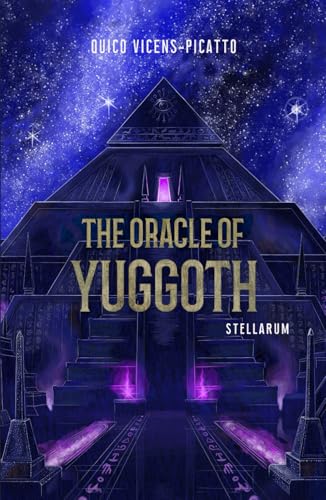
A small crew traveling through space encounters an ancient power that invades the mind and distorts reality in author Quico Vicens-Picatto’s “The Oracle of Yuggoth,” part of the Stellarum collection.
Advertisements
The Synopsis
✨A CHILLING TALE OF HOW VENTURING TOO FAR INTO SPACE CAN SHATTER THE HUMAN MIND.✨
What if the ego were not the solid psychic structure it appears to be here, in the safety of Earth?
🚀 Aboard the Persephone, the crew will discover that the real dangers of deep space are nothing like anything found on Earth: threats that invade the mind, erode identity, and distort reality itself.
This is a warning to all of humanity: a warning of an unimaginable fate, a silent threshold that must never be crossed and a godlike presence waiting beyond eons of darkness, hidden in the frozen confines of Pluto.
🐙 Perfect for readers of cosmic horror, space horror, psychological horror and the Cthulhu Mythos: a Lovecraftian descent into madness, chaos and the unfathomable.
Based on the bestselling Call of Cthulhu scenario of the same name, written by the same author.
The Review
The term cosmic horror takes on an all-new meaning in this stellar novella. The author did an incredible job of layering this horror novella with powerful imagery that not only brought these eldritch gods and creatures to life with ease but also captured the mind-blowing, altered states that the cast of characters experienced. The world-building was incredible, not only in terms of the Cthulu mythos that was infused into the fabric of this universe, but in the state of the universe itself between this secret organization known as the Brotherhood and the Free-Worlds coalition, and how humanity has evolved and grown in this near future.
The heart of this narrative was in the exploration of the main cast of characters as individuals and how they experienced this horror together. Kolab’s experiences living Harun’s life through shared memories hit really strongly in the narrative, and the compelling blend of action and spine-chilling, mind-breaking horror made this story really shine.
The Verdict
Haunting, terrifying, and compelling, author Quico Vicens-Picatto’s “The Oracle of Yuggoth” is a must-read cosmic horror novella. The author explores the limits of humanity and the mind, and how certain boundaries are not meant to be crossed, providing readers with a chilling experience that will linger long after the story concludes. If you haven’t yet, be sure to grab your copy today!
Rating: 10/10
Advertisements
About the Author
Quico Vicens-Picatto is a writer and illustrator who has spent much of his life creating worlds where horror, fantasy, science fiction and the inexplicable intertwine in an eternal flow as irrational as human existence itself. His work, both literary and visual, is born from the drive to always go one step further: beyond what is established, comfortable, or safe.
With more than 10 titles turned into best sellers for the acclaimed Call of Cthulhu role-playing game—such as At the Gates of Carcosa, The Abyss in Their Eyes and Ghatanothoa, the Forgotten One—he has established himself as an independent voice within cosmic horror role-playing, seeking to transcend the safe spaces in which cosmic horror usually moves, delving into the realms of philosophy and combining them with the great themes of the genre.
Influenced by Lovecraft, DeMaio, Spare, Moebius, Faber-Kaiser, Bakunin, Moore, Jodorowsky, Campbell, and fiercely iconoclastic, Vicens-Picatto writes for those who seek questions rather than answers. He does not believe in pure genres, unmovable rules, or doing things “the way they should be done.” He believes in vertigo, in mystery, and in the need to challenge reality itself when it seems to go no further than the prevailing and decaying social conventions of our time.
I received a free copy of this book in exchange for a fair and honest review. All opinions are my own.
A family’s journey to a better life takes a dark turn in author Lawrence P. O’Brien’s “Swallowing the Muskellunge.”
Advertisements
The Synopsis
London Oxford was prepared to do whatever it took to get to the promised land, but can he get his family safely across the border?
Young Abner Oxford has kept something of his mother’s. Something else needs what he has. It’s patient, can be quite disarming, and has a monstrous, fierce appetite. Abner and his family, along with a caravan of sleighs, are moving north.
The frigid cold and the blinding white have made the adults slow, weary, and numb. Very few questioned the drag marks in the snow or the mounting number of disappearances. Abner’s father felt like that—until it woke him up.
Fans of The Terror, the Fisherman, and El Norte will be hooked.
The Review
This was such a rich and compelling historical fiction meets folklore horror novel. The powerful imagery of the harsh, wild landscapes the characters traverse, along with the tension that fills the air in every chapter, kept readers on the edge of their seats. At the same time, the balance the author found between the violent supernatural events of the story and the need for survival that takes center stage in the narrative made this novel soar.
As a fan of fantasy, horror, and folklore storytelling, I loved the idea of the Wìsakedjàk being such a powerful force in the worlds of North American folklore and culture, and taking on a physical presence in the wilds of this setting. Yet it was the powerful themes of this book that stood out. The exploration of Manifest Destiny at the expense of indigenous people, as well as the struggle for identity, is what many people in the Black community felt when they attempted to create their own path in life, but felt the confines of labor for others take control. The exploration of freedom vs servitude, as well as the freedom of nature versus the conquest of land and the rights mankind has to dominate the world, made this narrative so compelling and thought-provoking.
The Verdict
Harrowing, dynamic character arcs and powerful themes, author Lawrence P. O’Brien’s “Swallowing the Muskellunge” is a must-read historical fiction meets folklore horror novel. The emotional resonance readers will have with these characters, the struggles they endure, and the depth of survival they must go through highlight the hardships of life in this era, while also bridging the gap by infusing supernatural terror into the narrative fabric that feels strangely natural. If you haven’t yet, be sure to grab your copy today!
Rating: 10/10
Advertisements
About the Author
Lawrence was raised across from a hill shadowing Black Rapids Creek in Ottawa, Canada. The towering toboggan hill fed an early appetite for challenge, tall tales and doing the impossible. The black forested river valley set his dreams.
1) Tell us a little bit about yourself. How did you get into writing?
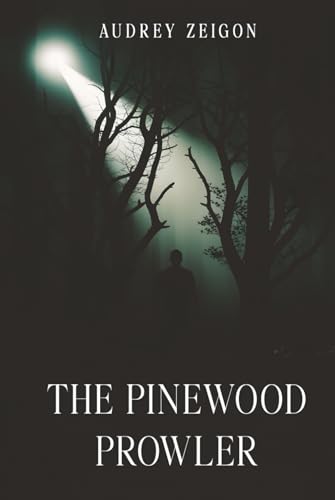
I am currently a sophomore in high school, and The Pinewood Prowler is my debut novel. I have always loved reading and stories, but I only discovered my true passion for writing a few years ago. Since then, writing has been an outlet for me and I have been extremely invested in it, even attending Dartmouth’s Summer Scholars creative Writing course this past summer. I began writing the Pinewood Prowler when I was around 13 without any intention of publishing it. About a year later, I decided to pick it back up and got it published at the age of 15.
Advertisements
2) What inspired you to write your book?
Last year, I had a rough draft of my current book that had been untouched for almost a year. As a young teen, I wanted to develop the story and share a piece reflecting the intentions and feelings of teenagers.
3) What theme or message do you hope readers will take away from your book?
The message I hope readers take from my book is to be careful what you wish for. Curiosity can be both powerful and dangerous, and sometimes the truths we seek are better left undiscovered. And beneath the surface of familiarity, there lies deception. This message encourages readers to be curious, but also warns against the dangers that can arise from such curiosity.
4) What drew you into this particular genre?
I was drawn to this particular genre due to my love for the suspense and adrenaline evoked in the horror genre and my desire to create a mystery for the readers, urging them to read on due to curiosity and suspense. I have always loved reading and writing in a thrilling and suspenseful tone, and wanted to share this with others.
5) If you could sit down with any character in your book, what would you ask them and why?
I would sit with “The Pinewood Prowler” because I would like to see into the criminal mind and what truly compels a serial killer to kill. I believe this is my most complex character, as the Pinewood Prowler has the ability to blend into society while also murdering at night. I would ask, “What thoughts went through your head when you were killing your first victim, and have you ever felt remorse?”
6) What social media site has been the most helpful in developing your readership?
Since this is my debut novel, I am just starting to create social media platforms for this book, but I will keep searching for ways to spread my book.
7) What advice would you give to aspiring or just starting authors out there?
As this is my first attempt and I am only 15, the only advice I believe I am credible to give is to just go for it. If you have an idea and want to write it, there is no harm in sharing your work.
8) What does the future hold in store for you? Any new books/projects on the horizon?
I am currently working on growing my writing and am exploring new ideas for my next book. I am certain that I want to continue developing as an author and am excited to see what is in store for me as a young writer.
Advertisements
About the Author
Audrey Zeigon was born in 2010 in New York City. From an early age, she developed a strong passion for reading and horror. These interests inspired her to write her debut novel, The Pinewood Prowler. Audrey has enjoyed immersing herself in this story and looks forward to sharing it with her readers.