Interview with Author Michael Dunn

Tell us a little bit about yourself. How did you get into writing?

I’ve loved writing for as long as I can remember. One of my first memories of writing was when I was ten. I wrote a story about racism that involved a child driving a bulldozer over the home of his racist tormenters. My teacher was horrified by the homicidal implications of my story and thought I might be a budding serial killer. So, she called my parents in for a meeting to discuss my mental state. My parents, bless their hearts, laughed and told her they were proud of me, and that they thought my theme and content were both appropriate and commendable.   

Advertisements

What inspired you to write your book? 

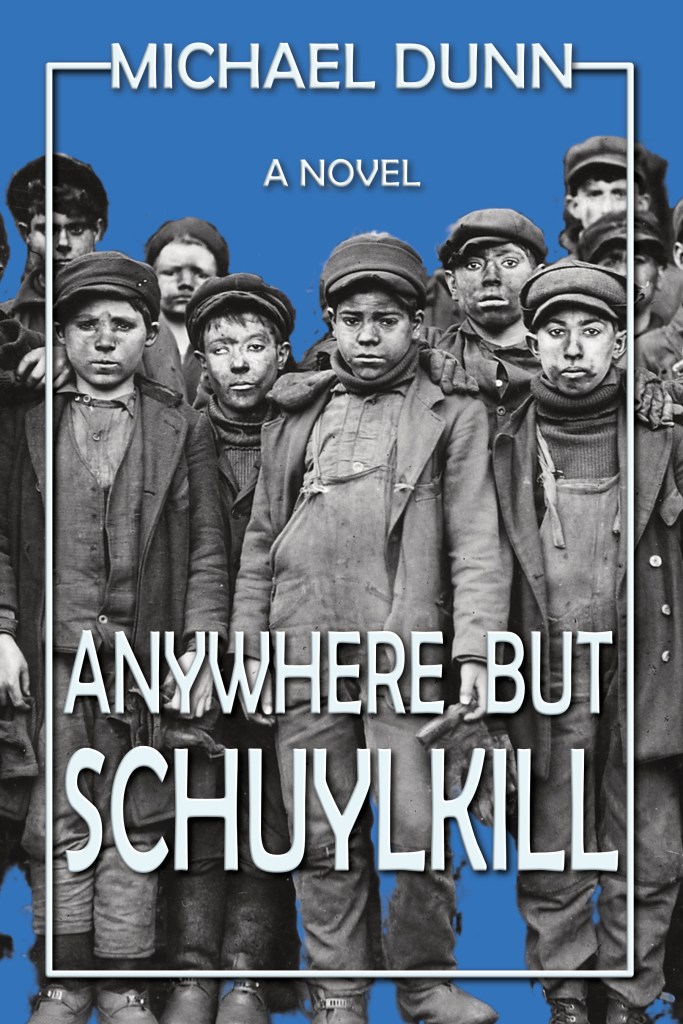
  • I had originally intended to write about a little-known piece of American history called the Great Upheaval, a massive strike wave that erupted in the summer of 1877, in which at least 100 workers were killed by police and national guards nationwide. It spread from New York to Louisiana, and west, to California, with uprisings in several towns. Armories were looted. Black and white workers united in New Orleans, Louisville, Galveston, and in Saint Louis, where they took over management of city services, and called it the Saint Louis Commune, after the Paris Commune of 1871. But I soon realized this was way too big for a single book. And as I did the research, I discovered that just a few weeks before the Great Upheaval began, twenty innocent Irish miners were hanged in Schuylkill County, Pennsylvania—ten in a single day. It was the second largest mass execution in U.S. history. They were convicted of murder, accused of being terrorists from a secret organization called the Molly Maguires. Dozens more were imprisoned. All were union activists. And there is no evidence that an organization called the Molly Maguires ever existed in the U.S. So, I decided to do a trilogy, with the first book, Anywhere But Schuylkill, telling the story of Mike Doyle, one of the accused Molly Maguires who got away.  
Smiley Campaign

What theme or message do you hope readers will take away from your book? 

  • I didn’t write this book to be didactic. For me, reading and writing are fun, and that was why I wrote the book. But in the process, I did hope to right an historical wrong. Arthur Conan Doyle’s final Sherlock Holmes novel, Valley of Fear (1915), the 1970 Sean Connery film, Molly Maguires, and a majority of the academic texts about the Molly Maguires and the miners’ union of that era, were based on Allan Pinkerton’s own work of fiction, The Molly Maguires and the Detectives (1877), which he falsely marketed as nonfiction. These works universally treat the Molly Maguires as an actual Irish terrorist organization, which conspired to murder mine owners and scabs, despite the fact that there is no evidence that such an organization ever existed in the U.S., other than the claims of Pinkerton, who had been hired by the coal companies to disrupt and destroy the union. So, there’s that. But I also hope readers will find beauty and inspiration in the characters’ struggles. 

What drew you into this particular genre? 

  • I love history, especially labor history and the history of social movements. I’ve been blogging and writing nonfiction on these themes for years now. And I also enjoy reading historical fiction. But I really wanted to write the story of the Molly Maguires, from their own perspective, the story of impoverished immigrants and first-generation Americans, persecuted for their ethnic and religious identity, struggling to support their families during the worst depression the country had known, trying to collectively organize against one of the most powerful corporations of the era: the Reading Railroad. Plus, fiction can reveal the truths that reality obscures, to paraphrase Emerson.So, historical fiction seemed the perfect genre. 

If you could sit down with any character in your book, what would you ask them and why? 

  • I would like to talk to Da, about the antidraft protests he was involved in during the Civil War. I’d like to know if there were many others, like him, who saw the war as a fight between two opposing factions of the ruling class, rather than as a fight against slavery, and tyranny, as many of the German immigrants saw it.  
Take a Food Journey Around the World!

What social media site has been the most helpful in developing your readership? 

  • I’m not sure yet. I do have an Author Takeover on Facebook on January 15, with the Historical Fiction Club. You should check it out. I’ll be posting eight short pieces throughout the day. I’ll be giving away free copies of my book. And it’ll be a fun way to get to know about me and my writing, ask me questions, and maybe even learn a little working-class history. To participate, go to the Historical Fiction Book Club Facebook page on Jan 15: https://www.facebook.com/groups/historicalfictionbookclub 

What advice would you give to aspiring or just starting authors out there? 

  • First, I’d tell them to do their homework. Learn something about the craft before embarking. I didn’t. I was super naïve going into it. I thought, Hey, I’m good at telling stories and I read a lot. Of course, I can write a novel. Plus, the actual facts were so fascinating, I thought the story would write itself. But I had no training in fiction writing. I made a lot of mistakes. My first draft was terrible. The side characters were one-dimensional. There were no emotional arcs. The subplots weren’t fleshed out enough. I didn’t provide enough sensory details. I had to go back and take courses, find mentors, read a lot about the craft. Consequently, it took me nine years from when I first started working on this project to the time when it was actually published. Of course, I was also working full time, and being a father. So, that also made it take longer. 
  • Second, I’d tell them to learn to embrace the editing process. No one, except maybe Kafka, churns out a finished product on the first draft. The editing and rewriting are the most time-consuming parts of the process. You could end up rewriting the entire thing 5-10 times before it’s really done. If you don’t have resilience and perseverance, and an enjoyment of this process, you might have a hard time producing a good quality book. That said, I really do enjoy the editing and rewriting. It’s a lot of fun trying to get all the pieces to fit together artfully. 

What does the future hold in store for you? Any new books/projects on the horizon? 

  • The Molly Maguire mass hanging that occurred in 1877, the second largest mass execution in U.S. history, is the opening scene of the next book in my Great Upheaval Trilogy: Red Hot Summer in the Big Smoke. The main character is Mike Doyle’s kid sister, Tara. It takes place in Pittsburgh, during the Great Upheaval strike wave, where much of downtown was burned to the ground, and where 20 strikers were gunned down by soldiers. I’m about halfway through the first draft. And then it will be on to the third and final book in the series. Not sure yet about the title. But it will take place in Saint Louis. 
Advertisements

About the Author

Michael Dunn writes Working-Class Fiction from the Not So Gilded Age. “Anywhere But Schuylkill,” is the first in his Great Upheaval trilogy. A lifelong union activist, he has always been drawn to stories of the past, particularly those of regular working people, struggling to make a better life for themselves and their families. Stories most people do not know, or have forgotten, because history is written by the victors, the robber barons and plutocrats, not the workers and immigrants. Yet their stories are among the most compelling in America.

They resonate today because they are the stories of our own ancestors, because their passions and desires, struggles and tragedies, were so similar to our own. When Michael Dunn is not writing historical fiction, he teaches high school, and writes about labor history and culture. His labor history has been published in several online and print magazines:

Reform: The Trojan Horse Wheeling into Schools (Labor Notes 7/28/11); The dangers of a

California megaflood (World Socialist Website, 10/25/21); and The Modern School Movement

(Fifth Estate, #411, Spring, 2022).
Interview with Author Cheryl Gillespie

1) Tell us a little bit about yourself. How did you get into writing?

My name is Cheryl Gillespie, and I live in the beautiful, hospitable region of Atlantic Canada. I am fortunate to have one of the most rewarding occupations as I am a private piano teacher and educator in music theory.

As far back as I can remember, I’ve always enjoyed the craft of writing, from the journaling I did at age 12 or 13, to the assignments I was given in high school. Of course, the love of reading is a strong asset which for some, can be a pathway to writing.

When my niece was a little girl, I recall reading stories to her which sparked the idea of writing about the antics of my two cats. Therefore, my first published work was a children’s book entitled, Tigger and Jasper’s New Home, a tale of 2 mischievous kittens who were adopted by a young blind woman. Yes, it is a true story, except in this case the cats are able to speak to each other.

Advertisements

2) What inspired you to write your recent book?

The word that comes to mind is – serendipity. Following my children’s book, I had no designs on a second publication. However, my music mentor who was in the process of writing his memoir, suggested my own story is one which should be told and that it may be of great interest to many. After jotting down my thoughts and a fair bit of reflection, I made the decision to write, I Feel Your Stare: An Autobiography.

3) What theme or message do you hope readers will take away from your book?

Everyone has their life challenges, whether economic, social, physical or other, so I hope readers can identify with this to some extent. I think one message is that breaking down societal barriers is best achieved with a positive determination, rather than to approach it with a negative, griping attitude.

4) What drew you into this particular genre?

Quite simply, I tend to relate better when writing my own experiences. For instance, the comic-like episodes that took place with my cats in the children’s book, actually happened. Then there are the lifetime hoops I’ve had to jump through in order to attain an education, receive proper healthcare, or to gain my independence as revealed in my autobiography.

728x90

5) If you could sit down with any character in your book, what would you ask them and why?

Of course, as this is an autobiography, I have had interactions with each of the players. There are some, however, to whom I’d like to give an earful as an adult since I was unable to defend myself as a child.

But, perhaps the person I’d choose is the superintendent of the residential school for the blind in Halifax, the one who told me in no uncertain terms, “You’ll never make it in a sighted world.”

My questions: After uttering those words to a child, did you feel like a big man when you went home to your cozy house that night? And second, how did you feel when I completely defied you, exposed your lies and proved you wrong?

My reasons for asking: I would want to make it absolutely clear that not a single drop of credit is owed to him for my successes. They belong to me, along with the help of caring people throughout my lifetime.

6) What social media site has been the most helpful in developing your readership?

This is an issue for me, given how time consuming it is for blind individuals to navigate through these visual platforms. I guess I would have to say Facebook where I can be located, and where information has spread to readers the most.

7) What advice would you give to aspiring or just starting authors out there?

First, do your own research. There are a lot of good author blogs and writing tools out there, so take advantage of them. Personally, I perform best when making relevant notes from what I’ve learned, then mapping out the direction I’d like my writing to flow.

Second, editing is a must. Seek recommendations on collaborating with an editor you can trust.

Third, take your time. Write because you love it. 

—  —

Advertisements

~ABOUT THE AUTHOR~

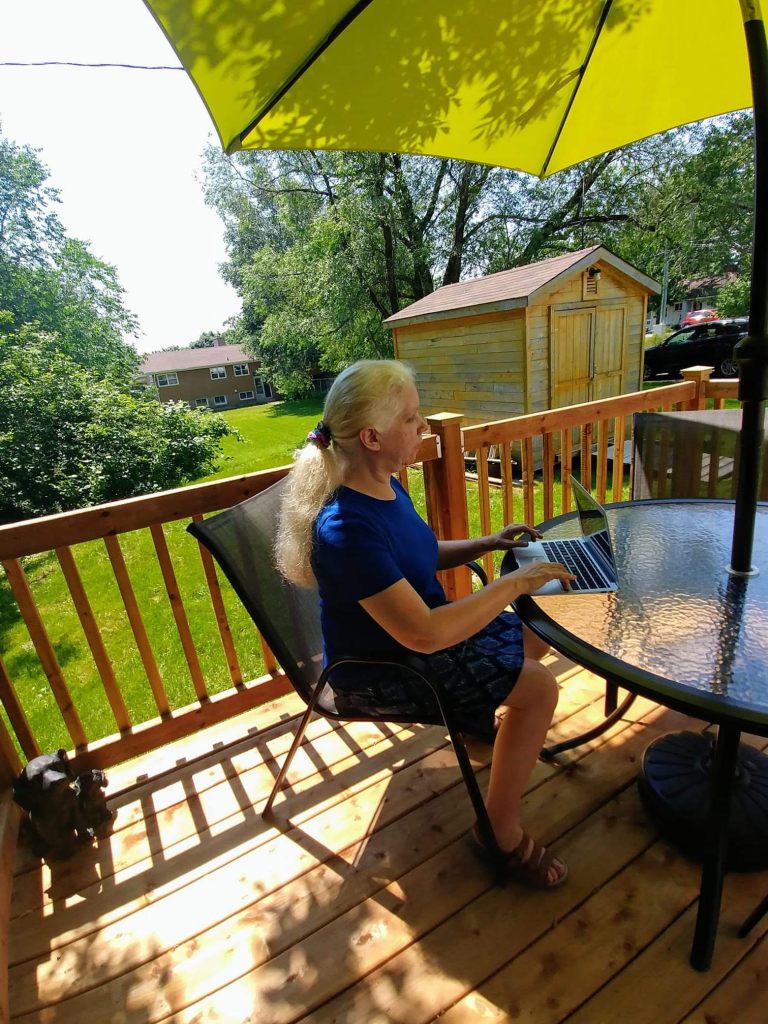
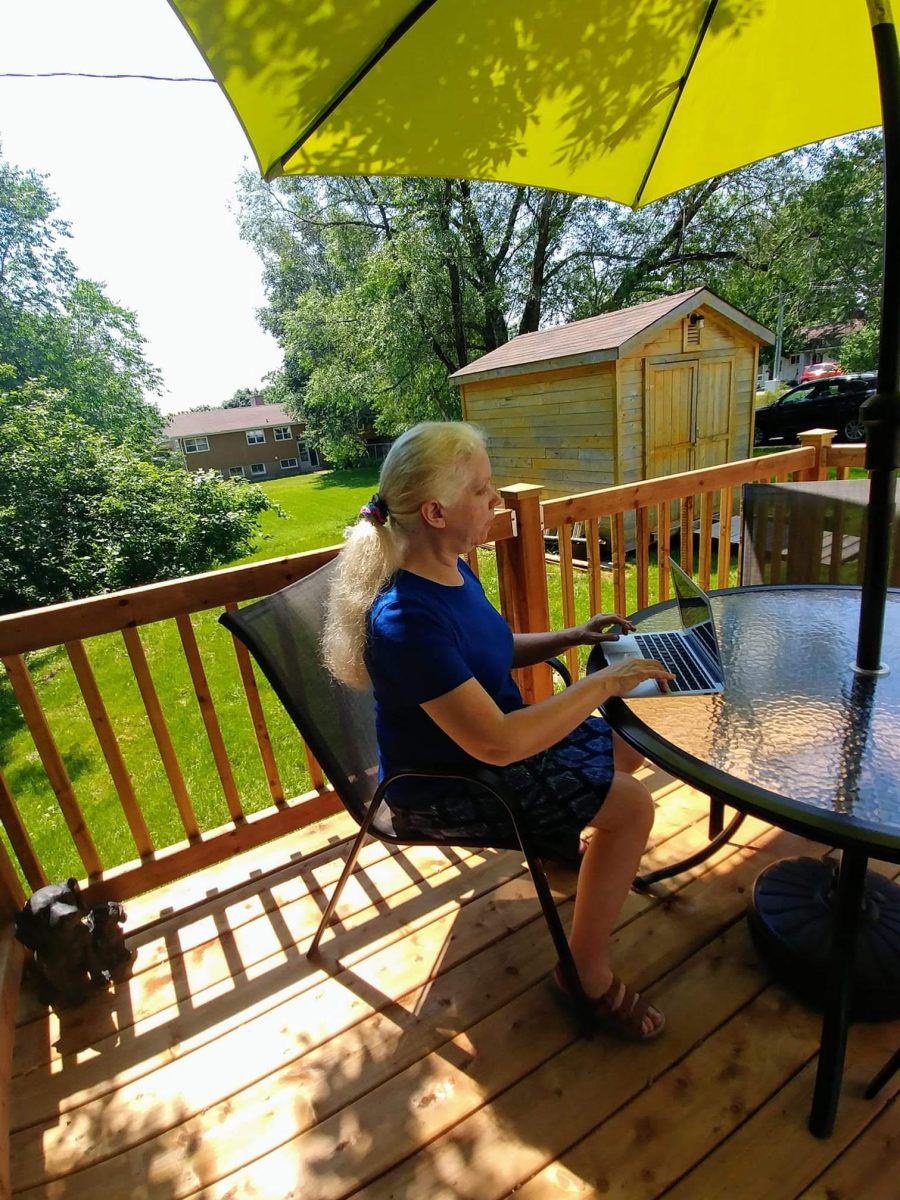
In her home province of New Brunswick, Canada, Cheryl Gillespie, along with her cat Mattie, will often be found basking on the backyard deck beneath the warm sunshine. Here, in this very spot is where many of the chapters for her award winning autobiography, I Feel Your Stare were written.

A childhood diagnosis of Juvenile Rheumatoid Arthritis and associated blindness, coupled with physical and societal barriers, has proven only to strengthen her resolve. Following graduation from Fredericton High School, Cheryl advanced in her private studies through the Royal Conservatory of Music, attaining First Class Honours in piano, theory and history. 

Today, well established in her teaching career, she takes pride in the education of her students, highlighted by a two-time provincial medal winner through Mount Allison’s Local Centre Examinations Department of Music. Through her active role within the Fredericton Music Teachers’ Association, Cheryl has built invaluable, longstanding friendships with her colleagues. In 1993, Cheryl was the recipient of the Stanley B. Cassidy Memorial Award, presented by the Fredericton Music Society, recognizing her dedication to excellence and personal achievements.

Cheryl’s first work for adults, I Feel Your Stare, gained literary status in 2023: a winner in two categories through The Firebird Book Awards, earned a RED RIBBON from The Wishing Shelf Book Awards, and was a finalist in the Independent Author Network Book of The Year Awards! This title was preceded by her children’s book, Tigger and Jasper’s New Home, and likewise is a Firebird Book Award winner, and a cover art finalist with The Wishing Shelf Book Awards.

Social Media:  https://www.facebook.com/Thebraillenarrative/

Interview with Author John R. Miles

1) Tell us a little bit about yourself. How did you get into writing? 

 I’ve always been fascinated by the power of storytelling and its ability to connect people, evoke emotions, and inspire change. My journey into writing was a natural progression from my passion for communication and my desire to make a meaningful impact on others’ lives. Initially, my writing was a personal outlet—a way to process experiences, explore ideas, and articulate the insights I gained from my roles in leadership, coaching, and speaking.

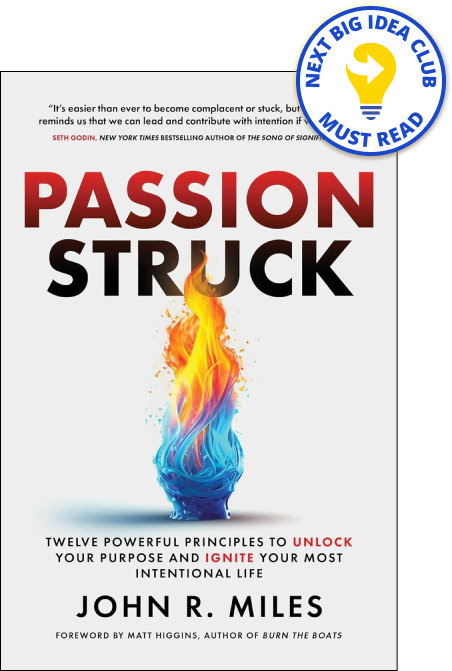
The transition from personal reflection to published author was driven by a realization that the lessons I learned, particularly through overcoming adversity and embracing intentional living, had the potential to resonate with and benefit others. This led me to write “Passion Struck,” a culmination of my experiences, research, and conversations with thought leaders across various fields. Writing became not just a means of expression but a mission to empower individuals to unlock their potential and lead lives filled with purpose, passion, and authenticity.

Advertisements

2) What inspired you to write your book? 

The inspiration behind writing “Passion Struck” stemmed from a deep-seated desire to address the pervasive sense of “unmattering” that affects so many individuals today. Observing friends, colleagues, and even strangers grappling with feelings of insignificance, despite their achievements, propelled me to explore how living intentionally and with passion can transform lives. My own journey—navigating personal and professional hurdles, including overcoming severe injuries as a combat veteran—underscored the power of intentionality in forging a meaningful existence. “Passion Struck” is my endeavor to share these insights, offering a blueprint for others to ignite their passion and live with purpose.

Metallica The Master Collection Banners

3) What theme or message do you hope readers will take away from your book? 

The central theme of “Passion Struck” is that every individual has the inherent capacity to live a life that TRULY MATTERS—to themselves and to the world. The message I hope readers will embrace is one of empowerment and transformation: that by making intentional choices aligned with their deepest values and aspirations, they can overcome obstacles, realize their potential, and lead lives of profound impact and fulfillment. It’s about shifting from a passive existence to an intentional and passion-driven life, where every decision propels one closer to their ideal self.

4) What drew you into this particular genre? 

My draw to the self-help and personal development genre was a natural extension of my life’s work and experiences. Having witnessed firsthand the transformative impact of intentional living in my own life and those around me, I felt compelled to contribute to a genre that offers practical wisdom and guidance for personal growth. This genre allows for a blend of storytelling, science, and actionable advice, making it the perfect medium to convey the principles of living a “Passion Struck” life. It’s a field that not only offers the opportunity to inspire and educate but also to connect with readers on a deeply personal level, supporting them in their journey towards becoming their best selves.

5) What social media site has been the most helpful in developing your readership? 

Instagram has been instrumental in developing my readership for “Passion Struck.” The platform’s visual and interactive nature allows me to connect with my audience in a deeply personal way. Through Instagram, I share insights, quotes, and stories from the book, engaging with followers through posts, stories, and live sessions. It’s a dynamic space for fostering a community of like-minded individuals passionate about personal growth and intentional living. The ability to visually represent the concepts of the book, coupled with direct communication with my audience, has made Instagram an invaluable tool in spreading the message of “Passion Struck.”

6) What advice would you give to aspiring or just starting authors out there? 

To aspiring authors, my advice is threefold: First, write with authenticity. Let your unique voice and perspective shine through your work. Readers are drawn to authenticity; it’s what will make your book resonate on a personal level.

Second, be patient and persistent. Writing a book is a marathon, not a sprint. It requires dedication, resilience, and a willingness to embrace the process, including the inevitable challenges and rejections.

Lastly, never underestimate the importance of building a community. Engage with your audience early on, whether through social media, blogging, or public speaking. This community will not only provide support and motivation but also become the foundation of your readership once your book is published.

Take a Food Journey Around the World!

7) What does the future hold in store for you?  

Looking ahead, I am excited to bring the transformative message of “Passion Struck” directly to audiences worldwide through a series of keynotes and interactive workshops. My immediate goal is to deepen the engagement with the book’s principles, making them more accessible and actionable for individuals eager to embark on their journey towards intentional living.

In parallel, I’m developing an online training platform, envisioned as a comprehensive university of life, where the book’s concepts can be explored in greater depth. This digital academy will offer courses, resources, and community support designed to empower participants to unlock their potential and embrace their authentic selves.

Additionally, the “Passion Struck” podcast will continue to play a pivotal role in expanding the book’s reach and impact. By delving into topics related to personal mastery, resilience, and purposeful living, the podcast will serve as a dynamic extension of the book, offering fresh insights, practical advice, and inspiration to listeners worldwide.

Behind the scenes, I’m exploring the possibilities for my next writing project. While “Passion Struck” remains my current focus, the journey of personal transformation is ever-evolving, and I’m passionate about continuing to contribute to this vital conversation through future books and projects.

Advertisements

About the Author

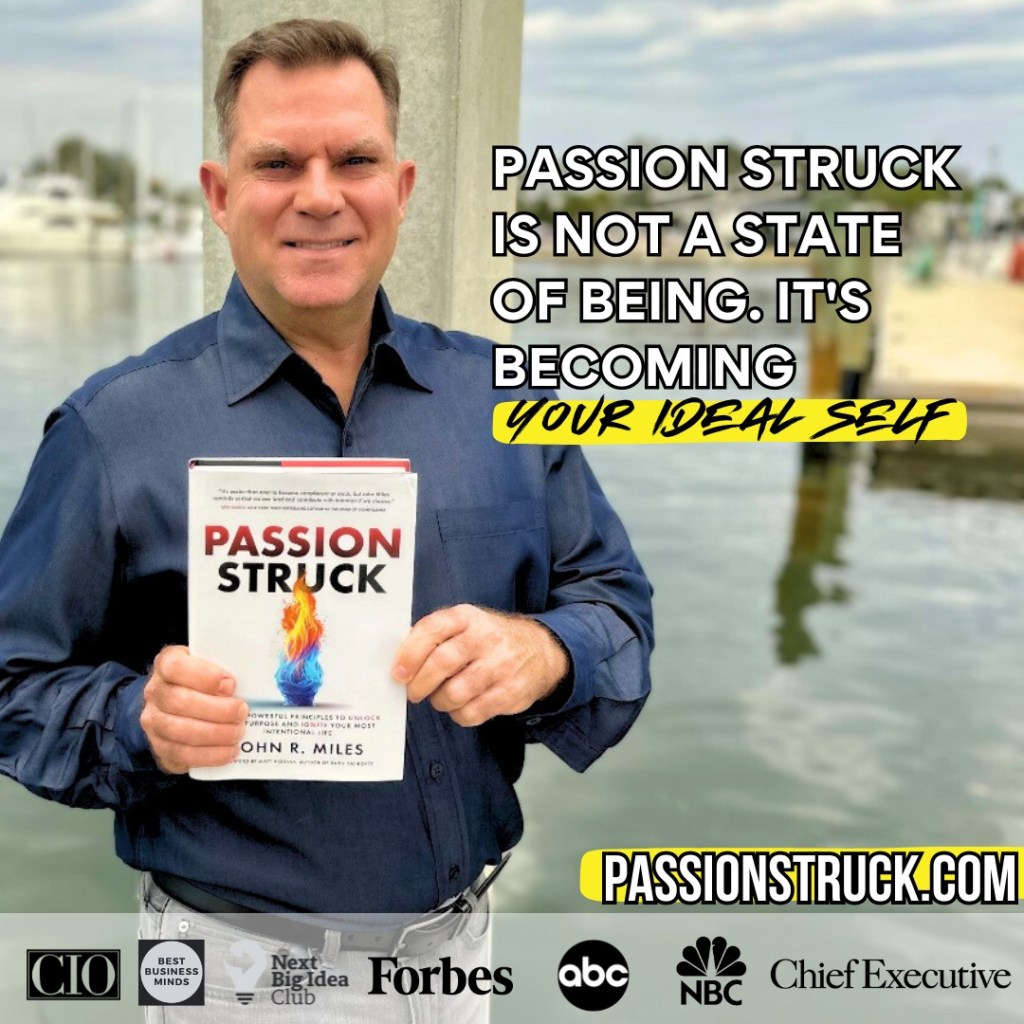
John R. Miles is the dynamic force behind Passion Struck®, captivating millions with his globally-renowned podcast and national radio show, making a significant impact as a thought leader in the fields of behavior change, health and wellness, the science of personal mastery, and self-leadership. His journey, from the U.S. Navy to senior executive roles in the Fortune 50, grounds his insights in real-world experience. He’s not just a voice on leadership and personal growth; he’s lived it, making his guidance and storytelling resonate authentically with his audience.

As an author, keynote speaker, and entrepreneur, John blends practical wisdom with relatable anecdotes, making complex ideas about health, wellness, and personal mastery both accessible and inspiring. His Podcast, Passion Struck, is one of the world’s leading shows and the #1 alternative health podcast, featuring engaging conversations with notable figures like Angela Duckworth, Seth Godin, Susan Cain, Robin Sharma, and Dr. Mark Hyman.

His latest work, “Passion Struck: Twelve Powerful Principles to Unlock Your Purpose and Ignite Your Most Intentional Life,” delves into the heart of what it means to live a life fueled by passion and purpose. Drawing on insights from luminaries such as Oprah Winfrey and Astronaut Chris Cassidy, the book offers twelve science-based principles designed to awaken the dormant potential within us all. It’s a journey through overcoming self-doubt, catalyzing personal growth, and embracing a life lived with unwavering intention. It’s been honored as a 2024 must-read by the Next Big Idea Club and The Best Business Minds Book Awards for 2024.

Websites

https://passionstruck.com

Socials:

https://www.instagram.com/john_r_miles

https://www.youtube.com/channel/UCTLdXATpxf8LP3riC0_mkKw

https://www.threads.net/@john_r_miles

https://www.facebook.com/johnrmiles.c0m

Interview with Author Richard Harland 

1) Tell us a little bit about yourself. How did you get into writing?

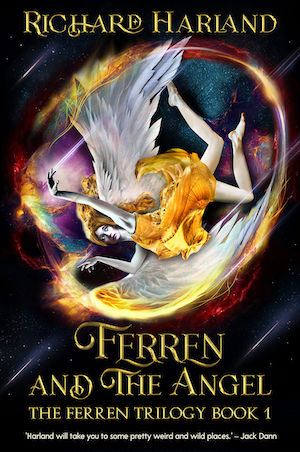
I grew up in England – Yorkshire, Devon, London, but most of all in Suffolk, which is farming country about 80 miles from London. Also the arlocationea of rural scenes painted by John Constable – and I used to live in a very pretty small town called Hadleigh. Not that I cared so much about the prettiness then – I wanted to escape to big city excitement! But a lot of the background feel to the Home Ground of Ferren’s tribe in FERREN AND THE ANGEL comes from memories of Hadleigh and the countryside around.

Afterwards, I was 3 years in Cambridge, then migrated to Australia – an accidental migration, because I never intended to stay. But then I fell in love with the place and the lifestyle. I’ve lived always around the Sydney area – inner city, Newcastle, and now the Illawarra. Wollongong manages to combine having the biggest steelworks in the Southern Hemisphere with having a beautiful green escarpment and a whole string of picture-perfect beaches.

I can’t remember a time when I didn’t want to create stories. I was always imagining scenarios and events for my own enjoyment and for friends playing games when I was a kid. But I never particularly thought of being a writer, until I started getting top marks for creative English composition – only because I discovered how to use a Thesaurus and throw around impressive-sounding words. Bad start! And worse, when I won a big prize for a short story, which was only impressive because I’d read some literary stuff more advanced than other kids my age, so I could pretend to use symbols and stream of consciousness and … you get the idea! I was a fake and a poseur, and all the natural story-telling instinct I started off with got lost in the process!

Anyway, I paid the price with 25 years of writer’s block. Now I truly did want to become a writer – and I couldn’t write. Or, more accurately, I couldn’t finish anything I started to write. And I started plenty, short stories, poems, novels – no use, I bogged down on every single one.

It took me a long, long time to rediscover that old storytelling instinct, but I did in the end. I got back to what I did well in the first place, which wasn’t fancy words and techniques, but making up live-in worlds and intriguing characters and stories that read like a movie.

Advertisements

2) What inspired you to write your book?

This will sound corny, but it really began with a dream. If you look at the opening half-dozen pages of FERREN AND THE ANGEL, that’s like a transcript of the dream. I was Ferren peeking out at terrible sounds and lights in the night sky, understanding that it was a war going on between the armies of Heaven and the armies of Earth. And I was Ferren seeing the bright light of an angel come hurtling down towards me, shot out of the sky and crashing close by. I’ve always been lucky with my dreams!

3) What theme or message do you hope readers will take away from your book?

Probably the idea that the downtrodden can rise up, exploitation can be defeated. I don’t really think in terms of themes or messages – if they’re there, they come out of the characters.

Take a Food Journey Around the World!

4) What drew you into this particular genre?

If you call my genre Fantasy, then I guess I’ve always enjoyed imagining otherworlds. I love the challenge of creating a world far removed from the reader’s – and my own – experience, and then turning it into solid experience that makes you feel as if you’re actually living through the events right there. I think you’ll agree that the Ferren world is very way out – I hope you’ll agree that it still seems real when you read it!

But although I’ve always been drawn to Fantasy, I’ve also wanted to create fantasy worlds that aren’t like other fantasy worlds. I truly believe fantasy OUGHT to keep opening up new doorways, new imaginative possibilities, and I get disappointed when it falls into formula and stereotype. FERREN AND THE ANGEL is fantasy, OK, but when you get on to describing its sub-genre, then it becomes difficult. Easy to say it’s not traditional epic fantasy or swords and sorcery or medieval fantasy … but I wouldn’t know how to say exactly what it is!

5) If you could sit down with any character in your book, what would you ask them and why?

I guess I’d love to sit down with my second most important character, Miriael, and ask her about her life as an angel! What was she taught by the Cherubim in the schoolrooms on the Third Altitude, how does it feel to share a perfect communion of touching spirit to spirit with every other angel? And a million suchlike questions – there’d be so much to ask!

But for just sitting down with – and not particularly asking any questions – I’d go for my third character, Zonda. She may not be everyone’s cup of tea, but I’d really enjoy meeting her.

Watermelon

6) What social media site has been the most helpful in developing your readership?

Maybe too early to give a proper answer … I’ll have a better answer in 6 months time! But I have enjoyed working through NetGalley, which is a site for making Advance Reading Copies available to reader-reviewers. I think it’s a great system! (And I don’t say that because all of my NetGalley reviews to date have been five-star … though it helps!)

7) What advice would you give to aspiring or just starting authors out there?

I’d say, enjoy the writing and the writing process, because that’s a pleasure no one can ever take away from you. Success goes up and goes down, your next book can’t always be more popular than your last. But to have a story unfold and start telling itself and zoom towards its climax – whoo-ee! Best feeling in the world!

I guess my 25 years of writer’s block gives me more reason to enjoy it than most. I’m on a winner just being able to finish a book at all!

8) What does the future hold in store for you? Any new books/projects on the horizon?

First business is completing the Ferren trilogy. After FERREN AND THE ANGEL comes FERREN AND THE DOOMSDAY MISSION, then FERREN AND THE INVADERS OF HEAVEN. The story began big and keeps getting bigger! I’m already pre-filming those next 2 books in my mind, and I absolutely believe the whole trilogy will be the most satisfying – and mind-boggling – thing of all. INVADERS OF HEAVEN involves what the title says, an actual invasion of Heaven. Can’t reveal who the ‘Invaders’ are, but it’s no spoiler to reveal that the foot-soldiers of the invasion will be the very ugly, soulless Hypers who’ve been the backbone of the Humen (sic) army ever since Book One.

Advertisements

About the Author

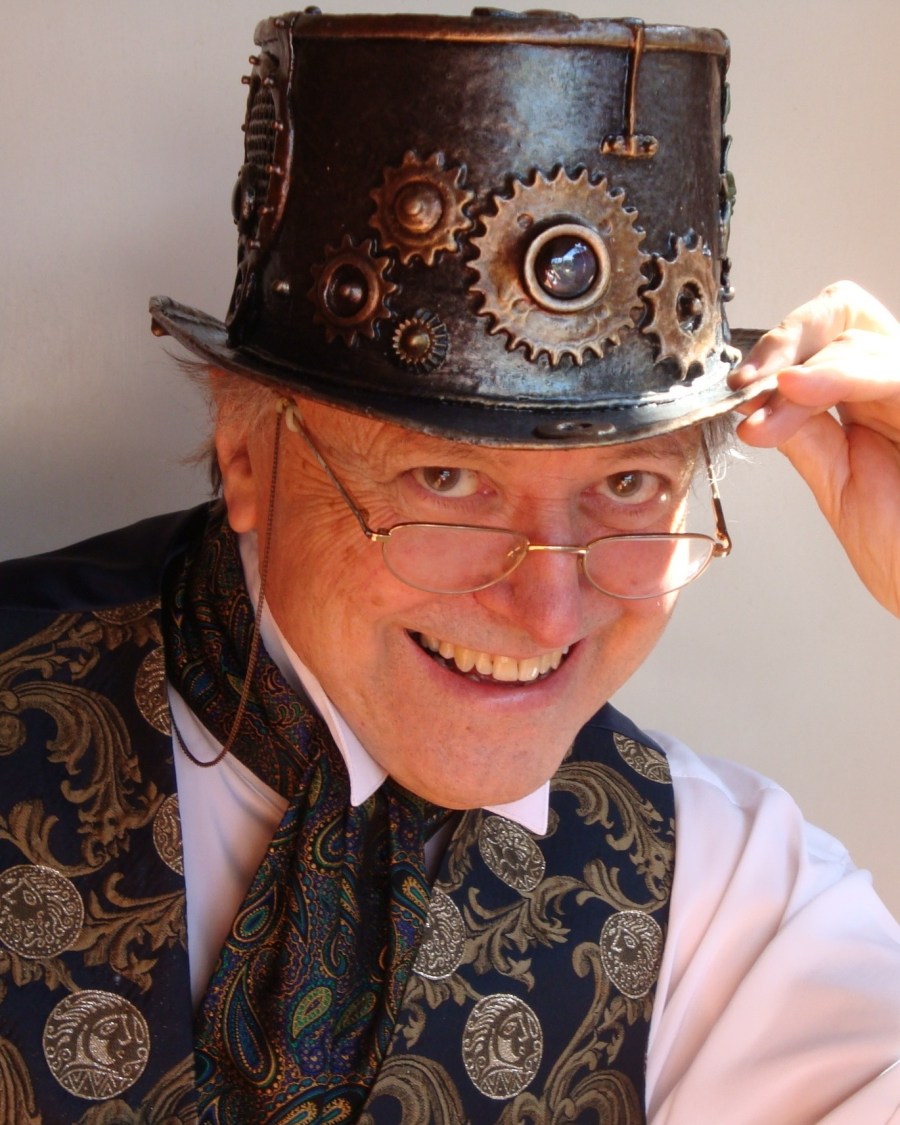
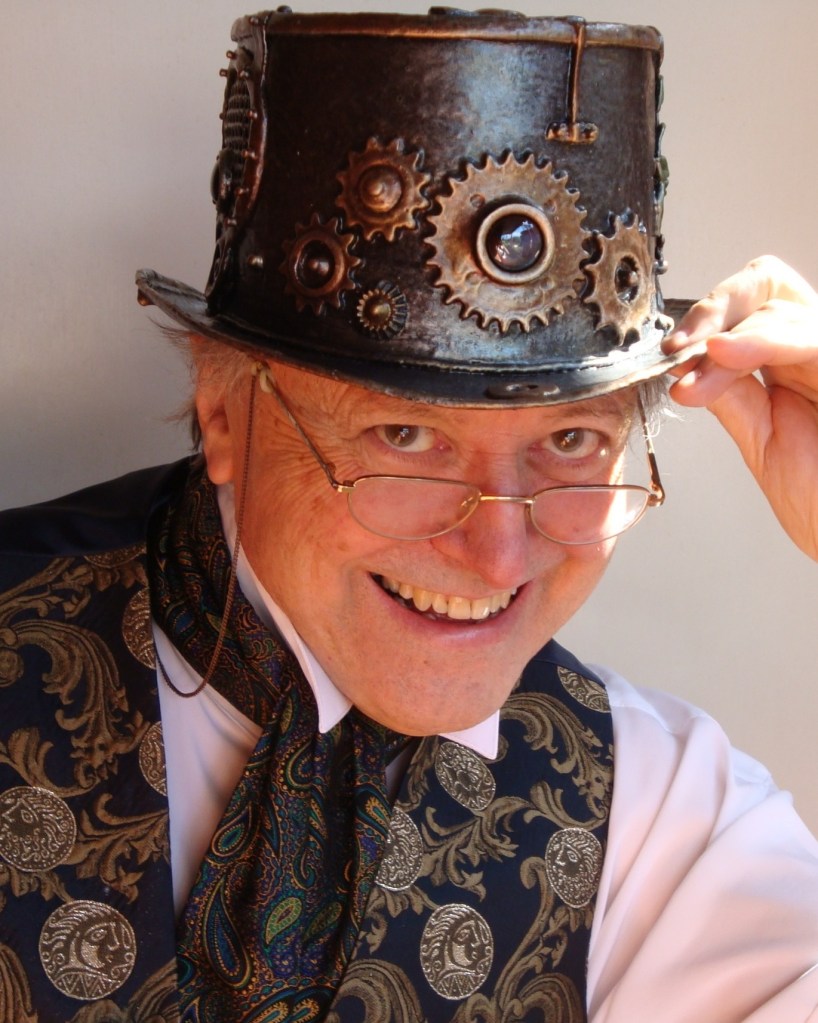
I’m the author who nearly wasn’t – it took me 25 years to beat writer’s block. In those 25 years, I migrated from England to Australia, became a singer/songwriter, a poet and then a university lecturer. But all I truly wanted to do was write speculative fiction.

Finally I finished my first novel, the comic macabre, The Vicar of Morning Vyle. With its prequel, The Black Crusade, it grew into a cult. When mainstream Australian publisher Pan Macmillan contracted my next novel, I resigned my lectureship, and I’ve been a full-time author ever since.

I live south of Sydney between green escarpment and golden beaches, with partner Aileen and Yogi the labrador. Writing, writing, writing … I have those 25 missing years to make up for!

My big international success has been with my YA steampunk novels, Worldshaker, Liberator and Song of the Slums. The French Le Worldshaker picked up the Prix Tam-tam du Livre Jeunesse. In the US, Worldshaker and Liberator were published by Simon & Schuster.

Ferren Trilogy website:  https:// www.ferren.com.au

Richard Harland website:  https://www.richardharland.au 

Facebook: https://www.facebook.com/richardharland.books

Ferren on GoodReads:  https://www.goodreads.com/book/show/137225996-ferren-and-the-angel

Ferren on Amazon:  https://www.amazon.com/dp/B0BZB4QVHL?ref_=cm_sw_r_cp_ud_dp_8CPPAQVYYP1TTDMH5HBT

Ferren on BookSirens:  https://booksirens.com/book/VWV7C9U/S5PYY95

Ferren on NetGalley:  https://www.netgalley.com/widget/472841/redeem/8a4e9444708fbfe3778b4501511fa0a4954b1e0534dddedbf92727166ffa4003

Guest Blog Post: The Trick To A Great Interview: Interviewer And Interviewee by Claudine Wolk

The Interviewer 

Interviews are so much fun.  The opportunity to chat with an expert or an author and to share what they know with your audience is exhilarating and can be great fun.  A few tricks will polish your interview to keep your listeners coming back for more.

  1. Be Prepared and Pay Attention. Consider what you would want to learn from this guest as a listener when preparing questions but understand also that the interview can veer in a completely different direction. Many times, that new direction is exactly where the interview was meant to go.  
  1. Prepare A Great Intro. Make sure the information in your prepared intro is up to date by sharing it with your guest before recording. 
  1. Keep YOUR talking to a minimum.  The interview is not about you, it’s about imparting the guest’s wisdom to your listeners. Let your guest talk. You brought them in for an interview for a reason.  Consider yourself the bumpers in a bowling lane where you nudge the conversation this way and that to keep it on point.
  1. Finally, most guests are more than happy to talk and your job will be to keep them on track but rarely you may have a guest who simply does not like to talk.  Keep them moving by getting them comfortable with your questions… start a statement and then pause… give them a chance to pick up the thread and show their stuff.

The Interviewee

Interviews are a great way for you to promote your book or your business.  The trick as the interviewee is to remember to avoid a “hard-sell” of your product or service. Instead, provide valuable expertise/entertainment to the audience. Resist the urge to openly sell. i.e., “buy my book!” Here are a few more tips for a well-rounded, informative and entertaining interview. 

  1. Offer great content to the audience so they take away fun, helpful nuggets that show off your expertise. If you are the author of a fiction book and are asked to describe it, give a quick synopsis that doesn’t give away the ending.  
  1. Answer the interviewer’s questions thoughtfully and succinctly.  Many interviewers have a whole list of questions with which to relay valuable information to their audience and if you pontificate on one question, they won’t get the chance to ask any others.
  1. Some interviewers are more than happy to let you chat away.  If you pause and the interviewer is encouraging you to continue with your train of thought, oblige them.  Having a list of interesting points that you curate before the interview is a great idea to keep you on point.
  1. Finally, make sure that you remember to let people know where to find you on social media for more information.  One social media channel that is easy to remember is the best bet because people are listening and could be in a car on a walk.  Off air, you may ask the interviewer to add your social media links and a link to your book, of course, in their show notes. Most likely, the interviewer will ask where to find your book on air!
  1. Remember to thank the interviewer and off-air, ask for a copy of the audio so that you can promote it across your social media and website. 

Most of all, have fun and consider the interview a conversation for the most enjoyable experience for you, the interviewer and the audience.  Good Luck!

Claudine Wolk is the co-author, with Julie Murkette, of Get Your Book Seen and Sold: The Essential Book Marketing and Publishing Guide and a book marketing coach. Find her writing/podcast at claudinewolk.substack.com.

Watermelon

Book Summary

It is easier than ever to publish a book, but many authors find out too late about the actual work-the book marketing-that needs to be done to achieve sizable book sales. Instead of embracing the opportunities to promote their books, authors are intimidated and shut down. Those days are over. This is the book authors MUST HAVE to give their books the best chance to be seen and sold.  

In this essential, easy-to-read, and easy-to-understand guide, the author will work through the graphs, examples, and exercises in the book and learn:

  • The fundamentals of book marketing: Message, Audience, and Hook 
  • How the book marketing fundamentals effortlessly feed into every aspect of book marketing
  • The breadth of book marketing options and how book marketing works, with examples
  • How book distribution IS a crucial part of book marketing 
  • To develop an elevator pitch and a formal pitch to media contacts
  • To develop with a doable book marketing plan
  • To develop media kit items for their book publicity efforts: Press Release, Author Bio, etc.
  • The types of book reviews and how to get them
  • To create a list of media contacts and how to use them
  • To organize their new entrepreneurial business as book marketer/author
  • Ideas to “shake their tree” to develop unique book marketing opportunities 
  • To examine the best social media channels to promote their books
  • Where to put their book promotion dollars
  • Most importantly, authors will learn something priceless…the correct starting point!


Authors, You CAN do right by your book! Go on and reach the book buyers that you had in mind when wrote your treasured manuscript and Get Your Book Seen and Sold today.

Publisher: Lost Valley Press (September 2023)

ISBN-10: 1935874446

ISBN-13: 978-1935874446

Print length: 122 pages

Purchase your copy on AmazonBookshop.org, or Barnes and Noble. Make sure you add it to your GoodReads list too.

Take a Food Journey Around the World!

About the Author

Claudine Wolk and Julie Murkette are experienced in sharing their knowledge of the publishing industry to give books the BEST chance to be sold. Julie is the long-time owner of Satya House Publications, which published and marketed the award-winning I See the Sun series of books, among others. Claudine Wolk is a published author, journalist, podcast host and book marketing consultant. You can find her writing in her weekly newsletter on Substack: Get Your Book Seen and Sold. Her book, It Gets Easier and Other Lies We Tell New Mothers, (Harper Collins) is translated into three languages and was released as an audiobook (Nov. 2022).

Find Claudine online at:

Substack: https://ClaudineWolk.Substack.com

Website: ClaudineWolk.com

Instagram: @ClaudineWolk

Facebook: Facebook.com/ClaudineWolk

Twitter: @help4newmoms

Advertisements

Blog Tour Calendar

September 18th @ The Muffin

Join us on The Muffin as we celebrate the launch of Claudine Wolk and Julie Murkette’s book Get Your Book Seen and Sold. You can also enter to win a copy for yourself!

https://muffin.wow-womenonwriting.com

September 19th @ Karen Brown Tyson’s blog

Join Karen as she reviews Get Your Book Seen and Sold. You can also win a copy for yourself!

https://karenbrowntyson.com/blog/

September 20th @ My Beauty, My Books

Join Nikki for her review of Get Your Book Seen and Sold

https://mybeautymybooks.com/

September 21st @ Knotty Needle

Join Judy for her review of Get Your Book Seen and Sold.

https://knottyneedle.blogspot.com

September 22nd @ Word Magic

Visit Fiona’s blog for a guest post by Claudine about creating a list of media contacts and how to use them.

https://fionaingramauthor.blogspot.com

September 23rd @ Chapter Break

Visit Julie’s blog for a guest post by Claudine about how to pick and choose where to focus your book marketing.

https://chapterbreak.net/

September 25th @ My Heart is Booked

Don’t miss Danielle’s book review of Get Your Book Seen and Sold. You can also win a copy for yourself!

September 28th @ Deborah Zenha-Adams’ blog

Deborah shares an excerpt from Get Your Book Seen and Sold. You also have a chance to win a copy of the book, too!

http://www.deborah-adams.com/blog/

September 29th @ Margay Leah Justice

Join Margay as she reviews Get Your Book Seen and Sold.

https://margayleahjustice.blogspot.com/

October 1st @ Balance and Joy

Join Sheri for her review of Get Your Book Seen and Sold.

https://www.balanceandjoy.com/

October 4th @ Author Anthony Avina’s blog

Join Anthony for a guest post by Claudine about the trick to a great interview.

https://atomic-temporary-124910902.wpcomstaging.com/category/blog-tours/

October 6th @ Carole Writes

Join Carole for her review of Get Your Book Seen and Sold.

https://carolemertz.com/

October 7th @ A Wonderful World of Books

Visit Joy’s blog for a guest post by Claudine Wolk about a popular book marketing roadmap.

https://awonderfulworldofwordsa.blogspot.com/

October 7th @ Of History and Kings

Join Hellen for her review of Get Your Book Seen and Sold.

https://ofhistoryandkings.blogspot.com/

October 10th @ What is That Book About

Visit Michelle’s blog for an excerpt from Get Your Book Seen and Sold.

https://www.whatisthatbookabout.com

October 13th @ CK Sorens

Visit Carrie’s page for her insights into Get Your Book Seen and Sold. You can also win a copy for yourself too.

https://www.instagram.com/ck_sorens/

October 15th @ Madeline Sharples’ blog

Join Madeline for a guest post by Claudine about how you can’t do everything. Don’t miss it! 

https://www.madelinesharples.com/

October 15th @ The Mommies Review

Visit Glenda’s blog for her review of Get Your Book Seen and Sold.

http://www.themommiesreviews.com/

October 17th @ One Writer’s Journey

Join Sue for her review of Get Your Book Seen and Sold.

https://suebe.wordpress.com/

October 17th @ Just Katherine

Visit Katherine’s blog for a guest post by Claudine Wolk about how writing and book marketing are related.

https://justkatherineblog.wordpress.com/

October 18th @ A Storybook World

Visit Deirdra’s blog for a spotlight of Get Your Book Seen and Sold.

https://www.astorybookworld.com/

October 19th @ Pick a Good Book

Join Debbie for her review of Get Your Book Seen and Sold.

https://instagram.com/pickagoodbook

October 19th @ Book Reviews from an Avid Reader

Visit Joan’s blog for her review of Get Your Book Seen and Sold.

http://bookwomanjoan.blogspot.com/

October 20th @ Beverley A. Baird’s Blog

Join Beverley for her review of Get Your Book Seen and Sold by Claudine Wolk and Julie Murkette.

https://beverleyabaird.wordpress.com/

October 21st @ Free to be Me

Join Leslie for her review of Get Your Book Seen and Sold.

https://lesliesvoice.com/

October 21st @ Editor 911

Visit Margo’s blog for a review of Get Your Book Seen and Sold.

https://www.editor-911.com

October 22nd @ Beverley A. Baird’s Blog

Visit Beverley’s blog again for a guest post by Claudine Wolk about the top ten insider tips for self-publishing and book promotion.

https://beverleyabaird.wordpress.com/

October 22nd @ Jill Sheets’ blog

Visit Jill’s blog for her interview with author Claudine Wolk about her book Get Your Book Seen and Sold.

https://jillsheets.blogspot.com/

Interview with Author Tim Stobierski

1) Tell us a little bit about yourself. How did you get into writing?

• I honestly don’t know why, but I’ve always wanted to be a writer. I have distinct memories of myself as a child, maybe five or six, writing stories and poems. I’d carry a notebook around with me everywhere.

• But what’s funny is that I was never much of a reader as a child! I had my favorites. I devoured Harry Potter and other books. But I don’t think that my drive to be a writer came from a love of reading.

• In college, I majored in English with a concentration in creative writing. As a part of my studies, I took workshops each semester, and that’s where I finally began to come into my own as a writer — developing my own voice and style instead of just mimicking other writers. I credit my professors at the time — Sharon Bryan, Darcie Dennigan, Penelope Pelizzon, Gina Barreca — with helping me find my voice. 

2) What inspired you to write your book?

• To be quite honest, when I sit down to write poetry, it isn’t with a book or some greater collection in mind. All I’m doing is writing a poem. So I can’t really say that anything inspired me to write the book, because in my mind there never was a book — until there was.

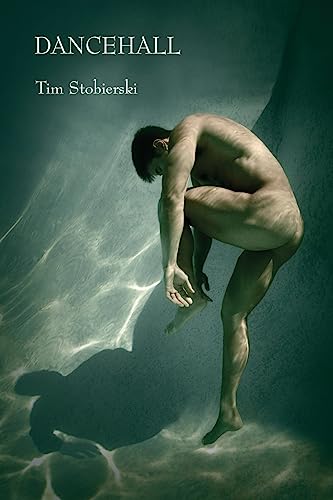
• That being said, with a few exceptions, I wrote these poems during the pandemic. The early days of the pandemic were very lonely for me. I was single during the lockdown, and found myself longing for human connection at a time when it was impossible to have. Those feelings of love and longing and loss really permeate the poems that eventually made it into the collection. In that way, writing Dancehall was a way for me to make sense of the world.

3) What theme or message do you hope readers will take away from your book?

• More than anything, I want readers to connect with the poems and come away with a sense that love is universal.

• The poems in Dancehall follow the narrative arc of a single relationship from start to finish. I call the book a queer love story, because I myself am queer and I see the book as coming from that perspective. But I also made very conscious stylistic decisions so that the poems would appeal to everyone — gay or straight, single or partnered, male or female or non-binary. 

• You may notice, for example, that except for in two instances the poems don’t make use of pronouns. Instead, the speaker (“I”) is talking directly to the subject (“You”). I did this so that it would be easier for the reader to put themselves in the poem — either as the speaker or the subject — and feel the immediacy of the work. 

• If I, a queer man writing about queer relationships, can write a poem that allows a straight person to feel something about their own relationships, then I think I’ve succeeded in my mission. It’s kind of cliche at this point to say it, but love is love. 

4) What drew you into this particular genre?

• I think I was drawn to poetry because I myself read poems that triggered an intense emotional response in me, which made me realize that poetry could be powerful. Some of the most powerful poems I’ve ever read were short poems — under 10 words — and yet they had the power to conjure memories and emotions in what is really an awe-inspiring way. Once I experienced that, I knew that I wanted to learn how to do that myself. I wanted to make people feel something, and I personally haven’t found a better way of doing that than through poetry.

5) What social media site has been the most helpful in developing your readership?

• I have to admit, I’m terrible with social media. I use it mostly for personal reasons — staying in touch with friends, etc. But I’m starting to get a handle on it as a means of building my reader network! I’ve just begun sharing videos and pictures of my work on Instagram (timstobierski) and TikTok (tendre_croppes) and they’re definitely both powerful tools. I think TikTok has the most potential to get your work in front of millions of people quickly, but it’s also tricky to know what’s going to go viral or do well and what’s going to be a flop. I guess I’m still learning. 

6) What advice would you give to aspiring or just starting authors out there?

• I think the most important bit of advice I have is to not let rejections get to you. If you submit a poem or a story or an entire book to a press and get a rejection, do your best not to take it personally. Brush yourself off, think critically about whether or not there’s a way you can make your submission stronger, and find a new press to submit to. Just because your work isn’t for someone doesn’t mean that it’s for no one.

• When I first pulled together the manuscript for Dancehall, it was very different from what the book now looks like. I was submitting it to contests and presses that wanted books of poetry consisting of 30 poems max, so that’s how I arranged the book. It wasn’t until I got my fourth or fifth rejection that I looked at the collection and thought, “Well, they keep turning me down when I send them what they say they want. I’m going to submit what I want.” I doubled the poems, reorganized the book, and gave the collection a narrative arc that didn’t exist before. And when I sent it out the next time? The book was accepted by not one, but two presses.

• The moral of it all: Rejections are a part of being a writer. So do your best to build up a thick skin.

7) What does the future hold in store for you? Any new books/projects on the horizon?

• The way I write poetry is slow. It takes time. I don’t set out to write a collection — they amass over time as I write a poem here or there and realize that a theme has emerged. 

• Recently, I’ve been writing a lot about grief, tied specifically to my father’s death. I think that those poems will eventually form the body of a collection. Likewise, I’ve been writing more explicitly about my experiences coming to terms with my sexuality, and I think that will eventually form a collection

About the Author

Tim Stobierski writes about relationships. His work explores universal themes of love, lust, longing, and loss — presented through the lens of his own experiences as a queer man. His poetry has been published in a number of journals, including the Connecticut River Review, Midwest Quarterly, and Grey Sparrow. His first book of poetry, Chronicles of a Bee Whisperer, was published by River Otter Press in 2012. 

To pay the bills, he is a freelance writer and content strategist focused on the world of finance, investing, fintech, insurance, and software. In his professional writing, he prides himself on his ability to help the reader understand complicated subjects easily, a quality that informs his poetry. 

He is also the founder and editor of Student Debt Warriors, a free resource for college students, graduates, and parents who are struggling to make sense of the complex world of student loans.

Interview with Author Dean Alexandrou 

1) Tell us a little bit about yourself. How did you get into writing?

I first became interested in language as an art form in school, after being prompted to read the book Gormenghast by a temporary English teacher who was covering for our main teacher. (Sadly I cannot even remember his name to thank him!) Gormenghast, by Mervyn Peake, uses words like daubs of paint, to create imagery that is more than just the rendering of a scene or story. After reading it I had a new appreciation for words and the way they could be used to add character to something as simple as walking along a corridor. Conversely, at the opposing end of the artistic spectrum I have also always been in awe of particle physicist Richard Feynman. His ability to explain extremely difficult principles of physics to a casual reader through perfectly selected, but simple words, phrases, and analogies, is another use of language that I love to emulate.

My personal journey into writing did not start until years after leaving school, and has really only just begun. Through my exposure to the entertainment industry I have gradually found myself as the writer of several short screenplays and scripts, increasing in length, until taking on a novel was the next logical step. The rules and restrictions of writing in screenplay format have always felt extremely limiting in expressing complex ideas that do not take place through dialogue. And, since most of the concepts I am interested in exist within a kind of internal, cerebral space, writing a novel was the only way I could explore them freely.

I have spent most of my adult life freelancing between different disciplines, some in the world of entertainment – film making, working at media agencies, occasionally on-screen – and some working in tech – coding, consulting, R&D at software companies. There are so many weird and wonderful things that I have encountered that I would love to spend the time writing about, either as elements of a story, or in isolation in their own right. Hopefully I will get the time. There is so much I would like to share.

Advertisements

2) What inspired you to write your book?

Initially, SYMUTAL was an idea for a film – or rather the seeds of an idea. With the onset of Covid lockdowns in 2020 there seemed a perfect opportunity to flesh this idea out in much greater detail than I had ever intended. I dived headlong into writing it as a novel, then fully rewriting it… then fully rewriting the full rewrite… and again, over several iterations during the next few years. In addition to the story elements of the book, there are many ideas of computing and science that I felt have never been articulated particularly well outside of reference manuals or non-fiction. I wanted the reader to be exposed to some of the beauty that I feel is inherent in a scientific view of the world. Algorithms are beautiful, and they are everywhere.

3) What theme or message do you hope readers will take away from your book?

Firstly and foremost, I want the reader to have fun through the characters and their journeys. But beyond that I guess I would like people to understand the world around them as something that is in constant flux, composed of a continual conflict of ideas – every object being the expression of an underlying principle of science.

4) What drew you into this particular genre?

I don’t really see myself as having chosen a genre to write in, per-se – I don’t think I could write in any other genre. It just feels like I am expressing my inner self through characters and story.

5) If you could sit down with any character in your book, what would you ask them and why?

I would sit down with the meta-character The Hoshoku-Sha Corporation, and ask them to what end their progress was intended.

6) What social media site has been the most helpful in developing your readership?

I have no idea to be honest. I think that contacting real readers, such as yourself, and reaching out to them is likely to be more fruitful than any number of broader social media approaches. I am still gathering data.

7) What advice would you give to aspiring or just starting authors out there?

Since writing SYMUTAL, a few other people have asked me what my process was – people similar to myself who feel they have an idea to express but are not trained in writing, or are not experienced in writing long form content. I would say this:

Once you decide to write something, do it. Pin a sheet of paper to your wall and every night at midnight write down the number of words you have written that day. Never lie. Never cheat. Write the number. Your word count. Pin it somewhere so that you can always see it. If you don’t feel like writing that day, do it anyway. If the words feel like they are not coming out creatively that day, or you don’t have your “muse” with you, write anyway. Write something. Move the story forwards. Do it until you reach the end. No matter what. Every day. Until it’s done. Even if it is only one paragraph that day. Do it.

The reason I think people should adopt such a cold-mannered, relentless, Terminator-like approach, is that once they have finished the story they will want to rewrite it *anyway*. Guaranteed. No matter how good the first draft is, they will want to improve it. Nobody will be happy with their first draft…. Therefore, do not spend 12 months procrastinating on writing a single sentence because you want it to be perfect. It won’t be perfect the first time. So just write it, regardless of mood. Refine it on the next pass.

It is much easier to refine something that already exists (your first draft) into something you are happy with (your second, third, draft), than to create it perfectly all in one go. So you will save more time writing two drafts, fast, than you will by waiting for your first draft to come out perfectly.

8) What does the future hold in store for you? Any new books/projects on the horizon?

I am gradually making the book SYMUTAL into an independent movie. I am trying to honour the integrity of the book’s key principles, and shoot as much as possible in the style of the writing, rather than condense it down to a traditional script.

Once I have completed that I will start writing my next book. I find it difficult to overlap creative ideas and give each one my full attention.

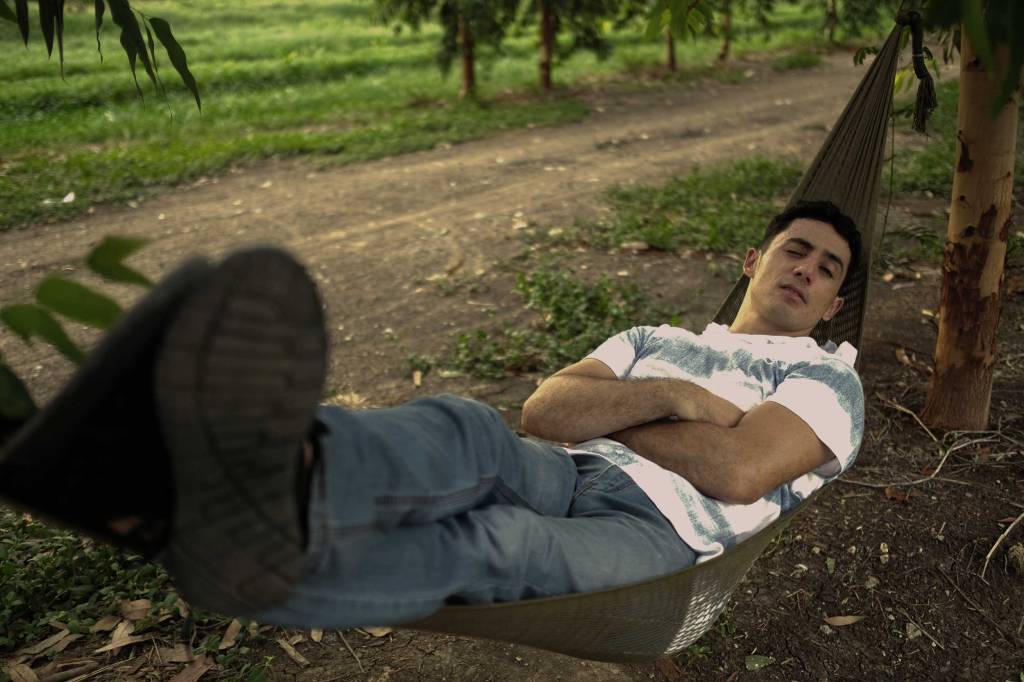
I have attached some photos. Not sure which ones match the interview questions. Use any you think fit.

Chilling in the hammock may well be the right vibe! 🙂

Advertisements

About the Author 

I was born in Dubai UAE, moved to England when I was 5, and grew up in London. Currently I live in Bangkok Thailand with my girlfriend. My background has been a mix of different careers and locations, with a lot of technology roles (I have spent a lot of time as a programmer, and digital nomad), and have also had a few forays into the entertainment industry. Suffice to say I find it difficult to completely categorise myself in any normal, sensible way!

Much of this contrasting medley of places manifests itself through my writing, and will be apparent in the book Symutal, whose story is interwoven between Earth, the Moon, and virtual reality, but with a strong interlinking storyline. It is speculative, dystopian fiction, but with occasional scenes borrowed from my own experiences.

http://deanalexandrou.com

https://www.instagram.com/deanalexandrou/

https://www.imdb.com/name/nm1525674/

Feature + Interview with Matthew Miller of the Orlando Informer

We all remember the first time we stepped into a theme park. Whether it was a local park native to your state or a significant park like Disneyland or Universal, our memories and heartfelt experiences in the park were childhood memories we won’t soon forget. The smell of fresh popcorn or the excited screams of parkgoers on a nearby roller coaster are staples of any park. Yet the new technology that has come forward in recent years has elevated the park-going experience to all new heights. From the recently released Super Mario Land to Halloween Horror Nights and Avengers Campus, the worlds we fell in love with on the big screen and beyond are something we can all walk into and experience ourselves.

One of the things people don’t always consider in these parks is the people who create them. The people who make the technology and the people who implement and build it into what we see today. One such man is Matthew Miller of the Orlando Informer, who recently had his name added to IMDB. He is currently the senior director of technology & business development at Orlando Informer, and formerly was a theme park technologist who had a hand in helping to develop some of the most brilliant and beloved experiences for both Disney and Universal. His accolades include numerous awards and a patent for his research and technology development for wearable technology. Having traveled the world, from Orlando to Osaka, one of the leaders in theme park technology has taken the time to speak with us today to learn a little bit about the man himself, his inspiration, and the world of theme park technology development.


1) Tell us a little bit about yourself. How did you get into the world of theme park technologists?

I grew up in the extraordinary small town of Wewahitchka, FL. It’s an incredible place and where I became very interested in math, science, and theme parks. I would later move to Orlando, FL. to attend the University of Central Florida. While trying to get my foot in the door at a major theme park, I landed an internship with a small design firm that produced special effects for the parks. This allowed me to work on my first big projects for the big players as a third-party vendor, and then I used this experience to land an internship at Universal. While at Universal, I secured a full-time job as a theme park technologist working on incredible theme park experiences.

2) What inspired you to work in this industry?

I’ve known that I wanted to be a roller coaster designer ever since the 1st grade. My family took a week-long trip down to Orlando, Fl, and visited several parks. I can still vividly remember that trip and the feelings I had walking through the theme parks with my family. I knew then what I wanted to do that for the rest of my life.

3) What has been one of the most complex yet rewarding pieces of technology enjoyed by parkgoers at a particular theme park?

The level of recent in-park interactives is absolutely incredible. From Super Nintendo World to The Wizarding World of Harry Potter, the wearables and interactive merchandise really have helped place the guests in the middle of the action. It’s amazing to walk into these stunning lands and then get to play a dynamic role in the story via these interactives. It makes every visit to the parks completely unique.

4) What are some of the most popular attractions you’ve been a part of?

I’ve been very fortunate to work on incredible attractions all around the globe. Some of my favorites have been Despicable Me Minion Mayhem,

Harry Potter and the Escape from Gringotts, and Mario Kart: Koopa’s Challenge.

5) If you could have a hand in any particular theme park’s creative properties, what project would you love to work on?

Shanghai Disneyland is currently working towards the opening of the City of Zootopia. I’ve always loved the sights, stories, and music of that property – I’m really excited to see the new land open in a few years. That project would have been a lot of fun to be on!

6) What social media site do you enjoy using the most, and has it helped bring attention to your given field?

I’d say the absolute best in the entire industry is Orlando Informer, but of course, I’m completely biased. 😃 I feel very fortunate to work with our team and our social media division works around the clock to showcase the most updated information on the web.

7) What advice would you give to aspiring or just starting theme park technologists out there?

Never give up. There are days when the dream will seem impossible and there will be people who tell you to stop dreaming so big. However, if you know in your heart this is what you were born to do, then literally anything is possible with enough passion, imagination, and grit. Don’t be afraid to start where you are and always look for small projects to help build your resume when you are first beginning.

8) What does the future hold in store for you? Are any new projects on the horizon?

I’m extremely grateful to be working with Orlando Informer and I hope to be here for a long time. I feel so incredibly lucky to be part of the theme park industry and I hope to continue on this path for many more decades! I’m also very passionate about helping others land their dream jobs, and I will continue to do that on the side too.


Thanks to Matthew for speaking with us today. Be sure to check out his page on IMDB and support his incredible work.

https://m.imdb.com/name/nm15089090/

Interview with Author Caleb Brabham

1) Tell us a little bit about yourself. How did you get into writing?

I’ve always enjoyed stories. As a child I enjoyed drawing pictures or my own comic books but I didn’t particularly enjoy writing – it felt like work. 

In high school I had the fateful assignment to write a combined ten short stories in a single week for two separate classes. I freaked out and cheated – I recruited someone to help me write the lion’s share of the stories. One of my teachers called me up to see him. He did worse than catch me. He complimented me. I will always remember his burning commendation. 

“You are light years ahead of the rest of the people in this class.”

 That summer I wrote my first short story for fun. It was pretty bad. But I kept tweaking it. Then I wrote another. And another. Trying to be worthy of those words until I was doing it for the joy of writing and creating. 

2) What inspired you to write your book?

A sentence, really. What if a man woke up in hell and didn’t know how he got there. That starting conceit is a long way from where I ended up, but it’s still there. 

It took me ten years and well-over ten drafts to complete the book. In fact, it wasn’t until I discovered Azrael Abaddon and made him my protagonist that the book really started rolling. His voice perfectly matched the story I was telling and eventually, discovering more about him led me to the startling revelations found at the end of the book. 

Sometimes all it takes is the right main character.

3) What theme or message do you hope readers will take away from your book?

Messages of forgiveness are important to me. It’s critical for us as people to understand as long as we’re willing to change, we are never too far gone. 

4) What drew you into this particular genre?

The trappings of noir were attractive to me even at a young age – even before I really understood its meaning. What kid doesn’t enjoy the idea of putting on a fedora? But noir kept interesting me at different stages in life – showcasing itself as a valid expression for life’s ineffable mysteries and moral struggles.

Noir is less about the mystery than the morality. While there is still truth to uncover, the mystery never outweighs the melodrama. It became natural in my mind to tie it to the afterlife and even traditional Western theology to see what the result would be. One is obsessed with damnation, the other salvation. There had to be a story that answered both.

5) If you could sit down with any character in your book, what would you ask them and why?

I’d like to think I have the good sense to stay away from most of the characters in ‘Godthread.’ Azrael, Morningstar and Bethesda would get me in trouble in a hurry and I don’t think I could bring myself to look Krysis in his many eyes. 

The Almighty, perhaps. Though I don’t know what it is I’d ask Him. I think it would be peaceful just to sit with Him. I think we could have a good conversation without saying anything at all.

6) What social media site has been the most helpful in developing your readership?

I’m not as active on social media as I’d like to be. Still, I have had some success with Instagram.

7) What advice would you give to aspiring or just starting authors out there?

Write the book. Write it and rewrite it. Don’t ever be afraid to start over from scratch.

8) What does the future hold in store for you? Any new books/projects on the horizon?

Lately I’ve been working on a murder mystery set in Victorian London. 

About the Author

Caleb Brabham is an editor, journalist and photographer currently living in New Orleans. His first book, Apocalypse of Bob, was published in 2010 by Charisma Media.