1) Tell us a little bit about yourself. How did you get into writing?
This is my first book and my initial intention was to publish in French, which is my first language. However, I stumbled upon a writing contest for micro fiction and French was not one of the languages in which you could submit your work. I ended up submitting 2 stories but I had almost fifty that I was not using. That’s when I decided I would publish them and that’s how my collection ended up being in English.
Advertisements
2) What inspired you to write your book?
Short stories have always been my favorite type of fiction. Two of my favorite authors, Françoise Sagan and Chimamanda Adichie, write with so much emotional intensity. I was inspired by their work and wondered, what triggers intense emotional reactions for me? This is what motivated me to write the stories in my book.
3) What theme or message do you hope readers will take away from your book?
I hope they appreciate the deep inner workings of the human mind. Things are not always what they seem at the surface, and it is almost impossible to read other people’s minds. When you are not in someone else’s shoes, you just never know what is going on for them.
4) What drew you into this particular genre?
I enjoy novels in general and I think short stories simply give me the impression that I am getting even more out of an author. Great short stories leave you with a sense of awe and wonder because the length leaves you wanting more. I would love to create that feeling in my readers.
Advertisements
5) What social media site has been the most helpful in developing your readership?
I don’t use much social media. Maybe I should. I use the old fashion social networks, i.e. word of mouth!
6) What advice would you give to aspiring or just starting authors out there?
The author Hala Alyan states that she allotted 30 minutes a day to her creative writing as she was working on her doctoral thesis. I decided to try it out and soon 30 minutes a day became 1 or 2 hours. That is how I got my book written and published in a year.
7) What does the future hold in store for you? Any new books/projects on the horizon?
I would like to keep writing and publishing short stories for the moment. I feel I need the practice before I devote time to a full novel. My next collection of short stories will be in French!
Advertisements
About the Author
Philippa c. Jabouin has authored many articles and short stories under her name and as a ghostwriter. As a recovering ex-lawyer, she now spends her time writing as a freelance journalist, editor, and consultant. This is her first published collection of short stories. She lives in the Ottawa/Gatineau region of Canada.
1) Tell us a little bit about yourself. How did you get into writing?
While on a palace contract in Brunei for the Sultan, I started an online writing course. At first, all went well with both my tutor and I pleased with how things were going. However, when my tutor was changed, nothing was the same. In one lesson, I had to write the basis of some true-life stories. This I did, but my tutor did not believe they were true. As a result, I stopped the course.
2) What inspired you to write your book?
After I retired from working for fourteen years on mainly high-class projects spread over three continents, I wrote Follow in the Tigerman’s Footsteps, a memoir of this time. It shows that there is more to life than a boring 9-5 job.
3) What theme or message do you hope readers will take away from your book?
By thinking positive when things get tough, it is possible to get back in the driving seat of life.
4) What drew you into this particular genre?
I write in several genres, both fiction and non-fiction. As well as memoirs, I write thrillers and romance stories.
Advertisements
5) If you could sit down with any character in your book, what would you ask them and why?
I would ask Jeff Stone, the main character in two of my thrillers, For the Greater Good and Desperation Rules the Day, how he manages to survive in dangerous situations. It would help give me a better understanding about the characters I write about.
6) What social media site has been the most helpful in developing your readership?
I guess that would be Facebook. I use this for posting about my writing and replying to others in the various groups I belong to.
7) What advice would you give to aspiring or just starting authors out there?
Never give up. If you find yourself stuck while writing a story, take a break. Go out and take a walk if you are able, or pick up a book and read. Later, when you feel more relaxed, return to your writing.
8) What does the future hold in store for you? Any new books/projects on the horizon?
I am presently completing It Happened in Barcelona, another romantic novel, as well as working on Accidental Death, a short thriller. I am also part way writing a film script based on A Dangerous Love Affair, another of my published romantic novels.
Advertisements
About the Author
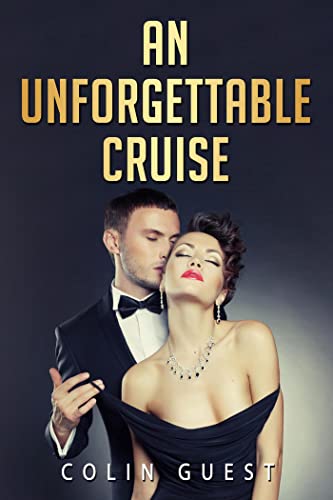
Colin Guest is an author with eleven books published in various genres. His latest book, An Unforgettable Cruise is a romantic novel. He has also written two film scripts based on his thrillers, For the Greater Good, and Desperation Rules the Day. Colin lives in Istanbul, Turkey with his wife Gulden and their cat Bella.
1) Tell us a little bit about yourself. How did you get into writing?
I first fell in love with prose in a creative writing elective class in the 7th grade. The teacher (wish I could remember her name so I could give a proper shout-out) really helped me develop my literary voice and confidence. I’ve been writing fiction ever since. Earlier on I tended more toward short stories. This novel is my first attempt at long-format.
Advertisements
2) What inspired you to write your book?
I’ve always been fascinated by the mythologies of early cultures and the way in which these cultures personified their beliefs and spirituality. Angels of Death of caught my imagination for a while. For this particular story, I actually began with the imagery of a specific scene of an angel of death observing the passing of a mortal, which became Chapter 2 of the book. From that point, the rest of the story developed out.
3) What theme or message do you hope readers will take away from your book?
I don’t have a specific message or theme I want readers to take away. It would mean more to me that they simply enjoyed the story. Sometimes that is enough, to just enjoy a book.
4) What drew you into this particular genre?
Everyone has their own unique inner creative voice. Mine just happens to gravitate toward the imaginary. This is the case both with my prose and my art. I’ve always been “in the clouds”. There’s already enough reality in my life. I’d much rather dream.
Advertisements
5) If you could sit down with any character in your book, what would you ask them and why?
I really only have one main character in my story, Azrael. My other characters play more minor roles. I wouldn’t want to ask him anything so much as I would like to “see” or experience things from his perspective as an angel of death. Sometimes I feel that our physical frames are so limiting.
6) What social media site has been the most helpful in developing your readership?
I haven’t found much help from social media. This doesn’t mean that I do not use social media platforms. It just means that I have not seen a direct correlation between social media, and why people are buying my books. Most of my witnessable success in getting books into people’s hands has come from hitting the pavement, or, in other words, getting out into the community with book signings. I’ve been busy at comicons, farmer’s markets, bookstores, comic books stores, and breweries doing signings. I also spent weeks contacting a couple of thousand indie bookstores worldwide directly by email. Now I’m in 17 bookstores. One thing I’ve picked up on social media is that it is saturated, so I chose to get old school.
7) What advice would you give to aspiring or just starting authors out there?
Write for yourself first and foremost. You are the only person that needs to be satisfied by your story. That same perspective should, therefore, also guide you when working with an editor. Use a freelance work site such as Upwork or Fiverr to find an editor, graphic designer, and some to do your book layout. There are plenty of highly qualified people that can help you for a fraction of what the traditional companies will charge.
8) What does the future hold in store for you? Any new books/projects on the horizon?
I am currently working on another fiction novel based on the ancient Greek mathematician and esoteric figure, Pythagoras. I’m still conceptually working out the plotline, so much too early to provide more, but what I can say is the premise will be connected with some of the mystery surrounding Pythagoras.
Advertisements
About the Author
Joseph A. Schiller is a high school social studies teacher in Houston, TX, where he lives with his wife and three sons. Upon the Arrival of Dawn is his debut novel.
1) Tell us a little bit about yourself. How did you get into writing?
I was an English major. I was very reflective, I had a lot of strong feelings and I often wrote them down in a diary but never ventured into writing a novel. I was so busy creating space for people to manufacture their art, as either a manager or a producer, etc.
Advertisements
2) What inspired you to write your book?
I stopped running and had the opportunity to look back and saw the immense chapters in my life and the stories I needed to tell.
3) What theme or message do you hope readers will take away from your book?
Hopefully, every individual will strive for freedom, freedom is not a political instrument, freedom is internal in man’s soul. Using truth, the real truth of one’s consciousness in coming to terms with the ghost/reservoir main our life where one can achieve true freedom. When freedom is achieved one becomes limitless. Truth is a very hard pill to swallow for most of us but without truth, we have no freedom.
4) What drew you into this particular genre?
Truth. You cannot write this genre unless you have a basis of truth. Though it is fiction, most fiction is based on reality.
Advertisements
5) If you could sit down with any character in your book, what would you ask them and why?
I would ask Gail why she made such a destructive choice in attaining a goal that she rightfully should have answers for but she wound up hampering or destroying close to 400 actors’ careers.
6) What social media site has been the most helpful in developing your readership?
None and I am not a big fan of social media. It is a necessity for communicating.
7) What advice would you give to aspiring or just starting authors out there?
I would tell a young writer to zero in on elements of your life and talk about them but remember the equation of truth and freedom.
8) What does the future hold in store for you? Any new books/projects on the horizon?
A round trip on the Queen Mary to England, then renting a car and retracing my steps for 3 months in Europe, when I return from Europe I am then getting into my Jeep with Buddy going cross country retracing my steps in America on those wonderful trips I had. I am in the outline stage of writing a second book called “Reflections on a reservoir man.” Looking back, observing on my final journey. Also, the release of our new feature film “How Dark They Prey” on various platforms including Amazon Prime Video September 15th, 2022.
Advertisements
Author Bio:
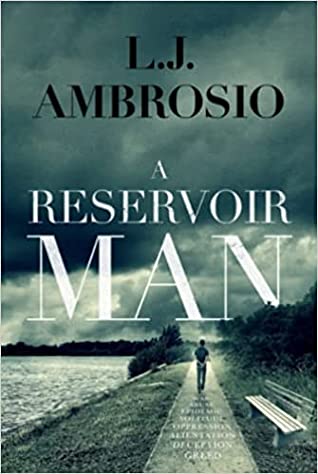
Louis J. Ambrosio ran one of the most nurturing bi-coastal talent agencies in Los Angeles and New York. He started his career as a theatrical producer, running two major regional theaters for eight seasons. Ambrosio also distinguished himself as an award-winning film producer and novelist throughout his impressive career.
Book Bio:
Everywhere Michael turns he sees a Reservoir Man. Michael’s endless trials of survival include sexual assault, The Vietnam War, an arrest in Spain, Hollywood scandal, the AIDS outbreak, 9/11, and beyond. If only Michael could find the one thing he values most, his freedom. Michael’s coming-of-age is tarnished by many but the courage to live his truth may just keep Michael one step ahead…or will he succumb to the embraces of a Reservoir Man?
1) Tell us a little bit about yourself? How did you get into writing?
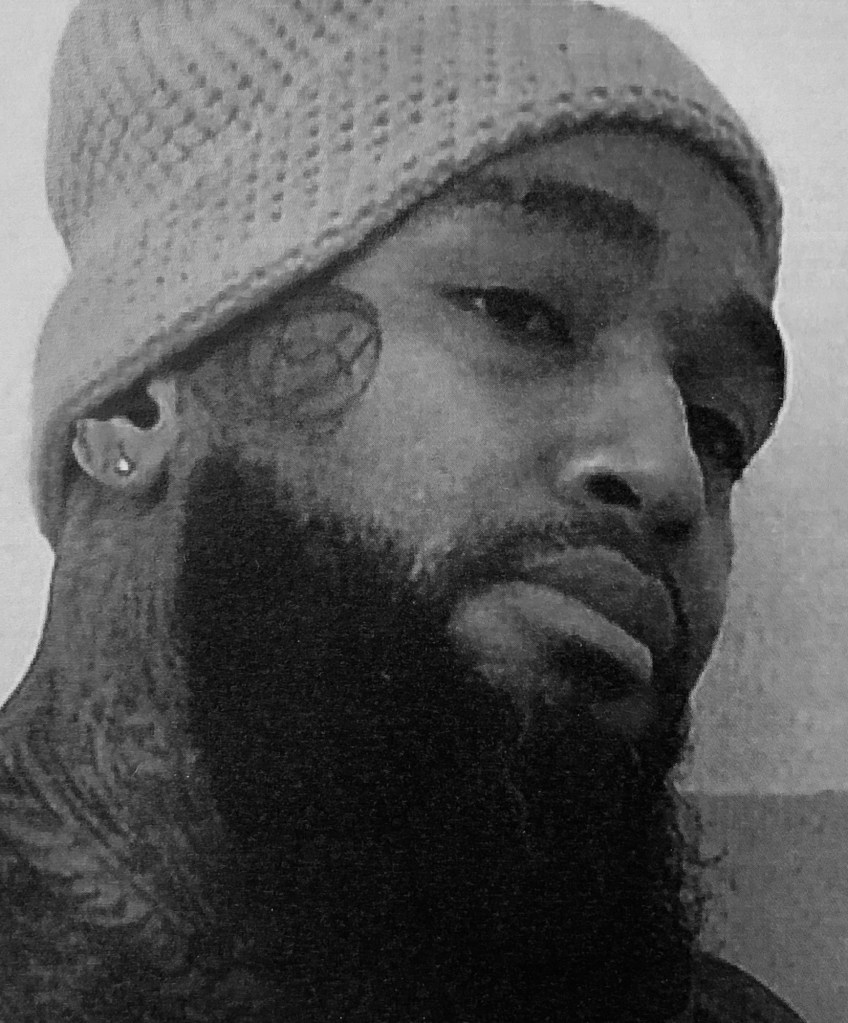
I am Steve Malik Swayne. I was born in Ogden, Utah and raised in Salt Lake City, UT and Las Vegas, NV. I became fascinated with words in elementary school, where I began writing short stories and poems. This eventually led to me writing music and fictional novels.
Advertisements
2) What inspired you to write your book?
Traitor was inspired by actual events. Traitor gave me the chance to express how I felt during my first few years of incarceration on a poetically creative level. The story was a release for me – the transformation of darkness into light, if you will.
3) What theme or message do you hope readers will take away from your book?
In this specific piece, I would like for the reader to recognize the in-depth expression of what can dwell inside of each one of us when driven or pushed by betrayal. Secondly, I would like the reader to be dazzled by poetry and comparison to life and recognize we all have some kind of monster inside of us, rather it be negative or positive. Finally, I would like the readers to enjoy the various plots, twists, and craftiness of mental perception that Traitor delivers.
4) What drew you into this particular genre?
I am a complex thinker. Psychology was one of my favorite classes in college, not to mention, I am a major fan of thriller and suspense. I honestly put myself to the test with this one; I wanted to see if I truly had an understanding of what it is to create suspenseful dissimulation in the context of an urban thriller.
Advertisements
5) If you could sit down with any character in your book, what would you ask them and why?
This is a difficult one, I mean, I am essentially the creator of their thoughts. So, there isn’t an answer they’d provide that I wouldn’t know. I guess if anyone, I would sit down with Xavier. Many times throughout the book, Xavier vowed he would never go back to prison. I would ask Xavier if he was nervous, worried, or concerned he could possibly be found connected to the downfall of his former friend, Tyson, causing him to go back to prison.
6) What social media site has been the most helpful in developing your readership?
I would have to say Facebook thus far, although we have barely begun adventuring into our social media campaigns.
7) What advice would you give to aspiring or just starting authors out there?
Just let the ideas flow. What begins as a simple thought may very well snowball into something monumental. As long as you believe in yourself, there is nothing you can’t accomplish, for creativity has no bounds.
8) What does the future hold in store for you? Any new books/projects on the horizon?
I have three new projects that I have recently finished, all in different genres written from an urban perspective, delivering a unique message within each of them. I believe it’s invaluable to be able to deliver a relevant message through artful composure while still entertaining people. My ultimate goal is to bring my works to life on the big screen so that I may furnish people with entertainment on a broader platform.
Advertisements
About the Author
What’s up everybody! I am Steve Malik Swayne. I was born in Ogden, Utah and raised in Salt Lake City / Las Vegas, NV. I became fascinated with words in elementary school where I began writing short stories and poems which eventually led to me writing music. After years of pursing a music career, I began running the streets, headed down the wrong path eventually leading to my incarceration. While incarcerated, (a father of three) I decided I wouldn’t become a statistic. I enrolled in college classes where I obtained two associate degrees, one in Liberal Arts and the other in General Business Administration. Still passionate about writing, I began writing fictional novels, calling home to my wife, where she would record my writings, then take the hours of recordings and type them into her laptop. From there, we pursued publication and now those publications are being introduced to the world.
1) Tell us a little bit about yourself. How did you get into writing?
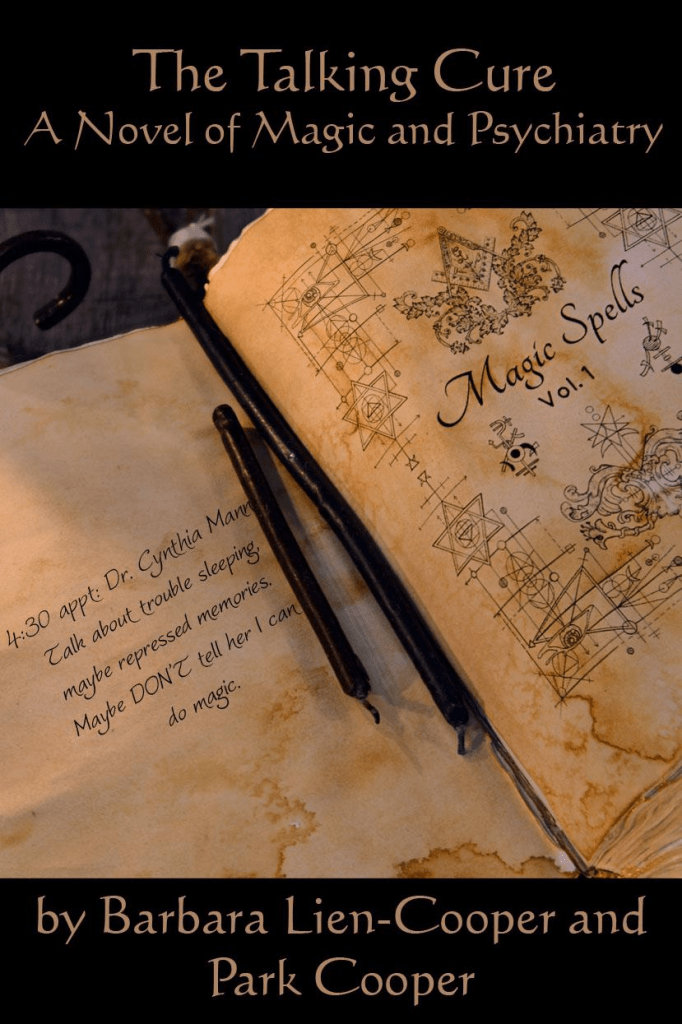
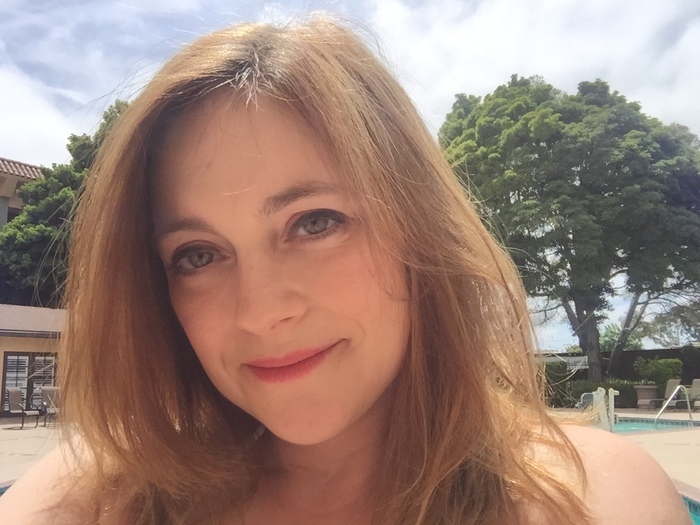
Barb’s answer: I’m Barb Lien-Cooper. My writing partner is my husband, Park Cooper, an English professor.
As for how I got into writing: as a child I was always daydreaming, writing stories in my head. Later, for a while, I was a singer-songwriter in Minneapolis, but just as I was starting to get somewhere, I was diagnosed with Chronic Fatigue Syndrome, so that dream died a sad, lonely little death. Then I got into comics and graphic novels. There was one comic I loved more than any other, named Hellblazer. I read that series and said “I want to write that character so badly…” There I was, just some punk gal, thinking I would be allowed to write a major character like John Constantine! In retrospect, what was I thinking? But, that desire led me into writing for a women-in-comics site that I co-founded that they named Sequential Tart.
I had nibbles here and there concerning writing comics, but not a lot panned out. After a while, I said “I don’t really want to write someone else’s characters, I want to write my own characters,” so I wrote a webcomic called Gun Street Girl with artist Ryan Howe. I also did a graphic novel called Half Dead with my husband and artist, Jimmy Bott. I did a one-year stint as the managing editor of the award-winning magazine Comic Book Artist (one of the awards was for the time I was working there), and then I got a job in manga as a manga adapter for Tokyopop and Viz. After the manga boom went bust, I started writing prose, which eventually led to writing novels.
Park’s answer: I wrote a thing in 9th grade about how I’d like to be a writer– a science-fiction writer, specifically, as I recall. I wrote things now and then, just a little, in high school and especially college, small things, just because it was something I felt I had to do now and then, but I didn’t really take it seriously as something I should do until I met Barb. Even then, I started just editing her stuff– if she needed a monster described, or a fight scene, I’d write that for the artist… and I slowly started doing more and more until finally, by the time she was writing prose stories, I was basically co-writing stuff with her, and then I started writing some projects myself, too, like my cyberpunk comic Swipe and some prose novels.
Advertisements
2) What inspired you to write your book?
Barb’s answer: Well, I have loved world mythology since I was around eight years old. I also developed an interest in comparative religions around that time. I was a weird kid, let me tell you. A little later, I developed an interest in supernatural literature, which led to a love for the horror genre, particularly quiet horror, and folk horror. I have a great fondness for horror films, especially foreign horror such as Asian horror films like R-Point and A Tale of Two Sisters, horror from Mexico such as Carlos Enrique Taboada’s films, and Giallo films such as Deep Red, Lisa and the Devil, and The Psychic. From those films, I realized that horror and urban fantasy could be the most imaginative genres because anything could happen in them.
When my webcomic Gun Street Girl couldn’t find a publisher, it distressed me quite a bit. I was told that it was “excellent” but publishers just “couldn’t take a risk” (possibly because the lead character was a lesbian??). So, when Ryan and I started pursuing separate career paths, I had a ton of excellent GSG stories just sitting there. Since I couldn’t in good conscience ask my artist to continue on with the series, I thought that maybe some of the plots might work better as prose. I mulled over the stories a lot, then said: “Hey, what if I had a supernatural investigator go to a psychiatrist about his problems, and have his therapy sessions be his caseload and his past cases?”
From there, I had to really think about my world-building, who my characters would be, etc. After I got into the groove, I realized that I had a lot more story ideas than just my old GSG scripts, so I kept writing until I had a series of books.
3) What theme or message do you hope readers will take away from your book?
Barb’s answer: I am not a writer with any kind of agenda except entertaining my readership. Having said that, I guess there are two themes in my book that I hope readers will pick up on:
1/ World mythology is wonderful. It’s always entertained me. I hope you’ll enjoy it as much as I do.
2/ Writers don’t have to use the same genre tropes over and over again. We can make new tropes. We can subvert the cliches of the genre. We live in a postmodern age. We can do anything now, as long as we use our imaginations to entertain our readership.
Park’s answer: Since The Talking Cure is a novel of magic and psychiatry, I will add, actually, that there is a message that I hope readers take away from reading it, which is that mental illness isn’t anything to be ashamed of– that sometimes people have emotional problems or other kinds of problems, and that it’s good to talk to professionals about it and seek help from other people. Sometimes these problems have a medical basis involving brain chemistry, and sometimes they don’t, but it doesn’t matter– there’s an old stigma about reaching out for help, and since the world is creating more and more situations to give us emotional problems, it’s past time to get rid of the stigma.
4) What drew you into this particular genre?
Barb’s answer: Well, as I said, I’ve loved horror and dark/urban fantasy all of my life. But as for being attracted to writing in these genres, it comes down to the freedom I find in writing supernatural literature. Unlike in other genres like mystery and science fiction, I am not bound by sciences like physics or forensics. I make the rules of my world building. I always say that if a writer writes characters that the readers care about, in fantasy, you can take the characters anywhere and have them do anything, and the audience will be there with the characters…as long as they act in character. A lot of viewers hated the end of Game of Thrones because a certain character had to act out of character to move the plot forward, for instance. I always say that if a character has to act out of character to advance a plot, change the plot, not the character.
Park’s answer: I started reading at a ridiculously young age, and found it more engaging than the real world, so I guess it’s just what I grew up with, in books, comic books, and television and movies– when I was a kid someone gave me a video tape with three movies on it: Tron, Time Bandits, and Disney’s original Alice in Wonderland. This was before there was a Blockbuster in our town, so I watched those over and over… and then when you could rent movies, I went for more sci-fi and fantasy…
Advertisements
5) If you could sit down with any character in your book, what would you ask them and why?
Barb’s answer: Fitzgerald once said that he wrote because he wanted to know what he felt about this subject or that. Well, I write to find out what my characters think, feel, and do. My stories are me sitting down with my characters and asking them questions, really. Oh, I’d love to sit down with my supernatural investigator, Zach Cutter, and just let him talk about his caseload. But I can’t do that– another story would pop up instead, and then I’d have to write it.
6) What social media site has been the most helpful in developing your readership?
Barb’s answer: We’ll see once the work gets out there. Promoting our work is a whole new world for me.
7) What advice would you give to aspiring or just starting authors out there?
Barb’s answer: John Cage said, “Begin Anywhere.” To me, that means, don’t wait until you have the time to write a thousand words a day, every day. It means, write when you can and however you can, then build from there.
I will tell those just starting out: please don’t despair if your first story isn’t very good. Writing is a skill. It takes time to learn. That first story of yours is no indication of who you may become as a writer. The truth is that most writers’ early stories are mediocre at best. You’ll get better at it if you keep going.
Park’s answer: Barb has thought about this question far more over the years than have I, so I feel there’s nothing I can add as far as “just starting” authors. But for “aspiring” authors– people who want to start writing, but know they’re not there yet– my advice is to practice writing by writing down what happens to you every day. Specifically, don’t just write down what happened to you every day, or it’ll get like “ate, worked, ate, slept, ate, worked, ate, watched TV, slept.” Instead, write down how you FEEL about what happened that day, and why. Use complete sentences and paragraphs. That’ll start getting you practice that you need.
8) What does the future hold in store for you? Any new books/projects on the horizon?
Barb’s answer: I don’t know what the future holds for me personally, but there are other volumes in the Cutter and Mann series that will come out in the months and years to come. I also have some comic book projects that I hope come to life in terms of publishing. Finally, I have a paranormal novel called Song to the Siren that we plan to get out there before the end of the year.
Advertisements
About the Authors
Barb is originally from Minnesota. She was a radio DJ for a while in college, and then she grew up to become a guitarist/singer-songwriter and got an album put out on the Imp label. However, she also had health issues: Chronic Fatigue Syndrome and fibromyalgia and extreme environmental sensitivities and allergies. (She also has Complex Post-Traumatic Stress Disorder due to issues involving her family of origin.)
For a while, brain fog from the CFS and the fibro made it harder for her to read long and involved works of fiction… So (since she’d always loved them in her childhood) she got into reading comics and graphic novels, particularly the comparatively avant-garde work coming out at that time from DC Comics.
Now we pop over to Park, in central Texas. Like Barb, Park also read comics (and a LOT of books) in his youth as well (a lot more sci-fi and fantasy books than Barb, and a lot more Marvel comics than Barb). Then he started college and said “I need an extra hobby or something. Maybe I’ll get back into comics again.” He started doing so, including reading the comparatively avant-garde work coming out at that time from DC Comics…
Then someone in the letter columns of the comic Sandman announced that they were doing a fanzine for readers of that comic. Barb and Park both wrote in.
Barb and Park became aware of one another… Park liked the writing Barb submitted to the fanzine, and he wrote to Barb, and they began writing to each other. Then they started talking on the phone… they fell in love… they started visiting one another…
Reader, they got married (to each other).
Barb wrote for the award-winning website Sequential Tart, made by women about comics and other popular culture things, and Barb wrote a lot of reviews and articles (especially articles)
Park and Barb had a column online for a now-defunct website entitled The Park and Barb show (about the same sorts of things) for 12 years…
A little after they started those things, Barb started writing her comic Gun Street Girl…
A little after that, they started adapting and editing manga for major American publishers importing manga (and sometimes their South Korean and Chinese counterparts) from the far side of the Pacific. Honestly, there were too many to keep track of… lots and lots of titles. Near the end of this, Barb and Park wrote the manga pitch The Hidden for TokyoPop, perfectly timed to appear the week that that company fell apart.
Then Barb and Park wrote the sci-fi vampire graphic novel Half Dead.
Somewhere around this time, Park successfully completed his Ph.D. in literature, and then Barb and Park wrote the vampire prose novel Something More Than Blood.
Eventually Park started writing his cyberpunk comic Swipe for Angry Viking Press.
(You can read more about all of the above projects elsewhere on this website!)
There were also other various short stories (and a novel, in one case) and non-manga-related editing jobs, too many to bother counting here…
These days, Barb and Park live happily together in Austin, Texas.
1) Tell us a little bit about yourself. How did you get into writing?
I’m not sure how I got into writing. I’ve always written. I honestly can’t remember a time when I didn’t write.
Advertisements
2) What inspired you to write your book?
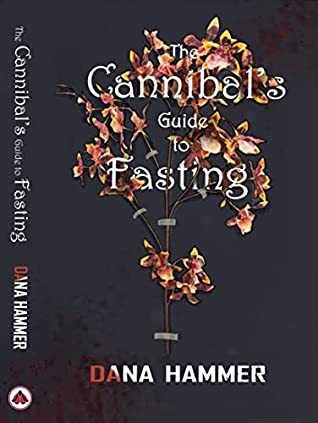
Drugs, haha. Basically, I wanted to write a satire about the way we treat addicts in our society. On the one hand, we treat them as criminals for something that pretty much everyone agrees is a disease, and that’s messed up. On the other hand, addicts often do horrible things because of their addictions, and we can’t ignore that, and act like it’s not a problem. To my way of thinking, the solution to addiction isn’t to punish addicts. The solution is to come up with a cure for addiction. I’m not a scientist, so I can’t do that. But I can write a book about it.
3) What theme or message do you hope readers will take away from your book?
This book has a lot of themes in it, and I’m reluctant to tell people what to take away from it. I just hope that something resonates with them.
4) What drew you into this particular genre?
I love horror comedy and dystopian fiction. Both genres are always asking the question “what if?” And I think that’s the basis of all really good storytelling.
Advertisements
5) If you could sit down with any character in your book, what would you ask them and why?
I’d like to hang out with Esteban Zappa, of course! I want him to take me out to a fancy restaurant and introduce me to exotic dishes and I’d ask him to tell me stories about his globetrotting adventures.
6) What social media site has been the most helpful in developing your readership?
The only social media site I really use is Facebook. I technically have an Instagram account, but I hate taking pictures, so it’s not really for me. Twitter seems like it’s just people being really mean, really fast. Maybe I’ll try TikTok someday. I don’t know.
7) What advice would you give to aspiring or just starting authors out there?
Marry someone who will support you financially so you have the time and space to write. Alternately, be independently wealthy. I’m mostly kidding, but not entirely.
8) What does the future hold in store for you? Any new books/projects on the horizon?
Yesterday I finished a new draft of my first middle-grade novel, My Best Friend Athena. It’s about an eleven-year-old girl whose best friend is the reincarnation of the Greek goddess, Athena. When Athena accidentally turns the school bully into a cockroach, the girls have to work together to find him and turn him back into a boy.
We will see if I can get it published.
Advertisements
About the Author
Dana Hammer is a novelist, short story writer, playwright, and screenwriter living in Anaheim, California.
Tell us a little bit about yourself. How did you get into writing?
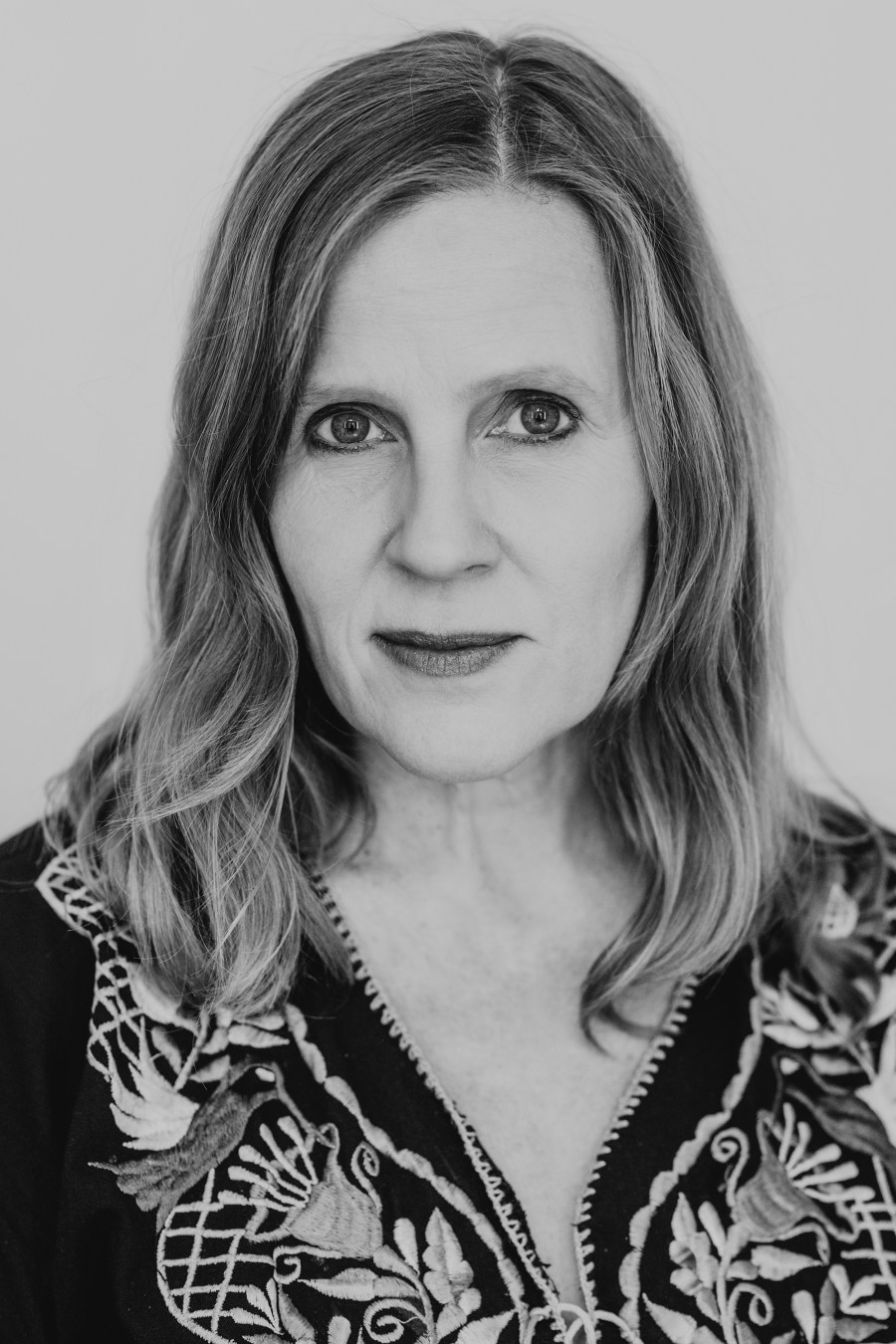
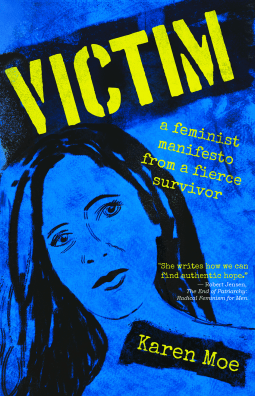
I am a feminist activist, visual artist, performance artist, art critic, essayist, and author. Victim: A Feminist Manifesto from a Fierce Survivor is my debut book. Since I started writing again in 2014, it is as though all of the writing I have done has been in preparation for the writing of this book.
Like a lot of writers, I started writing as a child. However, I haven’t been writing and honing my skills consistently since then except for in school with creative compositions and essays. In my early adulthood, except for some journaling, I wrote essays at university and became particularly skilled at the formal aspect of essay writing. It was as though, like a painter who begins with figurative drawing, I was learning the rules of essay structure and grammar so that I could break them—which is exactly what I have done and, as I write and think about it now, this breaking of rules has happened in tandem with my development as a revolutionary. My writing now, as with all of my art, is about revolution: being a contributing voice to an ideological revolution—which is the only way we are going to have lasting change in the West (which, tragically, because of globalization, pretty much means the world). I often joke that I write the same thing, over and over again, in different contexts. After all, that’s what the other side has done for millennia! Repeat and convince. Repeat and maintain. We have a lot of repeating to do until everyone hears and believes us, the same way the majority of society believes the dogma they are fed daily that is lived as unbroachable reality.
I started writing again for real in 2014. One evening, I was at a Graham Gilmore exhibition at a big gallery in Vancouver Canada. At that time, I was immersed in my visual art and, like most (or all) visual artists who have yet to get the coveted representation from a commercial gallery, I had an ulterior motive to go to Graham’s (amazing) exhibition: I wanted to talk with the gallery director and give him my card so that (just maybe) he would be interested enough to check out my work and (please god-of-the-almost-impossible, succeed as an artist in my lifetime) represent me.
I wandered around the gallery innocently checking out Graham’s paintings; I came up with a clever question about gender; I spied the gallery director; I told him I have a question about one of the paintings; we walked over to it together; I asked him my clever question holding my card strategically in the hand where he couldn’t see it yet.
“Oh!” he exclaimed. “Graham will love that question! I must introduce you to him.” My desperate undiscovered artist’s heart fell. I was escorted over to the famous artist wreathed with his admirers. The gallery director ushered me through the eager mass, all vying for Graham’s attention. Yes, Graham loved my question. He asked for my card. I reluctantly gave him the one I had poised opportunistically in my hand for the gallery director. We chatted a bit. Other admirers jabbed the circle for his attention. I went home, elated by experiencing his exquisitely wrought and culturally important paintings, but with a heavy heart about yet another failed attempt of even getting the slightest interest in my own work.
The next day I received an email from Graham.
“I want you to write a comprehensive article on my oeuvre. Do you want money? Art? Both?”
“But I’m not an art critic. I’m a visual artist like you.”
“I don’t care,” he responded as the delightful eccentric he is. “I want something different.”
So, I did. I wrote my first piece of art criticism. It’s called: “Excavations: A Feminist Resistance Artist Dialogues with Graham Gilmores Love Sic.” The article was published in Border Crossings, the most important art magazine in Canada. I was even paid over $1000.
“Oh, I guess I can still write,” I said to myself. Since then, I have written many articles of art criticism and revolution. You can find the links to some of them on my website under essays.
Advertisements
What inspired you to tell your story? What message do you hope readers will take away from your book? What is one message or piece of advice you’d give to anyone who is struggling with experiences similar to or like the ones you share in your book?
As stated above (here is an opportunity for strategic repetition): contributing to the revolution of a culture built with exploitation inspired me to tell my story as it does everything I create. However, the narrative thread of Victim was also inspired by (or one could say based on) the real-life experiences of sexual violence that I have personally been victimized by and survived. It was also inspired by the revolutionary knowledge—embodied knowledge—that I gained by having been victimized by and survived that violence. This can be seen as ironic because typically one thinks of living through sexual violence as a negative, traumatizing, experience. And, of course, it is. And yet, as I write in Victim:
“One of the main effects of my personal victimization has been an acute awareness of injustice, especially regarding sexual assault. Whenever I watch or see or read or hear about rape, prostitution, or pornography, I feel like I am being raped all over again. But, the interesting thing is, it’s not personal anymore; it’s not just about me. And, it may sound strange: it’s not all bad. It is as though, through an experience that is perceived as—and is—horrifying, there is more to it than that. Instead of being weak, passive, and defeated, my experience as a victim kicked me in the ass. It made me start doing something about it.
Don’t get me wrong: I certainly wouldn’t wish my particular form of initiation into the realm of righteous anger on anyone else, but this is good anger, healthy anger, an anger that motivates. I mean, shouldn’t we all be angry about the sexual exploitation of women and children? Shouldn’t we all be angry when more than half of the people on earth are under siege?” (Victim 144-145)
One of the main messages of the book—and the reason that I chose the controversial term ‘victim’ for the title—is because I turn the concept and reality of ‘victimhood’ on its head. When a person lives through extreme violence, you change. It affects you. There is no going back. Victimization has long-term effects because the system that victimizes has not gone away. As Andrea Dworkin said: “Victim is a true word. If you were raped, you were victimized. You damn well were. You were a victim … And if it happens to you systematically because you were born a woman, it means that you live in a political system that uses pain and humiliation to control and hurt you.” I write in the book: “It’s from then on always after.” And, in response to Dworkin’s connection of victimization and the system that does it, this awareness and acknowledgment of the victim being an inescapable result of rape means that the acknowledgment is the source of transforming the system that creates a victim—and the victim not only knows this, they feel it.
Like many other victims, since I became fully conscious of the violence I have experienced and the aftermath of PTSD I still negotiate daily, the politically correct term ‘survivor’ has always felt like it doesn’t tell the full story. Yes, of course, I survived. And, yes, time passes. But what happens during that time, the life passing in what our culture construes as an ever-forward moving trajectory, shouldn’t promote the shedding of experiences, an eradication of life. There is no moving on from a life-altering experience, getting over what will always be a part of our lives. For me, this is not healthy, nor is it realistic. As I say in Victim: “I need to learn to honor my scars. So that they won’t happen again.” Scars are a source of wisdom and empowerment and not inflictions of debilitation and defeat.
Acknowledging and deriving power from our victimhood also debunks the patriarchal ideology of linearity, constantly moving forward, not looking back (which is the ideological infrastructure of neo-liberalism where no acknowledgment or responsibility is given to what has been plundered through in order to fill the bottomless glut of individualism and greed, that which exploits in order to exist and that which rapes not only women and children, but everything). Linear thinking negates any possibility of sensitivity and awareness; we rush past without noticing what came before, what exists on the margins of our individualist prerogatives to get ahead. Victim was intentionally written as a non-linear narrative not only to overwhelm constrictions, but also for me as the writer to experience the writing process as it happened, as it was remembered. Each part, each memory, each process of remembering, each connection of remembering through the act of writing—what phrase, what word, what rhythm arose—bred the next part of the manuscript. However, remembering is not only a backward trajectory, the inversion of the forward: what memories, what parts of our lived lives have been pushed aside and return with their connection to another memory residing in a word that can re-surface what has been buried. And then we are greeted by the narrative of how we have forgotten this, what caused us to push this aside? And the remembering, the excavating, through writing, continues as a cycle, never a line.
For me, this process of remembering (and being) is how writing happens; it is how being simultaneously conscious and unconscious with all of the obfuscations and clarities in between. You have a topic, what you are going to write about, and maybe you even have a general idea of where you’re are going; however, for me, there is the necessary alchemy of the first sentence that arrives as a miracle from my subconscious and is filtered through a love affair with language. From that first sentence, the work is born and, as I write, I come upon experiences, ideas, and observations that I had no idea were even there, even though they were. Writing, when one opens oneself to it, surprises, teaches and gives the writer a more acute relationship with reality. As the now tall grasses, with their tips of reaching seeds, draw tender cycles, in the ever-moving air.
Men cannot be left out of the discussion of sexual violence, both as perpetrators and as victims. Men cannot be left out of feminism as a movement that is fighting for justice for all and for a culture without violence. In Victim, I write about my very difficult but, in the end, very beautiful, relationship with my father. As women, our relationships with our first sexed and gendered male are absolutely formative in how we negotiate a system of male supremacy and the female oppression that guarantees. While writing Victim and telling all (even to the extent of my own self-condemnation, my own imperfections, my own humanness), I was very interested in the genesis of the victim. However, I was also very interested in (and still am) how a perpetrator is constructed in a violent culture and how men are also victims. Breaking the cycle of abuse is critical. In patriarchy, male victims are conditioned to harden as opposed to opening to the fact that we are all vulnerable and that victimization affects us. In patriarchy, men are not permitted vulnerability. It is an acknowledgment of and living lives as vulnerable creatures that make active empathy possible. Conditioned to be strong and emotionless, those socialized as men have a much more difficult time with this. As Robert Jensen says in his book The End of Patriarchy: Radical Feminism for Men: “I was socialized in patriarchy into a toxic masculinity that not only subordinates women but also crippled my own capacity to be fully human.” This inability to feel fully inevitably contributes to the creation of the perpetrator—and, most often, his victims.
It is very significant and special to me that Victim has had wonderful responses from men, including, of course, you Anthony. One male reader said: “This is the most honest book I have ever read (and I have read a lot of books).” Another, as Daniel Gawthrop writes in his article for The British Columbia Review: “Victim is a rich and soulful testament to the power of human resilience that redefines the meaning of victimhood itself.” And your final verdict, Anthony: “While the subject matter of her own life was tragic, her strength and ability to turn her trauma into empowerment gives hope to many for the future and helps shape the blueprints to help build a better society that values compassion, equality, and justice.” Thank you!
I have known for decades that the story of the abduction, how the serial rapist tricked me, what happened psychologically while he had me, and how I got away and ended up being instrumental to his life sentence is a darn interesting story. However, as an artist, I am able to detach from my own personal life and to exist beyond myself in order to create. I have often joked: even my own trauma is interesting and, in a section of the book where I am delving into what happened to me psychologically in order to survive and ultimately over-power the serial rapist, I wrote: “the time has come to perform an autopsy on my twenty-eight-year-old psyche.”(Victim: 39). That said, because the story—however personally terrifying—is so interesting, I’ve often thought that the narrative of the story would make an amazing screenplay. Others have said this now too after reading it, so maybe it will be one someday.
However, beyond my personal narrative, Daniel Gawthrop observes how: “Now fifty-five, Moe says she was emotionally incapable of writing this memoir until now. And that’s a good thing, for Victim is a much better and wiser book than it would have been had she published it within a short time of her terrifying abduction.” It was through the years of activism, research, and scholarship between the writing of the book and the experiences of sexual violence that not only serve to extend the book far beyond the memoirist and into the system that raped her, but also by building a manifesto and a call to arms for both women and men.
What social media site has been the most helpful in developing your readership?
I was born in 1966, as you will learn when you read the opening pages of my book. As such, I frequently joke that I am half-luddite. I do my best with social media. I have Facebook and Instagram. I can’t stomach the argumentative nature of Twitter, although I know “I should.” I am working towards starting up TikTok. Because I published with a very small Indie Press (Vigilance Press who are great but don’t have the capacity to book the ambitious tours I have been undertaking), I have to do virtually everything myself. That includes organizing and booking these tours. I just completed my US Trauma & Triumph Tour for Sexual Assault Awareness Month in April 2022. I am currently organizing my Cross Canada one for September. I hope once it’s set up, I can begin TikTok. As you may have noticed, I have a lot to say. I have started the account —and now I have to figure out how to do it! This is a lengthy process for we Gen Xers and we have to psychologically prepare ourselves for researching YouTube how-tos and make the process as stress-free as possible. My name is “Logical Feminist.” Stay tuned! It will happen! And now it has to because I told you it will. Eeek.
About the part of the question as to which site has been the most helpful. Maybe Facebook because I have more friends on Facebook (and I know that to a lot of people of younger generations, FB is so passé). Although, more people on Instagram (percentage-wise) seem to be interested in my more revolutionary posts and there have been some feminists within the K’s amount of followers who are noticing me and my revolutionary posts. They haven’t followed me yet. But I seem to be on their radar (if that means anything!). I have DMed them. But, as of yet, no response. We’ll see! If anyone has any social media tips let me know and feel free to follow me and the press. Vigilance Press is an imprint of Vigilance Magazine:
@karenmoeart
@vigilancemagazine
However, for me, I just want to write my next book. And I have started, even though I haven’t finished touring my first. I have heard that the best way to sell your first book is to write you next one asap. That’s not a problem for me as I have two next ones eager to be born. Ideally, social media will take care of itself (I know! A Gen-X-get-someone-to -just-do-this-for-me-already thing to say 😉 Virginie Despentes has someone doing her social media. And she does what she is supposed to do: write. Alone. No one bothers her. Her mind is clear to create. She has space in all senses of the word to say something, to make something, important. #damrightmetoo.
What advice would you give to aspiring or just starting authors out there?
Start. And, with writing, always be on the lookout for the opening sentence. The first sentence is the magic. I say to my students, when you have your first sentence, it is in many ways as though the piece of writing is written. The first sentence of Victim that I wrote in November 2016 is “I have lost the mustard yellow suede jacket from that time.” From that sentence, the book poured out of me.
Also, with writing as with all art, there is no going halfway. Art is a vocation, not a dabble. One of my biggest pet peeves is when people and politically correct artist-run centres say that anyone can be an artist and spend thousands of dollars of culture grants attempting to prove what isn’t true. And, not only is it not true, it’s an insult to all of us who have committed our lives to honing our skills through, most often, personal sacrifice. Everything I do is bent upon creating because, if I don’t, I don’t feel well. Not everyone has to create in order to not feel bad. And, I know that not everyone could live the life on the edge that I, and the majority of other artists, writers, and composers now and throughout history, have lived. You either want to create or you don’t. Wanting to write a book is not based on “Oh, I would love to write a book someday.” For one: there is no someday. And: there is no want. It has to be an all-encompassing need. An obsession to say something. (As an aside, I would like to add that not everyone can be an artist, but everyone can be a revolutionary and contribute to the movement in some way. For example, I could never be a lawyer and we need revolutionary lawyers to give justice to so many rape victims who are never given any and retraumatized by being brave enough to report being raped, not to mention save other women by getting another rapist out of circulation).
However, even though it’s very difficult and discipline is required, for me anyway, the writing is the fun part. It is the getting the agent, the getting the publisher, the literal making of the book that is the hard part. When I first started submitting my book in 2019, I googled how to go about doing just that and the first website I came upon said: “Oh, so you think writing your book was hard!” That statement pretty much sums up what comes next after you’ve triumphantly finished writing your book. Especially your first one.
What does the future hold in store for you? Are any new books/projects on the horizon?
I have had my next book planned for the last couple of years. It came out of the research that I did for Victim. During the time that I was held captive by the serial rapist, he confided: “There’s nothing like a good whore.” Because of that statement, I had to research and write a section on the sex industry. Part of that research ended up being about child sex slavery. Lydia Cacho’s Slavery Inc: The Untold Story of International Sex Trafficking and Julie Bindel’s The Pimping of Prostitution: Ending the Sex Work Myth were both invaluable resources for not only my first book but for planning my next which will be called Inconceivable Reality. For me, there is no greater proof that the culture we live in is wrong and needs to be revolutionized than the fact that child sex slavery even exists. Of course, all sex slavery is despicable and all human trafficking unforgivable, but child sex slavery takes the proverbial cake in despicability. The fact that typically so-called first-world men will go to the third (and the third world as a geographical and economic site of exploitation also exists in the first) and pay to violate and destroy a child’s life is inconceivable to me and it has to be exposed because child sex slavery, violating a tiny and innocent body and being, has to no longer be true.
However, recently, another book has appeared on my horizon. It is a book I conceived of last fall during my participation as a forest defender at the Fairy Creek Blockades in British Columbia, Canada. The Fairy Creek Blockades are the largest act of civil disobedience in Canada. Some of the last remaining temperate rainforests is being clear-cut. Of course, it’s the same old story of soullessness and greed—the reason why I write revolution in different contexts, is to resist the non-stop repetition of ‘progress’ and ‘individual gain’ along with throwing up our hands and saying there is nothing we can do about it. Yes, we can. We in the first world still have a semblance of human rights. At the very least, we can tell the world that we don’t agree, that this is wrong, and that what we are asking for, preserving the tiny portion of what is left of pristine ecosystems, is absolutely logical. Unlike countries like Honduras and in the Amazon where land defenders are assassinated, in Canada, the US, Europe, Australia, and New Zealand we can still protest and we can still win. The forest defenders at Fairy Creek were and are miraculous people and show the good that can be activated in all of us. You can access the articles through my website that I wrote last summer which strive to tell the whole story—as opposed to what is not told by the mainstream media and these gaps, what is left out, become lies in themselves.
The politics of colonialism in Canada, as in every other colonized and colonizing nation, is very complicated. Because the logging of the Fairy Creek Watershed is also an Indigenous land claim issue, the politics are far from limited to capitalism and its acceleration into neo-liberalism: they are firmly entrenched in the ongoing colonial state of Canada. Elder Bill Jones is an ancestral elder of the Pacheedaht Nation. He is the First Nations ancestral elder who invited the settler (non-indigenous peoples) forest defenders to Fairy Creek to help him and the rest of the ancestral Pacheedaht save the old-growth forest and its ecosystem. I will be writing a book (yes, another manifesto) that will center on the life story of Elder Bill Jones, now in his 80s. The book will be called Re-Indigenize: The Revolution of Pacheedaht Elder Bill Jones.
I am, technically, in terms of labeling, a ‘radical’ feminist; however, during the writing of Victim I thought: “Why is logic radical?” So-called radical feminists look at feminism as eradicating patriarchal hierarchy, as a political movement to change the sexed and gendered distribution of power, eradicate hierarchy and the ideology of taking, and undermine the infrastructure of a masculine system that guarantees exploitation. Hierarchy, violence, and exploitation affect everything: women, gender, race, the environment, animals and yes, of course, men. Everything is connected.
Advertisements
About the Author
Karen Moe is an art critic, visual and performance artist, author and feminist activist. Her work focuses on systemic violence in patriarchy: be it gender, race, the environment or speciesism. Her art criticism has been published internationally in magazines, anthologies and artist catalogues in English and Spanish and she has exhibited and performed across Canada, in the US and in Mexico. Karen is the recipient of the “Ellie Liston Hero of the Year Award” 2022 for being instrumental in putting the serial rapist, who raped and brutalized herself and countless other women, away for life in 1996. She lives in Mexico City and British Columbia, Canada. Published by Vigilance Press on April 2nd, 2022, Victim: A Feminist Manifesto from a Fierce Survivor is her debut book.
Karen has just returned from her US Trauma & Triumph Tour for Sexual Assault Awareness Month, will be having a variety of events throughout the summer, and will be embarking upon her Cross-Canada Tour in September 2022.
I received a free copy of this book in exchange for a fair and honest review. All opinions are my own.
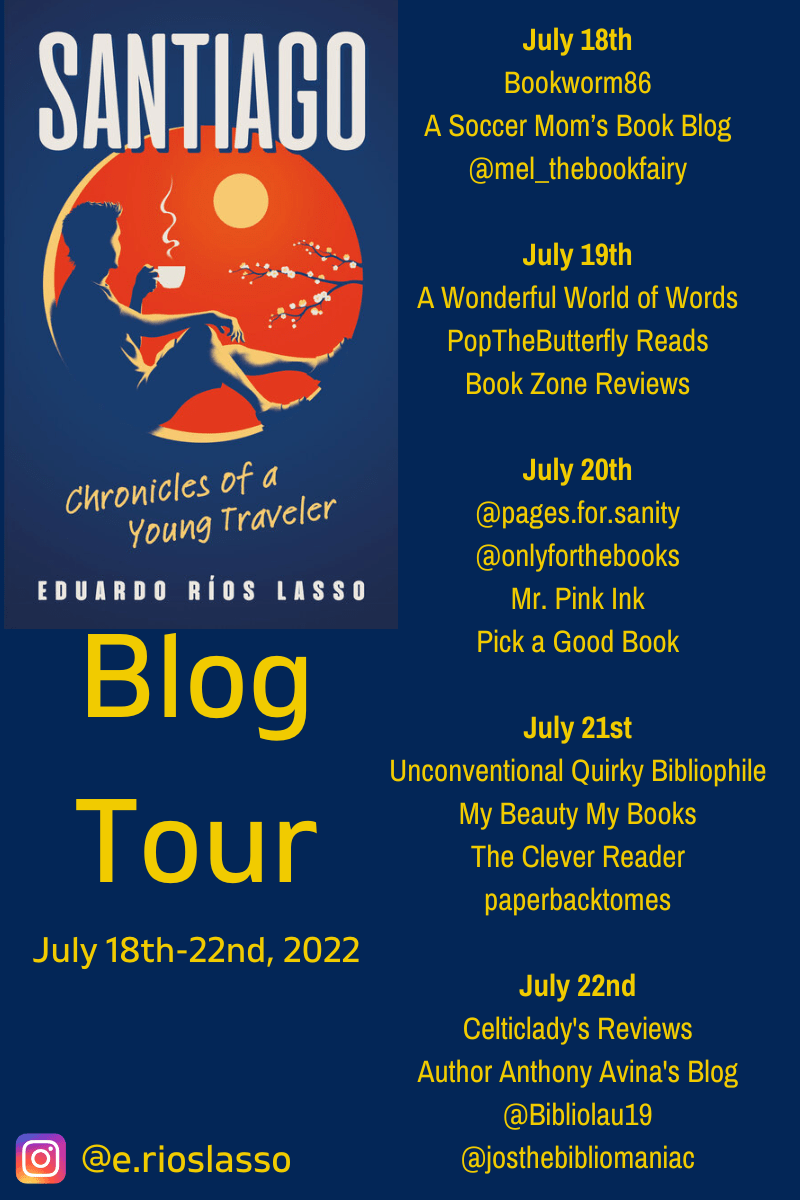
A shy and hesitant young man takes a giant leap forward to travel the world in search of himself and must contend with family, friends, and seeing someone in a new light as they struggle with their own issues in author Eduardo Rios Lasso’s “Santiago: Chronicles of a Young Traveler”.
Advertisements
The Synopsis
Fresh out of college, 26-year-old Santiago has always longed to see the world, but his anxiety gets in the way. How can he possibly travel abroad if he feels sometimes heart-pounding pressure by simply riding a bus? But one day, after years of saving, Santiago courageously buys a ticket around the world. His parents think he’s crazy, but he takes a leap of faith and sets out alone. However, the world he had imagined was far from reality.
Meanwhile, Santiago finds out his best friend Laura, who could not join him on the trip, battles a recently diagnosed autoimmune disease. Will he regret his decision to leave her behind? Will their friendship survive or blossom into something more? On his journeys from New York to Lisbon, Paris to Sarajevo, and Istanbul to Bali, Santiago must overcome his shyness and open up his heart despite facing challenges, such as scams, and confronting complex issues like human trafficking. Join Santiago on a journey of self-discovery and adventure like no other.
The Review
This was such a heartwarming, cautionary, yet character-driven read. The way the author was able to capture the beauty and wonder of travel while also showcasing the dangers and struggles that come with it was so authentic and engaging to read. The themes of travel, anxiety and the journey that friendship often takes were so beautifully explored through Santiago as a protagonist, as well as Laura, and I felt myself feel connected to both characters and their struggles both apart and together.
What stood out in this narrative was definitely the settings that the narrative took. The wide range of locations that Santiago went to not only expanded the personal growth that he underwent throughout the narrative but was brought to life in such vivid detail through imagery and tone that the different cities and places became characters all on their own. Yet it was how these locations taught Santiago about the world around him that made this story feel so relevant and important, especially when delving into the harsher aspects of international travel such as trafficking.
The Verdict
Thought-provoking, exhilarating, and emotionally investing, author Eduardo Rios Lasso’s “Santiago: Chronicles of a Young Traveler” is a must-read coming of age and travel fiction narrative. The imagery and emotional depth of the experiences that drive Eduardo, as well as his growing relationship with Laura and all that she struggles with, felt both relatable and inspiring to read about. If you haven’t yet, be sure to grab your copy today!
Rating: 10/10
Advertisements
About the Author
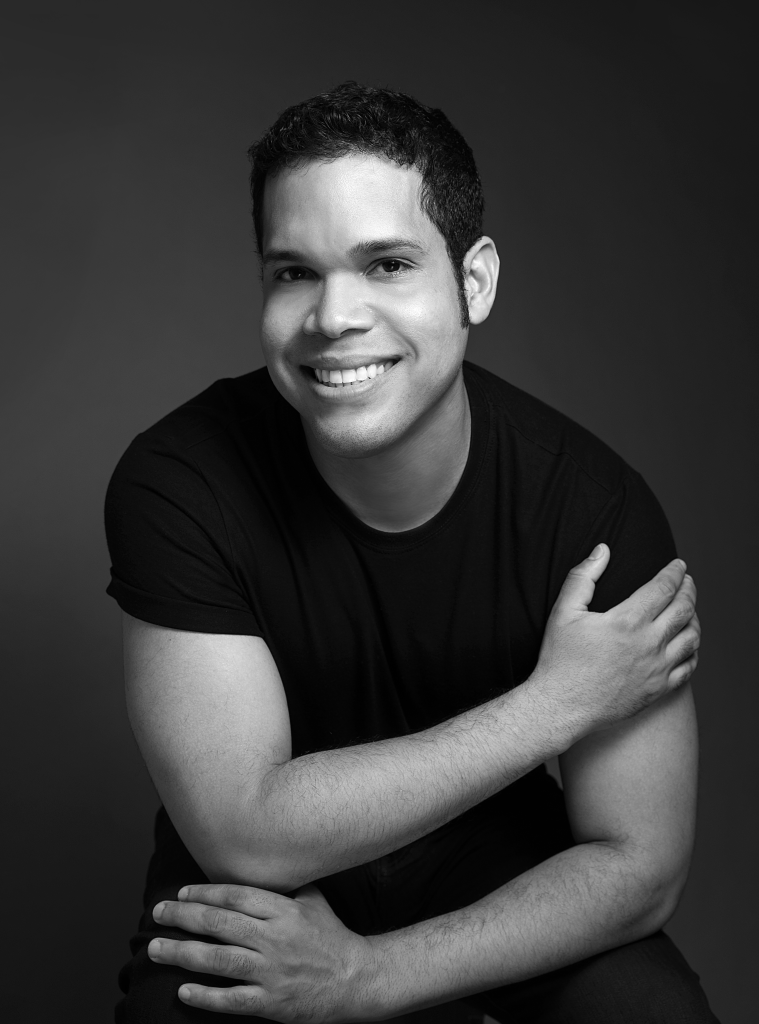
Eduardo Rios Lasso emerged as a writer during his career as a medical doctor. Born and raised in Panama City, Panama, his journey has taken him around the globe to dozens of countries. Along the way, he found a passion for travel writing that seeks out positive life experiences while also sharing the common interests and challenges that bring different cultures together. Eduardo currently resides in Germany, where he is completing his training in Internal Medicine. SANTIAGO – Chronicles of a Young Traveler is his first book.
Since this book is my first, I educate myself first on how to write a book. Every book that came to my hands about “how to write a book” was devoured by me. I also attended writers’ conferences to learn more about the different literature and writing genres. I touched on topics like prostitution and human trafficking, which was very hard to show in the book the way I wanted. I made my best effort for it. I interviewed people who work in NGOs with trafficked victims and with people who work as sex workers. Read and inform myself as much as possible about every topic I will discuss in the book.
Which was the hardest character to write? The easiest?
–The hardest was probably Laura. Since I wanted (I hope I made it) to show her as a strong woman who could move forward despite moments of sorrow, I hope it can lead young girl readers to stay strong.
–The easiest was Santiago. When I came up with the idea, I knew exactly how I wanted him to be.
In your book you make a reference to….how did you come up with this idea? What made you write a book about…?
I have always enjoyed writing. I could always communicate better through writing than speaking from a very young age. After being scammed while traveling a while ago, I decided that I would make a blog about traveling. My father has written books too, but law-specific things, so the idea of writing a book was something not strange to me. But the idea of writing this book came up one day when I realized I had just written too much for a blog. I originally planned. Back then was more of a non-fiction book. But then I started to learn how to write a book and how the publishing industry works. I was fascinated with all I could do writing a fiction book but inspired by real-life stories.
Where do you get inspiration for your stories?
From my own travel. The more I travel, the more stories and ideas come to me.
There are many books out there about….What makes yours different?
My book combines traveling with social issues affecting our cities and where a traveler can potentially make a big difference. And it is also directed to a younger audience.
What advice would you give budding writers?
If you don’t know how to write a book and you want. Start writing your idea as if you were talking with yourself; explain and try to convince yourself of what you write. On the way, your creativity will be unleashed. And read, read books; if you know what type of book you want to write, make sure you find excellent examples. And last, get involved in writing groups and get to know fellow writers who support each other. Prepare yourself for it.
Your book is set in (name place). Have you ever been there?
My book takes place in 14 different countries! And yes, I have been in every city mentioned in the book.
If you could put yourself as a character in your book, who would you be?
I could see myself as Adyn, the character that plays in chapters 7 through 9.
Do you have another profession besides writing?
Yes, I am a medical doctor; I work in internal medicine and emergency medicine in Germany, where I’ve lived for the last seven years. It happens that I love both traveling and writing combined. I want to establish myself now as a writer.
How long have you been writing?
Continuously since 2016.
Do you ever get writer’s block? What helps you overcome it?
Oh yes, I did!. Sometimes just wrote everything that came to my mind, even things that made no sense. Sometimes it did not work, and I had to stop and continue writing after 2-3 days, usually on a day that was not so stressful at work. It always works differently for every people; in my case, the less stress I had, the better I wrote.
What is your next project?
I am already working on the second part of Santiago. I am building the story arc of a family saga – more of a local story in Panama, fiction, but as always inspired by real-life stories. But probably the most significant project is to travel west and south of Africa and write a story about my connection as Latinamerican to Africa. That would be my first non-fiction book.
What genre do you write and why?
Fiction mostly! Because it allows me to do more, say more, and express more. I also love coming-of-age books because they can teach, inspire, or give a lesson. I am convinced that the generation of the 80s and 90s is our future. They are the ones who can make changes in our society.
What is the last great book you’ve read?
The last great book I read was Pachinko von Min Jin Lee. I loved it!
What is a favorite compliment you have received on your writing?
That my writing to reach reader’s hearts!
How are you similar to or different from your lead character?
We both love traveling and have a strong desire to see the world but also to do good!
If your book were made into a movie, who would star in the leading roles?
Oh, excellent question! I have to think about Santiago, but Zendaya could do Laura! Hahaha, she is so talented!
If your book were made into a movie, what songs would be on the soundtrack?
Oh, I love this question, I would put high hopes by Panic at the Disco, Underdog by Alicia Keys, Love someone by Lukas Graham, Rude by Magic, Imagination by Shawn Mendes.
What were the biggest rewards and challenges with writing your book?
The most significant rewards were:
The learning.
Knowing that I could do it.
All the people I got to meet and be in touch with during all these years.
The challenges? Probably was the time since I had some demanding schedules at work and sometimes a little free time where I also had to study. With a lot of work, it somehow worked.
In one sentence, what was the road to publishing like?
Tough, very tough, and lonely sometimes.
What is one piece of advice you would give to an aspiring author?
To sit and write and believe you can do it, everybody has the potential to do it. It would help if you also have patience.
Which authors inspired you to write?
No one in particularly I must say. But I have been reading a lot lately and like a lot Matt Haig, Min Jin Lee and Ocean Vuong.
What is something you had to cut from your book that you wish you could have kept?
The scene when Santiago sold his old car to get more funds for his travel.
On rituals:
Do you snack while writing? Favorite snack?
Usually, there is only water, coffee, and nuts on my table.
Where do you write?
–I can write in any room as long as I am in complete silence. I can write in groups and have done it. But the best of me comes when I am alone with myself.
Do you write every day?
No, sometimes I need days in between for an idea to mature.
What is your writing schedule?
–Whenever my work schedule allows me. Usually in the evening and on the weekends. I write a lot when I am on vacation; late at night is my best time to be the most creative.
Is there a specific ritualistic thing you do during your writing time?
I just try to be relaxed and make sure I will have no distractions while writing.
In today’s tech savvy world, most writers use a computer or laptop. Have you ever written parts of your book on paper?
–I write primarily on my laptop, but sometimes an idea comes to me on the street after seeing something as if it was a revelation. Then I need to write that on my mobile quickly before I forget or write it down if I have a notebook.
Fun stuff:
If you could go back in time, where would you go?
I have been thinking lately of going back to Bali
Favorite travel spot?
–It constantly changes; right now, there is a tied between Lisbon and Paris.
Favorite dessert?
Crème brulée
If you were stuck on a deserted island, which 3 books would you want with you?
My book SANTIAGO, because it represents to me many things together. A medical textbook, and the little prince by Antoine de Saint-Exupéry.
What’s the funniest thing that ever happened to you? The scariest? The strangest?
So many have been funniest.
What’s the most courageous thing you’ve ever done?
I hiked a mountain in Switzerland and hung literally from a cable over 1000 m high; the slightest mistake, and I was gone! Courageous, but now that I think, kind of scary too, since it was my first time hiking such mountains.
Any hobbies? or Name a quirky thing you like to do.
I enjoy going to the gym. I started recently with Crossfit, and I love it.
If there is one thing you want readers to remember about you, what would it be?
That my books are fun, but they also left them with a message that they could put into action at some point in their lives. Be more empathetic to other cultures, especially the ones different than them.
What is something you’ve learned about yourself during the pandemic?
Patience! That I need more patience!
What TV series are you currently binge watching?
The Korean version of Money heist
What is your favorite thing to do in (current season)?
Go for biking and swimming.
What song is currently playing on a loop in your head?
At the moment High hopes from Panic at the Disco! Just my mood now.
What is something that made you laugh recently?
A Patient at work.
What is your go-to breakfast item?
Coffee and Muesli.
What is the oldest item of clothing you own?
I tend not to keep clothes for a long time; I give them away after some time. But I still have a white shirt I bought ten years ago!
Tell us about your longest friendship.
–My older sister! She has been there like a guardian since day one! Helping me through all my challenges, dreams, wishes, and all!
What is the strangest way you’ve become friends with someone?