Interview with Author Devi Nina Bingham 

1,) Tell us a little bit about yourself. How did you get into writing?

One of my fondest memories from childhood was an “ah ha” writing moment. My 4th grade teacher chose my story for the class reading circle, but she didn’t tell the class I’d written it. At the end she revealed one of thier classmate had written it. The class gasped in appreciation and burst into applause. From that moment I was hooked on writing! I had loads of natural creativity, but my teacher got after me grammar and spelling. She explained how important these two things would be if I was going to be a good writer, so thereafter I became a meticulous spelling, punctuation and grammar-checker, which made me a proficient editor. I have a good teacher to thank for her encouragement, but also for requiring me to push myself to master the difficulties of the English language. 

As an adult, my life coaching clients inspired me to write my recovery workbook, “Never Enough”, while a lost love inspired me to write “Aphrodite’s Cup: Passionate Poems”. “God on Fire: Spiritual Poems” was written after discovering Rumi’s spiritual poetry; I’m a big Rumi fan! “Once The Storm Is Over: From Grieving To Healing After The Suicide of My Daughter” was written so I could share my journey from grief to healing with other suicide survivors, and with teens and young adults struggling with depression. 

Advertisements

2) What inspired you to write your book?

After 4 years of struggling with serious depression my 15 year old teen daughter secretly took herself off of her depression medication. It proved to be a deadly decision, because 3 days later she took her own life in the next room as I slept. I wrote about my journey through grief in my autobiography, “Once The Storm Is Over: From Grieving To Healing After The Suicide Of My Daughter” (Big Table Publishing, 2015). Walking had become like therapy for me, so several years later I was walking my dog when I distinctly heard my daughter’s voice. It startled me so much that I came to a complete halt. All she said was: “Mama, listen for the voice.” I thought maybe my mind was playing tricks on me. The 2nd anniversary of her death was fast approaching, and I had been thinking as I walked that day of how Moriyah might look in the afterlife, her face glowing and celestial. I didn’t know what voice she was talking about, but I promised her that I would be listening for it. It was several weeks later that I received the first message from Archangel Metatron. It took me 3 years to compile all 30 messages, and I added a study guide with 30 lessons. “Messages From Metatron” is a powerful curriculum for those seeking to achieve spiritual transformation.

3) What theme or message do you hope readers will take away from your book?

I have taken what I was told and tried to stitch it together to present a unified explanation of how the universe is structured. The book answers larger existential questions, including, who is God and what is our purpose? All the messages have one theme in common, that of unity. They all seem to be stressing: we are one. Another favorite theme is that of reality. I found myself asking, what is real? From an angel’s perspective, reality is not only the world of matter, but the world of thought and feeling. Lastly, the book reminds us that we are a piece of the universal tapestry that affects the entire fabric of the cosmos. Without your contribution the world wouldn’t be whole. 

4) What drew you into this particular genre?

All of my books are nonfiction indies except for my autobiography. In my opinion, fiction requires a publisher’s hand in shaping the storyline and characters, while nonfiction can often stand alone because it is the truth, and this is a plus if you want to self-publish. The other advantage of being an andie author is that you retain the lion’s share of the royalties, and you can choose how to best market your book. Being an indie author doesn’t pay like having a fulltime job does; I advise people to do it on the side because in the book market, competition is fierce. I became a writer because I have to do it; something compels me to keep writing. If you cannot not do it, then you’re meant to write.

5) What social media site has been the most helpful in developing your readership?

I am most active in posting to my Facebook and Twitter accounts because I can interact more with the readers there. It’s more “personal.” Something I was surprised to find is how readers want to know something about you before buying your books. I started my blog in 2011 and have seen it’s readership grow over time, but most visitors to my blog heard of it through a social media posting. I don’t use other popular forums because I’ve only got so much time to devote to social media, so I focus on Facebook and Twitter because of their interactivity. 

6) What advice would you give to aspiring or just starting authors out there?

Just keep writing. Be fluent in writing. Write when you feel like it and when you don’t. Get used to writing frequently. Don’t allow your mind to lie dormant for too long. Keep hammering away at your craft and someday you’re ganna surprise yourself. And I suggest writing through writer’s block. Sit and write whatever comes, whether it’s excellent material or it’s going to wind up in the trash. I don’t believe in writer’s block. There’s always something to say on any given day, it just may not be publishable. Plow through the blockage, don’t give it much of my attention or judge whether it’s good or bad writing. When I ignore blockages they tend to go away.

7) What does the future hold in store for you? Any new books/projects on the horizon?

Ten Archangels Teach You How to Live an Inspired Life is the second book in the Archangel series of a three-book curriculum, beginning with Messages From Metatron, thatteaches a non-denominational and universal spirituality. Celestial communications from ten Archangels of the Tree of Life including Michael, Gabriel, and Raphael. Their words of wisdom will help readers recover from life’s setbacks and find new strength and purpose. Publishing 2022. 

Advertisements

About the Author

Award-winning Author of 10 books including, “Messages From Metatron: A Course in Self-Transformation.” A Life Coach and Clinical Hypnotherapist of 18 years in Tucson, Arizona, Devi Nina is currently working as an Intuitive Counselor who channels the Archangel Metatron, providing intuitive readings for live audiences. Podcast host in 2022 of the “Messages From Metatron Podcast Study Group” on CView Quantum Network. To learn more about the virtual study group go to: http://tobtr.com/12016606

Author Links

YouTube: https://www.youtube.com/channel/UCWz7X2WpyGu4bQ6htdiXGwg

Website: https://ninabingham.blogspot.com/

Facebook: https://www.facebook.com/devininabingham

Twitter: https://twitter.com/liv_enlightened

Bookbub: https://www.bookbub.com/authors/nina-bingham

Amazon: https://www.amazon.com/Nina-Bingham/e/B008XEX2Z0

Goodreads: https://www.goodreads.com/author/show/
7434239.Nina_Bingham

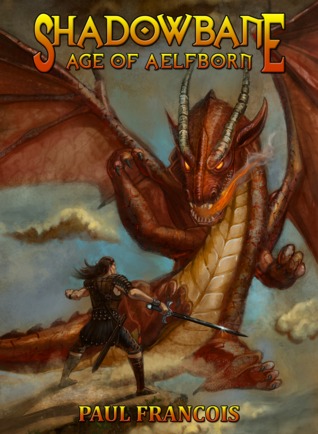
Interview with Author Paul Francois

Q: Tell us a little bit about yourself. How did you get into writing?

A: My day job is being a computer geek for a global technology company. I’ve always been a geek and proud of it. Technology was always in my blood. My first job was an avionics system control specialist on F-111 fighters in the US Air Force. I started writing to quiet the voices in my head! Ok, seriously…I always felt I had better ideas for stories and movies than most. It was sometime in 2011 that I kept getting ideas waking me in my sleep and disrupting my day-to-day activities. Finally, I had to write. It was the only action that helped calm the voices.

Q: What inspired you to write your book?

A: I used to play Shadowbane online and was intrigued by the lore. The game designers intertwined Greek, Celtic, and Nordic mythologies so well that I had to expand upon it. So many ideas rattled around in my mind until I just had to pour them out onto paper…or a computer to be precise. This was my second book but I kept writing and writing until I realized…this was my first full sized novel. I was horrible in high school English classes. I wanted to write creatively, but the teachers wanted uniformity, conformity, and structure. I felt as if they were drowning me with rules and restrictions.

Advertisements

Q: What theme or message do you hope readers will take away from your book?

A: I would like readers to feel that anything is possible. You never know where life will take you or what destiny may lie ahead of you, just waiting for you to discover it. 

Q: What drew you into this particular genre?

A: I’ve always loved the SciFi and Fantasy genre. I find everyday life boring and sometimes limited, but in the Fantasy genre you can create anything you like. Create a new realm, a new creature, or anything you can dream…your imagination is the only limitation.

Q: If you could sit down with any character in your book, what would you ask them and why?

A: It would choose Gaal. I loved creating this character and developing an arsenal of witty comebacks for him. I would ask how he felt about always being referred to as an abomination and what it was like growing up in the Carloon Outpost as a Shade. I always felt I could have elaborated on his life, but then again…I doubt the Shade would be very forthcoming with details.

Q: What social media site has been the most helpful in developing your readership?

A: Goodreads and BookBub. Most other sites would reach out to just any members, even if they did not know you were a writer. With my last name being French in origin I mostly received scammers speaking French wearing revealing clothing.

Q: What advice would you give to aspiring or just starting authors out there?

A: If you’re writing for a profit, find a new line of work. If you just care about publicity, then you can write what you “think” the public wants to hear. However, if the desire to express yourself and the yearning to create new worlds, stories, and characters just burns deep in your soul…write what you want, when you want, and how you want. If your one true desire is to be a creative writer, then write what you want. If they like it, great. If they don’t…then screw them! At the end of the day the only person you have to answer to, and that you can’t lie to, is yourself.

Q: What does the future hold in store for you? Any new books/projects on the horizon?

A: Due to life and health issues, I’ve had to take a hiatus from writing for a few years but I hope to get started on a trilogy series soon featuring a young female protagonist who is a strong leader and not afraid of showing it. I’m tired of some showing that females have to have a soft side and that they are so easily hurt, while the males are brave and fearless. It doesn’t always work like that in the real world. Also, I might write the prequels to the Shadowbane series, since I loved writing the Age of Aelfborn.

Advertisements

About the Author

By day, Paul Francois is a mild-mannered IT professional. He has been in the technology field for over 20 years. One day, in 2011, he started pondering story ideas until they leapt out of his brain and onto paper…onto the computer to be precise.

Join him as he discovers which genre suits his writing style best. Fantasy, Sci Fi, Thriller, or perhaps…all of the afore mentioned. The road is dreary and his journey long, sit back and enjoy a tale as we travel it together.

Facebook: www.facebook.com/AuthorPaulFrancois

Twitter: @AuthorFrancois

www.crusaderscrypt.com 

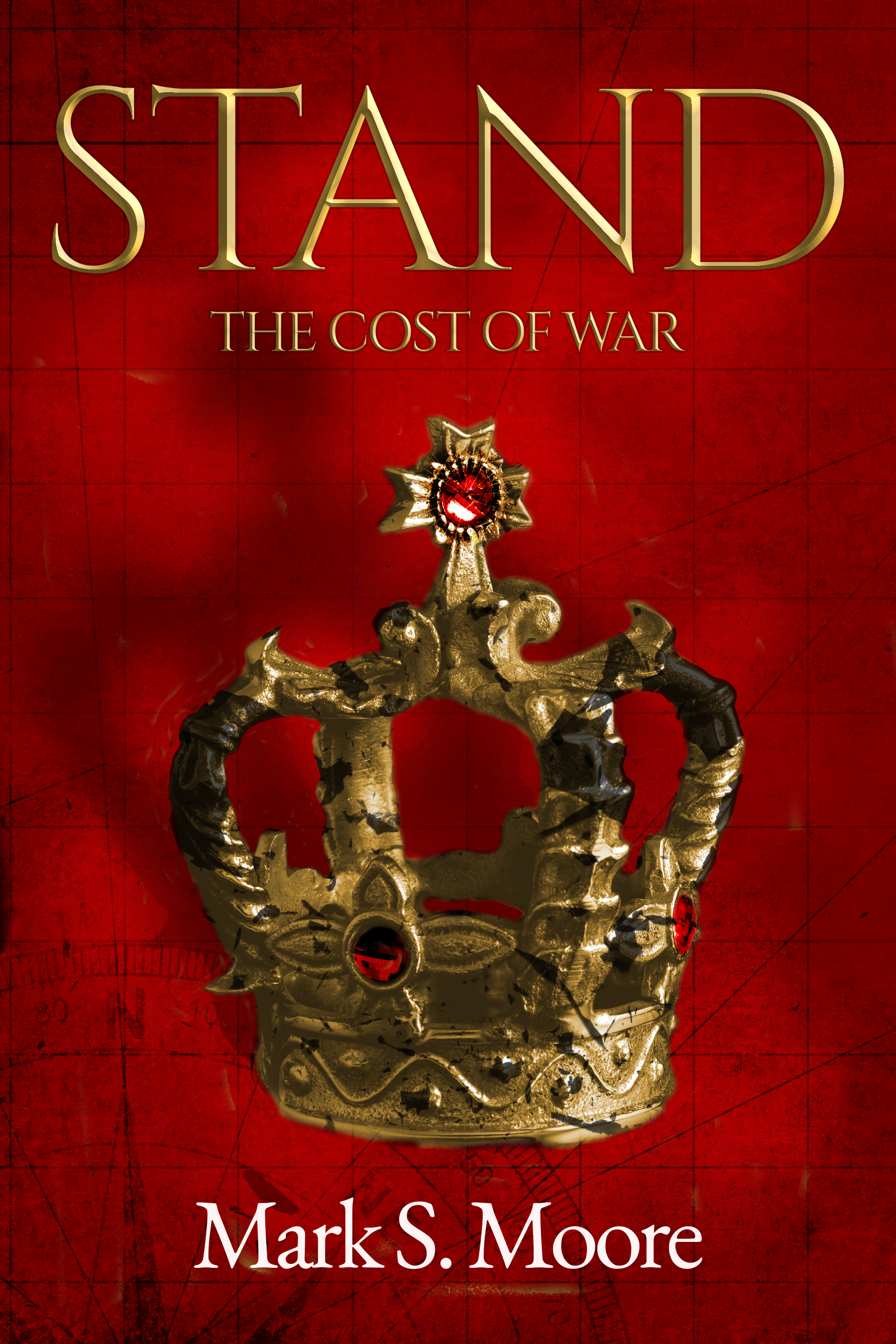
Interview with Author Mark S. Moore

1)   Tell us a little bit about yourself. How did you get into writing?

For me, writing began when I was in high school. I dealt with a ton of anxiety and I withdrew into reading fantasy novels, specifically, the Dragonlance novels by Margaret Weiss and Tracy Hickman. I remember I was sitting in an office at school reading one of their books and being sad it ended so I decided “I’m going to write some more, for myself.” That’s really how I got into writing, I wanted more story, so I made it myself. Oh…and it was absolute garbage, by the way, that awful fan fiction I wrote back then.

Advertisements

2)   What inspired you to write your book?|

For Rise (and its sequel) the idea came from two different places but morphed into something completely different. I had been watching The Man in High Castle and spending a lot of time listening to Hamilton which gave me this idea of creating an alternative history novel on the American Revolution. I got about two chapters in and felt I was too restrained by factual places and people so I broke out of those confines and made my own world instead. It was liberating.

3)   What theme or message do you hope readers will take away from your book?

What I hope people can take away from my book is that it’s not as easy as we may like to think to determine who is good and who is evil in any conflict. Horrific things can be done for reasons that are perceived to be good because we’re all people and we’re all faulty.

4)   What drew you into this particular genre?

The very first book I remember reading was The Hobbit in 2nd grade. From there I went on to read about Greek Mythology and got deeply into a video game, Everquest, which had a pantheon of gods and goddesses and deep fantasy lore. Fantasy was always one of those things that just captured my imagination. Castles, swords, magic? I was sold from the beginning.

Advertisements

5)   If you could sit down with any character in your book, what would you ask them and why?

This is a tough question for me because I get to know my characters so intimately, I don’t think there’s much I wouldn’t know about them. Part of my process is building up a real personality that works off logic and grants them agency but it’s agency I understand and anticipate, if that makes sense? A character won’t do something I don’t expect them to because I’ve built up who they are. Perhaps I’d sit down with Cromwell to ask him to dissect multiple military strategies in past conflicts and explain how and where they went wrong. As a brilliant tactician, I believe he would see things that even historians would have missed.

6)   What social media site has been the most helpful in developing your readership?

Honestly, probably twitch if one could call it a social media site. The writing community on Twitter is great, but it’s easy to fall into some dangerous habits like follow for follow. Building a platform is difficult and I’ve made a lot of mistakes over the years which is honestly why I started a youtube channel to begin with, to show the kind of things I did wrong and hopefully spare others from those mistakes. For social media, I think it’s important to narrow your focus to what you can be consistent with and whichever platform your target audience uses.

7) What advice would you give to aspiring or just starting authors out there?

 Be kind to yourself. Writing is hard, it’s demanding mentally and emotionally and it can take time. One of the worst things you can do is compare yourselves to others, focus on the things in your control and try to do a little bit whenever you can to get better. That doesn’t mean just writing, but reading, researching, whatever you can because all that incremental progress you do day after day, week after week, when you look back years later you’ll be amazed at how far you’ve come.

8) What does the future hold in store for you? Any new books/projects on the horizon?

Good things, I hope! I’m working on a new book and new series that I hope to launch soon. The first draft is just about complete. It’ll be a slight departure from my current books because it’ll lean more heavily into more traditional fantasy.

I want to continue making content to help new writers on youtube, as well. It’s something I’m passionate about because I think it’s important to provide advice in multiple formats to make it as available to those who want to seek it out as possible. I’d like to inspire some people to write who may not yet be ready to put pen to paper or fingers to keys. 

Advertisements

About the Author

Mark Moore began writing his first book in November of 2015. What started as a hobby quickly morphed into a passion that consumed long nights and lunch hours during his day jobs. With the help of his editor, JMR Literary Services, he published his first book, Rise, in November of 2018 and followed it with its sequel, Stand, in December 2020. His current work in progress is a departure from the low-fantasy genre, focusing on more traditional fantasy.

In 2021 Mark also began collecting his thoughts and putting together a writing advice youtube channel which can be found below with the goal of sparing other authors from the mistakes he’s made over the years and sharing what he’s learned.

https://www.marksmoorebooks.com/

https://www.instagram.com/redbeardflynn/

Twitch: https://www.twitch.tv/redbeardflynn

https://www.amazon.com/gp/product/B08QDRXLJ4/ref=x_gr_w_glide_sin?caller=Goodreads&callerLink=https%3A%2F%2Fwww.goodreads.com%2Fbook%2Fshow%2F56687436-stand%3Fac%3D1%26from_search%3Dtrue%26qid%3DLzLSKThfok%26rank%3D1&tag=x_gr_w_glide_sin-20

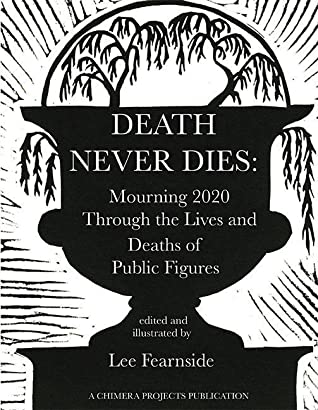
Interview with Author Lee Fearnside

1) Tell us a little bit about yourself. How did you get into writing?

I’ve also been interested in stories, although until a few years ago most of my storytelling was done visually. I believe stories are a great way to understand other people – their experiences, their perspectives on the world – and so developing an anthology as a collection of people’s stories seemed a natural fit.

Advertisements

2) What inspired you to write your book?

Let’s be honest – 2020 sucked. It pretty much sucked for everyone. We were all affected by a pandemic the likes of which our world hadn’t seen in 100 years, America was increasingly polarized, there was a tidal wave of protests against racial injustice, we had a tumultuous presidential election, and it feels like the list goes on and on. Developing this anthology and making the portraits of public figures who died was both obsession (I made a lino cut portrait every week, and I think I gave myself carpel tunnel) and balm. I wanted to try to make sense of my own grief by understanding others’ grief.

3) What theme or message do you hope readers will take away from your book?

My hope is that even amidst despair we can find hope in our collective experience. That even though 2020 sucked, the way through was together. That somehow by mourning these people, these celebrities and public figures and our complicated relationships with them, we could find connection.

4) What drew you into this particular genre?

In many ways this book is an extension of an anthology I edited and illustrated with my brother, published in 2018, that mourned celebrities who died in 2016. Perhaps these books serve as bookends to each other.

5) What social media site has been the most helpful in developing your readership?

Instagram is a way that I connect with other artists, and have been able to share work in progress from this and other projects.

6) What advice would you give to aspiring or just starting authors out there?

Just keep making. If you have a story to tell, you’ll find your audience. Yes, it’s a lot of work but your story is important, so keep using your voice.

7) What does the future hold in store for you? Any new books/projects on the horizon?

I’m working on a project about community. I’ve been interviewing people from all over the country and in all different fields about how they define community and how they work to create change. To date, the participants include a political candidate and Trump accuser, an urban planner, a human trafficking victims advocate, an immigration lawyer, a poet, a Franciscan nun, and more. Collectively the book creates a portrait of a community in America today. I hope to finish the book sometime later this year. 

Advertisements

About the Author

Lee Fearnside is an artist and curator. Her photographic work has been exhibited in galleries and museums  in New England, the Midwest and in national juried shows, including the Toledo Museum of Art, the Reece Museum and the New York Hall of Science. She published O! Relentless Death: Celebrity, Loss and Mourning with her brother in 2018, and the book won the Independent Voice Award gold medal from the Independent Publishers Book Awards and was a finalist in American Book Fest. She has curated group exhibitions around themes of sustainability, diversity, food systems and art from Ohio prisons, funded in part by grants from the Ohio Arts Council and the Ohio Humanities Council. Fearnside earned a BA from Smith College, a M.F.A in Photography from the Rhode Island School of Design, and a M.S. in Arts Administration from Drexel University.

https://www.chimeraprojects.art/current-project-death-never-dies

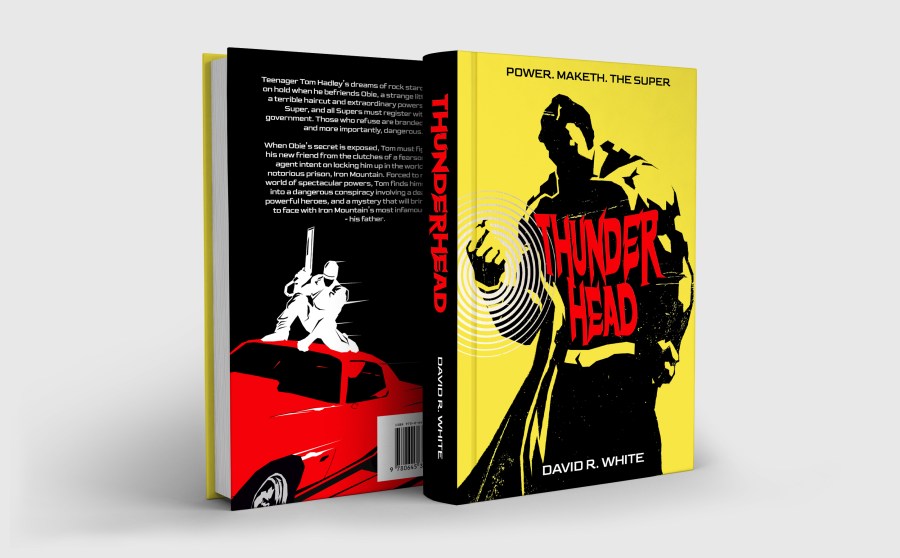
Interview with Author David R. White

Tell us a little about yourself. How did you get into writing?

I’ve always enjoyed writing, but it took some time to take it seriously. I studied film at university, so I spent most of my 20s writing screenplays and dreaming of breaking into the film industry. My plan was to write a book when I was old and decrepit, but the bug bit a little earlier than expected.

Advertisements

What inspired you to write the book?

I had the general idea back in 2007, but it was about a decade later that I was watching a documentary called ‘The Death of Superman Lives’  about Tim Burton’s failed reinvention of Superman. His costume designer on that movie was a man named Jose Fernandez. He (and his team at Ironhead) have been responsible for a lot of the super-suits we’ve seen on film in the past twenty to thirty years. Long story short, google ‘Jose Ferandez Batman Forever’ and you’ll likely see the exact photograph that led me to writing the character of Cavaliar and, ultimately, Thunderhead.

What theme or message do you hope readers take away from your book?

Thunderhead is first and foremost about friendship. Tom considers himself a loner, but in reality, he’s simply shielding himself from rejection. On a broader scale, it’s about prejudice. Many of the rules and restrictions forced upon Supers are predicated on this idea that they’re predisposed towards violence. 

What drew you into this particular genre?

The scope for creativity. If I wasn’t writing a Superhero series, I’d be writing high fantasy or sci-fi. There’s a glut of Superhero content out there, but the challenge of bringing something new to the genre is exciting.    

If you could sit down with any character in your book, what would you ask them and why?

Walter Cobb, and what’s his favorite sandwich. 

What social media site has been the most helpful in developing your readership? 

To be honest, I’m still learning how to navigate social media and get the most out of it. So far I would say Twitter has been the most helpful.

What advice would you give to aspiring or just starting authors out there?

There’s a piece of advice in Ann Lamott’s Bird by Bird that’s always stuck out – her father said that writing is a contract with yourself. Nothing could be more true. Commit to writing every single day and the rest will follow. 

What does the future hold in store for you? Any new books/projects on the horizon?

The sequel to Thunderhead should be out by mid-2022. The plan is to release an installment every six months and finish the series off by the end of 2023.

Advertisements

About the Author

DAVID R. WHITE was born and raised in the small town of Maffra, Australia. He spent most of his childhood reading Asterix comics and fantasy novels. He has been a bartender, an optical mechanic, a salesman, a store manager, an English teacher, and survived a near twenty-year stint in customer service with most of his wits intact. His love affair with books began with Roald Dahl’s The Twits, but it was upon discovering the likes of David Eddings, Frank Herbert, Tolkien, and Douglas Adams that he was inspired to write something of his own. He currently lives in Spain.

https://www.goodreads.com/author/show/21913839.David_R_White

Interview with Author TC MARTI

1) Tell us a little bit about yourself. How did you get into writing?

I grew up in Eastern Ohio/Northern West Virginia; about 45 minutes west of Pittsburgh. I’m a familiar face in town since I love to go outside and run the streets for at least an hour a day. I’m also a huge fan of Arizona sports teams (hence my main character’s last name). 

With so little to do in town other than going to the local gym and running, writing has always been a fun way to pass the time. After writing a few full-length manuscripts in 2014, I thought, “why not go public with this someday?”

My first few works were not good and therefore, I never published them. But after reading a few books I felt was comp titles, I went in and retooled those early full-length manuscripts. The first of which became Wind Wielder, with the book being nearly eight years in the making! 

Advertisements

2) What inspired you to write your book?

I grew up watching a lot of TV, reading, listening to music, and watching movies. Since writing served as my primary escape, I wanted to write something inspired by my favorite entertainment outlets. Books like Harry Potter, movies like Star Wars, and TV shows like Lost and Avatar: The Last Airbender, with a touch of Call of Duty. 

Music also served as a huge inspiration for Wind Wielder – mainly fantasy-based power metal bands like DragonForce, Twilight Force, and others. 

3) What theme or message do you hope readers will take away from your book?

My biggest message to readers is to never allow someone else who knows nothing about you, especially authority figures, pick and choose what’s best for you. In Wind Wielder, we’re introduced to elementals (also referred to as mutants), and a global superpower that propagated its people to treat elementals so poorly they’re willing to frame elementals by staging attacks on the majority, non-elemental population to further push their anti-elemental propaganda. 

4) What drew you into this particular genre?

I grew up reading all sorts of genres, but mainly historical fiction, believe it or not. However, as I grew older, I realized I could create so much more with fantasy/sci-fi as opposed to limitations I believe some other genres bring.

For example, I could create new worlds, my own magical or tech systems, and let them go to work in fantasy/sci-fi. While, if I tried a genre like historical fiction (which I still love, by the way), I’m forced to stick to specific time periods. 

The only real drawback with fantasy, science fantasy or speculative fantasy, is that with each new magical system created, many possible loopholes open. They can be tough to find and even tougher to close. It took me a good ten to twelve rounds of editing Wind Wielder just to find and close them. 

5) If you could sit down with any character in your book, what would you ask them and why?

From Wind Wielder, I would love to sit down with Raj. This is a girl where there’s so much more than meets the eye, and I’ve always described Raj as the book’s breakout character. 

She and I also share identical interests; we love sports, and we also both talk to others, in the same manner, they talk to us. She’s one of those people who, academia-wise, is so well-rounded you can talk to her about pretty much any subject and she would respond with expertise, or at least with general knowledge. 

6) What social media site has been the most helpful in developing your readership?

I actually don’t use mainstream social media platforms. However, I have found Bookfunnel and StoryOrigin to be ultra-helpful in building a readership via mailing list integration. It’s also a remarkable place to find authors who write comp titles, and to team up with them via cross and joint promotions. I highly recommend both platforms for authors who are looking to get new sets of eyes on their work. 

Advertisements

7) What advice would you give to aspiring or just starting authors out there?

Start marketing your book months if not longer in advance, ideally before you even start the first draft. 

Instead of writing your novel first, write a short story or novelette and turn it into a reader magnet. Join the platforms listed above and sign up for a mailing list provider and charge readers a mailing address in exchange for downloading your stories. 

Cross-promote your stories with other authors, join group promotions, and you will be surprised as to how many fans you will generate. Send regular mailing campaigns to your readers and give them another free short story regarding your characters every now and again. Ask them for feedback and they will respond. 

By the time you’ve written Book I in your series, your readers are already wanting more of the characters they already have come to know and love via your reader magnet and tidbits. 

8) What does the future hold in store for you? Any new books/projects on the horizon?

I actually have five more books following Wind Wielder. Two of which are in the Elementals of Nordica Series, set to be released on February 1st, 2022, and March 1st, 2022. My other three comprise books featuring the same magical systems but in different worlds and situations. 

Those projects, along with Elementals of Nordica, take place in a shared universe. There will be characters from each series crossing over into others. In fact, the final scene in Wind Wielder leaves a huge clue to the reader that the book is, indeed, part of a shared universe. 

Advertisements

About the Author

TC Marti has been an avid reader/writer for over three decades. He is the author of the Elementals Universe, a shared speculative fiction universe spanning multiple series. He is also a workout fanatic, and a fan of Arizona sports teams.

https://a.co/4kcgQa1

Interview with Author Gary Marinin

1) Tell us a little bit about yourself. How did you get into writing?

I’m a private English tutor and have been doing this for about eight years in total now.

Advertisements

2. What inspired you to write your book?

The inspiration for my first book came while I was watching BoJack Horseman. My cat came to sit with me while watching and I usually refer to him as a “brick shithouse” and “shit” came up several times in the episode. When the episode finished, I had the idea, “how many phrases and expressions with ‘shit’ can I come up with in five minutes?” When five minutes passed and I was still going, I knew I had something if nobody else had already done it. 

 3) What theme or message do you hope readers will take away from your book?

Swearing isn’t good or bad, it just is and the context we put it in makes it good or bad. I think people will think a little more critically about how swearing is viewed and used based on the science and cultural examples given. For example, it’s hard for people living now to think of “bastard” as the worst taboo in existence, but it was. Besides that, I hope they realize the diversity of ways that we incorporate swearing into speech and just how many meanings they can have. 

4) What drew you into this particular genre?

I’ve been an English tutor for about eight years in total and doing it full time online for about four years now, so I sometimes get questions about slang and curses. I know that there are many uptight people in my field that don’t want to explain these things as well because of the ideas they hold toward those words, phrases and expressions, but if we don’t explain these things when students want to know, we hold them back from reaching their goals of achieving true fluency or mastery. Not to mention how embarrassing or dangerous it can be if you’re learning a language and misuse a curse.

Advertisements

5) What social media site has been the most helpful in developing your readership?

I’m terrible with social media. I started a FB page and was making posts for a while, but then it was a matter of laziness and “what do I post?” and it was the same with IG. 

6) What advice would you give to aspiring or just starting authors out there?

People thinking about writing or just starting out, just realize that marketing your book is going to be way more difficult than writing it. Chances are that no literary agent or publishing house is going to want to work with you, so you may have a high belief in your project, but no one else is going to share the same enthusiasm that you do while you’re in the process. Editors can be expensive, but they’re necessary. Look at the different types of editors as well, they all serve different purposes. If you don’t have much money to spend on developing your book, the one thing you shouldn’t try to save on is cover design. A bad design will be a sure way to put readers off before they ever look inside. 

7) What does the future hold in store for you? Any new books/projects on the horizon?

I’m in the process of transitioning to a healing and forgiveness coach. I still teach English full time and my autobiography is being beta read by four people right now, so I’m hoping that when all is said and done it’ll be released around August 2022. 

Advertisements

About the Author

Gary Marinin was born in Worcester, MA and is a digital nomad and world traveler, having lived in Macedonia, Kosovo and Mexico. He has a B.S. in sociology from Worcester State University where he got his first taste in writing through several independent study courses and internships. To further develop his writing and ideas, he took master classes from Margaret Atwood and Steve Martin and read several books on developing screenplays. He freelances on Medium and likes to write about topics that he’s passionate about, which vary from workers’ rights to women’s rights and everything in between. Know Your Shit is his debut book, but there are several others in the works ranging from psychology and linguistics to general humor about his cats.  

https://www.facebook.com/TheShittionary

https://garymarinin0140.medium.com/

Interview with Author Carla Doria

1) Tell us a little bit about yourself. How did you get into writing?

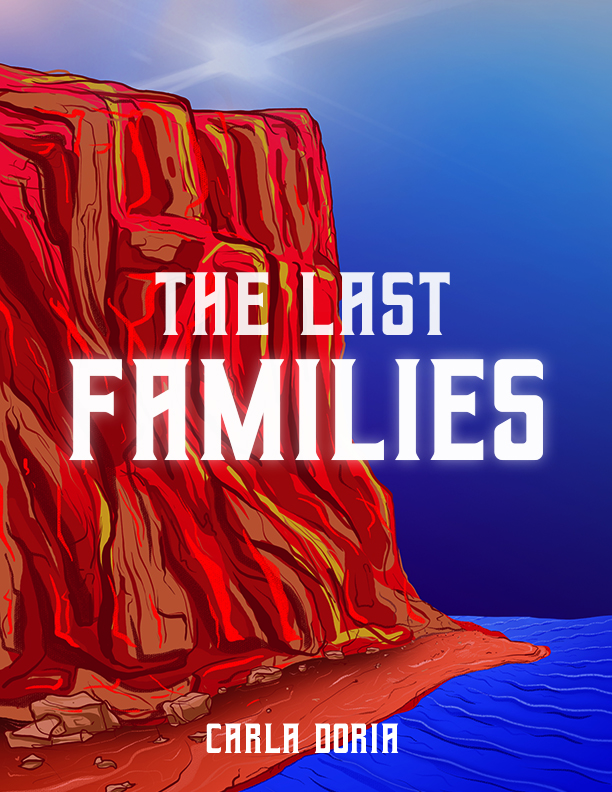
My passion for writing started when I was a little kid, around 8 years old. I would imagine these fantastic stories and I knew that I had to write them.  Adding some drawings to illustrate these stories, I would write them by hand and gift them to my family. They were my first “published” books. Unfortunately, my family has been terrible to save them. I’m pretty sure there was good content in them. Then life brought some swirls and made me go on a different path. But deep inside me, I always knew that I would once sit down and become a writer. It wasn’t until probably six years ago when I started to consider it again. Specifically, two years ago I started The Last Families and it has been quite an adventure. 

Advertisements

2. What inspired you to write your book?

I always had in mind these landscapes with extremely tall cliffs, deserts, a purple sky, and other characteristics that are depicted in The Last Families. I also wanted to write about an end-of-the-world story with survivors that had somehow developed special skills. These characters had to feel forced to go somewhere else where things would be particularly harsh. I started playing with the idea and soon the story started to develop. Also, I’m a very visual person and most of the promotion of this book is been based on characters’ illustrations drawn by a friend of mine. I wanted those characters to be stunning and different. That is why each family has specific traits not only in what it comes to powers but also physically. 

 3) What theme or message do you hope readers will take away from your book?

That in spite of all differences humanity can still carry on if they work together. The Last Families touches on some underlying themes like a post-apocalyptic era, skin color as a survival factor, family superiority, and misogyny. Of course, these topics are addressed in a very specific way in this fantastic world, but somehow they can also relate to some of the issues that our society faces today. I hope that the story helps readers from around the world question not only their beliefs but also imagine humanity’s fate (although the book’s one might sound too far-fetched) if we don’t take care of our current world. With Covid, I think many of us have are able to see fiction as a potential happening. 

Advertisements

4) What drew you into this particular genre?

As a voracious reader, I read almost anything and I read in all genres. But fantasy and science fiction have a special place in my heart. However, reading fantasy and science fiction is not for everybody.  Good fantasy and science fiction invest a lot in world-building. If you read Tolkien, Asimov, Hubert, and others in these genres, you come to see these writers have invested quite a deal in describing the backgrounds and characteristics of their worlds.  When I started writing as an adult, I knew I had some great stories in mind in these genres, but I didn’t think I was good enough to write them. I thought that writing a contemporary story was going to be easier for me as an aspiring writer. After all, I’m still a good reader of thrillers by John Grisham, Lee Child, and others. Therefore I began with a technological thriller about five years ago. 

But after some time, I understood that it doesn’t work that way. Writing a thriller is also hard. You have to make sure to research well your location. Since it is a real location, you have to really know about it. You have to make sure your characters talk and feel like they are people from a specific location. It actually became tougher than I thought.  

Therefore, I came to the conclusion that for me specifically, imagining the whole location, and better yet imagining the whole world made sense. I have a very good imagination after all.

I’m definitely happy now writing fantasy. I want to explore science fiction but that is for later. I believe these two genres are very important nowadays. Through them, we can imagine certain worlds that don’t exist yet but might exist in the future. Whenever I think of our current world’s inventors and all advances in technology, I’d like to imagine they got some of their ideas of fictions stories they read or saw on film. 

5) If you could sit down with any character in your book, what would you ask them and why?

This is a tough question. The Last Families narrates the story from several POVs. Some characters like Yarisha, Palista, Malakay, Palista, and Marquesh are more visible than others. Yarisha might take the lead as the main character but I love Malakay. I love making imperfect characters. I like that Malakay is cocky and arrogant. I like how he is feisty and looking to snap at everybody’s comments. In some ways, he feels like the grown-up version of a spoiled brat. Yet he can change. All people change. If could sit down with him, I would probably ask him why he’s taken his mother’s teachings so high. Does he really think his family is superior to everybody else? I guess that as the character’s creator I know the answers. But Malakay is Malakay, and I could actually expect him snapping at me and replying something I wouldn’t expect. 

6) What social media site has been the most helpful in developing your readership?

I’m still developing my readership but I would say Facebook and Instagram. These two social networks are mostly connecting me with people that I already know, so it is a bit hard to get to other people out there. I started a Bookstagram only one month ago. I wished I had done it sooner. That bookstagram (currently in Spanish but working on getting the English version) has connected me to people outside of my social circle. I’m still growing it but so far it looks like the most promising one. 

7) What advice would you give to aspiring or just starting authors out there?

Make sure to have people looking at your writing as soon as you can. As starting authors, we terribly self-doubt ourselves –  the infamous impostor’s syndrome. We feel too ashamed to show our writing to others. We are afraid somebody will say “you should work on your writing” “or the story is really poor”. With The Last Families,  I had some people take a look at my story, and of course, somebody helped me edit it, but I wished I had had more beta readers. Sometimes we focus too much on getting help with editing that we forget it is also important to have somebody looking at your story from a developmental point of view. We need somebody who will point out plot holes and tell us that a specific scene or dialogue doesn’t make sense, or that a character feels too flat. Also, those beta readers then become a point of contact when you are about to launch your book “your launch team.”

8) What does the future hold in store for you? Any new books/projects on the horizon?

While I waited for some people to revise The Last Families manuscript, I started another story. So yes, there is already another story halfway. It is a dystopian story. This time there is not too much fantasy in it, but still a post-apocalyptic turn of events based a bit on our current pandemic. It is located in Bolivia (where I live). I’m pretty sure that people will love the characters. I’m having fun writing them. Of course, it has no title. Coming up with a title was the most difficult thing for The Last Families, so this new manuscript will probably receive its title at the very end of its cycle.

Advertisements

About the Author

Carla Doria was born in Cochabamba, Bolivia where she currently resides. Graduated as an Industrial Engineer, she decided to acknowledge her lost love from childhood: writing. She spends her time working, blogging, writing, traveling, doing yoga, biking, running, and enjoying the good life in the city valley of Cochabamba.

Social media and websites

Facebook: https://www.facebook.com/cdoriam

Instagram https://www.instagram.com/thelastfamilies/

Bookstagram https://www.instagram.com/delfinliterario/

Twitter: https://twitter.com/carlisdm 

Goodreads: https://www.goodreads.com/carladoria

Tumblr: https://thelastfamilies.tumblr.com/

The Last Families’ website: https://thelastfamilies.com/

My personal author blog: https://carladoria.com/ 

Interview with Author Will Rice

1) Tell us a little bit about yourself. How did you get into writing?

My professional life has always been focussed on numbers – I studied mathematics and followed this with a career as an actuary. I am still very happy living in the world of numbers, but I find writing is the perfect escape into something completely different – the world of words! I’ve always written stories since I was young, and haven’t stopped.  

Advertisements

2) What inspired you to write your book?

I read a lot of fantasy fiction, a genre I really enjoy for its imagination, escapism and creativity. I also enjoy fast-paced page-turners with frequent twists and turns, such as thrillers or murder mysteries, that I can’t stop reading because I need to know what happens on the next page. My inspiration was to combine these two things I love into one – a fantasy page-turner.

3) What theme or message do you hope readers will take away from your book?

I think that fantasy can give us a new perspective on our everyday lives, by highlighting or exaggerating some aspect of what it is to be human. I was interested in the idea of shapeshifting and invisibility, and what that means for our identity – if I could change my appearance, or disappear completely, whenever I wanted, then what would it really mean to be “me”? As I wrote the book these themes of identity emerged from the story, and I hope the reader will find these as interesting as I did.

4) What drew you into this particular genre?

There is something unique about fantasy fiction. It asks what the world could be like if something, or everything, was different, and then lets us live in that new world. The Sorcerer Within is a fantasy novel set in our world and so blends the everyday with the fantastic, which is a sub-genre of fantasy that I’ve always been intrigued by. 

5) If you could sit down with any character in your book, what would you ask them and why?

There is a character in my book who I won’t name as they turn out to be the killer behind the murder at the start of the book. This person has a skewed view on reality, to say the least. I wouldn’t like to spend time with them, but at the same time I would be morbidly fascinated to hear what they thought about what they had done – do they realise how utterly inhuman they are?

Advertisements

6) What social media site has been the most helpful in developing your readership?

Facebook – great for reaching a wide range of people.

7) What advice would you give to aspiring or just starting authors out there?

Don’t give up – I found the most difficult part of writing a book was to keep going, even when it seemed “the end” was so far away.

8) What does the future hold in store for you? Any new books/projects on the horizon?

I have a project on the go to write a traditional-style fantasy novel aimed at older children – I love the idea of writing an escapist fantasy tale that my own children will enjoy reading.

Advertisements

About the Author

I’ve always loved escaping into books. When I get inside a character’s head and look through their eyes and think their thoughts, I forget everything else. Getting inside the head of a character I created is the biggest escape of all. 

I often put down a book and find an idea wandering in my head for a book that I want to write myself. The idea I couldn’t resist combining two things I’ve always loved – a fantasy novel, and a page-turning mystery.

Turning an idea into a book was a lot of work but also a lot of escaping, and I enjoyed writing every word. There’s something addictive about reading your own thoughts back after you’ve forgotten exactly what you wrote. It’s like re-discovering a memory. The words kept coming and the story kept living and here we are. The Sorcerer Within is finished. 

My ambition now is for as many people to read it as possible. I’d love for you to be one of those people, and if you do, thank you. Let me know what you think

http://willriceauthor.com/