1) Tell us a little bit about yourself. How did you get into writing?
I always wanted to be a writer. I remember writing stories in elementary school to go along with the drawings I would create. One particular teacher in the 6th grade really encouraged me when I wrote five pages in twenty minutes on a two paragraph creative writing project. I was upset that I had to turn it in because I wasn’t done yet. He took it anyway to grade it with everyone else’s. Then he asked me to turn it in again for extra credit when I was done with the story because he wanted to know what would happen to the characters I’d created. He told me I’d be a published author someday. Sadly he passed before I could make that happen, but I think he’d be proud.
Advertisements
2) What inspired you to write your book?
Too many people talk about human trafficking as they know without a shadow of a doubt what it means or why it looks like. Even when I stand on stage and tell my story of survival, I still can’t fully show or explain to someone the levels of fear involved, nor the torture I lived though to make it to the other side. I knew that if I was ever going to really move forward in my own life, I needed to get it all out in the open. Ironically, less than two months after my book was published I got engaged to the man of my dreams and I have finally, fully, totally moved on.
3) What theme or message do you hope readers will take away from your book?
Human trafficking can happen to anyone, regardless of upbringing, age, gender, race, religion, personal beliefs or relationship status. Nobody is immune, and it will NEVER look how you think it will or should.
4) What drew you into this particular genre?
I’ve lived a strange and amazing life. I also wrote science fiction post apocalyptic takes (who better to predict the end of the world than someone who already lived through it?) but this venture of nom-fiction autobiography seems to be what I get asked the most about. Truth is stranger than fiction. The fact I’m still alive is a miracle to be celebrated, and if it can help even one other person to do the same then my story deserves to be in the open.
5) What social media site has been the most helpful in developing your readership?
Lately I seem to have more following on Facebook, though my social media skills haven’t been focused heavily on other platforms to really expand the following in other ways. I hope to do more of that in following months.
6) What advice would you give to aspiring or just starting authors out there?
It’s impossible to edit nothing. Getting started can be so intimidating for everyone, including the seasoned writers. Don’t let that hold you back. Get stuff written down to start, even if it’s just ideas. You can edit and add later.
7) What does the future hold in store for you? Any new books/projects on the horizon?
I actually have my next book in a series being published on October 1st. My first book was published in January of 2018 and this next book will be book eight for me. I’m averaging two books per year right now while also balancing a personal life and full time job. I don’t plan to slow down anytime soon. I’ve had people tell me that I’m too ambitious and that this is an impossible pace. I just want to remind those people that it’s not impossible, and if they want to write a book the only thing holding them back is themselves. They just have to decide how much they really want it. Apparently I want it badly enough twice a year that somehow make it happen.
Amanda Blackwood is a survivor of human trafficking and an avid writer. A portion of every book sale goes to local organizations in the state of Colorado to help rescue other victims of human trafficking and offer them a better chance at life.
Check out more books by Amanda Blackwood on Amazon.
I enjoyed creative writing; when I was at school, that was my first taste. Then many years later, my then-girlfriend was studying journalism, which rekindled my interest in writing. This led me to do my fanzine, Positive Energy of Madness, inspired by counterculture and the Acid House scene that was sweeping the UK. I got the name from the tagline in Ken Kesey’s book Demon Box, ‘Ken Kesey challenges public and private demons with a wrestler’s brave and deceptive embrace, making it clear that the energy of madness must live on.’ I just added the word positive. Back then I was into Kesey, Hunter S Thompson, Tom Wolfe. Their raw, pacey style depicts everyday life in an engaging yet brutal narrative. I suppose this is the template I have been using ever since. The fanzine frizzled out in 1997, then I got back into writing in 2003, and more seriously in 2009 when I launched my website ZANI. I wrote my first novel, A Crafty Cigarette – Tales of a Teenage Mod, in 2015. Since 2009, it has been a natural and enjoyable vibe. When I was younger, it was stop, start, as I put a lot of my creative effort into being in a band by playing rhythm guitar and song writing. Being in a band is fun, yet so is writing. I love books and music in the same breath.
Advertisements
2) What inspired you to write Tales from The Foxes of Foxham?
As a child, I spent many Easter and Summer holidays in Norfolk with my English grandparents. They had moved from the outskirts of East London to the countryside. I fell in love with the ambience, the woodlands, the folklore, and the wildlife, especially foxes, as my grandmother had knitted me a toy fox which I called Foxy. My brother and I were huge fans of horror films, the classic Hammer and Universal movies during this period. Furthermore, any book, fictional or factual, be it fantasy, folklore, thriller, or horror, I would beg my grandparents or parents to buy it for me as an early ‘birthday’ or ‘Christmas’ present; like most children, I would use emotion to manipulate the older generation! Those loves, whether Norfolk or Christopher Lee as Dracula, never left me.
My first two books, A Crafty Cigarette – Tales of a Teenage Mod and The Magnificent Six in Tales of Aggro, are homages to my passions, Mod, The Jam, London-based situation comedies, and London theme crime films and books. So, for my next book It felt right to pay tribute to the enthusiasms of my childhood, like Foxes and Witches. The three books are interlinked, called the ZANI Tales Trilogy. A policeman from The Magnificent Six in Tales of Aggro makes a cameo in Tales from The Foxes of Foxham.
3) What theme or message do you hope readers will take away from your book?
First and foremost, it’s a magical adventure story of good vs. evil. I want readers to be excited and entertained with a smile on their faces. Scootering magazine says, ‘it’s a book for the young and young at heart.’ In Foxes, war, racism, prejudice, and animal cruelty are woven into the story without preaching. I have had friends and readers, say that they have read the novel with their children or grandchildren and how they have all adored the story as a family. That is fantastic feedback.
4) What drew you into the fantasy genre?
The loves of my childhood, which I mentioned earlier. The books I read as a kid; Wind in The Willows, One Hundred and One Dalmatians, Enid Blyton’s The Magic Faraway Tree series, Midnight Folk. There are illustrations in those books that add magic to the story. Therefore, I wanted pictures for my first fantasy-themed book, and Andy Catling (the illustrator) has brought Tales from The Foxes of Foxham to life.
5) If you could sit down with any character from Foxes of Foxham, what would you ask them and why?
Charles Renard, he’s the leader of Foxes across Europe. Charles lives in a mansion called Fox Hill Hall in Foxham. He is a dapper dresser and likes the finer things of life. Not only that he is also a fair yet firm fox who negotiated with the then prime minister, Winston Churchill, for animal equality, after which Churchill had approached Charles to get the foxes and other animals to help with the war effort. I would ask Charles about his life, how he went from working on a farm to becoming a chief, while making a killing at the Bank of England in the process. After that, I would ask Charles for a guided tour of Foxham to meet all the other residents and see the landmarks. Then finish the day with a pint with him at the local pub in Foxham, The Six Bells.
6) What social media site has been the most helpful in developing your readership?
Facebook and Instagram, not so much Twitter, but I wouldn’t rule it out. LinkedIn for contacts, that’s how I met the illustrator, Andy Catling, who I now regard as a good friend.
7) What advice would you give to aspiring or just starting authors out there?
Forget the doubters, have fun, but keep to a timetable. Please don’t wait for inspiration; you can create it. As you write the book, absorb yourself with similar books, TV shows, or films of that particular genre. Maybe read a chapter just before you start writing. I find this an excellent practice to get the creative juices flowing.
Remember writing the book is just one part of the process. Find someone who can help or advise with the marketing, either as a favour, or that won’t dip into your savings. But at first, learn to do it yourself; it’s a good learning curve. Put the book in front of as many people as you can in a respectful manner. Don’t worry if you get a negative response; keep knocking on doors.
Shop around for typesetters, proof-readers, and graphic designers, as you would when buying a house, a car, laptop, etc.
8) What does the future hold in store for you? Any new books/projects on the horizon?
ZANI, my website, which I use as a banner to publish my books, is growing. Irvine Welsh has already brought out a book on ZANI, Performers, which is terrific. ZANI is bringing out a fashion book with unique illustrations, The Desired Article: A Concise Look At Style. Written by my friend, Jason Disley, an author and poet. The fashion articles originally appeared in ZANI in the summer of 2020. Jason and I believe they will work well as a book.
I want to take Foxes of Foxham to the top, so I will keep pushing and believing. I will bring out more novels, no question, as I enjoy writing. The future looks promising.
Matteo Sedazzari developed the zest for writing when he produced a fanzine entitled Positive Energy of Madness during the height of Acid House, in 1989.
Positive Energy of Madness dissolved as a fanzine in 1994 and resurfaced as an ezine in 2003, which became ZANI, the ezine for counter and pop culture in 2009, promoting online optimism, along with articles, reviews, and interviews with the likes of crime author Martina Cole, former pop star and actor Luke Goss, soul legend Bobby Womack, Clem Burke of Blondie, Chas Smash of Madness, Shaun Ryder of Black Grape/ Happy Mondays and many more.
After producing and writing for his own publication, Matteo’s next step was to pen a novel, A Crafty Cigarette – Tales of a Teenage Mod. Matteo is influenced by Hunter S Thompson, Harlan Ellison, Kenneth Grahame, Arthur Conan Doyle, Mark Twain, Irvine Welsh, DH Lawrence, Alan Sillitoe, Frank Norman, Joyce Carol Oates, Mario Puzo, Iceberg Slim, Patricia Highsmith, Joe R. Lansdale, Daphne du Maurier, Robert Bloch, George Orwell, Harry Grey and many more. American comics like Batman, Superman, and Spiderman, along with Herge’s Tintin, also provide Matteo with inspiration.
Matteo also finds stimulus from many films like Twelve Angry Men, A Kind of Loving, Blackboard Jungle, Z, Babylon, This Sporting Life, Kes, Midnight Cowboy, Scum, Wild Tales, The Boys, Midnight Express, La Commare Secca, Dr Terror’s House of Horrors, so on and so forth. As for music, anything that is passionate, vibrant, and with heart is always on Matteo’s playlist.
Matteo Sedazzari resides in Surrey, which he explores fanatically on his mountain bike. Matteo supports Juventus, travels to Italy and Spain, eats and dress well, as he enjoys life in the process.
1) Tell us a little bit about yourself. How did you get into writing?
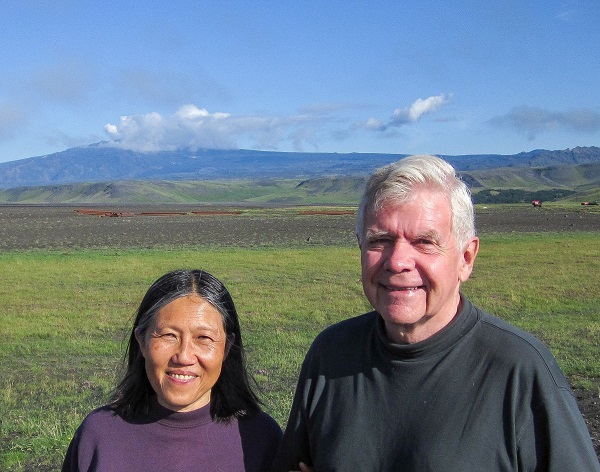
I was born in Iceland and lived there until graduating from high school at 19. Since Iceland is a small country, it’s common for Icelanders to go overseas to study. I went to Finland to study architecture. Afterwards, I launched a three-year plan to see the world. Three years turned into 50 some years and travels to 60 some countries. My international career as an architect took me to the Middle East to build a ruler’s palace and harem, and to poor countries in Africa to construct schools. My last job was with the World Bank, a UN affiliate and the world’s largest agency in international development. I now live in the U.S. with my wife and coauthor, Veronica Li.
In my retirement, I became the newsletter editor of the World Bank retiree group. The quarterly featured news about members. I soon got interested in the lives of several founding members of the retiree association. They’d worked at the Bank since its inception, when the organization was established to reconstruct the war-torn countries of the Second World War. One of them was a hundred years old! Realizing this was the last chance to capture their stories, I interviewed them and wrote a short bio about each. These stories were collated and published as a book by the association. Then I decided I had an interesting story to tell too.
Advertisements
2) What inspired you to write your book?
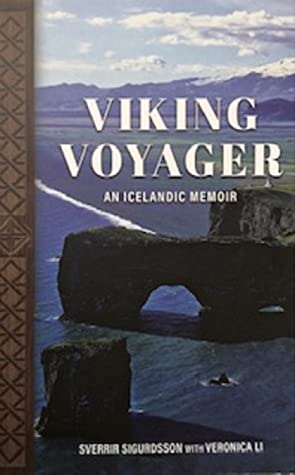
I love telling stories of my international adventures. My friends encouraged me to write them down. So I did and saved them as “episodes” on my computer, kind of like dumping photos in a shoebox. Then I showed some pages to my wife Veronica, who’s a published author. She read them and said, “Wow, Sverrir, you’ve had a fascinating life!” From then on, she helped me put my episodes into a memoir called Viking Voyager: An Icelandic Memoir.
We wanted to make it a human-interest story that appeals to a wide audience. At the time of our writing, Iceland was a tourist hot spot. (The country, which has a population of only 360,000, hosted 2 million tourists in 2019!) The literature on Iceland, however, was mostly travel guides. We decided I could tell tourists about my country by introducing them to my family, our way of life, and the road we’ve traveled to be where we are today.
3) What theme or message do you hope readers will take away from your book?
There’s a saying: travel broadens the mind. After reminiscing about my own travel adventures, I must add to the adage: travel has also expanded my soul, strengthened my character and enriched my life. My Viking forefathers traveled the world to loot and plunder and bring home riches. Modern-day Vikings don’t do that anymore, thank goodness. We travel to learn, study, and to contribute on the world stage. At the end of my life, I can say I’ve found my fortune in an exciting career that required me to work with people of diverse cultures. Those experiences are worth more than any treasure.
My message to people of any age but especially to the young is: travel, spend some time in a foreign country. You’ll be surprised at what you’ll discover about other people but most importantly, about yourself.
4) What drew you into this particular genre?
I’m drawn to memoirs/biographies because I grew up with the Sagas, which started out as biographies of real people. The first Saga, called The Book of Settlements, tells us about the first settlers in the country more than a thousand years ago—where they put down roots in the uninhabited island, whom they married, and who their descendants were. It’s a dry, and some would say boring, account of who’s who in Iceland in the 9th century. As time went by, various writers embellished the stories and turned them into what’s comparable to today´s historical novels. The stories became increasingly fantastical and the realistic historical novels gave way to tales of superheroes performing magical feats. The writing finally ceased during the Little Ice Age in the 14th century, when the country descended into poverty and misery. But itinerant story tellers told and retold the stories as they traveled from farm to farm to entertain the inhabitants.
I’m an eclectic reader of many genres, including thrillers, mystery, and historical novels. After a lifetime of reading, my conclusion is that every fictional story, no matter how fantastic, has a real-life element to it.
5) What social media site has been the most helpful in developing your readership?
I find Facebook and Twitter most useful. Being an old geezer who had no time for social media, I had to start almost from scratch. On Facebook, finding friends turned out to be very easy. Without much effort, I added to my friends list my connections from all over the world. I posted news of my publication, and soon I was hearing back from relatives, childhood friends, former colleagues, and even friends of friends.
The covid lockdown also forced me to look into virtual book tours. I did so reluctantly and was pleasantly surprised at the result. For two weeks, the tour host tweeted several times a day about my book and interviews at various blog sites. From zero followers on Twitter, I quickly gained a respectable following.
The posts on Facebook and Twitter created a snowball effect. Contact with one book blogger led to another, and their reviews added to my credentials on Amazon and Goodreads. This network of friends in the book world is invaluable to any author. For example, I never knew there was such a thing as contests for indie authors. I entered one, The Wishing Shelf Award run by a group of UK authors, and was most happy to receive a prize.
6) What advice would you give to aspiring or just starting authors out there?
If you’re interested in writing your memoir, I’d say, start writing now. Even if you don’t know what you want to say, you can always begin by putting down your most salient memories. After a while, you may be able to connect the dots and see the big picture. This was what I did—the “pantser” style of writing.
Fortunately, my wife and coauthor is a “plotter.” She taught me the importance of the theme. Once the theme is established, the episodes fall into place and become the building blocks of a plot. In the absence of a theme, a memoir can end up a mishmash of anecdotes, with no meaningful message for readers to take away.
During the writing process, I learned a lot about creative writing from Veronica, who insisted on painting vivid pictures of places and people in order to transport readers to a different world. When I said I couldn’t remember the specifics, she threatened to exercise a coauthor’s right to creative license. Of course, I couldn’t let her turn my life into fiction. So, I dug into my memory, did some research, and found the details to flesh out the scenes. From its birth as a factual and dry account, the story evolved into a visual canvas for the reader.
One suggestion to aspiring memoirists is to put their experiences in the context of their environment. Their stories will resonate with readers who share their culture and history, while those who come from a different place will learn something new. Since my memoir starts in Iceland, a little-known country, readers appreciate the Viking heritage and the country’s development described in my book.
7) What does the future hold in store for you? Any new books/projects on the horizon?
I’m working on publishing the Icelandic edition of Viking Voyager. I’ve translated the book myself, with the help of an editor, and an Icelandic publisher is aiming to release the book before the end of the year, in time for the “Christmas book flood.” The Icelandic tradition is to give each other books as Christmas presents. Iceland is known to be one of the most literate nations in the world. Given our long, dark winters, there’s nothing better than curling up with a good book.
Sverrir Sigurdsson grew up in Iceland and graduated as an architect from Finland in 1966. He pursued an international career that took him to the Middle East, Africa, Asia, Eastern Europe, and the U.S. His assignments focused on school construction and improving education in developing countries. He has worked for private companies as well as UNESCO and the World Bank. He is now retired and lives in Northern Virginia with his wife and coauthor, Veronica.
1) Tell us a little bit about yourself. How did you get into writing?
I was born in India but grew up in Canberra, Australia, and Toronto, Canada. After completing my medical degrees from India, I moved to the U.S, where I worked in the biomedical and healthcare communications domain for more than a decade. Since childhood, I have always been a movie and rock music buff, but I didn’t start enjoying reading fiction until 2014. The mystery and suspense genre consistently garnered my interest, and I started reading the works of Agatha Christie, Mary Higgins Clark, Alafair Burke, Ruth Ware, Shari Lapena, CL Taylor, and Lucy Foley, to name a few. I didn’t start thinking about embarking on an author’s journey of my own until the second year of the pandemic. I thought I’d give creative writing a go since I’ve started to love reading fiction and love most creative things in general, like art, theatre, global cinema, history, museums, heritage architecture, etc. With the advent of new avenues in publishing, I thought I’d harness my writing creativity and storytelling skills and draft work that would engage, enthrall, and entertain. We never know which piece of writing can usher in a positive change or impact someone’s life meaningfully.
Advertisements
2) What inspired you to write your book?
Some people work in fields that are either monetarily profitable or offer positions in highly respectable academic echelons. However, what proportion of these people are fulfilling their core passion or purpose in life? Probably not a large proportion. For these people, the mundane pattern of their high-paying and socially super-respectable jobs can potentially fuel boredom and loneliness and cause them to seek solace in friends or even a potential romantic partner. Shifting focus and energy towards a close friendship or relationship is wonderful as long as the connection is balanced and mutually prioritized. However, if the bond becomes unbalanced or dysfunctional, the person may feel their world collapsing. This scenario further accentuates feelings of negativity, isolation, self-doubt, and self-blame. Finding your passion and working towards that can boost zest and enthusiasm for life, and the right people will automatically gravitate to you. It’s important to stay grounded in your efforts, and easier said than done, “never give up.” Some of my graduate and medical school classmates opted for different career trajectories after graduation and are in happier spaces now.
I wanted to write a story that would blend the above message with a medical school setting, friendship, romance, a bit of mystery, and how the protagonist eventually finds her calling.
3)What theme or message do you hope readers will take away from your book?
It’s beautiful to try to find your core passion − something you love, something you look forward to developing and continually learning about, and something you can contribute to and nurture regularly. We should also focus on building a “core” of three or four people (probably from within our family), whom we can trust implicitly and who will have our back. We should keep an open mind because soul-stirring inspiration can flow in from the most unexpected sources (as the reader will find in this book). After publishing “Unfurling,” I published a mini-manual titled “Don’t Let Your Break-Up Be Your Break-Down.“This booklet highlights the above message along with seven other simple strategies we can cumulatively inculcate into our daily schedules to make us feel empowered, self-reliant, and resilient in the face of a loss of a close friendship or relationship.
4)What drew you into this particular genre?
I wanted to tell a simple, light-hearted tale of a young doctor finding her core purpose in life as she navigates the joys and uncertainties of friendships and romance and even finds herself embroiled in a murder mystery. So, my book would belong to a mix of contemporary, romance, and mystery genres. I consider my book less a murder mystery and much more a journey of a young woman finding her true calling in life.
5) If you could sit down with any character in your book, what would you ask them and why?
Now that she’s identified her calling and core purpose, I want to sit down with the protagonist Dr. Mandy and ask her about her academic and career trajectory. Is she planning to pursue her super-specialization in India or at an international location? I would also like to ask her about her friend circle, and her current equation with the two male leads in the book.
6) What social media site has been the most helpful in developing your readership?
I’ve just started my author journey, and I’m developing my readership on Instagram and Facebook. I also update my Amazon Author Central page.
7) What advice would you give to aspiring or just starting authors out there?
The advice I would give to aspiring authors would be: If you have a story, experience(s), a memoir, or research findings that you would like to share with the world–fearlessly put it out there! Take constructive criticism, but don’t let anything daunt you or steer you away from your path. An author’s journey is not a sprint. It’s a marathon. Be patient and persevere.
8) What does the future hold in store for you? Any new books/projects on the horizon?
I’m enjoying my author journey as much as getting to the destination.
I plan on writing short stories and novellas, mainly in the genres of contemporary romance, mystery, and suspense.
I have a romance novelette titled “SANCTUARY” coming out end of this year. The plot involves an emotional journey based in New Delhi and New York City.
I have a suspense novella which will be published towards the end of 2022, titled “SINISTER REUNION.” The story takes place in New Zealand.
I look forward to networking with other authors and connecting with more readers.
Advertisements
About the Author
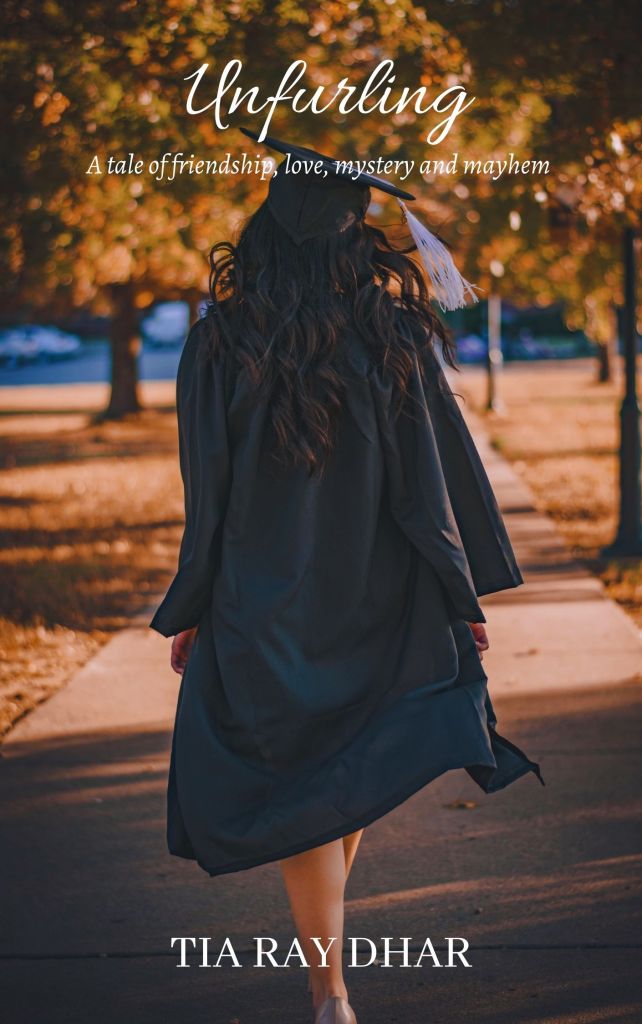
Tia Ray Dhar grew up in Canberra, Australia, and Toronto, Canada, and has over 15 years of experience in content creation for biomedical and healthcare communications across India, the US, and New Zealand. The mystery and suspense genre has always enthralled her. She started her fiction reading journey with novels by renowned authors like Mary Higgins Clark, Agatha Christie, Stephen King, Shari Lapena, Alafair Burke, Ruth Ware, and CL Taylor, to name a few. After years of reading, she decided to embark on a fiction writing journey of her own!
She is a Goodreads author and has two published books in two different genres: A murder mystery novel titled “Unfurling: A Tale of Friendship, Love, Mystery & Mayhem” and a short self-help book called “Don’t Let Your Break-Up be Your Break-Down.”
Her upcoming plans include publishing a romance novella, followed by few novellas and short stories in the mystery and suspense genre.
She has just started her writing journey and knows that there’s a long way to go. The creative landscape of writing is a space where we continually aspire to learn, engage, enthrall, entertain, and motivate the reader audience.
Besides being an avid fiction reader, she loves public speaking, photography, rock music (especially from the 80s and 90s), films, theatre, and world history. One of her favorite places anywhere in the world is sitting at a window-side table in a cafe and sipping an Americano, long black, or flat white coffee while reading or writing.
She enjoys connecting with other readers and writers and participating in social and cultural events for all age groups.
1) Tell us a little bit about yourself. How did you get into writing?
I’m a husband and dad first, that’s where much of my attention goes. For work, I am an advertising executive at an architectural technology company. I really love my job and I’m extremely passionate about what I do. In addition, I have several side hustles, including real estate investing, card playing, distance running, guitar playing and yes, I’m a proud novelist. I’ve always been into writing and almost by happenstance, I was always placed in advanced reading and writing courses as a kid. I really learned to hone my writing craft as an advertising and marketing professional, writing PR content, newsletter articles, case studies and advertorials. My most influential writing mentor, Steve Unger, taught me to write conversationally and that is absolutley my style. I write like I talk.
Advertisements
2) What inspired you to write your book?
I actually came up with the idea for The Shattered Violin as a unique concept for a movie. I began to start to write a screenplay and I learned very quickly that I didn’t know the first thing about script writing. After deciding to start with a book first, I came to the painful realization that I knew even less about writing a novel 🙂
3) What theme or message do you hope readers will take away from your book?
That life is full of twists and turns, and that you never know how far your life can unravel after you experience a truly traumatic event.
4) What drew you into this particular genre?
That was actually an accident. I came up with the original plot and it was rattling around in my head, begging to be put down on paper. As I began to flesh out the story, I really fell into the crime thriller genre, which was a perfect fit for the story.
5) If you could sit down with any character in your book, what would you ask them and why?
I’d sit down with Julia. She’s not the flawless, perfect character. She’s passionate, fiery and confident. And she is very assertive when she knows what she wants. I’d love to just learn about her background. Why did she go into the music field after pursuing a career in medicine? Has she always been so intuitive when reading people or did she have to develop that skill? Why would she be walking around with a priceless antique under her arm?
6) What social media site has been the most helpful in developing your readership?
Definitely Facebook. It’s a medium that combines visuals with prose so I can preview content, share visuals and get immediate feedback.
7) What advice would you give to aspiring or just starting authors out there?
Find a unique take or twist on something. I see many books out their in the sci fi or fantasy genres in particular and they seem to follow the same formula. I say flip that formula on its head and present something that’s truly unique. That’s what I tried to accomplish with The Shattered Violin, present a novel new story with some very intriguing and thought-provoking twists.
8) What does the future hold in store for you? Any new books/projects on the horizon?
Yes! I just finished an outline for a new psychological thriller about a PhD student who wants to develop a worldwide, free Internet network but inadvertently gives birth to an AI who is able to replicate and self-program at a tremendous rate. It’s a really interesting study of what can happen as robots replace humans and a different way that Artificial Intelligence can have signifiant drawbacks.
Advertisements
About the Author
Jared Bodnar is an advertising professional by day, dedicated dad by night and novelist after Midnight.
He graduated from Arizona State University with a Journalism and Psychology double major, a perfect combination for writing psychological thrillers.
A lifelong writer, Jared is passionate about dialogue and is obsessed with converging, twisty storylines. Jared lives in Gilbert, Arizona with his wife Shannon, daughter Harlow, and sons Easton and Kai.
1) Tell us a little bit about yourself. How did you get into writing?
I have alwasy been a writer. I wrote short stories and poems in elementary and high school. And enjoyed creative writing and journaling as an outlet into my adulthood. I got more serious about writing and publishing when my friend and I created a “novel” club to help with the sci-fi book he was writing.I enjoyed the creative process and was inspired by his success in self-publishing (he was later picked up by 47North Amazon imprint).I decided to try my hand at publishing a series of beach poems I had written and had an artist friend do the accompanying illustrations- just to try out the self-pulishing process from end to end. From there, I decided to work on a fantasy novel that had been begging for some attention. I ended up writing the award winning novel Glamorous and 3 novellas in that series.
Advertisements
2) What inspired you to write your book?
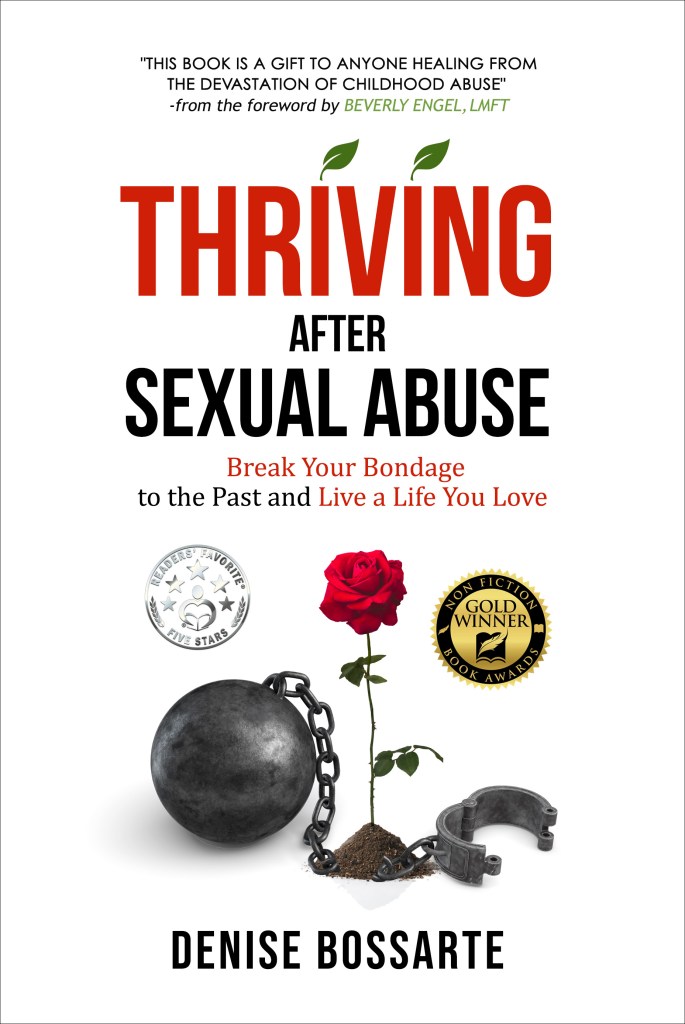
I had wanted to share my story of abuse and healing for a long time. My husband encouraged me saying my story could help other survivors. But being a survivor with what I would consider PTSD, my memories were not always accessible or cohesive, and often difficult to put in the context of the other events in my life. I thought if I couldn’t write a detailed memoir then I couldn’t share my story.Then the news came out about Dr. Larry Nassar and his abuse of hundreds of female gymnasts and my heart broke for them. Those women need healing help, I thought to myself. If I can’t write a memoir, I can write about all the things I did to help myself on my healing journey. So their stories inspired me to write a book to help all survivors heal from their abuse.
3) What theme or message do you hope readers will take away from your book?
The abuse was not their fault. They have the strength to let go of the hold the past has on them.They are capable of healing from the abuse and living a life they love.
4) What drew you into this particular genre?
Self-help was the best way to share my story and the activities for healing that I had incorporated into my healing journey. I didn’t just want to write about my abuse. I wanted to create a blueprint for others for helping them on their healing journey. I wrote the book I wished I had had when I started my healing work!
5) What social media site has been the most helpful in developing your readership?
Twitter. I can share about my book and about the various healing activities I enjoy practicing.
6) What advice would you give to aspiring or just starting authors out there?
Read a lot of good books in your genre!
Do your research for the genre you want to write in to learn what works for genre from storyline, characters, book covers, etc.
Connect with other authors and find ways to share your writing with people who can give constructive criticism to your work. Their are author groups online, so no need to limit yourself to who is local!
When you are finished writing, get a good editor to help you take the book to the next level.
7) What does the future hold in store for you? Any new books/projects on the horizon?
Right now I am focusing on my other artistic talents – photography. I teach contemplative photography and am working on putting together an online course. There are several novels playing around in my head, so you might see some of these stand alone novels some time in the future!
Advertisements
Author Bio
Denise Bossarte is an award-winning poet, writer, photographer, and artist. Denise is a certified meditation facilitator and contemplative arts teacher. She is an information technology (IT) professional working for a large urban school district. Denise holds a BA in chemistry, an MS in computer science, and a PhD in developmental neuroscience. And she is a survivor of childhood sexual abuse.
Awards
Thriving was Quarterfinalist in the 2019 BookLife Prize Nonfiction Contest, Self-help Category (as an unpublished manuscript.)
And finally, Thriving’s book cover was selected as a finalist in The Wishing Shelf Book Awards Best Book Cover – Adult contest. https://www.thewsa.co.uk/finalists2021/.
1) Tell us a little bit about yourself. How did you get into writing?
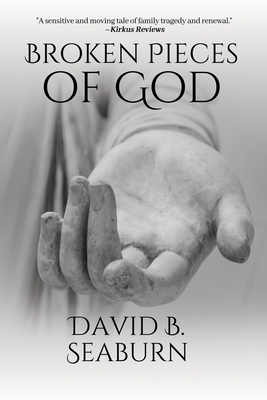
I began my career as a Presbyterian minister serving a country church. I went back to school to get a degree in counseling and entered the mental health field. Eventually I got my PhD in psychology. I was an Assistant Professor of Psychiatry and Family Medicine at the University of Rochester Medical Center, where I directed the Family Therapy Training Program in Psychiatry and coordinated the Psychosocial Medicine Rotation in a family medicine residency program. Later I directed a free family counselling center in a local public school district. I started writing stories, poetry and personal essays when I was in the ministry. I wrote extensively at the Medical Center (two books, over sixty articles). It wasn’t until 2000 that I started writing long fiction. I had had an idea for ten years and finally took the leap. I published that first novel in 2005. I been writing novels ever since. Broken Pieces of God is my eighth novel.
Advertisements
2) What inspired you to write your book?
Eight years ago, I read an online news article about a man whose wife was gravely ill. He prayed to a statue of Jesus that she would be healed, and she was. To repay this blessing, he cleaned the old statue, only to have it fall on him, crushing his legs. I couldn’t let go of the story and finally created a broader narrative to go with it.
3) What theme or message do you hope readers will take away from your book?
I am always interested in the extraordinary experiences of ordinary people. This novel is no different. It follows several characters coming to grips with tragic events in their lives (life threatening illness, job loss, rape, and more), some of which have been kept secret for many years. And though they may end up with scars, they find ways to emerge with hope and resilience. I think that’s a particularly important perspective in our current time.
4) What drew you into this particular genre?
As a marriage and family therapist and a minister, I have always been fascinated with the stories that people have to tell, especially stories of hardship and triumph. Broken Pieces of God, like my other novels, is character driven. It delves into the deeply human foibles and strengths that we all have. I hope it speaks to the lives of my readers.
5) If you could sit down with any character in your book, what would you ask them and why?
This is a tough question. I think I would like to talk with Gayle Kimes, who is facing a terminal cancer diagnosis. She concocts an over-the-top solution to a problem that she and her unemployed husband face. I would like to ask her where she got the strength to face these problems simultaneously and gracefully. And—What happened next in their lives?
6) What social media site has been the most helpful in developing your readership?
I wish I were better at this. I use Facebook and Twitter mostly. Goodreads, Netgalley, and Reedsy have been useful. Email blasts have worked. I’ve used virtual book tours. A little bit of everything.
7) What advice would you give to aspiring or just starting authors out there?
Don’t worry if you don’t know exactly where your story is going or how it will end. Keep writing. Let the narrative, the characters, lead you.
8) What does the future hold in store for you? Any new books/projects on the horizon?
Usually, immediately after I’ve sent a manuscript to my publisher, I start a new novel. This time is no different. I am about half way through the next one, which will be entitled, Give Me Shelter.
Advertisements
About the Author
David B. Seaburn’s first novel, Darkness is as Light, was published in 2005. He followed with Pumpkin Hill (2007), Charlie No Face (2011), a Finalist for the National Indie Excellence Award in General Fiction, Chimney Bluffs (2012), More More Time (2015), and Parrot Talk (2017), which placed second in the TAZ Awards for Fiction (2017) and was short listed for the Somerset Award (2018). Seaburn’s latest novel, Gavin Goode (2019), was an American Book Fest Finalist for “Best Book” in General Fiction (2019) and Semi-Finalist in Literary, Contemporary and Satire Fiction for the Somerset Award (2019).
Seaburn is a retired marriage and family therapist, psychologist and Presbyterian minister who lives in Spencerport, NY with his wife, Bonnie. They have two daughters who are married and four wonderful grandchildren. After serving a rural parish for six years, Seaburn entered the mental health field. He was an Assistant Professor of Psychiatry and Family Medicine at the University of Rochester Medical Center for nearly twenty years. There he was Director of the Family Therapy Training Program (Psychiatry) and Coordinator of the Psychosocial Medicine Rotation (Family Medicine). He published over sixty academic papers and co-authored two books. In 2005, Seaburn left the Medical Center to become Director of the Family Support Center in the Spencerport Central School District, a free counseling center for students and their families. Seaburn is currently a writing instructor at Writers and Books in Rochester, NY.
1) Tell us a little bit about yourself. How did you get into writing?
Writing is my third career. I worked in marketing in the telecommunications field for a number of years, then switched to teaching marketing at the college level 25 years ago. My oldest friend swears that I told her I would write a book someday when we were just 14. Around 40 years later, I finally got serious and started writing Jeep Tour, my first novel inspired by a family trip to Sedona, AZ. I truly love writing and am currently on book #6!
Advertisements
2) What inspired you to write your book?
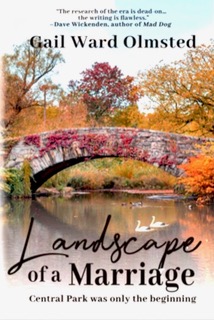
The real life story of Frederick Law Olmsted (FLO) inspired me. FLO is an ancestor of my husband’s- they’re actually distant cousins- and we’ve always enjoyed visiting his parks in Boston and New York as well as the grounds of the private estates he designed, including the Biltmore Estate in Asheville, NC. I read a few of the well-written biographies about FLO and discovered that, acting on a deathbed wish from his brother, Fred married his widow Mary, adopted her three children and together, they had four more. It got me thinking about Mary- what was her story? How did she feel about all of this? Was theirs a marriage in name only or something more? I couldn’t find a story to read, so I wrote it!
3) What theme or message do you hope readers will take away from your books?
All of my books carry a central theme: the importance of second chances, the ability to reinvent yourself, to seek a do-over in your life. My main characters vary in age, relationship status and professions, but they all are seeking an opportunity to get the ‘happy ever after’ that they each deserve.
4) What drew you into this particular genre?
My first four books are contemporary women’s fiction and my most recent one- Landscape of a Marriage is historical, but each one describes quirky, imperfect women seeking to live their best possible lives. I am inspired by my daughter, my nieces and my amazing women friends as I create these characters that I hope resonate with readers.
5) If you could sit down with any character in your book, what would you ask them and why?
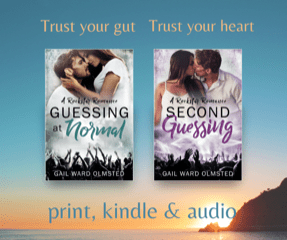
My favorite character so far is Jill Griffin. She was working at the front desk of a motel when we first met her in Guessing at Normal. James Sheridan and his band check in while on tour and he steals Jill’s heart. While not the ideal boyfriend/husband (a wandering eye when it comes to female groupies and some substance abuse issues) he inspires Jill to start her career as a songwriter. Jill returns as an older and wiser woman in Second Guessing. Now wildly successful and the mother of a teenager, Jill seeks a second chance at love and finds it with a young pop star. I would love to talk with her about her life, her choices and the inspiration for her songs.
6) What social media site has been the most helpful in developing your readership?
I am a huge fan of Goodreads. The readers are passionate and are seeking the best books they can find and the platform is relatively easy to navigate. As an author, you can post in groups made up of your target audiences, sponsor giveaways, trivia, etc. I am also a fan of Facebook, but more for branding and name recognition vs. sales.
7) What advice would you give to aspiring or just starting authors out there?
What I have learned in the eight years since I finished my first manuscript is that before you start sending out queries to line up an agent, publisher or even beta readers, be certain that your book is as good as you can possibly make it. Hire an editor and/or a proofreader and make the changes they recommend. Know your genre- what is your target audience expecting re: cover designs, storylines and page counts? I’ve heard too many of my peers struggle to describe their books in just a sentence or two, but that is all the time you’ll ever have when communicating with a potential reader.
8) What does the future hold in store for you? Any new books/projects on the horizon?
I am working on two projects- the first is contemporary fiction- Miranda is a disgraced former Assistant State’s Attorney seeking a career comeback when a missing witness from the case that derailed her career resurfaces with a story of bribery and coverups involving Miranda’s ex. I am hoping to see it published within the year. The second is at the very early stages. It is biographical fiction set in the early 20th century, featuring the South’s original power couple. More to follow.
Advertisements
About the Author
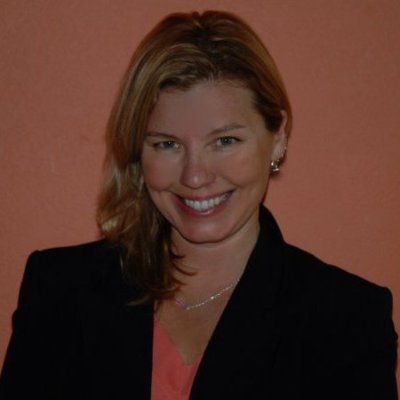
Gail Ward Olmsted was a marketing executive and a college professor before she began writing fiction on a fulltime basis. A trip to Sedona, AZ inspired her first novel Jeep Tour. Three more novels followed before she began Landscape of a Marriage, a biographical work of fiction featuring landscape architect Frederick Law Olmsted, a distant cousin of her husband’s, and his wife Mary.
For more information, please visit her on Facebook and at GailOlmsted.com.
Tell us a little bit about yourself. How did you get into writing?
I am an Ethnobotanist and Clinical Herbalist and I have long been inspired by the healing roles plants play for both humans and also our planet—and so I have built a career around this! I am incredibly lucky to have found my passion early in life and I have always just followed it, even though much of the times the path ahead seemed so unclear! I got into writing because when I was doing my Master’s Thesis I had to do a lot of writing to prove my research was valid and in the process I had an awesome advisor (the late Dr. Thomas Ruehr from Cal Poly in San Luis Obispo, CA) who really helped edit my work and gently lead me into realizing this was something I could do! Strangely, although I always hating writing classes in my school days, I ended up with one of my first jobs out of college being a Staff Writer for an alternative medicine publishing company! From there, even though I never thought I would aspire to become a writer (in the least!) the projects kept coming and I have realized that it is SUCH an important medium in order to get my message about plants across!
Advertisements
What inspired you to write your book?
This series of books has been something long-simmering in my mind over the years. I have done a lot of research and writing that is heavy on the scientific side of things, but I really wanted to reach the common person who either had a garden or had some inclination that they were interested in plants. I feel it is so important for people to begin developing this relationship and to realize the potential healing role they can plan in our lives—even common garden plants that are right under our noses!
What theme or message do you hope readers will take away from your book?
I would like them to start wondering and looking at the plants that already exist in their lives, to develop a curiosity for what that plant is about. It’s kind of like getting to know a person, we often develop some curiosity about them before we become friends…Plants are the same. Once someone learns one thing—maybe it is a plant that is useful in some aspect—they will never look at that plant the same again. They will always remember its name.
I would like people to stop looking at the amorphous “green carpet” that surrounds them and start realizing there are individuals that make up that green carpet. Once people turn that corner in their minds, the world becomes a much richer place!! People will also become more effective and interested in saving our precious biodiversity.
What drew you into this particular genre?
It was really my career and work with plants and herbs. I have a few other published books (from mainstream medical or educational publishers), but these books are pretty nerdy scientific type of books that aren’t focused at the general public. I wanted to write a beautiful book with colorful photos that people would enjoy looking at and could use to begin their interest in alternative garden uses.
What social media site has been the most helpful in developing your readership?
I suppose Facebook has been the most helpful in getting the word out, but I really could do more work to develop communities of people who are interested in my “Botanicals With Benefits” topic. In fact, I have just created a Facebook Group for Botanicals With Benefits which I hope can do this, and I would love people to come and check it out, become members of the group to swap their experiences with plants and their multiple uses.. if you have a unique or really useful way to use a plant in your garden, please join and share with us…Or just come to learn!
What advice would you give to aspiring or just starting authors out there?
I think it is just to do it –if you have an interest in writing, then create an outline, and start in small steps by tackling the topics in chunks—before you know it, you will be well underway in your writing!
What does the future hold in store for you? Any new books/projects on the horizon?
The Botanicals With Benefits volumes will be coming out over time.. there are about 6-7 of them planned, so I have my work cut out for me with those! Also, I am currently writing/Editor of a book in a new field called Decoloniality which will be published by the educational publisher Springer Nature. It will be called: Understanding Socio-Ecological Systems Through Decoloniality: Case Studies on Convergence of Indigenous and Western Knowledge. It is a mouthful and another nerdy scientific book. However, I feel this field is very important and relevant to plants because much of our plant knowledge comes from indigenous wisdom! That should be published in 2022.
I am also currently joining a friend of mine who is a Doctor in San Luis Obispo, and will have a limited herbal & Flower Essence practice alongside her integrative primary care practice, Dr. Lindsey Faucette at the SLO Health center. We will be planning a lot of activities to merge our experience and bring natural healing to people. Come join us!
Ethnobotanist, Herbalist and Author, Kerry Hughes – with a 20-year record-of- success in natural product development – is driven by a tenacious fascination with the potential health enhancing role plants and nutrients can play, and her purpose is Ethno-Botanical Discovery and strategically innovating and expanding the boundaries of new natural product development. Through this, Kerry has catalyzed significant phyto-product breakthroughs that have been applied to bring to market new, efficacious and profitable products that not only heal people but also protect our threatened global biodiversity.
Kerry’s love of natural products has compelled her to write and speak frequently on a variety of subjects. Her writing includes the recently published Botanicals With Benefits: Establish a New Relationship with your garden (2020), as well as these in-depth text books: Understanding Socio-Ecological Systems through Decoloniality: Convergence of Indigenous and Western Knowledge (in press); The Incense Bible, Taylor & Francis (2007), one of the first scientific reviews & examinations of incense, The Health Professionals Guide to Dietary Supplements, Lippincott, Williams & Wilkins (2006), a peer-reviewed guide to herbs and nutritional supplements, and Botanical Medicines: The Desk Reference for Major Herbal Supplements, Haworth Press (2002) an in-depth text- book on the medical aspects of many of our top supplements. Additionally, she has authored over a dozen articles in peer-reviewed scientific journals on various natural product topics.
Kerry is the Founder of EthnoPharm; a consulting business focused on Natural Product Discovery and Development. She is also on the Scientific & Medical Advisory Boards for Amare Global, Good Pharma and Hilma, and is on the Advisory Board for Global Food Forums. Kerry has acted as a consultant to the United Nations through the International Trade Centre (ITC) for international development projects involving botanicals and authored essential oil and organic reports for the Market News Service (MNS). As the Director of the US office of The Institute for Market Ecology (IMO), an eco-product certifier, she helped to co- develop and establish the Fair for Life Social & Fair Trade Certification in the US market, the highest-bar global Fair Trade certification standard. Today, she continues her work with standard development on the Certified Regenerative standard by A Greener World, currently in its pilot phase.
Kerry has a background in Ethnobotany and Biochemistry, with a Bachelor of Science degree in Biochemistry, and a Master of Science degree in Agriculture with an emphasis in Ethnobotany and Soil Science from California Polytechnic State University, San Luis Obispo, California. She is also a certified Clinical Herbalist by the Berkeley Herbal Center, an Advanced Australian Bush Flower Essence Advanced Practitioner, and teaches at the Berkeley Herbal Center & The Herbal Academy of New England. Kerry also maintains a Clinical Herbal practice at the SLO Health Center in San Luis Obispo, CA.











 and another nerdy scientific book. However, I feel this field is very important and relevant to plants because much of our plant knowledge comes from indigenous wisdom! That should be published in 2022.