Interview with Author Anastasia Petrenko

1)   Tell us a little bit about yourself. How did you get into writing?

It sounds trivial, but I have been writing since my childhood. At school and universities, I always had assignments to write essays, both fiction and non-fiction. That’s how writing came into my life and stayed there.


 2)   What inspired you to write your book?

Writing is my favorite way to construct my thoughts and express myself. A book is a great way to do so in a complete reconciled manner.

I used to suffer from chronic depression and was always dead set on finding a way out. I had many thoughts, approaches, and trials to make it happen. But because thoughts were floating in my head in a chaotic manner, I could never act upon them. I understood that if I cleared my head, I could make sense of what my common sense suggested me to do. I needed a systematic approach. I needed to keep my ideas noted. I needed to remind myself when I felt down that there were still light and happiness in the world. Writing was what helped me to do so.

I also observed other people who could easily fall in a state of despondency. Simple encouragements wouldn’t give consistent results. I believed that a book – a short straight to the point writing – would be a daily assistant they needed to keep them going and change their behavioral pattern from finding pain to having joys in everyday life.


3)   What theme or message do you hope readers will take away from your book?

The everyday life we are having is not boring because of routine and banality. It’s our attitude towards them that makes them unpleasant and meaningless.

But if we are aware, if we care about what we are doing and why, we can add colorful touches to that seem grey painting of everyday life. Words, music, pictures, people, and nature are irreplaceable sources of inspiration. In my book, Loving Ordinary Life, I explain how to use them to brighten up your life with very simple straightforward examples.


4)   What drew you into this particular genre?

It came naturally. I was trying to help myself, so it degenerated into a self-help book. Literally.


5)   If you could sit down with any other author in your genre and pick their brain, what would you ask them and why?

I would ask them, if what they wrote about they implemented in their lives and if it actually worked for them. How often do they practice what they say? How much do they believe themselves? Why do they think they are experts on the chosen subject? Why do they believe their books should exist? I would ask them to be honest with themselves answering these questions to bring clarity into the significance of their works.


6)   What social media site has been the most helpful in developing your readership?

I am not an active social media user, and that’s where I miss out many opportunities, I know. But to work properly with social media, I should dedicate much time to learn how to do it. I haven’t done it yet.
I believe Facebook is the place where I got some results by communicating with my network and groups dedicated to writing and publishing.


7)   What advice would you give to aspiring or just starting authors out there?

I would say – write. Put your fingers on a keyboard and start writing. Don’t wait for epiphany and inspiration. With writing will come practice to articulate your thoughts in a cohesive manner. Mastering this essential skill, you will be in your best shape when great ideas come to your mind.


8) What does the future hold in store for you? Any new books/projects on the horizon?

I have many ideas for books, both fiction and non-fiction. I already started writing short stories, consolidated by one problematic theme – relationship between man and woman. I also built a few universes in my head that I want to share with people, but I need clarity on where I would take a reader and what utility it would give him besides entertainment.  

For non-fiction, I will go deeper into a philosophy of human existence.


http://amzn.to/2f29f4y

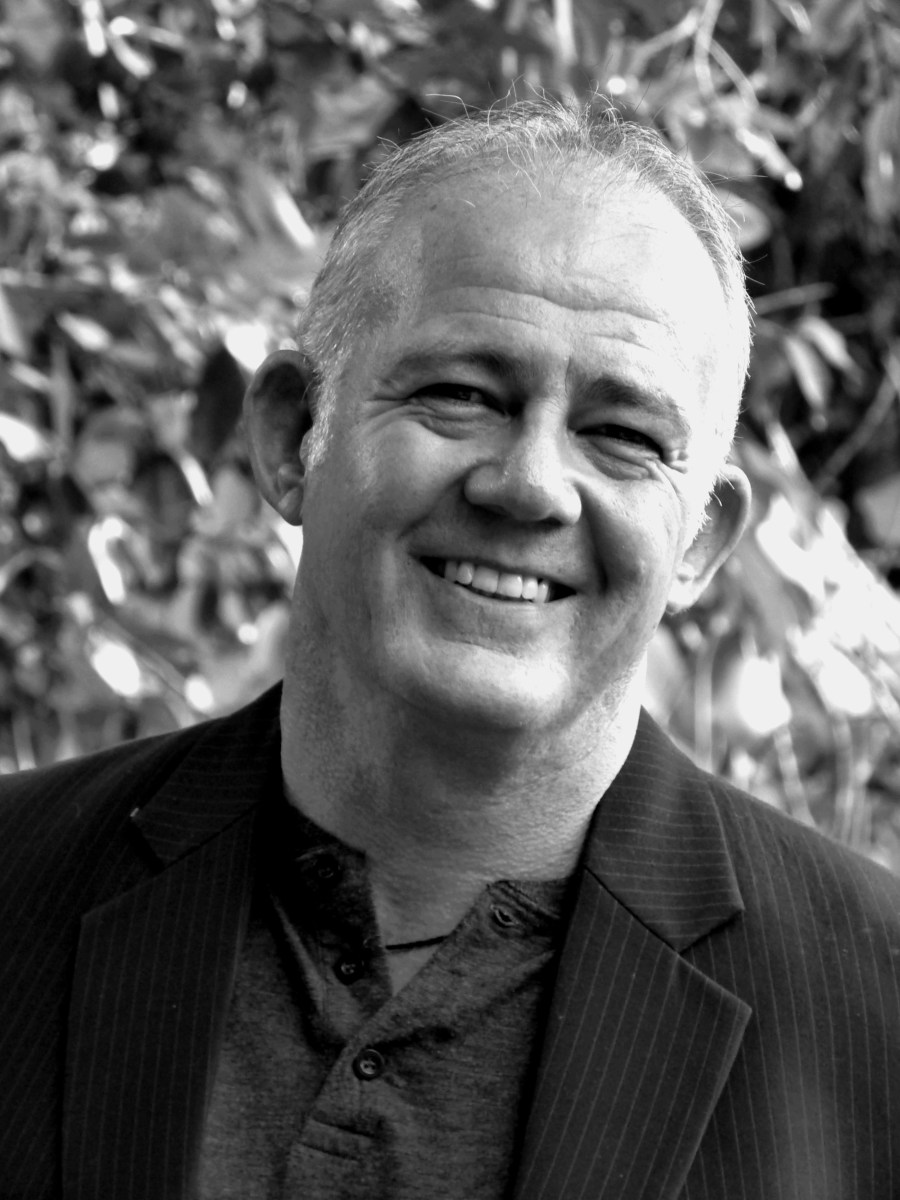
Interview with Author Kfir Luzzatto

1) Tell us a little bit about yourself. How did you get into writing?


I guess that writing has always been in the offing for me. My great-grandmother was a well-known author in her times and my father was a prolific writer. I started to try my hand at short stories in my early teens, but then very judiciously stuffed all my (horrible) work in a drawer, never again to see the light of day (except every now and then, when I want a good laugh). Then, one day in 2001, I woke up knowing that I had to write the story that had been taking shape inside my head and wasn’t letting go of me. That’s how my first full-length novel, Crossing the Meadow, came about. At that point, I knew that not writing, was no longer an option for me.

Crossing the Meadow

2) What inspired you to write your book?


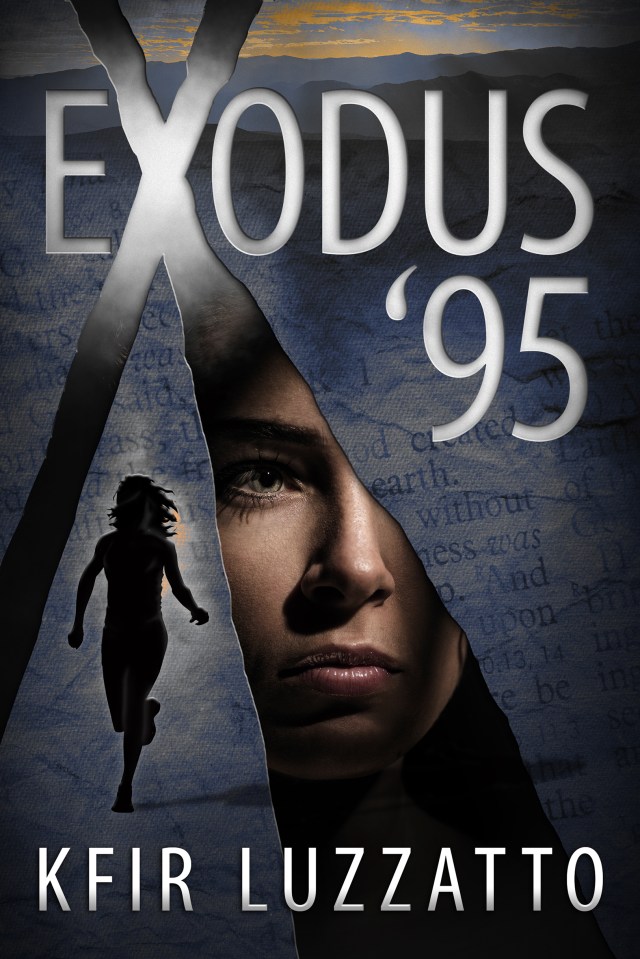
My latest action thriller, Exodus ’95, blends my love for thrillers, and for the places where I grew up (Italy) and where I live now (Israel). It was relatively easy to write because I know the places where the action takes place in the book and have met people who remind me of some of the characters. The idea of turning the biblical narrative of the parting of the Red Sea into something relevant to our days was also an idea with which I had been toying for some time.

Exodus_95

3) What theme or message do you hope readers will take away from your book?


The book is pure entertainment, with no deep message—except that it wants the reader to see how different people may be from what you know them, and how they may grow when facing an abnormal situation. Our neighbor may be much less boring than we think, and at times, deadly so.


4) What drew you into this genre?


The real answer is that the characters did. I started out writing light, non-gory horror, but then I lost control. What happens is that you start thinking of a setup, then you meet your principal characters and get acquainted with them, and all of a sudden they grow a mind of their own and your plot goes in an altogether different direction than you originally planned. I think that with thrillers it comes very naturally to “listen” to your characters and to grow together with them into a story that you really enjoy writing. Other genres require more adherence to a detailed plot, which is fine in many cases, but not as fun as re-plotting on the go.


5) If you could sit down with any of your characters and ask them a question, what would you ask them and why?


I sit down with them, all the time! But I don’t ask them many questions; rather, I let them move around and do things while I play the observer. So, if I could sit down with the protagonists of Exodus ’95 and ask indiscreet questions, I would certainly try to find out how their relations changed from a pure business association into much more, and what was the turning point for each of them. I sometimes wonder whether they managed to fool me and started having feelings for each other while I wasn’t looking.


6) What social media site has been the most helpful in developing your readership?


Facebook, no question about it. I’m sure that other sites may be helpful too, but I have experimented with others, like Twitter, Pinterest, etc., and I simply don’t have the time (or the patience) to follow best practices. Facebook comes more naturally to me, as I feel that you can really get to know people and interact with them in a personal, non-phony way.


7) What advice would you give to aspiring or just starting authors out there?


Developing a writing career is a slow, painful, disheartening and unbelievably exciting endeavor. If you decide to become a writer, prepare yourself to a long and hard course. You need time aplenty to develop your craft, to understand what really works for you, and to find your readership. If you are ready to go for the long haul and understand what you’re getting yourself in for, go for it, because there is no greater satisfaction that I can think of. But if you expect your first (or fifth, or tenth) book to become an immediate bestseller and mint money for you, find another hobby, because you are in for a heartbreaking experience.


8) What does the future hold in store for you? Any new books/projects on the horizon?


I am halfway writing a dystopian novel and I’m having a ball with it. With my grandchildren’s help, I’ll release it by next June. If they stop helping, probably by next March.


Interview with Daniel Eagleton

  1. Tell us a bit about yourself. How did you get into writing?

I’m a writer living in London, which, I suspect, is a bit like living in a Garret in Paris in the 1920s: no money or prospects, but I am at least sustained (on a good day) by my art. I always wanted to write, but spent a long time either gathering invaluable life experience or being worryingly aimless. Still not quite sure which…


 2. What inspired you to write your book?

       I had the idea, which I thought was worth pursuing. After that, it’s really a question of trying not to ruin the concept along the way…

3. What theme or message do you hope readers will take away from your book?

The book is really about how dysfunctional and destructive institutions (and the people that work for them) can be. And, I suppose, the effect that has on the rest of us…


4. What drew you to the espionage thriller/action adventure genre?

In a nutshell: the often gaping absence of morality, decency or common sense.   

5. If you could sit down with any of your characters and ask them a question, what would you ask them and why?

That’s a tough one. Maybe I’d ask Thomas why he’s so intent on self-destruction. I’m just not sure he’d be able to give me a coherent answer.

6. What social media site has been most helpful in developing your readership?

Social media? I run from it every chance I get, although I realize that might be somewhat counterintuitive. I was on Facebook for a brief moment, but I kept checking it every twenty minutes without knowing why, so I had to disable my account. I’m feeling much better, though, thanks for asking…

7. What advice would you give to aspiring or just starting authors out there?

You’re a solider.

8. What does the future hold in store for you? Any new books/projects on the horizon?

The future holds certain death for us all, but in the meantime I’m writing a historical crime drama set in 18th century London. I’m really enjoying it, but you have to be sure to get your facts right. On the other hand, if a character is in trouble they can’t whip out a smartphone and ask for help, so, dramatically speaking, that’s a plus…  

Interview with Author BCR Fegan

  1. Tell us a little bit about yourself. When did you decide you wanted to be an author?


Hi Anthony. I guess I’ve wanted to be an author for as long as I’ve known about the profession. Even when I was very young, I loved to write. A lot of this can probably be attributed to my mother who encouraged me to read very early on. As I began to get a handle on basic words, she introduced me to the concept of writing my own sentences to form stories and I’ve never really looked back.


As I got older, I followed the well-worn path of finishing school, going to college, getting a job and perusing additional interests. I grew up close to a beach in Australia, so surfing became an obsession of mine in high school. Travelling and a range of different sports were added to my interests while I was in the workforce. However, as each year passed, my collection of writings continued to expand.


It was really only a few years ago that I decided to begin the process of publishing these stories and one of the reasons was because I was finding it harder and harder to access good quality, imaginative and exciting children’s books (I know… but I’ve never really grown out of them). For one reason or another, it seemed that books had become so didactic, that the narrative itself had become the glue that loosely held these teaching points together, rather than the main driver of the story itself. I guess, this was the catalyst that inspired me to finally take the risk of becoming a published author.


  1. What inspired you to write this book?


I’ve always enjoyed fairy tales – they have an incredible magic to them. They are able to distil dark and complex themes into something that captures the minds of children and adults alike. This is one of the reasons I wanted my debut children’s picture book to be a fairy tale. In some ways I suppose there is a little bit of rebellion in it as well. The Grumpface stands in direct contrast to many picture books that I noticed had been filling the shelves in bookstores over the last few years.


Rather than being about a trending social issue, I tried to write something that was transgenerational. Rather than putting the moral first, I wanted imagination to be the driver. Rather than setting up a punchline, I wanted the entire book to capture a child’s imagination. Whether I’ve actually succeeded in doing this is up to the readers, but I suspect I’m not alone in my desire to see better books in our bookstores. Of course this is not to say that all children’s books are following this pattern. I still see fantastic books out there – just perhaps not as many as their used to be.


Finally, the actual story itself is inspired by the grumpy face a child pulls when things aren’t quite going their way. I guess I find them hilarious, and I enjoy the game parents play in trying to get their child to crack a smile when they are determined to remain grumpy. It wasn’t difficult to extend this concept to the broader idea of negativity versus positivity. It is the interplay between these two ideas that really forms the basis for the tale.


  1. What drew you into the Children’s Book genre of writing?


While I write in a range of genres and age-groups, currently I have only published children’s picture books. Probably the biggest reason for doing this is for the purpose I have previously mentioned – I wanted to offer transgenerational, imaginative and exciting stories to a marketplace filled with books that sometimes try a little too hard to teach.

More specifically however, I’ve always enjoyed the art of writing children’s stories. They can deceive the casual reader into thinking they are simple to write. In fact, there really is a beauty to doing it well. When you have to fit the character and story arc into 32 pages (generally speaking) in a way that provides a memorable theme, positive morals and holds the interest of a young child, you start to gain an appreciation of how difficult they really are to write well.


  1. What social media site has been the most influential to you as far as growing your audience is concerned? 


Honestly, none. I’m sure many authors see great results with different social media platforms, but I’ve never really spent much time exploring many of them. I know I should… and I will probably get involved a bit more a little further down the track, but for now, the majority of my time is spent writing.


  1. What advice would you give to aspiring writers out there?


A notoriously difficult question. I guess the only bit of advice I would offer is to resist the temptation of writing stories that reflect the latest trend or social issue. I get it, I really do – you’re writing things publishers are demanding. I guess if your goal is to make money, then it makes sense. But writers should first and foremost be the pioneers of inspiration, imagination and innovation. We should be crafting adventures that allow people to escape into different worlds and come out of them completely changed. We should be taking people to the edge of despair, and showing them that even in this place hope, love and meaning still exists.


Is it any wonder that Harry Potter did so well in the face of publisher’s expectations? I think if we had more writers producing stories according to their creative passion rather than caving in to the narrow confines of socially acceptable narratives, we might find we start to produce stories just as good – or even better than J.K. Rowling’s brilliant works.


  1. What does the future hold in store for you? Any new writing projects on the horizon? 


Right now I am about to launch my third children’s picture book, which as you know, requires a fair amount of time and effort. I also have a few more children’s picture books lined up. They will be launching throughout 2018. In addition to this, I am still writing a YA series which I hope to launch toward the end of next year.


So, a fair amount of work but it’s all enjoyable. I still have more stories, ideas and thoughts than I could perhaps publish in a lifetime, so I guess for the foreseeable future anyway, I will write, fine-tune my craft, and all going well – continue to inspire, encourage imagination and take my readers on unforgettable journeys.


Interview with Rob Shackleford 

1) Tell us a little bit about yourself. What inspired you to become an author?
I live in Australia and, for the majority of the time in writing Traveller Inceptio, lived where most of the book’s Transporter invention process took place, which is the Sunshine Coast in Queensland. It is a beach location and is quite laid back. I also worked at the University for a time and knew the described locations well. I have, of course, applied liberal creative licence to some locations.
I enjoy reading, especially books with a great story and have, for quite some time, tinkered with the idea of writing. Like most, I started with a few short stories and children’s books, which are still awaiting the illustrations from my daughter, who is quite the artist and procrastinator. It was during a very down time in my life that the opening scene for Traveller Inceptio began running through my mind, how a person from the 21st Century could react in the forests of Saxon England, when I realised that a story was beginning to devfelop. I started writing that scene and it soon went on from there. The actual writing process took over five years and there were ideas I had to drop because I saw something similar on Game of Thrones and in other stories that would look too similar. I have a very strong aversion to cliche, so I hope I stuck to that.
Surprisingly, some of the language and story was based on the antics of my son and his surfer / skater mates. The things you overhear sometimes.
My vocational background is actually far removed from History, which has become a love because of my father’s interest in family history and genealogy. I worked in Customs in my younger years and then did time in the Media, Tourism, IT and Marketing.
In keeping with my coastal lifestyle preference, I am fortunate to live in a very chilled part of Australia’s Gold Coast with my lady love. I have two kids, both in their early 20’s so, yeah, I am advancing in life’s journey, but I am still young and silly enough to take the risks.
2) What was the inspiration behind your story?
I was sitting on the beach one day and thought, “What would this have looked like 100 years ago? 200 years ago? and then 1000 years ago? The next question was, “How would someone from this time survive if taken back 1000 years?” Like many books, I started with a couple of assumptions; that one could travel back 1000 years, and the book grew from there. The ‘visit to the beach’ chapters in Traveller Inceptio were based on that thought process.
I like Science Fiction, but aimed to keep any story as real as possible, so I and any reader could honestly relate. I tried to keep reactions and events as plausible as possible. This sometimes took the story away from where I had planned and added some interesting moments.
Fortunately I have travelled to many of the world locations mentioned in Traveller Inceptio and future books. The sights, smells and feelings are most inspiring. The forests of England, the great walls of Istanbul, and the deserts of Israel can never be fully imagined simply from research on the Internet.
 
3) What theme or message do you hope readers will take away from your story?
Wow, I have to be self-analytical here.
There are two main messages I think.
The first is the desire to travel, to see new places and take new risks. I particularly love the short film Wanderers with a narration by Carl Sagan, (Check it out on You Tube) which acknowledges humanity’s need to explore. If we could explore the Past, then we, of course, would.
The other theme is that people in our past were like us. Our parents and many-great-grandparents lived lives with similar aspirations. They laughed, joked, worried about their kids, farted, and got horny, but also had trying times when they were sad and shed tears. Sometimes they even experienced violence. The message is; They were people too, only without an iPhone.
When we realise our history and give credence to those who have gone before us, we can then better understand ourselves and the rich tapestry of interwoven lives and genetic material that has created each of us.
4) If you could sit down and ask any character in your story a question, who would it be and what would you ask them?
It think it would be Tatae, the healer and wise woman of the Saxon village of Giolgrave. She was one such as those who would be persecuted and killed in the ages following the Norman invasion of England in 1066. Tatae is enigmatic. Not only does she hold deep knowledge, but she has learned that many would debase and profit from it if she let them.
I think I would ask, “How did you gain your knowledge?” Assuming she would tell me, it would be quite a story.
5) What’s more important to you when writing: developing plot or creating characters?
I think the plot, because that dictates the reactions of the characters. Place the character into a situation and I try to see how they would realistically react. Sometimes it isn’t how I thought, which is always a pleasant surprise. Sometimes a minor character became a major one. One example was Tatae, as I had no intention of travelling down the romance cliche. How wrong was I?
6) What social media site has been the most helpful or beneficial in creating your readership?
Initially FaceBook, as friends refer friends etc, but it is beginning to be overtaken by Blogs. Naturally this will grow further, but this world of self-promotion through on-line media can be very challenging. Amazon and others can be a minefield. It becomes a question of persistence, losing money on bad marketing ploys, and not taking it too seriously.
7) What advice would you give to aspiring or new authors out there?
Keep on going, even if it does mean that you end up rewriting your little gem fifty times. The other is that professional critics have their place, but can often get caught up in the detail. Be humble enough to recognise that your skills might need improvement, ie. writing skills, but also believe in yourself. It can be a tricky thing to balance. Don’t be surprised to be elated at a great review, then go down in a screaming heap when someone criticises your writing style. It’s all part of the gig.
8) What’s next for you? Any new projects on the horizon?
Traveller Inceptio lends itself to a sequel. I found this especially important when readers asked me “What Now??”
So, I have completed a draft of Traveller Probo – Traveller Book 2 – and I am in the never-ending process of fine-tuning the grammar etc. I hope this will be ready by the end of this year (2017) or the beginning of 2018. Traveller Probo (meaning: to prove or question) assumes the Saxon mission is successful. Governments vie to prepare the next Traveller mission, but safety is paramount. Missions to New Zealand, the USA, Ukraine, and the old Byzantine Empire of Turkey are planned, but the political rivalry is intense.
I have already begun Traveller Manifesto – which will be Traveller Book 3.
Why the funny names? I started Book 1 as Traveller, but when you google ‘Traveller’ you are inundated with book titles. Some friends thought it was a book about my travels. Traveller is spelled in the British / Australian way with 2 L’s, and the Latin word is to give an idea as to what the story is about. Latin, because 1000 years ago, Latin was the language of religion and education in Europe.
Inceptio = Beginning
Probo = Prove of question and investigate
Manifesto = Declaration to the World
Why Europe? Think about this. 1000 years ago, if you travelled anywhere in Africa or the Pacific, you would be eaten. If you travelled anywhere in the Americas, you might be sacrificed or skinned alive. In Asia, killed as a stranger, or limited because of the barriers of lost languages. England was selected because of the racial and national identity of the inventors and sponsors. Plus, it made my writing easier.
There is a criticism that the books are long – the irony being that Traveller Inceptio and Traveller Probo are precisely the same length – 190,000 words. To be honest, I created each story and then tore about 50,000 words away in the editing process. I hope the story makes the time taken in reading worthwhile.
I have written drafts for two other books that have nothing to do with Time or Transporters, but I believe I have to do the best I can with one project at a time. These others can wait.
Ultimately, I hope my books bring enjoyment to readers. It is, after all, about having a fun, entertaining read.

Interview with Milton Dewar

1) Tell us a little bit about yourself. What inspired you to become an author?
Answer: I’m originally from NYC (The Bronx to be precise), born and raised, the youngest of six kids, and growing up, I was always surrounded by the arts. Music, theater, graffiti, poetry, Hip-Hop, dancing, breakdancing;  it was everywhere, growing up in The Bronx in the 80’s, and I think that artistic immersion, and those experiences, helped shape who I am today, and inspired me to become a Writer/Author, amongst other things, because the arts have always been about expression, and the written word was something that always had a very special kind of appeal to me as an expressive medium. I’m also a filmmaker and a music producer (as part of the music production team, The Arkatechz), and I would say that the common foundational denominator that supported my inspirations and aspirations overall, would have to be my love of storytelling. We tell our stories through the written word, we tell stories through music, through film, and I would attribute my specific attraction to storytelling and the written word, as a Writer/Author, to my love of comic books. I was a comic book addict, growing up, lol. The stories were amazing, the artwork was amazing, the writing was incredible, and I wanted to be a part of that; to be able tell my own stories. When it comes to storytelling and writing, I tell people that Marvel Comics founder, Stan Lee, made me, lol.
2) What was the inspiration behind your story?
Answer: The inspiration behind the story, “Backseat in The Dark,” was my wanting to examine the fragility of the human condition, how that fragility comes about through our experiences, and how dangerous that fragility can be to ourselves and others, if it’s not handled with care. There were a lot of times that I would be on the road by myself at night, leaving work, leaving an event, leaving a social gathering, etc., and I would see car accidents, road rage arguments, people driving recklessly, all kinds of negative things, or potentially negative things, and I would wonder what kind of day those people had. Maybe there was something else that happened, some other experience they had, or they were having, that might’ve influenced their current behavior, or predicament, for the worse. If the law of attraction can attract good things, then it would follow, that maybe it can also attract bad things.
3) What theme or message do you hope readers will take away from your story?
Answer: That sometimes we, as people, have to learn how to let things go. “Backseat in The Dark” is a fictitious cautionary tale of what else could go wrong when we can’t shake off the things that bother us the most. If a person can’t move on, that person runs a great risk of getting “stuck.”
4) If you could sit down and ask any character in your story a question, who would it be and what would you ask them?
Answer: This is an awesome question! I would want to sit down with our protagonist, Ian, and ask him how long his grudging attitude has been with him. Has this always been a part of his personality, or something that developed just before he got married?  He has a lot of issues.
5) What’s more important to you when writing: developing plot or creating characters?
Answer: It kinda varies, depending on the type of story I’m trying to tell, but generally, I apply the same importance to both of those development devices. A great plot will always grab your audience’s attention, but in order to maintain that attention, you have to develop characters that your audience will actually care about; whether they love to love those characters, empathize with those characters, or even love to hate those characters, within the parameters of a story.
6) What social media site has been the most helpful or beneficial in creating your readership?
Answer: It’s hard for me to say, definitively, but I think it’s kind of a toss up between Facebook and Twitter. Facebook’s reach is larger than Twitter’s, but Twitter is a somewhat smaller and different kind of pond, so you don’t have to swim as hard as you would have to on Facebook, in order to get to readers, because Facebook is just so saturated with things designed to compete for a reader’s attention. My team helps me out a lot with the social media thing, because it requires so much time and management, that I can’t always give it myself. Shout out to them. I appreciate everything that they do. They’re not happy that I’m not on Instagram though, lol. I’m like “how many social media accounts do I need?” and they’re like “You need all of them!” lol.
7) What advice would you give to aspiring or new authors out there?
Answer: My advice to new and aspiring authors would be to keep writing, and never force it. Creativity gets lost in formality. To say to yourself “I have to write this story, and this many words, on this day, between these times,” hinders the creative process. Don’t pressure yourself. When the creativity is ready to flow, it’ll flow. Wait for it.
8) What’s next for you? Any new projects on the horizon?
Answer: The sky is definitely the limit, God willing. I’ve got several new projects on the horizon. I have a short film, and a new television series I’m currently writing, in development, along with an ongoing sketch comedy series, The Scenes, that’s out right now, and another feature film on deck, of which we’re trying to iron out some financing particulars. My first feature film was Hi Hater: The Documentary. As far as books are concerned, I already have a story and an early draft for another book I might put out in the coming months, but we’ll see what happens, because there’s an interest in flipping that potential book into a film, so I’m not sure what direction we’re going to head in, initially; film first, book second? Or book first, film second? Decisions, decisions, lol. Thank you, Anthony, for taking the time out to interview me. I appreciate it.
You can find the author on Facebook here –> https://m.facebook.com/AuteurDewar/

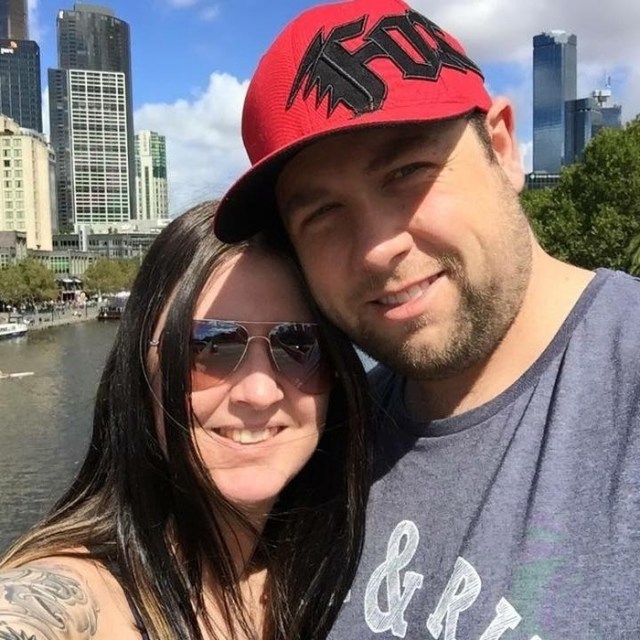
Interview with Ben Jackson

Tell us a little bit about yourself.

When did you decide you wanted to be an author?
Hmmm. I didn’t decide to become an author until later in my life. I have always had an interest in reading and can read books extremely quickly. Sometimes too quickly! Often, I’ll go back and read through books I’ve enjoyed 2-3 times. I started writing when I was about 30. Lately, I have moved more towards children’s books. They’re heaps of fun to write, and I love the whole process from writing to publishing.

What inspired you to write this book?
My latest books are The Day My Fart Followed Me To Soccer, The Day My Fart Followed Me To The Dentist, and The Day My Fart Followed Me To The Zoo. They are books 4,5, and 6 in the My Little Fart series. My wife and I try to find ideas for books that parents and children could relate to and help them. The Day My Fart Followed Me To The Zoo has facts about animals, but also tries to throw in a few jokes and laughs along the way.

What drew you into the Children’s Book genre of writing?
I love just writing and having fun. I try to make my children’s books not only fun but also educational. They all try to pass along a message. About looking after your teeth and not being scared of the dentist, to participating as part of a team and helping out your friends.

What social media site has been the most influential to you as far as growing your audience is concerned?
I would have to say blogs. Blogs and other authors who support indie authors just like this site! I think that websites and indie author bloggers help to promote good indie books more than Facebook, Twitter or Instagram ever could.

What advice would you give to aspiring writers out there?
Don’t give up and don’t try to do it alone. Being indie is great, but it’s still important to invest some money or time into your books. They say never judge a book by its cover, but with so many books being published every day, invest some money into your cover. Format your books, have them proofread and put the best possible product out there every time.

What does the future hold in store for you? Any new writing projects on the horizon?
No, we have some ideas for more books, but we just released The Day My Fart Followed Me To The Zoo this week! I’m also writing for an indie book magazine, Indie Authors Monthly! It’s free to download every week and a great resource for all authors.

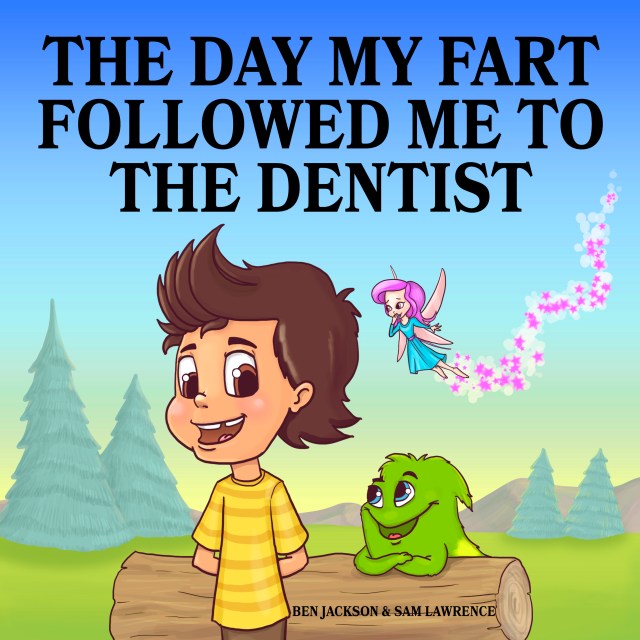
The Day My Fart Followed Me To The Dentist Cover.jpg

Ben Jackson Social Media Links

http://www.indiepublishinggroup.com/ Indie Publishing Group
https://www.goodreads.com/author/show/15144197.Ben_Jackson Goodreads Page
https://www.amazon.com/Ben-Jackson/e/B00S4A4W5C/ Amazon Author Page
http://bennsam.tumblr.com/ Tumbler
https://au.pinterest.com/benandsamauthor/ Pinterest
https://www.facebook.com/BenandSamAuthors/ Facebook Ben & Sam
https://www.facebook.com/MyLittleFart/ Facebook My Little Fart
https://twitter.com/AuthorsBen_Sam Twitter


15144197

Ben Jackson Author Bio

Ben lives in Tasmania, Australia. While working during the week as a Boiler Maker/Welder, specializing in Aluminum Welding, he also writes of a night as a Freelance Writer and Author.

Ben is in a Long-Distance Relationship with his wife Sam, who lives in Canada, she works as a full-time formatting professional, publisher, and author.

Be sure to check out all his books, there is definitely something there for everyone!

As Indie Authors, we rely on our valuable customers to write a review, if you could spare a minute to leave a review of one of our books, we would greatly appreciate it.

He has numerous books in progress so stay tuned for information on those by following this page, connecting with him on Facebook or Goodreads.

Remember, if you enjoyed one of his books, leave a review!

Book Links
The Day My Fart Followed Me To The Dentist
https://www.amazon.com/Day-My-Fart-Followed-Dentist-ebook/

https://www.smashwords.com/books/view/734101

The Day My Fart Followed Me To The Dentist
Timmy and his best friend the Little Fart are back again in The Day My Fart Followed Me To The Dentist! In this beautifully illustrated children’s book you’ll experience Timmy’s first visit to the dentist, losing a tooth, and a visit from the Tooth Fairy.

No child loves the thought of a visit to the dentist. In The Day My Fart Followed Me To The Dentist, Timmy takes a trip to the dentist with his best, and imaginary, friend the Little Fart. Timmy needs to have a tooth removed and then needs to help to try and explain the Tooth Fairy to the Little Fart.

Whenever the Little Fart is involved, hilarity and mischievousness are sure to follow! The authors decided to publish this book to try and help parents and dentists show that the dentist doesn’t have to be a bad experience. In the end, there is always the reward of receiving a visit by the magical and beautiful Tooth Fairy.

If you enjoy reading funny books with beautiful illustrations and love having your child read along with you, then make sure you grab The Day My Fart Followed Me To The Dentist! Discover and giggle along with Timmy, and the Little Fart on their exciting day at the dentist.

Interview with Alistair Cross

1) Thank you for taking the time to speak with me. Tell me a little bit about yourself and how you became an author.

From a young age, I was fascinated by mysticism; I wanted to know where I came from and where I was going to go when I died. It took getting quite a bit older before I learned to mellow out enough to really appreciate what was right here in front of me – life itself. But the part of me that’s obsessed with the unknown has never gone away and writing became my portal to that place. With writing – and especially writing in genres with elements of supernatural and horror – I get to ask hard questions about life and death, love and hate, right and wrong, about God and Satan and their respective representatives. I get to explore the unknown and imagine what might be out there. For me, that’s the appeal, that’s the reason I do it.


2) What was your inspiration for The Angel Alejandro?

It all started when I saw a guy walking down the street near my house. He wore a pristine suit and shiny black shoes, and had slicked-back black hair and dark glasses. He smoked from a long black cigarette holder and there was something so compelling about him that I turned to the person I was with at the time and said, “There goes my next bad guy.”


I named him Gremory Jones and I made him into a salesman of sin who comes to the small town of Prominence after catching wind that an angel has fallen to earth there.


As for the character of Alejandro, he goes back much further when, many years ago, I had an idea about an angel who loses his memory after crash-landing to earth. I was fascinated by Alejandro because he doesn’t know what he is, doesn’t know who called him forth, and has no idea what he’s capable of. But the story sat for a long time unwritten and untampered with – I couldn’t move it forward until I figured out the missing piece. And that missing piece turned out to be the sin salesman, Gremory Jones. Sometimes it works like that.


3) What theme would you hope the reader would take away from your novel?

Be careful what you wish for – you just might get it.


4) If you could sit down and speak with any of the characters from this book, who would it be and what would you ask them?

That’s a tough question because each of the characters in this book has his or her own story to tell – and most of the characters are in equal parts victims and aggressors. The people in the town of Prominence don’t necessarily realize what they’re getting into when they deal with Gremory Jones. They think they’re trading something inconsequential for something that will make them happy – which Mr. Jones all too eagerly helps convince them of – but it always turns out to be something with a hook and a catch, which I think is relevant to real life. We all want something, and when we finally get it, we’re all a little disillusioned, so I think it would be particularly interesting to talk to some of the characters whose lives were utterly destroyed by their exchange with Mr. Jones.


5) What is the bigger motivation when writing your stories: developing a sound plot or fleshing out well developed and complex characters? I ask because the characters in this story were incredible and really drew me into the story.

I’m very much a character-driven writer, which means it’s all about the characters. I sometimes have an idea of the plot before I decide who the players are, but more often, I have a fully-developed character who wants his or her own story. Either way, nothing moves forward until I have the characters down.


If the plot comes first, then I have to find the right characters for the story which turns into something that reminds me a little of actors auditioning for a role. If the characters come first, then it’s a matter of developing the plot around them. But either way, the characters really have to work for me if the story is going to work.


In my experience, even the most compelling plot loses its juice without characters strong enough to hold it together. And this means all the characters (except the fillers, of course) need to be strong – not just the hero or heroine. Readers want someone to root for, yes, but they want more than that. They also want someone to be frightened of, to swoon over, to love, to hate, to laugh with, and to cry over.


6) What social media tool would you say has helped you build and grow your readership?

Twitter and Facebook have both been great, as well as the horror-themed radio show, Thorne & Cross: Haunted Nights LIVE! which I co-host with my dear friend and collaborator, Tamara Thorne. Because we’ve interviewed so many amazing and prolific authors, my work has been exposed to a lot of people I couldn’t otherwise reach.


7) What advice would you give to an aspiring authors out there looking to build their own readership?

Each writer’s journey is unique and there is no one answer that applies to all except this: Write. Write and write some more. As for building a readership, my best advice is to write damn good books. People will find them and they’ll tell their friends on and on it goes. But first, you have to know your craft and that comes more from good old-fashioned practice than anything else. You’ll never please everyone all the time, but you can – and must – always release a strong, quality product.


8) Any plans for future books involving these characters? Any new books on the horizon for you?

Because the fictional universe Tamara Thorne and I have developed crosses over from one book to another, there will probably always be some involvement from older characters in newer works. Though I haven’t found the right place for them yet, I’m looking forward to doing more with the electricians, Shawn Barzetti and Bobby Beckstead, who escaped the horrors of The Angel Alejandro by the skin of their skin-tight jeans. Shawn and Bobby made me laugh and I think they’ll be great comic relief when some future book gets a little too dark. Gremory Jones will have his own series in the near future.


As for new books, I recently released a new novel, Sleep Savannah Sleep, which is a paranormal murder mystery set in a town not too far from Prominence. Also, Tamara Thorne and I are working on a vampire novel called Darling Girls, which revisits her book Candle Bay, and my previous novel, The Crimson Corset.

Alejandro Book Cover

About the Author

Alistair Cross’ debut novel, The Crimson Corset, a vampiric tale of terror and seduction, was an immediate bestseller earning praise from veteran vampire-lit author, Chelsea Quinn Yarbro, and New York Times bestseller, Jay Bonansinga, author of The Walking Dead series. In 2012, Alistair joined forces with international bestseller, Tamara Thorne, and as Thorne & Cross, they write – among other things – the successful Gothic series, The Ravencrest Saga. Their debut collaboration, The Cliffhouse Haunting, reached the bestseller’s list in its first week of release. They are currently at work on their next solo novels and a new collaborative project.

In 2014, Alistair and Tamara began the radio show, Thorne & Cross: Haunted Nights LIVE!, which has featured such guests as Charlaine Harris of the Southern Vampire Mysteries and basis of the HBO series True Blood, Jeff Lindsay, author of the Dexter novels, Jay Bonansinga of The Walking Dead series, Laurell K. Hamilton of the Anita Blake novels, Peter Atkins, screenwriter of HELLRAISER 2, 3, and 4, worldwide bestseller V.C. Andrews, and New York Times best sellers Preston & Child, Christopher Rice, and Christopher Moore.


Visit Alistair at: http://www.alistaircross.com

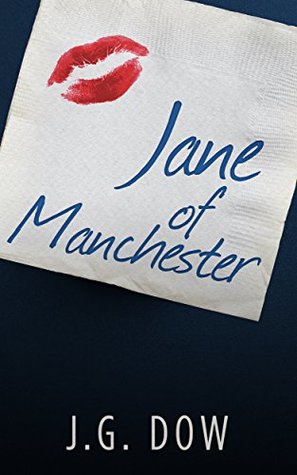
Interview with J.G. Dow

  1. Q) Tell us a little about yourself. How did you find yourself becoming an author?  I was born in Huddersfield, West Yorkshire which is in the North of England and have always lived in the area apart from a few years away at University in Manchester which was much fun! I started out with poetry and have written a few other things but never anything in the ‘chick-lit’ category and so this was a new venture for me. I really enjoyed the writing process and so went from there really. It’s quite addictive once you start writing and fulfilling as well. I also like Snooker, comedy and reading.
  2. Q) How did Jane of Manchester come to be written? What triggered the idea for this novel? The book came into being as I wanted to write something that might have a wide readership and also, I felt like the challenge of seeing if I could write something I felt wasn’t in my comfort zone. Time spent in Manchester years before suddenly seemed like an interesting place to set a novel and I knew I could write about real bars and restaurants and areas in the city to make it authentic.
  3. Q) What theme or message do you hope readers take away from this novel? I suppose the message would be to not panic in life that others are moving ahead of you and try and keep to your own path and not be swayed. It’s not always easy to do any of this and looking around at others and how they are moving forward can make you insecure as a person and anxious even but you can’t let that beat you. I think I make it clear that family and friends and a sense of community are important as well for a happy life. Try and relax and enjoy life but don’t expect things to always be rosy otherwise, disappointment will find you every time.
  4. Q) If you could sit and chat with anyone in this story, who would it be and what would you ask them?  Maybe I’d talk to Kate, Jane’s sister and ask her why she has to have a superior attitude the whole time! Some people do think themselves better than others, especially if they have a good job like she does- Junior Doctor- and begin to think others are beneath them in some way. They probably don’t mean to be like this but people like Kate do make others feel unworthy sometimes and so I would put her in her place somehow!
  5. Q) What social media site has been the most helpful building your readership?Facebook is helpful and I have a page- J.G. Dow@homeofjane- which I use to post links to interviews like this and reviews and people check them out and hopefully sometimes buy the book or read it in the kindle library. Bloggers like your good self are also very important not just for reviews but also for giving new authors exposure on their sites, so thanks for that! Twitter is okay but I’m not great at using in effectively.
  6. Q) When writing a story what is more important to you as an author: developing plot or creating characters? The most important initial thing is to have good characters. You can’t do much if the characters are flat and lifeless so you need to start there really and have a good feel for who they are and treat them very much as if they exist in the real world. Plot is obviously important but depends on the book you are writing and as mine is more character driven, the story is a bit looser than a thriller or some crime novel would be where plot possibly comes before characters slightly.
  7. Q) What advice would you give to aspiring authors? To aspiring authors I would say it is important to like writing and don’t see it so much as work, but something you like to do. I think if you enjoy it, that will come through in the content of the writing and if you find it a bit tedious, that will show as well.
  8. Q) What future projects are on the horizon for you? Any future installments in the Jane of Manchester story? I have just recently finished the sequel to Jane of Manchester and will be putting it on Amazon next week sometime probably and will post a link to it on my Facebook page once its out. It furthers Jane’s exploits in the city and hopefully broadens her tale quite considerably as she slowly emerges from her shell and moves forward a bit, albeit at her own pace! That’s it for now really, although I have an unfinished book from ages ago I might try to complete if I can remember where I was up to with it!