Interview with Michael Bernhart1) Tell us a little bit about yourself and how you became an author.

A familiar story: Much like the disgruntled admen of Madison Avenue who labor in the evening over their own redemptive great works of fiction, I started on a novel in the mid-80s as an antidote to a bad professional and life situation. This may work as an escape, but it isn’t a guarantor of good literature. The result – in my case – was a peevish, angry half of a book; the hero is unlikeable – as are all the other characters, come to think of it. Thirty years later I’m still trying to salvage that book.

Capitalizing on one advantage, I’ve enjoyed a singularly rich and diverse (and lucky) life. If I were to peal out the list of places I’ve lived and jobs I’ve held it would come across as boasting. It’s not; it’s gratitude, mixed with wonder. (Dumb luck is important.) The consequence is I can draw on first-hand knowledge of life on five continents and a variety of interesting occupations.

2) What would you say is the best description for your series of books based on Max Brown?

I’ve attached the label ‘philosophical thriller’ to the series. Pretentious? Of course. There is dry/wry wit, which seems to be my forte as a writer, and a travelogue-esque element as the settings are unfamiliar – and interesting – to most readers.

3) What inspired you to create this series and delve into this genre in particular?

Evil. Each book explores a different face. Jane Austen famously said it all comes down to love and money. I disagree; there’s more. As we move up the evolutionary ladder the higher-level species show an increasing propensity for dysfunctional mayhem. Animals fight and kill for survival, either as individuals or as a species. Humans often fight for the sheer hell of it, and to their disadvantage. Why? Paradoxically, the modern religions we’ve created – notably Christianity and Islam – take as their starting point that God is omnibenevolent, omniscient, omnipotent, and omnipresent. How can a caring, ever-present, and all-powerful deity be supervising a world that’s convulsing with outright wickedness? It doesn’t square.

There’s no easy explanation for that inconsistency (called theodicy in religious debate) but I did feel some mileage might be gotten out of a closer look at the wellsprings of evil. Hence, greed, lust, ideology and acculturation are central fixtures in the novels. No answers, but if I got it right the questions may have been framed a little differently than in other novels.

4) If you could sit down for a drink with any character from your books, who would it be and what would you ask them?

Ronnie the Redoubtable Scot, a favorite of many readers. I didn’t treat Ronnie well at the end.

I’d ask Ronnie why he does what he does. He’s dedicated his life to the dangerous and underappreciated task of clearing landmines. One of those noble souls quietly trying to clean up humanity’s messes. And a wise-ass.

5) What would you say is the biggest challenge you face as an author when it comes to gaining a readership and marketing your book?

That is the biggest challenge. Each and every blessed day 2,700 new novels are pushed out on an indifferent reading public. Some of them must be good, but average sales are 250 copies, many to family, friends and the author him/herself. How do you break out of the pack? I have no idea. Writing is a losing proposition.

The big houses talk airily about quality control, but there’s little evidence they practice it (e.g., James Patterson continues to be published). I’d like to think the truly good and innovative literature is coming from the independents. The better reviewer/bloggers – like this one – provide a guide and filter but the number of their followers is typically small. 

Are these counsels of despair? Hell yes. If it weren’t for rampant narcissism no one without a signed deal would write.

6) What advice would you give to any new or aspiring authors out there?

I’d like to tell you to scram; we don’t need more competition. More seriously? Read.

7) Any plans for more books in the Max Brown series or any other books on the horizon?

A very difficult one. One of the fascinating jobs I alluded to above was directing a women’s health program in Jordan. Under the umbrella of women’s health I took a brief run at honor crimes . . . and withdrew from the field, unsuccessful. In the current Max Brown novel his wife has liver cancer which leads them to the ‘red-trade’ of organ harvesting and illegal sales. I tie this to honor crimes where victims are plundered for saleable kidneys, livers, etc. Given these topics, it’s been difficult to keep up the dry/wry wit that has received favorable comment in the past.

This is a picture of the author. Some kind folks at a new age festival captured my aura on their aura-cam. They gushed that it was an exceedingly auspicious aura, and they looked sincere when they said it. At least they didn’t ask for money.
Interview with Tom Starita

I had the pleasure to speak with author Tom Starita, author of the book “Growth and Change Are Highly Overrated”. Check out some of the amazing things he had to share with us.

1) What was your inspiration for Growth and Change Are Highly Overrated?
A) We’re going way back to the weekend before Valentine’s Day in 2013. It was the lowest point of my entire life. I was alone and I had the flu. Not just the flu, like the worst flu in the history of modern medicine. I’m actually in the Weehawken Journal of Medicine because my strain was so rare and severe. 


When I finally awoke from a three-day coma late Friday night I was starving. I looked outside my bedroom window and saw eight inches of snow. No big deal. The falling snow looked straight out of a Bob Ross painting and as I gazed out I appreciated the beauty of the situation. I leaned forward to appreciate the beauty even more and saw my car had been buried by the plow. 


I would not be going out for food. 


No matter, I wasn’t in any condition to drive so I made my way to the kitchen to find a takeout menu. I began dialing the Chinese place on the corner when I noticed the time on my microwave said 11:30pm, thus killing my dream of takeout.


Okay, okay, it’s not the end of the world. I’m not the best of cooks and I’m not in the mood to cook but I was starving so I opened my fridge and found the absence of food. I looked in the freezer and found empty ice cube trays. I opened cabinets and found shadows where boxes once stood. At that moment I realized I had hit rock bottom. I was sick, alone and in danger of starving to death.


I also realized that this would be a great way to start a book! So I dragged my decaying body to the computer and started typing. That’s when Lucas James’ voice appeared crystal clear in my mind and I just kept typing.
2) What would you say is Lucas James biggest driving force in this book? 
A) Himself. He has one long term goal, rock n roll immortality and is blind to everything else. That means he has no short term goals other than attaining his one long term goal. That means he lives hour to hour, day to day figuring out how to turn whatever situation he’s in to his advantage.
3) What theme do you hope your book embodies to the readers?
A) That there are shitty people in this world and there’s nothing you can do to change that. Sometimes people fall into the trap of dating someone, or befriending someone who is toxic and will only bring doom and misery into your life. This book is about what happens when you don’t walk away from the doom.

OR if you’re an optimist…

It’s about trying to succeed at life, on your terms. Consequences be damned.
4) What inspired you to become an author?
A) I was seduced by the thought of being paid to make things up. Anyone can be a liar, but a professional liar? That’s something.
5) If you could sit down for a meal or drink with Lucas James, what would you ask him?
A) That’s a great question! First of all I would know in advance that I’m paying. If I wanted to act high and mighty I would ask him if he realizes the damage he causes to the people who care for him? Of course that would lead him to get defensive and the dinner would end right then and there.

If I wanted to shoot the breeze with him I’d ask what’s the first thing he’ll do when he officially becomes a rock god.
6) What social media tool or site has been the most beneficial to building a readership?
A) Facebook has been my best friend. It’s an easy way to connect with people and convince them to like my author page for updates. *cough* @TomStarita* cough
7) What advice would you give to any aspiring writers out there?
A) That you have chosen the hardest path for survival and to have a backup plan. That success is limited and victories are fleeting. But the moment you hold something that you created in your hands is one of the best feelings in life. You’re guaranteed to live forever.
8) What are your future plans? Any new books on the horizon?
A) My current plans are to do anything and everything to introduce Lucas James to the world. After that it’s see where the tide takes me. I have ideas that are percolating around right now but nothing imminent. I think the next goal is to write a script. When I’m on my deathbed I’d love to know that I wrote books, created a cartoon, putzed around a podcast and wrote a movie. 

I just want to end this by saying that my sister recently came down with a nasty cough. She went to the doctors and was told that antibiotics wouldn’t work in a situation like this. It’s too far deep into the metacurlis lining of the lungs. Obviously my sister was upset and asked if antibiotics wouldn’t work what would? He placed her chart down on the counter, took a deep breath and removed his glasses.

This made my sister even more nervous.

“Tell me doctor. What can we do?” He looked her dead in the eyes and said,

“Your brother has to make the New York Times Best Seller’s List for his book, “Growth and Change Are Highly Overrated.”

If you don’t want to buy my book I understand. It might not be for everyone. But think of my poor sister. Coughing. Buy my book for her.

Please?
Check out the Review Here!

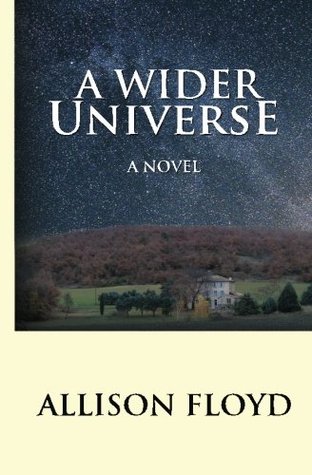
Interview with Allison Floyd

Interview with Allison Floyd

1) Tell us a little bit about yourself. What made you want to become an author?

A) I was born and raised in New England and knew from a young age i wanted to be an author. As a little girl I would write stories and staple
printer paper together to make “books” that I would illustrate myself. I initially thought I wanted to be an English teacher but then I
realized while I liked analyzing and reading literature, I didn’t think I wanted to spend the rest of my life teaching the same books year
after year. I have been writing creatively my whole life but it wasn’t until I mentioned to my friend I had an idea for a novel but that I
didn’t think there was any point in finishing it that she convinced me I should absolutely go for it. I’m very grateful to her for that.

2) What was the inspiration for A Wider Universe?

A) I was inspired to write A Wider Universe during my senior year of college at Fairfield University. I was taking two classes, a British
Literature Survey, and a class called American Lit and Religion that were both really making me think about the Big Questions. One day in
class I was listening to a discussion on Sir Thomas More’s Utopia and it just clicked with the readings by Ralph Waldo Emerson I had been
doing in my other class. I became fascinated with this idea of paradise being a place where no one was legally permitted to force their
beliefs on others and I thought a great deal about how that isn’t the reality we live in today. That’s how Gene and Patrick came to exist.

3) What message or theme do you hope readers take away from your book?

A) Ideally I hope that readers will connect with or relate to the characters and their journeys of self-discovery and realize that we are
all complex and flawed. I also hope it gets them thinking about the idea of making human connections while respecting people’s differences
but still working to find common ground.

4) If you could have a conversation with any of your characters, who would it be and what would you ask them?

A) I love this question. I think I would most want to have a conversation with Jansson. He’s had a very interesting life, and as a
psychology professor, he’s well versed in human behavior yet he still has a lot of emotions and sensibilities that he doesn’t seem to
understand himself, so I would want to ask him what he thinks about the human condition and whether he feels safer seeing it as purely
academic instead of applying it to his own life.

5) What advice would you give to any aspiring authors out there?

A) If you have an idea or a sudden inspiration strikes you, put it to paper. Whether or not you think it will lead to anything or go
anywhere it’s very important to write it down and tell your story. That way it will be there if you decide it’s a project you want to
come back to. Great ideas are few and far between so don’t let it go to waste because you’re worried it won’t amount to anything.

6) What are your future plans? Any other book’s on the horizon?

A) I have written the beginning of a second novel about a young woman who was adopted who discovers she has a biological sister across the
Atlantic. I don’t know what my plans are for it yet; whether or not I want to shelve it to work on something else or whether I want it to
be my next project. I’ll have to wait and see where my inspiration takes me.

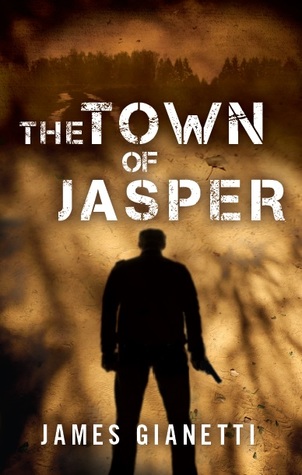
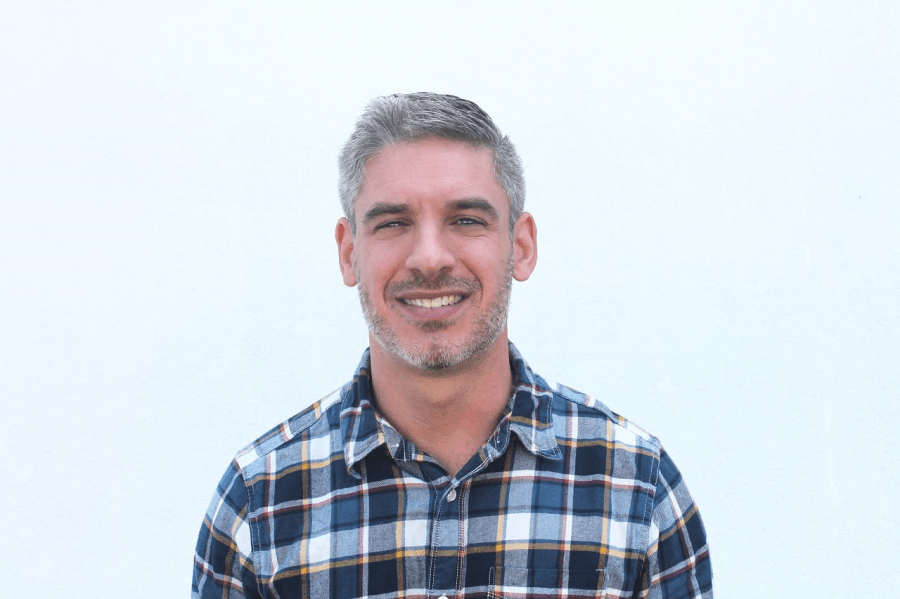
Interview with James Gianetti

Interview with James Gianetti

1) Tell us a little bit about yourself. How did you get into writing?


I am a graduate of Montclair State University and have a background in education. Since I was twelve, I always had an interest in it and constantly worked on improving it throughout the years. When I was young, I’d pick up books and think about how daunting it would be to put all those thoughts, ideas, and characters into countless pages. Back then it seemed impractical and somewhat unachievable, now, it’s what gets me up in the morning. My motivation and passion stems from the notion of being able to create something from nothing or to write something that isn’t out there in the world yet.

2) What inspired you to write The Town of Jasper?


The inspiration to write Jasper came from breaking down and evaluating other stories. I didn’t want to necessarily follow a blueprint of other novels so I asked myself, “how can I write a story that appeals to all types of observers?” So I started studying and checking out television shows that were working well at the time like “The Leftovers” and “True Detective”. The challenge was balancing the new with the traditional, meaning, how can I tell a story that competes with a night of someone’s favorite show and pay enough tribute to the traditional reader’s market? Since I wrote it on spec, one of the benefits was not being confined to telling the story in a specific way. So I broke the story down and ensured that I was touching upon elements and themes that people flock to while also making sure I was creating something authentic and my own. 

3) What was the process like creating protagonists Jack Sutherland and Richard Morrissey?


When you have two dominant male figures like them in a story, you have to make sure there is a conflict or relationship of some kind between them. Initially, their arcs were completely different and the story just didn’t work the way I had it. I spent a long time deconstructing their arcs and transformations and the challenge was making it compelling enough where the reader would be hooked and actually care about their journeys. I took a step back and tried analyzing the effectiveness of the story from a difference spectrum. I wanted the foundation of the story to be driven by irony, so that is when I decided to have their arcs occur in parallel, though not necessarily in the same location. The story shifts between the two of them with the unwritten opening always being “Meanwhile, Richard is doing this or “Meanwhile, Sutherland is doing that”.


4) What theme or message do you hope readers will get from your novel?


There are countless themes in the book both significant and diminutive. Self worth and community are at the forefront, with elements of love, trust, truthfulness, politics, disabilities, etc. I welcome readers to scrutinize over some of the themes or nod/shake their head in recognition of some of the ones that are more implicit.

5) Which do you find more fulfilling when writing: creating plot or creating characters.


I think it all depends on what kind of story I want to tell. With Jasper, I had this idea of a town and a unique atrocity. It isn’t necessarily “post-apocalyptic” it’s more “present-apocalyptic” and before I wrote characters, I needed to nail down and drive home on the environment, the scenario, and the landscapes of the town. Once I had the appealing and unique setting, I began to write characters that would be suited or unsuited for such an incident.

6) What social media site has been the most helpful in developing your readership?


I knew throughout the process of writing it that I wanted the experience for the reader to be visual. Going back to my approach to writing a novel tailored to the status quo of exploring stories, I wanted readers to visualize it in addition to reading it. Instagram has been an incredible tool that has allowed me to reach a wide array of readers and people interested in following the story and characters.  I have and continue to release teaser images of events or characters within the book along with dialogue. The reception has been very positive thus far.

7) What’s one piece of advice you would give to aspiring authors?


Do not embark on writing a novel unless you truly want to write it. Don’t write a story just for the sake of writing a story. The process can take years, so make sure you are completely certain you want to explore your story and characters.

8) What are you future plans after the release of The Town of Jasper? Any other novels or stories in the works?


I have written a few short stories that I will start to send out to journals. One of them is going to be showcased on “The Short Story Machine” podcast from Paul Alves. I feel like I have scratched my short story itch for now. I have been toying with some concepts and directions for another installment to Jasper, however, I am also very much open to writing an entirely new story.  

Interview with Author Maria Thompson Corley

Interview Questions for Maria Thompson Corley

1) First off, tell us a little bit about yourself. How did you find yourself drawn to the world of writing?

I always liked to write. When I was young, I was much more secure expressing myself in writing than in speech. Not that I never spoke, but I was always more self-revelatory in writing. I would write my parents notes, sometimes, instead of speaking to them about things that bothered me. I wrote my first novel at 14 (no worries—I have no intention of inflicting it on anyone!). My first published novel was Choices, which I wrote on a whim. I had the rather confident attitude that I could come up with something as good as a lot of the books I was reading, so I sent my manuscript to Ballantine and received a letter back from an editor. She said her list was full, but recommended that I get in touch with someone at Kensington, since they were starting a line of books aimed at African American women. I was kind of in the right place at the right time.


That was in 1996! My book was published as a romance, and my follow up didn’t fit the genre, since I had a prominent gay character who was in a relationship. I didn’t want to get rid of him, deciding instead to focus on being a pianist (I have Master of Music and Doctor of Musical Arts degrees from Juilliard, and have played since I was 4). I had married by then, and my daughter was born in 1997, followed in 1999 by my son, who is on the autism spectrum. It took me a while to get back to writing, with all of that on my plate. When my marriage broke up, I found writing very cathartic, and I can truly say that the written word has turned out to be as much a part of me as music.

I’ve even started writing a bit of poetry. One poem was published by New York Literary Magazine, having come in second in a contest, and I presented one about my son, the first one I’d written since middle school, at the National Autism Conference last summer. We’ll see where that goes. I have ambitions of writing a few more and trying to set them to music. Some of my songs and solo/choral arrangements have been performed nationally and, in one case, internationally, and one choral piece was published by Walton. That said, I can’t do everything. Can I? Either way, I feel like an emerging composer. We’ll see.

2) What inspired you to write Letting Go?

The inspiration was a who, not a what. My mother suggested that I write something a bit closer to home, shall we say. As mentioned in my acknowledgments, she isn’t a big fan of the four-letter words and occasional sex, but she is a huge supporter of everything I do. I am so blessed to have been given wonderful parents.

What’s fun about the book is that people who know me can see similarities to my life, but most of the book is fiction. Which is which? You’ll have to guess (hint: I made up the first chapter. That said, I definitely want to be present at the auditions for casting Devonte Jones).

3) What message or theme do you hope to convey to your readers when they read this book?

I hope readers will look at love, in all its manifestations, through fresh eyes. While people call my book a romance, to me, the cliché is true—the greatest love of all is between you and yourself.


4) If you could sit down for a cup of coffee with one of your characters, who would it be and what would you say to them/ask them?

Tough question! I think I’d sit down with Langston, ideally with him supplying the coffee and another treat of his choice, hopefully something he’d made himself (selfish reasons! I love good coffee and treats!). I’d ask him if he had any regrets about the way his path went, as in, if he wished he’d done some things sooner, or felt they happened at the right time.

The thing is, I think we all do the best we can with what we have, even if what we’re doing is destructive. We have to get better, internally, to do better.

5) When writing Letting Go, what was more important to you: plot development or character development?

Hopefully, both! That said, I love to get into people’s heads, and to create imaginary friends or foes) for the reader. Humans are endlessly complex, and thus (at least to me), endlessly fascinating.

6) What social media site would you say has been the most helpful developing your readership?

I’m not sure! I’d say a toss-up between Facebook and Twitter. Then again, I basically use only Facebook and Twitter, so…

7) What’s one piece of advice you would give to new authors out there?

Be an educated, ruthlessly critical author. Learn the grammar, read books and articles by respected writers, analyze the way they use words. Strive to write good sentences, so that your ideas truly come to life. Find beta readers who are honest and skilled in the craft (I know this isn’t always easy), and then listen to them. Opinion is just that, but I at least try to consider every suggestion, so that if I don’t take it, the reason isn’t my own defensiveness or insecurity. That said, I’m so used to critique, these days, I have a very thick skin.

8) What are your future plans? Any new books in the works?

I just finished a revision of the New Adult book I mentioned earlier, with the gay character. When my beta readers have weighed in, I’ll revise some more and see where that goes. After that (or while I wait for my betas), I hope to write a book from the point of view of a very famous animal. I have barely started (last summer). I know that will be shorter, but also harder because I have to stick to the historical facts. Oh yeah, and because I’m choosing to write from the point of view of an animal!

Interview with M.N. Snow

1) Tell us a little bit about the inspiration behind The Helper.

     First of all, thanks for this opportunity to talk about my novel and writing in general.

      Now to your first question. I was mired in a low spot in my life. Despite my best efforts it wasn’t improving and it was stretching out for well over a year. So, of course, the idea kept coming to me that I needed help of some sort. And then I thought that wouldn’t it be nice if I could just be “made well.” And that led to the idea that wouldn’t it be cool to be someone who had the ability to “make someone well.” And that led to the idea of what it would be like to have that power and then lose it.

      And, of course, there were a million other thoughts that all float through and coalesce to make an idea. It’s like the old saw: It takes twenty years to be discovered overnight. Well, for me, it also takes a million different thoughts, over a period of who knows how long, to suddenly add up to a poof-in-one-moment, there-it-is IDEA.

2) How did you come up with the concept of “helping”?

      I, like almost all people, have had difficult periods in my life. Sometimes those periods were emotional or mental in nature, sometimes there were physical, and sometimes a combination of the two or three. And often there have been certain people who have been instrumental in helping me through those tough times. Sometimes these people were (mental) health professionals, sometimes spiritual advisers, often just a close, understanding friend, maybe even a stranger. In each case it seemed as if there was no way out of these situations, yet I came through them. And maybe there was a “coincidental” nature to some of the help I received that was hard to explain.

      So the idea of “Helping,” and “Helpers,” that I used in my novel is really just a metaphor that came out of being helped out of those situations that I mentioned above. And I’m sure there have been situations where I helped someone else out a bit too. While the “Helping” I describe in my book has a “magical realism” spin to it, it isn’t really that many degrees of separation from what we’ve all experienced in real life. Maybe NO degrees of separation. Who knows about these things?

3) Which character did you relate to or connect with the most when you were writing the book?

      Easy answer. That would be Dusty. As soon as he appeared it made some of the writing fun, which is rare for me. A smart-aleck, no filters kind of guy allows me to write in that manner and I enjoyed that. That’s not to say that Dusty is me. He isn’t, although like other characters there are parts of me in him, or vice versa.

4) What do you enjoy more when writing: developing plot or creating characters?

      Singing! Ha! Seriously…singing! Lol. What I enjoy is coming up with initial story ideas and also spending time thinking about what characters will inhabit any particular story.

      After that it’s all work, because then comes the writing, which is effort and I don’t particularly enjoy it, and I put it off as long as I possibly can. (Gripe, gripe, gripe, huh?! I’m really not complaining, I’m just explaining how it works for me.)

      I’m an ideas guys more than an actually do it kind of a guy! I’m a better starter than a finisher, but even I was able to push through and write a book. That is meant to be, and should be, hope for any potential writer who is reading this. You want to be a writer? Write. It’s as simple and/or as difficult as that. Once you’ve committed word to paper, PC, etc, you are by definition a writer.

      Now, how to be a successful writer? Well, if we could bottle that what a sweeter world this would be. That, however, and in my opinion, is lightning in a bottle. But you need to write first to even have a shot at lightning in a bottle. After that it’s just wait and see for any of us. I’ll hasten to add that I’m still here “waitin’ and seein’” along with everybody else.

5) In this digital age, what has been the most helpful social media site to connect with readers?

      Reviewers/bloggers, such as yourself are very helpful. (Thank you very much, by the way) A Facebook presence and Facebook promotion has been a good tool. And Amazon reviews are quite helpful as well.

      That’s something that I think we all need to remind readers of more often. If a reader really enjoys a book, a short review on Amazon or CreateSpace or Goodreads helps a lot, and in a variety of ways. It helps other readers connect with what could be an enjoyable read for them, and it also helps the author, especially a self-published author, spread the word about their work. Plus, it doesn’t take all that much time.

      So, after you finish reading this, I invite you to head over to Amazon and write a review about a book you’ve really enjoyed, whether it be my book or someone else’s.

6) After the release of The Helper, what are your future plans? Any other books in the works?

      I have two other novels that I’ve started and stopped. One is at a complete dead-end. I don’t have a clue where to go with that one. The other needs an outline and then I need to sit my behind down and start writing. The Helper wasn’t written with an outline but this latest novel that I’ve started is too complex for me to just write blindly to see where it goes. I’m ten-thousand words in and finally realize that I just can’t just wander with this one—I need some direction.

      I have ideas for two or three other novels that I may or may not get to. I also have five or ten short stories that I should start and/or finish. Writing can be pulling teeth for me. I’d much rather sing! But, as we used to say in the Marine Corps, “How does it feel to want?!!!” Or, “Small price to pay to be one of the world’s finest!”

      Thanks again, Anthony, for this opportunity to talk about my book and writing.

      M. N. SNow

Interview with Author Clayton Graham

Interview with Clayton Graham

1) Tell us a little bit about how you got into writing.

I have written intermittently for many years and always loved Science Fiction. As retirement approached I thought that would be a good time to get serious!

It’s our connection with the rest of the universe which fascinates me. Science Fiction has been with me since I was a teenager, escaping to new worlds in the cobbled back streets of Stockport, England, where I grew up as a child. Halcyon days, when education and school milk were free, and summers were real summers. I treasured the ‘old school’ science fiction written by authors such as HG Wells, Jules Verne, Isaac Asimov and John Wyndham – well before many were made into films.

2) What was the inspiration behind Milijun?

I wanted Milijun to explore how humanity would react when faced with an intelligence it cannot understand? It’s a good question, for it may happen someday. We are not currently prepared, of course, we are light years away from understanding how we should behave in such a circumstance.

Milijun challenges our mindsets through the eyes of a mother and son, and as such is perhaps more powerful and meaningful than if that challenge was through the eyes of the United Nations or the President of the United States.

I trust the book is about more than an alien incursion into the Australian outback. The story challenges the reader to contemplate our place in the universe, or multiverses (as we are now led to believe may be a possibility).

3) What was it like to fuse the science fiction drama with the complex theme of spirituality?

In a word, fascinating. Humans have always searched for the meaning of life. The idea that, like humans, intelligent alien life will more than likely have a spiritual side is worthy of consideration. We have developed our spirituality through thousands of years. We are growing closer to understanding it, and where our place is in the universe. An advanced alien society will have progressed much further – for example, maybe they will have proven the existence of the afterlife, or maybe they will have entered other dimensions. Anything is possible – we should not deride anything even if it’s outside our comfort zone.

4) What is more important to you when writing: developing plot or creating characters?

Because I love Science Fiction, the plot intrigues me most. And I love plots which interlink with the paranormal or the supernatural [which can be the natural we have yet to discover]. Dialogue is driven by the characters and is probably the easiest to compile – I just let it flow as I believe it would in real life, bearing in mind the people and events involved.

Scene description I spend a lot of time on, and is probably the area which is revised the most.

hdmbomckieekbfdc

5) What social media site has been the most helpful for reaching your audience?

To be honest there is not that much out there beyond the obvious players. My primary focus has been on Facebook and I am just starting on Google Plus. Currently I do not do Twitter but I do rely on Book Bloggers and several Book ‘Clubs’. If anyone knows of any efficient media they are more than welcome to contact me at my website.

6) If you were to come face to face with one character in Milijun, who would it be and what would you ask them?

I would choose Laura Sinclair – an ordinary mother, really – until she encounters mysterious events!

The novel explores the relationship between a mother and son. How far can it be stretched before the links break? How far would a mother go to save her son? Would she be prepared to make the ultimate sacrifice, or undertake actions she would never have deemed possible prior to the alien incursion?

Based on that, I would ask Laura two questions.  What are her true feelings towards Major General Sebastian Ord? What does she think she is escaping to?

Knowing Laura, the answers would not be simple!
7) What advice would you give to aspiring writers out there?

We can start with the obvious one – read your genre. Don’t start to write before reading, that’s like running before you can walk. If you have done your reading, and you have the urge to write, just write and see what comes out. Never throw anything away – a lot easier now with the advent of computers.

Also keep a pencil and pad on your bedside table. Quite often you will wake up with an idea, a thought, maybe just a sentence or phrase, or even a piece of dialogue. Scribble it down, file it somewhere safe.

Also don’t release your book too soon. Check out marketing options and maybe get some reviews, but don’t be a slave to them.
8) What are your future plans/upcoming projects?

I am working on ‘Saving Paludis’ at the moment, which is set in the year 3898 AD, some one hundred and forty light years from Earth. This story is totally different to MILIJUN, but with the same elements of action, technology and the paranormal. It also includes some romance.

It explores the links between an alien culture and mankind, interplanetary economics, military force and power. It also asks the question: what happens when a culture concentrates on a single purpose-driven technology over a period of hundreds of years?

Web Site: http://claytongraham.com.au/

Facebook page: https://www.facebook.com/claytongrahamauthor/

Authors Show Radio Interview: http://claytongraham.com.au/authors-show-interview/

YouTube Trailer:  https://youtu.be/d_0Na9Zu8JE


SALES AND REVIEW LINKS:

GOODREADS:   https://www.goodreads.com/book/show/28525954-milijun?from_search=true

AMAZON:      viewBook.at/Milijun

APPLE:     https://itunes.apple.com/us/book/milijun/id1071758740?mt=11

Barnes and Noble

http://www.barnesandnoble.com/w/milijun-clayton-graham/1123213251?ean=9780994495600


The Book Depository [Australia]:

http://www.bookdepository.com/milijun-Clayton-Graham/9780994495600

MILIJUN

Interview with Author K. Hanson

Interview with Author K. Hanson

1) Tell us about the inspiration behind The Azrael Initiative.

I’ve always enjoyed the books of Tom Clancy, Brad Thor, and other thriller writers. I love the idea of writing books that tackle modern issues, so I wanted to start a series of books that does just that. The Azrael Initiative is also about taking a normal person and turning her into someone who would willingly head into dangerous situations, such as being dropped into Syria to fight ISIS. As the series progresses, the events of this first book will prepare her for new dangers.
2) Why do you think it was important to tackle such a complex subject like terrorism and specifically the threat of ISIS?

I appreciate books that challenge me and make me want to learn more about a topic. I wanted to use The Azrael Initiative as an opportunity to challenge the reader to think about terrorism and ISIS from the perspective of someone who is on the ground and in the fight. I also wanted to highlight the fact that just as many Muslims are victims of their hateful acts as non-Muslims are. I hope that The Azrael Initiative inspires readers to pick up a nonfiction book or two on the topic of terrorism to learn more.
3) What made you want to get into the world of writing?

What got me into writing was actually me desire to make my own video games. For a long time, I’ve had story ideas for games floating around in my head. Unfortunately, to make those games the way that I want to, I would need to hire more people to help me, and that requires money. Eventually, I realized that while I couldn’t make games alone, I could write the stories myself. From the moment I made that realization, I studied some books on novel writing, outlined my first story, and got into hammering out the rough draft.
4) What social media sites have been the most helpful with developing your readership?

For me, I think Facebook has been the most helpful, though I’m still working improving my Twitter game and learning how to use Goodreads effectively.
5) What matters most to you when writing: developing plot or creating characters?

I actually give equal weight to developing an engaging plot and creating interesting characters. An exciting journey is important, but I also need someone memorable to go on that journey. There also needs to be an internal journey that matches the external events in the story. Story events should change characters and what they learn should be on display with how they act.
6) What are your future/upcoming plans? Any plans to continue with the Kayla Falk series?

Right now, I’m working on editing the first novel in a fantasy series. This book is titled Storm Raven and features a pirate captain who stumbles into magical abilities. Once I’m done editing that book and while I’m waiting for beta readers to get through Storm Raven, I plan on starting the second book in the Kayla Falk series, which will focus on the issue of human trafficking within the United States.

Website: http://khansonbooks.com/
Facebook: https://www.facebook.com/KHansonBooks/
Twitter: https://twitter.com/khansonbooks
Goodreads: https://www.goodreads.com/author/show/16149902.K_Hanson
Amazon: https://www.amazon.com/Azrael-Initiative-Kayla-Falk-Book-ebook/dp/B01NAGQQ2F

Interview with Nicholas Nash

Nicholas Nash, author of the recently released thriller “The Girl at the Bar”, took the time to answer a few questions for us. Check it out!


1) Tell us how you came up with the premise
of The Girl at the Bar?

I started writing THE GIRL AT THE
BAR as a pantser, figuring out the story as I went along. After the first few
chapters, I started plotting out the characters and story line.

I’ve always found the field of
cancer research very interesting. There are so many new developments that the
average person is not aware of. The biotech industry is enjoying its golden age
in terms of finding modalities to cure cancer. I wanted to highlight some of
that in my book while adding a human story around it.

I also
enjoy reading mysteries a lot and hence decided to write one – one that I would
enjoy reading. Blend all these elements and what do you get? A mystery thriller
set in the backdrop of cancer research.


2) What kind of research did you do to
prepare for this book?

I read a
lot about what cancer is, what it does and the latest developments in the field
to cure cancer. I’ve met a few people, including researchers, who helped shape
my understanding of the science behind cancer. At one point in my life, I also
worked with some leading cancer researchers and learnt a great deal about the
latest developments in the field from them.

The
biggest challenge though with all the background research is being able to
synthesize all of this into plain language that a regular reader could
understand and appreciate. That was the toughest part of the research. I was
constantly afraid that readers would lose me if I became too technical in my
descriptions, so that kept me on guard whenever I wrote about cancer in the
book.

Siddhartha
Mukherjee’s The Emperor of All Maladies
was a great book that I had read and helped my understanding of this disease.
That said, to my point earlier, his book was long (592 pages) and relatively
technical and I must confess, at some point, I stopped reading and did not
finish it. Irrespective, it’s still a great book and a must read for anyone who
wants to understand this disease some more.


3) What inspired you to dive into the world
of cancer research?

There is
some truly groundbreaking research and developments taking place in the quest
to cure cancer that the average person is not aware of. The biotech industry in
general is making huge strides in finding unique cures for cancer. I wanted to
highlight the work that I have been reading about.

The
biotech industry, particularly on the research side, is heavily dominated by
men. However, there are several strong well-rounded women who are instrumental
in the industry either as researchers, CEOs or biotech investors. Rebecca is in
some respects a composite of these real-life women who play a key role in the
progress we’ve made in the war on cancer.


4) What matters most to you when writing:
developing plot or developing characters?

Mostly from real life
experiences. Each of my characters is a composite of people I know personally,
people I’ve met, people I know of or people I’ve read about. Each character is
a blend of interesting characteristics from different sources.


5) What social media sites do you find have
been the most helpful in developing your readership?

Currently, I have only tried
Facebook and Instagram. I enjoy Facebook more as it allows me to interact with
the readers. You can find me on Facebook at @NicholasNashAuthor and Instagram at
NicholasNashAuthor.


6) What are your future plans?

I am currently working on my second
novel set during the last days of World War II. The book title is still under
wraps because I don’t want to give the story setting away just yet. There was
an interesting time period during the Second World War that I chose as the
backdrop.

Hitler died, having committed suicide,
on April 30th, 1945 but the war in Europe did not end with his death. Germany
continued fighting the Allies and surrendered only a week later on May 7th,
1945. During these days between his death and eventual German surrender, an
unimaginable series of events took place that remains unexplained and shrouded
in mystery to this very day. My second novel revolves around one of those
events during that period of uncertainty, with my imagination filling in the
blanks that history has left unanswered forever.

I first read about it a few years ago
and I always wondered to myself, “What exactly happened there? Why did they the
retreating Germans that? Who was really responsible? What were they thinking?”

I searched and searched and searched
and never found any satisfactory answers. That was when I said to myself, “Hmm,
that’s interesting. The magnitude of what happened then was immense and here we
are over 70 years later and we still don’t know much about it.” That’s when I
decided to write my second book around these bizarre events.

The first chapter of my
second book will be available to all readers of THE GIRL AT THE BAR. The
details on how to get it will be at the end of my first book.