Interview with Jave Galt-Miller

1) What was the inspiration behind your graphic
novel?

I grew up in the
80s, and when I was a kid I recorded two movies from HBO onto one videotape. Weird Science and Lifeforce. Ever since, those two films have been connected in my
head. Nerd fantasy gone wrong and naked hot chick killing everyone she meets.
Combine these with a healthy dose of paranoia of the “other” from Invasion of the Body Snatchers (the only
two versions that count), and you start laying the foundations for Lesbian Zombies from Outer Space.

And then there’s
Fashion and Pornography. Driving around Los Angeles, I noticed a billboard one
day for perfume or makeup or something. And the girl was young and naked and
alone. Her eyes sinking into the dark makeup around them said she had no real
soul, no real volition. She could be told to do anything. And I saw this theme
everywhere: thin, underdressed girls lounging around, their eyes zoned out like
zombies, their bodies looking too much like corpses, their desire omnipresent, their
sexual appetite voracious and diverse. And my next thought was Lesbian Zombies.

Unlike the hero
of our story, Ace, I don’t watch a lot of porn because my imagination can take
care of any arousal duties when needed. But, like many guys out there, the
thought of two girls rubbing and kissing and fondling one another is a big turn
on. Lesbians: but lesbians who ultimately want to be finished off by the real
protagonist of the fantasy, me. I mean, yeah, it’s absurd. So I thought more
and more about the absurdity. Not just why and how lesbians would have any
interest in the male reproductive organ, but also why there were so many people
out there against – and disgusted by – the idea of homosexuality; yet still they
were turned on by the female version of it.

I guess there’s
a lot of ways you could go with that line of thought. But if these women on the
billboards and in these porn movies were our slaves, our creatures, what
happens when those creatures rebel and turn the fantasy into a nightmare?

2) Why choose the graphic novel over
say a regular novel? What drew you into the world of comics?

I love writing,
but novels are too damned long (for writing, not for reading). I got interested
in writing movie scripts years ago over a beer-induced dare, and I’ve been
writing scripts ever since. Movie scripts and comic scripts are similar in
that, even when the script is done, it is not a finished product. It is only a
plan for a product. In other words, if movie studios aren’t throwing money at
you to write their next blockbuster, writing scripts can get pretty frustrating
since you rarely get to see them become their fully-formed selves.

I initially
wrote Lesbian Zombies from Outer Space
as a low-budget feature film. I had just graduated from film school, and I was
somehow going to raise half a million dollars and direct the thing. Yeah,
right. While that budget is miniscule in comparison to most films out there,
it’s way beyond my circle of family and friends. Sadly, I had to accept that Lesbian Zombies was going to be another
useless file on my hard drive like so many others.

But then two
summers ago, a friend of mine threatened to cut off my balls if I didn’t at
least try to turn it into a comic book. Well, my balls were on the line. I
loved reading comics as a kid, and the interest had recently been reignited
with the deluge of comics being turned into movies and TV shows. So I started
doing my research and putting a team together, and here I am.  Instead of words on a page, I have a flesh
and blood (lots of blood) (… and flesh, for that matter) story.

3) Which character do you think you identified
with most?

Well, if Ace is my Id, Gwen is my Superego. I’m
not sure that I directly identify with either of them though.

4) What do you hope readers will take
away from your graphic novel?

Ultimately, I just want people to laugh and have fun.
And, if I’m being honest and a bit sadistic, I’d like them to have a brief
flash of fear the next time they’re getting a blowjob…

5) What are some other horror comedies that have
inspired you to write this story?

Two of my
favorite splatter movies are Rodriquez’ Planet
Terror
(2007) and James Gunn’s Slither
(2006). Both of these are very self-aware of what they are, and what past films
they comment on. Both are also zombie movies, though not necessarily in the
strict Romero sense of the term.

One of my
favorite movies though, another non-Romero zombie movie, and one which has had
what some might consider an unlikely influence, is Invasion of the Body Snatchers – both the 1956 and 1978 versions
(the rest be damned). I watched both of these films as a kid, and they had a
big impact on me. When Sutherland turns and points with that horrifying shriek
at the end of the 1978 version, it’s one of the most disturbing moments of my
life.  

But Lesbian
Zombies for me isn’t all about horror and exploitation. It’s also about sex,
and the anxiety and terror that the idea of sex can bestow.  While Shaun
of the Dead
called itself a zombie romantic comedy, for me LZfOS is a
zombie teen sex comedy. It’s Porky’s
and it’s American Pie. But most of
all it’s John Hugh’s Weird Science. That
movie, and the sight of Kelly LeBrock in tight leotards, had a big impact on my
childhood, and this story.

6) What are your plans for the future? What is
the future for Ace and company in Lesbian Zombies From Outer Space?

As I write this
I am about to publish the 7th and final issue of the story. If you
missed the individual issues, it will be available digitally in two volumes,
and in print as one continuous graphic novel. While the last page of the book
can be interpreted as leaving room for a sequel, I very much doubt I will be
going for a Lesbian Zombies round
two.

As for me, I’m
working on my next comic book series, and it is very different from this first
venture. I’ve long been fascinated by Ancient Greece, and I’m preparing an
historical adventure/war story about the Peloponnesian War, called Polis.  I hope you’ll check it out when it’s done!
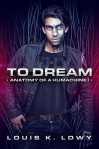
Interview with Author Louis K. Lowy

1)     
Congratulations on the release of your book, To
Dream. Tell us a little bit about the inspiration behind this incredible novel.

Thank you, Anthony! It’s a long and unusual
story. The genesis for the novel came from a long forgotten short story that I
had written two decades ago. I was going through my virtual folders and
rediscovered it about the time I had finished up my second novel. Ripe to start
a new one, I became fascinated with key aspects of the three page story and
decided to build upon them. Once that train of thought was set in motion, I was
left with nine questions that needed to be answered in order for my proposed storyline
to work. I printed and mounted the nine questions on a storyboard and worked on
each one until I had plausible answers (though they were flexible, depending on
how things developed as I got more and more into the story). That process took
two to three months. Another interesting thing, Niyati Bopari, one of the main
characters in To Dream, first made a
brief appearance as a child in my previous book, Pedal—a contemporary women’s novel. Of course, at the time I never
realized she was going to play a pivotal role in my next book.

2) What was it about the science fiction genre that drew you in?

I loved science fiction from the day I was
born. First on TV, then in comic books and finally in books. Like To Dream, what draws me in is the human
element behind the technology. How do we, as people, keep our humanity in the
rapidly changing universe? I love Ray Bradbury because he seems to always be
dealing with this, no matter what or where his stories take place.

3) This is the third book you have written. Tell us a little bit about the
writing process you went through when writing this and how it differed from
your previous experiences.

This one was one of the toughest because of
the structure. As you mentioned in your review, it bounces back and forth from
the present to the future and from one planet to another. It also dealt with
four interlocking stories that had to connect in the end. Keeping up with all
of that was a Herculean task for me. In the beginning it was brutal, but
because I had taken a lot of time up front to solidify my plot, I knew where I
was heading and used those time shifts to my advantage. I could construct them
in a way that would create the proper impact at the right time.

4) Which character did you enjoy writing the most? Which was the most complex?

Those are great questions. Honestly, I enjoy
all of my characters, even the morally corrupt ones. Honestly, there is no one
that I enjoyed the most—though I can say that my favorites were Niyati Bopari,
J-1, Norma Mardeen, and Rebeka Takáts, because of their complexities—which
leads in to your next question.

           There
are two who I think were the most complex—Niyati Bopari and J-1. Niyati because
of the extraordinary measures she takes to deal with the death of her son. J-1
because he’s forced to face something he hasn’t been equipped to do—his
humanity.

5) When writing, what is the most compelling part to you: character development
or developing the plot?

Both. The type of stories I write depend on
both. Each one supports and enhances the other. A lot of this has to do with my
influences—people like James Joyce, Stan Lee, the aforementioned Ray Bradbury,
Charles Dickens, Stephen King, Ernest Hemingway, Jane Austen and J.R.R. Tolkien
to name a few.

6) What has the marketing process of this book been like for you?

Like all of them, challenging. I’m
fortunate to be with IFWG Publishing. They’re a small, but supportive press.
Still, as most authors know, the business of writing can sometimes be a lot
more difficult than the actual writing. On the other hand, it’s a joy when that
process leads to someone like you, who is so generous with your time and
support of people like me.

7) What social media site has been the most helpful when promoting your books?

I tend to center my attention on Facebook,
twitter, and my website, but I also love Goodreads Instagram, and Pinterest.

8) What are your future plans? Any books in the works?

You bet! I’ve finished a fantasy novel about
a gambler on the brink of death who gets the chance to save his soul, a horror
book that takes place in the late Victorian era, and I’m currently working on a
crime novel.

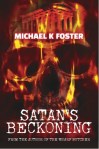
Interview with Michael K. Foster, Author of “Satan’s Beckoning”

Thank
you so much for taking the time to talk with us today. I want to congratulate
you on the release of Satan’s Beckoning.

Thank you, Antony. It’s a pleasure to meet up with you.

Can you
tell the reader’s out there where Satan’s Beckoning picks up in the DCI Mason
and David Carlisle series. How much time has passed since the events of the
first book, The Wharf Butcher, and what has changed for both DCI Mason and
David Carlisle since that first book?


Book 2 in the series opens with
a late night fatal road traffic accident, in the middle of January 2013. Barely
six weeks into his new role with the Northumbria Police Serious Crime Squad, Jack
Mason is sent to investigate. With the dust barely settled on the Wharf Butcher
case, the Detective Chief Inspector is out to impress. On his arrival at the
crash scene, all is not what it appears to be and he is soon faced with a
vicious murder investigation.

When criminal profiler David
Carlisle is drafted in to assist, he is faced with the killer’s wrath. Within
the seemingly dark vaults of the police missing persons files lay untold
dangers. Young women are easy pickings for a serial killer who believes God has
sent him to rid the world of an overindulgent appetite for greed.


What was the process like returning to this
series? Did you find it easy to pick up from where The Wharf Butcher left off
or is it more of a challenge to revisit a series that you spent so much time
establishing?

The plot idea for Satan’s
Beckoning came as a result of watching a late night TV chat show. At the
time, the host was interviewing a well-known celebrity who was going through a major
divorce settlement. He was 75 and she was 26, and boy did they look an odd
couple. What intrigued me more than anything else about this case was the money
settlement his wife’s lawyers were seeking. They’d only been married two years,
and she was asking for millions. Not only that, she was desperate to enhance
her own career by exposing her aging husband’s nasty little secrets in an
autobiography she’d supposedly written.

Intrigued,
this is where the writer in me takes over. Blackmail, greed, jealousy, hate,
they are all in there. Suddenly ideas for book 2 were swimming around in my
head – so why not throw another serial killer into the mix? If nothing else it
seemed the perfect challenge for the
two central characters, David Carlisle and DCI Mason.


Without revealing any plot details, what would
you say is the biggest difference between The Wharf Butcher and the killer in
Satan’s Beckoning? What makes this case a challenge for David Carlisle and DCI
Mason?


Having
created the Wharf Butcher, creating another narcissistic monster was a big
challenge this time. I guess the big difference between the two serial killers
is the not knowing who the killer is in Satan’s Beckoning. In trying to shed
some light on the serial killer myths, I decided that this book would feature
heavily on the mind games. Serial killers by their very nature are manipulative
interspecies predators who have the striking ability to deceive. Many believe they
even own their victims, and treat them as personal possessions. These people
are sensation seekers, and unnerving callous individuals who are prone to
violate the rules of society.

The
question I often ask myself is why are so many readers, including myself,
fascinated by serial killers? With this in mind, there is little wonder that
David Carlisle would feature heavily in Satan’s Beckoning. The difficulty was
how to fit Jack Mason into the storyline. I’d always wanted to write a crime
thriller series, but always felt the need to write something different from the
standard British police procedurals. I hope I have succeeded!


When writing, what drove you more when writing
this series: the character development or the plot?

The beauty of writing a series is that
the central characters are already developed, which allows me more time to
concentrate on the plot. By the very nature of the title – Satan’s Beckoning –this
was always going to be a dark psychological thriller, a game of cat and mouse
between the criminal profiler and a serial killer. Writing suspense into a
novel can be a very tricky challenge, writing continual suspense even harder.
You have to work on it, and the plot development for this book took two years
to write.


How important would you say the setting was in
Satan’s Beckoning?


Place is
really important in a novel, and it doesn’t matter where you live just as long
as the writer can take you to that place in their story. A few years ago I met up
with Ian Rankin in the old Oxford Pub, in Young Street, Edinburgh. The master
of crime fiction who has sold millions of books, Ian’s advice to me was that a
strong sense of place is very important in every good crime novel. I’m glad I
took his advice.


What was the process like researching for this
book series? What was the most fascinating thing you learned when researching
crime investigations by the police?


In trying to understand the innermost workings of a serial
killers mind, I spent endless hours on research and talking to senior police
officers, SOCOs, prison officers and people who have had dealings with these
people. Serial killers are not everyday people, but there are still plenty of
bad guys out there who wouldn’t think twice about tearing you apart. I’m lucky
I suppose, having worked six years in the British Law Courts as a Magistrate, I
regularly came face to face with the real criminals – a priceless experience as
a crime writer.


Shifting gears to the marketing side of your
book release, what would you say has changed in terms of your book launch for
The Wharf Butcher and now Satan’s Beckoning?

Twelve months on from my first book launch, and I have built up a small
following of readers. It has certainly made the difference, and through social media
networking, I have seen that interest slowly grow.

What has
the experience been like meeting readers and doing signings with book stores?

Book signing is an exciting
opportunity to have face-to-face discussions with your readers. Not only that, you have the chance to inspire and connect with
your readers. This, I feel, gives me a great opportunity to better understand my
target audience in a much deeper way than any other market research
or online communication.

In truth, I sell far more paperback books than anything else, so these
events are very important to me. Besides, talking
with potential readers leaves an impact unmatched by all other forms of
marketing, making your audience more likely to read your book and support your
cause.


In
this age of social media, what would you say has been the best social media sites
to promote your book, and why do you think that is?

From my own experience, and the experience of many
authors, bloggers, and top reviewers alike, Goodreads can be a great launch platform
to promote your work. How much weight the review holds for an author, depends
greatly on the publication and how much the reader trusts the reviewer’s
judgment. That said Goodreads
isn’t a platform to sell books directly. If you do try to do that, you will
simply be pushed out. Like many other platforms, genuine engagement is required
to get the most from it.

That said, Goodreads does offer authors the opportunity
to promote their books through giveaways and advertising, both of which can
help you get reviews on your books and spread the word about.


What
does the future of the DCI Mason and David Carlisle look like? Are there any
other book projects on the horizon?


I’m currently working on book 3 in the series. Still no firm title yet, but I hope to
have it ready for release by autumn 2017. The plot has been a nightmare to get
right, and has taken two years to research. It can be hard going at times, but
I’m really pleased with the way things are shaping up. No spoilers here, but
this one’s a real spine-chiller and not for the faint-hearted. All will be revealed
in the due course of time, but if you think you’re safe – think again!

Thank
you again so much for talking with us today.

Thank you for inviting me, Anthony. It’s been a
pleasure talking to you today.


Do
you have any websites or news you’d like to share with our audience?


For those who wish, more about me and
writing can be found at: www.mike-foster.me

Congratulations
on the book launch. This was a fantastic read and you truly have captured the
spirit and genius of the British Crime Fiction genre. 


Good
luck with the continued launch of Satan’s Beckoning, and we look forward to
seeing your continued success and your next great book.

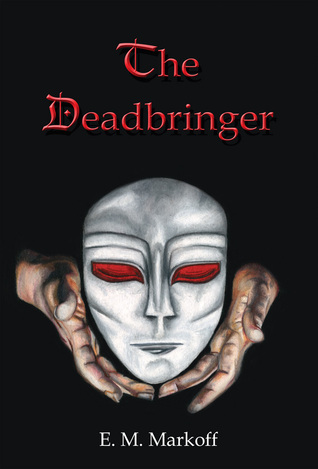
Interview with E.M. Markoff

1) Tell us a little bit about the conception of The Deadbringer and this fantastic world you have created.
The Deadbringer is
an amalgamation of reading, visual media, and culture. It’s a
Frankenstein’s Monster of the literary genres I love (epic fantasy and
classic fiction), the movies I grew up watching as a child (Hammer
Horror, Roger Corman’s Edgar Allan Poe films, anime, David Lynch films),
and of what I experienced growing up in a first-generation Latina
household. My mother, who was born in 1933, had some very tall tales to
tell filled with magic and surrealism. It made for some great stories.

2) What inspired you to delve into this dark fantasy realm over other genres?
My
mom was a huge fan of older horror films. As such, I grew up watching
Dracula (Christopher Lee) chase Van Helsing (Peter Cushing); Dr. Phibes
(Vincent Price) avenge his lost wife by committing pernicious acts, yet
still be the hero; Paul Atreides (Kyle MacLachlan) become a messiah who
would lead the people. Not being strict in what I read, I picked up
Stephen King, Carlos Fuentes’ Aura, and Neil Gaiman’s The Sandman. All of this, consciously and subconsciously, helped shape my love of ‘dark’ things. To me, the dark is beautiful. It had much to offer and so much more to show you.

3) Which character do you think you can identify with most, and why?
I
hate to sound cliche, but there is a little of me in each character.
But, if I had to pick only one, I would say E’sinea. The fact that I am
reluctant to say why I relate to him is probably the reason I do relate to him.
4)
Do you think readers should view this as a clear cut good versus evil
kind of story, or do you like to look at it as more of a story that
resides in shades of grey, morality-wise?
The Deadbringer is
very much a story told in shades of gray with respect to its
moral ambiguity and how the characters’ actions have consequences. Some
of the characters in the book have unique abilities that historically
are associated with evil (necromancy, shadow affinity, the literal
ability to rot flesh) but it does not mean that they are evil, and yet
they are persecuted as such. So, the book is very much written in shades
of gray in the sense that it demonstrates how the classic trope (or
natural human tendency) to categorize people into good or bad is
directly responsible for the misfortunes of the characters. As the
author, this this how I feel, but I believe that readers should feel
free to interpret the book how they wish. It’s part of the joy of
reading, after all.

5) What authors have inspired you as a writer?
Oh, that’s a long list! Stephen King and Neil Gaiman, as I mentioned before, Clive Barker, Oscar Wilde, Edgar Allan Poe, J.R.R. Tolkien, Alan Moore, Paulo Coelho…really, the list is never-ending!
6)
If you could meet any of your characters in person and have a
conversation with them, who would it be and what would you ask them?
E’sinea, and I would ask him if he wanted to play a game.
7)
When it comes to the marketing side of publishing your book, which
social media platform has been the most beneficial as far as reaching
an
audience is concerned and why?
Bookstagram,
which is a community of booklovers within Instagram, has been
fundamental to my career as a writer. I am grateful to this community
not only for their love and support, but also because I have made some
wonderful friends through this social media platform.

8) When developing your story, which is your favorite part: developing plot or character development?
I’ve
been told by my editor that I am obsessed with ‘playing house’ with my
characters, so I’d have to say character development.

9)
Since you have developed a lot of fictional towns and cities in this
epic story, where would you live in The Deadbringer and why?
Suelosa,
because its just far away enough from the governing powers that be and
no gods have come around to fuck things up! It’s still very much a free
city…for now.
10) What are your future plans for this series? Any other books on the horizon?

Future
plans include the second book in the Ellderet Series which is
tentatively scheduled for late next year. From there, only the Twin God
knows what the future holds. With any luck, Fortune, and not Travail,
will be on my side. As for other books, I’ve been working on a fantasy
novella that takes place in the world of the Ellderet Series and is a
sort of standalone prequel to The Deadbringer. My goal is to get
that out before the second book, but I don’t want to curse myself, so I
best leave it at that! What I will say is that I hope my readers will
enjoy the novella as much as I am ❤

Q&A with Ben Jackson

Recently I had the opportunity to review the guide, “How to Survive the Zombie Apocalypse” by Ben Jackson. He was also kind enough to answer some questions about the book, so check out our interview here!

1) What gave you the inspiration to write “How to Survive the Zombie Apocalypse”?
I hate scary movies, but can’t help myself when it comes to zombie movies. I just watch them during the day, not late at night! I enjoy prepping, and also love the aspect of watching a movie and yelling ‘I wouldn’t have done it like that!’ So, I said to my wife that I was going to write a zombie survival book, and she told me no one would be interested, but I wrote it anyway. It has been one of our most popular books, both digital copies and paperback copies.
2) There are so many helpful tips for both zombie survival and overall survival. What would be the most important piece of advice you could give anyone trying to survive a disaster of this magnitude?
Hmm, stay and fight or be prepared to run and gun I suppose. If you’re going to stay and defend your location, then make sure that you put everything into it. It’s easier to hide than fight, but ultimately you can’t run forever. It all comes down to how many people you’re looking after or how many people are in your group.
3) What zombie films/books/TV shows do you think showcase both the zombie threat and the necessary survival tools mentioned in your book accurately?
The TV show The Walking Dead is a good example of a group of people that want to settle down and defend one location, but ultimately find it too hard. They have to deal with large groups of zombies, as well as dealing with large groups of hostile people looking to take what they have. The Will Smith movie, I am Legend, has a good setup for his own home defense. There are also some differences in that movie, during the day he’s free to roam, the zombies only come out at night, and there’re almost no other people to deal with.
4) If you could pick anyone to be on your zombie apocalypse survival group, who would it be and why?
Seal Team 6, lol! Seriously, anyone that you care about, and you know has some basic survival instincts, and decent intentions would be good for a zombie squad. You never really know who will crumble under pressure, but I would want my wife by my side of course!
5) Any other books or guides that you are currently working on or plan to work on?
I just finished a basic preppers pantry style book. It’s called SHTF & Urban Survival Items for Preppers: Beginners Guide to Everything You Need to Stockpile for the SHTF, Urban Survival, Prepping, and Disasters. It has only been released for about a month. It is some of the important things you’ll need for prepping and why, and some of the most obscure items that you may not have thought about. It’s a good beginners book, for people that are interested in becoming preppers, but not really sure what it’s about.
I also just finished my first fiction novel, it’s a dystopian fiction based in a post-apocalyptic world after a virus has swept through the country. It’s being proofread now, so probably 3-4 weeks away yet.

SHTF & Urban Survival Items for Preppers https://www.amazon.com/dp/1534604510/ref=cm_sw_r_cp_api_h4eUxbR9PWH5S

Author Interview with Marina Epley, author of “The Mind Breaker Trilogy”

Here is a fun interview we did with author Marina Epley for her incredible YA/Dystopian novel series, The Mind Breaker Trilogy!

1) What
inspired you to write Elimination and create the world of this dystopian
series?

I’ve actually
been fascinated by the idea of mind control for quite some time. The character
Rex first came to me almost 10 years ago, although it was difficult to find the
perfect setting for the story. About two years ago I was watching Schindler’s
List, one of my favorite movies, and realized that this is a type of situation
to throw characters in and see how they react. Afterward, creating the setting
and characters came easily.

2) What drew
you to write in the YA/Dystopian genre?

I was
initially writing contemporary fiction for YA, but this genre never seemed to
provide enough freedom for imaginative ideas. I switched to dystopian because the
genre has less limitations and provides a fantastic opportunity for world
building. I love writing dark, gritty stories filled with action and danger,
and the dystopian world seems like the perfect setting to accommodate.

3) Are there
any characters in Elimination that are based on people in your life? (I.E. Rex,
Kitty, etc)

I never base
characters on real people, only using some singular features of people I’ve
known. My characters often seem to take on a life of their own and control
their destinies within the story, even more so than I do. The characters I
write about also have a tendency to influence me, just like real people.

4) Was there
an author or a particular book that inspired you to write?

Russian-American novelist Vladimir Nabokov gave me a lot of confidence
and inspiration because he was one of only a handful of native speaking
Russians to successfully become an American author. I’m following a similar
path.

5) What drew
you into the writing world?

I guess I’ve never consciously chosen to become a writer, the choice
seems to have been made for me. The real world just never seemed to be enough
for me. Around the age of twelve, I was already writing short stories to share
with classmates. They could never get enough, so I realized at that early age a
future in writing fiction was possible.

6) If there
was one genre of writing you could never write, what would it be and why?

I doubt I
will go back to contemporary fiction, because the genre has too many limitations.
However, I’ll keep an open mind and enjoy experimenting with different genres
in writing.

7) What is
your favorite part of the writing process: character development or plot
creation?

I love
creating new worlds, although character development excites me more. I enjoy
putting my characters into dangerous situations and forcing them to make
difficult choices. Watching them change and grow within a story is to me the
most thrilling part of my work.

8) What
social media network do you enjoy using to connect with readers the most?

So far, I
prefer Twitter and Goodreads.

9) If you
could collaborate with any author, (living or dead), who would it be and why?

It would have
to be my favorite crime-fiction writer Jim Thompson. I’m drawn to his brilliant
ability for exploring the minds of psychopaths and killers, as well as writing
about something that doesn’t fit a social norm. Reading his books gave me additional confidence to write what I
want and to be bold in my writing.

10) What are
your future plans for the Mind Breaker Trilogy? Any other books you are working
on outside of the trilogy?

I’m
currently preparing the third book in the Mind Breaker Trilogy, Annihilation,
for publication on Amazon. I’m also planning to soon have my books available in
paperback. At the same time, I’m working on a new YA series, Roamers from the
Darkness. A story about a shy, sixteen-year-old scavenger who must transform
into a fearless warrior in order to liberate herself and her friends out of
slavery. It’s been quite challenging, as I’ve never before worked with a female
protagonist.

Facebook: https://www.facebook.com/writerdystopian/?fref=ts
Twitter: https://twitter.com/MarinaEpley

Interview Questions for David McCaffrey

First off, congratulations on Hellbound. It’s a fantastic read and am happy I got the chance to review it.

1) Tell us a bit about what your inspiration for Hellbound was.Honestly, there were two inspirations. The first of them was the quantum theory of Schrödinger’s cat.
Having read the story you might identify with it; it demonstrated the
conflict between nature and behaviour and what we observe to be true on a
macroscopic level. The experiment consisted of him placing a cat in a
steel chamber with a small amount of hydrocyanic acid. If a single atom
of the substance decayed, it would trigger a relay mechanism which would
trip a hammer and in turn break the vial and kill the cat.

You
cannot know without popping the box whether the substance has decayed,
the vial broken and the cat subsequently killed. It therefore, according
to quantum law, exists in a superposition of states which means it is
both alive and dead simultaneously until you open the box and discover
which it is.

Hellbound
was a tale of deciding which scenarios the antagonist, Obadiah Stark,
could be existing in. Only at the end do you discover which of those it
actually is.

The
second inspiration was Kung Fu Panda! No kidding!! A tale of the most
unlikely evil overcoming the most despicable of evils. Hellbound is an R
rated version of Kung Fu Panda if you really squint!!

2) What kind of research went into the creation of this story?I
have a big thing about research. I will spend weeks gathering as much
material as I can and reading around a subject so that when I begin to
write about it, it feels, smells and sounds real. My writing coach,
Steve  Alten taught me that. Make it believable or else you cheat the
reader and will lose them. So I spend an awful amount of time reading
around the death penalty, executions and the morality that goes hand in
hand with such an emotive subject. It was important to the story that I
do not give my opinion, only the facts and allow the reader to decide
for themselves.

3) Was there a particular case or person that inspired Obadiah Stark’s character arc? Obadiah
Stark is like the love child of all the most evil serial killers in
history! Tapping back into the research element, I read around Ted
Bundy, Charles Manson, Richard Ramirez, John Wayne Gacy to name a few
and took characteristics form all of them and remoulded them into
something familiar but hopefully at the same time, new. Most
importantly, he needed to be sympathetic which I know sounds bizarre but
for the story to work the reader had to potentially be able to
sympathise with him despite all his crimes. Again, I don’t know if it
works for all the readers, but that was my aim. I saw him as Wentworth
Miller in my mind for an actor to play him!! I became quite fond of
Obadiah  actually!!!

4)
How much inspiration for the story’s setting did you take from your own
life? The descriptions of the various settings were so well written I felt like I was there.Thank
you! I love Ireland and wanted to set it somewhere different than
normal. Ireland has such history and is so beautiful, so it seemed
ideal. I have family from there and have visited many times so I drew on
those experiences and that knowledge and looked at a lot of maps to get
the locations correct! I tried to have the setting influence elements
of the story and lend them a sense of depth. I hope I succeeded…I
certainly enjoyed writing about the country and the various locations.

5) What author or book most inspired you to become an author?Steve
Alten, without a shadow of a doubt! I owe everything to him and
Hellbound wouldn’t exist if not for his patience, mentorship and
coaching. He took me on as a writing coach client and showed me how to
create a beat sheet, how to draft and edit chapters, how to develop
characters and how to weave a narrative. I thank him in every book and
will always do so. He is an amazing author from adventure thrillers
about giant, prehistoric sharks to political dramas concerning 9/11.
Absolute genius and genuine, humble man. I think more than anything I
wanted to make him proud as I had never really had that in my life where
someone was proud. So, yes, Steve Alten!!!

6)
Is the mystery thriller/horror genre something you are the most
passionate about, or would you consider working in various different
genres?I love
psychological thrillers, however I have so many extremely talented
author friends who write in genres I could never do; comedy, apocalyptic
fiction, love stories, fantasy. If I was to go outside my comfort zone
then I think I would write a love story (or try to!). Though I do have
gangland thriller in the works which I am writing with a friend who has
the most amazing story to tell and I have a infection outbreak thriller
all drafted and ready to go!!! I do think there are ore original tales
that can be told in the thinner genre. That’s what I am aiming for, to
create stories that are just a little different. In the words of Shane
Ward, ‘That’s My Goal’!

7) What do you enjoy developing more: your characters or your plot?I
think I would have to say both! I certainly enjoyed trying to develop a
good plat that can keep the reader guessing and taking them on an
exciting journey. that said, it is nothing without some good characters
to breath life into the scenarios and worlds you create, so to me they
are mutually exclusive. I loved developing the character of Obadiah
Stark for Hellbound. I wanted him to make readers anxious and resentful
towards him for his evil nature, but wanted him to be personable.
Personable evil was my mindset when creating Obadiah…an engaging
murderer!!

8) If you could talk to your character, Obadiah Stark, and ask him one question, what would it be and why?Ooo,
good question. Hmmm, I think I would have to ask him “What does it feel
like to feel?” the why would be because after his experience, I think
it would be interesting to know whether a remorseless person is capable
of feeling remorse.  Though I might ask him “Who would win in a
fight…Batman or Superman?” Everyone wants to know that!!

9) How important has social media been to the development of your author brand and readership?
Social
media has been vital in allowing me to reach new people who might like
to enter the world I have created. I have met so many fantastic authors
and bloggers who have become good friends; Louise Hunter, all the girls
at Crime Book Club, Tracy Fenton and all at The Book Club, Noelle
Holten, Shell Baker, Maxine Groves, Gordon McGhie, Sarah Hardy, Gigi
Gus, Jane Wignall,  Llainy Swanson, Emma Tasker, Jane Andrukiewicz,
Donna Marie McCarthy, Ryan Mark, Rob Enright, Tim Adler, Andy Males,
Bekki Pate, Paul Ferns, Leigh Russell, Karen Long, Paddy Magrane,
Charlotte Teece…I could go on forever!!! The bottom line is that every
single person I have mentioned and all of those didn;t have the space
for have helped me become a better author and helped share Hellbound to a
wider audience. Whether a review or a mention, I wouldn’t have any of
these opportunities without them, or people like your good self…none
of us writers would. I am only tiny in a huge literary world but it is
ridiculously exciting and I owe it all to the social media sites such as
Twitter and Facebook and the people I have met there that anyone knows
about Hellbound at all.

10) What are your plans for future writing projects? I
have the gangland thriller I mentioned in progress alongside a follow
up to Hellbound and In Extremis titled Nameless; not a direct sequel but
set in the same universe (a little like Marvel. All the films are
connected but not about the same characters). Both will be out in
October time. I also have the infection outbreak thriller I mentioned
all beat out and ready to start and some ideas for a few other
novellas…enough to keep me out of trouble!!!

Thank
you for your time David. I look forward to reading more of your work
and appreciate you taking the time to do this interview.
Thank you for giving me the opportunity to chat to you Anthony.  It was a pleasure!

Interview with Author/Illustrator Isis Sousa:


1) Tell us a little bit about yourself and
how you came to be a writer.

Hi Anthony! First of all, I want to thank
you for the great opportunity! I never know what to tell about myself… But I
can start sharing about the things I do. I work as professional illustrator doing
most book covers nowadays and before that I have worked as graphic designer in
the heavy metal music industry. I also do photography as hobby, most
nature/landscapes, I am a woodcarving apprentice and ornament painter and on my
scarce free time I also enjoy climbing/hiking on mountains and nurture a
passion for languages. I begin to write by accident. I had an idea for a story
one day and by the time it was the self-publishing boom… And then I asked myself,
why not publish it? Just for fun? Then, I did it and the story was “The Night
of Elisa.”

2) Where did the inspiration for “The Night of Elisa” come from?

It came from a dream I had 13-14 years ago.
I was there, in this place where the twilight was eternal and discovered the
people around me were all dead… I had a warning about the death of a friend/co-worker
in that dream. Which came true about a week later, and this experience has been
imprinted in who I am to this day. Bram Stoker’s Dracula, the book and Francis
Ford Coppola’s movie were also very remarkable to me. Music has also a great
influence in what I do and. I’d say those were the main sources of inspiration
for the story 🙂

3) What other writers or artists have inspired your work?

Oh boy! This list would be endless! I am an
art nuts, I collect art books and images, fiction and a loooot of music. I can
say writers such as Stephen King, Mary Shelley, Clive Barker, Allan Moore, Bram
Stoker, Oscar Wilde, to name a few. (Yes, I am all about classics, both the old
school and the modern.) I love the works of illustrators painters such as Mark
Simonetti, Pierangelo Boog, Corrado Vanelli  and Raphael Lacoste and many, many names of
the classic arts.


4) What do you find is your best creative outlet: writing or artwork, (i.e.
illustration, graphic design, etc?)

Artwork, no doubt! 🙂 Writing is too
tiresome, too slow, and full of letters 😉 Doing art is so free, colourful,
flows like good music.

5) You mention in your bio you are a metal fan. What bands do you listen to
when you are working on your next book or piece of art?

I love many Metal bands and also the
classics in Hard Rock. Some of the most inspirational bands for me are Paradise
Lost, Moonspell, Therion, Lacuna Coil, Within Temptation,  and Crematory to name a few.

6) What is your favorite genre to both read and write in?

Gothic, classic Gothic stuff 🙂 I am attracted
to the Dark and the Fantastic, and the Romantic aesthetics.

7) How do you feel social media has impacted your reach as an artist and
writer?

To be honest, it has impacted tremendously.
Art communities such as CGScociety, Sketchoholic, IAMag and Art Station (which
are the social media for digital artists/illustrators) together with Facebook, connected
me to great names of the industry and clients.

As an author, my best social media is
GoodReads and recently, Twitter. Goodreads, specially, has enabled me to
connect with most of my readership and helped me spread the word about my work
and come across a lot of cool authors, such as yourself! And now Twitter is
putting me across a lot of interesting people with common interests.

Without social media, it would be extremely
difficult to show the world the work that I do…

8) What do you find more rewarding when
writing: developing plot or creating your characters?

Characters, characters and characters 😀
Developing plots give me headache 😛 Characters are fun, I can imagine what
they are made of, what do they like, what they look like and how they would
react in given situation… This is such a cosy part of the process.

9) What is one genre you would never write in and why?

Hm, I am kind of an “anti” person, so it
would be most genres! LOL Don’t get me wrong. I love to read most genres and I
like to add a pinch of romance, horror, mystery and anything dark in my work as
a general rule. I think perhaps the least attractive genres to write, would be
in my opinion, a “romantic romance” or a “sweet romance”, also erotica. these genres are just
not me, but I respect  and root for those who write them. Oh and I almost forgot – Young Adult. I dislike 99% of YA stories out
there and I see no fun at all in writing about teen years, ew! 😛

10) What are your future plans for your writing and art careers?

The most selfish of all!!!  – To be able to live out of my illustrated
books someday and to paint ONLY for myself (meaning, as an artist, I would not
need to make commissioned work for any clients, anymore!). I love my clients,
they are smart, fun, great minds to work with, but every artist’s dream is to
paint for him/herself! ^.^

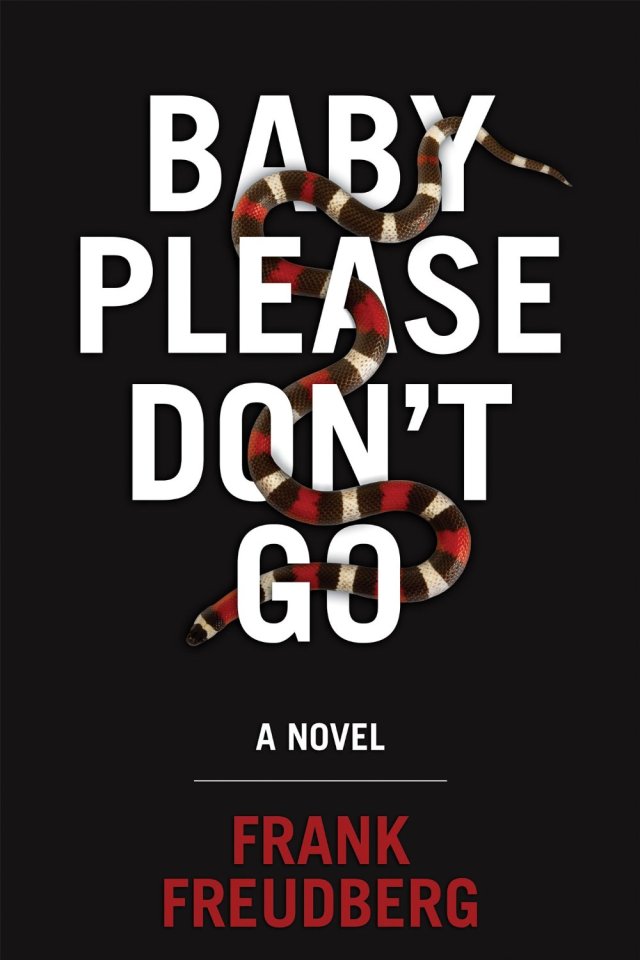
Interview with Frank Freudberg:

1) Tell us a little about yourself and your book, Baby Please Don’t Go.


I’m a ghost writer, journalist and novelist. I’m married with one
teenage son and we live outside of Philadelphia. I’ve been writing all
my life. I’ve always loved writing and working for myself – even going
as far as dropping out of high school to pursue my craft. I believe in
Mark Twain’s adage: Never let your schooling interfere with your
education.

2) What was the inspiration for this novel?


My son – and every parent’s nightmare: losing a child, no matter how that loss may occur.

3) What would you say the biggest difference/challenge was between writing this novel and your previous novel, Find Virgil?


The two books are wholly different and Find Virgil is a pure thriller while Baby Please Don’t Go fits squarely in a non-existent genre some have called “modern noir romance.”

4) What or who inspired you to create the characters in this book, like Lock and Natalie?


The two characters you mention are amalgams of people I know, including a few people who I wish I didn’t know.

5) What authors or books helped inspire you and your writing?


Thomas Berger, author of 20 novels, including Little Big Man. I like to say he’s America’s greatest living novelist – however, I can’t say that as he died a year and a half ago.

6) What would you say interests you more from a writer’s perspective: developing the plot or the characters?


That’s
an easy one for me: characters. Once I have detected a heartbeat within
a character I’m trying to bring to life, the plot kind of suggests
itself. “Character is drama,” someone said. I agree.

7) What characters in Baby Please Don’t Go do you sympathize or identify with more than the others?


I most identify with Lock; I share some of his troubles and some of his joy.

8) Have you ever wanted to dabble in other genres besides the thriller genre, or is this a genre you are passionate about?


I
don’t feel like I need to stick with one genre. I love writing and I
write what presents itself to me. In both the novels mentioned in this
interview, I wrote the books and only then did I notice that (at least
one of them) might fit into an established genre. I’ve often wondered if
there’s a genre called, “Don’t Waste Your Time,” since that was the
sentiment of more than one Amazon reviewer. Speaking of Amazon
reviewers, I recently received a 1-star review that simply said,
“Haven’t read it yet.” I guess she’s clairvoyant.

9) If you could bring any of your characters to life and have a sit down chat with them, who would it be and why?


It would be Lock’s boy Augie. If I state why I’d want to chat with him, I’d be providing a spoiler, so, I can’t elaborate.

10) What advice would you give to any aspiring writers out there?


“Sit
in your chair and relentlessly put black on white” and, to quote
novelist Rita Mae Brown, “Don’t hope more than you’re willing to work.”

Thank
you so much for speaking with us, and I wish you luck with all your future endeavors.


Thank you, Anthony, for this opportunity to speak to you and your audience. Best regards,
Frank Freudberg