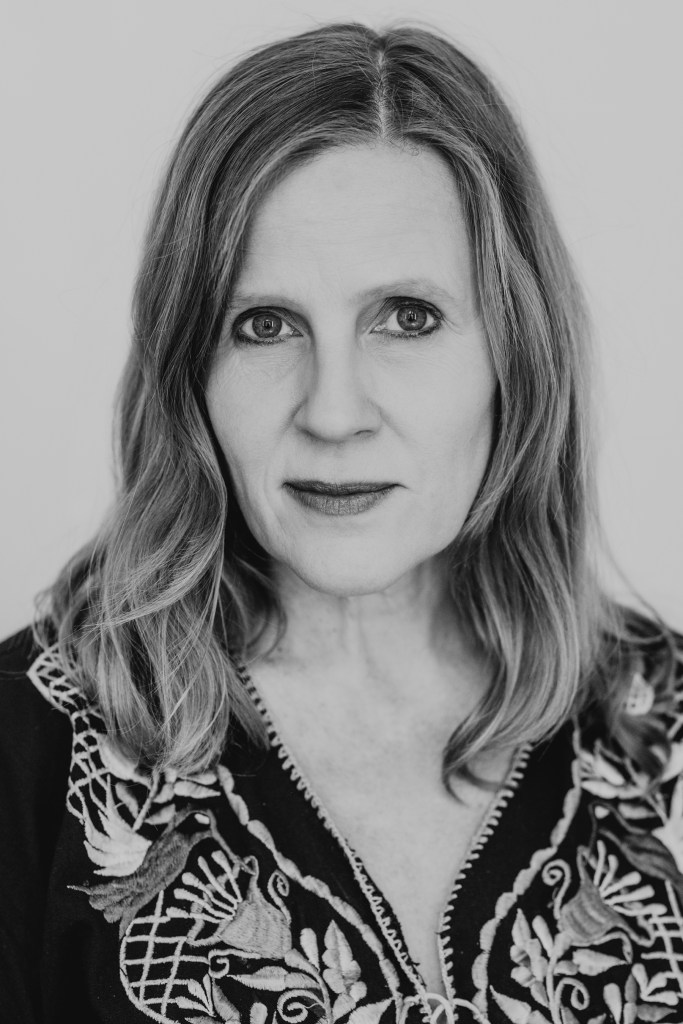
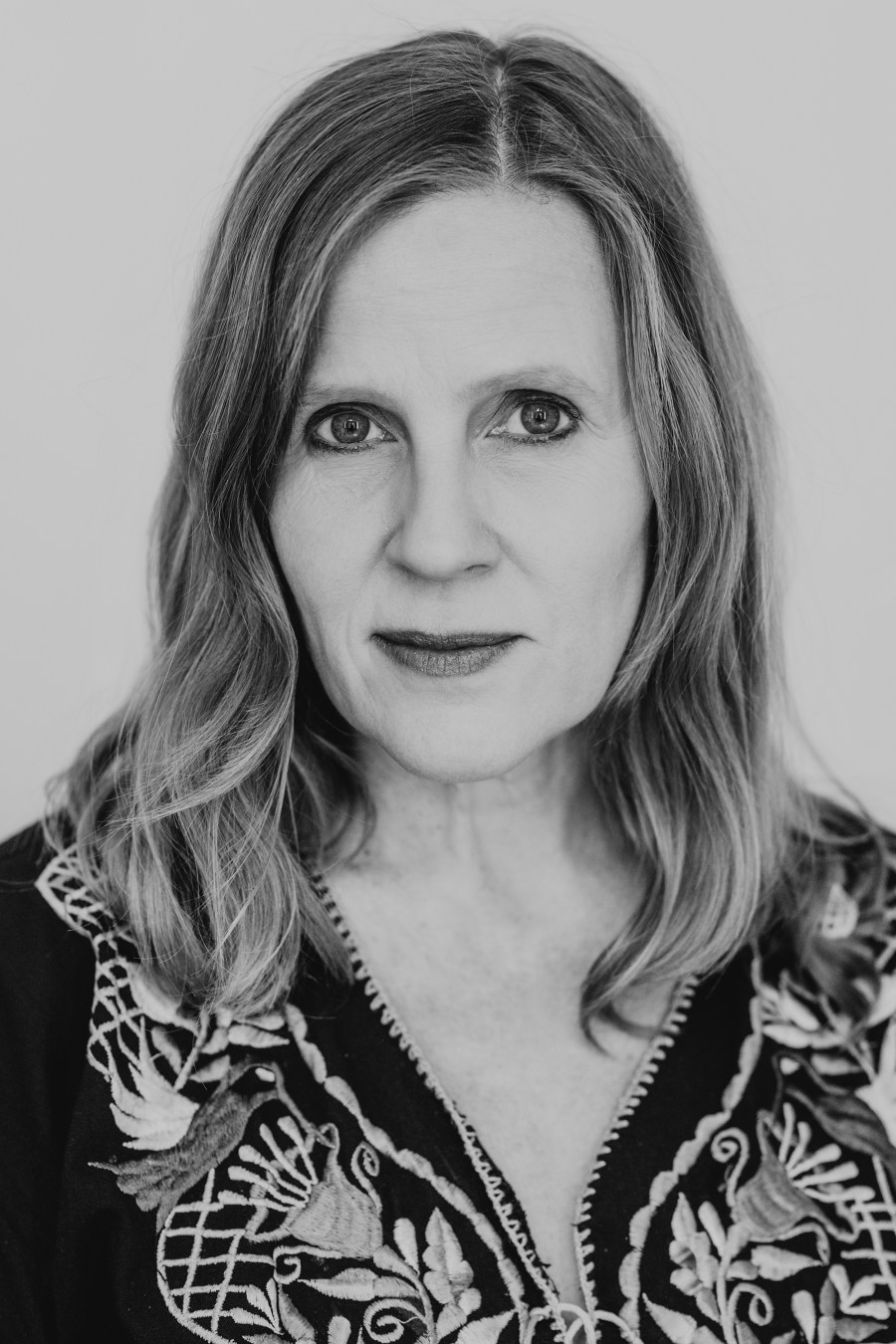
Interview with Author Karen Moe

Tell us a little bit about yourself. How did you get into writing?

I am a feminist activist, visual artist, performance artist, art critic, essayist, and author. Victim: A Feminist Manifesto from a Fierce Survivor is my debut book. Since I started writing again in 2014, it is as though all of the writing I have done has been in preparation for the writing of this book. 

Like a lot of writers, I started writing as a child. However, I haven’t been writing and honing my skills consistently since then except for in school with creative compositions and essays. In my early adulthood, except for some journaling, I wrote essays at university and became particularly skilled at the formal aspect of essay writing. It was as though, like a painter who begins with figurative drawing, I was learning the rules of essay structure and grammar so that I could break them—which is exactly what I have done and, as I write and think about it now, this breaking of rules has happened in tandem with my development as a revolutionary. My writing now, as with all of my art, is about revolution: being a contributing voice to an ideological revolution—which is the only way we are going to have lasting change in the West (which, tragically, because of globalization, pretty much means the world). I often joke that I write the same thing, over and over again, in different contexts. After all, that’s what the other side has done for millennia! Repeat and convince. Repeat and maintain. We have a lot of repeating to do until everyone hears and believes us, the same way the majority of society believes the dogma they are fed daily that is lived as unbroachable reality. 

I started writing again for real in 2014. One evening, I was at a Graham Gilmore exhibition at a big gallery in Vancouver Canada. At that time, I was immersed in my visual art and, like most (or all) visual artists who have yet to get the coveted representation from a commercial gallery, I had an ulterior motive to go to Graham’s (amazing) exhibition: I wanted to talk with the gallery director and give him my card so that (just maybe) he would be interested enough to check out my work and (please god-of-the-almost-impossible, succeed as an artist in my lifetime) represent me. 

I wandered around the gallery innocently checking out Graham’s paintings; I came up with a clever question about gender; I spied the gallery director; I told him I have a question about one of the paintings; we walked over to it together; I asked him my clever question holding my card strategically in the hand where he couldn’t see it yet.

“Oh!” he exclaimed. “Graham will love that question! I must introduce you to him.” My desperate undiscovered artist’s heart fell. I was escorted over to the famous artist wreathed with his admirers. The gallery director ushered me through the eager mass, all vying for Graham’s attention. Yes, Graham loved my question. He asked for my card. I reluctantly gave him the one I had poised opportunistically in my hand for the gallery director. We chatted a bit. Other admirers jabbed the circle for his attention. I went home, elated by experiencing his exquisitely wrought and culturally important paintings, but with a heavy heart about yet another failed attempt of even getting the slightest interest in my own work.

The next day I received an email from Graham. 

“I want you to write a comprehensive article on my oeuvre. Do you want money? Art? Both?”

“But I’m not an art critic. I’m a visual artist like you.”

“I don’t care,” he responded as the delightful eccentric he is. “I want something different.”

So, I did. I wrote my first piece of art criticism. It’s called: “Excavations: A Feminist Resistance Artist Dialogues with Graham Gilmores Love Sic.” The article was published in Border Crossings, the most important art magazine in Canada. I was even paid over $1000. 

“Oh, I guess I can still write,” I said to myself. Since then, I have written many articles of art criticism and revolution. You can find the links to some of them on my website under essays.

Advertisements

What inspired you to tell your story? What message do you hope readers will take away from your book? What is one message or piece of advice you’d give to anyone who is struggling with experiences similar to or like the ones you share in your book?
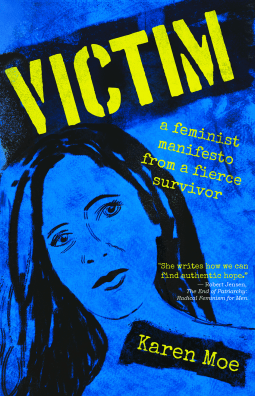
As stated above (here is an opportunity for strategic repetition): contributing to the revolution of a culture built with exploitation inspired me to tell my story as it does everything I create. However, the narrative thread of Victim was also inspired by (or one could say based on) the real-life experiences of sexual violence that I have personally been victimized by and survived. It was also inspired by the revolutionary knowledge—embodied knowledge—that I gained by having been victimized by and survived that violence. This can be seen as ironic because typically one thinks of living through sexual violence as a negative, traumatizing, experience. And, of course, it is. And yet, as I write in Victim:

“One of the main effects of my personal victimization has been an acute awareness of injustice, especially regarding sexual assault. Whenever I watch or see or read or hear about rape, prostitution, or pornography, I feel like I am being raped all over again. But, the interesting thing is, it’s not personal anymore; it’s not just about me. And, it may sound strange: it’s not all bad. It is as though, through an experience that is perceived as—and is—horrifying, there is more to it than that. Instead of being weak, passive, and defeated, my experience as a victim kicked me in the ass. It made me start doing something about it.

Don’t get me wrong: I certainly wouldn’t wish my particular form of initiation into the realm of righteous anger on anyone else, but this is good anger, healthy anger, an anger that motivates. I mean, shouldn’t we all be angry about the sexual exploitation of women and children? Shouldn’t we all be angry when more than half of the people on earth are under siege?” (Victim 144-145)

One of the main messages of the book—and the reason that I chose the controversial term ‘victim’ for the title—is because I turn the concept and reality of ‘victimhood’ on its head. When a person lives through extreme violence, you change. It affects you. There is no going back. Victimization has long-term effects because the system that victimizes has not gone away. As Andrea Dworkin said: “Victim is a true word. If you were raped, you were victimized. You damn well were. You were a victim … And if it happens to you systematically because you were born a woman, it means that you live in a political system that uses pain and humiliation to control and hurt you.” I write in the book: “It’s from then on always after.” And, in response to Dworkin’s connection of victimization and the system that does it, this awareness and acknowledgment of the victim being an inescapable result of rape means that the acknowledgment is the source of transforming the system that creates a victim—and the victim not only knows this, they feel it.

Like many other victims, since I became fully conscious of the violence I have experienced and the aftermath of PTSD I still negotiate daily, the politically correct term ‘survivor’ has always felt like it doesn’t tell the full story. Yes, of course, I survived. And, yes, time passes. But what happens during that time, the life passing in what our culture construes as an ever-forward moving trajectory, shouldn’t promote the shedding of experiences, an eradication of life. There is no moving on from a life-altering experience, getting over what will always be a part of our lives. For me, this is not healthy, nor is it realistic. As I say in Victim: “I need to learn to honor my scars. So that they won’t happen again.” Scars are a source of wisdom and empowerment and not inflictions of debilitation and defeat. 

Acknowledging and deriving power from our victimhood also debunks the patriarchal ideology of linearity, constantly moving forward, not looking back (which is the ideological infrastructure of neo-liberalism where no acknowledgment or responsibility is given to what has been plundered through in order to fill the bottomless glut of individualism and greed, that which exploits in order to exist and that which rapes not only women and children, but everything). Linear thinking negates any possibility of sensitivity and awareness; we rush past without noticing what came before, what exists on the margins of our individualist prerogatives to get ahead. Victim was intentionally written as a non-linear narrative not only to overwhelm constrictions, but also for me as the writer to experience the writing process as it happened, as it was remembered. Each part, each memory, each process of remembering, each connection of remembering through the act of writing—what phrase, what word, what rhythm arose—bred the next part of the manuscript. However, remembering is not only a backward trajectory, the inversion of the forward: what memories, what parts of our lived lives have been pushed aside and return with their connection to another memory residing in a word that can re-surface what has been buried. And then we are greeted by the narrative of how we have forgotten this, what caused us to push this aside? And the remembering, the excavating, through writing, continues as a cycle, never a line.

For me, this process of remembering (and being) is how writing happens; it is how being simultaneously conscious and unconscious with all of the obfuscations and clarities in between. You have a topic, what you are going to write about, and maybe you even have a general idea of where you’re are going; however, for me, there is the necessary alchemy of the first sentence that arrives as a miracle from my subconscious and is filtered through a love affair with language. From that first sentence, the work is born and, as I write, I come upon experiences, ideas, and observations that I had no idea were even there, even though they were. Writing, when one opens oneself to it, surprises, teaches and gives the writer a more acute relationship with reality. As the now tall grasses, with their tips of reaching seeds, draw tender cycles, in the ever-moving air.

Men cannot be left out of the discussion of sexual violence, both as perpetrators and as victims. Men cannot be left out of feminism as a movement that is fighting for justice for all and for a culture without violence. In Victim, I write about my very difficult but, in the end, very beautiful, relationship with my father. As women, our relationships with our first sexed and gendered male are absolutely formative in how we negotiate a system of male supremacy and the female oppression that guarantees. While writing Victim and telling all (even to the extent of my own self-condemnation, my own imperfections, my own humanness), I was very interested in the genesis of the victim. However, I was also very interested in (and still am) how a perpetrator is constructed in a violent culture and how men are also victims. Breaking the cycle of abuse is critical. In patriarchy, male victims are conditioned to harden as opposed to opening to the fact that we are all vulnerable and that victimization affects us. In patriarchy, men are not permitted vulnerability. It is an acknowledgment of and living lives as vulnerable creatures that make active empathy possible. Conditioned to be strong and emotionless, those socialized as men have a much more difficult time with this. As Robert Jensen says in his book The End of Patriarchy: Radical Feminism for Men: “I was socialized in patriarchy into a toxic masculinity that not only subordinates women but also crippled my own capacity to be fully human.” This inability to feel fully inevitably contributes to the creation of the perpetrator—and, most often, his victims. 

It is very significant and special to me that Victim has had wonderful responses from men, including, of course, you Anthony. One male reader said: “This is the most honest book I have ever read (and I have read a lot of books).” Another, as Daniel Gawthrop writes in his article for The British Columbia Review: “Victim is a rich and soulful testament to the power of human resilience that redefines the meaning of victimhood itself.” And your final verdict, Anthony: “While the subject matter of her own life was tragic, her strength and ability to turn her trauma into empowerment gives hope to many for the future and helps shape the blueprints to help build a better society that values compassion, equality, and justice.” Thank you!

I have known for decades that the story of the abduction, how the serial rapist tricked me, what happened psychologically while he had me, and how I got away and ended up being instrumental to his life sentence is a darn interesting story. However, as an artist, I am able to detach from my own personal life and to exist beyond myself in order to create. I have often joked: even my own trauma is interesting and, in a section of the book where I am delving into what happened to me psychologically in order to survive and ultimately over-power the serial rapist, I wrote: “the time has come to perform an autopsy on my twenty-eight-year-old psyche.”(Victim: 39). That said, because the story—however personally terrifying—is so interesting, I’ve often thought that the narrative of the story would make an amazing screenplay. Others have said this now too after reading it, so maybe it will be one someday.

However, beyond my personal narrative, Daniel Gawthrop observes how: “Now fifty-five, Moe says she was emotionally incapable of writing this memoir until now. And that’s a good thing, for Victim is a much better and wiser book than it would have been had she published it within a short time of her terrifying abduction.” It was through the years of activism, research, and scholarship between the writing of the book and the experiences of sexual violence that not only serve to extend the book far beyond the memoirist and into the system that raped her, but also by building a manifesto and a call to arms for both women and men. 

What social media site has been the most helpful in developing your readership?

I was born in 1966, as you will learn when you read the opening pages of my book. As such, I frequently joke that I am half-luddite. I do my best with social media. I have Facebook and Instagram. I can’t stomach the argumentative nature of Twitter, although I know “I should.” I am working towards starting up TikTok. Because I published with a very small Indie Press (Vigilance Press who are great but don’t have the capacity to book the ambitious tours I have been undertaking), I have to do virtually everything myself. That includes organizing and booking these tours. I just completed my US Trauma & Triumph Tour for Sexual Assault Awareness Month in April 2022. I am currently organizing my Cross Canada one for September. I hope once it’s set up, I can begin TikTok. As you may have noticed, I have a lot to say. I have started the account —and now I have to figure out how to do it! This is a lengthy process for we Gen Xers and we have to psychologically prepare ourselves for researching YouTube how-tos and make the process as stress-free as possible. My name is “Logical Feminist.” Stay tuned! It will happen! And now it has to because I told you it will. Eeek. 

About the part of the question as to which site has been the most helpful. Maybe Facebook because I have more friends on Facebook (and I know that to a lot of people of younger generations, FB is so passé). Although, more people on Instagram (percentage-wise) seem to be interested in my more revolutionary posts and there have been some feminists within the K’s amount of followers who are noticing me and my revolutionary posts. They haven’t followed me yet. But I seem to be on their radar (if that means anything!). I have DMed them. But, as of yet, no response. We’ll see! If anyone has any social media tips let me know and feel free to follow me and the press. Vigilance Press is an imprint of Vigilance Magazine:

@karenmoeart

@vigilancemagazine

However, for me, I just want to write my next book. And I have started, even though I haven’t finished touring my first. I have heard that the best way to sell your first book is to write you next one asap. That’s not a problem for me as I have two next ones eager to be born. Ideally, social media will take care of itself (I know! A Gen-X-get-someone-to -just-do-this-for-me-already thing to say 😉 Virginie Despentes has someone doing her social media. And she does what she is supposed to do: write. Alone. No one bothers her. Her mind is clear to create. She has space in all senses of the word to say something, to make something, important. #damrightmetoo. 

What advice would you give to aspiring or just starting authors out there?

Start. And, with writing, always be on the lookout for the opening sentence. The first sentence is the magic. I say to my students, when you have your first sentence, it is in many ways as though the piece of writing is written. The first sentence of Victim that I wrote in November 2016 is “I have lost the mustard yellow suede jacket from that time.” From that sentence, the book poured out of me. 

Also, with writing as with all art, there is no going halfway. Art is a vocation, not a dabble. One of my biggest pet peeves is when people and politically correct artist-run centres say that anyone can be an artist and spend thousands of dollars of culture grants attempting to prove what isn’t true. And, not only is it not true, it’s an insult to all of us who have committed our lives to honing our skills through, most often, personal sacrifice. Everything I do is bent upon creating because, if I don’t, I don’t feel well. Not everyone has to create in order to not feel bad. And, I know that not everyone could live the life on the edge that I, and the majority of other artists, writers, and composers now and throughout history, have lived. You either want to create or you don’t. Wanting to write a book is not based on “Oh, I would love to write a book someday.” For one: there is no someday. And: there is no want. It has to be an all-encompassing need. An obsession to say something. (As an aside, I would like to add that not everyone can be an artist, but everyone can be a revolutionary and contribute to the movement in some way. For example, I could never be a lawyer and we need revolutionary lawyers to give justice to so many rape victims who are never given any and retraumatized by being brave enough to report being raped, not to mention save other women by getting another rapist out of circulation).

However, even though it’s very difficult and discipline is required, for me anyway, the writing is the fun part. It is the getting the agent, the getting the publisher, the literal making of the book that is the hard part. When I first started submitting my book in 2019, I googled how to go about doing just that and the first website I came upon said: “Oh, so you think writing your book was hard!” That statement pretty much sums up what comes next after you’ve triumphantly finished writing your book. Especially your first one. 

What does the future hold in store for you? Are any new books/projects on the horizon?

I have had my next book planned for the last couple of years. It came out of the research that I did for Victim. During the time that I was held captive by the serial rapist, he confided: “There’s nothing like a good whore.” Because of that statement, I had to research and write a section on the sex industry. Part of that research ended up being about child sex slavery. Lydia Cacho’s Slavery Inc: The Untold Story of International Sex Trafficking and Julie Bindel’s The Pimping of Prostitution: Ending the Sex Work Myth were both invaluable resources for not only my first book but for planning my next which will be called Inconceivable Reality. For me, there is no greater proof that the culture we live in is wrong and needs to be revolutionized than the fact that child sex slavery even exists. Of course, all sex slavery is despicable and all human trafficking unforgivable, but child sex slavery takes the proverbial cake in despicability. The fact that typically so-called first-world men will go to the third (and the third world as a geographical and economic site of exploitation also exists in the first) and pay to violate and destroy a child’s life is inconceivable to me and it has to be exposed because child sex slavery, violating a tiny and innocent body and being, has to no longer be true. 

However, recently, another book has appeared on my horizon. It is a book I conceived of last fall during my participation as a forest defender at the Fairy Creek Blockades in British Columbia, Canada. The Fairy Creek Blockades are the largest act of civil disobedience in Canada. Some of the last remaining temperate rainforests is being clear-cut. Of course, it’s the same old story of soullessness and greed—the reason why I write revolution in different contexts, is to resist the non-stop repetition of ‘progress’ and ‘individual gain’ along with throwing up our hands and saying there is nothing we can do about it. Yes, we can. We in the first world still have a semblance of human rights. At the very least, we can tell the world that we don’t agree, that this is wrong, and that what we are asking for, preserving the tiny portion of what is left of pristine ecosystems, is absolutely logical. Unlike countries like Honduras and in the Amazon where land defenders are assassinated, in Canada, the US, Europe, Australia, and New Zealand we can still protest and we can still win. The forest defenders at Fairy Creek were and are miraculous people and show the good that can be activated in all of us. You can access the articles through my website that I wrote last summer which strive to tell the whole story—as opposed to what is not told by the mainstream media and these gaps, what is left out, become lies in themselves.

The politics of colonialism in Canada, as in every other colonized and colonizing nation, is very complicated. Because the logging of the Fairy Creek Watershed is also an Indigenous land claim issue, the politics are far from limited to capitalism and its acceleration into neo-liberalism: they are firmly entrenched in the ongoing colonial state of Canada. Elder Bill Jones is an ancestral elder of the Pacheedaht Nation. He is the First Nations ancestral elder who invited the settler (non-indigenous peoples) forest defenders to Fairy Creek to help him and the rest of the ancestral Pacheedaht save the old-growth forest and its ecosystem. I will be writing a book (yes, another manifesto) that will center on the life story of Elder Bill Jones, now in his 80s. The book will be called Re-Indigenize: The Revolution of Pacheedaht Elder Bill Jones. 

I am, technically, in terms of labeling, a ‘radical’ feminist; however, during the writing of Victim I thought: “Why is logic radical?” So-called radical feminists look at feminism as eradicating patriarchal hierarchy, as a political movement to change the sexed and gendered distribution of power, eradicate hierarchy and the ideology of taking, and undermine the infrastructure of a masculine system that guarantees exploitation. Hierarchy, violence, and exploitation affect everything: women, gender, race, the environment, animals and yes, of course, men. Everything is connected. 

Advertisements

About the Author

Karen Moe is an art critic, visual and performance artist, author and feminist activist. Her work focuses on systemic violence in patriarchy: be it gender, race, the environment or speciesism. Her art criticism has been published internationally in magazines, anthologies and artist catalogues in English and Spanish and she has exhibited and performed across Canada, in the US and in Mexico. Karen is the recipient of the “Ellie Liston Hero of the Year Award” 2022 for being instrumental in putting the serial rapist, who raped and brutalized herself and countless other women, away for life in 1996. She lives in Mexico City and British Columbia, Canada. Published by Vigilance Press on April 2nd, 2022, Victim: A Feminist Manifesto from a Fierce Survivor is her debut book.

Karen has just returned from her US Trauma & Triumph Tour for Sexual Assault Awareness Month, will be having a variety of events throughout the summer, and will be embarking upon her Cross-Canada Tour in September 2022.
https://www.vigilancemagazine.com/vigilance-press
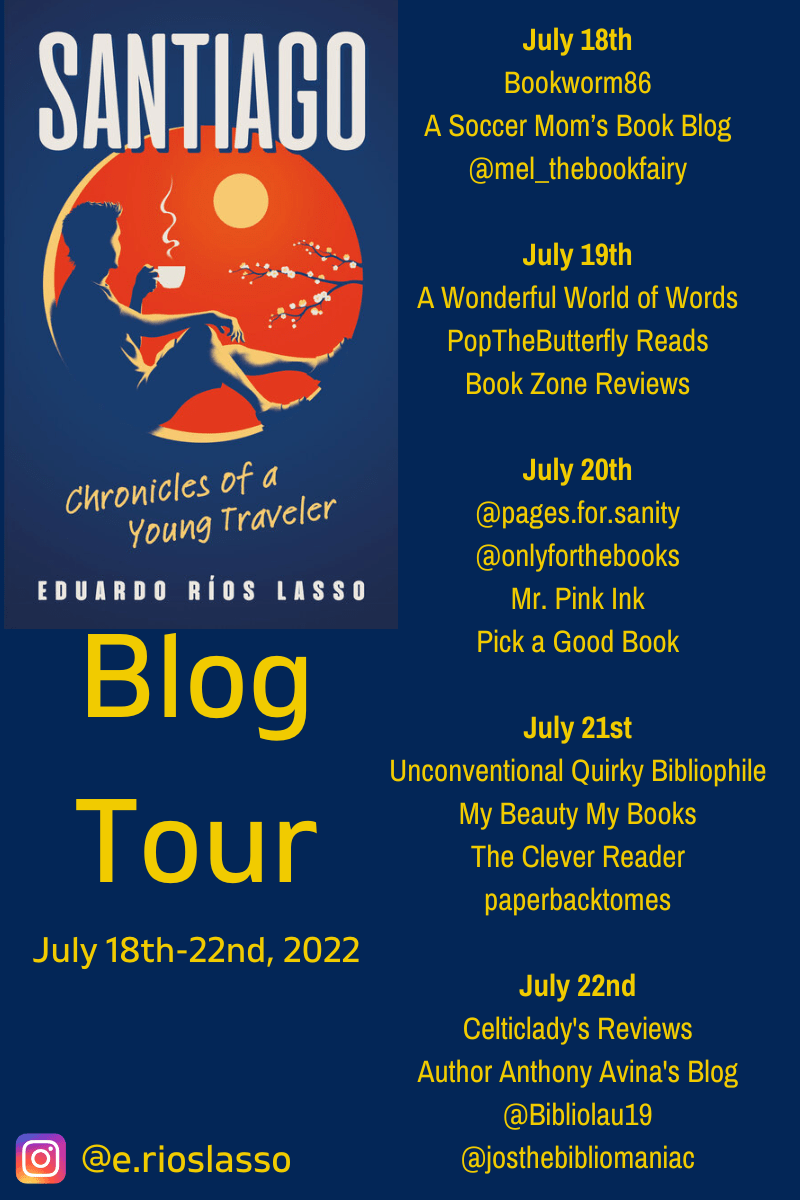
Santiago: Chronicles of a Young Traveler by Eduardo Rios Lasso Review and Interview | Blog Tour

I received a free copy of this book in exchange for a fair and honest review. All opinions are my own.

A shy and hesitant young man takes a giant leap forward to travel the world in search of himself and must contend with family, friends, and seeing someone in a new light as they struggle with their own issues in author Eduardo Rios Lasso’s “Santiago: Chronicles of a Young Traveler”. 

Advertisements

The Synopsis 

Fresh out of college, 26-year-old Santiago has always longed to see the world, but his anxiety gets in the way. How can he possibly travel abroad if he feels sometimes heart-pounding pressure by simply riding a bus? But one day, after years of saving, Santiago courageously buys a ticket around the world. His parents think he’s crazy, but he takes a leap of faith and sets out alone. However, the world he had imagined was far from reality.

Meanwhile, Santiago finds out his best friend Laura, who could not join him on the trip, battles a recently diagnosed autoimmune disease. Will he regret his decision to leave her behind? Will their friendship survive or blossom into something more? On his journeys from New York to Lisbon, Paris to Sarajevo, and Istanbul to Bali, Santiago must overcome his shyness and open up his heart despite facing challenges, such as scams, and confronting complex issues like human trafficking. Join Santiago on a journey of self-discovery and adventure like no other.

The Review

This was such a heartwarming, cautionary, yet character-driven read. The way the author was able to capture the beauty and wonder of travel while also showcasing the dangers and struggles that come with it was so authentic and engaging to read. The themes of travel, anxiety and the journey that friendship often takes were so beautifully explored through Santiago as a protagonist, as well as Laura, and I felt myself feel connected to both characters and their struggles both apart and together. 

What stood out in this narrative was definitely the settings that the narrative took. The wide range of locations that Santiago went to not only expanded the personal growth that he underwent throughout the narrative but was brought to life in such vivid detail through imagery and tone that the different cities and places became characters all on their own. Yet it was how these locations taught Santiago about the world around him that made this story feel so relevant and important, especially when delving into the harsher aspects of international travel such as trafficking. 

The Verdict

Thought-provoking, exhilarating, and emotionally investing, author Eduardo Rios Lasso’s “Santiago: Chronicles of a Young Traveler” is a must-read coming of age and travel fiction narrative. The imagery and emotional depth of the experiences that drive Eduardo, as well as his growing relationship with Laura and all that she struggles with, felt both relatable and inspiring to read about. If you haven’t yet, be sure to grab your copy today!

 Rating: 10/10

Advertisements

About the Author

Eduardo Rios Lasso emerged as a writer during his career as a medical doctor. Born and raised in Panama City, Panama, his journey has taken him around the globe to dozens of countries. Along the way, he found a passion for travel writing that seeks out positive life experiences while also sharing the common interests and challenges that bring different cultures together. Eduardo currently resides in Germany, where he is completing his training in Internal Medicine. SANTIAGO – Chronicles of a Young Traveler is his first book.

Website: http://www.zibarna.com

Instagram: http://instagram.com/e.rioslasso

Amazon: https://amzn.to/3NTV3pk

Goodreads: https://www.goodreads.com/book/show/61134991-santiago-chronicles-of-a-young-traveler

Advertisements

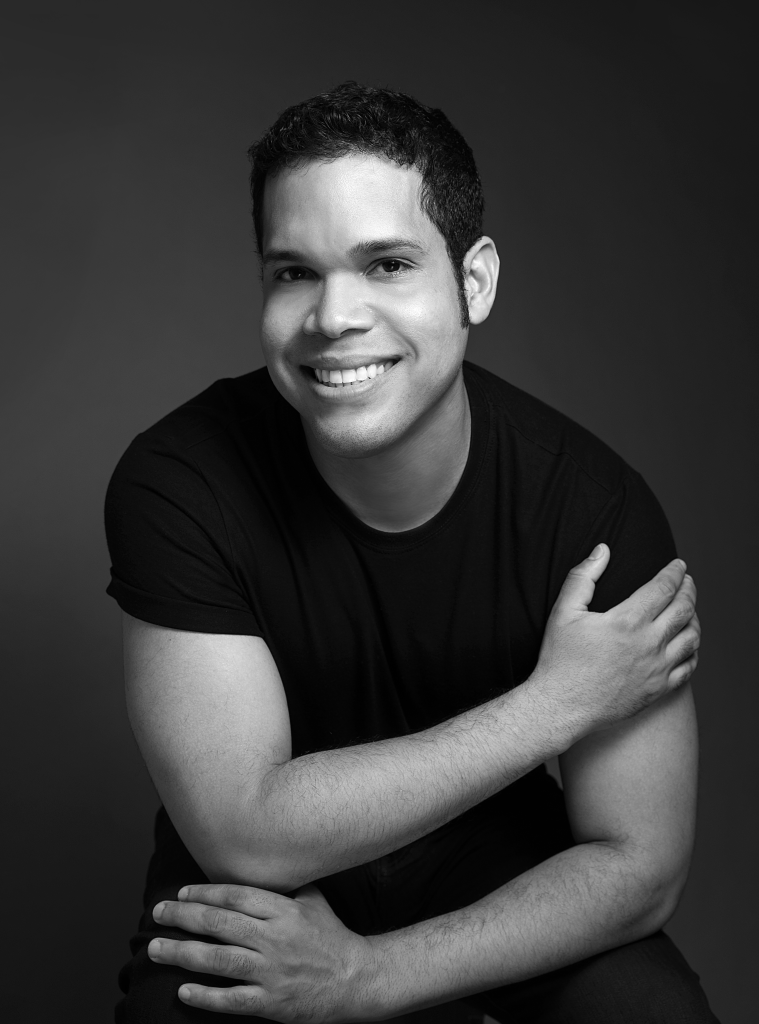
Interview with Author Eduardo Rios Lasso

Processed with VSCO with v3 preset

On writing:

How did you do research for your book?

  • Since this book is my first, I educate myself first on how to write a book. Every book that came to my hands about “how to write a book” was devoured by me. I also attended writers’ conferences to learn more about the different literature and writing genres. I touched on topics like prostitution and human trafficking, which was very hard to show in the book the way I wanted. I made my best effort for it. I interviewed people who work in NGOs with trafficked victims and with people who work as sex workers. Read and inform myself as much as possible about every topic I will discuss in the book.

Which was the hardest character to write? The easiest?

The hardest was probably Laura. Since I wanted (I hope I made it) to show her as a strong woman who could move forward despite moments of sorrow, I hope it can lead young girl readers to stay strong.

The easiest was Santiago. When I came up with the idea, I knew exactly how I wanted him to be.

In your book you make a reference to….how did you come up with this idea? What made you write a book about…?

  • I have always enjoyed writing. I could always communicate better through writing than speaking from a very young age. After being scammed while traveling a while ago, I decided that I would make a blog about traveling. My father has written books too, but law-specific things, so the idea of writing a book was something not strange to me. But the idea of writing this book came up one day when I realized I had just written too much for a blog. I originally planned. Back then was more of a non-fiction book. But then I started to learn how to write a book and how the publishing industry works. I was fascinated with all I could do writing a fiction book but inspired by real-life stories.

Where do you get inspiration for your stories?

  • From my own travel. The more I travel, the more stories and ideas come to me.

There are many books out there about….What makes yours different?

  • My book combines traveling with social issues affecting our cities and where a traveler can potentially make a big difference. And it is also directed to a younger audience.

What advice would you give budding writers?

  • If you don’t know how to write a book and you want. Start writing your idea as if you were talking with yourself; explain and try to convince yourself of what you write. On the way, your creativity will be unleashed. And read, read books; if you know what type of book you want to write, make sure you find excellent examples. And last, get involved in writing groups and get to know fellow writers who support each other. Prepare yourself for it.

Your book is set in (name place). Have you ever been there?

  • My book takes place in 14 different countries! And yes, I have been in every city mentioned in the book.

If you could put yourself as a character in your book, who would you be?

  • I could see myself as Adyn, the character that plays in chapters 7 through 9.

Do you have another profession besides writing?

  • Yes, I am a medical doctor; I work in internal medicine and emergency medicine in Germany, where I’ve lived for the last seven years. It happens that I love both traveling and writing combined. I want to establish myself now as a writer.

How long have you been writing?

  • Continuously since 2016.

Do you ever get writer’s block? What helps you overcome it?

  • Oh yes, I did!. Sometimes just wrote everything that came to my mind, even things that made no sense. Sometimes it did not work, and I had to stop and continue writing after 2-3 days, usually on a day that was not so stressful at work. It always works differently for every people; in my case, the less stress I had, the better I wrote.

What is your next project?

  • I am already working on the second part of Santiago. I am building the story arc of a family saga – more of a local story in Panama, fiction, but as always inspired by real-life stories. But probably the most significant project is to travel west and south of Africa and write a story about my connection as Latinamerican to Africa. That would be my first non-fiction book.

What genre do you write and why?

  • Fiction mostly! Because it allows me to do more, say more, and express more. I also love coming-of-age books because they can teach, inspire, or give a lesson. I am convinced that the generation of the 80s and 90s is our future. They are the ones who can make changes in our society.

What is the last great book you’ve read?

  • The last great book I read was Pachinko von Min Jin Lee. I loved it!

What is a favorite compliment you have received on your writing?

  • That my writing to reach reader’s hearts!

How are you similar to or different from your lead character?

We both love traveling and have a strong desire to see the world but also to do good!

If your book were made into a movie, who would star in the leading roles?

Oh, excellent question! I have to think about Santiago, but Zendaya could do Laura! Hahaha, she is so talented!

If your book were made into a movie, what songs would be on the soundtrack?

  • Oh, I love this question, I would put high hopes by Panic at the Disco, Underdog by Alicia Keys, Love someone by Lukas Graham, Rude by Magic, Imagination by Shawn Mendes.

What were the biggest rewards and challenges with writing your book?

  • The most significant rewards were:
  • The learning.
  • Knowing that I could do it.
  • All the people I got to meet and be in touch with during all these years.

The challenges? Probably was the time since I had some demanding schedules at work and sometimes a little free time where I also had to study. With a lot of work, it somehow worked.

In one sentence, what was the road to publishing like?

  • Tough, very tough, and lonely sometimes.

What is one piece of advice you would give to an aspiring author?

  • To sit and write and believe you can do it, everybody has the potential to do it. It would help if you also have patience.

Which authors inspired you to write?

  • No one in particularly I must say. But I have been reading a lot lately and like a lot Matt Haig, Min Jin Lee and Ocean Vuong.

What is something you had to cut from your book that you wish you could have kept?

  • The scene when Santiago sold his old car to get more funds for his travel.

On rituals:

Do you snack while writing? Favorite snack?

  • Usually, there is only water, coffee, and nuts on my table.

Where do you write?

I can write in any room as long as I am in complete silence. I can write in groups and have done it. But the best of me comes when I am alone with myself.

Do you write every day?

  • No, sometimes I need days in between for an idea to mature.

What is your writing schedule?

Whenever my work schedule allows me. Usually in the evening and on the weekends. I write a lot when I am on vacation; late at night is my best time to be the most creative.

Is there a specific ritualistic thing you do during your writing time?

  • I just try to be relaxed and make sure I will have no distractions while writing.

In today’s tech savvy world, most writers use a computer or laptop. Have you ever written parts of your book on paper?

I write primarily on my laptop, but sometimes an idea comes to me on the street after seeing something as if it was a revelation. Then I need to write that on my mobile quickly before I forget or write it down if I have a notebook.

Fun stuff:

If you could go back in time, where would you go?

  • I have been thinking lately of going back to Bali

Favorite travel spot?

It constantly changes; right now, there is a tied between Lisbon and Paris.

Favorite dessert?

  • Crème brulée

If you were stuck on a deserted island, which 3 books would you want with you? 

  • My book SANTIAGO, because it represents to me many things together. A medical textbook, and the little prince by Antoine de Saint-Exupéry.

What’s the funniest thing that ever happened to you? The scariest? The strangest? 

  • So many have been funniest.

What’s the most courageous thing you’ve ever done?

  • I hiked a mountain in Switzerland and hung literally from a cable over 1000 m high; the slightest mistake, and I was gone! Courageous, but now that I think, kind of scary too, since it was my first time hiking such mountains.

Any hobbies? or Name a quirky thing you like to do.

I enjoy going to the gym. I started recently with Crossfit, and I love it.

If there is one thing you want readers to remember about you, what would it be?

  • That my books are fun, but they also left them with a message that they could put into action at some point in their lives. Be more empathetic to other cultures, especially the ones different than them.

What is something you’ve learned about yourself during the pandemic?

  • Patience! That I need more patience!

What TV series are you currently binge watching?

  • The Korean version of Money heist

What is your favorite thing to do in (current season)?

  • Go for biking and swimming.

What song is currently playing on a loop in your head?

  • At the moment High hopes from Panic at the Disco! Just my mood now.

What is something that made you laugh recently?

  • A Patient at work.

What is your go-to breakfast item?

  • Coffee and Muesli.

What is the oldest item of clothing you own?

  • I tend not to keep clothes for a long time; I give them away after some time. But I still have a white shirt I bought ten years ago!

Tell us about your longest friendship.

My older sister! She has been there like a guardian since day one! Helping me through all my challenges, dreams, wishes, and all!

What is the strangest way you’ve become friends with someone?

  • On a plane!

Who was your childhood celebrity crush?

  • Think I really did not have , boring I know!.

Interview with Author Terry Tierney 

1)      Tell us a little bit about yourself. How did you get into writing?

My writing journey began soon after my early love of reading blossomed. When I was eleven I began writing a sci-fi novel about traveling to Mars, but I didn’t get past the first page where my character spies the planet through his spaceship’s porthole. Always a dreamer. Throughout school and college I wrote for campus newspapers and envisioned a career in journalism, beginning as a sportswriter and eventually launching into poetry and fiction. But my sparce finances and the draft intervened. I fell into many other jobs along the way, particularly in tech, but I tried to maintain my literary trajectory.

Advertisements

2)      What inspired you to write your book?

While I was working full time and going to school, I only had enough brain share for poetry and short fiction. But during those smoky evenings when I sat around the stereo trading stories with my friends, they seemed to enjoy my hitchhiking experiences. At some point I had a Kerouac moment and decided to record my oral history and forge it into a novel.

3)      What theme or message do you hope readers will take away from your book?

In many ways, the Vietnam Era portrayed in Lucky Ride mirrors our current emotional and political landscape, especially how people feel alienated from the establishment and from one another. Returning home from the military, Flash the narrator feels like an outsider who must build a new life. In his case, an unraveling marriage creates further complications, but he retains a sense of humor and hope based on his closest friendships. If we asked him, his message would be to find a relationship you trust and build from there.

4)      What drew you into this particular genre?

I wanted to write a story readers would enjoy, and I was drawn to the structure of a road novel because of its continuous adventure and opportunity for humor. Each ride presents its own challenges, but Flash also draws ever closer to reconciling his marriage and his military experience with his desires for the future. His trip begins with a goal of escape and evolves into much more.

Advertisements

5)      If you could sit down with any character in your book, what would you ask them and why?

In the novel we see the character of Flash’s wife Ronnie though his eyes in his role as first person narrator, although he gathers some perspective from other characters. Because of the pain of her apparent betrayal, Flash is not really an objective observer. It would be interesting to hear more of her side of the story.

6)      What social media site has been the most helpful in developing your readership?

I have learned a lot from studying authors I admire and how they use social media, and I have read several excellent books and attended many courses and workshops. The authority I return to most often is Jane Friedman, who has advice on everything from building a website to preparing a manuscript and querying an agent: https://www.janefriedman.com/

7)      What advice would you give to aspiring or just starting authors out there?

Enjoy the process of writing. The thrill of composing a new poem or story and bringing it into the world is all the reason you need to write. This includes successive editing passes to perfect your words once you have an initial draft. Don’t measure yourself by your number of publications, book sales, or other external factors you can’t control because you’re sure to be disappointed. Just bask in the creative experience.

8)      What does the future hold in store for you? Any new books/projects on the horizon?

With Lucky Ride and my poetry collection, The Poet’s Garage, I feel like I’m living a dream, and I never want the moment to end. My second novel, The Bridge on Beer River, will be published by Unsolicited Press in July 2023, and they will publish my second poetry collection in 2024. In addition to writing new poems and stories, I’m editing the rough draft of another novel.  

Advertisements

About the Author

Terry was born in South Dakota and raised in Minneapolis and Cleveland. After serving in the Seabees, he received a BA and MA in English from Binghamton University and a PhD in Victorian Literature from Emory University. He taught college composition and creative writing, and he later survived several Silicon Valley startups as a software engineering manager. His stories and poems have appeared in over forty literary magazines, and his novel Lucky Ride, an irreverent Vietnam era road novel, will be published by Unsolicited Press in 2022. He lives in the San Francisco Bay Area with his wife, a Librarian from the University of California, their son, and their goofy Golden Retriever. Terry’s website is http://terrytierney.com.

Purchase Links

https://www.unsolicitedpress.com/store/p285/luckyride.html

https://bookshop.org/books/lucky-ride-9781950730933

https://www.barnesandnoble.com/w/lucky-ride-terry-tierney/1139820900

https://www.smashwords.com/books/view/1122846

Social Media Links

https://www.facebook.com/poetsgarage/

Interview with Author V.S. Nelson 

Tell us a little bit about yourself. How did you get into writing?

For some reason, when I was 18, I got it into my head that I wanted to write a book. Being a child who was very focused on maths and science growing up, I wasn’t particularly good at writing. This meant I had to learn how to write while I was an adult. The process was a little shocking, actually. I couldn’t believe the things I didn’t know! Surely I went to school?

What inspired you to write your book?

Death, sadly. I cover this a lot at the end of the book. But after a good friend of mine died at 24, I felt lost. I have been an atheist since I was ten and was happy with the prospect of there being no afterlife. But when my friend died, I was faced with the reality that everything she was was no longer in the universe. That was hard. In a way, I wrote this book to rage against the unfairness of reality. The Archivist is my creation that will keep loved ones tethered to me. It’s a fantasy I can escape into. I hope others escape there too.

Advertisements

What theme or message do you hope readers will take away from your book?

I hope they enjoy the story more than anything. I don’t like books that preach. However, I think it would be difficult for this book not to light some kind of spark inside the reader. What I hope I’ve portrayed is a flawed system, as opposed to something we can all agree is amazing like having superpowers. On the surface, archivists seem like a wonderful idea that we should want to have in our world, but scratch the surface and you learn they only bring suffering.

I suppose then, if I want the reader to take away anything from the story, it is that death is real and one day they will have to face it. First, the people they love, then their own death. They can believe whatever story they need to calm their feelings, but that doesn’t shield them from the truth. Enjoy your life, enjoy the lives of others. We’ve all only got the one. Don’t waste it.

What drew you into this particular genre?

What genre is this? I called it dark fantasy, buy I’m not sure that’s accurate. Death fantasy, perhaps? Either way, I don’t think I was drawn to the genre, I think the book led me there. I wrote the story I wanted to write then when I took a step back, I understood that it was the genre it became. I never set out to write a specific genre, just a story I wanted told.

If you could sit down with any character in your book, what would you ask them and why?

I’d ask Sun-young what would make her happy. Sun has been in my head for a long time and so she feels like a part of me. I want her to be happy. Perhaps if I write a sequel, I could give her that happiness.

Advertisements

What social media site has been the most helpful in developing your readership?

Goodreads has been the best, though you do have to prepare yourself for some brutal reviews. I may not have received any of those myself, but I’m still prepared. I check for them around every corner, waiting to jump out at me and criticize my hard work!

What advice would you give to aspiring or just starting authors out there?

Work at your own pace and write your own story. Writing won’t make you rich. Make sure you have a job, or better yet, a career, and write for your own enjoyment. If you are self publishing, put your money where your mouth is. Don’t toss out some nonsense on KDP without going through several rounds of professional editing. Edit your story, pay for a professional cover and be exacting with what you want. When you get a great review, let that warm feeling of satisfaction run through you for day. When you get a bad review, tell yourself that no story is loved by everyone, buy yourself some chocolate and get on with your life.

What does the future hold in store for you? Any new books/projects on the horizon?

I have another book in second draft that I hope to get out in two to three years. This one is middle grade science fiction about a girl who sells time and lives with a robot at the base of a space elevator. I’m really excited by it. Totally different to The Archivist, but then I like books to be different and for authors to explore the wider universe of stories.

Advertisements

About the Author

V S Nelson writes unconventional middle grade and young adult fantasy, science fiction and supernatural stories for readers who enjoy something a little strange.

Their first story was The Keeper of Portals, a middle grade fantasy/sci-fi with plenty of portal jumping and time slipping. Their second story, The Archivist, is a young adult dark fantasy all about death and what happens after.

V S Nelson loves big ideas, fantastical concepts and stories that unsettle the reader and set them thinking about something new.

V S Nelson lives in Winchester with their other half, two children and three cats. When not writing, they’re either working as a theoretical physicist or building Lego.

https://vsnelson.com/

Interview with Author Jeff Parsons

1) Tell us a little bit about yourself. How did you get into writing?

One day, in Toastmasters, we were dared to follow our dreams. I’d always wanted to become a writer. So… I gave it a try. It was difficult, but I wrote up a story and submitted it to an online horror magazine. My story didn’t get accepted, but the editor provided me with some very direct and useful feedback. Encouraged, I kept working on my writing skills. After about a half-dozen story attempts and submittals, I was finally rewarded with an acceptance letter. I did it. I was an author! It took a while for this accomplishment to sink in, but when it did, I realized I could do this. I could keep this going. Ever since then, I’ve been trying new methods to improve my wordsmithing. Sometimes it works, sometimes not, but the overall trend has been onward and upward, which makes me deliriously happy.

Advertisements

2) What inspired you to write your book?

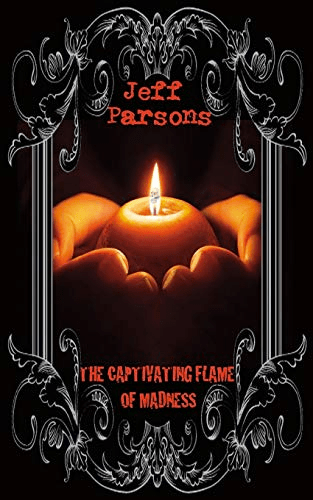
I like a challenge! That’s why I took a liking to fiction writing. My book, The Captivating Flames of Madness, is a collection of short horror stories set in the past, present, and future. Some of the stories also qualify as alt-history or sci-fi. 

The inspiration for my stories? I write about the things that interest me. Staying interested is important in life, but also critical for writing. When I follow my interests, the words flow easily. And it’s fun. Essentially, I’m inspired to write about things that interest me. 

I’m lucky, I don’t have a problem finding ideas anymore. [Disclaimer: not all my ideas are good ideas.] I observe what’s going on around me and then think about what would happen if something changed. The ‘what if’ factor has been a game changer for me ever since the beginning. The challenge now is to find credible plots for my ideas.  😊 

3) What theme or message do you hope readers will take away from your book?

From my book jacket: “we’re all just one event, mishap, or decision away from things that could change our lives forever.” The big takeaway: don’t take life for granted. Anything can and will happen as my stories show. Regardless of what happens, don’t let yourself be afraid. Follow your dreams. Dare to win.

4) What drew you into this particular genre?

As a young child, I didn’t like feeling afraid, so I decided to do something about it. Face my fears. I’m certainly not fearless right now, but my fears don’t control me like they used to. Horror is the perfect venue for experiencing your fears and living through it, overcoming them while becoming braver in the process. 

I started out reading horror comics. I loved the stories and artwork. They showed me the mystery of the vast unknown world out there. It was eye opening. They also showed me how to interact with the world (at least when it got scary). That doesn’t mean I personally gravitate towards a horrific lifestyle. On the contrary, I’m a fairly cheerful and optimistic spiritual person, but I do love a good scary story. 

Advertisements

5) If you could sit down with any character in your book, what would you ask them and why?

My WWII short story Lost Souls involves the fate of a German submarine sailor named Hans. At the story’s end, he’s killed by ghosts seeking vengeance. I’d like to talk to him about what happens after death. I’d ask him, from a spiritual perspective, if we’re forgiven for protecting those we love, our neighbors, our country. At what cost is that acceptable? And under what circumstances? 

Why would I ask? As an engineer, I’ve done my part to protect my country; so, I wonder…

6) What social media site has been the most helpful in developing your readership?

Facebook has been there for me since the beginning of my writing adventure. I created an author’s webpage where I post my new story achievements as well as writer’s tips and humor. This webpage also acts as a go-to site when editors ask if I have a social presence for my work. Also, interacting with other Facebook people provides opportunities, useful networking for wordsmithing, ideas, and marketing.   

Also useful is reaching out to independent writer’s blogs, such as this most excellent blog. 

In the end, I hope we can help each other, become better people as a result, and learn something more about writing.

7) What advice would you give to aspiring or just starting authors out there?

Do yourself a favor… don’t believe you’re not succeeding if you’re not chugging out reams of perfect prose every day! Research, brainstorming, thinking deeply about ideas, crafting a plot, wordsmithing the prose, and editing editing editing… all of this contributes to writing. Just work at it. That’s how you can become a better writer, day by day. Have fun! 

Don’t give up. One of my stories was rejected 11 times. And in one response, with extreme rudeness. When it finally got accepted at professional rates, I realized that the story was actually quite good, and that there was probably something else going on: the editor may not have been infatuated with the story the way I was, it’s similar to other stories they already had, or it’s a wrong fit for the theme they’re looking for. Really, in the absence of feedback, who knows? Or, to be brutally honest with myself (ouch), other reasons might be I didn’t do the bang-up job I thought I had on the story or I didn’t read the submittal specs close enough. My point, be persistent.   

8) What does the future hold in store for you? Any new books/projects on the horizon?

I’ll continue writing short stories for small press magazines. My pattern so far has been to collect these stories into books. 

I’m working on getting my first novel published. The story is about mankind’s first contact with aliens. I think that topic is fascinating; as always, write where the passion takes you. 😊

Advertisements

About the Author

I have over thirty years of scientific, technical, and fictional writing experience. In addition to my two short story books, The Captivating Flames of Madness and Algorithm of Nightmares, I’m published in The Horror Zine, The Horror Zine’s Book of Ghost Stories, The Horror Zine’s Book of Werewolf Stories, Aphelion Webzine, Year’s Best Hardcore Horror Volume 4, Dark Gothic Resurrected Magazine, Chilling Ghost Short Stories, Dystopia Utopia Short Stories, Wax & Wane: A Coven of Witch Tales, Thinking Through Our Fingers, The Moving Finger Writes, Golden Prose & Poetry, Our Dance With Words, The Voices Within, Fireburst: The Inner Circle Writers’ Group, Second Flash Fiction Anthology 2018, SNM Horror Magazine, and Bonded by Blood IV/ V.

Facebook: https://www.facebook.com/OfficialJeffParsons/

Amazon: https://www.amazon.com/Jeff-Parsons/e/B00FIOQCY6%3Fref=dbs_a_mng_rwt_scns_share

Goodreads: https://www.goodreads.com/author/list/6860100.Jeff_Parsons

Interview with Author David A. Neuman 

Tell us a little bit about yourself. How did you get into writing?


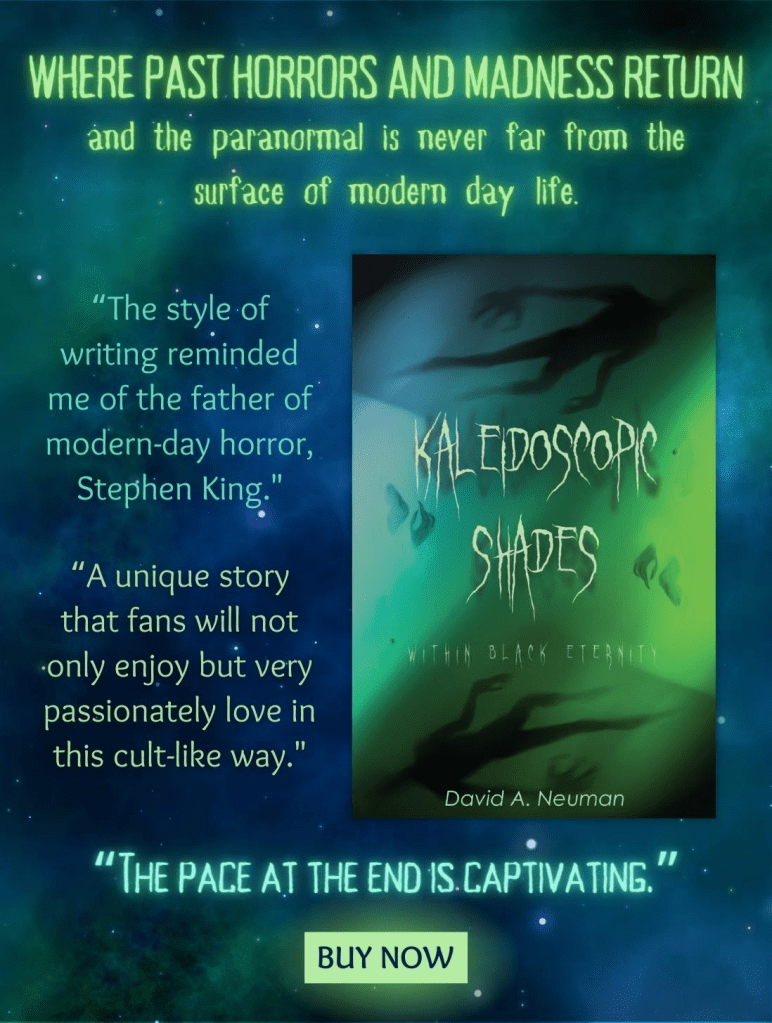
I’m not sure when it began – perhaps in another lifetime – but one significant event sticks in mind: when in year six or seven, the teacher asked the class to write an essay on a topic of their choice, much to the student’s mortal objections, except for goody-two-shoes. I wrote about a tree in a field and described it to the inch degree. And – ta-da! – received top marks. Whether it be a tree or shadows lurking within other dimensions, the urge to present folks with a doorway in which to escape remains my driving force. KALEIDOSCOPIC SHADES, however, remained mothballed for a decade until a lovely ex-hippy, ex-school principal, and all-around good guy – Hi there, Brian Harris! – suggested that I get off my butt and do something about it.

What inspired you to write your book?


Part of my childhood was spent in a house where unseen guests strutted about, opening and closing all amount of the doors and windows and even went as far as rescuing me, if not the entire family, from potential disaster. Awakening one morning, freezing cold – as my folks had made the mind-numbing decision of us moving us into the Adelaide hills where night temperatures kept one in cryogenic status year-round – I was greeted by several oddities 1.) My electric blanket had caught alight during the night and had burned a patch in the bedsheets and mattress and 2.) The electrical cords feeding the blanket had been unplugged and pulled from the socket. The rest of the family were still sleeping blissfully unaware when this discovery was made. Oh – and by the way, it’s not true, you know? The dead… they can hurt you just as easily. And badly.

What theme or message do you hope readers will take away from your book?


Ah – you know, that is both an interesting question as well as one which draws out a simple answer: we are all in this together, and when we all start learning that – if mankind as a whole ever will – we’ll discover regardless of sexual orientation, of gender and desires, of likes and dislikes, of the color of our skin or the gods we genuflect to, each and every one of us experiences pain, love, happiness, and sadness and by turning one’s back on someone in need only cheapens humanity.

Advertisements

What drew you into this particular genre?


The undying intrigue in what lies beyond. I believe I just about absorb every ghost-hunting doco, paranormal doco, and everything in between which can’t be explained. Yep – it’s pretty much part of my DNA and scares the pants off my lovely GP whenever I ask for a blood test and he gets the results! There is so much anecdotal evidence out there that screams at us to take notice – or suffer the consequences of ignorance.

If you could sit down with any character in your book, what would you ask them and why?


Huh – I’ve never given that a thought. The characters were such an integral part of my life for as long as I was with them through their journey. I guess I would ask both Joshua and Leon why the hell they just don’t open up about their feelings for each other. I could also ask Bob and Sue if there were any substantial differences between Adelaide and California. And, by the end of the ordeal, I’d ask each and every one of them how they were going to approach the rest of their lives having survived the ravenous horrors of another reality.

What social media site has been the most helpful in developing your readership?


Ha-ha-ha! I’m on LinkedIn which automatically hooks up to Twitter, but I don’t seem to be very good at socials. I feel very clumsy as if I’m soliciting people in some weird way. There’s a giveaway I’m involved in at the moment on Crave Books in both sci-fi and horror genres and it took me an age to post the link on LinkedIn. Therefore, I’m pretty much talking to myself… seriously, I have a number of followers, and if we all got together we could have a quaint dinner party. But – boy howdy – I’d love these special people to purchase Kaleidoscopic Shades and then post a review. Who knows, that might even kick-start things.

Advertisements


What advice would you give to aspiring or just starting authors out there?

Find your style, and avoid following a fad. Be yourself and express yourself in your own unique way. And don’t be fooled by marketers once you’ve finished. Check. Double-check and then triple-check. Never pay a cent until you know what that marketer can truly do for you besides a bunch of meaningless promises.

What does the future hold in store for you? Are any new books/projects on the horizon?

A second novel is now complete in manuscript form after some 14 months and 70 hours a week. It’s loosely a sequel to KALEIDOSCOPIC SHADES and, hopefully, breaks the stereotypical rules of sequels in that it explores far greater avenues without becoming lost in its own importance or merely running over trodden grounds. THE PENNY ARCADE is, once again, a thriller/horror that carries a hint of a psychological thriller. It’s primarily set in rural surroundings and focuses on the unworldly happenings taking place on Solemn Street. Situated on the very outskirts of a little township, it has a playground – with one helluva nasty reputation. The only visitors that roam it now are bloodless and don’t particularly care for the slippery dips and swings, leaving them as sad, abandoned relics, in preference for exacting revenge. Whilst a hitch-hiker from Earth’s beginning once again rises to the surface to satisfy its dark needs.

Advertisements

About the Author

Born in Adelaide, Australia, David A. Neuman was gifted a vivid imagination that continues to this day to distort memories of childhood. In the late-seventies, he left Norwood High School as an underachiever after his parents had moved from the burbs into the hills. Too easily distracted. Too ready to dream beyond the windows of the classroom, and journeyed from one college to another, graduating from Flinders University with a graduate certificate in behavioral science. Though his visible passion lay in lending a hand to others overcoming their physical and mental obstacles, he remained a dreamer.

Turning to write early in life to express himself and give his imagination a playground upon which to run, odd scraps became serious tomes about 30 years ago and would have remained mothballed when the suggestion was raised that he should do something about it, debuting Kaleidoscopic Shades – within Black Eternity two years afterward.

David continues to live in Adelaide, South Australia, where he remains a child at heart, accepting everyone regardless of their sexual orientations and their take on this big, fantastical universe – understanding that each and every one of us is in this together.

Interview with Author Chad Miller

Tell us a little bit about yourself. How did you get into writing?

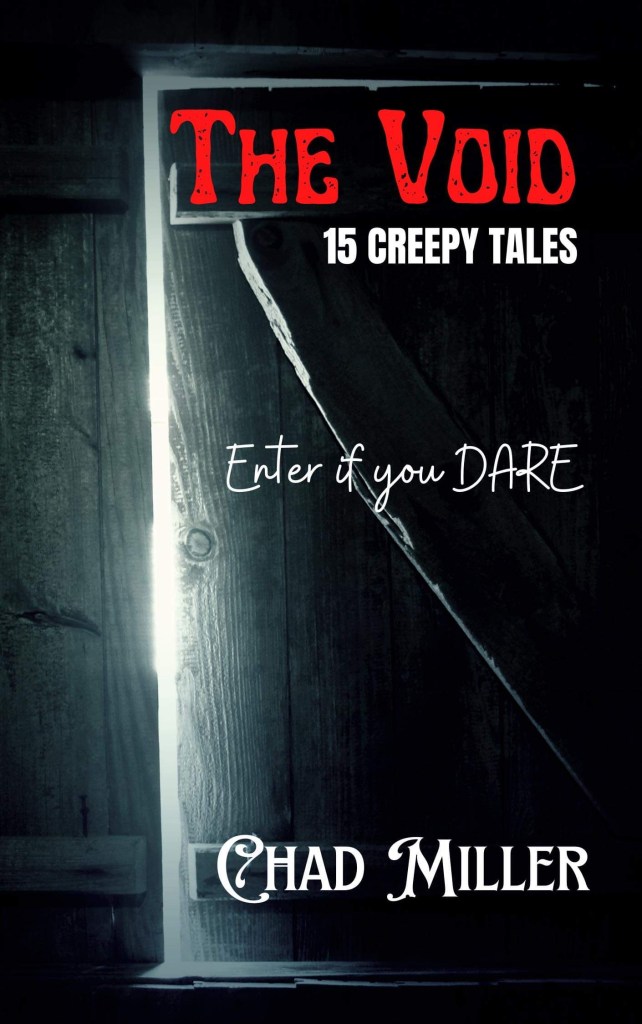
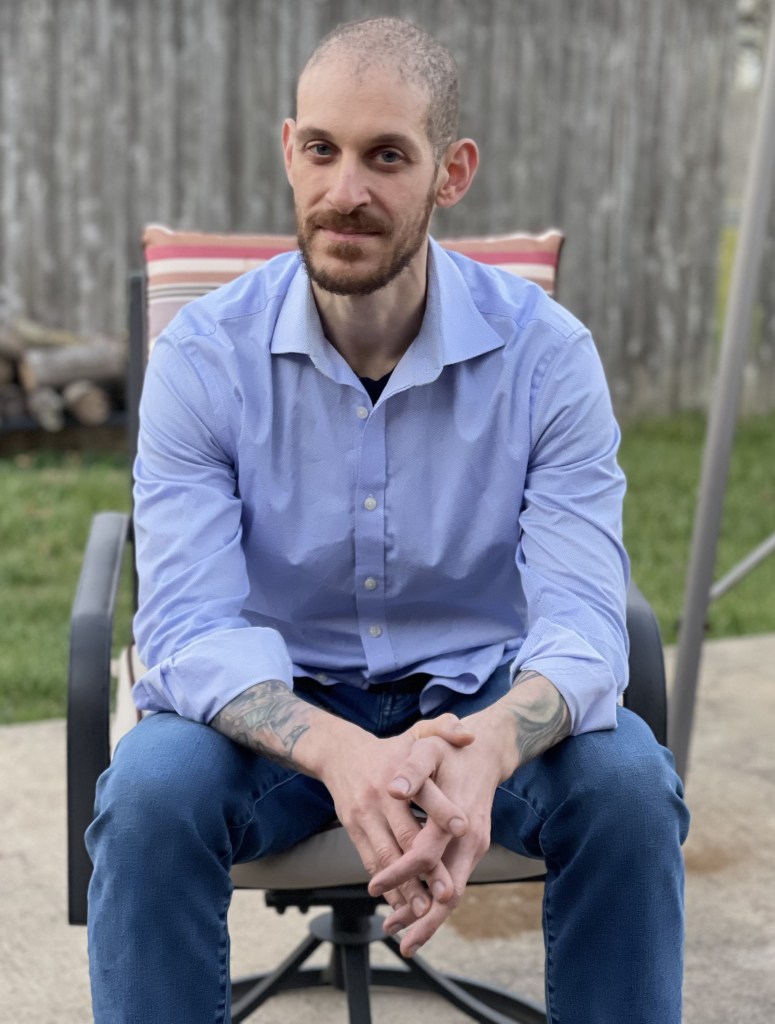
I’m Chad Miller, I’m originally from Philly and I’m a pharmacist. I live in Delaware with my girlfriend, Natasha. I first got into writing after I started reading for pleasure. The first books I picked up were the Shining and Cat’s Cradle (they’re very different from each other). I was in college at the time, struggling with my classes, got kicked out of the dorms (long story), and my friend, DK, wrote a short story and it blew me away. It was so well crafted, so interesting and it stuck with me. Even though we were interested in different subject matters, this gave me the inspiration to start writing on my own. I sat down and wrote a story, which an adaptation was included in my current book, The Void, and I’ve never stopped writing. That was 25 years ago.

Advertisements

What inspired you to write your book?

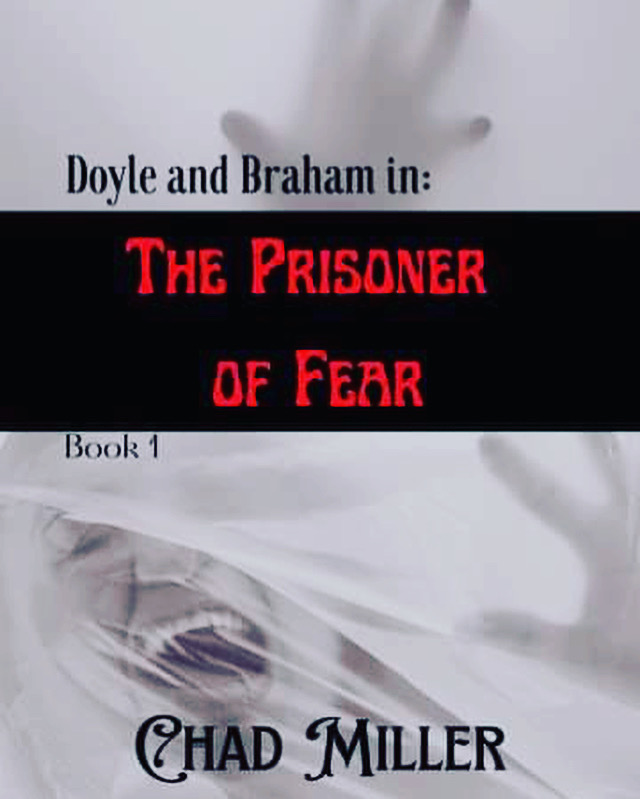
This book, The Void is a culmination of some of my favorite short stories that I have written over the past 25 years. My full-length novel, The Prisoner of Fear, is coming out on October 1st and my publisher (Hear Our Voice) and I wanted to get my name out there pre-release. Before The Void, I’ve had several short stories published in print anthologies and online, but nothing on this scale. Writing is my passion and these 15 tales in The Void show my writing journey.

What theme or message do you hope readers will take away from your book?

I want some of the themes, morals, and feelings to stick to the reader, much like DK’s story stuck with me so many years ago. I want to elicit emotion, whether it be fear, sadness, or laughter. Most of my writing is dark, but I try to show a human element in my characters, something the reader might be able to relate to, to empathize. I don’t want to give the reader nightmares, I want to cause them sleepless nights as my tales haunt their thoughts 🙂

What drew you into this particular genre?

There is so much potential in horror. Yes, there are the slasher, vampire, zombie, and werewolf books, and there is definitely a need for these, but I tend to go to the more cerebral. I’m not tied down or boxed in relying on historical accuracies or limited to the physical world. The palate is literally wide open. I feel horror taps into human emotion, much like comedy does. You have to set the groundwork and have a low build to reach that crescendo, the high water mark.

Advertisements

If you could sit down with any character in your book, what would you ask them and why?

In my story Always There, I’d like to meet the ghost, Henry Keijman. First, I would love to learn about his journey in the afterlife, as I’m not a believer in ghosts, I think meeting one would blow my mind and I’d have a million questions. What did he see? Is there a concept of time? Also, he was a prisoner in the Holocaust. My Grandmother, Helen, was a Holocaust survivor so this subject matter runs deep with me. Recently I found an hour-long interview with my Grandmother with the Holocaust museum discussing in detail her experiences. I’d love to hear more of Henry’s story and hear how it related and differed from my Grandmother’s.

What social media site has been the most helpful in developing your readership?

So far, I’d say Facebook. There are so many writer forums and groups that are so helpful and supportive and helped me find several outlets. Now, I’m moving my focus to Goodreads as it is full of readers. I’m, currently learning how to build my base and use this platform to grow my audience. This is all a learning process. Recently, I got into the conversation about the thin line between advertising yourself verse Spamming, and where that line is. I’ve put out a few Facebook ads and most of the feedback was positive, but there are some trolls out there, which is an interesting experience.

What advice would you give to aspiring or just starting authors out there?

I’d say two things. Just write. Don’t listen to others, don’t listen to the doubt in your head, just get something down on the page. For me, writing isn’t painting a picture, it’s whittling. Sometimes it’s painful to start, and at first, it looks crude, but as the story gets honed, you can see the art come into view. Secondly, once you think you’re ready to publish, do your research. Whether you self-publish or go traditional (there is no wrong avenue) put in the work to how to be successful in this endeavor. Don’t just put it out there into the ocean and hope to be discovered, hope for a miracle. Odds are without putting in the legwork your work may get lost into the abyss, into the void (he-he, get it?).

What does the future hold in store for you? Are any new books/projects on the horizon?

My new book, The Prisoner of Fear is due out on October 1st, and its follow-up, Paroxysm of Fear will come out a few months later. This is a horror novel set in the late 1800s in Philadelphia and follows John Doyle and Thomas Braham as they investigate mysteries that the authorities deem too mysterious to investigate. There are monsters, insane asylums, and suspense. I’d say it’s a cross between Dracula and Sherlock Holmes. My current work in progress is a series of 3 Novellas, called Cerberus. I’d call it a spaghetti western with all its characters based on Greek mythological Gods. What is currently on my mind is a story based on a loose alliteration on Lizzy Borden. It will be called, Confession, but right now it’s just swimming in my mind.

Advertisements

About the Author

Chad Miller has a B.A. in Psychology from Syracuse University and a Pharm D from the University of the Sciences in Philadelphia. He’s a pharmacist and lives in lifeless Delaware with his girlfriend, Natasha and her daughter, Sasha, and his three kids, Killian, Willow, and Halina. His novel, The Prisoner of Fear, is being published by Hear Our Voice and will be out fall of 2022. His short story collection, The Void is available on Amazon now! His short story, The Thorn, is published by Sweety Cat Press and is included in the anthology, Beautiful: In the Eye of the Beholder and is out now available on Amazon. His short story, Guilty Pleasure, is published by ILA magazine and is out now. His story, The Nick was published in The World of Myth Magazine and won the story of the month. His story, Diseased, will be included in the anthology, Movement: Bodies in Motion, and will be out 06/01/2022. His story, Last Victory and the Manicure, will be included in the anthology, Year Four and will be out 01/23.

https://www.facebook.com/chadmillerauthor

The Void

Interview with Author John May

Tell us a little bit about yourself. How did you get into writing?

Fame and fortune haha. In my spare time, I started writing stories and creating comic strips around the age of ten or eleven. When life wasn’t fun, creative writing was my escape as a child. It was a great outlet for my imagination and a way to express myself untethered from the restriction of my English teachers because not only did I come up with some wild stories, I was also a very creative speller which drove them crazy.

As a teen, I became an avid reader. Believe it or not, I read all of Charles Dickens’s works while riding on a bus to my after-school/weekend job in a restaurant kitchen. But I think it was Hemmingway’s books that really inspired me to write longer stories. I wanted to be that storyteller. It wasn’t however, until the author of the series of books that I was reading to my children died that I began writing. The kids were upset there would be no more books, so I took it upon myself to write something similar for them as a Christmas present. The only problem was that the short story turned into a novel and with my busy schedule as a doctor, it took two years to complete. By then, my older son was “too old” for it. I decided after my youngest grew up, that although I enjoyed writing my children, I really wanted to write for adults.

Advertisements

What inspired you to write your book?

My family and I experienced the panic and chaos created by the enormous North East blackout of 2003. We were sitting by a campfire completely oblivious until a neighbor approached carrying a shotgun telling us that most of North America was dark. He said it was a Russian cyberattack. My twelve-year-old son couldn’t sleep that night as he was frightened that we were under attack and that enemy soldiers were breaking into the house. That feeling of being in the dark, not knowing the truth was truly terrifying. For the next five days, our part of the world was not functioning – no credit cards – no cash – no ATMs working – the gas pump wouldn’t pump – store shelves were empty – the experience still haunts me and played a large part in motivating me to write Lethal Keystrokes.

In addition, I have always had an interest in technology and computers. In fact, before medical school, I worked as a programmer for IBM. As a physician, I became concerned about the impact of technology on children i.e., too much screen time. But with the intrusion of social media and the ‘internet of everything,’ I feel there is too much connectiveness without true human contact. My biggest concern outside the medical/social sphere is our security – individually and collectively as a nation. There are too many electronic eyes and ears out there. Are they helping and protecting us or making us vulnerable to those who wish harm upon us?

What theme or message do you hope readers will take away from your book?

I hope that this book causes people, companies, and governments to think about their digital security. We also need to be aware that the voids, created by Western nations in places like Somalia, where there was intervention and then complete withdrawal, are filled by groups that could become terrorist organizations.

What drew you into this particular genre?

To be honest, I was attempting to write a very emotionally charged true-life novel about some of my experiences in cancer and palliative care. It was tough. I needed to step back and ‘reset’. Previously, out of a more academic interest I had researched some of the key political and technological issues key to Lethal Keystrokes. I took that information and started writing something that was pure entertainment, so fast-paced and exciting that you can’t put it down and a total escape from the trials of day-to-day life. Writing it worked wonders for me and I hope that everyone that reads Lethal Keystrokes enjoys immersing themselves in the action. 

If you could sit down with any character in your book, what would you ask them and why?

That is an interesting question. I’m somewhat surprised by my answer. It is not the main antagonist but his sister that I found the most fascinating and challenging character to write, and from the reaction of a few earlier readers, they agree with this choice. She starts out with the same vitriol as her older brother but as she spends more time in Western society, she stops focusing on all its flaws and begins to appreciate the positives, including the opportunities for women. She has to battle through the conflicts between her traditional role that involves support for her brother and her own journey to personal freedom. How does she bridge the chiasm between Islamic culture and her growing acceptance of America’s ideals?

What social media site has been the most helpful in developing your readership?

Marketing has changed so much. If you aren’t good with social media, you’re doomed so I embraced it despite my misgivings about technology. I do not profess to be an expert but Instagram has been quite useful as well as Twitter. Still, I really don’t like the feeling of anarchy – everyone has their own truth – that exists out there in the digital world. Bottom line:  technology is a tool, not a lifestyle.

What advice would you give to aspiring or just starting authors out there?

Write a one-page, beginning-to-end, synopsis of your plot. Stream of consciousness writing is unlikely to be successful. Writing toward a known conclusion ends up moving you farther, faster and easier than just sitting down and pecking away, hoping that it will all fall into place. If you can’t come up with the ending you don’t have an idea worthy of your time and energy. And work it is. A novel is much harder than a short story. Keeping an audience engaged for 300 pages is no easy task. So have a complete idea and be disciplined by writing something every day when possible. 

What does the future hold in store for you? Any new books/projects on the horizon?

I’m still writing the book about my medical experiences.  I have also started a second book featuring the heroes from ‘Lethal Keystrokes’ as they combat a threat to America of a different nature. Hint: It will use more of my medical knowledge.

Advertisements

About the Author

John D. May was born in London, Ontario. He has balanced multiple passions over his life, including his work as a biologist, his career as a physician, his volunteer service at medical outreach clinics in Guatemala, singer-songwriting, and storytelling. He has written several songs for well-known Canadian artists and released two CDs, available on iTunes and Spotify under the name Johnny May. His time is divided between his rural farm property near Toronto and the south of France.

https://linktr.ee/JohnnyMay

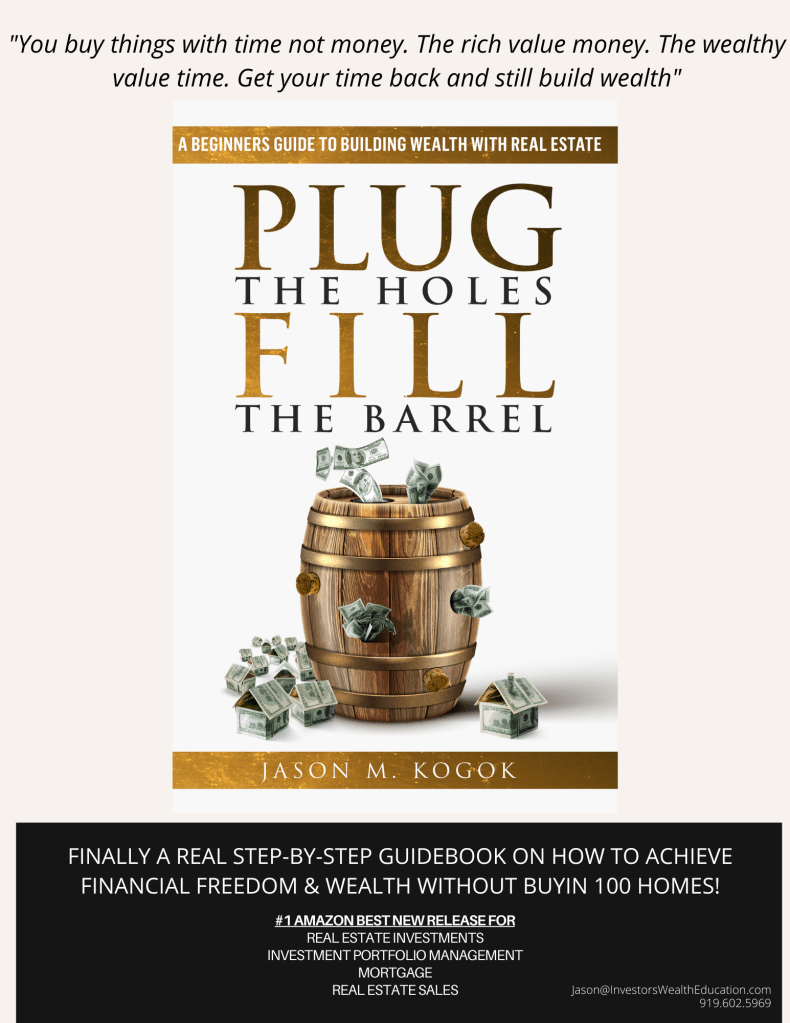
Interview with Author Jason Kogok

1) Tell us a little bit about yourself. How did you get into writing?

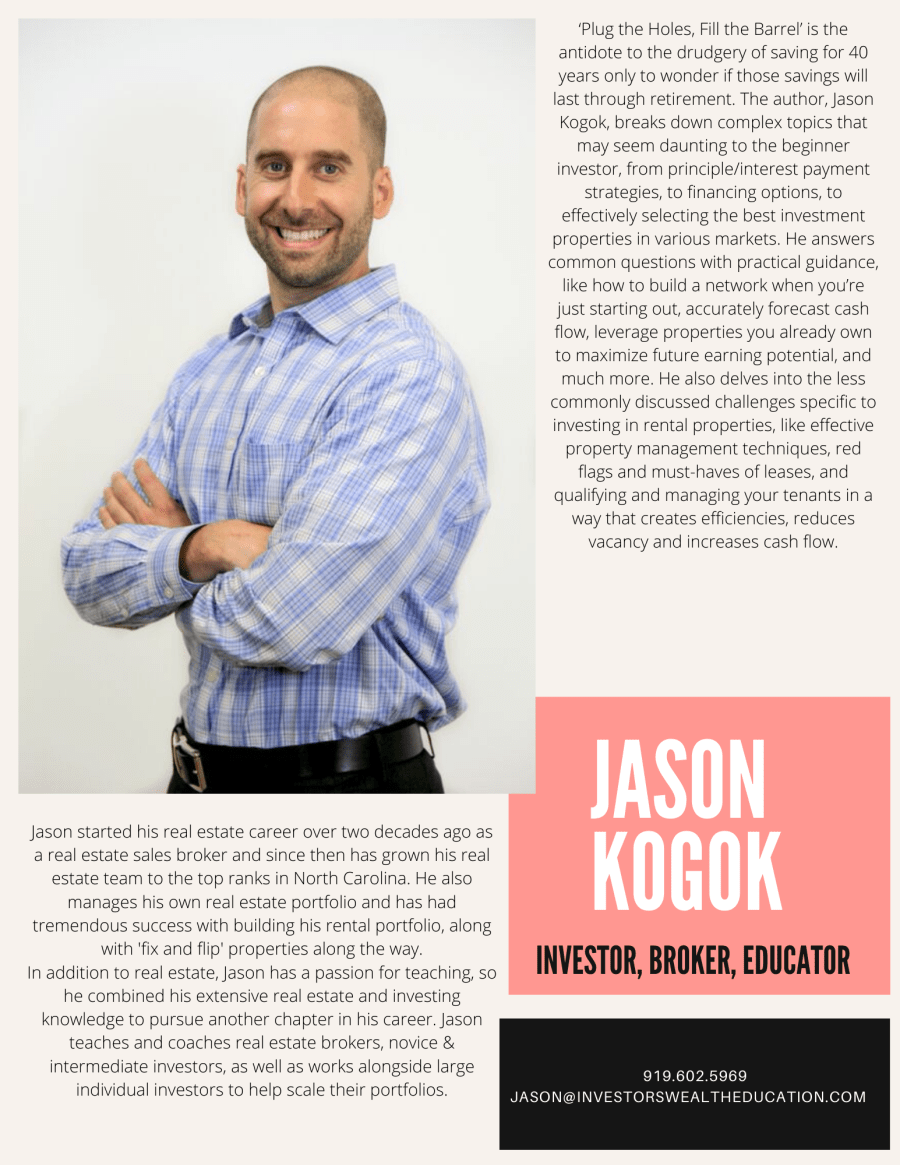
I grew up and went to college in Maryland, then shortly after moved to Raleigh, NC. I started in real estate sales and investing in 2002 and really enjoyed the investment side, along with renovating projects. After about a decade of working with clients and investors alike, I realized there was a lack of direct, easy to comprehend and in-person training for novice investors to learn the ropes without being upsold into future programs. I started teaching to give people a trusted, reliable source for investing advice. My teaching progressed into various courses and in doing so, I started writing the content. That was really my first foray into writing. 

Advertisements

2) What inspired you to write your book?

As I was teaching, I noticed that everyone learns at different rates and it would be great if I could take all my teachings and turn them into one clean source, such as a book. Over the years, I’ve seen thousands of books written on the subject, so for my book to stand out, or at least be relevant, I knew it had to be something that the novice investor could not only understand, but feel confident in performing my lessons on their own. I was inspired to help the average person build wealth and secure their financial future. I wasn’t interested in selling an unrealistic goal of owning 100 homes or a large apartment complex, but rather simply a few homes owned over the course of a decade or two that could really change the long term trajectory of someone’s finances.

3) What theme or message do you hope readers will take away from your book? 

There are 2 things I want the reader to get. The first is motivation. Anytime you try something new, especially when it involves using your hard earned money, you have to be motivated. The second is a feeling that investing in real estate really isn’t that tough or complicated. When broken down into smaller, realistic steps, I think people will realize that truly anyone can do this. I want the reader to walk away motivated and then take action!

4) What drew you into this particular genre? 

This is all I know, lol! As a real estate broker, investor and teacher, I wouldn’t be able to write a book on anything else!

5) What social media site has been the most helpful in developing your readership?

I’m not a huge social media person, however I do realize it’s place in the marketing world. Facebook has been helpful just because it’s a place where people know me and thus, trust that if I wrote a book, it may be worth a glance. We do marketing on platforms such as Amazon and reaching out to national bloggers and book reviewers, but the book has gained most traction via word of mouth and positive reviews about the book. At the end of the day, if the writing is solid, people will find it; or at least I hope so 🙂

6) What advice would you give to aspiring or just starting authors out there? 

Make a plan and understand the self-publishing process. I had to create a pretty solid plan for the flow and content of my book or else I would just be aimlessly writing with no direction. I think that was absolutely critical for me to actually complete the book in an effective way. The other item is understand the self-publishing process. Just like real estate investing, it’s not super complicated and anyone can do it, but you really have to take the time to understand the process or you may burn a lot of money and time unnecessarily. 

7) What does the future hold in store for you? Any new books/projects on the horizon? 

No new books currently in the works; this one kind of mentally exhausted me. It took 20 years to gather enough information and confidence to write this one, so I may be a few years out before I follow up with another one. In the meantime, I’m continuing my real estate career and continuing to invest in real estate and teach as many people as I can that they can do it too!

Advertisements

About the Author

Jason started his real estate career over two decades ago as a real estate sales broker and since then has grown his real estate team to the top ranks in North Carolina. He also manages his own real estate portfolio and has had tremendous success with building his rental portfolio, along with ‘fix and flip’ properties along the way.

In addition to real estate, Jason has a passion for teaching, so he combined his extensive real estate and investing knowledge to pursue another chapter in his career. Jason teaches and coaches real estate brokers, novice & intermediate investors, as well as works alongside large individual investors to help scale their portfolios.

Jason lives with his family in Raleigh, NC.

https://www.investorswealtheducation.com/