1) Tell us a little bit about yourself. How did you get into writing?
I’ve written for as long as I could remember. It probably comes from a deeply embedded love of story. At some point you want the story to keep going, or to have different ideas about a story that you want to explore on your own. From there, you find your own stories to tell.
I spent six years as an indie author and publisher. There’s a lot of freedom in that. I explored whatever genre I felt like. Eventually it felt like I’d achieved everything I could as an indie author and I wanted to try my hand at traditional mainstream publishing.
3) What theme or message do you hope readers will take away from your books?
Honestly I don’t write to spread messages or themes. There is no hidden agenda in my work. That being said, any good piece of art can be enjoyed on multiple levels. The casual reader will be entertained by a good story. The ones who want to go deeper will find more to it. I’ve always been a fan of layers and subtext, but that is not for me to point out. They will find it if they look.
4) What drew you into this particular genre?
It’s my wheelhouse. I’m a twenty-year police officer and still a full-time detective. This genre allows me to focus on writing without having to stop and look up certain procedures or terms or do research like I would in others. The background information is baked into my brain. It opens the track up wide.
5) If you could sit down with any character in your book series, what would you ask them and why?
I already know what they’d say. They say it in my head. Anything I don’t know is something I’m waiting to find out later.
6) What social media site has been the most helpful in developing your readership?
Any of the normal sites will do. It’s all in your approach. I keep it casual and post the things I enjoy. I’m not trying to gain new readers via social media. If people read my work and enjoy it enough to seek me out on social media, I’m glad to get to know them. I hope they like hearing about boxing and Star Wars, because that’s pretty much what I talk about on there.
7) What advice would you give to aspiring or just starting authors out there?
The basic advice is fairly simple. Real authors finish. I see too many aspiring writers pining over unfinished manuscripts. Too many workshopping first chapters. Too many worried about agents and publishers and everything that isn’t important yet. Finish your book. Set it aside. Rewrite the entire thing. Have it edited by someone who doesn’t mind hurting you. Make it something worthy of standing on the bookshelves next to the people you admire. Until you finish and have a completed book, you haven’t done it. If you haven’t done it, forget everything else and go do it. Once you’ve done it, go do it again.
8) What does the future hold in store for you? Any new books/projects on the horizon?
THE THIEF OF ALL LIGHT paperback arrives this summer. Then, AN UNSETTLED GRAVE, the second Santero and Rein book, comes out July 2019 in hardcover, audio and eBook. BLOOD ANGEL comes out the summer of 2020. What I’m working on now will come out sometime after that. In the traditional world, books are published a year or so after they’ve been written. It gives me plenty of time to plan for the future.
About the Author
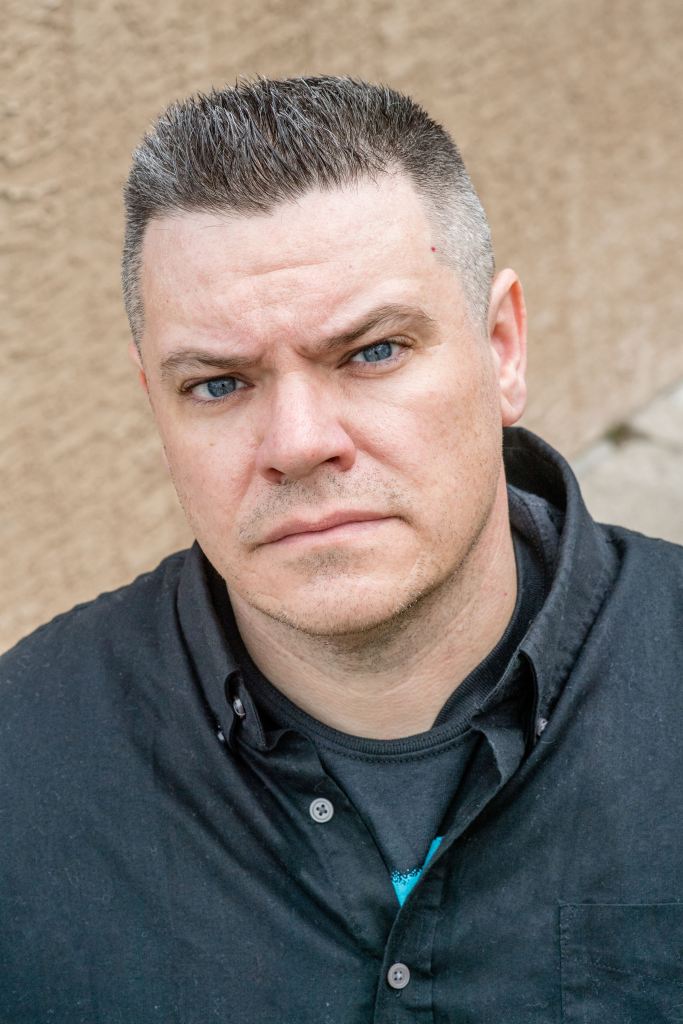
Bernard Schaffer is the author of the Santero and Rein Thriller Series from Kensington Publications.
Prior to that, he published multiple titles in a variety of genres as an independent author. Schaffer is the father of two children and a full-time police detective in Southeastern PA.
1) Tell us a little bit about yourself. How did you get into writing?
I decided to write my first novel simply to get a handle on some things in my life, and explore them through writing them down in story form. Before that, I had never written anything creative besides a Choose Your Own Adventure in third grade and a few poems. I did not expect to become a novelist. But during the process of writing that first book, I knew this was what I wanted to do with my life.
2) What inspired you to write your book?
This series (Preach Everson) has been greatly inspired by living in the Piedmont area of North Carolina. It’s a fascinating blend of old and new, urban and rural. I think it’s indicative of the modern era in which we live, especially the political and social divisions plaguing America. Add to that, of course, my love of writing mysteries and suspense and brooding, intelligent detectives.
3) What theme or message do you hope readers will take away from your book?
Of the sweet sad rhythms, commonality, travails, and spiritual longing of human existence. Not to be pretentious or anything–ha!
Mystery/suspense is a genre which I love and feel drawn to write. I’m not sure why! It’s a great way to explore human nature, though, as conflict and questions of good and evil are naturally built in.
5) What social media site has been the most helpful in developing your readership?
Facebook
6) What advice would you give to aspiring or just starting authors out there?
Read every good book you can get your hands on, write as much as possible, and hire the best editor money can buy.
7) What does the future hold in store for you? Any new books/projects on the horizon?
I’m working on the second novel in the soon-to-be-released Unknown Nine Trilogy – details coming soon!
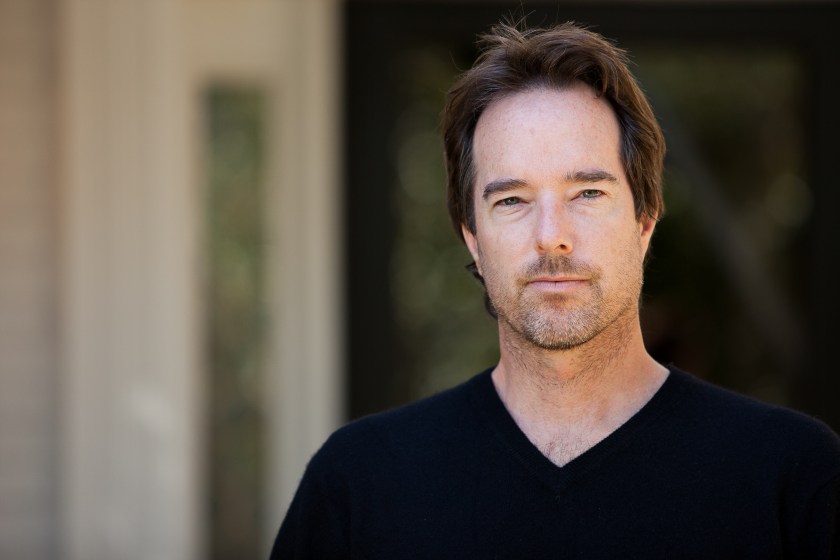
Layton is a bestselling author who writes across multiple genres, including mystery, thriller, suspense, horror, and fantasy. He is the author of the popular Dominic Grey series, as well as other works of fiction. His novels have topped numerous lists (including a #2 overall Amazon bestseller) and have been nominated for major awards, including two finalists for an International Thriller Writers award. Layton is also the co-editor of International Thrills, the online magazine of ITW (International Thriller Writers).
In addition to writing, Layton attended law school in New Orleans and was a practicing attorney for the better part of a decade (even though he still resents having cut his hair for that first interview). He has also been an intern for the United Nations, an ESL teacher in Central America, a bartender in London, a seller of cheap knives on the streets of Brixton, a door-to-door phone book deliverer in Florida, and the list goes downhill from there. Currently based in Durham, North Carolina, Layton has traveled to more than sixty countries, lived in a number of them, and has a burning desire to see every country, city, beach, moor, castle, cemetery, twisted street and far flung dot on the map.
1) Tell us a little bit about yourself. At what point did you decide to pursue writing about your field of study?
I started my career as a process development engineer in the semiconductor manufacturing industry, designing better ways to connect computer chips to circuit boards. As an engineer, I gravitated toward writing the articles for publication in trade magazines and the reports for projects. I began my writing career with Advanced Packaging Magazine, a publication in which I had published contributed articles. My current business, JLFG Communications, focuses on writing technical marketing content for corporate websites, but I still occasionally write articles for trade and business magazines. It’s nice to keep a toe in journalism and not only write anonymous content.
2) What inspired you to write your book?
My initial inspiration was a desire to shift my client base toward companies involved in sustainable manufacturing and renewable energy. I figured that writing a book on the topic would give me credibility that would help me get a foot in the door. Clients I’ve been working with for years will trust me with projects outside my proven fields of expertise, but potential clients often want to see experience writing for their specific industry.
As I delved into the research, my fascination with the subject matter and interactions with the enthusiastic business professionals I interviewed inspired me to continue. I knew that I needed to get this book out into the world.
3) What do you hope readers will take away from your book above all else?
I want readers to understand that the challenges of reducing waste in manufacturing are complex, but many smart business leaders are developing creative solutions and progress is being made. We shouldn’t be complacent, but neither should we be discouraged. I want readers to commit to at least one action at work or at home that allows them to be part of the solution.
4) What drew you into this particular field of study?
I’ve been fascinated by engineered materials ever since I took an introductory materials science course in college, but I didn’t always consider the environmental impact of all the amazing materials that engineers were inventing. In recent years, I’ve thought more about these issues and the responsibility of manufacturers to their employees, customers, and the communities in which they operate. The more I learned about companies embracing the triple bottom line—profit, people, planet—the more I became convinced that I should write a book focused on the materials aspect of sustainability.
5) What is the number one thing you would recommend for a manufacturing company just starting out in their business?
Fledgling manufacturing companies contemplating the shift from prototypes to volume production face many hurdles. I urge them to consider the environmental footprint of their manufacturing process when evaluating their entire supply chain. If they want to be eco-friendly, that needs to extend to every component or ingredient in their products, every vendor they choose, where they manufacture their products, and how they ship products to customers. Making smart decisions up front can save money in the long run and build trust with customers.
6) What social media site has been the most helpful in developing your readership?
I’ve gotten traction with both Facebook and LinkedIn. I made my book launch an event on Facebook and invited all my local Seattle-area friends. My multiple posts about the book got the attention of many friends in the San Francisco Bay Area, where I lived for 20 years, and many of them are now on my mailing list. When my LinkedIn contacts shared my post about the book launch, it expanded my reach to hundreds of people I’ve never met. In the long run, I believe that LinkedIn will be more helpful in reaching a business audience.
7) What advice would you give to aspiring or just starting authors out there?
Join a writing group that meets in person, in addition to participating in online groups. Writing is a solitary activity, but just being in the company of other writers can inspire you to achieve your goals. For nonfiction authors, the Nonfiction Authors Association has a wealth of information on its website, including links to its weekly teleseminars, plus chapters in many cities that hold monthly meetings. Whether you’re wondering what type of editing your book will need or trying to decide between submitting a proposal to agents or self-publishing, experienced authors can help point you in the right direction.
8) What does the future hold in store for you? Any new books/projects on the horizon?
In the short term, I’m focused on marketing Material Value. Simply writing a book that people want to read isn’t enough. It’s an author’s responsibility to let potential readers know that the book exists. I am, however, gathering ideas for my next book. It will also address materials and sustainability but focused on the textile and fashion industries. A surprisingly large number of companies are producing fabrics made from recycled plastic water bottles.
Julia L F Goldstein holds a PhD in materials science and started her career as an engineer before migrating to journalism in 2001. She now writes white papers and other technical marketing content for companies manufacturing a wide variety of products. Julia is active in her local writing community and leads the Seattle chapter of the Nonfiction Authors Association. When she’s not writing, she enjoys playing flute and piccolo and participating in triathlons.
1) Tell us a little bit about yourself. How did you get into writing?
I don’t remember I time when I wasn’t a reader and writer, I’ve always had an obsession with books. I lived at my public library. In elementary school when the book fair would come around I’d always get more than all the other kids. One time I heard one of them say “I bet she doesn’t even read them all” Well I always did, and I still have them too haha.
In my early thirties when I began to turn my life around, I wanted to write out all of my pain so I could not only get it out of my head but work through it piece by piece. It worked luckily
3) What theme or message do you hope readers will take away from your book?
I want to relate to people and hope they find solace in another person’s tale. I want them to know that I understand and accept and am always around to give a healing hug.
4) What drew you into this particular genre?
I thought I could help people
5) If you could sit down with any character in your book, what would you ask them and why?
I’d ask the wolf if I could hang out with him haha. He’s based on John Cleese & Belgarath the Sorcerer from David Eddings so how cool would that be?
6) What social media site has been the most helpful in developing your readership?
Instagram for sure. I’ve been connecting with so many lovely humans
7) What advice would you give to aspiring or just starting authors out there?
Go at your own pace and don’t put expectations on yourself. I thought “Sun” would be a huge novel at first, I got out eveything I wanted in a fraction of that.
8) What does the future hold in store for you? Any new books/projects on the horizon?
Yes! My creepy children’s poetry book, Gobbledygook, is currently being written and performed by me on YouTube. I find it more fun introducing it like that before it becomes a book. I want to be the next Shel Silverstein/Edward Gorey/Dr. Suess haha.
My second book, BYOFU (Be Your Own Fucking Unicorn), about mindfulness and coping will be coming out next year hopefully.
A graphic novel & a podcast are also in the works.
I’m also in an indie horror movie coming out in the fall.
1) Tell us a little bit about yourself. How did you get into writing?
I wrote my first stage play when I was ten years old. It was set during the Civil War, and one-by-one, a group of slaves, sitting around a bonfire, snuck off into the night while they sang Nobody Knows the Trouble I’ve Seen. Two years later, I started my first novel and showed what I’d written to my mother. She told me it was dirty. (A young couple was having a picnic on a blanket in a park when WWII bomber jets flew overhead? Dirty?) I didn’t know what my mother exactly meant, but I knew dirty wasn’t good, and that rather crimped my writing habit for some thirty years.
During that time, I grew up and had an exciting career. I definitely wasn’t a frustrated writer working hated day jobs. Instead, I was traveling all over the world working on projects to help lower income people (through such organizations as USAID, the World Bank, and the UN). My last job before deciding to become a full-time writer was to manage the US Government’s first significant project to help Palestinians following the Oslo Accords and the start of the peace process.
At the end of that contract, I felt that I had done what I set out to accomplish in my career. I was only forty-six years old and had time to do something entirely different. I had observed and experienced the Israeli-Palestinian conflict from multiple perspectives, and I wanted to tell that story. That’s when I wrote my first novel, A Vision of Angels, in which a suicide bomb plot sets into motion events that weave together the lives of an Israeli war hero, Palestinian farmer, American journalist and Arab-Christian grocer.
After writing that first book, I’ve just kept going.
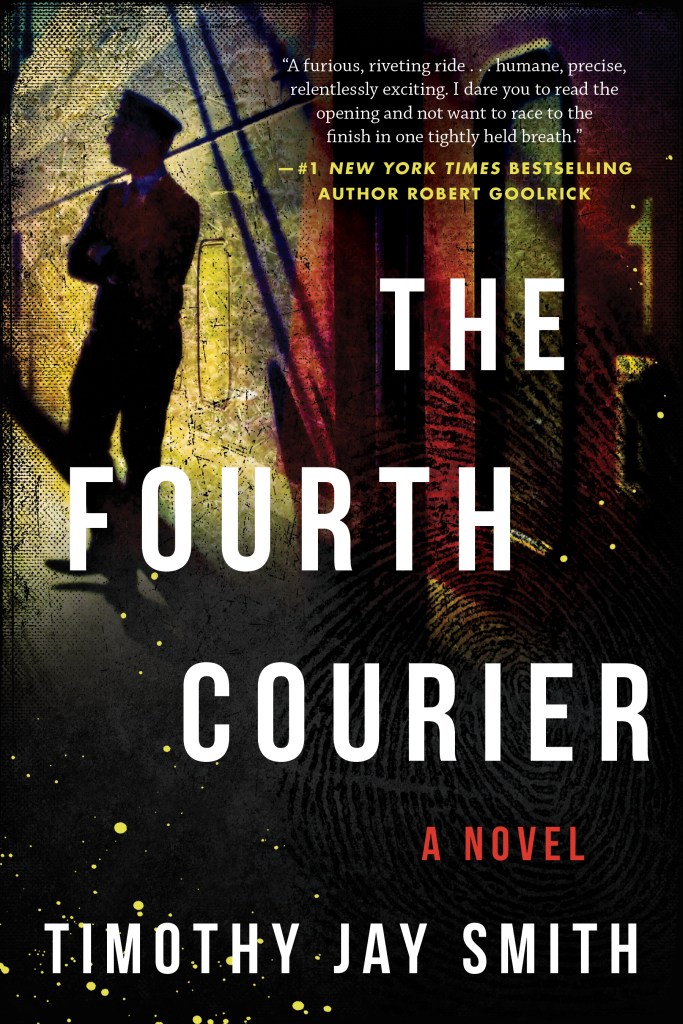
2) What inspired you to write The Fourth Courier?
In 1989, the Berlin Wall fell and Solidarity won the first free election in Poland in over sixty years. In the same year, Mikhail Gorbachev introduced new cooperative laws in the Soviet Union, which was an area of my expertise. I was invited to the Soviet Union as a consultant, which led to my consulting throughout the former Soviet bloc, eventually living for over two years in Poland.
At the time, there was a lot of smuggling across the border between Russia and Poland, giving rise to fears that nuclear material, too, might be slipping across. While on assignment in Latvia, I met a very unhappy decommissioned Russian general, who completely misunderstood my purpose for being there. When an official meeting concluded, he suggested we go for a walk where we could talk without being overheard.
I followed him deep into a forest. I couldn’t imagine what he wanted. Finally we stopped, and he said, “I can get you anything you want.” I must have looked puzzled because he added, “Atomic.”
Then I understood. In an earlier conversation, there had been some passing remarks about the Soviets’ nuclear arsenal in Latvia, for which he had had some responsibility, and apparently still some access. While my real purpose for being there was to design a volunteer program for business specialists, he assumed that was a front and I was really a spy.
I didn’t take him up on his offer for something atomic, but I did walk away with the seed for a story that germinated years later when I decided to write a novel set during that period in Poland.
3) What theme or message do you hope readers will take away from your book?
I wrote The Fourth Courier wanting to portray what life was like in Poland at the end of the Cold War, which officially ended Christmas Day 1991 when the Soviet Union was legally disbanded. (The Poles had actually managed to cast off communist rule two years earlier, but for plotting purposes I set the story in 1992.) The Poles had lived for forty-five years under Soviet domination, the last few years under a harsh military regime. The country was broken and communism’s inefficiency left them destitute. In the two years that I lived there, I developed a tremendous respect for the Polish people and their struggle for liberty. I hope my readers close the book with a better understanding of what that meant.
I write what I like to read, and that’s relatively fast-paced stories but not all action, which have depth and verge on literary. Suspenseful plotting with good writing and good character development: that defines a literary thriller. I also like my novels to bring some awareness to an issue of social importance. So I take an event or threat and examine what it means through the eyes of the people it involves.
In The Fourth Courier, through a nuclear smuggling operation, I give the reader an insight into how ordinary families in Poland coped with the country’s collective hangover from communism. In A Vision of Angels, I look at how the lives of four families become interwoven by a suicide bomb plot in Jerusalem. Cooper’s Promise is the story of a soldier’s redemption through a tale about human trafficking.
I don’t think another genre would let me entertain and enlighten in the same way.
5) If you could sit down with any character in your book, what would you ask them and why?
It would definitely be Basia Husarska, Director of Poland’s Bureau of Organized Crime. She’s an enigmatic character with hints of a colorful past. I’d like to know the details of her past.
6) What social media site has been the most helpful in developing your readership?
Facebook.
7) What advice would you give to aspiring or just starting authors out there?
You’re not a writer unless you write.
Learn the craft.
Write some more.
Share your work, listen to criticism, and don’t be defensive.
Write some more.
8) What does the future hold in store for you? Any new books/projects on the horizon?
I have two new novels underway. I’m working on the penultimate edits to Fire on the Island in which an arsonist threatens to burn down a Greek island village, which will put out of commission a Coast Guard station vital in the rescue of refugees crossing a narrow channel from Turkey. To try to prevent that, the FBI sends a Special Agent to investigate, who finds himself in a village wracked by conflicts, some dating back a hundred years, and any one of which might make someone want to destroy the village. I expect to deliver the final draft to my agent in mid-May.
I’m well into a new novel, The Syrian Pietà, set in Istanbul. In it, the CIA recruits a Syrian refugee to go deep undercover to— I’m going to stop myself there because the idea is too good to share until it’s written. I already love this book and character.
I actually have two styles of writing: a story told from many perspectives, or a story told entirely from one character’s perspective in which the reader knows nothing more than the character. People have different names for the two approaches. I know them as an open mystery (the reader knows there’s a bogeyman in the next room but the protagonist does not) and a closed mystery (the bogeyman is revealed only when the protagonist encounters him).
The Syrian Pietà is a closed mystery, as was my novel Cooper’s Promise. It’s an enormous challenge to write a closed mystery because you have only one character to reveal information. Of course, the temptation is to tell instead of show, which is no challenge at all. In the movie world, one of the best examples of a closed mystery is Chinatown. Jack Nicholson is in every scene. In a novel, it’s a great way to get into a character’s head.
About the Author
Raised crisscrossing America pulling a small green trailer behind the family car, Timothy Jay Smith developed a ceaseless wanderlust that has taken him around the world many times. Polish cops and Greek fishermen, mercenaries and arms dealers, child prostitutes and wannabe terrorists, Indian Chiefs and Indian tailors: he hung with them all in an unparalleled international career that saw him smuggle banned plays from behind the Iron Curtain, maneuver through Occupied Territories, represent the U.S. at the highest levels of foreign governments, and stowaway aboard a “devil’s barge” for a three-days crossing from Cape Verde that landed him in an African jail.
These experiences explain the unique breadth and sensibility of Tim’s work, for which he’s won top honors. Fire on the Island won the Gold Medal in the 2017 Faulkner-Wisdom Competition for the Novel. He won the Paris Prize for Fiction (now the Paris Literary Prize) for his novel, A Vision of Angels. Kirkus Reviews called Cooper’s Promise “literary dynamite” and selected it as one of the Best Books of 2012. Tim was nominated for the 2018 Pushcart Prize. His screenplays have won numerous competitions. His first stage play, How High the Moon, won the prestigious Stanley Drama Award. He is the founder of the Smith Prize for Political Theater.
About Arcade Publishing Arcade has been an imprint of Skyhorse Publishing since 2010. We continue doing incredible work discovering, publishing, and promoting new and brilliant voices in literature from around the world. Arcade has published literary giants such as Samuel Beckett, E. M. Cioran, and Leo Tolstoy, alongside new voices such as Ismail Kadar and Andrei Makine. In 2012, Mo Yan won the Nobel Prize for Literature, an exciting achievement for Arcade which had published five of his novels.
Q: Tell us a little about yourself. How did you get into writing?
A: Growing up, I was never into writing stories, or even reading for that matter. I read textbooks and enjoyed movies over books for most of my life. I didn’t into writing until I started working on The Burden of Trust.
Q: What inspired you to write your book?
A: The idea for The Burden of Trust came to me in a dream. The dream was vivid and detailed and refused to leave me. This dream was the first scene where Kate and Chris meet. It continued to play over and over again, and when I was telling a co-worker she suggested that I write it down. When I began writing, the story line started to progress and I couldn’t stop writing.
Q: What theme or message do you hope readers will take away from your book?
A: I hope that readers will discover that love comes in all shapes and sizes. Love is deeper than romance and sometimes it takes a new and unexpected love to give you hope in this world.
Q:What drew you into this particular genre?
A: I’ve always been a sucker for a great romance story, but I wanted to create something different. A love story with something more.
Q: If you could sit down with any character in your book, what would you ask them and why?
A: I would probably sit down with Kate and ask her why she is so resistant to Chris’s affection? I’d want to know why she is so willing to turn away love because it doesn’t come in the right package.
Q: What social media site has been the most helpful in developing your readership?
A: I”m a huge fan of FaceBook and I find it is easier to connect directly with my readers there. Although, I am still learning the ropes of IG.
Q: What advice would you give to aspiring or just starting authors out there?
A: Don’t publish too early! Especially if it’s your first novel, have it gone over from a reputable editor. Then reach out to book reviewers and avid readers to see what their perspective is. When I first self published The Burden of Trust, my first review from a reviewer was so bad, she couldn’t publish it. Basically, I got told I had a good story, but the writing was horrible. Write and rewrite your book!
Q:What does the future hold in store for you? Any new books/projects on the horizon?
A: Currently, I’m finishing up the second book in The Burden of Trust series. Keep your fingers crossed, it might be out in early 2020!
About the Author
Tabitha grew up in Virginia, outside of Washington D.C., but moved to Orlando to attend UCF (Go Knights!) where she received a Bachelor of Science in Business Management. It was five years ago when she met her husband, who is a graduate from Deland High; two years ago, they moved back to Deland. During this time, she has fallen in love with the town and community.
Currently, she is an active alumna of Kappa Alpha Theta and serves on the Advisory Board as the Facility Management Advisor for the Epsilon Theta Chapter at Stetson University. During her free time, she loves being with her family (although they are usually working on their small family farm), traveling, and of course, watching college football.
1) Tell us a little bit about yourself. How did you get into writing?
I’ve been a writer since Fourth Grade, when we were required to hand in a story every week. I loved it. Even while working as a lawyer I continued to write. An agent read three chapters of my first novel, now titled STALKING THE SKY, and sold it to a top publisher within ten days. Magic!
2) What inspired you to write your book?
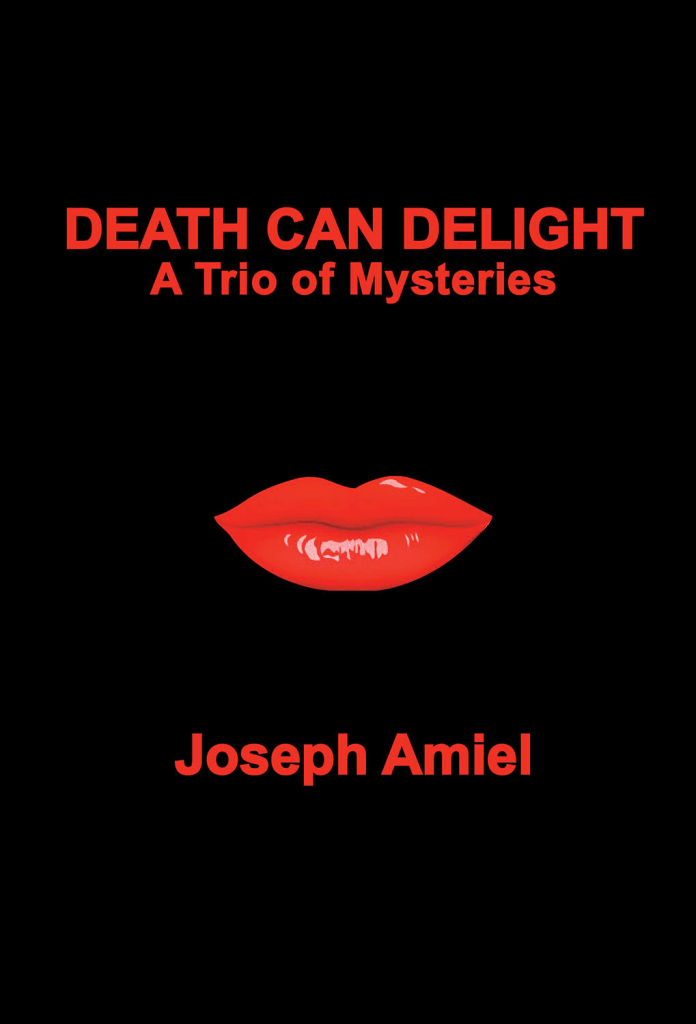
I had an idea for a short story, a murder mystery, and put aside what I was working on to write it. I found I loved the form: Completing a novel could take a year or two, but I had finished the story in only a few days. It’s the second in my new collection DEATH CAN DELIGHT: A TRIO OF MYSTERIES. Almost immediately an intriguing title for a new story popped into my head, THE GIRL WHO SPOKE VENTRILOQUISM, but I had no story. While agonizing over possible characters and plot and getting nowhere, inspiration came in the form of a sudden recollection of the trip I and my family had made the year before to Ireland. I have no idea where that unexpected recollection came from, but instead of dismissing it, I was aware enough to realize my subconscious had just presented me with the structure I had been searching for. The third story was suggested by an incident involving Donald Trump: He was alerted by his lawyer that the pre-nuptial agreement with his new wife was about to expire and any divorce after that could be far more expensive. His shocked wife soon received divorce papers. That story, the last of the three, is titled DEADLINE DIVORCE.
3) What theme or message do you hope readers will take away from your book?
I’m a story teller, someone who writes to entertain and perhaps enlighten an audience of readers with an engrossing tale. I named this collection DEATH CAN DELIGHT: A TRIO OF MYSTERIES because my purpose in writing the stories was to entertain my readers with wit, humor, drama, and surprises; as the title says, to delight them. Their reaction and the book’s reviews suggest that the stories do that.
The stories in the collection are murder mysteries. I think almost every fiction writer plants mysteries of some sort in his/her work to keep the reader turning pages. Murder, the whodunnit or whydunnit of that drastic act, provides the material for the most engaging mysteries with the highest stakes for the characters–and the reader–which is why book-stores shelves are packed with murder mysteries, All of my novels have a mystery at their core, several indeed murder. My initial idea for JUDGEMENT DAY, about a judge everyone in town would kill if they could, led me to write it and then the other stories in the murder-mystery genre. I don’t doubt I’ll be writing more stories in the same vein.
5) If you could sit down with any character in your book, what would you ask them and why?
If I could sit down to converse with any character in the book, it might be Kyra, the sixteen-year-old high school student who narrates JUDGEMENT DAY. I would want to know if the outcome of her and her family’s action against the judge, whom she had hated for a year, brought her satisfaction. I have no doubt that what she ultimately did with that narration in the story’s surprise ending had to leave her “delighted.”
6) What social media site has been the most helpful in developing your readership?
Although I’m on Facebook [Joseph Amiel Author] and now Instagram [josephamiel9087], I would have to say that being able to communicate so quickly with my many followers on Twitter has been the most effective of the social media formats [@JoeAmiel]. Also I would guess that being able to get out the word, rather than waiting for people to find what I’ve posted, suits my personality.
7) What advice would you give to aspiring or just starting authors out there?
We live in an age when a neophyte author without an agent or an established publisher can put his/her work on Amazon and hope to develop a readership. Crucial to continuing to write is believing that your work can be seen and not deposited in a desk drawer. My advice about the actual writing is to do it, every day if possible. One friend said he had a novel in him if he could only come up with the right first line. I told him to start with the second line and just start writing–he would be rewriting everything anyway, probably even his precious first line.
Joseph Amiel is a novelist and screenwriter, as well as a lawyer. His novels include: HAWKS, BIRTHRIGHT, DEEDS, STAR TIME, and A QUESTION OF PROOF, which have been translated into over a dozen languages. His screenplay GAMES has recently been honored at several film festivals, as has his comedy series for the web AIN’T THAT LIFE.
He was graduated from Amherst College, where he studied English and creative writing, and from Yale Law School. He is married and has two children.
1) Tell us a little bit about yourself. How did you get into writing?
Born and raised in New York City, I left to see the world at age 24 as a water engineer in the Peace Corps. For most of my life, I had never entertained the idea of becoming an author. My career as a groundwater specialist kept me busy enough, filled with both adventure and satisfaction with my job. However, while in Kenya I fell in love with a woman, and this relationship was doomed from the start. As a kind of catharsis, I began to write a semi-autobiographical story which became Journey Towards a Falling Sun. As I said, it was the need to purge my emotions that drove me, without immediate plans for publishing, as I was in the prime of life as regards to my vocation. But in 1985, I did manage to get an agent who was very enthusiastic over the manuscript. After fifteen rejections by big publishing houses, however, I gave up and shelved it, abandoning any thoughts about being a writer. It wasn’t published until 30 years later.
In 1996, while working in Laos, I learned of the secret war that the US conducted for 9 years, and resulted in the aerial bombardment that has given that country the dubious distinction of being the most heavily bombed country of all time. As an American, I was ashamed of my ignorance of this matter, for I had never known of this secret war. I was so moved, I decided I would write an epic novel that would illustrate the consequences of that war which became The Plain of Jars, released in 2013. And from there my path as a writer began.
2) What inspired you to write your book?
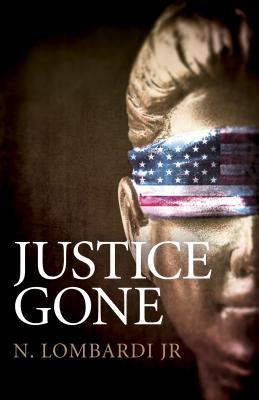
The idea for Justice Gone came from a true incident – the fatal beating of a homeless man in California. It was such an outrageous act, recorded on video and uploaded to YouTube, that I wondered what would happen if someone who saw the gruesome video would mete out their own version of justice to the police officers involved.
The novel then, is a tale of what happens in a small town following the fatal beating of a homeless Iraqi war vet at the hands of police. A cascading series of events, from street protests to a vigilante shooting of three police officers leads to a multi-state manhunt for the vet’s war time buddy. A controversial trial attracting nationwide attention dominates the second half of the novel. The story ends with a twist revealing the identity of the cop-killer
3) What theme or message do you hope readers will take away from your book?
Although deaths at the hands of law enforcement officers disturb me, I tried to avoid taking too strong a stand against the police, and just presented a possible (albeit extreme) scenario if this issue is not addressed. I also wanted readers to have a detailed look at the legal system in the US, i.e. the importance of lawyer tactics on both sides of the bench and of jury sentiment in deciding a case.
First of all, I don’t consider myself a genre writer, I just write about things that move me. Having said that, as a reader I do enjoy mystery/thriller/suspense/crime, so I may be writing more of this kind of fiction from now on. It is much easier to write this sort of stuff than cross-cultural adventure novels such as my first two books, The Plain of Jars, set in Laos, and Journey Towards a Falling Sun, set in Kenya.
5) If you could sit down with any character in your book, what would you ask them and why?
I would have to say, the policemen that beat Jay Felson to death – Why, when he was unarmed, did it take 6 cops to bring him down and beat him till he died?
6) What social media site has been the most helpful in developing your readership?
I’m really not active in the social media scene, so I would have to say Goodreads, despite the fact I find Goodreads a bit exploitive and disdainful of independent authors. As a reader, it is pretty good. I tried Facebook, but it isn’t focused enough and being an old fart, I’m mistrustful of Twitter. I love book bloggers, thank god for them!
7) What advice would you give to aspiring or just starting authors out there?
Although it sounds cliché, the first thing is to write well. Many independent authors, particularly those who self-publish, write with a quality barely above a high school student. You don’t have to be a wordsmith, but the book should not sound stilted. Read passages from a book by an acclaimed author than read your stuff. How does it compare?
Secondly, unless you’re with a big publishing house, be prepared to market your work. You should have a budget of $2,000 for this, even if you are very active on social media, because it’s always better for someone else to tout your book than you as the author. That means reviews, which can only result from exposure.
8) What does the future hold in store for you? Any new books/projects on the horizon?
I’m in the process of fine-tuning another Tessa Thorpe novel, Woman in the Shadow. It takes place several years prior to the setting of Justice Gone, and is considerably darker, more of a psychological/suspense thriller. I actually wrote this before Justice Gone, but I was disappointed with the publisher’s reaction to it so I shelved it. Directly related to this, I’m looking for another publisher, so I hope it doesn’t take too long for the book to come out.
1) Tell us a little bit about yourself. How did you get into writing?
I started writing around the age of 12. I’d been quite illiterate to begin with because I missed out on a lot of schooling. I wrote indecipherable poetry filled with angst—stream-of-consciousness diary entries about wanting to get away from my abusive situation. It wasn’t until I started reading my favorite writers before I’d make any attempt at any real writing. I never wrote full time because I also played the drums and painted. I was most serious about music at the very start.
I fell in love with authors like JD Salinger, Tom Robbins, and Charles Bukowski and buried my nose in everything they wrote. Salinger’s Nine Stories made me want to be a short story writer. Then, I read Bukowski’s Ham on Rye and that truly changed my life forever. He gave me a lot of freedom to be myself as an artist. Then came John Fante, He’s now just about my favorite writer.
2) What inspired you to write your book?
I always knew I’d write this book. I just didn’t know if I’d ever publish it. Not as nonfiction anyway. I’ve always written autobiographical fiction and wrote a lot of dark comedy stories about my family. I figured I’d put them together as a collection or something, but I didn’t think I could string them into one long book. I didn’t believe in myself enough. I’d tried to write whole novels in the past and failed. Eventually, I wanted to try again. And again. And again. It took me almost a decade to finish this book, and as the years went on,Shrapnel took several different directions.
3) What theme or message do you hope readers will take away from your book?
I really don’t have a direct intention for what my readers should or shouldn’t take away. This is the same philosophy I have with putting any of my art out on display. The work has two lives; the one it’s lived with me during its process, then the life it lives once it’s completed. It now lives with the audience and becomes their personal, individual experience. I can only hope people can identify with it on some level.
Interestingly enough, I’d mostly been inspired by fictional stories that were written in a nonfiction, first-person format, such as Alice Walker’s The Color Purple, Pushby Sapphire, Bastard Out of Carolina by Dorothy Alison, and Bee Season by Myla Goldberg. Dorothy Allison’s book is based on her real life and I originally wanted to take this approach, but my partner, Michael Phillips (also a writer), got me to change it to nonfiction. He got me to see how much more powerful it could be. I didn’t think anyone would believe it, and frankly I was fearful of putting my story out there. Now I’m grateful for his encouragement because it’s made me a stronger person.
5) There were quite a few different sides to your story that were heartfelt, emotional and powerful enough to convey your struggle to the reader. In regards to your experience within Scientology, if you could sit down and ask any of the leaders of the group a question or confront them in any way, what would you want to say to them?
I do not think anything I could ask or say to the leader, David Miscavage, that would ultimately change anything. As far as I’m concerned, and as the public continues to hear evidence of the stories regarding his abuse and destruction, he is a megalomaniac with blinders on. He has no conscious when making his ends meet, whatever they may be. Challenging his motives would only make things worse for his enemies and Scientologists alike.
Having once been a devout Scientologist, I’d rather address Scientologists in general and ask that they try to consult their gut. I would tell them that people that speak out against religions that abuse their members are not evil. Cutting off a dialogue with them doesn’t fix the situation. Disconnecting from people labeled “suppressive” only further isolates your mind to stick with like-minded Scientology kin. How will you find understanding with the rest of the world that way? And are you really the one who controls your communication?
6) What social media site has been the most helpful in developing your readership?
Keeping a blog is key, as well as slowly adding to my mailing list. I put out a newsletter a few times a year and am careful not to “spam” my list with too many superfluous email blasts. I make sure I announce my blog posts on all my social media outlets. Facebook and ello are my most successful.
7) What advice would you give to aspiring or just starting authors out there?
You can always get better at writing by reading. Read a lot and a wide range of genre. Don’t give up, but don’t try too hard either. Try not to listen to other people’s opinions—that may possibly kill the best thing about your style and voice. Just be mindful of it anyway, because not everyone knows what they’re talking about. Strunk & White’s Elements of Style is almost the only thing you’ll ever need. But if you like spending $100K on college, do what you like.
The most important piece of advice I have is: despite rejection at seemingly every turn, you can do this. We are all stronger than we think.
On a separate note, if you were to be able to speak to anyone who has questioned the practices of Scientology or has been approached to possibly join the group, what would you want to say to them or what advice would you want to give them based on your own experiences?
I feel I’ve pretty much answered this and choose not to dig a deeper hole. But I would refer current members of Scientologists to Dr. Robert J. Lifton’s Eight Criteria to reevaluate their situation.
8) What does the future hold in store for you? Any new books/projects on the horizon?
Right now I am finishing up new artwork for my big book launch and solo exhibit at the gallery that represents me in Los Angeles, Craig Krull Gallery. The show opens Saturday April 13th, 2019 at 4pm with a reading and a short Q&A. I will then sign books until the artist’s reception that goes from 5-8pm. The show runs until May 25.
I’m also putting the finishing touches on the special lettered edition of Shrapnel in the San Fernando Valley, which is limited to 30 copies only. It is hard-bound in linen and comes with original artwork inside.
I plan to take a short hiatus over the summer and begin working on a book of short stories in the fall. I’d like to publish them with watercolor illustrations by 2020.
Looking for help to take control of your own mental health and seek the help you need? I’m happy to share this amazing link to BetterHelp for advice on where you can turn if you are feeling sad. Just click the link below!
Carol Es is a self-taught artist, writer, and musician born in Los Angeles. Using a wide variety of media, she is known for creating personal narratives that transform a broken history into a positive resolution. Her paintings, drawings, installations, videos, and books have been exhibited nationwide in venues such as Riverside Art Museum, Torrance Art Museum, Lancaster Museum of Art and History, and Craft Contemporary in Los Angeles. Some of her works can be found in the collections at the Getty and the National Museum of Women in the Arts in Washington, DC. Her collaborative film was also featured in the 2015 Jerusalem Biennale.
Awarded many honors, including several grants from the National Arts and Disability Center and California Arts Council, she is a two-time recipient of the ARC Grant from the Durfee Foundation, a Pollock-Krasner Fellowship, and the Wynn Newhouse Award. She has written articles of art critique for the Huffington Post and Coagula Art Journal, as well as having poetry published with small presses. She also received a writing grant from Asylum-Arts—a Global Network for Jewish Culture.