
Revive the Interest to Learn Math: A Psychological Approach by Fidelis Mukudi Review

I received a free copy of this book in exchange for a fair and honest review. All opinions are my own.

In “Revive the Interest to Learn Math,” author Fidelis Mukudi provides a psychological perspective on the benefits of learning math. 

Advertisements

The Synopsis

This is a short book written to give students hope that despite having a bad background or beginning in mathematics, they can always do better if they are guided well. It also offers hope to parents that their children can do better despite their background and environment. It lists the steps that students need to revive their prowess in mathematics. The topics in this book include; What You Were Fed With, The Battle in the Mind, Setting a New Beginning, A Guide to Studying Math, Tackling Abstract Concepts, and Application Questions. It also gives a summary of each chapter and highlights key points. The book takes a psychological approach to reviving or boosting the motivation to learn mathematics.

The Review

This book made me feel like the perfect demographic, speaking to audiences with a fundamental disconnect with math. Each of us has a subject in school that they excel in more than others, and for me, I was always more proficient in English and History than in Mathematics. Yet the author writes in a way that allows readers who are not well-versed in math to overcome the hurdles that keep them from pursuing this subject and reinvigorate their interest at the same time.

The amount of detail the author can fit into such a short time is astounding. From allowing readers to define themselves either as math hopefuls or math advisers to understanding that the first step is to face the battles of the mind that keep people from reaching that understanding of math and even gaining a more comprehensive understanding of the language of mathematics overall, the author can get the reader on a multitude of subjects.

Advertisements

The Verdict

Insightful, fast-paced, and educational author Fidelis Mukudi’s “Revive the Interest to Learn Math: A Psychological Approach” is a must-read nonfiction book on merging psychology and mathematics. The guide’s practicality, combined with the mental approach to gaining a firmer understanding of the subject, will keep readers inspired and returning to this book over and over again. If you haven’t yet, be sure to grab your copy today!

Rating: 10/10
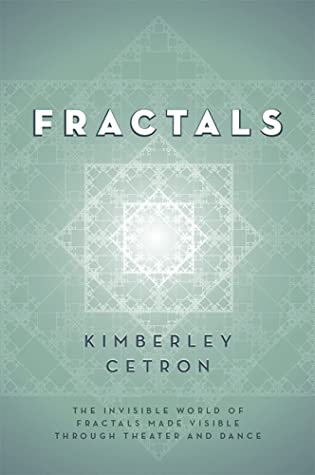
Fractals: The Invisible World of Fractals Made Visible Through Theater and Dance by Kimberley Cetron

I received a free copy of this book in exchange for a fair and honest review. All opinions are my own. 

Author Kimberley Cetron provides a new and unique approach to education in theater and dance utilizing intrinsic patterns known as Fractals in the new educational book, “Fractals: The Invisible World of Fractals Made Visible Through Theater and Dance”.

Advertisements

The Synopsis

Fractals are patterns, infinitely reiterating, self-similar in shape. Benoit Mandelbrot coined the term in the 1970s, but scientists and mathematicians had been exploring the concept for centuries. Mandelbrot developed a geometry to express things found in the natural rather than the man-made world – coastlines, galaxies, anatomy, clouds, trees, snowflakes, and the like. Fractals are intrinsic to Chaos Theory – the science of surprises, of the non-linear and unpredictable. They reveal the order governing the seemingly chaotic in our world. As we learn to recognize them, we gain insight into our world, ourselves, and one another. Especially at this cultural moment, when the whole world has changed and we must re-imagine the ways in which we make art and the ways we educate, Fractals provides resources and approaches for collaborative art and for locating the intersection of arts and academics in ways that illuminate both.

The Review

This was such a different, unique, and thought-provoking read from what I normally feature here on my website. The author does an incredible deep-dive into the world of Fractals, of the patterns that occur in the universe such as anatomy and galaxies, and explores these patterns in connection with performing arts. The use of a system of order that reflects patterns in which the individual parts of these shapes are equal to the overall pattern is a unique educational tool for the author to utilize in this read, as it brings a whole new understanding to the subject material.

Perfectly blending into the current world we live in, the author’s expertise and perfect crafting of the subject matter is well written throughout this book. The balance of the subject matter of dance and theater with the science and technique that Fractals utilize when interacting with the subject matter is great to see unfold here. The concept of nature and order balancing the chaos of the world and the denial of self-serving creation over collaboration was an intriguing idea to explore in this read and really connects with readers who are looking for a new way to approach education and performing arts.

The Verdict

A brilliant, invigorating, and thoughtful read, author Kimberley Certon’s “Fractals” is a must-read book. Educational yet engaging, the author strikes a great and resonating chord with readers and pushes them to think differently to see the order within the chaos and apply it to something as artistic and moving as performing arts. If you haven’t yet, be sure to grab your copy today!

Rating: 10/10

Advertisements