Tell us a little bit about yourself. How did you get into writing?
I’ve loved writing for as long as I can remember. One of my first memories of writing was when I was ten. I wrote a story about racism that involved a child driving a bulldozer over the home of his racist tormenters. My teacher was horrified by the homicidal implications of my story and thought I might be a budding serial killer. So, she called my parents in for a meeting to discuss my mental state. My parents, bless their hearts, laughed and told her they were proud of me, and that they thought my theme and content were both appropriate and commendable.
What inspired you to write your book?
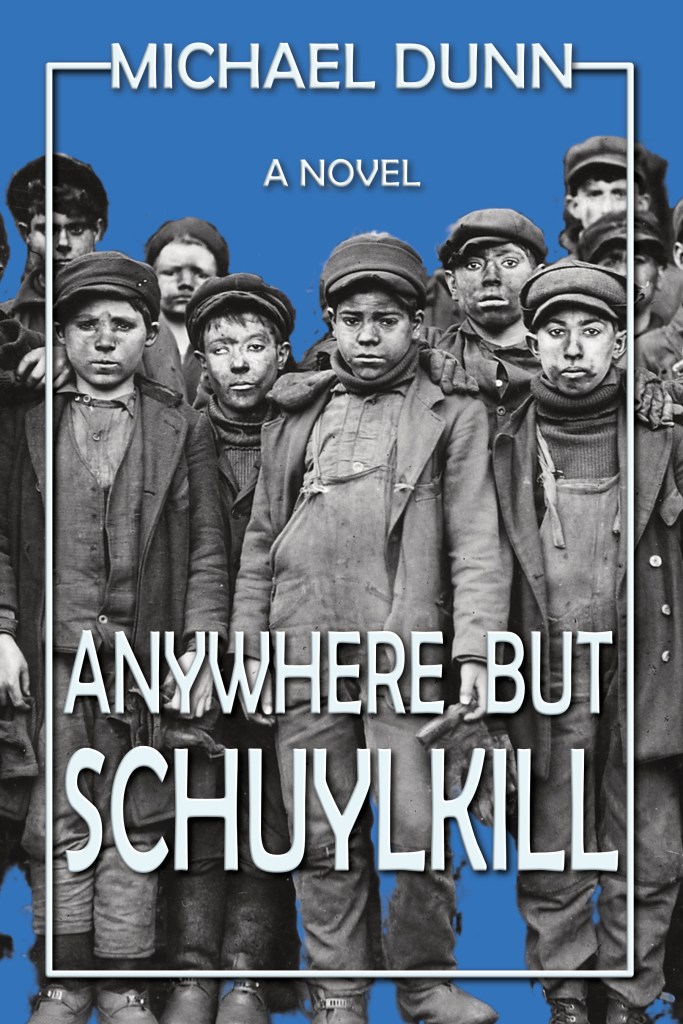
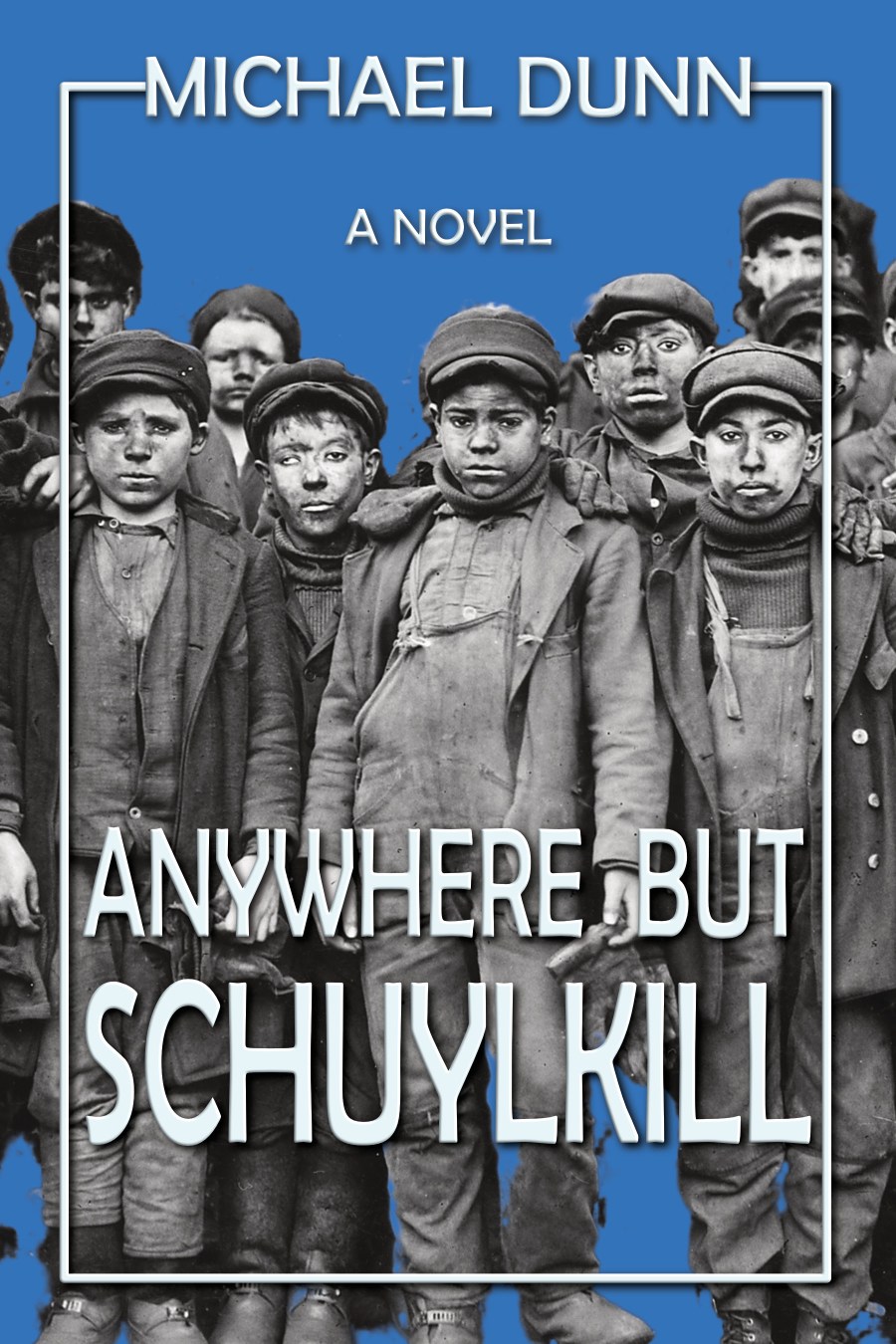
- I had originally intended to write about a little-known piece of American history called the Great Upheaval, a massive strike wave that erupted in the summer of 1877, in which at least 100 workers were killed by police and national guards nationwide. It spread from New York to Louisiana, and west, to California, with uprisings in several towns. Armories were looted. Black and white workers united in New Orleans, Louisville, Galveston, and in Saint Louis, where they took over management of city services, and called it the Saint Louis Commune, after the Paris Commune of 1871. But I soon realized this was way too big for a single book. And as I did the research, I discovered that just a few weeks before the Great Upheaval began, twenty innocent Irish miners were hanged in Schuylkill County, Pennsylvania—ten in a single day. It was the second largest mass execution in U.S. history. They were convicted of murder, accused of being terrorists from a secret organization called the Molly Maguires. Dozens more were imprisoned. All were union activists. And there is no evidence that an organization called the Molly Maguires ever existed in the U.S. So, I decided to do a trilogy, with the first book, Anywhere But Schuylkill, telling the story of Mike Doyle, one of the accused Molly Maguires who got away.
What theme or message do you hope readers will take away from your book?
- I didn’t write this book to be didactic. For me, reading and writing are fun, and that was why I wrote the book. But in the process, I did hope to right an historical wrong. Arthur Conan Doyle’s final Sherlock Holmes novel, Valley of Fear (1915), the 1970 Sean Connery film, Molly Maguires, and a majority of the academic texts about the Molly Maguires and the miners’ union of that era, were based on Allan Pinkerton’s own work of fiction, The Molly Maguires and the Detectives (1877), which he falsely marketed as nonfiction. These works universally treat the Molly Maguires as an actual Irish terrorist organization, which conspired to murder mine owners and scabs, despite the fact that there is no evidence that such an organization ever existed in the U.S., other than the claims of Pinkerton, who had been hired by the coal companies to disrupt and destroy the union. So, there’s that. But I also hope readers will find beauty and inspiration in the characters’ struggles.
What drew you into this particular genre?
- I love history, especially labor history and the history of social movements. I’ve been blogging and writing nonfiction on these themes for years now. And I also enjoy reading historical fiction. But I really wanted to write the story of the Molly Maguires, from their own perspective, the story of impoverished immigrants and first-generation Americans, persecuted for their ethnic and religious identity, struggling to support their families during the worst depression the country had known, trying to collectively organize against one of the most powerful corporations of the era: the Reading Railroad. Plus, fiction can reveal the truths that reality obscures, to paraphrase Emerson.So, historical fiction seemed the perfect genre.
If you could sit down with any character in your book, what would you ask them and why?
- I would like to talk to Da, about the antidraft protests he was involved in during the Civil War. I’d like to know if there were many others, like him, who saw the war as a fight between two opposing factions of the ruling class, rather than as a fight against slavery, and tyranny, as many of the German immigrants saw it.
What social media site has been the most helpful in developing your readership?
- I’m not sure yet. I do have an Author Takeover on Facebook on January 15, with the Historical Fiction Club. You should check it out. I’ll be posting eight short pieces throughout the day. I’ll be giving away free copies of my book. And it’ll be a fun way to get to know about me and my writing, ask me questions, and maybe even learn a little working-class history. To participate, go to the Historical Fiction Book Club Facebook page on Jan 15: https://www.facebook.com/groups/historicalfictionbookclub
What advice would you give to aspiring or just starting authors out there?
- First, I’d tell them to do their homework. Learn something about the craft before embarking. I didn’t. I was super naïve going into it. I thought, Hey, I’m good at telling stories and I read a lot. Of course, I can write a novel. Plus, the actual facts were so fascinating, I thought the story would write itself. But I had no training in fiction writing. I made a lot of mistakes. My first draft was terrible. The side characters were one-dimensional. There were no emotional arcs. The subplots weren’t fleshed out enough. I didn’t provide enough sensory details. I had to go back and take courses, find mentors, read a lot about the craft. Consequently, it took me nine years from when I first started working on this project to the time when it was actually published. Of course, I was also working full time, and being a father. So, that also made it take longer.
- Second, I’d tell them to learn to embrace the editing process. No one, except maybe Kafka, churns out a finished product on the first draft. The editing and rewriting are the most time-consuming parts of the process. You could end up rewriting the entire thing 5-10 times before it’s really done. If you don’t have resilience and perseverance, and an enjoyment of this process, you might have a hard time producing a good quality book. That said, I really do enjoy the editing and rewriting. It’s a lot of fun trying to get all the pieces to fit together artfully.
What does the future hold in store for you? Any new books/projects on the horizon?
- The Molly Maguire mass hanging that occurred in 1877, the second largest mass execution in U.S. history, is the opening scene of the next book in my Great Upheaval Trilogy: Red Hot Summer in the Big Smoke. The main character is Mike Doyle’s kid sister, Tara. It takes place in Pittsburgh, during the Great Upheaval strike wave, where much of downtown was burned to the ground, and where 20 strikers were gunned down by soldiers. I’m about halfway through the first draft. And then it will be on to the third and final book in the series. Not sure yet about the title. But it will take place in Saint Louis.
About the Author
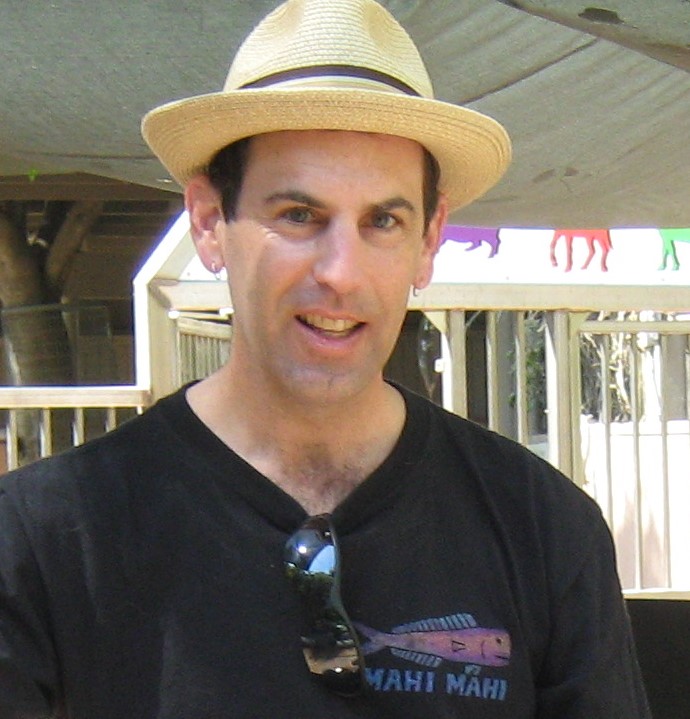
Michael Dunn writes Working-Class Fiction from the Not So Gilded Age. “Anywhere But Schuylkill,” is the first in his Great Upheaval trilogy. A lifelong union activist, he has always been drawn to stories of the past, particularly those of regular working people, struggling to make a better life for themselves and their families. Stories most people do not know, or have forgotten, because history is written by the victors, the robber barons and plutocrats, not the workers and immigrants. Yet their stories are among the most compelling in America.
They resonate today because they are the stories of our own ancestors, because their passions and desires, struggles and tragedies, were so similar to our own. When Michael Dunn is not writing historical fiction, he teaches high school, and writes about labor history and culture. His labor history has been published in several online and print magazines:
Reform: The Trojan Horse Wheeling into Schools (Labor Notes 7/28/11); The dangers of a
California megaflood (World Socialist Website, 10/25/21); and The Modern School Movement
(Fifth Estate, #411, Spring, 2022).