I received a free copy of this book in exchange for a fair and honest review. All opinions are my own.
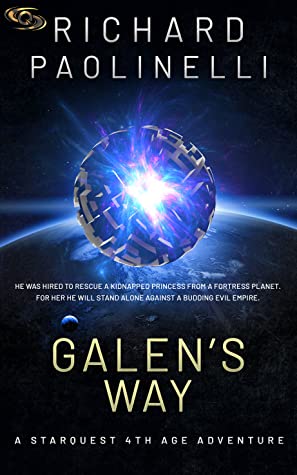
Tackling award winning author John C. Wright’s “Starquest” series, author Richard Paolinelli explores the 4th Age of this saga as a lone mercenary must rescue a Princess who’s safety will determine the fate of the Andromeda Galaxy as he discovers his true destiny in the epic space-opera “Galen’s Way”.
Advertisements
The Synopsis
A KIDNAPPED PRINCESS.
A FEARED MERCENARY.
AN EVIL EMPIRE ABOUT TO BE BORN.
The Princess Rhiannon of Salacia has been kidnapped and is being held for ransom on the fortress planet Nammu. Galen Dwyn, the most feared mercenary in the Andromeda Galaxy has been hired to rescue her and bring her home.
He will soon find himself on the run with the Princess and right in the middle of a web of political intrigue even as he begins to fall for the Princess. For her love, he will stand alone against the forces looking to establish a new, and very evil, empire.
Galen will look to keep her safe and bring the budding empire to a halt before it can gain a foothold in the galaxy. He will choose to do so the only way he knows how.
Galen’s Way.
Dragon Award finalist Richard Paolinelli takes us on a grand adventure in this space Opera offering set in the 4th age of Dragon Award winner John C. Wright’s Starquest universe.
The Review
A truly perfect and engaging sci-fi opera! The author has managed to capture the politics, the adventure, and the almost mythical quality of the genre. The sense of imagery the author includes really does an amazing job of painting a picture of the characters and various settings this story utilizes, and while I myself am not familiar with the original series from John C. Wright, newcomers will have no problem delving into this vast world the author has brought to life.
The characters really jump off the page of this story. Galen Dwyn is the perfect blend of characters like Han Solo of the Star Wars franchise or Captain Malcolm Reynolds of the Firefly series, exuding confidence and steely-determination while boasting a blend of humorous interactions and deadly accuracy, and yet he also feels so much more complex and drawn out as a protagonist, which draws the reader in immediately. The backstory of humanity’s migration to the Andromeda and the sense of destiny that the story set’s up just really help the novel as a whole to coalesce, making for a fun read.
The Verdict
A masterful, adventurous, and engaging read, author Richard Paolinelli’s “Galen’s Way” is a must-read sci-fi epic that really encapsulates the space opera genre perfectly. Readers really get to experience the classic “hero’s journey” storytelling device and the larger-than-life mythos that this story explores will keep readers wanting more and more. Be sure to grab your copy today!
Rating: 10/10
Advertisements
About the Author
Richard Paolinelli began his writing career as a freelance writer in 1984 in Odessa, TX and gained his first fiction credit serving as the lead writer for the first two issues of the Elite Comics sci-fi/fantasy series, Seadragon. In 1991 Richard began his sports writing career at the Gallup Independent before moving on to work for the Modesto Bee, Turlock Journal, Merced Sun-Star, Tracy Press, San Mateo County Times and the San Francisco Examiner. He also served as an editor and photographer with some of the newspapers. He won the 2001 California Newspaper Publishers Association award for Best Sports Story while at the Turlock Journal.
In 2010, Richard retired as a sportswriter and decided to return to his fiction writing roots. He released two short stories – The Invited and Legacy of Death – as well as a full-length sci-fi novel, Maelstrom. In 2015, Richard completed nearly two years of research and interviews and published, From The Fields: A History of Prep Football in Turlock, California, chronicling 95 years of high school football in his hometown. One month later, the first book of the Jack Del Rio series, Reservations, was published by Oak Tree Press.
In 2016, Richard was one of a dozen authors selected to participate in, Beyond Watson, an anthology of original Sherlock Holmes stories and was one of 20 writers involved in a second Holmes Anthology, Holmes Away From Home, released in December. Perfection’s Arbiter, a biography of National League Umpire, Babe Pinelli, was released on October 8th. W & B Books acquired the Jack Del Rio series and released the second book, Betrayals, in November. The remaining two books in the Jack Del Rio series will follow in 2017 & 2018.
In January of 2017, Richard returned to his science fiction roots with the release of the novel, Escaping Infinity, and will release another sci-fi novel, When The Gods Fell, on September 4, 2018.
I received a free copy of this book in exchange for a fair and honest review. All opinions are my own.
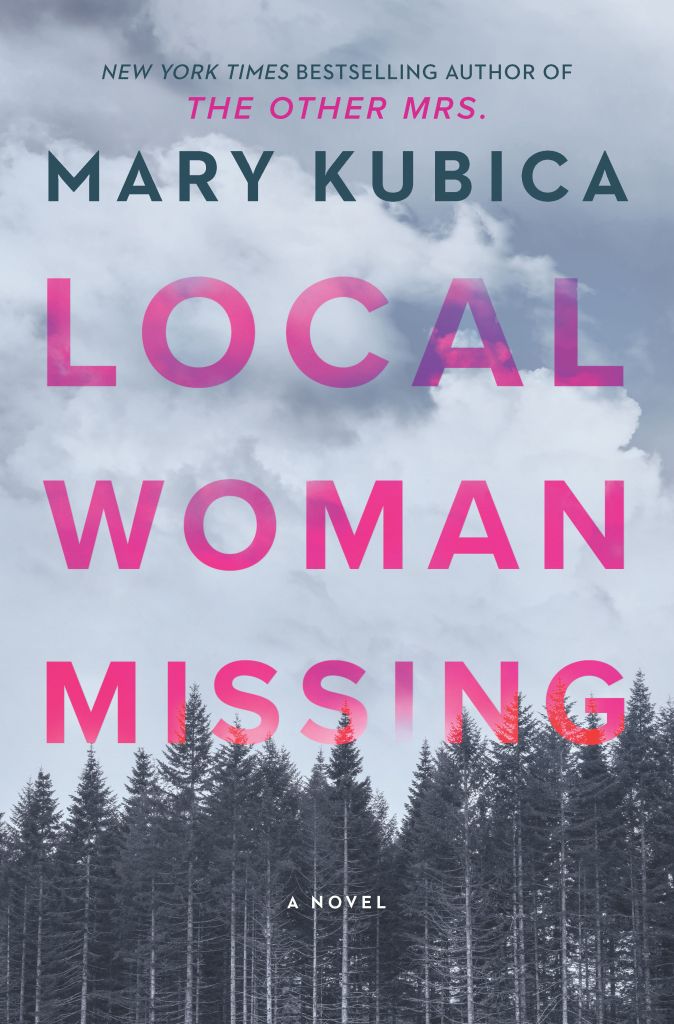
A young girl who disappeared over a decade earlier along with two older women returns and brings with her a shocking twist of domestic secrets that will shake a local community to the core in author Mary Kubica’s “Local Woman Missing”.
Advertisements
The Synopsis
People don’t just disappear without a trace…
Shelby Tebow is the first to go missing. Not long after, Meredith Dickey and her six-year-old daughter, Delilah, vanish just blocks away from where Shelby was last seen, striking fear into their once-peaceful community. Are these incidents connected? After an elusive search that yields more questions than answers, the case eventually goes cold.
Now, eleven years later, Delilah shockingly returns. Everyone wants to know what happened to her, but no one is prepared for what they’ll find…
In this smart and chilling thriller, master of suspense and New York Times bestselling author Mary Kubica takes domestic secrets to a whole new level, showing that some people will stop at nothing to keep the truth buried.
The Review
This was such a compelling read. The author does an incredible job of weaving together a complex narrative that keeps the reader guessing the entire story. The characters feel alive and do a marvelous job of engaging the reader on an entirely different level, eliciting emotions like sadness and rage to disbelief and heartbreak. The alternating timelines and POV’s were an inspired choice, as they really help the story connect with the mystery and intrigue the author has established here.
What will draw the reader in is the intensity of the narrative and how the author manages to weave each POV and timeline to keep the mystery alive. The story shifts and changes so many times that readers are constantly shocked to discover new secrets and new suspects in this growing case, as the true mystery doesn’t even begin until after Delilah returns home.
The Verdict
A brilliant, thought-provoking, and heart-pounding thriller, author Mary Kubica’s “Local Woman Missing” is the perfect suspense novel for fans of the genre this summer. Written in a way that screams for a cinematic or miniseries adaption, the twists and turns will keep readers engaged throughout the entirety of the novel, and by the book’s end readers will be shocked as the final revelations are shown. If you haven’t yet, be sure to grab your copy today!
Rating: 10/10
Advertisements
About the Author
Mary Kubica is the New York Times and USA Today bestselling author of six novels, including THE GOOD GIRL, PRETTY BABY, DON’T YOU CRY, EVERY LAST LIE, WHEN THE LIGHTS GO OUT, and THE OTHER MRS. A former high school history teacher, Mary holds a Bachelor of Arts degree from Miami University in Oxford, Ohio, in History and American Literature. She lives outside of Chicago with her husband and two children. Her last novel THE OTHER MRS. was an instant New York Times bestseller; is coming soon to Netflix; was a LibraryReads pick for February 2020; praised by the New York Times; and highly recommended by Entertainment Weekly, People, The Week,Marie Claire, Bustle, HelloGiggles,Goodreads, PopSugar, BookRiot, HuffingtonPost, First for Women, Woman’s World, and more.Mary’s novels have been translated into over thirty languages and have sold over two million copies worldwide. She’s been described as “a helluva storyteller,” (Kirkus Reviews) and “a writer of vice-like control,” (Chicago Tribune), and her novels have been praised as “hypnotic” (People) and “thrilling and illuminating” (Los Angeles Times). LOCAL WOMAN MISSING is her seventh novel.
The text comes from a number I don’t know. It’s a 630 area code. Local. I’m in the bathroom with Leo as he soaks in the tub. He has his bath toys lined up on the edge of it and they’re taking turns swan diving into the now-lukewarm water. It used to be hot, too hot for Leo to get into. But he’s been in there for thirty minutes now playing with his octopus, his whale, his fish. He’s having a ball.
Meanwhile I’ve lost track of time. I have a client in the early stages of labor. We’re texting. Her husband wants to take her to the hospital. She thinks it’s too soon. Her contractions are six and a half minutes apart. She’s absolutely correct. It’s too soon. The hospital would just send her home, which is frustrating, not to mention a huge inconvenience for women in labor. And anyway, why labor at the hospital when you can labor in the comfort of your own home? First-time fathers always get skittish. It does their wives no good. By the time I get to them, more times than not, the woman in labor is the more calm of the two. I have to focus my attention on pacifying a nervous husband. It’s not what they’re paying me for.
I tell Leo one more minute until I shampoo his hair, and then fire off a quick text, suggesting my client have a snack to keep her energy up, herself nourished. I recommend a nap, if her body will let her. The night ahead will be long for all of us. Childbirth, especially when it comes to first-time moms, is a marathon, not a sprint.
Josh is home. He’s in the kitchen cleaning up from dinner while Delilah plays. Delilah’s due up next in the tub. By the time I leave, the bedtime ritual will be done or nearly done. I feel good about that, hating the times I leave Josh alone with so much to do.
I draw up my text and then hit Send. The reply is immediate, that all too familiar ping that comes to me at all hours of the day or night.
I glance down at the phone in my hand, expecting it’s my client with some conditioned reply. Thx.
Instead: I know what you did. I hope you die.
Beside the text is a picture of a grayish skull with large, black eye sockets and teeth. The symbol of death.
My muscles tense. My heart quickens. I feel thrown off. The small bathroom feels suddenly, overwhelmingly, oppressive. It’s steamy, moist, hot. I drop down to the toilet and have a seat on the lid. My pulse is loud, audible in my own ears. I stare at the words before me, wondering if I’ve misread. Certainly I’ve misread. Leo is asking, “Is it a minute, Mommy?” I hear his little voice, muff led by the ringing in my ears. But I’m so thrown by the cutthroat text that I can’t speak.
I glance at the phone again. I haven’t misread.
The text is not from my client in labor. It’s not from any client of mine whose name and number is stored in my phone. As far as I can tell, it’s not from anyone I know.
A wrong number, then, I think. Someone sent this to me by accident. It has to be. My first thought is to delete it, to pretend this never happened. To make it disappear. Out of sight, out of mind.
But then I think of whoever sent it just sending it again or sending something worse. I can’t imagine anything worse.
I decide to reply. I’m careful to keep it to the point, to not sound too judgy or fault-finding because maybe the intended recipient really did do something awful—stole money from a children’s cancer charity—and the text isn’t as egregious as it looks at first glance.
I text: You have the wrong number.
The response is quick.
I hope you rot in hell, Meredith.
The phone slips from my hand. I yelp. The phone lands on the navy blue bath mat, which absorbs the sound of its fall.
Meredith.
Whoever is sending these texts knows my name. The texts are meant for me.
A second later Josh knocks on the bathroom door. I spring from the toilet seat, and stretch down for the phone. The phone has fallen facedown. I turn it over. The text is still there on the screen, staring back at me.
Josh doesn’t wait to be let in. He opens the door and steps right inside. I slide the phone into the back pocket of my jeans before Josh has a chance to see.
“Hey,” he says, “how about you save some water for the fish.”
Leo complains to Josh that he is cold. “Well, let’s get you out of the bath,” Josh says, stretching down to help him out of the water.
“I need to wash him still,” I admit. Before me, Leo’s teeth chatter. There are goose bumps on his arm that I hadn’t noticed before. He is cold, and I feel suddenly guilty, though it’s mired in confusion and fear. I hadn’t been paying any attention to Leo. There is bathwater spilled all over the floor, but his hair is still bone-dry.
“You haven’t washed him?” Josh asks, and I know what he’s thinking: that in the time it took him to clear the kitchen table, wash pots and pans and wipe down the sinks, I did nothing. He isn’t angry or accusatory about it. Josh isn’t the type to get angry.
“I have a client in labor,” I say by means of explanation. “She keeps texting,” I say, telling Josh that I was just about to wash Leo. I drop to my knees beside the tub. I reach for the shampoo. In the back pocket of my jeans, the phone again pings. This time, I ignore it. I don’t want Josh to know what’s happening, not until I get a handle on it for myself.
Josh asks, “Aren’t you going to get that?” I say that it can wait. I focus on Leo, on scrubbing the shampoo onto his hair, but I’m anxious. I move too fast so that the shampoo suds get in his eye. I see it happening, but all I can think to do is wipe it from his forehead with my own soapy hands. It doesn’t help. It makes it worse.
Leo complains. Leo isn’t much of a complainer. He’s an easygoing kid. “Ow,” is all that he says, his tiny wet hands going to his eyes, though shampoo in the eye burns like hell.
“Does that sting, baby?” I ask, feeling contrite. But I’m bursting with nervous energy. There’s only one thought racing through my mind. I hope you rot in hell, Meredith.
Who would have sent that, and why? Whoever it is knows me. They know my name. They’re mad at me for something I’ve done. Mad enough to wish me dead. I don’t know anyone like that. I can’t think of anything I’ve done to upset someone enough that they’d want me dead.
I grab the wet washcloth draped over the edge of the tub. I try handing it to Leo, so that he can press it to his own eyes. But my hands shake as I do. I wind up dropping the washcloth into the bath. The tepid water rises up and splashes him in the eyes. This time he cries.
“Oh, buddy,” I say, “I’m so sorry, it slipped.”
But as I try again to grab it from the water and hand it to him, I drop the washcloth for a second time. I leave it where it is, letting Leo fish it out of the water and wipe his eyes for himself. Meanwhile Josh stands two feet behind, watching.
My phone pings again. Josh says, “Someone is really dying to talk to you.”
Dying. It’s all that I hear.
My back is to Josh, thank God. He can’t see the look on my face when he says it.
“What’s that?” I ask.
“Your client,” Josh says. I turn to him. He motions to my phone jutting out of my back pocket. “She really needs you. You should take it, Mer,” he says softly, accommodatingly, and only then do I think about my client in labor and feel guilty. What if it is her? What if her contractions are coming more quickly now and she does need me?
Josh says, “I can finish up with Leo while you get ready to go,” and I acquiesce, because I need to get out of here. I need to know if the texts coming to my phone are from my client or if they’re coming from someone else.
I rise up from the floor. I scoot past Josh in the door, brushing against him. His hand closes around my upper arm as I do, and he draws me in for a hug. “Everything okay?” he asks, and I say yes, fine, sounding too chipper even to my own ears. Everything is not okay.
“I’m just thinking about my client,” I say. “She’s had a stillbirth before, at thirty-two weeks. She never thought she’d get this far. Can you imagine that? Losing a baby at thirty-two weeks?”
Josh says no. His eyes move to Leo and he looks saddened by it. I feel guilty for the lie. It’s not this client but another who lost a baby at thirty-two weeks. When she told me about it, I was completely torn up. It took everything in me not to cry as she described for me the moment the doctor told her her baby didn’t have a heartbeat. Labor was later induced, and she had to push her dead baby out with only her mother by her side. Her husband was deployed at the time. After, she was snowed under by guilt. Was it her fault the baby died? A thousand times I held her hand and told her no. I’m not sure she ever believed me.
My lie has the desired effect. Josh stands down, and asks if I need help with anything before I leave. I say no, that I’m just going to change my clothes and go.
I step out of the bathroom. In the bedroom, I close the door. I grab my scrub bottoms and a long-sleeved T-shirt from my drawer. I lay them on the bed, but before I get dressed, I pull my phone out of my pocket. I take a deep breath and hold it in, summoning the courage to look. I wonder what waits there. More nasty threats? My heart hammers inside me. My knees shake.
I take a look. There are two messages waiting for me.
The first: Water broke. Contractions 5 min apart.
And then: Heading to hospital.—M.
I release my pent-up breath. The texts are from my client’s husband, sent from her phone. My legs nearly give in relief, and I drop down to the edge of the bed, forcing myself to breathe. I inhale long and deep. I hold it in until my lungs become uncomfortable. When I breathe out, I try and force away the tension.
But I can’t sit long because my client is advancing quickly. I need to go.
Excerpted from Local Woman Missing @ 2021 by Mary Kyrychenko, used with permission by Park Row Books.
I received a free copy of this book in exchange for a fair and honest review. All opinions are my own.
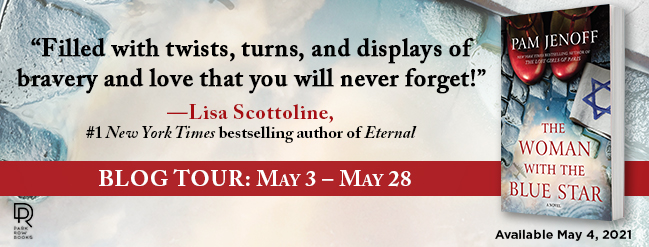
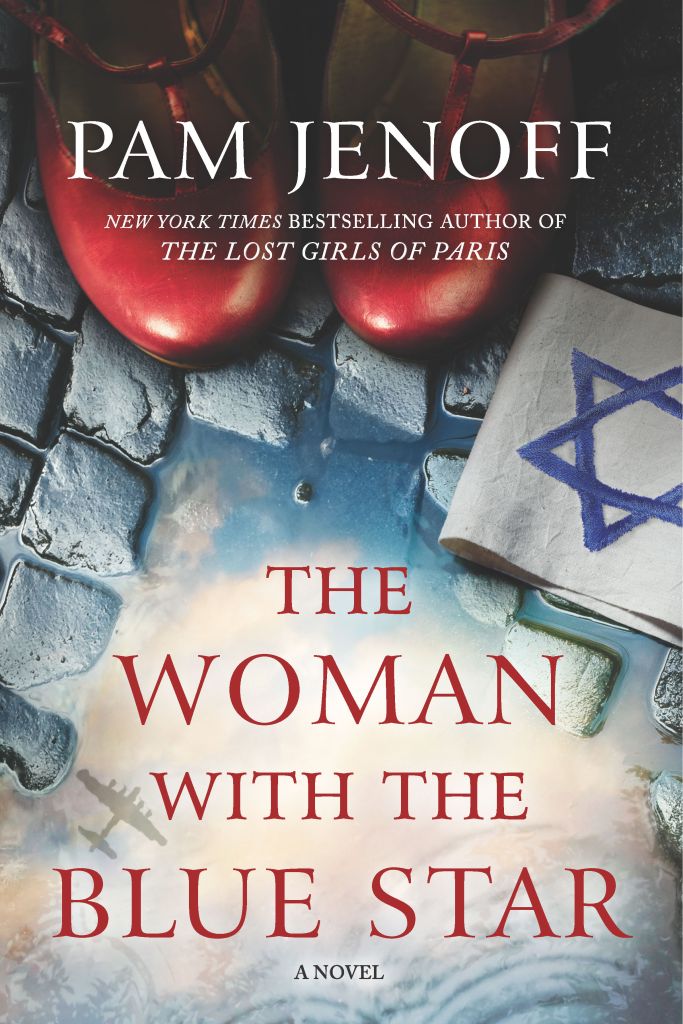
Two young women in very different circumstances during the German occupation of WWII find themselves becoming quick friends, but soon that friendship is tested as the war grows far deadlier in author Pam Jenoff’s “The Woman with the Blue Star”.
Advertisements
The Synopsis
From the New York Times bestselling author of The Lost Girls of Paris comes a riveting tale of courage and unlikely friendship during World War II.
1942. Sadie Gault is eighteen and living with her parents in the Kraków Ghetto during World War II. When the Nazis liquidate the ghetto, Sadie and her pregnant mother are forced to seek refuge in the perilous tunnels beneath the city. One day Sadie looks up through a grate and sees a girl about her own age buying flowers.
Ella Stepanek is an affluent Polish girl living a life of relative ease with her stepmother, who has developed close alliances with the occupying Germans. While on an errand in the market, she catches a glimpse of something moving beneath a grate in the street. Upon closer inspection, she realizes it’s a girl hiding.
Ella begins to aid Sadie and the two become close, but as the dangers of the war worsen, their lives are set on a collision course that will test them in the face of overwhelming odds. Inspired by incredible true stories, The Woman with the Blue Star is an unforgettable testament to the power of friendship and the extraordinary strength of the human will to survive.
The Review
The author does a truly fantastic and haunting job of capturing the horrors of WWII and the conditions that so many were forced to live in. Right off the bat readers are shown the pain of loss that one of the protagonists goes through in the heart-pounding moments a family attempts to find an escape from the overwhelming German forces. The imagery and sense of setting really are powerful in this story, as readers are immediately brought to the very different and distinct lives that separated those being hunted by the German occupation and those living “normally” during the occupation.
What really stands at the heart of this story however is the relationship between the two young women that become the protagonists of the story. Sadie and Ella’s stories are heartbreaking and heartwarming all at once, highlighting their individual struggles in this time of war while also showcasing how friendship, love, and relationships, in general, can give those in a time of need or struggle the hope they need to either endure or overcome those struggles. Readers will instantly be drawn into their friendship and the path their lives take during this tumultuous time.
The Verdict
A mesmerizing, haunting, and emotional historical-fiction read, author Pam Jenoff’s “The Girl with the Blue Star” is a must-read novel and the perfect historical-fiction read for the upcoming summer season. For those who love history and stories that delve into personal relationships that help overcome struggles, this is a truly engaging and intriguing read that cannot be missed. Be sure to grab your copy today!
Rating: 10/10
Advertisements
About the Author
Pam Jenoff is the author of several books of historical fiction, including the NYT bestseller The Orphan’s Tale. She holds a degree in international affairs from George Washington University and a degree in history from Cambridge, and she received her JD from UPenn. Her novels are inspired by her experiences working at the Pentagon and as a diplomat for the State Department handling Holocaust issues in Poland. She lives with her husband and 3 children near Philadelphia, where she teaches law.
Everything changed the day they came for the children.
I was supposed to have been in the attic crawl space of the three-story building we shared with a dozen other families in the ghetto. Mama helped me hide there each morning before she set out to join the factory work detail, leaving me with a fresh bucket as a toilet and a stern admonishment not to leave. But I grew cold and restless alone in the tiny, frigid space where I couldn’t run or move or even stand straight. The minutes stretched silently, broken only by a scratching—unseen children, years younger than me, stowed on the other side of the wall. They were kept separate from one another without space to run and play. They sent each other messages by tapping and scratching, though, like a kind of improvised Morse code. Sometimes, in my boredom, I joined in, too.
“Freedom is where you find it,” my father often said when I complained. Papa had a way of seeing the world exactly as he wanted. “The greatest prison is in our mind.” It was easy for him to say. Though he manual ghetto labor was a far cry from his professional work as an accountant before the war, at least he was out and about each day, seeing other people. Not cooped up like me. I had scarcely left our apartment building since we were forced to move six months earlier from our apartment in the Jewish Quarter near the city center to the Podgórze neighborhood where the ghetto had been established on the southern bank of the river. I wanted a normal life, my life, free to run beyond the walls of the ghetto to all of the places I had once known and taken for granted. I imagined taking the tram to the shops on the Rynek or to the kino to see a film, exploring the ancient grassy mounds on the outskirts of the city. I wished that at least my best friend, Stefania, was one of the others hidden nearby. Instead, she lived in a separate apartment on the other side of the ghetto designated for the families of the Jewish police.
It wasn’t boredom or loneliness that had driven me from my hiding place this time, though, but hunger. I had always had a big appetite and this morning’s breakfast ration had been a half slice of bread, even less than usual. Mama had offered me her portion, but I knew she needed her strength for the long day ahead on the labor detail.
As the morning wore on in my hiding place, my empty belly had begun to ache. Visions pushed into my mind uninvited of the foods we ate before the war: rich mushroom soup and savory borscht, and pierogi, the plump, rich dumplings my grandmother used to make. By midmorning, I felt so weak from hunger that I had ventured out of my hiding place and down to the shared kitchen on the ground floor, which was really nothing more than a lone working stove burner and a sink that dripped tepid brown water. I didn’t go to take food—even if there had been any, I would never steal. Rather, I wanted to see if there were any crumbs left in the cupboard and to fill my stomach with a glass of water.
I stayed in the kitchen longer than I should, reading the dog-eared copy of the book I’d brought with me. The thing I detested most about my hiding place in the attic was the fact that it was too dark for reading. I had always loved to read and Papa had carried as many books as he could from our apartment to the ghetto, over the protests of my mother, who said we needed the space in our bags for clothes and food. It was my father who had nurtured my love of learning and encouraged my dream of studying medicine at Jagiellonian University before the German laws made that impossible, first by banning Jews and later by closing the university altogether. Even in the ghetto at the end of his long, hard days of labor, Papa loved to teach and discuss ideas with me. He had somehow found me a new book a few days earlier, too, The Count of Monte Cristo. But the hiding place in the attic was too dark for me to read and there was scarcely any time in the evening before curfew and lights-out. Just a bit longer, I told myself, turning the page in the kitchen. A few minutes wouldn’t matter at all.
I had just finished licking the dirty bread knife when I heard heavy tires screeching, followed by barking voices. I froze, nearly dropping my book. The SS and Gestapo were outside, flanked by the vile Jüdischer Ordnungsdienst, Jewish Ghetto Police, who did their bidding. It was an aktion, the sudden unannounced arrest of large groups of Jews to be taken from the ghetto to camps. The very reason I was meant to be hiding in the first place. I raced from the kitchen, across the hall and up the stairs. From below came a great crash as the front door to the apartment building splintered and the police burst through. There was no way I could make it back to the attic in time.
Instead, I raced to our third-floor apartment. My heart pounded as I looked around desperately, wishing for an armoire or other cabinet suitable for hiding in the tiny room, which was nearly bare except for a dresser and bed. There were other places, I knew, like the fake plaster wall one of the other families had constructed in the adjacent building not a week earlier. That was too far away now, impossible to reach. My eyes focused on the large steamer trunk stowed at the foot of my parents’ bed. Mama had shown me how to hide there once shortly after we first moved to the ghetto. We practiced it like a game, Mama opening the trunk so that I could climb in before she closed the lid.
The trunk was a terrible hiding place, exposed and in the middle of the room. But there was simply nowhere else. I had to try. I raced over to the bed and climbed into the trunk, then closed the lid with effort. I thanked heavens that I was tiny like Mama. I had always hated being so petite, which made me look a solid two years younger than I actually was. Now it seemed a blessing, as did the sad fact that the months of meager ghetto rations had made me thinner. I still fit in the trunk.
When we had rehearsed, we had envisioned Mama putting a blanket or some clothes over the top of the trunk. Of course, I couldn’t do that myself. So the trunk sat unmasked for anyone who walked into the room to see and open. I curled into a tiny ball and wrapped my arms around myself, feeling the white armband with the blue star on my sleeve that all Jews were required to wear.
There came a great crashing from the next building, the sound of plaster being hewn by a hammer or ax. The police had found the hiding place behind the wall, given away by the too-fresh paint. An unfamiliar cry rang out as a child was found and dragged from his hiding place. If I had gone there, I would have been caught as well.
Someone neared the door to the apartment and flung it open. My heart seized. I could hear breathing, feel eyes searching the room. I’m sorry, Mama, I thought, feeling her reproach for having left the attic. I braced myself for discovery. Would they go easier on me if I came out and gave myself up? The footsteps grew fainter as the German continued down the hall, stopping before each door, searching.
The war had come to Kraków one warm fall day two and a half years earlier when the air-raid sirens rang out for the first time and sent the playing children scurrying from the street. Life got hard before it got bad. Food disappeared and we waited in long lines for the most basic supplies. Once there was no bread for a whole week.
Then about a year ago, upon orders from the General Government, Jews teemed into Kraków by the thousands from the small towns and villages, dazed and carrying their belongings on their backs. At first I wondered how they would all find places to stay in Kazimierz, the already cramped Jewish Quarter of the city. But the new arrivals were forced to live by decree in a crowded section of the industrial Podgórze district on the far side of the river that had been cordoned off with a high wall. Mama worked with the Gmina, the local Jewish community organization, to help them resettle, and we often had friends of friends over for a meal when they first arrived, before they went to the ghetto for good. They told stories from their hometowns too awful to believe and Mama shooed me from the room so I would not hear.
Several months after the ghetto was created, we were ordered to move there as well. When Papa told me, I couldn’t believe it. We were not refugees, but residents of Kraków; we had lived in our apartment on Meiselsa Street my entire life. It was the perfect location: on the edge of the Jewish Quarter but easy walking distance to the sights and sounds of the city center and close enough to Papa’s office on Stradomska Street that he could come home for lunch. Our apartment was above an adjacent café where a pianist played every evening. Sometimes the music spilled over and Papa would whirl Mama around the kitchen to the faint strains. But according to the orders, Jews were Jews. One day. One suitcase each. And the world I had known my entire life disappeared forever.
I peered out of the thin slit opening of the trunk, trying to see across the tiny room I shared with my parents. We were lucky, I knew, to have a whole room to ourselves, a privilege we had been given because my father was a labor foreman. Others were forced to share an apartment, often two or three families together. Still, the space felt cramped compared to our real home. We were ever on top of one another, the sights and sounds and smells of daily living magnified.
“Kinder, raus!” the police called over and over again now as they patrolled the halls. Children, out. It was not the first time the Germans had come for children during the day, knowing that their parents would be at work.
But I was no longer a child. I was eighteen and might have joined the work details like others my age and some several years younger. I could see them lining up for roll call each morning before trudging to one of the factories. And I wanted to work, even though I could tell from the slow, painful way my father now walked, stooped like an old man, and how Mama’s hands were split and bleeding that it was hard and awful. Work meant a chance to get out and see and talk to people. My hiding was a subject of much debate between my parents. Papa thought I should work. Labor cards were highly prized in the ghetto. Workers were valued and less likely to be deported to one of the camps. But Mama, who seldom fought my father on anything, had forbidden it. “She doesn’t look her age. The work is too hard. She is safest out of sight.” I wondered as I hid now, about to be discovered at any second, if she would still think she was right.
The building finally went silent, the last of the awful footsteps receding. Still I didn’t move. That was one of the ways they trapped people who were hiding, by pretending to go away and lying in wait when they came out. I remained motionless, not daring to leave my hiding place. My limbs ached, then went numb. I had no idea how much time had passed. Through the slit, I could see that the room had grown dimmer, as if the sun had lowered a bit.
Sometime later, there were footsteps again, this time a shuffling sound as the laborers trudged back silent and exhausted from their day. I tried to uncurl myself from the trunk. But my muscles were stiff and sore and my movements slow. Before I could get out, the door to our apartment flung open and someone ran into the room with steps light and fluttering. “Sadie!” It was Mama, sounding hysterical.
“Jestem tutaj,” I called. I am here. Now that she was home, she could help me untangle myself and get out. But my voice was muffled by the trunk. When I tried to undo the latch, it stuck.
Mama raced from the room back into the corridor. I could hear her open the door to the attic, then run up the stairs, still searching for me. “Sadie!” she called. Then, “My child, my child,” over and over again as she searched but did not find me, her voice rising to a shriek. She thought I was gone.
“Mama!” I yelled. She was too far away to hear me, though, and her own cries were too loud. Desperately, I struggled once more to free myself from the trunk without success. Mama raced back into the room, still wailing. I heard the scraping sound of a window opening and felt a whoosh of cold air. At last I threw myself against the lid of the trunk, slamming my shoulder so hard it throbbed. The latch sprang open.
I broke free and stood up quickly. “Mama?” She was standing in the oddest position, with one foot on the window ledge, her willowy frame silhouetted against the frigid twilight sky. “What are you doing?” For a second, I thought she was looking for me outside. But her face was twisted with grief and pain. I knew then why Mama was on the window ledge. She assumed I had been taken along with the other children. And she didn’t want to live. If I hadn’t freed myself from the trunk in time, Mama would have jumped. I was her only child, her whole world. She was prepared to kill herself before she would go on without me.
A chill ran through me as I sprinted toward her. “I’m here, I’m here.” She wobbled unsteadily on the window ledge and I grabbed her arm to stop her from falling. Remorse ripped through me. I always wanted to please her, to bring that hard-won smile to her beautiful face. Now I had caused her so much pain she’d almost done the unthinkable.
“I was so worried,” she said after I’d helped her down and closed the window. As if that explained everything. “You weren’t in the attic.”
“But, Mama, I hid where you told me to.” I gestured to the trunk. “The other place, remember? Why didn’t you look for me there?”
Mama looked puzzled. “I didn’t think you would fit anymore.” There was a pause and then we both began laughing, the sound scratchy and out of place in the pitiful room. For a few seconds, it was like we were back in our old apartment on Meiselsa Street and none of this had happened at all. If we could still laugh, surely things would be all right. I clung to this last improbable thought like a life preserver at sea.
But a cry echoed through the building, then another, silencing our laughter. It was the mothers of the other children who had been taken by the police. There came a thud outside. I started for the window, but my mother blocked me. “Look away,” she ordered. It was too late. I glimpsed Helga Kolberg, who lived down the hall, lying motionless in the coal-tinged snow on the pavement below, her limbs cast at odd angles and skirt splayed around her like a fan. She had realized her children were gone and, like Mama, she didn’t want to live without them. I wondered whether jumping was a shared instinct, or if they had discussed it, a kind of suicide pact in case their worst nightmares came true.
My father raced into the room then. Neither Mama nor I said a word, but I could tell from his unusually grim expression that he already knew about the aktion and what had happened to the other families. He simply walked over and wrapped his enormous arms around both of us, hugging us tighter than usual.
As we sat, silent and still, I looked up at my parents. Mama was a striking beauty—thin and graceful, with white-blond hair the color of a Nordic princess’. She looked nothing like the other Jewish women and I had heard whispers more than once that she didn’t come from here. She might have walked away from the ghetto and lived as a non-Jew if it wasn’t for us. But I was built like Papa, with the dark, curly hair and olive skin that made the fact that we were Jews undeniable. My father looked like the laborer the Germans had made him in the ghetto, broad-shouldered and ready to lift great pipes or slabs of concrete. In fact, he was an accountant—or had been until it became illegal for his firm to employ him anymore. I always wanted to please Mama, but it was Papa who was my ally, keeper of secrets and weaver of dreams, who stayed up too late whispering secrets in the dark and had roamed the city with me, hunting for treasure. I moved closer now, trying to lose myself in the safety of his embrace.
Still, Papa’s arms could offer little shelter from the fact that everything was changing. The ghetto, despite its awful conditions, had once seemed relatively safe. We were living among Jews and the Germans had even appointed a Jewish council, the Judenrat, to run our daily affairs. Perhaps if we laid low and did as we were told, Papa said more than once, the Germans would leave us alone inside these walls until the war was over. That had been the hope. But after today, I wasn’t so sure. I looked around the apartment, seized with equal parts disgust and fear. In the beginning, I had not wanted to be here; now I was terrified we would be forced to leave.
“We have to do something,” Mama burst out, her voice a pitch higher than usual as it echoed my unspoken thoughts.
“I’ll take her tomorrow and register her for a work permit,” Papa said. This time Mama did not argue. Before the war, being a child had been a good thing. But now being useful and able to work was the only thing that might save us.
Mama was talking about more than a work visa, though. “They are going to come again and next time we won’t be so lucky.” She did not bother to hold back her words for my benefit now. I nodded in silent agreement. Things were changing, a voice inside me said. We could not stay here forever.
“It will be okay, kochana,” Papa soothed. How could he possibly say that? But Mama laid her head on his shoulder, seeming to trust him as she always had. I wanted to believe it, too. “I will think of something. At least,” Papa added as we huddled close, “we are all still together.” The words echoed through the room, equal parts promise and prayer.
Excerpted from The Woman With the Blue Star @ 2021 by Pam Jenoff, used with permission by Park Row Books.
Advertisements
Q&A With Author Pam Jenoff
Why did you decide to write this story?
While looking for an idea for my next book, I discovered the incredible story of a group of Jewish people who had hidden from the Nazis by living for many months in the sewers of Lviv, Poland. I was struck by the horrific circumstances which they endured, as well as their ingenuity and resilience in surviving there. I was also moved by the selflessness of those who helped them, most notably a sewer worker, and by their search for human connection in such a dark and isolated place.
After twenty-five years of working with World War II and the Holocaust, I find a story that makes me gasp, I know I am onto something that will make my readers feel the same way. This was certainly the case with the true inspiration for The Woman With The Blue Star.
How much research went into your story?
Immersing myself in the world where my story is set, whether the circus in The Orphan’s Tale or the sewer in The Woman With The Blue Star, is always one of the most rewarding and challenging aspects of beginning a book. I had so many questions: What did the sewer look and feel like? How was it possible to eat and sleep and even see in the dark underground space? Fortunately, there was an excellent non-fiction book, In The Sewers of Lvov by Robert Marshall, that explained so much of it. I learned that there were so many dangers beyond getting caught by the Germans, from drowning to floods. Every day was a battle for survival.
When I decided to move the story to Krakow, Poland (where I had lived for several years), I planned a research trip there. Those plans were scuttled by the pandemic, but I am lucky enough to still have good friends there who put me in touch with experts on the sewer and the city to help me (hopefully) get it right.
What takeaway message do you hope readers get from your book?
Sadie and Ella, two women from completely different worlds, form a deep bond that has profound and lasting consequences. I hope readers will see in them the ways in which we can transcend our differences and connect. I also hope readers recognize the ways in which reaching out to someone, even in the smallest or most fleeting way, can have a tremendous impact on that person’s life as well as his or her own.
What can you tell me about your next project?
My new book is set in Belgium and inspired by the incredible true story of the only Nazi death train ever to be ambushed on its way to Auschwitz.
Do you have any specific writing rituals, such as a certain pen, drink, outfit, etc?
I find that my writing routine has evolved over the years. For example, at one point I went in to my office to write, at another I went to a coffeeshop, now sometimes I am on the couch. I have written in castles and mountain getaways, but I have also written in my doctor’s waiting room and in my car. There are certain constants, though. I love the early morning and I would write from five to seven every day if I had the chance. I just love getting that first burst in before the day gets hectic. I am a short burst writer, which means I have no stamina. If you give me eight hours in a day, I don’t know what to do with that. I would much rather have an hour seven days per week. And as much caffeine as possible!
Which character is most like you and why?
In this book, I suppose I relate to Sadie because her sense of isolation in some ways reflects what we have all felt during this pandemic.
Readers can’t get enough of WWII stories. Why the interest?
Personally, m love for the World War II era comes from the years I spent working in Krakow, Poland as a diplomat for the State Department. During that time. I worked on Holocaust issues and became very close to the surviving Jewish community in a way that deeply moved and changed me. More globally, I think World War II has great resonance for authors and readers. There is a drive to capture and tell stories from survivors now while we still have a chance. There is also a great deal of archival material that became available to authors as researchers after the Cold War ended that provides new ideas for books. And as an author, my goal is to take my reader and put her or him in the shoes of my protagonist so she or he asks, “What would I have done?” World War II, with its dire circumstances and stark choices, is incredibly fertile ground for storytelling.
Your stories are always Jewish related. What is the universal idea that captures readers of all backgrounds?
I would not describe my stories as “always Jewish related” but rather predominantly set around World War II and the Holocaust. This era is not only important in its own right but has many uniersal themes regarding human rights, prejudice and hate that are very relevant for our times.
Where do your stories come from? Do you do research?
I do research for new ideas and I am generally looking for two things. First, I would like to take a true bit of history and illuminate it so that readers can learn. Second, I am looking for an incredible, untold story. I have worked with World War II and the Holocaust for twenty-five years and if I find an idea that makes me gasp with surprise, I’m hopeful readers will feel the same way.
Do you work from an outline or do you write from the seat of your pants?
Well, I’m a “pantser” and that means I write by the seat of my pants and not from an outline, at least most of the time. So I don’t have a neat idea of where the book will wind up. I have an opening image and some general idea of where I will wind up and if I am lucky there are one or two high moments that I can see along the way, like lighthouses to guide me. But I am sometimes surprised by the end and that was certainly the case with The Woman With The Blue Star. That moment when you realize it is all going to come together is just one of the best feelings ever.
You are a bestselling author. How many books are expected from you per year? How many edit passes does your novel go through?
I used to write a book a year, but I’ve slowed down and now it is more like 18-24 months. I really prefer that creatively. My manuscripts go through many rounds of edits. The first round of changes are usually big picture and then it goes back and forth with the feedback getting increasingly more granular with each round of revision until my editor, agent and I are all satisfied.
Is there anything about you or your work that you’d like to share with readers?
I consider my books that are set around World War II and the Holocaust to be love songs to the people who lived through that most horrific period. I try to approach it with a great deal of respect and do them justice. On a very different note, I’d like to share that I always love connecting with readers. I invite each reader to find me online – through my website, Facebook author page, Twitter, Instagram or wherever they are hanging out.
I received a free copy of this book in exchange for a fair and honest review. All opinions are my own.
Author Kristine Raymond brings readers four original short stories exploring romance in the various seasons of the year in the hit short story collection, “Seasons of Love”.
Advertisements
The Synopsis
Four couples. Four seasons. A lifetime of love.
Dogwoods in Springtime
Still in mourning three years after her husband’s death, Caroline Ballard’s solitary life in rural Kentucky is disrupted by a broken water line, of all things. As if the lack of running water wasn’t bad enough, her immediate attraction to plumbing contractor Rick Spencer unearths emotions long thought buried. Opening her heart to love for a second time, a malicious lie told by his ex-wife threatens to end the budding relationship before it begins.
Seashells in Summer
Having adopted her four-year-old daughter, Lily, at birth, Taylor Brightman is suspicious when former Marine Sergeant Grant Cutler appears on her Nantucket Island doorstep claiming to be the girl’s biological father. Wary of his motives, his good looks and charming personality win her over, but can she trust that she won’t lose custody along with her heart?
Aspens in Autumn
Ramsey Fiorentino is having a bad day. On the run for her life after witnessing a murder, she’s being pursued by none other than Bishop Hamilton, a private investigator hired by the person who committed the crime. When he catches up to her and the truth comes out, they flee to the mountains of Flagstaff, Arizona to hide, but it’s only a matter of time before their newfound romance is tested in the wake of a deadly confrontation.
Snowflakes in Winter
When New Hampshire State Trooper Alex Ballard becomes stranded during a blizzard in the middle of the night, he seeks refuge at a local bed and breakfast, surprised to discover the owner, Chloe Mancuso, is the sole occupant. A passionate night spent in each other’s arms ignites feelings neither thought possible, but there’s someone else with his eye on Chloe and he’s not willing to share.
The Review
A truly fantastic collection of short stories, the author has done a wonderful job of creating well-rounded characters and evenly-paced stories that really capture the reader’s attention. The interesting thing about this collection is not only how the stories end up connecting to one another, but how each story incorporates various genres into the narratives, ranging from drama and loss to mystery and suspense, all against the backdrop of romance.
The really interesting thing however comes in the use of seasons for the narrative of each story. Utilizing this storytelling device, the author has found a way to make the seasons themselves not only part of the tapestry of the narrative but characters themselves. The writing does a great job of navigating the subtle nuisances of each story’s narrative, ranging from building tension to passionate romance and so much more.
The Verdict
An emotional, heartfelt, and enrapturing read, author Kristine Raymond’s “Seasons of Love” is a must-read short story collection. Perfectly written for those who love romance stories that incorporate many other genres into their narratives and romantic pairings that draw the reader in immediately, be sure to grab your copy of this incredible collection today!
Rating: 10/10
Advertisements
About the Author
It wasn’t until later in life that Kristine Raymond figured out what she wanted to be when she grew up, an epiphany that occurred in 2013 when she sat down and began writing her first novel. Over a dozen books in multiple genres later, there are a multitude of ideas floating around in her head thus assuring she’ll never be idle. When a spare moment does present itself, she fills it by navigating the publishing and promotional side of the business. When not doing that, she spends time with her husband and fur-babies (not necessarily in that order) at their home in south-central Kentucky, gardens, reads, or binge-watches Netflix. To find out more, please visit her website at www.kristineraymond.com
Paranormal Investigator and star of the acclaimed paranormal documentary series Kindred Spirits, author Amy Bruni shares her experiences and lessons she learned in the paranormal field in an effort to dispel the hysteria and fear that is often associated with the paranormal in her book, “Life with the Afterlife: 13 Truths I Learned About Ghosts”.
Advertisements
The Synopsis
A USA TODAY BESTSELLER
Star of Kindred Spirits and paranormal investigator Amy Bruni shares stories from her years of experiences with ghosts, organized around thirteen truths that guide her approach to the supernatural.
Amy Bruni, co-star of Kindred Spirits and one of the world’s leading paranormal investigators, has learned a lot about ghosts over her years of research and first-hand experience. Now, in Life with the Afterlife, she shares the insight she has gleaned and how it has shaped her unique approach to interacting with the spirits of the dead and those who encounter them.
From her earliest supernatural encounters as a child, through her years appearing on Ghost Hunters and the creation of her company Strange Escapes, which offers paranormal excursions to some of America’s most notoriously haunted destinations, and into her current work on The Travel Channel’s Kindred Spirits, this book is full of astonishing and deeply moving stories of Amy’s efforts to better understand the dead but not yet departed. With Amy’s bright humor and fierce compassion for both those who are haunted and those who are haunting, Life with the Afterlife is an eye-opening look at what connects us as people, in life and beyond.
The Review
As a longtime fan of the author’s work both in television work and in the field of paranormal investigation, I have been eagerly awaiting the opportunity to review this book. The author and investigator does an amazing job of balancing personal stories and her views on the paranormal with real-life lessons and techniques that aspiring investigators can take with them into the field, along with helping to shed the “horror” quality paranormal investigations often get from those who don’t fully understand the field.
The thing that really stood out to me in this book is how the author balances personal experience with infamous cases and beyond. For instance, the author can relay some incredible moments from seasons of Kindred Spirits in the personal homes of a mother and son, and then just as easily switch over to the infamous Conjuring House, and discuss each case in the same matter of fact and thought-provoking way. It allowed the book to maintain a balance of personal and emotional recollection with scientific and investigative reporting.
There were so many incredible stories and lessons to be learned in this book, but one that really resonated with me was the lesson that is revealed early on in the book. Everyone tends to treat every haunting as something fearful and terrifying, but that is rarely the case. Sometimes people are so desperate to be heard in the afterlife or confused about what’s happening that their attempts to communicate come across as frightening, when it really wasn’t meant to be. The notion that people are generally going to act and behave the same way they did in the afterlife as they did in their living life is such a profound thing to think about, and a lesson that can really help others understand the paranormal in a whole new light.
The Verdict
Hauntingly engaging, both humorous and emotionally driven, and an evenly-paced yet exciting read, author Amy Bruni’s “Life with the Afterlife” is a must-read book and one of my favorite non-fiction reads in the field of the paranormal. A perfect balance of personal stories from her work and her life with the lessons and techniques investigators and average readers alike can take when dealing with the paranormal, this book is the perfect blend of entertaining and educational in this field. If you haven’t yet, be sure to grab your copy today!
Rating: 10/10
Advertisements
About the Author
Amy Bruni started working professionally as a paranormal investigator in 2007, when she began appearing on Ghost Hunters, one of the longest-running and highest-rated paranormal television shows. Now, she’s the co-star and executive producer of The Travel Channel’s Kindred Spirits. In addition, Amy is the owner of Strange Escapes, a company offering paranormal excursions to some of America’s most notoriously haunted destinations.
I received a free copy of this book in exchange for a fair and honest review. All opinions are my own.
Two young mothers find themselves in a gripping murder trial as one must defend the other and prove her innocence in the face of growing evidence to the contrary in author Lara Bazelon’s “A Good Mother”.
Advertisements
The Synopsis
A gripping page turner about two young mothers, one grisly murder, and the lengths both women will go in the name of their children.
When young decorated combat veteran Travis Hollis is found stabbed through the heart at a U.S. Army base in Germany, there is no doubt that his wife, Luz, is to blame. But was it an act of self defense? A frenzied attempt to save her infant daughter from domestic abuse? Or the cold blood murder of an innocent man?
As the case heads to trial in Los Angeles, hard-charging attorney Abby Rosenberg is eager to return from maternity leave—and her quickly fracturing home life—to take the case and defend Luz. Abby, a new mother herself, is committed to ensuring Luz avoids prison and retains custody of her daughter. But as the evidence stacks up against Luz, Abby realizes the task proves far more difficult than she suspected – especially when she has to battle for control over the case with her co-counsel, whose dark absorption with Luz only complicates matters further.
As the trial careens toward an outcome no one expects, readers will find themselves in the seat of the jurors, forced to answer the question – what does it mean to be a good mother? A good lawyer? And who is the real monster?
The Review
A gripping legal thriller, the author has used her expertise in the field of legal aid to really dive into the laborious work that goes into being a lawyer at trial. The balance found of legal work and suspense as the evidence and discoveries made in the case keep the reader guessing made this such an entertaining read.
The character development was fantastic to see here. From protagonist, Abby, and her challenging battles both at home and in the case kept the reader invested in the narrative, while the back and forth on Luz as a suspect in the case and whether or not she could be trusted made for some interesting and gripping storytelling. Then pacing is what really sets the tone for the novel, as the story begins wildly with the 911 call on the night of the crime, and then steps back and begins to set up the trial itself as the mystery begins to slowly be peeled layer by layer.
The Verdict
A mesmerizing, heart-pounding, and evenly-paced read, author Lara Bazelon’s “A Good Mother” is a fantastic thriller and a must-read novel. Great character growth and a pulse-racing mystery that keeps the reader on the edge of their seat make this story shine brightly and make for the perfect summer read for fans of the genre. If you haven’t yet, be sure to grab your copy today!
Rating: 10/10
Advertisements
ABOUT THE AUTHOR:
Lara Bazelon is an attorney, journalist, MacDowell Fellow, former public defender, and professor at the University of San Francisco School of Law, where she holds the Phillip and Muriel C. Barnett Chair in Trial Advocacy. She is also the author of Rectify: The Power of Restorative Justice After Wrongful Conviction, as well as the upcoming nonfiction book, Ambitious Like a Mother: Women, Ambition, and Motherhood, and her writing has been published widely in The New York Times, The Atlantic, Slate, The Washington Post, and many others.
I received a free copy of this book in exchange for a fair and honest review. All opinions are my own.
A young CIA Agent finds himself thrust into a vast world filled with aliens, monsters and quite possibly the love of his life in author Rebecca Henry’s novel “Hybrid”.
The Synopsis
Agent Van of the CIA is sent to an Australian underground military surveillance base called Pine Gap. Agent Van finds himself thrown in a conspiracy cover up of an ancient alien race known as species X. He falls in love with Annika, a mysterious and uncommon woman who displays unusual abilities, leading Van to question her own origin. Mystery and horror explode around Agent Van during a cave diving exhibition to search for a lost colleague referred to as Agent One. The only clue for Agent Van and his team is a cryptic message carved on a wall inside the bleak cave that reads “Agent One is gone. No more Agent One.” Terror arrives as the agents are trapped inside the ominous cave. Agent Van soon learns that there is more to Pine Gap than Species X.
The Review
This is every sci-fi readers dream book! A phenomenal read that explores several different aspects of the science fiction genre. From time-travel and the influence of alien species on the development of the human race, to worlds within the Earth’s core and creatures born of scientific experimentation, this is the ultimate sci-fi read.
While the mythology of the alien creatures and the world at large the author created is what initially draws the reader in, it is the emotional and relatable backstory and character development of protagonists Agent Van and Annika that really keep the reader invested. The romance that blooms between the two heroes of this tale helps the romance and sci-fi genres blend beautifully in this novel, and the author does an amazing job of creating a cast of characters both good and bad that elevate Van and Annika’s journey ten-fold.
The Verdict
This is a must read book of 2019. One of the best sci-fi reads of the year, the author has created a rich mythology and sci-fi story that readers will be clamoring for more of. While the story has a satisfying conclusion that readers will love, it also introduces enough story elements to hint at a much larger mythology that awaits discovery. An engaging and evenly paced read, this is one of my 2019 Must Read Sci-Fi novels, and if you haven’t yet you should grab your own copy of “Hybrid” by Rebecca Henry today!
Rebecca Henry is a world traveler living abroad in England. Besides being an American author of two published books, Rebecca is also a podcast talk host on the show The Latte Talk. The podcast was inspired by her novel, Louisiana Latte and her diva sister Deb. Rebecca is a serious vegan, gardener, wife and mom who practices yoga.
I received a free copy of this book in exchange for a fair and honest review. All opinions are my own.
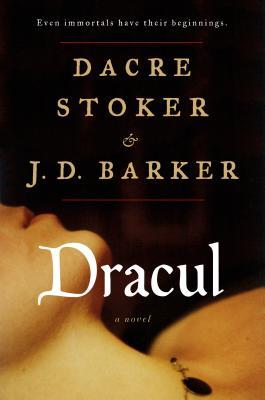
One of 2018’s most highly anticipated fall reads has to be author Dacre Stoker and J.D. Barker’s novel Dracul. The book is the official prequel to the classic literary horror classic Dracula, written by Dacre Stoker’s great-granduncle Bram Stoker. Taking the concept first explored by Bram and showcasing how the legend of Dracula first began, the story puts the Stoker family in the role of protagonists and explores where the myth and legends truly came from. Here is the synopsis.
The Synopsis
The prequel to Dracula, inspired by notes and texts left behind by the author of the classic novel, Dracul is a supernatural thriller that reveals not only Dracula’s true origins but Bram Stoker’s–and the tale of the enigmatic woman who connects them.
It is 1868, and a twenty-one-year-old Bram Stoker waits in a desolate tower to face an indescribable evil. Armed only with crucifixes, holy water, and a rifle, he prays to survive a single night, the longest of his life. Desperate to record what he has witnessed, Bram scribbles down the events that led him here…
A sickly child, Bram spent his early days bedridden in his parents’ Dublin home, tended to by his caretaker, a young woman named Ellen Crone. When a string of strange deaths occur in a nearby town, Bram and his sister Matilda detect a pattern of bizarre behavior by Ellen–a mystery that deepens chillingly until Ellen vanishes suddenly from their lives. Years later, Matilda returns from studying in Paris to tell Bram the news that she has seen Ellen–and that the nightmare they’ve thought long ended is only beginning.
The Review
I will say it now: this is one of my 2018 picks for best book of the year. It was truly amazing to read, and was as engaging as the original novel written by Bram Stoker over a century ago. Capturing the gothic, Victorian era setting and interweaving history, mythology and handwritten notes from author Bram Stoker himself, the authors really did a wonderful job bringing the life of Bram Stoker and his family to life in a horror based setting.
Now while the world knows the works of Bram Stoker’s Dracula to be a fiction horror tale, what fascinated me about Dracul was not only the amount of history and real life individuals mixed into the narrative, but learning about the creation of Dracula to begin with. Readers will be enthralled to learn the true manuscript first written by Bram Stoker was never meant to be a fictional tale, but through the words of Dacre Stoker and J.D. Barker’s afterward we learn how the book came to be what we know today, and that large portions of the original novel have never been published before. How much of this horrific and scary tale are fiction as we know it, and how much is fact?
The writing itself was amazing. The story was written in an epistolary format, allowing us to delve into the minds of the Stoker family themselves, as well as associates of the family and historical records to match some of the claims. Fans of the original tale of Dracula will love the similarities and context given throughout this novel, while modern day horror fans and readers will be enthralled with the vast character development and parallels between the life of Bram Stoker (in the novel) and the stories told within his novel years later.
The Verdict
This is a must read book for 2018. As a history buff, classic horror fan and overall Bram Stoker enthusiast, this story really captured my attention from the beginning. From the author’s early years battling illness to the life or death battle with unknown forces he and his siblings undertook, this is the kind of story that comes along rarely. If you haven’t yet, be sure to pick up the novel Dracul by Dacre Stoker and J.D. Barker today!
Dacre Stoker, a Canadian citizen and resident of the U.S., is the great-grandnephew of Bram Stoker. He is also the godson of H.G. Dacre Stoker, the commander of the AE2 submarine, whose tactics were instrumental in Gallipoli in World War I.
Dacre, who now calls Aiken, South Carolina home, was a member of the Canadian Men’s Modern Pentathlon Team, Senior World Championships in 1979 and coach of the Canadian Men’s Modern Pentathlon Olympic Team, Seoul, South Korea in 1988. Dacre is married to Jenne Stoker and is the father of two children. He is the Executive Director of the Aiken Land Conservancy.
J.D. BARKER is the internationally best-selling author of Forsaken, a finalist for the Bram Stoker Award for Superior Achievement in a First Novel, and winner of the New Apple Medalist Award. His work has been compared to Stephen King, Dean Koontz, and Thomas Harris. His 4MK Thrillers, The Fourth Monkey and The Fifth to Die, were released in June 2017 and June 2018 respectively. He has been asked by the Stoker family to coauthor the forthcoming prequel to Dracula due out in fall 2018. His novels have been translated into numerous languages and optioned for both film and television. Barker currently resides in Pennsylvania with his wife, Dayna, daughter, Ember, and their two dogs, both of whom sit outside his office door daily, eagerly awaiting his next novel.
A note from J.D.
As a child I was always told the dark could not hurt me, that the shadows creeping in the corners of my room were nothing more than just that, shadows. The sounds nothing more than the settling of our old home, creaking as it found comfort in the earth only to move again when it became restless, if ever so slightly. I would never sleep without closing the closet door, oh no; the door had to be shut tight. The darkness lurking inside needed to be held at bay, the whispers silenced. Rest would only come after I checked under the bed at least twice and quickly wrapped myself in the safety of the sheets (which no monster could penetrate), pulling them tight over my head.
I would never go down to the basement.
Never.
I had seen enough movies to know better, I had read enough stories to know what happens to little boys who wandered off into dark, dismal places alone. And there were stories, so many stories.
Reading was my sanctuary, a place where I could disappear for hours at a time, lost in the pages of a good book. It didn’t take long before I felt the urge to create my own.
I first began to write as a child, spinning tales of ghosts and gremlins, mystical places and people. For most of us, that’s where it begins—as children we have such wonderful imaginations, some of us have simply found it hard to grow up. I’ve spent countless hours trying to explain to friends and family why I enjoy it, why I would rather lock myself in a quiet little room and put pen to paper for hours at a time than throw around a baseball or simply watch television. Don’t get me wrong, sometimes I want to do just that, sometimes I wish for it, but even then the need to write is always there in the back of my mind, the characters are impatiently tapping their feet, waiting their turn, wanting to be heard. I wake in the middle of the night and reach for the pad beside my bed, sometimes scrawling page after page of their words, their lives. Then they’re quiet, if only for a little while. To stop would mean madness, or even worse—the calm, numbing sanity I see in others as they slip through the day without purpose. They don’t know what it’s like, they don’t understand. Something as simple as a pencil can open the door to a new world, can create life or experience death. Writing can take you to places you’ve never been, introduce you to people you’ve never met, take you back to when you first saw those shadows in your room, when you first heard the sounds mumbling ever so softly from your closet, and it can show you what uttered them. It can scare the hell out of you, and that’s when you know it’s good.
Hi there my friends. I’m honored to once again be hosting a guest post from the incredible website BetterHelp. The post they’ve put together for you guys is near and dear to my heart, as Bipolar Disorder affects someone I love and care for dearly. I may talk about that in a separate post, but for now I hope this post will help anyone suffering from Bipolar Disorder or anyone who knows and loves someone suffering from Bipolar Disorder. Take special care to read the article and click the links, especially if any of you feel you need help in this regard. Thank you once again to BetterHelp for this amazing guest post, and I hope you all will enjoy it.
You may know it as manic-depressive disorder, but it is typically now referred to as bipolar disorder. This is a serious mental health disorder that affects close to three percent of the United States population. Bipolar disorder is a double-edged sword in that it causes both severe depression and mania or hypomania, which is an extremely high mood. There are several types of bipolar disorder, including bipolar I, bipolar II, and cyclothymia.
Bipolar I Disorder
Bipolar I disorder is characterized by having at least one manic episode that lasts at least seven days and is followed by a depressive or hypomanic episode. Those with bipolar I disorder can also have psychosis, which is a period when emotions and thoughts are impaired so much that you are no longer able to tell what is real and what is not real. This sometimes includes hallucinations.
Bipolar II Disorder
This condition consists of having more than one period of depression and a period of hypomania but no manic episode. Hypomania is a less severe type of mania that causes some manic episodes but you can still perform your daily activities. Many people with bipolar II disorder are mistakenly diagnosed with depression because they do not consider the hypomania a part of the disorder.
Cyclothymic Disorder
Cyclothymic disorder, or cyclothymia, is a milder type of bipolar disorder. With this disorder, you will have both depression and hypomania on and off for several years but it will not get severe enough to affect your daily life. It is called cyclothymic disorder because you cycle through high and low emotions over and over again. This condition is rare and only affects less than one percent of the American population.
How You Can Tell if You Have Bipolar Disorder
Even though the signs of bipolar disorder can vary from person to person, there are some that are common in all patients. These symptoms include:
Mania
Not sleeping
Talking louder, faster, and more often than usual
Difficulty concentrating and making decisions
Trying to do more than you can handle (overbooking yourself)
Extreme behaviors such as gambling, unprotected sex, spending money that you cannot afford
Drinking in excess or using illegal drugs
Rapid thoughts
Depression
Feeling sad, despondent, and helpless
Chronic fatigue
Sleeping more or less than usual
Difficulty concentrating or making decisions
Eating more or less than usual
Chronic aches and pains
Anger or aggression
Crying bouts for no obvious reasons
Weight loss or gain
Memory lapses
Thoughts of suicide
Risk Factors
According to experts, bipolar disorders are genetic, but they can also be affected by environmental issues like constant and extreme stress, lack of sleep for long periods of time, addiction to alcohol or drugs, physical abnormalities in the brain, and/or chemical or hormonal imbalances.
Treatment
The treatment for bipolar disorder includes medications such as a tricyclic antidepressant, an atypical antidepressant, monoamine oxidase inhibitor (MAOI), serotonin and norepinephrine reuptake inhibitor (SNRI), or a selective serotonin reuptake inhibitor (SSRI). In addition, those with bipolar disorder should talk to a therapist on a regular basis. This is important because some of the medications can become less effective over time and your therapist will be able to tell just by talking to you if you need to switch your dosage or medication. If you do not have a therapist to talk to or you are too busy to find the time to make an appointment, you can find a professional on BetterHelp.com. Just click here to talk to someone, with no appointment necessary.
Marie Miguel Biography
Marie Miguel has been a writing and research expert for nearly a decade, covering a variety of health- related topics. Currently, she is contributing to the expansion and growth of a free online mental health resource with BetterHelp.com. With an interest and dedication to addressing stigmas associated with mental health, she continues to specifically target subjects related to anxiety and depression.