I received a free copy of this book in exchange for a fair and honest review. All opinions are my own.
Author William Hart takes a look back at an important time in his life when he joins a male and female led team of roller skaters, and in the process learns the pitfalls of romance, love and life in general in this coming of age style sports memoir, “Roller Rink Starlight”.
Advertisements
The Synopsis
William Hart’s true coming of age memoir begins when at fourteen he joins an amateur roller racing team comprised of both sexes and loaded with RSROA national champions. A varsity sprinter in track, he soon excels at speed skating.
Insiders know roller rinks are conspiracies to turn singles into couples.
The main storyline follows Hart’s early education in romance—piquant, humorous, harrowing, and laced with major life lessons. The setting: Wichita, Kansas, early 1960s, when the sexual repression of the 50s still prevails, except in rare zones of marked liberation. Adults have their watering holes, teens the rink, where they can experiment with their budding sexualities. Immersed in powerful mood music they glide in pairs through darkness under stars and make out in the bleachers. Falling in love is ridiculously easy, as we see in the adventures of teammates, parents, and certainly the author. Hart fell hard for a gifted racer, his kindred spirit, costar of many of his most indelible memories.
This sports memoir about love and roller skating chronicles poignantly the ecstasies and perils of 60s high school romance against a backdrop of flat-out athletic competition.
Roller Rink Starlight is nostalgic nonfiction for seniors and educational nonfiction for young adults interested in love and sex in another time.
The Review
A fantastic and in-depth look into the life of a young man coming into his own and discovering life one step at a time, the author does a wonderful job of drawing the reader in with insightful looks into his own life and creative writing that makes the book feel like both a memoir and an original story all at once. The ease in which the author writes paints a visual image in the reader’s mind, transporting us all back to that era in the 1960s and watching the young man’s life unfolding before our eyes.
What really sets this memoir apart however was the way the author wrote the book itself. It seemed at multiple times that the author was not just retelling the story, but almost conversing with his younger self, reflecting on the important moments of his life and how he’s learned from them since. It immediately clear when he begins retelling his interaction with a young classmate named Gretchen, and how her actions during her high school years led to some major changes in her life and impacted the author as well second-hand. This was a brief glimpse into the rest of this narrative, and yet it felt like it set the tone immediately for the coming-of-age aspect of this book.
The Verdict
An insightful, engaging, and wildly descriptive yet narrative memoir, author William Hart’s “Roller Rink Starlight: A Memoir” is a must-read nonfiction story. The author’s discovery of life, love, and romance, and everything in between is so beautifully written, and the author masterfully engages the reader on both a nostalgic and thought-provoking level. Whether the author’s words reflected a similar time in the reader’s life or spoke to the road not taken, this was a read that shouldn’t be missed, so be sure to grab your copy today!
Rating: 10/10
Advertisements
About the Author
William Hart is a novelist and poet living in Los Angeles. After earning a doctorate in English from the University of Southern California, he taught college writing courses in LA and wrote. Now he writes–fiction mostly–while helping produce the documentaries of filmmaker Jayasri Majumdar, his wife. Hart’s work has appeared in several hundred literary journals, commercial magazines, newspapers, and anthologies, and fourteen books. A pair of one-hour documentaries from Hartfilms aired nationally on PBS, the latest receiving Emmy nominations.
I received a free copy of this book in exchange for a fair and honest review. All opinions are my own.
In author Richard Gracia’s “The RICH Method”, the author explores a series of techniques and knowledge used by many wealthy individuals around the world to not only accumulate wealth by maintain their financial freedom while doing what they love.
Advertisements
The Synopsis
Have you ever wondered what rich people did to get where they are?
What would your life be like with around $5000 a month in passive income? Would you quit your job and go traveling?
Can you imagine how happy you’d be if you could spend your time doing the things you love?
In this book, we’ll show you all the tricks and secrets rich people use to generate money and keep their bank balances growing. All the things we should be taught at school about how to manage our money, but that rich people, banks and the government don’t want us to know!
The old “study hard and get a good job” is outdated. You can never be free working over eight hours a day, in a job that doesn’t motivate you, for peanuts.
With The RICH Method, you can achieve financial freedom in 4 simple steps!
With this book, you’ll learn to:
●Get assets that generate over $5000 a month in passive income.
●Increase your income, even starting with nothing.
●Reduce your costs up to 50% without losing quality of life.
●Pay off your debts faster, savings thousands of dollars in interest and fees, thanks to the P.A.I.D. Method®.
●Save at least 35% of your income using the most effective methods of saving.
●Create your own assets and invest in financial and real estate assets using some of the investment strategies rich people use to make their fortunes.
●Invest to reach retirement with $1,000,000 in your pension plan.
●Manage your personal finances more effectively.
●Avoid paying thousands of dollars in taxes.
●Reach your full potential and become the best version of yourself.
●…and much more.
We can’t promise you’ll get rich within the month. Nobody can. And anyone who does is lying! But we will equip you with the tools you need to reach financial freedom in a short space of time. All you have to do is follow the steps of our method!
Once you’ve learned to invest and generate your own assets, getting rich is just a matter of time!
We’ll show you the way to choosing your own destiny. It will be you and you alone who chooses your life’s direction, what you want to do, and what you want your future to look like.
How much longer are you going to wait to take the first step? Are you brave enough to fight for what you’ve always wanted? It’s time to achieve your dreams. Your only limit is you. Now is your moment!
You decide! You can close the tab and get on with your life… Or you can buy this book and get on the path to financial freedom today!
The Review
Informative and engaging, the author delivers an inspiring and practical approach to personal finances and financial freedom. Exploring things like reducing a person’s spending each month and the definition of cash flow, to clearing one’s bad debt and the types of assets that one can utilize when building up wealth through investments, this book covers it all.
What stood out from this book from other self-help style financial books was how important the focus on doing the work yourself was. Speaking to anyone and whatever level of knowledge a person has about finances and whatever income level a person is at, this book focuses early on on the practice of having the right mindset when beginning the journey to gaining control of one’s financial state and then increasing its value. Aside from delving into the basics of financial independence, the author also reveals several methods of implementing wealth creation, making this an invaluable tool for readers.
The Verdict
A brilliant, informative, and easy-to-understand guide for personal finances and wealth creation, author Richard Gracia’s “The RICH Method” is a must-read non-fiction book on finances. Thoughtful in its approach and emphasizing hard work for the reader to implement the goals of wealth creation, this book makes itself invaluable as a tool for those interested in taking control of their financial future. If you haven’t yet, be sure to grab your copy today!
Rating: 10/10
Advertisements
About the Author
Richard studied engineering, investment, finance and business management. He graduated receiving an Extraordinary Prize and the Lamb Prize from the prestigious University of Glasgow. He worked advising executives of large multinationals. He created companies that have sold millions of euros, having as partners some of the most successful entrepreneurs in Spain, including Juan Roig (owner of largest supermarket chain in Spain). He managed his own investments and that of multiple investors in real estate. Currently, he is focused, along with his brother and co-author of the book “El Método RICO”, on his mission: to expand the knowledge of personal finances to improve people’s quality of life through his books, courses and conferences.
I received a free copy of this book in exchange for a fair and honest review. All opinions are my own.
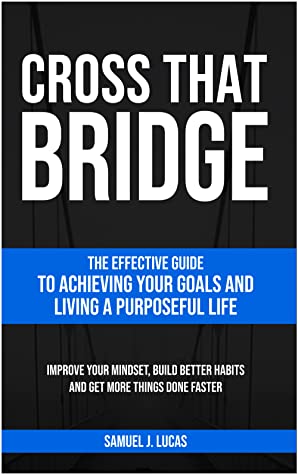
In author Samuel Jeremy Lucas’s book, “Cross That Bridge”, the author gives readers a fresh take on the self-help genre by examining the power of our thoughts and the impact it has on us as we seek to achieve our goals.
Advertisements
The Synopsis
Do you sometimes envy high-achievers? Have you ever wondered what they did to attain that level of success?
What if I tell you that you could also become successful and achieving your goals fasters than you’ve imagined? What would be your reaction if you get an effective template that will lead you to achieve your goals? Awesome! Right?
It is for these specific reasons that Cross That Bridge was written! This book offers you an effective approach and a series of best practices, methodologies, tips, and recommendations that will push and inspire you to achieve your desired goals, as it draws inspiration from the habits and lifestyle of successful people.
Here are some of the learning points you will come across while reading this book:
Tools You Need to Set Your Goals Right
How Self-Awareness Contribute to Building Positive Habits
Develop a Success-Friendly Mindset
Overcoming Your Fear Of Failure
Overcome Your Limiting Beliefs
Having a Positive Attitude to Problem-solving
Dealing With Procrastination
The Important Tips to Living Without Limits
Achieving Success in Life with the Pareto Rule
Balancing Your Private And Professional Life
…and lots more!
If you are diligent with the recommendations in this book, it’s just a matter of weeks before you start seeing changes in your life and achieving your goals.
The Review
This was a motivational read to be sure. The author does an excellent job of reaching out to readers on a personal level, showcasing a level of commitment to those reading his work that speaks to his extensive knowledge and personable approach to his writing. The book is short yet makes a major impact on those reading this work, examining the balance between action and thought in the pursuit of success.
What really struck me as interesting was the way the author was able to back up his sentiments and thoughtful wording with action. Rather than focusing solely on thinking about what we want to achieve in our lives, the author proposes deliberate actions to help manifest those desires physically in our world, showcasing how we can take control of our own destinies rather than relying on the universe to help us out all the time. It helps to showcase the balance of happiness and hard work that goes into any given profession and the journey to find professional success.
The Verdict
A quick, memorable and informative read, author Samuel Jeremy Lucas’s “Cross That Bridge” is a must-read, self-help book. The book is very thought-provoking and goal-oriented and puts the reader in charge of their own destiny. The author really does put the self in self-help, so if you haven’t yet be sure to grab your copy today!
Rating: 10/10
Advertisements
About the Author
Samuel J. Lucas is a serial entrepreneur, high-performance coach, professional advisor, and associate professor at several business schools.
Samuel has dedicated most of his professional career to creating, advising, and directing companies. However, over the past 12 years he carried out a comprehensive study of the 145 most important books on self-development, happiness, and success.
Over these 12 years, he has also interviewed with hundreds of colleagues, top-notch experts in fields such as personal transformation, leadership, productivity, time management, problem solving, stress management or decision making.
After this life-changing process, he decided to distill all this knowledge, combine it with his extended personal and professional experience, and share it with the world.
Thus, the book series “The secrets to a beautiful life” was born.
I received a free copy of this book in exchange for a fair and honest review. All opinions are my own.
Author Andrew Eltes takes readers on an emotional and mental journey to find appreciation and meaning in their life in the book “Appreciation and Meaning Journal”.
Advertisements
The Synopsis
Is there something missing in your life? Are you seeking to live a more appreciative and meaningful life? In Appreciation and Meaning Journal, author Andrew Eltes guides you to feeling gratitude while focusing on what matters most every single day. Through a series of ten empowering questions, this journal is designed to help you: ? deliberately feel positive; ? focus on and feel gratitude for what is going well in your life; ? concentrate on how you can better yourself while growing and giving to others; ? be centered and prioritize what matters most each day while feeling the core reasons for these actions; and ? connect to the essence and enjoy the feeling of accomplishing a goal before it is physically completed. The Appreciation and Meaning Journal helps you ask yourself empowering questions, feel the benefit of empowering and meaningful answers, and have the best start to the day possible while also being centered and focused on what matters most that day. It should be a day that feels and looks how you want it to.
The Review
What a profoundly simple yet moving and impactful read. The author expertly brings readers into the message of this book right away, leaning into the self-help genre enough to educate readers while remaining personable and relatable enough to feel like the author is speaking to you and not “at” you. 10 Simple questions drive this message home, asking the reader to examine not what we don’t have in our lives but what we do have and the gratitude and content that brings us.
What really makes this book unique however is the fact that it serves as both an educational tool for self-improvement and as a tool in general, with the majority of the book’s pages filled with journal entry pages for the reader to fill in themselves. With a memorable quote to draw the reader into each new day, the author encourages readers to practice the lessons they taught at the beginning of the book and utilizes these 10 questions each day to help the reader track and improve on their daily quest for meaning in their lives. It’s the kind of self-help book that so many others lack because it actually leaves room for readers to do the work after being encouraged by the author as the book draws onward.
The Verdict
A fantastic, expertly crafted, and highly educational and thoughtful read, author Andrew Eltes’s “Appreciation and Meaning Journal” is a must-read and must-use tool for self-improvement in our daily lives. A soul-searching and thought-provoking read, the balance of reading and working the author puts into the structure and tone of the book is felt throughout its entirety. If you haven’t yet, be sure to grab your copy today!
Rating: 10/10
Advertisements
About the Author
Over the years I have learned coaching strategies and techniques from Professional Life coaches. I am a graduate from Robbins-Madanes training. A course taught by teachers including Tony Robbins, Cloe Madanes, Mark and Magali Peisha.
I received a free copy of this book in exchange for a fair and honest review. All opinions are my own.
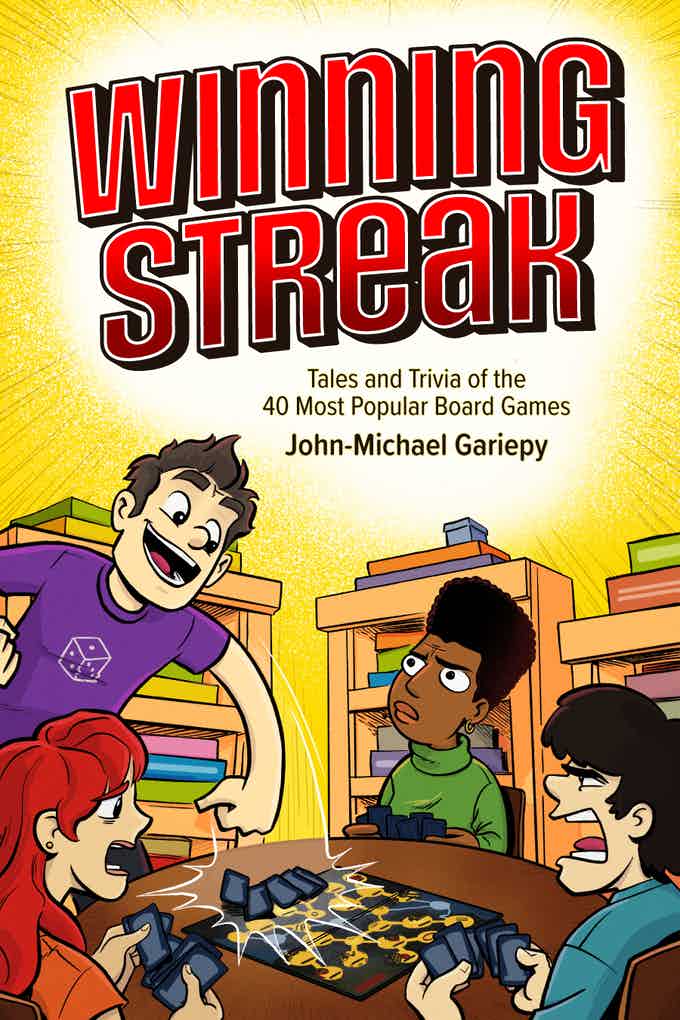
How did some of our worlds most popular board games come to exist? And how do they continue to earn their legendary status? Find out in author John-Michael Gariepy’s “Winning Streak: Tales and Trivia of the 40 Most Popular Board Games”.
Advertisements
The Synopsis
Did you ever wonder:
♞ What makes Clue the best movie based on a game franchise?
♝ What does the doubling cube in backgammon do?
♜ How trains are even supposed to operate in Ticket to Ride: Antarctica?
♛ How the designer of the board game Pandemic feels now that he’s lived through an actual global pandemic?
♚ Whatever happened to the Monopoly game show from the 90s?
Based on Ranker’s poll of almost 400,000 votes, these games define us. From multiple-award winning masterpieces of the past decade, to indestructible classics still going strong after 5,000 years of play, these are the games you must play before you die. Well, except for Sorry!. That game is a blight upon this list and mankind as a whole.
Excuse me. What I’m trying to say is that I wrote this book about games, and I thought you might like it.
The Review
This is one of the more unique and fascinating non-fiction reads you will find out in the world right now. So many of us take for granted the power that a really good board game can have on us. The feelings of nostalgia or the power of diversion they can cause in our lives as we escape into made-up realms like Candy Land or the fun yet the cutthroat world of real estate in Monopoly, all-cause us to turn to board games at one point or another in our lives.
What really stood out to me was how it became so clear that the author not only had done extensive research into the games listed here but had evoked a sense of passion in the writing itself. The book flows naturally and yet hits readers with a zeal for life and a touch of humor that keeps the reader planted firmly in the book. The history and purpose behind some of these games are incredibly neat to dive into and give off a sense of history as well, at least the history of these games and as a result the culture of the times. As a fan of history, this speaks to me immensely.
The Verdict
An entertaining, engaging and evenly-paced read for fans of board games and history, author John-Michael Gariepy’s “Winning Streak” is a must-read nonfiction title. The concept of board games and gaming, in general, is not only a passion of mine and clearly the authors, but the book is well written and easily captures the raw essence and power behind the history of these iconic games. If you haven’t yet, be sure to grab your copy today!
Rating: 10/10
Advertisements
About the Author
Hi! I’m John-Michael Gariepy. Over the past decade I played and reviewed over four hundred board games for three podcasts: The Myriad Games Session Impressions, Power to the Meeple, and the Nerd Fountain. On occasion, I also put together a game review for my blog, DialD4DM. I also produce the movie/media conversation show, Popcorn Roulette.
I received a free copy of this book in exchange for a fair and honest review. All opinions are my own.
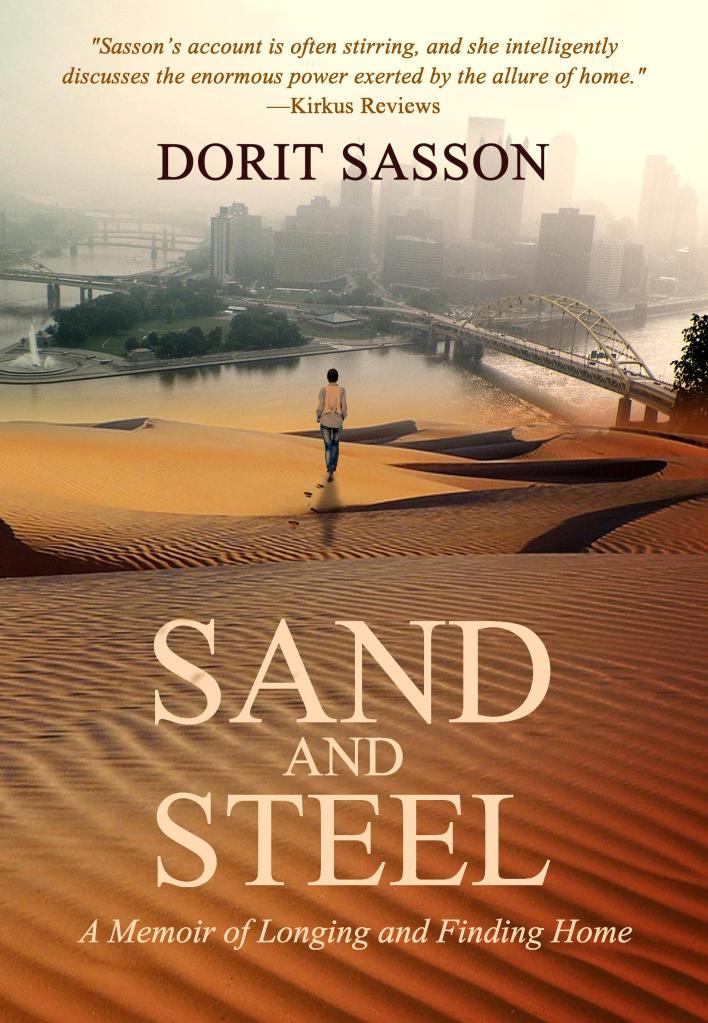
A woman becomes disillusioned with the country she became a soldier for and must find a spiritual home after convincing her husband to take their family to the United States in author Dorit Sasson’s “Sand and Steel: A Memoir of Longing and Finding Home”.
Advertisements
The Synopsis
What’s it like to be lost between two worlds only to find a home in neither? In her new memoir Sand and Steel: A Memoir of Longing and Finding Home, Dorit Sasson expands the narrative begun in her award-winning debut Accidental Soldier: a Memoir of Service and Sacrifice in the Israel Defense Forces with her journey to understand what it means to come home changed by the world and to find a spiritual home between two vastly different worlds.
When Sasson, a native New Yorker, returns to her kibbutz following the second Israel-Lebanese war, she becomes disillusioned and shocked by the degree of economic depression and social change. Forced to make a decision about their economic futures, Sasson takes matters into her own hands and convinces her husband to leave a kibbutz that has abandoned him and a country that has turned its back and emigrate to the United States in search of the American dream. Torn between leaving the land she loved and fought for as an Israel Defense Forces soldier and the prospect of a brighter future, Sasson welcomes professional freedom that awaited her in the U.S. But when she arrives, the United States was not what it seemed—or perhaps she had changed in ways she hasn’t yet realized.
The Review
A powerful, somber yet touching story, this non-fiction read does an amazing job of bridging the gap between two very distinct cultures and worlds. From the life of war, violence and greed that forced the author’s family to flee the home they loved to find work in the United States, to the equally violent rise of hatred and bigotry that has resulted in deadly attacks, it can be heartbreaking and maddening to see two worlds erupting all around you.
Yet the author showcases a powerful lesson that many of us can take to heart, and that is the true definition of home. The author’s balance of personal reflection and her ability to capture the major cultural differences between her time in Israel and then moving back to the U.S., especially as an American-born turned Israeli citizen, was a truly impactful and insightful experience as a reader.
The Verdict
An emotional, heartfelt and personal journey of family, love and the path to finding where one belongs, author Dorit Sasson’s “Sand and Steel” is a must-read memoir. A story that touches on some powerful events in the last few decades around the world and utilizing personal experience and powerful imagery, this is a book that readers won’t want to put down anytime soon. If you haven’t yet, be sure to grab your copy today!
Rating: 10/10
Advertisements
About the Author
Dorit Sasson writes for a wide range of print and online publications, including The Huffington Post and The Writer, and speaks at conferences, libraries, and community centers. She is the author of the a featured chapter in Pebbles in the Pond: Transforming the World One Person at a Time, the latest installment of that best-selling series, and. She is the host of the global radio show “Giving Voice to Your Courageous Story.” She lives in Pittsburgh, PA with her husband and two children.
Tell us a little bit about yourself. How did you get into writing?
Ink is in my blood. Both my parents were journalists; and my father’s parents were journalists. My grandfather, Frank Mitchell, received an OBE for his services to England; first as Head of the News Division for the British Foreign Office in the U.S., then as Chief of the Press and Information Office for the British Embassy in Washington, D.C.
I have yet to attain such lofty heights myself, and likely never will; but I initially followed my father’s footsteps into Business Journalism in Ontario, Canada where I served as Managing Editor for two regional business magazines in Hamilton and Niagara. It wasn’t quite my cup of tea, but I soldiered on and developed a growing interest in Corporate Social Responsibility and the role businesses were playing in helping alleviate society’s woes. I started moving away from providing context to the facts and figures that constitute most business stories; and focusing on the people who were using their business success to tackle the issues that affect us as individuals and as a society.
At the same time I started poking into my family’s history, notably my great, great grandfather, Sir John Kirk. He received a knighthood for his philanthropic work as the Director of the Ragged School Union in London, England. This organization was founded in 1844 to provide free education to those who could not afford it. When the Education Act was passed in England in 1870, the Ragged School Union was suddenly superfluous to requirements and frantically started expanding their philanthropic efforts –basically throwing every strand of charitable spaghetti at the wall to see what would stick. They managed to survive as they moved into other areas of charity; and their influence stretched around the world –even to Hamilton, Ontario where I had spent my childhood. John Kirk was a natural media manipulator and proved instrumental in that growth, achieving almost celebrity status amongst Christian and charity groups around the world.
There had been two previous biographies written about him, but they were little more than feel-good public relations pap, almost nausea inducing –and as I quickly discovered, not entirely honest in their portrayal of his work. A lot was brushed under the carpet. The internet opened up research possibilities that were virtually impossible before and enabled me to lift the carpet just enough to see what was hidden underneath. It proved wonderfully messy, both in terms of John Kirk’s personal life and his work. My father and I bonded, not as father and son, but as professional journalists with each salacious revelation. As an award-winning journalist himself, he too knew a good story when he saw one. With my father’s practical, financial and emotional support I dedicated myself full-time to writing “A Knight in the Slums,” a new biography of Sir John Kirk and his work.
But that is not the book I have written –yet. Life, as it does, took an interesting turn.
Advertisements
What inspired you to write your book?
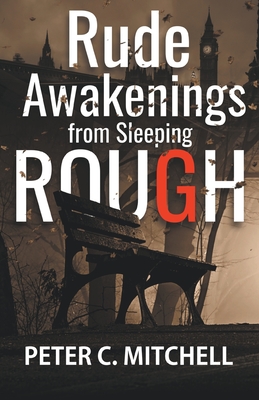
“Rude Awakenings From Sleeping Rough” is my first-person account of that interesting turn.
I returned to England in 2017 to complete the research on Sir John, and within a year found myself homeless on the streets of London with nothing more than a broken suitcase and a scant few possessions. With an ironic nod to literary coincidence, I spent most of that first month in Paddington Station, much like the famous bear that took its name. Sadly, there was no Brown family to pass by and take me in; but the staff of the Station and the businesses within were tremendously helpful and supportive –as many people in the business and service sectors have proven to be. They see and deal with homelessness every day –more than people realize– and despite regularly experiencing the theft, vandalism and abuse that often results, they often take a personal interest and have a genuine desire to help in whatever limited capacity they can.
I don’t refer to Paddington Station directly in the book, but I want to take this opportunity to draw attention to them, and the other unsung heroes –from road-sweepers to store managers– who get no credit for the small acts of kindness and support they quietly provide. They should be empowered and supported to do more: the desire is there. I hope any journalists reading this interview will be inspired to seek out those stories that occur on an almost daily basis. The general public is not as apathetic as we might think; and are capable of providing more practical support than they may realize, free of charity influences and agendas. I own a plush Paddington Bear toy as one of the few fond mementoes of this ordeal and will treasure it to my dying day. I loved that bear as a child and I love him even more as an adult. I would not have survived that first month without the kindness and support I received at Paddington Station.
Eventually I found myself directed to one of the homeless charities in the Westminster area of London, and that is when the real nightmare began. My experiences within the charity system proved more horrific than homelessness itself, and I find myself still trapped in the nightmare three years later. Right from the start they were dishonest about the options that were available, to the point of blatant lies, and refusing to answer questions phrased to elicit a simple “yes” or no”. answer. While completing the paperwork relating to my case, they applied their own filters, often leaving out critical information I was sharing; digging into my family history although it had no relevance to my situation, and insisting they could only help me if I applied for benefits through them. I was frequently encouraged to “play the game” if I wanted to be helped.
I refused. The relationship quickly deteriorated, and I was subjected to severe mental and emotional abuse at the hands of multiple charities. I was eventually forced into housing that was unhygienic and unsafe. The risk of drunken assault by other tenants is so great I frequently find myself sleeping outside more than in. It is in no way the “solution” the charities promote it as being.
During this time I discovered homeless women were being sexually assaulted in London by a man volunteering for many street level charities. The response of every single charity was to decline his volunteer services, and take no further action hoping the problem would simply go away. I disagreed, and informed the police, who also took no action. Word reached the ears of the wrong people and my life was repeatedly threatened. Again, the London Metropolitan Police refused to take any action, at one point threatening to arrest me. I was eventually forced to flee London for fear of my life. Sadly Covid-19 struck, and I was eventually forced to return. This man is still volunteering for charities. And I still live in fear for my safety, from the other tenants within this house, and from the thugs associated with this serial offender -particularly when word of this book’s publication reaches street level.
I was sharing this entire ordeal online with friends back in Canada who were horrified. One close friend, Mark Leslie Lefebvre, owns his own publishing imprint, Stark Publishing. He reached out asking if I would be interested in writing a book about my experiences –partly to help earn the money required to escape this nightmare once and for all, and also to bring attention to these abuses within the charity system. Sadly, none of my experiences are unique. Stories even worse than mine are far too common, and not limited to England. It needs to end.
What theme or message do you hope readers will take away from your book?
It is time for governments to put the charity system under the microscope; to investigate the actions that occur behind closed charity doors; and to bring legislative reform and strict regulation to prevent these abuses, not only of the people who turn to these charities in times of desperate need, but of the benefits system itself. There needs to be greater honesty, greater transparency, greater accountability, and increased monitoring in all areas of charity work. And it should be easier for victims of physical, mental, and sexual abuse within the charity system to seek justice.
What drew you into this particular genre?
“Rude Awakenings From Sleeping Rough” is a straight-forward first person account of my experiences within the charity sector. It is not the story of my “journey” per se, but an honest, often uncomfortably graphic account of systematic abuse. Those hoping for any sort of inspiration are going to be sadly disappointed. It was painful to live through; it was painful to write; and it will be painful to read. But it is necessary. My experiences pale in comparison to those of others, but their stories rarely reach the public eye. As a third-generation journalist I was fortunate to inherit and develop the necessary skills to draw attention to these issues.
What is one major misconception that many people have about those forced to live on the streets that you’d want readers to really know and understand?
Don’t allow sympathy to cloud your judgment. It is always wise to avoid letting emotions cloud any decisions you make whether personal or professional. That holds true for any cause you may be inclined to support. It is easy to feel great pity for those who have found themselves living on the streets, but you shouldn’t allow that pity to influence the decisions that are required to bring permanent, sustainable solutions to their plights.
Imagine if your parent, sibling, or child has found themselves on the streets because of alcoholism or drug use. Would you appreciate strangers handing them money that is subsequently used to feed their addiction? Sadly, this is the reality more often than not.
And blindly donating money to charities without doing any research to see how that money is spent often perpetuates, rather than provides any permanent, long-lasting solutions to people’s homelessness. As I know from bitter experience, that money is not always well spent. Far too often people with addictions and serious mental health issues are irresponsibly thrown into living conditions where they simply fuel each other’s addictions, or antagonize each other’s mental conditions. All too often this results in violence both inside and outside the accommodation. As I detail in the book, these housing “solutions” the charities promote are dangerous, violent, and unsafe. Even in the bitter cold of winter I still find myself escaping to the streets in the middle of the night to avoid the violence that suddenly erupts without warning. And that is ignoring the fact the housing itself is often unhygienic and unsafe.
Both the homeless and the charities play on people’s sympathies to get them to open their wallets. Don’t allow that to happen. The homeless are not cuddly helpless waifs. It is a violent, crime-riddled life where physical and sexual assaults are common occurrences; where theft, vandalism, and drug related crimes spread out into the surrounding community, affecting people’s businesses, homes, and their children. And again, as I know from horrific experience, even when homeless women are being raped – by a charity volunteer in this case- the charities and the local authorities take little to no action to put an end to those sexual assaults; and go to great lengths to prevent that information from becoming public knowledge. It isn’t good for the benevolent “image.” My life is still in danger from trying to obtain justice for a woman I know who was sexually assaulted; and the responses from the charities and the London Metropolitan Police have been abominable. It’s as disgusting as the rapes themselves.
What social media site has been the most helpful in developing your readership?
Social media has been a lifesaver throughout this ordeal. It was my only connection with the world, particularly friends back in Canada. When I found myself homeless, I immediately made my Facebook account private and used it to maintain those valuable connections. I shared the specifics of my experiences with complete honesty and the rawest of emotions. I ranted; I raved; I cried; I begged for help; I reached out for emotional support on a regular basis –and there was always someone available to provide it 24 hours a day, 7 days a week. And though we were separated by the Atlantic, they provided their strength and support just as effectively as if we were able to connect in person. I have more than my fair share of close, personal friends –in many cases better friends than I deserve. There are simply too many to list. They saved my sanity, and for that I will always be grateful. And it was on their recommendation that I used those posts to write the book, capturing the pain, the helplessness, and the fear in its unfiltered immediacy.
In terms of developing a readership, I’m not expert enough to offer a valuable opinion. Mark, my publisher, would be able to provide a more informed answer. I simply post on Facebook, Twitter, and LinkedIn to bring attention to the book with varied levels of success. However, I’m only reaching established connections –preaching to the choir so to speak. In terms of breaking out of that limited audience –beyond trying to establish a ‘word of mouth’ campaign by asking those connections to share the posts and recommend the book– I’m not having any success at all. Again, Mark has the knowledge and experience to provide any recommendations in that regard.
What advice would you give to aspiring or just starting authors out there?
I’m going to pigeonhole myself as a grumpy old man; but I’m going to state categorically to stop looking for advice and just write. Anything else is just procrastination. And I speak with the authority of a Master Procrastinator.
I’m reminded of the first “Kung Fu Panda” movie where the secret ingredient of Mr. Ping’s Noodle Soup and the secret behind the power of the legendary Dragon Scroll both prove to be nothing. There is no secret or hidden ingredient to writing. You simply commit to doing it. It requires discipline, and a love for the process itself. If either are lacking, the odds are you are not going to succeed.
What does the future hold in store for you? Any new books/projects on the horizon?
In all honesty my future still looks quite bleak. One of my aims in writing “Rude Awakenings From Sleeping Rough” is to use the money from the sales to finally escape this horrific living situation I was forced into against my will and establish myself in proper -and safe- living accommodations long enough to obtain proper employment.
But the sales simply aren’t there –particularly here in England. People don’t want to know. I understand the trepidation: it’s reading that’s ‘good for you,’ and that’s never an easy sale. It is a brutally honest and uncomfortably graphic account of abuse and neglect within the charity sector. And there is no “happy ending.”
But that’s the point. The happy endings are few and far between when people become ensnared in the world of homelessness. The “solutions” the charities waste money on promoting are not working –and aggravated by the abuse and neglect within many of the charities themselves. Governments need to step in and put an end to these abuses; not only of the homeless, but of their respective benefits systems. The charity sector needs radical reforms and strict regulation. And the public needs to stop placing their blind faith in these “caring” organizations.
Those aren’t comfortable truths. The general public understandably doesn’t feel comfortable facing them. And if the public doesn’t have the motivation or desire to learn the truth you are trying to impart, it doesn’t matter how well you write; or how strong your intentions to shine a light on that truth, and bring change that is sorely needed –you are simply wasting time, ink, and paper. It is soul-destroying enough to put an end to any future writing endeavours.
To be blunt, without the charity sector being scrutinized and heavily regulated, the homeless will continue to fall victim to their own personal demons; and live at constant risk of abuse, assault or rape with no recourse to justice. I am still trapped in this cycle of homelessness more than three years later despite all my efforts to escape it. And I still live in fear for my personal safety in the housing “solution” the charities forced me into accepting. Quite frankly, the future is a false-hope luxury I, and many others, can’t afford. All we can do is survive day to day and pray this existence doesn’t break us. Without proper charity reform, there is no future for any of us.
Advertisements
About the Author
London born, Canadian raised Peter Mitchell was bumbling his way through a moderately successful career in business journalism when an investigation into a story on Corporate Social Responsibility inspired him to look beyond profit margins and PR into the very real problems faced by society. This inspiration prompted him to dip his toes into a self-confessed Sanity/Vanity project of a biography of his great, great grandfather, Sir John Kirk.
As Secretary of The Ragged School Union, John championed the causes of children, the disabled, and the working poor in Victorian-era London. His influence extended beyond the city limits, and his life proved more interesting than previous biographies revealed. Dust-buried references have surfaced in the most obscure locales, showing the consequences—both good and bad—to the ragged and crippled children John Kirk devoted his life to help.
In 2017, Peter returned to London to complete his research and begin the writing of “A Knight in the Slums.” The past was ready to be mined, and the future was assured. The present, however, took an unpredictable -and darkly ironic—turn. https://c0.pubmine.com/sf/0.0.3/html/safeframe.htmlREPORT THIS AD
A series of unfortunate events transpired, creating a perfect storm of calamities leaving Peter penniless and sleeping rough. He had unwittingly fallen victim to the same societal ailments John Kirk fought. That nightmare inadvertently provided him with an inside look into the current workings of these same systems put in place by his great, great grandfather, and others like him, put in place over a century ago. That experience frightened him more than the horrors of homelessness itself.
Armed with the scars of this unexpected, but disturbingly relevant, knowledge Peter continues to work on “A Knight in the Slums” with renewed insight. John Kirk created solutions over 100 years ago that are still in play today. Times have changed; yet the solutions have stagnated, and proven to not be solutions, but mechanisms that perpetuate the cycle of poverty: a Hell’s Carousel funded by well-meant individuals and institutions blinded by the brand of “charity.” New systems need to be developed; new solutions need to be found.
I received a free copy of this book in exchange for a fair and honest review. All opinions are my own.
Author Earl B. Rynerson takes readers on a journey to discover how capitalism and greed have utilized eight different industries to impact our health and way of life in the book “Unchecked Capitalism is Killing Us!: How unfettered corporate greed and corruption have made us poorer, fatter, sicker, less tolerant of others and more dangerously exposed to the coronavirus”.
Advertisements
The Synopsis
This book shows in detail how eight specific industries (banks, health care, processed foods/sugar, autos, oil and gas, pharmaceuticals, military contractors and the media) have harmed us over the years, driven by their greed and quest for profits. For example, did you know that:-Drug companies and their lobbyists actually wrote government legislation in 2002 that gave them the unlimited ability to raise future prices on medications? -A Supreme Court ruling in 2010 essentially destroyed our democracy by allowing the wealthy and corporations to spend unlimited amounts of money on bribing and funding politicians.-There are over 100,000 different lobbyists in Washington today, each one trying to control our elected representatives with cash and bribes!-Our US defense budget today is larger than the next nine largest countries’ defense budgets, combined!-Our healthcare is a mess. All hospitals are profit driven. A trip to a hospital today can bankrupt even those of us who are insured.-Until Tesla came along, auto companies were content to produce essentially the same type of polluting car with the same gasoline mileage as the Model T. -There are eight specific US institutions that could normally help protect us during a pandemic. But unchecked capitalism (coupled with corporate greed) has infected all eight institutions, enabling the virus to infect more people here than anywhere else in the world.The problem is much worse than you realize…
The Review
This was a well-written, detailed, and focused book. The author does a great job of outlining a long list of industries and history that showcases how greed and corporations have wormed their way into American politics and have led to some of the most damaging effects on the American people.
What really stood out to me as a reader is that the author utilizes a long career of experience without approaching the subject from either a Democrat or Republican Party viewpoint, instead of taking a non-partisan approach to this subject to find the root of the issue no matter what.
While I myself am not well-versed in economics and the gritty world of politics as a whole, it was refreshing to see the author’s study of so many different industries that have an impact on the average American’s health, finances and so much more. Living in the world we do have right now, the growing pandemic has left many wondering why our nation is failing so badly in stopping this virus in its tracks, and this book highlights the decades of corporate greed that are now preventing the right measures to come forward and help stop this from getting worse than it already is.
The Verdict
A must-read non-fiction related book that delves into both American politics and finances while also detailing the various industries and the issues that plague them, allowing readers to easily understand how unchecked capitalism is affecting us all. The author’s years of experience and the references utilized her showcase a well-researched book that drives the author’s excellent points home. If you haven’t yet grab your copy of this spectacular and fascinating read today!
Rating: 10/10
Advertisements
About the Author
Why I wrote this book-
I started this examination of unchecked capitalism back in 2018 after I began hearing of all the corruption, lying and cheating that Wells Fargo Bank had been engaged in with their clients. What I found was that not only Wells Fargo, but all of the largest banks had for years been engaged in many of the same offenses, including even money laundering!
Curious, I started looking at other industries. Of course, the pharmaceutical Industry and the Healthcare Industry are huge examples of how unchecked capitalism has directly harmed us and our families, with health insurance that is too costly and drugs that are ten times or more the price that other nations pay. Hospitals, insurance companies and “Big Pharma” pocket billions of dollars in profits annually from us. They pay their executives huge salaries that are tens of millions of dollars annually, with stock options and bonuses that make their income even higher. We, on the other hand, have to decide whether to pay for rent, our medications or even if we can afford to go to the hospital.
But it’s not just those industries. Processed Foods/Sugar, Oil and Gas, the Auto Industry, the Defense Industry, even the Media, are all examples of how major industries (and those huge corporations within those industries), regularly cheat and lie to us, bribe those who are supposed to represent us, and regularly make our lives miserable, all the while pocketing hundreds of billions of dollars in profits every year that they often move offshore, paying little to no taxes.
Over a two-year period, I researched and maintained files of hundreds of examples of corporate corruption. I found that what you will often hear or read (in snippets about certain companies lying, cheating or engaged in other illegal activity) is actually a flood of corruption that has been going on for more than 20 years, activity that huge corporations (with their billions in profits and thousands of dedicated paid lobbyists) engage in to lobby Congress and to bribe our elected representatives. It is such a powerful force today that our own government is unable to stop or even regulate what is going on.
When you hear “We need to lower our taxes and reduce regulation“, it is simply a manipulative statement made up by the corporate elite decades ago to get the average American voter into a mindset that ends up weakening our government and increases our national debt. The taxes they are referring to are corporate taxes. These behemoths could care less about the taxes that you or I pay; they only care about taxes that they have to pay. Their tax rates by the way, are a fraction of the rates that you or I pay today. They are a fraction of the rates businesses once paid in the 1950s and 1960s, taxes which enabled our nation then to build roads, schools and airports and provide meals and services to the less fortunate. In many cases today some of the biggest corporations pay no tax at all!
The regulations they refer to are regulations that were put in place (usually by a bipartisan and thoughtful effort within Congress), to insure that businesses play fair with each other, and don’t provide products that kill us. Those are the regulations they want abolished and are the regulations they are constantly trying to get reduced or modified. Doing so will make them even more profitable which will enable them to spend even more money on corporate lobbyists.
For the record, I believe in capitalism over any other form of government, but we have allowed capitalism to get out of hand in America. When lobbyists for special interest groups and corporations start writing legislation and telling our elected representatives to “Pass it or else”; when the corporate heads spend tens of millions of dollars in bribes to get their chosen sycophant selected to run a major Federal Department (when they know nothing about that department), well, that’s capitalism run amok. Our government needs to be free of this incessant lobbying and the uncontrolled flood of corporate money flowing into Washington. We MUST take back control of our Democracy!
Who am I? I am an American-
I am a former Democrat, then Republican and now Independent. But today, I avoid affiliating myself with any political party. They all feel dirty. Political parties today do very little for the American People; they have succumbed to the will and the greed of of special interests, and corporations with their billions of dollars in profits and thousands of lobbyists. Politicians from both main parties have run our nation into the ground over the last 30 years, with our national debt now approaching (or even exceeding!)30 TRILLION DOLLARS!
That’s why I call myself an American, not a Republican or Democrat. I choose to think of today’s issues as to how they affect the poorest among us. If we can help the poorest, then the rest of us will benefit as well. If we can start to think of what we can do to help others among us, instead of continually bashing those from the other political party, well, then maybe we can overcome some of our pettiness and focus on the real problems today, problems caused by unchecked capitalism and how those forces control how we live our lives today. It doesn’t matter which political party you think you are a member of; you are being harmed every day by the forces of greed and corruption coming from unchecked capitalism.
My background-
I am a retired Air Force Lt. Col. (I served in the military for 20 years), a small business owner for 17 years, Professorial Lecturer in MBA studies for Business Management and Marketing in San Francisco, and have been active in writing about problems that affect those around me. Back in 1999, I wrote and placed on the ballot in San Francisco a measure to stop handing out cash to the City’s addicts and alcoholics. While it didn’t pass then, it was dusted off a few years later by then City Supervisor Gavin Newsom who was able to get his measure passed. It helped him become Mayor of San Francisco, then Governor of California.
For years (2006 to 2015), I wrote a local blog about the wasteful spending in the City of Fort Lauderdale; millions of dollars spent every year on non-essential items rather than on improving the City’s aging infrastructure. Now, with budget cutbacks, the City now has to pay for repairs of numerous sewer and water breaks that are plaguing residents today.
My efforts to expose the dangers of unchecked capitalism in this book are similar to my efforts to expose the problems of handing out city cash to addicts and alcoholics, or the problems of wasting money on nonessential city services while letting the infrastructure rot. It’s the same effort, except my writings now are about a national problem, not a city problem.
The problem is worse than you think and getting worse every year. You will see how bad the national problem has become by reading my book. You will also see what steps you can take to start to better control the problem.
What do I want to do next?
My next book? I think I would like to write about the “Forgotten Generation”; those men and women aged 40 to 70 who lost their well-paying blue collar manufacturing jobs in small and medium sized towns in New England, the South and the Midwest 20 years ago due to Clinton’s “Free Trade Agreement” with China.
Once our government signed that horrible agreement with China, corporations fell all over themselves to close up their manufacturing facilities here, abandoning their workers. They instead moved offshore to find cheaper labor in China. Those Americans who previously were able to support themselves and their families with honest and reliable work suddenly had no job; they usually were left economically stranded, often bankrupt, depressed and often times addicted to pain killers and other drugs to mask their depression. That heartbreaking scenario has happened to millions of American families over the last 20 years.
Those folks remember what “Achieving the American Dream” had meant to their parents and grandparents, and are bitter and angry now. They have every right to be angry. Our country has abandoned them. They are having to work two or more low paying service jobs just to keep food on the table; trying to stay out of the hospital for fear of becoming bankrupt; trying to ration their medications due to the cost; often not having healthy food available to eat and watching themselves become obese. And all the while they see their country slowly rot and go into deeper debt while their elected leaders scream at and blame each other on national television..
This is what our nation has become. It is frankly, embarrassing and shameful.
So if you know of someone who has a story to tell about their troubles and how our country has abandoned them, please let me know!
My email address is: Bonneau@capitalismiskillingus.com.
I received a free copy of this book in exchange for a fair and honest review. All opinions are my own.
A thorough exploration of what being a CPD officer/detective sergeant in the 60’s, 70’s and 80’s takes center stage in the late author John DiMaggio’s “SARGE!”.
Advertisements
The Synopsis
“SARGE!” is a fascinating memoir by the late Chicago Police Detective Sergeant John A. DiMaggio, one of the most decorated officers on the force during a career that spanned the years 1957 to 1991. Among his awards are two Superintendent’s Awards of Valor, Mayor Richard J. Daley’s Praiseworthy Acknowledgment Plaque for Exceptional Act of Bravery Involving Risk of Life, a Presidential Citation of Appreciation, the Illinois Police Association Award of Valor, and many more.Upon his retirement in 1991, DiMaggio wrote a fascinating account of his work as a cop. The manuscript languished among his personal effects until after his death in 2008, after which his family decided to resurrect it, spruce it up, and submit it for publication. It turns out that he was an excellent word craftsman and storyteller; in fact, he was no stranger to writing—for many years he wrote the “Ask Sarge” column for the Mystery Writers of America Midwest Chapter newsletter.Told in a conversational, “regular guy” voice in episodic fashion, “SARGE!” reveals to the reader what it was really like to be a cop. The manuscript in many ways takes the form of a prose treatment of a weekly television police drama. A large selection of PHOTOS is included.DiMaggio takes the reader back to the decades such as the turbulent 1960s, when the police department was making a painful transition from “old school” to modernization. The author describes firsthand the legendary riots that occurred in Chicago after the assassination of Martin Luther King Jr. He illustrates the integration of minorities into the department and how that played out. He also goes into famous cases of corruption and the politics of navigating such a large department. One of the “set pieces” of the book is the story of how DiMaggio, as part of the “Three Musketeers”—a trio that included two detectives who were close friends—investigated a series terrifying slasher attacks on women that occurred in the city in the mid-70s. The case became one of the police department’s most memorable. Among the other cases detailed in the book include how DiMaggio found himself entering the home of a crazed young man holding hostages with a shotgun; the investigation of the discovery of a headless corpse; the take-down of the Chicago “Mad Bomber”; how an anonymous audio tape provided clues to the identities of armed robbers; and the manhunt for a cop killer.
A portion of all proceeds will be donated to The Chicago Police Memorial Foundation and The Chicago Police Foundation.
The Review
This was a very well-written, engaging and thoughtful read. This memoir by the late author showcases a vibrant and powerful career as a police officer, from his early years handling emotional cases of attempted suicides and anti-mob task forces that formed in the city to hostage situations and medical procedures from on the job injuries that nearly left him unable to walk again.
The author uses his years of expertise to highlight the inner workings of the police department of Chicago, how they handle situations and how that has evolved over the decades. The personal way the author writes allows the reader to feel connected to the author’s life and stories, while the chapters are formatted to feel like a crime drama unfolding before the reader’s eyes.
The Verdict
A must-read memoir, SARGE! by John DiMaggio is a evenly paced and extensive book. The author’s life and experiences are engaging and draw the reader in fully, showcasing how the police department has evolved over the years while highlighting a full and experienced career of a fine officer. Be sure to grab your copy today!