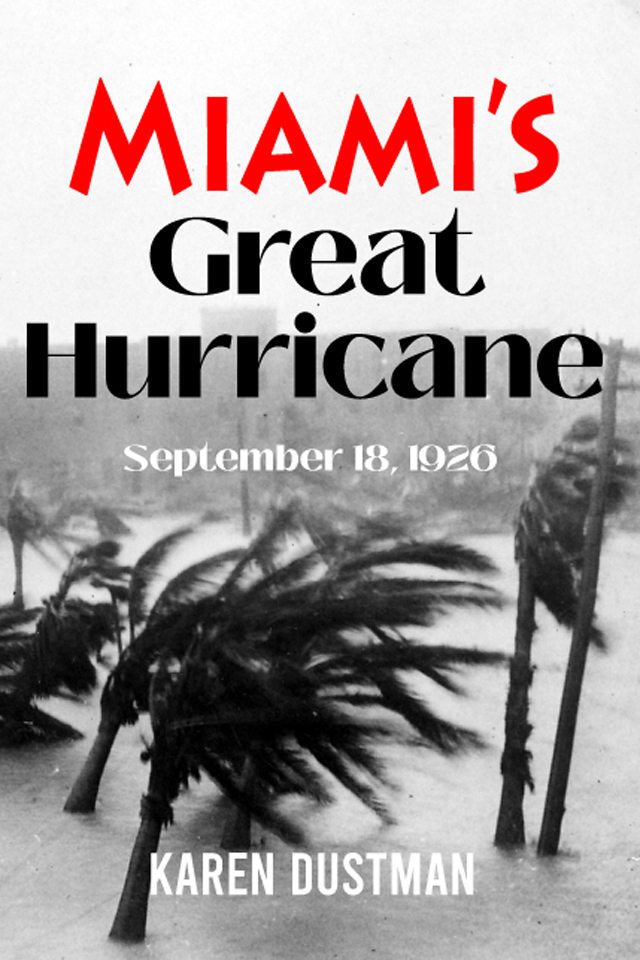
Miami’s Great Hurricane: September 18th, 1926 by Karen Dustman Review

I received a free copy of this book in exchange for a fair and honest review. All opinions are my own.

Author Karen Dustman shares the shocking stories of those who endured the hurricane that tore apart Miami in 1926 in the book “Miami’s Great Hurricane: September 18th, 1926.”

Advertisements

The Synopsis

One hundred years ago, an unexpected tempest roared ashore in Miami, leaving destruction in its wake. Through gripping personal stories and rare vintage photographs, this book brings the forgotten hurricane vividly to life. Survivors recount moments of terror, resilience, and hope as they braved the storm’s wrath and its aftermath. This devastating event proved to be a watershed moment for Miami, abruptly ending its overheated real estate boom and sending the city spiraling toward the Great Depression.

Blending history with deeply human experiences, this powerful narrative reveals how one devastating day reshaped a city—and the lives of those who endured it. An invaluable resource for Miami enthusiasts interested in exploring the city’s turbulent past, it’s also perfect for history fans, weather buffs, educators, and anyone drawn to stories of survival, courage, and resilience.

The Review

This was a fascinating and compelling read. The author did an incredible job of capturing both the rich history of Miami and Florida as a whole and showcasing the depth of destruction and horror so many residents faced in the midst of and in the wake of this deadly hurricane. The powerful imagery in the author’s writing style, when paired with the detailed research and photographic evidence the author collected, made the storm and its aftermath feel visceral and captivating on the page.

The author was also able to make this story feel both historical and personal at the same time. From the book’s onset, the author effectively conveys the individual nature of the book’s research, as the story of her father’s survival with his family during this storm and the harsh aftermath became an integral part of her family’s history. The book does an incredible job of highlighting the difficulties Miami and its people faced in the wake of the storm, especially during the ensuing Great Depression years. However, amidst all these heartbreaking stories, there were also stories of hope and resilience, which spoke to the human spirit as a whole.

The Verdict

Heartfelt, thoughtful, and engaging, author Karen Dustman’s “Miami’s Greatest Hurricane” is a must-read nonfiction book. The detail and the wealth of photographs the author provides, as well as the poignant commentary on the destructive power of both nature and humanity, and the hope that can be found in both. If you haven’t yet, be sure to grab your copy today!

Rating: 10/10

Advertisements

About the Author

Karen is a California-based journalist and author, with more than fifteen nonfiction books and hundreds of magazine articles in print. Her freelance articles have appeared in the pages of Ladies’ Home Journal, Family Circle, Natural Health, and Westways magazines, and her early how-to books attracted national attention, including appearances on Discovery Channel and Good Day New York.

Sharing her passion for California/Nevada history, Karen launched Clairitage Press — dedicated to stories of untold heroes and forgotten sites in the Sierra. Books in this line include a history of old Silver Mountain City, walking tours of the Old Genoa Cemetery, and much more. In her free newsletter, Karen shares adventurous rambles in the Sierra plus true tales about fascinating and forgotten historic sites. Visit Karen’s blog to read back issues, or sign up at www.clairitage.com to get your own copy of this free e-newsletter.

Karen is also passionate about capturing personal memoirs, family history, and those too-quickly-disappearing tales told by old-timers. Her warmly-received LifeStory Writing workshops and seminars provide helpful tips and tricks for capturing these important memories. And her Lifestory Workbook is designed to help you capture your own family stories, too.
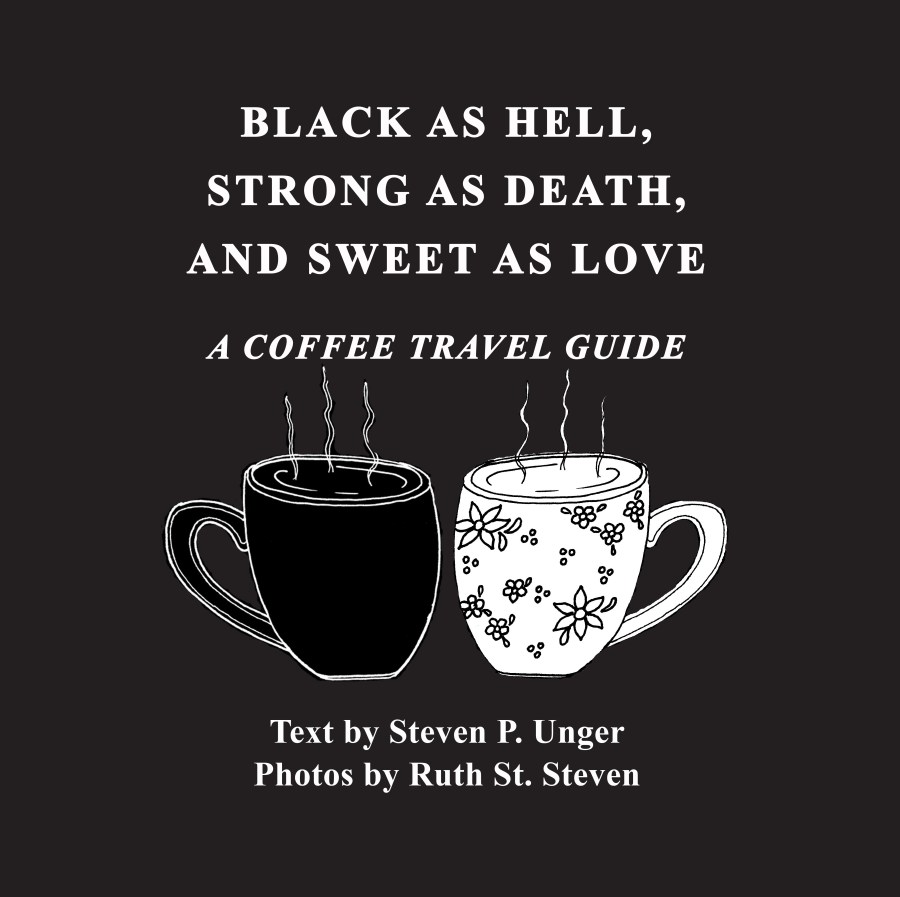
Black as Hell, Strong as Death, and Sweet as Love: A Coffee Travel Guide by Steven P. Unger (Photos by Ruth St. Steven) Review

I received a free copy of this book in exchange for a fair and honest review. All opinions are my own. 

Author Steven P. Unger shares the long and storied history of coffee, as well as the travel experiences of consuming coffee on multiple continents in the book “Black as Hell, Strong as Death, and Sweet as Love: A Coffee Travel Guide.”

Advertisements

The Synopsis

BLACK AS HELL, STRONG AS DEATH, SWEET AS LOVE: A Coffee Travel Guide, is the first and only book to trace coffee consumption from its origins in prehistory to becoming the world’s second-most-valuable commodity after oil—and to pair this history with replicable, affordable Coffee Experiences that provide a unique approach and added value to the readers’ destinations, no matter how many times they’ve been there before. This book is a multi-genre travel book with unique historical insights that immerse the reader in the culture of a country or city through the lens of the destination’s deep relationship with coffee. No other travel book has ever provided the kind of total immersion into a country or city—through histories, travel directions, one-of-a-kind photos, and recipes—that BLACK AS HELL, STRONG AS DEATH, SWEET AS LOVE: A Coffee Travel Guide, delivers in every chapter.

The timing is right for BLACK AS HELL, STRONG AS DEATH, SWEET AS LOVE: A Coffee Travel Guide, a history of coffee and a travel guide to Coffee Experiences on almost every continent. Plus, there are recipes.

Among the Coffee Experience destinations are places that almost no one goes to, like Ethiopia’s South Omo, and places masses of tourists go to, like Paris. Other Coffee Experiences are closer to home for Americans, as simple as sharing a colada at a ventanilla in Miami’s Little Havana; or taking the Canal streetcar to the end of the line, where Morning Call in New Orleans’ Spanish moss-shrouded City Park offers chicory coffee, beignets, crawfish bread, gumbo, alligator sausage, and jambalaya just a short walk away from the last remaining section of Bayou Metairie.

These Coffee Experiences result from three years of related travel, five years of research, and decades of travel and travel writing. These are the Best of the Best, the Coffee Experiences that surpassed all our expectations.

Linking the Coffee Experiences to history provides a unique approach to a city or country’s particular relationship to coffee. Coffee Experiences may be in the middle of, or adjacent to heavily touristed areas, but for the most part, they are places barely mentioned in guidebooks.

The Coffee Trail is full of curious twists and turns, spanning millennia and the rise and fall of great civilizations. Surviving bans from religions and regimes, coffee consumption has changed its style constantly to adapt to new customs, new physiologies, and new technologies with the driving mandates of better taste and more effective delivery systems for the physically and psychologically stimulating effects of caffeine.

All along the Coffee Trail, from Africa to Europe and the New World, each culture and country has added its own unique stamp to the passport of Coffee Experiences. This book is a journey through those countries and cultures with stopovers that are sometimes a reenactment, and sometimes a re-imagination of a unique time and place in the human history of coffee consumption.

Flea and Tick

The Review

This was such a fascinating read. Like much of the population, I am a coffee drinker, but I didn’t always know that there could be a powerful history behind the cultivation of coffee beans throughout the world. The sheer volume of detail and insight the author provides is fascinating. The author explores different cultures and continents not only in terms of how the coffee bean has grown and evolved there but also how the consumption of coffee has evolved and grown over time. 

The balance of the beauty that photographer Ruth St. Steven captured with the imagery of the author’s writing style and the sense of adventure that this book brought made it such an engaging read. The book not only featured an eclectic collection of history and stories related to coffee, but each location the author explored came with recommendations for orders, recipes, and where to get coffee while there. 

AudiobooksNow

The Verdict

Equal parts reference book, guide, history, and adventure book, author Steven P. Unger’s “Black as Hell, Strong as Death, and Sweet as Love” is a must-read. The honesty, depth of knowledge, and thorough exploration of this subject, the locations where these products can be found, and the passion for coffee will instantly draw readers in. If you haven’t yet, be sure to grab your copy today.

Rating: 10/10

Advertisements

About the Author

cover girl

Steven P. Unger has traveled extensively in North, South, and Central America; Western Europe; the Middle East; Africa; Istanbul; and Romania. He has been published in numerous travel and bicycling magazines. His book, In the Footsteps of Dracula: A Personal Journey and Travel Guide, 3rd Ed., traces the voyages and eventual flight of Bram Stoker’s Count Dracula from Transylvania to London and back in text and photographs, and pairs this journey with the life and times of Dracula’s real-life counterpart, Prince Vlad Dracula, or Vlad the Impaler.

Mr. Unger was an exchange student at a historically black college, Tuskegee Institute in Alabama, and later a member of the Bear Tribe, a California commune that tried sharecropping, goat herding, and living in teepees—and failed spectacularly at everything. These adventures and many more are described in his novel Dancing in the Streets.

He also wrote the accompanying text and Preface for Before the Paparazzi: Fifty Years of Extraordinary Photographs, which includes over 250 pictures taken by Arty Pomerantz, staff photographer and assignment editor for the New York Post from the 1960s through the early 1990s.

Appearances by the author for Before the Paparazzi, 50 Years of Extraordinary Photographs included a video of his co-author’s life and work. In October 2014 at the City University of New York Graduate School of Journalism, the author’s presentation was followed by a roundtable on contemporary photojournalism with members of the New York Press Club and the New York Press Photographers’ Association. This presentation was given at the New York City Fire Museum and the Bronx Documentary Center, and was one of four lectures for the 2015-2016 California State University, Sacramento, Friends of the Library Author Lecture Series.

He lives with Ruthie St. Steven and their terrier mix Bailey in Elk Grove, California.

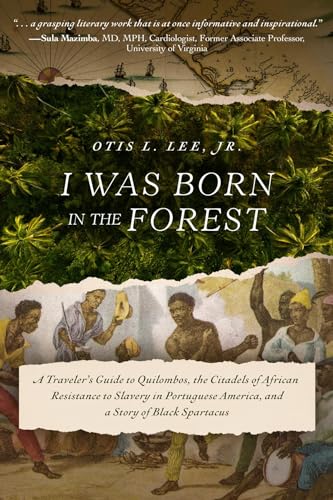
I Was Born in the Forest by Otis L. Lee Jr Review 

I received a free copy of this book in exchange for a fair and honest review. All opinions are my own. 

Author Otis L Lee Jr shares the story of the town of Palmares, a settlement established in the mountains of Brazil for Africans who escaped enslavement in the 17th century to form their own Afrocentric community and hold onto their freedom in the book “I Was Born in the Forest.”

Advertisements

The Synopsis

I Was Born in the Forest encapsulates the freedom struggle of Africans brought to the Americas in the bowels of slave ships from Congo, Angola, and other parts of Central Africa. In the seventeenth century, many defied the odds by escaping and establishing Afrocentric communities in the mountains in Brazil. Palmares, the most notable among them, existed from 1605 to 1694.

Palmares was the forerunner of Black towns in America, and its mesmerizing leader, Zumbi, belongs among the pantheon of heroic African-descended leaders such as Martin Luther King Jr., Francois Dominique Toussaint Louverture, and many others. He and his people rose from nothing in a hostile, foreign land to create an enduring Black republic in colonial Brazil.

Palmares and Zumbi have become transcendent icons of hope, perseverance, and the tenacity of African-descended people and all colonialized peoples who strive for and refuse to accept anything but unfettered freedom. Through a mix of travelogue and history, their story comes alive.

The Review

This was such an insightful and engaging read. The author was able to both entertain and educate readers on a subject that is so very rarely discussed, honing in on the African communities established in other countries such as Brazil during a time when so many were taken and enslaved in what would become the United States. The level of detail the author provides gives such a clear picture of the impact slavery had on everyone, especially in South American countries like Brazil, including elements such as the impact religion had on both those brought in as slave labor and the slavers themselves. 

What stood out to me was something the author touched upon early on in the book, which was the assertion that African slave labor brought into the Americas was all docile and compliant to their captors, when in reality, that was not the case. The fight and actions of the community of Palmares, especially their final leader Zumbi, were not only inspiring to an entire community of people, but the author also explored in depth how these actions created myths and legends that would help inspire future battles for freedom and independence. 

The Verdict

Powerful, educational, and insightful, author Otis L Lee Jr’s “I Was Born in the Forest” was a must-read nonfiction history book. The reality is this information isn’t the kind of education taught widely in schools, especially in our modern world, where education regarding this subject matter is being heavily censored, and the wealth of information and guidance this bit of history can provide the rest of the world is more important than ever before. If you haven’t yet, be sure to grab your copy today.

Rating: 10/10

Advertisements

About the Author

Otis L. Lee, Jr., a remarkable African-American individual, defied the barriers imposed by segregation and Jim Crow laws to achieve remarkable personal and professional accomplishments. Mr. Lee made significant contributions as a co-author in a 1980 project by the Howard University School of Business, which involved revising and editing the U.S. Department of Commerce manual titled “Local Economic Development Corporation, Legal and Financial Guidelines.”

He was a member of both the Pennsylvania and Virginia Bar Associations. He also contributed his expertise to several universities in the Midwest and along the East Coast. Otis’s distinguished professional journey included significant roles, such as serving as a Trust New Business Solicitor at the Harris Trust and Savings Bank in Chicago, Illinois, as well as consulting the Mid-Atlantic Region Advanced Underwriting for the New York Life Insurance Company. Furthermore, Lee was the Associate Director of the Center For Small Business and served as a Panel Executive for the Panel on Product Liability for the US Chamber of Commerce in Washington, D.C.

A retired attorney, he has now transitioned into an author who uses his powerful insights and experiences to inspire others. Through his writings, captivating video shorts, and engaging speaking engagements, Otis Lee, Jr. enlightens audiences with his unique perspective on resilience and triumph over adversity.

Lee’s 2013 debut memoir, “From South Boston to Cambridge: the Making of One Philadelphia Lawyer”, intricately weaves together a captivating narrative that chronicles his relentless pursuit of success, overcoming one obstacle after another. Within its pages, readers traverse alongside Lee, sharing in his profound emotions and experiences.

Published in 2019’s “The Last Train From Djibouti”, the story begins from an unassuming, yet metaphorical, location: a train voyage originating in Charlottesville, Virginia, bound for New York City’s Penn Station. For Otis, this journey recalls another train’s journey from distant times in a location many miles from home. Drawing inspiration from the accounts of Dr. Michelle Palmer Lee and her mentor, Dr. Harriett F. Karuhije, “The Last Train From Djibouti” brings us alongside these two women on a transformative odyssey, each embarking independently to the Motherland, spurred by a resolute desire to connect with Africa and self discovery. By artfully expositing passages from Michelle’s journal and Harriett’s recounting, Otis portrays a microcosm of the African-American struggle to unearth roots within a culture that underwent upheaval, crossed oceans and emerged anew.

Coming in 2024, Otis Lee’s latest title “Black Spartacus, I Was Born in the Forest: A Traveler’s Guide to Quilombo, Maroon Societies in Brazil” embodies the struggle for liberty by Africans who were transported to the Americas aboard slave ships, hailing from regions like Congo, Angola, and other parts of Central Africa.

https://otislee.com/

I Went Down To St. James Infirmary by Robert Harwood Review

I received a free copy of this book in exchange for a fair and honest review. All opinion are my own. 

Author Robert Harwood explores the origins and impact of a blues and jazz song on the twentieth century and beyond in the book “I Went Down to St. James Infirmary”.

Advertisements

The Synopsis

I Went Down to St. James Infirmary is the quintessential jazz-blues song of the early twentieth century. Many major performing and recording artists have covered it, from Louis Armstrong and Jimmie Rodgers to Van Morrison and the White Stripes.

Infused with ego-driven angst and once considered obscene because of the song’s stark depiction of death and the portrayal of a seedy underworld inhabited by gamblers, pimps, loose women, and every sort of rounder, it has been adapted, rewritten, borrowed, stolen, attacked, revered, and cherished. In its heyday of the 1920s and ‘30s, when recordings and sheet music of St. James Infirmary were first packaged and marketed, the public could not get enough of it. Nearly a hundred years later, its allure remains.

Author Robert W. Harwood follows the song as it travels from its folk origins into the recording studios, performance stages, and law courts of America’s jazz era. Along the way he picks up a retinue of fascinating characters whose stories are as fascinating as the song itself. Infused with humor and supported by meticulous research, this groundbreaking book explores the turbulent and mysterious history of one of the most important and influential songs of the twentieth century.

Happy Socks - Shop Now!

The Review

What a truly fascinating and engaging book. While I have always loved big band, jazz, and swing music, this particular song was not on my radar, so the exploration of the song and its impact on music and the world was so engaging. The author did a great job of exploring both the legends surrounding this song’s origins and the actual history, showcasing the drive to give each artist, no matter what origin, credit for their contributions to the music.

The overall drive and influence this book had on me as a reader was the exploration of how songs and music as a whole can impact a person or a society. The author wrote honestly and in detail, speaking to the cultural influences and divides that occurred with everything from minstrel shows to racism in the music industry (particular comments made to Louie Armstrong about his wife were shocking), as well as the multiple variations to the song as different artists added or removed lyrics. Artists went to court over changes, and copyright over the song emerged.

The Verdict

The history, culture, and detail found in author Robert Harwood’s “I Went Down to St. James Infirmary” made this song and the book so fascinating to read. The backstory behind each version of this song and the history of each person who contributed to its long and storied path will keep readers invested in this journey and coming back to the book time and time again. If you haven’t yet, be sure to grab your copy today!

Rating: 10/10

Advertisements

About the Author

Born in Belfast, Northern Ireland, Robert W. Harwood currently lives on Vancouver Island, British Columbia. His interests include writing, music, and photography – passions he shares with his wife, book designer and typographer Pamela Woodland.

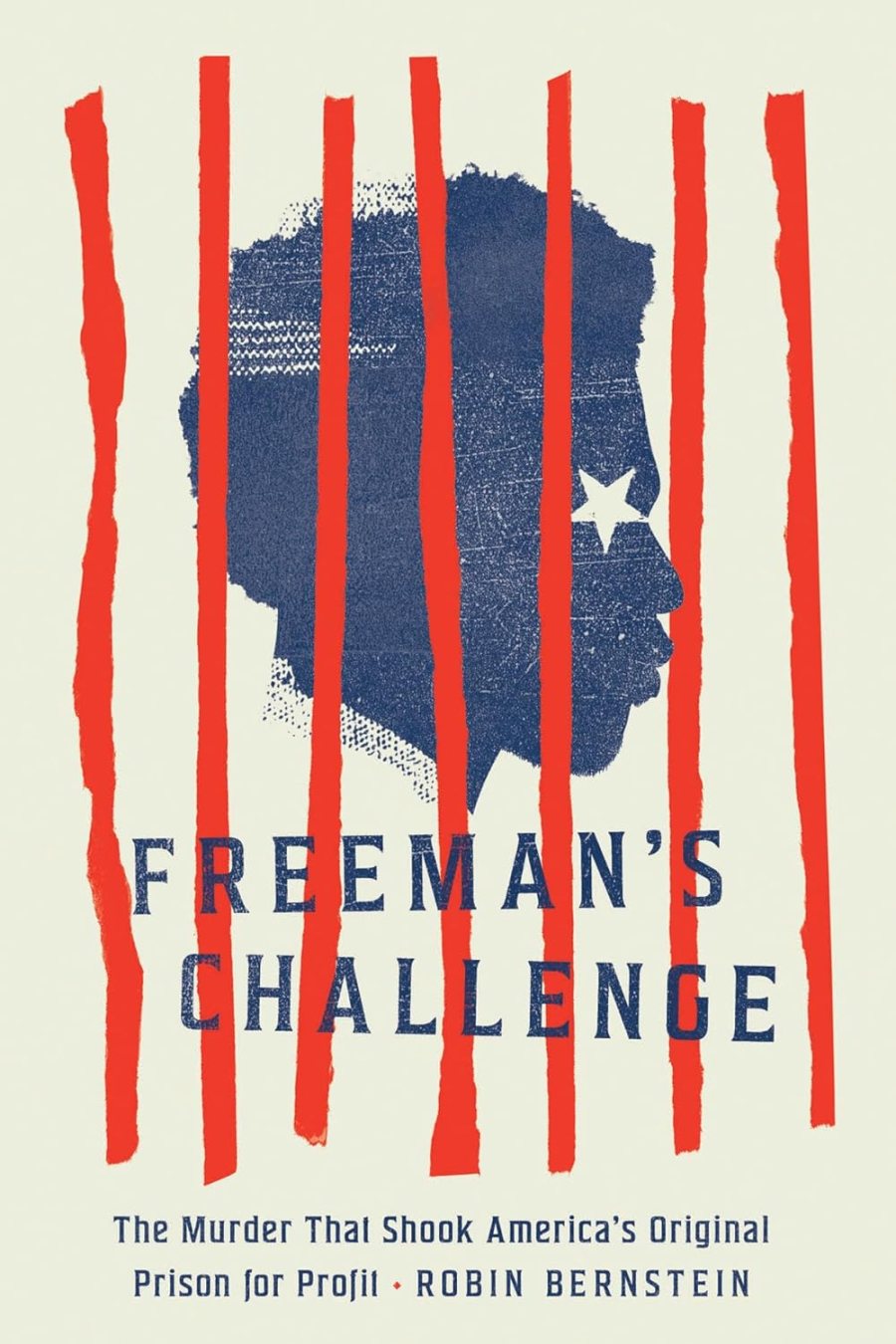
Freeman’s Challenge: The Murder That Shook America’s Original Prison for Profit by Robin Bernstein Review

I received a free copy of this book in exchanger for a far and honest review. All opinions are my own.

Author Robin Bernstein shares the shocking origins of prison for profit and anti-Black racism in the book Freeman’s Challenge: The Murder That Shook America’s Original Prison for Profit”.

Advertisements

The Synopsis

An award-winning historian tells a gripping, morally complicated story of murder, greed, race, and the true origins of prison for profit.

In the early nineteenth century, as slavery gradually ended in the North, a village in New York State invented a new form of unfreedom: the profit-driven prison. Uniting incarceration and capitalism, the village of Auburn built a prison that enclosed industrial factories. There, “slaves of the state” were leased to private companies. The prisoners earned no wages, yet they manufactured furniture, animal harnesses, carpets, and combs, which consumers bought throughout the North. Then one young man challenged the system.

In Freeman’s Challenge, Robin Bernstein tells the story of an Afro-Native teenager named William Freeman who was convicted of a horse theft he insisted he did not commit and sentenced to five years of hard labor in Auburn’s prison. Incensed at being forced to work without pay, Freeman demanded wages. His challenge triggered violence: first against him, then by him. Freeman committed a murder that terrified and bewildered white America. And white America struck back—with aftereffects that reverberate into our lives today in the persistent myth of inherent Black criminality. William Freeman’s unforgettable story reveals how the North invented prison for profit half a century before the Thirteenth Amendment outlawed slavery “except as a punishment for crime”—and how Frederick Douglass, Harriet Tubman, and other African Americans invented strategies of resilience and resistance in a city dominated by a citadel of unfreedom.

Through one Black man, his family, and his city, Bernstein tells an explosive, moving story about the entangled origins of prison for profit and anti-Black racism.

ABN Banner

The Review

The shocking nature not only of the crime but of what drove the young African-American man to that crime instantly grabs the reader’s attention. The visceral nature of the life of William Freeman and the heartbreaking events that led to the young man’s incarceration, both the first and second time, was instantly haunting and compelling all at once and captured the sense of frenzy that overtook white America at the time.

The close examination of racial tension and racial profiling during this time was conveyed throughout this book. Not only did the author explore the mindsets that many white Americans took at this time, relegating all members of the Black community to either being savage criminals or a failure of white America to educate the Black community, but showed how these two equally troubling mindsets impacted race relations in the centuries since. The fallout and impact this case had on the treatment and hardship that many Black Americans would feel in the next several years and beyond was shocking yet expertly navigated throughout this book.

Mpix Prints 468x120

The Verdict

Insightful, honest, and engaging author Robin Bernstein’s “Freeman’s Challenge” is a thoughtful and emotional book that examines one man’s heartbreaking case and the terrible reality of how relations between white and black America progressed in the years that followed. The tragic events that occurred to this young man and the conversation this book will spark and get people of all races thinking critically about American history and how we must end the cycle before it begins again made this one book you won’t be able to put down. If you haven’t yet, be sure to grab your copy today!

Rating: 10/10

Advertisements

About the Author

I am a cultural historian who specializes in race in the U.S. from the nineteenth century to the present. A graduate of Yale’s doctoral program in American Studies, I am the Dillon Professor of American History and Professor of African and African American Studies and of Studies of Women, Gender, and Sexuality at Harvard University. I am also Chair of Harvard’s doctoral program in American Studies. My book Freeman’s Challenge: The Murder that Shook America’s Original Prison for Profit is forthcoming from the University of Chicago Press in May 2024. My previous book, Racial Innocence: Performing American Childhood from Slavery to Civil Rights, won five awards.

https://amazon.com/gp/product/B0CTYLQ4SV/ref=x_gr_bb_kindle?caller=Goodreads&tag=x_gr_bb_kindle-20

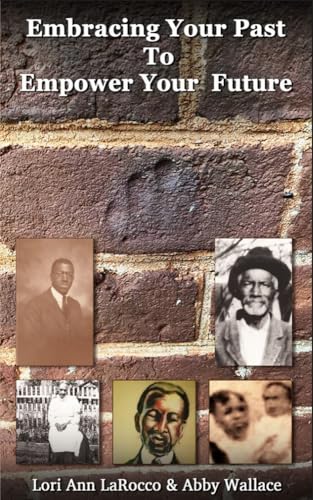
Embracing Your Past to Empower Your Future: Four Families Descended from Slaves Reflect on Stories of Strength, Love and Gratitude by Lori Ann LaRocco & Abby Wallace Review

I received a free copy of this book in exchange for a fair and honest review. All opinions are my own.

Advertisements

Authors Lori Ann LaRocco and Abby Wallace share the story of four families who all depended from slaves and reflect on the journey their families have taken in the book “Embracing Your Past to Empower Your Future: Four Families Descended from Slaves Reflect on Stories of Strength, Love and Gratitude”. 

Watermelon

The Synopsis 

In Embracing Your Past to Empower Your Future, descendants of four prominent Black families whose ancestors were enslaved tell readers what life was like for those ancestors, and how their experiences shaped and influenced future generations. Their experiences had a profound impact on each of these families—and the wisdom, traditions, and values that have been passed down from generation to generation. The authors worked with family historians, gathered volumes of historical documents, and worked with historians from Montpelier, Mount Vernon, and Africatown to ensure its accuracy

Take a Food Journey Around the World!

The Review

This was a compelling and thoughtful nonfiction read. The exploration of the history, culture, and journey of these four families and the trials these enslaved people faced was heartbreaking yet inspiring. Seeing and reading about the contributions these individuals made and the horrifying hurdles they had to overcome not only puts into perspective the darker aspects of American history but showcases the drive to provide a better future for the future generations of these families.

The amount of detail and depth the authors put into the research and interviews with these families was remarkable. The honesty and inspiration that these individuals provided and the balance the authors struck between the history of these families and what they endured, with the impact that can still be felt in these modern times, made the book feel alive and remarkable to learn about. 

Metallica The Master Collection Banners

The Verdict

Engaging, thoughtful, and vital reading material to understanding the history of our nation and the harrowing journey for many black families in the United States, authors Lori Ann LaRocco and Abby Wallace’s “Embracing Your Past to Empower Your Future: Four Families Descended from Slaves Reflect on Stories of Strength, Love and Gratitude” is a must-read nonfiction and historical read. The detail and insightful nature of the book, and the way the authors highlight both the horrors of slavery and the challenges many families still face in the wake of racism, as well as the light that hope and all that struggle has brought to future generations of these families, making this a remarkable book to read. If you haven’t yet, be sure to grab your copy today!

Rating: 10/10

Advertisements

About the Author

Lori Ann LaRocco is an American Journalist and is also the best-selling author of Trade War Containers Don’t Lie: Navigating the Bluster (Marine Money 2019), Dynasties of the Sea: The Untold Stories of the Postwar Shipping Pioneers (Marine Money, 2018), Opportunity Knocking (Agate Publishing, 2014), Dynasties of the Sea: The Shipowners and Financiers Who Expanded the Era of Free Trade (Marine Money, 2012), and Thriving in the New Economy (Wiley, 2010 

Abby Wallace is an advanced placement History and English student in New Jersey. Abby enjoys writing, reading, drawing, riding horses, and performing on stage. Abby loves to give back to others and enjoys volunteering at Pony Power Therapies. She hopes to one day have a therapy barn of her own. 

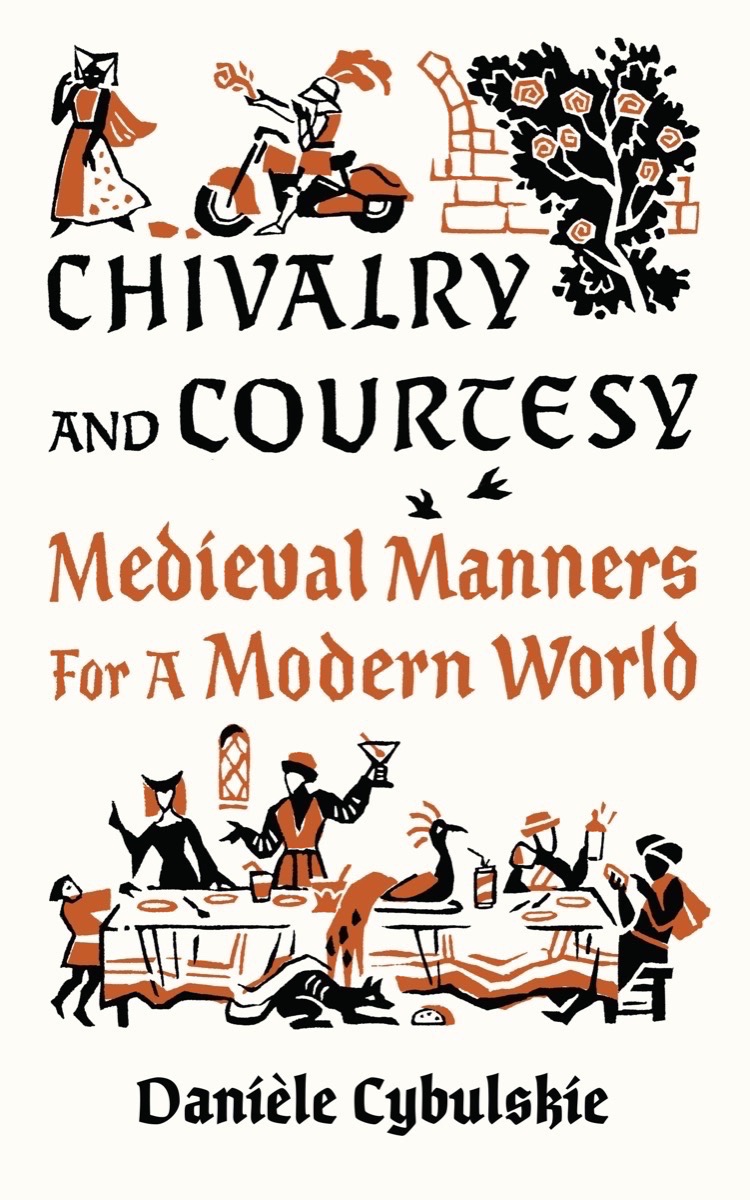
Chivalry and Courtesy: Medieval Manners For a Modern World by Daniele Cybulskie Review

I received a free copy of this book in exchange for a fair and honest review. All opinions are my own. 

Watermelon

Author Daniele Cybulskie shares the rituals and etiquette that drove medieval society in the book “Chivalry and Courtesy: Medieval Manners For a Modern World”. 

Advertisements

The Synopsis

A surprising look at how medieval etiquette can improve our lives today, from the author of the popular How to Live Like a Monk

Medieval people are often portrayed as having poor hygiene and table manners—licking their knives or throwing chicken bones on the floor. In the Middle Ages, however, such behavior was not tolerated. Medieval society cherished order in nearly every facet of life, from regular handwashing to daily prayer. There were consequences if you didn’t adhere to the rules of good behavior: you wouldn’t be invited to the lord’s next dinner, you wouldn’t win the battle, and you wouldn’t win the lady.

Author Daniele Cybulskie explores the world of medieval etiquette, encompassing table manners and interpersonal relationships as well as running a household and ruling a kingdom. With wit and insight, Cybulskie draws on a wide variety of primary sources, from handbooks for young knights to romantic poems. Though we may no longer need best practices for things like dueling or ordering about our servants, the principles of generosity, kindness, and respect still apply today. After all, it’s a good reminder to “not talk when you have food in your mouth” and “anything you say should be entertaining, polite, and sophisticated.”

Illustrated with original drawings by Anna Lobanova as well as eighty medieval artworks, Chivalry and Courtesy is full of good advice for everyone, whether you are a peasant or a knight, a student or a CEO, a king or a queen.

Take a Food Journey Around the World!

The Review

This was one of the most fascinating and compelling looks into life in the Middle Ages. The history and knowledge the author is able to impart, and the detail that goes into each and every aspect of society at that time, was incredible to see come to life on the page. The heart and passion for which the author wrote about this subject were felt greatly throughout the book and made the reader feel more connected to the subject matter.

The history and the balance the author struck with our more modern ideals was the heart of this book. The detailed writing style really brought this time period to life, and the way the author delved into everything from how to eat to how to court and so much more really highlighted the chivalry of the time period. The author did a great job of also stripping away the core values of these etiquette lessons and applying them through a modern lens. 

The Verdict

Memorable, thought-provoking, and engaging, author Daniele Cybulskie’s “Chivalry and Courtesy” is a must-read nonfiction book on history and etiquette. The detail and fascinating historical facts that the author brings to life, and the inside look into life during the Middle Ages in England and France, made this a truly mesmerizing book that is not to be missed. If you haven’t yet, be sure to grab your copy today!

Rating: 10/10

Advertisements

About the Author

As a writer, professor, TEDx speaker, and now podcaster, Danièle has been making the Middle Ages fun, entertaining, and accessible for over ten years. She is the author of The Five-Minute Medievalist, which debuted at the top of Amazon’s Canadian charts, and through her featured articles at Medievalists.net, as well as those she’s written for several international magazines, Danièle’s work has been read over half a million times, and counting.

Danièle is the creator and host of The Medieval Podcast, a weekly interview show on which she speaks with experts on the Middle Ages on a wide variety of topics. She also currently teaches The Middle Ages and the Modern World: Facts and Fiction, which she co-created for college students across Ontario via OntarioLearn. Her forthcoming book, Life in Medieval Europe: Fact and Fiction, is being published by Pen & Sword History, and will be available in autumn, 2019.

When she’s not reading, writing, or recording, Danièle can be found drinking tea, doing Krav Maga, or sometimes building a backyard trebuchet.

https://www.danielecybulskie.com/

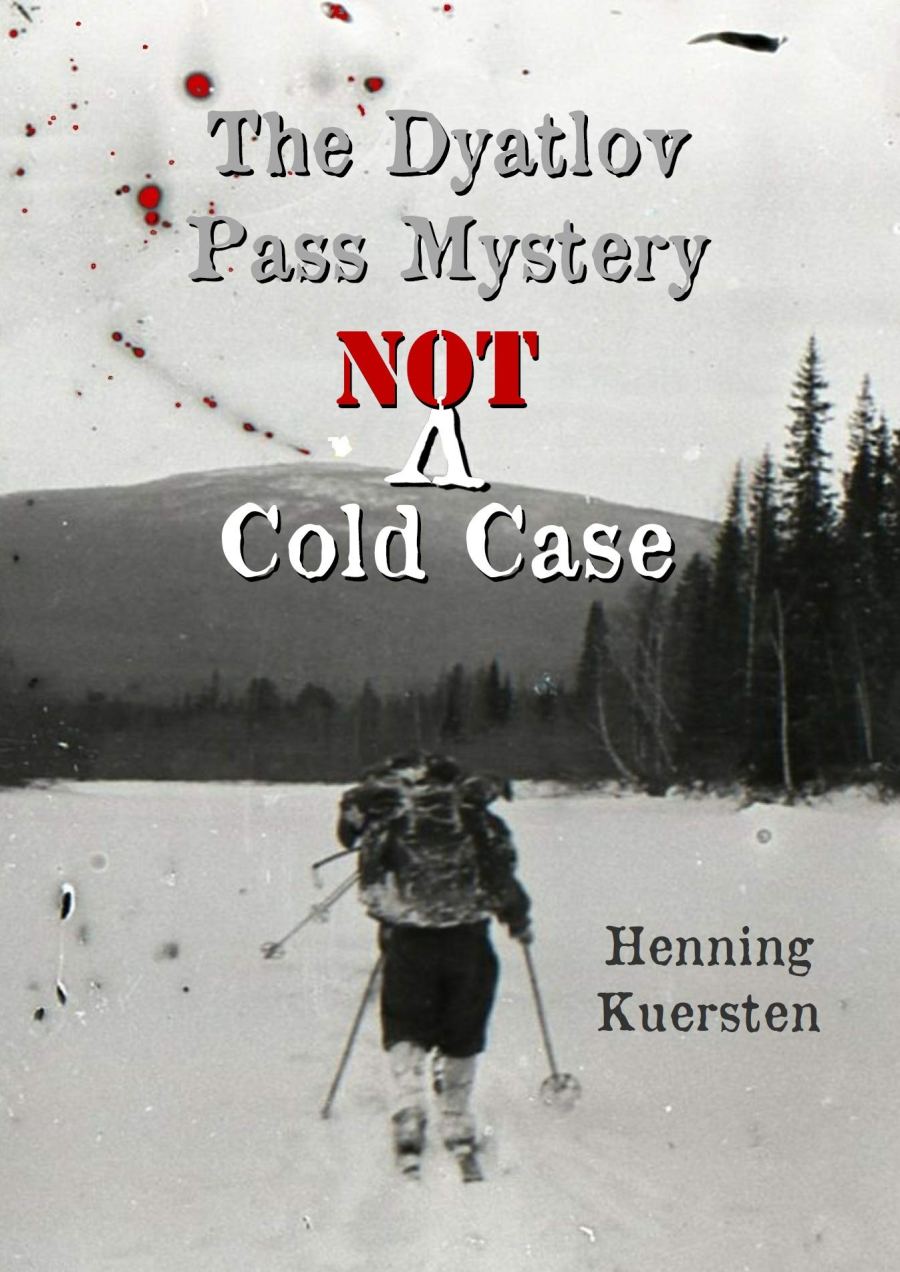
The Dyatlov Pass Mystery: Not A Cold Case by Henning Kuersten Review

I received a free copy of this book in exchange for a fair and honest review. All opinions are my own.

Author Henning Kuersten uses new professional image analysis, video footage, and so much more to discuss and even debunk some of the theories surrounding one of mountaineering’s most haunting cases and works to discover the truth in the book “The Dyatlov Pass: Not a Cold Case”.

Advertisements

The Synopsis

Amazon Bestseller in History, Mountaineering and Expeditions

John Hay, Warner Brothers director and two-time EMMY award winner:

A definitive work on the case; convincing, well researched and played out with such conviction, that by the time I got to the end of the book I couldn’t think of any other solution to the mystery that remained plausible.

On 1. February 1959, a group of nine experienced hikers perished in -30° under mysterious, gruesome circumstances in the Ural mountain range, on the slope of Mount Kholat Syakhl, also referred to as “Dead Mountain” or “1079”. Three weeks after the incident, their abandoned but strangely intact tent was found, slashed open from the inside. The student hikers fled without proper clothing and boots to a ravine at the base of the mountain, where it seems they didn’t die from hypothermia alone, but from traumatic violent injuries and burns. Strange last photographs taken by the hikers and high levels of radiation found on some of their clothes have led to decades of speculation over what really happened.

The Dyatlov Pass mystery is one of the most perplexing mysteries in the international history of mountaineering, and probably the most controversial forensic crime case in Russia. But was it murder, KGB conspiracy, a rocket accident coverup or some unknown natural or supernatural force, like the “Gods in Shining Garments” which the local Mansi hunters mention, or the “fireballs” chief inspector Ivanov believed in up to his death? Are there undervalued or misunderstood eye witnesses of the tragedy, or has anyone even had a similar close encounter since, on that mysterious mountain of fire & ice, where compasses deviate more than 30°?

This gripping nonfiction documentary discusses and debunks multiple existing theories with the help of professional image analysis, rare video footage, eyewitness reports, previously misinterpreted evidence and Occam-style common sense. Through the help of science, the author unravels the secrets behind the fateful journey to that deadly mountain in the freezing Russian winter, and for the first time ties together all seemingly contradicting puzzle pieces into a big picture. Extensively illustrated with visual material, ranging from recovered film frames to newest amateur footage, the book leads the reader to the spectacular solution of the mystery. Which turns out to be surprisingly close to the initial official conclusion of “unknown compelling force”, but far from the better-than-nothing avalanche theory, which has seen a prominent renaissance after the 2020 Russian reopening of the case.

The author Henning Kuersten studied Computer & Information science at the Technical University of Munich, Germany, and Psychology at Queen’s University in Kingston, Canada. He is owner of a company specialized in software for image analysis. He is also a dedicated mountaineer who has survived a horrific incident on the 4049 meter high Piz Bernina, which, together with his professional experience in Photography and Psychology, has helped him to understand the fate of the Dyatlov group.

Introducing BookBaby Editing Services. The first truly affordable book editing solution designed for self-publishing authors.

The Review

This was a truly memorable and thought-provoking read. The blend of history and mystery that this case presents to the reader was well represented in this book. The author does a great job of presenting the facts of this case with precision and expertise, while also allowing room for profound thoughts and engaging theory work that the author gives to readers to touch upon the stranger aspects of this case.

The amount of research and discovery the author allows for in this book was remarkable to watch unfold. The images and pieces of evidence the author provides within this book help elevate the wild and chilling theories that are explored and debunked. The way the author brings to life science and history, along with the passion for mountaineering as a whole, made this a compelling read.

ABN Banner

The Verdict

Thrilling, mindful, and engaging, author Henning Kuersten’s “The Dyatlov Pass Mystery: Not a Cold Case” is a must-read nonfiction book on mountaineering and world history. The way the culture of the time and setting was implemented into the facts of the case and the presentation of the people who became the victims of this infamous study was greatly represented in this book, making this infamous case feel alive on the page. If you haven’t yet, be sure to grab your copy today!

Rating: 10/10

Advertisements

About the Author

Henning Kuersten studied Computer & Information science at the Technical University of Munich, Germany, and Psychology at Queen’s University in Kingston, Canada. He is owner of a company specialized in software for image analysis. He is also a dedicated mountaineer who has survived a horrific incident on the 4049 meter high Piz Bernina, which, together with his professional experience in Photography and Psychology, has helped him to understand the mystery of the Dyatlov Pass Incident.

Lessons from the Greats: How Historical Figures Can Inspire Your Personal Growth by Fadi Gorgies Toma Review

I received a free copy of this book in exchange for a fair and honest review. All opinions are my own. 

Author Fadi Gorgies Toma shares with readers some lessons gained from some of history’s greatest figures to help guide them on the path to bettering their own lives in the book “Lessons from the Greats: How Historical Figures Can Inspire Your Personal Growth”.

Advertisements

The Synopsis

Lessons from the Greats is a book that explores the lives and achievements of historical figures, and how their stories can inspire personal growth. From world leaders to artists and entrepreneurs, this book provides valuable insights into the habits, mindset, and practices that led to their success. By examining the triumphs and failures of these greats, readers can learn valuable lessons for their own personal growth and development. Whether you’re looking to improve your leadership skills, creativity, or resilience, this book offers practical advice and inspiration from the greatest minds in history.

BookBaby's Complete Self-Publishing Package includes eBooks, Printed Books and more - everything you need for your book launch!

The Review

This was a fast-paced yet insightful read. The author does an incredible job of not only presenting the reader with a quick rundown of the historical figures and their lives but of the lessons that can be taken from their lives in regard to a person’s personal growth. From overcoming adversity and demonstrating courage to promoting empathy and kindness, the lessons these figures have given to the world as a whole leave a major source of inspiration to us all.

For me, the way the author was able to give such a comprehensive list of historical figures and hone in on their achievements in both history and our personal lives made this such a compelling read. The impact these figures have had on history and our culture as a whole is well known, but we don’t often stop to think about how their lives can inspire us to change or grow as a person ourselves. 

Two great examples of this are the pages dedicated to Martin Luther King Jr and Fred Rogers. Not only do these two figures represent a great mix of both culturally relevant figures and historical figures, but Dr. King showcased the resilience and courage it took to face oppression and lead the Civil Rights Movement through nonviolence rather than physical altercations, while Mr. Rodgers showed the value and importance of being kind to others and understanding a person’s struggles and hardships.

ABN Banner

The Verdict

Thoughtful, memorable, and engaging, author Fadi Gorgies Toma’s “Lessons from the Greats” is a must-read nonfiction book on personal growth and history blended into one comprehensive guide. The thoughtfulness of the figures showcased in this book and the heart that went into the author’s research and philosophical approach to these fascinating figures made this a truly compelling book to get lost in. If you haven’t yet, be sure to grab your copy today!

Rating: 10/10

Advertisements