I received a free copy of this book in exchange for a fair and honest review. All opinions are my own.
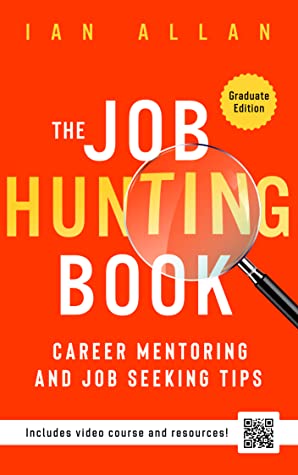
Author Ian Allen shares a step-by-step guide to readers on the best practices to create the best chances at finding work, especially that first graduate job, in his book “The Job Hunting Book”.
Advertisements
The Synopsis
Searching for your first graduate job is an exciting time, but can often leave you feeling lost and frustrated. So here’s a secret— it’s not all about you! Getting a job interview is also about your employer. Added to this, the tools that recruiters and job seekers use have changed, and to be successful, you’ll need:
* An online and in-person profile for yourself before you even approach an employer. * A job application that solves an employer’s problems, and fulfils their hopes and dreams. * To use technology as the cornerstone of your job seeking process.
In this practical, step-by-step job hunting guide, industry veteran Ian Allan will become your personal career guidance mentor. You’ll be given a foolproof process for writing a resume and cover letter that will go straight to the top of the “yes” pile, and a method for job hunting that includes identifying your skills gaps—and what to do about them.
Plus, Ian will teach you useful strategies for finding the four out of five dream jobs that aren’t advertised, and share actionable tips on how to build relationships so you get that job interview.
Draw on Ian’s decades of experience as an employee, employer and consultant to ensure you become an ideal candidate and land the job you’ve always wanted.
Bonus content: FREE access to four hours of video training and job hunting resources, including LinkedIn profile tips, downloadable templates, and real-world examples of successful job applications.
The Review
This was a well-written and incredibly researched book. The author did a fantastic job of showcasing a clear line of connection between a person getting a job by identifying with the employer themselves. The balance of personable and professional writing styles really elevated this book. It allowed the subject to shine brightly without getting lost in other areas of discussion in the job market.
The clear-cut guide and interactive element of the book that challenges the reader to utilize these steps for themselves were inspiring to read and watch unfold on the pages of this book. The way the author delved into the impact on the job market these last few years have had, from how COVID-19 has changed how we work experience to the importance of having an online presence for many employers, really made the book feel relevant and accessible to a wide range of readers who are seeking employment in this new world.
The Verdict
Thought-provoking, engaging, and insightful, author Ian Allen’s “The Job Hunting Book” is a must-read nonfiction book of 2022. The educational value alone will keep readers invested. Still, the relatable and thoughtful way the author approaches the subject with such honesty and conviction will have readers eager to engage with the author’s guidance and practices and in the field looking for work ASAP. If you haven’t yet, be sure to grab your copy today!
Rating: 10/10
Advertisements
About the Author
Life has a way of throwing up challenges. Mine happened in my late teens. In the final year of my apprenticeship a nasty workplace accident forced me to rethink my career.
Fast forward to my early 30s, I’d been a furniture restorer, a furniture removalist, a bingo caller, a pedestrian accident researcher, a condom tycoon (for some reason that failed to impress my girlfriend’s mother), a software engineer, and a lecturer and researcher in spatial science. I won jobs, sometimes due to my tenacity, but looking back, mostly through word of mouth.
In the 90s I started a consultancy and did spatial modelling for universities, the water industry, all levels of the Australian government and the UN. Magically, consulting work and now my employees came via word of mouth.
So, after 40 years as an employee and as a consultant, I’ve learnt that the secret sauce for getting work is relationships, especially professional relationships. These need not be insincere or manipulative. Opportunities naturally arise for those who make the effort. The trick to giving relationships their best chance of yielding work is to put yourself in the other person’s boots and empathize with their problems, their hopes and their dreams. Getting work becomes a simpler exercise when you’ve customized your offering to meet someone’s needs. And that idea is essentially what I’m on about.
I’m a teacher at heart. Now, in my 50’s, I can look back on my career as an employee looking for work, as a consultant winning work, and as an employer hiring and firing. The guidance I write was not around for me when I was starting out. In the absence of a mentor, I had to work it out for myself. And so here are some of my thoughts for you.
I received a free copy of this book in exchange for a fair and honest review. All opinions are my own.
Readers are treated to a practical and thoughtful approach to wedding planning in authors Edna Dratch-Parker and Jeri Solomon’s “Guide to Smart Wedding Planning”.
Advertisements
The Synopsis
The Real Deal Wedding Insiders® Guide to Smart Wedding Planning gives you practical and actionable steps to take control of your wedding planning, make the best decisions, and keep your sanity along the way.
You’ll learn how to:
* Navigate stressful relationships
* Create a vision that represents you both
* Understand and build a realistic budget
* Choose the right venue and vendors
* Stay present and enjoy your wedding day
The Review
This was such an insightful and engaging book. The authors did an amazing job of taking the reader through the journey of wedding planning in great detail without losing themselves to an overabundance of backstories. The way authors were able to craft an interactive and educational read that has real-world practical applications that the reader will be able to share immediately.
The breakdown of information and reliability of the authors and their work is what stood out to me. The way the authors take the reader through every step of the wedding planning process, from the moment that you become engaged to the moment the wedding is over, was fantastic to read about, as there are so many aspects of the wedding process that the average reader doesn’t even think about. From the emotional side of things like learning how to be present in the moment of the wedding day to the finances and practical side of things that come with setting a budget with the person funding the wedding, this book does a great job of delving into the most important information that readers will be able to apply immediately.
The Verdict
Informative, thoughtful, and engaging, authors Edna Dratch-Parker and Jeri Solomon’s “Guide to Smart Wedding Planning” is a must-read book for the engaged couple seeking help with their wedding this season. The memorable and interactive writing style will keep readers invested in the information the authors have provided, and the brilliant and concise way the authors have collected this information will stay with readers well into their own weddings and beyond. If you haven’t yet, be sure to grab your copy today!
Rating: 10/10
Advertisements
About the Authors
With a combined 30 years and hundreds of weddings produced, Edna Dratch-Parker, founder, and creative director of EFD Creative—Event Planning & Design, and Jeri Solomon, owner of Jeri Solomon Floral Design, bring their depth of knowledge and real-life experiences to help couples avoid common mistakes, reduce stress, and truly enjoy the wedding planning process.
I received a free copy of this book in exchange for a fair and honest review. All opinions are my own.
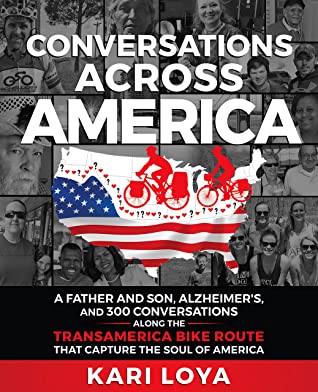
Author Kari Loya shares an emotional and heartfelt journey of perseverance through adversity as he shares the physical journey he and his father made in 2015 as they rode their bikes in the early years of his father’s Alzheimer’s diagnosis and the conversations they had with others along the way in the book “Conversations Across America: A Father and Son, Alzheimer’s, and 300 Conversations Along the TransAmerica Bike Trail That Capture the Soul of America”.
Advertisements
The Synopsis
Conversations Across America is about a father-son journey of a lifetime: a 73-day, 4,600-mile cross-country bike trip Kari took in 2015 with his 75-year-old dad, Merv, who had early-stage Alzheimer’s. Their adventure reminds us of the power of perseverance and adaptability in the face of uncertainty. It’s also a heartwarming example of listening and discovery, including 300 short conversations with people who approached them along the way, providing a rich snapshot of America, especially rural America.
Conversations is a mix of Blue Highways, Tuesdays with Morrie, and Humans of New York… on a bike. As you read, you can’t help but reflect on your relationship with your own father and children, while gaining perspective on Alzheimer’s—which now afflicts more than six million Americans—and getting a sense of the TransAmerica Bike Trail and America itself. Above all, you will be inspired to seize-the-day with someone you love—whatever that means to you.
The Review
This was such a powerful and moving story. The author’s ability to find the perfect balance between emotional and personal storytelling with inspired and honest conversations with hundreds of people across the country made this such a unique and memorable book. The way the author was able to take these stories and conversations from so many people and find a way of using these to explore the fabric of American society and culture through so many different lenses was inspiring to say the least and showcased the diversity and heart of the nation as a whole.
Yet the true heart of this book is in the story of Kari and his father. The impact that Alzheimer’s has on both those who are afflicted with the illness and those who love or care for someone who has it is something many people throughout the world, let alone in the United States, can relate to. The emotional story of this father and son duo as they come to terms with the realities of this diagnosis, as well as the passion they share to make this journey together, makes for a relatable and heartfelt experience that many others could see themselves in. The snapshots and diary entry style writing make this feel like an intimate look into the author’s life that elevates this emotional story more, and the father and son journey helps elevate the stories of those they come across as the book progresses.
The Verdict
Thoughtful, engaging, and hauntingly beautiful, author Kari Loya’s “Conversations Across America: A Father and Son, Alzheimer’s, and 300 Conversations Along the TransAmerica Bike Trail That Capture the Soul of America” is a must-read nonfiction story of endurance, family, and the strength that comes from our connections to one another. The social and cultural ties that are explored through these stories blend well with the author’s personal journey to come to terms with his father’s illness and make this a heartfelt reading experience that will be impossible to put down. If you haven’t yet, be sure to grab your copy today!
Rating: 10/10
Advertisements
About the Author
Kari Loya is an educational leader, storyteller, and adventurer. He has worked nearly three decades at a range of innovative educational institutions, beginning with Teach For America in 1993 and serving most recently as headmaster at the Good Hope Country Day School in the U.S. Virgin Islands, when he received a Klingenstein Fellowship from Columbia University. He is also an Emmy-winning bilingual voice talent, musical artist, and author. He spoke at TEDx UC Davis in April 2022 on the theme of “Metamorphosis.” He holds a BA from Dartmouth College and an MBA from Columbia University. He currently lives with his wife and daughter in Sugar Land, Texas.
I received a free copy of this book in exchange for a fair and honest review. All opinions are my own.
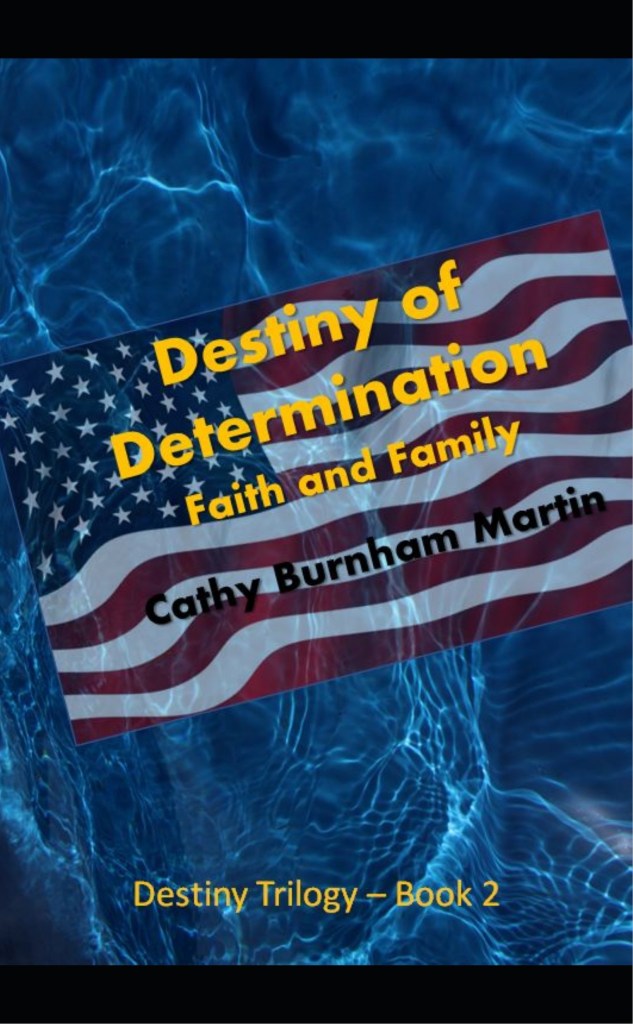
The journey and struggle to escape a horrific attack and genocide of the Armenian people at the end of the Ottoman Empire leads to a new life in America and the struggle to overcome new prejudices and persecutions in author Cathy Burnham Martin’s “Destiny of Determination: Faith and Family”, the second book in the Destiny Trilogy.
Advertisements
The Synopsis
“Destiny of Determination: Faith and Family” illuminates the stark realities of immigrants determined to settle in America, a land of opportunity and freedom. While young Hrant’s Armenian story parallels the horrors experienced by far too many cultures in both the past and present, book 2 in the Destiny trilogy also highlights the strength and hope that live within survivors of various nightmares. After witnessing and escaping genocide, Hrant may just find American prejudice and bigotry to be manageable hurdles.
Book 1 found Hrant Gulumian, the youngest child in his family, deeply relating to his granddaughter, Cassie when her nightmares precisely mirrored his traumatic childhood experiences. Destiny of Dreams… Time Is Dear shared young Hrant’s harrowingly narrow escape from the mass deportations and attempted annihilation of the Armenians in the waning years of the Ottoman Empire.
Despite the hauntingly intense and dramatic truths in Book 1, the Destiny trilogy resumes with the powerful hope and strength known only to survivors. Book 2 completes Hrant’s voyage and sweeps the reader into his family’s new life in the USA, illuminating the vulnerability of the diaspora and all forced refugees in a new and unfamiliar land filled with language, cultural, and discrimination challenges.
Author Martin celebrates her family’s quiet determination and its refusal to lose faith, despite intolerance and numerous economic woes. Set in the 20th Century, her family’s true story shines a beacon of optimism and comfort for countless other families, hailing from many nations and struggling to endure on the way to freedom and a chance for a better life in this century.
The Review
This was such a brilliant blend of both fiction and nonfiction storytelling. The author did an incredible job of relaying the experiences and powerful memories of her family, showcasing the struggles to make a place for themselves in the United States and the hurdles they had to overcome from a society that judged and looked upon them with suspicion and even at times hatred. The themes of immigration, family, and the pursuit of acceptance were felt so powerfully here in this narrative and made the story flow smoothly.
The author’s emphasis on character growth and history and culture was brilliant to read. The knowledge that the “characters” were actual family members that the author changed the names of made their experiences and pivotal moments in the story much more impactful, and allowed the reader to really connect to them and the narrative, especially as it relates to the immigration story. The way the author pivots this immigration story between the character’s desire to maintain their culture and practices after the events they survived, and the hope of building a new life in this land of opportunity despite the bigotry they are faced with, allowed the reader to feel connected to the narrative.
The Verdict
Captivating, inspiring, and hopeful, author Cathy Burnham Martin’s “Destiny of Determination: Faith and Family” is a must-read genre fiction meets biography nonfiction style narrative that you won’t be able to put down this fall. Due to release on November 2nd, 2022, the book brings readers a heartfelt, emotional, and engaging story of survival, family, and finding the balance between honoring one’s culture and history with the hope of a brighter brand new future. If you haven’t yet, be sure to preorder or grab your copy today!
Rating: 10/10
Advertisements
About the Author
Born in Goffstown, New Hampshire, Cathy Burnham Martin’s eclectic career path wove through recruiting, communications, television broadcasting, management, and bank organizing. An active board member and community volunteer, she received Easter Seals’ David P. Goodwin Lifetime Commitment Award. This professional voiceover artist, journalist, corporate communications geek, and dedicated foodie earned numerous broadcasting awards as a television news anchor. She wrote, produced, and hosted dozens of groundbreaking documentaries, TV specials, and news reports, ranging from the Moscow Superpower Summit and the opening of the Berlin Wall to extensive coverage of New Hampshire’s First-in-the-Nation Presidential Primaries.
Some of her most challenging work includes news stories behind the Iron Curtain under the scrutiny of foreign military personnel touting loaded AK-47s. While she met and interviewed Presidents and candidates, other interviews ranged from inventor Dean Kamen, best-selling authors Og Mandino and Richard Lederer, and Star Trek originator Gene Roddenberry to Popcorn icon Orville Redenbacher, Boston Pops conductor Arthur Fiedler, superstar New Orleans chef Paul Prudhomme, and filmmaker Ken Burns.
Among little-known facts about Cathy? She once sang with The Beach Boys and with the marvelous Marvelettes, shared a dressing room with Ella Fitzgerald, and emceed for Tony Bennett. She also performed on stage with comedian Adam Sandler, actor Dan Lauria, and director Alek Keshishian.
Dubbed The Morale Booster, this 20-year professional member of the National Speakers Association remains a business speaker, media coach, and member of the Actors Equity Association. Proud of her Eurasian heritage, Cathy Burnham Martin narrates her own books and those of other authors. Audiobooks appear on such sites as Audible.com as well as Amazon and iTunes. Author of 20+ fiction, nonfiction, and cookbooks, Cathy writes articles for her http://www.GoodLiving123.com website. When not writing or in full production mode, Cathy and her husband enjoy traveling, boating, music and visual arts, and great food.
I received a free copy of this book in exchange for a fair and honest review. All opinions are my own.
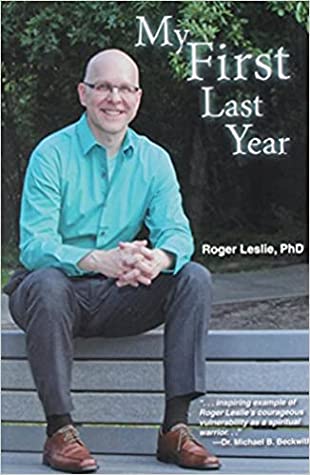
After surviving a health scare with his husband in the 80s, author Roger Leslie developed a system of health, both physical and mental, that takes the concept of living life to the fullest to all new heights in the book, “My First Last Year”.
Advertisements
The Synopsis
In response to a spiritual dream, Roger Leslie lived a year as if it were his last. New inspirations set his course for success, while heartbreaking loss gave him a palpable glimpse of eternity. Leslie shares his journey here as a guide for anyone seeking deeper meaning, richer love, and greater joy in life.
The Review
The author did an incredible job of crafting a moving and passionate self-help meets nonfiction wellness read. The journey of discovery that so many people go on in life to determine how they should live each and every day is something we must all endure, and more often than not those who are facing their own demise or mortality find themselves forced to discover the answers for themselves fairly quickly. The balance the author struck between personal experience and emotional writing with instructive and detailed steps that readers could apply to their own lives was amazing to see play out in this book.
The powerful themes and heartfelt writing style are what hooked me on the author’s story. The moments the author takes to delve into his own personal histories, such as his and his husband’s brush with one of the most fearful health scare that many faced in the 80s, the AIDS crisis, and how this experience and coming out on the other side of it inspired a moment of clarity as to living life to the fullest was so impactful and emotional to read.
The Verdict
Heartfelt, captivating, and engaging, author Roger Leslie’s “My First Last Year” is a must-read nonfiction self-help read. The powerful themes of living life to the fullest, making every day count, and coming to terms with our own mortality were so strong and powerfully felt in this read, and the natural way the author was able to infuse the personal experience with thought-provoking guides to the author’s researched and developed method made this a compelling read. If you haven’t yet, be sure to grab your copy today!
Rating: 10/10
Advertisements
About the Author
Dr. Roger Leslie is a scholar in the fields of success and education. Through major literary houses, medium and small presses, and his own publishing house, Leslie has published fiction and nonfiction books in multiple genres: historical fiction, inspirational self-help, spirituality, writing and publishing, movie reference, teaching and librarianship, biography, history, and memoir.
Leslie has won numerous national awards including ForeWord Book of the Year, The Ben Franklin Award, and Writer’s Digest’s #1 Inspirational Book of the Year. At its inaugural event, Leslie received the Houston Literary Award for his body of work.
Leslie is in demand as a teacher, coach, and keynote speaker. He leads FLY (First Last Year) courses based on his blockbuster memoir, My First Last Year. He draws from decades as an author, editor, and publisher to coach writers in groups and individually. He is also a sought-after speaker for his lively, entertaining keynotes relating award-winning movies to any topic or group.
In every book and presentation, Leslie entertains, inspires, and empowers people to live the life they dream and soar toward their own ideal of success. For more, visit RogerLeslie.com.
I received a free copy of this book in exchange for a fair and honest review. All opinions are my own.
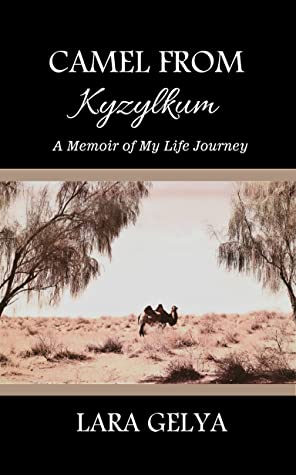
Author Lara Gelya shares her journey of immigration, family, and hope amidst a journey of struggles and loss across multiple countries in the book “Camel from Kyzylkum: A Memoir of My Life Journey”.
Advertisements
The Synopsis
Camel from Kyzylkum is a memoir about immigration, family, and the late twentieth century. It touches on themes of hope, struggles, and loss, and shares the inspiration for reaching again and again for a better life. A compelling testament to people’s choices over time, it focuses on freedom and self-determination, no matter how much work and risk are involved.
Travel from Ukraine to the Kyzylkum Desert of Uzbekistan, from the Soviet Union to Austria, then Italy, and eventually America, all while following Lara’s journey to find her truth and her future. Through it all, family, friends, and work shape her life, and a lengthy professional career leads to her eventual retirement on the shores of sunny Florida.
The Review
The author’s story was so moving to read. The balance that was struck between matter-of-fact storytelling and heartfelt experiences was felt throughout this book so clearly. The imagery and tone the author managed to bring to life in the book kept me as a reader hooked to the story being told.
Yet it was the book’s themes and the heart for which the story was told that really captivated me. The themes of hope, the American Dream, and overcoming adversity were well represented here. In today’s world, the author’s story of growing up and coming from Ukraine when it was part of the Soviet Union is far more relevant than ever before, and the author’s story not only highlights the way life was back in those days but mirrors the political and struggling situations that so many are stuck in now.
Yet the author’s hope in writing this for her family and friends to understand more about her journey to the United States over 30 years ago was so captivating to get lost in and made for an emotional read.
The Verdict
Gripping, engaging, and thought-provoking, author Lara Gelya’s “Camel from Kyzylkum: A Memoir of My Life Journey” is a must-read memoir and nonfiction read. Suppose you enjoy stories that share the classic, ideal American Journey for immigrants while also providing a unique perspective and personal experience from the author’s life. In that case, this is the book for you. If you haven’t yet, be sure to grab your copy today!
Rating: 10/10
Advertisements
About the Author
Born in Ukraine and going to school there, Lara Gelya went on for the next 20 years to the Kyzylkum Desert of the Republic of Uzbekistan, working at geological sites and expeditions of the Mining Industry. At that time Ukraine and Uzbekistan were parts of one country—the Soviet Union.
In 1989 Lara left the Soviet Union, lived in Austria and Italy before she, at last, found her way to the United States in 1990. Starting her life from ground zero again, and trying on so many hats, she was able to make a lengthy professional career that led to her eventual retirement on the shores of sunny Florida.
When she isn’t writing or making her videos and pictures, Lara spends most of her time reading, gardening, cooking, traveling the world, wandering through nature, or catching her favorite shows.
Tell us a little bit about yourself. How did you get into writing?
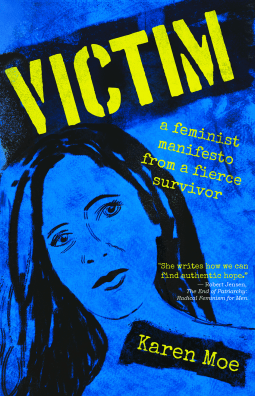
I am a feminist activist, visual artist, performance artist, art critic, essayist, and author. Victim: A Feminist Manifesto from a Fierce Survivor is my debut book. Since I started writing again in 2014, it is as though all of the writing I have done has been in preparation for the writing of this book.
Like a lot of writers, I started writing as a child. However, I haven’t been writing and honing my skills consistently since then except for in school with creative compositions and essays. In my early adulthood, except for some journaling, I wrote essays at university and became particularly skilled at the formal aspect of essay writing. It was as though, like a painter who begins with figurative drawing, I was learning the rules of essay structure and grammar so that I could break them—which is exactly what I have done and, as I write and think about it now, this breaking of rules has happened in tandem with my development as a revolutionary. My writing now, as with all of my art, is about revolution: being a contributing voice to an ideological revolution—which is the only way we are going to have lasting change in the West (which, tragically, because of globalization, pretty much means the world). I often joke that I write the same thing, over and over again, in different contexts. After all, that’s what the other side has done for millennia! Repeat and convince. Repeat and maintain. We have a lot of repeating to do until everyone hears and believes us, the same way the majority of society believes the dogma they are fed daily that is lived as unbroachable reality.
I started writing again for real in 2014. One evening, I was at a Graham Gilmore exhibition at a big gallery in Vancouver Canada. At that time, I was immersed in my visual art and, like most (or all) visual artists who have yet to get the coveted representation from a commercial gallery, I had an ulterior motive to go to Graham’s (amazing) exhibition: I wanted to talk with the gallery director and give him my card so that (just maybe) he would be interested enough to check out my work and (please god-of-the-almost-impossible, succeed as an artist in my lifetime) represent me.
I wandered around the gallery innocently checking out Graham’s paintings; I came up with a clever question about gender; I spied the gallery director; I told him I have a question about one of the paintings; we walked over to it together; I asked him my clever question holding my card strategically in the hand where he couldn’t see it yet.
“Oh!” he exclaimed. “Graham will love that question! I must introduce you to him.” My desperate undiscovered artist’s heart fell. I was escorted over to the famous artist wreathed with his admirers. The gallery director ushered me through the eager mass, all vying for Graham’s attention. Yes, Graham loved my question. He asked for my card. I reluctantly gave him the one I had poised opportunistically in my hand for the gallery director. We chatted a bit. Other admirers jabbed the circle for his attention. I went home, elated by experiencing his exquisitely wrought and culturally important paintings, but with a heavy heart about yet another failed attempt of even getting the slightest interest in my own work.
The next day I received an email from Graham.
“I want you to write a comprehensive article on my oeuvre. Do you want money? Art? Both?”
“But I’m not an art critic. I’m a visual artist like you.”
“I don’t care,” he responded as the delightful eccentric he is. “I want something different.”
So, I did. I wrote my first piece of art criticism. It’s called: “Excavations: A Feminist Resistance Artist Dialogues with Graham Gilmores Love Sic.” The article was published in Border Crossings, the most important art magazine in Canada. I was even paid over $1000.
“Oh, I guess I can still write,” I said to myself. Since then, I have written many articles of art criticism and revolution. You can find the links to some of them on my website under essays.
Advertisements
What inspired you to tell your story? What message do you hope readers will take away from your book? What is one message or piece of advice you’d give to anyone who is struggling with experiences similar to or like the ones you share in your book?
As stated above (here is an opportunity for strategic repetition): contributing to the revolution of a culture built with exploitation inspired me to tell my story as it does everything I create. However, the narrative thread of Victim was also inspired by (or one could say based on) the real-life experiences of sexual violence that I have personally been victimized by and survived. It was also inspired by the revolutionary knowledge—embodied knowledge—that I gained by having been victimized by and survived that violence. This can be seen as ironic because typically one thinks of living through sexual violence as a negative, traumatizing, experience. And, of course, it is. And yet, as I write in Victim:
“One of the main effects of my personal victimization has been an acute awareness of injustice, especially regarding sexual assault. Whenever I watch or see or read or hear about rape, prostitution, or pornography, I feel like I am being raped all over again. But, the interesting thing is, it’s not personal anymore; it’s not just about me. And, it may sound strange: it’s not all bad. It is as though, through an experience that is perceived as—and is—horrifying, there is more to it than that. Instead of being weak, passive, and defeated, my experience as a victim kicked me in the ass. It made me start doing something about it.
Don’t get me wrong: I certainly wouldn’t wish my particular form of initiation into the realm of righteous anger on anyone else, but this is good anger, healthy anger, an anger that motivates. I mean, shouldn’t we all be angry about the sexual exploitation of women and children? Shouldn’t we all be angry when more than half of the people on earth are under siege?” (Victim 144-145)
One of the main messages of the book—and the reason that I chose the controversial term ‘victim’ for the title—is because I turn the concept and reality of ‘victimhood’ on its head. When a person lives through extreme violence, you change. It affects you. There is no going back. Victimization has long-term effects because the system that victimizes has not gone away. As Andrea Dworkin said: “Victim is a true word. If you were raped, you were victimized. You damn well were. You were a victim … And if it happens to you systematically because you were born a woman, it means that you live in a political system that uses pain and humiliation to control and hurt you.” I write in the book: “It’s from then on always after.” And, in response to Dworkin’s connection of victimization and the system that does it, this awareness and acknowledgment of the victim being an inescapable result of rape means that the acknowledgment is the source of transforming the system that creates a victim—and the victim not only knows this, they feel it.
Like many other victims, since I became fully conscious of the violence I have experienced and the aftermath of PTSD I still negotiate daily, the politically correct term ‘survivor’ has always felt like it doesn’t tell the full story. Yes, of course, I survived. And, yes, time passes. But what happens during that time, the life passing in what our culture construes as an ever-forward moving trajectory, shouldn’t promote the shedding of experiences, an eradication of life. There is no moving on from a life-altering experience, getting over what will always be a part of our lives. For me, this is not healthy, nor is it realistic. As I say in Victim: “I need to learn to honor my scars. So that they won’t happen again.” Scars are a source of wisdom and empowerment and not inflictions of debilitation and defeat.
Acknowledging and deriving power from our victimhood also debunks the patriarchal ideology of linearity, constantly moving forward, not looking back (which is the ideological infrastructure of neo-liberalism where no acknowledgment or responsibility is given to what has been plundered through in order to fill the bottomless glut of individualism and greed, that which exploits in order to exist and that which rapes not only women and children, but everything). Linear thinking negates any possibility of sensitivity and awareness; we rush past without noticing what came before, what exists on the margins of our individualist prerogatives to get ahead. Victim was intentionally written as a non-linear narrative not only to overwhelm constrictions, but also for me as the writer to experience the writing process as it happened, as it was remembered. Each part, each memory, each process of remembering, each connection of remembering through the act of writing—what phrase, what word, what rhythm arose—bred the next part of the manuscript. However, remembering is not only a backward trajectory, the inversion of the forward: what memories, what parts of our lived lives have been pushed aside and return with their connection to another memory residing in a word that can re-surface what has been buried. And then we are greeted by the narrative of how we have forgotten this, what caused us to push this aside? And the remembering, the excavating, through writing, continues as a cycle, never a line.
For me, this process of remembering (and being) is how writing happens; it is how being simultaneously conscious and unconscious with all of the obfuscations and clarities in between. You have a topic, what you are going to write about, and maybe you even have a general idea of where you’re are going; however, for me, there is the necessary alchemy of the first sentence that arrives as a miracle from my subconscious and is filtered through a love affair with language. From that first sentence, the work is born and, as I write, I come upon experiences, ideas, and observations that I had no idea were even there, even though they were. Writing, when one opens oneself to it, surprises, teaches and gives the writer a more acute relationship with reality. As the now tall grasses, with their tips of reaching seeds, draw tender cycles, in the ever-moving air.
Men cannot be left out of the discussion of sexual violence, both as perpetrators and as victims. Men cannot be left out of feminism as a movement that is fighting for justice for all and for a culture without violence. In Victim, I write about my very difficult but, in the end, very beautiful, relationship with my father. As women, our relationships with our first sexed and gendered male are absolutely formative in how we negotiate a system of male supremacy and the female oppression that guarantees. While writing Victim and telling all (even to the extent of my own self-condemnation, my own imperfections, my own humanness), I was very interested in the genesis of the victim. However, I was also very interested in (and still am) how a perpetrator is constructed in a violent culture and how men are also victims. Breaking the cycle of abuse is critical. In patriarchy, male victims are conditioned to harden as opposed to opening to the fact that we are all vulnerable and that victimization affects us. In patriarchy, men are not permitted vulnerability. It is an acknowledgment of and living lives as vulnerable creatures that make active empathy possible. Conditioned to be strong and emotionless, those socialized as men have a much more difficult time with this. As Robert Jensen says in his book The End of Patriarchy: Radical Feminism for Men: “I was socialized in patriarchy into a toxic masculinity that not only subordinates women but also crippled my own capacity to be fully human.” This inability to feel fully inevitably contributes to the creation of the perpetrator—and, most often, his victims.
It is very significant and special to me that Victim has had wonderful responses from men, including, of course, you Anthony. One male reader said: “This is the most honest book I have ever read (and I have read a lot of books).” Another, as Daniel Gawthrop writes in his article for The British Columbia Review: “Victim is a rich and soulful testament to the power of human resilience that redefines the meaning of victimhood itself.” And your final verdict, Anthony: “While the subject matter of her own life was tragic, her strength and ability to turn her trauma into empowerment gives hope to many for the future and helps shape the blueprints to help build a better society that values compassion, equality, and justice.” Thank you!
I have known for decades that the story of the abduction, how the serial rapist tricked me, what happened psychologically while he had me, and how I got away and ended up being instrumental to his life sentence is a darn interesting story. However, as an artist, I am able to detach from my own personal life and to exist beyond myself in order to create. I have often joked: even my own trauma is interesting and, in a section of the book where I am delving into what happened to me psychologically in order to survive and ultimately over-power the serial rapist, I wrote: “the time has come to perform an autopsy on my twenty-eight-year-old psyche.”(Victim: 39). That said, because the story—however personally terrifying—is so interesting, I’ve often thought that the narrative of the story would make an amazing screenplay. Others have said this now too after reading it, so maybe it will be one someday.
However, beyond my personal narrative, Daniel Gawthrop observes how: “Now fifty-five, Moe says she was emotionally incapable of writing this memoir until now. And that’s a good thing, for Victim is a much better and wiser book than it would have been had she published it within a short time of her terrifying abduction.” It was through the years of activism, research, and scholarship between the writing of the book and the experiences of sexual violence that not only serve to extend the book far beyond the memoirist and into the system that raped her, but also by building a manifesto and a call to arms for both women and men.
What social media site has been the most helpful in developing your readership?
I was born in 1966, as you will learn when you read the opening pages of my book. As such, I frequently joke that I am half-luddite. I do my best with social media. I have Facebook and Instagram. I can’t stomach the argumentative nature of Twitter, although I know “I should.” I am working towards starting up TikTok. Because I published with a very small Indie Press (Vigilance Press who are great but don’t have the capacity to book the ambitious tours I have been undertaking), I have to do virtually everything myself. That includes organizing and booking these tours. I just completed my US Trauma & Triumph Tour for Sexual Assault Awareness Month in April 2022. I am currently organizing my Cross Canada one for September. I hope once it’s set up, I can begin TikTok. As you may have noticed, I have a lot to say. I have started the account —and now I have to figure out how to do it! This is a lengthy process for we Gen Xers and we have to psychologically prepare ourselves for researching YouTube how-tos and make the process as stress-free as possible. My name is “Logical Feminist.” Stay tuned! It will happen! And now it has to because I told you it will. Eeek.
About the part of the question as to which site has been the most helpful. Maybe Facebook because I have more friends on Facebook (and I know that to a lot of people of younger generations, FB is so passé). Although, more people on Instagram (percentage-wise) seem to be interested in my more revolutionary posts and there have been some feminists within the K’s amount of followers who are noticing me and my revolutionary posts. They haven’t followed me yet. But I seem to be on their radar (if that means anything!). I have DMed them. But, as of yet, no response. We’ll see! If anyone has any social media tips let me know and feel free to follow me and the press. Vigilance Press is an imprint of Vigilance Magazine:
@karenmoeart
@vigilancemagazine
However, for me, I just want to write my next book. And I have started, even though I haven’t finished touring my first. I have heard that the best way to sell your first book is to write you next one asap. That’s not a problem for me as I have two next ones eager to be born. Ideally, social media will take care of itself (I know! A Gen-X-get-someone-to -just-do-this-for-me-already thing to say 😉 Virginie Despentes has someone doing her social media. And she does what she is supposed to do: write. Alone. No one bothers her. Her mind is clear to create. She has space in all senses of the word to say something, to make something, important. #damrightmetoo.
What advice would you give to aspiring or just starting authors out there?
Start. And, with writing, always be on the lookout for the opening sentence. The first sentence is the magic. I say to my students, when you have your first sentence, it is in many ways as though the piece of writing is written. The first sentence of Victim that I wrote in November 2016 is “I have lost the mustard yellow suede jacket from that time.” From that sentence, the book poured out of me.
Also, with writing as with all art, there is no going halfway. Art is a vocation, not a dabble. One of my biggest pet peeves is when people and politically correct artist-run centres say that anyone can be an artist and spend thousands of dollars of culture grants attempting to prove what isn’t true. And, not only is it not true, it’s an insult to all of us who have committed our lives to honing our skills through, most often, personal sacrifice. Everything I do is bent upon creating because, if I don’t, I don’t feel well. Not everyone has to create in order to not feel bad. And, I know that not everyone could live the life on the edge that I, and the majority of other artists, writers, and composers now and throughout history, have lived. You either want to create or you don’t. Wanting to write a book is not based on “Oh, I would love to write a book someday.” For one: there is no someday. And: there is no want. It has to be an all-encompassing need. An obsession to say something. (As an aside, I would like to add that not everyone can be an artist, but everyone can be a revolutionary and contribute to the movement in some way. For example, I could never be a lawyer and we need revolutionary lawyers to give justice to so many rape victims who are never given any and retraumatized by being brave enough to report being raped, not to mention save other women by getting another rapist out of circulation).
However, even though it’s very difficult and discipline is required, for me anyway, the writing is the fun part. It is the getting the agent, the getting the publisher, the literal making of the book that is the hard part. When I first started submitting my book in 2019, I googled how to go about doing just that and the first website I came upon said: “Oh, so you think writing your book was hard!” That statement pretty much sums up what comes next after you’ve triumphantly finished writing your book. Especially your first one.
What does the future hold in store for you? Are any new books/projects on the horizon?
I have had my next book planned for the last couple of years. It came out of the research that I did for Victim. During the time that I was held captive by the serial rapist, he confided: “There’s nothing like a good whore.” Because of that statement, I had to research and write a section on the sex industry. Part of that research ended up being about child sex slavery. Lydia Cacho’s Slavery Inc: The Untold Story of International Sex Trafficking and Julie Bindel’s The Pimping of Prostitution: Ending the Sex Work Myth were both invaluable resources for not only my first book but for planning my next which will be called Inconceivable Reality. For me, there is no greater proof that the culture we live in is wrong and needs to be revolutionized than the fact that child sex slavery even exists. Of course, all sex slavery is despicable and all human trafficking unforgivable, but child sex slavery takes the proverbial cake in despicability. The fact that typically so-called first-world men will go to the third (and the third world as a geographical and economic site of exploitation also exists in the first) and pay to violate and destroy a child’s life is inconceivable to me and it has to be exposed because child sex slavery, violating a tiny and innocent body and being, has to no longer be true.
However, recently, another book has appeared on my horizon. It is a book I conceived of last fall during my participation as a forest defender at the Fairy Creek Blockades in British Columbia, Canada. The Fairy Creek Blockades are the largest act of civil disobedience in Canada. Some of the last remaining temperate rainforests is being clear-cut. Of course, it’s the same old story of soullessness and greed—the reason why I write revolution in different contexts, is to resist the non-stop repetition of ‘progress’ and ‘individual gain’ along with throwing up our hands and saying there is nothing we can do about it. Yes, we can. We in the first world still have a semblance of human rights. At the very least, we can tell the world that we don’t agree, that this is wrong, and that what we are asking for, preserving the tiny portion of what is left of pristine ecosystems, is absolutely logical. Unlike countries like Honduras and in the Amazon where land defenders are assassinated, in Canada, the US, Europe, Australia, and New Zealand we can still protest and we can still win. The forest defenders at Fairy Creek were and are miraculous people and show the good that can be activated in all of us. You can access the articles through my website that I wrote last summer which strive to tell the whole story—as opposed to what is not told by the mainstream media and these gaps, what is left out, become lies in themselves.
The politics of colonialism in Canada, as in every other colonized and colonizing nation, is very complicated. Because the logging of the Fairy Creek Watershed is also an Indigenous land claim issue, the politics are far from limited to capitalism and its acceleration into neo-liberalism: they are firmly entrenched in the ongoing colonial state of Canada. Elder Bill Jones is an ancestral elder of the Pacheedaht Nation. He is the First Nations ancestral elder who invited the settler (non-indigenous peoples) forest defenders to Fairy Creek to help him and the rest of the ancestral Pacheedaht save the old-growth forest and its ecosystem. I will be writing a book (yes, another manifesto) that will center on the life story of Elder Bill Jones, now in his 80s. The book will be called Re-Indigenize: The Revolution of Pacheedaht Elder Bill Jones.
I am, technically, in terms of labeling, a ‘radical’ feminist; however, during the writing of Victim I thought: “Why is logic radical?” So-called radical feminists look at feminism as eradicating patriarchal hierarchy, as a political movement to change the sexed and gendered distribution of power, eradicate hierarchy and the ideology of taking, and undermine the infrastructure of a masculine system that guarantees exploitation. Hierarchy, violence, and exploitation affect everything: women, gender, race, the environment, animals and yes, of course, men. Everything is connected.
Advertisements
About the Author
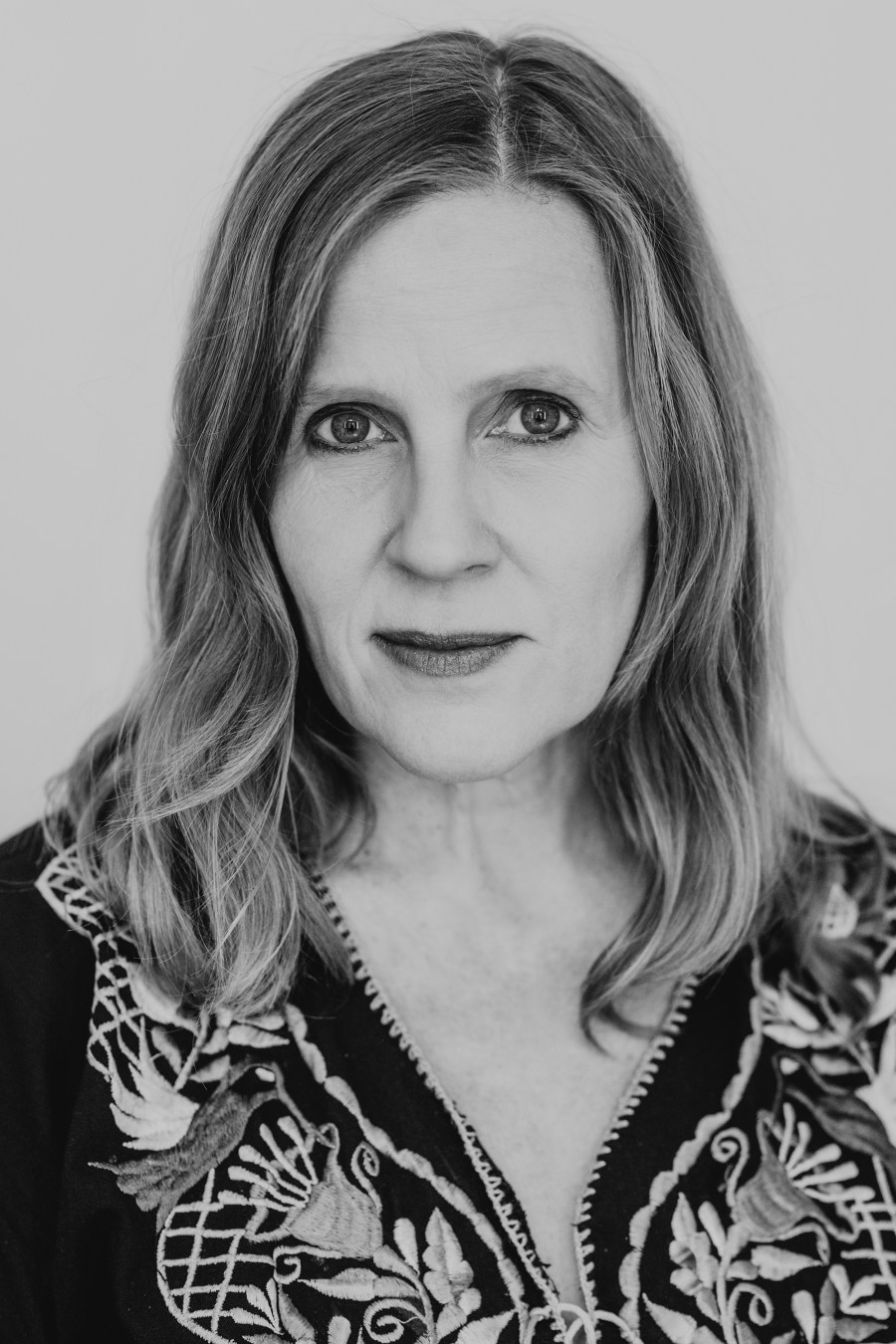
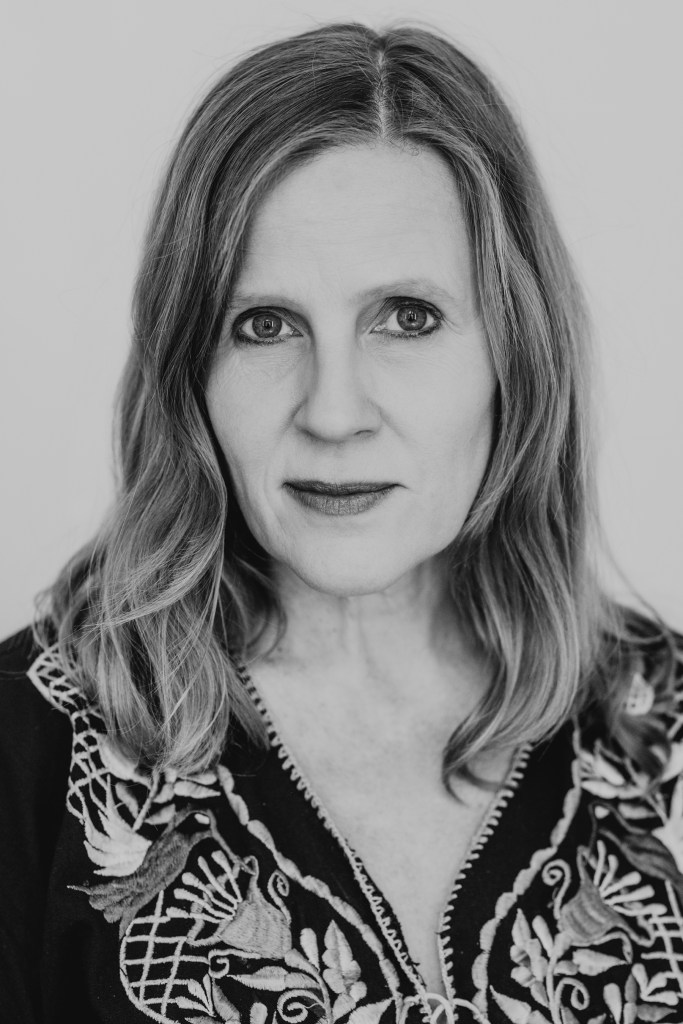
Karen Moe is an art critic, visual and performance artist, author and feminist activist. Her work focuses on systemic violence in patriarchy: be it gender, race, the environment or speciesism. Her art criticism has been published internationally in magazines, anthologies and artist catalogues in English and Spanish and she has exhibited and performed across Canada, in the US and in Mexico. Karen is the recipient of the “Ellie Liston Hero of the Year Award” 2022 for being instrumental in putting the serial rapist, who raped and brutalized herself and countless other women, away for life in 1996. She lives in Mexico City and British Columbia, Canada. Published by Vigilance Press on April 2nd, 2022, Victim: A Feminist Manifesto from a Fierce Survivor is her debut book.
Karen has just returned from her US Trauma & Triumph Tour for Sexual Assault Awareness Month, will be having a variety of events throughout the summer, and will be embarking upon her Cross-Canada Tour in September 2022.
I received a free copy of this book in exchange for a fair and honest review. All opinions are my own.
Author Jennifer Lieberman helps readers and aspiring authors alike learn how to create a stellar audiobook based on their recently published novels in her book, “Make Your Own Break: How to Record & Publish Your Audiobook in 7 Simple Steps”.
Advertisements
The Synopsis
“Make Your Own Break: How to Record & Publish Your Audiobook in Seven Simple Steps” is a simple and straightforward ‘how to’ guide for self-published authors and explains how to record and publish a manuscript as an audiobook.
Award-winning writer, actor and producer Jennifer Lieberman developed this seven step guide based on her background in filmmaking & film production, acting and performance coaching while stumbling through the process of recording her own audiobook.
This resource walks you through what to expect in the process by breaking it down into seven steps from time management, necessary equipment as well as tips on preparation, recording and editing.
The Review
This was a unique, educational, and thoughtful read. The short yet interesting read was the perfect companion read to any upcoming or published authors who are on a budget and seeking a way of bringing their book to the audiobook format. The attention to detail and personable way the author writes will set readers at ease and keep them invested throughout the book.
The book was absolutely engaging on so many levels, but what really struck a chord with this reader was the step-by-step process that the author detailed in the book. The way the author explores everything from mental and psychological hangups about publishing your own audiobook, to the almost physical therapy style of education on vocal exercises, and does it in such a short amount of time, made this book such an important and engaging one for indie and published authors alike to have in their library.
The Verdict
Gripping, enlightening, and thought-provoking, author Jennifer Lieberman’s “Make Your Own Break: How to Record & Publish Your Audiobook in 7 Simple Steps” is a must-read nonfiction book for authors looking to delve into the audiobook game. The way the author is able to highlight the current audiobook trends going on in our world and the simple yet important steps one can take to create their own audiobook made this a truly unique and insightful read. If you haven’t yet, be sure to grab your copy today!
Rating: 10/10
Advertisements
About the Author
Jennifer Lieberman is from Maple, Ontario, Canada and holds a Bachelor of Arts in Philosophy from York University in Toronto. Jennifer has appeared in over thirty stage productions in Toronto, New York City, Los Angeles, Europe and Australia; including her Award-Winning Solo Show Year of the Slut, which was adapted into to novel “Year of the What?” In addition to her performance career she has penned a number of screen and stage plays including the wacky web-series “Dumpwater Divas” and the short films “Leash” and “Details” which both screened at the Festival De Cannes’ Court Métrage among other international film festivals. Other books by Jennifer include “Make Your Own Break: How To Master Your Virtual Meeting in Seven Simple Steps” and “Make Your Own Break: How To Record & Publish Your Audiobook In Seven Simple Steps.”
I received a free copy of this book in exchange for a fair and honest review. All opinions are my own.
Author Nathan Ingram takes readers on a journey into faith through a series of short stories that speak to the everyday, ordinary moments that bring his faith to the forefront in the book “Christ in the Coffee Shop”.
Advertisements
The Synopsis
Christ at the Coffee Shop’s message speaks to the hearts of common people because it magnifies a God of the common places, the omnipotent Deity who happens to choose to make Himself known in the course of everyday events. Many of us would like to see God but can’t find Him, believing that He only expresses Himself through blinding insights of peak experiences of some sort. If we must travel to the mountaintops to see God most of us will miss Him. This book brings Him near.
Growing up on a small farm in Tennessee before earning degrees from Harding University and Tennessee Technological University, Nathan has spent a lot of time with simple living, hard work, and everyday people. In Houston, Texas, where he does most of his work nowadays, Nathan sees a different side of the world where life is a little more complicated and the labor is not with his hands, but the people themselves are not much different. Nathan lives his life among the commonplace and sees a tremendous need for a God who is comfortable there.
The Review
This was a unique and powerful read. The author did an amazing job of taking the ordinary and seemingly mundane actions of everyday life and giving voice to some powerful perceptions from the author’s point of view. The hope and kindness that pours out of the author’s stories were great to read, as it helped give voice to those who experience hardship through their everyday lives and not necessarily through more public events, and allowed readers to feel connected as well, as these situations were all things we either have or can experience at one point or another in our own lives.
It was the way in which the author wrote that really stood out to me. Whether you are a believer or not, you will enjoy the almost fable or parable (depending on one’s POV) that the author took with this direction of storytelling. The story of the man whose wife left him and the simple turn of phrase that the author utilized to help him was a short read, and yet made a powerful impact both emotionally and within the context of the narrative, making this book something many readers will want to be a part of.
Advertisements
The Verdict
Heartfelt, honest, and engaging, author Nathan Ingram’s “Christ at the Coffee Shop” is a must-read short story collection. The simplicity is layered with complexity and emotional development that very few books manage to capture in such a short amount of time, and yet the hopeful tone the author strikes and the ability for this book’s stories to transcend any one particular faith is a great thing to read. If you haven’t yet, be sure to grab your copy today!