I received a free copy of this book in exchange for a fair and honest review. All opinions are my own.
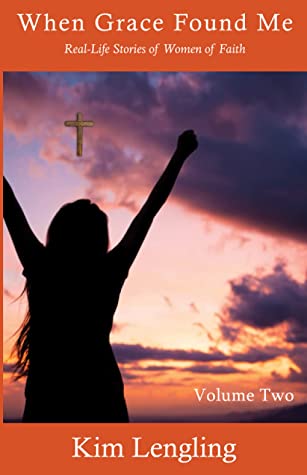
Author Kim Lengling returns with new first-hand accounts from a collection of strong and faithful women to share their stories of what grace means to them in the book “When Grace Found Me: Real-Life Stories of Women of Faith Volume Two”.
Advertisements
The Synopsis
Have you ever felt unworthy?
The women of this book did not come together by accident. The stories that are shared within these pages are transformative, inspirational, and all of God.
Women from around the world who have persevered, triumphed and now thrive.
The roads travelled may have been hard, but our father God was and is with each of us every day. We can overcome and bloom into who God meant for us to be.
We use our stories and testimonies to shine a light on others. You will be blessed by taking the time to read this book, and who knows, one of the stories within may be the exact story that you needed to read to provide that light for your own path.
You are blessed, loved, and a masterpiece. Never forget that!
The Review
The author continues to bring readers an intimate and inspiring collection of stories from women who showcase the power that grace can have on a person’s life. The way the author is able to hone in on the emotional impact that grace has had on each of the women included in this collection by allowing the women’s voices to shine in an authentic way was brilliantly done. The relatability of the women and their stories will immediately grab the reader’s attention as they naturally bring their stories to life.
Again, while I may not be religious myself, I found the way the author approached the theme of grace and faith to be heartwarming, as the author allowed the natural progression of each woman’s story to showcase how natural, everyday life and major life-changing events alike could make an impact on a person’s life and bring people to a place where faith is needed to help drive their lives forward in a positive light.
The Verdict
Heartfelt, engaging, and relatable, author Kim Lengling’s “When Grace Found Me: Real-Life Stories of Women of Faith Volume Two” is a must-read book on faith and personal growth from a Christian perspective. Faith-based readers will thoroughly enjoy the book’s stories and find heart and hope in the women who bring their personal tales to life on the page. If you haven’t yet, be sure to grab your copy today!
Rating: 10/10
Advertisements
About the Author
Kim coordinates and is the lead author on a collaborative 3-book faith series, When Grace Found Me, with additional collaborative efforts to come in 2021. She is the mother of one grown daughter and has a rescue dog named Dexter.
Her writing showcases her faith and her emotional interpretation of nature and life and what it can teach us as we traverse this journey.
Kim has been writing since 2004 as a writer, author, and freelance writer. She is a co-author of two published books and one soon to be published in 2021.
To learn more or to purchase a signed copy of any of Kim’s books, please visit www.kimlenglingauthor.com
1) Tell us a little bit about yourself. How did you get into writing?
My father’s love for the English language and the power of words. He used to repeat phrases from famous poems or speeches, caressing each word. Maybe that’s why I majored in Journalism at Rutgers and ended up as an advertising copywriter and author for many years. I still get excited when I come up with a way of expressing an idea I’ve been searching for. In my advertising life, I ended up creating the emotional “Kodak Moment” campaign. From Kodak Moment to Good Dick, Bad Dick is quite a leap, I guess, but it’s for a good cause.
Advertisements
2) What inspired you to write your book?
Ten years ago, an art director and I worked on a comic book about the life of a cartoon penis. It was funny but mostly just a bunch of clever puns, and I stopped working on it. A year ago, as I listened to so many reports of famous men assaulting women, I suddenly thought about the book and turning it into a bigger, more important idea. I wanted to use the cartoon character to teach some bad “dicks” what they’re doing wrong to women by using the character’s own life’s story as a reformed bad dick. It could still be very funny, but do some good in the world.
3. What theme or message do you hope readers will take away?
If you see yourself on these pages, get over yourself. If you can’t do right because it’s right, you’ll pay a price for mistreating women.
4.What drew you into this particular genre?
I grew up in a time when it was common to treat women like objects and possessions. I know the mentality. And then I thought about this idea I had which was an unusual way for guys to allow the message to sink in. It’s not as if they would be hearing the message for the first time, but using humor might be a new way to get through to them.
5) What social media site has been the most helpful in developing your readership?
Facebook ads were tremendously successful at getting likes. Amazon refused to let me advertise the book. They admitted it was helping the feminist cause, but they
couldn’t get past the title and visuals which violated their content guidelines. Really a bad decision. I’m just starting to try blogging sites like yours.
6) What advice would you give to aspiring or just starting authors out there?
Love what you’re writing and the writing experience itself. When you’re not writing, read, so you’ll know how high the bar is and how much you need to improve.
7) What does the future hold in store for you? Any new books/projects on the horizon?
I’m working on an unusual self-help book that explains how we cause a lot of our injuries and our pain ourselves by the way we move incorrectly, and how to easily prevent it.
Hey guys! I’m so excited to share with you guys today a special book spotlight for author Tucker Lieberman and his novel, “Most Famous Short Film of All Time”, a nonfiction/fiction hybrid that you won’t be able to put down. Below you will find some information on the book, an excerpt from the book, and some info on the author himself.
I will be reviewing this book in a few weeks, so be sure to follow my blog to receive updates on my site, including daily blog posts, and you will see my thoughts on this book soon. Until then, please enjoy this look at “Most Famous Short Film of All Time”.
Ghosts and goddesses beckon Lev Ockenshaw. Oh, bother. Fortunately, he’s got a pill for that. In 2014, Lev is happily telling campfire stories in Boston with his longtime friend, Stanley, and his coworker, Aparna. One day, he receives an anonymous, threatening email referring to the company where he and Aparna work. Lev reports the threat to his boss, but is not believed.
Invoking over 250 books, songs, and movies, Most Famous Short Film of All Time is a non/fiction-hybrid philosophical novel about:
the nature of time
the ever-present threat of gun violence in the United States
the unhelpfulness of institutions and systems
the importance of solidarity and transparency and being excellent to your friends
belonging to Gen X or the Millennial generation
being a fictional character and realizing you’re stuck in your own story
the hazards of disclosing or not disclosing a gender transition you’ve already completed
the neverendingness of the journey
all 486 frames of the Zapruder film of the JFK assassination
belief and unbelief
prejudice, perception, and ethical action/inaction
undoing/redoing decisions and trying harder
reading as many books as you possibly can
the role of playfulness, irony, and absurdity
burning things that do not serve
Advertisements
Excerpt from the book
[introductory remark to explain that it’s an excerpt]
“Flyleaf — By Which I Do Not Mean Myself” is one of the character’s Lev Ockenshaw’s musings in Most Famous Short Film of All Time. Here, he’s thinking about The Lord of the Rings and is indirectly wondering who’s telling his story.
[here’s the excerpt]
J. R. R. Tolkien, author of The Lord of the Rings, wrote in a letter (categorized as Letter 192) that “Frodo deserved all honour because he spent every drop of his power of will and body, and that was just sufficient to bring him to the destined point, and no further. Few others, possibly no others of his time, would have got so far.” Frodo’s destination was Mount Doom, but he could not muster the energy to throw the ring into the lava. Tolkien continued: “The Other Power then took over: the Writer of the Story (by which I do not mean myself), ‘that one ever-present Person who is never absent and never named’ (as one critic has said).” A boss within the novel, directing Frodo’s story. A writer who isn’t the writer.
Advertisements
About the Author
Tucker Lieberman is the author of the nonfiction Painting Dragons, Bad Fire, andTen Past Noon, as well as a bilingual poetry collection, Enkidu Is Dead and Not Dead / Enkidu está muerto y no lo está, recognized as a finalist in the 2020 Grayson Books Poetry Contest and nominated for the 2022 Elgin Award by the Science Fiction and Fantasy Poetry Association.
His essay on a horror film appears in It Came From the Closet (Feminist Press, 2022). He’s contributed to three anthologies recognized by Lambda Literary: Balancing on the Mechitza (North Atlantic Books, 2011 Lambda winner), Letters For My Brothers (Wilgefortis, 2012 Lambda finalist), and Trans-Galactic Bike Ride (Microcosm, 2021 Lambda finalist). His flash fiction was recognized in the 2019 STORGY Magazine Flash Fiction Competition.
His husband is the science fiction writer Arturo Serrano, author of To Climates Unknown (2021) and contributor to the Hugo-winning blog nerds of a feather, flock together. They live in Bogotá, Colombia.
I received a free copy of this book in exchange for a fair and honest review. All opinions are my own.
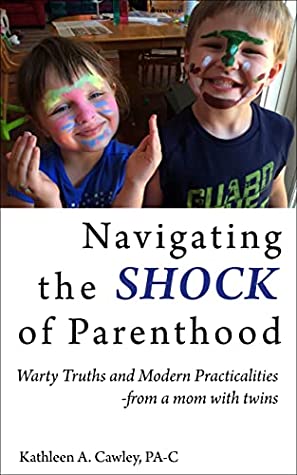
Author Kathleen Cawley takes readers through the experience of parenthood as hundreds of parents share their insights, from finding a community as a parent to cleaning up after your kid and more, and also touches upon the historical sources of the most anxiety-inducing parenting imperatives people face to this day in the book “Navigating the Shock of Parenthood: Warty Truths and Modern Practicalities from a mom with Twins”.
Advertisements
The Synopsis
Navigating the Shock of Parenthood, pulls together insights from hundreds of experienced parents. It organizes expert advice, and reveals the social and historical sources of some of today’s most anxiety provoking parenting imperatives. It also helps with a range of nitty gritty parenting challenges. Such as, projectile pooping (Real!). Dolphin training for toddlers. (Useful!) Or, how do I find community? What do I do when I find myself channeling the parent I never wanted to emulate?
A little insight and perspective will help you steer a course through the strange new waters of parenthood. With these tools you’ll learn to guide your family boat in a direction of your choosing rather than being swept along by outside forces. Navigating the Shock of Parenthood will help you laugh, build your village, raise your kids with joy, make decisions with insight, and work for the world you want your children to inherit.
If you’re struggling with new parenthood, you will find endless books on breastfeeding or potty training. However, there is almost nothing on the emotional and psychological challenges we face when we transition from adulthood to parenthood. Why are the joys of parenthood so heavily mixed with fear and angst? Where did “concerted cultivation,” come from and do you really need to buy into it? What is “the race to nowhere,” and how is it driving parents and children to anxiety. What has happened to modern American kindergarten, and is it a good thing?
Frankly, most parenting books also leave out many of the really difficult day to day challenges that parents struggle with. How do you to talk with young children about death? How do you manage problem relatives when kids and partners are in the picture? How do you parent a child who seems so different from yourself? How do you negotiate new life roles with your partner when society is pushing you heavily toward old stereotypes.
The challenges of today’s parenthood are real, and the first years are often so hard. We all need some help. Navigating the Shock of Parenthood is loaded with warmth, help, and support for this epic new adventure in your life.
The Review
This was a captivating and engaging read. The author did an incredible job of finding the perfect balance between educational reading material and personal memoir-style storytelling. The honesty and inviting nature of these experiences and stories and how they impact parenting as a whole were thoughtfully presented, and the overwhelming feeling of understanding that went with the guidance these stories brought to life was great to read.
The sheer volume of information the book brings to light was incredible to behold. The author expertly divides these lessons and experiences into various areas of expertise, from the growing pains that go along with becoming a parent to the historical influences on what is expected of parents in this day and age, and advanced parenting tips that explore some of the common issues that parents will face in the earliest years of their child’s life. The way author hones in on things like how fatherhood has changed in recent years and the importance of having others in your life to become a support system while also acknowledging the importance of finding your own feet as a parent and establishing your own idea of what family looks like to you made this book so valuable to dive into.
The Verdict
Informative, thoughtful, and enlightening, author Kathleen Cawley’s “Navigating the Shock of Parenthood: Warty Truths and Modern Practicalities from a mom with Twins” is a must-read nonfiction read on parenting. The author expertly tackles the misconceptions and experiences that many parents have undergone, and the relatability and honesty with which the author writes will have parents and readers alike glad they picked up this book. If you haven’t yet, grab your copy of this amazing book today!
Rating: 10/10
Advertisements
About the Author
Kathleen Cawley is a physician assistant who practiced pediatric and adult medicine for 18 years. She is the mother of 12-year-old boy-girl twins, and the author of Navigating the Shock of Parenthood: Warty Truths and Modern Practicalities – from a mom with twins. She also writes parenting articles for the Auburn Journal and regularly posts on Medium.
Kathleen married late in life, and having children was a struggle. After surviving five years of fertility treatment, her husband’s battle with aggressive prostate cancer, a post miscarriage stroke, a high-risk twin pregnancy at age 45, and an emergency C-section that veered into dangerous territory, Kathleen and her husband found themselves rather exhausted by new parenthood!
Soon, however, Kathleen began researching the social and cultural changes of the last 200 years with a new perspective. She realized these changes have radically altered the lives of children, and the goals of childhood.
In addition, over her many years of caring for patients, Kathleen was given a glimpse into the painful and difficult parts of people’s private lives. They shared with her their joys and sorrows whether personal, professional, or financial. With these shared intimacies in her heart, Kathleen found herself unable to see families, parents, and parenting without recognizing the reality of the powerful forces buffeting a family’s life.
A few years ago, Kathleen and her family moved from the cool, crowded, chaos of the San Francisco Bay Area to the unrelenting heat of the Sacramento summer sun. Currently, a fulltime at-home-mom and a fulltime writer, Kathleen is working on books about the politics of parenthood, parenting in the elementary school years, the new shape of fatherhood, and other issues.
I received a free copy of this book in exchange for a fair and honest review. All opinions are my own.
Author Hal Free takes readers on a journey to showcase the toxic behavior of men and how they mistreat women through a series of humorous yet thoughtful illustrations and commentary in the book “GOOD DICK BAD DICK: How to spot a loser before you date or marry him”.
Advertisements
The Synopsis
GOOD DICK BAD DICK is a totally unique book that uses illustration and outrageous humor to drive home the serious problem of how men mistreat and objectify women. The cartoon presenter is probably the last you’d expect to demonstrate men’s bad behavior, but he’s the ultimate symbol of all men. Each page presents different examples of the selfish, self-absorbed male mindset. a “pee-in-your-pants” collection of watchouts for women — and a way for men to see themselves as they too often are.
The Review
One of the things that has become so much more apparent in recent years with the accountability that social media brings in this day and age is the horrid way that men grow up believing how to treat the women in their lives and those they encounter throughout their days. The toxicity and mistreatment that is constantly brushed aside or excused as “boys will be boys” has been an issue that has faced mankind for centuries, and in the author’s book, this issue is finally blasted for all to read.
The mixture of lighthearted tone and humor with the seriousness of men’s behavior and attitude is illustrated in such a way that instantly connected the reader to the subject matter. I think this was a book that spoke to everyone, men and women included. For men, this was a wake-up call to showcase how they are constantly twisting the truth and abusing women around them for their own immediate gratification or genuine pleasure, and the only way to build a better world is to teach future generations how not to act. For women, this book feels validating, as if the hardships and struggles that they are forced to endure on a daily basis are finally given life in these hilarious yet powerful cartoons that speak to the heart of this matter.
The Verdict
Thought-provoking, inspiring, and engaging, author Hal Free’s “GOOD DICK BAD DICK: How to spot a loser before you date or marry him” is a must-read nonfiction book that meets illustrated work. The commentary on relationships and behaviors related to gender, specifically how men treat women in life from their adolescence to their adult years, will not only help women readers to feel heard and seen in their own struggles but allow male readers to see a part of themselves they may ignore or not realize is there. If you haven’t yet, be sure to grab your copy today!
I received a free copy of this book in exchange for a fair and honest review. All opinions are my own.
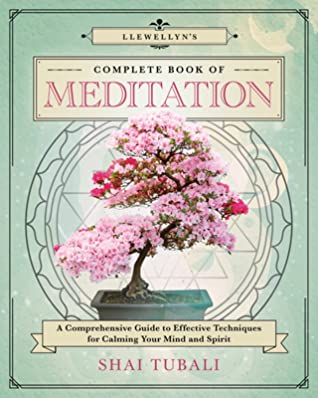
Author Shai Tubali adds to the ever-growing collection of books under the Llewellyn’s Complete Book series with a look at how meditation can be used to live a happier and healthier life while reducing stress, decreasing pain and so much more in the book “Llewellyn’s Complete Book of Meditation: A Comprehensive Guide to Effective Techniques for Calming Your Mind and Spirit”.
Advertisements
The Synopsis
Free Your Awareness and Awaken Your Energies with 35 Worldwide Meditation Techniques
Enjoy a healthier and happier life with reduced stress, decreased pain, improved sleep, lengthened attention span, and fewer age-related memory problems. The key to these and other benefits? Meditation.
Appropriate for practitioners of all skill levels, this new addition to Llewellyn’s Complete Book Series features thirty-five fundamental meditation techniques from traditions around the globe, including one unique method of author Shai Tubali’s own creation. These include:
– Zazen (Classical Zen Meditation)
– Qigong Standing Meditation
– Jon Kabat-Zinn’s Body Scan
– Taoist Inner Smile
– Osho’s Mystic Rose
– Japanese Forest Bathing
– Sufi Whirling
– Gurdjieff ‘s “I Am” Meditation
– Christian Prayer of the Heart
– Islamic Dhikr
– Hindu Aum Meditation
– Sikh Kirtan Kriya
– Jewish Hitbodedut
– Ramana Maharshi’s Self-Inquiry
– Tantric Hindu Kriya Yoga
– Tibetan Buddhist Dzogchen
Shai presents each technique with its historical background, cultural context, potential benefits, and clear instructions for practicing it at home in a non-appropriative way. You will explore the fifteen purposes of meditation and the role of chakras. You will also learn how to align your mind and body, open your heart to love and compassion, use the hidden powers of sound, and more. This comprehensive, easy-to-understand guide introduces the magic of meditation in a way that is experiential, practical, and deeply researched. Every page encourages you to take your journey into the world of meditation further than ever before.
The Review
This was quite a comprehensive and engaging read. The author did an incredible job of capturing a cohesive and easy-to-understand book that spoke to both beginners and advanced meditation students alike. The way the author was able to find the right balance between writing in a more authoritative and knowledgeable voice and the voice of someone who is able to relate to the reader’s history and interest in meditation as a whole kept me engaged with this book.
The heart of this book for me had to be the emphasis the author put on showcasing a wide range of meditation techniques from different cultures and backgrounds, as well as the focus on identifying trauma and the troubles in life that give us a purpose towards meditation as a whole. While not only used in trauma, the spiritual and mental effect that meditation can have on a person has always fascinated me, and the detailed way the author brings this to life on the page was great to read. This, combined with the different backgrounds and cultures surrounding the different meditation techniques the author explores made this a well-rounded and insightful read.
The Verdict
Captivating, engaging, and thoughtful, author Shai Tubali’s “Llewellyn’s Complete Book of Meditation: A Comprehensive Guide to Effective Techniques for Calming Your Mind and Spirit” is a must-read nonfiction book and guide on meditation. The thought-provoking and spiritual nature of the book will keep readers invested in the subject matter, and the approachability of the author’s writing style will have readers eager to absorb and utilize the knowledge the author is imparting. If you haven’t yet, be sure to grab your copy today!
Rating: 10/10
Advertisements
About the Author
Shai Tubali is an international speaker, author, and spiritual teacher. He is one of Europe’s leading authorities in the field of chakras and the subtle body and has published twelve books. Shai also serves as an academic researcher at the University of Leeds and has developed several meditation-based therapeutic methods. Visit him online at ShaiTubali.com.
I received a free copy of this book in exchange for a fair and honest review. All opinions are my own.
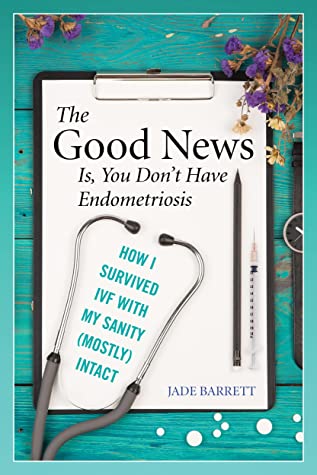
Author Jade Barrett takes readers on a personal journey into the process and life of IVF in an effort to start her family in the book “The Good News Is, You Don’t Have Endometriosis: How I Survived IVF With My Sanity (Mostly) Intact”.
Advertisements
The Synopsis
Jade Barrett thought she was living her best life in her 30s, a stable career, an amazing husband, a great group of friends, a supportive family, and a beautiful home…that is until she tried to start a family.
After yet another negative pregnancy test, her husband said, “It’s time to talk to a doctor.” Surely she didn’t have infertility…right? Finding out that the only way she could conceive a child biologically was through IVF sent shockwaves through her marriage and her life.
Thisis the story of triumph over adversity and how you can advocate from the best possible care from your fertility clinic.
“There are lots of things one can prepare for in life – an important exam, maybe a big job interview – but no one is prepared to be diagnosed with infertility.”
– Jade Barrett
“No one discusses the idea that maybe some people have a fancy built-in biological protection against pregnancy that will become a major crisis in the lives of 1 in 8 couples when they wish to start a family.” – Jade Barrett
“The Good News Is, You Don’t Have Endometriosis”is a hilariously intense story of Jade Barrett’s IVF quest to parenthood and how you can advocate for the best possible care from infertility clinics.
The Review
This was such a heartfelt and passionate read. The author did an incredible job of really relating her personal experiences going through fertility tests and going to a plethora of doctors’ appointments to discover where the issues lay in the process. The fast pace of the read and the intense atmosphere of the author’s story told kept readers engaged on a personal level as the book progressed.
The heart of this narrative lay in the wonderful balance of humor and wit that the author wrote with, as well as the perspective the author brought to the subject. The narrative honed in on the author’s point of view, not as a medical professional at all but as an everyday person and patient who had to endure and learn about this tough subject on the go. The strength and resiliency she shows in the pages of this book and the captivating way she showcases how to be her own advocate in the journey to find medical care that is both done right and done with professionalism kept me thoroughly engaged.
The Verdict
Mesmerizing, educational, and charming yet inspiring all at once, author Jade Barrett”s “The Good News Is, You Don’t Have Endometriosis: How I Survived IVF With My Sanity (Mostly) Intact” is a must-read nonfiction medical memoir on the struggle and journey to understand IVF. The way the author hones in on the physical, mental, and emotional aspects of this journey and the honesty with which she writes has crafted a book that feels both authentic and emotionally driven. If you haven’t yet, be sure to grab your copy today!
Rating: 10/10
Advertisements
About the Author
Jade Barrett is an American high school teacher who experienced infertility from 2017-2021.
She hopes to help other women and couples who are struggling with infertility through her story, The Good News Is, You Don’t Have Endometriosis: How I Survived IVF with My Sanity (Mostly) Intact.
It is the story of triumph over adversity and how you can advocate from the best possible care from your fertility clinic.
I received a free copy of this book in exchange for a fair and honest review. All opinions are my own.
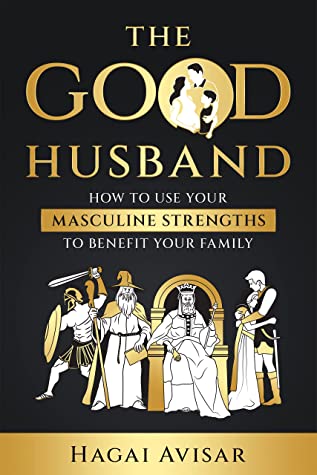
Author and counselor Hagai Avisar takes readers on a journey to understand what truly “masculinity” is and how it can be used not to control but to love and care for one’s family in his book “The Good Husband: How to Use Your Masculine Strengths to Benefit Your Family”.
Advertisements
The Synopsis
If you feel confused and disempowered in your marriage, with the same arguments over and over, then The Good Husband is tailored for you. It will show you how to be at your best as a husband and father:
Follow a solid roadmap that taps into your masculine strengths. Apply the tools and exercises to start living out the four blueprints (archetypes) of your masculine identity: King, Lover, Magician and Warrior.
Get practical solutions to highly troubling problems such as lack of sex, angry partner, threats of divorce, disempowering your fatherhood and more.
Make your wife feel happier and closer to you by realising what she really needs from you when she raises young kids, and responding wisely to these needs.
Discover how you can get better responses to your important needs for purpose, appreciation, respect, and sex.
Your masculine power is your responsibility, not your privilege. Once you discover how your masculinity is a force for LOVE in your family, you will be inspired to use it confidently to benefit your family.
Written by a highly experienced psychologist and couple therapist, The Good Husband is packed with knowledge, insights, and strategies that are based on research, state-of-the-art marriage counseling, and decades of clinical experience.
The Review
As someone who has always felt a calling towards a more feminist frame of mind, I have always been wary of people who use the term masculinity to hide behind a mindset of control and lack of emotions in relationships. I respect everyone’s own perspective, and in that spirit wanted to delve into the author’s book and experiences with an open mind, and I am glad I did. The author did an incredible job of crafting a book and guide that showcases how a man can hold onto the things that he connects with that he feels make him a “man”, while also finding the balance to understand the feminine perspective as well.
The research and thoughtful approach the author had to this subject was both emotional and well-founded. The way the author not only identified the traits and aspects of masculinity that are important to understand but gave voice to the women’s perspective on these traits and why they are important to maintaining a relationship as both a spouse and parent were wonderful to see illustrated. The way the author was able to not only draw upon these experiences and lessons but show how to implement them into our daily lives made this a very compelling and enthralling reading experience and made for the perfect way to start out 2023 for those looking to improve upon themselves.
The Verdict
As someone who has always hoped to find a way of tearing down old ideas surrounding masculinity and instead finding a way of making masculinity healthy and in balance with femininity, I was pleasantly surprised and inspired by this book. Author Hagai Avisar’s “The Good Husband” is a must-read self-help and relationship-style nonfiction book and the perfect way to start out the New Year. The informative and insightful way the author was able to relay these lessons and the engaging way the author was able to connect readers to these experiences made this a brilliant story to get lost in. If you haven’t yet, be sure to grab your copy today!
Rating: 10/10
Advertisements
About the Author
Avisar is an Israeli-born psychologist and couples therapist who has been in practice since 1987. Avisar moved from Israel to Melbourne, Australia with his Aussie wife and two kids in 1997.
With his passion to support young families, Avisar has specialized over the years in helping couples with their relationship issues. As an enthusiastic educator and therapist, he provides unique perspectives and effective solutions through counseling and workshops.
In recent years Avisar has developed an interest in helping men with their relationships. He says “There is an ever-increasing gap between the high expectations from family men and the poor support and empathy they receive from society. Public attacks on masculinity and men certainly don’t help these men”. Responding to this gap Avisar published in 2022 his book The Good Husband in which he offers married men guidance on how to use their masculine strengths to benefit their families.
Avisar has initiated and supported various social projects for parents and families. As an adoptive parent himself, he set up a network for adoptive families who raise children of Ethiopian origin.
In writing this memoir, I combined my two loves, journalism and creative writing.
The journalist’s task is to find the dark corners of the world of injustice and sadness and illuminate them. The bigger job is to be the watchdog of democracies, to ensure there are checks and balances in governance on behalf of the people.
If there is one thing it taught me is that humans are essentially the same. Everyone is looking for a way to survive the dark days of our mortality and the trials of being human, whether they are gangsters who end up getting shot at 20 and buried with gold chains down to their stomachs; or priests who have lived ascetic lives; or indeed, families around the commonwealth navigating the damage of Empire.
Advertisements
It was with this understanding that I began to write a memoir.
As an immigrant to Tobago, where my parents moved when I was a child, and later to Trinidad, I felt the past was being cut away from me.
My son was born, and I had begun forgetting words in Urdu and Hindi. As an immigrant to Trinidad, I started feeling the past was being cut away from me. I wrote it to remember the past and understand the present of the glittering islands of Trinidad and Tobago, where my parents moved when I was a child.
As I wrote about my experience as a journalist, somebody who chronicles the events that shape a country, I realised that my past was not unique. My grandmother told me how my ancestor was brought from Uzbekistan to put down the mutiny in India in 1856. As a recruited member of the British Army, he was forced to shoot his fellow Muslims, something he regretted till he died. I began making connections. It was also the story of colonial islands in the new world, where people were stripped of language. The narrative continued with my parents travelling to Trinidad and Tobago, which also has a complicated history of colonisation by the French Spanish and English. That interested me – how the personal can be so political, how the unravelling of one family living under decades of colonialism can echo a crumbling empire.
The overall theme of the crumbling Empire is relevant, especially now; after the death of Queen Elizabeth 11, we can see how similar post-colonial worlds are. The history of brutality was identical. In India, we grew up with stories of the Jallianwala Bagh massacre in Amritsar Puja when General Dyer ordered the British
Indian Army to open fire on over a thousand unarmed, nonviolent protestors, Churchill’s active role in perpetuating the Bengal famine, or the signs my mother remembers in exclusive clubs that read “No Dogs or Indians” and the sly inroads of the East India Company. In Trinidad, as in much of South America, there is the brutal history of slavery, indentureship and genocide of millions of native Indians. In India from 1765 to 1938. the British got an estimated 45 trillion U.S. dollars’ worth of goods like textiles, rice, iron, and timbre, not to mention jewels from the Raj, which are housed in
British museums today. Similarly, Caribbean islands like ours were looted for sugar and cocoa. It’s a shared history of exploitation.
When my grandmother left India to join our family in Trinidad, she told me stories about a vanished India of the British Raj. She told me of generations of women born into Muslim Indian princely families of Bhopal and Savanur. I had to infer the calamity upon her life when my mother broke hundreds of years of tradition and understand why my grandmother disinherited my mother for marrying a Hindu army officer.
There were unanswered questions. I wondered why my grandmother ended up alone and penniless despite all her privileges- born a princess into Indian royalty, beauty, and musical talent.
As I wrote the story, the puzzle came together. I began to understand how patterns are created in how we treat our daughters and how that damages the people we love. At my grandmother’s funeral, I was aware of how incongruous this was, a woman born in colonial India dying in the new world so far from everything she grew up with and knew. It was a way of bringing tother the old and new worlds and introducing the question of how and why this happened. How did a princess of the Raj die in Trinidad?
Advertisements
The colonial idea that subjugation, cruelty and even corporal punishment can be justified for the greater good filtered down to how people in colonies viewed their children.– how neglect, abandonment or abuse is passed on to their daughters and that pattern is continued.
Migration is also a very personal issue. At the funeral of the late Queen Elizabeth, dozens of security guards were of South Asian origin. According to an Indian Ministry of External Affairs report, 32 million Non-Resident Indians live outside India, overseas Indians comprise the world’s largest overseas diaspora, and over 2.4 million Indians migrate overseas yearly. Our family was just one in this ocean of movement. So the themes aren’t heavy, but
illustrates how politics always becomes personal and affects families.
When I wrote it, I did not expect it to resonate with so many people across continents. Michael Portillo for Times Radio was moved by the story of Poppet, the child in the book. Anita Rani of Times Radio was moved by the story of migration. The Observer found it was reminiscent of the times of the Raj in India, which has connected India and Britain for generations.
Advertisements
About the Author
Ira Mathur is the author of Love The Dark Days – a Peepal Tree published a memoir on the emotional ruins of Empire on three generations of women set in Trinidad, St Lucia, India and the U.K., bookended with a weekend with Derek Walcott. Love The Dark Days was selected as a UK Guardian Best Book of the Year 2022 ( Memoir and Biography)
Mathur is an Indian-born Trinidadian multimedia journalist and columnist with a body of writing that includes over 800 columns over 20 years. (www.irasroom.org) She was longlisted for the 2021 Bath Novel Award for Touching Dr Simone. (Out in 2023)
Mathur studied creative writing in London with The University of East Anglia/Guardian & the Faber Academy with Gillian Slovo, Maggie Gee, and James Scudamore. In 2019 Mathur was longlisted for the Johnson and Amoy Achong Caribbean Writers Prize. She holds degrees in literature, law and journalism.