I received a free copy of this book in exchange for a fair and honest review. All opinions are my own.
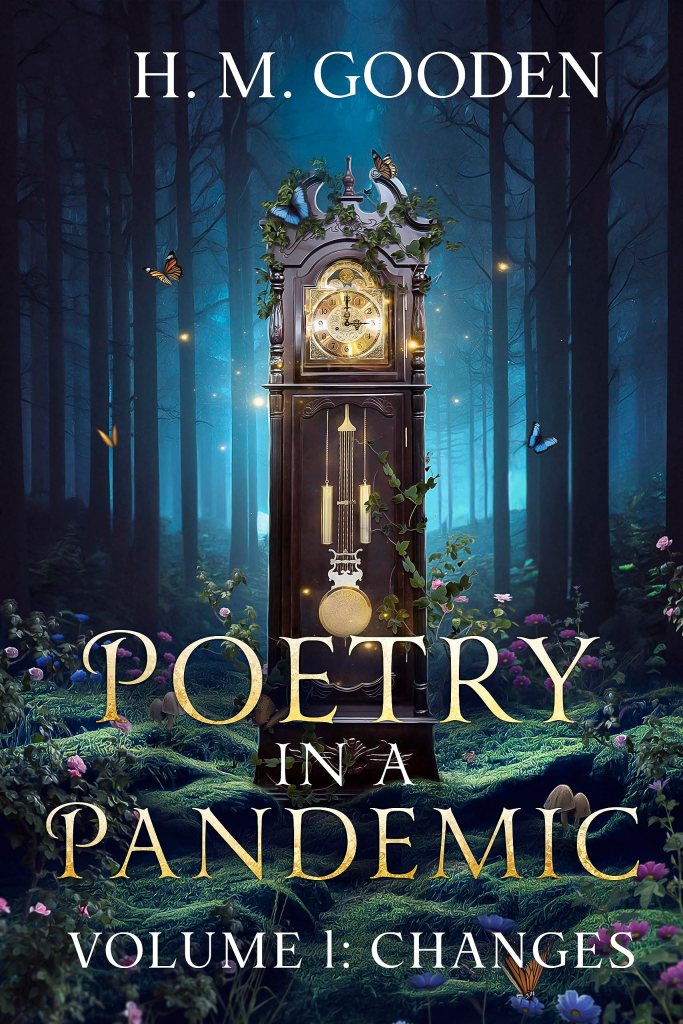
Author H.M. Gooden presents a collection of poetry and prose that examines life during the pandemic of 2020 in the book “Poetry in a Pandemic Volume I: Changes”.
Advertisements
The Synopsis
2020 was a year that changed life as we know it.
In this collection of poetry and prose, Gooden explores her longing for more than her daily routine as she makes her way through a “once in a lifetime” world event.
In the middle of turmoil, she creates magic in the mundane as she examines her life in an honest, poignant, and often irreverent way.
As she reflects on life and all it encompasses through her perspective as a healthcare worker, she proves there can be light even in the darkest of days.
The Review
This was a compelling and captivating read. The author did an incredible job of not only capturing the atmosphere and emotional state of the world during this horrific time but also of the hope and experiences that brought this author’s experiences to life perfectly.
I thoroughly enjoyed the formatting and personal nature of these poems. The way the author formatted these pieces to follow a certain path that showcased the author’s life in the first year of the pandemic was an inspired choice, reading these poems showcases the experience of enduring this pandemic as time goes on. The emotional weight of these poems really highlighted the author’s experiences, as did the imagery that went into these poems.
The Verdict
Heartfelt, engaging, and thoughtful, author H.M. Gooden’s “Poetry in a Pandemic Volume 1: Changes” is a must-read collection of poetry and a great psychological and emotional look into the mindset of someone who lived through the 2020 pandemic. The heart and thought that went into these poems and the artistry that went into the writing of these poems made this a must-read book. If you haven’t yet, be sure to grab your copy today!
Rating: 10/10
Advertisements
About the Author
H. M. Gooden has been scribbling on everything since she first learned how to hold a pencil. While often told that her handwriting was atrocious, she persisted, and upon discovering computers and learning how to type, she realized that she was no longer limited by her (admittedly) messy writing.
Unfortunately, life, work, and family have conspired to make it only possible to write in the wee hours or at coffee shops, so most of her love of reading and writing are indulged at times when only vampires and insomniacs abound.
In October of 2017, her love of writing and the characters in the world she created burst into public view in her first book, Dream of Darkness, which follows the adventures of a group of girls fighting evil with abilities that H. M. Gooden would love to have.
When not writing fantasy, H. M. Gooden writes non-fiction pieces exploring the emotions and situations that arise in her day job as a rural family doc. As a result, 4 am has never been busier, but she wouldn’t have it any other way.
Sign up to H. M. Gooden’s newsletter for information on upcoming releases and other random musings at
I received a free copy of this book in exchange for a fair and honest review. All opinions are my own.
Advertisements
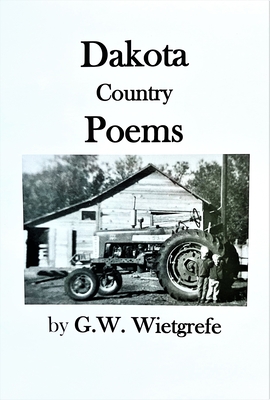
Author and poet G.W. Wietgrefe share a collection of witty and relaxing poetry to help ease the stress of everyday life in the book “Dakota Country Problems”.
The Synopsis
Rhyming light-hearted poems are rare today. There is no better stress reliever than a smile after reading Half-Assed Ranch, Duck Lesson, Innuendo, Rock in the Road, Need Credit, Can, Time’s Right, Anticipate Fishing, Dad’s Desk, or a book full of relaxing poetry. Keep Dakota Country Poems on your desk, end table, or nightstand and smile.
The Review
This was a heartfelt and captivating read. The author does a remarkable job of creating a calming and easy-going vibe throughout many of his poems, touching upon the memories and experiences of his life and allowing the sometimes fun, sometimes sad, but always memorable moments to shine brightly on the page.
The use of rhyme in these poems utilized the simplicity of the art form to bring to life some heartfelt lessons on life and those who live within it. One poem that spoke to me personally was Badger, which utilized the life and experiences of the animal to help illustrate the need to reach out to those who isolate themselves from society and ask themselves if it is isolation through choice or a form of self-sabotage through loneliness.
The Verdict
Heartfelt, gripping, and thoughtfully written, author G.W. Wietgrefe’s “Dakota Country Poems” is a must-read poetry collection. The heart and passion for which the author writes these poems and the balance of lighthearted fun with care and essential themes make this a compelling collection not to be missed. If you haven’t yet, be sure to grab your copy today!
Rating: 10/10
Advertisements
About the Author
Gary Wietgrefe (pronounced wit’ grif) is an inventor, researcher, military intelligence veteran, agriculturalist, economist, systems developer, societal explorer, cyclist, hiker, outdoorsman, and author. See www.RelatingtoAncients.com.
I received a free copy of this book in exchange for a fair and honest review. All opinions are my own.
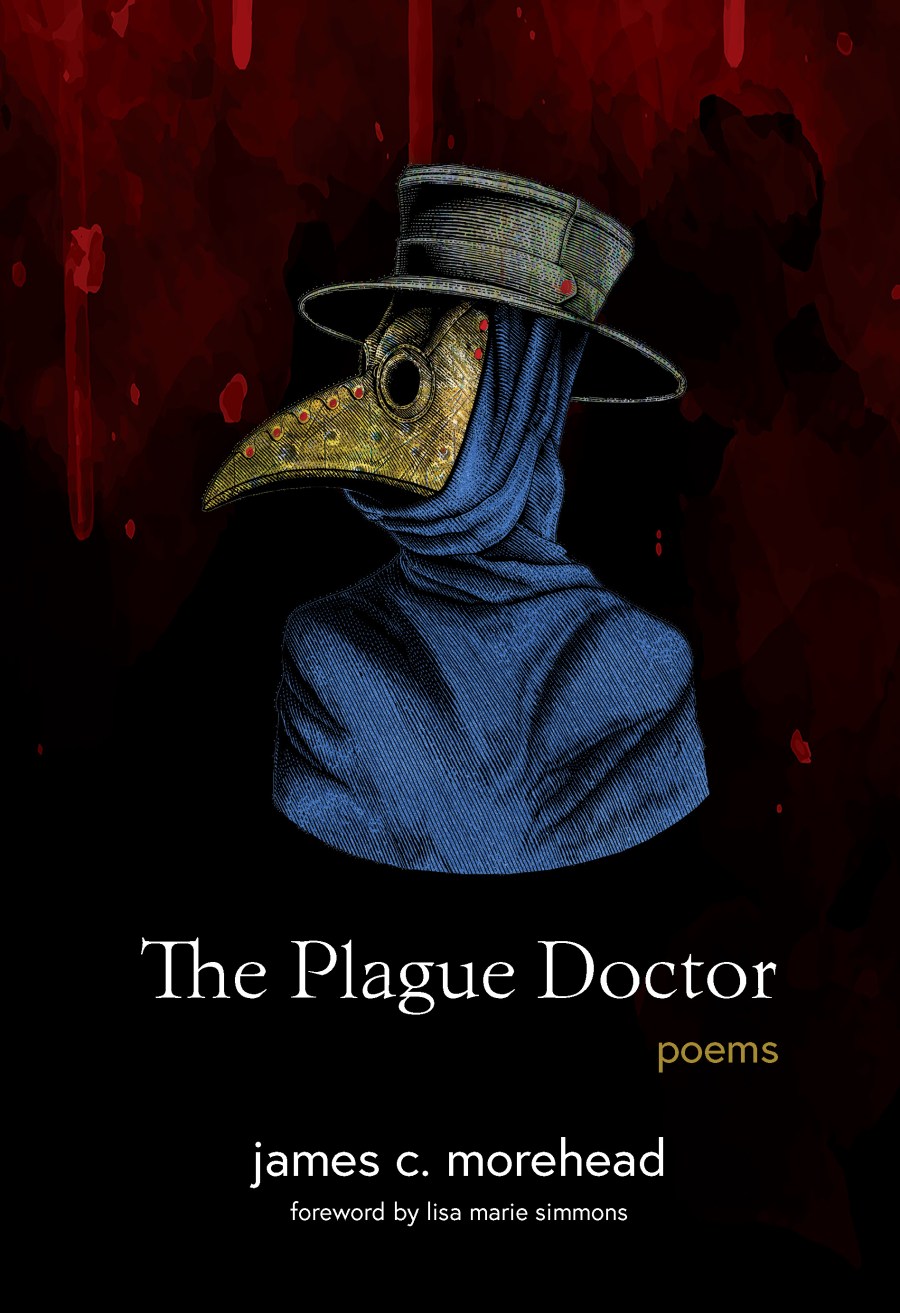
Author and poet James Morehead share a chilling and rich collection of poetry that delves into the nature of existence in the book “The Plague Doctor”.
Advertisements
The Synopsis
A mesmerizing collection of eerie, image-rich poems that explore the fleeting nature of existence and friendship, inspired by the world of art and artists. The Plague Doctor combines poetry with mesmerizing ink drawings by Natalia Ardus, art by Mark Kulas and Tony Rubino, and photography by the author.
Poet and musician Lisa Marie Simmons writes in her forward to the collection, “I’ve read this collection three, four, then five times. In my office, in the tour van and the green room, after yoga, and once bundled up beneath an ancient olive tree. Despite those many deep dives, it never seems enough to complete this forward. So I returned—six, seven, ten times. Each reading has me focusing on something new, and a year from now, I know more discoveries will be made as my perspective shifts with my own experiences. This is one of the many things I love about poetry and, in particular, Poet Laureate of Dublin, California, James Morehead’s poetry.”
The Review
These were some incredibly powerful and chilling poems. The fantastic imagery and atmosphere that the author is able to tap into with these poems will stick with readers long after the book has been read, and the imagery that accompanies the book’s pages helps evoke an emotional response that touches upon the iconography that we latch onto to represent the key emotional moments in our lives.
To me, the heart of this collection rested in the balance between macabre imagery and heartfelt themes. The idea of life and death plays across some of life’s toughest moments, from life in the big city (San Francisco in this case) to the striking fear of performing alone on a stage. I also enjoy the way the book was divided into “Acts” as if life were a play and the poems were but the stage in which they were lived, and the way these poems also reflected on the artistic works that moved the author throughout their journey through San Francisco was greatly expressed through these poems.
The Verdict
Heartfelt, haunting, and engaging, author James Morehead’s “The Plague Doctor” is a must-read poetry collection. The almost narrative feel to the overall collection and the memorable way the author was able to tackle such dark and entertaining imagery through their poems with the emotional journey that the poems represented made this a compelling book to get lost in. If you haven’t yet, be sure to grab your copy today!
1) Tell us a little bit about yourself. How did you get into writing?
I’m a child of the enlightenment. I believe in science, rational thought, and the value of knowledge. At the same time, I’m fascinated by philosophical questions that stubbornly reside outside the sphere of scientific truth: the phenomenon of consciousness; the origin of the universe; the nature of time; and the formation of the first living cell. In my later years, the limitations of logic and reasoning have left me more receptive to the numinous in our world — a novice in the realm of spirituality. Above all, I strive to perceive beauty wherever it may exist.
I began writing independently of schoolwork when I was nine. As was true for many children of my generation, I was introduced to the world of poetry through the work of Theodor Geisel, a.k.a. Dr. Seuss. His book “Yertle the Turtle” was a particularly strong influence (though I had no idea at the time that the story was allegorical, a satire of Adolf Hitler). Not surprisingly, all of the poems I scribbled on shirt cardboard rhymed.
In my sophomore year of high school, I maintained a poetry notebook as part of the curriculum. But my interest in poetry really blossomed at Amherst College where, as a biology major on the pre-medical track, I took four rigorous poetry courses. During the last of these, in what I like to describe as an act of love masquerading as mania, I stopped attending classes, isolated myself from friends, ate and slept reluctantly, and spent five straight weeks writing a metaphysical poem on the theme of subjective versus objective reality. This represented my first serious attempt to write poetry.
2) What inspired you to write your book?
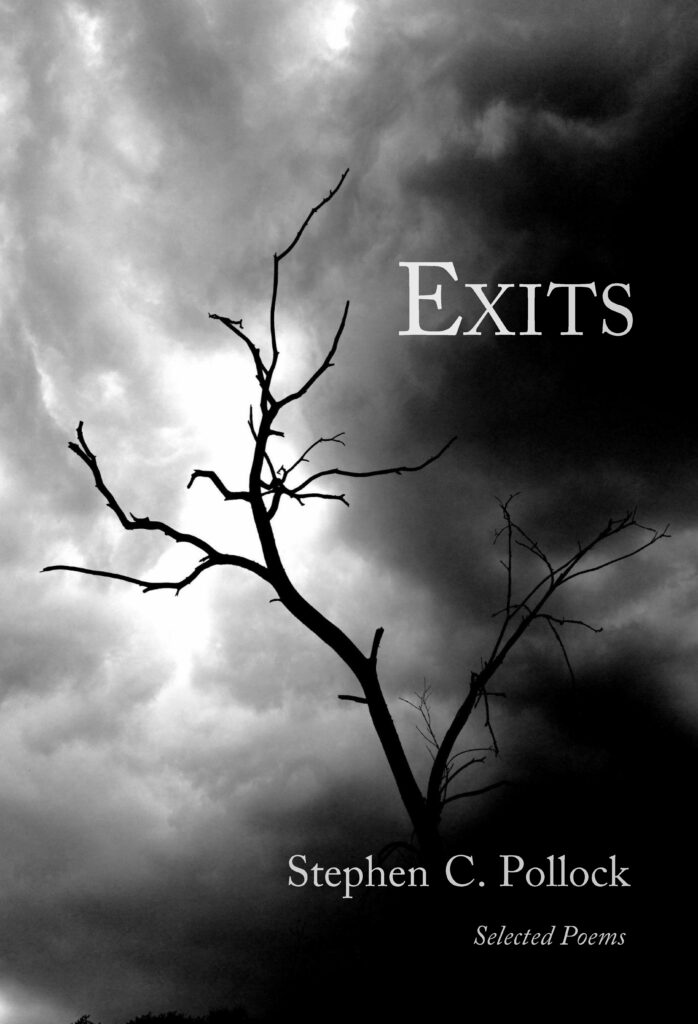
Most of the poems that appear in Exits were written between 2003 and 2021 without a book in mind. It wasn’t until two years ago that I decided to incorporate what I considered to be my best work into a book entitled Line Drawings. However,
during the process of reviewing my modest oeuvre, I noticed that a significant number of the poems were related to one or more aspects of mortality. This led me to curate a more concise, themed collection of poems, and Exits was born.
One might wonder where the focus on life’s transience derives from. In retrospect, I can identify three sources. First, I was raised without any religious training, so from a very young age, I was left on my own to ponder the enormity of the universe, time and eternity, and the meaning of existence. My fear of death was such that I often fought against falling asleep, which to me resembled nothing so much as a rehearsal. Second, as a physician and neuro-ophthalmologist, I’ve cared for numerous patients with serious and/or life-threatening diseases. And third, since 1999, I’ve had to deal with the spinal cord variant of multiple sclerosis and the ramifications of that disease for life expectancy.
3) What theme or message do you hope readers will take away from your book?
Death is an integral part of life. It exerts a profound influence on how we think about the limited time granted to us and the meaning we attach to it.
Exits will resonate with different people in different ways. Some readers will gravitate to the visual imagery and nature metaphors. Others will enjoy the wordplay. Still others will find satisfaction in the resurrection of formal elements.
It’s important to keep in mind that we live in a time of great uncertainty. War, climate disasters, and a recent pandemic have led many to contemplate the prospect of their own demise. Exits speaks to this anxiety and angst. It also may provide fresh perspective on mortality, the cycles of life, and the possibility of renewal.
4) What drew you into this particular genre?
My mom, now deceased, deserves a great deal of credit in this regard. A lifelong visual artist, she made it a point to instill in her young son a deep appreciation for
art. I recall sitting on her lap at age four or five as she paged through artbook after artbook. As a result, I could distinguish a Monet from a Cezanne before I could read!
Over the course of my life, I’ve written in multiple genres, including: engineering and technology (U.S. Patent 4,477,158); clinical research articles published in medical journals; chapters in neuro-ophthalmology textbooks; business papers; short fiction; and poetry.
My attraction to poetry is multifaceted:
The thrill of creating art with words
Permission to access the subconscious
The marriage of sound and sense
The fact that anything can appear in a poem
The fact that anything can happen in a poem
The surreal, dreamlike, associative way that poems move the mind
The surprising connections and juxtapositions
Fun with form
The paradoxical precision of poetic ambiguity
Metaphor and the multilayering of meaning
The sonic extravaganza of rhyme, alliteration, assonance, onomatopoeia, meter, and non-metrical rhythms
Non-linear narratives
Emotional intensity
The potential to enlighten
The potential to console
Oblique routes to ineffable truths
5) What social media site has been the most helpful in developing your readership?
None! I’ve never had an account on any social media platform. The lone survivor of the Jurassic Period, I tend to use long-forgotten methods of communication, mainly face-to-face chats, telephone calls, and handwritten letters.
6) What advice would you give to aspiring or just starting authors out there?
Write poems that represent your unique aesthetic sensibilities. Try not to be overly influenced by prevailing trends or by contemporary poetic styles.
Edit mercilessly over an extended period. Satisfying first drafts often begin to show their flaws only after sufficient time has elapsed to afford an objective assessment.
Begin your foray into publication by submitting poems to literary journals. This will help you determine which of your poems resonate with experienced reviewers. Before each submission, make sure that your poem is a good fit for the journal.
7) What does the future hold in store for you? Any new books/projects on the horizon?
Given my age, history of MS, and undisciplined writing process, I’m doubtful that any additional books are forthcoming. But you never know…
About the Author
Stephen C. Pollock is a recipient of the Rolfe Humphries Poetry Prize and a former associate professor at Duke University. His poems have appeared in a wide variety of literary journals, including “Blue Unicorn,” “The Road Not Taken,” “Live Canon Anthology,” “Pinesong,” “Coffin Bell,” and “Buddhist Poetry Review.” “Exits” is his first book.
1) Tell us a little bit about yourself. How did you get into writing?
• I honestly don’t know why, but I’ve always wanted to be a writer. I have distinct memories of myself as a child, maybe five or six, writing stories and poems. I’d carry a notebook around with me everywhere.
• But what’s funny is that I was never much of a reader as a child! I had my favorites. I devoured Harry Potter and other books. But I don’t think that my drive to be a writer came from a love of reading.
• In college, I majored in English with a concentration in creative writing. As a part of my studies, I took workshops each semester, and that’s where I finally began to come into my own as a writer — developing my own voice and style instead of just mimicking other writers. I credit my professors at the time — Sharon Bryan, Darcie Dennigan, Penelope Pelizzon, Gina Barreca — with helping me find my voice.
2) What inspired you to write your book?
• To be quite honest, when I sit down to write poetry, it isn’t with a book or some greater collection in mind. All I’m doing is writing a poem. So I can’t really say that anything inspired me to write the book, because in my mind there never was a book — until there was.
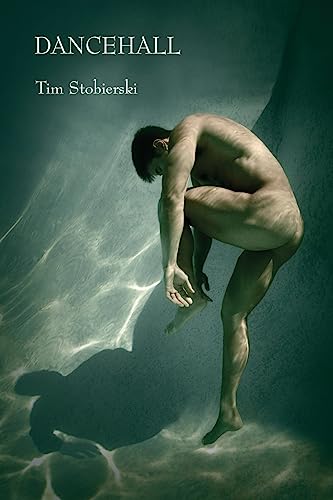
• That being said, with a few exceptions, I wrote these poems during the pandemic. The early days of the pandemic were very lonely for me. I was single during the lockdown, and found myself longing for human connection at a time when it was impossible to have. Those feelings of love and longing and loss really permeate the poems that eventually made it into the collection. In that way, writing Dancehall was a way for me to make sense of the world.
3) What theme or message do you hope readers will take away from your book?
• More than anything, I want readers to connect with the poems and come away with a sense that love is universal.
• The poems in Dancehall follow the narrative arc of a single relationship from start to finish. I call the book a queer love story, because I myself am queer and I see the book as coming from that perspective. But I also made very conscious stylistic decisions so that the poems would appeal to everyone — gay or straight, single or partnered, male or female or non-binary.
• You may notice, for example, that except for in two instances the poems don’t make use of pronouns. Instead, the speaker (“I”) is talking directly to the subject (“You”). I did this so that it would be easier for the reader to put themselves in the poem — either as the speaker or the subject — and feel the immediacy of the work.
• If I, a queer man writing about queer relationships, can write a poem that allows a straight person to feel something about their own relationships, then I think I’ve succeeded in my mission. It’s kind of cliche at this point to say it, but love is love.
4) What drew you into this particular genre?
• I think I was drawn to poetry because I myself read poems that triggered an intense emotional response in me, which made me realize that poetry could be powerful. Some of the most powerful poems I’ve ever read were short poems — under 10 words — and yet they had the power to conjure memories and emotions in what is really an awe-inspiring way. Once I experienced that, I knew that I wanted to learn how to do that myself. I wanted to make people feel something, and I personally haven’t found a better way of doing that than through poetry.
5) What social media site has been the most helpful in developing your readership?
• I have to admit, I’m terrible with social media. I use it mostly for personal reasons — staying in touch with friends, etc. But I’m starting to get a handle on it as a means of building my reader network! I’ve just begun sharing videos and pictures of my work on Instagram (timstobierski) and TikTok (tendre_croppes) and they’re definitely both powerful tools. I think TikTok has the most potential to get your work in front of millions of people quickly, but it’s also tricky to know what’s going to go viral or do well and what’s going to be a flop. I guess I’m still learning.
6) What advice would you give to aspiring or just starting authors out there?
• I think the most important bit of advice I have is to not let rejections get to you. If you submit a poem or a story or an entire book to a press and get a rejection, do your best not to take it personally. Brush yourself off, think critically about whether or not there’s a way you can make your submission stronger, and find a new press to submit to. Just because your work isn’t for someone doesn’t mean that it’s for no one.
• When I first pulled together the manuscript for Dancehall, it was very different from what the book now looks like. I was submitting it to contests and presses that wanted books of poetry consisting of 30 poems max, so that’s how I arranged the book. It wasn’t until I got my fourth or fifth rejection that I looked at the collection and thought, “Well, they keep turning me down when I send them what they say they want. I’m going to submit what I want.” I doubled the poems, reorganized the book, and gave the collection a narrative arc that didn’t exist before. And when I sent it out the next time? The book was accepted by not one, but two presses.
• The moral of it all: Rejections are a part of being a writer. So do your best to build up a thick skin.
7) What does the future hold in store for you? Any new books/projects on the horizon?
• The way I write poetry is slow. It takes time. I don’t set out to write a collection — they amass over time as I write a poem here or there and realize that a theme has emerged.
• Recently, I’ve been writing a lot about grief, tied specifically to my father’s death. I think that those poems will eventually form the body of a collection. Likewise, I’ve been writing more explicitly about my experiences coming to terms with my sexuality, and I think that will eventually form a collection
About the Author
Tim Stobierski writes about relationships. His work explores universal themes of love, lust, longing, and loss — presented through the lens of his own experiences as a queer man. His poetry has been published in a number of journals, including the Connecticut River Review, Midwest Quarterly, and Grey Sparrow. His first book of poetry, Chronicles of a Bee Whisperer, was published by River Otter Press in 2012.
To pay the bills, he is a freelance writer and content strategist focused on the world of finance, investing, fintech, insurance, and software. In his professional writing, he prides himself on his ability to help the reader understand complicated subjects easily, a quality that informs his poetry.
He is also the founder and editor of Student Debt Warriors, a free resource for college students, graduates, and parents who are struggling to make sense of the complex world of student loans.
I received a free copy of this book in exchange for a fair and honest review. All opinions are my own.
Author Don Behrend shares a fun collection of poetry that twists everything from modern romance to the modern-day self-help trend in the book “In Doubtful Taste: New and Selected Poems”.
Advertisements
The Synopsis
“Don Behrend’s In Doubtful Taste is a playful collection of rhyming poems that skewers everything from modem courtship to self-improvement routines to the sexual advantages of an octopus-and much more.The collection includes 56 poems presented in nine short sections, each titled with a “P” word, including “Pandemic”, “Ponderings” and “Peccadilloes”. Behrend’s speaker is amused and amusing, toying with the lingo and idiosyncrasies of our current zeitgeist.The poet delivers both elaborate and simple rhyme schemes, short witticisms and longer tales. His poems are clever without being shallow and are sure to elicit smiles and sometimes hearty chuckles.”BlueInk Review
The Review
Art and poetry can cut through the tension and troubles plunging our world into chaos, especially in the darkest times. The need to confront tragedy and heartbreak with humor and wit often comes to pass for those who have had to live through these types of events, and the author’s book perfectly captures this need.
The author balances the poems in this collection with enough humor to tackle the pain and trauma that was the recent pandemic. The rhyming verse throughout each of these poems really cuts through the themes and issues that our modern world deals with constantly. The wit and charm of the author’s writing style and the way these poems showcase the contradictions that always rule our lives made this a compelling read.
The Verdict
Thoughtful, heartening, and engaging, author Don Behrend’s “In Doubtful Taste” is a must-read poetry collection. The heart and charm of the writing style itself was a great way to cut through the tension and atmosphere of the subjects the author was touching upon and kept the reader invested in the gripping poems. If you haven’t yet, be sure to grab your copy today!
I started writing poetry when I was a kid. My mother let me borrow her college poetry textbook (circa 1969), and so I learned about T.S. Eliot, e.e. cummings, poetic forms, metaphors, and such things way before we would get around to them in school. I won a couple of poetry recitation contests in 5th and 6th grade, and the prizes were the collected works of Emily Dickinson and Carl Sandburg (I still have both). I think the first book of poetry I bought myself was the collected Edna St. Vincent Millay, when I was about 11.
My first degree was in Pre-Med Biology. I meant to become a doctor—but I took creative writing classes on the side. When I graduated, my immunologist told me there was no way my health would allow me to complete medical school, as grueling as it was in the early nineties. So I decided to set my sights elsewhere. Soon I started my MA in English, where I was introduced to formalism, deconstruction, and other -isms (and made some good friends). When I graduated, looking to be able to support myself, I took a job as a technical writer. I was still writing poetry, but not seriously trying to publish, until a health crisis struck and I had to quit my tech job. My husband suggested pursuing my earlier dream of being a writer.
Advertisements
Starting my Journey as a Poet
I tried out some local writer’s conferences (on scholarship) and seriously researching the literary magazine scene, volunteering for a few local literary magazines, and sending out work. I put together enough published poems for a chapbook, and got it published—my first little collection of poems, called Female Comic Book Superheroes. I applied to a few low-residency MFA programs, and started one, taking a semester off in the middle for (once again) health issues. During that off semester, I sent out my first book manuscript and had it accepted, which was Becoming the Villainess, published by a (then-brand-new) press called Steel Toe Books in Kentucky. The chapbook and book were considered “speculative” poetry at that time, not very common—poems about video game characters and superheroines were not common in the mainstream literary magazines, certainly not represented in the prizes. So I was a little out there. But it had a very positive response from young people, which I was very happy to see. If you can’t read and enjoy a few poems about comic book story arcs or mythological women turned to dragons when you’re young, then when can you?
Journey from First Book to Sixth
I felt very lucky with that first book—I had some modest success for a very new small publisher and a very small new poet. I was still able to travel more easily back then—making 20-hour car trips between Western Kentucky, Akron, and upstate New York.
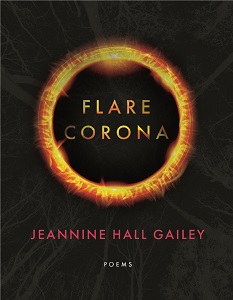
Now that I’m on my sixth book, Flare, Corona, with a great publisher, BOA Editions, I’m a little older, with a little more in terms of health challenges (MS among them), and I’m not physically able to do what I used to. However, with the pandemic, I learned some new skillsets—photography and gardening among them—and I read a lot. During the first months of the pandemic, I tried writing a few personal essays – and got them published in Salon. This book is the most vulnerable and more autobiographical than all my previous books. My previous books: Becoming the Villainess, She Returns to the Floating World, and Unexplained Fevers, I frequently wrote in persona—characters from mythology, fairy tales, anime, and traditional folk tales. In Field Guide to the End of the World, I created a fictional character navigating a fictional apocalyptic landscape (though it didn’t feel fictional in 2020!), so at least there was a little differentiation between the main speaker and myself. In Flare, Corona the speaker is essentially me, describing some incredibly difficult experiences. I had to figure out a way to write these poems in a way that was direct but felt comfortable. I found myself writing a kind of “mutant sonnet” as well as prose poems—forms that helped me hold difficult subject matter in place, so to speak. Some themes from previous books return—a supervillain perspective on coronavirus, apocalypse poems, writing about growing up in Oak Ridge and its radioactive contamination—and those poems allowed me to, for instance, address what I refer to in the book as “the plague years” in a way that felt real and not cliché.
I’ve learned over the 20 or so years of publishing poetry books that one of the best things about the poetry world is making friends with the people in it—my publishers were, to the person, excellent human beings, and I consider many of them real friends and I truly grieved when I lost one of the them to cancer. I am very lucky to now have a bigger press—BOA Editions, who published some of my poetry heroes, like Dorianne Laux and Lucille Clifton—take my latest book, and I really am enjoying working with them as the book comes out into the world. Kindness to people becomes really important, and supporting other poets and writers as we go through our literary life is something I cannot recommend enough. I’ve been doing poetry book reviews for 20 years, and even if there is little monetary reward in it, I’m happy to have done it. Meeting friends I’ve made at a conference or a reading twenty years ago remains a great pleasure, even if I can’t travel as much as I used to. Community is important as a structure to support you and a structure to support other writers.
My work itself continues to evolve—as I play around with form, and language, and persona. My next book must be impacted by the last few years, but I don’t want it to be purely about that, and may also involve some of the ideas that appeared in Flare, Corona—the desire or will to survive despite difficult conditions. There will probably be dragons in it.
Advertisements
About the Author
Jeannine Hall Gailey is a poet with multiple sclerosis who served as the 2nd Poet Laureate of Redmond, Washington. She’s the author of six books of poetry: Becoming the Villainess, She Returns to the Floating World, Unexplained Fevers,The Robot Scientist’s Daughter, Field Guide to the End of the World, winner of the Moon City Press Book Prize and the Elgin Award, and the newest, Flare, Corona from BOA Editions. She has a B.S. in Biology and M.A. in English from the University of Cincinnati and an MFA from Pacific University. Her work appeared in The American Poetry Review, Ploughshares, and Poetry. Her web site is www.webbish6.com.
I received a free copy of this book in exchange for a fair and honest review. All opinions are my own.
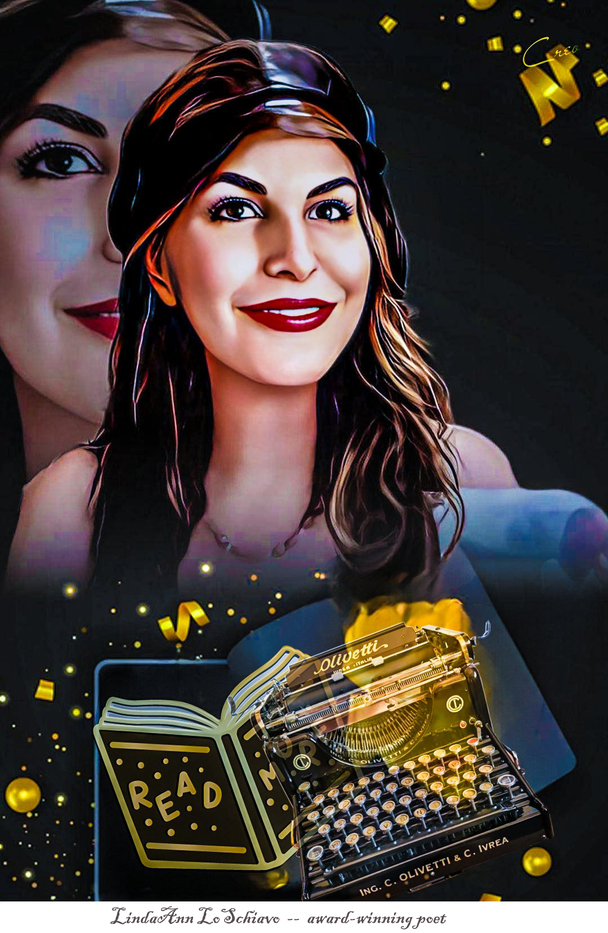
Author and poet LindaAnn LoSchiavo share a collection of poetry that explores themes of love, death, life, and everything in between in the collection “Apprenticed to the Night”.
Advertisements
The Synopsis
“Apprenticed to the Night” is a collection of 66 poems focused on mortality, betrayal, memory, trauma, and the bewilderment of loss as constantly shifting enigmas. It explores themes of life, death, childhood, trauma, family, and love. The book is divided into three sections: Youth, Maturity, and Beyond. Reviewers have called this collection a powerful and moving collection of poetry that is honest, insightful, innovative, and beautifully written. – – – – “Apprenticed to the Night” is available in hardcover, paperback, and a e-version from UniVerse Press (the poetry imprint of Beacon Books). – –
The Review
This is a compelling and heartfelt collection of poetry. The poet does a remarkable job of taking readers on a metaphysical journey of sorts, traversing the realms of reality, memory, and thematic symphonies as each poem reflects both experiences and hardships respectfully. The imagery found in the author’s writing was quite powerful, packing an almost cinematic gut punch as each poem brought a clash of realism and lyricism to life on the page.
For me, the heart of this narrative collection of poems came from the thought-provoking atmosphere and the emotional heartbeat of the collection overall. The journey through themes of life, death, trauma, abandonment, womanhood, and more made the story of the author’s experiences come to life through each poem so artfully.
The Verdict
Memorable, heartfelt, and engaging, author LindaAnn LoSchiavo’s “Apprenticed to the Night” is a must-read collection of poems you won’t be able to put down. The heart and passion meld with the author’s creativity so naturally that readers will be drawn to this book over and over again. If you haven’t yet, be sure to grab your copy today!
Rating 10/10
Advertisements
About the Author
Native New Yorker LindaAnn LoSchiavo, a four time nominee for The Pushcart Prize, has also been nominated for Best of the Net, the Rhysling Award, and Dwarf Stars. She is a member of SFPA, The British Fantasy Society, and The Dramatists Guild.
Elgin Award winner “A Route Obscure and Lonely” (US: Wapshott Press, 2019), “Women Who Were Warned” (UK: Cerasus Poetry, 2022), Firecracker Award, Balcones Poetry Prize, Quill and Ink, Paterson Poetry Prize, and IPPY Award nominee “Messengers of the Macabre” [co-written with David Davies] (US: Audience Askew, 2022), “Apprenticed to the Night” (UK: UniVerse Press, 2023), and “Felones de Se: Poems about Suicide” (Canada: Ukiyoto Publishing, 2023) are her latest poetry titles.
In 2023, her poetry placed as a finalist in Thirty West Publishing’s “Fresh Start Contest” and in the 8th annual Stephen DiBiase contest.
LoSchiavo is a Prohibition Era historian and her Texas Guinan film won “Best Feature Documentary” at N.Y. Women’s Film Fest (Dec. 2021).
I received a free copy of this book in exchange for a fair and honest review. All opinions are my own.
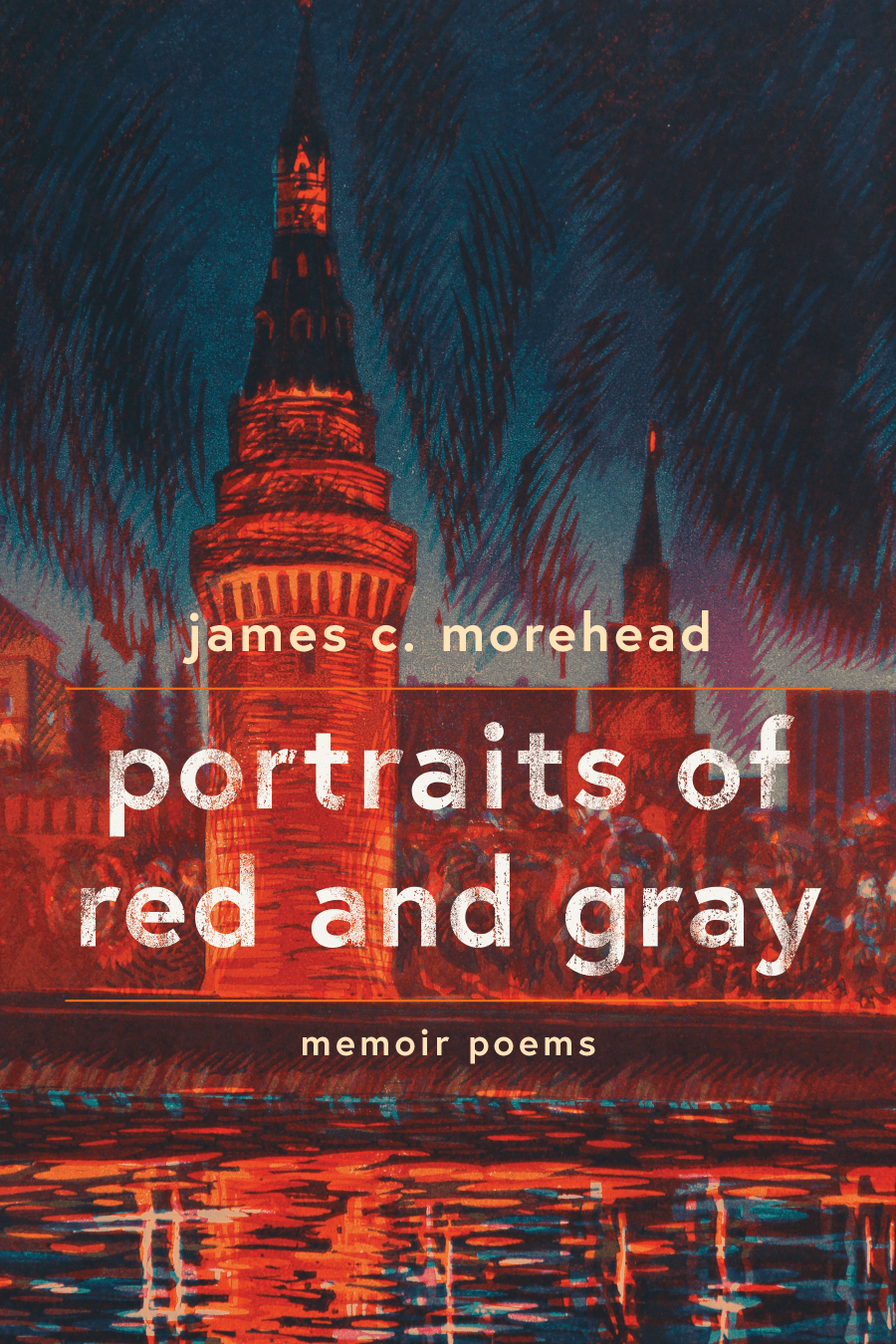
Author and poet James Morehead take readers on a journey from childhood to adulthood, from Soviet Union era-Russia to the Canadian wilderness, Wyoming, and beyond in his book “portraits of red and gray: memoir poems”.
Advertisements
The Synopsis
Take an unforgettable journey from the Cold War USSR to Savery, Wyoming, from the mountains of Tuscany to the peak of Yosemite’s Half Dome, from the Canadian wilderness to the beaches of Normandy. James Morehead’s (Poet Laureate – Dublin, California) acclaimed collection is built around a series of memoir poems that takes readers into pre-perestroika Soviet Union through the eyes of a teenager, from Moscow to Tbilisi to Leningrad (and many stops in-between). The striking cover, designed by Zoe Norvell, is based on a 1982 lithograph by Igor Prilutsky.
The Review
This was such a moving and beautiful collection of poetry. The author does a remarkable job of using profound imagery that feels both relatable and memorable at the same time, and the varied pacing of each poem speaks to the uniqueness of the memories that make up the subject of each poem, speaking to a specific moment in the author’s life that added to their growth as a person.
To me, the author’s work really worked for the balance in the surface-level themes of life experiences in specific places with the deeper meaning of love itself. Each poem spoke not only to the location of the author’s experience, but the person that they spent that memory with, whether it was the boating trip with his father, watching his Italian grandmother-in-law bake, and so on and so forth. The details that went into each poem spoke to the experience and things around the author that resonated with the person he was with, speaking to the insightful nature of his experiences, even when the person he resonated with was his younger self.
The Verdict
Memorable, thoughtful, and engaging, author James Morehead’s “portraits of red and gray: memoir poems” is a must-read collection of poetry. The emotional and moving connection the reader makes to the author’s experiences blends well with the imagery and vividness of each poem, making this a wonderful read. If you haven’t yet, be sure to grab your copy today!
Rating: 10/10
Advertisements
About the Author
James Morehead is Poet Laureate of Dublin, CA. portraits of red and gray is his second collection, and he hosts the Viewless Wings Poetry Podcast. James’ poem “tethered” was transformed into an award-winning animated short film, “gallery” was set to music for baritone and piano, and his poems have appeared in numerous publications. He is currently based in the San Francisco Bay Area.