The Moon Won’t Be Dared by Anne Leigh Parrish Review

I received a free copy of this book in exchange for a fair and honest review. All opinions are my own.

Author and Poet Anne Leigh Parrish explores nature, love, and the uphill battle many women face in a male-dominated society in her book, “The Moon Won’t Be Dared”. 

The Synopsis
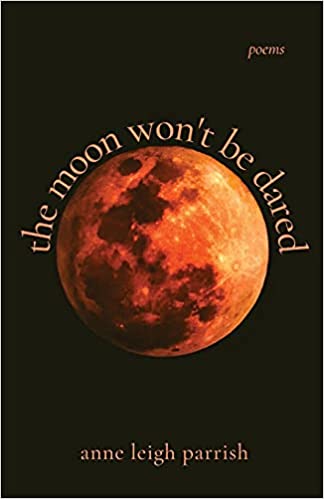
The poems in the moon won’t be dared by award-winning author anne leigh parrish ponder nature, love, ageing, and the impossible plight of women in a male-dominated society. Love and reverence for beauty blend with harsher truths of betrayal and brutality. Throughout, there is an overriding sense that life is full of magic, and that to wonder is a lovely gift.

Advertisements

The Review

Such an incredibly beautiful and emotionally-driven collection of poetry! The author has expertly crafted a collection that touches the soul and navigates the human experience with vivid imagery and succinct writing. What struck me immediately was the author’s use of no capitalization in her writing, allowing the words to flow smoothly and with tremendous insight into the struggles of everyday life and the world as a whole.

The balance the author found between narrative-style poetry and more personal and relatable storytelling with a healthy dose of heartfelt themes that inspire us all to stop and really examine the world around us. From the fires raging on the US West Coast and the rise of global warming to abuse and the loss of a loved one, the author conveys each topic and poem with such conviction and depth, and when accompanied by the engaging artwork makes for a memorable reading experience.

The Verdict

A remarkable, emotional, and thoughtful collection of poetry, author Anne Leigh Parrish’s “The Moon Won’t Be Dared” is a must-read poetry collection of 2021! With a mesmerizing blend of awe-inspiring imagery and thought-provoking words that stirred up the emotions within us all, readers will be hard-pressed to keep away from this fantastic collection. If you haven’t yet, be sure to grab your copy today!

Rating: 10/10

Advertisements

About the Author/Poet

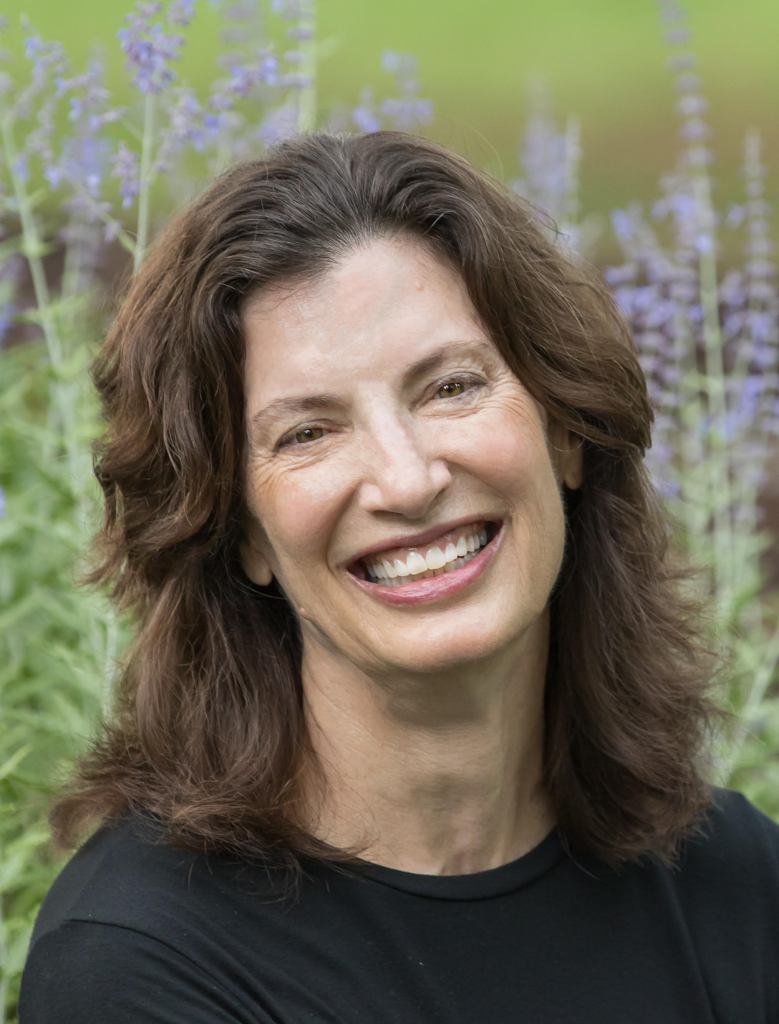
Anne’s first fiction publication appeared in the Autumn 1995 issue of The Virginia Quarterly Review. That story, “A Painful Shade of Blue,” served as the basis for more fiction describing the divorce of her parents when she was still quite young. Her later stories focused on women struggling to find identity and voice in a world that was often hostile to the female experience.

In 2002, Anne won first place in a small contest sponsored by Clark County Community College in Vancouver, Washington. In 2003 she won the Willamette Award from Clackamas Community College in Oregon; in 2007 she took first place in highly esteemed American Short Fiction annual prize; and in 2008 she again won first place in the annual contest held by the literary review, The Pinch.

The story appearing in American Short Fiction“All The Roads that Lead From Home” became the title story in her debut collection, published in 2011 by Press 53. The book won a coveted Silver Medal in the 2012 Independent Publisher Book Awards. Two years later, a collection of linked stories about the Dugan family in Upstate New York, Our Love Could Light The World, was published by She Writes Press.

Her debut novel, What Is Found, What Is Lost appeared in 2014. This multi-generational tale speculates on the nature of religious faith and family ties, and was inspired by her own grandparents who emigrated to the United States in 1920.

A third collection of short stories appeared in 2017 from Unsolicited Press. By The Wayside uses magical realism and ordinary home life to portray women in absurd, difficult situations.

Women Within, her second novel, was published in September 2017 by Black Rose Writing. Another multi-generational story, it weaves together three lives at the Lindell Retirement home, using themes of care-giving, women’s rights, and female identity.

Her third novel, The Amendment, was released in June 2018 by Unsolicited Press. Lavinia Dugan Starkhurst, who first appeared in Our Love Could Light The World, is suddenly widowed and takes herself on a cross-country road trip in search of something to give her new life meaning.

Maggie’s Ruse, novel number four, appears October 2019 from Unsolicited Press, and continues with the Dugan family, this time focusing on identical twins, Maggie and Marta.

What Nell Dreams, came out in November 2020 from Unsolicited. This collection of sixteen short stories also features a novella, Mavis Muldoon.

The next installment in the Dugan families series, A Winter Night, was released in March 2021 from Unsolicited Press. Anne’s fifth novel focuses on eldest Dugan Angie and her frustrations as a thirty-four-year-old social worker in a retirement home.

Anne has been married for many years to her fine, wise, and witty husband John Christiansen. They have two adult children in their twenties, John Jr., and Lauren.

About Lydia Selk 

Lydia Selk is an artist who resides in the pacic northwest with her sweet husband. She has been creating  analog collages for several years. Lydia can often be found in her studio with scalpel in hand, cat sleeping on her  lap, and a layer of paper confetti at her feet. You can see more of her work on instagram.com/lydiafairymakesart

Guest Blog Post: Poetry and Image by Anne Leigh Parrish

Hello everyone! Author Anthony Avina here. I am happy to be sharing with you all this amazing guest post from author and poet Anne Leigh Parrish, where she discusses poetry and the utilization of visual representation in poetry. I hope you all will enjoy this stop in association with the Poetic Book Tours. Look for my review of the author’s upcoming book on November 4th. 


Poetry is a visual expression, even when it’s about politics, or feminism, or how nasty people can be. In poems, words evoke both what we feel and see. This is important to me, I’d say even crucial. Since leaving the urban mess of Seattle four years ago and coming to the quiet of a Northwest forest outside of Olympia, I find nature supplies a great deal of visual stimulation to write about.

Many poems begin with an image—something I notice and want to capture. Moss hanging from a branch; the darting of a jay; how a gust of wind gives a suddenness to how trees move.

Once the image is expressed in words, I delve into what those words mean. If moss drapes a branch, what else drapes, when, and why? A ring drapes a finger, for instance, but that draping is intentional, not the result of a natural process – or is it? This is where poetry gets really fun, because the ring on the finger could, in fact, result from an expression of love, man to woman, or man to man, and love is a recognized natural process. 

I also like to underscore differences among things and explore commonly held ideas and expectations, quite often about women. Returning to moss as a poetic subject, looking at it you might think it feels soft and silky, but it doesn’t. It’s rough and scratchy. Its appearance is deceptive, and in one poem I say moss evolved, went one way / then another which improved its chances / like a woman / nice to be reminded things / aren’t always as they seem, even if / truth at first disappoints

How many women feel the weight of the world’s expectations on them, particularly about how they look?

Using an image to shift the poetic drive or narrative into an unexpected direction is another way I craft my work. Violence against women is a theme I return to again and again, usually to raise awareness of the issue in general, but sometimes as a vehicle to open another door and prompt another discussion. This is where poetry and philosophy tend to blend and lose their boundaries. What if a woman finds herself needing the help of a man who then destroys her, and the poem reveals that it wasn’t because she was weak, or vulnerable, too trusting, or naïve, but because she had been distracted by something beautiful and thus let her guard down? She then reflects wryly from the afterlife that beauty gets her every time. 

Sometimes I like to start with a metaphor and build a world around it that stands on its own logic, even if what it’s depicting has no logic. I see this as another way poetry can bend reality. In my poem “even the trees went under” a couple’s home is gradually falling apart from heavy rain. Obviously, the story represents how bad things have gotten between them, and as the water rises and they climb higher in the home, the woman turns into a mermaid and is faced with a life or death decision: will she save the man, or leave him alone to drown?

Advertisements

The title piece from my new collection explores the idea of objectivity in the face of turmoil. Two souls are held together by their not entirely healthy need for one another. They realize they’re really one monster, twirling before the sky / laughing at stars/ daring the moon to cut us apart. But the moon won’t be dared . . . how we love her joyous remove / up there alone. Again, nature as a force and backdrop comes into play, now as something uninvolved, coolly reflecting the occasional absurdity of the human condition.

On my last trip to Arizona, an elderly couple walked across the parking lot toward the restaurant where I was having dinner. They were backlit by a gorgeous Southwestern sunset. Their manner suggested years of life together, and for some reason, these images came down to the idea of a needle and the work that needles can do, in particular holding things together. This couple walked like looped stitches/ in the slanted evening light and through their many years they have/sewn, pulled apart / frayed / and dropped the needle’s thread / but now they rest and / gather up their loosened strands/ bound together / always.

I’ve been married for decades, and this fact too no doubt informed that piece.

And what of life overall? The gradual passing of time? How to express the understanding of one’s mortality? You have to have reached a certain age for these questions to be relevant, even poignant and yes, I’m there. I remember my mother saying to grow old was to become increasingly detached, and this idea became the basis for the poem I quote here, in its entirety (it’s brief) and logically entitled “time.”

let’s call it a study in detachment / gradual drift from passion to prayer / then even that loses strength / we grow quiet, soft, and slow/joyous in the face of this timely withdrawal / we’ve given  so much, we’re ready now to hold a little back from / this riot of shifting light we know / as life

Advertisements

About the Author/Poet

Anne’s first fiction publication appeared in the Autumn 1995 issue of The Virginia Quarterly Review. That story, “A Painful Shade of Blue,” served as the basis for more fiction describing the divorce of her parents when she was still quite young. Her later stories focused on women struggling to find identity and voice in a world that was often hostile to the female experience.

In 2002, Anne won first place in a small contest sponsored by Clark County Community College in Vancouver, Washington. In 2003 she won the Willamette Award from Clackamas Community College in Oregon; in 2007 she took first place in highly esteemed American Short Fiction annual prize; and in 2008 she again won first place in the annual contest held by the literary review, The Pinch.

The story appearing in American Short Fiction“All The Roads that Lead From Home” became the title story in her debut collection, published in 2011 by Press 53. The book won a coveted Silver Medal in the 2012 Independent Publisher Book Awards. Two years later, a collection of linked stories about the Dugan family in Upstate New York, Our Love Could Light The World, was published by She Writes Press.

Her debut novel, What Is Found, What Is Lost appeared in 2014. This multi-generational tale speculates on the nature of religious faith and family ties, and was inspired by her own grandparents who emigrated to the United States in 1920.

A third collection of short stories appeared in 2017 from Unsolicited Press. By The Wayside uses magical realism and ordinary home life to portray women in absurd, difficult situations.

Women Within, her second novel, was published in September 2017 by Black Rose Writing. Another multi-generational story, it weaves together three lives at the Lindell Retirement home, using themes of care-giving, women’s rights, and female identity.

Her third novel, The Amendment, was released in June 2018 by Unsolicited Press. Lavinia Dugan Starkhurst, who first appeared in Our Love Could Light The World, is suddenly widowed and takes herself on a cross-country road trip in search of something to give her new life meaning.

Maggie’s Ruse, novel number four, appears October 2019 from Unsolicited Press, and continues with the Dugan family, this time focusing on identical twins, Maggie and Marta.

What Nell Dreams, came out in November 2020 from Unsolicited. This collection of sixteen short stories also features a novella, Mavis Muldoon.

The next installment in the Dugan families series, A Winter Night, was released in March 2021 from Unsolicited Press. Anne’s fifth novel focuses on eldest Dugan Angie and her frustrations as a thirty-four-year-old social worker in a retirement home.

Anne has been married for many years to her fine, wise, and witty husband John Christiansen. They have two adult children in their twenties, John Jr., and Lauren.

About Lydia Selk 

Lydia Selk is an artist who resides in the pacic northwest with her sweet husband. She has been creating  analog collages for several years. Lydia can often be found in her studio with scalpel in hand, cat sleeping on her  lap, and a layer of paper confetti at her feet. You can see more of her work on instagram.com/lydiafairymakesart
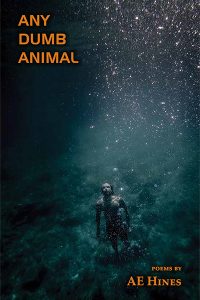
Any Dumb Animal by AE Hines Review

I received a free copy of this book in exchange for a fair and honest review. All opinions are my own. 

Author and poet AE Hines shares his memoir in a unique in-verse collection of poetry detailing the life of a gay man born and raised in the South, who came of age during the AIDS crisis in his acclaimed book, “Any Dumb Animal”.

Advertisements

The Synopsis

Any Dumb Animal (Main Street Rag, 2021), the debut poetry collection by AE Hines, presents a memoir-in-verse as told by a gay man raised in the rural South who comes of age during the AIDS crisis. Flashing back and forth in time, a cast of recurring characters and circumstances are woven into a rich tale of survival and redemption, exploring one man’s life as a queer son, father, and husband, over a span of more than thirty years.

The Review

These poems were so incredibly emotional and moving to read. The mark of a truly great poet and writer is always when they can convey in words the emotions that ran through them at that moment, and I can say that the conflicting thoughts and emotions that the poet underwent here were felt greatly. The struggle to understand ourselves and our own identities are hard enough in this world, but the author and poet’s struggle against a toxic relationship with his father and later his own marital struggles really elevates these conflicting feelings tenfold.

What really stood out to me was the near cinematic and storytelling quality that the poems themselves took on. Each poem painted an image in the reader’s mind as the overall narrative of the writer’s life took shape. The balance the author found between the raw emotions these events evoked within himself and the narrative approach to these poems made this collection feel so alive and passionate in its delivery. 

The Verdict

A heartfelt, heartbreaking, and engaging collection of poetry, author AE Hines’s “Any Dumb Animal” is a must-read book of 2021! The narrative quality of the poetry and the way the author was able to relay something so personal to himself and make it relatable to the reader as well as incredible to see unfold. I felt myself tearing up as the author’s words pierced my heart and I felt his pain, making this a true one-of-a-kind story that everyone should read for themselves. If you haven’t yet, be sure to grab your copy today!

Rating: 10/10

Advertisements

About the Author

AE Hines (he/him) grew up in rural North Carolina and currently resides in Portland, Oregon. His poetry has been widely published in anthologies and literary journals including I-70 Review, Sycamore Review, Tar River Poetry, Potomac Review, Atlanta Review, Crosswinds Poetry Journal and Crab Creek Review. He is winner of the Red Wheelbarrow Prize and has been a finalist for the Montreal International Poetry Prize. He is currently pursuing his MFA in Writing at Pacific University. Follow him on TwitterFacebookInstagram.

Guest Blog Post: The Story I Needed To Tell by Cheryl Wilder

The Story I Needed to Tell

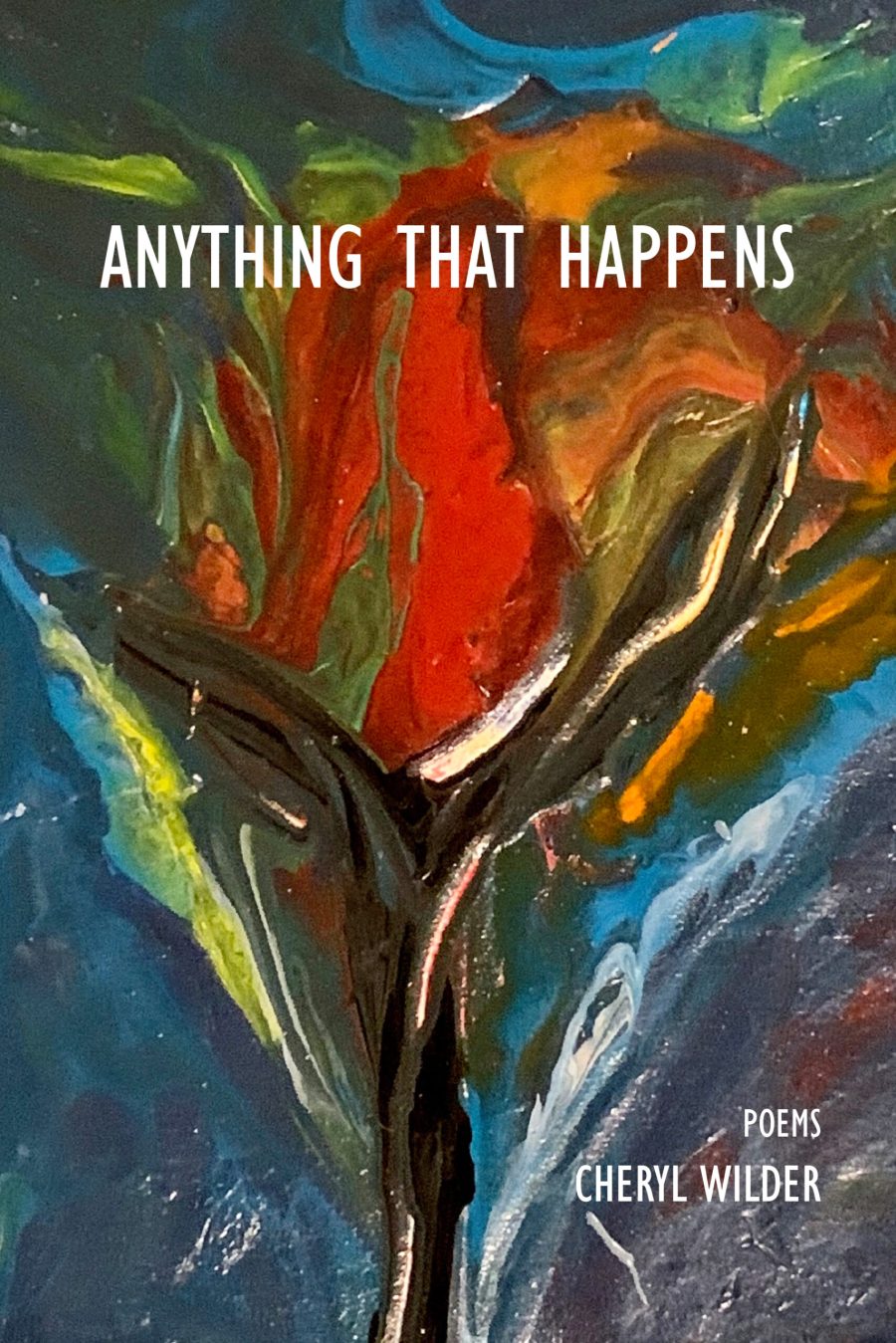
I’m not sure who said it, but there’s an adage that goes something like: A first book is the one the author needed to write. This statement is true for me, though not for all the themes found in my first book, Anything That Happens. Hm. That may not be accurate. Let me begin again.

I came to writing through a side door. At the end of my senior year in high school, my English teacher pulled me aside, a stack of my creative assignments in his hand, and urged me to keep writing. “If you enjoy doing this, keep doing it,” Mr. Langford said, making me look up and into his eyes so I could see his serious face. He knew I was an adrift teenager about to be released into the world. I imagine him crossing his fingers as he gave me the “life raft” that is poetry.

My poetry has always been personal, tied to the exploration of emotion. I believe it’s a response to the practical, non-communicative environment where I grew up. The stack of papers Mr. Langford held were poems about friendship and trust, my mom making a new home with her husband-to-be, my father’s absence, and me coming to terms with … my future? 

Since I had little direction, and I enjoyed writing, I took Mr. Langford’s advice. But, I didn’t know how to live like a writer. And I believed “experience” would make me a writer. (Obviously, I wasn’t paying attention in class when we talked about Emily Dickenson’s life.)   

So, when I moved from California to North Carolina at nineteen years old, I was embarking on “life.” I uprooted, hoping for new, enlightening experiences. Nine months later, the event—a car crash—I would eventually need to write happened. 

The irony is that after the crash, I couldn’t write. Then, I wouldn’t write, not seriously. Not for years. I believed it was wrong to make a good thing from my bad act. And since I wanted to become a poet, I kept myself from it, accepting my due punishment. 

The thing about needs is they don’t disappear. Whether I wanted to believe it or not, I was a poet, and a poet needs to write poetry. There’s no escaping it. (Oh, thank goodness.) 

I first gave myself permission to write about the crash in a fiction class. I had returned to college at twenty-seven years old and majored in creative writing. Fiction provided me the distance I needed to write the details of the night, from my friend’s phone call to being handcuffed and put into a police car. In the “story,” the crash was happening to someone else. 

That first step was monumental: I was in the writer’s chair. 

Two years later, during my last poetry workshop before graduation, I wrote my first poem about the crash, the original version of the “Slipped” series that’s in the book. It was the story I wrote in fiction, but this time, I was once again in the driver’s seat. Placing myself there gave me a better vantage point to tell the story, and not only the drinking too much and car wrapped around a pole story. The pieces of the story only I knew: the emotional and psychological impact.

The crash was the story I needed to tell. “Emotional and psychological impact” is the inherent slice of all the stories I tell, like when I tried to understand my father’s choices compared to my mother’s back in high school. 

The main narrative of Anything That Happens is the car crash and its aftermath. But there is also the death of my mother, the birth of my first son, struggles of parenthood, and underneath it all, ever-present shame. There’s no doubt the car crash heightened my interest in how one action can affect someone else. When I wrote about the relationship with my parents and how I felt about becoming a mother, I did so through the lens of cause and effect—the impact of choosing what not to do weighing as heavily as choosing what to do. 

The impact of writing the story I needed to write is just coming to fruition. The book is only two months old. My desire to write hasn’t lessened. Now, I get to work on what I want to write. I don’t know what that looks like yet. Sure, I have ideas and dreams. Okay, I even have projects I kept putting to the side while I finished the needed-to-be-told story. But that’s the “work” of being a writer, and I’ll get to it. For now, I’m still living the piece I’m most interested in, the emotional and psychological impact of having told the story I needed to tell.

Advertisements

About the Author

Cheryl Wilder is the author of Anything That Happens, a Tom Lombardo Poetry Selection (Press 53, 2021), a collection that examines how to reconcile a past grave mistake and a future that stretches into one long second chance. Her chapbook, What Binds Us (Finishing Line Press, 2017), explores the frailty and necessity of human connection. 

A founder and editor of Waterwheel Review, Cheryl earned her BFA from the University of North Carolina at Wilmington and her MFA from Vermont College of Fine Arts.

Guest Blog Post: Inspiration and the Cabinet of Curiosities by Poet Kathy Davis

I am proud to share this amazing guest blog post from author and poet Kathy Davis for her upcoming blog tour for her book, “Passiflora”, which I will be reviewing on May 10th. Please enjoy this wonderful post the poet shared with us all.


Advertisements

Inspiration and the Cabinet of Curiosities

Imagine a stash of foreign objects that people inhaled or swallowed—by accident or on purpose—and had to have surgically removed from their throat, esophagus or lungs. Buttons, hatpins, bones, nuts, nails, screws, a doll’s eye, dentures, a Christmas ornament, keys, opera glasses, a crucifix and more. You can spend hours exploring a collection of 2,374 of them in the Chevalier Jackson Collection at the Mutter Museum in Philadelphia, many neatly displayed in drawers whose contents you are welcome to examine. 

Jackson was an otolaryngologist in the late 19th and early 20th centuries who developed methods for removing obstructions from airways and food passages. He saved and cataloged everything he removed (and the stories behind them)—a quirky obsession (his middle name after all was Quixote). But don’t writers do something similar? I have an equally weird collection of oddities stored in my journals—unusual objects, places or stories I was drawn to record, some of which emerge in my writing, including a few of the poems in Passiflora.

My father inherited a shoebox of photographs taken at a family graveside funeral during the Roaring Twenties, picture after picture of people lined up behind a casket mounded with flowers. But someone had snipped off the top half of each one so that the family and friends gathered were only shown from the waist down and couldn’t be identified. Who was it that the scissor-wielder was trying to hide? Years later, I described the photos in a piece for a fiction-writing class. “That’s so creative!” the instructor said. “Who would take pictures at a funeral?!” I was too embarrassed to say that, well, actually my family did, and tucked the idea away out of shame until a variation of it emerged in the poem “Starlings”: Her own mother careful/to cut faces from the photographs.

“Ruins, Trophies, Palms” was inspired by a warning a friend received from her neighbor that a wolf had been seen just off their country road. “Don’t go outside,” the neighbor said. “It’s too dangerous!” A practical, yet intrepid, person, my friend was skeptical. We don’t have wolves in Virginia. Venturing out, she did find a wolf, but one that a hunter had preserved through taxidermy and was using for target practice. It was full of bullet holes—an image just itching to find its way into a poem.

Not looking where I was going, I collided with a stranger one evening in the French Quarter in New Orleans. When I turned to apologize, I was startled to see a woman who had painted her hair and body white and was naked except for two white ceramic fig leaves glued over her breasts and a white drape from the waist down. She frowned and quickly moved on while I gaped. Later, I saw her posing as a Greek statue in Jackson Square, dollar bills collecting in her cardboard box. Her image emerged in “At the Boundary of Desire.”

The Gospel Chicken House in “Revelations” operated for over 35 years in the county where I live. The owners equipped the long low structure of an old poultry barn with the sound equipment, seating and concession stands needed to hold a Saturday night music ministry for several hundred attendees, most of whom considered it their church. I visited once before it closed to listen to that night’s band and enjoy a hotdog and some pie. Much of the evening’s experience made it into the poem: Welcome to Saturday night live/at the chicken house. Yep, that’s how they opened the show.

There are other little oddities from my “collection” scattered about in Passiflora. The number on the ambulance I followed in “Battle City” was, as described, the unlucky 13. (Who thought that was a good idea?) And Sarah Cannon in “Mrs. Cannon Passes the Parthenon on Her Way Home from Work” truly was a hillbilly comedian on stage and an elegant pillar of Nashville society in real life, a duality that still fascinates me. I don’t have my curiosities stored tidily in drawers like Jackson—they’re jotted down haphazardly in a mismatched assortment of notebooks—but I value them no less. And they help make writing fun. 

Advertisements

Author Bio


Kathy Davis is a poet and nonfiction writer who received her MFA from Virginia Commonwealth
University. Her poetry manuscript, Passiflora, won the 2019 Cider Press Review Book Award and was released in February 2021. She is also the author of the chapbook Holding for the Farrier(Finishing Line Press). Her work has appeared in Alaska Quarterly Review, Barrow Street, Blackbird, Diode, The Hudson Review, Nashville Review, Oxford American, The Southern Review, story South and other journals. She has been nominated for a Pushcart Prize and been a finalist for Best of the Net and the Conger Beasley Jr. Award for Nonfiction. After raising their two boys, she and her husband moved to an old farmhouse outside of Richmond, Va., where she tends a wildflower meadow when not writing.

https://kathydaviswrites.com/