I received a free copy of this book in exchange for a fair and honest review. All opinions are my own.
Author and poet Alan S. Kessler take readers on a journey of beauty and melancholy in his book “Damnation and Cotton Candy”.
Advertisements
The Synopsis
A book of poetry from Alan S. Kessler, the award-winning author of the 2022 Eric Hoffer Finalist Ghost Dancer, and other books. These are poems best served with hot cocoa, melancholy, and a sharp knife.
The Review
This was such a profound and captivating collection of poetry. The author’s ability to weave macabre imagery and atmosphere into the poetry while offering commentary on life itself was so engaging for a reader to behold. The natural way the author is able to weave dark tones with profound emotions was truly inspiring to behold.
Yet to me, it was the way the imagery blended with the deep-seated themes of this narrative. From politics and warfare to hollow niceties between strangers and corporations as a whole, the message of finding hope is not in the materialism of our current world but in the philosophy and spirituality that exists just on the fringes of our society as a whole.
The Verdict
Mesmerizing, haunting, and emotionally driven, author Alan S. Kessler’s “Damnation and Cotton Candy” is a must-read book of poetry. The imagery and atmosphere do a great job of portraying the capitalist machine of our world with the truly dark and macabre aspects of life, and readers will be hard-pressed to put this creative, artistic, and chilling book down. If you haven’t yet, be sure to grab your copy today!
Rating: 10/10
Advertisements
About the Author
Alan Kessler grew up in Columbus, Ohio. He says, “Childhood shapes us. Mine was, ironically, a gift. The sadism of my mother and the violence of my father, a murderer who died in prison, created within me a countervailing force, the ability to write empathetically about characters who, as Faulkner said, not merely endure but prevail.”
“Resilience isn’t an achievement, it exists as a matter of luck. I was lucky. I have a wonderful wife and four caring, intelligent children–even a dog,” according to Kessler. “I am blessed.”
The creative process is mysterious. For me, it often consists of accumulation/distillation/accumulation, sifting ideas through different iterations and genres (art, poetry, performance). Micro-expressions of a central idea frequently become distinct projects and parts of a larger constellation of work. Along the way, much is gained, but also, sometimes, lost.
There are two stanzas from an early draft of Still, the Sky that aren’t found in the published work; although, traces of them remain. They were composed of an image that volunteered itself, left its mark, and vanished:
After the first of seven was plucked for the
Feast, the others would set up camp
Around the twists and turns of the pathways,
Chastity-in-residence,
And they would plot to meet and spoil themselves,
To love the murder away, but they were kept
Apart, running from the gaze of the creature
Whose shadow you cast.
They would meet us from time to time,
Casual encounters, sometimes taking the time
To say what they thought, or how they felt,
What their days had been.
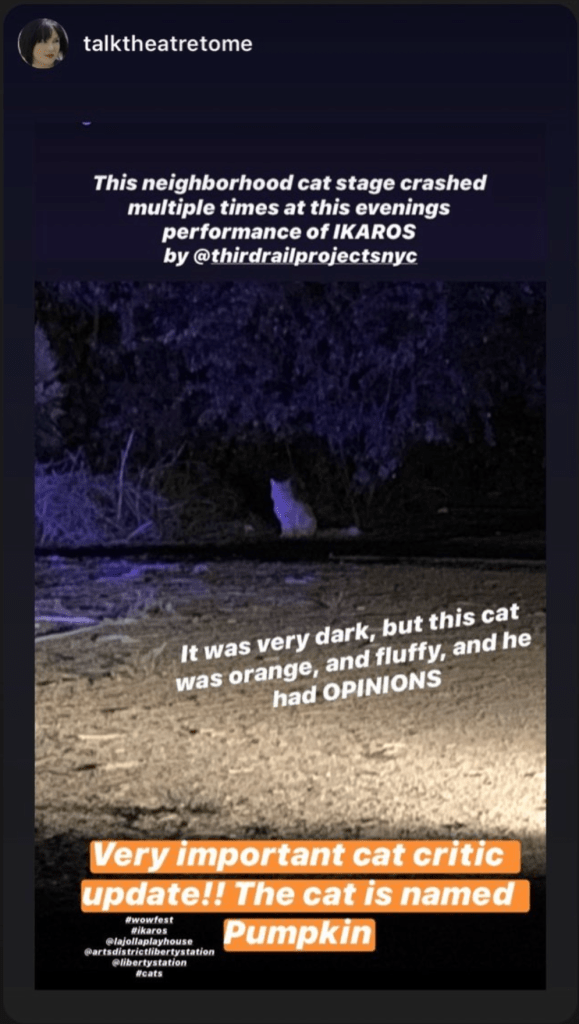
One even found a pet, an orange kitten
Who would disappear for days and then follow
As we made rounds, both intimate and mundane;
She would outlive him.
The first two stanzas remain. The second two are gone, all that mentioned the unnamed victim and the kitten that survived.
IG story post by @talktheatretome
Still, the Sky is the result of a long process of iterative works over the past few years, different expressions of the characters, themes, and ideas which had their genesis during a theater residency/fellowship in the spring of 2019 with the Bogliasco Foundation in Italy.
Advertisements
Courtesy of The Bogliasco Foundation; Photo by Laura Bianchi
Before I arrived to the residency, I received a commission from La Jolla Playhouse in California to create a site-specific work for their biennial Without Walls Festival, and so I already knew I would be working with themes of sky and sea, flight and nautical culture. My site in San Diego was a desert labyrinth just beyond the tarmac of the San Diego airport (beneath the flight path, divided by a narrow waterway) and on the grounds of Liberty Station, a formal naval training base.
Pictured, Andrew Broaddus in Ikaros by Tom Pearson; Photo by Jim Carmody
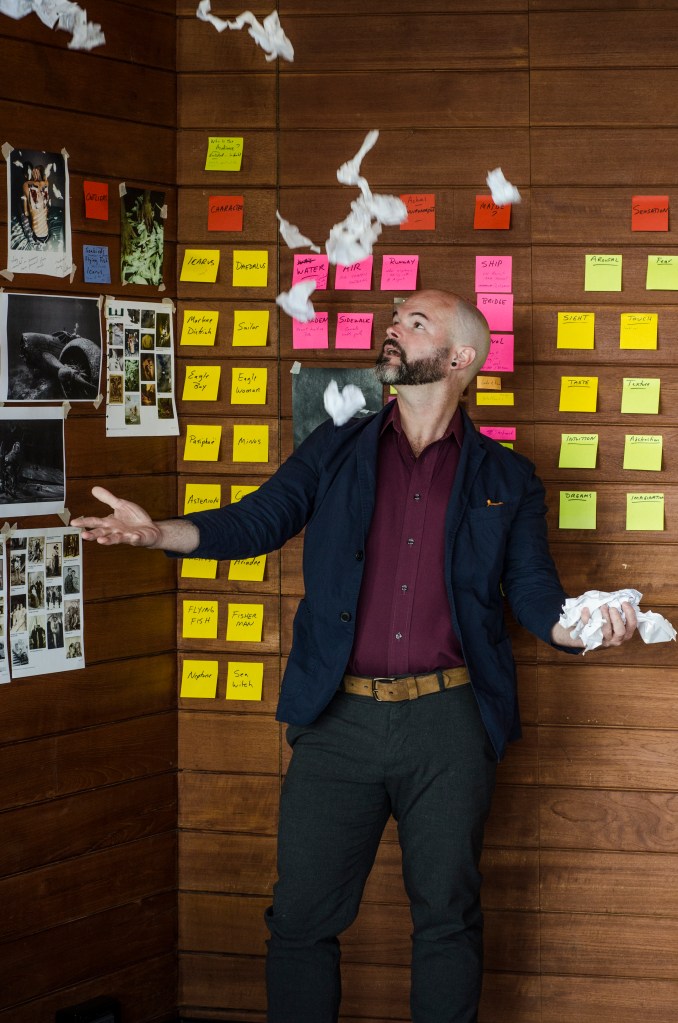
I also brought to the residency outtakes from The Sandpiper’s Spell (my first published volume) as another set of ideas. Most of the writings were coming-of-age themed or more recent explorations that didn’t have anywhere to go yet. In the first few weeks, I wrote something to bind them structurally and then put them aside for later—but as I began to storyboard ideas for the commission, filling up the walls with my Post-It Notes and columns of associations, I started to see a mythology unfolding through archetypes that would benefit from the specificity of personal experience.
The next series of developments happened over summer, in New York, where I worked with performers. We experimented with choreography, film, and art to find the characters and describe the textures and themes, all in an exhibition at the Ace Hotel New York gallery. Then in October, we premiered the site-specific Ikaros in San Diego. After that, I continued to experiment with performance and material culture, mixing these with virtual reality. These explorations took me into early 2020 as I worked with students and faculty at the Olin College of Engineering where I was in-residence.
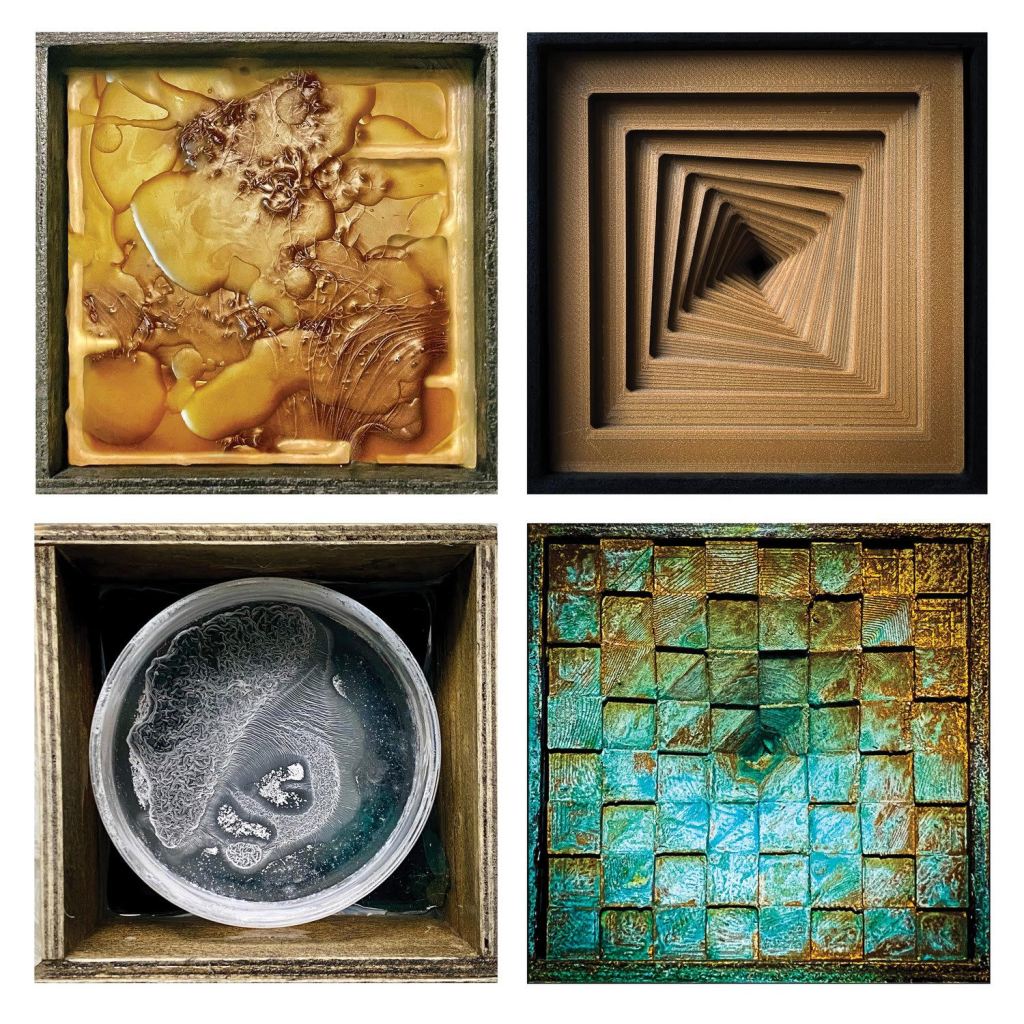
But then the pandemic hit, and we were sent into lock down. At that time, I circled back to revise the manuscript further, adding the artwork to the pages. At this stage, the three-dimensionality of the world revealed itself. The many previous micro-expressions of the project had rendered complex characters and rich environments—and reflecting upon the spaces in which I had worked, other elements emerged—for instance, the seagulls in Italy, nesting in the cliffs below my studio. Their mating rituals and fierce protection of their nests, their daily patterns, and the endlessness of sky and sea became dominant images of the main plot. And, in San Diego, an orange kitten also left her mark, shaping the timbre of a subplot.
Throughout the grounds of Liberty Station in San Diego, there was a population who made residence, whether temporarily passing through or on a more semi-permanent basis, in tents or lean-tos. As we were making Ikaros, we were careful not to displace, to be mindful, respectful, and in communication with the denizens of the space. Early on, one of the park residents came through rehearsals to chat with us about the work, the mythology, his observations of us in the site. He carried an orange kitten with him. Later, the kitten would come to rehearsals on her own and sometimes participate.
There was a particular section with a long spindle of fabric which was unfurled to make the footprint of a labyrinth, and the kitten would stand threateningly at the edge of the rosemary bushes watching this giant ball of string, little shivers rippling along her spine—adding another layer of drama.
We began to expect her. She started to show up consistently to rehearsals, but by the time we got to performance, she had gone elsewhere, only later to appear in another scene she’d never rehearsed, under full lights and in front of a paying audience.
We rolled with it, but she stole the scene. She even got some social media coverage.
When the performances were finished, I went back to the poetry, and I took her image with me, writing her into the manuscript. In fact, I took the whole of the experience, the denizens of the space, the rosemary, the sounds, the smells, textures, animals, insects, birds, weather, and flight patterns all into consideration. The specificities of the lived experience were folded into the creative mix to further shape the world of the book.
By the time I arrived at a final draft, the overt mention of the kitten was gone, but her paw prints were all over it in subtle and invisible ways within the text and artwork (“a predator moving in right cycles, leaving us unharmed… treachery in the tall grass…”).
Reflecting later on The Sandpiper’s Spell, I realized the image of a pet outliving a companion was already a seed planted in the poem “Day Dreams.” The idea had carried forward, woven itself into the new work, then out again. Perhaps it will return and make more of itself in whatever I create next.
I have begun to meditate on what these little threads mean over time, how a body of work forms from the scraps of previous work, how material moves forward and themes reiterate, or ideas sift and fold back together again to create specificity. It becomes a pattern for world building, one iteration at a time. It makes the work larger through the micro-expressions along the way—allowing for volunteer images that might invisibly imprint upon the eventual narrative.
Little paw prints.
Advertisements
Author Tom Pearson Reads Paw Prints
About the Author
Tom Pearson is an artist and poet who works in dance, theater, film, visual art, and multi-media. He is known for his original works for theater, including the long-running, off-Broadway immersive hits THEN SHE FELL and THE GRAND PARADISE and as a founder and co-artistic director of the New York City-based Third Rail Projects and Global Performance Studio.
He is the author of two books, THE SANDPIPER’S SPELL and STILL, THE SKY. More information available at his website and on social media at: tompearsonnyc.com and @tompearsonnyc.
On March 10, 2020, I sat down and wrote “Unacknowledged,” but before I ever sat down and wrote that poem, I already had so many poems I wrote while working in the toxic workplace.
I began working there as an administrative assistant after Thanksgiving 2018. I recognized that the place was dark and dimly lit and seemed to be full of problems. After the interview, I realized how much I truly did not want to take that job but felt like maybe the difference I made at my last job by being a force for good by choosing kindness and mercy would be something I could extend to this place.
Everyone I know was happy for me as I finally would be working full time following college, but not everything that glitters is actually gold.
To cope with the harassment and abuse, I would write poems, but a lot of my poems started hinting at something I never saw coming. I was definitely falling in love fast and hard with the young man I had befriended there.
It was therapeutic to work eight hours a day there and try to do whatever good I could while also have this secret love that no one knew about.
Which was how “Unacknowledged” came to be. I had all these feelings that were basically suppressed instead of expressed, which I understood was the key to my healing.
Once I sat down and wrote that poem on March 10, 2020, I knew it was time to let this poetry collection pour out of me.
“Unacknowledged” was 35 stanzas and 738 words. And what came out when I sat down to write this poem is the same poem you read in the collection. I present to you “Unacknowledged.”
Unacknowledged
I shouldn’t be writing this
A psychic told me that
“Nothing would come from this situation.”
A counselor told me not to feed you
With my thoughts or mental energy
I keep thinking about when I put a novel out
Should I acknowledge you and your seasonal
Part in my story?
It’s this persistent picture that
keeps playing in my head.
I see your nickname on the page
Where you dedicate a book to someone.
How do you dedicate a book to someone who blocked you on Facebook?
Ignores your texts?
Never offered an explanation
About why he no longer wanted to be friends with you?
Were you scared that I would beg you to love me?
I am sorry that I left without telling you
Why
That I would never blame you for the
Bad and evil things I witnessed and experienced
at the hands of someone
with envy in their heart
and greed stuck
between their tongue
and their teeth.
I didn’t know what to say to you
I didn’t know if you would
Tell me to stay or
be angry With me
Because
I saw them
For who they are
Instead of just pretending
I was dumb, deaf, and blind.
Gone is your musical laugh and the sparkle in your eyes
As you would smirk at me
With this synchronicity
You thought it was
All a ringless circus too.
The guy in the top hat
The Greatest Showman
No Hugh Jackman
He couldn’t juggle,
Tell jokes,
Or tame a caged lion.
Spitting fire was his one and only talent
As the master of Ceremonies,
The elephant he rode
Would spray water from her trunk
Killing dreams, Hopes, and new ideas
Left and right
Unlike Dumbo,
She was angry because her ringmaster clipped
Her wings and convinced her she couldn’t fly.
Fly she could but he kept her chained.
Chained and dependent on him
for bread, water, and a place to rest her head.
Yet, he would demean her
Keep her feeling small
So she always had to
Validate herself
In his eyes only…
It was a dark and dreary
Tim Burton movie
We were a part of
But like Zac Efron and Zendaya
In the Greatest Showman,
The characters we played
Were not convinced
Their love was enough
To make it.
Were you mad that I cared about you
Or were you mad because
there was nothing we could do about it?
Were you mad that I had the courage
And open door to grasp my freedom
Before they hung me
Like the witch they believed me to be?
I did care about you.
I was so thankful for you.
I think you are a beautiful person.
So ordinary but extraordinary all in one person.
So complex
Such an enigma.
To me, you will always be a mystery.
Our timing was neither wrong nor right.
You were good to me.
I encouraged you.
You made me feel heard.
You didn’t look at me
For my body or physique.
Yet, whenever I looked at you
I felt ok to be me.
And for that,
I can’t regret
How I fell for you
With no real
Motive or reason.
I just loved you.
I still love you.
But you won’t talk to me.
So I guess I will write you the dedication
After all.
Because it feels better to acknowledge you
Than pretend you didn’t matter to me.
That you still matter to me.
That I don’t think of you when I listen to Billie Eillish
And remember how I made you laugh because I said she may be a Satanist.
She’s not.
Yet, just the notion of that didn’t make you
Flinch or judge me, and you never forget
Someone like that.
Someone who runs towards you and your outlandishness
Instead of away from it.
Someone who makes you repeat what you said
Even if you mumbled it because it deserved to be
Heard.
Someone who always helped me, talked to me,
And believed in me until you didn’t.
Someone who I miss
Someone who I pray for every single day
Someone like YOU
You have to acknowledge someone like that.
Even if it was only a series of moments
they made an ordinary boring job and
made it
memorable.
Just the thought of you makes me look back
At those months of my life and smile.
Even with tears in my eyes.
I’ve let you go
but I just had to let you know
that I acknowledge
all you were to me and
all I hope you become.
Mr. Suncoast,
This is for you
About the Author
Chelsea DeVries wanted to be a writer at the age of 7. Her first publishing credit came at the age of 14 with a poem in a student anthology. She then wrote nonstop while doing IB classes in high school. She published two YA novels while still in high school which after over 10 years she rewrote as a NA romance that she looks to put out as her next publication. She is a seeker of justice and uses her words to free this world’s outcasted, peculiar, and underdogs from the chains that bind them. When not writing she runs and does PR for authors and musicians with her bookish brand The Smart Cookie Philes. Though she’s Florida born and raised, she has New Jersey in her veins. She currently lives in Port Richey, FL with her squad of two dogs. In October 2020, DeVries was diagnosed with Asperger’s Syndrome which is a form of Autism.
I received a free copy of this book in exchange for a fair and honest review. All opinions are my own.
Author and Poet Tom Pearson take readers on a coming-of-age journey using classic mythological tales and poetry to paint a picture of love and loss in the book “Still, the Sky”.
Advertisements
The Synopsis
Still, the Sky is a speculative mythology rendered through poetry and art that combines the tales of Icarus and the Minotaur and creates for them a shared coming-of-age through a correspondence of written fragments, artifacts, ecofacts, and ephemera. This metaphoric framework conjures a labyrinth of fragmented memories, confessions, and tributes, all mixing in fever dreams and reflections on innocence and experience, flight and failure, love and loss.
The Review
I absolutely loved this collection of poetry. The immersive style of writing the author displayed brought the iconic and classic Greek myths and legends that people have come to know and love to live in a visceral way. The blend of poetry with mythology, as well as installation artwork and artifacts, made the collection feel vibrant and captivating. The themes the author explores through these myths were quite profound, from the pursuit of glory and the realization of failure to the profound sense of love and loss.
To me, the author’s ability to not only take these iconic myths and transport the reader into them through poetry but to give a more in-depth analysis and approach to these iconic figures was so mesmerizing and heartfelt. The depth of character development and heart that these poems brought to life was so invigorating, and the imagery used in the author’s writing and the art itself really captured the magic and power that ancient mythology tends to hold.
The Verdict
Heartfelt, emotional, and thoughtful, author Tom Pearson’s “Still, The Sky” was a marvelous and moving work of art that fans of poetry and mythology will not be able to put down. The natural fusion of imagery and poetry in this book brought the heart and passion that these classic mythological characters needed. If you haven’t yet, be sure to grab your copy today!
Rating: 10/10
Advertisements
About the Author
Tom Pearson is an artist and poet who works in dance, theater, film, visual art, and multi-media. He is known for his original works for theater, including the long-running, off-Broadway immersive hits THEN SHE FELL and THE GRAND PARADISE and as a founder and co-artistic director of the New York City-based Third Rail Projects and Global Performance Studio.
He is the author of two books, THE SANDPIPER’S SPELL and STILL, THE SKY. More information available at his website and on social media at: tompearsonnyc.com and @tompearsonnyc.
I received a free copy of this book in exchange for a fair and honest review. All opinions are my own.
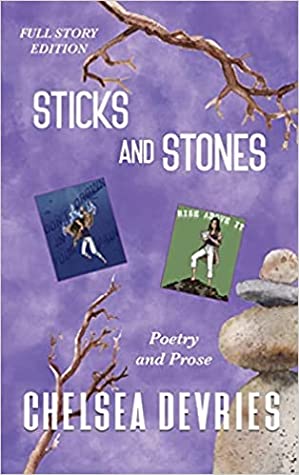
Author and poet Chelsea DeVries take readers on a journey of finding the strength to rise above the toxicity in life in the book “Sticks and Stones: Full Story Edition”.
Advertisements
The Synopsis
In Sticks and Stones, DeVries paints a poetic picture of rising above toxicity, love found and love lost, and delves into what it means to find strength in the human spirit. Through poetry, the reader finds a voice of strength and the rebuilding of one’s heart a home with all the sticks and stones thrown upon it. Newly expanded with more full color photos, 41 new poems, and a rewrite of Drowning in An Ocean of No Tomorrows, DeVries shows a full poetic picture of turning pain into poetry in order so you can rise above whatever is pulling you under.
The Review
This was a brilliant and heartfelt collection of poetry. The author did an incredible job of creating poems that evoked strong emotional responses within the reader while also speaking to the reader on a multitude of levels. The imagery and tone the poems struck were particularly powerful, as the poems crafted their own narratives in the reader’s minds that evoked the raw feelings that the author was able to put onto paper.
For me, the themes the author explores in these poems made them feel that much more compelling. The ways in which the author brings important topics to life, such as mental health, workplace harassment and harassment in general, toxic behavior, and the prospect and loss of love, made this collection feel truly engaging and mesmerizing.
The Verdict
Haunting, emotional, and thoughtful, author Chelsea DeVries’s “Sticks and Stones: Full Story Edition”, brings hope in the face of adversity through powerful poetry in this must-read collection. The personal and thought-provoking experiences the author shares with readers at the beginning of this book keep the reader invested in the author’s journey, and speak to the hope and strength that they drew upon to face down those adversities to become the person they are today. If you haven’t yet, be sure to grab your copy today!
Rating: 10/10
Advertisements
About the Author
Chelsea DeVries wanted to be a writer at the age of 7. Her first publishing credit came at the age of 14 with a poem in a student anthology. She then wrote nonstop while doing IB classes in high school. She published two YA novels while still in high school which after over 10 years she rewrote as a NA romance that she looks to put out as her next publication. She is a seeker of justice and uses her words to free this world’s outcasted, peculiar, and underdogs from the chains that bind them. When not writing she runs and does PR for authors and musicians with her bookish brand The Smart Cookie Philes. Though she’s Florida born and raised, she has New Jersey in her veins. She currently lives in Port Richey, FL with her squad of two dogs. In October 2020, DeVries was diagnosed with Asperger’s Syndrome which is a form of Autism.
Tell us a little bit about yourself. How did you get into writing?
Sometimes it seems as if I was always a writer. When I was a baby, I used to love magazines and would rip out each page and wad it up. Maybe I was being a critic, but I like to think that I loved the paper, ink, and pictures—not to mention the sound of the crumpling paper. I have always loved books, reading, and writing. However, I don’t think I was ready to begin to write in earnest until I was in my late twenties, when I had enough life experiences.
Advertisements
What inspired you to write your book?
Rooted and Winged came about from the experiences I had throughout the writing of the poems and the memories that came to light during that period. The book took about five years to write as I began it after my chapbook Kin Types was published. Then, after COVID surfaced, I finished the final poems. These pandemic poems can be found in Section IV. Death, loss, aging, and terminal illness inhabit the final part of the book along with the lonely surreal feel of living in the first few months of a pandemic. “Hearing Aids” describes how my mother bought her first hearing aids during these scary months when we were both trapped within our homes almost two thousand miles apart, feeling isolated yet united:
“She pours tea there / and I pour mine here. Our spouts speak the same.”
What theme or message do you hope readers will take away from your book?
I hope readers draw what they personally glean from the poems, drawing upon their own perspectives and experiences. Writing poetry is a discovery process for the poet. I don’t know what I am going to learn until I complete a poem. From this collection, I found that the images of flight are meaningful to me as both a spiritual site and as a source of great power. But without roots to tie me to earth and its human and animal inhabitants, I would lose the balance that guides the power.
What drew you into this particular genre?
I have loved poetry since I was a child. I still love to read poetry, but I also enjoy memoirs and mysteries. I tend to write in short bursts of time regularly, which is very conducive to writing poetry. To write a novel, I would need large blocks of time. Also, I love the imagery and succinct quality of poetry.
Advertisements
What social media site has been the most helpful in developing your readership?
Definitely my blog, Writersite.org. I started it ten years ago and have made wonderful friends through blogging. My readers are so supportive of my writing and me personally. Facebook is an excellent way to share my writing with friends from different parts of my life and with other writers. I like Twitter because I can keep up with what is going on with other writers. Instagram is fun, but I use it more for my art journaling since it is a visual social media.
What advice would you give to aspiring or just starting authors out there?
Read, read, read in several genres, especially in the genre you want to write in. And take every in-person or online workshop or writing class that you can. Many free or low-cost ones become available, so watch for them. Don’t publish too soon. Even if you are planning a novel or full-length memoir, start with smaller projects and submit stories and poems to literary journals. Finally, don’t publish a book that hasn’t been adequately edited.
What does the future hold in store for you? Any new books/projects on the horizon?
I just completed my memoir in flash nonfiction “scraps.” Fittingly, it’s called Scrap: Salvaging a Family. I’ve also been assembling a chapbook of poems based on Little Red Riding Hood stories.
Advertisements
About the Poet
Luanne Castle’s Kin Types (Finishing Line Press), a chapbook of poetry and flash nonfiction, was a finalist for the 2018 Eric Hoffer Award. Her first poetry collection, Doll God, winner of the 2015 New Mexico-Arizona Book Award, was published by Aldrich Press. A Pushcart and Best of the Net nominee, she studied at the University of California, Riverside (PhD); Western Michigan University (MFA); and Stanford University. Her writing has appeared in Copper Nickel, TAB, The American Journal of Poetry, Glass: A Journal of Poetry, Verse Daily, Saranac Review, Lunch Ticket, River Teeth, and other journals. An avid blogger, she can be found at luannecastle.com. She divides her time between California and Arizona, where she shares land with a bobcat. Her heart belongs to her rescue cats.
I received a free copy of this book in exchange for a fair and honest review. All opinions are my own.
Author Belinda Betker takes readers on a journey of confusion, identity, and acceptance through powerful and moving poetry in the book “Phases”.
Advertisements
The Synopsis
In Phases, Belinda Betker deftly captures what it is like for those who don’t fit within rigid notions of what it means to be a “boy” or a “girl”. Capturing different phases in a life, with power and nuance she takes readers on a luminous journey of a young girl’s coming-of-age, her burgeoning sexuality (and the confusion and disorientation therein), the pitfalls of an unhappy marriage, the triumphant release of coming out, and the liberating power of drag.
In these poems, readers will find a celestial and transcendent re-discovering of the self, an unraveling of society’s expectations of gender roles, love, and desire and how these falsehoods threaten to eclipse our truth. Phases slides through time, summoning profound memories of the loss of childhood innocence through each gendered ritual, yet the resilient heart of a tomboy who stands up to bullies and can “tie a tie better than anyone” is too powerful to suppress. Betker then takes us into adulthood–an experience cut sharp by the “dark side of the moon” with a health crisis and surgery–and the victorious recovery and unearthing of buried desire and resplendent sensuality. is mercurial and unpredictable, a celebration of the non-conformist in each of us.
The Review
This was such a moving and captivating LGBTQ-Driven collection of poetry. The author’s ability to capture the raw emotions and thoughts of confusion, as well as the search for one’s identity and the promise of acceptance both for yourself and from others, is well captured in these creative yet memorable poems. The vulnerability and heart in which the author dives into these very personal memories and experiences highlight not only their journey but the difficulties and hurdles so many people in the LGBTQ community have to face.
Yet it was the imagery and the themes that really played so well with this reader. The poems did an excellent job of capturing the heart and detail of these memories of the author, and yet also found inspired and creative notes of contrast between harsh moments and beautiful realizations. The themes of accepting one’s identity, both gender and sexual identities, and the journey one go on to discover this for themselves, as well as the fight to have people accept this part of yourself, including one’s own family, were represented well. One thing that really spoke to me was the author’s ability to capture the gender “norms” that are expected of boys and girls, and how ridiculous it is that someone should be gendered or identified based on their interests on a more material or superficial level (i.e., whether a person likes makeup, clothes, cooking versus working out of the house, etc.).
The Verdict
Captivating, heartfelt, and emotional, author Belinda Betker’s “Phases” is a must-read collection of poetry for 2022 and an amazing LGBTQ Poetry read. The memoir-style writing structure and the narrative that played out across the author’s life speak volumes of their own life, as well as the experiences that so many LGBTQ readers are experiencing even to this day. The need to understand how one person’s gender and sexual identity is always something worth exploring, and that it is not always a settled thing, is something so important that should never be dismissed. If you haven’t yet, be sure to grab your copy today!
I received a free copy of this book in exchange for a fair and honest review. All opinions are my own.
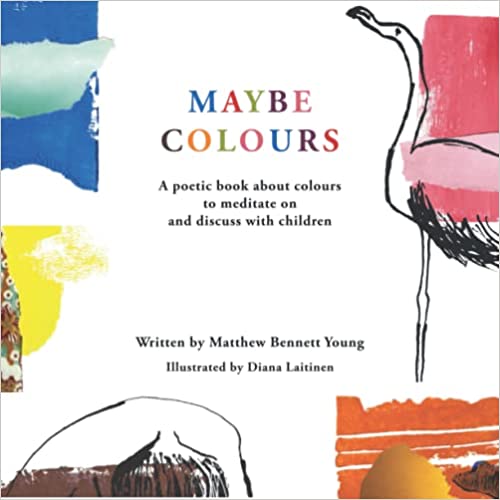
Author Matthew Bennet Young takes readers on a journey through equality and acceptance through poetry and colour in the book “Maybe Colours”.
Advertisements
The Synopsis
Maybe Colours is a beautifully illustrated picture book with simple poetic text that encourages an understanding of the importance of equality and diversity using colour as a theme.
♥ Encourages children to express their experience and feelings
✓ Perfect gift for anyone that loves poetry and art.
★ Many teachers/schools have used the book as a template.
Children can write their own simple poem about their experience of colour and then enjoy illustrating it!
The content, illustration and layout are arranged to give a sense of space for reflection. Designed for adults and children to discuss their associations and experience of different colours, this book conveys that there are many different sources and shades of the ‘same colour’, (it’s not all black and white) and that every colour has its place and equal significance. Maybe Colours is a meditation on possibilities and was the basis of a course developed in Sweden to support and specifically promote a new EQ (emotional intelligence) curriculum in schools there. Essentially Maybe Colours was written with a view to encouraging tolerance and understanding – the word “maybe” is a “pivot” for perspective-taking, enabling us to consider other possibilities for meanings, concepts and in real-life situations we can find ourselves in. Developing children’s abilities to consider alternative perspectives about sources of colour, associations with objects or animals has real-world applications: misunderstandings often occur when we do not consider alternative possibilities of meaning when engaging with other people. The active use of this word may help to prevent such misunderstandings and to encourage open-minded thinking.
The Review
The author did an incredible job of crafting a moving and memorable story in such a short amount of time. The theme of diversity and acceptance was beautifully displayed in the book, with simple yet thought-provoking poetry highlighting the many paths that each colour could take in life.
The imagery and tone of the book really did a great job of keeping readers invested in the author’s message. The beautiful blend of colour and abstract images helped give readers a sense of similarities and differences that makes up life itself and was the perfect way to teach children about equality for all.
The Verdict
Powerful, thoughtful, and engaging, author Matthew Bennet Young’s “Maybe Colour” is a must-read children’s book meets poetry and picture book. The balance of imagery and poetry really created a harmonic narrative, and while a short book overall, the message was quite impactful and the perfect way to illustrate our need to teach our future generations how to hold one another in much higher regard. If you haven’t yet, be sure to grab your copy today!
Rating: 10/10
Advertisements
About the Author
Matthew has been writing stories since his childhood in England. His children’s stories can be recognized by a “naïve” style, written as much from a child’s view of the world as possible, but in a way that is also intended to appeal to adults. He tries to write to disrupt associations and challenge assumptions that are commonly made around us. Matthew was appointed a Writer in Schools by the Ministry of Culture and Communications in Quebec and through this program delivers literary workshops to children in the Montreal area. He has taught at school, college and university level in Sweden and Canada and has been invited to give readings and teach workshops at schools, museums and literary festivals in New York, Berlin, London and Gothenburg. Matthew currently teaches in Montreal.
He enjoys growing food, cooking, doing yoga and walking on the chalky downs of North Dorset when he can.
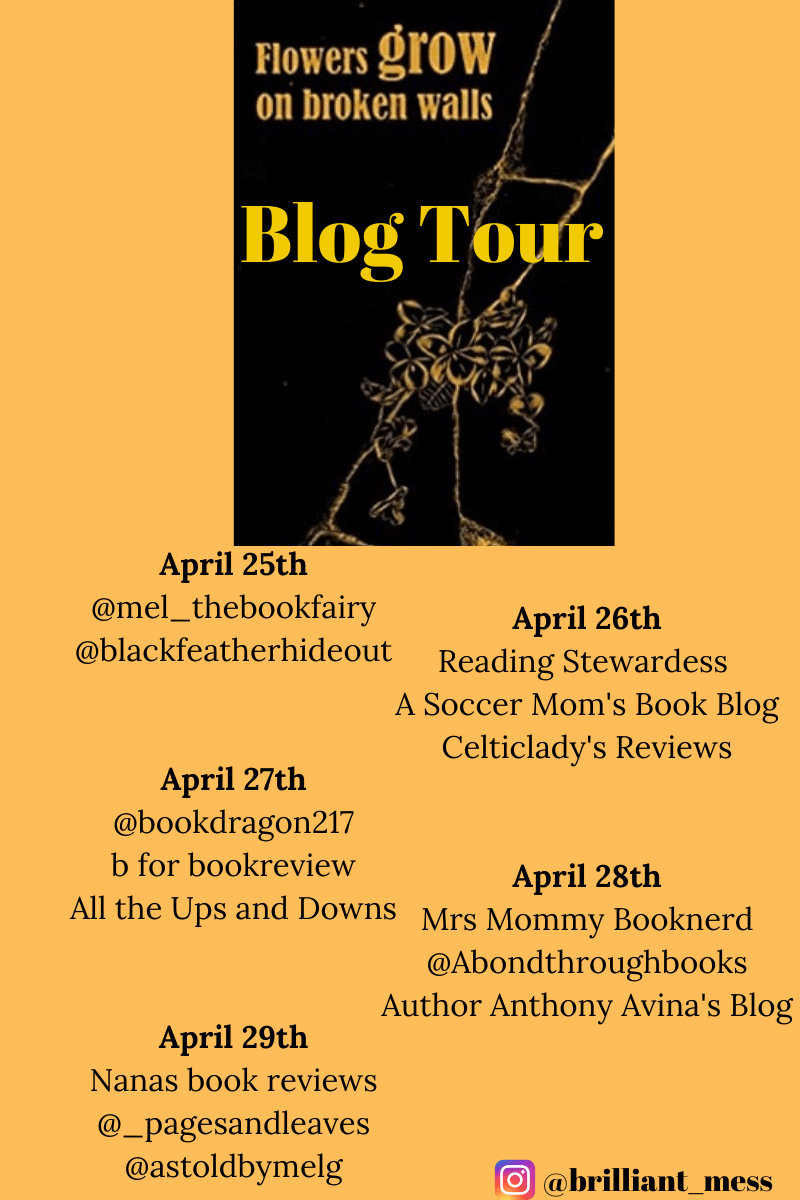
Hello everyone! Welcome to a special post today, where I am lucky enough to share with you the upcoming book from author Farena Bajwa, Flowers Grow on Broken Walls, a beautiful collection of poetry about healing and finding out who we are in the world. I hope you’ll enjoy this special spotlight, including a fantastic Q&A with the author.
Advertisements
Synopsis:
Flowers Grow on Broken Walls is a unique collection of poems and prose that talks about healing and finding yourself in a world that constantly tells you that’s who you shouldn’t be.
The poems, which tell a story, go over our everyday human emotions; from being heartbroken and questioning our self-worth in a world of judgment and scrutinizing social media, to finding ourselves and appreciating those really important in our lives – especially our inner, true selves.
The collection displays a raw and honest portrayal of an artist who cannot help but create something beautiful in the midst of the ugliness she has been put through, and who continues to hope against all odds, as she lets go of what she has been told is important and finds herself in one truly is.
The story that starts with heartache ends with healing, it starts with rejection from someone but ends with self-acceptance, which is the only way for true healing.
Author Bio:
Farena Bajwa is a talented poet, storyteller, actor, filmmaker, and voice-over artist. Even though she studied Marketing Management, her creativity comes from her heart. Whether it’s filmmaking, voice-over, or acting, she owes it to her life philosophy: ‘’learning by doing’’. ‘’Flowers Grow on Broken Walls’’ is Farena’s first written collection of poetry that speaks about the journey to self-healing after experiencing the loss of someone, but mostly, the loss of yourself. She wants to inspire her readers using her power of words to make them feel less alone and to let them know that no matter what they go through, healing is just around the corner, already cheering for you.
I am primarily inspired by my own experiences, but I love to hear and to learn about other people’s experiences too. I am also inspired by situations going on in the world.
How long have you been writing?
I’ve been journaling my whole life. But I only started writing poems when I started writing Flowers Grow on Broken Walls. The interesting thing is, I’ve always had thoughts running through my head formed in a poetic way. When I didn’t understand, when something happened, I would think those thoughts in small poems. I thought art would be able to lift off the weight from unpleasant situations I was dealing with right away. And oftentimes, it turned out to be true.
Do you ever get writer’s block? What helps you overcome it?
Yes, constantly. But I don’t get intimidated by it. Whenever I have a writer’s block I just feel like: “Oh, I am probably not meant to be writing right now. So let’s see what I can do to take are of myself/have fun/get some other work done etc. And eventually the block ends and I am inspired again. The key? Letting go.
What is your next project?
All I know is that I am currently writing poems. One poem after another. I don’t have a specific theme, I guess I’ll find out when the time comes.
What genre do you write and why?
I write poetry because poems are able to give my feelings a voice. They help me understand what I am feeling and also how I can deal with these emotions.
What is the last great book you’ve read?
The invisible life of Addie LaRue by V.E. Schwab. A magnificent piece of work dancing between different timelines, magic, and blood cold reality that we often think boring. But truthfully, it is our reality that is more enchanting than magic if you stop taking friendly gestures of strangers, or new shortcuts you discovered etc. for granted.
What is a favorite compliment you have received on your writing?
A reviewer wrote:
I loved reading Shakespeare and feel that this author could certainly be a modern day version of him. The disappointments, loss, love, and other happenstances of life are well within these poems.”
Just reading the name Shakespeare connected to my book gave me all the right chills- and I am so grateful for it😊
What were the biggest rewards and challenges with writing your book?
The biggest challenge was having to go back to these intense negative feelings that I was experiencing. I had to recall every emotion and I was scared I would be pulled back into the dark. The biggest reward was knowing that I had overcome these feelings. While I was writing the pages for the first few chapters that cover those lower feelings, I realized how much I had changed and how it didn’t affect me as I thought it would.
On rituals:
Where do you write?
Primarily in Cafés. The smell of coffee, the cozy ambience and the gentle, faint talking of people inspires and energizes me.
Do you write every day?
No, only when I am inspired. I can’t write if I don’t feel the words I am writing. If a word only feels like a word to me and not like an emotion, I can’t write because it doesn’t seem truthful to me. Afterall, poetry is all about a feeling wanting to take shape, so it can be released.
What is your writing schedule?
I don’t set specific timeframes to write, nor do I schedule specific days. I write when I feel like I have something to say, when something is bothering me, when I need to put my feelings into written words. I can write for a whole week and create 3 poems a day or I won’t write for weeks. I can write and pretend but I can’t lie about how I feel. Also, readers are not stupid, they know instantly if someone is being authentic in their words or not.
In today’s tech savvy world, most writers use a computer or laptop. Have you ever written parts of your book on paper?
I almost only write my poems on paper. Flowers Grow on Broken Walls was entirely handwritten. I bought a notebook with colorful flowers on the cover when I started writing my book. I saw that notebook and it just called out to me. I didn’t know then, “Flowers” would become the main message in my book😊
Fun stuff:
Favorite dessert?
Cake. In any shape or form. I love cake. I would die for cake.
What TV series are you currently binge watching?
Killing Eve and Peaky Blinders. My two favorite series I’ve already watched a thousand times. Both series are brilliant. Amazing writing, amazing acting, fast paced, dramatic with moments of fun and ease in between and – I just love these kinds of series!
What song is currently playing on a loop in your head?
There are actually two songs:
Love wave by The 1-800
Ebb tide by The Platters
What is your go-to breakfast item?
Coffee. Always and forever coffee.
Who was your childhood celebrity crush?
Ash Ketchum of Pokémon…I mean come on. How can you not find that drive and that determination that boy had attractive? He wanted to become the Pokémon master and he was GOING for it. Damn.
One thing no one would expect from you.
I have a deep love for dinosaurs. I am fascinated by the thought that there’ve been huge reptiles walking on our earth once. I used to collect dinosaur figures, read books and watch documentaries (and of course Jurassic Park). I wanted to become a paleontologist when I was a child because I always hoped to find a living dinosaur one day. It is my dream to see a real-life sized skeleton of a dinosaur someday. I never had the opportunity to see one.
Really? What is your favorite dinosaur?
A Brachiosaurus. You’ve got to love this teeny tiny head on this big fat body. The fact that it weighed more than 28 tons but only eat plants, it belonged to one of the tallest dinosaurs and could easily crush another dinosaur with a slight step – but still was one of the friendliest and more peaceful reptiles is just ridiculous- and so cute.