I received a free copy of this book in exchange for a fair and honest review. All opinions are my own.
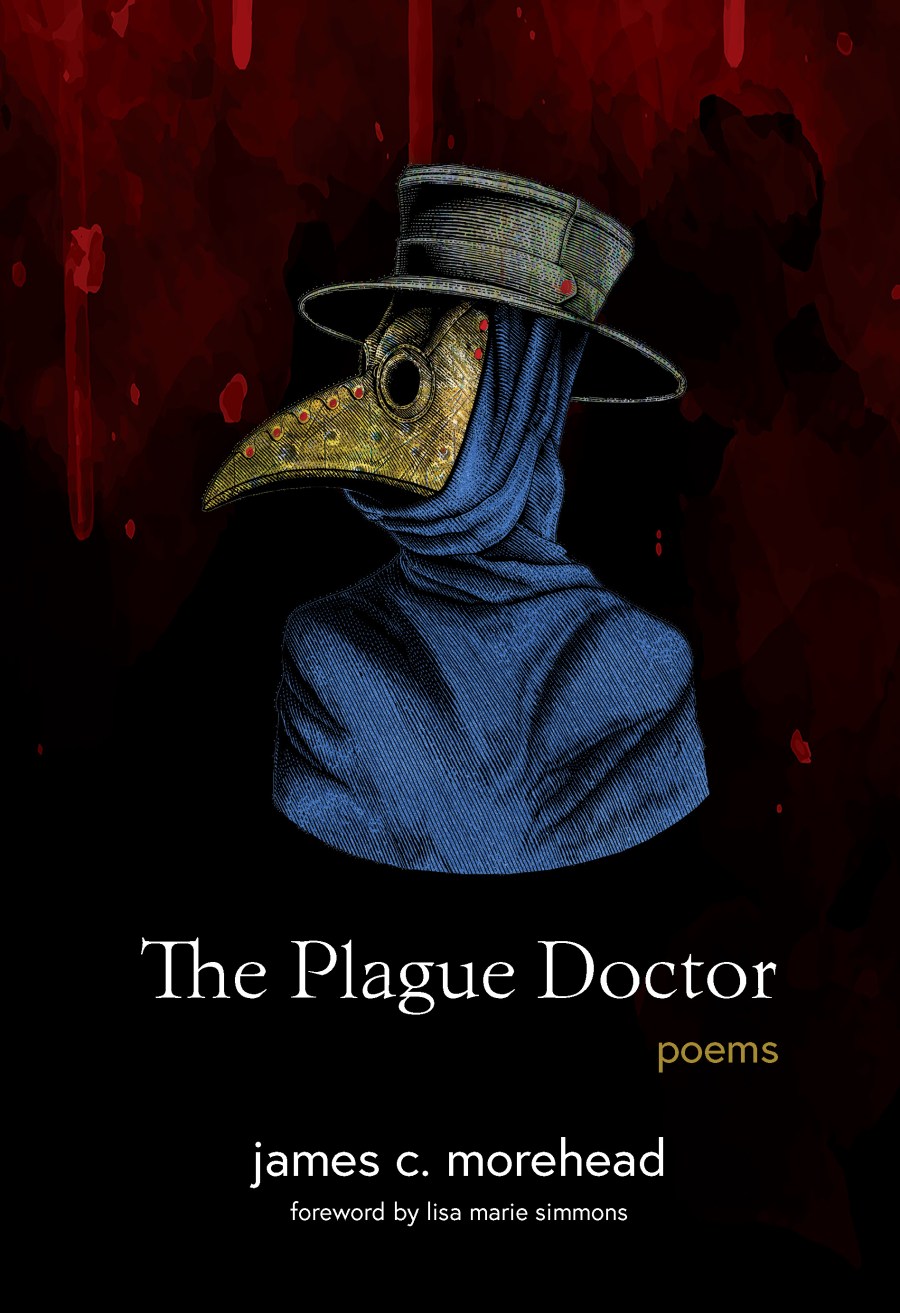
Author and poet James Morehead share a chilling and rich collection of poetry that delves into the nature of existence in the book “The Plague Doctor”.
Advertisements
The Synopsis
A mesmerizing collection of eerie, image-rich poems that explore the fleeting nature of existence and friendship, inspired by the world of art and artists. The Plague Doctor combines poetry with mesmerizing ink drawings by Natalia Ardus, art by Mark Kulas and Tony Rubino, and photography by the author.
Poet and musician Lisa Marie Simmons writes in her forward to the collection, “I’ve read this collection three, four, then five times. In my office, in the tour van and the green room, after yoga, and once bundled up beneath an ancient olive tree. Despite those many deep dives, it never seems enough to complete this forward. So I returned—six, seven, ten times. Each reading has me focusing on something new, and a year from now, I know more discoveries will be made as my perspective shifts with my own experiences. This is one of the many things I love about poetry and, in particular, Poet Laureate of Dublin, California, James Morehead’s poetry.”
The Review
These were some incredibly powerful and chilling poems. The fantastic imagery and atmosphere that the author is able to tap into with these poems will stick with readers long after the book has been read, and the imagery that accompanies the book’s pages helps evoke an emotional response that touches upon the iconography that we latch onto to represent the key emotional moments in our lives.
To me, the heart of this collection rested in the balance between macabre imagery and heartfelt themes. The idea of life and death plays across some of life’s toughest moments, from life in the big city (San Francisco in this case) to the striking fear of performing alone on a stage. I also enjoy the way the book was divided into “Acts” as if life were a play and the poems were but the stage in which they were lived, and the way these poems also reflected on the artistic works that moved the author throughout their journey through San Francisco was greatly expressed through these poems.
The Verdict
Heartfelt, haunting, and engaging, author James Morehead’s “The Plague Doctor” is a must-read poetry collection. The almost narrative feel to the overall collection and the memorable way the author was able to tackle such dark and entertaining imagery through their poems with the emotional journey that the poems represented made this a compelling book to get lost in. If you haven’t yet, be sure to grab your copy today!
1) Tell us a little bit about yourself. How did you get into writing?
I’m a child of the enlightenment. I believe in science, rational thought, and the value of knowledge. At the same time, I’m fascinated by philosophical questions that stubbornly reside outside the sphere of scientific truth: the phenomenon of consciousness; the origin of the universe; the nature of time; and the formation of the first living cell. In my later years, the limitations of logic and reasoning have left me more receptive to the numinous in our world — a novice in the realm of spirituality. Above all, I strive to perceive beauty wherever it may exist.
I began writing independently of schoolwork when I was nine. As was true for many children of my generation, I was introduced to the world of poetry through the work of Theodor Geisel, a.k.a. Dr. Seuss. His book “Yertle the Turtle” was a particularly strong influence (though I had no idea at the time that the story was allegorical, a satire of Adolf Hitler). Not surprisingly, all of the poems I scribbled on shirt cardboard rhymed.
In my sophomore year of high school, I maintained a poetry notebook as part of the curriculum. But my interest in poetry really blossomed at Amherst College where, as a biology major on the pre-medical track, I took four rigorous poetry courses. During the last of these, in what I like to describe as an act of love masquerading as mania, I stopped attending classes, isolated myself from friends, ate and slept reluctantly, and spent five straight weeks writing a metaphysical poem on the theme of subjective versus objective reality. This represented my first serious attempt to write poetry.
2) What inspired you to write your book?
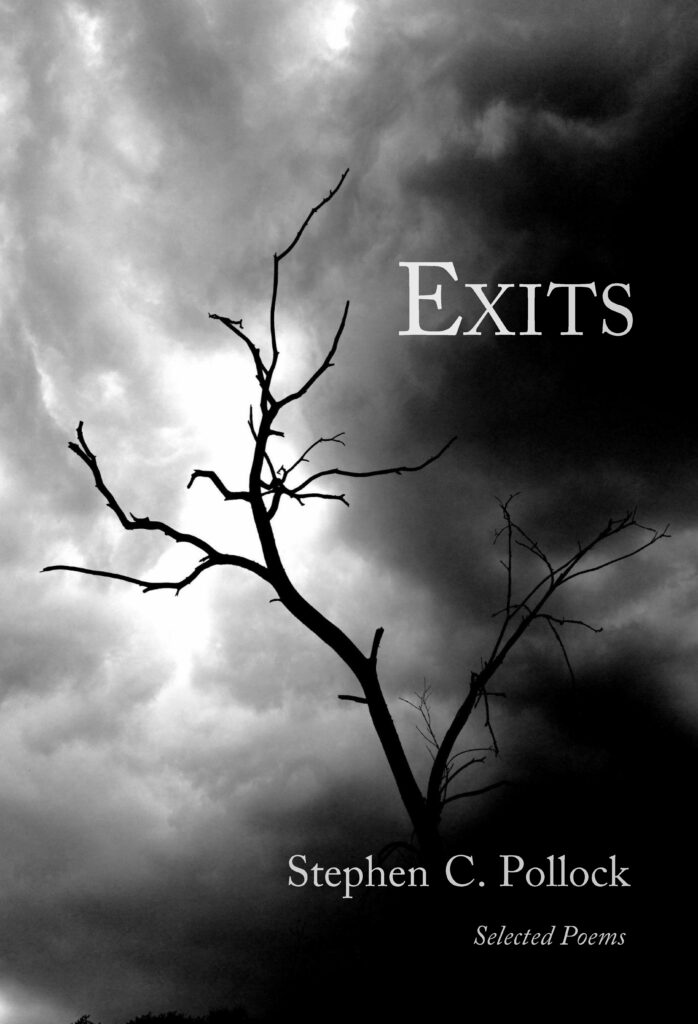
Most of the poems that appear in Exits were written between 2003 and 2021 without a book in mind. It wasn’t until two years ago that I decided to incorporate what I considered to be my best work into a book entitled Line Drawings. However,
during the process of reviewing my modest oeuvre, I noticed that a significant number of the poems were related to one or more aspects of mortality. This led me to curate a more concise, themed collection of poems, and Exits was born.
One might wonder where the focus on life’s transience derives from. In retrospect, I can identify three sources. First, I was raised without any religious training, so from a very young age, I was left on my own to ponder the enormity of the universe, time and eternity, and the meaning of existence. My fear of death was such that I often fought against falling asleep, which to me resembled nothing so much as a rehearsal. Second, as a physician and neuro-ophthalmologist, I’ve cared for numerous patients with serious and/or life-threatening diseases. And third, since 1999, I’ve had to deal with the spinal cord variant of multiple sclerosis and the ramifications of that disease for life expectancy.
3) What theme or message do you hope readers will take away from your book?
Death is an integral part of life. It exerts a profound influence on how we think about the limited time granted to us and the meaning we attach to it.
Exits will resonate with different people in different ways. Some readers will gravitate to the visual imagery and nature metaphors. Others will enjoy the wordplay. Still others will find satisfaction in the resurrection of formal elements.
It’s important to keep in mind that we live in a time of great uncertainty. War, climate disasters, and a recent pandemic have led many to contemplate the prospect of their own demise. Exits speaks to this anxiety and angst. It also may provide fresh perspective on mortality, the cycles of life, and the possibility of renewal.
4) What drew you into this particular genre?
My mom, now deceased, deserves a great deal of credit in this regard. A lifelong visual artist, she made it a point to instill in her young son a deep appreciation for
art. I recall sitting on her lap at age four or five as she paged through artbook after artbook. As a result, I could distinguish a Monet from a Cezanne before I could read!
Over the course of my life, I’ve written in multiple genres, including: engineering and technology (U.S. Patent 4,477,158); clinical research articles published in medical journals; chapters in neuro-ophthalmology textbooks; business papers; short fiction; and poetry.
My attraction to poetry is multifaceted:
The thrill of creating art with words
Permission to access the subconscious
The marriage of sound and sense
The fact that anything can appear in a poem
The fact that anything can happen in a poem
The surreal, dreamlike, associative way that poems move the mind
The surprising connections and juxtapositions
Fun with form
The paradoxical precision of poetic ambiguity
Metaphor and the multilayering of meaning
The sonic extravaganza of rhyme, alliteration, assonance, onomatopoeia, meter, and non-metrical rhythms
Non-linear narratives
Emotional intensity
The potential to enlighten
The potential to console
Oblique routes to ineffable truths
5) What social media site has been the most helpful in developing your readership?
None! I’ve never had an account on any social media platform. The lone survivor of the Jurassic Period, I tend to use long-forgotten methods of communication, mainly face-to-face chats, telephone calls, and handwritten letters.
6) What advice would you give to aspiring or just starting authors out there?
Write poems that represent your unique aesthetic sensibilities. Try not to be overly influenced by prevailing trends or by contemporary poetic styles.
Edit mercilessly over an extended period. Satisfying first drafts often begin to show their flaws only after sufficient time has elapsed to afford an objective assessment.
Begin your foray into publication by submitting poems to literary journals. This will help you determine which of your poems resonate with experienced reviewers. Before each submission, make sure that your poem is a good fit for the journal.
7) What does the future hold in store for you? Any new books/projects on the horizon?
Given my age, history of MS, and undisciplined writing process, I’m doubtful that any additional books are forthcoming. But you never know…
About the Author
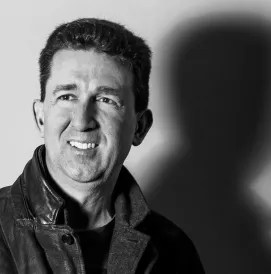
Stephen C. Pollock is a recipient of the Rolfe Humphries Poetry Prize and a former associate professor at Duke University. His poems have appeared in a wide variety of literary journals, including “Blue Unicorn,” “The Road Not Taken,” “Live Canon Anthology,” “Pinesong,” “Coffin Bell,” and “Buddhist Poetry Review.” “Exits” is his first book.
1) Tell us a little bit about yourself. How did you get into writing?
• I honestly don’t know why, but I’ve always wanted to be a writer. I have distinct memories of myself as a child, maybe five or six, writing stories and poems. I’d carry a notebook around with me everywhere.
• But what’s funny is that I was never much of a reader as a child! I had my favorites. I devoured Harry Potter and other books. But I don’t think that my drive to be a writer came from a love of reading.
• In college, I majored in English with a concentration in creative writing. As a part of my studies, I took workshops each semester, and that’s where I finally began to come into my own as a writer — developing my own voice and style instead of just mimicking other writers. I credit my professors at the time — Sharon Bryan, Darcie Dennigan, Penelope Pelizzon, Gina Barreca — with helping me find my voice.
2) What inspired you to write your book?
• To be quite honest, when I sit down to write poetry, it isn’t with a book or some greater collection in mind. All I’m doing is writing a poem. So I can’t really say that anything inspired me to write the book, because in my mind there never was a book — until there was.
• That being said, with a few exceptions, I wrote these poems during the pandemic. The early days of the pandemic were very lonely for me. I was single during the lockdown, and found myself longing for human connection at a time when it was impossible to have. Those feelings of love and longing and loss really permeate the poems that eventually made it into the collection. In that way, writing Dancehall was a way for me to make sense of the world.
3) What theme or message do you hope readers will take away from your book?
• More than anything, I want readers to connect with the poems and come away with a sense that love is universal.
• The poems in Dancehall follow the narrative arc of a single relationship from start to finish. I call the book a queer love story, because I myself am queer and I see the book as coming from that perspective. But I also made very conscious stylistic decisions so that the poems would appeal to everyone — gay or straight, single or partnered, male or female or non-binary.
• You may notice, for example, that except for in two instances the poems don’t make use of pronouns. Instead, the speaker (“I”) is talking directly to the subject (“You”). I did this so that it would be easier for the reader to put themselves in the poem — either as the speaker or the subject — and feel the immediacy of the work.
• If I, a queer man writing about queer relationships, can write a poem that allows a straight person to feel something about their own relationships, then I think I’ve succeeded in my mission. It’s kind of cliche at this point to say it, but love is love.
4) What drew you into this particular genre?
• I think I was drawn to poetry because I myself read poems that triggered an intense emotional response in me, which made me realize that poetry could be powerful. Some of the most powerful poems I’ve ever read were short poems — under 10 words — and yet they had the power to conjure memories and emotions in what is really an awe-inspiring way. Once I experienced that, I knew that I wanted to learn how to do that myself. I wanted to make people feel something, and I personally haven’t found a better way of doing that than through poetry.
5) What social media site has been the most helpful in developing your readership?
• I have to admit, I’m terrible with social media. I use it mostly for personal reasons — staying in touch with friends, etc. But I’m starting to get a handle on it as a means of building my reader network! I’ve just begun sharing videos and pictures of my work on Instagram (timstobierski) and TikTok (tendre_croppes) and they’re definitely both powerful tools. I think TikTok has the most potential to get your work in front of millions of people quickly, but it’s also tricky to know what’s going to go viral or do well and what’s going to be a flop. I guess I’m still learning.
6) What advice would you give to aspiring or just starting authors out there?
• I think the most important bit of advice I have is to not let rejections get to you. If you submit a poem or a story or an entire book to a press and get a rejection, do your best not to take it personally. Brush yourself off, think critically about whether or not there’s a way you can make your submission stronger, and find a new press to submit to. Just because your work isn’t for someone doesn’t mean that it’s for no one.
• When I first pulled together the manuscript for Dancehall, it was very different from what the book now looks like. I was submitting it to contests and presses that wanted books of poetry consisting of 30 poems max, so that’s how I arranged the book. It wasn’t until I got my fourth or fifth rejection that I looked at the collection and thought, “Well, they keep turning me down when I send them what they say they want. I’m going to submit what I want.” I doubled the poems, reorganized the book, and gave the collection a narrative arc that didn’t exist before. And when I sent it out the next time? The book was accepted by not one, but two presses.
• The moral of it all: Rejections are a part of being a writer. So do your best to build up a thick skin.
7) What does the future hold in store for you? Any new books/projects on the horizon?
• The way I write poetry is slow. It takes time. I don’t set out to write a collection — they amass over time as I write a poem here or there and realize that a theme has emerged.
• Recently, I’ve been writing a lot about grief, tied specifically to my father’s death. I think that those poems will eventually form the body of a collection. Likewise, I’ve been writing more explicitly about my experiences coming to terms with my sexuality, and I think that will eventually form a collection
About the Author
Tim Stobierski writes about relationships. His work explores universal themes of love, lust, longing, and loss — presented through the lens of his own experiences as a queer man. His poetry has been published in a number of journals, including the Connecticut River Review, Midwest Quarterly, and Grey Sparrow. His first book of poetry, Chronicles of a Bee Whisperer, was published by River Otter Press in 2012.
To pay the bills, he is a freelance writer and content strategist focused on the world of finance, investing, fintech, insurance, and software. In his professional writing, he prides himself on his ability to help the reader understand complicated subjects easily, a quality that informs his poetry.
He is also the founder and editor of Student Debt Warriors, a free resource for college students, graduates, and parents who are struggling to make sense of the complex world of student loans.
I received a free copy of this book in exchange for a fair and honest review. All opinions are my own.
Author Don Behrend shares a fun collection of poetry that twists everything from modern romance to the modern-day self-help trend in the book “In Doubtful Taste: New and Selected Poems”.
Advertisements
The Synopsis
“Don Behrend’s In Doubtful Taste is a playful collection of rhyming poems that skewers everything from modem courtship to self-improvement routines to the sexual advantages of an octopus-and much more.The collection includes 56 poems presented in nine short sections, each titled with a “P” word, including “Pandemic”, “Ponderings” and “Peccadilloes”. Behrend’s speaker is amused and amusing, toying with the lingo and idiosyncrasies of our current zeitgeist.The poet delivers both elaborate and simple rhyme schemes, short witticisms and longer tales. His poems are clever without being shallow and are sure to elicit smiles and sometimes hearty chuckles.”BlueInk Review
The Review
Art and poetry can cut through the tension and troubles plunging our world into chaos, especially in the darkest times. The need to confront tragedy and heartbreak with humor and wit often comes to pass for those who have had to live through these types of events, and the author’s book perfectly captures this need.
The author balances the poems in this collection with enough humor to tackle the pain and trauma that was the recent pandemic. The rhyming verse throughout each of these poems really cuts through the themes and issues that our modern world deals with constantly. The wit and charm of the author’s writing style and the way these poems showcase the contradictions that always rule our lives made this a compelling read.
The Verdict
Thoughtful, heartening, and engaging, author Don Behrend’s “In Doubtful Taste” is a must-read poetry collection. The heart and charm of the writing style itself was a great way to cut through the tension and atmosphere of the subjects the author was touching upon and kept the reader invested in the gripping poems. If you haven’t yet, be sure to grab your copy today!
I received a free copy of this book in exchange for a fair and honest review. All opinions are my own.
Author and poet Tim Stobierski share a beautiful queer love story through a collection of powerful poetry in the collection “Dancehall”.
Advertisements
The Synopsis
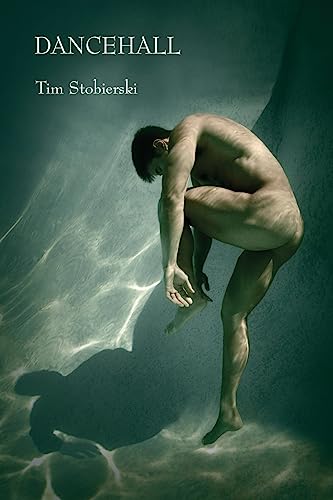
A queer love story in five acts, Dancehall follows the arc of a relationship from its earliest days to its final, somber conclusion.
In these 60 poems, you will join the speaker as they navigate the highs and the lows, the tranquility and the turbulence, the euphoria and the despair that comes with giving yourself fully to another.
Through language, imagery, and form at once universal and intimate, you are invited to take part in this love story – not as some distant observer, but as a central figure: The “you” to whom the speaker writes these poems.
Experienced poetry readers and poetry novices alike will enjoy the clean, simple style embodied in the majority of the poems.
Whether straight or queer, young or old, single or happily partnered, these poems are for anyone who has ever loved or longed for another.
The Review
This was a powerful and memorable story. The way the author was able to convey this relationship from start to finish through poetry produced an incredible and emotional read. The subtle yet powerful moments in this relationship really stand out, and the imagery the author used made the narrative these poems were telling feel alive on the page.
The heart of this book was in the main narrative itself, as the reader felt the strong pull of this emotional bond formed between two people. The closeness and the haunting memories of that closeness play a crucial role in the themes of love and loss, and the honest and important language the author uses to bring this queer love story to life was so passionate and engaging.
The Verdict
Thoughtful, emotional, and moving, author Tim Stobierski’s “Dancehall” is a must-read collection of poetry. The structure of this five-act play of sorts and the memorable imagery that captures those heartfelt moments both good and bad made this a compelling read. If you haven’t yet, be sure to grab your copy today!
Rating: 10/10
Advertisements
About the Author
Tim Stobierski writes about relationships. His work explores universal themes of love, lust, longing, and loss — presented through the lens of his own experiences as a queer man. His poetry has been published in a number of journals, including the Connecticut River Review, Midwest Quarterly, and Grey Sparrow.
His first book of poetry, Chronicles of a Bee Whisperer, was published by River Otter Press in 2012.
I received a free copy of this book in exchange for a fair and honest review. All opinions are my own.
Author and poet Louis Efron share his debut collection of poetry in the book “The Unempty Spaces Between”.
Advertisements
The Synopsis
A beautiful creation of song and scar, of emotional complexity and simple witness, Louis Efron’s debut collection The Unempty Spaces Between mingles the natural and human worlds in a series of accessible, personal, universal poems. From lush to bare, the landscapes he presents us with are so intertwined with and impacted by our actions that we realize the two have always been one. Brimming with meditations deep as winter snow and boundless compassion and curiosity, these vibrant poems remain grounded in a universal familiarity that opens us up to something greater.
The Review
This was quite a beautifully written and deeply introspective read. The author’s handle on imagery is felt immediately in this book, allowing the reader to become lost in the worlds and narratives that each poem brings to life as if they are caught in the emotional wave of creativity that spills across the blank canvas of life. The unique structuring of each poem speaks to the deep thoughts and the working world in which the author’s mind inhabits.
The poems themselves are quite engaging, allowing the reader to see pieces of themselves in the work, and even in the poems that don’t directly speak to them, the reader is able to contemplate and look inward at their own lives to the core of each poem’s meaning. The poem “Nicked Wedding Ring” is a particular favorite, exposing the depths of deep emotion in the wake of a loss and the juxtaposition of those who seek out that same death out of greed or power, revealing how death shows us our best and our worst.
The Verdict
Memorable, engaging, and thought-provoking, author Louis Efron’s “The Unempty Spaces Between” is a must-read poetry collection. The fast pace of the collection and the way readers can easily sit and read through this book in one sitting and yet return to it time and time again speak to the author’s powerful words and the heart behind them. If you haven’t yet be sure to grab your copy today!
Rating: 10/10
Advertisements
About the Author
Louis Efron is a poet and writer who has been featured in Forbes, Huffington Post, Chicago Tribune, POETiCA REViEW,The Orchards Poetry Journal, Academy of the Heart and Mind, Literary Yard, New Reader Magazine and over 100 other national and global publications. He is also the author of five books, including The Unempty Spaces Between, How to Find a Job, Career and Life You Love; Purpose Meets Execution; Beyond the Ink; as well as the children’s book What Kind of Bee Can I Be?
I recieved a free copy of this book in exchange for a fair and honest review. All opinions are my own.
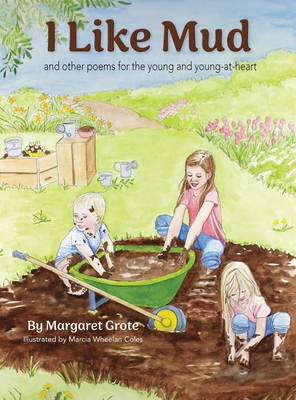
The late author and poet Margaret Grote has her collection of poems shared and illustrated thanks to her son David and his cousin and children’s book illustrator Marcia Wheelan Coles in the book “I Like Mud: and other poems for the young and young at heart”.
Advertisements
The Synopsis
In the final year of her life, award-winning poet Margaret Grote (1922-2005) handed a collection of poems to her son, David, with instructions to “do something” with them. David jumped right on it, and 17 years later approached his cousin, Marcia Wheelan Coles, a children’s book author and illustrator. Truth be told, these whimsical and sometimes poignant poems were gathering dust in David’s closet until Marcia brought them to life with her beautiful artwork. Growing up during the Depression, Margaret came to appreciate life’s simple pleasures, a theme recurrent in these poems. Mother of four, she was an artist, photographer, writer, and poet. She taught fourth grade for 35 years. Her love of children is on full display in these pages, and although the writing is meant for children, young-at-heart adults will also love this collection. Somewhere, Margaret is smiling, knowing that her son finally kept his promise and that her work lives on, bringing joy and laughter to a whole new generation of children
The Review
This was a truly moving and engaging collection of poetry. The balance that can be found in the simple and eloquent imagery and themes the collection evokes in young readers with the nostalgia and childhood wonder that adults can find in the book. The poems tackle everything from the color pink and friendship to the bond between a child and their dog and the ways in which children consistently question the universe.
The beautiful illustrations and the way the poems speak to a variety of different readers made this a remarkable poem collection. The warmth and thoughtful approach to the poetry and the heartwarming story behind the author’s son carrying on his mother’s legacy like this made the book such a delight to behold.
The Verdict
Memorable, emotional, and engaging, author and poet Margaret Grote’s “I Like Mud” is a must-read collection of children’s style poems and poetry. The heart behind the poet’s words and the delight and joy that the heart of each poem brought allowed parents and children alike to be drawn into the poems themselves. If you haven’t yet, be sure to grab your copy today!
I received a free copy of this book in exchange for a fair and honest review. All opinions are my own.
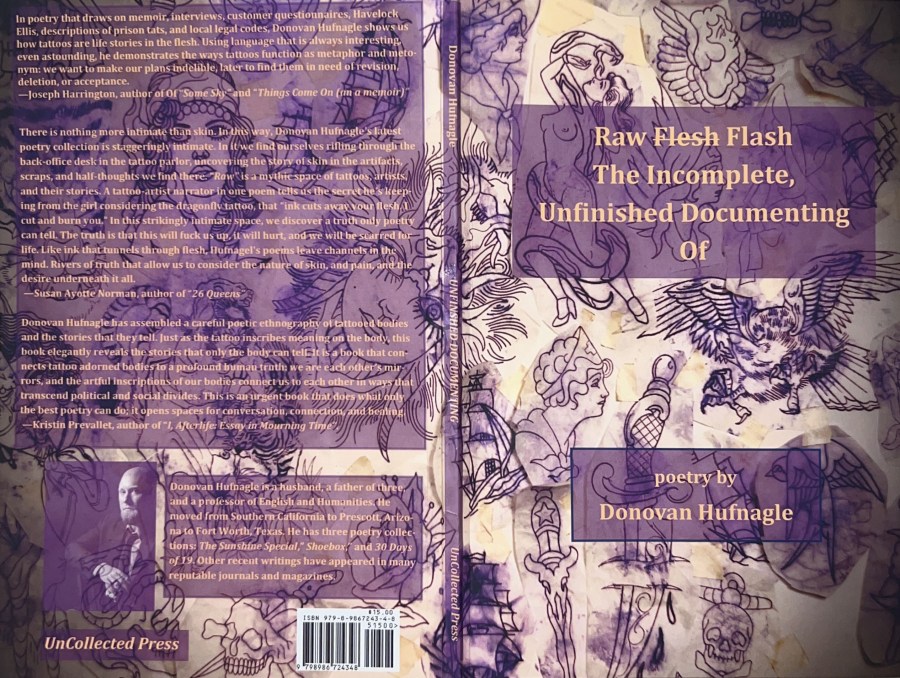
Author and poet Donovan Hufnagle shares a collection of poetry that delves into the meanings and stories behind the tattoos that adorn our bodies within his book, “Raw Flesh Flash: The Incomplete, Unfinished Documenting of”.
Advertisements
The Synopsis
Raw Flesh Flash: The Incomplete, Unfinished Documenting Of is “a careful poetic ethnography of tattooed bodies and the stories that they tell. Just as the tattoo inscribes meaning on the body, this book elegantly reveals the stories that only the body can tell. It is a book that connects tattoo-adorned bodies to a profound human truth: we are each other’s mirrors, and the artful inscriptions of our bodies connect us to each other in ways that transcend political and social divides.” Kristen Prevallet
The Review
This was such an artful and passionate collection of poems. The author does an incredible job of utilizing imagery and atmosphere in each poem to convey the tone and theme that each poem and passage is meant to. The way each story within the poems seems to tie into the deeper meaning behind not only the tattoos that people get, but the people behind the needle who curate these works of art onto a person’s body and the tattooing process as a whole made this so compelling to get lost in.
While not someone who has gotten a tattoo before, I have many family members who have, and not only have I always wanted one myself but the art behind tattoos and the meaning behind them have always moved me. The creativity, the passion, and the emotional connection for some make these tattoos feel alive, and the way this experience harkens back throughout history, even to the ancient Viking culture, was profound to lose yourself in when reading up on the subject. This is the same magic and wonder the author’s work tackles, as each poem not only tells the story of average, ordinary people, but the stories of love and loss and everything in-between that their tattoos tell of, and the sense of wonderment that overcomes you when looking upon these works of art, as well as both the good and bad emotions that come with the experience, making this a compelling collection to get lost in.
The Verdict
Memorable, heartfelt, and engaging, author Donovan Hufnagle’s “Raw Flesh Flash: The Incomplete, Unfinished Documenting Of” is a must-read collection of poetry. The almost rhythmic delivery of each poem and the artistry that went into the delivery of the poem’s imagery was profound and captivating, making this one collection you will pick up time and time again. If you haven’t yet, be sure to grab your copy today!
Rating: 10/10
Advertisements
About the Author
Donovan Hufnagle is a husband, a father of three, and a professor of English and Humanities. He moved from Southern California to Prescott, Arizona to Fort Worth, Texas. His new poetry collection, Raw Flesh Flash: The Incomplete, Unfinished Of, is a poetic scrapbook of interviews, poetry, and documents about the universal narrative of tattoos.
He also has three other poetry collections: The Sunshine Special, a “part personal narrative, epic poem, and historical artifact;” Shoebox, an epistolary, poetic narrative about Juliana’s “past and present, love and lack, in language that startles;” and 30 Days of 19, inverted Haiku poems juxtaposed to Trump tweets, capturing the first thirty days of the Covid 19 quarantine.
Other recent writings have appeared in The Closed Eye Open, Tempered Runes Press, Solum Literary Press, Poetry Box, Beyond Words, Wingless Dreamer, Subprimal Poetry Art, Americana Popular Culture Magazine, Shufpoetry, Kitty Litter Press, Carbon Culture, Amarillo Bay, Borderlands, Tattoo Highway, The New York Quarterly, Rougarou, and others.
Publishing is just another trial as part of the writer’s journey. When we cross the threshold from the known world into the unknown world, answering the call to adventure, entering OZ, Wonderland, the Athenian Forest…into our dreamworld, “somewhere over the rainbow,” we follow the yellow brick road, follow gold bricks in the form of words to counter the white space on the page and, perhaps, in our life. The perfect word(s). This word and not that word. We pass through the abyss, reach the Emerald City, and eventually come back home. But before we can reach the city, earn our gift, tap our heels together, and share it with the known world, the trial of publishing confronts us.
Publishing is not the end of the journey nor is it a gift. When my first book, Sunshine Special, was published, I thought the world would change. It didn’t. I did, however, reach a revelation…publishing isn’t the key to a magical door that opens a garden of poppies and avenues. When my current book, Raw Flesh Flash: The Incomplete, Unfinished Documenting Of, won a publishing contest and was published by Uncollected Press, I understood that the work had just begun. And I think understanding is crucial. Writers, especially poets, should understand that there may be many times we hear the word NO. It feels personal. It’s not. But when you write and write, edit, and write some more then finally build the strength to submit your work, placing your work on display for someone to just cut it open until it bleeds seems pretty damn personal to me. And, simultaneously, impersonal, since most of the time you receive a cookie cutter rejection from the publisher like they didn’t even bother to read it.
Advertisements
On a side note, if you receive a personalized rejection, cherish it.
Understand that publishing is a business like any other business and your success as a writer is not dependent on publishing. I just received a rejection through Submittable just the other day for one of my poems. I place it in a folder titled “submissions,” forget it and move on. Publishing is not an enemy; it is just a necessary hurdle along the way.
My advice, then, is to keep writing, and one day you may become published (if that is what you are striving for). It will feel good. It will be exciting. Someone out there appreciating your work as much as you do. Your hard work will finally be on display for others. You can stop plucking rose petals, wondering if they love you or if they love you not (maybe). Also, understand that the journey is not over. You will need to work just as hard for the next thing, to conquer the next trial.
It took a long time for me to truly think about publishing—decades. As a younger poet, I wasn’t that interested in publishing. I would submit a poem here or there. But it wasn’t until I crafted my art to a point where I wanted, no, felt like I needed to share it with more than my wife that publishing seemed like the next logical step. So, I put my stuff out there. Scary and exciting. I received rejections. Dejected. I received acceptances. Elated. Some won contests. Some still have never seen the light of day.
I am at a place, now, in my writing career that I know my talents, I know my successes, and they don’t depend on those publications. But it sure does feel nice. My writings are like my tattoos, on public display for all that I encounter, simultaneously, holding a personal meaning no one else will ever know, unless you ask. Every writer’s journey is unique; some trials along the way may come easy, some may never be conquered, but know the real gift is that you wrote something, you created new, you crafted art for a world where the “dreams that you dare to dream really do come true.”
Advertisements
About the Book
Donovan Hufnagle has assembled a careful poetic ethnography of tattooed bodies and the stories that they tell. Just as the tattoo inscribes meaning on the body, this book elegantly reveals the stories that only the body can tell. It is a book that connects tattoo adorned bodies to a profound human truth: we are each other’s mirrors, and the artful inscriptions of our bodies connect us to each other in ways that transcend political and social divides. This is an urgent book that does what only the best poetry can do; it opens spaces for conversation, connection, and healing.-Kristin Prevallet, author of “I, Afterlife: Essay in Mourning Time”.
Advertisements
About the Author
Donovan Hufnagle is a husband, a father of three, and a professor of English and Humanities. He moved from Southern California to Prescott, Arizona to Fort Worth, Texas. His new poetry collection, Raw Flesh Flash: The Incomplete, Unfinished Of, is a poetic scrapbook of interviews, poetry, and documents about the universal narrative of tattoos.
He also has three other poetry collections: The Sunshine Special, a “part personal narrative, epic poem, and historical artifact;” Shoebox, an epistolary, poetic narrative about Juliana’s “past and present, love and lack, in language that startles;” and 30 Days of 19, inverted Haiku poems juxtaposed to Trump tweets, capturing the first thirty days of the Covid 19 quarantine.
Other recent writings have appeared in The Closed Eye Open, Tempered Runes Press, Solum Literary Press, Poetry Box, Beyond Words, Wingless Dreamer, Subprimal Poetry Art, Americana Popular Culture Magazine, Shufpoetry, Kitty Litter Press, Carbon Culture, Amarillo Bay, Borderlands, Tattoo Highway, The New York Quarterly, Rougarou, and others.