ลูกครึ่ง: Only Half a Person: Essays and Short Stories about Identity by Rowland Grover Review

I received a free copy of this book in exchange for a fair and honest review. All opinions are my own. 

Author Rowland Grover shares a collection of essays and short stories that speak to topics of culture, faith, and identity in the book “ลูกครึ่ง: Only Half a Person: Essays and Short Stories about Identity.”

Advertisements

The Synopsis

When Rowland Grover asked his preschool teacher if he could ฉี่ (chi), she looked at him like he wasn’t speaking English. After holding it for too long, he peed his pants and realized he was different from everyone around him.

As a half-Thai/half-white kid raised Mormon in Idaho, shame, guilt, and confusion were normal for Rowland. He didn’t understand why he took off his shoes at his house, but his friends could keep theirs on and drag dog poop all over the floor. When Rowland lived in Thailand, Thai people said he looked farang, but white people called him Mexican. This made him wonder who he was and where he belonged.

ลูกครึ่ง: Only Half a Person is an captivating and hilarious collection of essays and short stories that explores culture, faith, and identity. The stories range from “stinky lunches” to a talking lizard questioning Rowland’s religion. Others are more serious such as when a stranger called the cops because Rowland looked threatening riding an old beach cruiser bike. Tackled with humor and heart, Rowland dives into the depths to find himself and wonders if he’ll come up for air.

The Review

This was an incredibly insightful and engaging story that is so reflective of the American experience in this day and age. Far too often, people in the United States forget just how much of a cultural melting pot the nation has become, especially when cruel actions and judgments dominate the news cycle most of the time. The honesty and relatability in the author’s writing style allowed the personal experiences and lessons the author learned throughout their life to resonate deeply as the reader delved further into this book.

The rich cultural examination presented in the author’s book was the prominent driving force behind these essays and short stories. The everyday experiences the author brought to life, from a childhood of misidentification, differing customs, and a lingering sense of otherness that children often inadvertently foster, to shared faith and much more, showcased both the differences and shared life that families of differing cultures can form, while also bringing an awareness of what makes us all different at the same time.

The Verdict

Thought-provoking, engaging, and with a sense of heart and humor, author Rowland Grover’s “ลูกครึ่ง: Only Half a Person: Essays and Short Stories about Identity” is a must-read memoir meets nonfiction essay collection. The witty style of writing the author employs and the depth of introspective honesty that the author’s experiences bring to life on the page will stay with readers long after the book ends. If you haven’t yet, be sure to preorder your copy today!

Rating: 10/10

Advertisements

About the Author

Since he was young, Rowland has loved to create stories. Whether that was using stuffed animals to portray the horror of war and class division or writing and drawing maps in a notebook for a fantasy story that was not a rip-off of any other popular series. Rowland’s debut book, ลูกครึ่ง: Only Half a Person, utilizes his love of story-telling to reflect on and analyze his life, race and ethnicity, culture, faith, family, and more.

Rowland Grover was born and raised in Idaho, which, believe it or not, is a real place in the United States. Starting in his late teens, he lived on and off in Thailand, China, and Taiwan for several years. Rowland graduated with a B.A. in International Studies because he had no life plan. Then, he enrolled at Chulalongkorn University to study Southeast Asia Area Studies, but he had to drop out because, quote, “no money.”

He currently lives in Taiwan with his wife, two children, and two cats. Besides unromantic walks on the beach, he enjoys playing video games and studying languages.

https://rowlandgroverauthor.weebly.com/

GUEST POST: ON APPROPRIATION BY KAREN CHASE, AUTHOR OF TWO TALES: JAMALI KAMALI AND ZUNDELSTATE

On Appropriation

     For almost forever, writers have been advised to “write what you know.” At this tricky moment in our culture, that phrase has gathered momentum. Writing what you know is often a tidy and effective way not to appropriate someone else’s identity.

    In my newly released book, Two Tales: Jamali Kamali and ZundelState, I have written two stories that did not grow from what I know but from what I don’t know. In these pages, I will talk about the first tale. Jamali and Kamali lived in sixteenth century India and are buried together in a small tomb in India. The poem is a fictional account of their love, separation, and death. 

     Here’s what happened. In 2004, I spent a month-long writing residency at the Sanskriti Foundation in Delhi.  One morning, a week after I arrived – I hadn’t written a thing that first week and didn’t really care — the Sanskriti residents were told that later that day, we would have a chance to visit the newly restored Jamali Kamali Mosque and Tomb, which had been in the process of restoration for seven years. 

     Our bus arrived at the overgrown park entrance.  We traipsed alongside a river full of plastic garbage, climbed through hills of brush, climbed over unrestored ruins, climbed through Balban’s Tomb, and finally arrived on top of a hill, a plateau, where the Jamali Kamali Mosque and Tomb stood.  A brand-new sign at its entrance informed visitors that the Tomb held the remains of Jamali, a 16th century Sufi Court Poet and Saint and Kamali, whose identity, the sign said, was unknown.

     When I entered the tomb, its beauty startled me.  Looking at the two white marble graves, the conservator began to talk.  He explained who Jamali was, then said, “It is believed, through Delhi’s oral tradition, that Kamali was his homosexual lover.”  “What?” I blurted out, “But…. the new sign out front says his identity was unknown.  I don’t understand.  Why does the sign say that Kamali’s identity is unknown.”  He explained that, in fact, no-one really knows for sure who Kamali was, and also the information that he may have been Jamali’s male lover would never be announced on a public sign, taking into account the beliefs of our large Muslim population.”  

     Deeply jarred by the disjuncture of that moment, when I returned to my Sanskriti desk, I began to write as if I were Jamali speaking to Kamali.  I had nothing in mind. No direction. By the end of three weeks in Delhi, there was a draft of the first section of Jamali Kamali.  Almost two years later, what began that moment in Delhi, had grown into a book-length poem.

     Many people have asked me, “Why did YOU write this book? The answer is – I don’t really know. 

     I’m not a man.  I’m not gay. I’m not Indian.  I’m not Muslim. I’m not a Mughal scholar.  I’m not an art historian. I’m a straight white American Jewish 21st century woman. I’ve crossed many lines here – gender, sexual orientation, time, hemisphere, religion, culture, etcetera. Without intention, I appropriated.

    Since then, many people who have read Jamali Kamali, believe I was channeling the men. Others have mistaken it for a translation of Jamali’s poetry. And, strangely enough, in India, my poem has been cited numerous times as a historical record about the two men.

     Opening oneself to the unknown paves the way for large-scale exploration rather than the up-close, confining details of “what I know.” The unknown is a wider plain—a vast place where options flourish. It expands the smallness of “what I know.” 

     Was I channeling these men? Is the poem an expression of my subconscious? Or is it the imagination at work? Are these three things separate, do they overlap, or are they the same thing? Who knows. What I do know is that when you open the mind’s flaps, leave behind what you know, and walk through a blank landscape, you may be taken aback by what you find.

Advertisements

About the Author

Karen Chase is the author of two collections of poems, Kazimierz Square and BEAR, as well as Jamali-Kamali: A Tale of Passion in Mughal India, a book-length homoerotic poem, published in India in 2011. Her award-winning book, Land of Stone, tells the story of her work with a silent young man in a psychiatric hospital where she was the hospital poet.

In her memoir Polio Boulevard, Chase brings the reader back to the polio outbreak of the 1950s that crippled our country. In her lively sickbed she experiences puppy love, applies to the Barbizon School of Modeling, and dreams of Franklin Delano Roosevelt. The Larooco Log: FDR on the Houseboat, a project that grew directly out of her memoir, follows Franklin Delano Roosevelt during a Florida winter when he lived on a houseboat, attempting to regain use of his paralyzed legs. History Is Embarrassing, her collection of essays, was published in 2024, and Two Tales: Jamali Kamali and ZundelState, in 2025.

Karen Chase’s poems, stories and essays have appeared in The New Yorker, The New Republic, The Gettysburg Review and Southwest Review, among others. Her poems have been anthologized in The Norton Introduction to Poetry, Andrei Codrescu’s An Exquisite Corpse Reader, and Billy Collins’ Poetry 180. Chase and her husband, the painter Paul Graubard, live in Western Massachusetts.

https://a.co/4qizE0s

Two Tales: Jamali Kamali and ZundelState by Karen Chase Review

I received a free copy of this book in exchange for a fair and honest review. All opinions are my own.

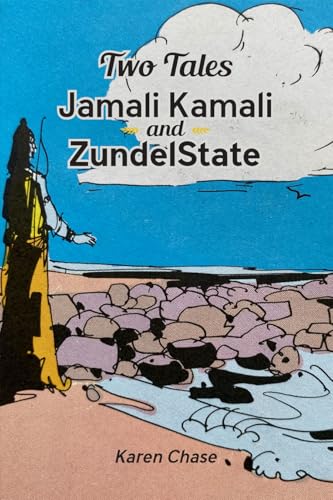
In author Karen Chase’s ” Two Tales: Jamali Kamali and ZundelState,” two tales, one from the past and one from the future, showcase a love born of outsiders and the connections we share together.

Advertisements

The Synopsis

These two stories explore love and beauty in the context of fear and threats. Jamali Kamali is a book-length poem about two men who lived in 16th century India. Little about them is known but they are buried together in a small tomb in Delhi. For hundreds of years, the story that these men were lovers has been passed down through the generations. Jamali Kamali is a fictional account of their love, longing, separation, and death. ZundelState, a novella in verse, takes place a thousand years in the future in a repressive land where history is banned, and dreaming has vanished. Joe, a lover of history, is rebellious and secretive. Marianna is a model worker for the State where she works in the HistoryShit Apparatchik Division. They fall in love against all odds. These two tales of outsiders, one from the distant past and the other from the far-off future, echo and reflect upon each other in surprising ways.

The Review

This was such a wildly creative and emotional read. The author did an incredible job of finding just the right balance between lyrical writing styles and engaging storytelling, with each story giving readers an emotional depth that instantly draws them in. The writing style was perfectly captured in the beautiful imagery capturing each scene between the two characters, from moonlit encounters between one another to the sounds of wildlife beckoning from the surrounding forest and so much more, and each verse touched upon the heartfelt connection not only between the characters, but the reader and the characters themselves.

The second story in this collection draws parallels between itself and the first story, while owning its own unique creative take on the genre. The exploration of what happens when public life is the rule of law and private individuality is oppressed felt very relevant to many of the issues facing our world. The themes of social conformity and oppression were intertwined beautifully with the character’s love story.

The Verdict

Author Karen Chase’s “Two Tales: Jamali Kamali and ZundelState” is a passionate, heartfelt, and engaging read. It is a unique yet memorable story that is a must-read today. The inclusivity and raw beauty of the author’s poetry and storytelling will stay with readers long after the final tale ends. If you haven’t yet, be sure to grab your copy today!

Rating: 10/10

Advertisements

About the Author

Karen Chase is the author of two collections of poems, Kazimierz Square and BEAR, as well as Jamali-Kamali: A Tale of Passion in Mughal India, a book-length homoerotic poem, published in India in 2011. Her award-winning book, Land of Stone, tells the story of her work with a silent young man in a psychiatric hospital where she was the hospital poet.

In her memoir Polio Boulevard, Chase brings the reader back to the polio outbreak of the 1950s that crippled our country. In her lively sickbed she experiences puppy love, applies to the Barbizon School of Modeling, and dreams of Franklin Delano Roosevelt. The Larooco Log: FDR on the Houseboat, a project that grew directly out of her memoir, follows Franklin Delano Roosevelt during a Florida winter when he lived on a houseboat, attempting to regain use of his paralyzed legs. History Is Embarrassing, her collection of essays, was published in 2024, and Two Tales: Jamali Kamali and ZundelState, in 2025.

Karen Chase’s poems, stories and essays have appeared in The New Yorker, The New Republic, The Gettysburg Review and Southwest Review, among others. Her poems have been anthologized in The Norton Introduction to Poetry, Andrei Codrescu’s An Exquisite Corpse Reader, and Billy Collins’ Poetry 180. Chase and her husband, the painter Paul Graubard, live in Western Massachusetts.

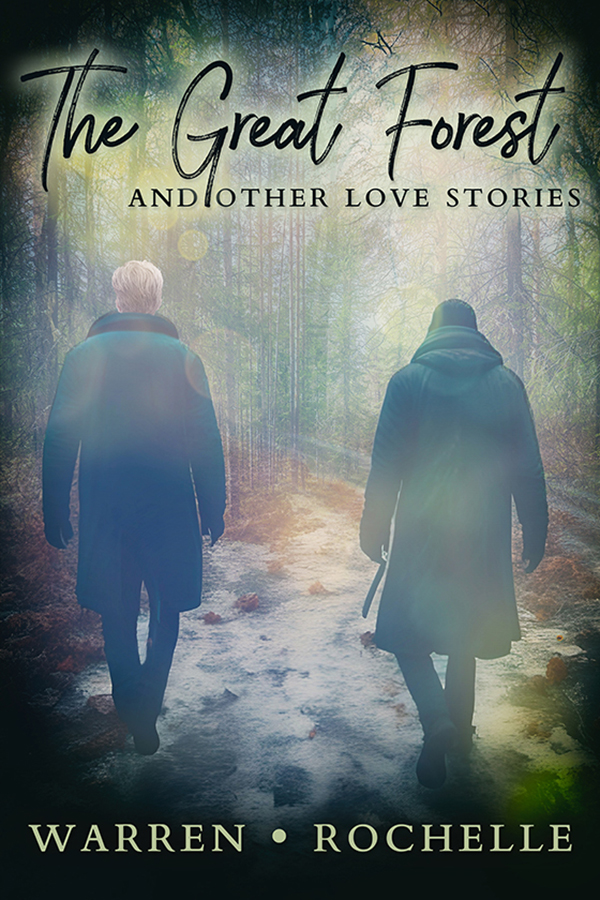
BLOG TOUR: THE GREAT FOREST AND OTHER LOVE STORIES BY WARREN ROCHELLE + GUEST POST

The Great Forest and Other Love Stories - Warren Rochelle

Warren Rochelle has a new FF/MM romance fantasy/sci-fi short story collection out: The Great Forest and Other Love Stories. And there’s a giveaway!

“The course of true love never did run smooth” might be a cliché, but for the lovers in these stories, it’s an understatement. Consider: having to rescue your beloved from seven years of service to sentient trees, or your lover wants you to curse an entire town, or your husband is sure aliens are calling to him from a comet. Find out what happens in these and other stories in The Great Forest and Other Love Stories.

Warnings: neglectful parents, end of the world

Universal Buy Link


Giveaway

Warren is giving away a $20 Amazon gift card with this tour:

a Rafflecopter giveawayhttps://widget-prime.rafflecopter.com/launch.js

Direct link: http://www.rafflecopter.com/rafl/display/b60e8d47324/


Excerpt
The Great Forest And Other Stories - Warren Rochelle

Chesapeake Air and Spaceport, North Terminal, Interplanetary Concourse A

The sun shimmered on the water, as the train pulled into the Chesapeake Air and Spaceport RR station. He gathered his things and walked out onto a winding path, into a garden of dwarf sugar maples and ash trees. The path led him over a little bridge and a stream, and lavender star-shaped flowers. He stopped there to collect himself, to remember what his therapists had taught him, Alana on Avalon, and Gavin and Julia, at Blue Ridge. Deep breaths, center and focus on the safe, on the gurgle of the stream below his feet, the star-shaped flowers, blooming by the water. Interrupt his fear-talk looping, be present now. The main building of the spaceport was straight ahead. The building seemed almost made of sunlight and water. Sea turtles, eels, dolphins, and sea horses seemed to be swimming inside its walls.

Inside, the spaceport would be filled with people from all across Terra, from who knew how many HC planets. And aliens. Strangers, all of them. Breathe in for three, hold for four, release for five. Center. Through the sliding glassteel doors, follow the signs to the ticket kiosks. Everybody was busy, going, coming. Edvard was just one more young human.

He could do this, and he had done it. He could do it again. He could hear Luc telling him that, as he touched him, kissed him.

I’m coming.

No answer.

Scattered trees inside, fountains and pools. Whoever designed the spaceport must have wanted it to look as if it was part of the bay itself. Water currents and tree-shapes in the metal and glassteel, the beams, and the afternoon sun visible in a great skylight over the departure lobby. Were those real birds flying overhead? Edvard caught the off-world accents he knew as he walked—Avalonian, Jardinero, New Scandinavian. A trio of enhanced chimpanzees, clearly traveling on business. He tried to stare at the nest of Kalsons traveling together, with their pointed ears, white-gold hair, and skin. Like Luc and his father. There were a few Kalsons like Manon with skin a darker gold, hair, a deep brown. He stepped back, as did everyone around him, at who he saw next coming down the concourse. Even though the Second Interstellar War had ended thirty-three standard years ago, clearly not enough time had passed for any Zoki to walk through the one of the largest spaceports on the North American east coast without armed HC security. No one had forgotten how many thousands of Wertyngeris had either died or were put in hibernacula for years, or how many of the frozen had been thawed and eaten. No one had forgotten how many HC soldiers died in the war. Yes, the war had ended with a palace coup, led by the Zoki crown princess. She had immediately offered reparations for the atrocities on Wertynger, and they had been paid, and were still being paid.

Edvard watched as the reptilian Zoki, all dressed in white, with ashes on their forehead, walked silently through the spaceport, staring at the floor. According to the treaty ending the war, the Zoki had to publicly atone for eating sentient life. The crown princess, now empress, had suggested fifty Terran standard years of shame and public penance. She had acknowledged that not all Zoki had known or participated, but the government she had overthrown had known, and it had had wide popular support.

Never again.

Someone spat on the floor as the Zoki and their guards walked past. He wondered if fifty Terran standard would be enough penance.

Edvard stepped in front of a ticket kiosk beside a family which was clearly emigrating. Everybody seemed to be carrying some sort of luggage, the three kids, the two dads. He inserted his passport and Universal ID into the kiosk, and selected shuttle to the station, star service to Wertynger, Next available ship, leaving Union Station. An option for stasis for the three week trip in hyperspace? Maybe after week one. Micro-cabin, no, too claustrophobic. Single double, Family? Single. It felt like forever for funds verification. Ding! Transaction complete. Please proceed to Concourse B, Gate 29, shuttle already boarding. Proceed to gate, please have ID and passport ready.

He had done it.


Author Bio
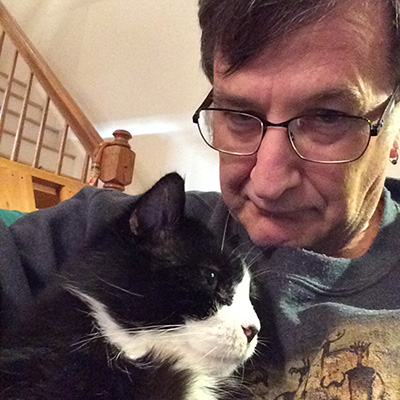
Warren Rochelle

Warren Rochelle lives in Crozet, Virginia, with his husband, and their little dog, Gypsy. He retired from teaching English and Creative Writing at the University of Mary Washington in 2020. His short fiction and poetry have been published in such journals and anthologies as Icarus, North Carolina Literary Review, Forbidden Lines, Aboriginal Science Fiction, Collective Fallout, Queer Fish 2, Empty Oaks, Quantum Fairy Tales, Migration, Clarity, Innovation, The Silver Gryphon, Jaelle Her Book, Colonnades, and Graffiti, as well as the Asheville Poetry Review, GW Magazine, Crucible, The Charlotte Poetry Review, and Romance and Beyond. His short story, “The Golden Boy,” was a finalist for the 2004 Spectrum Award for Short Fiction.

Rochelle is the author of five novels, including The Wild Boy (2001), Harvest of Changelings (2007), and The Called (2010), all published by Golden Gryphon Press. The Werewolf and His Boy, originally published by Samhain Publishing in September 2016, was re-released from JMS Books in August 2020. In Light’s Shadow: A Fairy Tale was published by JMS Books in 2022.

Author Website: https://kingdomofjoria.com/

Author Facebook (Personal): https://www.facebook.com/warren.rochelle

Author Facebook (Author Page): https://www.facebook.com/warrenwriter/

Author Goodreads: https://www.goodreads.com/author/show/38355.Warren_Rochelle

Author Liminal Fiction (LimFic.com): https://www.limfic.com/mbm-book-author/warren-rochelle/

Other Worlds Ink logo

The Great Forest and Other Love Stories

When did I know I wanted to write? I first  read The Chronicles of Narnia in the third grade, and I fell in love. I decided then and there I wanted to be a writer. I wrote an awful rip-off of  Narnia in homage, but with a High Queen, not a High King. Somewhere in her realm was the Plain of Fire and the Plain of the Moon, so named for the color of the grass growing on each plain. Instead of centaurs, I had bucentaurs, who have bovine  (or ox bodies). To be honest, I think I discovered this chimera sometime after third grade.  Mercifully, more specific memories are hazy and the manuscript (in a three-ring binder) has been lost.

When did I know I was good at writing? This came slowly over the years, most often in affirmations from teachers, from junior high through college. I won an Honorable Mention in a Scholastic contest.  in the 9th Grade for a poem about a green-skinned boy, half-human, half-alien, who couldn’t handle his telepathic powers. I got published in my high school literary magazine, and again in my undergraduate literary magazine.  All of these helped me to know that I could write well.

My first publication was a short story, “Her Hands Curved Around the Cup,” in the now-defunct Graffiti, in Fall 1978. This melancholy tale is about an old, lonely woman grieving for her long-dead husband, and haunted by a childhood tragedy. She marks the days of the week by drinking different teas. She reads poetry.  She is so very sad and lonely. It was a very morose tale. 

What do I when I get writer’s block? To be honest, I can’t say I have, at least in the way I think this question is asking: not being able to write at all. Instead, for me, what happens sometimes is that I get this amazing idea, and I set down and write and write, pages, chapters even. Then, it fizzles out, and the story seems to have died, or gone to sleep.  Or maybe, it’s just not the right time for the story to be told.  What I do then is let it sit for a while—usually a good long while, or leave it be. I sometimes go back to the story—a long later—and try to resuscitate the tale. This usually works, but the revived story is often a lot of different. In this collection, the title story grew out of an alternate history I started when I was in junior high, after reading MacKinlay Kantor’s 1961 short novel, If the South Had Won the Civil War. For those who might interested, the Confederacy survives for about a hundred years before collapsing in the Black Revolution. So far, the history goes from the 1860s to 2562. Three stories have emerged, including “The Great Forest,” which is set on a planet with sentient trees, settled around 2400. I tried a story set on this planet twice.  Eventually, I found who the story was about and what was at stake for them.

How long have I been writing? In one sense, most of my life. My mother, who was a secretary in the Department of Sociology at Duke University, would bring home used typing paper for us to draw on. My brothers and I scribbled, drew, wrote, played games. Eventually, I drew stories, creating maps and royal dynasties. But stories written on paper? I think they started in 4th grade, which is about sixty-odd years ago.

What do I do when a brilliant idea comes along at a bad time? Write it down, if possible, in quick notes, hopefully enough to remind me of just what the idea was. Unfortunately, if this happens at night when I have a particularly vivid dream, my notes are too often illegible.

What books are currently on my bedside table (a stool by the bedroom door). This stack changes from time to time. At the time I wrote this, the books were:

The Deviant’s War: The Homosexual vs. The United States, by Eric Cervini

Spider Woman’s Daughter,  by Ann Hillerman

Night Watch, by Jayne Ann Phillips

What am I working on now?  I am writing “In Love’s Light,” a short story for a forthcoming anthology of JMS Books authors,, Love is Free, forthcoming from JMS Books in January 2025.

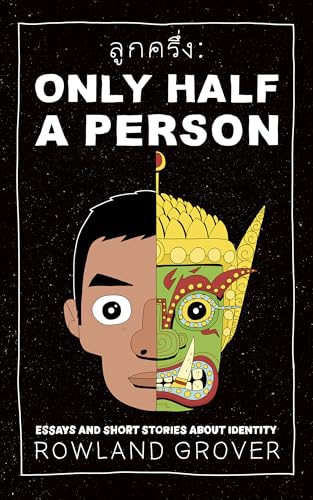
MedEvac by Andrew LaFleche Review

I received a free copy of this book in exchange for a fair and honest review. All opinions are my own.

Author and poet Andrew LaFlechce shares a heartfelt and honest poetry collection in the book “MedEvac.” 

The Synopsis

From award-winning author and veteran Andrew Lafleche, MedEvac is a raw and reflective poetry collection. It delves into the harrowing realities of combat in Afghanistan, the anguish of divorce, the loss of a child, and the destructive force of alcoholism. With brutal honesty and unflinching introspection, Lafleche captures the weight of grief and the search for meaning, both in life and in faith. In MedEvac, poetry becomes a vehicle for self-examination and spiritual reflection, making it a powerful read for those familiar with trauma.

“I will not cry here, at least

I cannot let him see me cry in this place, even

though I’ve come to learn that being a man

isn’t the ability to hold back tears, rather,

understanding the things in life which matter

most when lost will make you weep. Still,

brave for him, faking it for me. “I knew you’d

come, daddy. They told me you might not

make it in time, whatever that meant. But

I knew you’d come.”

MedEvac

Written with heartsick honesty, the collection concludes in collision with an acceptance that will break your heart. It offers refuge for those who wish to find peace:

The Review

The wellspring of emotion that this collection inspires is gut-wrenching and heartfelt, speaking with an intensity and honesty that is truly impactful. Each poem’s imagery paints an emotional picture in the reader’s mind, allowing these haunting themes to give beautiful life on the page.

The Themes, of course, are this collection’s driving force, covering everything from grief, war, alcoholism, divorce, and so much more. The personal and honest nature of the poems allows these themes to rise and delve into the heart of what it means to be human, never once shying away from the messy side of these painful memories yet using an artist’s mind to find beauty in the chaos. Through that chaos and beauty, the writer finds a universally beloved voice everyone can relate to, naturally connecting the author’s experiences to the reader.

The Verdict

Memorable, honest, and emotionally driven, author Andrew LaFleche’s “MedEvac” is a must-read poetry collection. The heartfelt delivery of each poem, the relatability of the poems and their powerful themes, and the way the author has given life to the buried pain and grief so many share in life made this a remarkable collection that is not to be missed. Be sure to grab your copy today!

Rating: 10/10

About the Author

Andrew LaFleche is the award-winning poet and novelist from St. Catharines, Ontario. He served under Operation Enduring Freedom during the Afghanistan War. Following his duty as an infantry soldier in the Canadian Armed Forces, Lafleche received an M.A. in Creative and Critical Writing from the University of Gloucestershire. He is inspired by the philosophy that when young men become readers, they become better men.

Faraway Tables by Eric D. Goodman Review

I received a free copy of this book in exchange for a fair and honest review. All opinions are my own. 

In the book Faraway Tables, author and poet Eric D. Goodman shares a collection of poetry that showcases a world both familiar and just out of reach.

The Synopsis

Faraway Tables is a mesmerizing collection of poetry that captures the monumental and the mundane with eloquent precision. Written largely during the Covid pandemic, these poems are imbued with a reflective depth that explores the essence of human experience—ranging from the personal to the geopolitical.

The Review

What a powerful and engaging collection of poems! The author expertly crafts each poem to stand alone and add to the collective nature of life’s journey and what it means to be human. The imagery and tone each poem strikes with the reader will leave a lasting impact, and the poems do a remarkable job of connecting the reader to the poet’s intent and experiences overall. 

The emotional connection with the poems and the overall themes became the heart of this collection. The author perfectly delves into social commentary on everything from the Pandemic to the war between Russia and Ukraine and the more personal, mundane aspects of daily life that speak of the love and connection we form in those everyday moments. The collection is written in a way that readers of all backgrounds can relate to and connect with, speaking to an accessibility that is sometimes missing from other collections that resonate here.

The Verdict

Memorable, honest, and passionately written author Eric D Goodman’s “Faraway Tables” is a must-read poetry collection. The way the poems evoke a strong emotional response, and the relatability of each poem’s message or theme will draw in many readers seeking to find a profound way of speaking to the experiences so many people have had in recent years. If you haven’t yet, be sure to grab your copy today!

Rating: 10/10

About the Author

Eric D. Goodman lives and writes in Maryland. He’s the author of six previously published books of fiction. More than a hundred of his short stories, articles, and travel stories have been published in literary journals, magazines, and periodicals. Eric’s recent poetry has been featured in more than twenty publications, including Gargoyle Magazine and The Main Street Rag.

Available on AmazonBookshop.org, and Yorkshire Publishing.

Tour Schedule:

Nov. 5: the bookworm (review)

Nov. 7: The Reading Bud (review)

Nov. 12: Impressions in Ink (review)

Nov. 13: Lavender Orchids (review)

Nov. 19: Review Tales (review)

Nov. 21: Anthony Avina blog (review)

Nov. 25: True Book Addict (review)

Follow the tour with hashtag #FarawayTables

Thoughts of a Warrior By Randi-Lee Bowslaugh Review

I received a free copy of this book in exchange for a fair and honest review. All opinions are my own. 

Author and poet Randi-Lee Bowslaugh’s book Thoughts of a Warrior contains a collection of poetry meant to inspire and help those struggling with depression overcome that feeling.

The Synopsis

This is the follow-up poetry book to Thoughts of a Wanderer. The poems depict climbing out of a deep depression to take back a life that was felt to be meaningless.

Tears, heartache, trauma and depression.

Is life worth it? That is the question.

Making no more concession,

It is time to take possession.

Enjoy the passionate poems that show we should never give up on ourselves and our life. Each poem is accompanied by a nature photo bringing the beauty of world and words to life.

The Review

It is a genuinely emotional and heartfelt read. The reader can instantly feel how personal and brave this work is for the author, and each poem becomes a piece of her heart laid bare. The progression of each poem does a remarkable job of showcasing the authentic struggles with depression and the fight it takes to overcome those struggles daily. It is never a straight line to recovery, but the setbacks and struggles only strengthen a person’s resolve.

The poem that stuck out to me instantly was Dear Future Me, which allowed us to picture our futures while still struggling with the voices of doubt in our minds. The fight to imagine a future is sometimes a struggle for those suffering from depression, and the inner voice that one must work through was perfectly illustrated in that poem. The theme and message behind mental health and the willpower to seek out help and acknowledge it was a great reminder as well, really honing in on the poet’s journey.

The Verdict

Memorable, honest, and engaging author Randi-Lee Bowslaugh’s “Thoughts of a Warrior” is a must-read poetry collection. The power to stand up for mental health and acknowledge the need to care for and grow that circle of protection everyone needs in their lives, and the acknowledgment that while things are different for everyone and mental health can be overwhelming to overcome, finding the strength to overcome it all can be achieved. If you haven’t yet, be sure to grab your copy on December 7th, 2024 or preorder your copy today!

Rating: 10/10

About the Author

Randi-Lee was born and raised in Ontario, Canada and from a young age she had a passion for helping others. She attended Niagara College and graduated at the top of her class from Community and Justice Services after completing her placement at a recovery house for alcohol and drug addictions. Post-graduation she worked at a Native Friendship Centre for two and a half years while pursuing a university education in psychology. Randi-Lee continued working in social services for another four years as an employment counselor until she left to pursue her other passions.

In 2017 Randi published her first book about mental health awareness and from there knew that this was her dream. Since then she has continued writing and expanding the genres that she writes.

Another of Randi-Lee’s passions is kickboxing, which she did for over 10 years. She was a Canadian National Champion in 2015, competed at the World’s kickboxing tournament later that year and in 2016 competed at the Pan-Am games where she received silver in her division. In 2020 she was chosen as one of the coaches for the Ontario Winter Games where she inspired and coached young athletes.

While she isn’t working, she is spending time with her two teenage children and a grand-baby. Randi tries to speak honestly and openly about her struggles with her own mental health and as a parent – wanting to ensure that no one feels alone.

Follow Randi’s YouTube Channel: RB Media

Follow Randi on TikTok @randileebowslaugh

Felones de se by LindaAnn LoSchiavo Review

I received a free copy of this book in exchange for a fair and honest review. All opinions are my own. 

TRIGGER WARNING: Content in these poems deals with themes of self-harm, including unaliving oneself. Reader discretion is advised.

Author and poet LindaAnn LoSchiavo shares an honest and heartfelt collection of poems directed at a personal loss from suicide in the book “Felones de se.”

The Synopsis

With a sprinkling of dark humor and a full measure of

compassion, “Felones de Se: Poems about Suicide” is

surprising, quirky, and a riveting read. Inspired by actual

suicides, one of them a blood relative, these poems are

resonant, impossibly moving, bittersweet, and strange.

The Review

While a touchy, heartbreaking, and taboo subject, the poet in this book skillfully captures the depth of emotion and confusion that often surrounds the taking of one’s life. The honest depiction of both those who take this action and those left behind in the wake of those decisions will resonate with many people affected by this real-life tragedy. The author captures the complexity and heart surrounding this subject in such a short amount of time.

What stays with the reader the most is the beautiful prose for which the author writes and the stories behind these poems. The collection ranges from personal experiences with a lost loved one to national cases that captured the public eye and more. The artful way the author uses imagery in the writing style of this collection and the haunting dive into the mindset and emotional wave that takes over in those moments will stay with the reader.

The Verdict

Haunting, moving, and engaging, author LindaAnn LoSchiavo’s “Felones de se” is a must-read chapbook and poetry collection. The author’s skill in writing this collection and the sensitive yet honest depiction of this subject will stay with the reader, and the emotional weight will be felt long after the book ends. If you haven’t yet, be sure to grab your copy today!

Rating: 10/10

About the Author

Native New Yorker LindaAnn LoSchiavo, a four time nominee for The Pushcart Prize, has also been nominated for Best of the Net, the Rhysling Award, and Dwarf Stars. She is a member of British Fantasy Society, HWA, SFPA, and The Dramatists Guild.

Books: “A Route Obscure and Lonely” [Elgin Award winner, Wapshott Press]; “Women Who Were Warned” [Cerasus Poetry, 2022], “Messengers of the Macabre” [Audience Askew, 2022, co-written with David Davies], “Vampire Ventures” [Alien Buddha Press, 2023], “Felones de Se: Poems about Suicide” [Ukiyoto Publishing, 2024], “Apprenticed to the Night” [UniVerse Press, 2024], and “Always Haunted: Hallowe’en Poems” [Wild Ink, 2024], winner of The Chrysalis BREW Award for Excellence.

In 2023, her poetry placed as a finalist in Thirty West Publishing’s “Fresh Start Contest” and in the 8th annual Stephen DiBiase contest.

LoSchiavo is a Prohibition Era historian and her Texas Guinan film won “Best Feature Documentary” at N.Y. Women’s Film Fest (Dec. 2021).

― ― links ― ―

https://linktr.ee/LindaAnn.LoSchiavo

The Door at the End of Everything by Lynda Monahan Review

I received a free copy of this book in exchange for a fair and honest review. All opinions are my own. 

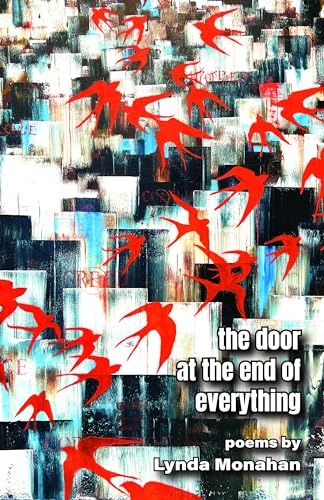
Author and poet Lynda Monahan shares a powerful collection of poetry in honor of the people who contend with mental health on a daily basis in the collection “The Door at the End of Everything”.

Advertisements

The Synopsis

Written while Lynda Monahan was hospital writer-in-residence at the Victoria Hospital in Prince Albert, working often on the adult and youth mental health wards, the tight, pared poems in The Door at the End of Everything give voice to and honour those living with mental illness, speaking to not only the suffering but also the courage and hope that is so clearly there as well.

Several of the poems and poetry sequences have seen publication in various literary journals, including GrainThe SocietyThe New QuarterlyTransitionBareback, and Dalhousie Review, and in the poetry anthologies Writing Menopause (Inanna Publications), Lummox Anthology of Canadian PoetryWorth More Standing (Caitlin Press), the Apart pandemic anthology (Saskatchewan Writers Guild), and Line Dance (Burton House Books), and in various tanka publications such as Atlas PoeticaA Hundred Gourds, and Gusts. A series of online readings from this collection, created with the help of a Canada Council grant, are available on YouTube.

The Review

What a profound and heartbreaking read! The author captures the voice and trauma of these individuals who suffer through and endure the pain of mental health trauma. The visceral nature of the poems’ themes and the thought-provoking imagery in the author’s writing style paint a picture of the turmoil so many feel inside, to the point that these feelings feel almost personified in the writing itself.

The emotional core of these poems and the powerful themes made this book what it is today: moving. The writing was indeed illuminating, as it allowed readers not only to feel and understand the internal struggles of so many people and the tragic reasoning for so many who make the hard decisions that impact their lives and the lives they leave behind, but it also allowed readers to see the promise of hope for those who fight through those struggles and search for the means of internal peace, in this case through the beauty and serenity of nature itself.

Advertisements

The Verdict

Overall, this was a moving and heartfelt read. The author did a brilliant job of capturing the heart and the passion that so many feel for developing this need to further the cause of mental health awareness. The imagery and atmosphere that the author creates through these poems and the emotional themes that the author explores make this a pivotal book that readers should return to time and time again. If you haven’t yet, be sure to grab your copy today!

Rating: 10/10