I recieved a free copy of this book in exchange for a fair and honest review. All opinions are my own.
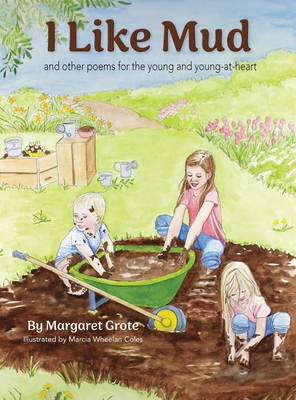
The late author and poet Margaret Grote has her collection of poems shared and illustrated thanks to her son David and his cousin and children’s book illustrator Marcia Wheelan Coles in the book “I Like Mud: and other poems for the young and young at heart”.
Advertisements
The Synopsis
In the final year of her life, award-winning poet Margaret Grote (1922-2005) handed a collection of poems to her son, David, with instructions to “do something” with them. David jumped right on it, and 17 years later approached his cousin, Marcia Wheelan Coles, a children’s book author and illustrator. Truth be told, these whimsical and sometimes poignant poems were gathering dust in David’s closet until Marcia brought them to life with her beautiful artwork. Growing up during the Depression, Margaret came to appreciate life’s simple pleasures, a theme recurrent in these poems. Mother of four, she was an artist, photographer, writer, and poet. She taught fourth grade for 35 years. Her love of children is on full display in these pages, and although the writing is meant for children, young-at-heart adults will also love this collection. Somewhere, Margaret is smiling, knowing that her son finally kept his promise and that her work lives on, bringing joy and laughter to a whole new generation of children
The Review
This was a truly moving and engaging collection of poetry. The balance that can be found in the simple and eloquent imagery and themes the collection evokes in young readers with the nostalgia and childhood wonder that adults can find in the book. The poems tackle everything from the color pink and friendship to the bond between a child and their dog and the ways in which children consistently question the universe.
The beautiful illustrations and the way the poems speak to a variety of different readers made this a remarkable poem collection. The warmth and thoughtful approach to the poetry and the heartwarming story behind the author’s son carrying on his mother’s legacy like this made the book such a delight to behold.
The Verdict
Memorable, emotional, and engaging, author and poet Margaret Grote’s “I Like Mud” is a must-read collection of children’s style poems and poetry. The heart behind the poet’s words and the delight and joy that the heart of each poem brought allowed parents and children alike to be drawn into the poems themselves. If you haven’t yet, be sure to grab your copy today!
I received a free copy of this book in exchange for a fair and honest review. All opinions are my own.
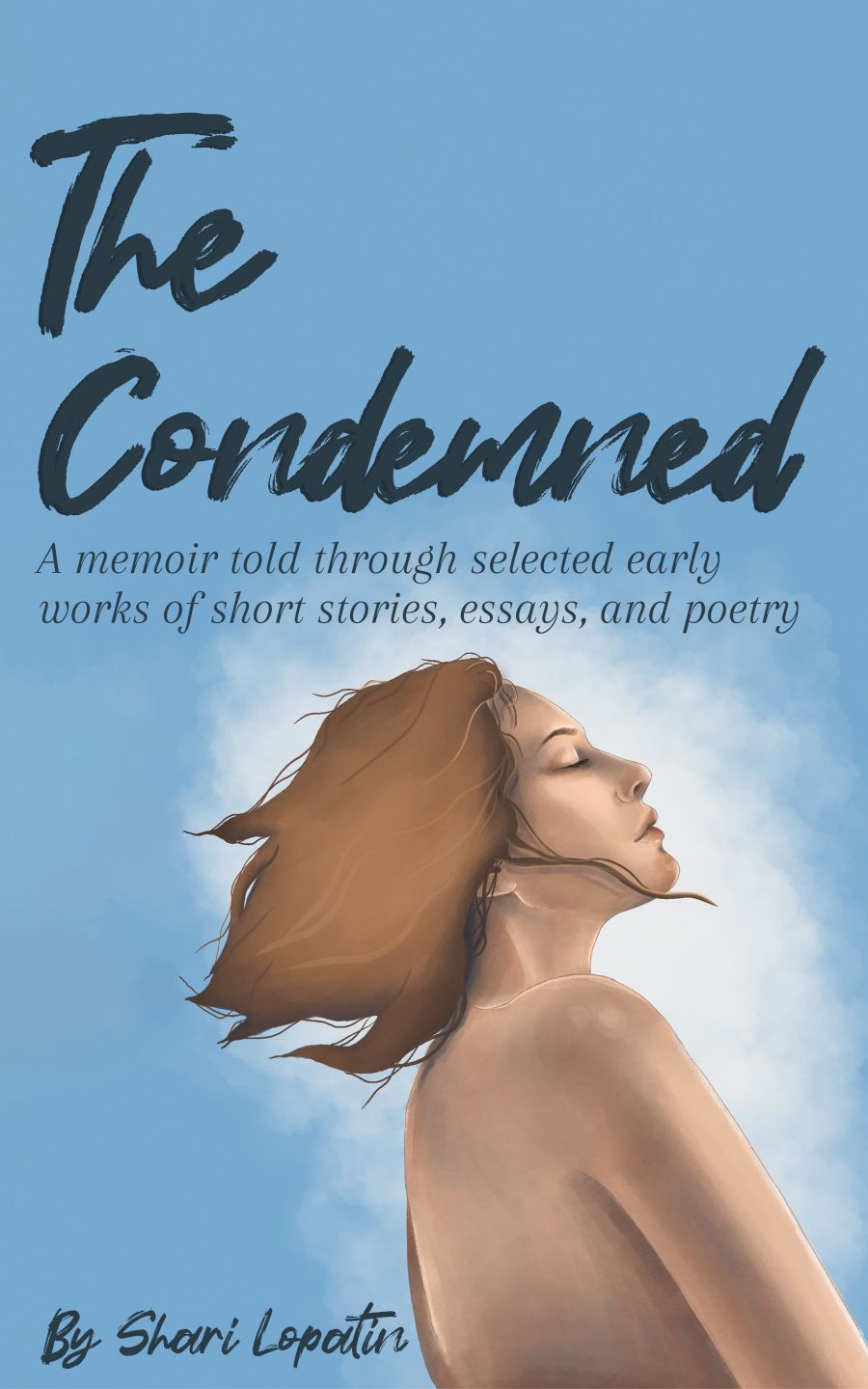
Author Shari Lopatin shares a collection of both fiction and non-fiction stories, as well as essays and poems, to share the story of a young woman trying to find herself in the book “The Condemned”.
Advertisements
The Synopsis
In this special memoir told through a collection of earlier works including fictional short stories, non-fiction essays, and poetry, Shari Lopatin tells the story of her younger self—a millennial coming of age through the 1990s and 2000s while fighting to make sense of a world rapidly changing amidst The Great Recession and September 11. Touching on themes still relevant today, Shari shares deeply emotional pieces from her formative years about mental health, the search for home, the awkwardness of dating, love and heartbreak, and the effects of Antisemitism.
Included in this hand-selected collection are the fictional short stories “Pomegranates” about the power of kindness and connection; “A Call from Paris” about a young marriage falling apart; “Stone from HELL” about the effects of a monstrous society; and the namesake of this book, “The Condemned” about finding self-acceptance. Shari also included other personal essays and poems never before seen.
Ultimately, The Condemned: A memoir told through selected early works of short stories, essays, and poetry reveals one young woman’s struggle to find herself within a confusing and sometimes ostracizing world, and the messages of love, hope, and truth she now brings to others.
The Review
What an emotional and captivating collection of stories. The author found a great balance between her fiction and nonfiction works, with each story doing an exemplary job of conveying the raw emotions and pivotal moments that defined her life. The imagery and the heart that the author poured into the story and essays were remarkable, really bringing the reader into these moments and in the case of the fiction work, allowing the reader to embrace the characters outright.
The poetry was also so moving and conveyed the honesty and passion of the author’s writing so eloquently. The quick pace of the book and the variety of the collection gave the author ample opportunity to really connect to a wide range of different readers and gave an intimate look into the author’s life in a creative and moving way.
The Verdict
Insightful, thoughtful, and engaging, author Shari Lopatin’s “The Condemned” is a memorable and thought-provoking memoir filled with creativity and heart. The powerful messaging of the stories in this collection brings to life a beautiful and emotional story of triumph in the face of adversity, and the journey to find life and purpose. If you haven’t yet, be sure to grab your copy today!
Rating: 10/10
Advertisements
About the Author
Shari Lopatin tells stories that matter. An award-winning journalist in her earlier years, she now writes novels that tie into modern-day social issues, short stories, serialized fiction, essays, and poetry. Shari has worked as a newspaper reporter, magazine writer, public relations professional, social media manager, and earned the title of “Cat Mom of the Year.” Read more of Shari’s work and get updates on her latest books by signing up as a free or paid subscriber for her Substack newsletter, Rogue Writer, at sharilopatin.substack.com.
I received a free copy of this book in exchange for a fair and honest review. All opinions are my own.
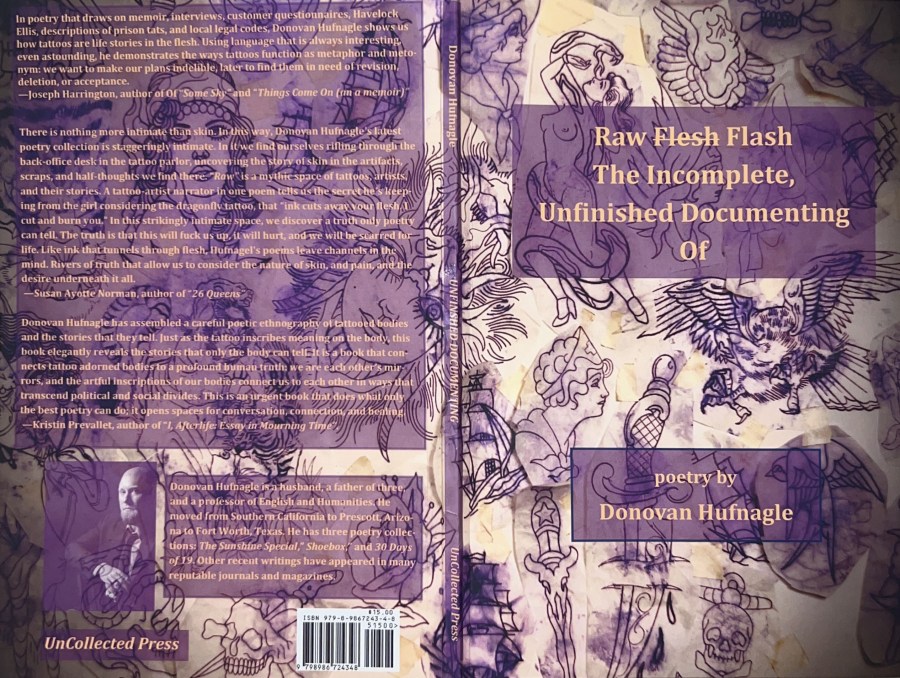
Author and poet Donovan Hufnagle shares a collection of poetry that delves into the meanings and stories behind the tattoos that adorn our bodies within his book, “Raw Flesh Flash: The Incomplete, Unfinished Documenting of”.
Advertisements
The Synopsis
Raw Flesh Flash: The Incomplete, Unfinished Documenting Of is “a careful poetic ethnography of tattooed bodies and the stories that they tell. Just as the tattoo inscribes meaning on the body, this book elegantly reveals the stories that only the body can tell. It is a book that connects tattoo-adorned bodies to a profound human truth: we are each other’s mirrors, and the artful inscriptions of our bodies connect us to each other in ways that transcend political and social divides.” Kristen Prevallet
The Review
This was such an artful and passionate collection of poems. The author does an incredible job of utilizing imagery and atmosphere in each poem to convey the tone and theme that each poem and passage is meant to. The way each story within the poems seems to tie into the deeper meaning behind not only the tattoos that people get, but the people behind the needle who curate these works of art onto a person’s body and the tattooing process as a whole made this so compelling to get lost in.
While not someone who has gotten a tattoo before, I have many family members who have, and not only have I always wanted one myself but the art behind tattoos and the meaning behind them have always moved me. The creativity, the passion, and the emotional connection for some make these tattoos feel alive, and the way this experience harkens back throughout history, even to the ancient Viking culture, was profound to lose yourself in when reading up on the subject. This is the same magic and wonder the author’s work tackles, as each poem not only tells the story of average, ordinary people, but the stories of love and loss and everything in-between that their tattoos tell of, and the sense of wonderment that overcomes you when looking upon these works of art, as well as both the good and bad emotions that come with the experience, making this a compelling collection to get lost in.
The Verdict
Memorable, heartfelt, and engaging, author Donovan Hufnagle’s “Raw Flesh Flash: The Incomplete, Unfinished Documenting Of” is a must-read collection of poetry. The almost rhythmic delivery of each poem and the artistry that went into the delivery of the poem’s imagery was profound and captivating, making this one collection you will pick up time and time again. If you haven’t yet, be sure to grab your copy today!
Rating: 10/10
Advertisements
About the Author
Donovan Hufnagle is a husband, a father of three, and a professor of English and Humanities. He moved from Southern California to Prescott, Arizona to Fort Worth, Texas. His new poetry collection, Raw Flesh Flash: The Incomplete, Unfinished Of, is a poetic scrapbook of interviews, poetry, and documents about the universal narrative of tattoos.
He also has three other poetry collections: The Sunshine Special, a “part personal narrative, epic poem, and historical artifact;” Shoebox, an epistolary, poetic narrative about Juliana’s “past and present, love and lack, in language that startles;” and 30 Days of 19, inverted Haiku poems juxtaposed to Trump tweets, capturing the first thirty days of the Covid 19 quarantine.
Other recent writings have appeared in The Closed Eye Open, Tempered Runes Press, Solum Literary Press, Poetry Box, Beyond Words, Wingless Dreamer, Subprimal Poetry Art, Americana Popular Culture Magazine, Shufpoetry, Kitty Litter Press, Carbon Culture, Amarillo Bay, Borderlands, Tattoo Highway, The New York Quarterly, Rougarou, and others.
1) Tell us a little bit about yourself. How did you get into writing?
Three fortunate circumstances helped me develop into a writer.
The first influential factor in my life was the privilege of being born in New York City and being exposed to rich cultural experiences as a child. For example, my relatives took me to the American Museum of Natural History, the Hayden Planetarium, Museum of Modern Art, Carnegie Hall, and Broadway shows. By age six, after the theatre, I started buying a copy of the drama or musical we’d just enjoyed at a wonderful place in Times Square, The Drama Bookshop. I wanted to be better equipped during dinner table discussions of the play. These formative experiences, rooted in The Big Apple’s vibrant cultural milieu, played a pivotal role in shaping my intellectual curiosity and nurturing my appetite for the arts.
The second factor was growing up without a television but with easy access to a library.
The third factor was being surrounded by adults – with limited access to children my own age unless I was in a classroom. Since my parents could not afford to finance a mortgage right away, we lived in a large house with my maternal grandparents and unmarried aunts until I was 4 ½. This household served as a hub for buying and receiving numerous birthday and holiday cards, providing me with ample exposure to bad poetry. Even as a child, I was critical about awkward rhymes in Hallmark cards, so at age three and a half I launched my own greeting card line. I wrote the verses and one of my aunts illustrated each card. Lots of praise (by our relatives) launched a young formalist.
By age four I was being taken to numerous Broadway matinees. This made an impact. By age nine, I had my first one-act play onstage with a cast of five actresses (recruited from my Girl Scouts chapter); it ran for several months in NYC. Also at age nine, my first poem (“The Tiger”) was published in a school magazine. At age 15, a short story (“No Way Out”) that I had written for my high school magazine won a gold medal for literary achievement. There has never been a time when I did not think of myself as “a serious writer.”
Advertisements
2) What inspired you to write your book?
Pure serendipity. At the time, I had been circulating a 29-poem manuscript, “Women Who Were Warned.” But Beacon Books’ poetry imprint UniVerse Press does not let a poet upload a full manuscript. Instead they want a proposal with a writing sample. As I awaited a response, “Women Who Were Warned” found acceptance from Cerasus Poetry in London, rendering it unavailable for publication anywhere else. Moreover, UniVerse Press wanted a full-length collection – and by October 1, 2022. Opportunity and a deadline blew the whistle.
3) What theme or message do you hope readers will take away from your book?
“Apprenticed to the Night” weaves together the tapestry of everyday encounters with the extraordinary. Until the pandemic, I had deliberately omitted revealing my supernatural experiences in my writing. I’m hoping that readers will be open-minded.
4) What drew you into this particular genre?
Since childhood, I’ve been aware of metrical verse and memorized a lot of poems. Writing formal verse comes naturally to me.
Advertisements
5) What social media site has been the most helpful in developing your readership?
Twitter has a thriving literary community with hashtags such as #amwriting, #poetrycommunity, and #bookbloggers. I’d love to connect with more reviewers on TikTok a.k.a. #BookTok.
6) What advice would you give to aspiring or just starting authors out there?
Read widely and immoderately. Be on the alert for online writing workshops, especially the no-fee options. For example, Sundress Academy’s Poetry Xfit meets from 2-4PM EST on the third Sunday of every month. All events are free and hosted via Zoom, which can be accessed at tiny.utk.edu/sundress.
7) What does the future hold in store for you? Any new books/projects on the horizon?
My eerie fully illustrated Samhain-themed collection “Always Haunted: Hallowe’en Poems” is with a publisher who requested it. (Fingers crossed.) While I am polishing a full-length poetry collection on ghosts, “Dark and Airy Spirits,” I’m finishing up two other chapbooks. One is devoted to suicide poems and the other is inspired by the poignant journey I took with my terminally ill mother when I was her sole caretaker.
Advertisements
About the Author
Native New Yorker LindaAnn LoSchiavo, a four time nominee for The Pushcart Prize, has also been nominated for Best of the Net, the Rhysling Award, and Dwarf Stars. She is a member of SFPA, The British Fantasy Society, and The Dramatists Guild.
Elgin Award winner “A Route Obscure and Lonely” (US: Wapshott Press, 2019), “Women Who Were Warned” (UK: Cerasus Poetry, 2022), Firecracker Award, Balcones Poetry Prize, Quill and Ink, Paterson Poetry Prize, and IPPY Award nominee “Messengers of the Macabre” [co-written with David Davies] (US: Audience Askew, 2022), “Apprenticed to the Night” (UK: UniVerse Press, 2023), and “Felones de Se: Poems about Suicide” (Canada: Ukiyoto Publishing, 2023) are her latest poetry titles.
In 2023, her poetry placed as a finalist in Thirty West Publishing’s “Fresh Start Contest” and in the 8th annual Stephen DiBiase contest.
LoSchiavo is a Prohibition Era historian and her Texas Guinan film won “Best Feature Documentary” at N.Y. Women’s Film Fest (Dec. 2021).
Publishing is just another trial as part of the writer’s journey. When we cross the threshold from the known world into the unknown world, answering the call to adventure, entering OZ, Wonderland, the Athenian Forest…into our dreamworld, “somewhere over the rainbow,” we follow the yellow brick road, follow gold bricks in the form of words to counter the white space on the page and, perhaps, in our life. The perfect word(s). This word and not that word. We pass through the abyss, reach the Emerald City, and eventually come back home. But before we can reach the city, earn our gift, tap our heels together, and share it with the known world, the trial of publishing confronts us.
Publishing is not the end of the journey nor is it a gift. When my first book, Sunshine Special, was published, I thought the world would change. It didn’t. I did, however, reach a revelation…publishing isn’t the key to a magical door that opens a garden of poppies and avenues. When my current book, Raw Flesh Flash: The Incomplete, Unfinished Documenting Of, won a publishing contest and was published by Uncollected Press, I understood that the work had just begun. And I think understanding is crucial. Writers, especially poets, should understand that there may be many times we hear the word NO. It feels personal. It’s not. But when you write and write, edit, and write some more then finally build the strength to submit your work, placing your work on display for someone to just cut it open until it bleeds seems pretty damn personal to me. And, simultaneously, impersonal, since most of the time you receive a cookie cutter rejection from the publisher like they didn’t even bother to read it.
Advertisements
On a side note, if you receive a personalized rejection, cherish it.
Understand that publishing is a business like any other business and your success as a writer is not dependent on publishing. I just received a rejection through Submittable just the other day for one of my poems. I place it in a folder titled “submissions,” forget it and move on. Publishing is not an enemy; it is just a necessary hurdle along the way.
My advice, then, is to keep writing, and one day you may become published (if that is what you are striving for). It will feel good. It will be exciting. Someone out there appreciating your work as much as you do. Your hard work will finally be on display for others. You can stop plucking rose petals, wondering if they love you or if they love you not (maybe). Also, understand that the journey is not over. You will need to work just as hard for the next thing, to conquer the next trial.
It took a long time for me to truly think about publishing—decades. As a younger poet, I wasn’t that interested in publishing. I would submit a poem here or there. But it wasn’t until I crafted my art to a point where I wanted, no, felt like I needed to share it with more than my wife that publishing seemed like the next logical step. So, I put my stuff out there. Scary and exciting. I received rejections. Dejected. I received acceptances. Elated. Some won contests. Some still have never seen the light of day.
I am at a place, now, in my writing career that I know my talents, I know my successes, and they don’t depend on those publications. But it sure does feel nice. My writings are like my tattoos, on public display for all that I encounter, simultaneously, holding a personal meaning no one else will ever know, unless you ask. Every writer’s journey is unique; some trials along the way may come easy, some may never be conquered, but know the real gift is that you wrote something, you created new, you crafted art for a world where the “dreams that you dare to dream really do come true.”
Advertisements
About the Book
Donovan Hufnagle has assembled a careful poetic ethnography of tattooed bodies and the stories that they tell. Just as the tattoo inscribes meaning on the body, this book elegantly reveals the stories that only the body can tell. It is a book that connects tattoo adorned bodies to a profound human truth: we are each other’s mirrors, and the artful inscriptions of our bodies connect us to each other in ways that transcend political and social divides. This is an urgent book that does what only the best poetry can do; it opens spaces for conversation, connection, and healing.-Kristin Prevallet, author of “I, Afterlife: Essay in Mourning Time”.
Advertisements
About the Author
Donovan Hufnagle is a husband, a father of three, and a professor of English and Humanities. He moved from Southern California to Prescott, Arizona to Fort Worth, Texas. His new poetry collection, Raw Flesh Flash: The Incomplete, Unfinished Of, is a poetic scrapbook of interviews, poetry, and documents about the universal narrative of tattoos.
He also has three other poetry collections: The Sunshine Special, a “part personal narrative, epic poem, and historical artifact;” Shoebox, an epistolary, poetic narrative about Juliana’s “past and present, love and lack, in language that startles;” and 30 Days of 19, inverted Haiku poems juxtaposed to Trump tweets, capturing the first thirty days of the Covid 19 quarantine.
Other recent writings have appeared in The Closed Eye Open, Tempered Runes Press, Solum Literary Press, Poetry Box, Beyond Words, Wingless Dreamer, Subprimal Poetry Art, Americana Popular Culture Magazine, Shufpoetry, Kitty Litter Press, Carbon Culture, Amarillo Bay, Borderlands, Tattoo Highway, The New York Quarterly, Rougarou, and others.
I started writing poetry when I was a kid. My mother let me borrow her college poetry textbook (circa 1969), and so I learned about T.S. Eliot, e.e. cummings, poetic forms, metaphors, and such things way before we would get around to them in school. I won a couple of poetry recitation contests in 5th and 6th grade, and the prizes were the collected works of Emily Dickinson and Carl Sandburg (I still have both). I think the first book of poetry I bought myself was the collected Edna St. Vincent Millay, when I was about 11.
My first degree was in Pre-Med Biology. I meant to become a doctor—but I took creative writing classes on the side. When I graduated, my immunologist told me there was no way my health would allow me to complete medical school, as grueling as it was in the early nineties. So I decided to set my sights elsewhere. Soon I started my MA in English, where I was introduced to formalism, deconstruction, and other -isms (and made some good friends). When I graduated, looking to be able to support myself, I took a job as a technical writer. I was still writing poetry, but not seriously trying to publish, until a health crisis struck and I had to quit my tech job. My husband suggested pursuing my earlier dream of being a writer.
Advertisements
Starting my Journey as a Poet
I tried out some local writer’s conferences (on scholarship) and seriously researching the literary magazine scene, volunteering for a few local literary magazines, and sending out work. I put together enough published poems for a chapbook, and got it published—my first little collection of poems, called Female Comic Book Superheroes. I applied to a few low-residency MFA programs, and started one, taking a semester off in the middle for (once again) health issues. During that off semester, I sent out my first book manuscript and had it accepted, which was Becoming the Villainess, published by a (then-brand-new) press called Steel Toe Books in Kentucky. The chapbook and book were considered “speculative” poetry at that time, not very common—poems about video game characters and superheroines were not common in the mainstream literary magazines, certainly not represented in the prizes. So I was a little out there. But it had a very positive response from young people, which I was very happy to see. If you can’t read and enjoy a few poems about comic book story arcs or mythological women turned to dragons when you’re young, then when can you?
Journey from First Book to Sixth
I felt very lucky with that first book—I had some modest success for a very new small publisher and a very small new poet. I was still able to travel more easily back then—making 20-hour car trips between Western Kentucky, Akron, and upstate New York.
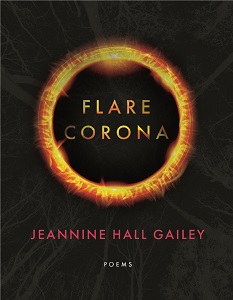
Now that I’m on my sixth book, Flare, Corona, with a great publisher, BOA Editions, I’m a little older, with a little more in terms of health challenges (MS among them), and I’m not physically able to do what I used to. However, with the pandemic, I learned some new skillsets—photography and gardening among them—and I read a lot. During the first months of the pandemic, I tried writing a few personal essays – and got them published in Salon. This book is the most vulnerable and more autobiographical than all my previous books. My previous books: Becoming the Villainess, She Returns to the Floating World, and Unexplained Fevers, I frequently wrote in persona—characters from mythology, fairy tales, anime, and traditional folk tales. In Field Guide to the End of the World, I created a fictional character navigating a fictional apocalyptic landscape (though it didn’t feel fictional in 2020!), so at least there was a little differentiation between the main speaker and myself. In Flare, Corona the speaker is essentially me, describing some incredibly difficult experiences. I had to figure out a way to write these poems in a way that was direct but felt comfortable. I found myself writing a kind of “mutant sonnet” as well as prose poems—forms that helped me hold difficult subject matter in place, so to speak. Some themes from previous books return—a supervillain perspective on coronavirus, apocalypse poems, writing about growing up in Oak Ridge and its radioactive contamination—and those poems allowed me to, for instance, address what I refer to in the book as “the plague years” in a way that felt real and not cliché.
I’ve learned over the 20 or so years of publishing poetry books that one of the best things about the poetry world is making friends with the people in it—my publishers were, to the person, excellent human beings, and I consider many of them real friends and I truly grieved when I lost one of the them to cancer. I am very lucky to now have a bigger press—BOA Editions, who published some of my poetry heroes, like Dorianne Laux and Lucille Clifton—take my latest book, and I really am enjoying working with them as the book comes out into the world. Kindness to people becomes really important, and supporting other poets and writers as we go through our literary life is something I cannot recommend enough. I’ve been doing poetry book reviews for 20 years, and even if there is little monetary reward in it, I’m happy to have done it. Meeting friends I’ve made at a conference or a reading twenty years ago remains a great pleasure, even if I can’t travel as much as I used to. Community is important as a structure to support you and a structure to support other writers.
My work itself continues to evolve—as I play around with form, and language, and persona. My next book must be impacted by the last few years, but I don’t want it to be purely about that, and may also involve some of the ideas that appeared in Flare, Corona—the desire or will to survive despite difficult conditions. There will probably be dragons in it.
Advertisements
About the Author
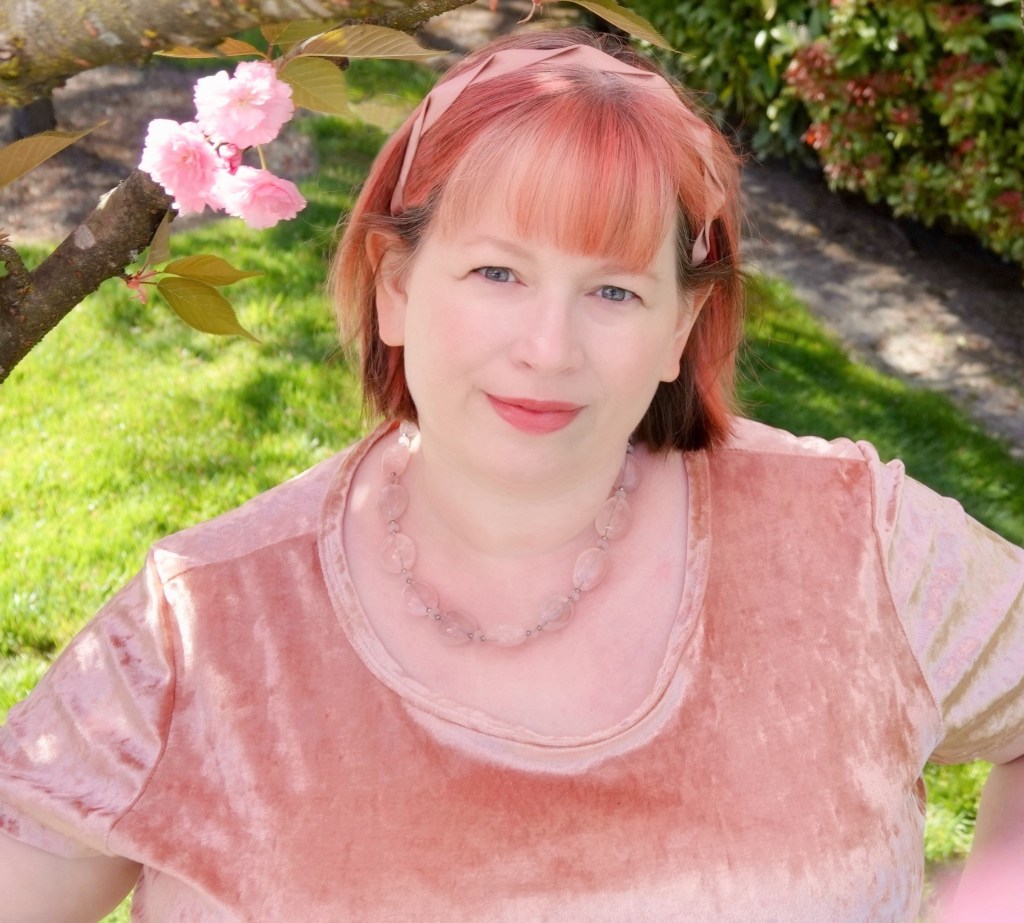
Jeannine Hall Gailey is a poet with multiple sclerosis who served as the 2nd Poet Laureate of Redmond, Washington. She’s the author of six books of poetry: Becoming the Villainess, She Returns to the Floating World, Unexplained Fevers,The Robot Scientist’s Daughter, Field Guide to the End of the World, winner of the Moon City Press Book Prize and the Elgin Award, and the newest, Flare, Corona from BOA Editions. She has a B.S. in Biology and M.A. in English from the University of Cincinnati and an MFA from Pacific University. Her work appeared in The American Poetry Review, Ploughshares, and Poetry. Her web site is www.webbish6.com.
I received a free copy of this book in exchange for a fair and honest review. All opinions are my own.
Author and poet Jeannie Hall Gailey share a rich collection of poems that showcase our ability to prevail and persevere through illness and natural disaster in the book “Flare, Corona”.
Advertisements
The Synopsis
Against a constellation of solar weather events and evolving pandemic, Jeannine Hall Gailey’s Flare, Corona paints a self-portrait of the layered ways that we prevail and persevere through illness and natural disaster.
Gailey deftly juxtaposes odd solar and weather events with the medical disasters occurring inside her own brain and body— we follow her through a false-alarm terminal cancer diagnosis, a real diagnosis of MS, and finally the onset of the coronavirus pandemic. The solar flare and corona of an eclipse becomes the neural lesions in her own personal “flare,” which she probes with both honesty and humor. While the collection features harbingers of calamity, visitations of wolves, blood moons, apocalypses, and plagues, at the center of it all are the poet’s attempts to navigate a fraught medical system, dealing with a series of challenging medical revelations, some of which are mirages and others that are all too real.
In Flare, Corona, Jeannine Hall Gailey is incandescent and tender-hearted, gracefully insistent on teaching us all of the ways that we can live, all of the ways in which we can refuse to do anything but to brilliantly and stubbornly survive.
The Review
I was absolutely moved and captivated by the heart and passion that the author relays her story of health battles and the pandemic. The use of story-driven, sci-fi, and dystopian genre writing styles to illustrate the author’s personal story was so remarkable and thrilling to see come to life on the page, and the humor and wit that underscores these apocalyptic-style poems made this a thrilling collection.
To me, the heart of this collection resides in the themes and imagery that the author utilizes in her work. The juxtaposition of the decay and darkness that surrounds humanity with the life and love that brings the light back into our lives was so remarkably moving, and the imagery that connects a brain scan to astronomical, and solar movements were both thought-provoking and heartfelt in its delivery.
The Verdict
Memorable, moving, and insightful, author Jeannie Hall Gailey’s “Flare, Corona” is a must-read collection of poems that speak to both the perils of health crisis and the hope that humanity draws from in times of need. The scope of the poems themselves and the creativity that they spark, and the imagery that the author’s poems bring to life made this a truly wonderful read. If you haven’t yet, be sure to grab your copy today!
Rating: 10/10
Advertisements
About the Author
Jeannine Hall Gailey is a writer with MS who served as the second Poet Laureate of Redmond, Washington. She is the author of five books of poetry: Becoming the Villainess, She Returns to the Floating World, Unexplained Fevers, The Robot Scientist’s Daughter, Field Guide to the End of the World, the winner of the Moon City Press Book Award and the SFPA’s Elgin Award, and upcoming in 2023, Flare, Corona from BOA Editions. She also wrote a non-fiction book called PR for Poets to help poets trying to promote their books. Her poems have been featured on NPR’s The Writer’s Almanac and on Verse Daily; two were included in 2007’s The Year’s Best Fantasy and Horror. She was awarded a 2007 and 2011 Dorothy Sargent Rosenberg Prize for Poetry and a 2007 Washington State Artist Trust GAP grant. Her poems have appeared in American Poetry Review, Poetry, and Ploughshares.
I received a free copy of this book in exchange for a fair and honest review. All opinions are my own.
Author and poet LindaAnn LoSchiavo share a collection of poetry that explores themes of love, death, life, and everything in between in the collection “Apprenticed to the Night”.
Advertisements
The Synopsis
“Apprenticed to the Night” is a collection of 66 poems focused on mortality, betrayal, memory, trauma, and the bewilderment of loss as constantly shifting enigmas. It explores themes of life, death, childhood, trauma, family, and love. The book is divided into three sections: Youth, Maturity, and Beyond. Reviewers have called this collection a powerful and moving collection of poetry that is honest, insightful, innovative, and beautifully written. – – – – “Apprenticed to the Night” is available in hardcover, paperback, and a e-version from UniVerse Press (the poetry imprint of Beacon Books). – –
The Review
This is a compelling and heartfelt collection of poetry. The poet does a remarkable job of taking readers on a metaphysical journey of sorts, traversing the realms of reality, memory, and thematic symphonies as each poem reflects both experiences and hardships respectfully. The imagery found in the author’s writing was quite powerful, packing an almost cinematic gut punch as each poem brought a clash of realism and lyricism to life on the page.
For me, the heart of this narrative collection of poems came from the thought-provoking atmosphere and the emotional heartbeat of the collection overall. The journey through themes of life, death, trauma, abandonment, womanhood, and more made the story of the author’s experiences come to life through each poem so artfully.
The Verdict
Memorable, heartfelt, and engaging, author LindaAnn LoSchiavo’s “Apprenticed to the Night” is a must-read collection of poems you won’t be able to put down. The heart and passion meld with the author’s creativity so naturally that readers will be drawn to this book over and over again. If you haven’t yet, be sure to grab your copy today!
Rating 10/10
Advertisements
About the Author
Native New Yorker LindaAnn LoSchiavo, a four time nominee for The Pushcart Prize, has also been nominated for Best of the Net, the Rhysling Award, and Dwarf Stars. She is a member of SFPA, The British Fantasy Society, and The Dramatists Guild.
Elgin Award winner “A Route Obscure and Lonely” (US: Wapshott Press, 2019), “Women Who Were Warned” (UK: Cerasus Poetry, 2022), Firecracker Award, Balcones Poetry Prize, Quill and Ink, Paterson Poetry Prize, and IPPY Award nominee “Messengers of the Macabre” [co-written with David Davies] (US: Audience Askew, 2022), “Apprenticed to the Night” (UK: UniVerse Press, 2023), and “Felones de Se: Poems about Suicide” (Canada: Ukiyoto Publishing, 2023) are her latest poetry titles.
In 2023, her poetry placed as a finalist in Thirty West Publishing’s “Fresh Start Contest” and in the 8th annual Stephen DiBiase contest.
LoSchiavo is a Prohibition Era historian and her Texas Guinan film won “Best Feature Documentary” at N.Y. Women’s Film Fest (Dec. 2021).
I received a free copy of this book in exchange for a fair and honest review. All opinions are my own.
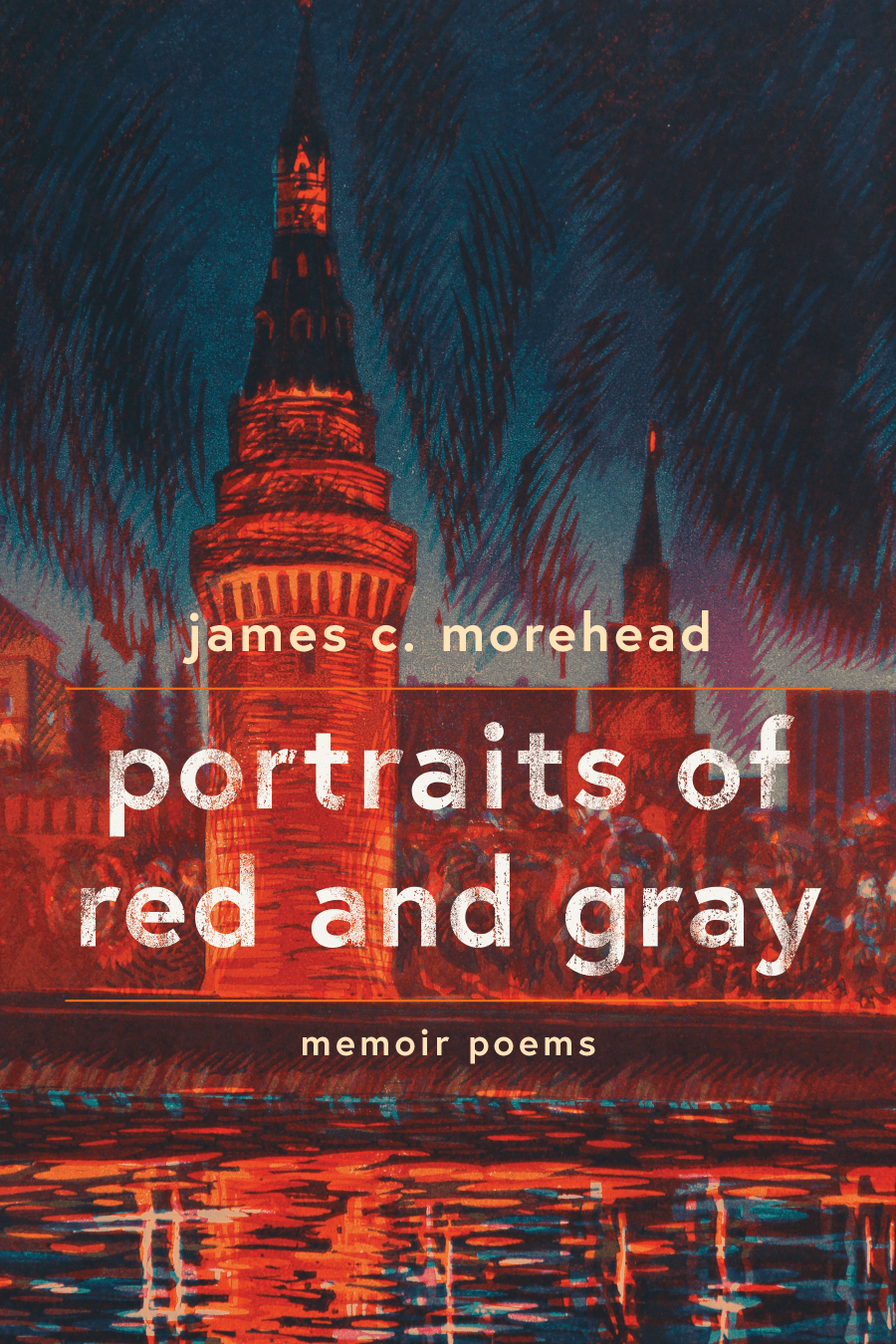
Author and poet James Morehead take readers on a journey from childhood to adulthood, from Soviet Union era-Russia to the Canadian wilderness, Wyoming, and beyond in his book “portraits of red and gray: memoir poems”.
Advertisements
The Synopsis
Take an unforgettable journey from the Cold War USSR to Savery, Wyoming, from the mountains of Tuscany to the peak of Yosemite’s Half Dome, from the Canadian wilderness to the beaches of Normandy. James Morehead’s (Poet Laureate – Dublin, California) acclaimed collection is built around a series of memoir poems that takes readers into pre-perestroika Soviet Union through the eyes of a teenager, from Moscow to Tbilisi to Leningrad (and many stops in-between). The striking cover, designed by Zoe Norvell, is based on a 1982 lithograph by Igor Prilutsky.
The Review
This was such a moving and beautiful collection of poetry. The author does a remarkable job of using profound imagery that feels both relatable and memorable at the same time, and the varied pacing of each poem speaks to the uniqueness of the memories that make up the subject of each poem, speaking to a specific moment in the author’s life that added to their growth as a person.
To me, the author’s work really worked for the balance in the surface-level themes of life experiences in specific places with the deeper meaning of love itself. Each poem spoke not only to the location of the author’s experience, but the person that they spent that memory with, whether it was the boating trip with his father, watching his Italian grandmother-in-law bake, and so on and so forth. The details that went into each poem spoke to the experience and things around the author that resonated with the person he was with, speaking to the insightful nature of his experiences, even when the person he resonated with was his younger self.
The Verdict
Memorable, thoughtful, and engaging, author James Morehead’s “portraits of red and gray: memoir poems” is a must-read collection of poetry. The emotional and moving connection the reader makes to the author’s experiences blends well with the imagery and vividness of each poem, making this a wonderful read. If you haven’t yet, be sure to grab your copy today!
Rating: 10/10
Advertisements
About the Author
James Morehead is Poet Laureate of Dublin, CA. portraits of red and gray is his second collection, and he hosts the Viewless Wings Poetry Podcast. James’ poem “tethered” was transformed into an award-winning animated short film, “gallery” was set to music for baritone and piano, and his poems have appeared in numerous publications. He is currently based in the San Francisco Bay Area.