I received a free copy of this book in exchange for a fair and honest review. All opinions are my own.
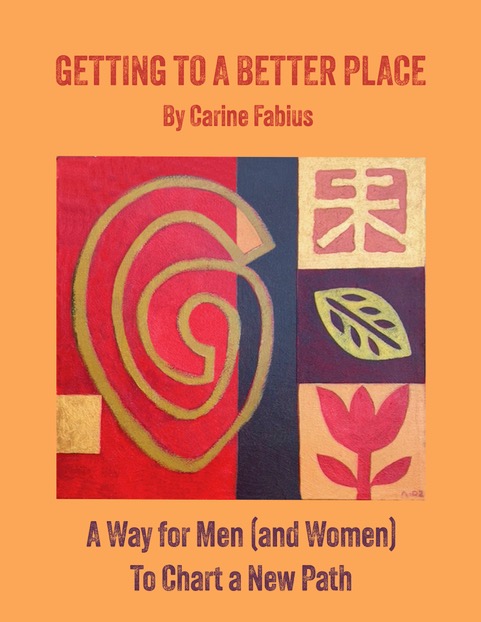
Author Carine Fabius shares the path for both men and women to dismantle the Patriarchal system that has plagued our society for so long in the book “Getting to a Better Place.”
Advertisements
The Synopsis
Getting to a Better Place: An Empowering Appeal for Change
Is the current state of things getting you down? This book is your call-to-action!
Written with love and humor, Getting to a Better Place is in the zeitgeist. More than a book—it’s a movement, inspiring young men seeking a brighter future for themselves and future generations to flip the script and make a difference—one simple step at a time.
Giving voice to women who feel unheard, empowering men to move forward in new ways.
It’s not about blame, it’s about better.
Reader quote:
“Not your average book; very insightful and thought-provoking. If you’re a dude, give it a try: a much different perspective on things that make a lot of sense.” Wilfrid N., Civil Servant
The Review
This book immediately spoke to me. Growing up spending so much time with my mom and sister, I’ve always been dumbfounded by the attitude and behavior of men in relation to women in our society, and have always thought that no matter if a person has any role in the way things happen or not, men should always be part of the solution, and not just the problem. The author does a remarkable job of conveying this throughout the book, delving into the harmful indoctrination this system has in place for men growing up without hating or hurling insults at men in general, but instead speaking to men in an effort to educate and help reinforce ideas of partnership between men and women in general.
The balance of statistics and research, with the author’s passion for the material and the humor with which the author writes, made this a compelling book to delve into. The need to get rid of these hard-hitting ideas that gender norms are set in stone was perfectly summarized when the author studied the difference between male, man, and macho, while also delving into serious movements like the Me Too movement and why it was so vital and important to our society, and how men reconsidered how they approached and treated women. These topics were handled with honest, upfront, and thought-provoking writing.
The Verdict
Insightful, compelling, and engaging, author Carine Fabius’s “Getting to a Better Place” is a must-read nonfiction book and guide to gender, relationships, and societal movements. The depth of research and relatability of the scenarios in each chapter, along with the author’s writing style in general, will keep readers invested in the book, and the value of the lessons and the overall movement this book inspires will have readers returning to it time and time again. If you haven’t yet, be sure to grab your copy today!
Rating: 10/10
Advertisements
About the Author
If you’ve landed on my site, it means you’ve found someone whose life and business revolves around the arts—the literary arts, visual arts and body art. People exposed to the arts at an early age develop the crucial life skills of engaged and discerning citizens. The so-called Bohemian Factor has also demonstrated that the presence of artists in an area impacts housing values and regional incomes in a crazy positive way! Here’s to living the magical and creative life, and embracing the often-challenging destiny that comes with it. I love to write. I am the author of six fiction and non-fiction books. I also blogged for Huffpost for 10 years on the arts, culture, lifestyle, politics, and business until they shut down their blogger platform.
I am also an art dealer, owner of Galerie Lakaye, a contemporary ethnic art gallery specializing in Haitian art. Visit us at http://www.galerielakaye.com. I love curating art exhibitions and do so for museums, municipal art galleries, and other public spaces. Finally, I am the owner of Lakaye Studio, which introduced henna tattoos to the West Coast in 1997. We manufacture temporary tattoo kits that we sell to stores and direct to customers at www.earthhenna.com.
1) Tell us a little bit about yourself. How did you get into writing?
I began writing because I enjoyed it and found I was good at it. The fact that major publishers agreed is scarcely pertinent. In the end, I do this better than anything else, and it’s easy. It’s easy to give utter effort to writing day after day, year after year, because that is how magic is made, not by casting spells or incanting charms.
Advertisements
2) What inspired you to write your book?
I wanted to write a novel that is warmer in the emotions the characters experience than is my norm. That entails developing settings and scenes less intense than my usual, but no less involving.
3) What theme or message do you hope readers will take away from your book?
“Pay forward” is a profound idea. If you’re a witch, you can extend the substance of your spirit centuries ahead to find a subject worthy of your suicide.
4) What drew you into this particular genre?
See #2. Above and beyond that, the genre is literary fiction, the only type of writing I know, even when working on a kids’ book.
Advertisements
5) If you could sit down with any character in your book, what would you ask them and why?
Screenshot
I would ask Connie if she thinks she’s a brat, because a lot of people feel that way about her, including the murderous jungle denizens who keep her alive. If I asked her that, however, it would make her cry; and I would hold her hand and say that things are just fine, because she may be a brat, but absolutely she is a hero. Then she would cry again, but she would be smiling now.
6) What social media site has been the most helpful in developing your readership?
The answer is none. I hate social media, and they hate me. If it weren’t made of pixels, I would like to burn SocialMedia down to the ground.
7) What advice would you give to aspiring or just starting authors out there?
First, read more. More than that. Read books and plays and poetry that are unfamiliar to you. Then, ask yourself why you want to be a writer. Because you want to do something pretty much like the last something you read? Because you can add to the world of expression and understanding? Because you grasp that the word “literature” wasn’t coined by authors who have created the most vital and valuable writings of their eras, but by their admirers? Because you wanna make a buck? The most important thing I can say is this: If you are truly a writer, you were born a writer. It has nothing to do with publishing.
8) What does the future hold in store for you? Any new books/projects on the horizon?
I’m working on a series of children’s picture books starting with COLORBLIND DOGS: a kids’ book that kids would buy for their parents.
Advertisements
About the Author
H. C. Turk is a writer, sound artist, and visual artist. His novels have been published by Villard and Tor. His short fiction, sound pieces, movies, and visual art have appeared in numerous magazines, web-sites, podcasts, and film festivals. He used to paint houses (not as an art form.)
I received a free copy of this book in exchange for a fair and honest review. All opinions are my own.
Author London Porter shares hundreds of lessons to help leaders grow in the book “THINK LEAD REPEAT.”
Advertisements
The Synopsis
Think – Lead – Repeat offers 369 days of practical wisdom and bold leadership insight—one day at a time. Designed for modern professionals who balance ambition with authenticity, this book delivers bite-sized lessons on influence, emotional intelligence, strategy, and communication. A great conversation starter for team meetings. Each daily read blends inspiration, reflection, and actionable guidance to help leaders at every level think sharper, lead stronger, and make things happen—with purpose, confidence, and a touch of swagger.
The Review
What a compelling and insightful read. The author delivers each chapter with gusto and wit, offering lessons in business and personal growth that will resonate with readers daily. The personal empowerment and business development lessons will reinforce the reader, emphasizing the author’s expertise and knowledge and making the tone feel incredibly real and relatable at the same time.
The thing that stood out to me as a reader was both the unique way the author crafted these lessons and the way readers can interact with the book. The author breaks these micro-lessons into 1-page lessons, divided by month and day, allowing the reader to follow them almost like a daily motivational page to keep the day moving forward. On top of this, readers can pick up this book at any time and often return to it time and again to engage with the lessons they need most in times of crisis or uncertainty.
The Verdict
Authentic, honest, and engaging, author London Porter’s “Think Lead Repeat” is a must-read nonfiction motivational business read. The expertise and heart with which the author writes and the way readers are able to take in these lessons at their own pace and put them into action to see the change in their leadership skills will resonate with readers and keep them returning to this book anytime they need more drive and inspiration to move forward in business. If you haven’t yet, be sure to grab your copy today!
Rating: 10/10
Advertisements
About the Author
London isn’t your average HR executive — he’s a LinkedIn mini-sensation who leverages his charismatic personal brand to redefine leadership conversations in addition to everything HR.
Known for his engaging short videos that develop work competencies under 2 mins, he enthusiastically spotlights his brother and sister public service organizations, nation wide. His savvy yet cheeky style has cultivated an impressive following — enough to earn him 2025 HR Professional of the Year.
With a knack for writing popular books, inspiring thousands, and consistently adding straight whiskey value across the HR and business communities, London has pledged his personal life to helping raise the vibration of the work place and the planet, one conversational competency at a time. And c’mon, when was the last time competency training was binge-worthy?
I received a free copy of this book in exchange for a fair and honest review. All opinions are my own.
A woman must hide her magic and identity to join the enemy’s army and topple them from within in author Sarah Mughal Rana’s “Dawn of the Firebird.”
Advertisements
The Synopsis
For fans of The Poppy War, She Who Became the Sun, and The Will of the Many, a breathtaking fantasy novel about the daughter of an overthrown emperor from an exciting new voice
Khamilla Zahr-zad’s life has been built on a foundation of violence and vengeance. Every home she’s known has been destroyed by war. As the daughter of an emperor’s clan, she spent her childhood training to maintain his throne. But when her clansmen are assassinated by another rival empire, plans change. With her heavenly magic of nur, Khamilla is a weapon even enemies would wield—especially those in the magical, scholarly city of Za’skar. Hiding her identity, Khamilla joins the enemy’s army school full of jinn, magic, and martial arts, risking it all to topple her adversaries, avenge her clan, and reclaim their throne.
To survive, she studies under cutthroat mystic monks and battles in a series of contests to outmaneuver her fellow soldiers. She must win at all costs, even if it means embracing the darkness lurking inside her. But the more she excels, the more she is faced with history that contradicts her father’s teachings. With a war brewing amongst the kingdoms and a new twisted magic overtaking the land, Khamilla is torn between two impossible choices: vengeance or salvation.
The Review
One of the most visceral and compelling adult fantasy reads of 2025, this novel really did an incredible job of laying out an original mythos and world-building that kept readers enthralled. The powerful imagery in the author’s writing brought this desert kingdom to life and made the bloody and gruesome wars and battles the main character witnessed feel alive on the page.
The driving force behind this story was definitely the character development and themes of identity threaded throughout the narrative. The protagonist especially felt alive on the page, as a young woman who spent her entire life torn between two different visions of her destiny that others had for her and harbored a power within herself that would change everything. The identity theme ran deep in her storyline, from questions about the importance of holding on to a people’s culture to morality versus loyalty, and so much more.
The Verdict
A gripping, tense, and entertaining fantasy-driven tale of destiny and vengeance, author Sarah Mughal Rana’s “Dawn of the Firebird” is a must-read of 2025. The epic battles, essential themes of culture and identity, and the natural way magic and fantasy creatures were embedded into the narrative allowed the character-driven narrative to shine brightly in this book. If you haven’t yet, be sure to grab your copy today!
Rating: 10/10
Advertisements
About the Author
SARAH MUGHAL RANA is a Muslim author and student who completed her bachelors with honours at the University of Toronto and is now at Oxford University, studying at the intersection of economics and policy. She is a BookTok personality and the co-host of On The Write Track Podcast where she enjoys spilling tea with her favourite authors about the book world. Her debut YA novel, Hope Ablaze, published in February 2024. Outside of school, she falls down history rabbit holes and trains in traditional martial arts.
Now Please Enjoy this Excerpt from DAWN OF THE FIREBIRD
Before…
Year 495 after Nuh’s great flood,
Era of the heavenly birds
Tezmi’a Mountains, Azadniabad Empire
I would inherit the power of the Heavens, Uma had said so.
But my power was a curse, this she did not have to say. Like any great legend, my tale began with tragedy.
In the stories later recounted from my maternal uncle, my uma had a glad-tiding the night of my birth, as all mothers of gifted children did. It was near the winter solstice in the year 495, she dreamt of light emanating from my infant body, bathing her in a cool glow. She knew the Divine had shown the power I would come to inherit: nūr, cold Heavenly light, the same spiritual power that flows through the firebird.
But that night when I sprang free of Uma’s womb, our chieftains dreamt of a world of darkness. War and destruction. She is an omen, the tribe murmured, despite my uncle the khan reprimanding their frivolous superstitions. Her mother refuses to name her,nor does her father, the Great Emperor, accept her. With his many wivesand heirs, this child is but one of many. But Uma knew in her heart that blessings came with a little suffering, that was the Divine’s way. My childis neither cursed nor omen. She has the affinity of light. Uma liked her secrets. This one she tucked close to her chest.
In the spring pastures of our valley Tezmi’a, that year brought a drought that starved the lands, killing portions of herd. Other peculiar happenings sowed fear in the tribe: more raids, more deaths. When Uma suckled me, wild birds would encircle the yurt before flapping into the felt tents, spilling dried meat, spoiling the yak milk and provoking our hunting birds.
‘The girl is cursed,’ my clansmen argued.
‘The girl is simply a girl. And we are God-fearing men,’ my uncle would reprimand. ‘We blame misfortune on no one but our own sins.’
‘But the birds,’ the tribe would insist, ‘they surround the babe. She is unnatural!’ It was true – wherever I was carried there was the sweep of wings above, and birdsong from the trees.
Swaddling me close, the khan’s most favoured wife spoke. Babshah Khatun. To her, not one dared argue. ‘Enough, you superstitious fools. She is a blessing who has brought forth more birds for hunting. She is unusual; but, unusual children bear the greatest gifts. However I hear your fear. The chief folkteller has the hearts of their kinsmen, for they carry the histories of our sorrows. As your folkteller, Divine as my witness, I will make this babe my apprentice. She will carry with her the tales of your greatest joys and fears until the end of her days.’
The stern lady, though young, never broke her oaths. In irony, her oath became my curse.
In the winter quarters, the best pastures were south of the alpine lake. That year, the khan’s tribe erected their yurts and herded thousands of yaks, wild mares and lambs at the base of the harsh snow-capped mountains, amongst the rolling green alpine meadows, thin grass growing above cold dirt. From the lake, icy streams broke through the rocky grasslands of Tezmi’a.
It was my seventh Flood Festival, commemorating the day Nuh left the ark after the Great Flood. That morning, the children competed, to see whose prized hunting bird would find the keenest prey. Before long, the khan’s favoured wife interrupted and led the children up the pastures until they reached the end of the settlement of tents, toward the thick woodland.
Some of the tribe’s warriors, who’d escorted goods and cattle across the mountain pass for the emperor’s merchants, rested against the boundary of trees, waxing their compound bows. Others sipped apricot tea to fling back the wet chill, nodding to us in greeting. The khan sat with them, my uma – his sister – beside him. When she spotted our group, Uma scowled and stalked toward us.
‘O, Babshah, what senseless idea do you have now?’
Babshah Khatun merely smiled in silence. Uma placed a hand against my back, staring at the hunting birds cowing upon my shoulder. She warned, ‘Do not go too south of the mountain pass. There are patrols from the enemy clans who snatch away children like her.’
Still Babshah Khatun continued deep into the womb of the valley, past protruding boulders, and clumps of elm, into the tall deep grasses that fattened the wild onagers. Trails where humans rarely ventured, and the jinn-folk still reigned. The wind whispered into the children’s hair. The entombed roots of wizened trees sprawled through the woodlands, and whizzing sprites, those mischievous little apprentices to the long-passed fae of these lands, showered seeds to pollinate the flora. A deceivingly drowsy day for the violence that it promised. A place where the old ways still mattered and the Divine-made boundary between jinn-folk and human blurred.
Determined, I tripped along next to Babshah, resisting the urge to clasp the long end of her yak leather tunic, lest she think me not brave. Even my hunting buzzards on my shoulders canted their heads, curious.
Babshah sat squat and brushed her pale hand across the dirt. Her black hair swung with the wind, a dozen thin braids clasped in silver beads and an array of hawk feathers, not dissimilar to my own. The only difference was a camel-skin cord around her temple with a blue wooden block indicating her status as a wife of the khan.
‘Today, we will do a new type of hunt,’ Babshah declared. ‘Hunting by folktelling.’
The children murmured amongst themselves, but Babshah did not elaborate. Instead, she latched on to my hand – ‘Prepare yourself, my apprentice’ – before continuing along the fir path.
When we stopped, and it came time for our hunting pairings, my milk-sibling Haj refused to take me as a partner. He was ten years old, only three years my senior, but the gap was large enough to fuel his arrogance. He took his complaints to Babshah.
‘My uma says to stay away from her, else she will curse my bird’s game! I train with a spotted sparrowhawk. The girl trains with a pair of sooty buzzards. Smaller and useless, just like her. With all the birds that follow her, she will scare away the prey.’
‘I may be Ayşenor’s only child, but I am not useless,’ I muttered, keeping my lip from trembling.
I received a free copy of this book in exchange for a fair and honest review. All opinions are my own.
A young woman fighting for her future becomes embroiled in scholarly conspiracies and complicated relationships in author Gail Ward Olmsted’s “Class Action.”
Advertisements
The Synopsis
R U in? Need $ now
Third year law student Lennon Gallagher’s life turns from complicated to overwhelming when she receives a message meant for someone else. The text offers an advance copy of a final exam-a guaranteed “A”-but accepting it will violate the honors code she refuses to break. When Lennon declines, the collaborators behind the cheating scheme demand her silence or they will ensure she takes the fall if necessary.
Fighting for her future while balancing an internship, exams, studying for the bar, a boyfriend who no longer seems to understand her, and a mother who needs help rebuilding her life after prison, Lennon tries to handle everything alone. But when she discovers the lead plaintiff in her firm’s class action lawsuit might be the father she’s never known, it’s the final straw. She needs help.
With the support of her friend and mentor, attorney Miranda Quinn, Lennon must navigate betrayal, legal intrigue, and personal discovery. As one relationship unravels, another blossoms in this gripping story of resilience, secrets, and second chances.
A captivating read full of unexpected twists and emotional depth.
The Review
This was yet another enthralling legal drama and compelling legal read. The author does an incredible job of layering the narrative with dynamic storytelling and a fast-paced pace that speaks to the reader and helps connect with the characters. The story itself is a thriller, but it balances well with added elements of romance, family drama, and the complexities of academic life and the legal system.
The main draw of this narrative was its rich character development and powerful themes. The struggle of those in school, especially law students who don’t come from affluent families or legacies and must make their own place in the world, was a strong theme that played well into the story. The balance the author found in bringing Lennon’s personal struggles with finding her biological father, maintaining a relationship with a distant boyfriend, and the struggles she has with her mother, who has been in and out of her life constantly, was exceptional. Pair this with characters like Miranda Quinn from the author’s previous books, and the strong characters become part of a larger world the author has carefully cultivated.
The Verdict
Suspenseful, compelling, and engaging, author Gail Ward Olmsted’s “Class Action” is a must-read legal thriller and drama. The culture the author explores within law school itself and the competitive nature of it all, as well as the personal stakes Lennon faces and the twists and turns the stories take in this novel, will keep readers enthralled until the book’s emotional ending. If you haven’t yet, be sure to grab your copy on December 11th, 2025 or preorder your copy today!
Rating: 10/10
Advertisements
About the Author
Gail Ward Olmsted was a marketing executive and a college professor before she began writing fiction on a full-time basis. A trip to Sedona, AZ inspired her first novel Jeep Tour. Three more novels followed before Landscape of a Marriage, a biographical novel featuring landscape architect Frederick Law Olmsted, a distant cousin of her husband’s, and his wife Mary. Miranda Fights is the third book in the Miranda Quinn Legal Twist series. Olmsted enjoys writing about quirky, wonderful women in search of a second chance at a happy ever after. When not writing, she loves being on the water, especially in a kayak. She is well known for her blonde brownies, and coffee is her love language. For more, visit her on Facebook at gailolmstedauthor.
1) Tell us a little bit about yourself. How did you get into writing?
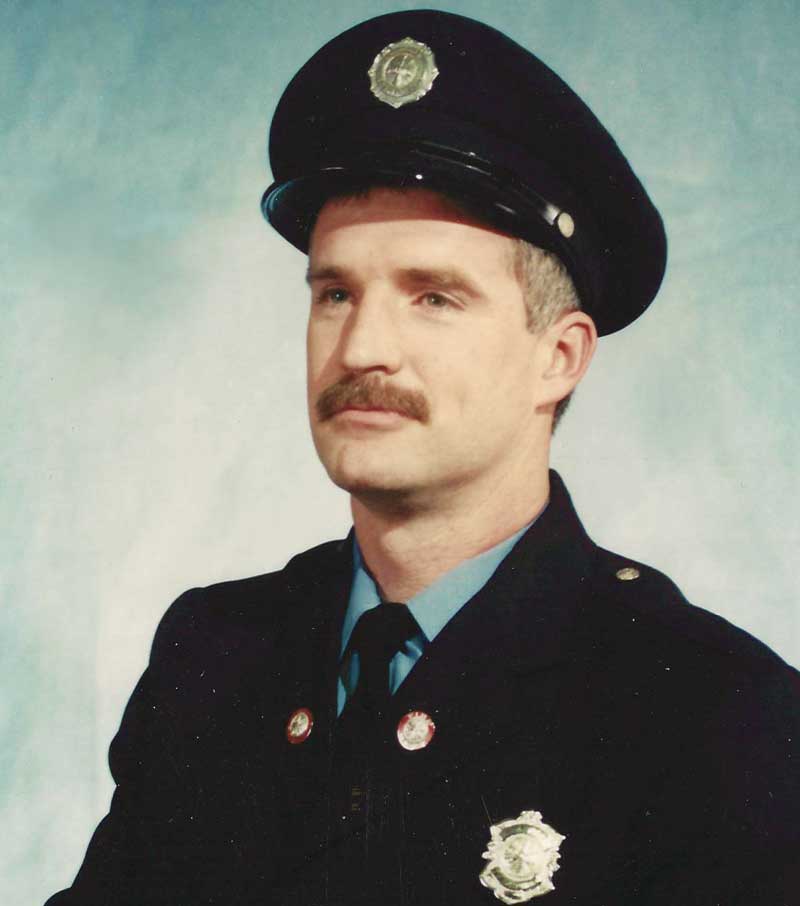
I am 68 years old now. I come from a family of 9 children, 7 boys and 2 girls. I was born and raised in Akron, Ohio and lived there my entire life. I have been married to my wife Lynn for 36 years. We have two adult children, Michael and Shannon. We have 3 grandsons- 4 year old Jack and 3 year old identical twin boys, Parker and Henry. The children and grandsons are our world! I attended Catholic elementary and high schools and completed almost 2 years of college at Miami, Ohio, Kent State and Akron University. After various boring jobs I became an East Cleveland firefighter at the age of 31. I spent my entire 26 year career in East Cleveland and retired at the age of 58. I got started in writing almost by accident. I never really had a desire to write a book. After working in East Cleveland for a few years I decided that, because of all the unusual and outrageous events that seemed to occur on a regular basis, this story needed to be told. I felt like I was a decent writer so I decided to give it a go. I decided that the book would be a start to finish compilation of a career firefighter. I knew that the book would take years to write. Little did I know that writing a book was not so easy. I gained a new respect for authors. I now understand what writer’s block is. It took me over 20 years to get this book done!
Advertisements
2) What inspired you to write your book?
I think what inspired me most to write the book was the unique and unusual events that took place at the emergency scene as well as inside the engine house. The average Joe would never experience events like these. I remember a fellow firefighter remarking that “you can’t make this shit up” and “working in East Cleveland is like writing a book that writes itself”. That was so true! So I decided then to compile information. I wrote down as they occurred, unique and unusual fires, rescues, extreme emergency medical runs, as well as comedic instances, as there were many. As I gathered information I realized that it would make the most sense to make this a story of a new recruit firefighter and what he experiences over his entire career and finally into his retirement.
3) What theme or message do you hope readers will take away from your book?
I hope that readers will gain an appreciation of what a firefighter goes through on a daily basis. The nights when they get no sleep and are called to fight multiple fires, wearing wet carcinogen laced, stinky gear, in the dead of Winter, and it takes a couple days for your body to recover. The call for an infant not breathing or choking on a foreign object. The shooting of a young man who is tossed to the sidewalk in broad daylight. The numerous horrific vehicle accidents and car fires where bodies are burnt up so bad that they are unrecognizable! The list goes on. I didn’t want the readers to think that I felt like all firefighters were heroes, because they are not. They need to earn the label of true hero. I just wanted people to see inside our world and gain an appreciation for what firefighters go through on a regular basis.
4) What drew you into this particular genre?
I was drawn into this genre because it was the perfect fit for me, being a career firefighter. I probably could have written a book on golf or painting houses, two things that I am quite familiar with, but who cares about that? Writing about firefighting seemed like a no brainer. Firefighting is hardly as simple as ” putting the wet stuff on the red stuff”. It is much more complex and strategic than most people think. I realized that most people don’t know much about what the life of a firefighter is all about. So I chose this genre because firefighting is both informative and extremely exciting at times. I knew that there is an audience out there for this type of book.
5) What social media site has been the most helpful in developing your readership?
As far as social media promotion of my book goes, Facebook has helped sell the most books. Friends and familiy and Facebook posts/shares, have been the most helpful to me. I realize that social media marketing would really give the book sales a nice boost but I haven’t been very active on Twitter, Instagram or Tik Tok. It takes a lot of followers to move the needle and I dont have the time or desire to try to gain followers. I know very little about how to promote a new book on social media.I may try to hire a freelance social media marketer to promote the book if I can find a reputable one who is fairly priced. If not I am OK to market the book here and there as opportunities arise. Regardless I am pretty much ecstatic to finish the manuscript and get the book published. I can now proudly check this one off my bucket list. It feels good to call myself an author.
6) What advice would you give to aspiring or just starting authors out there?
The best advice I can give to a young aspiring author is to never give up. If writing a book is what you want to do, then realize that it is not easy but anyone can do it. If you put your mind to it and persevere you will get it done. I am a prime example of that. There were many times during the course of writing this book that I put it on the back burner for months at a time. Sometimes I wanted to give up. But I always eventually got back to it. Realize that you will get writer’s block and when you do, just take a break and don’t get stressed out. Have fun with it and enjoy your creation. Read it over and over and continue to edit the manuscript. Hire a professional editor when you are finished. It will be money well spent. But most of all don’t give up if you truly believe in your story. The same goes for publishing the book. Don’t quit until you find the right publisher. There are many great helpful publishers out there just waiting to share your story. Don’t give up!
7) What does the future hold in store for you? Any new books/projects on the horizon?
I am most likely “one and done” as an author but you never know. I cannot rule out writing another book but it isn’t in my near future. I realize that writing a book is quite challenging, probably more so for people like me who kind of got into the role of author unexpectedly. I enjoyed writing my book but I really enjoyed it when it was finished and sent to the publisher. Then to see the covers and photos and book in print was quite amazing. I am proud to be a part of the group called “author”. It was not easy but I am extremely satisfied to hold the finished paperback in my hand and realize that I accomplished something pretty cool!
Advertisements
About the Author
Author of the book, Working Fire in East Cleveland, lives in AKron Ohio with his wife, and has two adult children… one of them is a firefighter.
I received a free copy of this book in exchange for a fair and honest review. All opinions are my own.
A young woman in grief begins a project to tackle mental health and help others in author Kimberly Fiese Yule’s “To Save One.”
Advertisements
The Synopsis
Find solidarity in loss, friendship, and the fight to bring light into the darkest moments.
“A brave and tender story that speaks to the heart of every teenager, and every parent who loves one.”
When Evy loses her boyfriend to suicide, her life unravels in grief and unanswered questions. With the help of her best friend Henry and her classmate Chloe, who carries her own hidden struggle, Evy channels her pain into The Happy Face Project, a senior film that dares to talk openly about mental health.
What begins as a school project becomes something bigger: a mission to break the silence, to offer hope, and to save at least one life before graduation. Along the way, Evy, Henry, and Chloe discover that healing is found in music, courage, and in standing together when it matters most.
For anyone searching for connection and for every parent or educator who wants to better understand what today’s youth are facing.
A story of heartbreak and resilience, it offers both a mirror for young adult readers and a conversation starter for families, schools, and communities.
The Review
This was such a powerful and moving read. The author did an incredible job of delving into a subject that is both sensitive and heartbreaking, and did so with a reverence and care that truly resonated with readers. The powerful imagery that sets up each chapter’s scenery and tone is compelling, and the depth of world-building the author puts into the story itself speaks to the themes of this story, telling a story that weaves into the fabric of all of our lives.
Ultimately, this story served as a testament to thought-provoking themes and empathetic characters. The tragic circumstances of Briggs’s story and how his loss impacted so many people in the story were equally on par emotionally as protagonist Evy’s exploration of grief and loss, and the raw moments of her grief that pop up throughout the book are truly relatable to anyone who has ever felt grief like that before. The honest and sympathetic portrayal of mental health and those who suffer from this subject matter, including both those who have become victims of this mindset and those who have been left behind as a result, all have a voice in this story and bring the emotional resonance that makes this story so engaging.
The Verdict
A compelling, engaging, and heartfelt YA drama, author Kimberly Fiese Yule’s “To Save One” is a must-read novel. The book also touches upon other themes naturally, including overall health struggles and the impact of a support system, as well as creativity in times of grief and how music can connect people. The book can be haunting at times, and definitely heartbreaking, and yet it is with a strong and compassionate voice that the author brings this rich story to life. If you haven’t yet, be sure to grab your copy today!
Rating: 10/10
Advertisements
About the Author
Kimberly Fiese Yule believes life is better with sand between your toes, music in your ears, and a story that makes you feel seen. A mother of three, her greatest pride and joy, she is also a former women’s health nurse practitioner and a lifelong wanderer. Depending on the day, she calls Texas, California, or the Caribbean home, always finding inspiration in sunshine, connection, and the beauty of everyday moments.
I received a free copy of this book in exchange for a fair and honest review. All opinions are my own.
A young woman’s discovery of a family secret helps her navigate the science of feelings in author Parul Sharma’s “Aria’s Compass.”
Advertisements
The Synopsis
What if your feelings had a voice, and it sounded a lot like you
Aria worries. A lot. About friendships, school, being “too much” or “not enough.”
But everything changes the day she finds a tiny AI companion named Zylo and a glowing compass hidden in her late grandfather’s trunk in her attic.
As Aria follows the clues he left behind, she uncovers a hidden Echo Room, and a family secret tied to her emotions. With the help of her friend Eli and the tech her grandfather built, Aria begins to understand the science of feelings, and the power of listening to them.
Aria’s Compass is a story for anyone who’s ever felt overwhelmed, invisible, or different. It’s about curiosity, courage, and finding the tools to navigate your own inner world.
Because sometimes, the bravest thing you can do… is feel.
The Review
This was such a compelling read. The author does an incredible job of building a story and a cast of characters that feel relatable and enthralling. The unique blend of fantasy and sci-fi elements, such as the AI companion and the connection this tech had to a person’s emotions, was a great way to highlight the story’s emotional core. The power of the author’s use of imagery was astounding, capturing the sensory aspects of anxiety and the protagonist’s struggle with creativity and wit.
The short yet powerfully introspective story is best when readers connect with its characters, especially the protagonist, Aria. The reality of anxiety and the stresses teens face these days, especially in social situations, was expertly navigated through Aria’s journey. The lessons the author poured into the narrative, primarily through narrative devices like the compass Aria discovers or anything of her late grandfather’s tech, made this a story filled with emotional depth that readers can connect with.
The Verdict
Memorable, heartfelt, and engaging, author Parul Sharma’s “Aria’s Compass” is a must-read sci-fi, coming-of-age novel. The fast-paced narrative, its twists and turns, and the emotional depth of its themes will keep readers invested in the characters and in the sense of warmth and hope the narrative inspires. If you haven’t yet, be sure to grab your copy today!
Rating: 10/10
Advertisements
About the Author
I am a global leader, neuroscience coach, speaker, and strategist, blending science, psychology, and leadership to help people unlock their highest potential. From boardrooms to brainwaves, my work focuses on future-ready Women and leadership
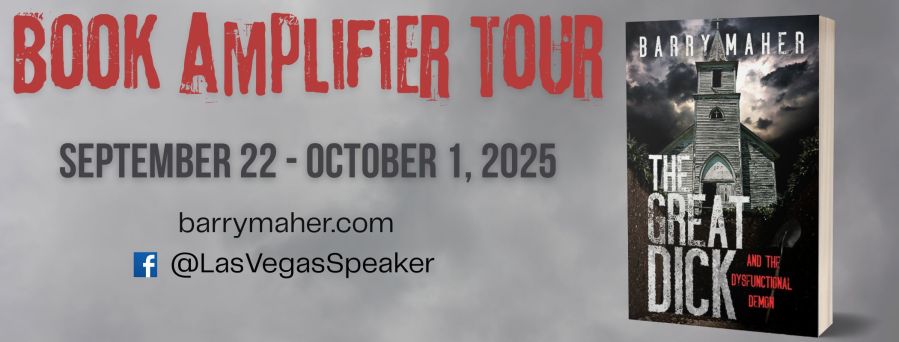
Today on my blog I’m excited to feature Barry Maher’s darkly comic supernatural thriller, The Great Dick: And the Dysfunctional Demon. If you love stories that bend reality, dive into the occult, and keep you turning pages late into the night, you won’t want to miss this one.
Advertisements
SYNOPSIS
In 1982, failed songwriter Steve Witowski is running from both the law and his past when a reckless act of heroism—saving a woman from a brutal assault—pulls him into a world far darker than he ever imagined. That woman, Victoria, has just purchased a decaying church steeped in sinister history, and with her comes a web of occult rituals, crypts, and grave-robbing secrets that refuse to stay buried. As Steve becomes entangled in her dangerous world, the presence of a desperate demon closes in, blurring the line between delusion and reality. Haunted by visions, hunted by forces he refuses to believe in, and marked by the face of the man he killed, Steve is dragged deeper into a nightmare of dark magic, betrayal, and blood-soaked revelations where survival may cost him his soul.
Advertisements
EXCERPT
Back in the 60s . . .
On Wednesday October 13th, 1968, a faculty panel recommended the dismissal of Professor John Harris—in absentia, as no one at Harvard had seen or heard from him in weeks. Harris later bragged about delivering his final lecture on “one shitload and a half of LSD.” According to the recording made available to the faculty panel, this was the sum total of that lecture:
“Good afternoon. Wow. American Literature, hunh? Let’s see. Moby Dick today. Right?”
“Moby Dick?” asked a confused voice. “No. What happened to The Scarlet Letter?”
“Right. Moby Dick,” Harris continued. “Great book. None of you have read it. None of you are going to read it. Nobody ever does. What you need to understand is that as far as I’m concerned—and I’m the fucking professor—Moby Dick is the same story as The Great Gatsby, which some of you may read. I call it, ‘the half-assed struggle of the individual to put their world to rights in the face of a failure that threatens to define their life.’ I think that’s from my thesis. Though maybe it’s not pretentious enough.”
Harris laughed. “Hey! How about this? Great Gatsby/Moby Dick: same story, different era, right? So, if someone someday tries to write that story for this generation, they should call it The Great Dick. That’d be perfect, wouldn’t it? The Great Dick. Alright, that’s got to be almost fifty minutes. See you next . . . whenever. Wow.”
SUNDAY, MARCH 21, 1982 Two Women and One Corpse
“Any fool can tell the truth, but it requires a man of some sense to lie well.” —Samuel Johnson
CHAPTER 1
Okay, let me start out by admitting that I was an asshole. I know that. The ludicrous amount of fame and acclaim and money I’ve had dumped on me since that time only makes it more glaring. The fact that we lived in a different world back in 1982 is no excuse. It was the same world. It just wasn’t the world we thought it was.
I remember it was a Sunday night. Sundays always feel different. Looking back now and Googling a 1982 calendar, I’d guess it was Sunday, March 21st. I remember waking up and within minutes making the decision to leave. Quickly, before I could change my mind, I eased myself out of the rickety hide-a-bed.
Immediately, Maria rolled over into the spot I’d just vacated, breathing loudly through her nose and mouth, not quite snoring. I hate to say it, but she looked every minute of her thirty years. Her thick dark hair clung damply to her face; her heavy arms stretched outward. The cast on her left wrist looked like a giant manacle.
The grandfather clock beside the cigar store Indian read 1:37, though a few minutes before, it had chimed four times. That made as much sense as anything else in my life. I was thirty-five years old, a Harvard grad who’d spent the previous two years faking his way through a $13,500 a year job as a territory rep for the Richmond Tobacco company. That $13,500 was the most money I’d ever made. You’re probably thinking that when you adjust for inflation and translate that $13,500 into today’s dollars, it’s a lot more impressive.
No, it’s not.
I slipped on my jersey and my jeans and gathered the rest of my things in my old gym bag. Fortunately, enough moonlight crept in around the edges of the tattered drapes to give the room a dim glow. I wondered if it would be safe to hitchhike out of there, or if Indiana had already notified the California Highway Patrol that I was wanted.
My situation was bad. But not bad enough to, say, crawl into a grave with a rotting corpse.
That would come later.
Advertisements
GUEST BLOG POST
Where Do You Get Your Ideas from?
A while back, I was speaking on an Asian cruise when I realized I could no longer figure out what the hands of the clock meant. The next day, during a session, I introduced the ship’s captain. Twenty minutes later I picked him out of the audience and asked him what he did for a living. (The uniform did look a tad familiar.) That same day, I gave up trying to understand foreign currency. Even American money was getting tricky. In Viet Nam, I handed a vendor two hundreds and a five for a $7.00 baseball cap. It was a very nice cap.
Back home, the first thing my doctor did was have me draw a clock face at ten to three. The second thing he did was take away my driver’s license. Then he sent me for an immediate MRI. The nurse there wouldn’t comment on the results, but when I asked where the restroom was, she said, “I can’t let you go in there alone.”
I explained that bathroom visitation was a particular expertise of mine.
“Like telling time?” she asked. “You need to talk to your neurosurgeon.”
“I have a neurosurgeon?” Just what I always wanted.
I also had a brain tumor—the size of a basketball. Or maybe the neurosurgeon said “baseball.” I wasn’t tracking too well at that point. Still, I quickly grasped he was planning on carving open my skull with a power saw.
“I don’t really need to tell time,” I said. “Or I can just buy a digital watch.”
Everyone said my neurosurgeon—or, as I thought of him, “Chainsaw Charlie”—was brilliant. My problem was that I’ve spent my life around intelligent people, and I’ve always believed human intelligence was overrated. To me, on a scale of everything there is to know in the universe, the main difference between Einstein and Koko the Wonder Chimp was that Einstein couldn’t pick up bananas with his feet. (As far as I know.)
Still, I went under the knife—or in this case, the power saw. Maybe I had a seizure. The doctors weren’t sure. That might explain what happened. Because I came out of the surgery with Lady Gaga singing non-stop in my head and an unforgettably vivid story, like a memory of something that I’d just witnessed.
Reacting to the intrusion, I suppose my brain could have given me Citizen Kane or a nice rom/com or a few episodes of Seinfeld. Instead I got open crypts, bizarre spells, sudden death and the Ralph Lauren version of the Manson Family. “How did my operation go? Well, I’m doing well, but the people in my head—or wherever they were—they went through Hell.”
Lady Gaga went away after a day or so. But the story stayed with me. And when I was able, I spent a couple of years putting it all down, working it out, trying to get it just right. And that became The Great Dick: And the Dysfunctional Demon.
Advertisements
ABOUT THE AUTHOR
Barry Maher’s career has been anything but ordinary. He’s been an award-winning (if modestly so) poet, a magazine writer with bylines across the country, a speaker for some of the world’s largest corporations, and a man who once lived literally on the beach, seagulls and all. His syndicated column Slightly Off-Kilter and his darkly comic fiction reflect that same unpredictable spirit. Media appearances range from The Today Show to CNBC, with features in The Wall Street Journal and even Funeral Service Insider. Connect with him at BarryMaher.com or on Facebook.