I received a free copy of this book in exchange for a fair and honest review. All opinions are my own.
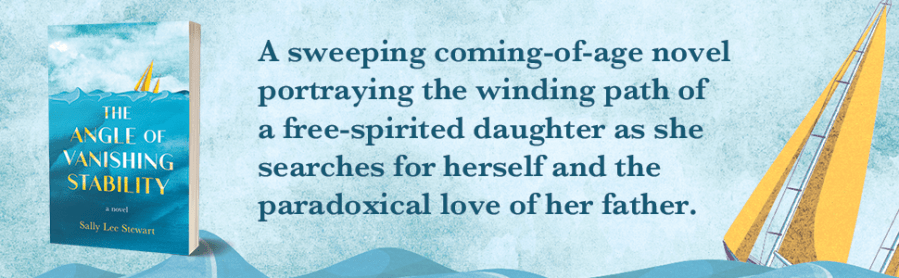
A woman must come to terms with her difficult past to find balance within herself in author Sally Lee Stewart’s “The Angle of Vanishing Stability”.
Advertisements
The Synopsis
A vessel can heel to one side, but at a certain point, it will no longer balance above water—and it capsizes. This is the angle of vanishing stability.
Thea West, a Northern Californian teenager growing up in the late sixties and early seventies, is one of five daughters trying to stay afloat amid the psychologically catastrophic dynamic between her parents—a covert and commanding mother and an ocean-yachtsman father. A talented sailor and businessman, Mr. West suffers from crippling alcoholism, with frequent rages that mask his fragility. Thea longs to know how to sail, but in her world, traversing the water is a skill that belongs only to men, and she’s terrified to ask her larger-than-life father to teach her.
When her father’s demons drive him to a new low, Thea isn’t sure if she can ever learn to forgive. She strikes out from home in search of love and self, running from what she views as the problem—her father and his hold on her family. As Thea falls in and out of affairs, marriages, and jobs, her travels take her from New York to Nicaragua and finally back to California. There, she must reckon with the legacy of her father’s love and failure and decide whether she’ll let her past capsize her future—or if she can finally find balance with a life of her choosing.
The Review
This was such a compelling and engaging read. The author does a remarkable job setting the stage for this narrative, exploring the themes of familial relationships, identity, and living a balanced life naturally and honestly throughout the narrative. The heart and emotional struggle the protagonist endures throughout her life and the journey that she goes on that takes her to parts unknown, only to return her home once more, made this feel like such a complete and thoughtful moment in the protagonist’s life.
The heart of this narrative rested in the character-driven story the author told. The book perfectly fits the genre fiction outline, giving an honest and depth-filled plot that allows the characters to shine and determine their path. Readers will be able to see not only themselves in these characters at some point but also people in their own lives in these characters, allowing the reader to connect further to the overall story.
The Verdict
Thought-provoking, honest, and engaging author Sally Lee Stewart’s “The Angle of Vanishing Stability” is a must-read narrative. The twists and turns in the story, the emotional experiences and dialogue, especially those that define the protagonist and her father’s relationship, and the full-circle journey she goes on will keep readers heavily invested in this story. If you haven’t yet, be sure to grab your copy today!
Rating: 10/10
Advertisements
About the Author
Sally Lee Stewart is a fourth-generation Californian and elementary education specialist. She lives on a cooperatively grazed ten-acre farm in the coastal hills of Northern California and sails on the San Francisco Bay. “The Angle of Vanishing Stability” is her first novel.
I received a free copy of this book in exchange for a fair and honest review. All opinions are my own.
Pirates invade a small island home in author Jimmy Jungles’s “Captain Bacawly and the Breakaway Bandits”.
Advertisements
The Synopsis
Ever since I was a kid, I had only known a fun and simple life in the jungles of the Wazoo. But never did I imagine there was anyone else out there wanting to find our small, peaceful island. As our animal society works to elect its next leader, outside invaders (known as the pirates) raid our home and harm Wildlings! The entire Wild is under threat and worst yet, we don’t even know where or how they are hiding among us!
Join along in this little journal of mine as I uncover the mystery behind who has been helping them, what it is they truly seek, and why so many have come to call this land the wonder of the world.
The Review
This was an engaging and brilliant YA novel. The atmosphere the author created harkened back to the classic adventure tales of Huck Finn and Tom Sawyer. It showcased a young teenage boy living amidst an animal populace and having to navigate life lessons and an invading pirate force. The balance of tension as the threats mounted and the connectivity of the protagonist with his animal friends allowed the reader to get invested in this story.
The world-building and character development in this novel were incredible. The rich dynamics between the protagonist and the island inhabitants early on spoke to the wonderful sense of community the author developed in this setting, and the theme of responsibility and protecting that community was extensively developed throughout this novel.
Advertisements
The Verdict
Memorable, entertaining, and thoughtfully written, author Jimmy Jungles’s “Captain Bacawly and the Breakaway Bandits” is a must-read novel. The sense of fun and adventure, mixed with the thrilling nature of the battle between Jimmy and the Pirates and the shocking twists in the story, will keep readers eager for more. If you haven’t yet, be sure to grab your copy today!
I received a free copy of this book in exchange for a fair and honest review. All opinions are my own.
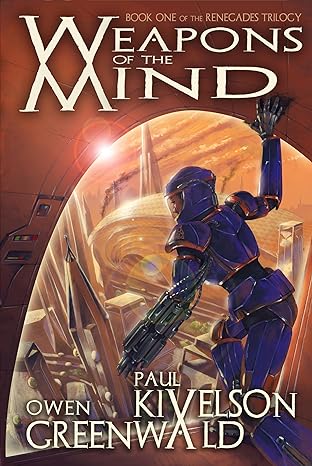
A woman must flee the order she spent her life serving when she is framed for a mission gone wrong in authors Paul Kivelson and Owen B. Greenwald’s “Weapons of the Mind”, the first book in the Renegades Trilogy.
Advertisements
The Synopsis
Master your emotions. Perform your duty. Follow the Tenets. Tala has lived these rules for twenty years: the rules of an Enhancer. Then a mission goes wrong, and she finds herself framed, branded Renegade, and called to face judgment. Fleeing means violating the Tenets, the moral precepts of her order. Yet in that moment, she finds she cannot stay.
Hunted by the endless forces of the Galactic Coalition and her own mentor, famed Renegade killer Exemplar Scratch, Tala will pursue the proof of her innocence to the very heart of the galaxy. But cling as she might to the tatters of her honor, she cannot deny the true purpose of her mission: revenge. And the further Tala strays from the Tenets’ path, the greater the risk she runs of losing herself.
In a galaxy of strange aliens and hostile humans, danger casts its shadow on every wall. Friendships are forged, lost, and tested. And the lies that keep the galaxy running just might be about to come crashing down.
The Review
Upon delving into this book, one is immediately struck by its unique atmosphere. The narrative is steeped in a chilling tension, allowing readers to experience the protagonist’s struggle in a way that is both captivating and unsettling. The familiar theme of overcoming adversity is masterfully woven into the story, adding depth and resonance to the narrative.
The heart of this narrative was in the world-building and mythos of the universe the authors created. The detail that went into the worlds that made up this galaxy and the alien species that populated those worlds, as well as the corporations and government agencies that helped funnel the cast of characters into such a tense narrative, made this feel like the perfect read for those who enjoy Star Wars and Mass Effect. The mystery surrounding the reason for protagonist Tala’s frame and the emotional challenge to maintain her duty and sense of worthwhile searching for answers and staying alive all allowed the worlds around her to flourish and feel alive on the page.
The Verdict
Thoughtfully crafted, mesmerizing, and entertaining, authors Paul Kivelson and Owen B. Greenwald’s “Weapons of the Mind” is a must-read epic sci-fi meets space opera. The drama, the tension, and the thrilling adventure readers are promised are elevated to new heights with outstanding character development and remarkable world-building that will keep readers eager for more from this fantastic writing duo.
If you haven’t yet, be sure to grab your copy today!
Rating: 10/10
Advertisements
About the Authors
Paul Kivelson studied creative writing at Stanford with his undergraduate advisor Adam Johnson. His fiction has been published in the Adelaide Literary Magazine and the Schuylkill Valley Journal. Currently, he is pursuing a master’s degree in family therapy. His most recent work, Weapons of the Mind, is being released by Will Dreamly Arts and Publishing. But he is best known for his love of board games and his tendency to world-build more ideas than he’d ever possibly have time to write.
Owen B Greenwald is the award-winning author of the Big Bet series and of Weapons Of The Mind, set for release in November 2023 from Will Dreamly Arts Publishing. He is also the lead designer for the board game Anna’s Roundtable. He lives in Santa Clara, CA with his wife Jenna and his dog Kubo. He is an ardent believer in the power of stories to enrich and transform lives.
Despite the incoming glut of AI-generated entertainment, Owen plans to keep writing. Join him at www.owenbgreenwald.com
I received a free copy of this book in exchange for a fair and honest review. All opinions are my own.
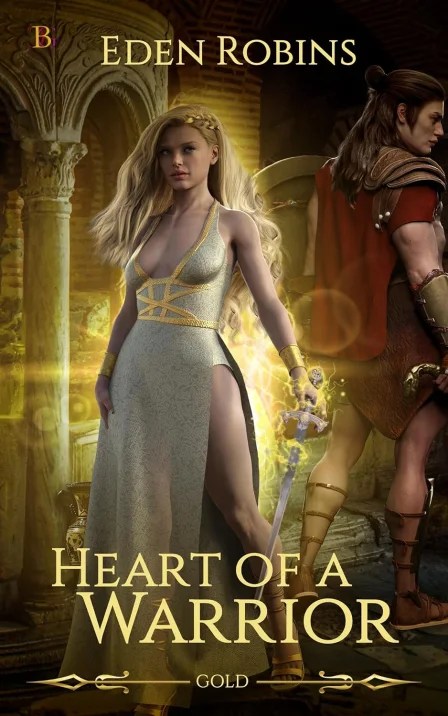
A young explorer with a shocking past and an immortal warrior must temper their growing attraction in the face of a growing threat in author Eden Robins’s “Gold: Heart of a Warrior”.
Advertisements
The Synopsis
It’s just gonna be one of those days…
Empathic healer and business owner, Dora Alexander decided to celebrate her 25th birthday by exploring the stalagmites and stalactites in Kartchner Caverns. Kinda nerdy? Maybe, but you do you, right? Things take a nasty turn when an earthquake rocks the cave, leaving her alone in complete darkness. Searching for a way out, she accidently awakens an immortal warrior who’s kind of cranky after his 100-year nap. Wouldn’t you be?
Philoctetes, one of Demeter’s immortal Gold warriors wakes up to the disturbing sound of a female sobbing. Thinking she’s one of the Silver demons he’s sworn to hunt down and destroy, he almost kills her before realizing she’s human. Correction. Turns out she’s not just human. She’s also the woman responsible for sending his kind to hell and causing woe and misery for the entire human race.
Dora never asked to be Pandora reborn. And she certainly didn’t ask to be paired up with an insanely hot immortal demon hunter on a mission to save the world and redeem them both. But The Fates seem to have their own quirky ideas. One of them being if she and said hot demon hunter consummate the inferno like attraction blazing between them, they’ll simply cease to exist, with any memory of their time on earth erased forever.
Oh goody, the day just got worse.
The Review
This was such an engaging and impressive blend of mythology and modern fantasy. The author masterfully brought the mindset and morality of the Ancient Greek gods and goddesses to life in the more modern-day setting of Arizona, with its blistering heat, technology, and desert environment. This allowed the reader to get lost in the rich atmosphere that was developed.
The narrative did a great job of bringing out those epic, destiny-fueled adventures to life on the page, and the action and dangers the villainous Silvers represented allowed the reader to feel the stakes of this story. Yet the dynamic between the two protagonists and their back-and-forth chemistry that evolved and grew over time brought the heart of this narrative to life. Their singular evolution throughout the narrative and how they embraced their journey was unique. Yet, the growth they shared and the romantic tension were an immediate draw into the story.
The Verdict
Author Eden Robins’s “Gold: Heart of a Warrior” is a heartfelt, compelling, and entertaining novel. The narrative’s twists and turns, the emotional pull of the protagonists’ shared goals, and the shocking cliffhanger will keep readers eager for more of this incredible story. If you haven’t yet, be sure to grab your copy today!
Rating: 10/10
About the Author
Eden Robins believes in second chances. Eden’s journey as an author started in 2000 with the release of her first book, a time travel romance entitled, Never Until Tomorrow. Over the course of the next eleven years, Eden wrote and shared nine stories from her heart with her readers. After a divorce and big changes to her personal life, Eden’s writing came to a crashing halt and her path took a different direction.
Twelve years after her last romantic tale was published, Eden found a home for her latest novel, Gold: Heart of A Warrior with Champagne Book Group. A magical, modern-day romantic romp into Greek myths come to life, this story gave her a second chance to do what she loves. Write. Connect with Eden Robins and check out her blog, Living the Path.
Tell us a little bit about yourself. How did you get into writing?
I’m a creatress at heart. Always have been. Creativity has been my companion and guide since I was little. I love to create through writing, gardening, cooking, crocheting, and playing piano. I’m an avid reader who loves to get lost in a great book. I also love to move my body, whether that’s through dance, or hiking or running or jumping or working out at the gym. Moving my body on a regular basis keeps me happy. What I eat matters a lot to me as well. I switched to a mostly whole food plant-based diet several years ago, and like how that makes me feel. I enjoy being outdoors, but also can spend a lot of time writing, reading, and daydreaming inside my home. My home is my sanctuary, my respite from the rest of the world. I often interact in group settings and like to be social, but I always need to balance that with alone time to decompress for a bit afterward. I can be, at times, very “hermit-like.”
I got into writing after I finished my first book. Seriously, that’s exactly how it happened. Growing up, I journaled, penned poetry, and wrote some articles for my high school newspaper, but I never pictured writing as a career path rather than a hobby until I finished my first novel. Both of my parents were in the medical/science field, and I was (and still am) fascinated by many aspects of science. The catalyst for my dive into writing was the death of my paternal grandfather. After he died, I had regrets about not spending more time with him. I kept wishing I could go back in time to get to know him better. I felt the urge to sit down and write about it, and that’s how my first book, a time travel romance entitled, Never Until Tomorrow, was born. It was as I typed the words “The End” that I knew I was hooked, and realized writing was something I wanted to take seriously for the rest of my life.
From that point forward, I was lucky enough to find publishers interested in my work and have had the privilege of sharing ten of my published novels with the world.
What inspired you to write your book?
Each book has its own inspiration. My current release, a modern-day romantic romp into Greek mythology entitled, Gold: Heart of A Warrior, was inspired by a children’s book on Greek myths I had bought for my kids. I read a lot to my children while they were growing up and was always looking for literature that would stimulate their minds and inspire their imagination. I picked up Usborne Illustrated Guide to Greek Myths and Legends by Cheryl Evans, and the complex and juicy lives of the characters in these myths caught not only my children’s attention, but mine as well. Particularly, reading about Pandora opening the Jug of Woes and releasing evil and misery into the world pulled at something inside of me. I felt like this was a woman who had been used by the Gods (Zeus) as a pawn, and then forever punished and maligned after she had done the deed she was manipulated to accomplish. I began thinking about how her story could go in a different direction. I started wondering what would happen if Pandora was offered a second chance at life. What would she do? How would she live? Who would she become if she were no longer a pawn of the Gods, or at least less of a pawn than before?
What theme or message do you hope readers will take away from your book?
The path to empowerment is always through the self, and second chances are possible at any age.
What drew you into this particular genre?
Love and hope. Although romantic fiction isn’t the only genre I write (I also write mainstream fiction and nonfiction), that feeling of falling in love is so magical. I enjoy creating that for my readers. I also like writing stories that have a happily ever after that leaves the sweet taste of optimism in my readers’ mouths. Those two reasons keep me excited about writing in the romance genre.
What social media site has been the most helpful in developing your readership?
At this point, I’d have to say it’s Instagram. The reader community is very supportive, engaged, and interactive.
What advice would you give to aspiring or just starting authors out there?
Just pick up the pen and write. It’s not about perfection or getting the grammar just right. There’s a magic in the process of simply putting your story on the page that can transform a writer’s thoughts into a masterpiece. As Michelangelo once said, “Every block of stone has a statue inside it, and it is the task of the sculptor to discover it.” That blank page offers a writer the opportunity to unlock the story of their heart. Just start writing. The rest will come together.
What does the future hold in store for you? Any new books/projects on the horizon?
The future feels so bright. Especially in light of the past. After my initial foray into my writing journey, with nine of my novels getting published, I hit a wall. I got a divorce, and for more than a decade after, I just couldn’t write. I came to believe my creativity had dried up. I didn’t put a book out into the world during that time. It was a frightening period in my writing, but looking back, I know that “ten years of drought” taught me so much and provided an evolution and a deepening for me that I needed. I understand now that while I wasn’t creating stories for my novels during that time, I was creating the story of my life. A story I needed to establish before I could continue my book writing journey.
Now, more than a decade with no books published, I’ve begun this second chance chapter of my life with the release of Gold: Heart of a Warrior. I’m forever grateful to my publisher, Champagne Book Group, for providing me with this opportunity to share my writing with the world once more. I’m excited to announce that editing has begun on A Warrior’s Peace, book two in my Gold series! I’m also working on a short story holiday collection of modern-day fairytales, a fallen angel romantic suspense, a magical realism retelling of Little Red Riding Hood, and a nonfiction book about the creative path. I’m so thankful to have my creatress back as my companion and look forward to her guiding me for years to come.
Eden Robins believes in second chances. She’s been lucky enough to have a few in her life and knows there’s a magic in seizing the moment to try again. As a mentor, her heart’s purpose is to guide people into living as their full, innate, creative potential. As a writer, her heart leads her to inspire readers through her tales. Creating stories about people courageously living, loving, and experiencing life true to themselves, no matter how messy it gets, are the ones Eden wants to write and will keep writing for you…and for her. Connect with Eden at https://linktr.ee/edenrobins and check out her blog, Living the Path, https://awholeheartedme.com/blog
I received a free copy of this book in exchange for a fair and honest review. All opinions are my own.
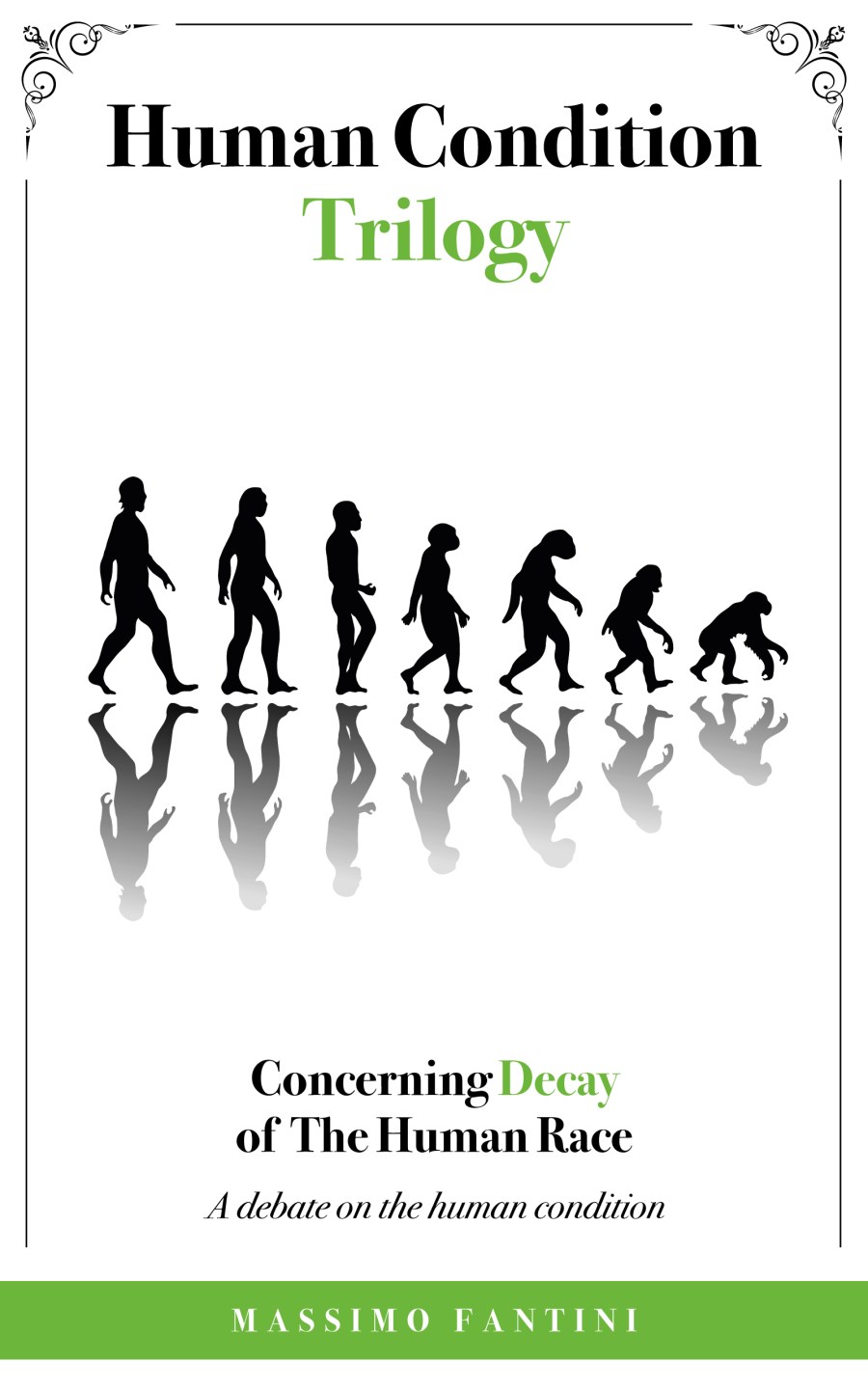
An island isolated from the world shows the perils of social evolution (or the lack thereof) in author Massimo Fantini’s “Concerning Decay of The Human Race), the third book in the Human Condition Trilogy.
The Synopsis
The small village of the Island of the Iguanas experiences the succession of different communities – sometimes forced to live together, sometimes taking over from a former generation. Each community possesses a culture and an assortment of certainties which it does not intend to give up, judging a priori the customs of those who preceded it as uncivilized or unreasonable.
Over the years, the community consolidates and grows, together with their prejudices, social injustices, and religious superstitions. The structural transformations of the village have repercussions on the ecosystem of the island which – starting as a protected nature reserve – becomes a hunting place, a tourist destination, and a favorable terrain for smugglers to exploit.
Thus, faced with the opportunity to adopt a new lifestyle – concerning principles of equality, safeguarding personal freedoms, and restoring the ancient harmony between man and nature – there are those who choose to follow the tested path of the government of man over man, which makes discrimination its founding principle, and those who choose to defy it. Social contrasts – delineated by origin, by social background, by acquired privileges – begin to arise within these communities, which are made up of heterogeneous families and members of different ages and ambitions.
Given the possibility to make a clean sweep of the past and rebuild the social fabric from scratch, will those who position themselves as leaders avoid the mistakes made by their predecessors or will they end up mechanically following the same steps laid out by human history?
The editing and translation of this book was done by Ian Zwaschka.
The Review
This was such a unique and compelling narrative. The author does a beautiful world-building in this book, allowing the reader to become immersed in this island world and develop such unique cultures and different communities. The imagery the author utilizes within the narrative brings this island setting to life in a vibrant way, allowing the narrative to come alive in the reader’s mind.
Yet, as with every fantastic book in this trilogy, the author soars when delving into the philosophy and themes behind this story. The tension that builds slowly over time as readers read how each generation on this island evolves and takes on the prejudices and judgments of those who came before speaks to the very cyclical nature of humanity in a social setting and how giving into the government’s role in our society plays a significant role in that, as bigotry and injustice, along with particular religious beliefs, tend to impact the laws and social settings the rest of the community must live in, leading to a significant disparity between social classes. The exploration of why some people can rise above the bigotry of the past while others remain seething in that hatred was so remarkable to behold.
The Verdict
Thought-provoking, insightful, and engaging author Massimo Fantini’s “Concerning Decay of The Human Race” is a must-read contemporary fiction narrative. The twists and turns in this island setting and the impeccable discussions of these themes drive the reader to make this a thoughtful and remarkable book. If you haven’t yet, be sure to grab your copy today!
Rating: 10/10
Advertisements
About the Author
Greetings, readers.
I am Massimo Fantini, an Italian author and free thinker, writing from my home in the hills just outside Bologna. In quiet moments, when I am not writing, I enjoy classical music, particularly orchestral works for violin and the Italian opera.
I graduated from a university in Bologna with a degree in civil engineering. However, the studies of my youth do not represent my life’s obsession—that is, delving into those realities which unite all members of the human race: suffering, frustrations, conflicts, and the human reactions to these. They are the events and forces that take every human as an innocent in the crib and twist and turn them into 8.1 billion unique (but intimately connected) forms.
In short, I am obsessed with exploring the intimate recesses of the human condition.
In 2018, entirely dissatisfied with my job, I sought a new form of expression. Thus, I began to write. Incessantly.
I experimented with many kinds of writing. How best to give my ideas form? Then, I found my voice through stories, giving life to characters who explore, triumph, and fail for us to watch.
In each installment of my Human Condition Trilogy, these same all-encompassing issues are approached from different directions, under different circumstances, and by different characters.
Echoing the sentiment of Heraclitus, no two people may look at the same problem, because it is different to each. From the old cynical Leonard in Concerning Fanaticism to young Tommaso (a character inspired by my own youth) in Concerning Intellectual Suicide, I tried to cast a light on a path that is a constant part of our lives, but also constantly shifting.
Through my writing, I encourage readers to find their own perspective on life. Rather than embracing the comfortable mold which society provides, like a goldfish “free” to swim around in its little bowl, I hope my readers can use my books as a steppingstone toward their own unique way of thinking. And then, I wish them the freedom to pursue it.
Art is wonderful because it is a representation of what we otherwise cannot express. I seek not to provide myself and my readers with a mere distraction (what so often passes for “entertainment”). Not a hole in which to stick our heads for a few hours, only to emerge weakened and even less able to face our reality. Rather, I offer up a representation of our shared condition.
I received a free copy of this book in exchange for a fair and honest review. All opinions are my own.
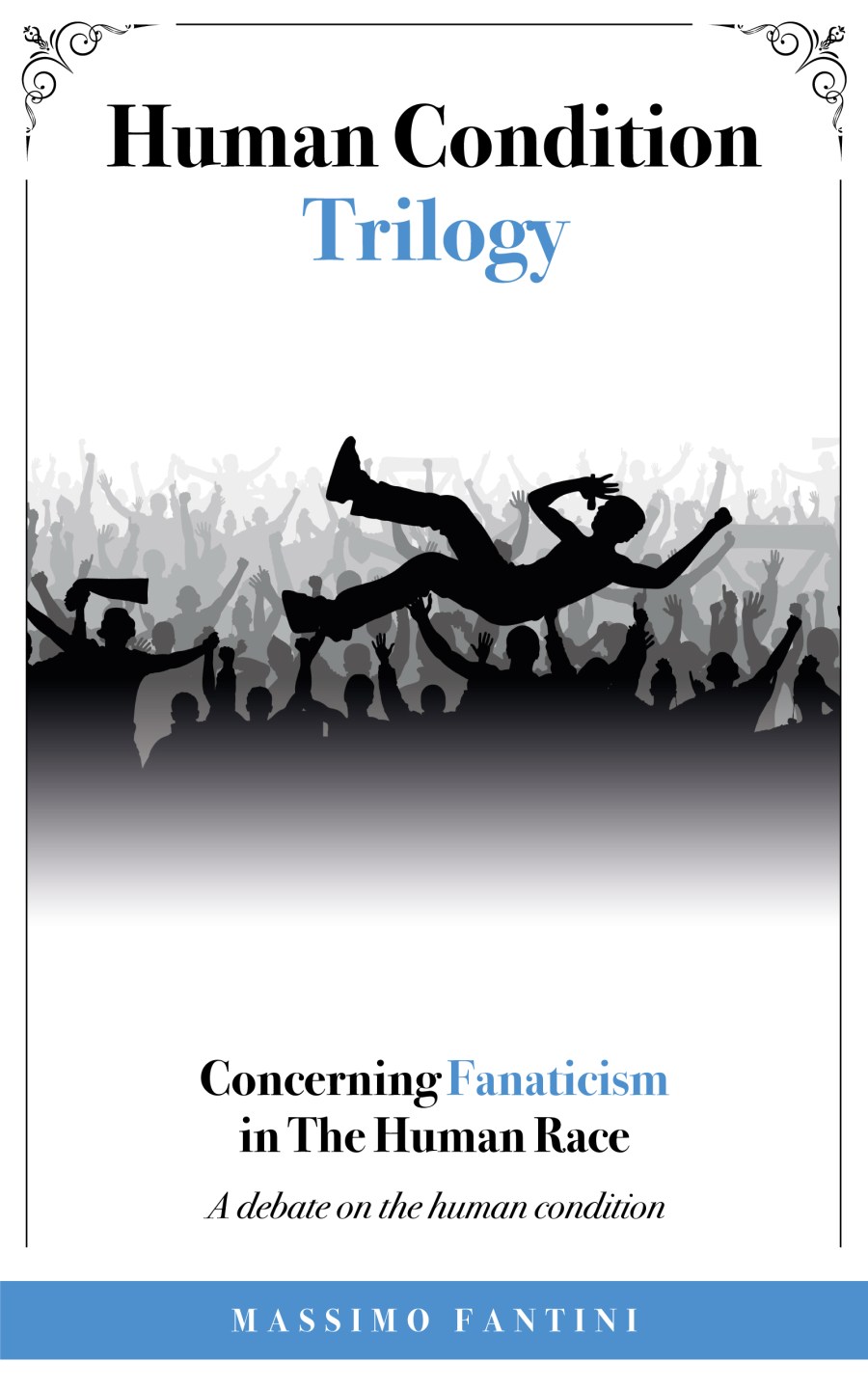
A seemingly simple law dispute turns into a gripping look into the human condition in author Massimo Fantini’s “Concerning Fanaticism in The Human Race”, the latest book in the Human Condition Trilogy.
Advertisements
The Synopsis
Elijah is a promising young lawyer, in love with his work and confident in the potential of the human race.
His law firm’s senior partner gives him his first important assignment. Elijah will have to follow the case of Leonard, an elderly engineer who lives in Montepastore, a small village in the Bolognese Apennines (Italy).
Leonard’s question concerns the supplementary contribution that engineers enrolled in the professional register are required to pay to Inarcassa, the Engineers’ Pension Fund. At first, the case seems simple. It was the subject of a previous ruling by the Court of Cassation. But Leonard is not satisfied with an institutional response. He wants to know why. He wants to know what hides behind the Supreme Court’s ruling.
Leonard’s demands grow meeting after meeting, and the subject of the dispute widens to include ethical, religious, and historical concerns.
As in the previous manuscripts, questions about the human condition are at the center of this philosophical debate. In the absence of answers, what is the point of writing about anything else?
The editing and translation of this book was done by Ian Zwaschka.
The Review
One of the most compelling questions a person can ask is whether or not to trust what is being told. The dialogue and character growth that the author brings to life on the page is rich and driven, allowing the reader to get lost in the narrative. The setting and atmosphere the author can develop and the mounting tension add to an already thoughtful story.
Yet the discussion and philosophical journey that readers are presented with makes this story so inviting. The ability to question authority and tackle mounting ethical dilemmas as they are presented to us delves into our philosophy and how we interact with religion, politics, and the human mind overall. The way the author presents this discussion to readers gets the reader’s minds working and does so without going over the line of being abstract, allowing the story to shine brightly.
The Verdict
Memorable, thoughtful, and gripping author Massimo Fantini’s “Concerning Fanaticism in the Human Race” is a must-read contemporary fiction that meets philosophical discussion. The twists in the narrative and the engaging character dynamics between Elijah and Leonard will keep readers on the edge of their seats while also looking inward at how we view blind faith and the ability to question authority for ourselves. If you haven’t yet, be sure to grab your copy today!
Rating: 10/10
Advertisements
About the Author
Greetings, readers.
I am Massimo Fantini, an Italian author and free thinker, writing from my home in the hills just outside Bologna. In quiet moments, when I am not writing, I enjoy classical music, particularly orchestral works for violin and the Italian opera.
I graduated from a university in Bologna with a degree in civil engineering. However, the studies of my youth do not represent my life’s obsession—that is, delving into those realities which unite all members of the human race: suffering, frustrations, conflicts, and the human reactions to these. They are the events and forces that take every human as an innocent in the crib and twist and turn them into 8.1 billion unique (but intimately connected) forms.
In short, I am obsessed with exploring the intimate recesses of the human condition.
In 2018, entirely dissatisfied with my job, I sought a new form of expression. Thus, I began to write. Incessantly.
I experimented with many kinds of writing. How best to give my ideas form? Then, I found my voice through stories, giving life to characters who explore, triumph, and fail for us to watch.
In each installment of my Human Condition Trilogy, these same all-encompassing issues are approached from different directions, under different circumstances, and by different characters.
Echoing the sentiment of Heraclitus, no two people may look at the same problem, because it is different to each. From the old cynical Leonard in Concerning Fanaticism to young Tommaso (a character inspired by my own youth) in Concerning Intellectual Suicide, I tried to cast a light on a path that is a constant part of our lives, but also constantly shifting.
Through my writing, I encourage readers to find their own perspective on life. Rather than embracing the comfortable mold which society provides, like a goldfish “free” to swim around in its little bowl, I hope my readers can use my books as a steppingstone toward their own unique way of thinking. And then, I wish them the freedom to pursue it.
Art is wonderful because it is a representation of what we otherwise cannot express. I seek not to provide myself and my readers with a mere distraction (what so often passes for “entertainment”). Not a hole in which to stick our heads for a few hours, only to emerge weakened and even less able to face our reality. Rather, I offer up a representation of our shared condition.
I received a free copy of this book in exchange for a fair and honest review. All opinions are my own.
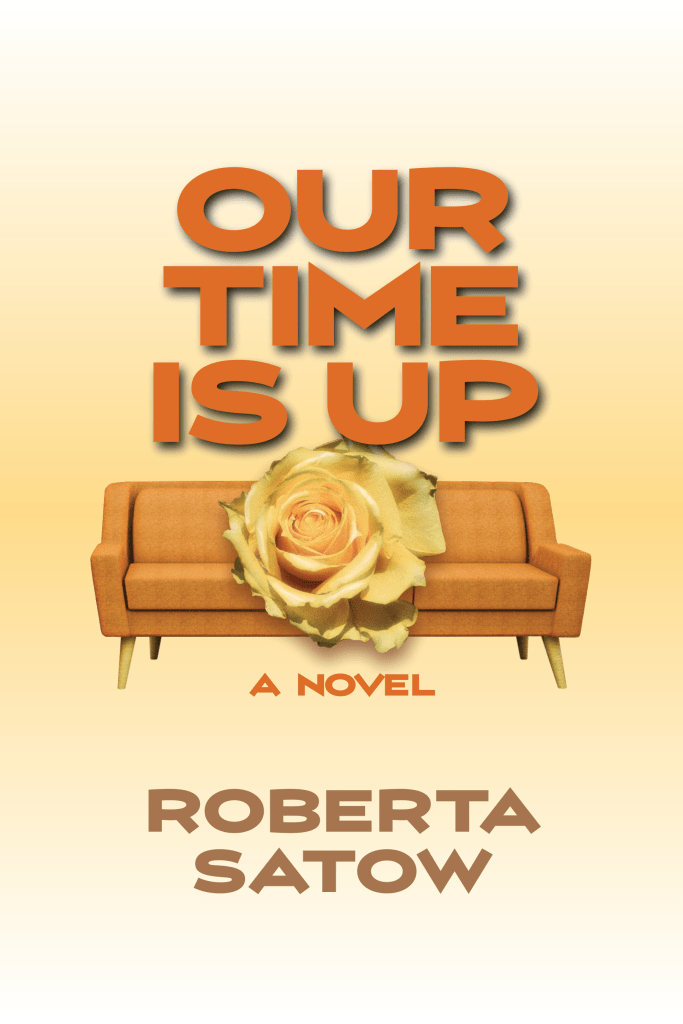
A young woman struggling with grief and her journey to owning her identity showcases the heart of a psychoanalytical relationship with her therapist in author Roberta Satow’s “Our Time is Up: A Novel”.
Advertisements
The Synopsis
This book is a memoir-like novel that captures an era, an ethos, and a sociopolitical sensibility through the eyes of a young woman struggling with autonomy, guilt, sexuality, and grief in the late 1960s. Both patients and therapists will recognize their own struggles in this depiction of Rose’s gradual blossoming in the sunlight of her analyst’s honesty, integrity, and devotion. I know of no other work that conveys analytic treatment, training, and passion so intimately and in such a pitch-perfect voice.
Our Time is Up is a profoundly moving dive into the nuance and beauty of the psychoanalytic relationship. Written with humor, compassion and an intimate understanding of the analytic process, the book shows love and loss and the true boundaries of time. It is a frank and refreshing fictionalized account of how a person comes comes through psychoanalysis to sit in the psychoanalyst’s chair herself. It is the important and deeply personal story of an interior journey.
The Review
This was a heartfelt and compelling read. The author worked intensely to highlight the rich character dynamics between the protagonist and their psychoanalyst. The balance between the protagonist’s conflicting childhood and her work to better herself and confront that trauma in her adult life was profound and powerfully moving. The honest atmosphere that the author established during the protagonist’s sessions with the analyst and the tension that mounted as each childhood experience was peeled away like a layer in an onion made this narrative feel alive and heartfelt in its delivery.
The relationship and actions taken between the protagonist and her psychoanalyst were the pinnacle of this narrative. Through honest conversations between the patient and analyst, the reader can get a heartening insight into how therapy and working through past conflict can be an enriching experience, not without struggles but emotionally rewarding. The experience of how her past experiences in childhood color her modern experiences with relationships and her understanding of her womanhood were honest and insightful and led the reader to be moved by the author’s world-building and character development in the process.
The Verdict
Ultimately, this was a story about being human and the human experience we all must endure throughout this life. While each person’s experience is unique, the direct nature of the protagonist’s relationship with her mother in childhood and later her psychoanalyst in her adult life made this an engaging, thoughtful, and remarkable story that has quickly become a must-read psychological contemporary American fiction novel. if you haven’t yet, be sure to grab your copy today!
Rating: 10/10
Advertisements
About the Author
Roberta Satow, Ph.D. is a practicing psychoanalyst in Washington, CT. She is a senior member of the faculty and control analyst at the National Psychological Association for Psychoanalysis. Dr. Satow is Professor Emerita of Sociology at Brooklyn College and the Graduate Center of the City University of New York. In addition to her non-fiction book Doing the Right Thing: Taking Care of Your Elderly Parents Even if They Didn’t Take Care of You (Tarcher/Penguin 2006), she is the editor of Gender and Social Life (Allyn
and Bacon, 2000) and she has written a novel Two Sisters of Coyoacan (2017). Dr. Satow writes a blog for Psychology Today:
1) Tell us a little bit about yourself. How did you get into writing?
As a child, I grew up reading books by Tolkien, Hobbs etc. and developed a strong interest in fantasy. In school, I found history to be a difficult subject and a trick I grew fond of was to substitute real events with more fantastical versions of them incorporating elements of magic and sorcery to make them more interesting and thus easier to remember. Even long after school, I’d look back at important historical moments and altered variations I had cooked up in my mind. Even to this date, I find these altered histories more interesting than novels that have clear demarcation of good and bad characters and ones featuring happily-ever-after endings.
For the last decade my focus has been on software and cloud infrastructure consulting. While architecting software systems, I have often wondered what if the real world was programmable like a computer. What if there was a system in place to enable us to define precise contracts and this system was freely and fairly accessible to all of mankind. I wondered if this would lead to betterment of humanity or bad actors would just find more creative ways to exploit it. The concept of runecraft in my books embodies this concept.
For many years, I built up adhoc storylines along these ideas and for a long time they were just disconnected fragments in my mind. But a year ago during a career break due to illness I decided to put my thoughts into words. To my surprise, I did manage to mash them together into a coherent storyline and the emerging result looked like something that at least one reader would enjoy – me.
So now I am taking the chance and putting in a bit more effort into transforming this into something that others may also find enjoyable. Whether or not that actually happens, remains to be seen.
Advertisements
2) What inspired you to write your book?
The primary inspiration is the observation that evil lurks in every corner and every heart. I am not a nihilist but one historical theme that has been very close to my heart is that cost of small mistakes and wrongdoings by many individuals add up over time, often catastrophically.
The atrocities committed by East India company in India, the brutalities by Mughal invaders before that, the injustices against lower castes by Brahmins, were all possible not because of a grand master plan by an evil genius but due to many many individuals making separate wrong decisions in self interest. Same holds for global events like rise of Nazis & fascists in the west or the bombing of Japan in the east.
We only realize the true impact of these decisions after catastrophic events like the genocide of ’71 (একাত্তরের গণহত্যা) in Bangladesh (where part of my family originally hails from), the Bengal famine of ’43, Massacre of Jallianwala Bagh etc. but by then the chain of misdemeanors is so long that there is no realistic way to serve justice meaningfully.
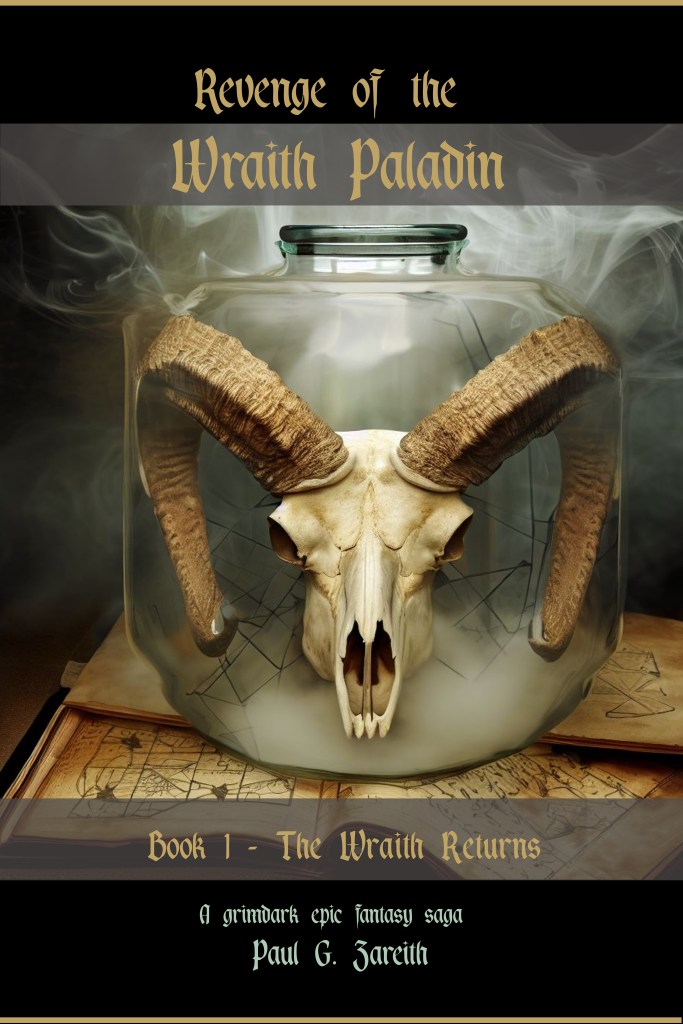
The storyline for The Revenge of the Wraith Paladin stems from a question I asked myself as a child – what if the Mughal invaders of India were an alien race from beyond this world.
3) What theme or message do you hope readers will take away from your book?
I hope to inspire to inspire people to look beyond broad categorizations of good and evil and focus more on nuances and to question all they see and hear.
4) What drew you into this particular genre?
I was inspired by many many authors whose great works I have had the pleasure of reading over the years. In particular, I’d like to thank:
1. Michael Moorcock: For demonstrating that flawless elegance and mind-numbing horror can be blended together seamlessly
2. John Bierce, Stephen King and Sanderson: For demonstrating that complex plots and intricate systems of magic can and do work well for fast paced fantasy
3. Tower curator: For demonstrating that blood sorcery can be elegant.
4. Will Wight: For demonstrating that the concepts of authority and ascension can be such amazing plot drivers.
5) If you could sit down with any character in your book, what would you ask them and why?
I’d sit down with Nazaar, the grandmaster. I’d try to understand how, despite of all the obstacles that he continues to face at every turn, he finds the courage to keep plodding forward with ever more ambitious plans.
He was the only character in my book who seemed to evolve on their own during my writing. Most of what we read about the grandmaster in The Revenge of the Wraith Paladin series, was just not present in my original plot plan.
6) What social media site has been the most helpful in developing your readership?
Primarily twitter, discord and to some extent Reddit, where I have had some really nice interactions with people who love books & fantasy. I’d like to thank them all for the valuable advice and criticism that they took out the time to share with me.
I also remain very optimistic about the future of federated social networks like Bluesky and mastodon – they have small but rapidly growing community of book lovers. I’d encourage more people to be a part of these networks.
7) What advice would you give to aspiring or just starting authors out there?
Bit too early for me to answer this, but I’d like to advise folks to write things that at least they themselves would enjoy as a reader. But if you do have something interesting to say, modern technology has made it easier than ever to put your thoughts forward and connect to a global community. Don’t wait too long – YOLO.
8) What does the future hold in store for you? Any new books/projects on the horizon?
I am currently working on a parallel series titled “The Grandmaster’s Gamble” that explores Nazaar’s past. It has some overlap in characters with Revenge of the Wraith Paladin, but can be read independently. The second book of this series is also planned to be released later this year.
Advertisements
About the Author
Avid fiction aficionado and fantasy author dabbling in the grimdark, arcane and all things forbidden and forgotten.
I received a free copy of this book in exchange for a fair and honest review. All opinions are my own.
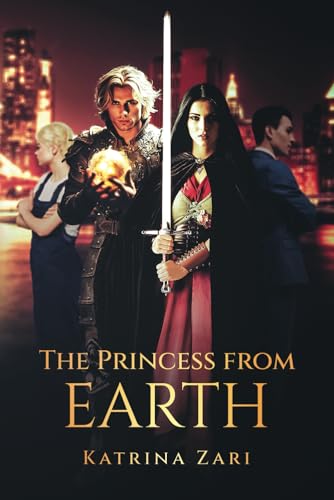
The vastness of the Multiverse is put to the test in author Katrina Zari’s “The Princess from Earth”, the next chapter in the Warriors of Mirral series!
Advertisements
The Synopsis
Worlds with Magic. Worlds with Space travel. Worlds where everything gets connected. The Multiverse is unlimited, but the Worlds have their limits.
“The Princess from Earth” is the next chapter of the “Warriors of Mirral” series.
The Review
What another fantastic entry into the epic sci-fi and fantasy series. The author found the perfect fusion of science fiction and fantasy, with advanced technology melding with magic wielders to craft a wholly original story that mirrors our world’s beliefs and studies. The idea and theory of the multiverse are ones I’ve personally been fascinated with for years, and the author’s navigation of this concept showcases both the creativity and insight that this plot device has given so many properties over the years.
The character development was incredible. The journey not only delves into protagonist Kira’s adventures to find her purpose and mission in life, as her father and the King of her people think her duty as princess comes first, but a secret mission turns into a shocking revelation on a haunting past for Kira as she is reunited with a surprise person from her childhood. The world-building and atmosphere the author created allow the dynamics between these characters and their relationships to shine.
The Verdict
Remarkable, thoughtful, and entertaining author Katrina Zari’s “The Princess from Earth” is a must-read sci-fi and epic fantasy. The narrative’s twists and turns and the author’s ability to maintain a tether of connectivity despite the use of parallel worlds between these characters make this a compelling novel to get lost in. If you haven’t yet, be sure to grab your copy today!
Rating: 10/10
Advertisements
About the Author
Katrina Zari, an author born and raised in Russia, spent a significant time of her life immersed in its rich culture before transitioning on a life-changing journey to the United States two decades ago. Her decision to relocate was driven by love, as she followed the one and only person who held her heart. Throughout her upbringing, Katrina developed a strong passion for literature, particularly science fiction, fantasy, and related genres. The local public library became her second home, where she would lose herself for countless hours in the captivating stories written by Asimov and Bradbury, King and Tolkien, Verne and Stephenson, or any other Si-Fi book she could access.
Inspired by these literary giants, Katrina’s creative mind was crowded with stories of her own imagination. She always wrote stories in her head, inspired by those great books. She was adding her own characters and coming up with their new adventures. It was no surprise that her stories predominantly featured a courageous female protagonist, a reflection of her deep understanding of these inspiring heroines whom she gladly associated herself with.
Years later, she found the courage to transition those stories from her thoughts onto paper.