
I received a free copy of this book in exchange for a fair and honest review. All opinions are my own.
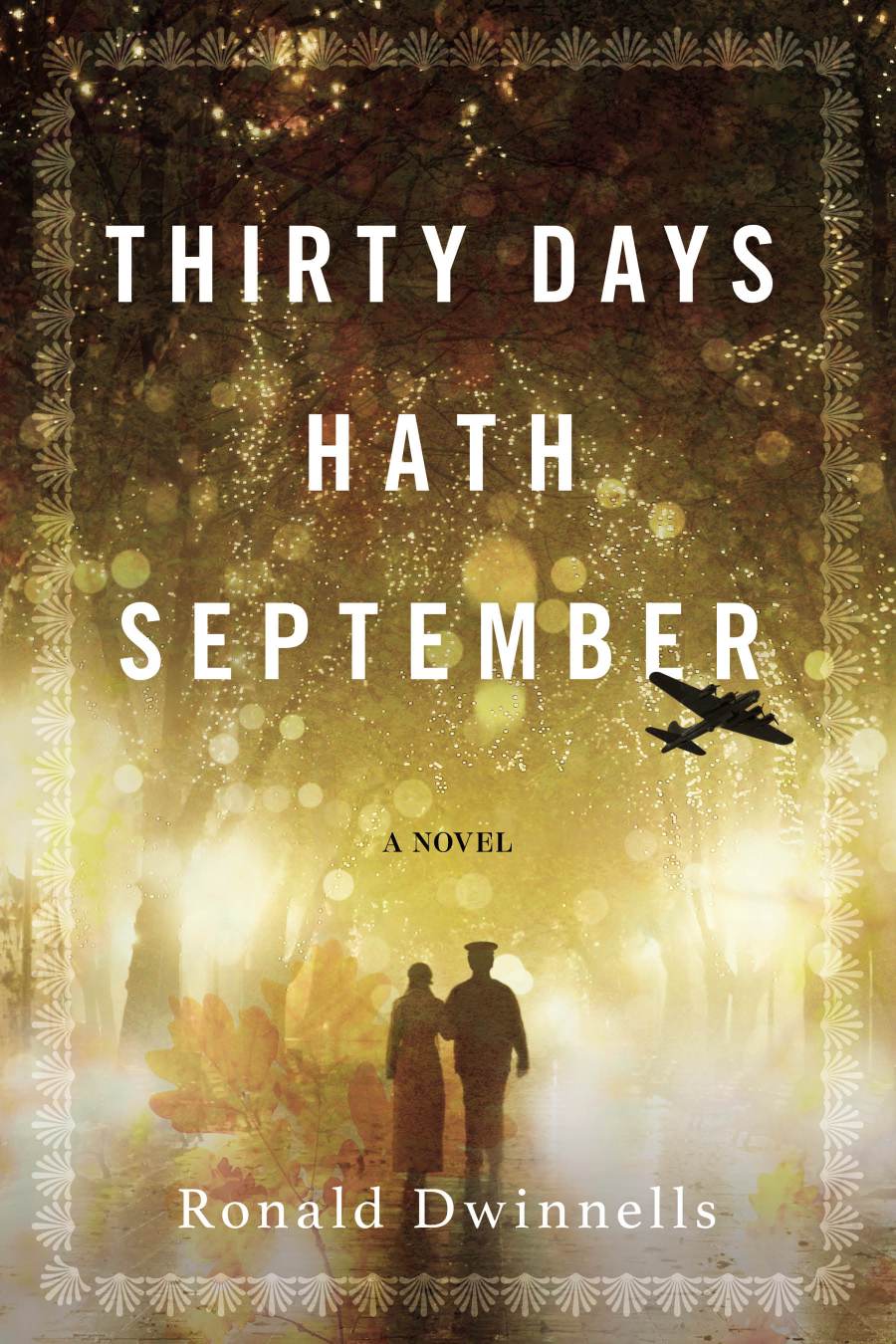
An arrogant med student finds himself on a life-changing path as he helps an elderly patient reunite with her lost love in author Ronald Dwinnells’s “Thirty Days Hath September”.
The Synopsis
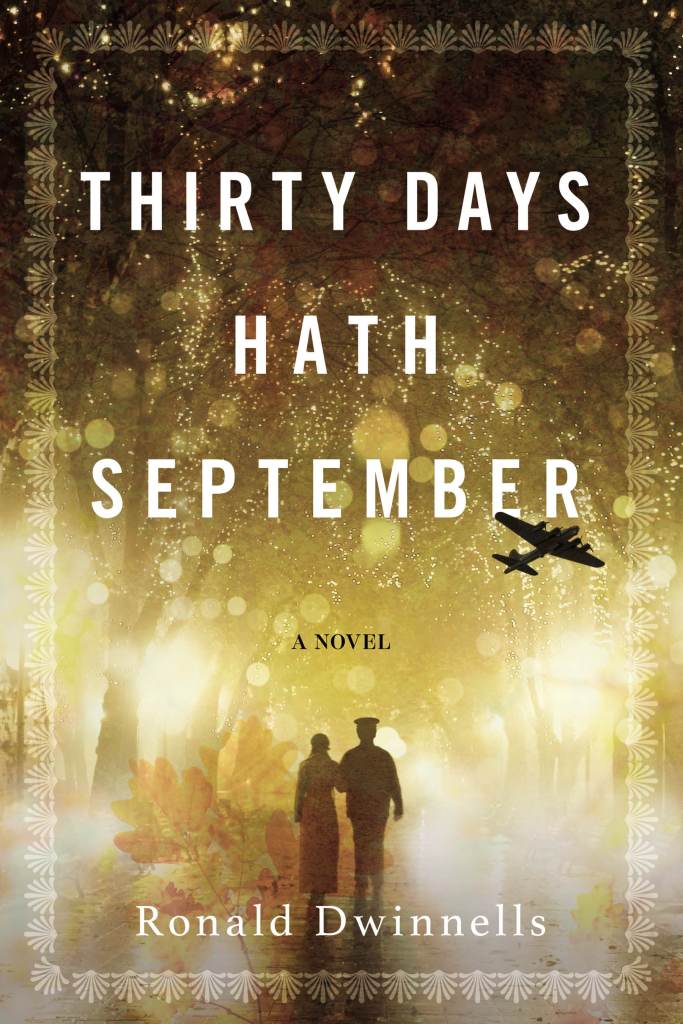
Wealthy fourth-year medical student Jack is miserable and mean. An elderly patient, seeking her long-lost lover, is about to send him on the journey that will change his life.
Aimless Jack Maizel is a slovenly medical student who is unlikeable, arrogant, and slightly manic. Persuaded by his influential parents to pursue a medical career, he cannot hide his contempt for the profession and even for some of his neediest patients. His classmate, Ahgri, a well-mannered and gentlemanly former Tanzanian mountain guide and coffee plantation worker, is an unlikely best friend.
When Maizel begins a month-long clinical rotation on the first day of September in 1982 with a hospital admission work-up for elderly and soft-spoken Mildred Dixon, he has no intention of doing any more than he has to. As the month goes by, she recounts a tender and passionate romance with a young U.S. Army Air Force lieutenant headed off to bombing runs over Germany. She appeals to Jack for help in her last wish of finding the love of her life again.
As the days run out on September, Mildred and Ahgri’s collective wit and Mildred’s touching plea eventually lead Maizel to a life-altering experience. The astonishing twist that ignites a path for Maizel’s future will leave readers with a poignant lesson on how we learn to live and love. Dwinnells’s memorable characters and his message of hope, kindness, forgiveness, and redemption will appeal to readers across genres.
Ronald Dwinnells is the author of the Axiom Gold Medal-winning leadership book, Don’t Pick Up All the Dog Hairs.
The Review
This was a heartfelt and thoughtful narrative. The care and attention the author paid to detail in the use of imagery in the story made the journey that these characters endured feel vibrant on the page. The even pacing of the narrative and the settings made the story feel very cinematic, a cross between a classic romance and an indie drama all at once.
Yet the character development and the gripping emotional depth that each had within them made the story shine. The evolution of Jack as a protagonist, from his easygoing life throughout his youth and his callous nature to the emotional connection he forges with Mildred and the raw and powerful feelings that arise when she and her lost love Delbert’s story starts to become more apparent, Jack’s story is so profound and engaging to get lost in. Even his unlikely friendship with Ahgri made Jack more well-rounded.
The Verdict
Remarkable, engaging, and thought-provoking author Ronald Dwinnells’s “Thirty Days Hath September” is a heartfelt and emotional story of friendship, love, hope, and the healing power of forgiveness and redemption that will stay with readers for a long time. These characters’ honesty and depth help elevate this narrative and keep readers invested until the final page. If you haven’t yet, be sure to grab your copy on March 26th, 2024!
Rating: 10/10
About the Author

I Was Always Different.
It was quite a challenge to adapt to two vastly diverse cultures. Struggling to balance both inherited traditions—American and Japanese—was like trying to inhale air while submerged in water. Neither culture would accept me as their own. I looked, thought, and acted differently than most kids.
My life started with a Japanese name, but it was changed to an American one by the time I turned six. My mother was a 21-year-old Japanese woman when she gave birth to me in Kamakura, Japan in 1955.
My dad was an American soldier stationed in Japan after World War II. My Koseki (Japanese family registry) identified me as Yoshikawa Kumeo, first born son of Yoshikawa Hisako. There is no mention of my father in this document because they were not married—quite a taboo in post-world war Japan.
Much of my childhood was spent living amongst people who I did not resemble. Although I had a Japanese name, a Japanese mother, and a Japanese citizenry, I was not accepted in their society because I was known as a hafu (derogatory word for half-breed). Mom’s family wanted nothing to do with her or me because I
brought shame to them. I was and still am an outcast of both parents’ families.
Growing up, I was always fighting with Japanese kids while adults looked at me with askance, cursing and wagging threatening fingers at me. The homogenous Japanese society never quite accepted a gaijin (foreigners) and worse.
My dad, tending to military obligations, left us after my birth but re-entered our lives when I was around five years. They planned to marry before he reported to his new assignment in Fort Knox, Kentucky. Mom was concerned that I did not speak English, so she immediately enrolled me in a nearby Catholic Missionary Kindergarten. She was unaware that it was Italian in origin! It didn’t matter to me.
One day, while Dad visited us on leave, mom, beaming with pride told me to say “hi” in English.
Proudly, I smiled and blurted out, “Ciao Padre!”
He frowned and said something in an unfamiliar language (English), then roared with laughter! I turned red with embarrassment—thinking I said something wrong!
Everything happened quickly after that. My parents married and I got a new name, Ronald Dwinnells, and soon became a naturalized U.S. Citizen. I even got an American passport to travel to the States. When we
arrived in Kentucky, I suddenly faced an entirely new set of adversities. I was no longer referred to as a gaijin but was now being demonized as a “lousy dirty Jap”! It didn’t help that I couldn’t speak English or that I looked different. I even had a hard-to-pronounce last name unlike the typical Smith, Thomas, and Jones family names that predominated rural Kentucky at the time.
I had no choice but to deal with these new difficulties caused by my being different and unusual. Through resilience and resolve, I learned to embrace failures, adversities, mistakes and even enemies. Ironically, I don’t think I would have had the successes nor the happiness, peace, and contentment of life if I had not experienced difficulties as a child and young man. I am truly grateful.
My first published book, Don’t Pick Up All the Dog Hairs, is about what not to do in leadership and life based upon difficult experiences. Many leaders experience difficulties, almost daily. My message to readers is to embrace these adversities and turn them into good. Learn to always embrace, accept, learn, teach, and move on after difficulties! It will result in a good life!
Please enjoy the “Dog Hair” book! It’s a fun read!
