Merry Christmas, Cosmos: A Holiday Book For Families by Roshana Ariel Review

I received a free copy of this book in exchange for a fair and honest review. All opinions are my own. 

Author Roshana Ariel offers a heartwarming, educational look at the evolution of life in the universe through a holiday lens in the book “Merry Christmas, Cosmos: A Holiday Book For Families.”

Advertisements

The Synopsis

This is not your average Christmas story.

Merry Christmas, Cosmos begins at the Big Bang and stretches all the way to the twinkling lights on your tree. Blending science, spirituality, and celebration, it invites readers of all backgrounds to pause and marvel — not only at the birth of a child in a manger, but at the birth of everything.

From primordial seas to stardust, from ancient galaxies to modern hearts, this little book offers a sweeping, poetic reflection on our shared origins and evolving place in the cosmos. It’s both a love letter to humanity and a gentle call to live with more compassion, wisdom, and joy.

Perfect as a holiday gift or personal meditation, this is a Christmas book for children, adults, seekers, scientists, spiritual misfits, and anyone who ever looked up at the night sky and felt like singing.

Grafton Mini Pen

The Review

This was a heartfelt and engaging holiday read. The author expanded on the holiday season by delving into the fabric of the universe itself, using vibrant, powerful imagery to highlight the universe’s beauty as a whole. The fast-paced book and the author’s interactive writing, educating and engaging the reader with information and joy, make this book so fun to get lost in.

The author brings a sense of faith and belief to the story, bridging the gap between religious and non-religious readers to explore the inner workings of the universe and how they relate to the holiday season’s foundation. The balance of spirituality and science really came together beautifully in this book, and the holiday twist made this a memorable story that will resonate with all readers. 

The Verdict

Heartfelt, educational, and spiritual, author Roshana Ariel’s “Merry Christmas, Cosmos” is a must-read, spirituality-and-science-driven booklet. The author’s authentic, knowledgeable tone and authority, all while relating to the reader and driven by an emotional, intellectual, and spiritual quest to understand the building blocks of our universe better, made this book shine just in time for the holidays. If you haven’t yet, be sure to grab your copy today!

Rating: 10/10

Advertisements

About the Author

Roshana Ariel is a writer, editor, and musician who weaves wonder into everyday life. She’s the author of “Merry Christmas, Cosmos,” a holiday book for families that blends science, sacred storytelling, and a sense of belonging in the cosmos.

Her life’s path has taken her from playing in bands and as a solo performer across the United States, to working as a radio announcer, and eventually to journalism, where she worked her way up to managing editor at a daily newspaper.

Now living in North Carolina, she performs regularly at her local Unity fellowship and creates memes, meditations, and music that celebrate conscious living and our shared origins in a vast, unfolding universe—all in service to Goodness, Truth, and Beauty.

https://roshanawrites.medium.com/

https://amzn.to/4r88pSR

Interview with Author Ray Franklin

1) Tell us a little bit about yourself. How did you get into writing?

I grew up in Houston, Texas and became fascinated with science fiction when I got my first library card. Some of my favorite authors are Ray Bradbury, Martha Wells, Iain M. Banks, Ursula K. LeGuin, and Michael Swanwick. I wanted to write stories since I was ten, but only learned the craft of storytelling after 2022.

Engineering has been my career for years and I have remained interested in science and science fiction the whole time. I read the science magazines Discover and Science News to keep informed on the rapid pace of scientific progress. Sometimes, the articles trigger story ideas.

Advertisements

2) What inspired you to write your book?

NASA and the space race captured my imagination in the 1970s. When NASA released images from the Hubble Space Telescope, I wanted to see every one. Eventually, I realized I could share my excitement with others by writing a book. I settled on galaxies for the subject because Hubble generated such amazing images of these giant star configurations.

By digging deeper into what astronomers know about galaxies near and far, I learned far more about astronomy. The more I learned, the more I wanted to include in the book.

3) What theme or message do you hope readers will take away from your book?

Galaxies grow and change in beautiful and amazing ways. We can’t watch these changes happen because they are so slow. But galaxies are born, grow up, get old, and then die, which makes them a bit like us. Each galaxy is also unique, just like every person.

We know so much about galaxies because astronomers have discovered the truth by looking through telescopes for hundreds of years. Any young person who wants to know more about our universe can become an astronomer.

Advertisements

4) What drew you into this particular genre?

Science fiction is fun and exciting, but science fact is what makes science fiction possible. Hubble Space Telescope images of galaxies are beautiful and incredibly moving. Non-fiction was the best way to tell the story of the galaxies that fill our universe.

5) What social media site has been the most helpful in developing your readership?

I use Mastodon, @rnf@mindly.social, to connect with other writers. Mindly.social has worked out well in that regard. We share thoughts on the many challenges that every indie writer faces. Some people on Mindly might also be interested in reading my science fiction, when I have a novel published.

6) What advice would you give to aspiring or just starting authors out there?

Write about something you love. Your passion for the subject will show up in your writing and readers will recognize it as authentic. That personal connection is one thing that kept me going when I hit difficulties with Galaxy Astronomy. I didn’t have the option to give up because I cared too much about my vision for the book. It gave me the strength to persevere, which is something everyone needs when life gets tough.

7) What does the future hold in store for you? Any new books/projects on the horizon?

A companion to Galaxy Astronomy is in the idea phase. I envision using images from the new James Webb Space Telescope (JWST) to explore infrared astronomy. Astronomers need time to create each color composite image from the many sensors JWST uses. But the telescope is sending new images continuously. A single new image can take weeks, months, or even years to reach publication. I will also need to learn much more about JWST’s astronomical instruments, and time to browse all the available images. Understanding what each image means is as important as how marvelous it looks. Turning all that into a book can take me a year or more.

I’m also actively working on my first science fiction novel. It’s a space opera about humans and extraterrestrials. Set on a planet circling another star, the novel contains some horror and high-tech manipulation. This will be the first of a series of at least three books, and maybe more.

Advertisements

About the Author

Ray Franklin grew up in Houston, Texas, the home of NASA. He followed the space race for years and stayed up late to watch Neil Armstrong step onto the moon. Years later, when stunning images from the Hubble Space Telescope became available, he saw expansive possibilities. Being a father and working with kids as a volunteer had given him an appreciation for how fast children can learn complex topics with the right mix of fun and challenge. This is what drove him to write ‘Galaxy Astronomy: Field Guide For Kids.’

Helioza.com

Revive the Interest to Learn Math: A Psychological Approach by Fidelis Mukudi Review

I received a free copy of this book in exchange for a fair and honest review. All opinions are my own.

In “Revive the Interest to Learn Math,” author Fidelis Mukudi provides a psychological perspective on the benefits of learning math. 

Advertisements

The Synopsis

This is a short book written to give students hope that despite having a bad background or beginning in mathematics, they can always do better if they are guided well. It also offers hope to parents that their children can do better despite their background and environment. It lists the steps that students need to revive their prowess in mathematics. The topics in this book include; What You Were Fed With, The Battle in the Mind, Setting a New Beginning, A Guide to Studying Math, Tackling Abstract Concepts, and Application Questions. It also gives a summary of each chapter and highlights key points. The book takes a psychological approach to reviving or boosting the motivation to learn mathematics.

The Review

This book made me feel like the perfect demographic, speaking to audiences with a fundamental disconnect with math. Each of us has a subject in school that they excel in more than others, and for me, I was always more proficient in English and History than in Mathematics. Yet the author writes in a way that allows readers who are not well-versed in math to overcome the hurdles that keep them from pursuing this subject and reinvigorate their interest at the same time.

The amount of detail the author can fit into such a short time is astounding. From allowing readers to define themselves either as math hopefuls or math advisers to understanding that the first step is to face the battles of the mind that keep people from reaching that understanding of math and even gaining a more comprehensive understanding of the language of mathematics overall, the author can get the reader on a multitude of subjects.

Advertisements

The Verdict

Insightful, fast-paced, and educational author Fidelis Mukudi’s “Revive the Interest to Learn Math: A Psychological Approach” is a must-read nonfiction book on merging psychology and mathematics. The guide’s practicality, combined with the mental approach to gaining a firmer understanding of the subject, will keep readers inspired and returning to this book over and over again. If you haven’t yet, be sure to grab your copy today!

Rating: 10/10

Galaxy Astronomy: Field Guide for Kids by Ray Franklin Review 

I received a free copy of this book in exchange for a fair and honest review. All opinions are my own. 

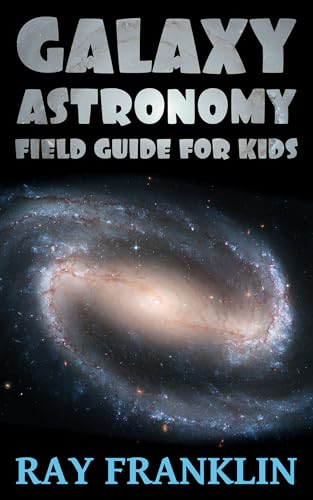
Author Ray Franklin shares a kid-friendly and educational look into the vast universe and the galaxies that make it up in the book “Galaxy Astronomy: Field Guide for Kids.”

Advertisements

The Synopsis

How many galaxies fill the universe? What is light we can’t see? Are Imperial Space Penguins dangerous? Kids ask such questions every day, and Galaxy Astronomy has answers!

The author’s enthusiasm for NASA and the Hubble Space Telescope ripples through this journal of galactic growth. Forty-eight Kindle-wide, full-color images of spectacular galaxies punctuate the field guide. It’s filled with facts vetted by a professional astrophysicist. Kids learn of galaxy types, light-years, invisible light and galactic feeding frenzies. While identifying galaxies, kids see how these gigantic star formations change and evolve over billions of years. They’ll understand how astronomers use ultraviolet light to locate young stars, and infrared light to find stars hiding inside enormous dust clouds. It’s a fun, fascinating and factual read.

If you know a kid who likes science and goofy jokes, give your young astronomer Galaxy Astronomy today!

AudiobooksNow

The Review

What a fun and educational read. The author does an incredible job of bringing his background and passion for astronomy to the reader. The author’s writing style is very inviting, with the reader able to understand the overall subject matter of each chapter while also getting enough new information to challenge the reader to learn more and do the work to research and engage with this material.

The breathtaking and vibrant illustrations the author provides for the galaxies in this book and the star systems in place make this a compelling book to get lost in. The way the book stokes the flames of curiosity in young readers and the lessons the author could impart, including the fascinating structure of Seyfert galaxies and what makes them so dangerous, allowed the reader to lose themselves in the material.

The Verdict

The heart, passion, and thoughtful presentation of galaxies and their structure to readers made this a remarkable book. The balance the author struck between education and entertainment for young readers and how the author rewarded the reader’s curiosity with information that kept the reader eager to learn more and dive into the subject of space and astronomy. If you haven’t yet, be sure to grab your copy today!

Rating: 10/10

Advertisements

About the Author

Ray Franklin grew up in Houston, Texas, the home of NASA. He followed the space race for years and stayed up late to watch Neil Armstrong step onto the moon. Years later, when stunning images from the Hubble Space Telescope became available, he saw expansive possibilities. Being a father and working with kids as a volunteer had given him an appreciation for how fast children can learn complex topics with the right mix of fun and challenge. This is what drove him to write ‘Galaxy Astronomy: Field Guide For Kids.’

Helioza.com

Fractals: The Invisible World of Fractals Made Visible Through Theater and Dance by Kimberley Cetron

I received a free copy of this book in exchange for a fair and honest review. All opinions are my own. 

Author Kimberley Cetron provides a new and unique approach to education in theater and dance utilizing intrinsic patterns known as Fractals in the new educational book, “Fractals: The Invisible World of Fractals Made Visible Through Theater and Dance”.

Advertisements

The Synopsis

Fractals are patterns, infinitely reiterating, self-similar in shape. Benoit Mandelbrot coined the term in the 1970s, but scientists and mathematicians had been exploring the concept for centuries. Mandelbrot developed a geometry to express things found in the natural rather than the man-made world – coastlines, galaxies, anatomy, clouds, trees, snowflakes, and the like. Fractals are intrinsic to Chaos Theory – the science of surprises, of the non-linear and unpredictable. They reveal the order governing the seemingly chaotic in our world. As we learn to recognize them, we gain insight into our world, ourselves, and one another. Especially at this cultural moment, when the whole world has changed and we must re-imagine the ways in which we make art and the ways we educate, Fractals provides resources and approaches for collaborative art and for locating the intersection of arts and academics in ways that illuminate both.

The Review

This was such a different, unique, and thought-provoking read from what I normally feature here on my website. The author does an incredible deep-dive into the world of Fractals, of the patterns that occur in the universe such as anatomy and galaxies, and explores these patterns in connection with performing arts. The use of a system of order that reflects patterns in which the individual parts of these shapes are equal to the overall pattern is a unique educational tool for the author to utilize in this read, as it brings a whole new understanding to the subject material.

Perfectly blending into the current world we live in, the author’s expertise and perfect crafting of the subject matter is well written throughout this book. The balance of the subject matter of dance and theater with the science and technique that Fractals utilize when interacting with the subject matter is great to see unfold here. The concept of nature and order balancing the chaos of the world and the denial of self-serving creation over collaboration was an intriguing idea to explore in this read and really connects with readers who are looking for a new way to approach education and performing arts.

The Verdict

A brilliant, invigorating, and thoughtful read, author Kimberley Certon’s “Fractals” is a must-read book. Educational yet engaging, the author strikes a great and resonating chord with readers and pushes them to think differently to see the order within the chaos and apply it to something as artistic and moving as performing arts. If you haven’t yet, be sure to grab your copy today!

Rating: 10/10

Advertisements

The Oppenheimer Alternative by Robert J. Sawyer Review

I received a free copy of this book in exchange for a fair and honest review. All opinions are my own. 

A chapter in history get’s a secret new chapter that showcases a thrilling possible sequel to one of history’s greatest, most powerful yet most terrifying projects in the name of science in author Robert J. Sawyer’s “The Oppenheimer Alternative”. 

Advertisements

The Synopsis

On the 75th anniversary of the dropping of the atomic bomb, Hugo and Nebula-winning author Robert J. Sawyer takes us back in time to revisit history…with a twist.

While J. Robert Oppenheimer and his Manhattan Project team struggle to develop the A-bomb, Edward Teller wants something even more devastating: a bomb based on nuclear fusion—the mechanism that powers the sun.

Teller’s research leads to a terrifying discovery: by the year 2030, the sun will eject its outermost layer, destroying the entire inner solar system—including Earth.

As the war ends with the use of fission bombs against Japan, Oppenheimer’s team, plus Albert Einstein and Wernher von Braun, stay together—the greatest scientific geniuses from the last century racing against time to save our future.

Meticulously researched and replete with real-life characters and events, The Oppenheimer Alternative is a breathtaking adventure through both real and alternate history.

The Review

A brilliant combination of true historical events mixed with alternative history, author Robert J. Sawyer has created a masterpiece of a story. Delving into the deeper character growth of historical figures like Robert J. Oppenheimer, the author brings more of a personal viewpoint of these larger than life figures. With figures like Oppenheimer and Einstein being so notable and their work making them as infamous as they are, it was fascinating to see how facing the end of the world would have brought them together in a whole new way. 

The author does an excellent job of highlighting the brilliant minds at work historically during this period of time, and the science that they both discovered and worked in. The irony of choosing Oppenheimer as the protagonist is felt in the pages of this book. While he is notorious for his quote, “I am become Death, the destroyer of worlds”, the author not only does an excellent job of exploring the man behind the legend, but giving him the chance to fight for humanity’s survival as our own solar system threatens to turn against itself. 

The Verdict

Highly scientific and creative, “The Oppenheimer Alternative” by Robert J. Sawyer is a masterful work of fiction that both entertains and educates readers on the work done by scientists, the manipulation of scientific discoveries by politics and militarization, and the work that can occur when scientists use their brilliance to saving lives rather than destruction. Oppenheimer is a truly unique and memorable protagonist and readers will love the sci-fi turn of events as the story progresses, creating a one of a kind read that readers will not be able to get enough of. Be sure to grab your copy today!

Rating: 10/10

Advertisements

About the Author

Robert J. Sawyer is one of Canada’s best known and most successful science fiction writers. He is the only Canadian (and one of only 7 writers in the world) to have won all three of the top international awards for science fiction: the 1995 Nebula Award for The Terminal Experiment, the 2003 Hugo Award for Hominids, and the 2006 John W. Campbell Memorial Award for Mindscan.

Robert Sawyer grew up in Toronto, the son of two university professors. He credits two of his favourite shows from the late 1960s and early 1970s, Search and Star Trek, with teaching him some of the fundamentals of the science-fiction craft. Sawyer was obsessed with outer space from a young age, and he vividly remembers watching the televised Apollo missions. He claims to have watched the 1968 classic film 2001: A Space Odyssey 25 times. He began writing science fiction in a high school club, which he co-founded, NASFA (Northview Academy Association of Science Fiction Addicts). Sawyer graduated in 1982 from the Radio and Television Arts Program at Ryerson University, where he later worked as an instructor.

Sawyer’s first published book, Golden Fleece (1989), is an adaptation of short stories that had previously appeared in the science-fiction magazine Amazing Stories. This book won the Aurora Award for the best Canadian science-fiction novel in English. In the early 1990s Sawyer went on to publish his inventive Quintaglio Ascension trilogy, about a world of intelligent dinosaurs. His 1995 award winning The Terminal Experiment confirmed his place as a major international science-fiction writer.

A prolific writer, Sawyer has published more than 10 novels, plus two trilogies. Reviewers praise Sawyer for his concise prose, which has been compared to that of the science-fiction master Isaac Asimov. Like many science fiction-writers, Sawyer welcomes the opportunities his chosen genre provides for exploring ideas. The first book of his Neanderthal Parallax trilogy, Hominids (2002), is set in a near-future society, in which a quantum computing experiment brings a Neanderthal scientist from a parallel Earth to ours. His 2006 Mindscan explores the possibility of transferring human consciousness into a mechanical body, and the ensuing ethical, legal, and societal ramifications.

A passionate advocate for science fiction, Sawyer teaches creative writing and appears frequently in the media to discuss his genre. He prefers the label “philosophical fiction,” and in no way sees himself as a predictor of the future. His mission statement for his writing is “To combine the intimately human with the grandly cosmic.”

Material Value: More Sustainable, Less Wasteful Manufacturing of Everything from Cell Phones to Cleaning Products by Julia L.F. Goldstein Review

I received a free copy of this book in exchange for a fair and honest review. All opinions are my own.

An in-depth study of how materials like plastic and metals are not only made, but how businesses can use new knowledge to extract these materials without any damage being done to human life and the environment as a whole take center stage in author Julia Goldstein’s book, “Material Value: More Sustainable, Less Wasteful Manufacturing of Everything from Cell Phones to Cleaning Products”. Here is the synopsis.

The Synopsis 

Have you wondered why gold is so expensive or why so little plastic packaging is recycled? This highly readable book with a unique perspective on environmental sustainability answers these questions and more.

Readers will learn:

How metals and plastics are made and what happens when they are recycled The challenges that manufacturers face when trying to make their facilities and products less toxic and less wasteful How manufacturers can extract the value of materials while doing less damage to human health and the environment The role of individuals, agencies, and governments in improving the use and reuse of materials How regulations can stifle or promote innovation How smart companies are embracing the triple bottom line–profit, people, planet–to yield creative solutions that make manufacturing safer and less wasteful Why some big corporations painted as evildoers deserve a second look. How reporting standards are making it easier to get a full picture of a company’s environmental footprint The author explains concepts clearly and concisely through compelling examples and personal stories. Hear the journeys of:

A business owner recycling scrap from airplane manufacturing A former geologist running a chain of donut shops Two entrepreneurs committed to improving e-waste processing An executive promoting social and environmental responsibility at a major electronics company A chemist developing safer cleaning products Consultants helping businesses embrace practices that save resources and money Other business professionals devoted to making the world a better place Concerned citizens with or without a background in manufacturing or business will find surprising answers to the questions facing companies as they work toward making better use and reuse of materials. Readers will come away with a new awareness of the steps they can take to help the business world succeed in making manufacturing more sustainable and less wasteful.

The Review

Not only is this nonfiction title informative and descriptive, but relates the knowledge of this specific field in a relatable way that is not difficult to understand, which is something that truly stands out from other textbook style novels. Using her expertise in the field and study of materials science, the author uses a mixture of personal anecdote, first hand accounts and detailed examples to drive the points she is making home.

From challenging the differences between companies who care about the environment and those who only worry about the perceived image of “sustainability”, to theories and visions of a specific plastic that in theory could capture carbon emissions, and in that same theory envisioning a field of trees made of this material in an effort to reduce the carbon in our environment, the author explores the ins and outs of the field in great detail, and gives both business owners, others in the field and interested readers a chance to really see what it takes to make a more sustainable and less wasteful manufacturing society as a whole. 

The Verdict

This is a must read for anyone interested in materials science and the more sustainable way to maintain a business in manufacturing. It’s through, intelligent and relatable all at once, and gives new and fresh insights into how to make our world safer yet retain a high end manufacturing business all at once. From studying how materials are made and the different elements of the periodic table that are required for said materials, to the safe practices that could be implemented to keep people and the environment safe, to mining operations of material and how various countries and their specific working conditions due to war, this novel explores it all. If you haven’t yet, be sure to grab your copy of “Material Value: More Sustainable, Less Wasteful Manufacturing of Everything from Cell Phones to Cleaning Products” by Julia Goldstein today.

Rating: 10/10

About the Author

Julia L F Goldstein holds a PhD in materials science and started her career as an engineer before migrating to journalism in 2001. She now writes white papers and other technical marketing content for companies manufacturing a wide variety of products. Julia is active in her local writing community and leads the Seattle chapter of the Nonfiction Authors Association. When she’s not writing, she enjoys playing flute and piccolo and participating in triathlons.

www.jlfgoldstein.com

Code: Revelation (The Emporion Chronicles #1) by Boris Sanders Review

I received a free copy of this book in exchange for a fair and honest review. All opinions are my own. 

A young man living in a futuristic society stumbles upon one of humanity’s greatest known secrets in author Boris Sander’s “Code: Revelation”, the first in the Emporion Chronicles. Here is the synopsis.

The Synopsis

An alternative cover edition for this ASIN can be found here.

Introverted computer scientist Maximilian Gutenberg had no intention of acquiring a crystal with a being trapped inside, especially not one with the power to save — or destroy — humanity. 

Her name is Lucy, and she cannot escape her prison until her mission is complete. A mission she keeps secret from everyone, even Max.

But she needs his help.

To gain his trust, she offers to get rid of his abusive boss in one week, and get him that promotion he always wanted. She’ll make him the hero of his own life, a man worthy of recognition, in exchange for helping her complete her mission.

This could be the opportunity of Max’s life, but he can’t help but wonder if Lucy is as good as she seems… And exactly what mission she must complete to regain her freedom.

Set in a dystopian, futuristic city built miles into the sky, “CODE: Revelation” is a powerful, psychological thrill ride that calls into question the nature of good and evil, and the importance of taking control of your own destiny.

Celebrate Black History Month with Books for All Ages, Music, Movies, and more!

The Review

This sci-fi techno thriller is truly one of a kind. The characters instantly draw you in, from protagonist Max who finds himself thrust into an adventure like no other, to girlfriend Julia and her mission to discover the truth, and the mysterious Lucy and the history spanning mission she has been on since the dawn of time. 

This novel’s strongest aspect has to be the world building. The setting is incredibly vivid as the author creates a futuristic society based on clear cut class systems, state of the art technology and a massive city surrounded by a dome and cut off from the outside world. The story blends technology and suspense expertly, and the author’s command of the genre instantly draws readers into this massive story.

The Verdict

This is a fantastic sci-fi novel that deserves to be read. The first in a series, this story delves into themes such as greed, power, and humanity’s reliance on technology. A fast read of only a little over 200 pages, this story packs quite a punch and will leave readers anxious to read the next novel in the series. If you haven’t yet, be sure to grab your copy of “Code: Revelation” by Boris Sanders today!

Rating: 8/10

Buy any two Google Home Minis for $58!

About the Author

Boris Sanders started to write at a very early age, in fact, so much so that, for his mother’s surprise, the doctor who delivered him insisted to have seen some marks that resembled words inside her womb. His intellect is quite advantaged, having learned 37 languages by the age of 14, of which 35 were created by him, don’t have a writing form, and only he can speak and understand them. In addition, he has a photographic memory, as long as an actual photo was taken during the occasion. 

In his spare time Boris likes to swim in waterless pools and investigate the mysteries of the universe, while sitting on his comfortable couch, effectively doing nothing. He has a particular taste for olives of any kind.

Book

Book trailer: https://1drv.ms/v/s!AjZg8_7n9Ym4kqcdOFbQE79fw9ZSRA

Amazon: https://www.amazon.com/dp/B07L3TPH43

Goodreads: https://www.goodreads.com/book/show/43521844-code

Author

Twitter: https://twitter.com/BorisSanders1

Instagram: https://www.instagram.com/boris.sanders/

Facebook: https://www.facebook.com/BorisSandersAuthor

Website: http://www.borissanders.com/

Goodreads: https://www.goodreads.com/author/show/18672762.Boris_Sanders

A Chance Encounter: An Intriguing Experiment

It’s funny, isn’t it? The memories and experiences that fade with each year we get older can pop up in the most unexpected ways. I happened
to be out with my mom one afternoon recently, and we were talking about how long it’s been for each of us to go to one of our favorite spots
in Southern California, and that is one of the many gorgeous beaches we have here. I went to Newport Beach earlier in the year, but I’ve
always dreamed of venturing out to Santa Monica or Venice Beach, or maybe even Laguna Beach. As we talked about our hopes of getting there,
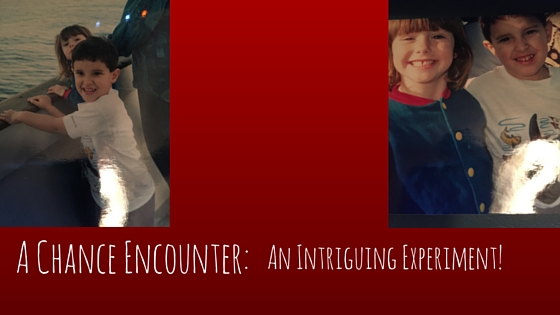
she suddenly remembered a fun day when I was just a few years old, and we went to the beach. Apparently, we had decided to go on a boat ride
to watch for dolphins and whales, and on that boat, I’d met a young girl whom I had befriended quickly. According to my mom, we were inseparable
for the rest of the day, and sadly parted ways, never to meet again.

I have no recollection of this day, but I was suddenly intrigued. I’ve always been a shy guy, but this encounter painted me as a talkative,
active young man with a natural charisma I didn’t think I possessed at that age. I was curious, so I went looking through some old photo albums,
and sure enough, I found the pictures of me and this young girl, (pictured above). Now, the memory still alludes me, but I thought to myself,
how intriguing, that after all these years, these pictures should surface at a time where I’m looking to bolster my confidence.

I began to think about the power that a chance encounter or a spontaneous moment can have on our lives. Hearing that I wasn’t always the
shy, soft-spoken young man I am today gave me a boost of inspiration that I’ve been looking for. Sometimes, the tiniest, most random moments
in time can have a huge impact on others. The world can seem like such a random, chaotic place a lot of the time, but other times, I can
see how we are more connected than we realize. I’m not sitting here saying that fate brought me and this girl together, nor am I saying
that it was our destiny to meet that day. I’m a semi spiritual man, but even my spiritual tendencies are based in science. What I’m talking
about here is the fact that the connections we make ourselves, not the ones destiny has forced upon us, are powerful themselves. We have the
power to impact others and ourselves.

Now, I also found myself curious to know what happened to this young girl. I have no name, only a picture of the two of us together. We were
both so young, but I find myself wondering, what happened to her? What is she doing now? Who is she, and more importantly, is she happy? I’m
not sitting here hoping for some big, Hollywood style romantic scene, where we reunite at that same beach, (I believe it was either Newport
or Laguna, I can’t remember), and have some huge, heart-pounding moment with the rain pouring down around us. No, this is just a curiosity
more than anything. She apparently was one of my first friends, albeit for merely 1 day. Even if I never meet her in person again or get
the chance to be her friend, I at least would love the opportunity to say hi, ask how she is, and thank her for her day of friendship. Like
I said, I’m not expecting anything, but if anyone knows or recognizes this little girl from an old photo, or has seen this photo and would
know who she grew up to be, feel free to let her know about this blog post, or even tag her on social media. I’m curious to see whatever happens
with this blog experiment, because as I said, the smallest moments in our lives can have lasting influences, and this little trip down memory
lane gave me the burst of energy and inspiration I needed to push forward with my career. To her, and to all of you who have left impressions
on me and those in your lives, I say thank you.