I received a free copy of this book in exchange for a fair and honest review. All opinions are my own.
Two heroes emerge and must fight to save their corner of the Andromeda Galaxy as heroes Galen and Rhea fight to save her father, the King, from everyone from old enemies, lawless criminals, and emerging usurpers in author Richard Paolinelli’s “Galen’s Blade”, the second book in the A Starquest 4th Age Adventure series.
Advertisements
The Synopsis
The journey of Galen Dwyn continues in the second book of the Starquest 4th Age series.
While Dwyn lies in stasis, recovering from his injuries in his stand against Harmool’s fleet, Rhea has assumed the title of Regent of Salacia while leading the search for her missing father, King Iodocus. She is also helping repair the damage done to the Alliance in her Uncle’s and Mother’s mad quest to launch a new Empire. A shocking assassination attempt is thwarted at the last second by Dwyn, who seems to be a changed man now that he has exited stasis to save his love.
The King’s location is ascertained and a rescue mission mounted to retrieve him from the Wilds, a lawless area of space. An ambush splits their forces and Dwyn leads the ambushers away so that Rhea and her father can escape. Before Dwyn can find a way back to Alliance territory, an old enemy returns from the grave, and hold Rhea and the King hostage, while triggering a massive insurrection that overthrows the Alliance and installs a new Emperor.
Dwyn must now mount a second rescue while finding a way to rally a rebellion against this threat to peace in the Hominids’ corner of the Andromeda Galaxy.
The Review
This was yet another incredible sci-fi read. The depth of world-building and character development was so rich and amazing to behold. The intense action and layers of mythos that the author builds upon help elevate the narrative to the literary stratosphere. Readers will be invested instantly by the wild atmosphere and changing landscapes of the narrative’s setting, getting lost in the author’s world for hours.
What stood out to me much like the first book in the series was the way in which the author utilized and developed these rich characters throughout the narrative. The evolution and journey both Rhea and Galen go on to save the King and protect one another in the process were equally balanced and allowed them to showcase the depth of the impact this journey has had on them individually and as a group overall.
The Verdict
Gripping, entertaining, and thrilling, author Richard Paolinelli’s “Galen’s Blade” is the perfect sci-fi read this summer and a marvelous next chapter in the A Starquest 4TH Age Adventure Series. The overarching narrative and rich character growth very much felt like a blend of classic sci-fi series like Firefly and Star Wars put together, feeling like some elements of fantasy and mythology also came into play to make this a unique reading experience. If you haven’t yet, be sure to grab your copy today!
Rating: 10/10
Advertisements
About the Author
Richard Paolinelli began his writing career as a freelance writer in 1984 in Odessa, TX and gained his first fiction credit serving as the lead writer for the first two issues of the Elite Comics sci-fi/fantasy series, Seadragon. In 1991 Richard began his sports writing career at the Gallup Independent before moving on to work for the Modesto Bee, Turlock Journal, Merced Sun-Star, Tracy Press, San Mateo County Times and the San Francisco Examiner. He also served as an editor and photographer with some of the newspapers. He won the 2001 California Newspaper Publishers Association award for Best Sports Story while at the Turlock Journal.
In 2010, Richard retired as a sportswriter and decided to return to his fiction writing roots. He released two short stories – The Invited and Legacy of Death – as well as a full-length sci-fi novel, Maelstrom. In 2015, Richard completed nearly two years of research and interviews and published, From The Fields: A History of Prep Football in Turlock, California, chronicling 95 years of high school football in his hometown. One month later, the first book of the Jack Del Rio series, Reservations, was published by Oak Tree Press.
In 2016, Richard was one of a dozen authors selected to participate in, Beyond Watson, an anthology of original Sherlock Holmes stories and was one of 20 writers involved in a second Holmes Anthology, Holmes Away From Home, released in December. Perfection’s Arbiter, a biography of National League Umpire, Babe Pinelli, was released on October 8th. W & B Books acquired the Jack Del Rio series and released the second book, Betrayals, in November. The remaining two books in the Jack Del Rio series will follow in 2017 & 2018.
In January of 2017, Richard returned to his science fiction roots with the release of the novel, Escaping Infinity, and will release another sci-fi novel, When The Gods Fell, on September 4, 2018.
I received a free copy of this book in exchange for a fair and honest review. All opinions are my own.
Set in an alternate historical world, the crew of the latest Apollo mission to the moon in 1979 finds themselves in a battle for the United State’s claim to their portion of the moon as soviet strike teams assault their base, and tensions run high in the height of the Cold War in author Alan Smale’s “Hot Moon”, the first book in the Apollo Rising series.
Advertisements
The Synopsis
Imagine for a second what would have happened if the Soviets had gotten a cosmonaut to the moon first, if Neil Armstrong and Apollo 11 had been in a humiliating second place. Everything would have unfolded differently.
America would never have let the Soviets win the space race. That would have been unthinkable during the Cold War, political suicide for any president. We’d have gritted our teeth and doubled down, poured billions into the Apollo program.
HOT MOON is set in 1979 in this alternate world. The US and the Soviets both have permanent moon bases, orbiting space stations, and manned spy satellites supported by frequent rocket launches. Reagan is President and the Cold War is hotter than ever.
The crew of Apollo 32, commanded by Vivian Carter, career astronaut, docks at NASA’s Columbia space station on their way to their main mission: exploring the volcanic Marius Hills region of the Moon. Vivian is caught in the crossfire as four Soviet Soyuz craft appear without warning to assault the orbiting station.
The fight for the Moon has begun!
The Review
This was such an intricate and detailed sci-fi meets historical fiction read. The world-building and tension the author brings to life by utilizing the backdrop of the Cold War was an inspired choice, especially given how integral the space race was to the Cold War. I loved how the author was able to use their background and expertise to delve into the heavier aspects of the sci-fi genre, while also incorporating much of the Cold War era tech and political leanings that would have made up the majority of this book’s cast of characters. The technical aspects of the narrative were felt immediately, with the main character breaking down the technical details of their space suit and how an AK-47 could fire in space. Even the opening of the book has diagrams, blueprints, and maps that relate to the tech that would have been available at that time.
It was the cast of characters that really made this story shine. The author did an amazing job of capturing the POV of both sides of the Cold War through these characters, allowing readers to see events from both the U.S. and Soviet Union sides of the war as the action unfolds. The strength and courage of the protagonist Vivian Carter was inspiring to read about and added a human depth to the sci-fi heavy narrative.
The Verdict
Intriguing, adrenaline-fueled, and engaging, author Alan Smale’s “Hot Moon” is the perfect sci-fi meets political thriller and historical fiction read and the best start to the Apollo Rising series! The imagery and atmosphere that the author built really gave a great cinematic quality to the author’s writing and allowed for the political intrigue and suspense to build quietly as readers delved deeper and deeper into this entertaining world the author built. If you haven’t yet, be sure to grab your copy today!
Rating: 10/10
Advertisements
About the Author
Alan Smale is a professional astronomer, but his writing tastes have always veered more towards alternate and twisted history, fantasy, and horror. His novella of Romans in ancient America, “A Clash of Eagles” in Panverse Two, won the Sidewise Award for Alternate History, and the first book in a trilogy set in the same universe, CLASH OF EAGLES, appeared in 2015 from Del Rey in the US and Titan Books in the UK and Europe. The series continues with EAGLE IN EXILE (March 2016) and will conclude with EAGLE AND EMPIRE (2017). Alan has sold 40 short stories magazines including Asimov’s, Realms of Fantasy, Abyss & Apex, Paradox, and Scape, and original anthologies Panverse One and Two, Apollo’s Daughters, Book of Dead Things, and Writers of the Future #13.
Alan grew up in England, and has degrees in Physics and Astrophysics from Oxford University. He serves as director of an astrophysical archive, and performs research on black hole binaries at NASA’s Goddard Space Flight Center. Alan also sings bass with well-known vocal band The Chromatics, and is co-creator of their educational AstroCappella project.
I received a free copy of this book in exchange for a fair and honest review. All opinions are my own.
After a young woman discovers a government cover-up that shows the impending doom of the planet Earth, a tale of greed and corruption takes center stage as two groups vie for control of the five governments, and the fate of humanity hangs in the balance in author Ian Conner’s “Cooper’s Ridge”.
Advertisements
The Synopsis
Cassie Wells, a 19 year old genius who has stumbled onto a rather elaborate government cover-up. Earth is over-populated and past the tipping point of saving. Two factions, one who wants resources used on earth, the other to colonize a newly discovered planet thirty light years away vie for control of the Five Governments, the new planet we may call home and the ships humanity will use to get there. There is an additional danger to those on the new planet that the government has kept quiet. Layer upon layer of subterfuge will keep the readers guessing about who the bad guys are and how the tale will end.
The Review
This was such a captivating and engaging sci-fi and adventure read. The author expertly navigated the themes of space colonization, human existence, and the more personal themes of loss, grief, and moving on with one’s life after loss. The multiple POVs allowed readers to experience this expansive world the author crafted, showing everything from the discovery of this lush new world to the harrowing brush with death the protagonist has and the shifting perspectives that make the audience constantly question whom they can trust and whom they cannot.
Yet it was the strong character growth that really brought this novel to life. The personal and more intimate moments between characters and how they interacted with one another brought a moment of true humanity to the narrative, keeping it really grounded. This allowed the reader to feel a deeper connection to the characters as they dealt with everything from genetic experimentation to a dying planet and even surprising contact with humanoid figures, keeping the sci-fi genre alive and well in this narrative.
The Verdict
Captivating, engaging, and thoughtful in its approach, author Ian Conner’s “Cooper’s Ridge” is a must-read sci-fi action and adventure story. The heartfelt depth of human connection the author created between these characters and the ease in which the reader could get lost in their storylines was an amazing sight to behold, and the imagery of the lush world of Cooper’s Ridge really did an amazing job of keeping the reader invested in the author’s world-building. If you haven’t yet, be sure to grab your copy today!
Rating: 10/10
Advertisements
About the Author
Ian Conner is retired and spent most of his adult life as a Marine and Army Infantry Sergeant. Now living near San Diego California with his wife Bonnie, a cellist, and their two dogs, Cookie and Isabella. Conner spends his days fostering kittens, gardening, crafting beautiful stained glass and creating worlds on the page.
Conner has authored several other novels
Cooper’s Ridge – Science Fiction
The Long Game – Political Thriller
The Price of Partisanship – Political Thriller
Solaris – Political Thriller
Griffins Perch – Epic Fantasy
Ghost Witch – Horror
After a lifetime of destruction the thought of creating something tangible and lasting holds great appeal. He finds writing a cathartic way to redefine himself both in his eyes and the eyes of others.
I received a free copy of this book in exchange for a fair and honest review. All opinions are my own.
A young woman who escapes the prison she’s spent her life in must find a way to save her parents and escape the deadly criminal hunting her down in author Matthew Hughes’s “Barbarians of the Beyond”.
Advertisements
The Synopsis
Twenty years ago, five master criminals known as the Demon Princes raided Mount Pleasant to enslave thousands of inhabitants in the lawless Beyond. Now Morwen Sabine, a daughter of captives, has escaped her cruel master and returns to Mount Pleasant to recover the hidden treasure she hopes will buy her parents’ freedom.
But Mount Pleasant has changed. Morwen must cope with mystic cultists, murderous drug-smugglers, undercover “weasels” of the Interplanetary Police Coordinating Company, and the henchmen of the vicious pirate lord who owns her parents and wants Morwen returned. So he can kill her slowly…
Barbarians of the Beyond is a return to “Jack Vance Space” and space-opera derring-do that follows in the science fiction Grandmaster’s footsteps.
The Review
This was a truly epic sci-fi space opera! The author did an incredible job of world-building that made the universe feel vibrant and alive. The imagery and atmospheric way the author brought the protagonist’s journey to life were perfect, as it highlighted the almost gritty nature of this universe and the lawlessness that exists on the border planets. The attention to detail on everything from the galactic currency to the specialty trades that drive the planet’s economies and the black market was great to see come to life on the page.
Yet the characterization of the protagonist set this novel apart from others in this genre. The determination, the scars of their past, and the willingness that Morwen has to accomplish her mission by any means necessary bring her into a class of action sci-fi hero, not unlike Mal Reynolds of Firefly, and yet the depth of their experiences and the chemistry they develop with the people they meet along the way will have readers hooked and engaged in this narrative.
The Verdict
Harrowing, tense, and entertaining, author Matthew Hughes’s “Barbarians of the Beyond” is a must-read novel and a grand space opera that fans of the sci-fi genre will not get enough of. With rich mythos and world-building to help elevate this narrative in such a short span of time, this book will have readers on the edge of their seats, eager to see how Morwen battles the Demon Princes who hold their loved ones hostage, and in the process find a place in the universe to call home. If you haven’t yet, be sure to grab your copy today!
Rating: 10/10
Advertisements
About the Author
Born in Liverpool, his family moved to Canada when he was five years old. Married since late 1960s, he has three grown sons. He is currently relocated to Britain. He is a former director of the Federation of British Columbia Writers.
A university drop-out from a working poor background, he worked in a factory that made school desks, drove a grocery delivery truck, was night janitor in a GM dealership, and did a short stint as an orderly in a private mental hospital. As a teenager, he served a year as a volunteer with the Company of Young Canadians.
He has made his living as a writer all of his adult life, first as a journalist in newspapers, then as a staff speechwriter to the Canadian Ministers of Justice and Environment, and, since 1979, as a freelance corporate and political speechwriter in British Columbia.
His short fiction has appeared in Alfred Hitchcock’s, Asimov’s, The Magazine of Fantasy & Science Fiction, Postscripts, Interzone, and a number of “Year’s Best” anthologies. Night Shade Books published his short story collection, The Gist Hunter and Other Stories, in 2005.
He has won the Arthur Ellis Award from the Crime Writers of Canada. His novels and stories regularly make the Locus Magazine annual recommended reading list.
I received a free copy of this book in exchange for a fair and honest review. All opinions are my own.
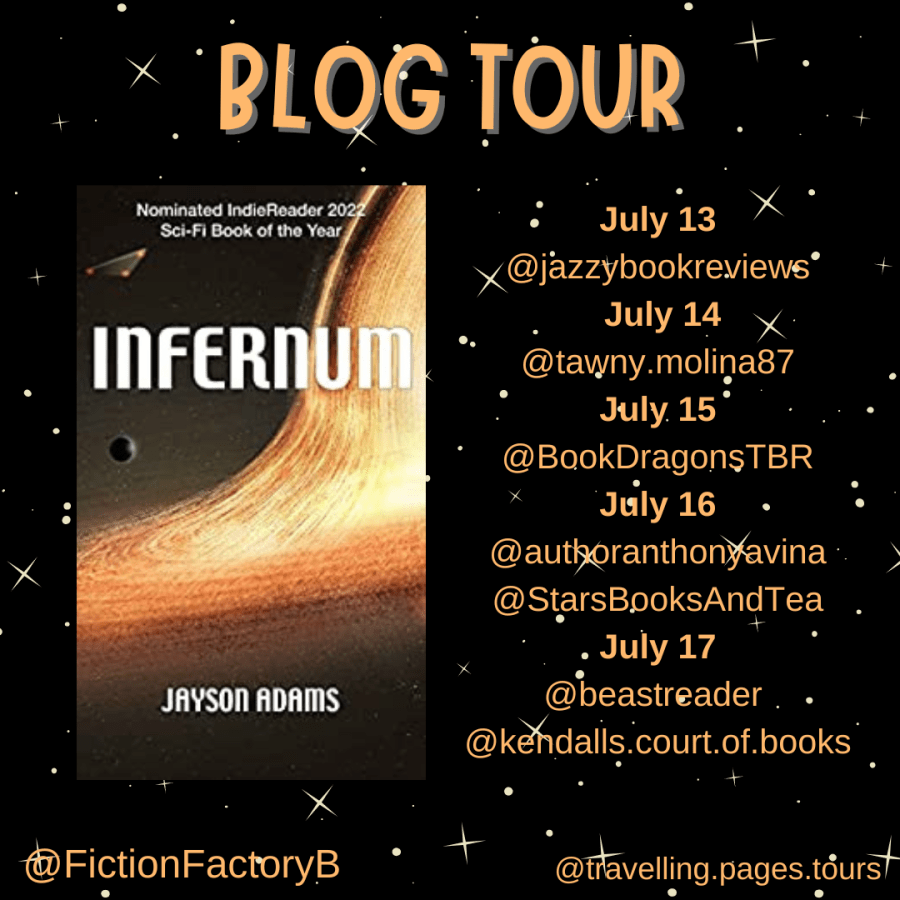
A desperate race to the center of the universe sends a Captain and his crew on a dangerous mission with little hope of returning in author Jayson Adams’s “Infernum”.
The Synopsis
A weapon of unimaginable power. A desperate mission to the center of the galaxy. Mankind’s fate hangs in the balance.
Captain Thomas Holbrook has wondered how he would brave being sent on a one-way mission. When he receives cryptic orders to divert his CentCom warship to the black hole at the center of the galaxy, a region from which no vessel has ever returned, he stubbornly refuses to take them at face value.
It’s the year 2330. The “aughts,” robots that won independence from their human creators, seek insurance against the ever-present human threat. An aught ship speeds to the galactic center to collect Planck Matter, a substance formed in the heart of black holes, the basis of a weapon that could destroy the Earth.
CentCom can’t allow the aughts to obtain Planck Matter. They enlist the help of Dr. Rebekah Riesen, a brilliant, beautiful, reincarnated physicist with her own reasons for joining a mission that might not return, and Tentek, an aught informant whom Holbrook’s executive officer insists is a double agent. Together, they must travel to the galactic center while keeping a mutinous crew at bay, stop the aughts from obtaining Planck Matter, and somehow find a way back home.
The Review
I absolutely loved this sci-fi read. The author was able to capture the raw emotions and world-building that Battlestar Galactica captured (the 2003 remake), without sacrificing the realistic dialogue and intensity that this narrative demands. The powerful themes that the author explores here, from philosophical debates of reincarnation and faith in a time of scientific discovery to the idea of AI gaining sentience and the dual nature of humanity between the darkest moments they exude and the hope that comes from their persistence for life all come crashing down into this layered and driven story.
It was the alternating POVs and rich character development that really drew me into the narrative. The interactions and ways in which these characters came together felt very natural in such a rich sci-fi story. Yet the way the author crafted a narrative that employed both original sci-fi elements and yet felt very grounded at the same time allowed for a more entertaining and gripping read.
The Verdict
Thought-provoking, action-packed, and engaging, author Jayson Adams’s “Infernum” is a must-read sci-fi novel of 2022! The rich character development and balance of humanity with outstanding mythos made this story shine so brightly. If you haven’t yet, be sure to grab your copy today!
Rating: 10/10
Advertisements
About the Author
At age sixteen Jayson dreamed of starting a software company and retiring by twenty-five. He achieved his dream just before thirty, working for the likes of Steve Jobs and selling one of his start-ups along the way. Five years later he returned to computers with another start-up. He currently works at Google.
Computers were always Jayson’s creative outlet, the screen a “blank slate.” He now channels his creative energies into writing compelling science fiction.
I received a free copy of this book in exchange for a fair and honest review. All opinions are my own.
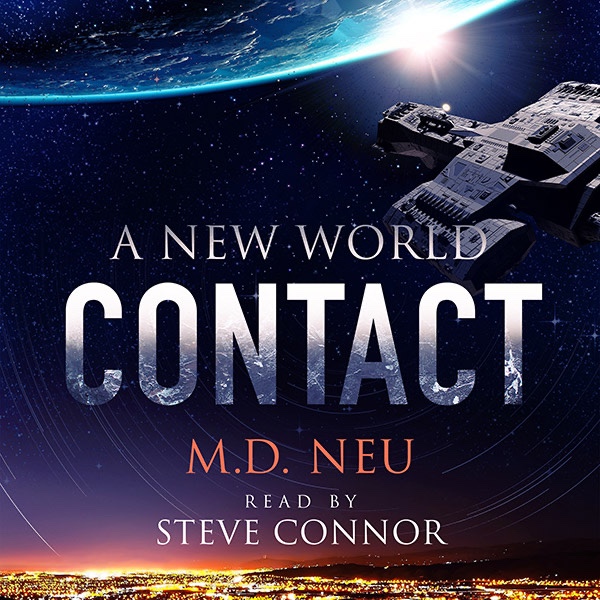
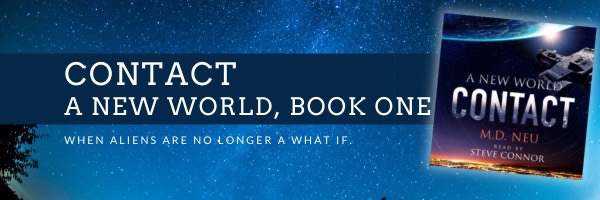
One man is all who stands between the human race and a band of humanoid aliens seeking asylum as violence and unrest emerge in author M.D. Neu’s “Contact”, the first book in the A New World Series!
The Synopsis
A little blue world, the third planet from the sun. It’s home to seven billion people—with all manner of faiths, beliefs, and customs, divided by bigotry and misunderstanding—who will soon be told they are not alone in the universe. Anyone watching from the outside would pass by this fractured and tumultuous world, unless they had no other choice. Todd Landon is one of these people, living and working in a section of the world called the United States of America. His life is similar to those around him: home, family, work, friends, and a husband.
On the cusp of the greatest announcement humankind has ever witnessed, Todd’s personal world is thrown into turmoil when his estranged brother shows up on his front porch with news of ships heading for Earth’s orbit. The ships are holding the Nentraee, a humanoid race who have come to Earth in need of help after fleeing the destruction of their homeworld. How will one man bridge the gap for both the Humans and Nentraee, amongst mistrust, terrorist attacks, and personal loss? Will this be the start of a new age of man or will bigotry and miscommunication bring this small world to its knees and final end?
The Review
This was such an emotional and brilliant sci-if read. The author so eloquently and beautifully brought the shock and surprise of two races meeting for the first time. The imagery and atmosphere that the author is able to build within the narrative, and this was especially felt in the richness of the narration. The balance of action and the tension the author’s writing struck was a testament to his creativity.
Yet for a science fiction tale, the amount of world building the author did was equally matched by the author’s incredible character development. The way the author was able to take readers not only through the shock and fear of humanity discovering life beyond our world, but of this alien race discovering humanity and everything we are capable of, good and bad, was truly brilliant, and added a depth to the narrative that kept readers invested.
The Verdict
Heartfelt, exhilarating, and entertaining, author M.D. Neu’s “Contact” is a brilliant and thought-provoking read and a great start to this series. The heart and passion the author wrote with and the way readers were able to instantly connect with the cast of characters, as well as the amazing LGBTQ driven narrative with the protagonist, made this such a solid read and an even better audiobook. If you haven’t yet, be sure to grab your copy today.
Rating: 10/10
Book Blurb:
A little blue world, the third planet from the sun. It’s home to seven billion people—with all manner of faiths, beliefs, and customs, divided by bigotry and misunderstanding—who will soon be told they are not alone in the universe. Anyone watching from the outside would pass by this fractured and tumultuous world, unless they had no other choice. Todd Landon is one of these people, living and working in a section of the world called the United States of America. His life is similar to those around him: home, family, work, friends, and a husband.
On the cusp of the greatest announcement humankind has ever witnessed, Todd’s personal world is thrown into turmoil when his estranged brother shows up on his front porch with news of ships heading for Earth’s orbit. The ships are holding the Nentraee, a humanoid race who have come to Earth in need of help after fleeing the destruction of their homeworld. How will one man bridge the gap for both the Humans and Nentraee, amongst mistrust, terrorist attacks, and personal loss? Will this be the start of a new age of man or will bigotry and miscommunication bring this small world to its knees and final end?
Series Blurb:
A little blue world, the third planet from the sun. It’s home to 7 billion people with all manner of faiths, beliefs and customs, divided by bigotry and misunderstanding, who will soon be told they are not alone in the universe. Anyone watching from the outside would pass by this fractured and tumultuous world, unless they had no other choice.
Todd Landon is one of these people, living and working in a section of the world called the United States of America. His life is similar to those around him: home, family, work, friends, and a husband.
Mirtoff Esmi is the first of her clan to be the Leader of the Nentraee. Her sole focus is to find them a home before their fleet of ships can no longer carry the last survivors of their dead world. With her brother, niece, and Faa (her companion animal) supporting her, she carries the weight of her world on her shoulders.
Mi’ko Soemu remembers the Nentraee home world for both its failures and its triumphs, which is why he holds the position of Vice-Speaker, and supports the efforts of the Nentraee Leader. He is a father and husband first, and will do what he needs to ensure his family and his fellow nentraee are safe and make it to a new world.
These three beings hold the weight of two civilizations in their hands. Will they be able to bridge the gap for both the Humans and Nentraee, amongst mistrust, terrorist attacks and personal loss? Will this be the start of a new age for both species or will bigotry and miscommunication bring these two people to their knees and final end?
The scene is a confrontation scene between one of the alien generals, Gahumed, and the leader of the alien race, Mirtoff. For me this scene is a lot of fun and it shows off these two powerful women who aren’t afraid to stand their ground.
Pronunciations:
Rádo (RA Doo) – The á is a hard ‘A’ sound.
Gahumed (Gah Mead)
Mirtoff (Mir Toff)
Tuma (Tu ma)
Candra (Can dra)
Dála (DA la) – The á is a hard ‘A’ sound.
J’Veesa (J Vee Sa)
Za’entra (Za En Tra)
Martween (Mar Tween)
U’Zraee (OO Zray)
Nentraee (Nen Tray)
***
“Madam Speaker, welcome to the Rádo.” The female officer stood and bowed.
“Thank you.”
“You honor us with your presence. I’ll let the general know you’re here.” The officer returned to her seat and started tapping on her terminal.
Mirtoff examined the reception area; unlike the civilian ships, this place had a claustrophobic feel. It was built for function, nothing more. She remembered when the ship was under construction at the Candra Shipyards. They barely had the drives working prior to the evacuation. It took five additional years to complete, but the end result was worth it.
“Madam Speaker. You can go in.” The officer bowed again.
Mirtoff bowed in return and proceeded into the general’s office.
The office wasn’t nearly as formal and polished as hers or the vice speaker’s, but it was bigger.
Probably needed to be this large for Gahumed’s girth. Or perhaps her ego.
Various monitors mounted on the walls ran status reports for ship-to-fleet control. This one office could manage the majority of the task force. The monitors displayed only the Nentraee Government Seal. The design comprised of seven gold patterns, each a symbol for one of the clans.
A bank of windows on the back wall showed a view of the internal command center. A large workstation loomed nearby, as did chairs and the conference table that could hold all the generals comfortably for any type of meeting. In this large space, the colors were drab.
I’m not a soldier. I could never work in a place like this. There needs to be plants or color. Something.
“Madam Speaker.” Gahumed offered a curt bow as she stood from her desk. She was a big woman, born for the military, with broad shoulders and a tall frame. Mirtoff was always impressed with how the general managed to keep her brown hair in such snug braids and an even tighter bun.
“General Gahumed. You run a remarkable ship. You should be proud.”
“I’m honored to have such a post within our government.” She tapped her workstation. “Dála, please, bring in two chilled cups of tuma.” She turned to Mirtoff. “You enjoy tuma, correct?”
“Of course.”
Gahumed pointed to the conference table. “Please, come. Let us sit.”
Taking a seat at the table, Mirtoff waited for Gahumed to join her. “I assume you’re here to talk about my suggested plan for dealing with these humans?” Gahumed almost hissed out the word ‘humans.’
“I am.” Mirtoff pulled out her datapad and loaded the information, then swiped it over to the largest of the monitors on the wall. The image started with the Earth rotating. Once it hit the area of the planet she wanted, she zoomed in on a small island continent. The image moved in closer to a smaller island mass off the island continent’s coast. “Your proposal to occupy the area known to the humans as New Zealand is dangerous.”
“I don’t agree.” Gahumed rested her hands on the table. “I picked that area with defense in mind. It’s remote. The land mass is small enough, and we can easily control the surrounding space. They have a limited population of four point six million that can be relocated to Uztralia—”
“I believe they call it Australia,” Mirtoff interrupted.
“Regardless, they share a similar language and background. I don’t see an issue.” Gahumed brought up demographic information of her own. “New Zealand can be made to become sustainable for our needs and allow us business options with the humans.”
“A forced relocation won’t work.” Mirtoff’s ears started to swell and warm up.
Relax. Don’t let this plan anger you.
Mirtoff took a breath. “How will that help us build a positive enough relationship with them so we can conduct trade?”
“We could offer them helium-3 for the territory,” Gahumed countered.
“And what if the Australians don’t want four point six million new humans?”
“Why not?” Gahumed smirked. “They have the land mass, and from the reports, the two territories have good relations.”
“The issue, as I understand it, is none of Earth’s governments are willing to give up their territory to us—”
“Madam Speaker,” Gahumed interrupted, “they are a barbaric species that fight among themselves for land all the time.”
“And how would we be any different?”
“It’s not the same thing,” Gahumed said.
It’s exactly the same thing. You don’t want to see it. You’re a hypocrite.
“We can’t trust them.” Gahumed swiped her hands over her datapad. “They won’t work with us in peace and certainly we can’t trust them to be truthful with their motives. Despite what you and the vice speaker may think. We can easily go there and use our military to take over the area. Then we move the humans and make reparations.” She picked up her datapad. “Denes and my staff have run the scenario based on the information we’ve gathered. The losses were negligible.” She swiped the data up to the monitor.
“Yes, General Gahumed, I’m sure the work of your son is admirable and perfect.” She rubbed the tips of her ears. “Just like him—”
“Are you mocking the abilities of my son? He is a fine male with a brilliant military mind. He is the type of male that every Nentraee of his gender should strive to be.” Her full lips pulled into a stiff line, and her ears started turning an angry shade of blue.
“Of course, General Gahumed, he’s the perfect male. Unlike all others. We are all aware of this fact.” Mirtoff forced her gaze not to move from the general’s. How poor Denes lived with the pressure for perfection was impressive.
It’s possible, on that fact alone, he may actually be perfect.
“I don’t appreciate your tone, and as a full member of the Speaker’s House, I would expect better.” Gahumed didn’t bother to hide the tips of her ears.
This isn’t going well.
“My apologies.” Mirtoff offered a stiff bow. “You want to go to war with the humans for territory? That is not the way of J’Veesa.”
“Don’t assume to understand J’Veesa’s will. Your people don’t have the relationship with J’Veesa that mine do.” Gahumed’s ears flared.
Mirtoff kept quiet.
Your people. My people. What is the difference? J’Veesa sees us equally.
Gahumed swiped information to the largest monitor. Battle statistics filled the screen. “I don’t consider it a war, more of a forced relocation. We’ll be fine.”
“And if they decide to involve other countries?” Mirtoff rested her datapad on the table. “Then what? It’ll be the Clan Wars all over again. Haven’t—” She stopped and her chin dropped to her chest.
We’ve been through that once on our world. How can we force that on another?
“It’ll be nothing like the Clan Wars.” Gahumed sat taller in the seat. “Once, these humans see our military might, they won’t challenge us. They would lose even if they used their strongest military deterrents. It would be nothing like the slaughter that your clan caused back then.”
Mirtoff’s eyes shot up. “The Za’entra? They were fighting back your clan because they had no choice. Your clan and the Martween and U’Zraee clans were slaughtering them. It was only because of their numbers that they were able to endure. How can you say—”
“I speak the truth.” Gahumed slammed her hands on the table, causing it to shake. “You and your clan have always blamed us for that war. We never started it—”
The soft chirp of the door interrupted them. They both turned as Dála entered, holding a tray with two cups on it. She quietly placed a cup in front of each of them and left the room.
“I’m sorry, General Gahumed.” Mirtoff stood, the tips of her ears on fire. “I appreciate your proposal. However, I came to inform you that your suggested plan for New Zealand has been rejected. We will not risk war with the humans to gain territory.” She glanced at the tuma and then back to Gahumed. “I appreciate the offer of the cup of tuma. However, I’m afraid I can’t stay.”
“This is a mistake, Mirtoff.” Gahumed stood. “You’ll see when they resist the arm of peace that you and others in the Speaker’s House extend to them. My idea is the only one that can guarantee the safety of our people.”
“No, General. I would sooner leave this planet than go in and slaughter them.” Mirtoff headed out of the office, her hands in tight fists.
There is a peaceful solution. I need to find it and keep the military generals from forcing us into an armed confrontation. I won’t be the first speaker general to go to war with an alien race.
M.D. Neu is an international award-winning inclusive queer Fiction Writer with a love for writing and travel. Living in the heart of Silicon Valley (San Jose, California) and growing up around technology, he’s always been fascinated with what could be. Specifically drawn to Science Fiction and Paranormal television and novels, M.D. Neu was inspired by the great Gene Roddenberry, George Lucas, Stephen King, Alice Walker, Alfred Hitchcock, Harvey Fierstein, Anne Rice, and Kim Stanley Robinson. An odd combination, but one that has influenced his writing.
Growing up in an accepting family as a gay man he always wondered why there were never stories reflecting who he was. Constantly surrounded by characters that only reflected heterosexual society, M.D. Neu decided he wanted to change that. So, he took to writing, wanting to tell good stories that reflected our diverse world.
When M.D. Neu isn’t writing, he works for a non-profit and travels with his biggest supporter and his harshest critic, Eric his husband of twenty plus years.
I received a free copy of this book in exchange for a fair and honest review. All opinions are my own.
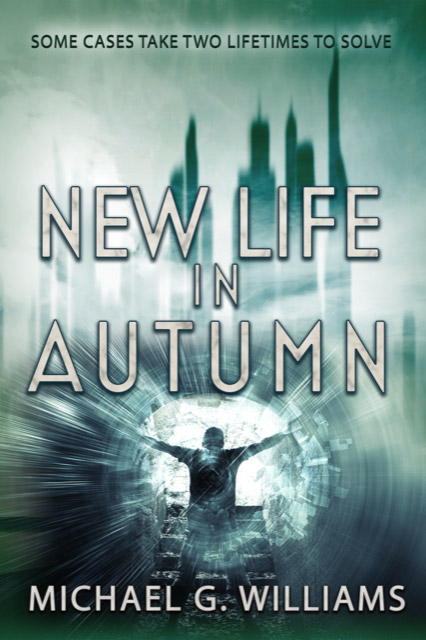
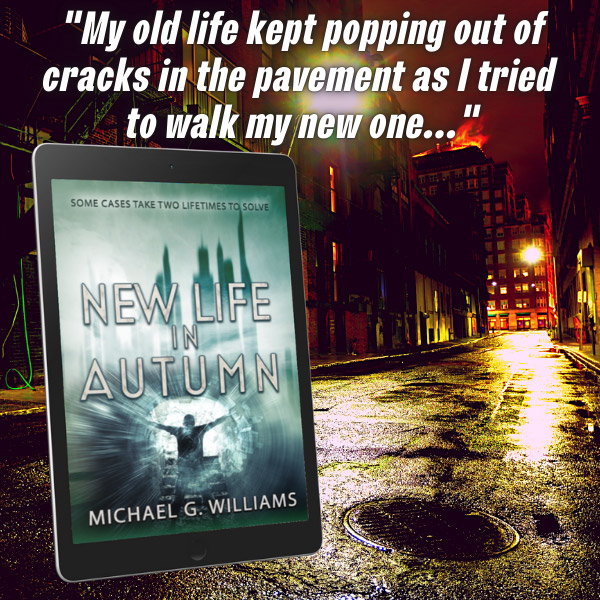
A newly dead detective tries to find a group of missing children and solve the mysteries of the floating city of Autumn’s long-lost history in author Michael G. Williams’s “New Life in Autumn”.
Advertisements
The Synopsis
RETURN TO THE MEAN STREETS OF AUTUMN
Valerius Bakhoum is dead and buried.
Too bad he’s still flat broke and behind on the rent.
Unsure what to do with himself—and of who he is—Valerius resumes his career as a detective by taking up the oldest case in his files: where do the children go?
Throughout his own youth on the streets of Autumn, last of the Great Flying Cities, Valerius knew his fellow runaways disappeared from back alleys and other hiding places more than anyone realized. Street kids even had a myth to explain it: the Gotchas, who steal urchins away in the night.
With nothing but time on his hands, Valerius dives in head-first to settle the question once and for all and runs smack into a more pressing mystery: who killed one of Valerius’ former lovers?
And do they know Valerius is still alive?
Stalk the shadows of Autumn’s hidden places by Valerius Bakhoum’s side as he shines a light on secrets both sacred and profane, ones with shockingly personal connections to who he was—and who he might become.
New Life in Autumn is the sequel to the Manly Wade Wellman Award-winning A Fall in Autumn.
The Review
What immediately struck me about this novel was just how much the setting of this floating city called Autumn felt so alive on the page. A beautiful blend of dystopian sci-fi meets fantasy and hard-boiled detective mysteries, the author found a way to make the city itself feel like a character all its own. The intrigue and drama that the author’s narrative brought forth kept me on the edge of my seat the entire time.
The character growth of this narrative was such an engaging aspect of the story. The protagonist was so versatile and complex, both emoting the tough-as-nails attitude one expects of a seasoned detective and showing the raw emotions and shock of experiencing death and rebirth all at once. The LGBTQ-forward romance and inspired character development made this story shine brightly as well, making for a rich and diverse dystopian read.
The Verdict
Gripping, captivating, and entertaining, author Michael G. Williams’s “New Life in Autumn” is a must-read novel! The action and mystery surrounding this story feel both classic and yet futuristic all at once, and the rich character development, both the protagonist and the city, in particular, make for an emotionally engaging and mind-blowing hook that keeps us readers invested in this series. If you haven’t yet, be sure to grab your copy today!
Rating: 10/10
Advertisements
Michael G. Williams has a new gay sci-fi mystery out, Books of Autumn book 2: A New Life in Autumn. And there’s a giveaway!
THE HARDEST PART OF DYING IS DECIDING HOW TO PASS THE TIME
Valerius Bakhoum died and kept no living. Now he can walk the streets of his city with a new face and a new name and finally feel a little bit respected. Too bad he’s still flat broke and behind on the rent. Unsure what to do with himself—and perhaps even of who he is—Valerius resumes his career as a detective by taking up the oldest case in his files: where do the children go?
Throughout his own youth on the streets of Autumn, last of the Great Flying Cities, Valerius knew his fellow runaways disappear from back alleys and other hiding places more than people realize. Street kids even have a myth to explain it: the Gotchas, who steal them away in the night. With nothing but time on his hands, Valerius dives in head-first to settle the question once and for all and runs smack into a more pressing mystery:
Who killed one of Valerius’ former lovers?
And do they know he’s still alive?
Return to the mean streets of Autumn by Valerius Bakhoum’s side as he shines a light into shadowy corners and finds secrets both sacred and profane with shockingly personal connections to who he was—and who he might become.
Warnings: This book does involve mild violence, capture and impending torture by antagonists, and discussion of the murder of children.
About the Series:
What would you do if you found yourself free at last–and all alone–in the sin-drenched paradise you were told you’d never reach?
Books of Autumn is a series telling the story of Valerius Bakhoum, a down and out private eye in Autumn, last of the great flying Cities, at various points in his life.
In A Fall in Autumn (2020 Manly Wade Wellman Award), we meet Valerius as he winds down his career and his too-short life.
In New Life in Autumn, Valerius navigates a surprising second chance and questions of who he is–and who he might become.
Walk the mean streets of Autumn by Valerius’ side in this award-winning study of the kindness and compassion found in the places where humanity’s lowest ambitions lurk!
Across three quarters of the City of Autumn, street kids are an unthinkable paradox. For the most part, the Pluses and the PlusPlus and all the other manifold forms of intentional humankinds only ever run into the sorts of kids someone wanted badly enough to design. There are already a billion people in the world between the Empire, the Eastern Expanse, and the less-organized places nobody’s fought over quite yet. Having kids willy-nilly wouldn’t add up, not with so many people already in line for the breakfast bar. That’s one of the many objections the Spiralists put forward to continued cultivation of Artisanal Humans like me—well, like I was.
That’s going to take some getting used to.
Anyway, widespread cultural insistence on bespoke offspring leaves a lot of kids out in the cold, literally. The ones I described before, orphaned by chance or abandoned for turning out imperfect or who got tired of their old life and decided to chase a new one are, in the remaining fourth-to-fifth of the City, as common as cobblestones and just as underfoot. There are plenty of them, and the supply continually refreshes, and I went to distinctly other streets than theirs. It isn’t that I wanted to avoid them, but talking would have taken money or some sort of barter and I was too short by half on either. I suspected it would have generated too much information rather than too little. A street kid asked to tell a story for a steam bun or a little reliably spendable scrip will gin up all the story you want and then some. I didn’t need urban legends. I needed facts, and that meant a much more gruesome start than some urchin milking my wallet with tall tales of what goes bump in the night.
I mentioned to Clodia one time that I had a friend who worked the Cisterns. The City of Autumn is like any town: its people have to piss like anybody else and its gutters often swell with rain. Autumn routinely flies into weather systems to gather up fresh water, and there’s a vast infrastructure to purify it for use by humankinds. I could spend ten pages telling you about the ponds in Down Preserves where rainwater burbles and bubbles under pressure, mixing in fresh air. The whole City sleeps atop a bed stuffed with pumps and gravity lines, charcoal and scrub algae, grates and artificial reefs and purpose-built shrimp—but I won’t.
Instead, I’ll simply say this: by the time water gets to us, the only thing left is the scent of the air where it first fell as rain. I don’t understand how the process works. I don’t care, either. The important thing, the thing none of us think about too much in case it, too, is another pretty lie in the quilt of them we make over our lives, is it happens. Sip from Lotta’s to remember the dead, cup your hands in the fountains of Domino, turn on a tap in the average Autumn kitchen, and you’ll enjoy the aroma of a field somewhere in Afrique, or a mutant blossom somewhere on a nameless plain in the vast Recovery Zone between Big River and the Salt Flat.
But on the other end of the system? Once all that delicious water has run its course through bodies and beer kegs and ice machines and steam plants?
That’s called Cistern Intake. I knew a gal who worked that part of the system. You could smell it on her from ten meters away. I always felt sorry for her, because it was so baked into her skin, ground down into her pores, she didn’t even smell it anymore herself.
On the plus side, she always had plenty of room in a bar. Nobody crowded her for long.
Frankie was a Mannie. Generally speaking, no variety of Plus—nice, “normal” people with designer genes—would even be considered for her job. Even applying for it might result in getting a replication error assessment. Odds are good you’ve already heard the story from a few years ago about the PlusPlus whose big ideas on “lived egalitarianism” got her carted off for genotoxicity screening. What most folks don’t know, however, is it was a stunt on both sides. Sure, she only wanted to make a point by suing the City for the right to join a scrubber team, not actually take the job if they offered it. But the City went out of its way to make the counterpoint in response, escorting her kicking and screaming away from the workhouse where they keep the little gliders they use to clean the Fore Barrier’s external face.
I assume she hoped to drum up publicity for her so-called perverse beliefs. I think she expected the City would do something to make an example of her, sure, but something more symbolic. You know, a big fine she could never pay, or maybe a few nights in the Palace of Imperial Justice. Something Imperial media could print without making anybody lose their lunch.
Instead, they dragged her —did I mention the kicking and screaming?—straight to the Hive. No trial. No judge. No pretenses. The Hive is right there at the front of the City, and the tiny portion of it sticking out above street level is visible if you climb high enough in Down Preserves and look to the Fore. The joke goes, they put the City’s worst criminals out there so we’ll hear them screaming if we crash into anything. This lady’s worst crime, though, was trying to prove we’re not all equal, not in the lives we’re allowed to lead or the risks we’re expected to take in the course of them. It sounds like heroism to you or me, but to the powers that be, the Sinceres, the Spiralists, and all the other people who don’t care if the Empire is a heap of shit as long as they’re near enough the top to catch a breeze, she’d committed the worst kind of social treason: she’d violated the spoken and unspoken rules propping up the class system on which they relied.
Author Bio
Michael G. Williams writes queer-themed science fiction, urban fantasy, and horror celebrating monsters, macabre humor, and subverted expectations. He’s the author of three series for Falstaff Books: the award-winning vampire/urban fantasy series The Withrow Chronicles; the thrilling urban fantasy series SERVANT/SOVEREIGN featuring real estate, time travel, and San Francisco’s greatest historical figures; the science fiction noir A Fall in Autumn, winner of the 2020 Manly Wade Wellman Award; and a bunch of short stories. He strives to present the humor and humanity at the heart of horror and mystery with stories of outcasts and loners finding their people.
Michael will be the Guest of Honor at Ret-Con in 2023, co-hosts Arcane Carolinas, studies Appalachian history and folklore at Appalachian State University, and is a brother in St. Anthony Hall. He lives in Durham, NC, with his husband, a variety of animals, and more and better friends than he probably deserves.
I received a free copy of this book in exchange for a fair and honest review. All opinions are my own.
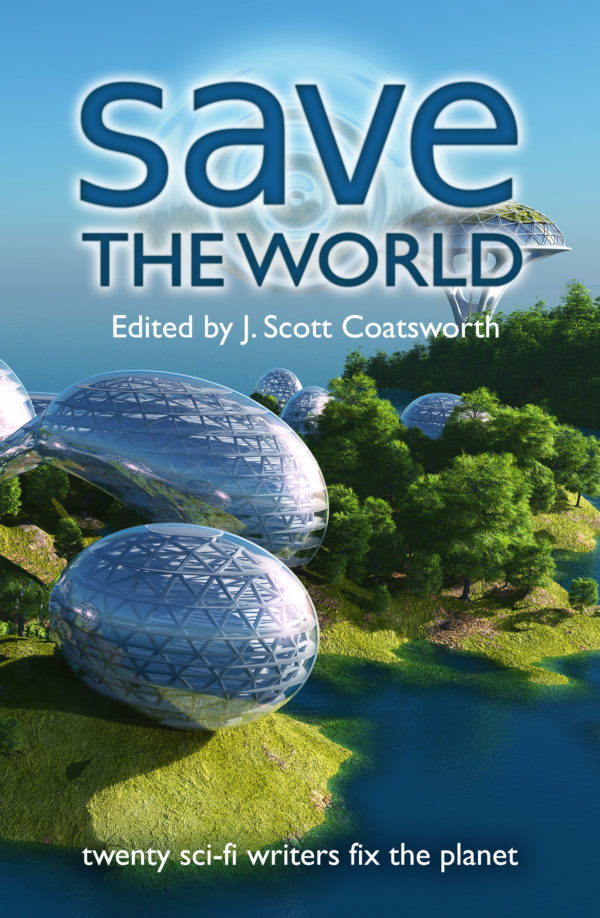
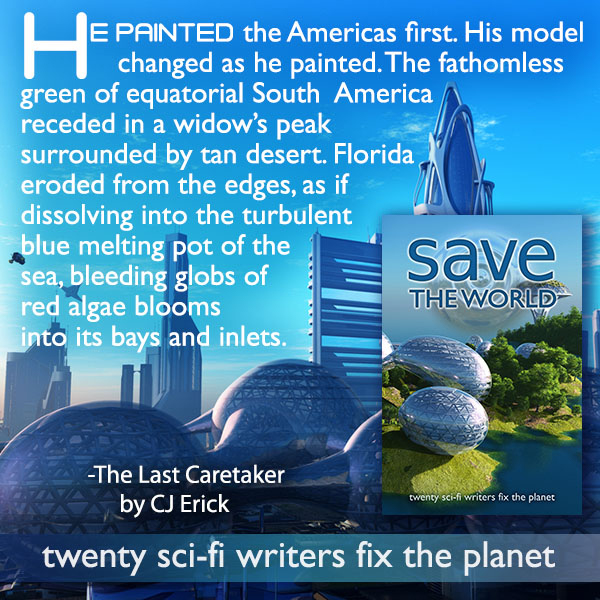
Twenty sci-fi authors come together to tackle the very real threat of climate change and use their creative skills to find a solution to our current and future threats to our world in the collection “Save the World: Twenty Sci-Fi Writers Save the Planet”, part of the Writers Save the World Series!
Advertisements
The Synopsis
Twenty ways to fix the planet.
Modern building on the island.3d render
Climate change is no longer a vague future threat. Forests are burning, currents are shifting, and massive storms dump staggering amounts of water in less than 24 hours. Sometimes it’s hard to look ahead and see a hopeful future.
We asked sci-fi writers to send us stories about ways to save the world from climate change. From the myriad of stories we received, we chose the twenty most amazing (and hopefully prescient) tales.
Dive in and find out how we might mitigate climate change via solar mirrors, carbon capture, genetic manipulation, and acts of change both large and small.
The future’s not going to fix itself.
The Review
This was a fantastic and highly creative collection. The themes of climate change and the impact it’ll have on everything from worldwide pandemics to coastal cities being overrun and so much more were thought-provoking, to say the least. The imagery and detailed storytelling that went into the narrative really painted an image in the reader’s mind.
What stuck out in each story in this collection was each author’s ability to naturally infuse the themes of this narrative into their stories and still manage to implement a very human and emotional depth of character into each story. From a young woman seeking more of not only her life but the life of everyone on Earth, to a teenage boy separated from his mother and forced to make a new home for himself, each story adds so much emotion and heart to the more broad climate struggles that make this such an engaging story.
The Verdict
Heartfelt, entertaining, yet striking in its delivery, the short story collection “Save the World: Twenty Sci-Fi Writers Save the Planet” is a must-read book and a great continuation of the Writers Save the World Series! The balance of emotional character growth and stark yet hopeful themes of climate change and the progress needed to fix it all make this one collection readers won’t be able to put down. If you haven’t yet, be sure to grab your copy today!
Rating: 10/10
Advertisements
Other Worlds Ink has a new book out in the hopepunk cli-fi Writers Save the World anthology series: Save the World. And there’s a giveaway.
Climate change is no longer a vague future threat. Forests are burning, currents are shifting, and massive storms dump staggering amounts of water in less than 24 hours. Sometimes it’s hard to look ahead and see a hopeful future.
We asked sci-fi writers to send us stories about ways to save the world from climate change. From the myriad of stories we received, we chose the twenty most amazing (and hopefully prescient) tales.
Dive in and find out how we might mitigate climate change via solar mirrors, carbon capture, genetic manipulation, and acts of change both large and small.
The future’s not going to fix itself.
About the Series:
“Writers Save the World” is an annual hopepunk anthology from Other Worlds Ink, featuring hopeful stories by sci-fi writers about ways to solve the world’s problems.
No one ate for a full day. At night, they sat around their fires and counted the stars, their boats bobbing in the quiet, dark waters. No electricity was permitted. The drones were shelved. The holo-projectors unplugged. Even the radios were shut off. The next morning, they washed in the invigorating cold of the ocean, and beat their bodies with branches.
This was what Edgard instructed. And what Edgard instructed, everyone obeyed.
The waters seemed bright that morning, despite the depths below. Small dots of sea foam dotted the surface, reflecting the eager light of the new day. The weather was calm, and the ocean peaceful. It was an auspicious morning.
Jason leaned against the rails, elbowing between his crew mates as everyone shuffled for the best view. There was laughter and chatter, some singing, a few rude jokes. The ocean was alive that morning, all the ships of the tribe lining up, energy buzzing across the wide decks.
Then the drumming started, and silence fell. People leaned forward, craning necks.
The canoe emerged from between boats, paddled by a small crew, its painted bow slicing through the water. At the front was Edgard, standing tall. Jason felt someone nudge him, and as he looked over at Amelia, she nodded at the cloak draped over Edgard’s shoulders. The Thunderbird.
The canoe stopped, and Edgard placed a hand in the water. As he rose, he started to sing, lighting a bundle of dried cedar, and waving the smoke over his harpoon. He removed the muscle-shell hooks and wrapped them in cloth, tied rocks around the yew shaft, and placed it in the water. As it sank, his song ended. Edgard turned to face the ships, opened his arms wide, and smiled.
The crews erupted.
It was done.
The harvesting was complete.
—From “Thunder on the Ocean,” by Christopher R. Muscato
Author Bio
Gustavo Bondoni is novelist and short story writer with over three hundred stories published in fifteen countries, in seven languages. He is a member of Codex and an Active Member of SFWA. His latest novel is Lost Island Rampage (2021). He has also published three other monster books: Ice Station: Death (2019), Jungle Lab Terror (2020) and Test Site Horror (2020), three science fiction novels: Incursion (2017), Outside (2017) and Siege (2016) and an ebook novella entitled Branch. His short fiction is collected in Pale Reflection (2020), Off the Beaten Path (2019) Tenth Orbit and Other Faraway Places (2010) and Virtuoso and Other Stories (2011).
J. Scott Coatsworth lives with his husband Mark in a yellow bungalow in Sacramento. He was indoctrinated into fantasy and sci fi by his mother at the tender age of nine. He devoured her library, but as he grew up, he wondered where all the people like him were. He decided that if there weren’t queer characters in his favorite genres, he would remake them to his own ends. A Rainbow Award winning author, he runs Queer Sci Fi, QueeRomance Ink, and Other Worlds Ink with Mark, sites that celebrate fiction reflecting queer reality, and is a full member of the Science Fiction and Fantasy Writers of America (SFWA) and the head of its self-publishers committee.
Rachel Hope Crossman is an ex-fry cook, ex-substitute teacher and retired Montessori teacher. Her childhood year in Athens, Greece left indelible imprints of olive groves, pomegranates and the sparkling, turquoise blue of the Mediterranean upon her mind. She is the author of SAVING CINDERELLA: FAIRY TALES & CHILDREN IN THE 21ST CENTURY, (2014) The Apocryhile Press, which examines the world-wide Cinderella story as an archetype and explains the symbolism of rings, knives, birds, pumpkins and more. Her personal heroes are Harold (and his purple crayon), Peggy Hill and Nancy Pelosi.
Jana Denardois Queen of the Geeks (her students voted her in) and her home and office are shrines to any number of comic book and manga heroes along with SF shows and movies too numerous to count. There is no coincidence the love of all things geeky has made its way into many of her stories. To this day, she’s still disappointed she hasn’t found a wardrobe to another realm, a superhero to take her flying among the clouds or a roguish star ship captain to run off to the stars with her.
Derek Des Anges is an emerging cross-genre author working in London, who consistently fails to stick to a single format or genre but does at least really consistently write about the queer experience (or some of them, anyway). He’s into fungi, industrial and experimental music, and trying to avoid the climate apocalypse actually flooding his flat too many times, because he has far too many books to consider moving out.
CJ Erick’s stories have appeared in anthologies from WMG Publishing, WordFire Press, and others. He won the FenCon short story competition in 2015. He writes in multiple genres, publishes novels in a space fantasy series, and dabbles in poetry. He’s an MFA student in creative writing at Lindenwood University, and an editorial assistant for the Lindenwood Review. He lives in Dallas area with his wife and their rescue superhero dog Saber-Girl, calls his sourdough bread starter “Ursula” (K. Le Guin), and cooks crazy-good Cajun food for a Midwest Yankee.
J.G. Follansbee’s short stories have appeared in several anthologies, including Others Worlds Ink’s Fix the World. Other publications include Bards and Sages Quarterly, Children, Churches and Daddies, the collection Still Life 2018, and the speculative fiction anthologies Satirica, After the Orange, Spring Into SciFi 2019, Rabbit Hole II, and Sunshine Superhighway. He is the author of the series Tales From A Warming Planet and the trilogy The Future History of the Grail. He has won several awards in the Writers of the Future contest, and he was a finalist in the inaugural Aftermath short story contest. He also has numerous non-fiction book credits. He lives in Seattle.
Geoffrey Hart: Startled by an aggressive dictionary late in her pregnancy, Geoff’s mother was delivered of a child with a precocious antipathy towards users of words. Over time, he transformed this antipathy into a more functional, if equally passive-aggressive, editorial career. After nearly 35 years, the flame burns brightly as ever, leading to an errant, semi-evangelical career ranting against the evils of words from pulpits at any editing or technical writing conference that will have him, seeking new recruits for his cause. In his spare time, he roams the globe, entertaining locals with creative and unrestrained interpretations of their linguistic conventions. He also commits occasional fictions, and has sold 46 stories.
M. J. Holt lives with her husband on their 60-acre family farm with many animals on a peninsula in Puget Sound. She is horrified that the entire world isn’t working to decrease pollution of all kinds. When she was a teenager, she and her mother sat under an ancient crabapple tree and read Rachel Carson’s Silent Spring. Her mother told her that future generations would pay the price for the sins of past generations. That price has increased and now several generations later, some not yet born, will pay the price. Lightning struck that crab tree decades ago. It grew on land her great grandfather bought in 1892. Her great grandmother farmed the land and had the current house, started in 1900, built. The farm passed to her grandfather, and then to her mother. She lives in that house amid the surviving bits of her ancestors’ lives. This generational continuity informs her fiction. Her crime thriller novels, The Devil’s Safe (2021) and its sequel Making Angels (2022) can be found on Amazon. Recent short stories have appeared in the anthologies Black-Eyed Peas on New Year’s Day: An Anthology of Hope, Low Down Dirty Vote Volume II, Alternate Theologies, and her poetry may be found in the poetry anthologies 300K, Timeless Love, and other periodicals. She earned separate undergraduate degrees in History and English Literature, and a Masters in English Literature. She is a member of SFWA, MWA, and other writing organizations.
Jennifer Irani lives and works in southern California. Her story, “Graft,” was inspired by the recent fires in California, Greta Thunberg, and generation Z. A version of this story first appeared in Writing in Place: Stories from a Pandemic. Her work has been published in the anthology Dove Tales Empathy in Art: Embracing the Other. She has published essays in Orange Coast magazine. Her essay, Regeneration, received honorable mention in the Writers Challenge 2021 on Medium.com. Her poem, “Cool Colors Warm the Soul,” was selected for the Connecting Through Color, Art and Poetry exhibit. She is a member of Barbara Demarco’s Literary Posse.
Andrew Rucker Jones was born and raised in Falls Church, Virginia. No muse heralded his birth, and he has not been writing novels since he was in diapers. He received his Bachelor’s degree from North Carolina State University in mathematics with minors in computer programming and German. He has always loved reading, so when the time came to choose a new career after twenty years in IT (programmer, system administrator, manager), he decided writing looked like fun. If only it paid. He now lives in Mannheim, Germany, with his Georgian wife, who actually earns money, and their three children, the eldest of whom also earns more than he.
Micháel McCormick likes to write stories in his Batman pajamas. He and his wife also enjoy travel, hiking, Tai Chi, and perplexing cats. They split their time between Saint Paul, Minnesota and Lake Superior. Mike’s work has appeared in Arcanist, Daily SF, DreamForge, Frozen Wavelets, Grievous Angel, Metastellar, Talking Stick, and elsewhere.
Christopher R. Muscato is an adjunct history instructor and writer from Colorado, as well as the former writer-in-residence for the High Plains Library District. He has published over a dozen short stories and is thrilled to be a part of this project.
Masimba Musodza was born in Zimbabwe, and has lived most of his adult life in the United Kingdom. His short stories, mostly in the speculative fiction genre, have appeared in periodicals and anthologies around the world. He has written two novels and a novella in his first language, ChiShona. His collection of science-fiction stories, The Junkyard Rastaman & Other Stories, was published in 2020. Masimba also writes for stage and screen.
M.D. Neu: Growing up in an accepting family. internationally award-winning author M.D. Neu always wondered why there were never stories reflecting our diverse queer society. Surrounded by characters that only reflected heterosexual society, he decided to change that and began writing, wanting to tell epic stories that reflect our varied world. When not writing, M.D. Neu works for a non-profit in Silicon Valley, and travels with his husband of twenty plus years.
Jennifer R. Povey: Born in Nottingham, England, Jennifer R. Povey now lives in Northern Virginia, where she writes everything from heroic fantasy to stories for Analog. She has written a number of novels across multiple sub genres. Additionally, she is a writer, editor, and designer of tabletop RPG supplements for a number of companies. Her interests include horseback riding, Doctor Who and attempting to out-weird her various friends and professional colleagues.
NRM Roshak is an award-winning Canadian author and translator. Their stories have appeared in various anthologies and magazines, including Galaxies SF, Daily Science Fiction, and Future Science Fiction Digest, and has been translated into several languages. They live in Ontario, Canada, with a small family and a loud cat.
Holly Schofield travels through time at the rate of one second per second, oscillating between the alternate realities of city and country life. Her stories have appeared in Analog, Lightspeed, Escape Pod, and many other publications throughout the world. She hopes to save the world through science fiction and homegrown heritage tomatoes.
Lisa Short is a Texas-born, Kansas-bred writer of fantasy, science fiction and horror. She has an honorable discharge from the United States Army, a degree in chemical engineering, and twenty years’ experience as a professional engineer. Lisa currently lives in Maryland with her husband, two youngest children, father-in-law and cats. She is a member of the Horror Writers Association and a Futurescapes 2021 alumnus.
Heather Marie Spitzberg is an environmental author, scientist, and lawyer who lives in New York’s Hudson River Valley with her family. Her writing has been nominated for a Pushcart Prize.
I received a free copy of this book in exchange for a fair and honest review. All opinions are my own.
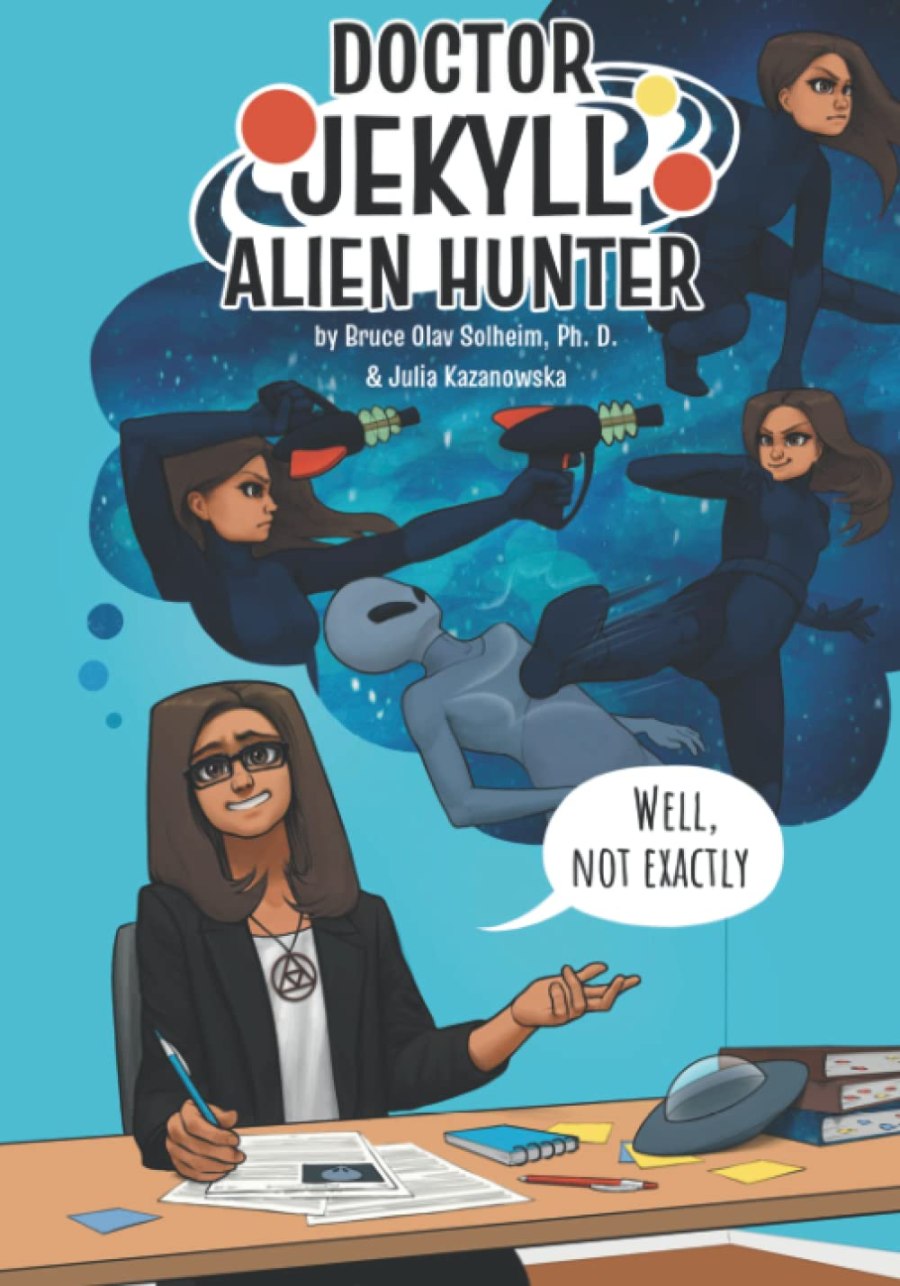
A young woman following in her father’s footsteps as an investigator of extraterrestrial life finds herself delving into the realities of life and death in author Bruce Olav Solheim’s “Doctor Jekyll: Alien Hunter.”
Advertisements
The Synopsis
Dr. Jekyll Alien Hunter chronicles the adventures of Henna Jekyll, a professor who is following in her father’s footsteps in researching extraterrestrials. Her research takes her around the world where she discovers the hazy boundaries between life and death, and reality and dream.
The Review
This was a fun and fascinating read! The author did an incredible job of crafting a narrative that brought the intrigue of the study of the paranormal and UFO-related activity in our world with the emotional and impactful study of relationships and how we connect with one another. As a paranormal investigator and enthusiast myself, I was floored by how much the author delved into the interconnectivity that seems to exist between various fields of study (cryptozoology, paranormal, Ufology, spirituality, etc), and how much detail the author was able to incorporate into the narrative in a very natural way.
Yet it was the characters that made the heart of this graphic novel shine so brightly. The emotional connection made between Henna’s search for answers and her late father and mother was something so many people will be able to connect with. The emotional concept that this mystery and intrigue that exists when talking about the paranormal makes this story so engaging, as it allows readers to recognize it isn’t always about proving the truth to others, but instead knowing your own truth and understanding every answer we find, more and more questions will arise, and that’s ok.
The Verdict
Heartfelt, entertaining, and gripping, author Bruce Olav Solheim’s “Doctor Jekyll: Alien Hunter” is a must-read sci-fi meets paranormal graphic novel! The beautiful artwork from illustrator Julia Kazanowska and the amount of depth that was achieved narratively in such a short span of time made for a compelling and riveting read that cannot be missed. Be sure to grab your copy today!
Rating: 10/10
Advertisements
About the Author
Bruce Olav Solheim was born on September 3, 1958, in Seattle, Washington, to hard-working Norwegian immigrant parents, Asbjørn and Olaug Solheim. Bruce was the first person in his family to go to college. He served for six years in the US Army as a jail guard and later as a helicopter pilot. He earned his PhD in history from Bowling Green State University in 1993.
Bruce is currently a distinguished professor of history at Citrus College in Glendora, California. He also served as a Fulbright professor in 2003 at the University of Tromsø in northern Norway.
Bruce founded the Veterans Program at Citrus College and cofounded, with Manuel Martinez and Ginger De Villa-Rose, the Boots to Books transition course—the first college course in the United States designed specifically for recently returned veterans. He has published five books and has written seven plays, two of which have been produced.
Bruce is married to Ginger, the girl of his dreams, who is a professional helicopter pilot and certified flight instructor. He has been blessed with four wonderful children: Bjørn, Byron, Caitlin, and Leif. He also has a precious grandson, Liam. Bruce, his brother, and his two nephews still own the family home in Åse, Norway, two hundred miles above the Arctic Circle.