Interview with Author Ray Franklin

1) Tell us a little bit about yourself. How did you get into writing?

I grew up in Houston, Texas and became fascinated with science fiction when I got my first library card. Some of my favorite authors are Ray Bradbury, Martha Wells, Iain M. Banks, Ursula K. LeGuin, and Michael Swanwick. I wanted to write stories since I was ten, but only learned the craft of storytelling after 2022.

Engineering has been my career for years and I have remained interested in science and science fiction the whole time. I read the science magazines Discover and Science News to keep informed on the rapid pace of scientific progress. Sometimes, the articles trigger story ideas.

Advertisements

2) What inspired you to write your book?

NASA and the space race captured my imagination in the 1970s. When NASA released images from the Hubble Space Telescope, I wanted to see every one. Eventually, I realized I could share my excitement with others by writing a book. I settled on galaxies for the subject because Hubble generated such amazing images of these giant star configurations.

By digging deeper into what astronomers know about galaxies near and far, I learned far more about astronomy. The more I learned, the more I wanted to include in the book.

3) What theme or message do you hope readers will take away from your book?

Galaxies grow and change in beautiful and amazing ways. We can’t watch these changes happen because they are so slow. But galaxies are born, grow up, get old, and then die, which makes them a bit like us. Each galaxy is also unique, just like every person.

We know so much about galaxies because astronomers have discovered the truth by looking through telescopes for hundreds of years. Any young person who wants to know more about our universe can become an astronomer.

Advertisements

4) What drew you into this particular genre?

Science fiction is fun and exciting, but science fact is what makes science fiction possible. Hubble Space Telescope images of galaxies are beautiful and incredibly moving. Non-fiction was the best way to tell the story of the galaxies that fill our universe.

5) What social media site has been the most helpful in developing your readership?

I use Mastodon, @rnf@mindly.social, to connect with other writers. Mindly.social has worked out well in that regard. We share thoughts on the many challenges that every indie writer faces. Some people on Mindly might also be interested in reading my science fiction, when I have a novel published.

6) What advice would you give to aspiring or just starting authors out there?

Write about something you love. Your passion for the subject will show up in your writing and readers will recognize it as authentic. That personal connection is one thing that kept me going when I hit difficulties with Galaxy Astronomy. I didn’t have the option to give up because I cared too much about my vision for the book. It gave me the strength to persevere, which is something everyone needs when life gets tough.

7) What does the future hold in store for you? Any new books/projects on the horizon?

A companion to Galaxy Astronomy is in the idea phase. I envision using images from the new James Webb Space Telescope (JWST) to explore infrared astronomy. Astronomers need time to create each color composite image from the many sensors JWST uses. But the telescope is sending new images continuously. A single new image can take weeks, months, or even years to reach publication. I will also need to learn much more about JWST’s astronomical instruments, and time to browse all the available images. Understanding what each image means is as important as how marvelous it looks. Turning all that into a book can take me a year or more.

I’m also actively working on my first science fiction novel. It’s a space opera about humans and extraterrestrials. Set on a planet circling another star, the novel contains some horror and high-tech manipulation. This will be the first of a series of at least three books, and maybe more.

Advertisements

About the Author

Ray Franklin grew up in Houston, Texas, the home of NASA. He followed the space race for years and stayed up late to watch Neil Armstrong step onto the moon. Years later, when stunning images from the Hubble Space Telescope became available, he saw expansive possibilities. Being a father and working with kids as a volunteer had given him an appreciation for how fast children can learn complex topics with the right mix of fun and challenge. This is what drove him to write ‘Galaxy Astronomy: Field Guide For Kids.’
Helioza.com

Galaxy Astronomy: Field Guide for Kids by Ray Franklin Review 

I received a free copy of this book in exchange for a fair and honest review. All opinions are my own. 

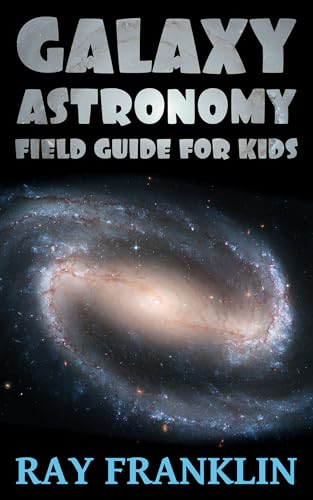
Author Ray Franklin shares a kid-friendly and educational look into the vast universe and the galaxies that make it up in the book “Galaxy Astronomy: Field Guide for Kids.”

Advertisements

The Synopsis

How many galaxies fill the universe? What is light we can’t see? Are Imperial Space Penguins dangerous? Kids ask such questions every day, and Galaxy Astronomy has answers!

The author’s enthusiasm for NASA and the Hubble Space Telescope ripples through this journal of galactic growth. Forty-eight Kindle-wide, full-color images of spectacular galaxies punctuate the field guide. It’s filled with facts vetted by a professional astrophysicist. Kids learn of galaxy types, light-years, invisible light and galactic feeding frenzies. While identifying galaxies, kids see how these gigantic star formations change and evolve over billions of years. They’ll understand how astronomers use ultraviolet light to locate young stars, and infrared light to find stars hiding inside enormous dust clouds. It’s a fun, fascinating and factual read.

If you know a kid who likes science and goofy jokes, give your young astronomer Galaxy Astronomy today!

AudiobooksNow

The Review

What a fun and educational read. The author does an incredible job of bringing his background and passion for astronomy to the reader. The author’s writing style is very inviting, with the reader able to understand the overall subject matter of each chapter while also getting enough new information to challenge the reader to learn more and do the work to research and engage with this material.

The breathtaking and vibrant illustrations the author provides for the galaxies in this book and the star systems in place make this a compelling book to get lost in. The way the book stokes the flames of curiosity in young readers and the lessons the author could impart, including the fascinating structure of Seyfert galaxies and what makes them so dangerous, allowed the reader to lose themselves in the material.

The Verdict

The heart, passion, and thoughtful presentation of galaxies and their structure to readers made this a remarkable book. The balance the author struck between education and entertainment for young readers and how the author rewarded the reader’s curiosity with information that kept the reader eager to learn more and dive into the subject of space and astronomy. If you haven’t yet, be sure to grab your copy today!

Rating: 10/10

Advertisements

About the Author

Ray Franklin grew up in Houston, Texas, the home of NASA. He followed the space race for years and stayed up late to watch Neil Armstrong step onto the moon. Years later, when stunning images from the Hubble Space Telescope became available, he saw expansive possibilities. Being a father and working with kids as a volunteer had given him an appreciation for how fast children can learn complex topics with the right mix of fun and challenge. This is what drove him to write ‘Galaxy Astronomy: Field Guide For Kids.’
Helioza.com

Swan Songs of Cygnus: The Weight of Black Holes by Vincent Hollow Review

I received a free copy of this book in exchange for a fair and honest review. All opinions are my own.

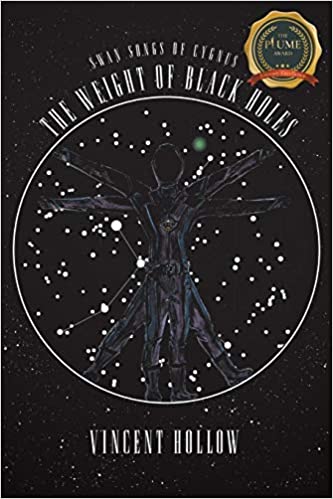
An astronaut yearns to reunite with the ghost of his lost love even at the cost of his own life as he hurtles through space in author and poet Vincent Hollow’s unique story-driven book of poetry, “Swan Songs of Cygnus: The Weight of Black Holes”. 

Advertisements

The Synopsis

Side A: horizon

Mourning the death of his love. A bereaved astronaut signs up for a deep – space mission to reunite with her ghost.

Even if it means becoming a ghost himself. Traveling at the speed of light. The astronaut jettisons through the solar system. Pausing only to gaze at its celestial splendor.

Cast under the grandeur of the planetarium. Seeing her apparition in every sphere…

The Review

A truly haunting and beautiful read, author and poet Vincent Hollow has crafted a one of a kind narrative-driven book of poetry that readers will instantly connect with. The overall story of a man suffering from loss who gives up everything to pursue a chance to find his love once more is something many readers will identify with, while the imagery and visual cues the author places throughout the book feel as if they are witnessing the journey of this astronaut themselves. 

The emotional struggle of this volunteer astronaut and writer really is the heart of the narrative. Reader’s hearts will break as they witness the emotional toll that the narrator’s loss takes on them as the journey progresses, and the tragic beauty that comes from having a connection that strong and powerful with another person. 

The Verdict

Breathtaking, heartfelt, and incredibly written, author and poet Vincent Hollow’s “Swan Songs of Cygnus: The Weight of Black Holes” is one of the most unique, creative, emotional, and memorable books of poetry I’ve read in years. A great story with lots of powerful imagery connects readers with the poet and the book’s protagonist in a whole new way and makes for one of the best poetry reads of 2020. Be sure to grab your copy today!

Rating: 10/10

Advertisements

About the Author

VINCENT HOLLOW is an astro-poet and interstellar storyteller living aboard the space vessel, Aquarius. Shooting from the star system to star system. Vincent spends his time gazing out into the universal abyss and the depths of himself where he hopes to find his place in the cosmos through the words he weaves in the fabric of spacetime.

https://www.facebook.com/Vincent-Hollow-105005078127184/

https://www.instagram.com/vncenthollow/

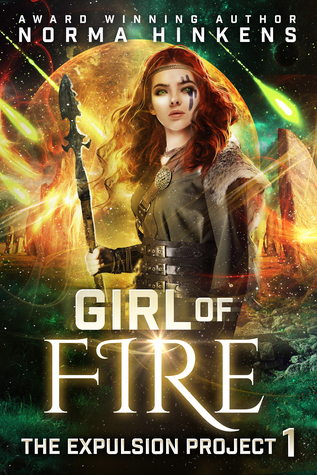
Girl of Fire (The Expulsion Project #1) by Norma Hinkens Book Review

If Firefly were to be made into a modern day CW Teen Drama, it would look a whole lot like author Norma Hinkens book, “Girl of Fire (The Expulsion
Project #1).” A fast paced adventure that explores a whole new galaxy filled with androids, cyborgs and warring worlds, this is a fantastic
sci-fi world that fans will want to dive head first into. Here is the synopsis:

ORIGIN. DESTINY. FATE. How far would you go to unravel the truth?

Trattora is the adopted daughter of the Chieftain on a primitive frontier planet. Velkan is an indentured serf who has never known a day of
freedom. Forced to flee an invasion by Galactic Pirates, they find themselves thrown together on a ramshackle mining vessel that harbors more
than one dark secret. Fate and chemistry combine when the pair’s matching birth bracelets lead them to a shocking discovery about their true
lineage. Stakes rise when they uncover the classified Expulsion Project, and the devastating sacrifice their birth families made to spare their
lives. Determined to save them from liquidation, Trattora and Velkan plunge headlong into a race against time and space to take down the
genocidal self-actualizing software that now controls large swathes of their home planet.

But will they navigate the treacherous dealings of the seedy Galactic underworld in time to rescue the families who loved them enough to let
them go?

Girl of Fire is the first novel in The Expulsion Project, a sci-fi, dystopian thriller trilogy with a whisper of romance, a heavy dose of
adventure, and action galore. If you are a Firefly or Dark Matter fan, or in Divergent withdrawal, this is the book mashup for you!

This was an edge of your seat read, filled with lots of action, great character growth and phenomenal chemistry between the characters. From the
first pages of this book you get a sense of the scope of this galaxy, and the differences that separate the worlds. Getting to see how these
characters started off from the same world and then grew up to be so different was fun to see unfold within the plot, and the story itself
had me invested and hooked immediately.

Much like the supporting characters of the book, one can’t help but feel enthralled with protagonist Trattora and her bravery. Raised on a lone
planet for most of her life, she isn’t afraid to be herself and goes to extreme lengths to save the people who matter to her. With a sense of
justice and pride she throws herself into danger, and takes charge when decisions need to be made.

Overall, this is a must read novel for YA science fiction fans. Readers will love going on this adventure as they delve into the lives of Trattora
and her friends as they explore harsh worlds and seedy cities in the galaxy. The action and shocking cliff-hanger will keep fans invested for
this exciting new series, so be sure to get your copy of “Girl of Fire” today!