I received a free copy of this book in exchange for a fair and honest review. All opinions are my own.
A young police officer working her way towards her first investigation discovers a gruesome killer unlike anything the police world has seen before has made their way to her town, and only with the help of a seasoned yet haunted detective can she hope to stop the killer in author Bernard Schaffer’s incredible thriller “The Thief of All Light”. Here is the synopsis.
The Synopsis
“Tense, fast, and excellent–I loved this book.”
–Lee Child
From veteran police detective Bernard Schaffer comes a powerful new thriller that crackles with authenticity, page-turning suspense, and spellbinding glimpses into the criminal mind . . .
“It was one thing to fantasize about evil, to reach into the darkness and play with it a little . . .”
Rookie cop Carrie Santero has always been fascinated by serial killers. As a teenager, she wrote a letter to Charles Manson in prison–and received a chilling reply. Then she came face to face with a child murderer in her small Pennsylvania town, an encounter that haunts her to this day. Now, as a detective in training, she finally has her chance to make a difference; to hunt down a psychopathic sadist who embodies the very nature of evil itself.
.” . . but it was something different when it knew your name.”
The killer draws inspiration from the most twisted minds in modern crime. Ted Bundy. John Wayne Gacy. Ed Gein. The Green River Killer. As the body count rises, Carrie and her boss, Chief Bill Waylon, realize they’re dealing with an unpredictable “omnikiller” who cannot be profiled. Their only hope is to enlist the help of Jacob Rein, a brilliant but tarnished former detective who has plumbed the darkest recesses of the soul. Who has seen the heart of darkness. And whose insights on evil could lead Carrie to the point of no return.
What an incredible, heart-pounding read. The novel does a marvelous job of drawing the reader deeper and deeper not only into the investigation, but the lives and backgrounds of the protagonists of the story. Detective Santero is a strong police officer who faces the challenges any strong woman working her way into a male dominated field must deal with, and despite her inexperience shows a determination and strength that speaks of a realism not often captured in the genre.
What really shines through however is the attention to detail the author brings to the investigation, shedding the Hollywood cliches of police investigations with brutally honest interactions between officers and the reality of the crimes committed by horrendous offenders, all while providing an engaging plot that brings to life a haunting new killer. The investigation brings an emotional turn that readers will be shocked to discover, and will give the heroes of this tale a more invested role in the hunt for this illusive killer, a killer most other officers believe is nothing more than a myth.
The Verdict
The Thief of All Light is a must read introduction into a fantastic new thriller series. Between the author’s real life experiences as an investigator lending a realness to the plot and characters, and a cast of protagonists many can relate to and antagonists that haunt our nightmares, the best aspect of this story is exploring the dark depths investigators must delve into in order to find the criminals they are hunting, and the consequences of going to those dark places. If you haven’t yet, be sure to grab your copy of The Thief of All Light, the first in the Santero and Rein series, today!
Rating: 10/10
About the Author
Bernard Schaffer is the author of the Santero and Rein Thriller Series from Kensington Publications.
Prior to that, he published multiple titles in a variety of genres as an independent author. Schaffer is the father of two children and a full-time police detective in Southeastern PA.
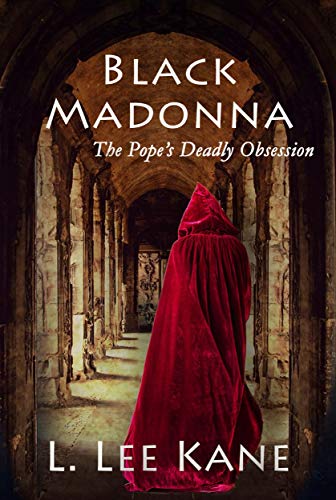
Guilhelm de Montanhagol, a Knights Templar knew his death was imminent. Few who entered the halls of torment emerged whole in mind or body. For six years, Bishop Folques had kept him imprisoned in a small cell in Toulouse. Condemned as a heretic, he’d suffered the agony of the rack on several occasions.
He reflected on the last time Folques visited him in the dungeon. He had been splayed on a board, tied down at the wrists and ankles. Rollers at each end of the board slowly turned, pulling his body in opposite directions until every joint dislocated. He could no longer sit or stand. He slept, ate, and wasted away in his own filth. His once fine kirtle and linen shirt were just rags wrapped around his body for warmth.
His thoughts turned to his lover, Esclarmonde. Thinking of his her comforted him in his last hours,. Esclarmonde’s skin was the color of alabaster, her shimmering blonde hair, highlighted with wisps of silver, cascaded down her body. She favored floor-length, loosely fitted gowns, usually of blue. He longed to thread his hands through her hair one last time. Her emerald -green eyes shimmered with love for him. Esclarmonde was strong. She would get the codex, written by Mary Magdalene, safely away.
Guilhelm was at peace in this knowledge. He was ready to accept his impending death. His tormentors had beaten him down mentally and physically. Esclarmonde was gone. His brother’s in the Knights Templar were dead and gone. There was no hope, only the desire to die and end the suffering.
Soldiers came, stripped him of the last of his ragged clothing, then dragged him from his meager cell. He had been wearing the same clothes he had worn since Pope Innocent III had him thrown into this God-forsaken hell. They hung him upside down by one leg, creating the sensation of a crucifixion. In time, this posture would inhibit and exhaust the muscles required for breathing. They stretched him in one direction, while gravity and his body weight worked against him. Exhaustion would eventually set in, and he would die. They do this to traitors, he thought angrily, but he was not a traitor. He was a Knights Templar and had sworn an oath never to kill a Christian. The pope believed if one was not of the Orthodox Christian faith, then that person was a heretic and should pay for his crimes against the church. Today, Folques, dressed in monk’s attire, came to offer Guilhelm a last salvation if he would only give up his lover’s secret, the treasure hidden by the Cathars, people who practiced a religion the pope had declared war against in 1208.
“You must be getting desperate, Folques,” Guilhelm whispered weakly. “I have not seen you in years. Have the Cathars escaped with the secret that you want so desperately so you can protect the pope and the Roman religion?”
“Guilhelm, tell me where the treasure is hidden, and I will spare you from being tortured further,” Folques coaxed, while nervously shuffling a deck of cards in his hands.
“I believe the end is near, Bishop. I have nothing to gain and everything to lose in telling you anything. I would lose my soul if you were to extort that from me,” Guilhelm proclaimed defiantly.
Folques held out a card for Guilhelm who strained through blurred vision to see its face. He saw what appeared to be a young woman holding open the jaws of a lion., He’s discovered cards, he thought. He blinked back the salty sweat rolling down his face, trying to see more clearly.
The image faded and he saw a Roman pontiff holding a staff, crowned by the Yellow Cross of the Cathars. The next card Folques pulled from the deck displayed a burning tower with its defenders leaping to their deaths. Visions of the cards floated past Guilhelm with greater speed, a blur of scenes he could barely distinguish through his battered eyes. Did this mean that -Esclarmonde plan had worked? His mind leaped with joy as his body grew weaker. God bless Esclarmonde.
“Who is this woman?” Folques demanded again.
The question roused Guilhelm from his anguished thoughts. The guards yanked his head back by his hair. He saw Foulques displaying a card with a hand-painted miniature of his beloved Esclarmonde.
“We found these playing cards being copied and passed from city to city like holy relics by gypsies. What is their purpose?” Folques demanded.
Guilhelm suddenly turned away, realizing which card Folques was holding—the one that depicted the seated priestess. She held a scroll bearing the letter’s tarot. Esclarmonde created these cards to preserve the teachings of the Cathars for future generations. The scroll protected by the High Priestess would one day turn the world upside-down, but only if the truth was known.
Two burly guards cut Guilhelm down and let him drop hard to the ground. Grabbinghim by his arms, they picked him up and gripped his head, turning it to face the pyre. He felt the intense heat and smelled the smoke. He envisioned Esclarmonde calling out to him.
He had withstood more pain than most men could have. Completely worn out, he longed only to be with his lover one day in the Hereafter.
“Tell me, Guilhelm, now,” ordered Folques.
Guilhelm forced a slight smile on his dry, cracked lips, knowing that, one day, the truth about the Cathars and the treasure would be known.
“Your god is waiting for you and every other Cathar,” Folques spit out with disgust. “I will find the treasure of the Cathars if it takes killing every one of you.” He turned to the guards. “He might as well burn. He is useless to me.”
Linda Lee Kane is an author of fantasies, thrillers, and contemporary fiction works. She is the author of Death on the Vine, Chilled to the Bones and an upcoming re-release of the The Black Madonna ‘A Popes Deadly Obsession’. She lives with her husband, two dogs, and seven horses in California. “Whether I am writing for adults or children, the war between my days and nights is reflected in my books. Although the tendency to acknowledge the light and dark sides of life is often disguised in my work, it’s always there, lurking just out of sight.”
You can follow the author’s blog tour using the dates and links below!
— Blog Tour Dates
April 1st @ The Muffin
What goes better in the morning than a muffin? Come by today and celebrate the launch of Linda Lee Kane’s book Black Madonna: A Pope’s Deadly Obession. Read an interview with the author and also enter to win a copy of the book.
Stop by Anjanette’s bookworm blog where you can read author Linda Lee Kane’s post about creating suspense. Plus, be sure to check out the interview with the author as well!
Be sure to stop by Anthony’s blog today where you can read his opinion about Linda Lee Kane’s exciting historical mystery Black Madonna: A Pope’s Deadly Obsession.
May the 4th be with you on this day! Be sure to visit Anthony’s blog again where you can read Linda Lee Kane’s guest post on the anatomy of a thriller as well as an interview with this incredible author.
Visit Cassandra’s blog again where you can read her review of Linda Lee Kane’s book Black Madonna: A Pope’s Deadly Obsession. Plus you can also enter to win a copy of the book!
1) Tell us a little bit about yourself. How did you get into writing?
I wrote my first stage play when I was ten years old. It was set during the Civil War, and one-by-one, a group of slaves, sitting around a bonfire, snuck off into the night while they sang Nobody Knows the Trouble I’ve Seen. Two years later, I started my first novel and showed what I’d written to my mother. She told me it was dirty. (A young couple was having a picnic on a blanket in a park when WWII bomber jets flew overhead? Dirty?) I didn’t know what my mother exactly meant, but I knew dirty wasn’t good, and that rather crimped my writing habit for some thirty years.
During that time, I grew up and had an exciting career. I definitely wasn’t a frustrated writer working hated day jobs. Instead, I was traveling all over the world working on projects to help lower income people (through such organizations as USAID, the World Bank, and the UN). My last job before deciding to become a full-time writer was to manage the US Government’s first significant project to help Palestinians following the Oslo Accords and the start of the peace process.
At the end of that contract, I felt that I had done what I set out to accomplish in my career. I was only forty-six years old and had time to do something entirely different. I had observed and experienced the Israeli-Palestinian conflict from multiple perspectives, and I wanted to tell that story. That’s when I wrote my first novel, A Vision of Angels, in which a suicide bomb plot sets into motion events that weave together the lives of an Israeli war hero, Palestinian farmer, American journalist and Arab-Christian grocer.
After writing that first book, I’ve just kept going.
2) What inspired you to write The Fourth Courier?
In 1989, the Berlin Wall fell and Solidarity won the first free election in Poland in over sixty years. In the same year, Mikhail Gorbachev introduced new cooperative laws in the Soviet Union, which was an area of my expertise. I was invited to the Soviet Union as a consultant, which led to my consulting throughout the former Soviet bloc, eventually living for over two years in Poland.
At the time, there was a lot of smuggling across the border between Russia and Poland, giving rise to fears that nuclear material, too, might be slipping across. While on assignment in Latvia, I met a very unhappy decommissioned Russian general, who completely misunderstood my purpose for being there. When an official meeting concluded, he suggested we go for a walk where we could talk without being overheard.
I followed him deep into a forest. I couldn’t imagine what he wanted. Finally we stopped, and he said, “I can get you anything you want.” I must have looked puzzled because he added, “Atomic.”
Then I understood. In an earlier conversation, there had been some passing remarks about the Soviets’ nuclear arsenal in Latvia, for which he had had some responsibility, and apparently still some access. While my real purpose for being there was to design a volunteer program for business specialists, he assumed that was a front and I was really a spy.
I didn’t take him up on his offer for something atomic, but I did walk away with the seed for a story that germinated years later when I decided to write a novel set during that period in Poland.
3) What theme or message do you hope readers will take away from your book?
I wrote The Fourth Courier wanting to portray what life was like in Poland at the end of the Cold War, which officially ended Christmas Day 1991 when the Soviet Union was legally disbanded. (The Poles had actually managed to cast off communist rule two years earlier, but for plotting purposes I set the story in 1992.) The Poles had lived for forty-five years under Soviet domination, the last few years under a harsh military regime. The country was broken and communism’s inefficiency left them destitute. In the two years that I lived there, I developed a tremendous respect for the Polish people and their struggle for liberty. I hope my readers close the book with a better understanding of what that meant.
I write what I like to read, and that’s relatively fast-paced stories but not all action, which have depth and verge on literary. Suspenseful plotting with good writing and good character development: that defines a literary thriller. I also like my novels to bring some awareness to an issue of social importance. So I take an event or threat and examine what it means through the eyes of the people it involves.
In The Fourth Courier, through a nuclear smuggling operation, I give the reader an insight into how ordinary families in Poland coped with the country’s collective hangover from communism. In A Vision of Angels, I look at how the lives of four families become interwoven by a suicide bomb plot in Jerusalem. Cooper’s Promise is the story of a soldier’s redemption through a tale about human trafficking.
I don’t think another genre would let me entertain and enlighten in the same way.
5) If you could sit down with any character in your book, what would you ask them and why?
It would definitely be Basia Husarska, Director of Poland’s Bureau of Organized Crime. She’s an enigmatic character with hints of a colorful past. I’d like to know the details of her past.
6) What social media site has been the most helpful in developing your readership?
Facebook.
7) What advice would you give to aspiring or just starting authors out there?
You’re not a writer unless you write.
Learn the craft.
Write some more.
Share your work, listen to criticism, and don’t be defensive.
Write some more.
8) What does the future hold in store for you? Any new books/projects on the horizon?
I have two new novels underway. I’m working on the penultimate edits to Fire on the Island in which an arsonist threatens to burn down a Greek island village, which will put out of commission a Coast Guard station vital in the rescue of refugees crossing a narrow channel from Turkey. To try to prevent that, the FBI sends a Special Agent to investigate, who finds himself in a village wracked by conflicts, some dating back a hundred years, and any one of which might make someone want to destroy the village. I expect to deliver the final draft to my agent in mid-May.
I’m well into a new novel, The Syrian Pietà, set in Istanbul. In it, the CIA recruits a Syrian refugee to go deep undercover to— I’m going to stop myself there because the idea is too good to share until it’s written. I already love this book and character.
I actually have two styles of writing: a story told from many perspectives, or a story told entirely from one character’s perspective in which the reader knows nothing more than the character. People have different names for the two approaches. I know them as an open mystery (the reader knows there’s a bogeyman in the next room but the protagonist does not) and a closed mystery (the bogeyman is revealed only when the protagonist encounters him).
The Syrian Pietà is a closed mystery, as was my novel Cooper’s Promise. It’s an enormous challenge to write a closed mystery because you have only one character to reveal information. Of course, the temptation is to tell instead of show, which is no challenge at all. In the movie world, one of the best examples of a closed mystery is Chinatown. Jack Nicholson is in every scene. In a novel, it’s a great way to get into a character’s head.
About the Author
Raised crisscrossing America pulling a small green trailer behind the family car, Timothy Jay Smith developed a ceaseless wanderlust that has taken him around the world many times. Polish cops and Greek fishermen, mercenaries and arms dealers, child prostitutes and wannabe terrorists, Indian Chiefs and Indian tailors: he hung with them all in an unparalleled international career that saw him smuggle banned plays from behind the Iron Curtain, maneuver through Occupied Territories, represent the U.S. at the highest levels of foreign governments, and stowaway aboard a “devil’s barge” for a three-days crossing from Cape Verde that landed him in an African jail.
These experiences explain the unique breadth and sensibility of Tim’s work, for which he’s won top honors. Fire on the Island won the Gold Medal in the 2017 Faulkner-Wisdom Competition for the Novel. He won the Paris Prize for Fiction (now the Paris Literary Prize) for his novel, A Vision of Angels. Kirkus Reviews called Cooper’s Promise “literary dynamite” and selected it as one of the Best Books of 2012. Tim was nominated for the 2018 Pushcart Prize. His screenplays have won numerous competitions. His first stage play, How High the Moon, won the prestigious Stanley Drama Award. He is the founder of the Smith Prize for Political Theater.
About Arcade Publishing Arcade has been an imprint of Skyhorse Publishing since 2010. We continue doing incredible work discovering, publishing, and promoting new and brilliant voices in literature from around the world. Arcade has published literary giants such as Samuel Beckett, E. M. Cioran, and Leo Tolstoy, alongside new voices such as Ismail Kadar and Andrei Makine. In 2012, Mo Yan won the Nobel Prize for Literature, an exciting achievement for Arcade which had published five of his novels.
I received a free copy of this book in exchange for a fair and honest review. All opinions are my own.
A short collection of stories brings about three mysteries that delve into the various motivations behind taking a life in author Joseph Amiel’s Death Can Delight: A Trio of Mysteries. Here is the synopsis:
The Synopsis
3 murderous mysteries! 3 mystifying murders! A trio of stories imbued with the wit, drama, complexity, and surprises that characterize author Joseph Amiel’s novels.
In “The Girl Who Spoke Ventriloquism”, a U.S. army vet intent on killing a man who committed a vicious crime meets an enchanting violinist performing in a Killarney pub. She can’t speak but, oh, does he get an earful from her talkative friends! Their next stop: Ireland’s Charlie Chaplin Comedy Film Festival.
“Judgement Day” centers on Kyra and P.B., teenage girls raised by lesbian moms who have been a couple all the girls’ lives—until P.B.’s mom walks out with her to marry a man! And not just any man, the one everyone in town would kill if they could. But some things should be kept within the family.
In “Deadline Divorce” a billionaire divorces his wife just before the expiration of their pre-nuptial agreement, cutting her off without a cent. When hubby dies without a will and his now ex-wife stands to inherit nothing, her hustling lawyer swings into action. He hasn’t got a clue.
The Review
While a short read, the novel hits readers from the first pages as the character driven stories of murder bring the reader to attention. Exploring the motivations that drive people to murder, themes of passion, love, family and greed take center stage as the reader finds themsleves going back and forth between hating the victim and challenging the killer’s morality.
The author does a fantastic job of questioning what, if anything, justifies death. While society cannot allow itself to condone murder, are there people in this world who deserve death? The author forces the reader to ask these questions and see the lengths these characters are willing to go to in order to exact their own form of “justice”. The buildup to the deaths is emotional and inviting as it allows readers to get to know the would be killers, and in the aftermath of the crime either readers will find themselves empathizing with the killer or killers, or shouting in frustration and shock as the true motivations are revealed.
The Verdict
A novel of questioning morality and intense crime thrillers, the author really does a masterful job of creating memorable murder mysteries that will keep readers engaged and talking well after the stories end. An intriguing look into the crimes that often go unreported and the people who take it upon themselves to right wrongs, “Death Can Delight” is a masterful murder mystery short story collection that deserves to be read. Be sure to pick up your copy of Joseph Amiel’s novel today!
Rating: 8/10
About the Author
Joseph Amiel is a novelist and screenwriter, as well as a lawyer. His novels include: HAWKS, BIRTHRIGHT, DEEDS, STAR TIME, and A QUESTION OF PROOF, which have been translated into over a dozen languages. His screenplay GAMES has recently been honored at several film festivals, as has his comedy series for the web AIN’T THAT LIFE.
He was graduated from Amherst College, where he studied English and creative writing, and from Yale Law School. He is married and has two children.
I received a free copy of this book in exchange for a fair and honest review. All opinions are my own.
A cop seeking a life of relative peace by taking a job in his former hometown in North Carolina finds horror when a gruesome murder teases the arrival of a serial killer in author Layton Green’s “Written in Blood”. Here is the synopsis.
The Synopsis
Detective Joe “Preach” Everson, a prison chaplain turned police officer, is coming home. After a decade tracking down killers in Atlanta, and with a reputation as one of the finest homicide detectives in the city, his career derailed when he suffered a mental breakdown during the investigation of a serial killer who was targeting children.
No sooner does Preach arrive at home in Creekville, North Carolina–a bohemian community near Chapel Hill–than a local bookstore owner is brutally killed, the first murder in a decade. The only officer with homicide experience, Preach is assigned to the case and makes a shocking discovery: the bookstore owner has been murdered in exactly the same manner as the pawnbroker in Dostoevsky’s Crime and Punishment.
With the help of Ariana Hale, a law student and bibliophile who knew the victim, Preach investigates the local writer’s community. As their questions increase, a second body is found, this time eerily resembling the crime scene in a famous Edgar Allan Poe novella. Preach and Ariana realize that their adversary is an intelligent, literate killer with a mind as devious as it is disturbed–and one or both of them may be his next target.
The Review
The author has truly captured the serial killer thriller and classic “whodunnit” storytelling theme that has defined crime thrillers. The emergence of a disturbed serial killer with a penchant for literary based crime scenes immediately grips readers in a tight embrace as the investigation takes twists and turns the reader will never see coming.
While the characters really provided the insight and emotion of the investigation, it was the setting that really captivated me in this story. As I lived in North Carolina for a number of years, not only did I feel personally connected to the location of the story, but the concept of a small town harboring the same level of deceit, crime and seedy underbelly that one would normally expect in a large city was truly fascinating to play out. We see this often in the novel reflected in the protagonist, as Preach sees the hard hitting criminal underworld setting he thought he left behind show itself throughout the investigation inside this seemingly peaceful small town, something many people are beginning to see in our world today.
The Verdict
This was a truly captivating read. Heart-pounding action and shocking character twists that will leave readers hanging off of the author’s every word, this is a must read novel in the crime thriller genre. If you haven’t yet, be sure to grab your copy of the novel “Written in Blood” by Layton Green today.
Rating: 10/10
About the Author
Layton is a bestselling author who writes across multiple genres, including mystery, thriller, suspense, horror, and fantasy. He is the author of the popular Dominic Grey series, as well as other works of fiction. His novels have topped numerous lists (including a #2 overall Amazon bestseller) and have been nominated for major awards, including two finalists for an International Thriller Writers award. Layton is also the co-editor of International Thrills, the online magazine of ITW (International Thriller Writers).
In addition to writing, Layton attended law school in New Orleans and was a practicing attorney for the better part of a decade (even though he still resents having cut his hair for that first interview). He has also been an intern for the United Nations, an ESL teacher in Central America, a bartender in London, a seller of cheap knives on the streets of Brixton, a door-to-door phone book deliverer in Florida, and the list goes downhill from there. Currently based in Durham, North Carolina, Layton has traveled to more than sixty countries, lived in a number of them, and has a burning desire to see every country, city, beach, moor, castle, cemetery, twisted street and far flung dot on the map.
I received a free copy of this book in exchange for a fair and honest review. All opinions are my own.
TRIGGER WARNING: This novel contains story elements involving physical and mental abuse (including those involving children), as well as themes of domestic abuse. If these things are too upsetting or triggering for readers, reader discretion is advised.
A young man begins the painful journey of recovery by sharing the gristly details of a hellish childhood that changed him forever in author Stephen Ross’ novel “Memoir From Hell”. Here is the synopsis.
The Synopsis
A child’s life should be idyllic: filled with friends, abundant joy, and carefree days of endless possibility. But that was not to be for Jake Malloy and his little sister, Dory. Their lives traversed paths upon which no child should tread.As a young adult trying to overcome the past, Jake chronicles the events that destroyed the possibilities and turned life for the Malloys into a living hell. Will Jake and Dory ever be able to lead normal lives? Only time will tell.A fictional memoir not for the faint of heart.
The Review
This is a painful yet important and well written novel. A top read contender for best literary fiction/drama/thriller, author Stephen Ross has expertly brought the heartbreaking reality of domestic abuse and childhood trauma to life. Studying the effects of abuse on the mind a young person who grew up in a truly harmful environment, the author creates realistic and relatable characters that bring the raw emotions of that situation to the forefront, instantly connecting with readers.
The themes and story elements of the story are both powerful and hard to read at times. Yet in this very quick read, the message that comes through has never been more important than it is today, as violence (especially violence against children and domestic violence), seems to be getting worse and more rampant, and the need for the laws to change have never been more apparent.
The Verdict
This is an emotionally charged novel that needs to be read. Haunting and painfully relevant, this novel is a horror story that challenges the concept of monsters, as it proves that the true monsters are often hiding in plain sight, and could be hiding inside the people we should be able to trust the most. If you haven’t yet, be sure to grab your copy of “Memoir From Hell” by Stephen Ross today!
Rating: 10/10
About the Author
Stephen Ross was born in LeMars, Iowa, in 1948. He lived in Fremont, Nebraska, from the age of five until he left home to attend the University of Nebraska at Lincoln. After college, Stephen taught business courses at Nebraska Technical College for two years prior to moving to Los Angeles, California, to pursue an acting career.
During his eight years in Los Angeles, he not only acted, but gained extensive experience as a waiter. He moved to San Diego, California, in 1981 to attend law school at the University of San Diego, and practiced law there until retiring in 2017.
I received a free copy of this book in exchange for a fair and honest review. All opinions are my own.
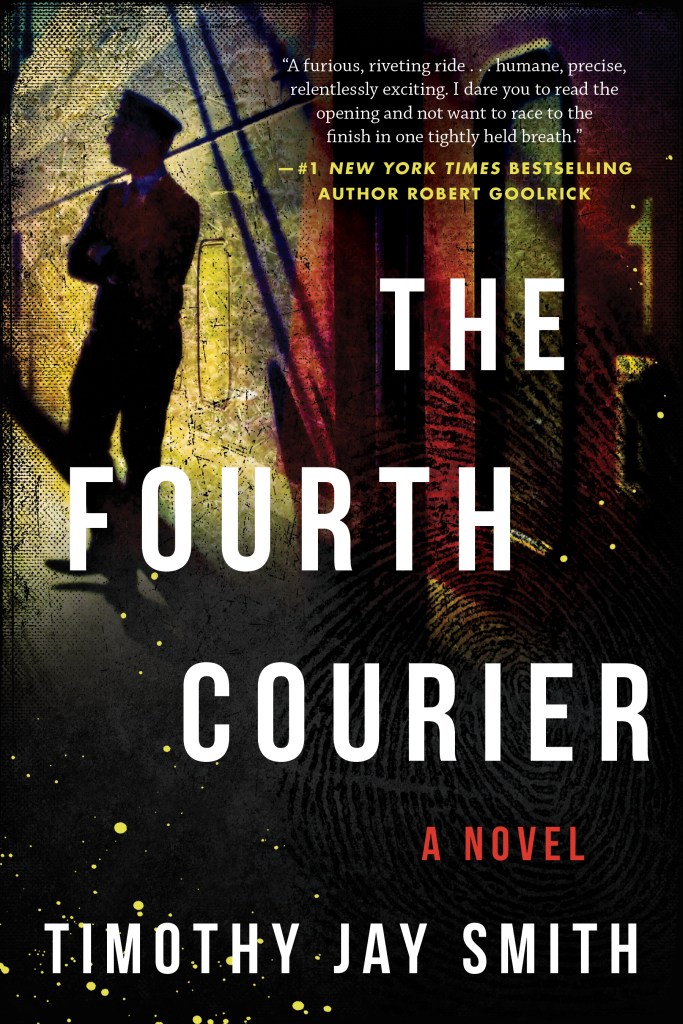
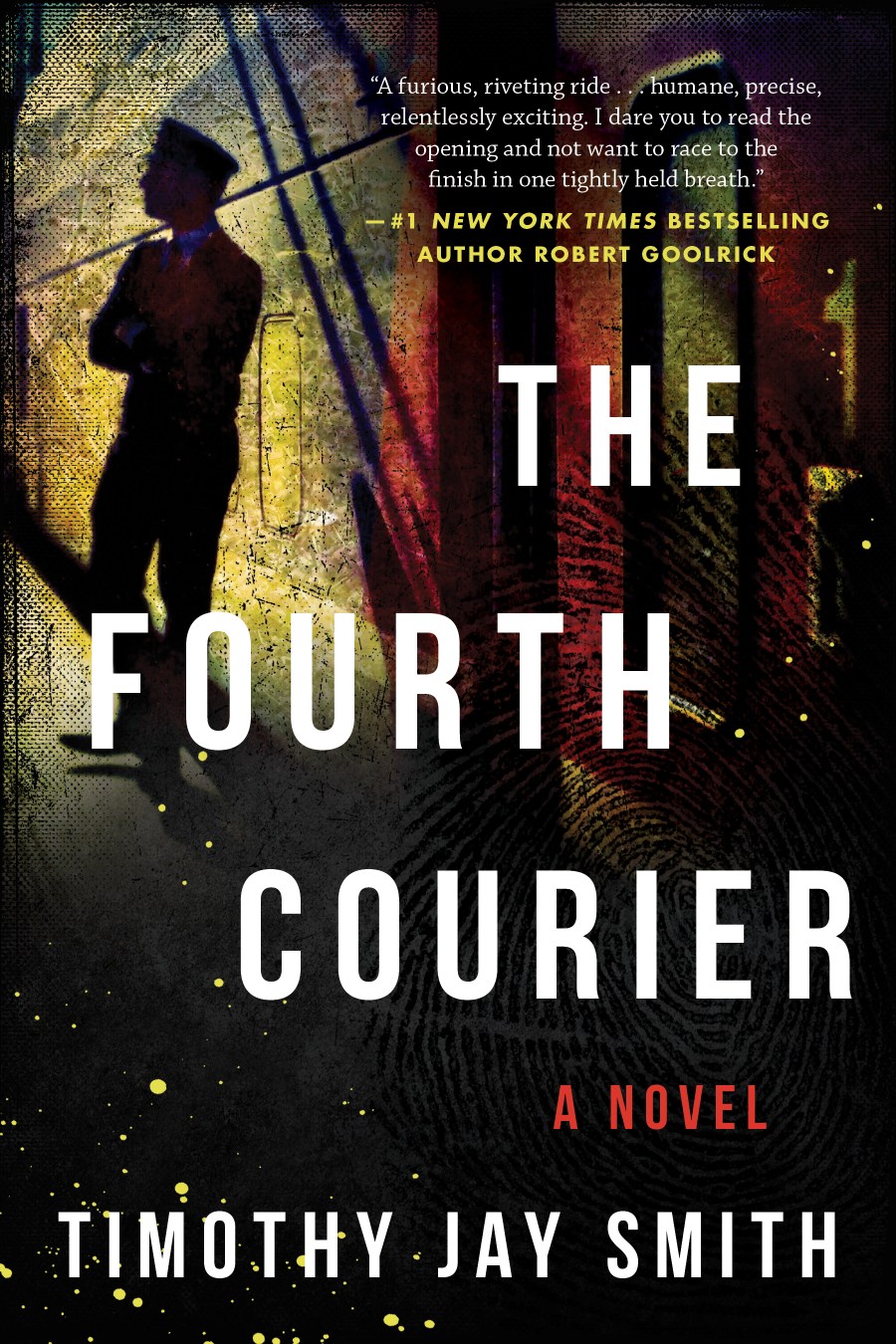
A hunt for a killer leads to a high octane thriller filled with drugs, power hungry military leaders and a missing atomic weapon that threatens the security of the free world in author Timothy Jay Smith’s The Fourth Courier. Here is the synopsis.
The Synopsis
A Fast Paced Espionage Thriller for Alan Furst Fans Set In Post-Cold War Poland.
It is 1992 in Warsaw, Poland, and the communist era has just ended. A series of grisly murders suddenly becomes an international case when it’s feared that the victims may have been couriers smuggling nuclear material out of the defunct Soviet Union. The FBI sends an agent to help with the investigation. When he learns that a Russian physicist who designed a portable atomic bomb has disappeared, the race is on to find him—and the bomb—before it ends up in the wrong hands.
Smith’s depiction of post-cold war Poland is gloomily atmospheric and murky in a world where nothing is quite as it seems. Suspenseful, thrilling, and smart, The Fourth Courier brings together a straight white FBI agent and gay black CIA officer as they team up to uncover a gruesome plot involving murder, radioactive contraband, narcissistic government leaders, and unconscionable greed.
The Review
A powerful espionage thriller, this novel pushes the envelope and brings a balanced mix of action, suspense and fantastic character development that will instantly make readers fall in love with this story. This novel perfectly explored the post-communism era of Poland as families struggle to make a daily living, shops and restaurants fail to gain the daily resources many take for granted, and drugs begin to filter into the city at a much faster rate.
The duality of the characters reflects the dual nature of the narrative perfectly. An FBI agent who works to balance his case with a possible romance; a power hungry military leader who hides a truth about himself; a cop who finds themselves crossing the line one too many times. All of these characters bring with them heavy pasts and showcase that everyone has secrets, and everyone is fighting to find the balance between those secrets and daily life. Blended with the larger than life drama and action of this murder mystery and missing nuclear device, and the novel plays out like a must read spring thriller that cannot be missed.
The Verdict
A must read 2019 novel! Perfectly capturing the espionage thriller genre, author Timothy Jay Smith has brought a rarely seen era in post-communism history to life in a perfect way. The writing is so crystal clear and descriptive that the reader instantly pictures the events like a movie in their own mind, and as the twists and turns in the plot continue to play out in this evenly paced novel, the characters find themselves in the race of their lives as all of their lives begin to converge upon one another. If you haven’t yet, be sure to grab your copy of “The Fourth Courier” today!
Rating: 10/10
ABOUT THE AUTHOR
Raised crisscrossing America pulling a small green trailer behind the family car, Timothy Jay Smith developed a ceaseless wanderlust that has taken him around the world many times. Polish cops and Greek fishermen, mercenaries and arms dealers, child prostitutes and wannabe terrorists, Indian Chiefs and Indian tailors: he hung with them all in an unparalleled international career that saw him smuggle banned plays from behind the Iron Curtain, maneuver through Occupied Territories, represent the U.S. at the highest levels of foreign governments, and stowaway aboard a “devil’s barge” for a three-days crossing from Cape Verde that landed him in an African jail.
These experiences explain the unique breadth and sensibility of Tim’s work, for which he’s won top honors. Fire on the Island won the Gold Medal in the 2017 Faulkner-Wisdom Competition for the Novel. He won the Paris Prize for Fiction (now the Paris Literary Prize) for his novel, A Vision of Angels. Kirkus Reviews called Cooper’s Promise “literary dynamite” and selected it as one of the Best Books of 2012. Tim was nominated for the 2018 Pushcart Prize. His screenplays have won numerous competitions. His first stage play, How High the Moon, won the prestigious Stanley Drama Award. He is the founder of the Smith Prize for Political Theater.
About Arcade Publishing Arcade has been an imprint of Skyhorse Publishing since 2010. We continue doing incredible work discovering, publishing, and promoting new and brilliant voices in literature from around the world. Arcade has published literary giants such as Samuel Beckett, E. M. Cioran, and Leo Tolstoy, alongside new voices such as Ismail Kadar and Andrei Makine. In 2012, Mo Yan won the Nobel Prize for Literature, an exciting achievement for Arcade which had published five of his novels.
1) Tell us a little bit about yourself. How did you get into writing?
Born and raised in New York City, I left to see the world at age 24 as a water engineer in the Peace Corps. For most of my life, I had never entertained the idea of becoming an author. My career as a groundwater specialist kept me busy enough, filled with both adventure and satisfaction with my job. However, while in Kenya I fell in love with a woman, and this relationship was doomed from the start. As a kind of catharsis, I began to write a semi-autobiographical story which became Journey Towards a Falling Sun. As I said, it was the need to purge my emotions that drove me, without immediate plans for publishing, as I was in the prime of life as regards to my vocation. But in 1985, I did manage to get an agent who was very enthusiastic over the manuscript. After fifteen rejections by big publishing houses, however, I gave up and shelved it, abandoning any thoughts about being a writer. It wasn’t published until 30 years later.
In 1996, while working in Laos, I learned of the secret war that the US conducted for 9 years, and resulted in the aerial bombardment that has given that country the dubious distinction of being the most heavily bombed country of all time. As an American, I was ashamed of my ignorance of this matter, for I had never known of this secret war. I was so moved, I decided I would write an epic novel that would illustrate the consequences of that war which became The Plain of Jars, released in 2013. And from there my path as a writer began.
2) What inspired you to write your book?
The idea for Justice Gone came from a true incident – the fatal beating of a homeless man in California. It was such an outrageous act, recorded on video and uploaded to YouTube, that I wondered what would happen if someone who saw the gruesome video would mete out their own version of justice to the police officers involved.
The novel then, is a tale of what happens in a small town following the fatal beating of a homeless Iraqi war vet at the hands of police. A cascading series of events, from street protests to a vigilante shooting of three police officers leads to a multi-state manhunt for the vet’s war time buddy. A controversial trial attracting nationwide attention dominates the second half of the novel. The story ends with a twist revealing the identity of the cop-killer
3) What theme or message do you hope readers will take away from your book?
Although deaths at the hands of law enforcement officers disturb me, I tried to avoid taking too strong a stand against the police, and just presented a possible (albeit extreme) scenario if this issue is not addressed. I also wanted readers to have a detailed look at the legal system in the US, i.e. the importance of lawyer tactics on both sides of the bench and of jury sentiment in deciding a case.
First of all, I don’t consider myself a genre writer, I just write about things that move me. Having said that, as a reader I do enjoy mystery/thriller/suspense/crime, so I may be writing more of this kind of fiction from now on. It is much easier to write this sort of stuff than cross-cultural adventure novels such as my first two books, The Plain of Jars, set in Laos, and Journey Towards a Falling Sun, set in Kenya.
5) If you could sit down with any character in your book, what would you ask them and why?
I would have to say, the policemen that beat Jay Felson to death – Why, when he was unarmed, did it take 6 cops to bring him down and beat him till he died?
6) What social media site has been the most helpful in developing your readership?
I’m really not active in the social media scene, so I would have to say Goodreads, despite the fact I find Goodreads a bit exploitive and disdainful of independent authors. As a reader, it is pretty good. I tried Facebook, but it isn’t focused enough and being an old fart, I’m mistrustful of Twitter. I love book bloggers, thank god for them!
7) What advice would you give to aspiring or just starting authors out there?
Although it sounds cliché, the first thing is to write well. Many independent authors, particularly those who self-publish, write with a quality barely above a high school student. You don’t have to be a wordsmith, but the book should not sound stilted. Read passages from a book by an acclaimed author than read your stuff. How does it compare?
Secondly, unless you’re with a big publishing house, be prepared to market your work. You should have a budget of $2,000 for this, even if you are very active on social media, because it’s always better for someone else to tout your book than you as the author. That means reviews, which can only result from exposure.
8) What does the future hold in store for you? Any new books/projects on the horizon?
I’m in the process of fine-tuning another Tessa Thorpe novel, Woman in the Shadow. It takes place several years prior to the setting of Justice Gone, and is considerably darker, more of a psychological/suspense thriller. I actually wrote this before Justice Gone, but I was disappointed with the publisher’s reaction to it so I shelved it. Directly related to this, I’m looking for another publisher, so I hope it doesn’t take too long for the book to come out.
I received a free copy of this book in exchange for a fair and honest review. All opinions are my own.
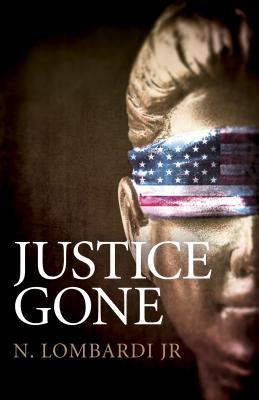
An emotionally and politically charged thriller like no other, author N. Lombardi Jr. is set to release one of the most relevant and headline grabbing novels of the year with his upcoming release, Justice Gone. Here is the synopsis.
The Synopsis
When a homeless war veteran is beaten to death by the police, stormy protests ensue, engulfing a small New Jersey town. Soon after, three cops are gunned down. A multi-state manhunt is underway for a cop killer on the loose. And Dr. Tessa Thorpe, a veteran’s counselor, is caught up in the chase. Donald Darfield, an African-American Iraqi war vet, war-time buddy of the beaten man, and one of Tessa’s patients, is holed up in a mountain cabin. Tessa, acting on instinct, sets off to find him, but the swarm of law enforcement officers get there first, leading to Darfield’s dramatic capture. Now, the only people separating him from the lethal needle of state justice are Tessa and ageing blind lawyer, Nathaniel Bodine. Can they untangle the web tightening around Darfield in time, when the press and the justice system are baying for revenge? Justice Gone is the first in a series of psychological thrillers involving Dr Tessa Thorpe, wrapped in the divisive issues of modern American society including police brutality and disenfranchised returning war veterans. N Lombardi Jr. is the author of compelling and heartfelt novel The Plain of Jars.
The Review
My first reaction to this novel was simply…wow. Between the relatable and attention grabbing characters to the heartbreaking and straight from the headlines story and the vivid imagery, this novel truly came to life in ways few novels are ever really able to get to. The issues discussed through the character’s struggles, from homelessness and racism to police brutality and neglecting the needs of those suffering from mental health struggles (most notably in this novel war veterans), made this novel feel not only gripping and engrossing, but important.
The complex issue of right and wrong takes center stage as readers have to not only see the horrible crimes the police are able to commit against citizens, but the tragic cycle of violence that occurs when these issues are left unchecked. I recently saw an interview in which a student remarked that what’s moral and ethical is not always what’s legal, and this novel really brings this sentiment to life. At what point do we start standing up to immoral acts that are protected by technically legal tactics? Do we as a society share any responsibility for crimes committed due to these injustices or the lack of care for those suffering through traumatic mental health struggles? That’s what this novel delves into as the mystery behind the brutal killings of three cops slowly but surely get untangled throughout the book.
The Verdict
This is a must read novel of 2019! Full of edge of your seat twists and turns and a story that touches on the pulse of our current society, this novel excels in every way, delivering a story full of heart and emotion that doesn’t always pair with a good thriller, but in this case it does and then some. If you haven’t yet, be sure to preorder your copy of Justice Gone by N. Lombardi Jr (or grab your copy if you’re reading this after February 22nd, 2019), today!
Rating: 10/10
Justice Gone is the first in a series of psychological thrillers involving Dr. Tessa Thorpe.
Author Nick Lombardi Jr. has spent over half his life in Africa, Asia, and the Middle East, and he speaks five languages. An event in California in 2011 in which a homeless man was beaten to death lead Nick to write his newest novel, Justice Gone. Nick now lives in Phnom Penh, Cambodia. Online: Facebook, Author Website
Previous Titles from this author Journey Towards a Falling Sun (9781782794943), Roundfire, 2014.
The Plain of Jars (9781780996707), Roundfire, 2013.