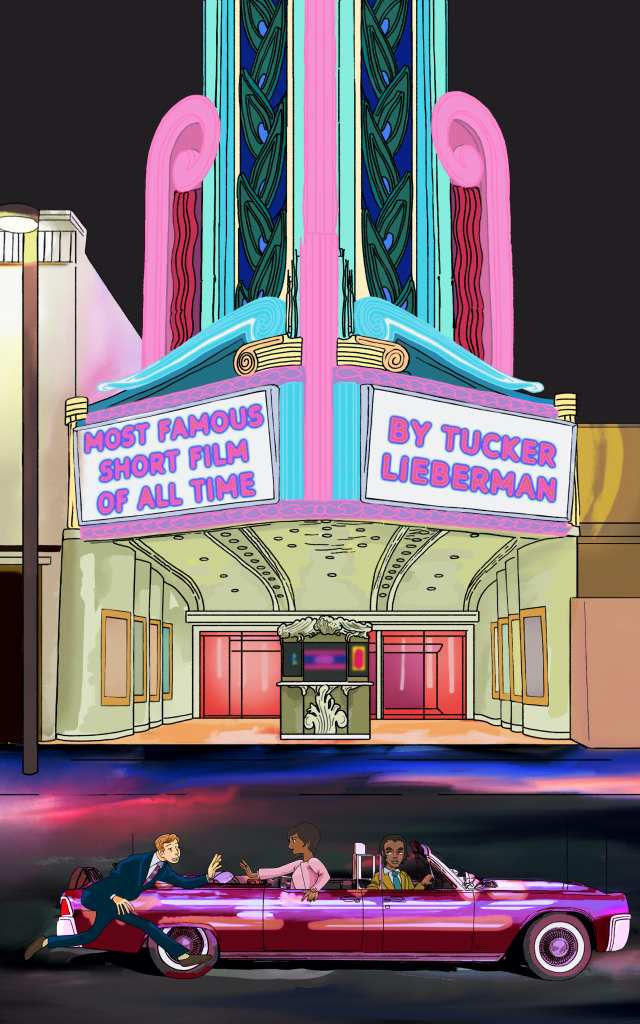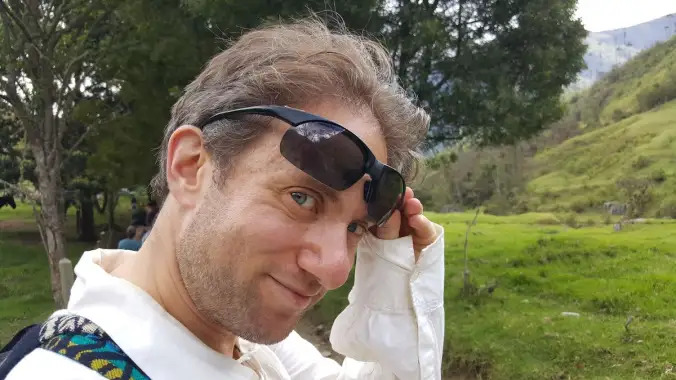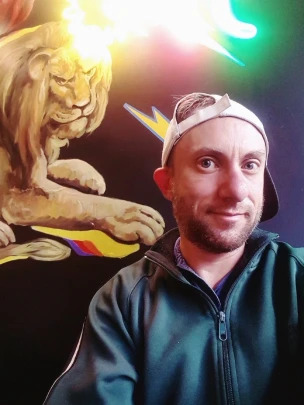
Interview with Author Tucker Lieberman 

Tell us a little bit about yourself. How did you get into writing?

Now and then, JFK comes to someone in a dream and says: “We choose to go to the moon. We choose to go to the moon in this decade and do the other things, not because they are easy, but because they are hard, because that goal will serve to organize and measure the best of our energies and skills, because that challenge is one that we are willing to accept, one we are unwilling to postpone, and one which we intend to win, and the others, too.” It’s a command, you see, not just commentary.

Advertisements

What inspired you to write your book?

We live with the possibility of sudden violence from other humans. Violence can be “random” in the sense that the victim doesn’t deserve it and has done nothing to attract it, but at the same time it may not be random in the sense that the perpetrator has motivations and drops observable clues by which others may predict their behavior. Anyway, I was thinking about how workplaces are generally unequipped to handle this. I was also thinking about how someone’s identity — not only their personality, but the social categories they belong to — can affect that type of experience and interaction.

What theme or message do you hope readers will take away from your book?

The novel is long, and it has a unique structure. Reading the whole thing, or at least large parts of it, is key to the learning experience I hope people will have. As Lev reflects: “Reading becomes a ‘novel’ when we notice we must grant our time.” This novel is about a couple thousand things, so each reader will have a different takeaway. Potentials are there. We don’t exhaust our possible personal takeaways from any book until we spend a lot of time with it. The question then may become: Why read this book and not another? My answer there: Most people have never read a novel narrated by a transgender character written by a transgender author. I, as author, chose to give the opportunity for an extended experience, and the reader (if they grant their time), can accept that opportunity. It may take a couple more hours to read Most Famous Short Film of All Time than it would take to read a novel with fewer pages or faster story pacing. Some of what can be learned or felt here is different than what’s offered by a book that’s shorter or a book that isn’t trans. A meta-question, then, is why we grant our time to some books and not others. There isn’t a universal answer. My novel keeps hitting its own brakes, prompting the reader to answer that question privately for themselves. It asks: Why are you here? Why don’t you read something else instead? What do you want to gain? Will spending more time here help you find it? Would you be more likely to gain an understanding from this novel if it were shorter and spoke more directly? Why does any learning require time?

What drew you into this particular genre?

Lev reflects, “Reading becomes a ‘novel’ when we notice we must grant our time,” and on the very next page he says: “’Invento el género,’ Unamuno says of his own work; I invent the genre. Or gender, if you are so disposed.”

If you could sit down with any character in your book, what would you ask them and why?

Lev exchanges words with his boss, and the boss may have power to change the situation, but the boss never really listens or cares. Lev spends a lot of time wishing he could talk to his friend Stanley, and Stanley does care and engage, but he speaks in riddles without yielding up a lot of actionable information. His friend Aparna, by contrast, tends to speak more directly. If I wanted to ask one character for general information or advice—information about me, more so than about them—I’d take all that in mind. But if I wanted to know more about the other character? I suppose one conversation that might kindle a motor is with 1962 JFK, when he shows up in Lev’s dream in 2015. “We’re having a conversation, JFK and I,” Lev says. The first thing Lev asks JFK is: “How terrible am I?” JFK helps himself to Lev’s whiskey and is impressed by Lev’s apartment, and he says Lev can be his vice president. It’s more of a command than an offer. We never find out why he says that. (Although there are hints, having to do with the life cycle of cicadas, and perhaps with something Stanley says to Lev a year later about what’s “tel-evidente.” Readers can make what they like of it.) If I could pick a conversation to have, I’d be in the room with JFK and Lev, and I’d extend the dream a minute longer. I’d assume the dream-version of JFK has a fictional reality that is equal to Lev’s fictional reality, and I’d ask JFK why he appears to Lev in this dream.

ABN Banner

What social media site has been the most helpful in developing your readership?

In the past, I’ve connected with many people on Twitter. Unfortunately, one month after my novel’s publication, Twitter’s ownership changed, and Twitter itself changed. The man who bought Twitter for $44 billion — a massive overpayment — did so, by a common interpretation, because he has a personal vendetta against all trans people. When I talk about the importance of reading books by trans authors that are about the ways trans people experience and respond to structural power and to individual threats, this is part of what I mean. Anyway, Twitter was a good exercise for me in short-form communication, but I’m better at long-form writing, so these days I’m focusing on blogging on Medium. I’d recommend that writers try a paid membership there for a solid opportunity to read and engage in substantive ways, on a website where the human and algorithmic curation gives us a real chance.

What advice would you give to aspiring or just starting authors out there?

Find other writers whose opinion you’d value, and ask them to read your work. Make a fair trade. Reciprocate by reading their work, or else pay them, so you can get real feedback. Listen to the feedback. Make 90% of those changes. When an editor tells me I ought to change something, my default assumption is that they are correct. My experience working through a long list of marked-up passages is that my original wording is right only 10% of the time. Also, I prefer to reach out to one reader at a time so I can make changes and send the improved draft to the next reader. That assumes I’m prepared to iterate and wait for each person’s response separately. The calendar has to cooperate. For a novel, since each professional reader usually needs at least a month of turnaround time, this process takes a year or more. The advantage of taking so much time to edit the novel is that meanwhile I’ll grow as a person and my personal growth will guide the novel. Novels take time. “All novels are about time,” Lev says.

What does the future hold in store for you? Any new books/projects on the horizon?

I’ll be at the AWP conference in Seattle in March 2023. I’m enjoying writing online articles on Medium, and I’m doing a five-year anniversary update to one of my nonfiction books.

Advertisements

About the Author

Tucker Lieberman is the author of the nonfiction Painting Dragons, Bad Fire, andTen Past Noon, as well as a bilingual poetry collection, Enkidu Is Dead and Not Dead / Enkidu está muerto y no lo está, recognized as a finalist in the 2020 Grayson Books Poetry Contest and nominated for the 2022 Elgin Award by the Science Fiction and Fantasy Poetry Association.

His essay on a horror film appears in It Came From the Closet (Feminist Press, 2022). He’s contributed to three anthologies recognized by Lambda Literary: Balancing on the Mechitza (North Atlantic Books, 2011 Lambda winner), Letters For My Brothers (Wilgefortis, 2012 Lambda finalist), and Trans-Galactic Bike Ride (Microcosm, 2021 Lambda finalist). His flash fiction was recognized in the 2019 STORGY Magazine Flash Fiction Competition.

His husband is the science fiction writer Arturo Serrano, author of To Climates Unknown (2021) and contributor to the Hugo-winning blog nerds of a feather, flock together. They live in Bogotá, Colombia.

https://booklife.com/project/most-famous-short-film-of-all-time-80120

Most Famous Short Film of All Time by Tucker Lieberman Review

I received a free copy of this book in exchange for a fair and honest review. All opinions are my own.

A threat that comes through the mail in 2014 shakes a man to his core, and through cultural and philosophical means goes on a metaphysical journey in author Tucker Lieberman’s nonfiction/fiction hybrid novel “Most Famous Short Film of All Time”.

Advertisements

The Synopsis

Ghosts and goddesses beckon Lev Ockenshaw. Oh, bother. Fortunately, he’s got a pill for that. In 2014, Lev is happily telling campfire stories in Boston with his longtime friend, Stanley, and his coworker, Aparna. One day, he receives an anonymous, threatening email referring to the company where he and Aparna work. Lev reports the threat to his boss, but is not believed.

Invoking over 250 books, songs, and movies, Most Famous Short Film of All Time is a non/fiction-hybrid philosophical novel about:

  • the nature of time
  • the ever-present threat of gun violence in the United States
  • the unhelpfulness of institutions and systems
  • the importance of solidarity and transparency and being excellent to your friends
  • belonging to Gen X or the Millennial generation
  • being a fictional character and realizing you’re stuck in your own story
  • the hazards of disclosing or not disclosing a gender transition you’ve already completed
  • the neverendingness of the journey
  • all 486 frames of the Zapruder film of the JFK assassination
  • belief and unbelief
  • prejudice, perception, and ethical action/inaction
  • undoing/redoing decisions and trying harder
  • reading as many books as you possibly can
  • the role of playfulness, irony, and absurdity
  • burning things that do not serve

The Review

This was one of the most profound, thought-provoking, and engaging metaphysical reads I’ve ever come across. To see this blend of both fiction and nonfiction elements craft a first-person perspective from the protagonist’s point of view was remarkable to see. The imagery and the dry yet witty humorous tone that weaves throughout the essays that this book is comprised of will stay with the reader long after they put the book down.

The rich dynamics that these characters set up are the perfect mirror to the philosophical themes and discussions that these essays and scenes bring about. The way book highlights both the fictional narrative by honing in on the protagonist’s realization of his own reality, the global reach of institutions and their worth, the way society treats and behaves when it comes to sexuality and gender identity, and even the nonfiction themes of belief, prejudices, and the ethics of taking action versus letting something happen through inaction all keep the reader engrossed in both the narrative and thought-provoking themes of this novel.

The Verdict

Towards the end of the book, there is a passage that speaks of the reversible being irreversible, in which through the story of Beowulf the author relays a message that really resonates with me. If you know how a path is going to end and how the process is going to go, don’t sink further and further into that path when the end result is guaranteed. Instead, focus on another path entirely and seek out new beginnings, for when we try to reverse a process we guarantee an irreversible result.

Enlightening, mesmerizing, and engaging, author Tucker Lieberman’s “Most Famous Short Film of All Time” is a must-read metaphysical LGBTQ+ literary work of art. The thoughtful nature of the story and the way the themes and character developments in the book challenges how we view society and the way its run as a whole made this book one that you may have to put down and come back to over and over again, for it truly challenges the reader in the best way possible while still creating a rich and powerful narrative to get hooked on. If you haven’t yet, be sure to grab your copy today!

Rating: 10/10

Advertisements

About the Author

Tucker Lieberman is the author of the nonfiction Painting Dragons, Bad Fire, andTen Past Noon, as well as a bilingual poetry collection, Enkidu Is Dead and Not Dead / Enkidu está muerto y no lo está, recognized as a finalist in the 2020 Grayson Books Poetry Contest and nominated for the 2022 Elgin Award by the Science Fiction and Fantasy Poetry Association.

His essay on a horror film appears in It Came From the Closet (Feminist Press, 2022). He’s contributed to three anthologies recognized by Lambda Literary: Balancing on the Mechitza (North Atlantic Books, 2011 Lambda winner), Letters For My Brothers (Wilgefortis, 2012 Lambda finalist), and Trans-Galactic Bike Ride (Microcosm, 2021 Lambda finalist). His flash fiction was recognized in the 2019 STORGY Magazine Flash Fiction Competition.

His husband is the science fiction writer Arturo Serrano, author of To Climates Unknown (2021) and contributor to the Hugo-winning blog nerds of a feather, flock together. They live in Bogotá, Colombia.

https://booklife.com/project/most-famous-short-film-of-all-time-80120

Book Spotlight: Most Famous Short Film of All Time by Tucker Lieberman 

Hey guys! I’m so excited to share with you guys today a special book spotlight for author Tucker Lieberman and his novel, “Most Famous Short Film of All Time”, a nonfiction/fiction hybrid that you won’t be able to put down. Below you will find some information on the book, an excerpt from the book, and some info on the author himself. 

I will be reviewing this book in a few weeks, so be sure to follow my blog to receive updates on my site, including daily blog posts, and you will see my thoughts on this book soon. Until then, please enjoy this look at “Most Famous Short Film of All Time”.

Advertisements

Book Info and Purchase Links:

Most Famous Short Film of All Time

by Tucker Lieberman

Munich: tRaum Books, 2022

Publisher’s website: https://traumbooks.com/most-famous-short-film-of-all-time/

Author’s website: https://tuckerlieberman.com/most-famous-short-film-of-all-time/

Booklife: https://booklife.com/project/most-famous-short-film-of-all-time-80120

Paperback

 $23.25 US: Bookshop

 £21.99 UK: Waterstones

 $25 US: Barnes & Noble

 $25 US: Amazon

Ebook

 $11.99 Kindle

 $11.99 Kobo

 $8 Itch

 $8 Gumroad

Advertisements

Book Description

Ghosts and goddesses beckon Lev Ockenshaw. Oh, bother. Fortunately, he’s got a pill for that. In 2014, Lev is happily telling campfire stories in Boston with his longtime friend, Stanley, and his coworker, Aparna. One day, he receives an anonymous, threatening email referring to the company where he and Aparna work. Lev reports the threat to his boss, but is not believed.

Invoking over 250 books, songs, and movies, Most Famous Short Film of All Time is a non/fiction-hybrid philosophical novel about:

  • the nature of time
  • the ever-present threat of gun violence in the United States
  • the unhelpfulness of institutions and systems
  • the importance of solidarity and transparency and being excellent to your friends
  • belonging to Gen X or the Millennial generation
  • being a fictional character and realizing you’re stuck in your own story
  • the hazards of disclosing or not disclosing a gender transition you’ve already completed
  • the neverendingness of the journey
  • all 486 frames of the Zapruder film of the JFK assassination
  • belief and unbelief
  • prejudice, perception, and ethical action/inaction
  • undoing/redoing decisions and trying harder
  • reading as many books as you possibly can
  • the role of playfulness, irony, and absurdity
  • burning things that do not serve
Advertisements

Excerpt from the book

[introductory remark to explain that it’s an excerpt]

“Flyleaf — By Which I Do Not Mean Myself” is one of the character’s Lev Ockenshaw’s musings in Most Famous Short Film of All Time. Here, he’s thinking about The Lord of the Rings and is indirectly wondering who’s telling his story.

[here’s the excerpt]

J. R. R. Tolkien, author of The Lord of the Rings, wrote in a letter (categorized as Letter 192) that “Frodo deserved all honour because he spent every drop of his power of will and body, and that was just sufficient to bring him to the destined point, and no further. Few others, possibly no others of his time, would have got so far.” Frodo’s destination was Mount Doom, but he could not muster the energy to throw the ring into the lava. Tolkien continued: “The Other Power then took over: the Writer of the Story (by which I do not mean myself), ‘that one ever-present Person who is never absent and never named’ (as one critic has said).” A boss within the novel, directing Frodo’s story. A writer who isn’t the writer.

Advertisements

About the Author

Tucker Lieberman is the author of the nonfiction Painting Dragons, Bad Fire, andTen Past Noon, as well as a bilingual poetry collection, Enkidu Is Dead and Not Dead / Enkidu está muerto y no lo está, recognized as a finalist in the 2020 Grayson Books Poetry Contest and nominated for the 2022 Elgin Award by the Science Fiction and Fantasy Poetry Association.

His essay on a horror film appears in It Came From the Closet (Feminist Press, 2022). He’s contributed to three anthologies recognized by Lambda Literary: Balancing on the Mechitza (North Atlantic Books, 2011 Lambda winner), Letters For My Brothers (Wilgefortis, 2012 Lambda finalist), and Trans-Galactic Bike Ride (Microcosm, 2021 Lambda finalist). His flash fiction was recognized in the 2019 STORGY Magazine Flash Fiction Competition.

His husband is the science fiction writer Arturo Serrano, author of To Climates Unknown (2021) and contributor to the Hugo-winning blog nerds of a feather, flock together. They live in Bogotá, Colombia.

Socials

I’m @tuckerlieberman everywhere. 

Twitter | LinkedIn | Facebook | Instagram | Goodreads