

1) Tell us a little bit about yourself. How did you get into writing?


After retiring for the second time, I needed something to keep my mind active. Much of my experience in the Army and as a higher education administrator involved writing. So, I decided to try my hand at being an author. I enjoy it because it is truly a craft putting words together to tell a story. Even better, with fiction, you get to develop the story, the characters, and the flow of the narrative.
2) What inspired you to write your book?
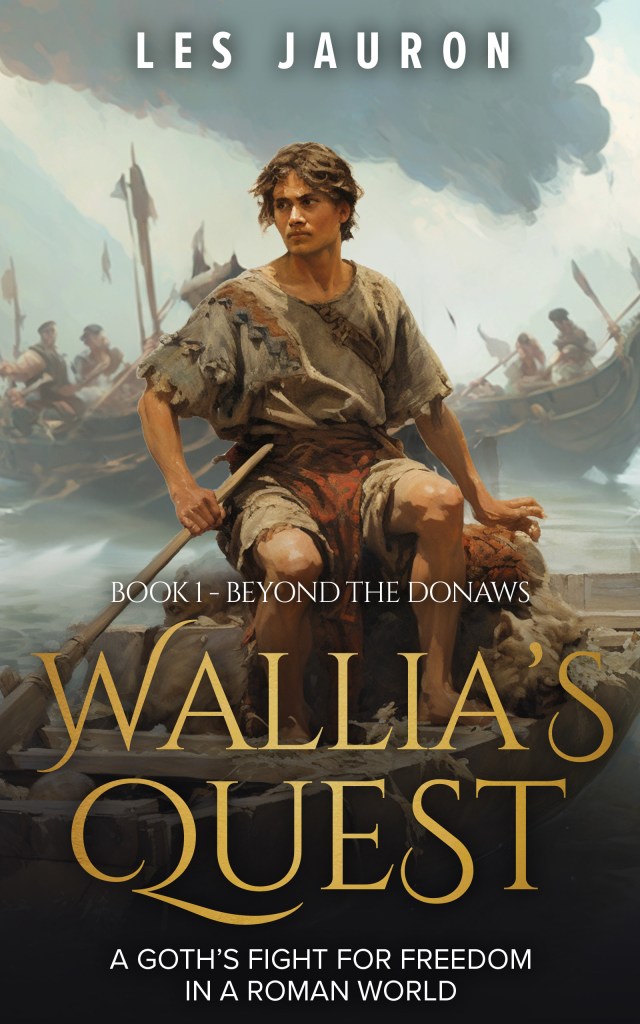


In my writing I try to do several things. These are to challenge preconceived notions, to make people think, and to inspire positive change. Wallia’s Quest resulted from my fascination with late antiquity. The world we live in today was shaped by the events that happened in this very important time. These include the Chriistianization of the Roman Empire. This allowed Rome to live even after the Western Roman Empire died. All you have to do to see this is to go to a Catholic mass. The entire ritual from the vestments to the acclamations, to the blessing at the end haven’t changed for almost two thousand years. I find this continuity comforting. The other thing that happened during late antiquity was the fall of the Western Roman Empire and the rise of the “barbarian” successor states—which evolved into the countries of Western Europe. The forty-year Goth migration set the stage for this. It was the first time that an entire people was settled, armed and under its own leadership, within the boundaries of the Roman Empire. All of the subsequent barbarian invasions were attempting to replicate what the Goths accomplished. Even the Vandals, who eventually occupied Africa, were following the Goths’ example by doing what they tried twice to do without success.
After I determined the time period I wanted to write about, I had to find a protagonist. I settled on Wallia. Of course, the most famous of the Goths was Alaric. He was famous because he sacked Rome. However, as I read the history of this period, I realized that the sack of Rome represented a major failure for the Goths. They didn’t want to sack Roma. All they wanted was to renegotiate their arrangement with the Romans to prevent a repeat of the Battle of the Frigidus where they lost 10,000 men fighting for the Romans in a war that didn’t mean anything to them. The Goth leader who finally succeeded where Alaric failed was Wallia. He established a viable state that outlasted the Western Roman Empire by several centuries. And we know nothing about Wallia until he became king several years before he died. This allowed me to write a compelling backstory that, I hope, brings this vibrant period to life from both the Roman and “barbarian” perspectives.
3) What theme or message do you hope readers will take away from your book?
There are several. The first is that history made by real people dealing with real issues. If the leaders are good, they are pragmatic, flexible, introspective, and willing to what is necessary to meet their goals. We often glorify the generals who win the bloodiest battles, and the politicians who create chaos but don’t create anything that lasts. The story of Wallia is one of understanding, creating alliances, creativity, and working with partners to create solutions that work. Interestingly, although we know nothing about Wallia, he was able to create a workable solution that had evaded his people for almost half a century. He had to partner with the Romans to do this. And he needed to understand the Romans to effectively partner with them. In the end, he had to be willing to accept a solution that didn’t give his people evertything they wanted, but gave them what they needed to survive and thrive.
4) What drew you into this particular genre?
I’m fascinated by history but I don’t like academic rigor, nor do I like to be limited by what ancient writers wrote or what the archeological record shows us. Historical fiction is a good way to break free of these restraints and to tell a story that is possible, compelling, and brings the past to life. As I do this, I attempt to adhere very closely to what ancient writers and the archeological record give us. The only times I deviate is when I think it is very likely that events unfolded differently than an ancient writer reports. My historical fiction is different than most. I like to say that I write Historical fiction with a capital “H.” Most historical fiction authors tell compelling stories about relatively unknown people that are set in an interesting historical milieus. My fiction is about the main characters in the historical period I’m writing about. So, in Wallia’s Quest I’m creating a narrative about the emperors, kings, generals, bishops and warriors who shaped this very important period. Although this is somewhat constraining, this approach alllows me to provide a human face to what would otherwise be a confusing jumble of disconnected dates, events, and names. I wanted to tell the story of the people that made this history—to describe their motivations, and to demonstrate that while circumstances are ever-changing, human beings tend to react to their circumstances in predictable ways based on the context in which they lived.
5) If you could sit down with any character in your book, what would you ask them and why?
The easy answer is Wallia. After spending several years creating his fictional backstory, I’d like to know how close I actually came to the mark. However, the interview I’d want would be a joint discussion with Constantius III and Galla Placidia. This would have been interesting for several reasons. First, although they eventually married, Galla Placidia obviously detested her husband. However, that man, Constantius III, was the most successful Roman leader of his age. He did much to restore the Western Roman Empire. His early death represented one of the greatest “what ifs” in history. I’d want to know what Placidia found detestable about a man who was successful, very capable, and, by all existing accounts, was good-looking and had a good sense of humor.
6) What social media site has been the most helpful in developing your readership?
I like to write but I hate to market. I’ve done some Facebook advertising and a few YouTube videos and a little Instagram and TicTock. I’m not sure that I really can say that I have much of a “readership.” That said, I do enjoy talking to people who read my books and take their feedback to heart.
7) What advice would you give to aspiring or just starting authors out there?
Write because you enjoy it, not because you want to make a living doing it. I’m fortunate enough to be twice retired, so I’m not writing to make a living. I’m writing because I it gives my life some meaning.
That said, writing is like any other craft. It requires developing skill, constant practice, networking, gaining feedback, and improving as a result.
And, if you want to make a living by writing, get lucky or be willing to spend much of your life marketing.
8) What does the future hold in store for you? Any new books/projects on the horizon?
More of the same. After the Wallia’s Quest series is finished, I may write another book about late antiquity detailing the life of a usurper named Constantine III. If I don’t do that, I’d like to write a fictional book about the world that our technology moguls want to create. I think this could be fascinating.
About the Author
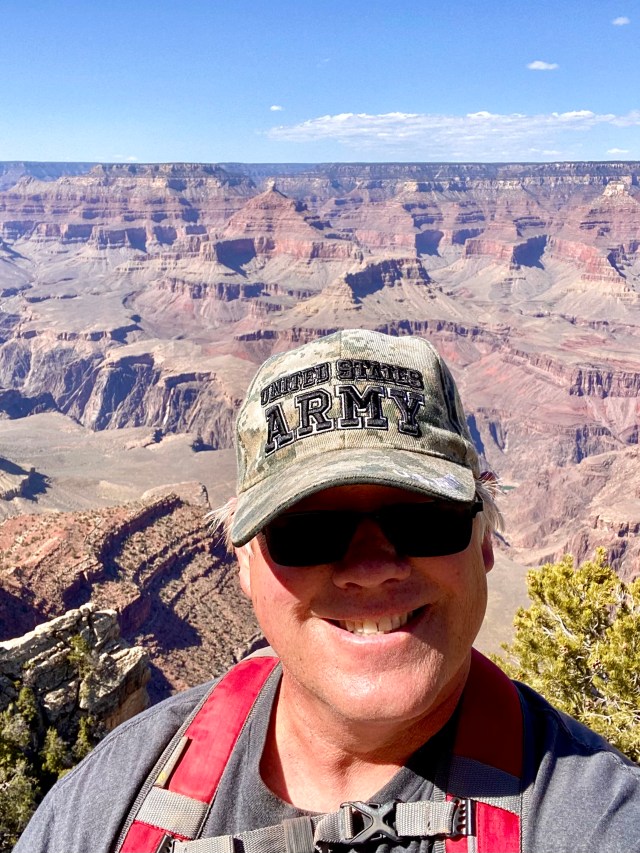
Les Jauron is a West Point graduate, a retired Army officer, and a retired college administrator. He has two graduate degrees – a Master’s in Military Arts and Sciences from the School for Advanced Military Studies, and a Master’s in Business Administration from Oklahoma City University.
Les has always been fascinated by history, organizational leadership, politics, military affairs, and rocks. He’s always been fascinated by the ancient world and, particularly, late antiquity. The reason for this fascination is because that world did much to shape our world today. During that time, the Roman Empire dealt with many of the same issues we are experiencing in our modern world — immigration, great disparities of wealth, the interplay between Christianity and government, and a toxic political environment that causes politicians to leverage fear of “the other” to gain and maintain power.
Les and his wife, Zoela, lived in their motor home for four years after Les retired for the second time and traveled extensively through the western United States. After ending their RV odyssey, Les and Zoela settled for a few years in Clarkdale, Arizona before moving to Chico California to be closer to their three children and nine grandchildren.
During their wanderings, Les grew to love red rocks and exploring slot canyons, hoo-doos, arches and natural bridges, and ancient petroglyphs and pictographs. After settling in Arizona, he began collecting rocks of every sort — which are now strewn throughout the house and the backyard. Recently, Les and Zoela moved to Chico, California to be nearer to their three children and nine grandchildren.
But writing is Les’ greatest passion. He uses fiction as his medium to entertain, to educate, provoke thought, challenge assumptions, and inspire change.
Website: https://lesjauronauthor.com
Facebook: Les Jauron Author


