Guest Post: Why Authors Should Get Social on Social Media Networking Sites by Michael Okon

Hi Everyone! I am honored to share with you this amazing guest post from author Michael Okon on the importance of social media for authors. Enjoy!

Host Graphic

Why Authors Should Get Social on Social Media Networking Sites

By Michael Okon

Any serious author wanting to be discovered by readers knows how important it is to engage online. Whether we love social media or we hate it, it’s necessary for branding purposes. Authorship is a business. And like all businesses, you MUST actively participate in your marketing efforts. Social media platforms make this possible.

Truth be told, I actually despise social media. Yes, I said it. But that doesn’t mean I ignore it. It’s time consuming, and at times can be downright silly. All that follow to unfollow nonsense. Who has the time? I’d rather be writing than worrying about getting and maintaining followers.

At first, I did most of my social media management on my own. Trust me, I wasn’t an expert and I recognized that pretty quickly. There’s no shame in hiring someone to help out with your social media efforts. That’s what I eventually did, but I do still try to stay as engaged as I possibly can.

Now I have a team of social media experts who work tirelessly to get my name out there in front of as many potential readers as possible. Indie publishing is a tough business to be in and you absolutely need every edge possible to get people to notice you and your books.

If you don’t yet have the finances to hire a social media manager I implore you not to ignore this side of book marketing. Just posting once or twice a day on the biggies – Twitter, Instagram and Facebook – will help readers find you. And don’t forget to comment, like and repost while you’re at it. Social media is here to stay so you may as well get used to it!

Michael Okon is a bestselling author and screenwriter. Monsterland Reanimated, Book Two in the Monsterland series, was just released on April 13, 2018 and promises to be bigger and badder than Book One. Michael invites readers to connect with him on his website.  

Author Photo

a Rafflecopter giveaway

Guest Post: My Top Five Tips For Writing Great Sci-Fi Fantasy Novels by Michael Phillip Cash

Hey everyone. I’m honored to share this amazing guest post from author Michael Phillip Cash. Be sure to check out his website and links down below, and don’t forget to follow the link to the Rafflecopter giveaway as well! Take it away Michael!

Promo Graphic


“My Top Five Tips For Writing Great Sci-Fi Fantasy Novels”

By Michael Phillip Cash

When you’re just starting out as an author you may be tempted to heed the advice to “write what you know.” But what about writers who want to write in the Science Fiction Fantasy genre? That’s certainly not a world you’re going to have some knowledge of. But wait. Don’t get discouraged. You have a distinct advantage over some other genres. Everything you need to know about writing Sci-Fi Fantasy is already stored right in your noggin. That’s because it’s your world and you get to create every single thing about it. It’s known as world building and it’s awesome. As long as you keep some things in mind you’ll be good to go. Here are my top five tips for writing great Sci-Fi Fantasy books:

  1. Read, read and then read some more

Read every science fiction/fantasy book you can get your hands on. Study them like you would any other reference book. Learn from the masters. Take notes as you read. Don’t aim to copy, but use other books as jumping off points for your own unique stories.  

  1. Tap into traditional fantasy elements

It’s okay to include the standard trolls, elves, giants, wizards, warriors, or whatever. Just use them in totally different and unique ways. Use these tried and true elements, but do it as originally as possible.

  1. Combine basic writing principles in distinctly unique ways

Boy loves girl. Boy gets girl. Boy loses girl. Boy gets captured by a ten-foot tall giant and girl must use her magical powers and her talking dragon to fool the giant into letting boy go. You get the idea. Much of what works in say for instance romance or another genre will work in fantasy. You just have to do it with a magical sort of imagination.

  1. Make sure your characters have dreams, hopes and goals

If your characters have nothing at stake, or nothing to overcome then no one will care what happens to them. When you’re creating your cast of characters, be sure to give them strengths, weaknesses, fears and flaws. Even fantasy characters have these and this is what will keep your readers invested in your story.

  1. Study old (and new) maps, and learn about different cultures and climates.

Maps are beautiful and artistic props to use as inspiration – particularly older maps. Imagine what it might be like to live in a foreign land. Research the clothing, tools and equipment other cultures use now and in the past. Considering what the terrain or climate might be like in your fantasy world will ultimately allow your readers to immerse themselves in your story.  

About Michael Phillip Cash

Author Photo

Michael Phillip Cash is an award-winning novelist and screenwriter. His novel The Battle for Darracia is a three-part saga and is available on Amazon.

Michael’s novels are best-sellers on Amazon under their genres – Young Adult, Thriller, Suspense, Ghost, Action Adventure, Fantasy, Paranormal Romance and Horror. Michael writes full-time and lives on the North Shore of Long Island with his wonderful wife and screaming children. You can follow him @michaelpcash or connect with him via his website.

a Rafflecopter giveaway

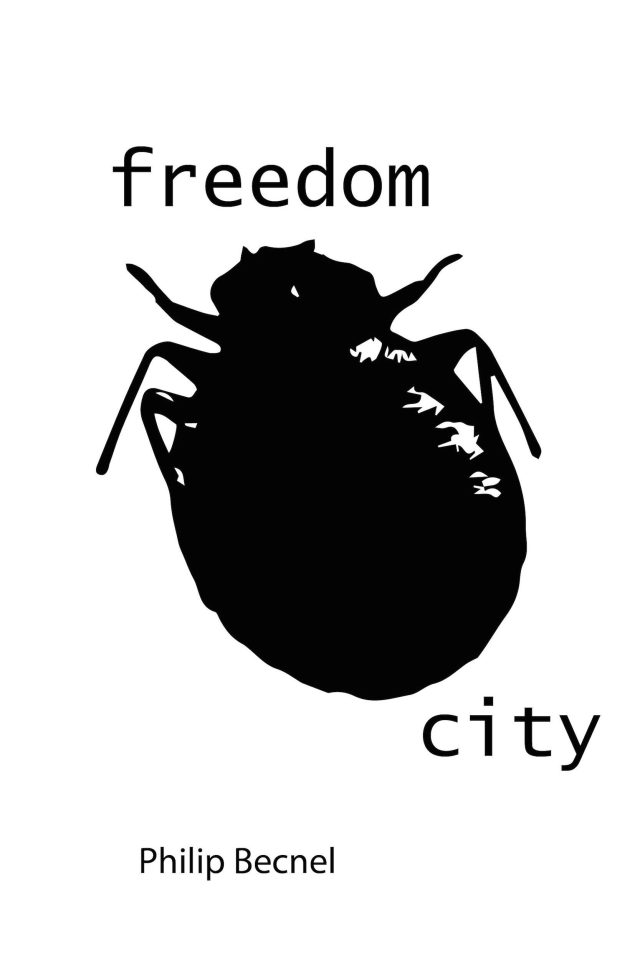
Interview with Author Philip Bencel

1) Tell us a little bit about yourself. How did you get into writing?

I’ve been a private investigator in Washington, D.C. for almost twenty years. I’ve written stories since I was a kid, but I didn’t publish my first books until I was in my mid-thirties: Introduction to Conducting Private Investigations and Principles of Investigative Documentation. I returned to writing fiction last year, when I took a sabbatical from my investigations company to write a novel.

2) What inspired you to write your book?

The book I aspired to write last year was called Order of Damaged Souls, set around the 14th century Flemish peasant revolt. I finished that book, but I ultimately decided it was too dark for mainstream consumption. While bemoaning all the time that I “wasted” on Damaged Souls, I had an epiphany about just how demoralized I was about the American disaster marked by Donald Trump’s presidency. This soul-searching led me to re-read The Monkey Wrench Gang, a campy novel written by Edward Abbey about a band of misfits who sabotage stuff to protect the environment. I thought, ‘I should write something like that, but set in post-Trump America!’ Thus inspired, I wrote Freedom City in about three months, rushing to get it out before Trump’s impeachment. [Laughter].

3) What theme or message do you hope readers will take away from your book?

I don’t know if I can curse on your blog—but fucking hell, what we’re living through right now is the resurgence of fascism, plain and simple. I know the left is often too loose with the word ‘fascist,’ and that’s regrettable, but there is nothing else to call attacks on the press, on the judiciary, and outright distain for the rule of law by the so-called President of the United States. So, Freedom City is a serious book about a very serious topic, but I really tried to bring it down to a level where I’m not just screaming incoherently out the window. The thing is that, when you take a deep breath, Trump and his enablers are evil in an almost inept-comic-book-villain sort of way, so there is actually a lot to laugh about in the situation. The one thing I hope people get from my book is that we must kill them with laughter. That’s their biggest weakness, which is why the right has been so up in arms the past few days about Michelle Wolf’s scathing comedy routine at the WHCD.

4) What drew you into this particular genre?

Well, my first novel was historical fiction, which is what I often like to read. Freedom City, I suppose, is contemporary literary fiction, but I’ve really struggled with whether to call it satire or dystopian fiction. It’s a little of both, actually, more like a tragicomedy. Like I said, I didn’t really set out to write it, but as a longtime private detective who lives in D.C.—I can literally see the fucking U.S. Capitol out of my window—I was probably the person best situated to write a novel like Freedom City.

5) If you could sit down with any character in your book, what would you ask them and why?

I admit that I struggled a bit with Clare Swan, the main female protagonist. Some female readers have pointed out her promiscuity, and that’s certainly a fair critique. But while my book might not pass the Bechdel test, nobody (so far) has accused me of being anti-feminist. Actually, I’m a diehard feminist. It’s just that I have an active imagination, so when I write female characters I sometimes imagine ways I might sleep with them. [Laugher]. Ultimately, I think Clare turned out to be a delightfully complex human being and a righteous warrior. But if I could talk to her I’d ask if she feels I did her justice.

6) What social media site has been the most helpful in developing your readership?

That’s a great question. I had already developed this public persona as a private investigator, and by far the biggest platforms for that are LinkedIn and Twitter. Because of that professional following I already had from my non-fiction books, I’ve gotten the most traction so far from those sites. However, I’m super excited about Instagram—which I confess I wasn’t even on until a few months ago. As I’m someone who loves readings and events, it really gives me a chance to chronicle the “buzz” around my book and hopefully help it, one day, take off.

7) What advice would you give to aspiring or just starting authors out there?

So much of the advice aspiring writers get is to clichéd. I mean, I could say ‘don’t be afraid to suck’ or ‘join a writing group’—both sage pieces of advice—but instead I’ll say this: Write about the things buried deep in your soul that you think might scare your friends to know about you. Just do it. They won’t scare, and you’ll be writing honest shit.

8) What does the future hold in store for you? Any new books/projects on the horizon?

I’ve got a couple irons in the fire, including a continuation (sort of) of Freedom City. Lately, however, I’m back to doing investigations, so I don’t have all the time to write I had last year. That’s okay though, because now that I recognize impeachment isn’t happening anytime soon I can take the time to make the next book longer and even more snarky.


freedom

_______________________________________________________________________________

Available Now! Bad Blood: Secrets and Lies in a Silicon Valley Startup. Get the full inside story of the rise and collapse of a multibillion-dollar startup

Save $5 on Any 2 Books with code BOOKISH

Interview with Author Stephan Morse

1) Tell us a little bit about yourself. How did you get into writing?

Writing came about from a failed project in the 5th grade. It was a bad fiction where I turned into a dragon and burned some other child in class I hated for reasons that were probably silly. We ended up meeting Ursula Le Quin (I believe, this was decades ago well before I’d read her books) as part of a school event. Between those two events, I’d always had an interest in writing novels. It only grew as I went through Junior High and High School and read anything fantasy related in three libraries. It took some time before I dared to write my own novels and release them to the public.

2) What inspired you to write your book?

 I tend to read a dozen or so books as part of my recharge process. over a few month span.  The Fiasco came about from a superhero kick, where I read nearly anything my Kindle could find from the genre. During this reading spree I’d been editing prior works, prepping some for release on eReaders, and so on. I wanted to try something new – a way to see a new story in an older setting. Comics, movies, and even a few old audio novels all played their part in inspiring The Fiasco but I feel like I managed something new(ish), which is my first goal when writing.

3) What theme or message do you hope readers will take away from your book?

It’s less about theme and more about exploring the rest of a world that others may ignore. As an example, my favorite characters in the Marvel Universe were the ones that fell between the cracks – specifically the Morlocks. They weren’t good enough to fit on a team, they weren’t powerful enough to be villains or anything else, and generally ugly enough that everyone gave them dirty looks. I loved these people because they were living a real life. They had day jobs and failure to fit in with normal crowds. They were the most developed characters because their plight started well before mainstream heroes started addressing life behind the mask.That sunk in, misfits among misfits.

4) What drew you into this particular genre?

The Fiasco’s superhero sort of ideas were a weird mix of every other mainstream series – since I’d spent so much time reading superhero novels. That being said, probably Marvel’s universe had the biggest impact on a desire to write in the genre. It’s simply been around so long that nearly everything else shares some inspiration from their works. Heck, I grew up reading comics (and compulsively sorting them). But I couldn’t let my work be a carbon copy of the classic coming of age and learning to use powers for great justice sort of tale. It couldn’t be about stopping the big bad from ruining the world in their ill thought out megalomaniac plot. It became about the captives left behind, the person who’s forced to be in all these powered events. The man who’s simply tired of being in the super powered world because he’s never the actual hero or a catharsis seeking vigilante/villain.

5) If you could sit down with any character in your book, what would you ask them and why?

There’s a lot of stuff I’d ask my characters – and constantly are things I’m asking them. I could pick Ted, who’s the first book’s semi villain and sort of mentor. His role is complicated because people are rarely one dimensional. He wants to get back at those who ruined his life and took away his daughter. He wants to make his wife see that there are some forces which are unstoppable – that losing their kid wasn’t his fault, but he also wants Adam to answer for his reactive role in everything that goes on. But because I know all those things, asking him his motivation seems weird.So, any question I ask has to be really out of the way.

Like, what’s the weirdest thing you’ve ever eaten and where was it? That’s a question I may never have an answer to. So now, I really want to know.

6) What social media site has been the most helpful in developing your readership?

Facebook, hands down. I have my little author page and hang out in a few groups that focus on the same genre as my main series. It’s fun interacting with the readers who ping me when topics come up. I try to avoid self promotion and generally only pop by when someone messages me about a post – but Facebook lets me see what people think about the work, and that’s always an awe inspiring moment.

7) What advice would you give to aspiring or just starting authors out there?

Finish a book. Don’t restart it 10 times. Don’t edit it until you’re drowning and hate yourself. Finish it. Quality aside, knowing that you have finished a book means a ton. It was the greatest thing I ever did.

8) What does the future hold in store for you? Any new books/projects on the horizon?

More books, more writing. But real life and the day job take precedence over putting together novels. However, now that I’ve started – I don’t think I’ll ever be able to stop. There will be two more books for The Fiasco eventually, bringing the series to a close. There’ll be some virtual reality based books along with western fantasy mashups. Ideas tend to occur faster than my fingers can type.

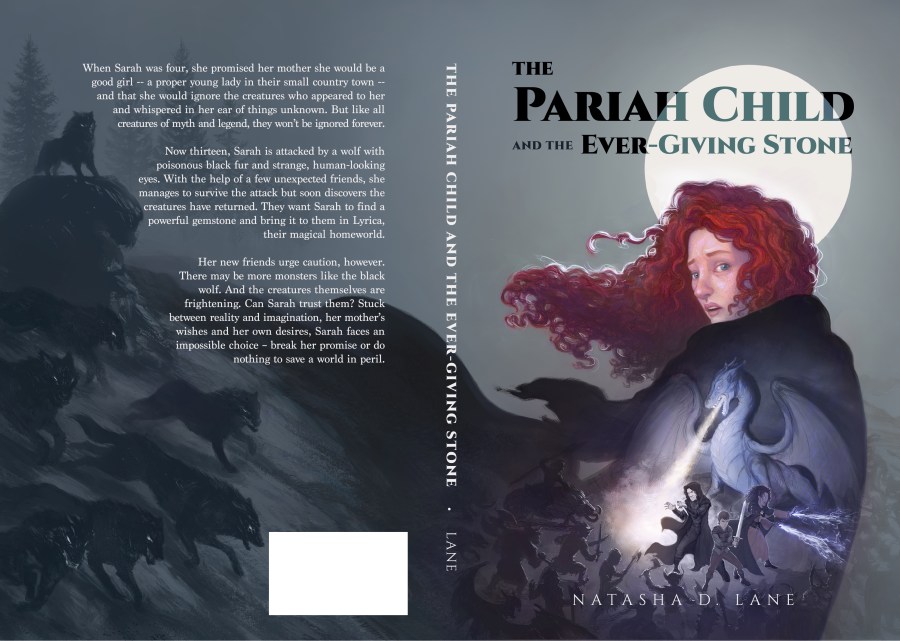
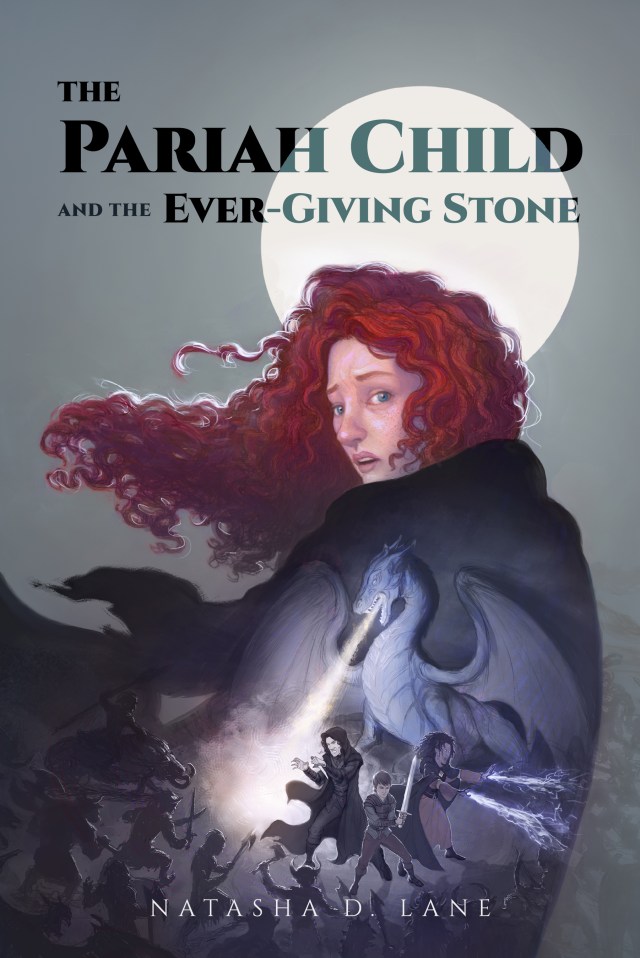
Blog Tour: The Pariah Child & The Ever-Giving Stone by Natasha D. Lane

Blurb:

When Sarah was four, she promised her mother she would be a good girl — a proper young lady in their small country town — and that she would ignore the creatures who appeared to her and whispered in her ear of things unknown. But like all creatures of myth and legend, they won’t be ignored forever.

Now thirteen, Sarah is attacked by a wolf with poisonous black fur and strange, human-looking eyes. With the help of a few unexpected friends, she manages to survive the attack but soon discovers the creatures have returned. They want Sarah to find a powerful gemstone and bring it to them in Lyrica, their magical homeworld.

Her new friends urge caution, however. There may be more monsters like the black wolf. And the creatures themselves are frightening. Can Sarah trust them? Stuck between reality and imagination, her mother’s wishes and her own desires, Sarah faces an impossible choice – break her promise or do nothing to save a world in peril.
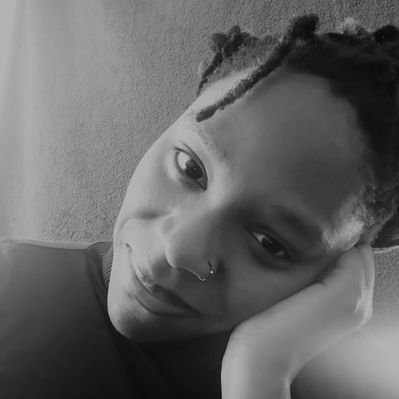
AUthor Photo B&W

Interview with Author Natasha D. Lane

1) Tell us a little bit about yourself. How did you get into writing?

I started writing as a kid. I was probably in elementary school when I realized how much I loved writing. Eventually, it became an outlet for me. I took everything I had to hold inside and put it on paper. It started with poetry,then eventually grew to short stories, before I started my first novel. My middle school teacher Ms. Snyder was the one who saw my talent and pushed me to write my first novel. It was called (get ready for this) “An Imperfect Utopia.” Great title, right?

Anyway, I never stopped writing. I was traditionally published as a romance author in college and did that for several years, before returning to the genre that always held a special place in my heart: fantasy. Now, here I am with one of the first fantasy novels I have ever written ready to be published.

2) What inspired you to write your book?

So much! Life experiences, other stories, and just a simple desire to write.

“The Chronicles of Narnia” and the movie “Eragon” (I know, I know, it was a horrible adaption) gave me a lot of fuel to write my novel. I love the sense of pure adventure both stories have and I wanted to write something like that, too. At that time, most of the fantasy novels I read had heavy aspects of romance in them which I didn’t mind but I began to wonder what it would be like to read a story that focused on the journey and less on some love triangle, ya know?

3) What theme or message do you hope readers will take away from your book?

Love yourself even when the world tells you that you’re somehow wrong or unlovable. Love yourself.

4) What drew you into this particular genre?

Fantasy is a genre known for escapism. I think as a kid I wanted to escape from a lot of the crap that was happening. I was bullied at school and had very few good relationships with the adults in my life, so everywhere I looked there was this chaos, this negativity, and so much stuff out of my control. When I read fantasy I got to leave all of that behind.

I also got to leave some of the things I used to hate about myself behind. When I read fantasy novels I wasn’t a nerd or loser. I was a warrior going on a journey to save the world or a magician with hidden powers that no one understood. I felt like an underdog and fantasy novels are famous for turning the underdogs into the heroes of the tales.

5) If you could sit down with any character in your book, what would you ask them and why?

Oh, good question! Hmmmm. If I had to pick, I think I’d sit down with Serwa. She’s one of the main characters in the story and a very powerful witch. I think I’d ask her how she manages to carry all the burdens she does and how she handles people’s misconceptions about her. I don’t want to go into too much detail because her background has more explanation in the sequel. However, I will say that Serwa is one of the most misunderstood characters in the series. She’s often viewed as mean or a monster when in reality she’s trying to do what she can to save everyone.

6) What social media site has been the most helpful in developing your readership?

Twitter and Instagram are my favorite platforms. Specifically, Insta for readership but Twitter is good for branding and networking. I like Insta because it’s such a positive sight. Seems to me like it has less drama than other social media platforms.

7) What advice would you give to aspiring or just starting authors out there?

“Write your way through life.” That’s my mantra because, like any form of art, writing is an outlet. When life gets tough (which it always does) write out all madness, the beauty, the good and the ugly. It’s a healthy form of expression.

Beyond that, I’d say take any marketing classes you can and build your platform now! The sooner you build your platform, the more opportunities you’ll have to test what works best for your brand and how best to develop it.

8) What does the future hold in store for you? Any new books/projects on the horizon?

Lots of new projects. After “The Pariah Child & the Ever-Giving Stone” is released into the world, I plan on publishing my second novel. It’s tentatively titled “The Woman In the Tree” and is an Arthurian legend retelling that takes a different spin on how Arthur became king. I’m already writing the book, so it won’t be too long a wait.

Once that’s done, the sequel to The Pariah Child is next on my list.
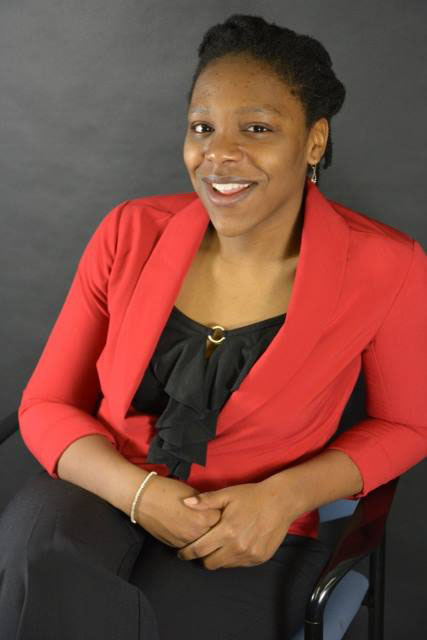
Author Photo Color

Author Bio

Natasha Lane enjoys reading a wide variety of genres, but fantasy has always been dear to her heart. After a brief stint in romance, Natasha’s returned to fantasy and currently has two works in the making. She plans on releasing her first fantasy novel “The Pariah Child & the Ever-Giving Stone” March 22, 2018.

Natasha hopes one day to be a well known published author, whose writing informs as well as entertains her reader.

Besides being a bookworm, Natasha is a documentary junkie, rom-com addict, health advocate, entrepreneur, and chef (in her own way).

She currently resides in Baltimore, MD. Despite where life may take her, one thing is certain. Natasha will always keep writing.

GoodReads: https://www.goodreads.com/author/show/8547000.Natasha_D_Lane

Twitter: https://twitter.com/natasha_lane1

Website: https://www.natashalanewrites.com/

Excerpt: https://www.natashalanewrites.com/excerpt/

Facebook: https://www.facebook.com/NatashaLaneWrites/
Copy of Pariah Child - Final Cover - front cover only - ebook rgb

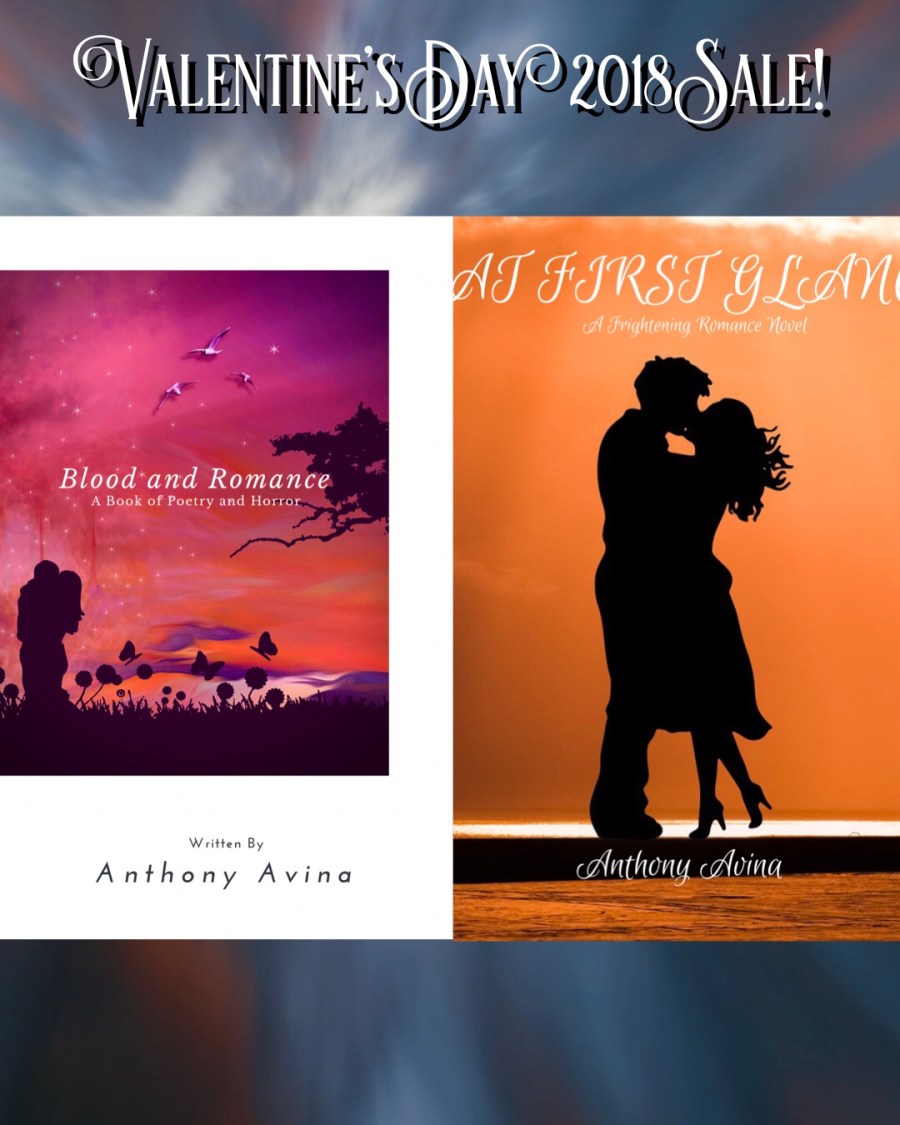
Valentine’s Day Book Giveaway!

I wanted to let you guys know that two of my books will be free starting today and ending on the 17th! The first is Blood and Romance and the second is At First Glance.

At First Glance: A Frightening Romance Novel https://www.amazon.com/dp/B008X0NK56/ref=cm_sw_r_cp_api_umVGAbMERH74E

Blood and Romance: A Book of Poetry and Horror https://www.amazon.com/dp/B0042P5DP6/ref=cm_sw_r_cp_api_4mVGAbAWZFY7K

Why Should You Re-Release Old Books?

Time. 
Time has produced new innovations in the world of writing and publishing. In today’s world of publishing authors have more opportunities than ever to showcase their work without traversing through the process of traditional publishing houses. However as many self-published and traditionally published authors can agree, time allows us all to learn from our mistakes and improve ourselves and our writing. With self-publishing it is easier now than ever before to improve on our previous work.
In a month and a half, I will be releasing I Was An Evil Teenager: Remastered. This is a three novella series telling the story of Lisa Etron, a seemingly innocent teenage girl with a dark persona bubbling just beneath the surface. I originally published the first novella, I Was A Teenage Killer, in 2010. This story was fun to write, but as the years have gone on i recognize so many grammatical and story based errors that the time to fix it was here. Not only have i and my skills as a writer changed and improved, but the world has changed as well. Whether its our current political climate or the tragedies of our world reshaping our views or the wisdom and strength that comes with age, this book began to feel outdated and in need of serous improvements. So i went through all of the novellas and realized this would make a great remastered novel, and so i began to work.

In the end, i think this remastered book is stronger and more character driven then it ever was before. The themes are more prevalent and the show versus tell style of writing has helped me to improve how the story is conveyed. This is something all authors can do. Our experiences and our understanding of the world can reshape how we view the past, and with the innovation that is online self-publishing it is easier than ever to strengthen the works that came before. I highly encourage any author out there to take the time to reread their books and look to see if time has given them any new insights or views that can improve their work. I hope you guys enjoyed my brief viewpoints on re-releases and book publishing. If you guys want to check out my work for free be sure to sign up for my free newsletter here on my blog, and if you guys are interested in seeing what a remastered book looks like then be sure to preorder your copies of I Was An Evil Teenager: Remastered today on Amazon and soon to be available on iBooks, Barnes & Noble and more!
I Was An Evil Teenager: Remastered https://www.amazon.com/dp/B0756SVSGD/ref=cm_sw_r_cp_api_wwqRzb0T6F1VC

Interview with Michael Bernhart1) Tell us a little bit about yourself and how you became an author.

A familiar story: Much like the disgruntled admen of Madison Avenue who labor in the evening over their own redemptive great works of fiction, I started on a novel in the mid-80s as an antidote to a bad professional and life situation. This may work as an escape, but it isn’t a guarantor of good literature. The result – in my case – was a peevish, angry half of a book; the hero is unlikeable – as are all the other characters, come to think of it. Thirty years later I’m still trying to salvage that book.

Capitalizing on one advantage, I’ve enjoyed a singularly rich and diverse (and lucky) life. If I were to peal out the list of places I’ve lived and jobs I’ve held it would come across as boasting. It’s not; it’s gratitude, mixed with wonder. (Dumb luck is important.) The consequence is I can draw on first-hand knowledge of life on five continents and a variety of interesting occupations.

2) What would you say is the best description for your series of books based on Max Brown?

I’ve attached the label ‘philosophical thriller’ to the series. Pretentious? Of course. There is dry/wry wit, which seems to be my forte as a writer, and a travelogue-esque element as the settings are unfamiliar – and interesting – to most readers.

3) What inspired you to create this series and delve into this genre in particular?

Evil. Each book explores a different face. Jane Austen famously said it all comes down to love and money. I disagree; there’s more. As we move up the evolutionary ladder the higher-level species show an increasing propensity for dysfunctional mayhem. Animals fight and kill for survival, either as individuals or as a species. Humans often fight for the sheer hell of it, and to their disadvantage. Why? Paradoxically, the modern religions we’ve created – notably Christianity and Islam – take as their starting point that God is omnibenevolent, omniscient, omnipotent, and omnipresent. How can a caring, ever-present, and all-powerful deity be supervising a world that’s convulsing with outright wickedness? It doesn’t square.

There’s no easy explanation for that inconsistency (called theodicy in religious debate) but I did feel some mileage might be gotten out of a closer look at the wellsprings of evil. Hence, greed, lust, ideology and acculturation are central fixtures in the novels. No answers, but if I got it right the questions may have been framed a little differently than in other novels.

4) If you could sit down for a drink with any character from your books, who would it be and what would you ask them?

Ronnie the Redoubtable Scot, a favorite of many readers. I didn’t treat Ronnie well at the end.

I’d ask Ronnie why he does what he does. He’s dedicated his life to the dangerous and underappreciated task of clearing landmines. One of those noble souls quietly trying to clean up humanity’s messes. And a wise-ass.

5) What would you say is the biggest challenge you face as an author when it comes to gaining a readership and marketing your book?

That is the biggest challenge. Each and every blessed day 2,700 new novels are pushed out on an indifferent reading public. Some of them must be good, but average sales are 250 copies, many to family, friends and the author him/herself. How do you break out of the pack? I have no idea. Writing is a losing proposition.

The big houses talk airily about quality control, but there’s little evidence they practice it (e.g., James Patterson continues to be published). I’d like to think the truly good and innovative literature is coming from the independents. The better reviewer/bloggers – like this one – provide a guide and filter but the number of their followers is typically small. 

Are these counsels of despair? Hell yes. If it weren’t for rampant narcissism no one without a signed deal would write.

6) What advice would you give to any new or aspiring authors out there?

I’d like to tell you to scram; we don’t need more competition. More seriously? Read.

7) Any plans for more books in the Max Brown series or any other books on the horizon?

A very difficult one. One of the fascinating jobs I alluded to above was directing a women’s health program in Jordan. Under the umbrella of women’s health I took a brief run at honor crimes . . . and withdrew from the field, unsuccessful. In the current Max Brown novel his wife has liver cancer which leads them to the ‘red-trade’ of organ harvesting and illegal sales. I tie this to honor crimes where victims are plundered for saleable kidneys, livers, etc. Given these topics, it’s been difficult to keep up the dry/wry wit that has received favorable comment in the past.

This is a picture of the author. Some kind folks at a new age festival captured my aura on their aura-cam. They gushed that it was an exceedingly auspicious aura, and they looked sincere when they said it. At least they didn’t ask for money.