I listen to music when I write. This column for example is being created with the help of—or perhaps in spite of—a piece of music that seems to be an unfortunate blend of God Save the King and The Moldavan National Anthem. But creating my new supernatural thriller, The Great Dick: And The Dysfunctional Demon, a thriller that’s able to laugh at itself, (one reader called it “Horrifying and Delightful!”) required an even more horrifying type of music. Music like:
Dust by Fleetwood Mac
Fleetwood Mac? Aren’t they much too pop for horror? Actually Dust was from an early incarnation of Fleetwood Mac, with no hits and lots of drug problems, not the later version of the group with lots of hits and even more drug problems. The lyrics to Dust come from a 1909 poem by Rupert Brook, who was no bundle of sunshine.
“When your swift hair is quiet in death And through the lips corruption Thrust to still the labor of my breath”
Midnight Mile by the Rolling Stones.
This haunting tune about a mad day on the road “with a head full of snow,” gets me picturing Keith Richards as the guitar playing, coked-up, walking dead. Perhaps not a huge stretch.
I Put a Spell on You by Screaming Jay Hawkins. Writing about obsession?
Here’s Screaming Jay screaming that he doesn’t care if you don’t want him. It doesn’t matter to him at all. He’s still yours. A non-returnable gift that threatens to keep on giving. She’s Not There by the Zombies
This one doesn’t make my list for the name of the group, but for the mood the music evokes. And the lyrics do have a touch of the sinister. In this British song, a mysterious woman is causing untold suffering, Like the singer, we can only wonder about how much she lied, with no way of telling “how many people cried.” I know what you’re thinking. But the song was released in 1965, considerably before Maggie Thatcher ever became Prime Minister. No Bravery by James Blunt
I thought this guy wrote love songs, but this one features shallow graves, burning houses, the odor of death, and dying families. I listen to this, then write horror to cheer up.
Tie a Yellow Ribbon by Tony Orlando. Not a horror classic, just a horrible song. I can’t listen to it without dreaming of tying a yellow ribbon as tightly as possible around Tony Orlando’s neck. And I understand the reasoning of a homicidal demon.
Last and in so many ways least, Black Sabbath by Black Sabbath
Apparently, Satan, with eyes of fire, is coming after the singer. That might explain the vocal. I think this one is from the Black Sabbath album Blue Skies, Sunny Days and Lollypops, or it may be from Kittens, Puppies and Other Easy Meals. To quote a key phrase, “Please, God help me.”
Take a listen. The singing sounds like a weasel caught in a meat grinder. The question this little ditty raises is more theological than musical. Namely: why would a loving God allow something like this to exist? And to somehow be a hit? When I first heard it on my car radio, I thought my transmission was disintegrating, but it was only humanity’s musical taste.
Check out Barry Maher’s dark humor supernatural thriller, The Great Dick: And the Dysfunctional Demon, onAmazon. Contact him and/or sign up for his newsletter at www.barrymaher.com.
Freelance Writing: How College Students Can Turn Words Into Work
Writing has quietly become one of the most adaptable freelance careers for college students and recent grads. You don’t need a fancy office, expensive gear, or years of experience — just clarity, consistency, and a laptop. Whether it’s content writing, blogging, ghostwriting, or UX copy, the field rewards creativity and curiosity.
Core Points
Freelance writing lets students earn while learning, often with minimal startup costs.
Popular paths include content writing, ghostwriting, editing, social media copy.
Essential tools include grammar checkers, portfolio sites, and payment platforms.
Building a reputation requires consistency and responsiveness.
Consider forming an LLC for credibility and legal protection.
FAQs
Q1: Do I need a degree to start writing professionally? No — portfolios beat diplomas in this industry. Build samples on platforms like Medium or Substack.
Q2: What should I charge as a beginner? Start with $0.05–$0.10 per word or per-project pricing on marketplaces like Upwork.
Q3: How can I get clients fast? Pitch via LinkedIn, use job boards like ProBlogger, and build an SEO-optimized writer profile.
Q4: Should I niche down early? Yes — specializing (e.g., sustainability, SaaS, or education) boosts trust and rates.
Q5: How do I stay organized? Use free tools like Notion or Trello for task management.
Advertisements
Why Writing Works as a Student Side Career
Unlike gig jobs or retail work, freelance writing compounds in value. Each article is a potential reference, backlink, or resume piece. The flexibility lets students:
Work from anywhere (libraries, dorms, cafés).
Adjust schedules around exams.
Turn part-time work into full-time careers after graduation.
Track Income and Deadlines → Use spreadsheets or free project trackers.
Before You Take Your First Client
✅ Have at least two polished writing samples ✅ Know your rate (per word or per project) ✅ Set up a professional email ✅ Create a Google Drive folder for client work ✅ Confirm how you’ll get paid (and when) ✅ Read the client’s brief carefully ✅ Keep communication clear and friendly
Establishing an LLC
Establishing a business structure gives freelance writers legitimacy and protection. Forming an LLC can separate personal assets from business income, simplify taxes, and boost your professional image when dealing with clients. Filing fees differ by state, and online formation services like zenbusiness.com providers offer customizable registration packages to make setup simple and affordable.
Common Writing Niches and Average Entry Rates
Niche
Typical Client Type
Average Starting Rate
Long-Term Growth Potential
Tech/SaaS
Startups, agencies
$0.08–$0.12 per word
High (retainer potential)
Lifestyle/Health
Blogs, brands
$0.05–$0.10 per word
Moderate
Finance/Business
Fintech, education sites
$0.10–$0.15 per word
High
Academic Editing
Students, journals
$20–$40 per hour
Steady
UX/Product Copy
Apps, software companies
$50–$150 per project
High
Featured Product: Grammarly
Even professional writers rely on proofreading and editing software. Grammarly helps refine tone, clarity, and consistency — a must-have for freelancers handling multiple clients at once. Use it alongside style guides or editing frameworks for clean, confident delivery.
Freelance writing isn’t just a side hustle — it’s a foundation for creative independence. With focus, structure, and a bit of persistence, college students can turn their curiosity into cash and their skills into sustainable careers. Writing is one of the few jobs where learning and earning evolve together — and that’s a pretty smart start.
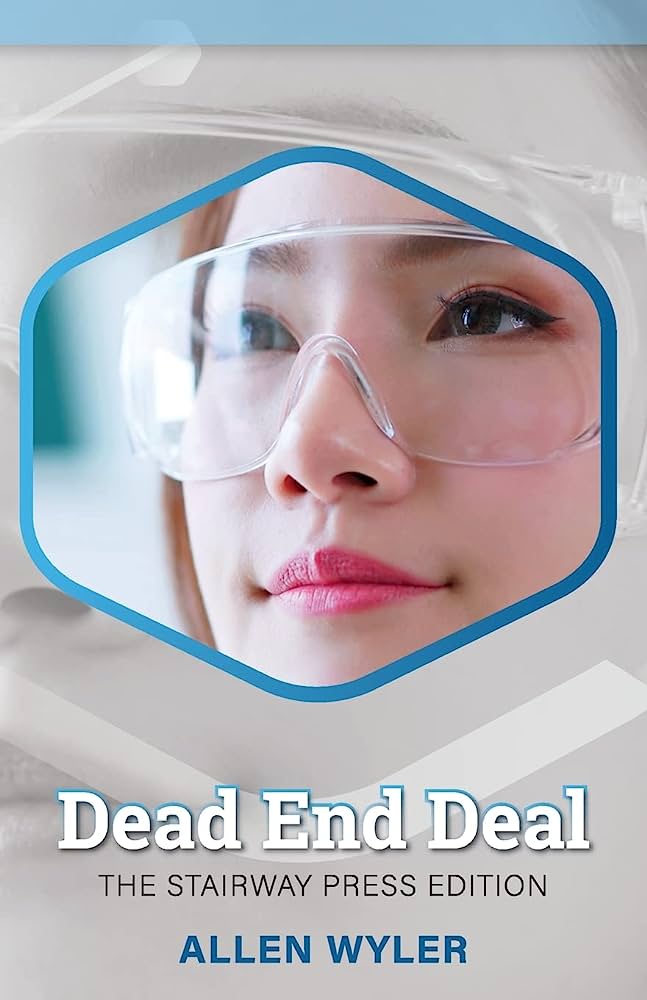
I am so thrilled to host author Allen Wyler as he discusses the inspiration behind his award-nominated novel, Dead End Deal!
My 2013 Thriller Award nominee, Dead End Deal, has recently been republished by Stairway Press and is available on Amazon in either paperback or Kindle format.
This fast-paced thriller was originally published by Astor+Blue (New York), but when they were sold to a London publishing house, I didn’t sign a contract with them for a variety of reasons. And so, without a publisher, the book simply stopped being sold and promoted. Then a year ago I pitched the idea of republishing it to Stairway Press, my present publisher. They jumped on it.
Got the idea for the story when I was a guest lecturer in Seoul and was writing stand-alone medical thrillers instead of my present cybercrime series. Here’s a thumbnail synopsis of Dead End Deal:
When top-gun neurosurgeon John Ritter is framed for the murder of patients in a Seoul Korea hospital he becomes the focus of an intense police manhunt in addition to being the target of an international hit man. Without a passport or friends, he must find a way to escape Korea and stay alive long enough to return safely to the United States to clear his name and eliminate the bounty on his life.
This book remains one of my favorite works. I hope that readers will download a free sample from Amazon and give the opening chapters a test read:
Allen’s thrillers have twice been nominated for the prestigious Thriller Award. He has served on the Board of Directors of the International Thriller Writers and is also an active member of the North American Crime Writers and Mystery Writers of America. He lives in Seattle.
Tell us a little bit about yourself. How did you get into writing?
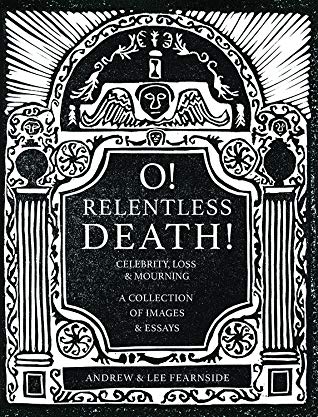
LEE: When we started this project I was a professor, and so writing was a part of my daily life. In my art practice I almost always incorporate stories or ethnographic interviews, so connecting other people’s writing to my images felt natural.
ANDREW: Writing thousands of pages of session notes as a psychotherapist made writing second nature. But more than that, learning about active listening and practicing compassion in every session helped me grow as an editor. Throughout the process of editing “O! Relentless Death!”, I found the courage to ask risky questions, to listen deeply, and to stay focused on the heart of a written piece rather than its style—because I’d practiced interacting from those perspectives in thousands of counseling sessions.
Advertisements
2) What inspired you to write your book?
ANDREW:
Lee and I began collaborating in 2015. We gave each other “assignments.” I’d returned to making stuff just a couple years before that time; Lee had been making stuff for years and years, but was interested in stretching her creative practice with unfamiliar media. Partly, the “assignments” were just fun; and partly, they were a chance to apply some good old-fashioned psychological leverage to our individual processes. And they also made for more communication between us, which we both wanted.
So when we realized in mid-2016 that we’d both been doing art-things about the landslide of celebrity deaths that were starting to accumulate at that point, we already had an established channel for communication and collaboration in place. We chose linocut as the medium, because like our “assignments,” it was a medium neither of us felt accomplished in. We were forced to figure out ways to adapt what could be a sprawling process to little plates. That, and we’d both made linocuts with our mother, a lifelong printmaker.
After the 2016 election, the project became clear: there was a parallel between the losses of cultural heroes like Gwen Ifill and, as Progressives, the loss of the election. To us it felt like something died that day.
LEE:
Our collaboration became a way to grieve together, with each other as brother and sister, and as artists/editors with the writers who participated in the project. It felt like sharing our grief was a way to create community.
3) What theme or message do you hope readers will take away from your book?
ANDREW:
While cultural heroes like George Michael and Gwen Ifill are larger than life within the context of global media, they are also containers for enormously powerful cultural forces. They deserve respect for their achievements, certainly, and we mourn their losses.
LEE:
But they also are entry points for people’s experiences. We feel a connection to celebrities, even though we’ve usually never met them, because of the role they play in out lives. I hope that readers will identify with the writers’ reflections of their experiences with celebrities, and see some of their lives reflected in the words and images in the book.
4) What drew you into this particular genre?
LEE:
Portraits are both direct and interpretive. The relief prints show our understanding of the specific celebrities, as well as recognizable image, just as the writing show the individual author’s experiences as well as something we can all recognize. I really love working with other artists on projects as it can be energizing to play off of each others’ ideas, so this collaboration with my brother and the writers was a natural extension of what I’ve done before.
ANDREW:
Art. A deep and abiding love of picture book genres like illustrated children’s books, comics, and old encyclopedias. The grounded understanding that as artists, this book was something we could do that would literally draw real emotional connections between us and our readers, and that that is a powerful political act.
5) What was the one story or celebrity that you identified with the most in this book?
ANDREW:
George Michael. I hated Wham at the time, and didn’t think much of his work as it progressed through the 80s and 90s. And to be honest, I still don’t think he was a great artist, compared to luminaries like Prince. But learning about him in 2016-17, and then making an image of him, I found myself weeping for what he went through, what he carried for all of us. He was outed during a period of intense upheaval and change, and suffered for it. He was forced to be a figurehead for a movement he seemed to have been ambivalent about. And all in public, at the receiving end of a firehose of cultural venom no one, no one EVER, deserved.
LEE:
For me it was Prince, who was a big part of my early adulthood. I listened to his music in high school and college, which for me (and many people) was a time when I really figured out myself as a person. So listening to his music is nostalgic on a lot of levels for me. This also made his portrait the hardest for me to make. Which Prince did I want to show? Could my portrait really capture everything I felt about him? I think I made 3 or 4 images before I settled on the one that made it to the book.
Advertisements
6) What social media site has been the most helpful in developing your readership?
LEE:
Facebook was where we connected with a lot of potential writers, showed people work in progress, and then launched the Kickstarter campaign that funded printing of the book. We use both Kickstarter and Facebook to keep in touch with our readership, and dabble in Instagram.
ANDREW:
Kickstarter, if we’re going to be really literal about a social media platform. Then, at last, after everything else that we personally did with our own strategy and planning, it’d be Facebook.
7) What advice would you give to aspiring or just starting authors out there?
LEE:
The old saying of 99% perspiration and 1% inspiration is so true. I used to tell my students that they had to make at least 10 bad things before they had the 1 good thing. You have to keep making, keep revising, and keep getting feedback. It can be a relentless process, being creative, but only by continuing even when it feels like you’re making crap can you push through to the good stuff.
ANDREW:
Keep tinkering with your daily creative practice, whatever it may be. Every time you do it, you’re doing IT—the big thing, the masterwork, the whole enchilada. Whatever it is for you, you’re going to do it one TRILLION BILLION times. May your moments of inspiration become as common, and as miraculous, as breathing.
8) What does the future hold in store for you? Any new books/projects on the horizon?
ANDREW:
I’m focusing on building my practice and business as a muralist in Albuquerque, NM, where I live.
LEE:
I’m working on a book about animal adaptations to human behavior and encroachment. The book is modeled after a field guide, but is really a series of stories paired with images just like our last book. The stories range from the absurd, like crocodiles in Florida using pool noodles as floatation devices or mountain goats in Olympic National Park becoming addicted to hikers’ urine, to the disturbing and profoundly sad, like wildebeests in Botswana no longer migrating because of fenced off ranch land or cane toads taking over the Australian landscape and forcing out native fauna. My hope is that readers will laugh but also think about what we as humans are doing to the animals we share our world with. The book comes out this spring. If anyone is interested in learning more, follow our Facebook page “Fearnside and Fearnside” or our Kickstarter, “Lee and Andrew Fearnside.”
I am honored to be able to share this next guest blog post with you all. Writer Greg Josselyn from Reedsy has reached out with a brand new post on the Blurb Factor to share with aspiring authors and writers out there. Enjoy and be sure to follow Greg’s work on Reedsy.
From botched to bestselling
When romance writer Alessandra Torre uploaded her first book on Amazon eight years ago, she only sold three on the first day. And for the next few months, she averaged a still-disappointing 15 – until one night, she looked at her book description and said: “I’m going to re-write this.”
That re-write sparked a renaissance. First, it was 100 books sold in one day. Then 300. Then 2,000. That’s when she started ranking as a top seller in the Romance category, and offers from agents and publishers came flooding in. Now, Torre is an Amazon International bestselling novelist, with over a dozen books to her name.
We can’t pin Torre’s success entirely on a book blurb – she is a good writer, after all! But we would be remiss not to poke around the subject, especially since this is a great Amazon self-publishing success story. The fact is, without the social credit and marketing budget of a big publishing house, the seemingly small things we usually save for last – like book descriptions – will make or break you.
If you’re a writer who’s planning to self-publish, this post will help improve your book description (or back cover text) and grow your profitability on Amazon. But even if you aren’t quite at that stage yet, you can apply these techniques to query letters and pitches for your book. After all, it’s never too early to start selling people on your ideas.
Step 1: Get a hook and bait
Hook, hook, hook. That seems to be all writers and editors ever talk about, and yet, most of us still wonder what it really means. When we say “hook”, we mean like a fish hook, with – you you guessed it – bait. This is particularly important in the sea of distractions that is Amazon.com. But what are the raw materials that will make up your hook and bait? You’ll require:
A brief – we cannot stress this enough – summary of the story (no spoilers, please!)
A question that the story poses (which, of course, makes the reader want to find the answer so much that they’re willing to pay $9.99 for it). What’s going to compel Suzie So-And-So to forgo her mocha lattes this week for your book?
A little typography dress-up. You don’t have to go to coding boot camp to try on bolds, italics, and colors when setting up your product page. For example, on Amazon, you can:
Make things bold: <b>Be Bold My Friend, Be Bold</b>
Italicize Things <i>don’t go overboard though here because sometimes readers breeze over italics </i>
Headline: <h1>This is a classier way to do all caps</h1>
Amazon Colors: <h2>Jeff Bezos will approve.</h2>
Indent: <blockquote>for anyone who likes a good old indent, you’re welcome. </blockquote>
Step 2: Blurb it out
Try to think of your book description in the most succinct terms possible. This isn’t a school book report; it’s like more like an elevator pitch. In other words, don’t blurt it out – blurb it out!
And when it comes to blurbs, our friend Torre is the master. If she didn’t revise the blurb for her first book, she may have switched careers instead of rising to the New York Times best seller list, which is why we always refer aspiring writers to her video tips on the subject. But in brief, she stresses these two essential facts:
The first three sentences of the blurb matter most. It’s like a teaser trailer – after those three sentences, users are going to have to click “Read More” to well, read more. To keep them scrolling, or get them to move onto the “full trailer,” as it were, those three sentences should stand out by utilizing the problem/question structure mentioned above.
One strong way to do that is to employ the classic proposition “but.” For example: “Will Byers lived a normal life in a boring suburban town. But when a mysterious alien creature shows up, his life turns upside down. Will it ever turn right side up again?” (Read More…)
Leave out unnecessary details. All too often, authors use their blurbs to share irrelevant details like character surnames, where they live, their professions, or other excess exposition to no end. Cut all of that out – just set up the problem and the stakes of the story. You can always go full-on Charles Dickens in the actual book. But don’t make your blurb into Bleak House, or you’ll send readers running for the hills.
Step 3: Demonstrate (and prove!) a social benefit
You’ve done it all so far: The blurb is short enough for a social media share. Your first three sentences set up a key question and further dilemma. You’ve omitted unnecessary details, like your character’s middle name or their township’s population.
And yet, potential readers are still scrolling to click on other book titles in your category. Yes, it could be other factors like book cover design and reviews, but still – there’s one last ingredient needed to seal the deal on your blurb. This is, of course, why the book matters to the potential buyer. What does your book provide for them? How will it make an impact on their life? Advertisements do it all the time, so why not utilize this technique to sell your book?
For example, if your book is self-help, be sure to mention that they’ll never think the same way about X problem ever again. Or if it’s fiction, show how your main character is relatable to readers, and how they overcome problems that many of us experience in our own lives.
If you have reviews or testimonials to prove this, even better: up the social proof to the max. And if you’re new to self-publishing, drawing comparisons to pre-existing works is one great way to do it (e.g. “This Gender Bending Historial Fantasy is Games of Thrones meets Queer Eye), or just stress how it’ll change the reader’s way of looking at the world (“fantasy fans and fashionistas will never be the same again…”).
Takeways
In order to make a successful book blurb, be sure to include:
An enticing lead to grab readers
A question that a reader can only answer by actually reading your book
Proof that the story will benefit the reader’s life – this might be pure entertainment, or genuine self-improvement
There are endless ways to play around with these elements. Try out different options – at least three – and test them with friends and family, as well as pro beta readers. Ask: which description pulls you in? Which one doesn’t do it for you? And why? Or, do an A/B test in Amazon: swap out the different descriptions and see which one performs the best.
Still no sales? Keep re-writing and testing until you do, like Alessandra Torre. Otherwise, accept that the marketplace just may not be ready for this particular book, and start re-examining your content from the ground up.
Greg Josselyn is a writer for Reedsy, a curated marketplace dedicated to empowering authors. When he’s not covering KDP Select, he writes short fiction and makes podcasts.
How The Dark Tower by Stephen King Inspired My Writing
Hello there everyone! I wanted to start writing a series of posts describing how various books, authors, films, television shows, musicians, video games and even internet stars have influenced my writing in general, as well as the way they have influenced specific storylines within my books. The best writers in the world have found inspiration from the world around them, from world events to nature and the works of other authors. Today, I want to discuss one of the biggest influences on me as an author: The Dark Tower by Stephen King.
This series spans eight novels, as well as short stories, interconnected story points in other works by Mr. King, comics, and now a motion picture with plans for a television and film franchise. This is by far the author’s most famous work, and the connectivity of his works to this series has influenced my own storytelling.
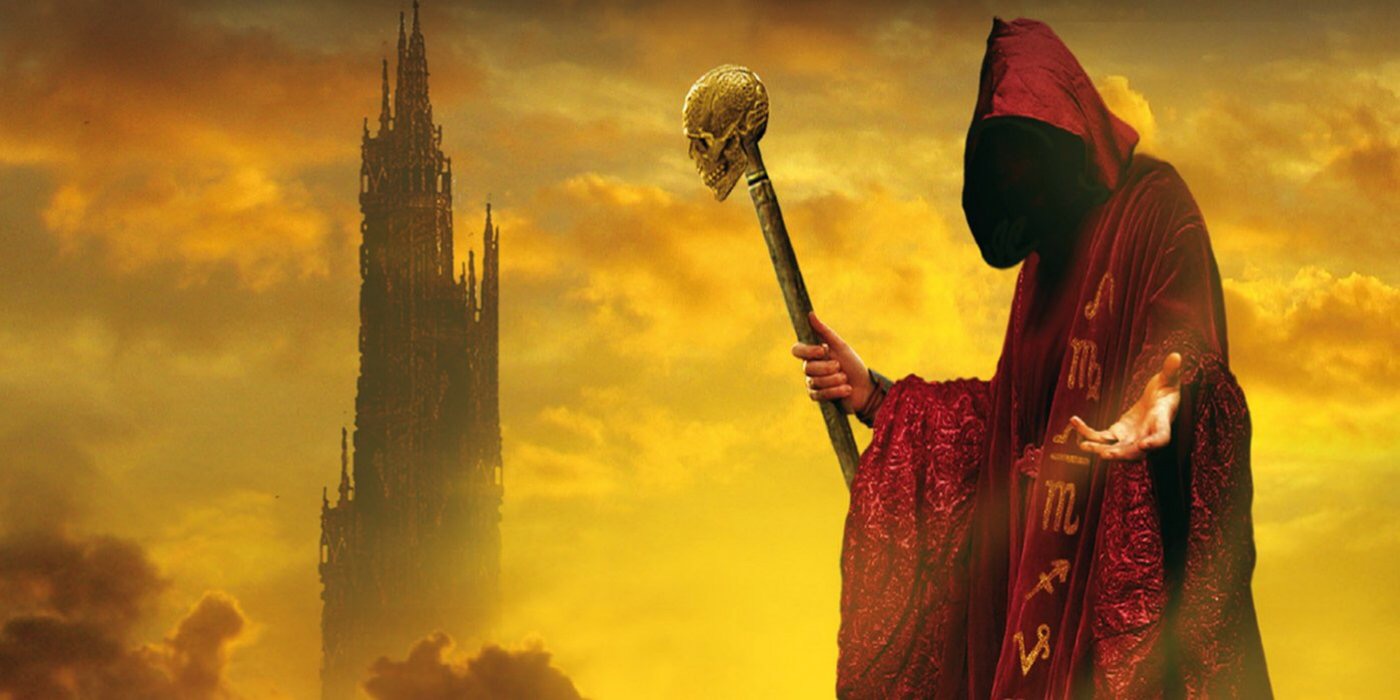
The main plot of the story revolves around Roland Deschain, the last of a long line of gunslingers, who travels his broken world in search of the man in black, a sinister wizard he holds responsible for the downfall of his people. In his search, he also searches for The Dark Tower, a vast tower that binds all worlds and realities together. The man in black works for his master, the Crimson King, to destroy the beams that hold the tower in place, in the hopes that it’s destruction will bring chaos and death to all worlds. Roland must go on a quest to stop this mad plan, gather forces of good to help him stop the Crimson King and save the tower once and for all.
It’s a story the blends several genres, from fantasy and horror to westerns and science fiction. This combination of genres is the first inspiration from this series. The way Stephen King is able to expertly craft a story that incorporates these genres without making it chaotic and unbearable to read is a true source of inspiration. It shows that there is a place for all of these genres to co-exist, and that not one genre is necessarily better than the other.
The second inspiration from this series is the way in which Stephen King connects all of his books. Whether it’s characters like Father Callaghan from Salem’s Lot showing up in book five of the series or the man of black becoming the villain of not one, but at least three different books, this series has shown me the power of connectivity, and how it can inspire larger and more powerful story telling. I’ve begun to apply this to my two main series thus far, Nightmare Wars and The Legend of Electric Fusion. I’ve introduced a character named Larry, who brings chaos with him everywhere and travels between worlds and dimensions to mess with people, and in so doing he appears in both series. My hope is to bring characters from both series together in an epic series like The Dark Tower in the future.
These are just a handful of ways this series inspired me. I’ve learned a lot about the show versus tell storytelling device that I’ve mentioned before in my reviews, and am learning to apply it to my own writing. Stephen King uses this device expertly, subtly leaving plot points within the story that readers pick up on with excitement and eagerness. I’ve learned to apply a more “real-world” dialogue to my writing, in which i don’t worry about applying a vast and expansive dialect that makes me sound like a walking thesaurus but rather i write as if i were just dictating the conversations of real people who experience extraordinary circumstances.
Overall, The Dark Tower is my biggest influence as an author. Mr. King has done a masterful job of creating a narrative that brings heart and emotion to an edge-of-your-seat adventure with scares, thrills and heartbreak. It was a fantastic series that will continue to inspire me throughout my career, and with the major motion pictures starring Idris Elba set to premiere soon, i highly recommend you guys reading this series if you need a healthy dose of writing inspiration. Thank you, Mr. King, for creating such an incredible work of art in The Dark Tower.
What is your current inspiration, whether its for writing or some other project in your life? Are you guys going to see The Dark Tower when it comes out? Leave your answers in the comments below.