Interview with Author Philip Bencel

1) Tell us a little bit about yourself. How did you get into writing?

I’ve been a private investigator in Washington, D.C. for almost twenty years. I’ve written stories since I was a kid, but I didn’t publish my first books until I was in my mid-thirties: Introduction to Conducting Private Investigations and Principles of Investigative Documentation. I returned to writing fiction last year, when I took a sabbatical from my investigations company to write a novel.

2) What inspired you to write your book?

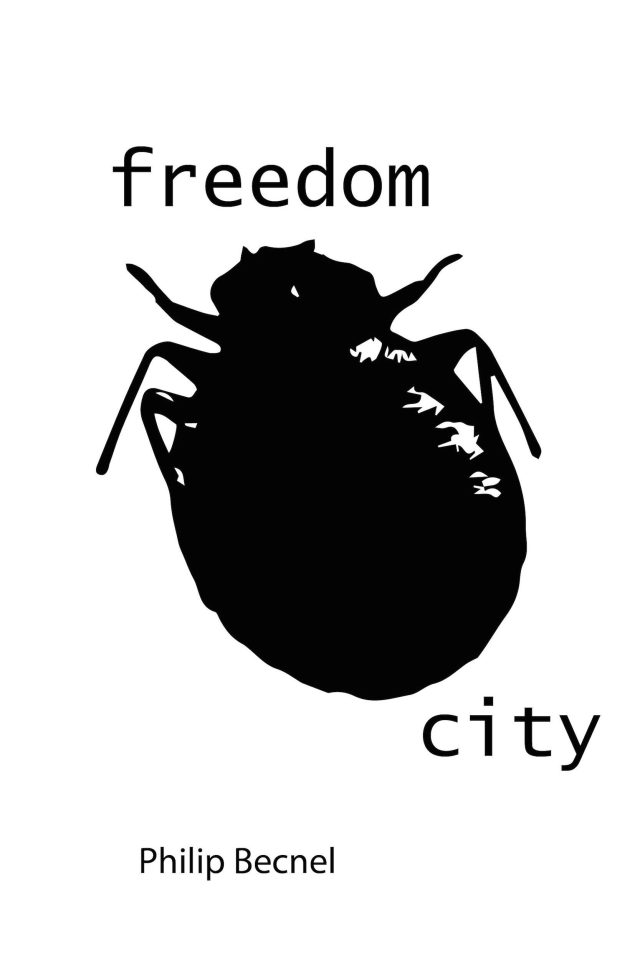
The book I aspired to write last year was called Order of Damaged Souls, set around the 14th century Flemish peasant revolt. I finished that book, but I ultimately decided it was too dark for mainstream consumption. While bemoaning all the time that I “wasted” on Damaged Souls, I had an epiphany about just how demoralized I was about the American disaster marked by Donald Trump’s presidency. This soul-searching led me to re-read The Monkey Wrench Gang, a campy novel written by Edward Abbey about a band of misfits who sabotage stuff to protect the environment. I thought, ‘I should write something like that, but set in post-Trump America!’ Thus inspired, I wrote Freedom City in about three months, rushing to get it out before Trump’s impeachment. [Laughter].

3) What theme or message do you hope readers will take away from your book?

I don’t know if I can curse on your blog—but fucking hell, what we’re living through right now is the resurgence of fascism, plain and simple. I know the left is often too loose with the word ‘fascist,’ and that’s regrettable, but there is nothing else to call attacks on the press, on the judiciary, and outright distain for the rule of law by the so-called President of the United States. So, Freedom City is a serious book about a very serious topic, but I really tried to bring it down to a level where I’m not just screaming incoherently out the window. The thing is that, when you take a deep breath, Trump and his enablers are evil in an almost inept-comic-book-villain sort of way, so there is actually a lot to laugh about in the situation. The one thing I hope people get from my book is that we must kill them with laughter. That’s their biggest weakness, which is why the right has been so up in arms the past few days about Michelle Wolf’s scathing comedy routine at the WHCD.

4) What drew you into this particular genre?

Well, my first novel was historical fiction, which is what I often like to read. Freedom City, I suppose, is contemporary literary fiction, but I’ve really struggled with whether to call it satire or dystopian fiction. It’s a little of both, actually, more like a tragicomedy. Like I said, I didn’t really set out to write it, but as a longtime private detective who lives in D.C.—I can literally see the fucking U.S. Capitol out of my window—I was probably the person best situated to write a novel like Freedom City.

5) If you could sit down with any character in your book, what would you ask them and why?

I admit that I struggled a bit with Clare Swan, the main female protagonist. Some female readers have pointed out her promiscuity, and that’s certainly a fair critique. But while my book might not pass the Bechdel test, nobody (so far) has accused me of being anti-feminist. Actually, I’m a diehard feminist. It’s just that I have an active imagination, so when I write female characters I sometimes imagine ways I might sleep with them. [Laugher]. Ultimately, I think Clare turned out to be a delightfully complex human being and a righteous warrior. But if I could talk to her I’d ask if she feels I did her justice.

6) What social media site has been the most helpful in developing your readership?

That’s a great question. I had already developed this public persona as a private investigator, and by far the biggest platforms for that are LinkedIn and Twitter. Because of that professional following I already had from my non-fiction books, I’ve gotten the most traction so far from those sites. However, I’m super excited about Instagram—which I confess I wasn’t even on until a few months ago. As I’m someone who loves readings and events, it really gives me a chance to chronicle the “buzz” around my book and hopefully help it, one day, take off.

7) What advice would you give to aspiring or just starting authors out there?

So much of the advice aspiring writers get is to clichéd. I mean, I could say ‘don’t be afraid to suck’ or ‘join a writing group’—both sage pieces of advice—but instead I’ll say this: Write about the things buried deep in your soul that you think might scare your friends to know about you. Just do it. They won’t scare, and you’ll be writing honest shit.

8) What does the future hold in store for you? Any new books/projects on the horizon?

I’ve got a couple irons in the fire, including a continuation (sort of) of Freedom City. Lately, however, I’m back to doing investigations, so I don’t have all the time to write I had last year. That’s okay though, because now that I recognize impeachment isn’t happening anytime soon I can take the time to make the next book longer and even more snarky.
 

freedom

_______________________________________________________________________________

Available Now! Bad Blood: Secrets and Lies in a Silicon Valley Startup. Get the full inside story of the rise and collapse of a multibillion-dollar startup

Save $5 on Any 2 Books with code BOOKISH

Interview with Author Stephan Morse

1) Tell us a little bit about yourself. How did you get into writing?

Writing came about from a failed project in the 5th grade. It was a bad fiction where I turned into a dragon and burned some other child in class I hated for reasons that were probably silly. We ended up meeting Ursula Le Quin (I believe, this was decades ago well before I’d read her books) as part of a school event. Between those two events, I’d always had an interest in writing novels. It only grew as I went through Junior High and High School and read anything fantasy related in three libraries. It took some time before I dared to write my own novels and release them to the public.

2) What inspired you to write your book?

 I tend to read a dozen or so books as part of my recharge process. over a few month span.  The Fiasco came about from a superhero kick, where I read nearly anything my Kindle could find from the genre. During this reading spree I’d been editing prior works, prepping some for release on eReaders, and so on. I wanted to try something new – a way to see a new story in an older setting. Comics, movies, and even a few old audio novels all played their part in inspiring The Fiasco but I feel like I managed something new(ish), which is my first goal when writing.

3) What theme or message do you hope readers will take away from your book?

It’s less about theme and more about exploring the rest of a world that others may ignore. As an example, my favorite characters in the Marvel Universe were the ones that fell between the cracks – specifically the Morlocks. They weren’t good enough to fit on a team, they weren’t powerful enough to be villains or anything else, and generally ugly enough that everyone gave them dirty looks. I loved these people because they were living a real life. They had day jobs and failure to fit in with normal crowds. They were the most developed characters because their plight started well before mainstream heroes started addressing life behind the mask.That sunk in, misfits among misfits.

4) What drew you into this particular genre?

The Fiasco’s superhero sort of ideas were a weird mix of every other mainstream series – since I’d spent so much time reading superhero novels. That being said, probably Marvel’s universe had the biggest impact on a desire to write in the genre. It’s simply been around so long that nearly everything else shares some inspiration from their works. Heck, I grew up reading comics (and compulsively sorting them). But I couldn’t let my work be a carbon copy of the classic coming of age and learning to use powers for great justice sort of tale. It couldn’t be about stopping the big bad from ruining the world in their ill thought out megalomaniac plot. It became about the captives left behind, the person who’s forced to be in all these powered events. The man who’s simply tired of being in the super powered world because he’s never the actual hero or a catharsis seeking vigilante/villain.

5) If you could sit down with any character in your book, what would you ask them and why?

There’s a lot of stuff I’d ask my characters – and constantly are things I’m asking them. I could pick Ted, who’s the first book’s semi villain and sort of mentor. His role is complicated because people are rarely one dimensional. He wants to get back at those who ruined his life and took away his daughter. He wants to make his wife see that there are some forces which are unstoppable – that losing their kid wasn’t his fault, but he also wants Adam to answer for his reactive role in everything that goes on. But because I know all those things, asking him his motivation seems weird.So, any question I ask has to be really out of the way.

Like, what’s the weirdest thing you’ve ever eaten and where was it? That’s a question I may never have an answer to. So now, I really want to know.

6) What social media site has been the most helpful in developing your readership?

Facebook, hands down. I have my little author page and hang out in a few groups that focus on the same genre as my main series. It’s fun interacting with the readers who ping me when topics come up. I try to avoid self promotion and generally only pop by when someone messages me about a post – but Facebook lets me see what people think about the work, and that’s always an awe inspiring moment.

7) What advice would you give to aspiring or just starting authors out there?

Finish a book. Don’t restart it 10 times. Don’t edit it until you’re drowning and hate yourself. Finish it. Quality aside, knowing that you have finished a book means a ton. It was the greatest thing I ever did.

8) What does the future hold in store for you? Any new books/projects on the horizon?

More books, more writing. But real life and the day job take precedence over putting together novels. However, now that I’ve started – I don’t think I’ll ever be able to stop. There will be two more books for The Fiasco eventually, bringing the series to a close. There’ll be some virtual reality based books along with western fantasy mashups. Ideas tend to occur faster than my fingers can type.

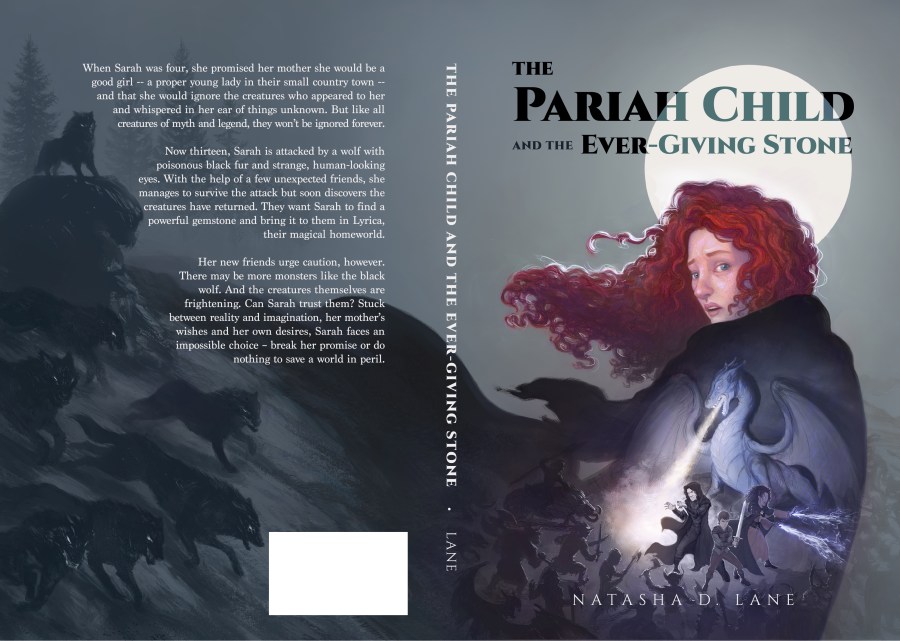
Blog Tour: The Pariah Child & The Ever-Giving Stone by Natasha D. Lane

Blurb:

When Sarah was four, she promised her mother she would be a good girl — a proper young lady in their small country town — and that she would ignore the creatures who appeared to her and whispered in her ear of things unknown. But like all creatures of myth and legend, they won’t be ignored forever.

Now thirteen, Sarah is attacked by a wolf with poisonous black fur and strange, human-looking eyes. With the help of a few unexpected friends, she manages to survive the attack but soon discovers the creatures have returned. They want Sarah to find a powerful gemstone and bring it to them in Lyrica, their magical homeworld.

Her new friends urge caution, however. There may be more monsters like the black wolf. And the creatures themselves are frightening. Can Sarah trust them? Stuck between reality and imagination, her mother’s wishes and her own desires, Sarah faces an impossible choice – break her promise or do nothing to save a world in peril.

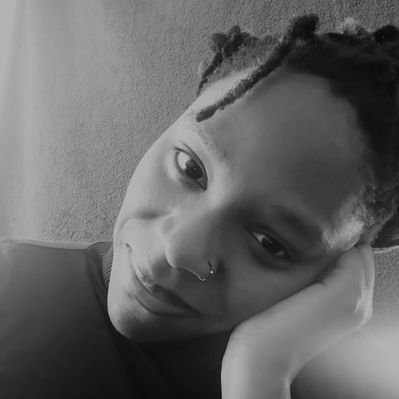
AUthor Photo B&W

Interview with Author Natasha D. Lane

1) Tell us a little bit about yourself. How did you get into writing?

I started writing as a kid. I was probably in elementary school when I realized how much I loved writing. Eventually, it became an outlet for me. I took everything I had to hold inside and put it on paper. It started with poetry,then eventually grew to short stories, before I started my first novel. My middle school teacher Ms. Snyder was the one who saw my talent and pushed me to write my first novel. It was called (get ready for this) “An Imperfect Utopia.” Great title, right?

Anyway, I never stopped writing. I was traditionally published as a romance author in college and did that for several years, before returning to the genre that always held a special place in my heart: fantasy. Now, here I am with one of the first fantasy novels I have ever written ready to be published.

2) What inspired you to write your book?

So much! Life experiences, other stories, and just a simple desire to write.

“The Chronicles of Narnia” and the movie “Eragon” (I know, I know, it was a horrible adaption) gave me a lot of fuel to write my novel. I love the sense of pure adventure both stories have and I wanted to write something like that, too. At that time, most of the fantasy novels I read had heavy aspects of romance in them which I didn’t mind but I began to wonder what it would be like to read a story that focused on the journey and less on some love triangle, ya know?

3) What theme or message do you hope readers will take away from your book?

Love yourself even when the world tells you that you’re somehow wrong or unlovable. Love yourself.

4) What drew you into this particular genre?

Fantasy is a genre known for escapism. I think as a kid I wanted to escape from a lot of the crap that was happening. I was bullied at school and had very few good relationships with the adults in my life, so everywhere I looked there was this chaos, this negativity, and so much stuff out of my control. When I read fantasy I got to leave all of that behind.

I also got to leave some of the things I used to hate about myself behind. When I read fantasy novels I wasn’t a nerd or loser. I was a warrior going on a journey to save the world or a magician with hidden powers that no one understood. I felt like an underdog and fantasy novels are famous for turning the underdogs into the heroes of the tales.

5) If you could sit down with any character in your book, what would you ask them and why?

Oh, good question! Hmmmm. If I had to pick, I think I’d sit down with Serwa. She’s one of the main characters in the story and a very powerful witch. I think I’d ask her how she manages to carry all the burdens she does and how she handles people’s misconceptions about her. I don’t want to go into too much detail because her background has more explanation in the sequel. However, I will say that Serwa is one of the most misunderstood characters in the series. She’s often viewed as mean or a monster when in reality she’s trying to do what she can to save everyone.

6) What social media site has been the most helpful in developing your readership?

Twitter and Instagram are my favorite platforms. Specifically, Insta for readership but Twitter is good for branding and networking. I like Insta because it’s such a positive sight. Seems to me like it has less drama than other social media platforms.

7) What advice would you give to aspiring or just starting authors out there?

“Write your way through life.” That’s my mantra because, like any form of art, writing is an outlet. When life gets tough (which it always does) write out all madness, the beauty, the good and the ugly. It’s a healthy form of expression.

Beyond that, I’d say take any marketing classes you can and build your platform now! The sooner you build your platform, the more opportunities you’ll have to test what works best for your brand and how best to develop it.

8) What does the future hold in store for you? Any new books/projects on the horizon?

Lots of new projects. After “The Pariah Child & the Ever-Giving Stone” is released into the world, I plan on publishing my second novel. It’s tentatively titled “The Woman In the Tree” and is an Arthurian legend retelling that takes a different spin on how Arthur became king. I’m already writing the book, so it won’t be too long a wait.

Once that’s done, the sequel to The Pariah Child is next on my list.

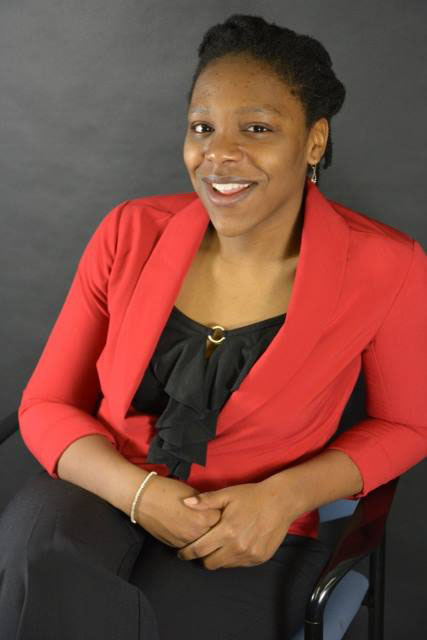
Author Photo Color

Author Bio

Natasha Lane enjoys reading a wide variety of genres, but fantasy has always been dear to her heart. After a brief stint in romance, Natasha’s returned to fantasy and currently has two works in the making. She plans on releasing her first fantasy novel “The Pariah Child & the Ever-Giving Stone” March 22, 2018.

Natasha hopes one day to be a well known published author, whose writing informs as well as entertains her reader.

Besides being a bookworm, Natasha is a documentary junkie, rom-com addict, health advocate, entrepreneur, and chef (in her own way).

She currently resides in Baltimore, MD. Despite where life may take her, one thing is certain. Natasha will always keep writing.

GoodReads: https://www.goodreads.com/author/show/8547000.Natasha_D_Lane

Twitter: https://twitter.com/natasha_lane1

Website: https://www.natashalanewrites.com/

Excerpt: https://www.natashalanewrites.com/excerpt/

Facebook: https://www.facebook.com/NatashaLaneWrites/

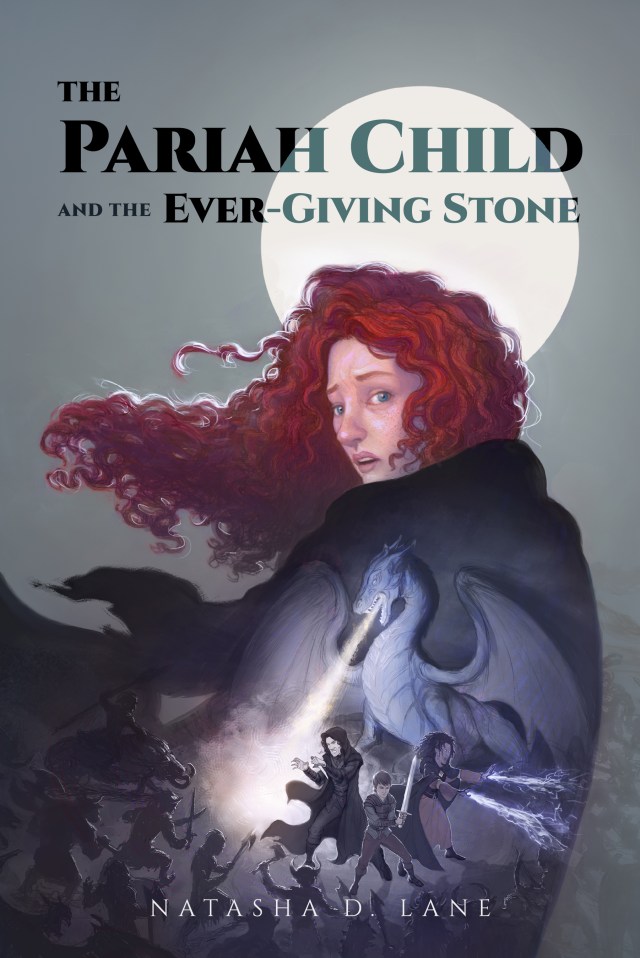
Copy of Pariah Child - Final Cover - front cover only - ebook rgb

Interview with Author I. Ashmawey

1) Tell us a little bit about yourself. How did you get into writing?
Since a young age, I’ve always imagined the world differently. Asked strange questions. Pictured how things could be rather than how they are. Writing is my way of capturing that imagination and documenting it. When I have a thought, I write it. It’s my way of allowing that thought to leave my mind and instead, possibly go into the minds of others. If people like my thoughts, wonderful. If not, I have plenty others!
2) What inspired you to write your book?
I don’t know anyone who reads regularly in my circle of friends. Perhaps that means I need new friends 🙂 But it also means that in general, my generation is not one of readers. My generation gets a ridiculous amount of screen time. Whether it’s TV, YouTube, or whatever else, it’s all the same. First of all, it limits the kinds of opinions they will hear. Second, the mind simply doesn’t work when it is receiving content through a screen. It’s a lazy method, and breeds even more laziness. Even those who laud themselves as people who read the news, do they really read it? Or just the gist?
I wrote this book to encourage my generation to spend more time with an open book in front of them, rather than a screen. The hope is that with only five minutes a day, people can escape their lives and take a small glimpse into a life that once was, or could someday be. And perhaps they would gain something positive from this insight.
3) What theme or message do you hope readers will take away from your book?
The themes in the book are plenty, as every short story aims to take the reader somewhere different than the one before. If I was to summarize all the messages and concoct a common theme that connects them all, it would simply be: think differently. If society runs things in a certain way, that way may be entirely wrong. There may be a far better way that is waiting for someone to discover it. There may be a way far worse, that’s still worth trying in order to feel more assured of society’s way. There is always something to be gained when thinking differently and questioning everything.
4) What drew you into this particular genre or genres?
Writing a book of short stories was never my intention. I actually finished a sci-fi novel and had sent it to my editor for editing which usually takes a few months. In the meantime, I couldn’t sit idle. So I decided to put some ideas down, which turned into short stories. I then wanted to challenge my creativity: 30 stories in 30 days. I was able to do it, a story a day. Then I added ten more, and thought to myself, “Why not publish?”
5) If you could sit down with any character in your book, what would you ask them and why?
That’s an extremely tough one given that there are 40 shorts with 40 main characters. But I think I would choose Apolena Kipp from the story “Before the Beginning.” A space explorer who takes humanity’s first trip back to before the Big Bang. There was a moment while writing that story that I truly felt scared for her. I couldn’t imagine the courage it would need to take such a trip. Being the first to ever do anything requires courage, but especially to cross that threshold where there are no safety precautions, that’s something else. I would want to ask her what this trip means to her personally. Why does she so desperately want to know what happened before the Big Bang? And more importantly, how did she feel about what she found?
6) What social media site has been the most helpful in developing your readership?
I have to be honest, I don’t have social media. I used to. I was one of the first to join Facebook back when it required a .edu address and you needed to put in which classes you were taking. But on a specific day, I found myself with my 1-yrld daughter at Disneyland, and I was fighting with someone I didn’t know on Facebook about some political opinion. It hit me then, and then I deactivated my account, and vowed never to return.
I don’t deny however that social media can tremendously help marketing a book. So that’s something I’m currently working on, but without social media 🙂
7) What advice would you give to aspiring or just starting authors out there?
The most important thing any writer can do, is write. It doesn’t matter how bad the writing is initially. It doesn’t matter if t hey don’t have a fully fleshed story. Start writing, and write everyday. One’s writing is a muscle. If it’s not exercised it, it will become weak. To write is to find the characters, then the characters will build the story. Just start, that’s the most important thing. Start!
8) What does the future hold in store for you? Any new books/projects on the horizon?
The soft sci-fi is currently out with agents! The book is titled, “ETA: the Trial of Logan Gruver.” The story talks of Logan, a traveler on a commercialized time-travel trip to the Pliocene epoch, who finds purpose and love when he meets Giselle, a fellow traveler in the past. Together, they discover that humanity will mysteriously cease to exist in the future. The newly discovered Canvas of Time, a fabric that covers the universe and also lends way to time travel, will begin to deteriorate. Logan and Giselle understand their devotion, the consequences of their actions, and why humanity may have to pay the price.

Interview with Author Steve Conoboy

1) Tell us a little bit about yourself. What made you want to become an author?


There are so many reasons why I ended up here, all weaving together to make the destination inevitable. The very short version is that I was always obsessed with stories. I read every magazine and book I could get hold of from a very early age (I was reading from the TV guide at age 4). I couldn’t get enough of video rentals – all the covers looked incredible. Then I began to record my own voice as I read out all the characters in comic books. Soon I was copying the stories I loved the best: further Star Wars adventures in the form of drawn space battles, writing extra chapters for my favourite fantasy books. Stephen King happened. Then I got hold of a typewriter in my late teens, and I loved the clacky sound it made. After that, I simply wrote for the love of finding out what my crazy characters would get up to next.


2) What was the inspiration behind Macadamian Pliers, both the book and the character?


It was on a journey home from work, many years ago. The bus passed by a brand new set of apartments, and on the opposite side of the road was a very old building, a real dilapidated hunk of junk. It was obvious which one would be haunted. New buildings are never haunted, unless they’ve been built on top of an old burial ground of some kind. So I wondered, was there any other way to make such a place haunted? The next thought came quickly: was there a way that an estate agent (realtor) could sell a family one of these lovely homes, then render it haunted so that they could chase that family out and sell the house again? The kind of character that would do such a thing would have to be a particularly nasty piece of work… and also a little bit crazy.

I started writing it that night.

DMrTkJwX0AAG-y6.jpg

3) What theme or message do you hope readers get from this story?


No matter how small you think your voice is, you must always speak out against the darkness.


4) If you could have a conversation with any of your characters, who would it be and what would you ask them?


Probably Misha from my new release A Graveyard Visible. She’s pretty damn peculiar, so it would be a very interesting conversation. She has a pet mystic 8-ball for a start. It gives her advice. Bad advice.

There’s one other character I’d be interested in talking to, but only over the phone: Macadamian Pliers. I’d love to hear his voice, but I definitely wouldn’t want to be in the same room as him. He just can’t be trusted.


5) What social media site has been the most helpful in reaching and conversing with your readership?


This is a difficult one, as I’ve got a bit of a rough relationship with social media (bad news for me, considering how all-encompassing such sites are now). Twitter’s been pretty good for picking up leads on review opportunities, and people are very quick to reciprocate any kindness – but tweets go by in a flash, and if you don’t keep up constant engagement, it’s all for nothing. Facebook is good for giving out more information, as well as finding decent groups, but my reach there is limited and advertising does very, very little. Also, I feel Facebook has no interest in supporting its users if they have any significant issues as a result of the site and its other users, and therefore resent being on it at all. I kind-of feel like that about all social media, really – I think they’ve encouraged a deep-rooted seam of unpleasantness to bubble up from the masses, and people can be so vile.

I actually find that being on other people’s book blogs and websites is most useful. If anyone is visiting those sites, they have done so for a reason. Far fewer people, maybe, but at least it’s your target audience.


6) What matters more to you when writing: developing plot or creating characters?


Characters must always come first. No doubt. Anyone who says different is wrong. All story must be driven by the characters actions (or inaction). If plot comes first, then you’re forcing your characters to do things that they definitely wouldn’t do, and readers will pick up on that in a heartbeat.


7) What advice would you give to up and coming authors?


Do it for the love. Really, that’s the most important part of the whole process. If you’re enjoying what you’re writing, then there’s a chance that someone else will enjoy reading it. If it feels like a slog, something’s wrong. I’ve dumped a couple of novels partway through the writing process because they felt so off.


8) What’s next for you in the world of writing? Any new or upcoming books on the horizon?


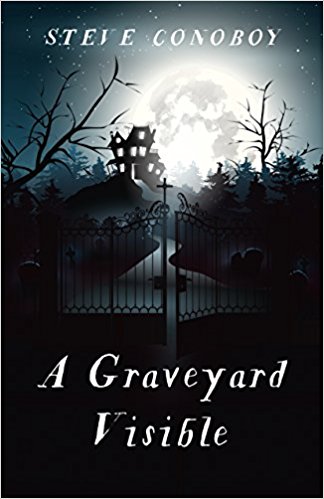
I’m currently gearing up for the release of A Graveyard Visible on 27th April 2018, so there’s a lot of promotion work and pulling together some reviews (which are proving to be very divisive so far – that’s either incredibly worrying or a great marketing tool). It’s being published by Lodestone Books, and the cover and the layout of the paperback look absolutely fantastic, so pleased with the result. On the writing side of things, I’m playing about with a possible tone change for an AGV sequel, as well as being deep into the writing of a story about the political activism of a pig. Yeah, it’s something a little bit different.

41AD3n5yNzL._SX322_BO1,204,203,200_

https://www.facebook.com/authorsteveconoboy/

https://writerhaunted.blogspot.co.uk/

https://twitter.com/steveconoboy?lang=en

https://www.instagram.com/steveconoboy/

Why Should You Re-Release Old Books?

Time. 
Time has produced new innovations in the world of writing and publishing. In today’s world of publishing authors have more opportunities than ever to showcase their work without traversing through the process of traditional publishing houses. However as many self-published and traditionally published authors can agree, time allows us all to learn from our mistakes and improve ourselves and our writing. With self-publishing it is easier now than ever before to improve on our previous work.
In a month and a half, I will be releasing I Was An Evil Teenager: Remastered. This is a three novella series telling the story of Lisa Etron, a seemingly innocent teenage girl with a dark persona bubbling just beneath the surface. I originally published the first novella, I Was A Teenage Killer, in 2010. This story was fun to write, but as the years have gone on i recognize so many grammatical and story based errors that the time to fix it was here. Not only have i and my skills as a writer changed and improved, but the world has changed as well. Whether its our current political climate or the tragedies of our world reshaping our views or the wisdom and strength that comes with age, this book began to feel outdated and in need of serous improvements. So i went through all of the novellas and realized this would make a great remastered novel, and so i began to work.

In the end, i think this remastered book is stronger and more character driven then it ever was before. The themes are more prevalent and the show versus tell style of writing has helped me to improve how the story is conveyed. This is something all authors can do. Our experiences and our understanding of the world can reshape how we view the past, and with the innovation that is online self-publishing it is easier than ever to strengthen the works that came before. I highly encourage any author out there to take the time to reread their books and look to see if time has given them any new insights or views that can improve their work. I hope you guys enjoyed my brief viewpoints on re-releases and book publishing. If you guys want to check out my work for free be sure to sign up for my free newsletter here on my blog, and if you guys are interested in seeing what a remastered book looks like then be sure to preorder your copies of I Was An Evil Teenager: Remastered today on Amazon and soon to be available on iBooks, Barnes & Noble and more!
I Was An Evil Teenager: Remastered https://www.amazon.com/dp/B0756SVSGD/ref=cm_sw_r_cp_api_wwqRzb0T6F1VC

Interview with Author Louis K. Lowy

1)     
Congratulations on the release of your book, To
Dream. Tell us a little bit about the inspiration behind this incredible novel.

Thank you, Anthony! It’s a long and unusual
story. The genesis for the novel came from a long forgotten short story that I
had written two decades ago. I was going through my virtual folders and
rediscovered it about the time I had finished up my second novel. Ripe to start
a new one, I became fascinated with key aspects of the three page story and
decided to build upon them. Once that train of thought was set in motion, I was
left with nine questions that needed to be answered in order for my proposed storyline
to work. I printed and mounted the nine questions on a storyboard and worked on
each one until I had plausible answers (though they were flexible, depending on
how things developed as I got more and more into the story). That process took
two to three months. Another interesting thing, Niyati Bopari, one of the main
characters in To Dream, first made a
brief appearance as a child in my previous book, Pedal—a contemporary women’s novel. Of course, at the time I never
realized she was going to play a pivotal role in my next book.

2) What was it about the science fiction genre that drew you in?

I loved science fiction from the day I was
born. First on TV, then in comic books and finally in books. Like To Dream, what draws me in is the human
element behind the technology. How do we, as people, keep our humanity in the
rapidly changing universe? I love Ray Bradbury because he seems to always be
dealing with this, no matter what or where his stories take place.

3) This is the third book you have written. Tell us a little bit about the
writing process you went through when writing this and how it differed from
your previous experiences.

This one was one of the toughest because of
the structure. As you mentioned in your review, it bounces back and forth from
the present to the future and from one planet to another. It also dealt with
four interlocking stories that had to connect in the end. Keeping up with all
of that was a Herculean task for me. In the beginning it was brutal, but
because I had taken a lot of time up front to solidify my plot, I knew where I
was heading and used those time shifts to my advantage. I could construct them
in a way that would create the proper impact at the right time.

4) Which character did you enjoy writing the most? Which was the most complex?

Those are great questions. Honestly, I enjoy
all of my characters, even the morally corrupt ones. Honestly, there is no one
that I enjoyed the most—though I can say that my favorites were Niyati Bopari,
J-1, Norma Mardeen, and Rebeka Takáts, because of their complexities—which
leads in to your next question.

           There
are two who I think were the most complex—Niyati Bopari and J-1. Niyati because
of the extraordinary measures she takes to deal with the death of her son. J-1
because he’s forced to face something he hasn’t been equipped to do—his
humanity.

5) When writing, what is the most compelling part to you: character development
or developing the plot?

Both. The type of stories I write depend on
both. Each one supports and enhances the other. A lot of this has to do with my
influences—people like James Joyce, Stan Lee, the aforementioned Ray Bradbury,
Charles Dickens, Stephen King, Ernest Hemingway, Jane Austen and J.R.R. Tolkien
to name a few.

6) What has the marketing process of this book been like for you?

Like all of them, challenging. I’m
fortunate to be with IFWG Publishing. They’re a small, but supportive press.
Still, as most authors know, the business of writing can sometimes be a lot
more difficult than the actual writing. On the other hand, it’s a joy when that
process leads to someone like you, who is so generous with your time and
support of people like me.

7) What social media site has been the most helpful when promoting your books?

I tend to center my attention on Facebook,
twitter, and my website, but I also love Goodreads Instagram, and Pinterest.

8) What are your future plans? Any books in the works?

You bet! I’ve finished a fantasy novel about
a gambler on the brink of death who gets the chance to save his soul, a horror
book that takes place in the late Victorian era, and I’m currently working on a
crime novel.