This is Anthony Avina here. I’m happy to share with you guys this amazing guest post from the amazing people at BetterHelp and Regain about the mental health struggles of writers. I hope you guys will enjoy this post and gain some helpful insights into the life and mental health struggles writers go through.
Writing is a rich, rewarding profession; at least if you’re successful with it. However, even the most successful writers face mental health struggles. In this post, we will explain a few struggles a writer of any level may face.
Help for Your Struggles
Being a writer is hard, and sometimes you need to work on your own mental health to be a better writer. If you are suffering from depression, anxiety, hopelessness, or need advice you should seek out the help you need. With so many writers busy at home, online therapy is becoming the new method of getting help. For more information, click this link: https://www.regain.us/advice/
The Fear of Rejection
Rejection is difficult for anyone to take, no matter your resistance to it. Rejection can come in many forms. If you’re a fiction author trying to publish the next great novel, getting dozens of rejection letters is a challenge. You just want to give up and keep your writing to yourself, or self-publish. Sure, you can hear inspiring stories about how the biggest authors got rejected hundreds of times, but it’s hard to stay motivated even then.
For a freelance writer, a potential client rejecting you and hiring someone else can be hurtful as well. You may wonder what you did wrong, and wonder if your work is any good at all. This especially applies if you don’t know why the rejection happened.
Getting past rejection is a challenge. While many say it gets better with time, others still struggle with it.
The Fear of Criticism
This is similar to the rejection fear. Your work gets out, and you want to hear what others are saying. Even if the reception is mostly positive, people tend to focus on the vocal minority of negative reviewers, and they may be upset or defensive over their work.
Even if you write the next great American novel, there is always going to be dissent. Handling criticism can be done in many ways. Some just ignore their critics, while others listen to the critics who have interesting points and see if they can make changes. With that said, don’t change your work just because you read a bad review.
For some writers, creativity is always around the corner. For others, creativity comes in droplets. Writer’s block can affect a writer, and everyone fears it, especially if your income is dependent on your creativity.
Exercising creativity is a good way to get the juices flowing. Not overthinking your creativity is a good move too. Many people get their best ideas when they aren’t thinking too hard. However, this does not apply to everyone.
Staying Isolated
Many people dream of being writers because they like the idea of working from home, with no one watching you. However, many writers feel lonely or cooped up in their home, especially if they are single. However, even writers who have families may struggle with loneliness. If you have kids, teaching them the value of writing is a good way to get rid of that loneliness. For more information, click here or look here.
That’s why some writers may go to coffee shops or other social gatherings. Alternatively, you can write in nature if you have a laptop and Internet access if your work requires that.
It’s a Rewarding, Yet Tough Career
If you can get past the mental health struggles of writing, it can be a rewarding career. When you have all the bumps bypassed, writing is great for the mind and can lead you down a path of creativity. Speak to other writers, or a therapist, if you’re having any struggles or doubts. People can help you, and you can succeed with your work.
I received a free copy of this book in exchange for a fair and honest review. All opinions are my own.
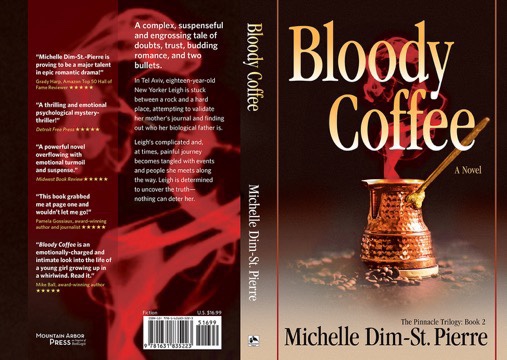
A young woman struggles with the secrets her mother kept and who she really is in author Michelle Dim-St. Pierre’s novel, “Bloody Coffee”.
The Synopsis
Eighteen-year-old Leigh arrives at a Tel Aviv hospital, seeking information about her probable father, Dr. Sloan, who had a cardiac arrest right after they met for the first time. As she stands next to her father’s bed and watches him, her past, present and future collide. Despite the advice of those around her, Leigh decides to face the challenges of the legal system in Israel. She obtains a court order for a paternity test and confronts Sloan.
During her quest to find the truth about her biological father, Leigh is exposed to violent religious intolerance, faces life in a country where church and state are not separate, and meets the man who may be her first true love. Will she change her view of the world she thought she knew? Will she forgive her mother? Will a gunshot change her attitude towards her probable father? And, what will she say to Steve, the only father she ever really had?
The Review
While I myself have not read book 1 in this series, Bloody Coffee is a powerful and emotionally charged read that instantly connects with readers. From the book’s first pages the action and drama takes off, as the protagonist is still reeling from surprise introductions and jarring hospital visits.
The story is a fantastic read overall, but it’s the heavy focus on protagonist Leigh and her interactions with the supporting cast and larger than life setting of Tel Aviv that truly defines the novel. Her emotional journey of discovery about her true parentage and fighting against a system intertwined with religion and uphill battles, (on top of a budding romance to boot), make her a truly one of a kind protagonist readers are invested in immediately.
The Verdict
Overall I love the book. An evenly paced read that constantly maintains the drama and delivers an overall story that readers can relate to with themes that are more relevant than ever before, any newcomers to this series like myself will be on the edge of their seat the entire time. If you haven’t yet be sure to grab your copy of “Bloody Coffee” by Michelle Dim-St. Pierre today!
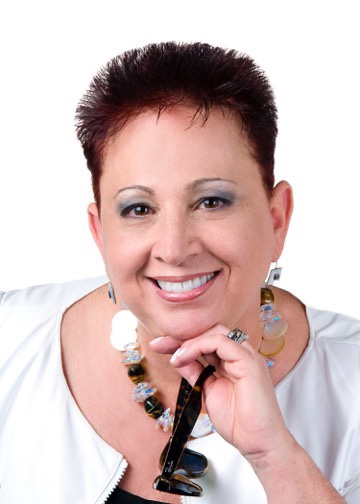
Michelle Dim-St. Pierre was born in Tel-Aviv, Israel, where she spent more than half of her life before relocating to the United States.
She lived through four wars and served in the Israel Defense Forces for two years. Unlike her first year of service in an armored division in the Golan Heights, she served her second year serving in the medical corps where she interacted directly with the injured soldiers of the Peace of Galilee war and their families. This interaction, along with the exposure to the hospital atmosphere, fascinated Michelle and further touched her heart. She went on to get a BS degree in Nursing in Tel-Aviv, and practiced internationally for 32 years in various positions in the surgical field and quickly advanced into health care administration. During her career she worked in the Operating Room, Recovery Room, and CCU—along with many other duties.
Writing was Michelle’s outlet at first, but it soon became her passion. Now, she is a full-time writer. Her international background, along with her military and nursing experience is always at the tip of her pen. Her first novel, Pinnacle Lust, started the Pinnacle trilogy and won the Beach Book Festival in the Romance category, as well as received several honorable mentions in other book contests. It was published to rave reviews.
Michelle is a world traveler who enjoys cooking epicurean food and creating original recipes. She currently splits her time between Florida and Georgia, where she is at work on her next two books.
Jill Sheets hosts Michelle Dim-St. Pierre with a guest post about Michelle’s writing process. Don’t miss the opportunity to learn more about “Bloody Coffee” and this successful author!
Lacey delights her readers with her review of “Bloody Coffee” – this is thrilling novel readers can’t get enough of – find out more about Lacey’s thoughts and Michelle Dim-St. Pierre’s book by stopping at Coffee with Lacey today!
Crystal Otto from WOW! Women on Writing couldn’t put down “Bloody Coffee” by Michelle Dim-St. Pierre and she can’t wait to tell readers of the Muffin about this absolute must read thriller! Today is Michelle’s birthday – will Crystal give her a 5 Star Present? Stop by to find out!
Fellow author Anthony Avina gives a raving review after reading Michelle Dim-St. Pierre’s thrilling mystery “Bloody Coffee” – readers won’t want to miss the opportunity to hear Anthony’s insight into this must read novel!
Michelle Dim-St. Pierre has done it again with another best seller – this time it’s a mystery/thriller called “Bloody Coffee” and Beverley A. Baird can’t wait to tell readers all about it in her review! This is a complex and suspenseful mystery readers will be excited to get their hands on!
Vicki, the Deal Sharing Aunt, shares her thoughts after reading the latest novel by Michelle Dim-St. Pierre. Readers won’t want to miss the opportunity to learn more about “Bloody Coffee”!
Editor and Author Margo Dill couldn’t wait to read “Bloody Coffee” by Michelle Dim-St. Pierre. Stop by her blog today and read her review about this thrilling new release!
“Bloody Coffee” by Michelle Dim-St. Pierre travels all the way to France today as Sreevarsha Sreejith reviews this mystery and shares her thoughts with readers at her book blog!
Nicole Pyles couldn’t put down this 5 star read – let’s hear her review of “Bloody Coffee” by Michelle Dim-St. Pierre. Readers will delight as they put this mystery/thriller on their TBRPile!
Wisconsin business woman and mother, Tara Forst is a friend of WOW! and is excited to talk about her thoughts after reading “Bloody Coffee” by Michelle Dim-St. Pierre. Don’t miss this review and giveaway!
Stop by Cassandra’s Writing World to hear more about Michelle Dim-St. Pierre and her latest best seller “Bloody Coffee” as Cassandra shares her review with readers!
The author spotlight at Choices today is Michelle Dim-St. Pierre with her latest bestselling thriller “Bloody Coffee” – readers won’t want to miss an opportunity to learn more about this fabulous novel!
Author Anthony Avina here. How is everyone today? I’m here to introduce this amazing guest blog post from writer Emmanuel Nataf on the five mistakes authors make on their first time writing books. I hope you guys will enjoy this amazing article and be sure to follow Emmanuel on all of his writing adventures!
Aristotle wrote, “For the things we have to learn before we can do them, we learn by doing them.” In other words, there’s literally no way to learn certain things other than by actually doing them — and writing a book is one such thing.
That being said, aspiring authors can definitely prepare themselves for the process of writing a book by learning from others. With that in mind, here are five common mistakes first-time authors make — and how to avoid them!
If your preferred method of writing is to let your pen lead the way, then you’re probably a big fan of freewriting — which is a great exercise! But, in general, setting out to write a book without creating at least a loose outline tends to result in an ever-growing pile of unfinished manuscripts.
Just like you would consult a map to help you drive from Point A to Point B in unfamiliar territory, creating an outline before you start writing a book can help you get from “Once upon a time” to “Happily ever after.” Simply check your outline any time you feel you’re starting to lose the plot.
Here are three popular outline methods you can try out:
The Beat Sheet — makes note of just the book’s significant beats (important incidents in the story). Check out an example of Toy Story 3 mapped out by just it’s beats here.
The Character Driven Outline — maps out a story through character development.
The Synopsis — a detailed and holistic story outline that touches on all important story aspects: characters, conflicts, themes, etc.
2. Not getting to know their characters well enough
If you were to go on an extended trip with someone you barely know, chances are that conflicts of personality or unexpected challenges would come up. However, if you were to travel at length with someone you know well, you would already have an idea of how to navigate any potential conflicts, and would likely find your journey a bit smoother.
Writing a novel is like going on a trip with your main character(s). You’re going to be spending long hours with this character, exploring unfamiliar territory together, and basically relying on one another for a meaningful outcome. So before you set out on the journey of writing a book, get to know your protagonists as much as possible.
In-depth character development involves more than simply coming up with a memorable character name. A great way to get to know your protagonist a little better is by simply asking “them” questions. I know that might sound silly, but the more you ask, the more you’ll answer! To get started, check out Arthur Aron’s 36 Questions That Lead to Love or The Proust Questionnaire.
3. Not reading at length in their genre
If you’re writing a science fiction novel, chances are you’ve probably read Frankenstein, The Time Machine, and other sci-fi classics. It’s unlikely that someone who’s never read a single fantasy novel will suddenly decide to write a book involving an intricate magical system.
That being said, there’s a difference between reading for pleasure vs. to understand a genre.
If you’re planning to write genre fiction, pick up some classics as well as some newer publications before you begin. Read them with a discerning eye, looking for tropes that pop up again and again, new elements that the books bring to the table, and trends that have come and gone within the genre. This will help you get a sense of readers’ expectations, how to ensure your book stands out, and whether your story feels timely.
4. Not devoting enough time to developmental editing
While every writer knows the importance of meticulous proofreading, it can be tempting to rush the stage that comes before a proofread: developmental editing, which involves fine-tuning the story. It can be difficult for authors to do this themselves, as they’re often too close to the story and might not recognize things like plot holes or unclear worldbuilding. So it’s a good idea to consider working with a professional editor or beta readers.
If you do decide to do your own developmental editing, here are a few questions to keep in mind as you edit:
Language: Are there any words frequently repeated throughout the manuscript? Are there too many instances of passive voice? Are there filler words that can be removed?
Characters: Does the development of the character match the development of the narrative? Are there any instances where a character acts inconsistently?
Structure: Does the sequence of the scenes feel logical? Is the structure easy for readers to follow? Does the structure of the scenes allow the story to develop in the best way? Are there any scenes that aren’t completely necessary to the story?
Plot: Are there any plot holes? Are there any plotlines that are unresolved?
5. Not following the golden rule: show, don’t tell
This is one of those “rules of storytelling” you hear so often, it’s hard not to roll your eyes when it comes up. And while there’s nothing that encourages you to break the rules quite like art, there are certain tricks of the trade that are long-standing for a reason. “Show, don’t tell” is one of them.
But what does it actually mean? Well, showing instead of telling aims to immerse readers in a story by putting us in the character’s shoes. Instead of saying “Joe was shy,” we see Joe off to the side at a group event, nervously playing with his cufflinks, avoiding smalltalk by texting on his phone. As Anton Chekhov put it: “Don’t tell me the moon is shining. Show me the glint of light on broken glass.”
While the best way to learn anything is by making mistakes — and then learning how to fix them — I hope this post will help you sidestep some of the more common ones so that you can focus on simply telling a great story.
Emmanuel Nataf is a founder at Reedsy, a marketplace and set of tools that allows authors and publishers to find top editorial, design and marketing talent. Over 4,000 books have been published using Reedsy’s services.
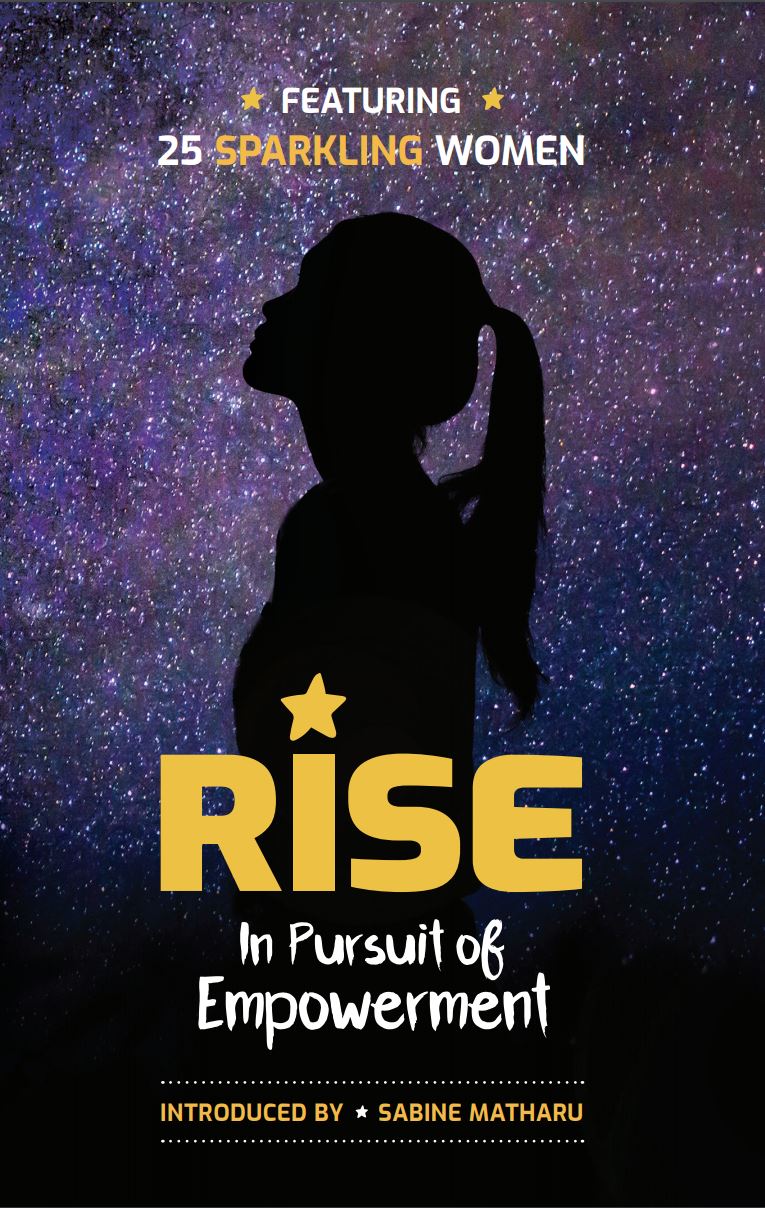
Written for and by inspirational entrepreneurial women whose hidden creativity and business acumen is eager to come out despite facing an array of traumatic experiences, mindset and domestic battles, RISE – In Pursuit of Empowerment, published by Reach for Greatness Ltd., is a beacon of hope for all women. Through the incredible stories of 25 women, you will learn that while obstacles are a given, you also have what it takes to rise above challenges, create a space and niche for yourself and turn impossible experiences into incredible opportunities that are profitable and fulfilling at the same time. RISE – In Pursuit of Empowerment, the first in a series of 4 books, will teach you:- How to tap into your intuition and inner strength to overcome stress, grief and trauma – How to take the challenges you have and turn them into opportunities – How to rise above the noise and come out victorious – Why your inner woman is a force to be reckoned with and – How to overcome substantial obstacles to live a more fulfilling and well-balanced life.
GRAB YOUR COPY FROM
KNOW ABOUT THE AUTHOR
Sabine Matharu is a passionate business start-up and growth strategist, who specializes in helping women find their purpose and monetize their unique skills so that they can build a thriving business.
Her signature program is “The Business Accelerator Mastermind”, that teaches and supports entrepreneurs to implement an easy to follow methodology around how to build a long term profitable business without overwhelm and detours.
She also runs “The Greatness Club”, which complements the work she does in her Mastermind and provides women a platform and springboard for visibility, networking and lead generation. Sabine comes with years of experience as a corporate leadership consultant and has worked with over 1000 people
in senior positions.
She firmly believes that it is possible to reach for the greatness that is within ourselves.
1) Tell us a little bit about yourself. How did you get into writing?
I started writing around the age of 12. I’d been quite illiterate to begin with because I missed out on a lot of schooling. I wrote indecipherable poetry filled with angst—stream-of-consciousness diary entries about wanting to get away from my abusive situation. It wasn’t until I started reading my favorite writers before I’d make any attempt at any real writing. I never wrote full time because I also played the drums and painted. I was most serious about music at the very start.
I fell in love with authors like JD Salinger, Tom Robbins, and Charles Bukowski and buried my nose in everything they wrote. Salinger’s Nine Stories made me want to be a short story writer. Then, I read Bukowski’s Ham on Rye and that truly changed my life forever. He gave me a lot of freedom to be myself as an artist. Then came John Fante, He’s now just about my favorite writer.
2) What inspired you to write your book?
I always knew I’d write this book. I just didn’t know if I’d ever publish it. Not as nonfiction anyway. I’ve always written autobiographical fiction and wrote a lot of dark comedy stories about my family. I figured I’d put them together as a collection or something, but I didn’t think I could string them into one long book. I didn’t believe in myself enough. I’d tried to write whole novels in the past and failed. Eventually, I wanted to try again. And again. And again. It took me almost a decade to finish this book, and as the years went on,Shrapnel took several different directions.
3) What theme or message do you hope readers will take away from your book?
I really don’t have a direct intention for what my readers should or shouldn’t take away. This is the same philosophy I have with putting any of my art out on display. The work has two lives; the one it’s lived with me during its process, then the life it lives once it’s completed. It now lives with the audience and becomes their personal, individual experience. I can only hope people can identify with it on some level.
Interestingly enough, I’d mostly been inspired by fictional stories that were written in a nonfiction, first-person format, such as Alice Walker’s The Color Purple, Pushby Sapphire, Bastard Out of Carolina by Dorothy Alison, and Bee Season by Myla Goldberg. Dorothy Allison’s book is based on her real life and I originally wanted to take this approach, but my partner, Michael Phillips (also a writer), got me to change it to nonfiction. He got me to see how much more powerful it could be. I didn’t think anyone would believe it, and frankly I was fearful of putting my story out there. Now I’m grateful for his encouragement because it’s made me a stronger person.
5) There were quite a few different sides to your story that were heartfelt, emotional and powerful enough to convey your struggle to the reader. In regards to your experience within Scientology, if you could sit down and ask any of the leaders of the group a question or confront them in any way, what would you want to say to them?
I do not think anything I could ask or say to the leader, David Miscavage, that would ultimately change anything. As far as I’m concerned, and as the public continues to hear evidence of the stories regarding his abuse and destruction, he is a megalomaniac with blinders on. He has no conscious when making his ends meet, whatever they may be. Challenging his motives would only make things worse for his enemies and Scientologists alike.
Having once been a devout Scientologist, I’d rather address Scientologists in general and ask that they try to consult their gut. I would tell them that people that speak out against religions that abuse their members are not evil. Cutting off a dialogue with them doesn’t fix the situation. Disconnecting from people labeled “suppressive” only further isolates your mind to stick with like-minded Scientology kin. How will you find understanding with the rest of the world that way? And are you really the one who controls your communication?
6) What social media site has been the most helpful in developing your readership?
Keeping a blog is key, as well as slowly adding to my mailing list. I put out a newsletter a few times a year and am careful not to “spam” my list with too many superfluous email blasts. I make sure I announce my blog posts on all my social media outlets. Facebook and ello are my most successful.
7) What advice would you give to aspiring or just starting authors out there?
You can always get better at writing by reading. Read a lot and a wide range of genre. Don’t give up, but don’t try too hard either. Try not to listen to other people’s opinions—that may possibly kill the best thing about your style and voice. Just be mindful of it anyway, because not everyone knows what they’re talking about. Strunk & White’s Elements of Style is almost the only thing you’ll ever need. But if you like spending $100K on college, do what you like.
The most important piece of advice I have is: despite rejection at seemingly every turn, you can do this. We are all stronger than we think.
On a separate note, if you were to be able to speak to anyone who has questioned the practices of Scientology or has been approached to possibly join the group, what would you want to say to them or what advice would you want to give them based on your own experiences?
I feel I’ve pretty much answered this and choose not to dig a deeper hole. But I would refer current members of Scientologists to Dr. Robert J. Lifton’s Eight Criteria to reevaluate their situation.
8) What does the future hold in store for you? Any new books/projects on the horizon?
Right now I am finishing up new artwork for my big book launch and solo exhibit at the gallery that represents me in Los Angeles, Craig Krull Gallery. The show opens Saturday April 13th, 2019 at 4pm with a reading and a short Q&A. I will then sign books until the artist’s reception that goes from 5-8pm. The show runs until May 25.
I’m also putting the finishing touches on the special lettered edition of Shrapnel in the San Fernando Valley, which is limited to 30 copies only. It is hard-bound in linen and comes with original artwork inside.
I plan to take a short hiatus over the summer and begin working on a book of short stories in the fall. I’d like to publish them with watercolor illustrations by 2020.
Looking for help to take control of your own mental health and seek the help you need? I’m happy to share this amazing link to BetterHelp for advice on where you can turn if you are feeling sad. Just click the link below!
Carol Es is a self-taught artist, writer, and musician born in Los Angeles. Using a wide variety of media, she is known for creating personal narratives that transform a broken history into a positive resolution. Her paintings, drawings, installations, videos, and books have been exhibited nationwide in venues such as Riverside Art Museum, Torrance Art Museum, Lancaster Museum of Art and History, and Craft Contemporary in Los Angeles. Some of her works can be found in the collections at the Getty and the National Museum of Women in the Arts in Washington, DC. Her collaborative film was also featured in the 2015 Jerusalem Biennale.
Awarded many honors, including several grants from the National Arts and Disability Center and California Arts Council, she is a two-time recipient of the ARC Grant from the Durfee Foundation, a Pollock-Krasner Fellowship, and the Wynn Newhouse Award. She has written articles of art critique for the Huffington Post and Coagula Art Journal, as well as having poetry published with small presses. She also received a writing grant from Asylum-Arts—a Global Network for Jewish Culture.
Editor’s Note: This is Anthony Avina, and I wanted to personally welcome author Carol Es to my website. This insightful and honest article was something I wanted to share with you all, and I couldn’t appreciate it more that Carol took the time to write it for us. I hope you guys enjoy it. Now on to Carol’s article…
When people ask what inspires me, I never know what to say. Not because I’m lacking in the inspiration department—it’s just too general a question. “Everything,” I’ll say. If asked what my inspiration might be for something specific, you probably won’t be able to shut me up.
As both a writer and a visual artist, my work is predominantly autobiographical. I love anything with a narrative. Stories move me to create, they draw me in and take me on an escape, like a drug. When combining writing with art together, all the better. I have made many Artist’s books that mish-mash art and words, a genre unto itself, and it’s mostly what I’m used to working in.
However, I’ve been writing short stories and poetry since I was a kid. I wrote a screenplay when I was 17-18 that I never finished. (It was terrible.) Throughout my 20s, I made several attempts at writing novels, but had never been able to get more than 50 pages in. Most of the fiction I wrote was autobiographical. I’ve been inspired by authors Charles Bukowski since I was a young teenager, and later John Fante. It’s not that I wanted to write in either of their styles, but I wanted to be able to evoke a similar feeling from my writing.
Still working on that.
It was nerve-wracking writing in nonfiction, though I think it drove me to finish an entire book. At first, I didn’t write about myself much at all. I found the stories of people much more interesting, and so, I’ve written Shrapnel in the San Fernando Valley several times over. It was hard to come to grips with, but a memoir is supposed to be self-indulgent. It just feels uncomfortable. I had to carve out an honest story and reveal my raw self to the world. It’s risky business.
Along the way, I probably couldn’t have finished it without bits of inspiration. My partner, Michael Phillips, also a writer pushed me and supported me immensely. I was also absolutely dazzled after seeing Jonathan’s Caouette’s documentary art film, Tarnation.
Caouette took 20 years of home movies, snapshots, and answering machine messages, stuck them into a blender and came out with a unique examination of his early life—his tumultuous childhood with his mentally ill mother. How could I not identify with that? My mother was bipolar.
This incredibly brave movie deeply inspired me to stop apologizing for my own dysfunctional family and embrace them as my muse. I also began to see the strength in vulnerability instead of viewing it as a weakness.
But I had been wanting to write this book in one version or another for a long time. At the start of it, I began to think back some 20 years when I lived off of Laurel Canyon—a winding road through the Santa Monica Mountains that connects the southeast San Fernando Valley to West Hollywood in Los Angeles. It was the most inspired time and place for me.
A few people in the apartment building I lived in donated books in the laundry room and we’d all give and take them. Once I found a big hardcover book that got me really into my Jewish genealogy (Finding our Fathers by Dan Rottenberg), which sent me on a wild and freaky ride to nowhere. Or maybe it sent me to a sad wasteland. I never quite got to the bottom of my family search, but I got a lot of stories from all the digging I did. Shrapnel in the San Fernando Valley actually began with my parents’ backstories, but most of it wound up on the cutting room floor as they say.
Once I’d been working on the book for a couple of years, I found even more inspiration in Myla Goldberg’s Bee Season. I’d been living in San Pedro and picked it up at the free clinic, much in the same way I did Finding our Fathers.
Though Bee Season isn’t a work of nonfiction, it changed the way I saw memoir writing. It’s written from a young girl’s point of view looking back as an adult woman. She recalls the span of time in her life when she was able to win over her father’s love by excelling in national spelling competitions. Though I’m no good at spelling, I really identified with the character who was the youngest in a Jewish family of just four. She’s also been severely overshadowed by her older brother. More than her thoughts and desires to be loved, it was the way she was able to bring in each of her family members’ backstory so seamlessly. I loved that and wished I could have done that. Perhaps in the future.
I get wildly excited and inspired by other visual artists too. I’ll fall in love with painters, i.e.: Amy Sillman, or Lisa Sanditz. I’ll want their work to influence mine. Inevitably, it is nearly impossible to duplicate the same feelings or techniques because everyone has there own thing. My work always winds up looking like all my other paintings. It’s frustrating because I often like other artist’s work much more than my own. That happens. That’s life, I guess. We aspire to be better and are inspired by the beauty that surrounds us and keep on going.
Looking to find counseling to help you take control of your mental health journey? Check out BetterHelp to find the online counseling that will best help you.
Author Bio
Carol Es
Carol Es is a self-taught artist, writer, and musician born in Los Angeles. Using a wide variety of media, she is known for creating personal narratives that transform a broken history into a positive resolution. Her paintings, drawings, installations, videos, and books have been exhibited nationwide in venues such as Riverside Art Museum, Torrance Art Museum, Lancaster Museum of Art and History, and Craft Contemporary in Los Angeles. Some of her works can be found in the collections at the Getty and the National Museum of Women in the Arts in Washington, DC. Her collaborative film was also featured in the 2015 Jerusalem Biennale.
Awarded many honors, including several grants from the National Arts and Disability Center and California Arts Council, she is a two-time recipient of the ARC Grant from the Durfee Foundation, a Pollock-Krasner Fellowship, and the Wynn Newhouse Award. She has written articles of art critique for the Huffington Post and Coagula Art Journal, as well as having poetry published with small presses. She also received a writing grant from Asylum-Arts—a Global Network for Jewish Culture.
I received a free copy of this book in exchange for a fair and honest review. All opinions are my own.
A journey of self discovery leads to fascinating discoveries in author Neil McKee’s “Finding Myself in Borneo: Sojourns in Sabah. Here is the synopsis.
The Synopsis
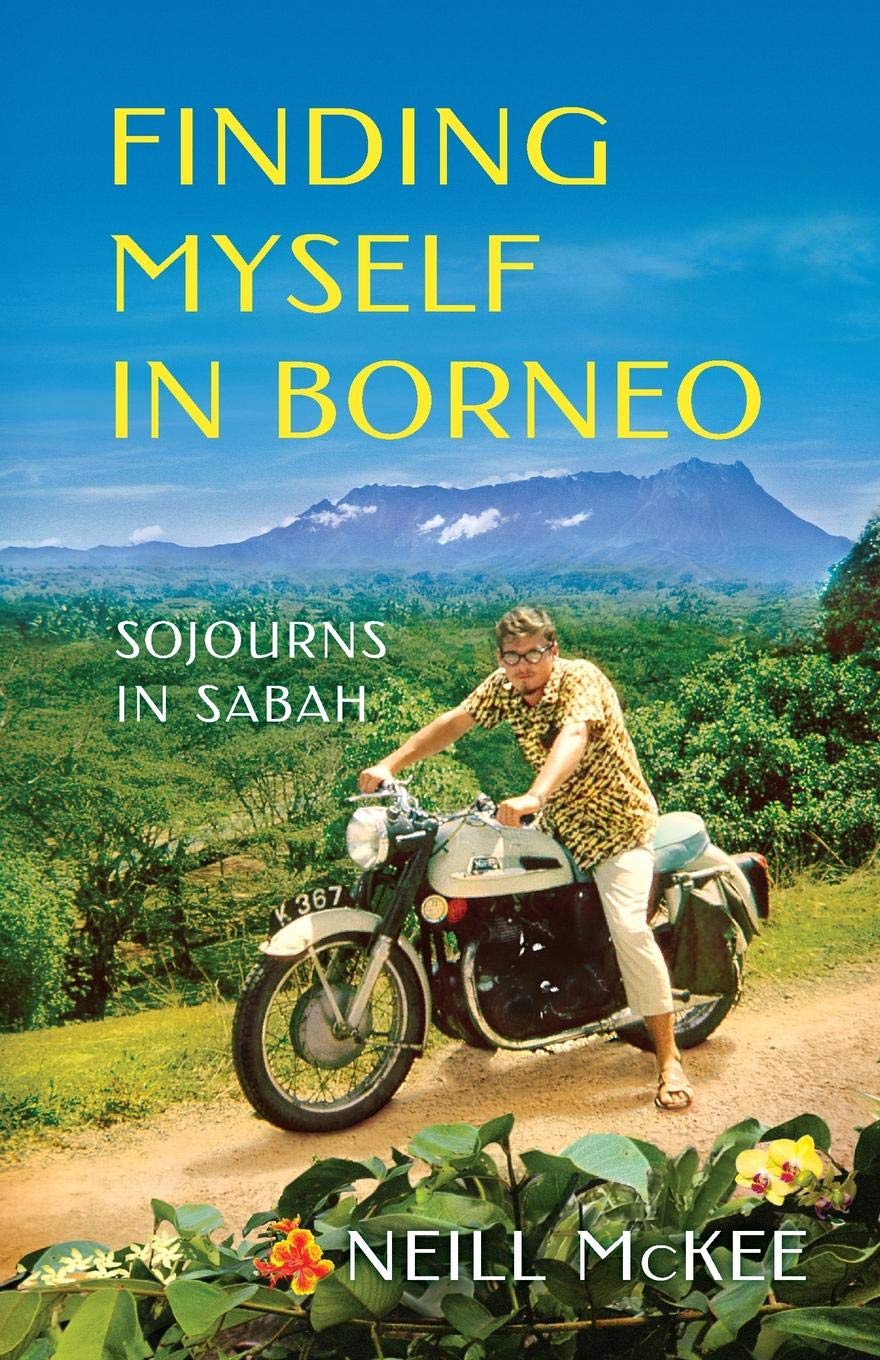
Finding Myself in Borneo is an honest and buoyant chronicle of a young Canadian man’s adventures during 1968-70, while teaching secondary school as a CUSO volunteer in Sabah, Malaysia (North Borneo). Travel with Neill McKee on his unique journey through vibrant Asian cultures as he learns the craft of teaching, the Malay language and local customs, and gains many friends in his small community. He climbs the highest peak in Southeast Asia–Mount Kinabalu, has a love affair, and navigates Borneo’s backwaters to make his first of many documentary films. McKee travels by freighter to Indonesia, where he discovers the scars of that country’s recent genocide, a contrast to his hilarious motorcycle journeys in Sabah with his American Peace Corps buddy. They make a hallucinogenic discovery–North Borneo is, indeed, J. R. R. Tolkien’s famed Middle-Earth of The Lord of the Rings! The enterprising duo establish the North Borneo Frodo Society, an organization Tolkien joins.
McKee’s second Sabah sojourn and other return trips offer the reader the opportunity to match the early anecdotes to what in fact happened to the land and people who touched his life, and he theirs.
The Review
What a fantastic read! The honest, personal and intellectual journey of a young man in the late 60’s, early 70’s leaving behind his life in Canada to travel to a lifelong dream location of Borneo was so unique and wonderful to read. The author does a marvelous job of painting a picture of the experience, from the first weeks and the personal experiences that came with it, to the students and teachers who he got to know in his teaching role within the country.
Political upheavals, spiritual melting pots and cultural barriers all play a central role in both the author’s life and the novel. Even book lovers and fantasy fans will love the psychedelic discovery of Tolkien’s real world Middle Earth. Rarely do fans of the genre get to experience moments like that, making this memoir feel personal to both the author and reader.
The Verdict
This is a fantastic read everyone can enjoy. Filled with a wonderful blend of history, various cultures and languages and a great story of self discovery, the author has created a reading experience like no other. If you haven’t yet be sure to get your copy of Finding Myself in Borneo by Neil McKee today!
Finding Myself in Borneo is an honest and buoyant chronicle of a young Canadian man’s adventures during 1968-70, while teaching secondary school as a CUSO volunteer in Sabah, Malaysia (North Borneo). Travel with Neill McKee on his unique journey through vibrant Asian cultures as he learns the craft of teaching, the Malay language and local customs, and gains many friends in his small community. He climbs the highest peak in Southeast Asia–Mount Kinabalu, has a love affair, and navigates Borneo’s backwaters to make his first of many documentary films. McKee travels by freighter to Indonesia, where he discovers the scars of that country’s recent genocide, a contrast to his hilarious motorcycle journeys in Sabah with his American Peace Corps buddy. They make a hallucinogenic discovery–North Borneo is, indeed, J. R. R. Tolkien’s famed Middle-Earth of The Lord of the Rings! The enterprising duo establish the North Borneo Frodo Society, an organization Tolkien joins.
McKee’s second Sabah sojourn and other return trips offer the reader the opportunity to match the early anecdotes to what in fact happened to the land and people who touched his life, and he theirs.
About the Author:
Neill McKee is a creative nonfiction writer based in Albuquerque, New Mexico. McKee, who holds a B.A. Degree from the University of Calgary and a Masters in Communication from Florida State University, lived and worked internationally for 45 years and became an expert in communication for social change. He directed and produced of a number of award-winning documentary films/videos and multi-media initiatives and authored numerous articles and books on development communication. During his international career, McKee worked for Canadian University Service Overseas (CUSO), the International Development Ressearch Centre (IDRC), Canada, UNICEF, Johns Hopkins University, Baltimore; Academy for Educational Development, Washington, D.C. and FHI 360, Washington, D.C. He worked and lived in Malaysia, Bangladesh, Kenya, Uganda and Russia for a total of 18 years and traveled to over 80 countries on short-term assignments.
Finding Myself in Borneo: Sojourns in Sabah is Neill’s first Memoir.
–Neill McKee launches his tour of “Finding Myself in Borneo; Sojourns in Sabah” with an interview and giveaway at the Muffin!
Tuesday, January 29th @ Selling Books
Learn more about Neill McKee as he is interviewed by Cathy Stucker at Selling Books. You won’t want to miss this insightful interview about McKee and his memoir “Finding Myself in Borneo; Sojourns in Sabah”. https://www.sellingbooks.com/
Wednesday, January 30th @ Bring on Lemons with Crystal Otto
Crystal Otto couldn’t wait to get her hands on Neill McKee’s memoir about his travels and finding himself! This busy farmer seldom leaves the farm and enjoyed every moment she experienced reading “Finding Myself in Borneo; Sojourns in Sabah”. Find out more in her book review at Bring on Lemons today! http://bringonlemons.blogspot.com/
Thursday, January 31st @ Breakeven Books
Don’t miss a very honest book review about Neill McKee’s “Finding Myself in Borneo; Sojourns in Sabah” https://breakevenbooks.com/
Monday, February 4th @ Author Anthony Avina
Author Anthony Avina reads and reviews “Finding Myself in Borneo; Sojourns in Sabah” – by Neill McKee. Readers won’t want to miss this adventurous and soul searching memoir! https://atomic-temporary-124910902.wpcomstaging.com/
Wednesday, February 6th @ The World of My Imagination
Friday, February 8th @ Choices with Madeline Sharples
Fellow memoirist Madeline Sharples hosts Neill McKee today as he pens today’s guest post titled: Living in and learning about a very different culture”. Find out more about McKee and his memoir “Finding Myself in Borneo; Sojourns in Sabah”. http://madelinesharples.com/
Monday, February 11th @ Book Santa Fe with Elizabeth Hansen
Young reader and reviewer Elizabeth Hansen shares her thoughts after reading about Neill McKee’s memoir “Finding Myself in Borneo; Sojourns in Sabah”. http://www.booksantafe.info/booksantafeblog
Wednesday, February 13th @ To Write or Not to Write with Sreevarsha
Shreevarsha reviews the insightful memoir “Finding Myself in Borneo; Sojourns in Sabah” by Neill McKee. Don’t miss the opportunity to learn more about McKee’s journey. http://sreevarshasreejith.blogspot.co.at/
Friday, February 15th @ Bring on Lemons with Tricia Schott Baldwin
Avid reader, constant dreamer, and occasional traveler Tricia Schott Baldwin reviews “Finding Myself in Borneo; Sojourns in Sabah” by Neill McKee. Tricia shares her thoughts with readers at Bring on Lemons – will this be a lemon or sweet sweet lemonade? http://bringonlemons.blogspot.com/
Saturday, February 16th @ World of My Imagination
Nicole discusses “3 Things on a Saturday” with Neill McKee. Learn more about McKee and his memoir “Finding Myself in Borneo; Sojourns in Sabah”.
Tuesday, February 19th @ Jarry Waxler’s Memoir Revolution
Memoir expert and educator Jerry Waxler pens his review of “Finding Myself in Borneo; Sojourns in Sabah” by Neill McKee. Readers and memoirists alike won’t want to miss this insightful post and review by Waxler. https://memorywritersnetwork.com/blog/
Thursday, March 7th @ Kathleen Pooler
Neill McKee finds himself penning today’s guest post “Becoming a memoir writer after retiring from another career.” at Kathleen Pooler’s Memoir Writer’s Journey – don’t miss the opportunity to learn more about McKee and his exciting tale “Finding Myself in Borneo; Sojourns in Sabah” https://krpooler.com/
Congratulations to author Richard J. O’Brien, on the release of his latest novel, To Dream the Blackbane!
To Dream the Blackbane
Publication Date: December 29th, 2018
Genre: Fantasy/ Urban Fantasy
A cosmic event in 2015 fused Earth with the faerie realm. Scientists referred to the event as The Anomaly. A byproduct of The Anomaly was the advent of hybrid beings—people who became mixed with whatever animal or object was closest to them the moment the event occurred. Humans, or pedigrees, soon relegated fairy refugees and hybrids into ghetto zones in large cities.
Seventy years later, Wolfgang Rex, a second-generation hybrid—part human, part Rhodesian Ridgeback—is a retired police detective who runs a private investigation business in Chicago’s Southside. It’s a one-hybrid show; though Rex couldn’t survive without his assistant, the faerie Sally Sandweb.
One night, two vampires visit Rex and offer him a substantial reward for the recovery of a stolen scroll. Later that same evening, Charlotte Sweeney-Jarhadill, a pedigree woman from Louisiana, visits Rex and hires him to exorcize the headless ghost of a Confederate soldier from her home.
To complicate matters, the private detective ends up falling for Charlotte. Meanwhile, the vampires demand results in the search for the missing scroll. When Rex’s assistant Sally goes missing, he must stay alive long enough to find her. Charlotte and the vampires, however, have other plans for Rex.
My name is Wolfgang Rex. I am a private detective. Once upon a time I’d been a police lieutenant. After twenty-five years of service to the city of Chicago, I retired in 2063 and opened up Chi-town Detectives, a private investigation firm.
I’m what they call in the medical books a second-generation Anomalous cross-breed. My father was a cop like me. One night he was out walking his dog, a Rhodesian Ridgeback named Rex. My mother hated that dog. After she died I learned that she had always wished that Rex would meet some unfortunate demise. She got her wish on the night of The Anomaly. My father came home from his walk without the dog—in a manner of speaking. For lack of a better term, he and the dog had fused. And the result was a humanoid—with a hairy body, a tail, and the head of his old dog Rex. My mother was horrified, but my parents were both Catholic. So they stuck it out. I was born in the tenth year of The Anomaly. When I was a kid, my mother used to read me fairy tales. She died before I finished high school. So it goes, like Kurt Vonnegut once wrote. I turned out to be the spitting image of my father post-Anomaly. I lucked out with being born without a tail. My father had somehow managed to keep his human vocal cords. My face was less hairy than his, but our snouts were nearly identical.
Learning to speak with a dog’s mouth was tricky when I was coming up, but I eventually got the hang of it. And thank Christ I’d been born with opposable thumbs; otherwise, I would’ve starved to death a long time ago. Still, given that many people melded with inanimate objects—much like that poor bastard who became a stone gargoyle—I constantly considered myself lucky. My father cursed his lot for the rest of his life. Some people, like my old man, never learned to adjust.
Richard J. O’Brien is a graduate of the Fairleigh Dickinson University MFA in Creative Writing Program. Richard’s novels include Under the Bronze Moon, Infestation, and The Garden of Fragile Things. His short stories have appeared in The Del Sol Review, Duende, Pulp Literature, The Dr. T.J. Eckleburg Review, Weirdbook, and other magazines. Richard lives in New Jersey, where he teaches at Rowan College at Gloucester County and Stockton University.
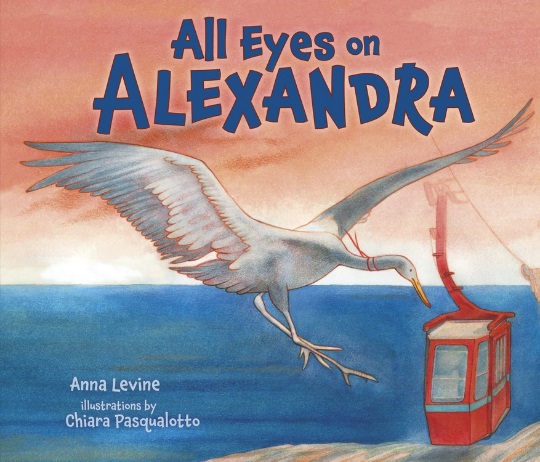
This is Anthony Avina speaking. I am honored today to share with you all this exclusive guest blog post from the wonderful and talented author Anna Levine. Having been promoting her latest children’s book All Eyes on Alexandra, Anna is here to talk about how she uses fiction to write a non-fiction book. I hope you all will enjoy and be sure to look at the end of this post for all of Anna’s info.
Last year I was invited to speak to a group of children’s book writers who were touring Israel. I have a series of archaeology-themed picture books about a young girl who dreams of being an archaeologist. Since the writers were going to experience a dig, they invited me along.
Dressed in shorts, caps and running shoes, I looked at the group of authors and realized that archaeology is not only about digging up the past, but becoming the adventurous child you once were. These writers in their thirties, forties and some in their eighties had become younger versions of themselves. And once we’d entered the cave, had picks, trowels brushes and pails, the hunt for treasures began. The joy at discovering history could be heard in their shouts as they uncovered ancient shards. While Jodie, the protagonist of my archaeological series (Jodie’s Hanukkah Dig), is a work of fiction, all the details about being on an archeological dig are factual.
In my latest picture book, I move from the treasures hidden beneath to the wonders above us. In this part of my world, over five hundred millions birds fly across the skies twice a year on their way to and from Africa. The sight of these migrating birds is magical. Wanting to share this environmental wonder with young readers, I chose Alexandra, a young female bird with an adventurous spirit. I visited the Bird Observatory and spoke with the researches who helped me track the birds’ migration route. I drove up to the Hula Valley Reserve and observed the birds at sunrise and sunset, their busiest times.
As a novice writer I was told ‘write what you know,’ I’ve adapted the old adage to, ‘write what you wish to discover.’ Non-fiction and fiction can complement each other well as along as the facts are correct and the characters are emotionally endearing.
Book summary
In All Eyes on Alexandra, young Alexandra Crane is terrible at following her family in their flying Vee. She can’t help it that the world is so full of interesting distracting sights! When it’s time for the Cranes to migrate to Israel’s Hula Valley for the winter, Alexandra is excited but her family is worried. Will Alexandra stay with the group, and what happens if a dangerous situation should arise? Might Alexandra—and the rest of the flock—discover that a bad follower can sometimes make a great leader?
Based on the true story of Israel’s annual crane migration.
Anna Levine is an award-winning children’s book author. Like Alexandra Crane, the character in her latest picture book, she loves to explore new worlds. Born in Canada, Anna has lived in the US and Europe. She now lives in Israel, where she writes and teaches.
Chiara Pasqualotto was born in Padua, in northern Italy, currently teaches illustration and drawing classes to children and adults, in particular in Padua during the summer at the Scuola Internazionale di Comics and in Rome. Since 2008 she’s been living in Rome and working with illustration professionally: her first picture book, Mine, All Mine! was published in 2009 by Boxer Books (UK), since then she published with Oxford University Press, Giunti, Terranuova and some American publishers (Paraclete Press, Tyndale, LearningAZ, Kar-Ben Publisher).
What goes better in the morning than a muffin? Make sure you visit WOW’s blog today and read an interview with the author and enter for a chance to win a copy of the book All Eyes on Alexandra.











 To Dream the Blackbane