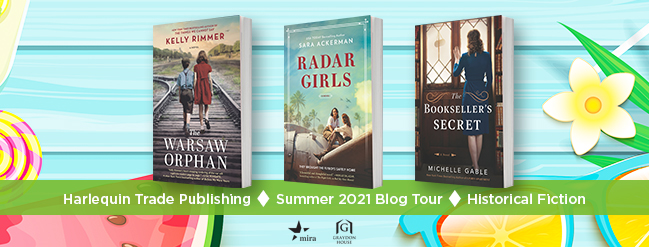
I received a free copy of this book in exchange for a fair and honest review. All opinions are my own.
A man must deliver a herd of goats across the ocean to survivors of the atomic bombs in Japan after WWII in author Shirley Miller Kamada’s “Zachary: A Seagoing Cowboy.”
Advertisements
The Synopsis
Zachary Whitlock knows sheep. He knows farming and knows what it’s like to have his best friend forced into an internment camp for Japanese Americans. What he does not know much about is goats and traveling by sea on cargo ships, yet he makes a decision to go with a group of volunteers to Japan to help deliver a herd of more than two hundred goats, many of which are pregnant, to survivors of the U.S. bombing of Hiroshima and Nagasaki.
The Review
This was such a powerful and unique coming-of-age story. Exploring a rarely looked at point in history, the book’s narrative follows a young man who witnessed a lot growing up, from the start of WWII to his good friends and neighbors being imprisoned in an internment camp after Pearl Harbor, and finally the aftermath of the two atomic bombs that destroyed parts of Japan. The author expertly weaves descriptive imagery to perfectly showcase the harsh sea voyage and the care these goats receive, all while exploring the more emotional core of the historical events surrounding the protagonist.
The story’s larger themes came to life in a fast-paced narrative that captivated the reader. The way the story explores the harsh realities of war, from internment camps and the loss so many Americans felt after WWII, fueling these actions, to the horrors of the bombs on the people of Japan, this story really gave YA readers a lot to discuss. The examination of faith and how it shapes our approach to situations where we want to do the right thing, and, of course, the higher cost of nuclear war, kept the reader invested as the narrative itself became more personal and emotionally driven.
The Verdict
Engaging, thoughtfully written, and memorable, author Shirley Miller Kamada’s “Zachary: A Seagoing Cowboy” is a must-read coming-of-age YA historical fiction read. The balance the author found in storytelling, bouncing back and forth between the protagonist’s life on his family farm and the trip to Japan, and the artful, majestic imagery the author’s detailed writing brought to life, will keep readers invested in this fantastic story. If you haven’t yet, be sure to grab your copy today!
Rating: 10/10
Advertisements
About the Author
Shirley Miller Kamada grew up on a farm in northeastern Colorado. She has been an educator in Oregon, Idaho, and Washington, a bookstore-espresso café owner in Centralia, Washington, and director of a learning center in Olympia, Washington. Her much-loved first novel, NO QUIET WATER, was a Kirkus recommended title and a finalist for several awards. When not writing, she enjoys casting a fly rod, particularly from the dock at her home on Moses Lake in Central Washington, which she shares with her husband and two spoiled pups.
Join us at the Muffin as we celebrate the launch of Zachary: A Seagoing Cowboy by Shirley Miller Kamada. We interview the author and give you a chance to win a copy of the book.
Stop by Chelsie’s blog for Shirley Miller Kamada’s guest post on learning that her grandfather helped build the internment camp at Minidoka in southern Idaho.
I received a free copy of this book in exchange for a fair and honest review. All opinions are my own.
As two women face oppression from an invading army during WWII, a daughter years later attempts to uncover her mother’s heroism, only to discover a shocking truth in author Marina Osipova’s “Too Many Wolves in the Local Woods.”
Advertisements
The Synopsis
Two unlikely women with a shared history, two different turns of fate.
The end of the 1930s. The specter of twisted paranoia of Stalin’s unrelenting dictatorship continues to tighten over the Soviet Union. NKVD, the country’s secret police, coerces University graduate Ursula Kriegshammer, a Soviet Volga German with special skills, into serving this regime.
Natasha Ivanova, a worker at a metal plant in Vitebsk, a city at the western border of the Soviet Union, still can’t recover from the betrayal of the man she loves.
When in 1941 the German Army invaded Byelorussia, both women seem to be helping the cause to fight the ruthless occupiers. But when their paths cross, tragedy strikes, and one must carry the burden of guilt. Will she ever find peace with herself and the way out of the trap fate prepared for her?
Years later, the daughter of one of them launches on a quest to uncover the heroic nature of her mother’s role in WWII, only to discover a heart-shattering revelation of her own parentage.
The Review
The attention to detail in this book was incredible. The visceral imagery in the author’s writing style captured the haunting, cold, and chilling nature of not only WWII, but the Stalin-era Soviet Union as well. The balance the author found in character development and history was excellent, and the way the author captured the humanity behind these characters and explored how the way of life under Stalin’s rule impacted how they evolved and grew over time was fantastic.
The duality of Ursula, one of the protagonists, as she struggles with her ties to Germany and Russia, especially regarding her duties, was compelling to get lost in as a reader. The slow build-up that turns into a sudden and thrilling WWII era plot and the honest depictions of the Nazi occupation and Stalinist Russia was truly haunting. The complex romance and family drama the author infuses into this narrative will elevate the story tenfold and leave readers invested in an emotional wellspring that will endure long past the book’s end.
The Verdict
Author Marina Osipova’s “Too Many Wolves in the Local Woods” is a must-read historical fiction thriller that is visceral, thrilling, and engaging. The natural infusion of romance and drama into this WWII story and the chilling and introspective look into how patriotism can be used against people to the point of corrupting their principles and turning people against one another kept readers engaged throughout this entire novel. If you haven’t yet, be sure to grab your copy today!
Rating: 10/10
Advertisements
About the Author
Marina Osipova was born in East Germany into a military family and grew up in Russia, where she graduated from the Moscow State Institute of History and Archives. When she was five, she decided she wanted to speak German and, years later, she earned a diploma as a German language translator from the Moscow State Institute of Foreign Languages. In Russia, she worked first in a scientific-technical institute as a translator, then in a Government Ministry in the office of international relations, later for some Austrian firms. For many years, she lived in New York, working in a law firm, and then in Austria for several years. In the spring of 2022, after spending ten months in Russia, some unfortunate world events brought her back to the United States.
A long-standing member of the Historical Novel Society, she is dedicated to writing historical fiction, especially related to WWII. Her books garnered numerous literary awards, including a 1st Place WINNER of the 2021 Hemingway Book Awards novel competition for 20th Century Wartime Fiction (a division of the Chanticleer International Book Awards). At some point or another, all her books hit the Amazon Top 100 lists in Historical Russian Fiction and Historical German Fiction and How Dare the Birds Sing even #1 or #2 in War Fiction in Canada, the UK, and Australia.
Her readers praise her books for “emotional realism,” for “taking on a subject that few authors have touched,” for “writing with heart and compassion while not holding back from hard cold realities of war,” for “giving an authentic and in-depth look at a culture that tends to baffle westerners.”
To learn more about Marina Osipova and her captivating books, visit her website at marina-osipova.com
1) Tell us a little bit about yourself. How did you get into writing?
The idea of becoming a writer never entered my mind until I moved to the United States from Russia. With my little English, I, inevitably, should have set my mind on studying the language seriously. I signed up for an ESL course in Manhattan, NY. To evaluate the level of my knowledge, the teacher asked me to write a quick test. “My name is . . . I was born in . . . I came from . . . Something like that,” she said. Boring, I thought. Let me write a story, I decided, and I did. It was about a young man in the subway car, who took a sit facing me. He blew his nose into his blue and white floral kerchief, scrutinized the result, then wound the kerchief around his head covered with dark, long, braided hair.
Next time I had the class, during the break, I presented my very first literary opus to the teacher. While she was reading it, I watched her eyebrows shooting up several times. Returning the paper with my scribbles, she said, “You should publish it.” Years later, after two manuscripts, one of 600 pages and the other of 260 (eventually, I buried them somewhere in the bottomless deposits of my PC) the idea of writing a story, which would be set up during WWII came to my head. Since then, I have published seven books, all WWII historical fiction, except for the last one, which is a bit different.
Advertisements
2) What inspired you to write your book?
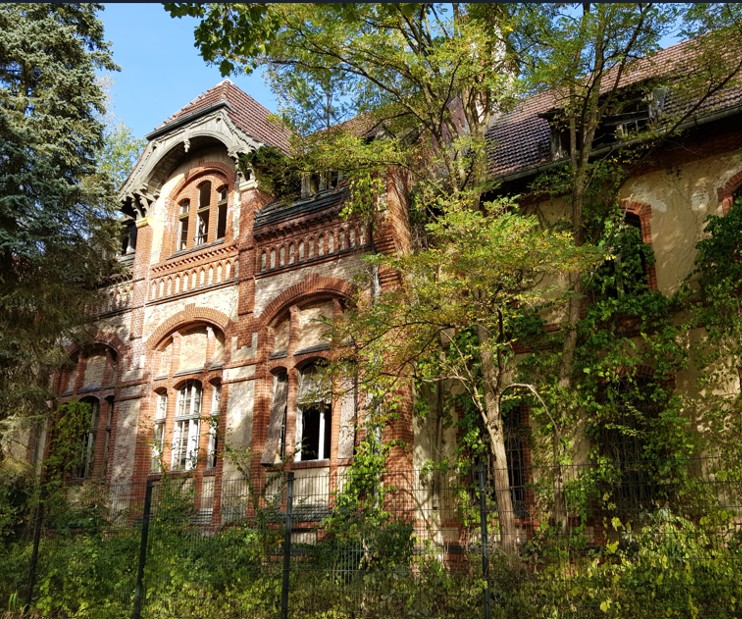
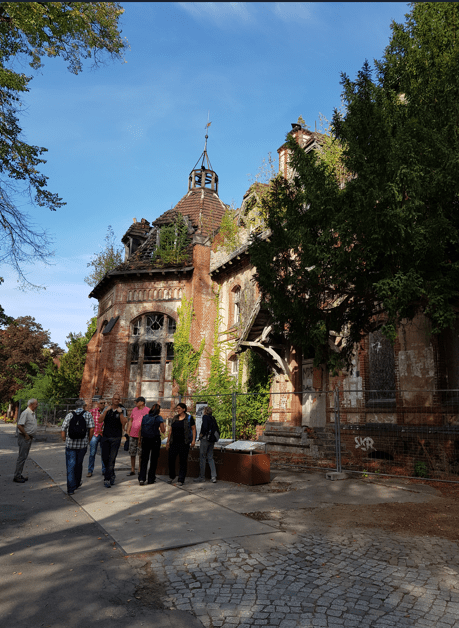
My own life. I was born in East Germany, in Beelitz-Heilstätten, a Soviet military hospital, and since I can remember myself, I wanted to visit the place. My desire came true in 2018. The history of the place is so rich and ominous, I couldn’t help but to tell its story to my readers.
3) What theme or message do you hope readers will take away from your book?
WWI, WWII . . . Other wars . . . Before and after . . . Wars wasted millions of innocent lives. What for? The territories? Subsoils with deposits of minerals? Somebody’s (or of a group of individuals) ambitions? Lust for power and recognition? Why do some people become murderers? Isn’t it all relevant today?
I hope the readers of my book will close the last page and ask themselves, “Why?” and “Should we remember?”
“The one who doesn’t remember history is bound to live through it again.” — George Santayana.
4) What drew you into this particular genre?
All my published books are historical fiction. This one, to some extent, is too. To integrate my personal life experiences and biographical details, I resolved to turn to the elements of time-slip, thriller, and psychological drama so to broaden my readership, to make my book more appealing to those who are interested in these other genres.
Advertisements
5) If you could sit down with any character in your book, what would you ask them and why?
Writing WWII historical fiction, I subconsciously wanted to come face to face with Adolf Hitler—his inescapable presence is obvious in all my books. I made this wish come true in this story. If you read it, you’ll feel my feelings and disgust at this evil of the 20th century. Unfortunately, his insidious influence on some minds expands—a sickening trend tendency!
6) What social media site has been the most helpful in developing your readership?
Bloggers like you, Anthony, and FB helped me to find most of the like-minded people, writers and readers.
7) What advice would you give to aspiring or just starting authors out there?
Who was it who said that everyone has a story to tell? If you feel you can’t continue living without telling your story/stories to the world or just to yourself, don’t suppress this inner push – write and see if it makes you happy. Don’t think about fame and money. Only a bunch of authors live on royalties. Do it for your inner peace and excitement. Trust yourself. Write only if you feel you’ll “drown” if you don’t. Write from your soul. If the process, however difficult, brings you joy, it’s a sign you are a writer.
8) What does the future hold in store for you? Any new books/projects on the horizon?
My problem is that too many enticing stories live in my head, waiting to be spilled into my PC screen. Time will show which one will win next time.
Advertisements
About the author
Marina Osipova was born in East Germany into a military family and grew up in Russia, where she graduated from the Moscow State Institute of History and Archives. When she was five, she decided she wants to speak German and, years later, she earned a diploma as a German language translator from the Moscow State Institute of Foreign Languages. In Russia, she worked first in a scientific-technical institute as a translator, then in a Government Ministry in the office of international relations, later for some Austrian firms. For many years, she lived in New York, working in a law firm, and then in Austria for several years. In the spring of 2022, after spending ten months in Russia, some unfortunate world events brought her back to the United States.
A long-standing member of the Historical Novel Society, she is dedicated to writing historical fiction, especially related to WWII. Her books garnered numerous literary awards, including a 1st Place WINNER of the 2021 Hemingway Book Awards novel competition for 20th Century Wartime Fiction (a division of the Chanticleer International Book Awards). At some point or another, all her books hit the Amazon Top 100 lists in Historical Russian Fiction and Historical German Fiction and even #1 or #2 in War Fiction in Canada, the UK, and Australia.
Her readers praise her books for emotional realism, for taking on a subject few authors have touched, for writing with heart and compassion while not holding back from hard cold realities of war, for giving an authentic and in-depth look at a culture that tends to baffle westerners.
Osipova is passionately dedicated to the stories she writes, but when away from her desk and laptop, she, even if for one time, knows how it feels to fly with a helicopter over the Alaskan glaciers, to jump with a parachute upstate NY, to dive to the bottom of the Black Sea with a scuba gear, to fish on a little boat in the Gulf of Siam and catch a real shark however small. She brags about mounting a pensive elephant in Thailand, or an apathetic camel in Gran Canaria. She will never forget her experience riding a retired Russian circus mare who tried to throw her off, which she found much scarier than riding a Suzuki Hayabusa motorcycle at a speed of up to 260 km/h (about 162 mph). She experienced a thrill while zip lining through boreal forests at a dizzying height. She will never forget that feeling of humble ecstasy while performing on stage of an off-off (but close) Broadway; the most profound excitement she experienced as Marquerite in Camino Real by Tennessee Williams and Queen Elizabeth in The Dark Lady of the Sonnets by George Bernard Shaw. What other dreams does she have? Well . . . to find herself inside a Cheops pyramid (not like a mummy) and write all the stories that populate her head. The To-Write-List is big and growing.
I received a free copy of this book in exchange for a fair and honest review. All opinions are my own.
Two people affected by the horrors of WWII must return to a post-Soviet Union Russia and see if they can find peace from the past in author Marina Osipova’s “The Drau River Flows To Siberia: The Victims of Victory”.
The Synopsis
February 4–11, 1945. Yalta, a resort town on the Crimean Peninsula, Soviet Union. The Big Three are posing for a camera. Franklin D. Roosevelt, Winston Churchill, and Joseph Stalin. All smiling. Stalin, his head is half a turn away from the other two. A shrewd smirk is hiding behind his walrus mustache. He seems to be pleased. Why wouldn’t he be? The Big Three signed the agreement that will shape the fate of Europe and . . .
In 1941, Anna is sixteen, almost an adult yet still a child, craving independence and keen to become an operetta actress. Her rosy aspirations are disrupted by the war. When Krasnodar is taken by the Wehrmacht, she is one of the populace who are ordered to repair roads for the occupants’ trucks and cars and, in fall, to toil in the fields for the sake of sending the harvest to the enemy’s land. A dire event coerces her to go to Germany where she is auctioned as a slave worker.
Born in Berlin into an émigré Cossack family, young Zakhary is more interested in books and archeology than in the war that is raging through Europe, even less in the cause of his parents and their friends, which is to overthrow the Bolshevik regime in the Soviet Union and revert to Imperial Russia. He just doesn’t want to be a part of it. That is, until he finds himself among the Cossacks fighting alongside the Germans against the Allies.
In Italy, he meets Marishka, a young woman of Cossack heritage who fled the Soviet Union with other anti-Soviet Cossacks and departing German troops under the push of the Red Army. They fall in love and marry. And then, on June 1, 1945, Lienz happened.
After the war, a ghastly fate propels each of them to the merciless land where skies are leaden gray, frosts plunge below -60°C in winter, and the woods are impenetrable and so vast, there is no escape from there.
Anna and Zakhary carry with them their personal wounds, at the same time haunted by unbearable guilt, which they can’t undo or fix. In 1955, fate brings them together on an isolated peninsula of the Ob River, connected to one another in inextricably entangled ways they do not yet realize. More than a decade later, can they bury the cruel past and build a future for themselves in the country without Stalin but sealed behind the Iron Curtain?
This is their story, relived in one day.
The Review
This was such a compelling and heartfelt read. The author did an incredible job of drawing attention to a crucial yet rarely discussed part of WWII history: the impact of the war on the former Soviet Union and its citizens. The amount of detail the author can pour into this narrative and the emotional impact these characters and their journey have on the reader will leave a lasting impression on them.
The haunting realities the author painted with the imagery in their writing brought the horrors of war and the challenges many faced during this time. The savage nature of humanity during this time and how people were forced to endure and embrace resilience in the face of unimaginable horrors is a central theme of this story and the heart of these characters overall. The exploration of history as a whole was also remarkable, from the role and development of the Russian Gulag to the role that the Russian Cossacks played in the war and so much more.
The Verdict
Author Marina Osipova’s “The Drau River Flows to Siberia: The Victims of Victory” is a must-read novel, a genuinely harrowing, emotional, yet vital piece of historical fiction. The heartbreaking connection the two protagonists share and the honest style of writing that the author deploys will stay with readers long after the book ends. If you haven’t yet, be sure to grab your copy today!
Rating: 10/10
About the Author
Marina Osipova was born in East Germany into a military family and grew up in Russia, where she graduated from the Moscow State Institute of History and Archives. When she was five, she decided she wanted to speak German and, years later, she earned a diploma as a German language translator from the Moscow State Institute of Foreign Languages. In Russia, she worked first in a scientific-technical institute as a translator, then in a Government Ministry in the office of international relations, later for some Austrian firms. For many years, she lived in New York, working in a law firm, and then in Austria for several years. In the spring of 2022, after spending ten months in Russia, some unfortunate world events brought her back to the United States.
A long-standing member of the Historical Novel Society, she is dedicated to writing historical fiction, especially related to WWII. Her books garnered numerous literary awards, including a 1st Place WINNER of the 2021 Hemingway Book Awards novel competition for 20th Century Wartime Fiction (a division of the Chanticleer International Book Awards). At some point or another, all her books hit the Amazon Top 100 lists in Historical Russian Fiction and Historical German Fiction and How Dare the Birds Sing even #1 or #2 in War Fiction in Canada, the UK, and Australia.
Her readers praise her books for “emotional realism,” for “taking on a subject that few authors have touched,” for “writing with heart and compassion while not holding back from hard cold realities of war,” for “giving an authentic and in-depth look at a culture that tends to baffle westerners.”
To learn more about Marina Osipova and her captivating books, visit her website at marina-osipova.com.
I received a free copy of this book in exchange for a fair and honest review. All opinions are my own.
Three men must work to retrieve a Nazi communication machine during WWII in authors Charles Breakfield and Rox Burkey’s “Out of Poland”.
The Synopsis
Beneath the storm clouds of a deadly war, three men are poised to unlock the secrets to redeem the world.
Poland 1939—Germans are moving their Panzers toward Warsaw, showing the world the devastating effects of Blitzkrieg warfare. Poland’s cavalry is no match against the Nazi military machine overrunning Europe.
Three young men volunteer to hit back by locating and extracting the German military communications device, Baby, kept under heavy guard. Polish patriots die to aid the three to secure the information of the escaping prize. The race is on as German’s match wits with the clever patriots.
Odds are they won’t succeed getting Baby Out of Poland.
The Review
The depth of humanity and emotion blew me away the authors managed to bring out in this historical fiction tale. The fascinating thing about this book was how much of it was rooted in not only WWII history but the origins of the author’s other books, the techno-thriller series The Enigma series. The varying points of view that the authors bring to the story, from the ambassador of Poland to his son and the allies they make in their mission to recover this machine, allow the reader to feel the desperation and fear that this period brought.
The wealth of character development and the emotional impact of these characters’ lives made this a compelling read. The confusion, deception, and tension in this novel reflect the chaos of that era and the impact that so many small clusters of freedom fighters, spies, and soldiers had on the overall global impact of the war effort.
The Verdict
Thrilling, engaging, and grounded, authors Charles Breakfield and Rox Burkey’s “Out of Poland” is a must-read historical fiction novel and a fabulous prequel to their main series. This novella infuses urgency and heart into a story that will stay with readers, and the twists speak to the emotional impact these characters endure during this tumultuous time. If you haven’t yet, be sure to grab your copy today!
Rating: 10/10
About the Authors
BREAKFIELD-Charles works as a data/telecom solution architect and supports digital security, blockchain solutions, and unified communications. He enjoys writing, studying World War II history, travel, and cultural exchanges. Charles’ love of wine tastings, cooking, and Harley riding often provides writing topics.
Much of his personality comes from his father who served in the military for 30 years and three wars. Charles grew up on multiple bases and different countries. The multi-cultural exposure helps him with the various character perspectives they bring to the series. His personal ambition is to continue to teach his co-author Burkey, humor.
BREAKFIELD AND BURKEY together build stories as fictional story writers. Storytelling is the best method to share excitement, thrills, and insights to today’s technology risks.
EnigmaSeries.com has information on their 12 books, 10 short stories, audio books, book trailers, and the upcoming Enigma Heirs.
Look for our cozy mysteries/murders in the Magnolia Bluff Crime Chronicles.
Rox Burkey is a Customer Experience Specialist who works with businesses around the world. As a gifted speaker and accomplished listener, she bridges the chasm between business problems and technical solutions to optimize business productivity. She has written technology papers, white papers, but launches into high gear when plotting our next technothriller or short story.
As a child, she led the other kids with her highly charged imagination generating new adventures with make believe characters. She is proud of being a Girl Scout until high school, and contributed to the community as a member of a Head Start program. Rox enjoys her family, learning, listening to people, travel, outdoor activities, sewing, cooking, and thinking about how to diversify the series.
BREAKFIED AND BURKEY
We have traveled to many places around the world. These travels are pulled into stories that requires real knowledge of specific locals. We deliver well-rounded thrillers that include levels of humor, romance, intrigue, suspense, and mystery.
We love to talk about their stories at private and public book readings or events. Burkey conducts podcast style interviews with a couple of author groups, and enjoys extracting the tidbits from authors, especially new ones. Her first interview was, wait for it, Breakfield. You can learn where they will be from the calendar on their website.
EnigmaSeries.com has information on the Enigma Series, 12 books, 10 short stories, audio books, book trailers, and the newest series Enigma Heirs releasing in 2023. We have proudly earned multiple awards for our fictional creations.
We are also part of the Underground Authors group writing cozy mysteries/murders in the Magnolia Bluff Crime Chronicles. We are committed to providing an installment for Season 2 and Season 3 to accompany The Flower Enigma, released in Season 1.
Please enjoy snippets of our stories, book trailers, audible sections, CONTEST and get FREE stuff at www.EnigmaSeries.com.
I received a free copy of this book in exchange for a fair and honest review. All opinions are my own.
An elderly man must decide if he can share the painful past of his experience in WWII with a young man before its too late in author Jeffrey C. Morris’s “Gunmetal Ridge”.
Advertisements
The Synopsis
Ninety-three-year-old Will Morgan remembers December 21, 1944, like it was yesterday. Now a widower and alone with his torment, how can he tell it? If not for a chance meeting with a younger man named Jack Owens, Will’s haunting account would surely die with him. Not every soldier fought through Battle of the Bulge or lived to tell the tale—one that Will has sworn to secrecy. What happened on that ridge was one thing, but what Will sees as his own personal failure is another. Can he finally reveal the one heartache he never shared with anyone, one he has carried for so long?
The Review
This was such a powerful and moving read. The author did an incredible job of bringing a depth of emotional storytelling that kept the reader invested throughout this narrative. The author’s writing style was detailed yet vividly captivating, allowing the reader to feel transported to this era as Will told his story. The imagery and atmosphere the author crafted brought the horrors of WWII to life eerily and made the shocking moments in the story truly stick out.
The heart of the narrative was in this book’s world-building and character development. Not only is Will’s story a great emotional mirror for Jack as he deals with his struggles, but the bond they form together, as well as Will’s nurse Bea, forms the emotional background this novel needs. The tragedy of Will’s long-ago friend Al and the commentary on war’s impact on soldiers long after the battle ends make this a compelling story.
The Verdict
Thoughtfully written, memorable, and engaging, author Jeffrey C. Morris’s “Gunmetal Ridge” is a must-read novel. The historical fiction aspect of the story and the depth of emotional character development will keep readers hanging onto the author’s every word. If you haven’t yet, be sure to grab your copy today!
Rating: 10/10
Advertisements
About the Author
Jeffrey C. Morris began his career in the United States Air Force as an Avionic Inertial Navigation System Specialist at Seymour Johnson AFB in North Carolina. His unit was one of the last to maintain and fly the F-4E Phantom, earning the crew the moniker “Phantom Phixers.”
After receiving an honorable discharge from Air Force Active Duty, he served in the USAF Reserves before transferring to the 130th Tactical Airlift Group in the West Virginia Air National Guard. He served with the 130th until the end of Desert Storm.
Jeffrey attained an HVAC certificate upon leaving the military and worked in the HVAC field until accepting a position as a natural gas meter and installation specialist with Dominion Energy (Formerly PSNC) in 2000.
His love of American military history as well as his many conversations with veterans who served in wartime influence Jeffrey’s writing. GUNMETAL RIDGE, a composite story of many World War II veterans, is Jeffrey’s way of paying homage to the Greatest Generation.
A native of Charleston West Virginia, he lives with his wife and “spousal unit” of thirty-five years, Jennifer, in North Carolina. With their three grown children out living successful lives, Jeffrey intends to devote more time honing his craft and carving out the next historical military novel in his man cave. He also enjoys writing in other genres such as sci-fi, mystery, and romance.
I received a free copy of this book in exchange for a fair and honest review. All opinions are my own.
A fighter pilot during WW2 struggles to return to duty after the loss of his best friend, while also dealing with a mark on his record stating he lacks moral fibre after his failure to return to duty during a raid in Berlin and fledgling feelings for the woman his best friend had been engaged to in author Helena P. Schrader’s “Moral Fibre: A Bomber Pilot’s Story”.
Advertisements
The Synopsis
Riding the icy, moonlit sky—
They took the war to Hitler.
Their chances of survival were less than fifty percent.
Their average age was 21.
This is the story of just one bomber pilot, his crew, and the woman he loved.
It is intended as a tribute to them all.
Flying Officer Kit Moran has earned his pilot’s wings, but the greatest challenges still lie ahead: crewing up and returning to operations. Things aren’t made easier by the fact that while still a flight engineer, he was posted LMF (Lacking in Moral Fibre) for refusing to fly after a raid on Berlin that killed his best friend and skipper. Nor does it help that he is in love with his dead friend’s fiancé, but she is not yet ready to become romantically involved again.
The Review
This was such a powerful and thought-provoking WWII historical fiction read. The author perfectly captures the chaos and struggles of men and women during WW2 who fought against Hitler’s regime in the skies and on the ground. The attention to detail the author utilized in the narrative and the heavy emphasis on setting and tone really brought the history aspect of the novel to life perfectly.
Yet it was the character development and themes that really spoke to me in this read. The way the author wove these themes of racism, grief, PTSD, and “good versus evil” was fantastic to see, as they mirrored the historical context of the war so seamlessly. Kit’s development in particular was so moving, as the psychological and societal impact of his experiences during the war and his background overall played a role in the development of this rich and captivating read.
The Verdict
Heartfelt, engaging, and thought-provoking, author Helena P. Schrader’s “Moral Fibre” is a must-read historical fiction novel! The complex themes the author explores, the rich character development, and the incredible historical detail of both the war and in particular the world of aviation during a time of war were so brilliantly portrayed here, and the emotional bond the reader makes with the protagonist and the cast of characters will have readers hanging off of the authors ever word. If you haven’t yet, be sure to grab your copy today!
Rating: 10/10
Advertisements
About the Author
Helena P. Schrader is an established aviation author and expert on the Second World War. She earned a PhD in History (cum Laude) from the University of Hamburg with a ground-breaking dissertation on a leading member of the German Resistance to Hitler. Her non-fiction publications include Sisters in Arms: The Women who Flew in WWII, The Blockade Breakers: The Berlin Airlift, and Codename Valkyrie: General Friederich Olbricht and the Plot against Hitler. In addition, Helena has published eighteen historical novels and won numerous literary awards. Her novel on the Battle of Britain, Where Eagles Never Flew won the Hemingway Award for 20th Century Wartime Fiction and a Maincrest Media Award for Historical Fiction. RAF Battle of Britain ace Wing Commander Bob Doe called it “the best book” he had ever seen about the battle. Traitors for the Sake of Humanity is a finalist for the Foreword INDIES awards. Grounded Eagles and Moral Fibre have both garnered excellent reviews from acclaimed review sites such as Kirkus, Blue Ink, Foreword Clarion, Feathered Quill, and Chantileer Books.
Join us as we celebrate the launch of Moral Fibre by Helena P. Schrader. Read more about this fascinating historical fiction novel and learn more about the author. You can also enter to win a copy of the book too!
I received a free copy of this book in exchange for a fair and honest review. All opinions are my own.
A family who was forced to join the growing military power of Nazi Germany at the height of the war relocates to the United States in the war’s aftermath, and hostility in the anti-German wave that hits the US leads to a shocking series of events between two women in author Kelly Rimmer’s “The German Wife: A Novel”.
Advertisements
The Synopsis
The enmity between two women from opposing sides of the war culminates in a shocking event as anti-German sentiment sweeps America, when the aristocratic wife of a German scientist must face the social isolation, hostility and violence leveled against her and her family when they’re forced to relocate to Alabama in the aftermath of WWII. For fans of Beatriz Wiliams, Pam Jenoff, and Kristin Harmel.
Berlin, Germany, 1930—When the Nazis rise to power, Sofie von Meyer Rhodes and her academic husband benefit from the military ambitions of Germany’s newly elected chancellor when Jürgen is offered a high-level position in their burgeoning rocket program. Although they fiercely oppose Hitler’s radical views, and joining his ranks is unthinkable, it soon becomes clear that if Jürgen does not accept the job, their income will be taken away. Then their children. And then their lives.
Huntsville, Alabama, 1950—Twenty years later, Jürgen is one of many German scientists pardoned and granted a position in America’s space program. For Sofie, this is a chance to leave the horrors of her past behind. But when rumors about the Rhodes family’s affiliation with the Nazi party spread among her new American neighbors, idle gossip turns to bitter rage, and the act of violence that results tears apart a family and leaves the community wondering—is it an act of vengeance or justice?
The Review
This was such an emotional and captivating read. The amount of research and creativity that went into this narrative was so evident from the story’s first chapter. The vivid imagery and atmosphere the author crafted really brought these settings to life, both in terms of physical location and the social atmosphere during and after the war.
What stood out to me was the heartbreaking character development that went into this narrative. The haunting reality of war and in particular WWII as the life or death stakes of Hitler’s regime made people forced into jobs and careers within the Nazi party that they hadn’t really wanted. The way the author explored natural prejudices and the building tensions of a community in the wake of that war too was so important to understanding our own modern divides and how social tensions can contribute to conflict.
The Verdict
Heartfelt, poignant, and engaging, author Kelly Rimmer’s “The German Wife” is a must-read historical fiction read. The emotional storyline and shocking series of twists and turns the narrative takes were so captivating, and the brilliant way the author wrote really brought this history and the characters to life in a powerful and grounded way. If you haven’t yet, be sure to grab your copy today!
Rating: 10/10
Advertisements
About the Author
Kelly Rimmer is the worldwide, New York Times and USA Today bestselling author of Before I Let You Go, The Things We Cannot Say, and Truths I Never Told You. She lives in rural Australia with her husband, two children and fantastically naughty dogs, Sully and Basil. Her novels have been translated into more than twenty languages. Please visit her at https://www.kellyrimmer.com/
Here is an Excerpt from author Kelly Rimmer’s “The German Wife”
1
Sofie
Huntsville, Alabama 1950
“WAKE UP, GISELA,” I MURMURED, GENTLY SHAKing my daughter awake. “It’s time to see Papa.”
After the better part of a day on a stuffy, hot bus, I was so tired my eyes were burning, my skin gritty with dried sweat from head to toe. I had one sleeping child on my lap and the other leaning into me as she sprawled across the seat. After three long weeks of boats and trains and buses, my long journey from Berlin to Alabama was finally at an end.
My youngest daughter had always been smaller than her peers, her body round and soft, with a head of auburn hair like mine, and my husband’s bright blue eyes. Over the last few months, a sudden growth spurt transformed her. She was now taller than me. The childhood softness had stretched right out of her, leaving her rail thin and lanky.
Gisela stirred, then slowly pushed herself to a sitting position. Her eyes scanned along the aisle of the bus as if she were reorienting herself. Finally, cautiously, she turned to look out the window.
“Mama. It really doesn’t look like much…”
We were driving down a wide main street lined with small stores and restaurants. So far, Huntsville looked about as I’d expected it would—neat, tidy…segregated.
Minnie’s Salon. Whites Only.
Seamstress for Colored.
Ada’s Café. The Best Pancakes in Town. Whites ONLY!
When I decided to make the journey to join my husband in America, segregation was one of a million worries I consciously put off for later. Now, faced with the stark reality of it, I dreaded the discussions I’d be having with my children once we had enough rest for productive conversation. They needed to understand exactly why those signs sent ice through my veins.
“Papa did tell us that this is a small town, remember?” I said gently. “There are only fifteen thousand people in Huntsville and it will be very different from Berlin, but we can build a good life here. And most importantly, we’ll be together again.”
“Not all of us,” Gisela muttered.
“No, not all of us,” I conceded quietly. Loss was like a shadow to me. Every now and again, I’d get distracted and I’d forget it was there. Then I’d turn around and feel the shock of it all over again. It was the same for my children, especially for Gisela. Every year of her life had been impacted by the horrors of war, or by grief and change.
I couldn’t dwell on that—not now. I was about to see my husband for the first time in almost five years and I was every bit as anxious as I was excited. I had second-guessed my decision to join him in the United States a million or more times since I shepherded the children onto that first bus in Berlin, bound for the port in Hamburg where we boarded the cross-Atlantic steamship.
I looked down at my son. Felix woke when I shook his sister, but was still sitting on my lap, pale and silent. He had a head of sandy curls and his father’s curious mind. Until now, they’d never been on the same continent.
The first thing I noticed was that Jürgen looked different. It was almost summer and warm out, but he was wearing a light blue suit with a white shirt and a dark blue bow tie. Back home, he never wore a suit that color and he never would have opted for a bow tie. And instead of his customary silver-framed glasses, he was wearing a pair with thick black plastic frames. They were modern and suited him. Of course he had new glasses—five years had passed. Why was I so bothered by those frames?
I couldn’t blame him if he reinvented himself, but what if this new version of Jürgen didn’t love me, or was someone I couldn’t continue to love?
He took a step forward as we shuffled off the bus but didn’t even manage a second before Gisela ran to him and threw her arms around his neck.
“Treasure,” he said, voice thick with emotion. “You’ve grown up so much.”
There was a faint but noticeable American twang in his German words, which was as jarring as the new glasses.
Jürgen’s gaze settled on Felix, who was holding my hand with a grip so tight my fingers throbbed. I felt anxious for both children but I was scared for Felix. We’d moved halfway across the world to a country I feared would be wary of us at best, maybe even hostile toward us. For Gisela and me, a reunion with Jürgen was enough reason to take that risk. But Felix was nervous around strangers at the best of times, and he knew his father only through anecdotes and photographs.
“Felix,” Jürgen said, keeping one arm around Gisela as he started to walk toward us. I could see that he was trying to remain composed, but his eyes shone. “Son…”
Felix gave a whimper of alarm and hid behind my legs.
“Give him time,” I said quietly, reaching behind myself to touch Felix’s hair. “He’s tired and this is a lot to take in.”
“He looks just like—” Jürgen’s voice broke. I knew the struggle well. It hurt to name our grief, but it was important to do so anyway. Our son Georg should have been twenty years old, living out the best days of his life. Instead, he was another casualty of a war that the world would never make sense of. But I came to realize that Georg would always be a part of our family, and every time I found the strength to speak his name, he was brought to life, at least in my memories.
“I know,” I said. “Felix looks just like Georg.” It was fitting that I’d chosen Georg for Felix’s middle name, a nod to the brother he’d never know.
Jürgen raised his gaze to mine and I saw the depth of my grief reflected in his. No one would ever understand my loss like he did.
I realized that our years apart meant unfathomable changes in the world and in each of us, but my connection with Jürgen would never change. It already survived the impossible. At this thought, I rushed to close the distance between us.
Gisela was gently shuffled to the side and Jürgen’s arms were finally around me again. I thought I’d be dignified and cautious when we reunited, but the minute we touched, my eyes filled with tears as relief and joy washed over me in cascading waves.
I was on the wrong side of the world in a country I did not trust, but I was also back in Jürgen’s arms, and I was instantly at home.
“My God,” Jürgen whispered roughly, his body trembling against mine. “You are a sight for sore eyes, Sofie von Meyer Rhodes.”
“Promise me you’ll never let me go again.”
Jürgen was a scientist—endlessly literal, at least under normal circumstances. Once upon a time, he’d have pointed out all the reasons why such a promise could not be made in good faith—but now his arms contracted around me and he whispered into my hair, “It would kill me to do so, Sofie. If there’s one thing I want for the rest of my life, it’s to spend every day of it with you.”
“Many of our neighbors are Germans—most have just arrived in Huntsville in the last few weeks or months, so you will all be settling in together. There’s a party for us tomorrow at the base where I work, so you’ll meet most of them then,” Jürgen told me as he drove us through the town in his sleek black 1949 Ford. He glanced at the children in the rearview mirror, his expression one of wonder, as if he couldn’t believe his eyes. “You’ll like it here, I promise.”
We’d be living in a leafy, quiet suburb called Maple Hill, on a small block the Americans nicknamed “Sauerkraut Hill” because it was now home to a cluster of German families. I translated the street signs for the children and they chuckled at the unfamiliar style. Our new street, Beetle Avenue, amused Gisela the most.
“Is there an insect plague we should worry about?” she chuckled.
“I really hope so,” Felix whispered, so quietly I had to strain to hear him. “I like beetles.”
As Jürgen pulled the car into the driveway, I couldn’t help but compare the simple house to the palatial homes I’d grown up in. This was a single-story dwelling, with a small porch leading to the front door, one window on either side. The house was clad in horizontal paneling, its white paint peeling. There were garden beds in front of the house, but they were overgrown with weeds. There was no lawn to speak of, only patchy grass in places, and the concrete path from the road to the porch was cracked and uneven.
I felt Jürgen’s eyes on my face as I stared out through the windshield, taking it all in.
“It needs a little work,” he conceded, suddenly uncertain. “It’s been so busy since I moved here, I haven’t had time to make it nice for you the way I hoped.”
“It’s perfect,” I said. I could easily picture the house with a fresh coat of paint, gardens bursting to life, Gisela and Felix running around, happy and safe and free as they made friends with the neighborhood children.
Just then, a woman emerged from the house to the left of ours, wearing a dress not unlike mine, her long hair in a thick braid, just like mine.
“Welcome, neighbors!” she called in German, beaming.
“This is Claudia Schmidt,” Jürgen said quietly as he reached to open his car door. “She’s married to Klaus, a chemical engineer. Klaus has been at Fort Bliss with me for a few years, but Claudia arrived from Frankfurt a few days ago.”
Sudden, sickening anxiety washed over me.
“Did you know him—”
“No,” Jürgen interrupted me, reading my distress. “He worked in a plant at Frankfurt and our paths never crossed. We will talk later, I promise,” he said, dropping his voice as he nodded toward the children. I reluctantly nodded, as my heart continued to race.
There was so much Jürgen and I needed to discuss, including just how he came to be a free man in America. Phone calls from Europe to America were not available to the general public, so Jürgen and I planned the move via letters—a slow-motion, careful conversation that took almost two years to finalize. We assumed everything we wrote down would be read by a government official, so I hadn’t asked and he hadn’t offered an explanation about how this unlikely arrangement in America came to be.
I couldn’t get answers yet, not with the children in earshot, so it would have to be enough reassurance for me to know our neighbors were probably not privy to the worst aspects of our past.
Jürgen left the car and walked over to greet Claudia, and I climbed out my side. As I walked around the car to follow him, I noticed a man walking along the opposite side of the street, watching us. He was tall and broad, and dressed in a nondescript, light brown uniform that was at least a size or two too small. I offered him a wave, assuming him to be a German neighbor, but he scoffed and shook his head in disgust and looked away.
I’d been prepared for some hostility, but the man’s reaction stung more than I’d expected it to. I took a breath, calming myself. One unfriendly pedestrian was not going to ruin my first day in our new home—my first day reunited with Jürgen—so I forced a bright smile and rounded the car to meet Claudia.
“I’m Sofie.”
She nodded enthusiastically. “Since we arrived last week, you are all I’ve heard about from your husband! He has been so excited for you to come.”
“I sure have.” Jürgen grinned.
“Are you and the children coming to the party tomorrow?” Claudia asked.
“We are,” I said, and she beamed again. I liked her immediately. It was a relief to think I might have a friend to help me navigate our new life.
“Us too,” Claudia said, but then her face fell a little and she pressed her palms against her abdomen, as if soothing a tender stomach. “I am so nervous. I know two English words—hello and soda.”
“That’s a start,” I offered, laughing softly.
“I’ve only met a few of the other wives, but they’re all in the same boat. How on earth is this party going to work? Will we have to stay by our husbands’ sides so they can translate for us?”
“I speak English,” I told her. I was fluent as a child, taking lessons with British nannies, then honing my skills on business trips with my parents. Into my adulthood, I grew rusty from lack of speaking it, but the influx of American soldiers in Berlin after the war gave me endless opportunities for practice. Claudia’s expression lifted again and now she clapped her hands in front of her chest.
“You can help us learn.”
“Do you have children? I want Gisela and Felix to learn as quickly as they can. Perhaps we could do some lessons all together.”
“Three,” she told me. “They are inside watching television.”
“You have a television?” I said, eyebrows lifting.
“We have a television too,” Jürgen told us. “I bought it as a housewarming gift for you all.” Gisela gasped, and he laughed and extended his hand to her. I wasn’t surprised when she immediately tugged him toward the front door. She’d long dreamed of owning a television set, but such a luxury was out of reach for us in Berlin.
I waved goodbye to Claudia and followed my family, but I was distracted, thinking about the look of disgust in the eyes of that passing man.
I received a free copy of this book in exchange for a fair and honest review. All opinions are my own.
A one-time author suffering from a personal loss and the horrors of WWII must decide if a story she’s been asked to tell is worth the price her life may pay as the hunt for her manuscript 80 years later takes on a whole new meaning in author Michelle Gable’s “The Bookseller’s Secret: A Novel of Nancy Mitford and WWII”.
Advertisements
The Synopsis
From New York Times bestselling author Michelle Gable comes a dual-narrative set at the famed Heywood Hill Bookshop in London about a struggling American writer on the hunt for a rumored lost manuscript written by the iconic Nancy Mitford—bookseller, spy, author, and aristocrat—during World War II.
In 1942, London, Nancy Mitford is worried about more than air raids and German spies. Still recovering from a devastating loss, the once sparkling Bright Young Thing is estranged from her husband, her allowance has been cut, and she’s given up her writing career. On top of this, her five beautiful but infamous sisters continue making headlines with their controversial politics.
Eager for distraction and desperate for income, Nancy jumps at the chance to manage the Heywood Hill bookshop while the owner is away at war. Between the shop’s brisk business and the literary salons she hosts for her eccentric friends, Nancy’s life seems on the upswing. But when a mysterious French officer insists that she has a story to tell, Nancy must decide if picking up the pen again and revealing all is worth the price she might be forced to pay.
Eighty years later, Heywood Hill is abuzz with the hunt for a lost wartime manuscript written by Nancy Mitford. For one woman desperately in need of a change, the search will reveal not only a new side to Nancy, but an even more surprising link between the past and present…
The Review
This was a remarkable story. The way the author balances the history and knowledge of the infamous author’s life and the war itself with the more modern-day characters who begin discovering things about Nancy as they search for her long-lost manuscript was so fascinating to see unfold. The setting of both time periods and the descriptive way the author writes really does a great job of painting a picture of the events of this narrative so perfectly.
It was the character growth in this book that really sold me on this narrative. The modern-day protagonist, Katie, really drew the reader in and kept the mystery and wonder of discovering more about Nancy’s life alive, while Nancy herself was engaging and mesmerizing as she balanced her work in the bookstore, her standing in social circles in the midst of her loss and the war, and of course her passionate affair with the French General who became the love of her life.
The Verdict
A beautiful, heartfelt, and creative approach to historical fiction narratives, author Michelle Gable’s “The Bookseller’s Secret” is a must-read novel of 2021. The perfect balance of dual-narratives with mystery and history blended in made this story shine brightly, and the setting really will engage history buffs while hitting the heartstrings in the process. If you haven’t yet, be sure to grab your copy today!
Rating: 10/10
Advertisements
About the Author
MICHELLE GABLE is the New York Times bestselling author of A Paris Apartment, I’ll See You in Paris, The Book of Summer, and The Summer I Met Jack. She attended The College of William & Mary, where she majored in accounting, and spent twenty years working in finance before becoming a full-time writer. She grew up in San Diego and lives in Cardiff-by-the-Sea, California, with her husband and two daughters. Find her at michellegable.com or on Instagram, Twitter, or Pinterest, @MGableWriter.
Q: What’s the “story behind the story” for The Bookseller’s Secret? Why did you decide to write this book?
A: I’ve been a longtime fan of Nancy Mitford’s work and became obsessed with the entire Mitford clan after reading The Sisters by Mary S. Lovell, about twenty years ago. In short, Nancy was one of six beautiful sisters with very distinct (and controversial!) personas: Nancy the novelist, Pamela the countrywoman, Diana the Fascist (and “most hated woman in England”), Unity the Hitler confidante, Jessica the Communist, and Deborah the Duchess. Writing something about this crew has been in the back of my mind since long before I was published and when tossing around ideas, my agent brought up Nancy’s time at the Heywood Hill bookshop during the Blitz. I love London, and any novel set in a bookstore, as well as new takes on the World War II genre, so I was game.
As for the modern storyline, though Katie’s life is vastly different from mine, let’s just say we share some of the same writerly angst!
Q: What message do you hope readers take from the story?
A: I never write with a message in mind, I just hope something about the story sticks with readers, whether it’s a character, some piece of history learned, or a new way of looking at a situation. I’m shocked how few Americans know about Nancy Mitford (even fellow writers) so I do hope readers walk away with an appreciation for her brilliance (and humor!)
Q: Do you have any specific writing rituals (favorite shirt, pen, drink, etc)?
A: I don’t! Sometimes I handwrite, sometimes I write on a computer. Sometimes I have coffee, or water, or Diet Coke. Usually I work in my home office but have been known to write during my daughters’ softball games. I started this book in February 2020 so most of it was written when EVERYONE was home on lockdown. One of my daughters took over my office so I spent a lot of time writing in my bedroom, with the dog curled up next to me. This is when I learned my husband uses binders for work (click-click-click).
One “habit” that is consistent is that I always stop in the middle of something that is going well so it’s easier to pick up the next day. Few things are more daunting than staring at a blank page!
Q: Which character do you relate to the most?
A: I relate to Katie’s writerly angst, but I really connected to Nancy Mitford’s writing style. I’d like to think we have similar senses of humor but that is giving myself a lot of credit!
Q: What can you tell us about your next project?
A: Though I vowed no more WWII novels, I couldn’t help myself! This one takes place in Rome, near the end of the war, and centers on women who created propaganda to feed to the Germans, the goal to lower morale. It’s an exploration of how misinformation not only affects those receiving it, but those creating it.
Q: What do you think drives authors to continue to find stories to tell set around WWII?
A: I think because there are endless stories to tell! It involves most every country, even so called “neutral” countries, and people from literally every walk of life. Brave and scared. Rich and poor. Powerful and powerless. Obedient and rebellious. Every combination of the human experience!
Q: How are you hoping readers will relate to this story?
A: I don’t have any specific hopes, just that they do! And, of course, I want everyone to gain a new appreciation for Nancy Mtiford.
Q: What’s something that you connected with personally as you researched and wrote this story?
A: While she was working at Heywood Hill, Nancy was struggling with ideas for her fifth book just as I had been with my fifth book when my agent suggested writing about her! Also, her husband and mine look exactly alike which is a little creepy. You don’t see a lot of tall, blonde, adult men. And Nancy Mitford died exactly one year to the day before I was born, which also felt like it meant something.
Advertisements
An Exclusive Excerpt From “The Bookseller’s Secret”
April 1946
Hotel de Bourgogne, Paris VII
There they are, held like flies in the amber of that moment—click goes the camera and on goes life; the minutes, the days, the years, the decades, taking them further and further from that happiness and promise of youth, from the hopes…and from the dreams they dreamed for themselves.
—Nancy Mitford,The Pursuit of Love
“Alors, racontez!” the Colonel said, and spun her beneath his arm.
Nancy had to duck, of course. The man was frightfully short.
“Racontez! Racontez!”
She laughed, thinking of all the times the Colonel made this demand. Racontez! Tell me!
“Allô—allô,” he’d say across some crackling line. “Were you asleep?”
He might be in Paris, or Algiers, or another place he could not name. Weeks or months would pass and then a phone rang in London and set Nancy Mitford’s world straight again.
“Alors, racontez! Tell me everything!”
And she did.
The Colonel found Nancy’s stories comical, outrageous, unlike anything he’d ever known, his delight beginning first and foremost with the six Mitford girls, and their secret society. Nancy also had a brother, but he hardly counted at all.
“C’est pas vrai!” the Colonel would cry, with each new tale. “That cannot be true!”
“It all happened,” Nancy told him. “Every word. What do you expect with a Nazi, a Communist, and several Fascists, in one family tree?”
“C’est incroyable!”
But the Hon Society was the past, and this gilded Parisian hotel room was now, likewise Nancy’s beloved Colonel, presently reaching into the bucket of champagne. How had she gotten to this place? It was the impossible dream.
“Promise we can stay here forever,” Nancy said.
“Here or somewhere like it,” he answered with a grin.
Nancy’s heart bounced. Heavens, he was ever-so-ugly with his pock-marked face and receding hairline, the precise opposite of her strapping husband, a man so wholesome he might’ve leapt from the pages of a seedsman catalogue. But Nancy loved her Colonel with every part of herself, in particular the female, which represented another chief difference between the two men.
“You know, my friends are desperate to take a French lover,” Nancy said, and she tossed her gloves onto the bed. “All thanks to a fictional character from a book. Everyone is positively in love with Fabrice!”
“Bien sûr, as in real life,” the Colonel said as he popped the cork.
The champagne bubbled up the bottle’s neck, and dribbled onto his stubby hands.
“You’re such a wolf!” Nancy said. She heaved open the shutters and scanned the square below. “At last! A hotel with a view.”
Their room overlooked Le Palais Bourbon, home to l’Assemblée nationale, the two-hundred-year seat of the French government, minus the interlude during which it was occupied by the Luftwaffe. Mere months ago German propaganda hung from the building: DEUTSCHLAND SIEGT AN ALLEN FRONTEN. Germany is victorious on all fronts. But the banners were gone now, and France had been freed. Nancy was in Paris, just as she’d planned.
“This is heaven!” Nancy said. She peered over her shoulder and coquettishly kicked up a heel. “A luncheon party tomorrow? What do you think?”
“Okay, chéri, quoi que tu en dises,” the Colonel said, as she sauntered toward him.
“Whatever I want?” Nancy said. “I’ve been dying to hear those words! What about snails, chicken, and port salut? No more eating from tins for you. On that note, darling, you mustn’t worry about your job prospects. I know you’ll miss governing France but, goodness, we’ll have so much more free time!”
Nancy was proud of the work the Colonel had done as General de Gaulle’s chef du cabinet, but his resignation made life far more convenient. No longer would she have to wait around, or brook his maddeningly specific requests. I’ve got a heavy political day LET ME SEE—can you come at 2 minutes to 6?
“It’s really one of the best things that could’ve happened to us,” Nancy said. “Oh, darling, life will be pure bliss!”
Nancy leaned forward and planted a kiss on the Colonel’s nose.
“On trinque?” he said, and lifted a glass.
Nancy raised hers to meet it.
“Santé!” he cheered.
Nancy rolled her eyes. “The French are so dull with their toasts. Who cares about my health? It’s wretched, most of the time. Cheers to novels, I’d say! Cheers to readers the world over!”
“À la femme auteur, Nancy Mitford!” The Colonel clinked her glass. “Vive la littérature!”