I received a free copy of this book in exchange for a fair and honest review. All opinions are my own.
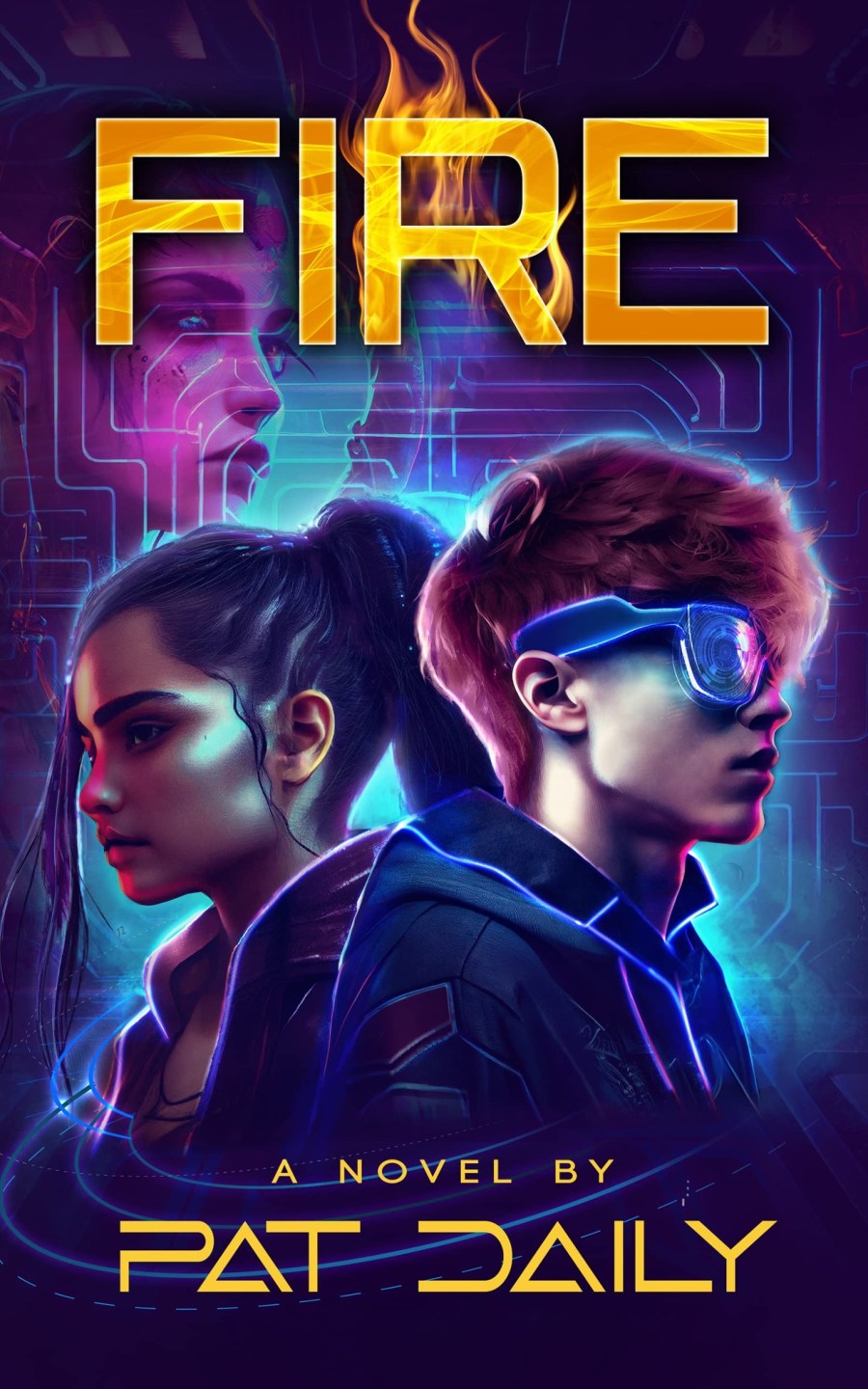
Two teens who survived a terror attack on the augmented world they met in find themselves pushed to the limits by new threats in author Pat Daily’s “Fire”, the second book in The Spark Chronicles series.
Advertisements
The Synopsis
WB and Feral have survived the attack on SPARK, but the terrorists are not through. Forces intent on stealing the technology behind Black Grass and the AI necessary to make it work are on the move again. As WB and Feral attempt to return to their normal lives, they realize that the enemy will never quit until they have the tech or SPARK itself is destroyed.
Flying below the radar kept them safe before, but increased notoriety works against the two as everyone from the FBI to gang members know who they are. Now, local bureaucrats, terrorists, and even fans intrude on the gamers’ lives. WB and Feral butt heads and hold hands as events and outsiders attempt to pull them apart.
Meanwhile the duo struggle to control an AI who has decided that killing humans can be an effective and efficient strategy.
The Review
This was a compelling sci-fi action read. The story creatively blends theme park culture with the growing use of augmented reality, and the action is perfectly balanced with strong character dynamics and emotional growth. The strong imagery in the author’s writing brought SPARK to life as a theme-park Augmented Reality world that readers and the gamers of this story alike could easily step into, and the rich mythos the author builds upon will have readers falling down the rabbit hole instantly.
The driving force of this narrative was the character development and world building that this game took on. After the threat the two protagonists faced in the first book, not only was the author able to up the ante so to speak, but gave each character their own personal and unique struggle to go through on their own, allowing them both to grow and face the world on their own while also determining what that meant to them as a duo throughout the story. The way the author is able to touch upon more serious themes like teen relationships and surviving trauma while also keeping the story light with sci-fi action was incredible to see come to life on the page.
The Verdict
Thrilling, action-packed, and compelling, author Pat Daily’s “Fire” is a must-read sci-fi action novel and a great sequel in the Spark Chronicles series. The twists and turns the narrative takes, the lighthearted action, and the angst and drama of teen romance will keep readers invested until the book’s final pages. If you haven’t yet, be sure to grab your copy today!
Rating: 10/10
Advertisements
About the Author
Pat Daily is a polymath, serial entrepreneur, gamer, and the author of SPARK, a near future science fiction novel. Pat began his professional career as an engineer and Air Force test pilot. After leaving the military, Pat worked at NASA’s Johnson Space Center on both the Space Shuttle and International Space Station programs before launching his first company. He has worked globally as a human performance and safety consultant.
When not writing or trying to bring new airplane designs to life, Pat can be found gaming. He is a fan of role-playing games – particularly open worlds with engaging storylines where actions have consequences. Pat and his wife live in Houston.
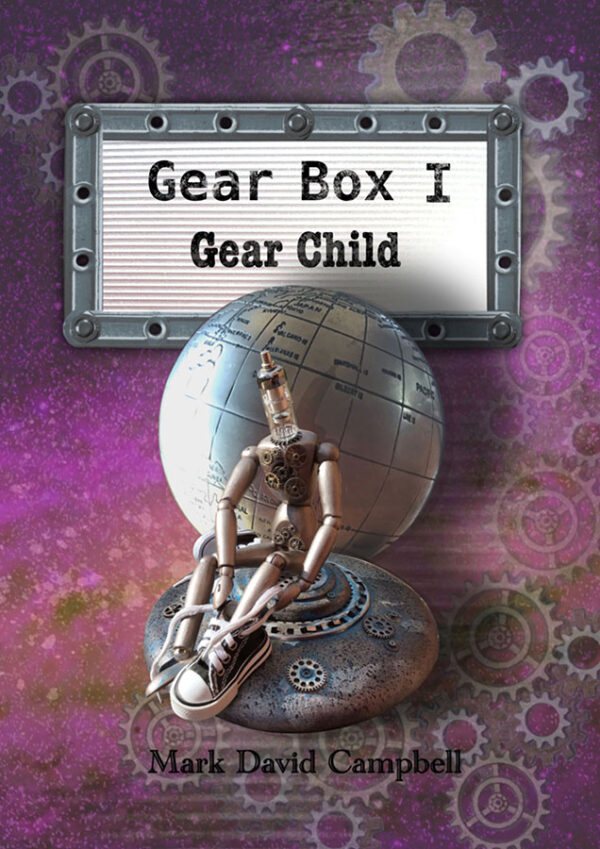
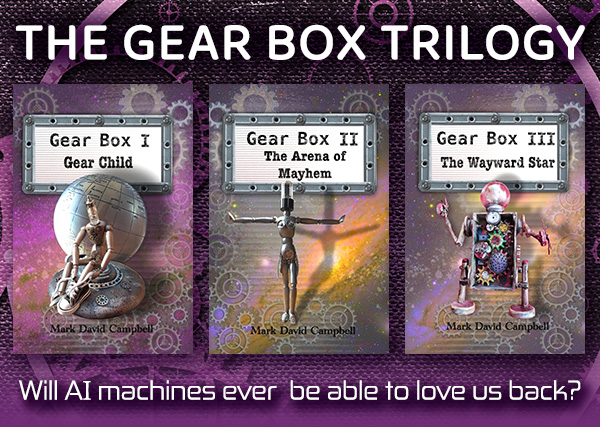
Mark David Campbell has a new queer YA sci-fantasy book out (gay, lesbian, homonormative) Gear Box book 1: Gear Child.
From our beloved teddy bear to our cherished first car, we form deep emotional bonds with inanimate objects. Will AI machines inevitably develop the capacity to love us in return?
In a post-apocalyptic world that survives on garbage left over from the Gawd Wars eight generations ago, Sunny Boy, a semi-organic machine initially made to emulate a thirteen-year-old, and later modified as an eighteen-year-old, longs to be loved. His quest to find a family takes him from a farm in Winnipeg to the far reaches of the known galaxy. When Sunny Boy becomes embroiled in an ancient battle between a collective intelligence and a parasitic alien crystal, the boundaries between organic and inorganic life are called into question.
Warnings: Very low sex and violence (no gun play)
Series Blurb
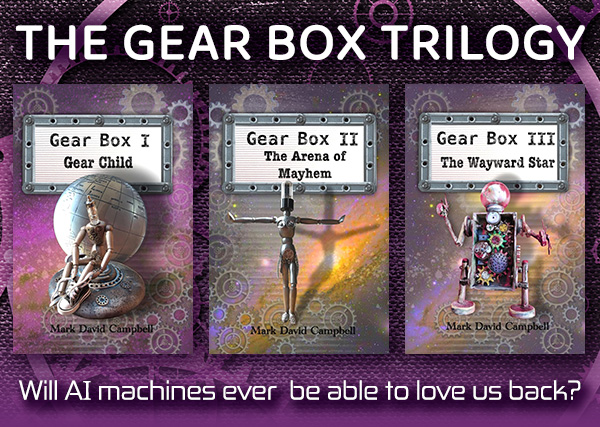
The Gear Box Trilogy, which includes: Gear Child, The Arena of Mayhem, and The Wayward Star, is a journey of the heart that takes you from a devastated post-Gawd Wars Earth, across the Solar System to the far reaches of the galaxy, and explores the line between inanimate machine and animate life form.
Told from the perspectives of Sunny Boy, Fancy Larry, and Loofah—three AI machines—who understand the world around them through symbols, metaphors, and allegories. Along with their capacity for creative thought, empathy, and growth, they likewise struggle with issues of self-identity and self-esteem. Most of all, Sunny Boy, Fancy Larry, and Loofah, like any intelligent being, crave acceptance and long to be loved.
I unlatched the glass, and a salty, humid breeze blew into the cabin like it was saying welcome. In no time, the burnt land below us gave way to water, and the Captain veered the airship southward.
In the distance, I made out the silhouettes of broken and battered glass and steel towers all jutting out of the ocean like fingers of drowning men reaching up to be saved. I watched as the shadow of our airship glided along the surface of the water, silently sliding over the towers.
“Is that a city?”
“Once was.” The Captain nodded. “Greatest in the world. But that’s all that’s left of it.”
“Why is it underwater?”
“Ha!” the Captain snorted. “It happened a long time ago, during the Gawd Wars and the Great Flood, when my great-great-great-granddaddy was a boy.” The Captain scratched his head. “See, way back then, everybody had their own books full of old stories about Gawd. Most of the stories were the same, but everybody told them in a different way.” He furrowed his brow. “People started fighting and killing one another to prove their way of telling the stories was right, and the way other people told the stories was wrong.”
I looked at him with my mouth hanging open, trying hard to understand why people wanted to kill each other over a bunch of old stories.
“Was Gawd bad?”
“No, I don’t think so.” He shook his head. “But by the time everybody got tired of killing one another and blaming it on Gawd…” The Captain cleared his throat. “They’d already blown up all the big cities and poisoned the land. And as if that weren’t enough, they’d also melted the polar ice caps and flooded everything remaining along the coast.” Taking his beard in his hand, he stroked it a couple of times. “People don’t talk much about Gawd anymore.”
“Is that the hand of Gawd?” I pointed to a giant green hand sticking up above the surface of the water, holding what looked like a torch.
“No. That’s the hand of a giant woman. She was one of the idols they used to worship a long time ago.” He eased the throttle and floated the ship in closer so I could get a better look.
“What happened to her?” I tried to make out her body and head below the surface of the water, but all I saw was a cluster of barnacles and algae.
“I guess she got old and tired, and people had no use for her anymore.” The Captain veered the ship southward and pulled on the big wheel. Leaving the city of dead fingers behind, we continued on down the coast, rising slowly toward the jet stream, again.
“Oh, please! Who do you think designed robos in the first place—the military! And it wasn’t only for cleaning and sex.”
“Only those who get caught are sorry.”
I thought about all the people who had died, and I felt sad, but mostly I felt sad because my name would never be recorded there or anywhere else.
“Hey, kid, don’t feel bad. It’s not about you. That boy’s head’s so full of crap, he wouldn’t know a ray of sunshine even if it was beaming up his butt hole.”
He swept the scanner across the pilot’s groin, looked at it, and laughed. “You’ve got nothing to worry about. Your sperm look like a bowl full of goldfish somebody forgot to feed.”
“I thought I was dead.” He grasped both my hands. “Who are you? Some kind of a superhero?”
I felt my face flush. “No, I’m only a robo.”
He took my hand and kissed it. “Not to me.”
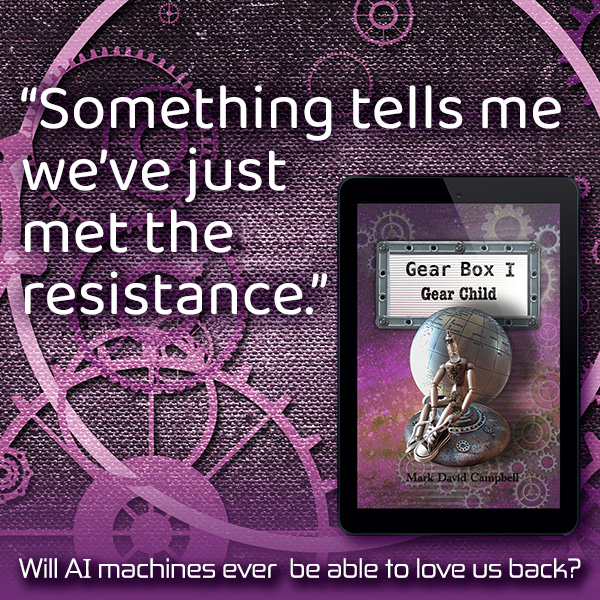
“Something tells me we’ve just met the resistance.”
Spinner frowned. “Beyond those doors, there’s nothing for me. I’m not like you.”
“I’m a robo, like you.”
“No, you’re not!” Spinner practically spat out the words. “You can grow, adapt, and evolve. I can’t. This is all I can ever be.”
“We’ll go to the opera and art galleries. You’ll learn about second-hand stores and how to shop for bargains, we’ll create and redecorate, dance the night away, and sit in cafes trashing the latest clothing trends until the sun comes up.”
Author Bio
I have a passion for science/speculative fiction that is socially and culturally driven. Maybe that’s why I studied anthropology and archaeology.
My recent publications include: Eating the Moon (NineStar Press, 2021), a dystopic story of an elderly anthropologist who stumbles across a hidden society where homosexuality is the norm and heterosexuals are marginalized. Secrets of Ishtabay (Ninestar Press, 2023) is the story of a Maya village in Belize, which struggles with its transition to globalization after the completion of a highway linking it to the outside world. The Homework Assignment (Polar Borealis Magazine of Canadian Speculative Fiction, March 2025) is a short story about an anthropology professor who asks his students to imagine first contact with an alien intelligence with whom they share only one sense.
Currently, I live in Milan, Italy, with my husband. When I’m not writing, I work with Italian sociologists, biologists, and psychoanalysts, assisting them with their English academic publications. I enjoy reading both classic and newer books, immersing myself in steampunk and futurism. I love adventure stories, and most of all, I want to fall in love with a great MC. I am dyslexic, which means I can’t spell, and I have a love/hate relationship with computers and the internet.
Gear Child by Mark David Campbell Exclusive Excerpt Chapter Nine
“Ladies and gentlemen, the moment you’ve all been waiting for has arrived!” Fancy Larry stood on a bale of hay with his arms stretched outward, his ball of fleece carefully arranged on his head, and his face all chalky white.
Both Grease Spot and I looked around, but there were no ladies or gentlemen in the barn.
“What moment?” Grease Spot asked.
“The farm is upgrading with newer task-specific robos.” Whenever he was excited, Fancy Larry spoke in an alto tone.
“Are they going to terminate us?” Grease Spot said.
“Well, I overheard the guards this morning. They are sending the older robos to the toxic dumps, and the higher-end robos, like us, are going to be shipped to Winnipeg City and reprogrammed for urban cleaning and sanitation duty.” Fancy Larry clasped his face in his hands. “All my dreams have finally come true.”
I looked at Grease Spot. “I don’t know anything about the city.”
Grease Spot patted my head. “Don’t worry,” he said, even though he had a dreadful expression on his face.
On the night before we left the farm Grease Spot and I sat on the worktable, as usual, while Old Gus finished his dinner.
“Things in New Winnipeg City are a mite different than things here on the farm,” Old Gus kept sniffing like he had a cold.
“You boys promise me you’ll do exactly what you’re told to do and don’t look them gots directly in the eyes.”
“We promise,” we said in unison.
“You won’t have me no more to come running to when you got a problem.” Old Gus’s eyes filled with tears, and he dropped his head.
Grease Spot slid himself off the table, went over to the bed, and flopped down with his head on Old Gus’ lap. Old Gus bent over, wrapped his arms around him, and buried his face in Grease Spot’s fiery red hair. “My boy, my beautiful, mechanical boy,” Old Gus cooed while he cuddled and rocked Grease Spot.
As I sat there and studied them, I pictured my lambs all alone in the barn, and I wanted to cradle and rock them, one last time. I slid off the table and, without saying a word, went to the sheep shed.
All night long, as I hugged my lambs, I thought about Old Gus and Grease Spot over in the mechanics shed without me, the two of them huddled together in the dark on that steel cot. I couldn’t understand why Old Gus had never cradled me that way.
Grease Spot was only a machine, like me, wasn’t he?
I received a free copy of this book in exchange for a fair and honest review. All opinions are my own.
A science competition leads a young woman to discover the secrets of her family and a means of protecting the world from grave threats in author Colette Bos’s “Bon Echo and the Competition”, the first in the series.
Advertisements
The Synopsis
Meet Maven, a young woman of rare brilliance and insatiable curiosity. She is a true original, and her unique perspective on the world around her makes her a captivating friend on this thrilling journey to uncover the world’s most elusive secrets. Join Maven as she re-reads her much-loved diary, recounting adventures with her fellowship, her newfound love, and her awesome feathered friend, a “Hybrid Owl Technology,” as she discovers ancient secrets about her family’s past and the true origins of her feathered friend. These secrets may be vital to protecting the planet from some of its greatest threats. All meet while competing in one of the world’s biggest high school science competitions. This book is a must-read for anyone who loves a thrilling adventure story filled with captivating characters, mesmerizing natural settings, and an all-consuming romance that will leave you feeling like you’ve witnessed an extraordinary love. Follow us at “Bon Echo and The Competition,” an exciting science-based quest filled with surprising adventures, discoveries and true love.
The Review
The author’s powerful grasp on relationships and the impact those relationships have on our journey was fantastic to see come to life on the page. Readers are immediately enthralled with protagonist Maven and her connections with the supporting cast. The relatability of the tension between her and her brother and the camaraderie between her and her friends instantly draws the reader into the narrative.
The theme of climate change and the impact we as a civilization have on the climate was a powerful message to embody throughout this book. The use of journal entries to give a first-person perspective on the narrative was inspired, as it gave more insight into Maven as a protagonist. The concept of hidden histories and forgotten civilizations was engaging and left readers eager for more from this YA sci-fi novel.
The Verdict
Thought-provoking, imaginative, and entertaining author Colette Bos’s “Bon Echo and The Competition” is a must-read YA Sci-Fi. The twists and turns in the narrative, the heartfelt romance that blooms between the protagonist and Thomas, and the world-building that kept the protagonist engaged with the adventurous path she found herself on made this a memorable story. If you haven’t yet, be sure to grab your copy today!
Rating: 10/10
Advertisements
About the Author
Colette is a talented writer and web developer who has turned her passion for science fiction and environmental causes into a new creative writing direction. With a background in Geography, she has taken a more focused approach to exploring ecological themes in her work. Her debut book, “Bon Echo and The Competition,” the first in the Bon Echo Science Fiction series, is a captivating blend of science fiction and romance. Set in a world where environmental issues are at the forefront, Colette weaves a beautiful story of adventure and love that will captivate readers until the end. With her remarkable talent for storytelling, Colette is sure to leave a lasting impression on the science fiction genre.
I received a free copy of this book in exchange for a fair and honest review. All opinions are my own.
The survival of a technologically advanced world running low on oxygen forces Zarya to navigate a politically charged arena while her father searches for a means of resurrecting a project that might save their people in author Jackiem Joyner’s “Zarya Episode II: Sochi Unleashed”, the second book in the Zarya: Guardians of Cydnus Series.
Advertisements
The Synopsis
In Zarya Episode II Sochi Unleashed, the fate of Cydnus, a highly advanced desert world, hangs in the balance. With oxygen levels beginning to deplete, this politically divided planet stands on the brink of an existential crisis.
In the heart of the advanced city of New Cebrenia City, Zarya, along with her father, Aaron, and friends Kizzy and Marco, must navigate a complex web of political strife. With Vice Chairman Eros’s dark plots threatening their progress, the security of their only political ally, the chairman, is under threat.
Their most powerful asset is Sochi, Zarya’s advanced AI Airboard. Yet, Sochi’s newfound ability to control other machines presents both significant opportunities and risks.
Meanwhile, Aaron embarks on a perilous journey into the cosmos, driven by desperation to resurrect a long-abandoned project that might be Cydnus’s last hope. His mission, shadowed by his past, is a race against time, with the future of Cydnus at stake.
Zarya Episode II: Sochi Unleashed delves into the intricate relationship between sentient beings and technology, bravery amidst uncertainty, and the struggle for survival. As Zarya, her allies, and Sochi traverse this journey, the tale evolves into a saga filled with challenges and triumphs. Welcome to Cydnus, a world teetering on the brink of an uncertain future, in this captivating narrative.
The Review
This was a fast yet epic read. The author did an incredible job of building upon the mythos the author created in book one and elevating the world-building through some pretty incredible political and action-packed strife for the characters. The strong imagery that the author’s writing has really brings out the heavy sci-fi elements of the narrative.
The balance of rich character development with the strong themes that reflect on our own society made this such a compelling short read. The pressures of their world’s fate and the threats that surround them help elevate Zarya’s evolution, and the desperation of Aaron’s mission elevates the depths of their dedication to their world. The themes of AI and our relationship with evolving technology, as well as almost cult-like reverence for political and powerful figures in our society that turn violent, made this a fantastic read.
The Verdict
Memorable, action-packed, and engaging, author Jackiem Joyner’s “Zarya Episode II: Sochi Unleashed” is a must-read sci-fi and YA short story, and a great entry in the Zarya: Guardians of Cydnus series. The twists and turns in the growing world the author has captured and the fantastic way today’s world plays out across this futuristic landscape made this a thought-provoking read. If you haven’t yet, be sure to grab your copy today!
Rating: 10/10
Advertisements
About the Author
Jackiem Joyner has loved Science Fiction ever since he was a child, fascinated by all the stories and imaginations of futuristic worlds. But it wasn’t until later in his life, after experiencing huge success in the recording business, that he decided to put pen to paper – the result of which is his debut novel, Zarya.
Gathering from his experiences traveling the world as a recording artist, he developed a knack for good science fiction stories after reading several books a month. Having used and operated many devices from the future, he incorporated exciting equipment and imaginary scientific ideas into dramatic thrillers that are sure to keep readers on edge.
Jackiem was born in Norfolk, Virginia and spent most of his young adult life in Syracuse New York before moving to Los Angeles, California where he currently resides. In addition to writing fun stories, Jackiem Joyner has experienced huge success as a recording artist, with multiple songs peaking at number 1 on the billboard charts and 5 international records released.
I received a free copy of this book in exchange for a fair and honest review. All opinions are my own.
Two children born to very different worlds switch places and discover the hardships and struggles that await them in author Mark Lavine’s “Forever Child: A Novel of the Future”.
Advertisements
The Synopsis
In the year 2315 you will live for hundreds of years and never age beyond eleven-years-old. That is, if you’re one of the lucky ones. But the not-so-lucky ones are disturbingly close, and they’re threatening your safety, security, and even your deepest beliefs. Soon, it will be all-out war.
Three-hundred years into the future…
And the world has changed. Among a chosen few, life expectancy is now hundreds of years; these are the forever children, and science has found a way to keep them in a nearly endless childhood. Secure in their giant hives, they have left the outsiders, who must live natural lives, to fend for themselves.
This is the story of Kianno and Seelin, two children who find themselves trading places in this strange new world, one leading the life of a forever child and the other growing up in the anarchy of the outside world. Their lives come together again in surprising and unexpected ways, as they both become involved in a fierce struggle between the two worlds.
The Review
This was a brilliant and captivating read. The author did an amazing job of world-building in this narrative, giving readers a feeling of dystopia meets futurism in this story. The imagery the author infused into the writing of this book allowed the reader to get a clear image of this vast new world, both on the outside and within the hives in the forever children reside. The fast-pacing of story allowed the reader to fully immerse in this world and get a sense of the history that has developed without sacrificing any of the action or suspense that comes forward.
Yet in the heart of this narrative rested a great sense of character development, as both Kianno and Seelin’s journey helped to emphasize the hardships and pitfalls of life both inside and outside of the hives. The melding of science, faith, and what it means to be a family all became prominent themes within the story, and the gripping action helped bring these two protagonist’s stories to life as the unique vision of the future the author conjures up takes a firm hold in the reader’s mind.
The Verdict
Memorable, thought-provoking, and entertaining, author Mark Lavine’s “Forever Child: A Novel of the Future” is a must-read YA Sci-Fi novel that felt like the perfect mix of Brave New World meets The Giver. The twists and turns in the narrative and the emotional connection that these characters form, especially with the side character Sofia and the protagonists, made for an engaging and remarkable story that couldn’t be put down. If you haven’t yet, be sure to grab your copy today!
Rating: 10/10
Advertisements
About the Author
Mark Lavine is the author of four novels: Dr Prozac, ForeverChild, Victimless Crimes, and Windekind. He lives in the mountains of Vermont with his wife, daughter, and King Charles Spaniel (Luna). Luna follows him tirelessly on his many hikes and cross-country skis through the woods near his home. Luna sleeps tirelessly while Mark spends a few hours of every day working on his next book. He also loves to play classical piano, and Beethoven in particular. To get acquainted with his work, Mark recommends ForeverChild for scifi fans, and Windekind for thriller fans.
I received a free copy of this book in exchange for a fair and honest review. All opinions are my own.
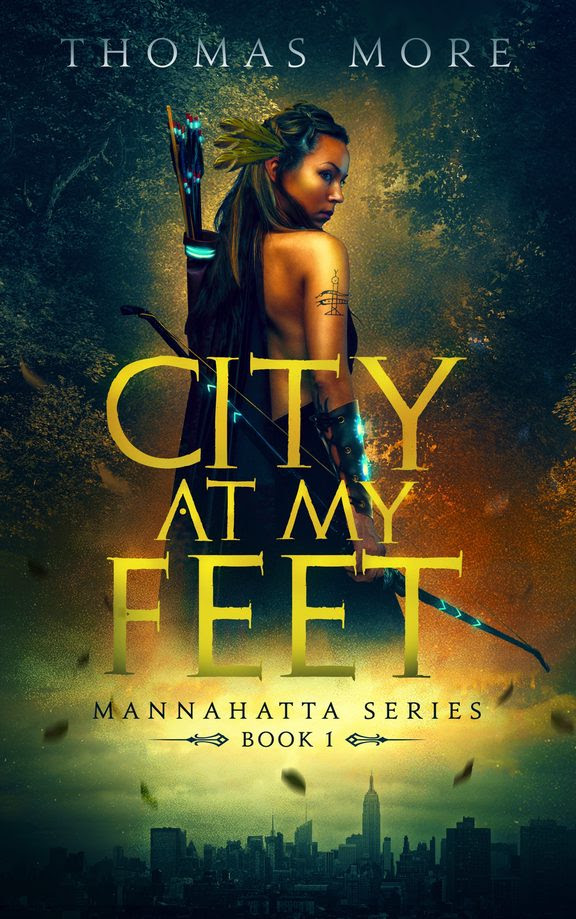
A young woman must go through a portal and save her sister from a hideous mythological beast in author Thomas Moore’s “City at My Feet”, the first book in the Mannahatta Series.
Advertisements
The Synopsis
If you are looking for a captivating novel with an amazing heroine and which includes parallel universes, mythology, and time travel all in one, then look no further than City At My Feet, Book 1 of the Mannahatta Series.
From the very start of the novel (the “ordinary life” phase, if you are a fan of the hero’s journey) we are introduced to an alternative and futuristic culture, a culture that still honors its past as well as its present. The land is an alternate version of Manhattan wherein the Europeans had never arrived.
We meet Sakima (suh-KEE-muh), a young woman intent on being a warrior and we learn about her dreams. She is a character you’ll love and root for as she battles against impossible odds. Soon after, her dreams are put to the test as she uses a portal to go to current-day New York City to save her younger sister who had been kidnapped by a gigantic and hideous mythological monster called Yakwahe (yuh-KWAH-hay). We also meet her sympathetic parents, family, and friends, each who play a key part in this story’s plot.
Sakima’s adventure gets her nearly destroyed many times in many places in the multiverse (called the Many Worlds in her culture) as she fights this monster as well as human monsters; gains friends; and discovers her own strengths and weaknesses.
This is a great, page-turning read, the first in a series (the second book comes out in the Fall of 2023). Read City At My Feet for a fun, shocking, and satisfying story. Highly recommended and look for more soon from this aspiring new author, Tom More!
The Review
I absolutely loved this book. The author did such an incredible job of world-building in this narrative, immediately introducing readers to a world in which Europeans never landed on the North American continent, and the Native American people were allowed the thrive and grow. The narrative then expands to multiple worlds, and the creature development the author draws upon was unique and something not seen often in modern-day YA fantasy and sci-fi series.
Yet to me, it was the character development and cultural inclusivity that really stood out to me. Seeing the emphasis the author put on having a strong, powerful yet relatable, and vulnerable female protagonist was great to see come to fruition, as she embodied the need to embrace our true selves and fight for the future we want for ourselves. The attention to detail the author paid to Native American lore and culture was also amazing, as the culture played a major role in the development of Sakima as a protagonist and the role that family played was also greatly explored through that cultural lens.
The Verdict
Thrilling, captivating, and entertaining, author Thomas Moore’s “City at My Feet” is a must-read YA Sci-Fi and Fantasy novel and a great start to the Mannahatta series. The amazing development of this protagonist, the epic world-shattering action that keeps the reader’s blood pumping, and the thoughtful imagery that brings these worlds to life in the reader’s mind made for a brilliant reading experience. If you haven’t yet, be sure to grab your copy today!
Rating: 10/10
Advertisements
About the Author
Thomas More holds an advanced degree in English with an emphasis in Creative Writing. Although college-educated in the art, craft, and labor of writing novels, he is self-taught when it comes to science fiction and its associated tropes, its readers, and the best of its writers. His favorite pastime is going for long motorcycle rides on city streets, country roads, and beaches (where allowed, of course!).
I received a free copy of this book in exchange for a fair and honest review. All opinions are my own.
A drone from a dying world must try to save the remnants of its people while also protecting the people of Earth who quickly become its new family in author Jane McKay’s YA sci-fi adventure, “Pebble Adventure of a Drone”.
Advertisements
The Synopsis
The small drone sped away from its dying star.
It did not look back at the doomed orb as it traveled through black space. It had a single mission – find a new viable planet and report. Many years of travel later it saw a possible candidate for its mission. The drone spied the blue-washed planet ahead. Would it find a world for its people or be doomed to a lonely existence on a faraway world?
Read the exciting story of Pebble as it helps to battle for its new family on its new home world, Earth. Can it help protect them from a menace from outer space?
The Review
This was an exhilarating, fun, and engaging sci-fi and YA read. The passion and world-building the author was able to accomplish in this book were remarkable, as the grand mythos surrounding the universe and Earth’s place within it came into focus with the introduction of Pebble into this family’s life. The heightened stakes of the threat to Earth and the universe-spanning settings gave readers a remarkable glimpse into the author’s mindset and creativity, crafting a unique narrative that resonates with young adult readers.
The vast wealth of character development and the memorable imagery found within the author’s writing style was the heart of this narrative. The connection Pebble made with the young family who lucked their way into finding it was so amazing to read and see come to life on the page, as it challenged our notion of what humanity and emotional connections really are and what limits (if any) exist in this universe. The descriptive and action-packed nature of the narrative really made this feel like a cinematic experience as well.
The Verdict
Captivating, thought-provoking, and entertaining, author Jane McKay’s “Pebble Adventure of a Drone” is a must-read YA sci-fi adventure. The book felt as if Wall-E met E.T. with a hint of Superman-adjacent lore mixed into the story, and readers will love the ode to sci-fi that the author draws into the narrative while also providing an emotional and well-developed cast of characters that will resonate with the reader overall. If you haven’t yet, be sure to grab your copy today!
Rating: 10/10
Advertisements
About the Author
Jane McKay is a graduate of Ohio State University with a BA in Geography. She loves her field because it touches on all the other sciences and allows her imagination to soar with lots of ‘what if’ questions. All her life she has wondered about the world outside her door. Credit through has to be given to her family who have kept her firmly grounded on this home planet. That’s okay, it only causes her to dream more. The best hope she has is to gather new friends to share her dreams.
I received a free copy of this book in exchange for a fair and honest review. All opinions are my own.
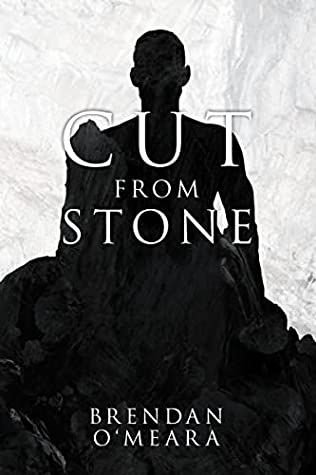
A teenager living in a world split in half between two different factions is chosen to be one of several teens to be transformed into elite soldiers in author Brendan O’Meara’s “Cut From Stone”.
Advertisements
The Synopsis
The world is fresh from humanity splitting in half – the BlankZone in the East and the Federation in the West. As an inevitable attack from the BlankZone looms, the Federation makes swift, mysterious, and unexpected moves to prepare.
James, a 17-year-old living in the Federation, is drafted by the military. He learns he has been selected to join a group of skilled teens who will be transformed into elite human weapons. Follow James and his friends as they mature from teenagers to lethal warriors. Together, they will face life altering events as they navigate a new existence dedicated to protecting their friends, families, and humanity at all costs.
The Review
This was a brilliant YA Sci-Fi and Dystopian read. The author did an incredible job of layering the narrative with world-building and an atmosphere that took on the quality of futuristic historical fiction in many ways. The tension and drama that the author brought to life did an incredible job of highlighting the struggles of this dystopian future in which our world is divided, and the detailed way the settings were brought to life really made this world feel alive and realistic in a lot of ways.
Yet to me, the biggest draw of this novel was the author’s incredible character growth for his cast of characters and the pacing of the action itself. While a military dystopian YA read, the book did a great job of keeping the narrative more character-driven than action, allowing the more bloody aspects of this narrative to be something alluded to or trained for before actually heading into the thick of things. The relatability of the characters and the complex journey the protagonist in particular goes on allows readers to really become invested in his struggles and keeps the reader grounded in this new reality fully.
The Verdict
Harrowing, entertaining, and captivating, author Brendan O’Meara’s “Cut From Stone” is a great first chapter in the author’s “Crafting Humanity” series and a brilliant must-read sci-fi and YA dystopian read. The twists and turns in this world and the physical and emotional toll this adventure takes on the chosen teens allow for a more personal and driven approach to the genre than ever before, and readers will be hard-pressed to put this book down. If you haven’t yet, be sure to grab your copy today!
Rating: 10/10
Advertisements
About the Author
Raised in White Plains, New York, Brendan O’Meara formed a love of stories and books from a young age. He has spent his free time over the last decade crafting his debut novel, Cut From Stone, book one in the Crafting Humanity series.
It began in Philadelphia where he attended college daydreaming about a dystopian reality. With a vivid imagination (as described by his middle school teachers) and a passion for adventure, Brendan’s novels will transport you to a different life and capture you from cover to cover.
Brendan lives in Washington, DC with his daughter, wife, and two dogs. You will find him on the weekends drinking a beer watching the Packers and Notre Dame football games. He is an avid reader with a specific interest in sci-fi, anything dystopian, fantasy, history, and all levels of fiction.
Brendan would love to hear from you, feel free to contact him any time at brendan.omeara@craftinghumanity.com.
I received a free copy of this book in exchange for a fair and honest review. All opinions are my own.
A young girl and her supernatural golden dolphin must use the artifacts they uncovered together to help ensure the future of the ship Kronos and her crew against a deadly threat in author Matthew Rudd Reynolds’s “Map of a Soundless Clock”, the second book in The Books of the Golden Dolphins series.
Advertisements
The Synopsis
Lost. There’s no other word for it; the sailing ship Kronos is lost — in deep space, no less! Months after leaving Earth, tensions on the ancient ship are running high. Much is expected from twelve-year old Andi and her supernatural golden dolphin, Lux. Beset by disaster, an angry crew questions the mission and an assassination attempt on Andi’s life sends the pair away — only for a malevolent figure known as Mynost to pursue them across the stars, seeking to obtain the long-lost artifacts found by the pair that could hold the answers. A hard choice must be made that will determine the future of the Kronos forever — a decision not all will survive.
The Review
This was such an incredible follow-up to the author’s first YA/Middle-Grade level sci-fi and fantasy series the author began previously. The world-building and action are of course so well done here, and the bond between Lux and Andi seems to play an even more integral role in the narrative this time around, with their partners through this journey becoming the foundation of their power as well as the core of the personal conflicts they face together from the crew of the Kronos.
Yet to me, the true heart of this narrative was in fact the character growth of Andi. The young woman is not even a teen yet, and yet she must not only hone her skills and powers to help protect her ship but must discover the true heart of what it takes to lead people on a life-or-death mission. The mystery behind their new threat and the atmosphere the author crafts to build the tensions that arise help to draw the reader further and further into the narrative.
The Verdict
Thoughtful, entertaining, and mesmerizing, author Matthew Rudd Reynolds’s “Map of a Soundless Clock” is a brilliant new addition to the Golden Dolphins Books series. Breathtaking imagery in the author’s writing brought this cosmic journey to life so eloquently, and the rich dynamics between the protagonist and the crew of the Kronos made for some great tension buildup and themes of identity and leadership in Andi’s character arc that is impossible to put down. If you haven’t yet, be sure to grab your copy today!