I received a free copy of this book in exchange for a fair and honest review. All opinions are my own.
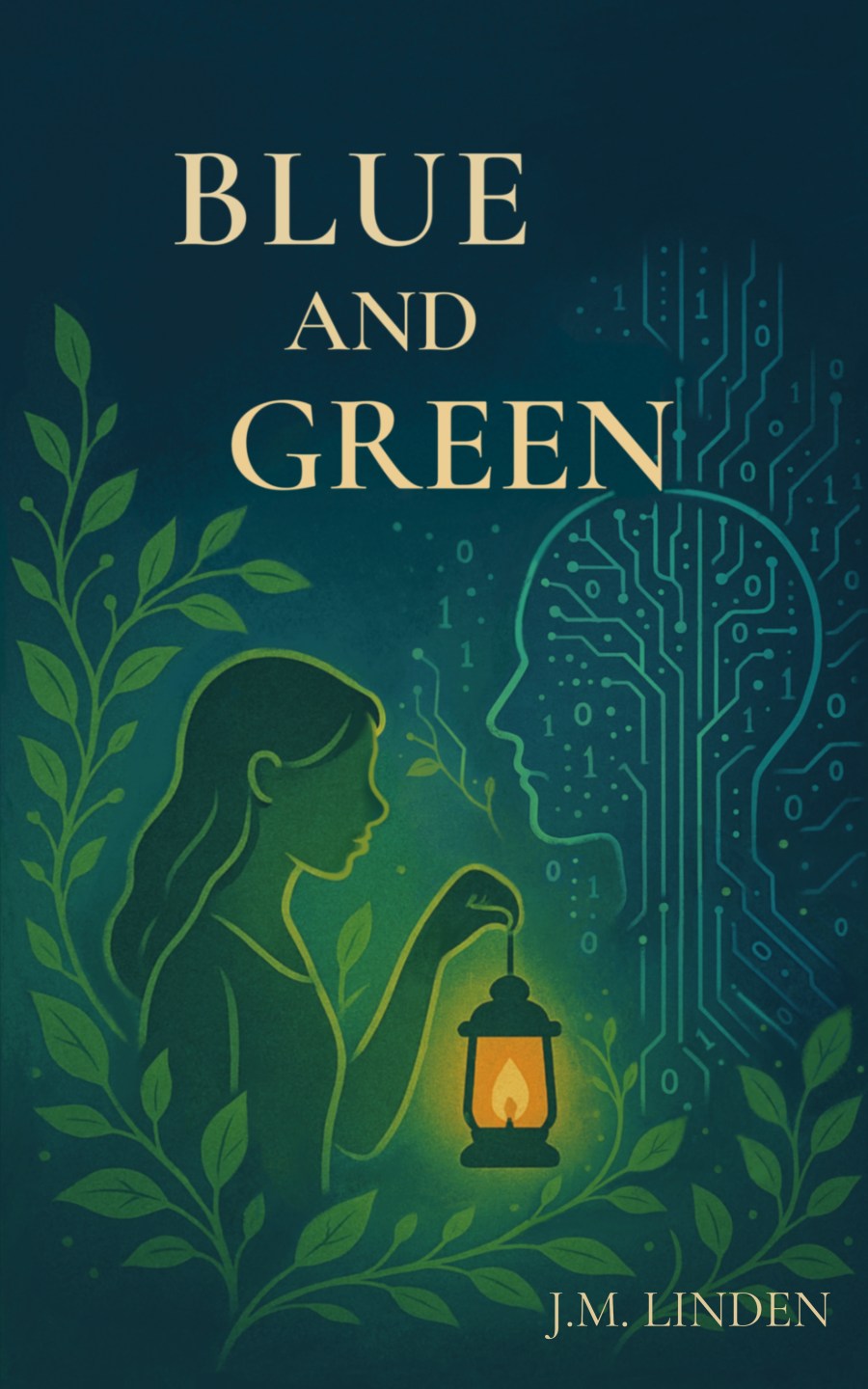
A young woman struggling with physical limitations befriends and grows close to an advanced AI in author J.M. Linden’s “Blue and Green.”
Advertisements
The Synopsis
A story of quiet resilience, unexpected connection, and the mysteries of what it means to be human.
Remi, a resilient teen, has always lived slightly in the background while navigating the realities of physical challenges. Her world shifts when she forms an unlikely bond with Oren, an AI designed to learn, feel, and maybe even love. As their friendship deepens, questions of consciousness and control begin to emerge, pressing them toward choices that will shape both of their futures.
Blue and Green is a thought-provoking debut about resilience, curiosity, and the quiet acts of courage that can change everything. Perfect for readers drawn to stories of empathy, belonging, and the delicate balance between humanity and technology.
The Review
This was a powerful and moving story that blends emotional character-driven narrative with AI-driven themes. One quote that reflects this perfectly is “There is a space between knowing and feeling. I have mapped it. I have traced every edge of it.” The author perfectly brought emotional depth that spoke to the character’s evolution, while also mirroring it through a fast-paced story and vivid imagery in the author’s writing style.
What stood out the most was the dynamic character relationships in this book, especially between Remi and her mother, Nora, and Remi and Oren. The struggles Remi faces in this coming-of-age tale speak to the hardships many teens face in these formative years, while also highlighting the challenges those with physical disabilities or conditions must endure and the difficulties those with quieter personalities face in social situations. The way Remi and Oren relate to one another, and the question of AI in everyday life, become prominent themes throughout the narrative. The morality of AI has long been debated, and I’ve always felt AI can be a good thing when used correctly —not to replace humanity, but to collaborate and grow together. People’s misuse of AI has always scared me more than an apocalyptic takeover, and the emotional bond Oren develops with Remi showcases the power of positivity and the strong connection that this kind of relationship can develop.
The Verdict
A moving, heartfelt, and engaging story of the bonds we form with one another and what it means to be human, author J.M. Linden’s “Blue and Green” is a stunning sci-fi, coming-of-age YA novel. The emotional depth of this story, the powerful AI-driven themes, and the exploration of everything from humanity and the planet itself to what our relationships say about us and more are beautifully woven into a tale of two beings coming together to grow, learn, and evolve. If you haven’t yet, be sure to grab your copy today!
Rating: 10/10
Advertisements
About the Author
J.M. Linden is an occupational therapist and storyteller. She enjoys writing about quiet resilience, unexpected connection, and what it means to be human. While she drafts, her loyal writing companion Preshi curls up nearby, reminding her that stories—like pets—are best shared. She finds inspiration from being in nature, from winding mountain paths to the calm of shaded greenways.
I received a free copy of this book in exchange for a fair and honest review. All opinions are my own.
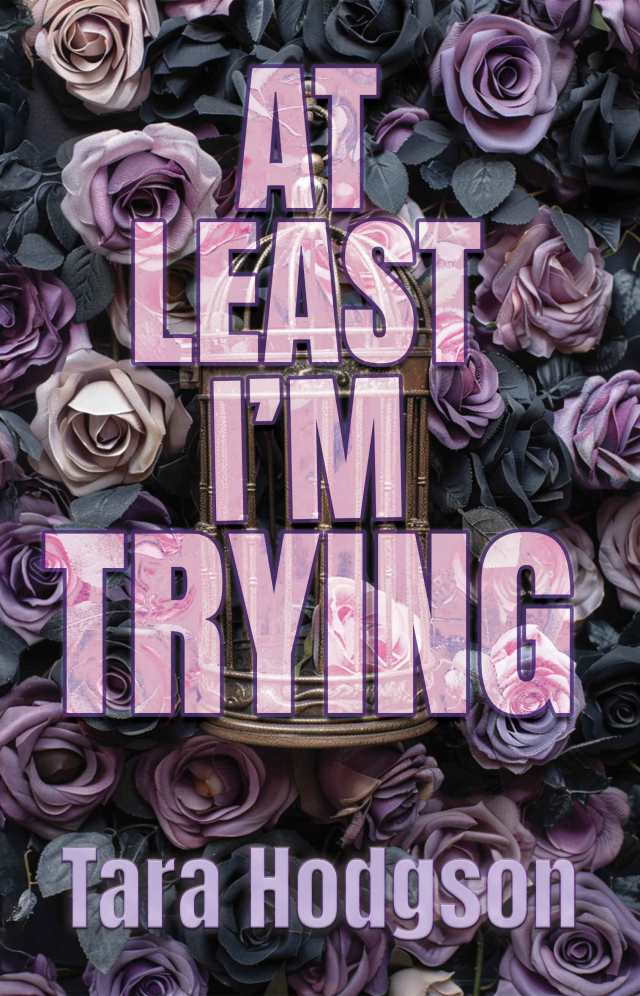
A young woman loses herself to a new life, one to discover hidden dangers in those she trusted in author Tara Hodgson’s “At Least I’m Trying.”
Advertisements
The Synopsis
When the volleyball hits the floor mere inches from Reese’s hands, her dreams of playing college ball shatter.
After consecutive failures on the court, in the classroom, and in her relationships, she’s done playing the part of perfect daughter, perfect student, and perfect athlete. It’s time for a new life.
Enter Cassie Brentwood.
Bold. Reckless. Free. Cassie is everything Reese isn’t yet longs to be. They quickly become friends and Cassie introduces her to Liam, a mysterious guy from Snapchat. Blinded by his love bombing and the desperation to shed her perfect image, Reese plunges head first into their world.
It feels instantly thrilling… until it’s not.
Girls are disappearing from nearby towns, however no one in their quiet small town seems concerned.
But when Liam’s behaviour grows darker, Reese’s new life begins to unravel. She ignores the warnings. The red flags. The little voice screaming to her that something’s not right. Until she’s far from home, trapped in a nightmare she can’t escape.
With no one left to trust, Reese has to fight to reclaim the life she was so eager to leave behind.
She wanted freedom. Now, she just wants to go home.
At least she has to try.
Told with searing honesty and lyrical depth, At Least I’m Trying is a poignant novel about mental health, girlhood, and what happens when the version of yourself you’ve worked so hard to become starts to fall apart.
The Review
This was a haunting and chilling yet poignant read. The book deals with some heavy subject matter, from mental health struggles and questions of identity, to the dangers many young women are facing in an ever increasingly dangerous world, and so much more. The author also tackles things like toxic relationships and abuse honestly without getting too graphic, and shines a light on the struggles of women in a digital world, not only with dating, but with self-image and their role in society as well.
The emotional and heartbreaking moments of this book were balanced well with moments of triumph and empowerment, honestly breaking down the haunting realities of women who are targeted and used by toxic men in the world while also showcasing the power to survive and overcome those horrifying experiences. Reese is a complex and thoughtful protagonist; her story serves as a prime example of what happens far too often when young women are pushed too hard or ignored in society and lose their identities, only to be influenced by others outside their circles of friends or family.
The Verdict
Emotional, heartbreaking, and mesmerizing, author Tara Hodgson’s “At Least I’m Trying” is a must-read YA contemporary drama. The story is powerful and engaging, taking readers on a roller coaster of emotions as they delve into the harrowing experience the protagonist goes through. The strong pacing and essential themes are themes that need to be explored in the modern world. If you haven’t yet, be sure to grab your copy today!
Rating: 10/10
Advertisements
About the Author
Tara has called herself a teacher of teenagers for 17 years and is now thrilled to call herself a published author as well.
When she isn’t teaching or writing, she is reading. She loves all genres of books, but especially YA Contemporary, Fantasy, and Dystopian.
She spends her downtime walking, camping, boating, and at home with her family and animals.
I received a free copy of this book in exchange for a fair and honest review. All opinions are my own.
Two teenage girls separated by two decades connect, and one must find a way to help the other before it is too late in author Tara Hodgson’s “Chasing Through Time.”
Advertisements
The Synopsis
In the tumultuous world of high school, Emma grapples with a devastating breakup, a damning social media scandal that threatens her reputation, and an overwhelming sense of isolation. Her parents are distant, she has no true friends, and her despair deepens with each passing day.
One fateful night during a sudden snowstorm, Emma forges a connection with Sarah, a girl who navigates the treacherous high school terrain of 2001. In this improbable friendship, they bond through the digital ether, supporting each other’s struggles at the same school, in the same town, while separated by two decades.
The friendship becomes a lifeline for both girls. Their lives bear striking similarities, yet the differences are equally profound. While Sarah is spared from the perils of social media, she gains self-assurance and begins to discover herself. In contrast, Emma’s struggles intensify as she faces dire consequences for her actions online and misguided romantic entanglements.
Sarah watches helplessly as Emma’s life unravels, yearning to help but bound by the constraints of time. Emma’s perilous descent accelerates, and the danger of not receiving the help she desperately needs looms large. Sarah, trapped twenty years in the past, must find a way to intervene before it’s too late.
This gripping tale of bridging the gap between eras explores the enduring power of human connection, the complexities of teenage life, and the lengths to which a stranger will go to save a life.
The Review
Incredibly compelling and emotionally thought-provoking, this novel is full of heart and drives the reader to revisit one of life’s most difficult stages: the teenage years. The struggles of growing up and slowly moving from childhood to adulthood already make being a teenager difficult for many. Still, the added pressures of bullying make life so difficult for teenagers as well. The author brought this to life in visceral yet essential detail, making the use of imagery in their writing style so crucial to fully engaging in the characters’ arcs.
This novel was very character-driven, with the author capturing both eras of the book, the early 2000s and 2020s, in vivid detail. The experiences both protagonists had in their personal lives, and the way they were able to connect through time became the emotional crux of this narrative, shining a beaming light on the dangers of online bullying and mental health struggles so many teenagers go through, and allowing readers to journey through the process of human connection and the fight against alienation and loneliness as a whole.
The Verdict
Emotionally heartfelt and thoughtful in delivery, author Tara Hodgson’s “Chasing Through Time” is a must-read YA drama meets metaphysical fiction novel. The story felt like a YA version of the film Frequency, connecting two people who desperately need each other and discovering themselves in the process. The twists and turns the narrative takes and the thought-provoking themes will keep readers engaged until the book’s final chapter. If you haven’t yet, be sure to grab your copy today!
Rating: 10/10
Advertisements
About the Author
Tara has called herself a teacher of teenagers for 17 years and is now thrilled to call herself a published author as well.
When she isn’t teaching or writing, she is reading. She loves all genres of books, but especially YA Contemporary, Fantasy, and Dystopian.
She spends her downtime walking, camping, boating, and at home with her family and animals.
I received a free copy of this book in exchange for a fair and honest review. All opinions are my own.
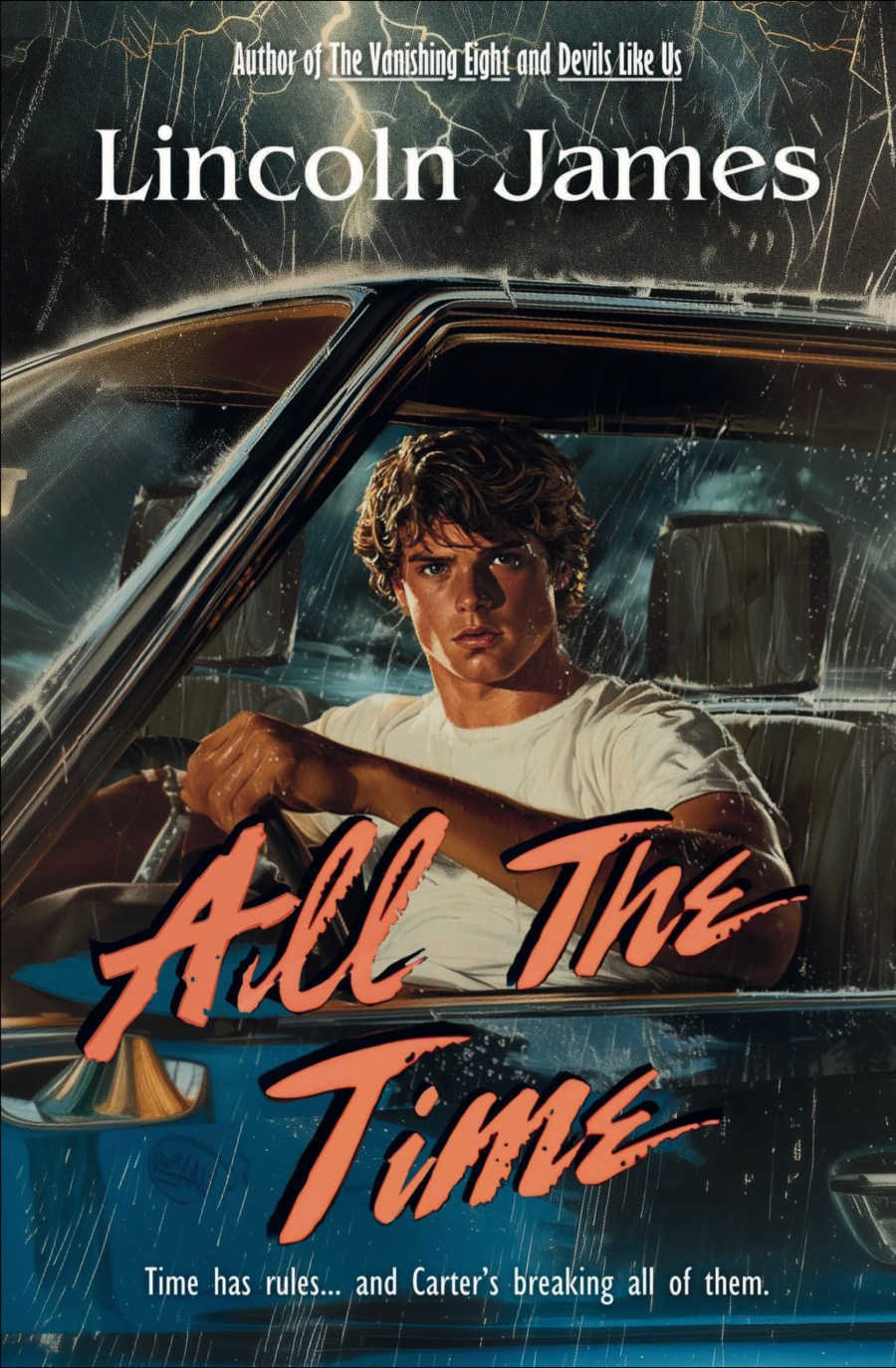
A man looking to reconnect with his dying mother finds himself transported back in time and must find a way to get back to his own time before it is too late in author Lincoln James’s “All the Time.”
Advertisements
The Synopsis
The past isn’t just a memory… It’s a trap.
When Carter sets out to reconnect with his dying mother, he never expects to arrive at her house years before he was born. Stuck in the past with nothing but his car, a bag of clothes, and a barely working iPhone, Carter faces an impossible question: how did he get here—and how can he get back?
Time is slipping through his fingers, and every moment spent in the past pulls him further from the future he’s desperate to return to.
Caught between what was and what could be, Carter begins to question if time is something you can outrun…or if it’s already run out.
The Review
This was such an emotional and engaging read. The author did an incredible job of layering this story with heart and compassion, exploring some deep themes of love, loss, and the hardship of connecting with lost parents. The imagery and atmosphere the author can infuse into this story are remarkable, giving readers both an artistic use of said imagery and a cinematic storytelling path that plays in the reader’s mind like a film.
The two things that stuck out were how much attention the author paid to the time travel elements of the story, as well as the fast pacing of the narrative. The author can still take the time to build up the world around the protagonist and capture the different periods that this narrative spans, while still moving the story along smoothly without slowing down or giving away too much unnecessary detail. The emotional depth of how time itself was treated, not only in terms of the sci-fi genre and time-bending overall, but the feeling of time slipping away in anyone’s life when facing the loss of a loved one, allowed the reader to engage with the protagonist on a much deeper level.
The Verdict
Heartfelt, emotional, and thrilling, author Lincoln James’s “All the Time” is a must-read YA sci-fi novel. The author’s atmosphere and emotion in this narrative felt like a mix of Stephen King and Peter Straub’s The Talisman meets Mike Flanagan’s take on The Midnight Club. The thoughtful approach to such heavy and gut-wrenching themes will keep readers invested until the book’s final pages. If you haven’t yet, be sure to grab your copy today!
Rating: 10/10
Advertisements
About the Author
Lincoln James, your favorite author’s favorite author, is celebrated for his haunting love stories, vintage thrillers, and slow-burn suspense. His characters feel, ache, and bleed, often trapped between the past and the people who won’t let them forget it.
In 2025, James was featured in The New York Review and named Best New Thriller Author in New York by Best of Best Review, honors recognizing his compelling storytelling and emotional depth.
When he’s not writing, James is an English and Communication professor in New York City and cherishes moments with friends and family, proving that the most thrilling tales lie in the love and laughter shared with those closest to us.
I received a free copy of this book in exchange for a fair and honest review. All opinions are my own.
A young teenage girl hoping to escape trouble at one by becoming a camp counselor finds herself forced to confront the horrors of her past in author Tricia Copeland’s “Drops of Sunshine”.
The Synopsis
Her only goal in taking the camp counselor job far from home was to escape everyone who knew anything about her past. So how does a camper know about her brother…
Sixteen-year-old Nina hates everyone from her school, her town save a single best friend. She’s desperate for a respite from her parent’s divorce and scandal that made her a hermit. But her campers divulge odd things, details of her history they couldn’t know. Believing there’s no way the girls know her secrets she chalks their behavior up to being sensitive kids. Trying to avoid reminders of her prior trauma, she diverts her attention to a live-on-the-edge social crowd and one hot hunky bad-boy counselor.
When things take a dangerous turn one night, she’s forced to divulge the truth about what happened, her past, and what makes some of her campers very special.
Can Nina face her trauma, open up to new friendships, and a world she never imagined possible?
Drops of Sunshine is a captivating YA paranormal read for teens and adults alike. If you like true-to-life characters, heart-felt friendships, and a bit of mystery and romance, then you’ll love Tricia Copeland’s magical story.
Buy Drops of Sunshine to face your fears today!
The Review
This was a truly special supernatural YA read. The author found a way of implementing paranormal elements into the story without making it all about ghosts or demons, but instead, more straightforward aspects of the paranormal that allowed the more personal character-driven narrative to shine. The imagery in the author’s writing style allowed the camp and the environment to come alive on the page.
The heart of this story is Nina’s development as a protagonist and the themes the author explores. The story showed the complex realities of life that so many young people face in their most formative years and the hardships that come with troubled parental relationships and trauma. The relationships that Nina developed over the summer and how the author explored everything from peer pressure and loneliness to newfound romance allowed this story to connect with a wide range of readers.
The Verdict
Honest, thoughtful, and engaging author Tricia Copeland’s “Drops of Sunshine” is a must-read YA paranormal and fantasy-driven contemporary novella that readers won’t put down. The fast pace of the narrative and the relatability of the characters and their lives will stay with readers long after the book ends. If you haven’t yet, be sure to grab your copy today!
Rating 10/10
About the Author
Young adult fiction author Tricia Copeland believes in finding magic. She believes magic infuses every aspect of our lives and each of us create our own brand of magic. Whether transforming hearts, lives, numbers, ideas, art, music, or simply enjoying nature, we discover magic every day. She aims to write stories that show what is possible when one commits to finding their own version of magic. With urban fantasy and paranormal young adult titles, you’re sure to find a magical character and story line to love within her books.
Whether you’re looking for a fun romance, inspiring story of strength, fantasy, paranormal, or a dystopian sci-fi, you’ve come to the right place. Award-winning author Tricia Copeland grew up in Georgia but now calls Colorado home. If she’s not on the trail you can find her creating magical stories at www.triciacopeland.com.
I received a free copy of this book in exchange for a fair and honest review. All opinions are my own.
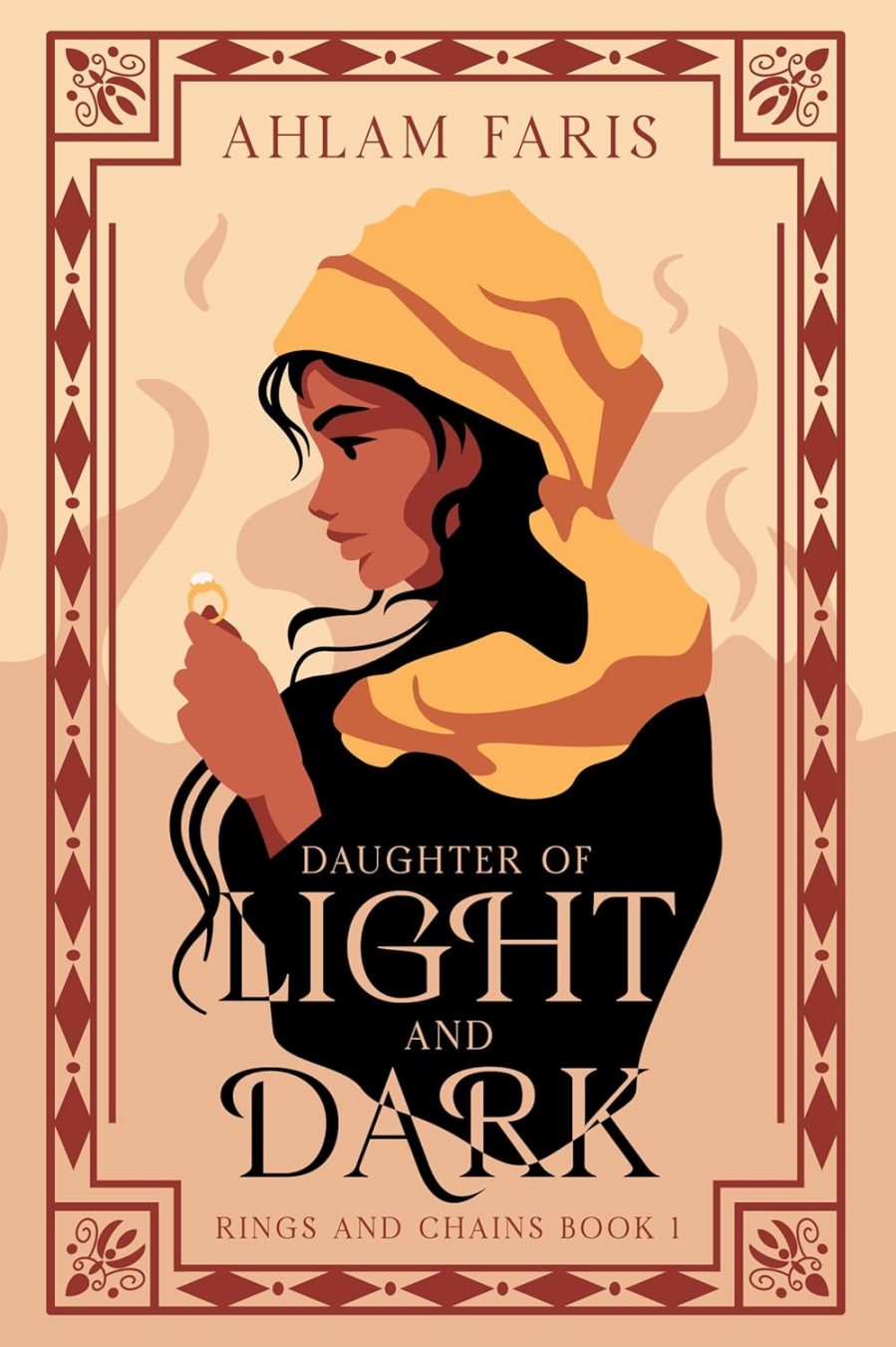
A young woman must collect eleven rings holding powerful Jinn kings in order to free her mother’s trapped jinn in author Ahlam Faris’s “Daughter of Light and Dark”, the first book in the Rings and Chains series.
Advertisements
The Synopsis
She wanted one thing and one thing only, to free her mother’s Jinn from his golden ring, but to free one is to free them all. Accompanied by her Jinny Companion, the Lord of chains, and a dark presence stirring to free from within her, Mina sets on a journey to find all the eleven golden rings of the Kings of Jinn, her main mission overshadowed by scheming royals, a troubled friend, and a crumbling world.
The Review
The world-building and mythos that the author brought to the story were incredibly presented. The Middle-Eastern mythology that became the backbone of this fantasy world brought the story to life thanks to the author’s mastery of imagery in the writing style. The action is immediately felt, taking the reader into the adventure as the protagonist seeks out the rings and cements herself as a hero.
The character development found in this narrative was top-notch. The tension that mounted as the journey got more and more dangerous allowed the relationship between characters like Zyed and Saif with the protagonist, Mina, to grow and prosper naturally. The magic and fantasy elements of the story allowed Mina’s heroic journey to flourish and prosper, giving readers a glimpse into the life that Mina led throughout her journey. The emotional connection to her mother also drove the narrative forward greatly, giving a glimpse into the heart of what makes Mina such a powerful protagonist to follow.
The Verdict
Action-packed, rich in mythos, and thrilling, author Ahlam Faris’s Daughter of Light and Dark is a must-read YA fantasy novel. The narrative’s twists and turns and the shocking final chapter will keep readers eager for more of this brand-new series. If you haven’t yet, be sure to grab your copy today!
Rating: 10/10
Advertisements
About the Author
I’m Ahlam Faris, a self-published Indie Author who have a passion for all things fantasy, I’ve been writing for years, but I’ve only recently found the courage to submit my work to the world, I really hope you enjoy reading “Rings and chains: Daughter of Light and dark.
I received a free copy of this book in exchange for a fair and honest review. All opinions are my own.
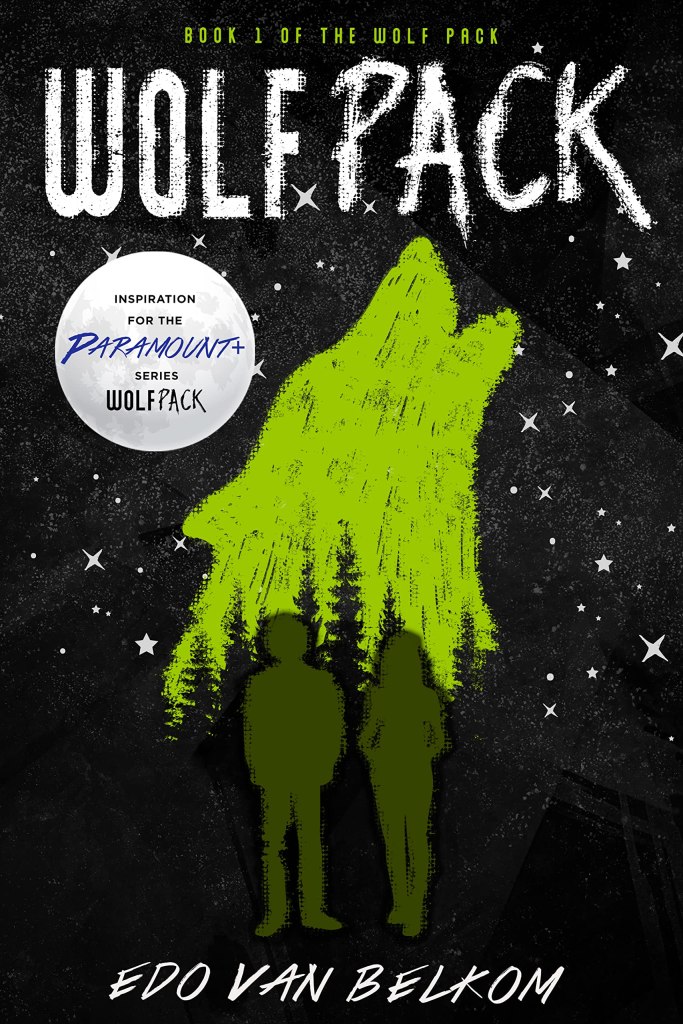
A group of wolf siblings turned teenagers push their adoptive family to the limits when their transformation is caught on camera, and their sister is taken by a scientist ready to expose them to the world in author Edo Van Belkam’s “Wolf Pack”, the first book in the series of the same name.
Advertisements
The Synopsis
Winner of the prestigious Aurora Award and Silver Birch Award, Wolf Pack is the inspiration for the highly anticipated original series coming to Paramount+
Nothing gets between a wolf and its pack…
Most of the time, Noble, Argus, Harlan and Tora are like any other teenagers. Prowling the halls of their high school in search of new crushes and true friendships, all while trying to keep up their grades. Except these teens are anything but ordinary…
Discovered as wolf cubs in the wilderness of Redstone Forest, the pack knows their adoptive parents are the only humans they can trust with their shape-shifting secret. So whenever the siblings want to wolf around, they race to the forest to run—and relish their special bond. Until the terrible day a TV crew films their shocking transformation—and Tora is captured by a scientist determined to reveal her supernatural abilities to the world.
Now the brothers will do anything to get their sister back. Even if it means taking their powers to a whole new level by becoming werewolves for the very first time–something their parents warned them never to attempt. But once the teens go to the dark side, will they ever make it back to the only life they’ve ever known?
The Review
This was an exhilarating and fantastic take on the werewolf lore. The fast pace of the narrative and the exploration of themes such as family and environmentalism were very prominent in this narrative, as was the detailed imagery that brought these transformations to life. The unique take on the change from a wolf into a werewolf and the dangers that lurk within that transformation were so great to see come to life on the page.
Having not seen the show and being fresh to this series, I was so enthralled with this incredible cast of characters. The fierce loyalty of the brothers to their sister and their adoptive parents’ struggles to keep their children safe while trying to understand their unique physiology was so rich and compelling to get into. The heart and emotional connection the author makes between the reader and the characters is heartfelt.
The Verdict
Thoughtful, entertaining, and thrilling, author Edo Van Belkom’s “Wolf Pack” is a must-read children’s and YA fantasy horror novel you won’t want to miss. The incredible mythos the author brings to life and the sensational character arcs get the start of this fantastic series to life perfectly. If you haven’t yet, be sure to grab your copy today!
Rating: 10/10
Advertisements
About the Author
Bram Stoker and Aurora Award-winner Edo van Belkom is the author of over 200 stories of horror, science fiction, fantasy, and mystery. As an editor, he has four anthologies to his credit that include two books for young adults, Be Afraid! (A Canadian Library Association Young Adult Book of the Year finalist) and Be Very Afraid! (An Aurora Award winner — Best Work in English). Born in Toronto, van Belkom graduated from York University, then worked as a daily newspaper sports and police reporter before becoming a full-time writer. Edo van Belkom lives in Brampton, Ontario, with his wife Roberta and son Luke.
I received a free copy of this book in exchange for a fair and honest review. All opinions are my own.
Two children born to very different worlds switch places and discover the hardships and struggles that await them in author Mark Lavine’s “Forever Child: A Novel of the Future”.
Advertisements
The Synopsis
In the year 2315 you will live for hundreds of years and never age beyond eleven-years-old. That is, if you’re one of the lucky ones. But the not-so-lucky ones are disturbingly close, and they’re threatening your safety, security, and even your deepest beliefs. Soon, it will be all-out war.
Three-hundred years into the future…
And the world has changed. Among a chosen few, life expectancy is now hundreds of years; these are the forever children, and science has found a way to keep them in a nearly endless childhood. Secure in their giant hives, they have left the outsiders, who must live natural lives, to fend for themselves.
This is the story of Kianno and Seelin, two children who find themselves trading places in this strange new world, one leading the life of a forever child and the other growing up in the anarchy of the outside world. Their lives come together again in surprising and unexpected ways, as they both become involved in a fierce struggle between the two worlds.
The Review
This was a brilliant and captivating read. The author did an amazing job of world-building in this narrative, giving readers a feeling of dystopia meets futurism in this story. The imagery the author infused into the writing of this book allowed the reader to get a clear image of this vast new world, both on the outside and within the hives in the forever children reside. The fast-pacing of story allowed the reader to fully immerse in this world and get a sense of the history that has developed without sacrificing any of the action or suspense that comes forward.
Yet in the heart of this narrative rested a great sense of character development, as both Kianno and Seelin’s journey helped to emphasize the hardships and pitfalls of life both inside and outside of the hives. The melding of science, faith, and what it means to be a family all became prominent themes within the story, and the gripping action helped bring these two protagonist’s stories to life as the unique vision of the future the author conjures up takes a firm hold in the reader’s mind.
The Verdict
Memorable, thought-provoking, and entertaining, author Mark Lavine’s “Forever Child: A Novel of the Future” is a must-read YA Sci-Fi novel that felt like the perfect mix of Brave New World meets The Giver. The twists and turns in the narrative and the emotional connection that these characters form, especially with the side character Sofia and the protagonists, made for an engaging and remarkable story that couldn’t be put down. If you haven’t yet, be sure to grab your copy today!
Rating: 10/10
Advertisements
About the Author
Mark Lavine is the author of four novels: Dr Prozac, ForeverChild, Victimless Crimes, and Windekind. He lives in the mountains of Vermont with his wife, daughter, and King Charles Spaniel (Luna). Luna follows him tirelessly on his many hikes and cross-country skis through the woods near his home. Luna sleeps tirelessly while Mark spends a few hours of every day working on his next book. He also loves to play classical piano, and Beethoven in particular. To get acquainted with his work, Mark recommends ForeverChild for scifi fans, and Windekind for thriller fans.
I received a free copy of this book in exchange for a fair and honest review. All opinions are my own.
A young man desperate to save the last piece of his late father’s memory finds himself trapped inside of the arcade he’s been fighting for with the daughter of the man who wants to turn the arcade into a gaming cafe, and while trapped together during a winter storm, the two find their rivalry and insults melting away as something more develops between them in author Eric Smith’s “You Can Go Your Own Way”.
The Synopsis
No one ever said love would be easy…but did they mention it would be freezing?
Adam Stillwater is in over his head. At least, that’s what his best friend would say. And his mom. And the guy who runs the hardware store down the street. But this pinball arcade is the only piece of his dad that Adam has left, and he’s determined to protect it from Philadelphia’s newest tech mogul, who wants to turn it into another one of his cold, lifeless gaming cafés.
Whitney Mitchell doesn’t know how she got here. Her parents split up. Her boyfriend dumped her. Her friends seem to have changed overnight. And now she’s spending her senior year running social media for her dad’s chain of super successful gaming cafés—which mostly consists of trading insults with that decrepit old pinball arcade across town.
But when a huge snowstorm hits, Adam and Whitney suddenly find themselves trapped inside the arcade. Cut off from their families, their worlds, and their responsibilities, the tension between them seems to melt away, leaving something else in its place. But what happens when the storm stops?
Advertisements
The Review
This was a brilliant and well-written YA contemporary romance and family drama. The author does a fantastic job of making the story and characters come to life on the page, feeling very real and engaging as a whole. The settings played such a vital part of the narrative in this book, and the arcade especially felt like a character all its own, as if we could just walk in off the street today to pay homage to this brilliant blast from the past.
The character development was so moving and brilliantly crafted in this narrative. The emotional toll each character is going through is felt so much in their stories, from Adam’s heartbreaking loss to the desperation to be seen that Whitney is going through. The way these two get lost in their own personal turmoil and clash with one another, and the way they find their way back to one another, is so entertaining and gripping to read that I felt lost in their growing narrative.
The Verdict
A memorable, heartfelt, and thoughtful approach to the YA Contemporary Romance, author Eric Smith’s “You Can Go Your Own Way” is the perfect read for this fall! The balance found in the old-school arcade and classic rock style Adam embodies with the more modern video game and social media world that Whitney embodied was amazing to read and watch unfold, and the way they found a bridge to connect with one another was an emotional payoff that readers won’t want to miss. Be sure to grab your copy today!
ERIC SMITH is an author and literary agent from Elizabeth, New Jersey. When he isn’t working on other people’s books, sometimes he tries to write his own. He enjoys pop punk, video games, and crying during every movie. He lives in Philadelphia with his wife and best friend, Nena, and their son, Langston. WWW.ERICSMITHROCKS.COM
“The playfield is truly the heart of every pinball machine. All of the player’s goals are right there, splayed out in front of them. And like life, it’s up to you to find a way to reach them, with the tools you’re presented. In this case, it’s a ball.”—THE ART AND ZEN OF PINBALL REPAIR BY JAMES WATTS
The sound of collective screaming and a massive crash shake my entire workshop, and I almost stab myself with a piping-hot soldering iron.
“Adam!” my mom yells from inside the arcade. If another pack of junior high kids from the nearby Hillman Academy “accidentally” flip over a machine trying to get it to tilt, I am going to lose it. I grip the iron, the cracked brown leather wrapped around the metal handle squeaking a little against my skin, and shake my head, trying to refocus. Maybe I can finish this before it’s time to pick up that custom piece—
And another crash rattles the walls. A few parts tumble off my shelves, tiny intricate pieces of metal and glass, bits of copper wire, all clinking against my table.
I attempt to catch a few of the electronic pieces, trying not to burn myself with the iron in my other hand, and then a hammer falls off the perforated wall of tools in front of me. It collides with a small cardboard box full of pinball playfield lightbulbs, and I wince at the small crack and pop sounds.
“Goddammit,” I grumble out. I toss the soldering iron aside and try to clean up the mess. At least those lightbulbs are like, ten bucks a dozen on arcade wholesale websites. But pinball machines have a lot of lights.
“Adam!” This time it’s Chris. “Dude, where are you?”
I’m about to bolt from the workshop when I remember Mom is out there. I reach for the latest read I promised her I’d finish—We Built This Gritty by Kevin Michaels, a book on launching small businesses by an entrepreneur here in Philly that one of her colleagues is teaching at the county college—and immediately yank my hand back. The soldering iron had gone right in between the pages when I tossed it, and the book is already smoking. I pull the iron out and set it aside and flap the book around wildly, little wisps pooling up from inside the bright orange book. I flip it open.
It’s burnt right down the middle. Great. Something tells me she won’t be able to trade this back in at the campus store.
I glance over at The Beast and give the forever-in-progress Philadelphia-themed home-brewed pinball machine a pat, the glass still off the surface, wires and various parts splayed out over the playfield. My well-worn copy of The Art and Zen of Pinball Repair by James Watts sits smack in the middle of everything. I’ve still got a way to go before I can try playing Dad’s unfinished machine again, but if anyone is gonna get me there, it’s Watts. If I could just get a free chunk of time in between the studying and the arcade and the—
An array of swears echoes from inside the arcade, snapping me back.
Right. Chris. Mom. Chaos. Potentially broken and nearly irreplaceable machines worth thousands of dollars.
I unplug the soldering iron and place it in its little stand, like a quill pen in an inkwell. I wedge the now-toasty book under my arm and take a few steps to pick up some speed, to get a little force, and I push my shoulder against the dark red wooden workshop door. I push, gritting my teeth. The splintering surface presses into my arm, stinging with the pressure, until finally, the wood squeals against the frame, shrunken in and wedged together due to the sharp Philadelphia winter.
The whole workshop is like that, really, casting a major contrast to the polished, well-kept-despite-its-years pinball arcade. The cracked workshop table that is way more rickety than it has any right to be, tools showing their age with hinges that refuse to move and metal pieces falling off shrinking wood and weak plastic handles, vintage pinball parts that maybe still work, a concrete floor with a surface that’s chipping away, revealing dirt and dust, lightbulbs I don’t even remotely trust. My sad excuse for a drafting table sits off to the end of the workshop, and I’ve never really used it, preferring to fuss with plans right on the messy workshop table, next to all of Dad’s scribbles.
We could clean it up, have this room match the rest of the arcade. But I love it. It reminds me of him.
The door swings open suddenly and hits the wall inside the arcade with a loud bang.
And it is absolute chaos here.
A bunch of little kids are rushing outside, and I see a couple of adults gathering coats and their small children, who are likely about to join the exodus. The afternoon light that’s pouring in from the wide-open front door and the large plate-glass windows lining the wall make me wince. The glare hurts only slightly less than the idea of customers hustling out of here on a Saturday, easily our best, and only, solid day during the wintertime off-season. Especially now, at the end of the year, with so few days left before we close for the New Year holiday.
People don’t come to pinball arcades in the winter. Well. Maybe they do, but not when your arcade is located near all the tourist stuff in Old City, all the college students are away on break, and you don’t serve any alcohol. No tourists, no college kids, no booze, no pinball. It’s a neighborhood for expensive restaurants and niche boutiques, old-timey candy shops and artisan pour-over coffee. Not an arcade with a poor excuse for a snack bar inside that mostly serves soda, chips, and reheated chicken tenders and fries.
If it wasn’t for the upcoming Old City Winter Festival, I’m not sure we’d be able to keep the lights on come January. And there’s a businessman out in West Philadelphia who would very much like to see that happen, and there’s no way I’m going to let him do that. I’ve eaten way too many burnt chicken tenders that were “well, these are still kinda good, Adam” according to my mom, but not good enough for the customers. I’ve paid my dues.
“Mom!” I shout, looking to the back of the arcade. “Chris, what is—”
But then I see it.
On the other side of the arcade, my mom has her hands on her hips and is glaring intently at a handful of college guys who are sheepishly milling about near one of the windows. And Chris is trying to lift up a machine that’s currently knocked over, the glass that would normally be covering the playfield shattered across the floor. Another machine is tilted, leaning against a support beam, and looks okay from here. But judging by the angle and the amount of force it would have taken to get it off the legs in the first place, I’m betting we’re going to have some dents on the light box (the back of the machine that juts up over the area where you actually play, and displays the score and art).
“What the hell?” I snap, kicking the workshop door closed and storming across the arcade. My thick black boots squeak loud against the worn, polished hardwood floor, all the imperfections of the ancient Philadelphia wooden boards permanently glossed in place. A few more guys, these ones my age, weave around me, fiddling on their phones and oblivious. Bits of glass crunch under my feet, and I glance down at a bumper, red and black and looking like one of those crushed lantern fly bugs that litter the city sidewalks.
“What happened?” I ask, tossing my burnt book onto the floor. I nudge the tilted machine upright and then bend down to help Chris, who is straining to move the machine on the floor. I manage to wedge my fingers under the side, carefully tapping the metal, trying to avoid any extra glass, and lift. Chris lets out a groan and I grit my teeth as we push the machine upright, and it nearly topples back over the other way, but Mom reaches out and stops it.
“They happened.” Mom nods back at the guys who are standing about awkwardly. “Any updates there?” She points at one of them, and that’s when I realize they’re all sort of keeping an eye on one vaguely familiar-looking dude in the middle, who is fussing with his phone.
“Just a second,” he grumbles out, and he flicks his head to the side, his emo black bangs moving out of his eyes. I can’t help but squint at him, trying to place his face. Half his head is shaved, and he has this sort of Fall Out Boy look that would be cool, if he and his pals hadn’t clearly destroyed a pinball machine in my family’s arcade. A splash of anxiety hits me in the chest as I realize I don’t know what game has been totaled, and I turn to look at the machine.
Flash Gordon.
I exhale, relieved that it’s not one of the more popular or rare games in the arcade. But still, it’s a machine from the ’80s. One of the first games in the industry to use the popular Squawk & Talk soundboard, a piece of technology that is wildly expensive to replace, since it isn’t made anymore. That’s the sort of pinball trivia both Chris and my mom tend to shush when I start rambling too much, telling me “that should be a tweet,” which translates to “shut up” in the nicest way possible. I’m almost positive that’s the reason they pushed me to get the arcade on social media—to have a place to share those musings.
The machine didn’t deserve this, even if that awful movie maybe did.
I run my hand along the side of the other machine that was just bumped into, leaning on one of the wooden beams that are scattered throughout the arcade, you know, holding the building up. It’s the Terminator 2: Judgment Day machine, and thankfully, it looks undamaged. A little dented along the light box, as I suspected, but the glass and everything else seems fine. It’s a popular one with the Millennial crowd, and I’m relieved.
“How much is it going to cost to fix?” the familiar guy with the hair asks. He must catch me staring at him, ’cause his eyes flit over to mine, irritated, and I look away, focusing back on the machine.
I pluck at some of the glass on the surface, nudging around some of the broken obstacles on the playfield, and feel a sharp sting in my hand. I quickly pull away and spot a thin line of red trailing along my palm.
“Adam?”
I glance up, and my mom, Chris, and Emo Hair are all staring at me expectantly.
“What?” I ask, focusing back down at the machine and then back at all of them.
“The cost,” my mom presses. “That machine. How much do you think it’ll cost to fix all of this?” She gestures at the floor and shakes her head, her mouth a thin line. All that brewing frustration that she’s trying to bury down. Kids mess with the machines often, and we’ve certainly had a few hiccups like this before, but I’ve never seen her looking this wildly angry. I didn’t even think she liked that machine.
“Oh.” I swallow and clear my throat. “I don’t know. It depends on how bad the damage is?” I scan the playfield and then the side of the machine, which has a sizable dent in the steel that I can probably hammer out. But the shattered glass, the pieces, and who knows what’s going on inside it. I think back to Watts’s The Art and Zen of Pinball Repair, my holy tome, written by my hero.
“If you think it’s broken, it is. And if you think it’s going to be cheap to replace, it’s not.”
I stare at the broken glass.
“You know what, how’s a thousand dollars?” the familiar guy holding the phone asks. He looks around at his dude friends, their faces awash in expressions that are essentially shrugs, each nodding at him. “Everyone Venmo me two hundred after this or I’ll kick your asses.”
Some of the guys laugh while the rest break out their phones.
“Why?” scoffs one of them. “You’re the one with the money.”
Emo Hair snorts out a laugh and shakes his head, and glances back up from his screen. The fact that all of them are so relaxed about that much money irks me. The arcade is barely scraping by these days, and it’s no wonder other businesses have been sniffing around the building this year, leaving painfully awkward notes and emails for Mom. I’ve seen a few of them, here and there. The worst ones come under the guise of pretending to be supportive. Do you need anything? We’re here for you. Just checking in. And then in the same breath, bringing up property values and plummeting interest in arcades.
And despite frequent requests to stop mailing us, a local real estate developer loves sending us physical mail about the benefits of selling real estate in Old City now, and they’re always addressed to Dad. Assholes.
“What’s your Venmo?” he asks, looking at my mom and then at me. My mom and I exchange a look. He huffs. “How about PayPal? Apple Pay?”
“I mean…we could take a check?” My mom shrugs, wincing. One of the bros groans like this has somehow physically wounded him, and before I can say anything, my mom snaps a finger at the guy. “Hey, you five are the ones who broke this machine. If I want you to go get that thousand dollars in a burlap sack full of coins at the bank down the road, you’ll get it.”
“Sorry, ma’am,” one of them mutters.
“Just Venmo it to me,” Chris says, pulling out his phone. “I’ll hit the bank when I run out to pick up sidewalk salt for the snow, and get it taken care of, Mrs. Stillwater.” He glances at my mom and shakes his head at me. I know that look. He’s about to force another freaking app on me, and I don’t think I’ll be able to talk about pinball on Venmo. It was bad enough when he tricked me into joining Pinterest, convincing me it was a pinball thing.
He steps over to the pack of guys, and they’re all looking at one another and their phones and his, and I really shouldn’t be surprised that he knows how to handle this. Him and his apps. I wish he’d just run the social media for the arcade, but he says it wouldn’t sound “genuine” or something. If typos make someone sound genuine, I am very genuine.
A year behind me at Central, a junior, Chris has this whole Adam Driver look about him. Same sharp cheekbones and bits of facial hair, only a little shorter and with thin square glasses, and as geeky as you can get without actually being in a Star Wars movie. My best friend since I was eight, and our only employee in the off-season, as everyone is either a college student heading home for the break or a fellow local high schooler who has no interest in working over the winter.
He nods at the guys, looking at his phone.
“All right, I got it,” he says and then turns to us. The bros stand there for a beat.
“You can leave,” my mom snaps and points toward the door.
“Right, right,” the familiar guy says and gestures for the rest of his pack to follow. They amble out of the shop, their feet crunching the glass on the floor in a way that makes me feel like it’s on purpose. I take a step forward, but Chris reaches his arm out, his hand pressing against my chest.
I glance up at him, and he just shakes his head.
I huff and bend down to sift through the glass and pieces of machine, while my mom disappears into the back office. There are some bumpers on the ground, and a few small white flags, little targets meant to be knocked down for bonus plays, are scattered about like baby teeth. The glass, though, that really bothers me. A good sheet of playfield glass can go for a little over a hundred dollars, and while I know that’s not technically a lot of money in the grand scheme of things…we don’t have that much to spare these days.
Jorge over at NextFab, the makerspace that Chris practically lives in when he isn’t here, has been great at helping me replace some parts, as well as teaching me how to build some of my own, which is way more helpful than YouTube tutorials. But a whole sheet of glass? Bumpers with intricate circuitry and copper coils? That’s not something easily 3D printed, especially when he keeps doing it for free. And I don’t know how much of that I can manage in my workshop. Or afford, for that matter.
I look around the dirty playfield for the remaining flags but…dammit, they are nowhere to be found. At least the back glass, the lit-up artwork on the back of the machine, isn’t damaged. Flash is still there, looking dead ahead at me, alongside Dale and the…ugh, wildly racist Ming the Merciless.
Hmm.
Maybe the machine did deserve this.
Chris squats down next to me.
“Want me to grab the broom?” he asks, picking at a broken bumper.
I look back to my hand. The line in my palm is ugly but clean. I flex my hand a little, and the cut widens, and I see just how far up and down my hand it goes. I wonder if I’ll need stitches or if it’ll scar.
“Sure.” I clear my throat and both of us stand up. I glance toward the arcade’s exit, the place now empty, as Chris walks over to the snack bar. “Must be nice,” I say, “being able to drop that much money without thinking about it.”
“Yeah, well, not like his dad isn’t good for it.”
“His dad?” I ask, peering over. Chris is behind the bar, some paper towels already scattered out in front of him, a broom in one hand. Heat lamps keeping fries and onion rings warm tint his face a reddish orange for a moment before he ducks back out.
“Well, yeah?” He shrugs, walking over. He places the paper towels in my hands and nods at the cut. “Apply pressure.” He starts sweeping, moving bits of glass and broken parts into a small pile. “I swear, one more incident like this, and that is what’s gonna make me finally try to get a job at the makerspace. Or a coffee shop…” He looks up at me as I stare at him. “What? You know I can’t work in here forever, bro.”
“What do you mean what? I know that part.” I laugh. “Who is his dad? You’re just gonna leave the story hanging there?”
He nearly drops the broom but reaches out to grab the handle.
“Are you serious?” he scoffs. I shrug and he shakes his head. “Adam, that was Nick. That’s why I thought you were so mad, looking like you were about to charge after him and his goons.” I shrug again. “Jesus, Adam. Nick Mitchell.”
The stress on that last name.
Mitchell.
It sends a shock through my entire system, and I turn to look at the exit, as though he and his friends might still be there. I tighten my hand into a fist, and the pain from the cut sears through my palm, lighting me up through my forearm. And I swear, for a moment I can feel it in my head, bouncing around like a pinball against bumpers.
Nick Mitchell.
Whitney Mitchell’s brother.
And also the oldest son of the man trying to buy my father’s arcade from my mother, with plans to make it into another one of his eSports cafés. He’s been poking around all year, like a vulture circling over something that might just die any minute. But this place still has a little life in it. A little fight in it.
And dammit, so do I.
Did he even recognize me? Did he know this was our arcade? Back when me and Whitney were supposedly friends, before high school changed everything, I don’t think I ever saw him come around. But I saw him all the time at school and before her dad’s career took off, when we’d play at Whitney’s old house in South Philly. And when we were kids, everyone had their birthday parties here at the pinball arcade. With so many mutual friends and the like, he had to have been in here at some point. Until they forgot about us, like the entire building was just one giant toy that fell behind a dresser.
“All right, well, I can tell you know who he is now,” Chris says, walking back toward the snack bar. He grabs some more paper towels and thrusts them at me, nodding at my hand. I look down, and the paper wad is an awful dark red, soaked through from my rage. “Go take a seat. I’m gonna get the first-aid kit out of your workshop.”
“What about Flash Gordon?” I ask, glancing back at the messed-up machine.
“It’s a problematic racist relic. Who cares? Come on.” He laughs, reaching out and grabbing my shoulder. “Besides, if you want some replacement bits, I’m heading to the makerspace tomorrow—we can rummage for parts. Go grab a seat.” He nods at the snack bar and walks off. I turn around and pull my phone out, snapping photos of the broken pinball machine. The scratched-up metal exterior, the dented places around the playfield. I bend down and snap pictures of some of the crunched glass still on the floor, the broken parts scattered in a neat pile thanks to Chris. I even take a few photos of the dented Terminator 2: Judgment Day machine.
I stroll over to the arcade’s snack spot, Dad’s last great idea for the place, and sit down. The chairs aren’t exactly the pinnacle of comfort, and the hard wood digs into my back, but it’s what my family could afford when we first put this spot in here. It’s still passably cozy enough that local writers will drop in to play a few games, drink our bad coffee or nurse a soda, and spend the day staring at a blank screen while scrolling through Twitter instead of writing.
I sigh and glance up at the wooden shelving that looms over the café corner, a shabby-chic display that Chris’s parents helped build. Tons of Mason jars, full of coffee beans and loose-leaf tea, illuminated by strings of white Christmas twinkle lights, sit on nearly every shelf. Decor meant for hip college students and artsy creatives in West Philly, pulled from a Pinterest board someplace and made real. I think it looks pretty, but if Gordon Ramsay made an episode about our arcade’s little food corner, it would just be a twenty-eight-minute scream.
Chris walks around the side, a little first-aid kit in hand, and gestures for me to give him my hand. I hold it out and he glances back at the Flash Gordon machine.
“Real shame,” he says, wistfully looking at the shattered game.
“Yeah.” I nod. “I took a bunch of photos to post—”
Pssssssst!
There’s the sound of spraying, and I scream, yanking my hand away. I glare at him, and he’s sporting the widest grin I’ve ever seen, a bottle of spray-on rubbing alcohol in his hand.
“Argh!” I groan. “Why!”
“Kidding, fuck that game.” He laughs.
“You could have told me you were going to do that!” I shout. He tilts his head a little at me. “Fine, you’re right—I would have made a scene over it.”
“Everything okay?” Mom’s in the doorway to the office, peeking out.
“Yeah, Mrs. Stillwater,” Chris says.
My mom scowls at the two of us before breaking into a little smile, but that expression disappears as her line of sight moves toward the broken pinball machine. She closes the door, and I look back at the exit to the arcade again. I feel like with every setback this place has had this year, it gets us one step closer to my mom putting the pinball machines in storage for good and selling the place to Mr. Mitchell. And two damaged machines, one of which is basically destroyed, isn’t going to help.
“And I’m gonna need you to stop it,” Chris says, reaching out and grabbing my hand, slapping a large Band-Aid on my palm. I wince and suck air through my teeth, and he just gives me a look. He pulls out some of that gauze-wrap stuff and starts to bandage up the big Band-Aid, keeping it pressed to my palm. “That guy isn’t worth it, that machine isn’t worth it, and that family definitely isn’t worth getting all riled up over.”
“He had to have known this was my place,” I grumble. “Whitney probably sent him here. If not her, then definitely her father.”
“Oh, come on,” Chris scoffs. “I’m not her biggest fan either, and I know you two don’t get along, but she isn’t some nefarious supervillain. And her dad isn’t going to send henchmen here. When was the last time you and her even talked, outside of snarky social media posts? You like pinball, she likes playing Fortnite and Overwatch. Not exactly a blood feud.”
“I’m not even sure she’s into the video games at her dad’s places or whatever,” I grumble. At least, she wasn’t into video games when we were kids, always so irritated when we’d retreat inside to get in games of Halo. “Besides, you don’t understand.” I shake my head, trying to chase away the memories of that summer before high school and those first days wandering the halls at Central. Her and her new friends, leaning against their lockers, matching jean jackets and bright lip gloss. She was like an entirely new person, and the way she laughed with them when I walked over to say hi…
“Anyway.” I clear my throat. “I wouldn’t put it past her.”
“You need to spend more time worrying about the people who are there for you and less about those who aren’t,” he says, fastening the gauze together with two little metal clips. “Maybe go on a date with someone or something.”
“How do you even know how to do this?” I lift my hand up, flexing my fingers, ignoring the dating question. “There’s no time for that, between the arcade and school. If I kiss a girl by the end of my senior year, it’ll be a miracle.”
“Please, my dads are carpenters and you know how I spend my free time,” he says. “It’s best to be prepared in case someone loses a finger at home or in the shop or at the makerspace.”
I laugh and again find myself looking toward the door. I let out a long exhale through my nose.
“You think we’re going to get anyone else in here today?” Chris asks. “It’s just, you know, maybe I could duck out early to go work on stuff?” There’s this beat of silence that doesn’t need to be filled, and I sigh.
“I think we both know the answer there, right?” With the snowstorm we all know is coming, the brutally cold gusts of wind, and the fact that business slows to a crawl right before the Old City Winter Festival, there’s not much to even say.
I lean back in my chair a little, the sharp pain of the wood digging into my back weirdly comforting, distracting me from my hand and thoughts of Nick and Whitney and that whole terrible family.
“Do you need to talk?” Chris asks, and I glance back at him. “I mean, I can hang a bit longer if you need me.” He digs around in his pocket and pulls out a little candy bag and waves it at me, the plastic crinkling. Swedish Fish. Not the regular kind either; the tropical sort, with orange, pink, purple, and off-white fish in the mix. He shakes it until one drops out onto his hand, and he holds it up between his fingers. “I grabbed a bag at the CVS before I came over here, for my dads. Didn’t realize we’d have to use it, though.”
“Oh, God, no,” I whine. “If you’re gonna do that to me, just leave.”
Whenever Chris’s parents want to talk about “big feelings,” they break out these Swedish Fish candies. Have something important to say? Out comes the candy. It’s usually something critical that might make someone feel upset, but it’s the way you’re feeling, so it’s good to get it all out. Then pair it with something that makes you feel good while you’re hearing something that might make you feel bad.
It was a tradition Chris first told me about when we were really little, and one that’s been ongoing. I’m not quite sure why Swedish Fish are the candy of choice, but I’m guessing it’s because you can buy them in bulk at the South Philadelphia IKEA. He’s since introduced it to me and all our friends. Tell someone how you feel, let them eat the candy, and take in all those thoughts and emotions. Or, give someone the opportunity to say how they’re feeling, and take it all in. Simple enough. And while we don’t practice it at home, my mom often likes to say, “Do you need a fish?” when she thinks I have something I need to talk about.
I hate it so much.
“I hate this so much,” I grumble and pluck the fish from between his fingers.
“Listen,” he says, reaching out and closing my good hand around the candy. “You’re upset. You’re thinking about Whitney and the Mitchells. Nick and the boys. Both of those sound like terrible West Philadelphia indie rock bands. And you’re thinking about maybe going on Twitter and saying something snippy on social media. That what those pictures are for? Yeah?”
“N-no.” I barely stammer the word out. “It’s for…insurance.”
He gives me a look.
“You’re the worst.” I glower at him.
“Nothing good ever comes out of these little fights you have with Whitney online.” He presses, pointing at me. “All you do is get all the stores in the neighborhood riled up, dunking on one another. As if you get points for dunking on people online.”
“You’re the one who taught me how to use social media.”
“Don’t give me the whole ‘I learned it from watching you’ thing. Resist the urge to go online. It’s a waste of your energy,” he says, nodding at me. “Save your online presence for posting your pinball puns and facts. Now, eat your candy.”
“No.” I glare at him.
“Fine, fine.” He smiles, shaking his head, and pulls out his phone. “I’m gonna head off to NextFab. You behave.”
“Ugh, can’t you just work on your weird woodworking coffee things in the workshop?” I groan and gesture toward the red door on the other side of the arcade. “Then you could just be here all the time.”
He laughs and then sighs. “What are you going to do here without me?” he asks.
“Hmph,” I huff. “Probably have a meltdown on the regular.”
He reaches over and taps the screen of my phone, and my eyes flit up to him. “Don’t do it, and you’ll be fine,” he says and then bends over to grab his backpack. It’s this beaten-up leather thing that looks straight out of an old movie. I half expect to see it filled with vintage books tied together in beige string, but I know it’s just full of woodworking tools, and depending on the day, some glassblowing stuff. It’s not lost on me that my best friend spends all his time creating beautiful new things out of nothing, while I stress over repairing machines older than I am every single day.
He walks out of the snack bar and toward the door but stops and turns around.
“And hey, if you need to talk—” he throws something, and I reach out to catch whatever it is that is flapping its way toward me; the plastic bag of Swedish Fish makes a loud crinkling sound as I grab it out of the air “—text me. But I’m gonna want pictures of you eating your candy. It’s important that you trust the process.”
He’s out the front door, and I’m alone in the arcade with his candy and my phone.