
1. Tell us a little about yourself. How did you get into writing?
You know, I did start writing a bit when I was in high school, but a very small amount—an occasional short story. I remember I wrote a poem in my sophomore English class, which is not my style at all. The teacher raved about it, but it meant nothing to me because I just don’t get poetry. It doesn’t register with me. I need to be hit over the head with prose before I really feel engaged. That engagement started in 6th grade when one of my teachers started giving us extra credit for each novel we read. I fell in love with reading—it always felt like I was getting away with something, getting credit for something I was doing anyway.
Probably about 20 years ago, I started writing again. There was a writers’ group forming in my neighborhood, Mount Washington in Los Angeles, and I was writing short stories, funny little bits, just to kind of stretch the muscles. You know, give us a problem and we’ll write a story. Most of my stories were funny, but about weird things. Somebody who was trying to figure out how to kill himself, and then finds himself fighting desperately to live as soon as a drunk ‘prophet’ tries to kill him.
But it wasn’t until probably 2012 or 2013 that I participated in National Novel Writing Month, NaNoWriMo. Once again, I was working, I was busy. I would get up early in the morning and knock out a few thousand words and just try to basically hit a mark.
Somewhere during the next two or three years, I wrote the first draft—or a first draft—of Awakening, and the following year I wrote another draft of it. And then, over the next eight or ten years, I just fussed around with it here and there. I would tweak a thing and move something around and try to make sense of, you know, my rambling.
It wasn’t until I retired that I had the time to really realize, hey, it’s possible to self-publish this thing and get it out of the way so I can write something else.
2. What inspired you to write your book?

You know, it was a couple of things.
First of all, as noted earlier, I was writing short stories, and I wrote this little piece about somebody who had died, who had been buried alive, and long after he had died, still lay there regretting aspects of his life. And in it, I liked the fact that over the course of the ten minutes it took to read the story, he discovered not only that he was a victim, but that he was a horrible person—that he had done terrible things and had no self-awareness that they were horrible.
I liked it. I put it aside.
A few years later, when I started working on the book, the other thing that really inspired me was, you know, I’m a child of the ’60s, and when I was in college, I certainly did a fair amount of magic mushrooms and the like. And so I started this story about some 30-year-old slacker finding hallucinogenic mushrooms in his yard and foolishly taking them without a second thought.
That became the first chapter. The story about the dead guy became the fourth chapter, and the story just kind of wrote itself. Like I said, it wrote itself over a period of years.
3. What theme or message do you hope readers will take away from your book?
I think the book, like my writing in general, tries to focus on the fact that there is a weirdness in life that we are taught to ignore, and that if you look, there’s deep beauty in everything.
Even the dead murderer that you find in the book—there’s something there that’s deeper than just the worst thing he ever did. There’s a layer of nature that is invisible to us, but that is alive and working.
I guess it’s just that the universe is more expansive and impressive in its depth than we give it credit for. We just get up in the morning and head off to work, or do the eight things that make our day seem eventful or meaningful, ignoring all the weird little bits of beauty that surround us.
4. What drew you to this particular genre?
I swear to God, I have no idea.
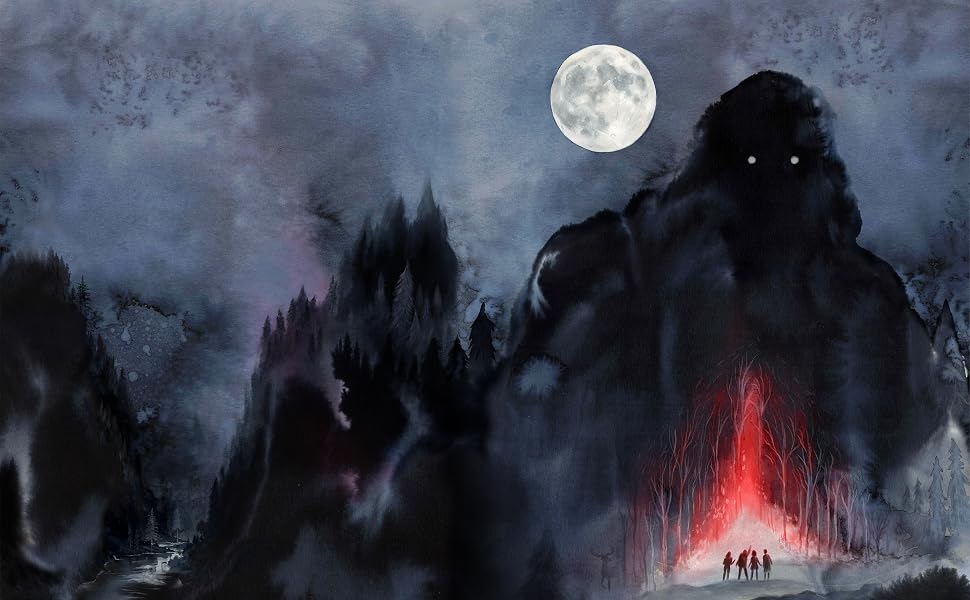
I don’t read horror, and I don’t entirely view Awakening as horror. Although, you know—monster, scary… I get it. But it’s also funny, and I try to make it as real as possible in spite of the fact that there are impossible things happening in it.
When I was writing a few of the chapters with a writers’ group years ago, I would polish off a little chapter and then read it. And one of the guys I worked with, a guy named Dennis, said, “Well, one of the things you need to know when you’re writing science fiction…”
And I went, “This isn’t science fiction.”
He said, “Well, you’ve got a reanimated corpse that’s walking around having been enfleshed with fungus. How do you not think that’s science fiction?”
And I realized that I guess it is. And I guess once he starts killing, it’s also horror. But I view it as a real thing—just a real thing that couldn’t happen. I want it to seem as everyday as anything else one might read.
5. If you could sit down with any character in your book, what would you ask them and why?
That’s a great question. But since it’s fiction, and I’ve lived with all of these characters for so long, I don’t think they’d have anything to say to me that I didn’t already know. Or, quite frankly, I already shoved it all in their heads.
Probably, if I had to guess, I’d say Fatty, only because he’s a dog, he’s entertaining and he makes me laugh. He’s got such a short attention span that I’m not sure I’d get a good answer out of him. I guess I’d just ask him, “What’s up with all the spoiled turkey you love so much?” And maybe, “What’s the deal between you and Bruno?”
6. What social media site has been the most helpful in developing your readership?
I took to the initial marketing of this book in a very minimalist way. I mean, I use Facebook ads to try to sell a few of them, but I really have not been using social media in any other capacity. I’m beginning to explore it, but I haven’t yet implemented much of anything, so I really couldn’t say.
I worked in technology for 40 years, and before I started working in technology, when I was in grad school, I was one of the early adopters of the pre-internet through the university networks. And I remember at that time being very cognizant that, you know what, anything I put in here is never going to go away.
So, in spite of being an early adopter of all this stuff, I’ve mostly been a consumer of social media, and very rarely a contributor.
7. What advice would you give to aspiring or just-starting authors out there?
Write.
Write a lot. Write every day. Spend more time on your writing than on your marketing.
That said, give some thought to what kind of genre you want to write in. I didn’t do that. I just started writing, and it turned into horror. Not a terrible genre, but certainly not the fastest-selling thing in the world.
But write what you love and decide later what you want to do with it.
And write in your voice. There are billions of voices in the world, and there should be as many unique voices.
But still, write a lot.
8. What does the future hold in store for you? Any new book projects on the horizon?
Writing. Writing is what I plan to do more of. That and magic.
I got into performing magic after I retired, which was four and a half years ago, and I’ve now been doing some shows for people. I realized that I love that people are reading my book, but I don’t get to watch them read it. I can watch people seeing magic, and I love seeing the immediate feedback.
And, yeah, new books. In September, my second book, the sequel to Awakening, will be available on Amazon.
And I’m in the process of working on two books: the third book in the Mother’s Little Helpers series—still horror—and a book on spirituality for people who have found religion off-putting and have let that keep them from exploring spirituality in any context. There are so many contexts that are not religious in nature, so I kind of want to open that up. Like I said… it’s a big universe.
I meet a lot of people who are looking for something and don’t know what that is. And frankly, I don’t know what it is either. But I find writing about it compelling. And so far, the people I’ve shared some of it with seem to like reading about it.
So, probably a series of essays in a book. And, more than likely, under a different name. I mean, there are the Mother’s Little Helpers books.
But we’ll see.
About the Author

Terrell Chafin lives in Los Angeles with his wife, Charlie, and the ghosts of their two dogs, Willie and Bear, who still stomp around on the bed at night.
A former composer, he somehow ended up spending more than 30 years in the legal technology field. After retiring, he decided to focus on his passions for fiction writing and performing magic—and occasionally both. After a decade of tinkering with his first novel, the award-winning Awakening, he followed it with the sequel, ReAwakening.
When he can’t be found roaming the halls of Hollywood’s Magic Castle, he’s probably sitting in his office working on whatever comes next.


Leave a Reply